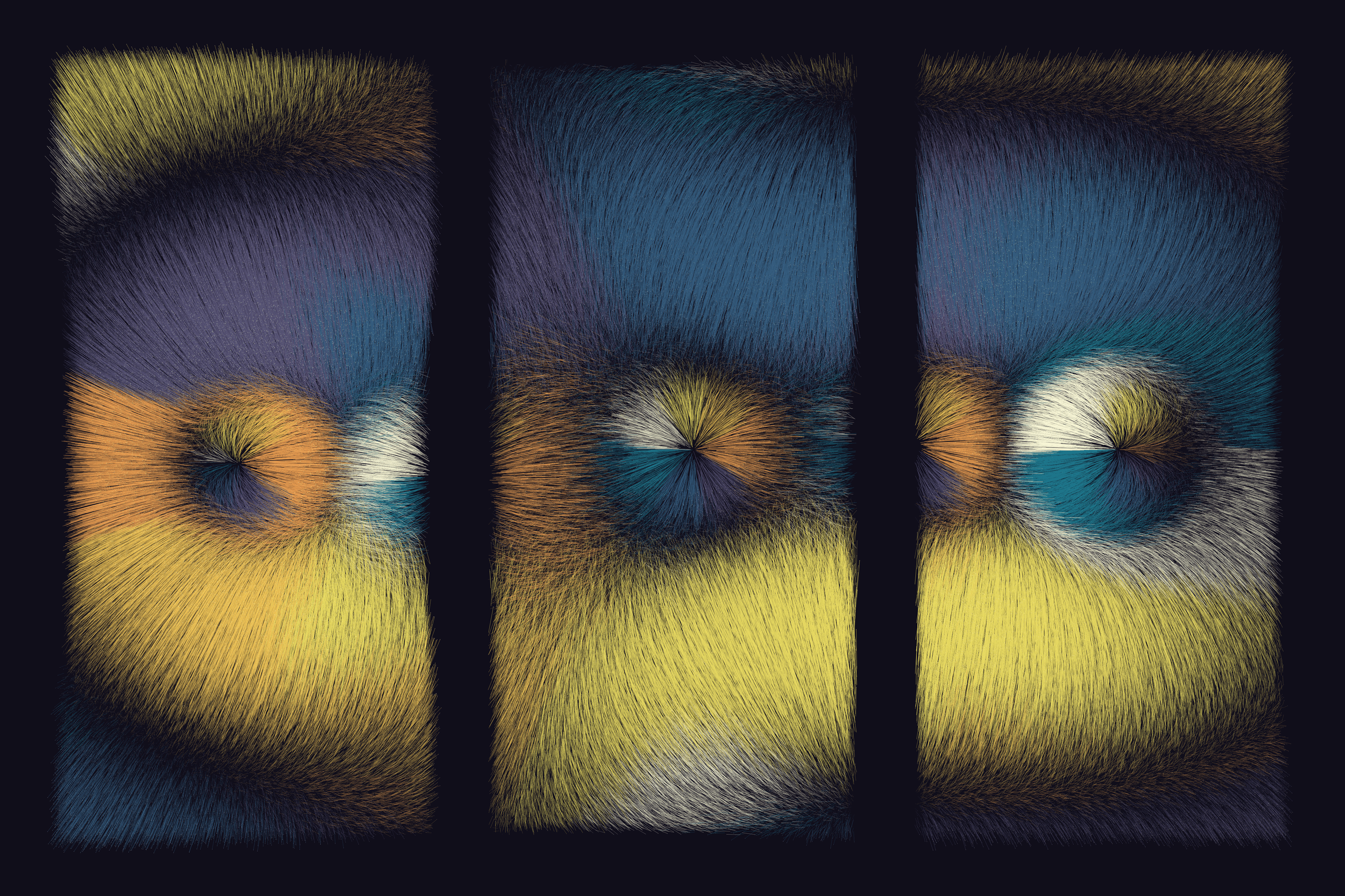
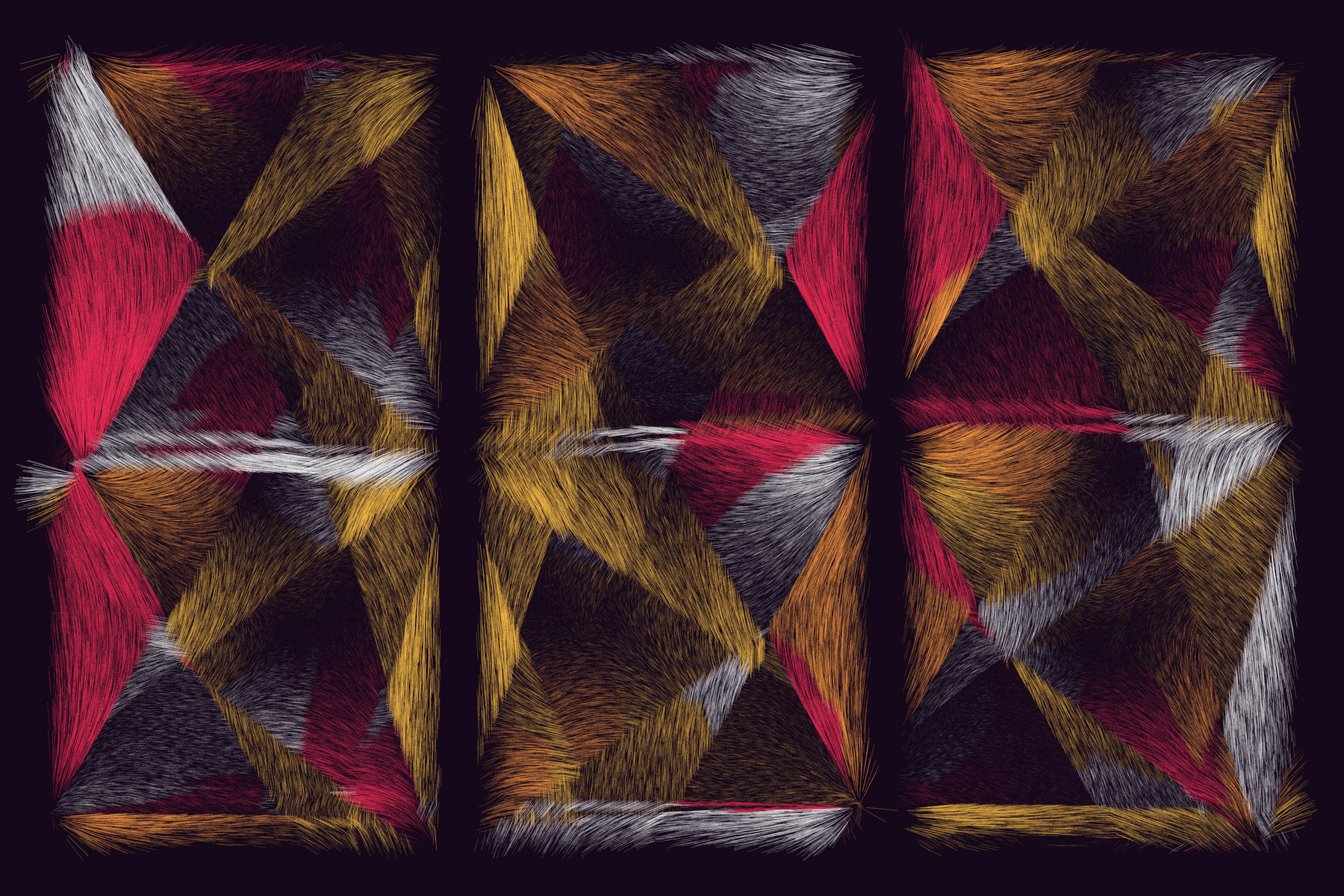
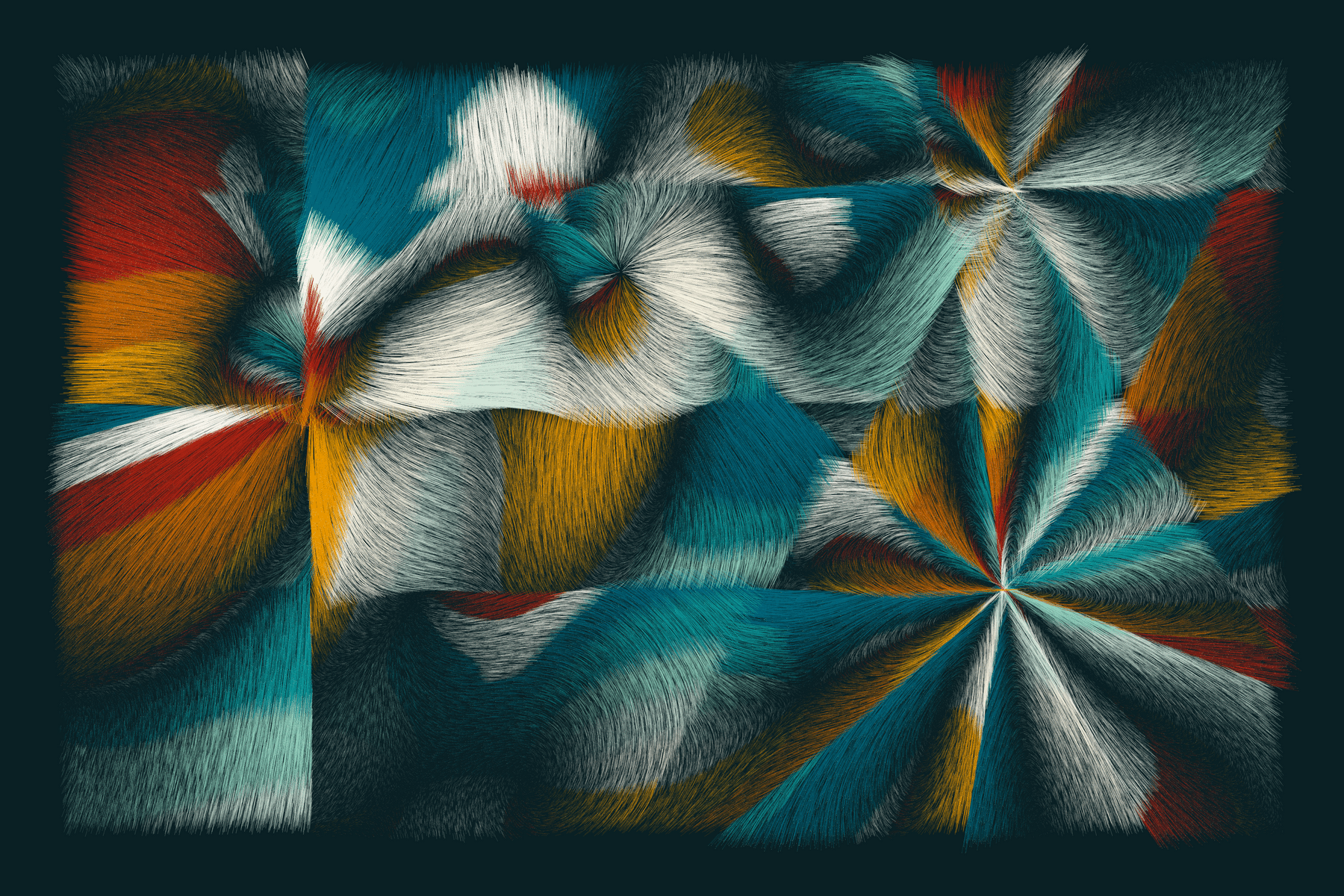
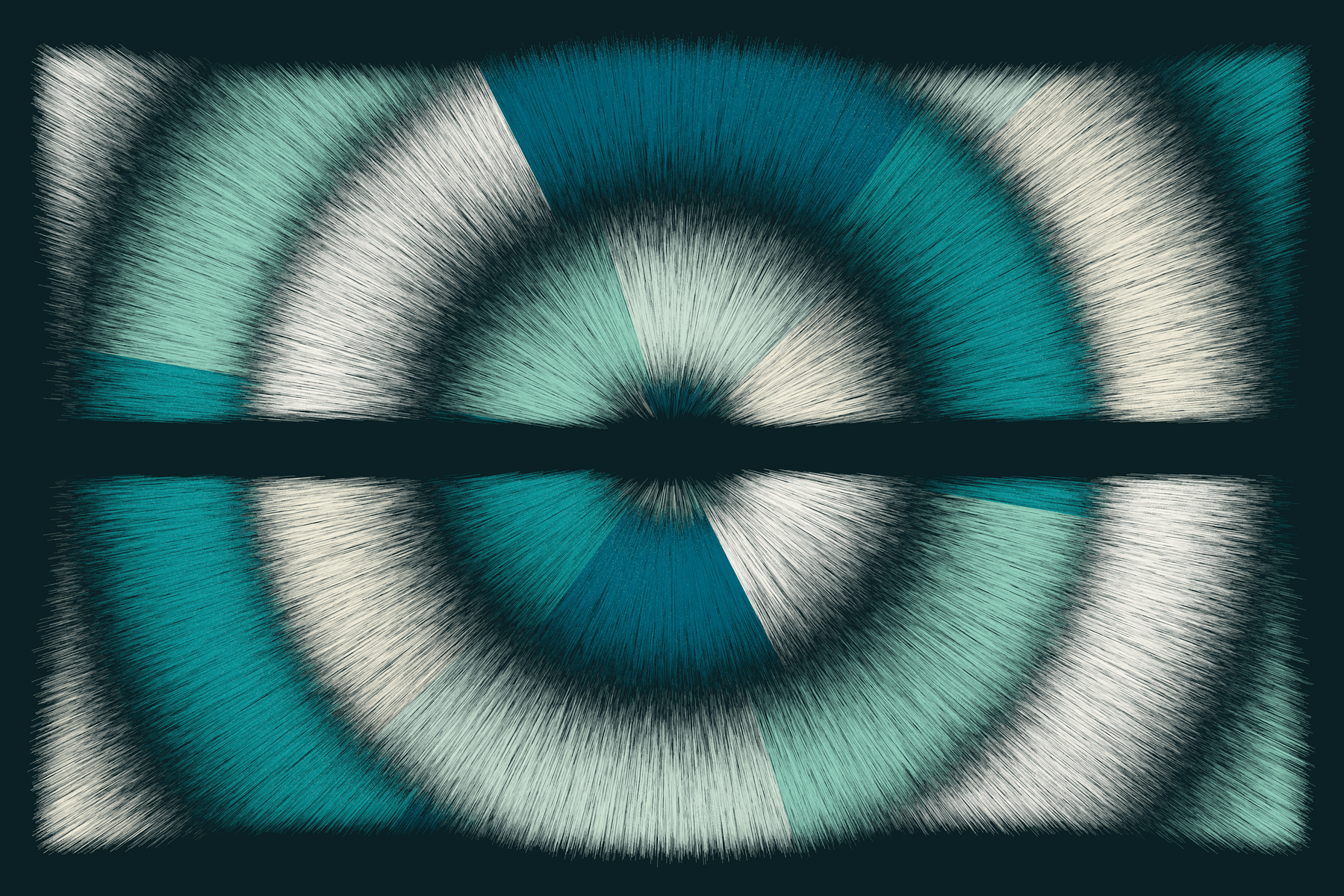
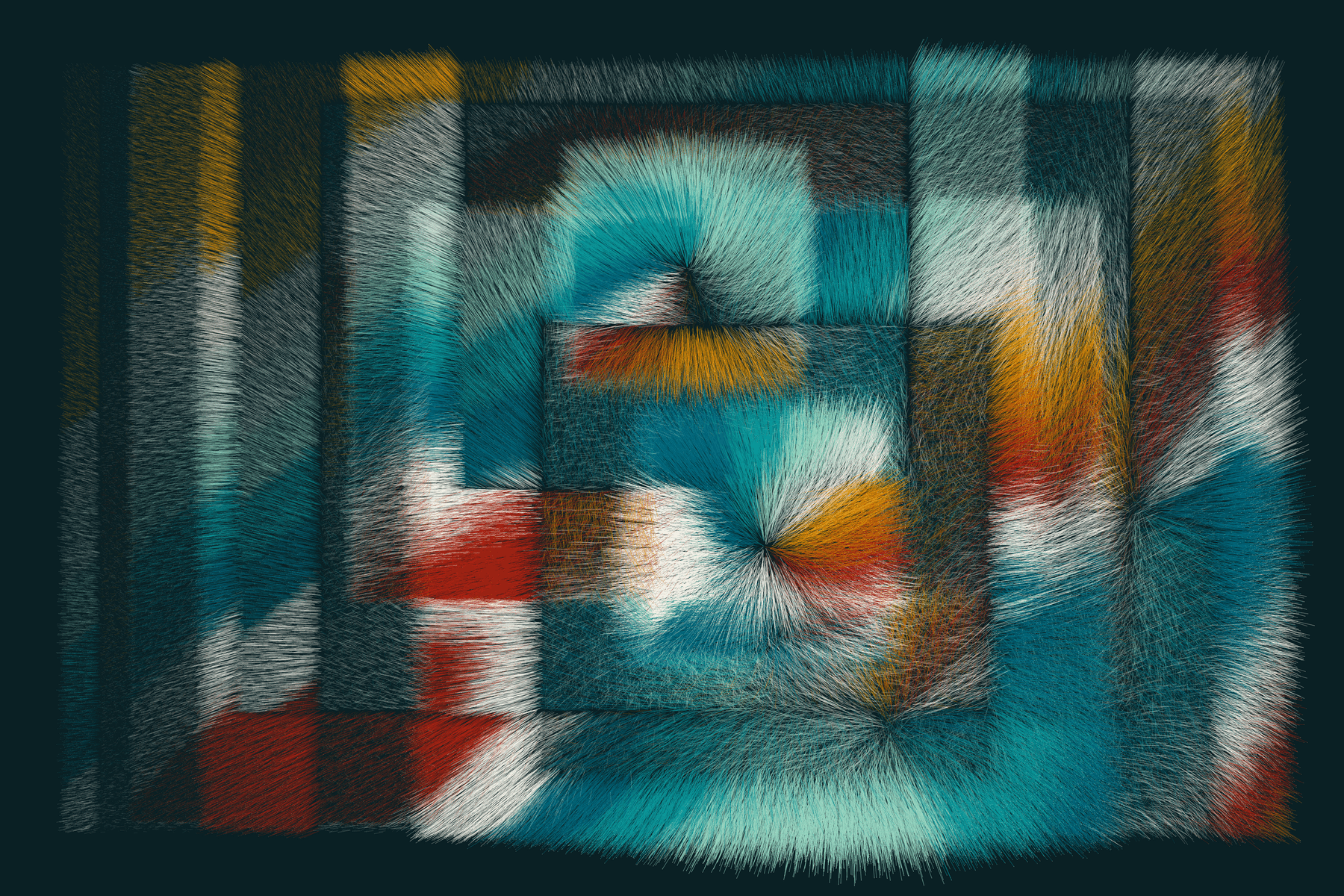
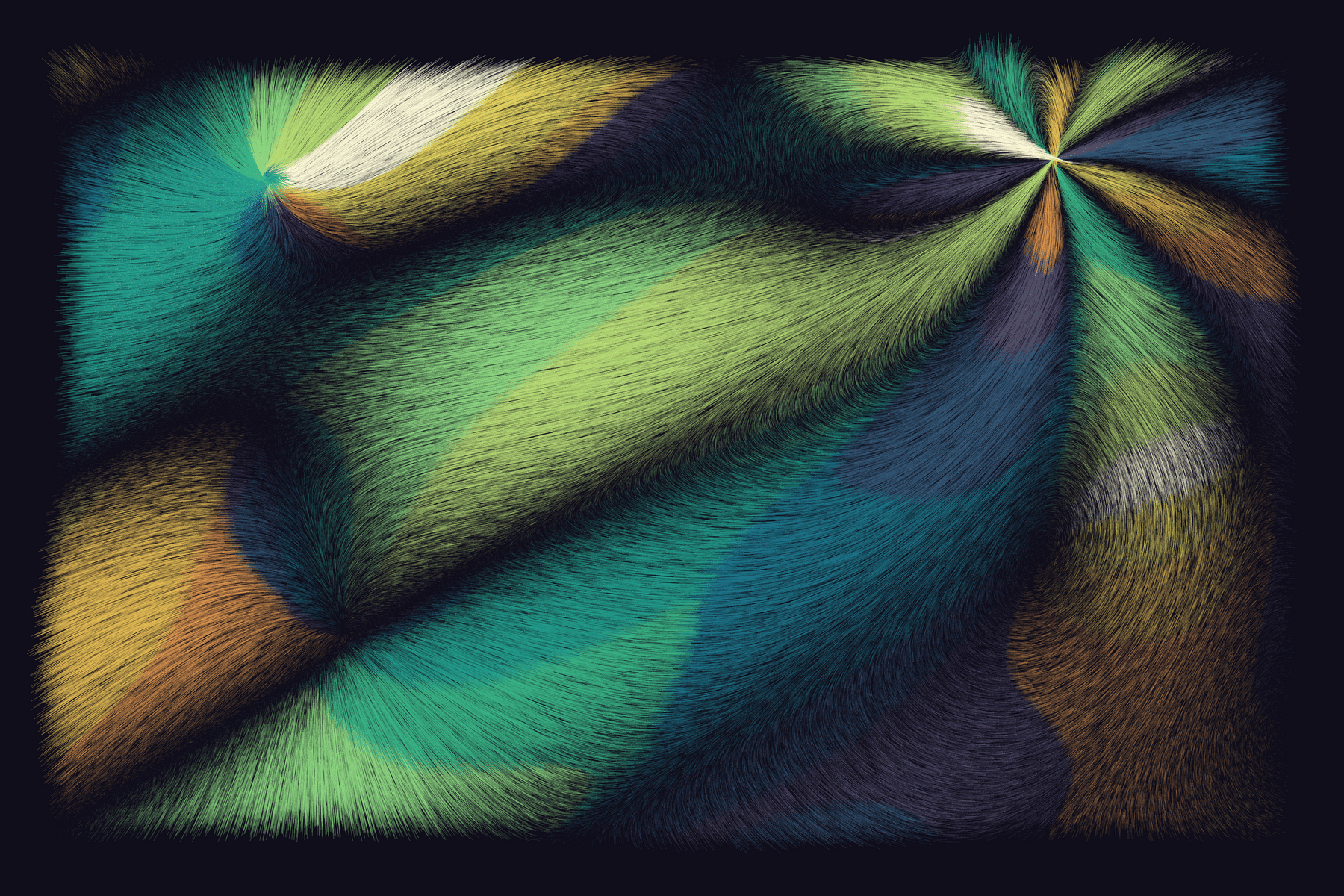
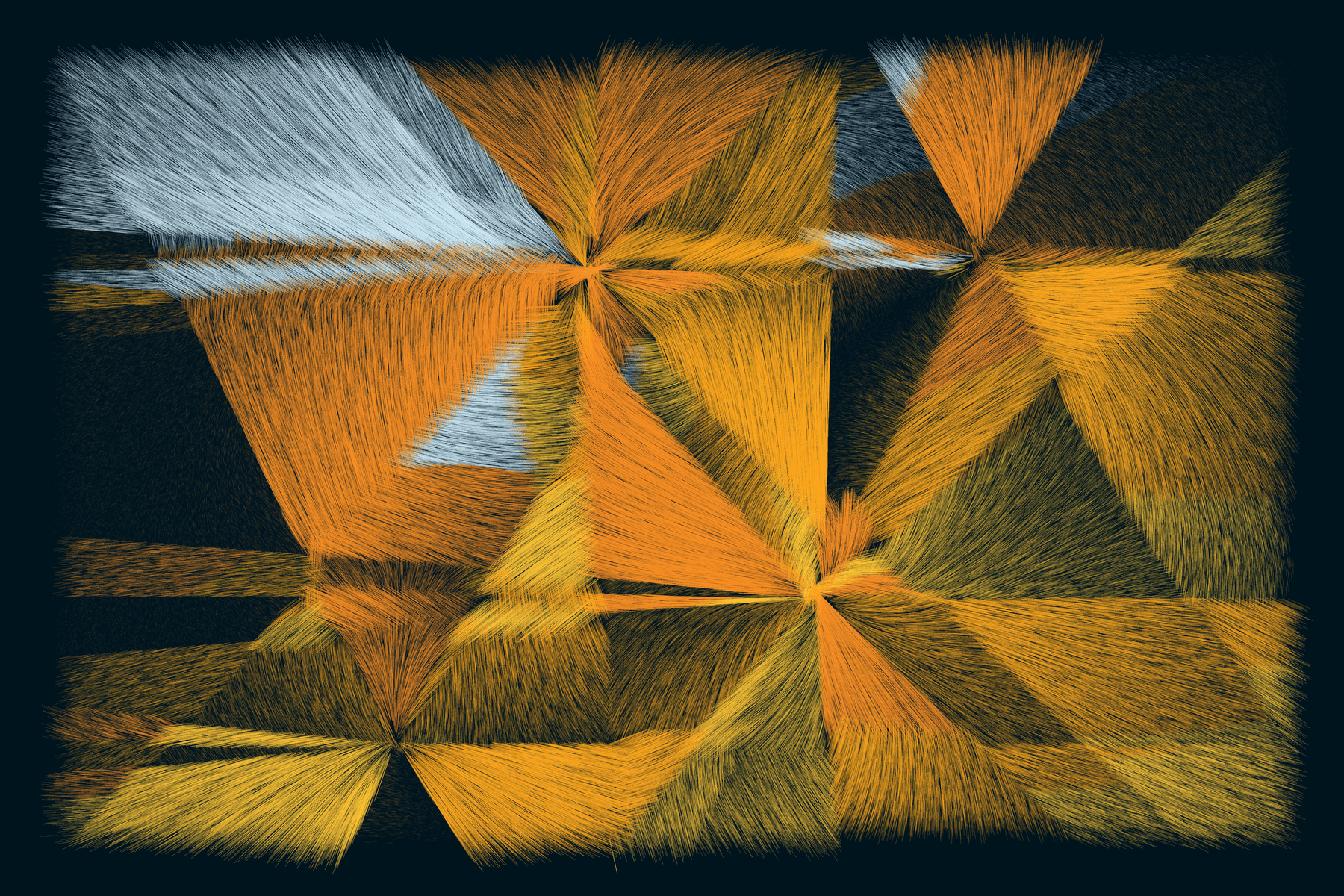
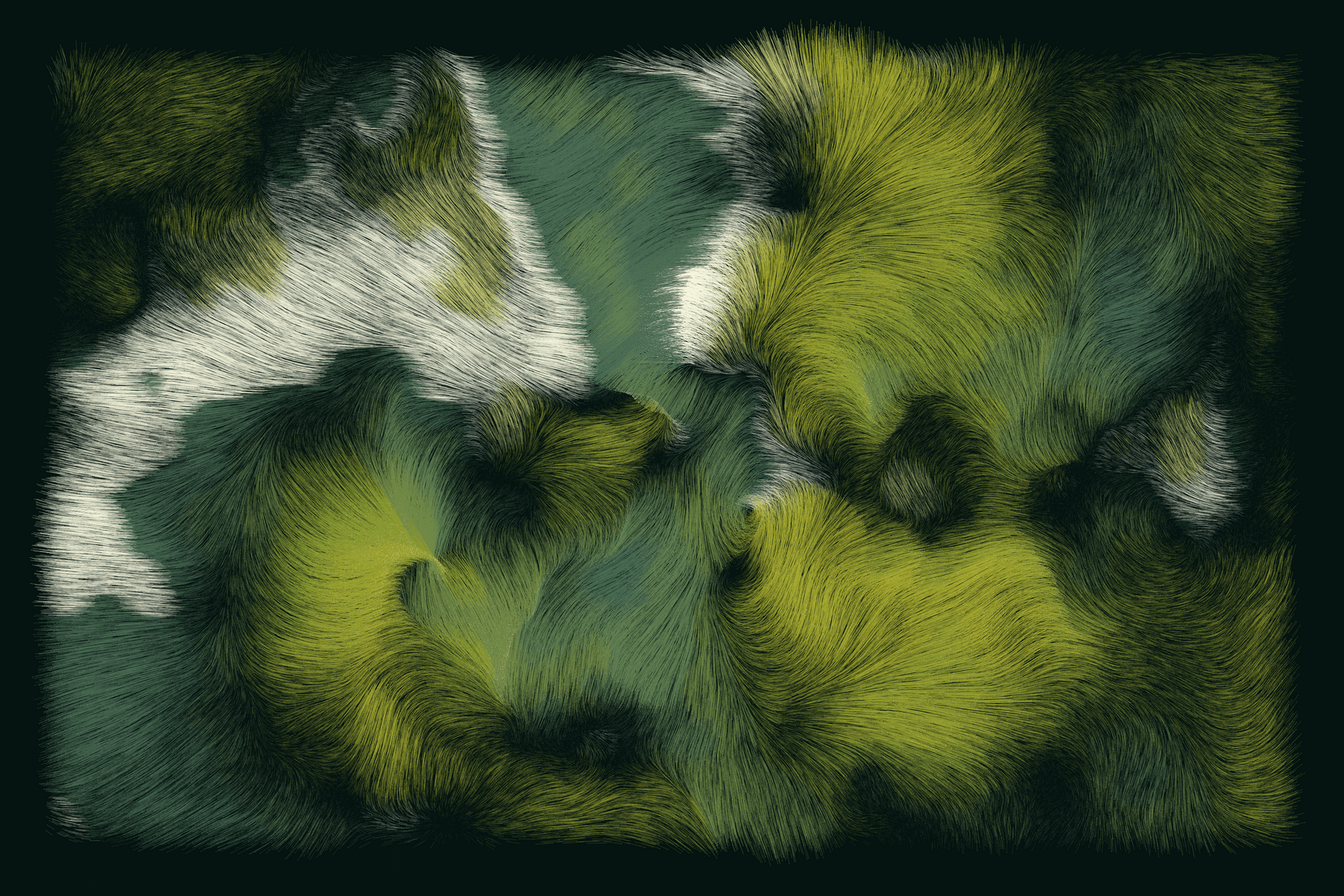
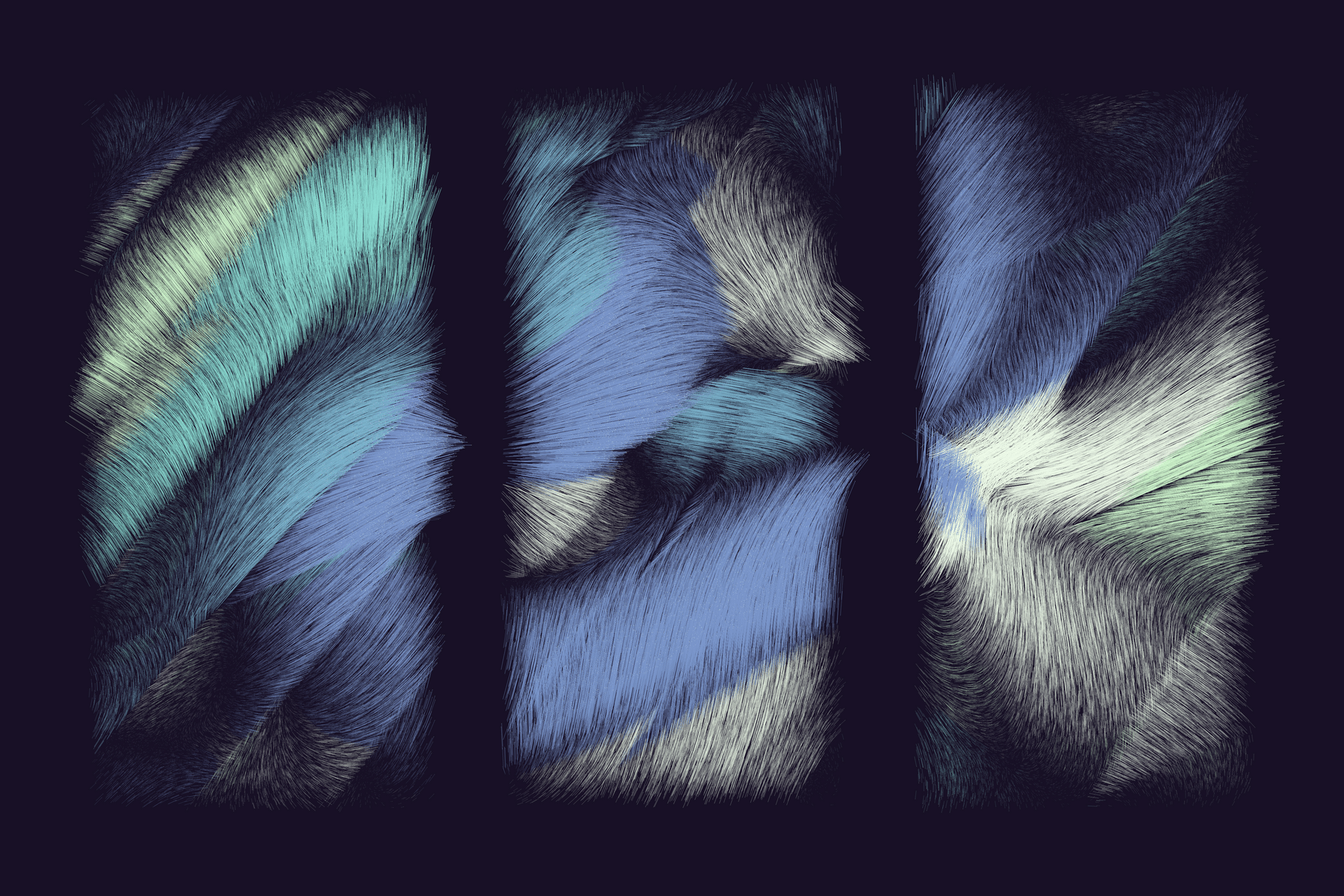
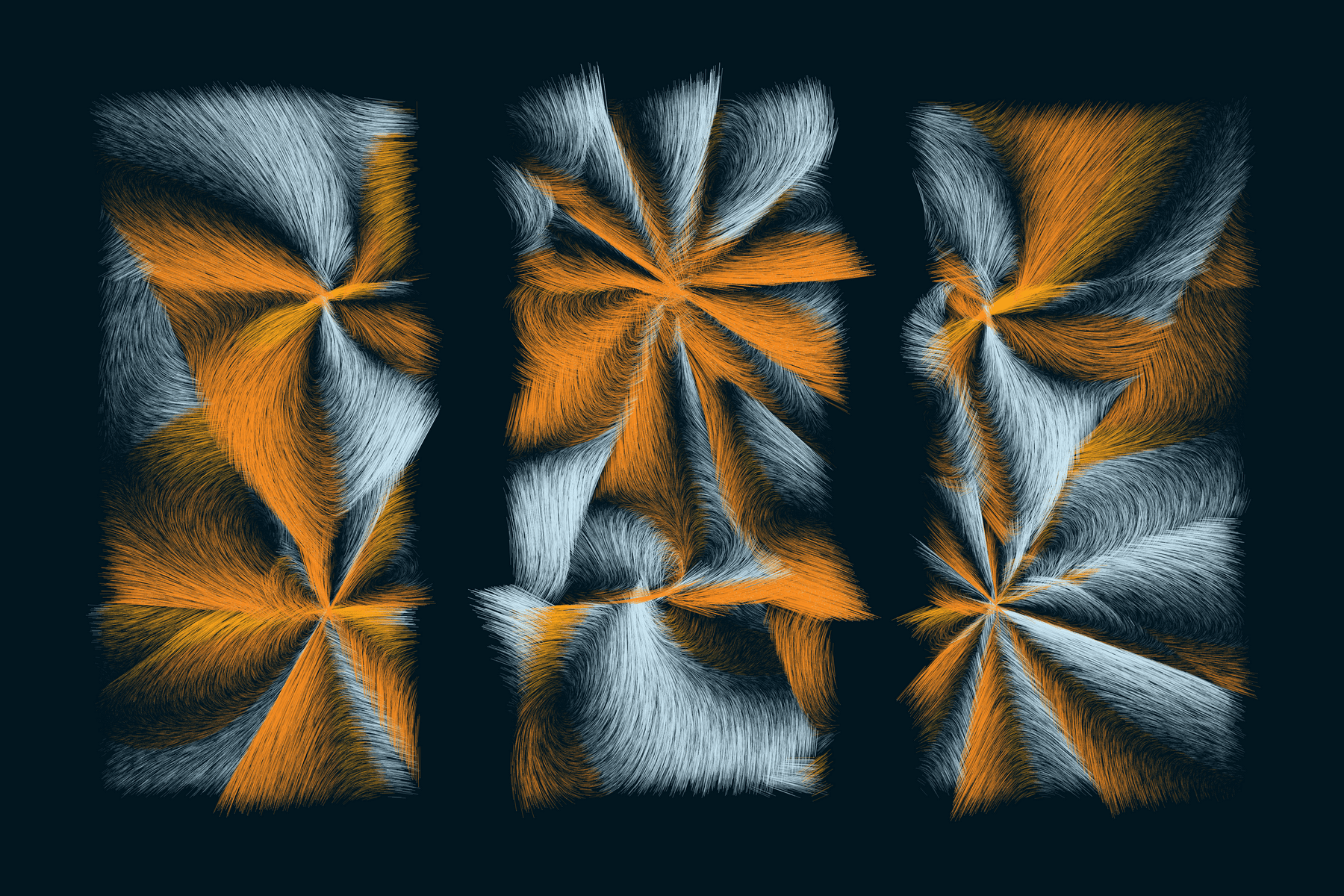
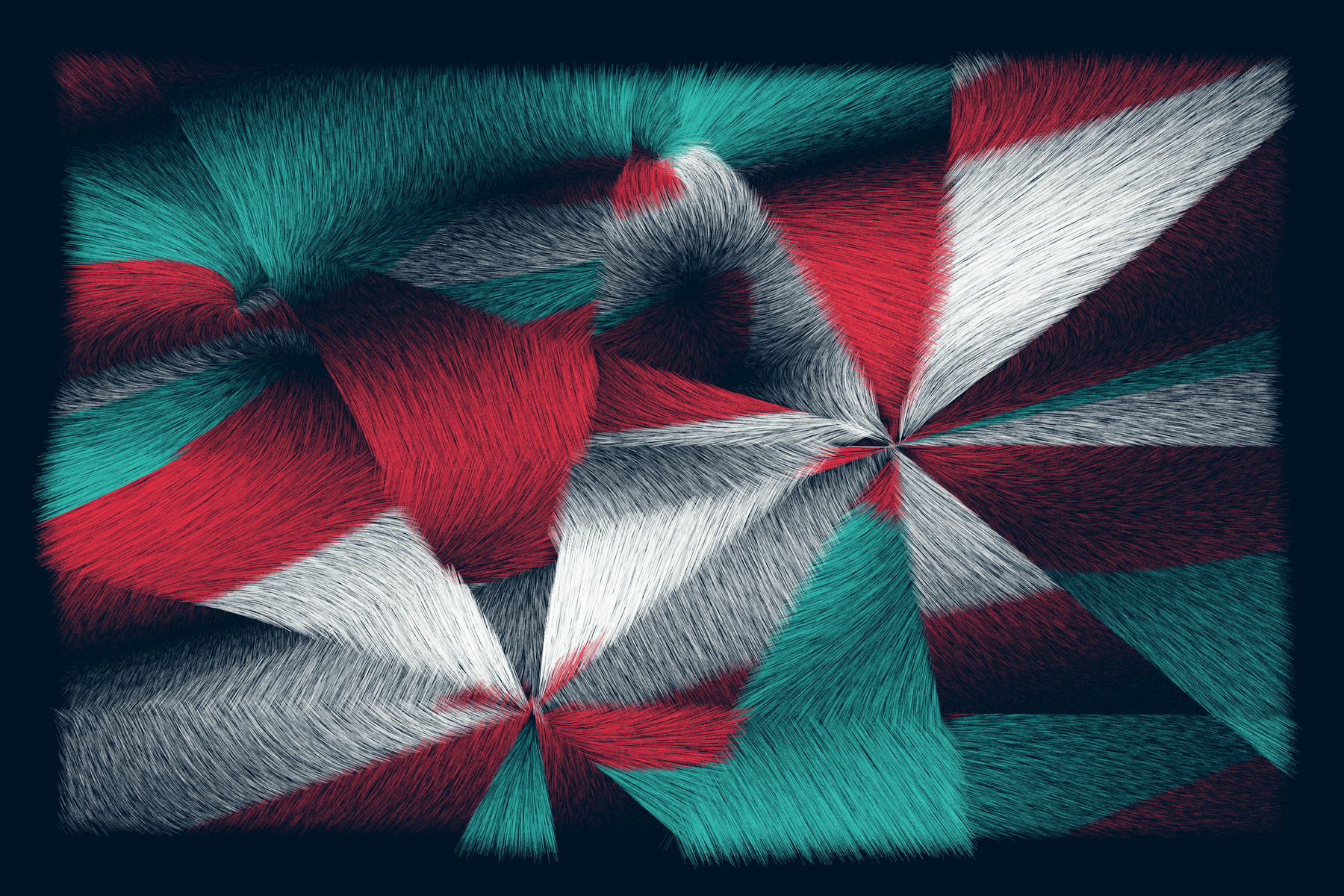
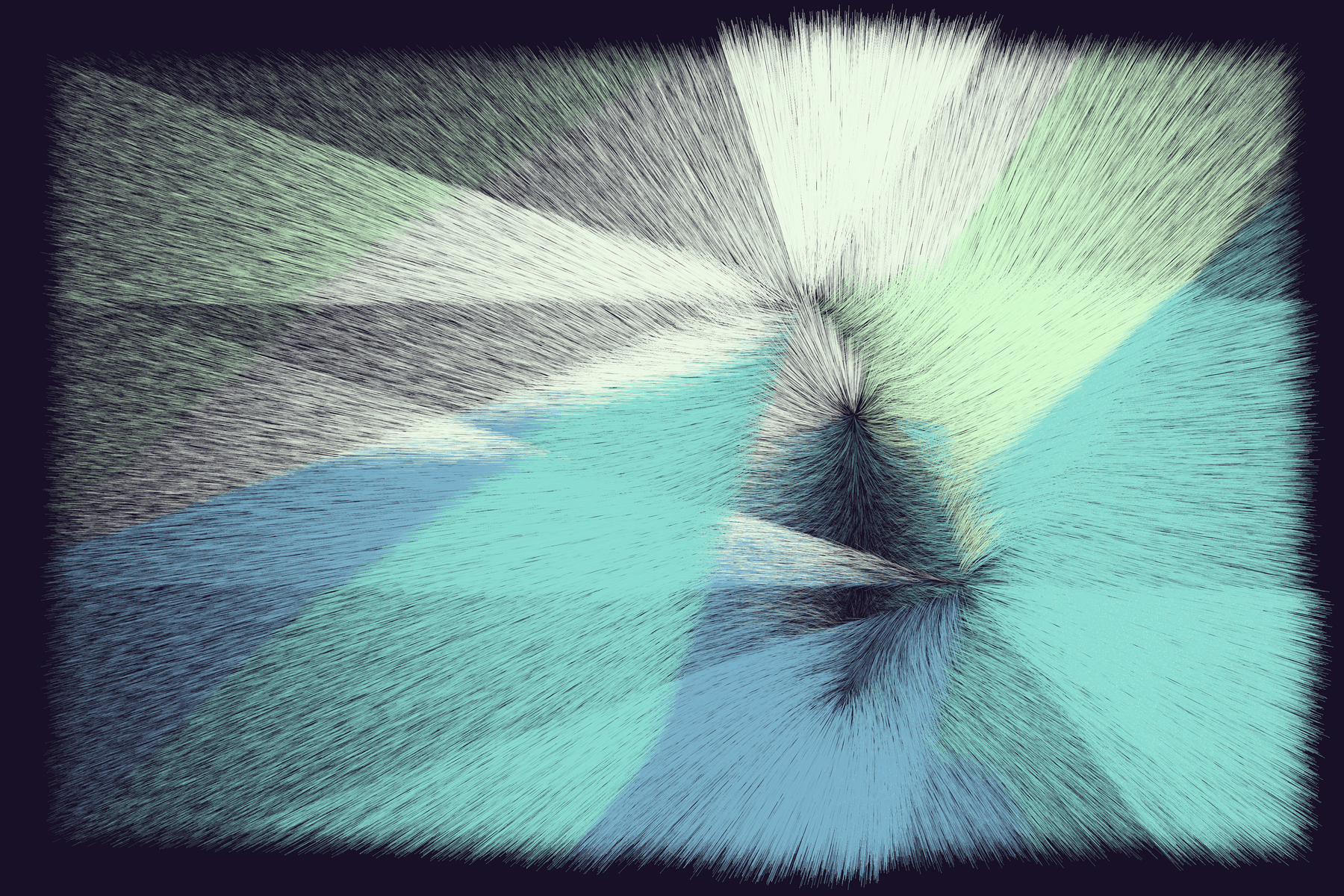
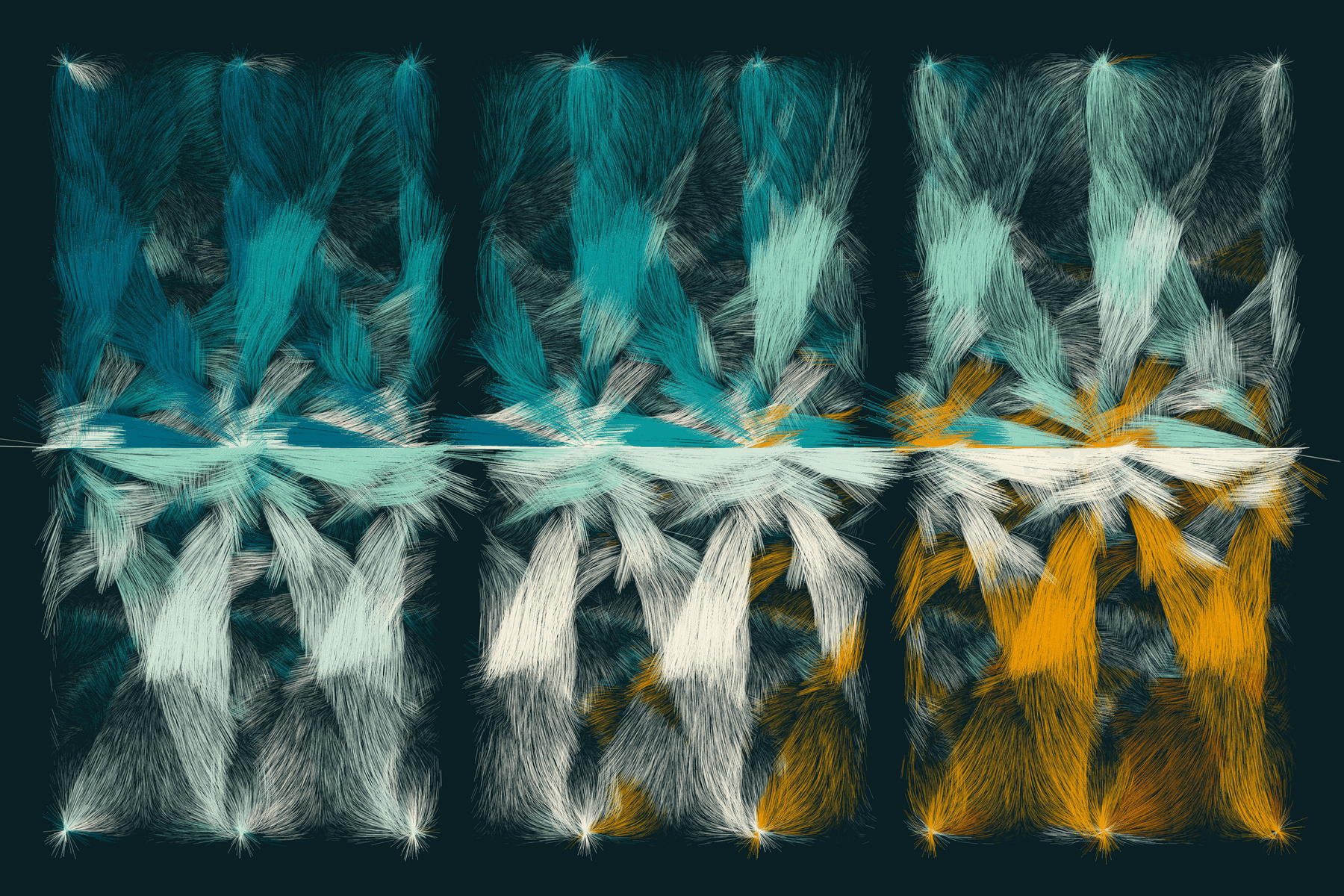
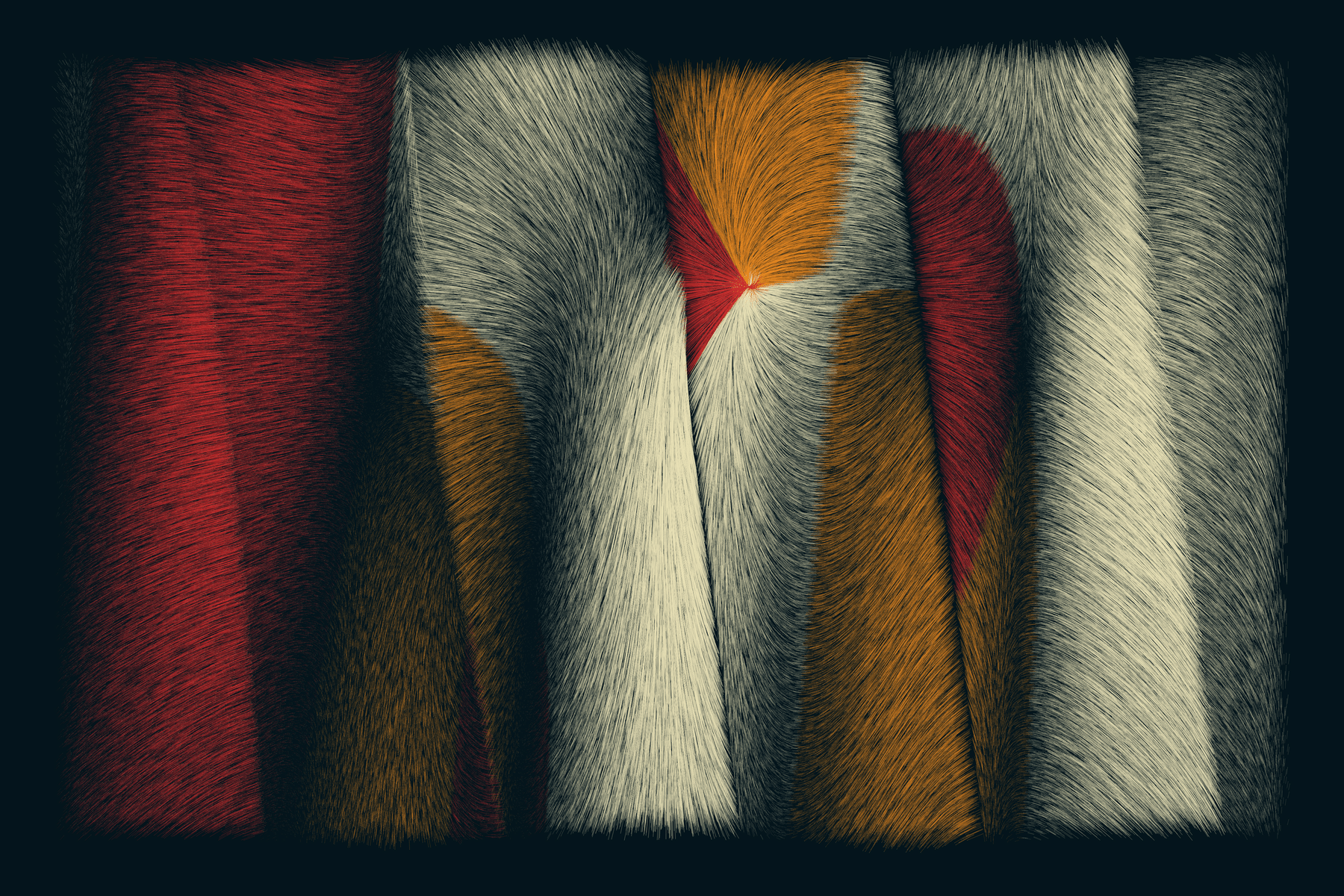
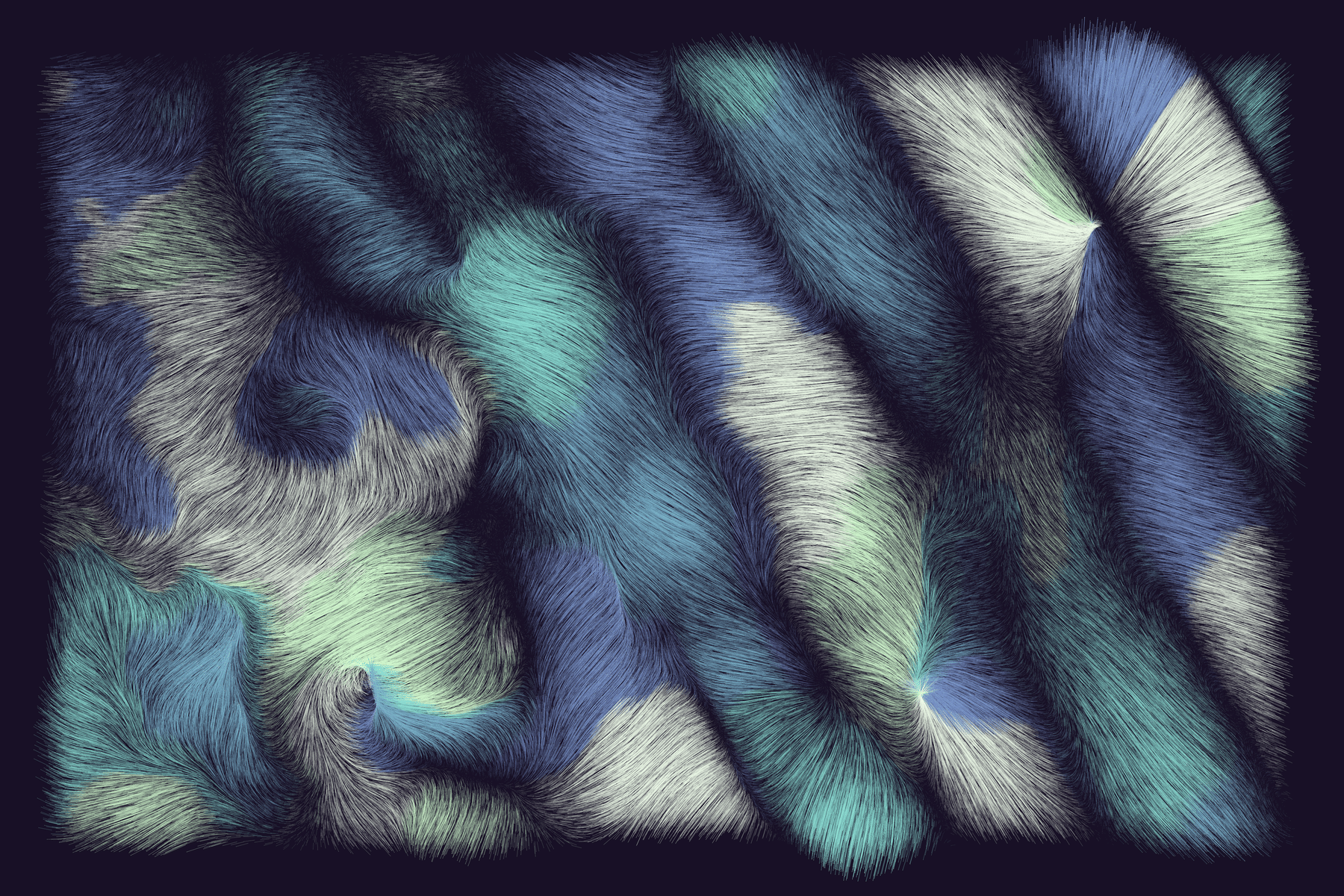
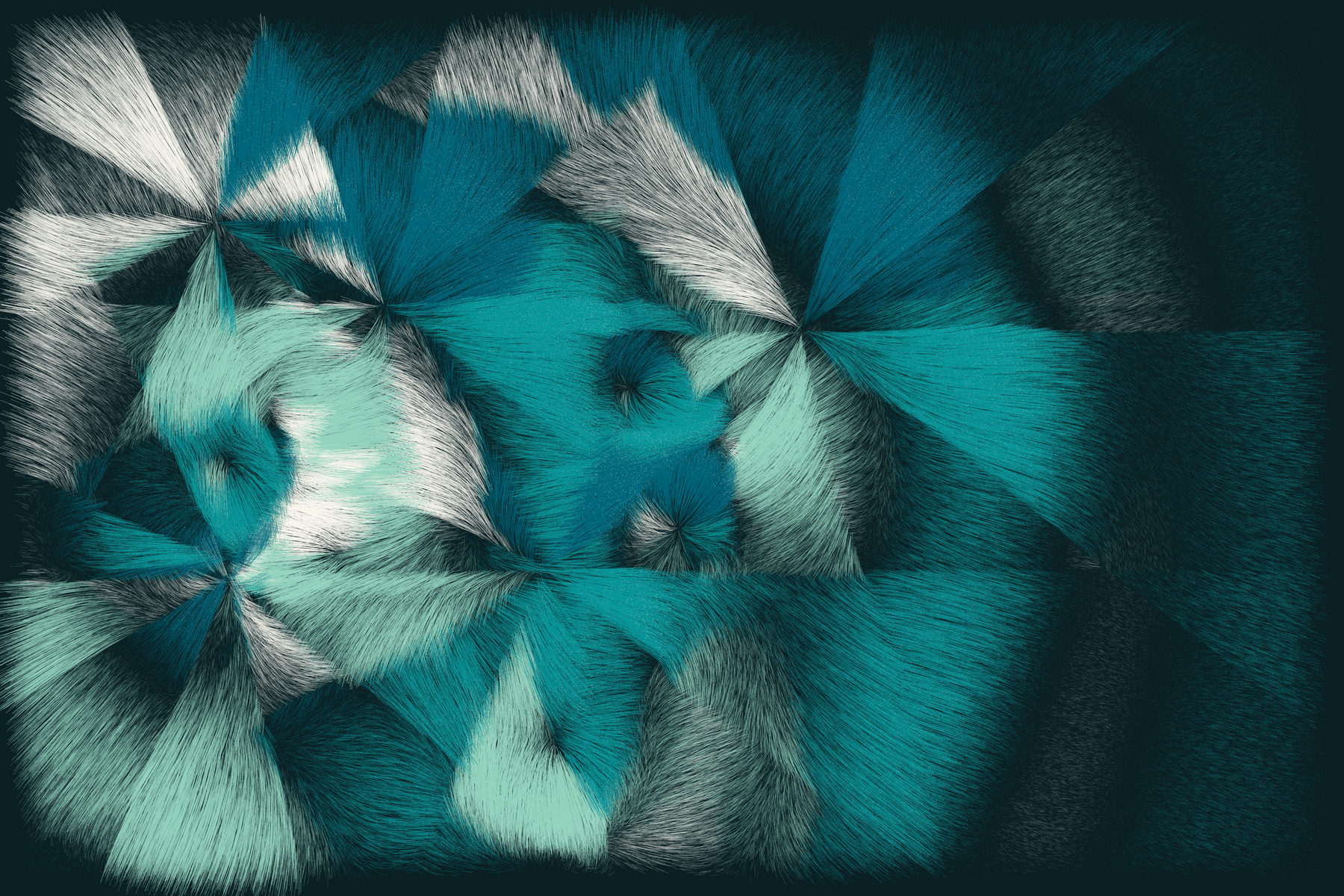
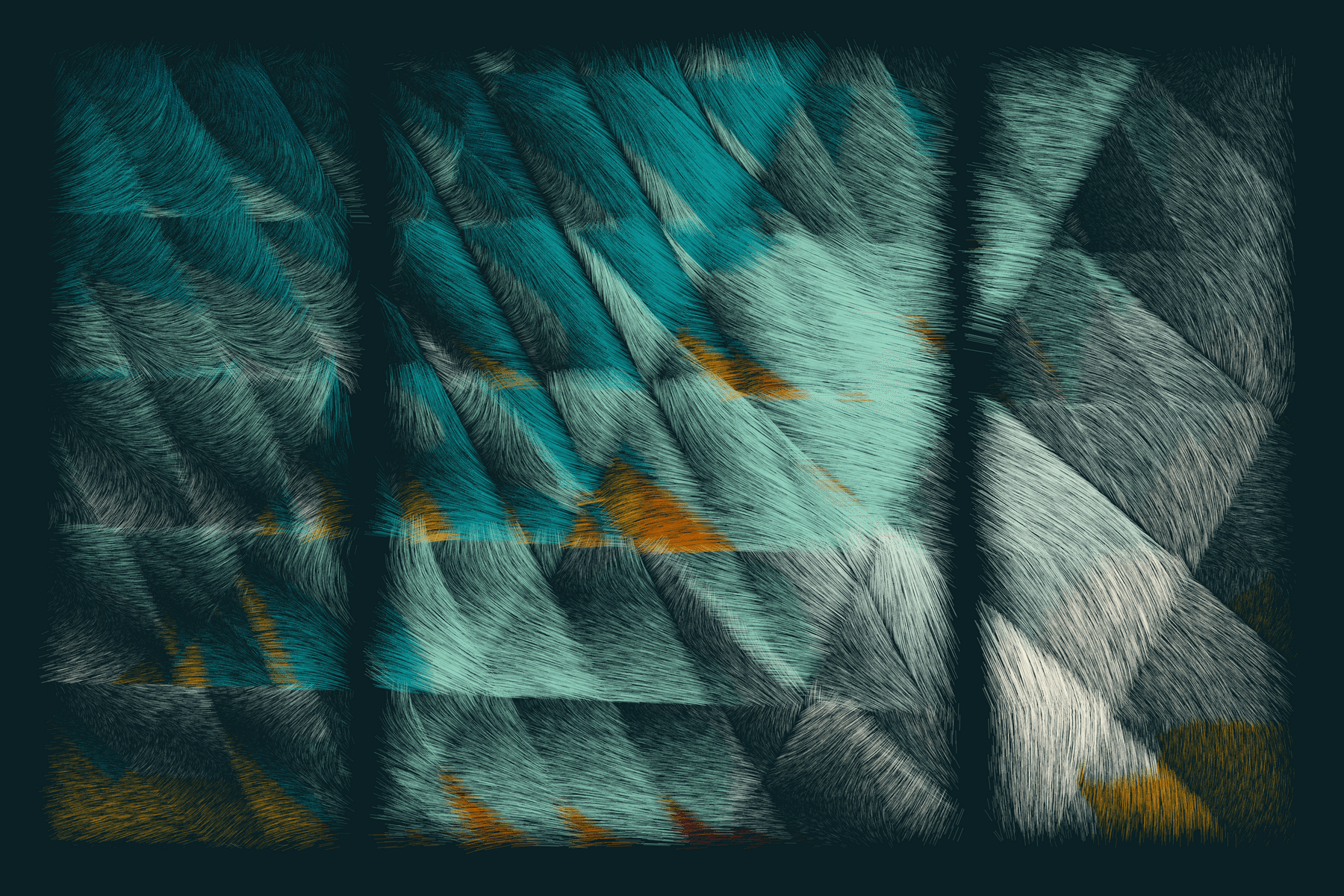
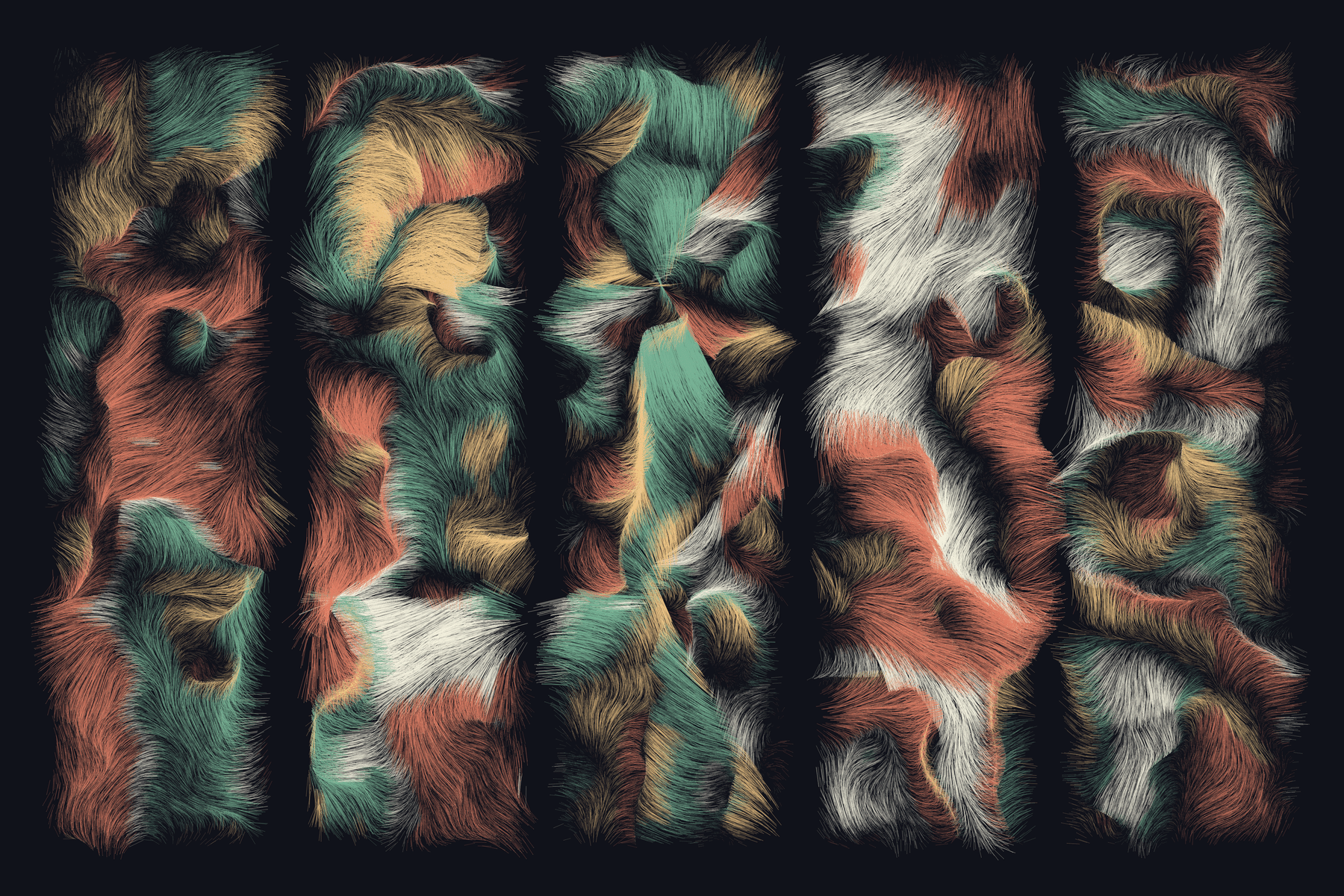
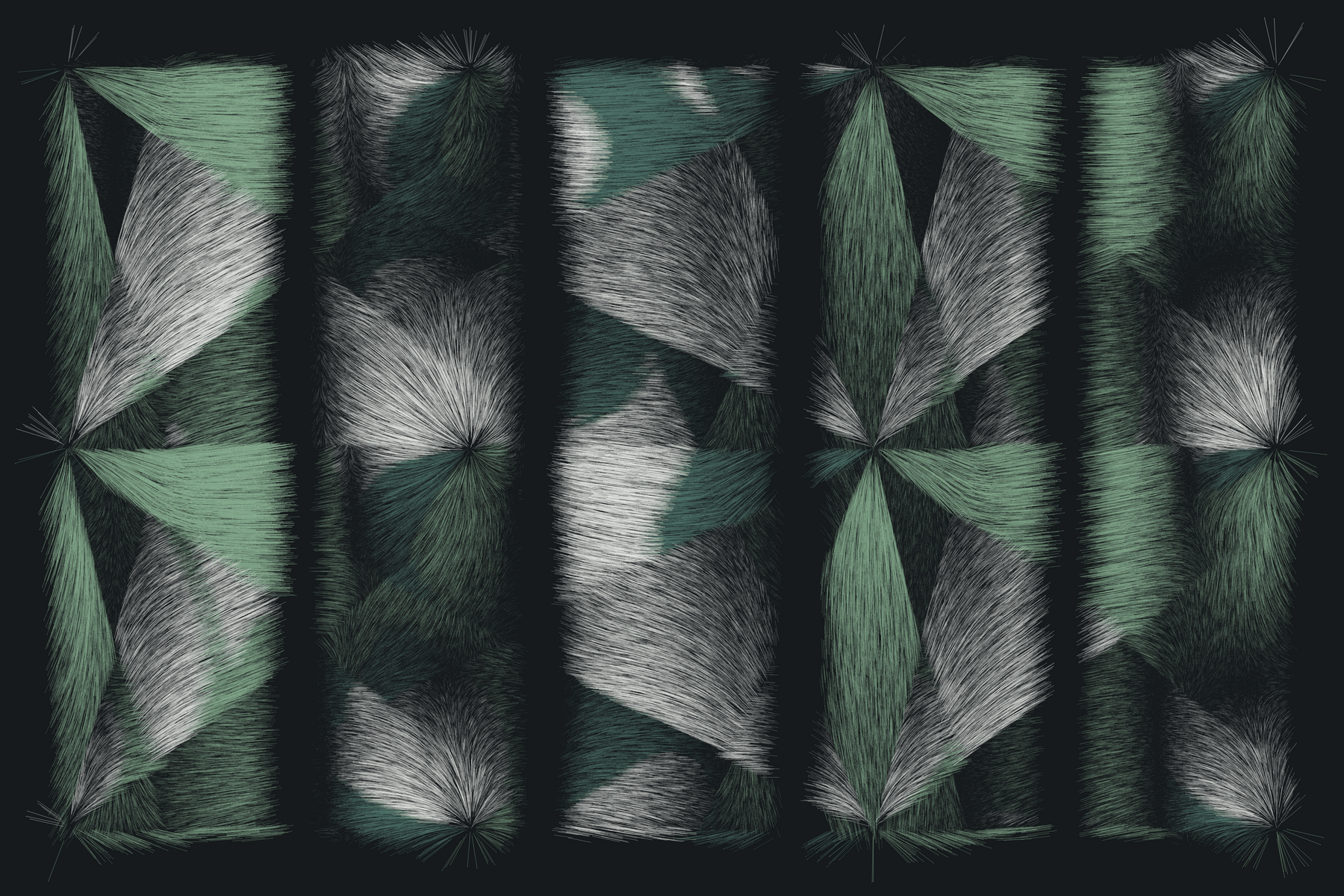
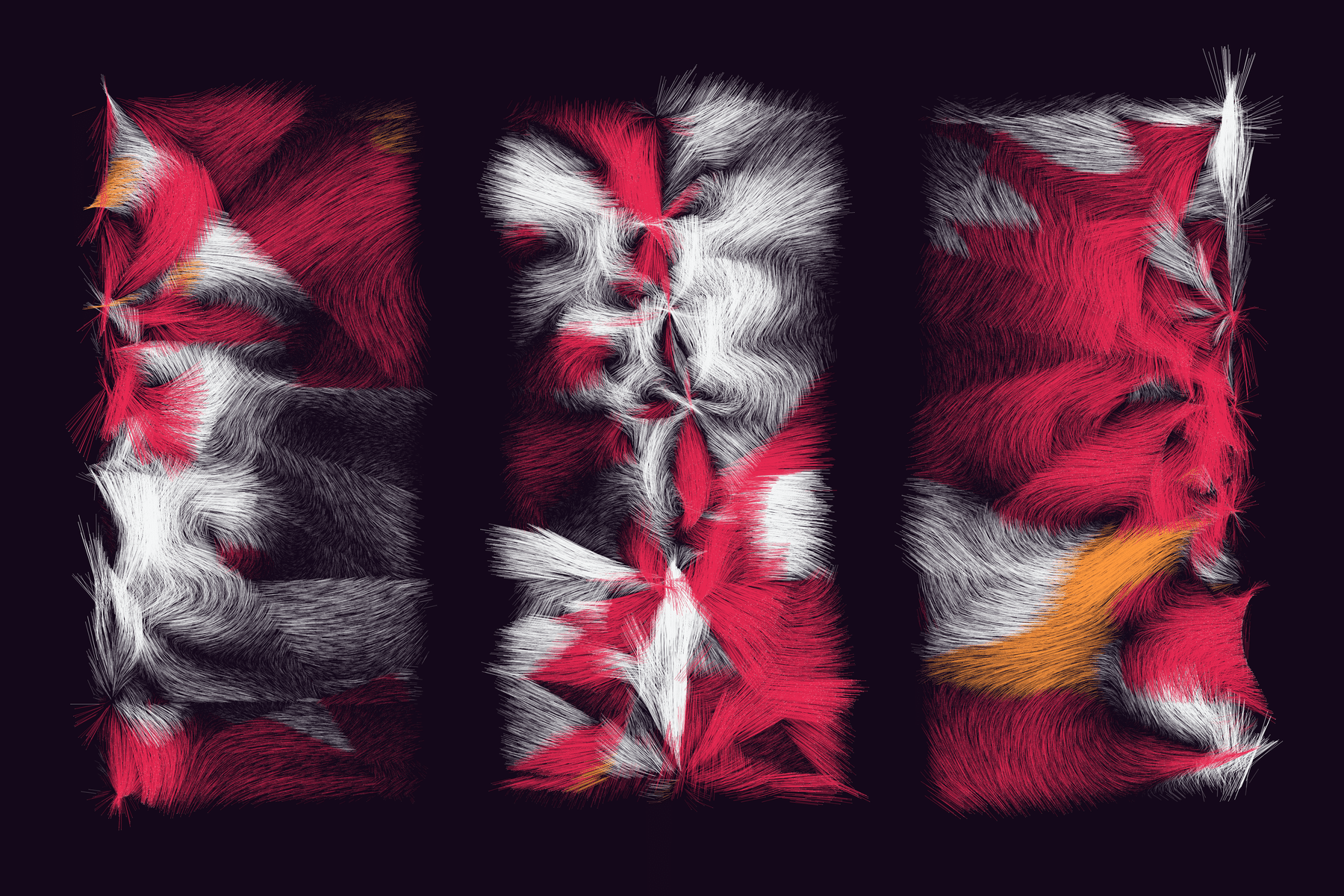
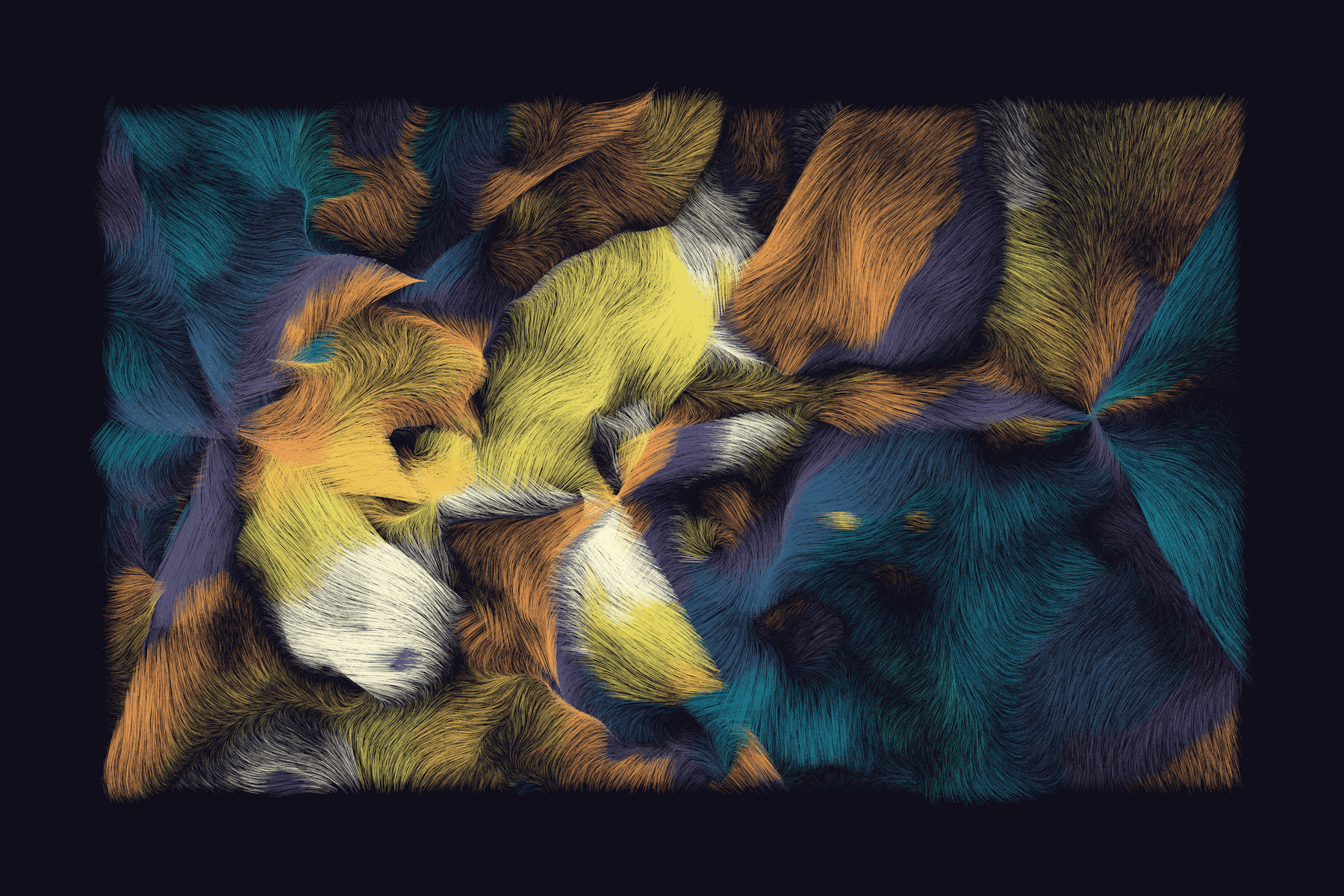
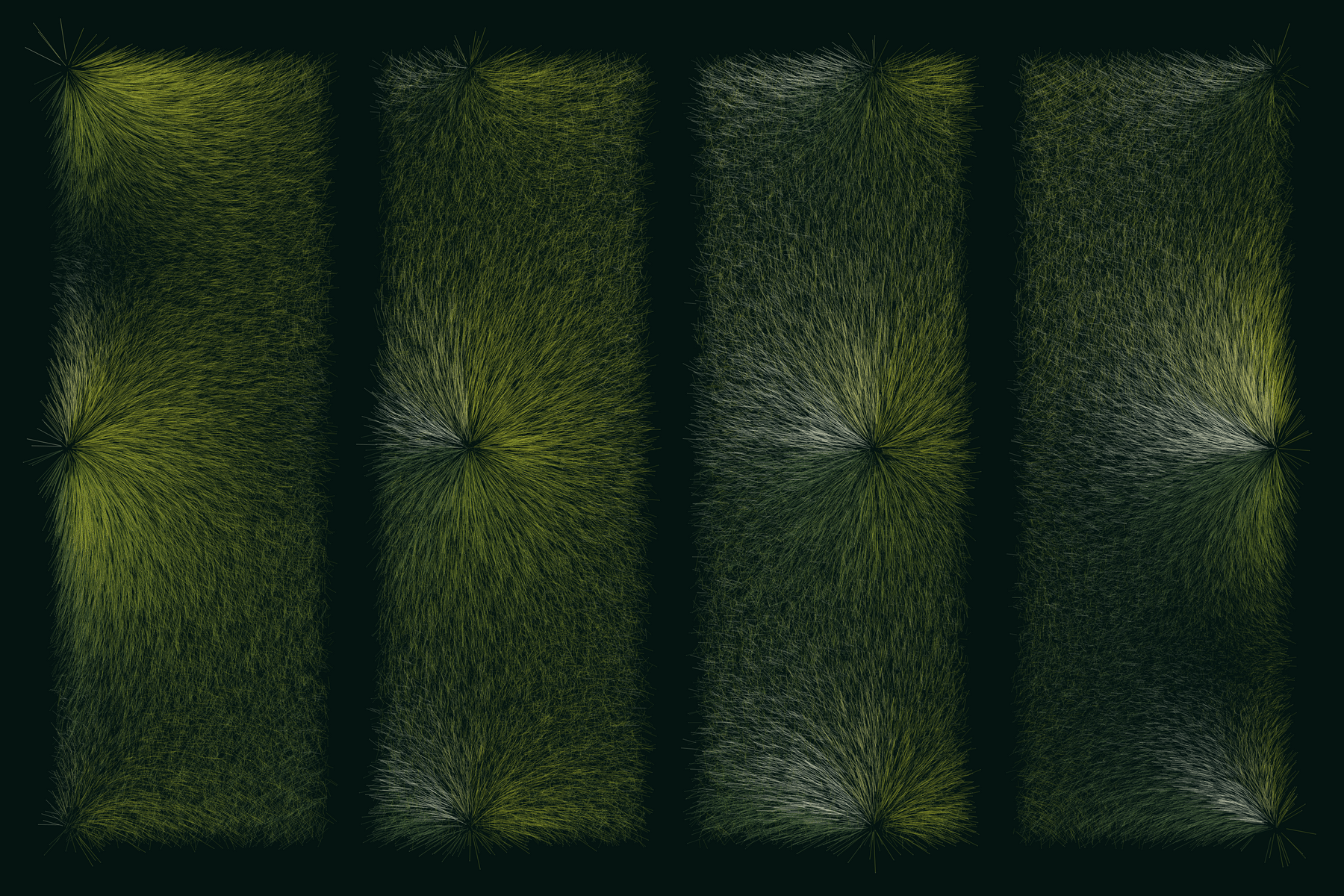
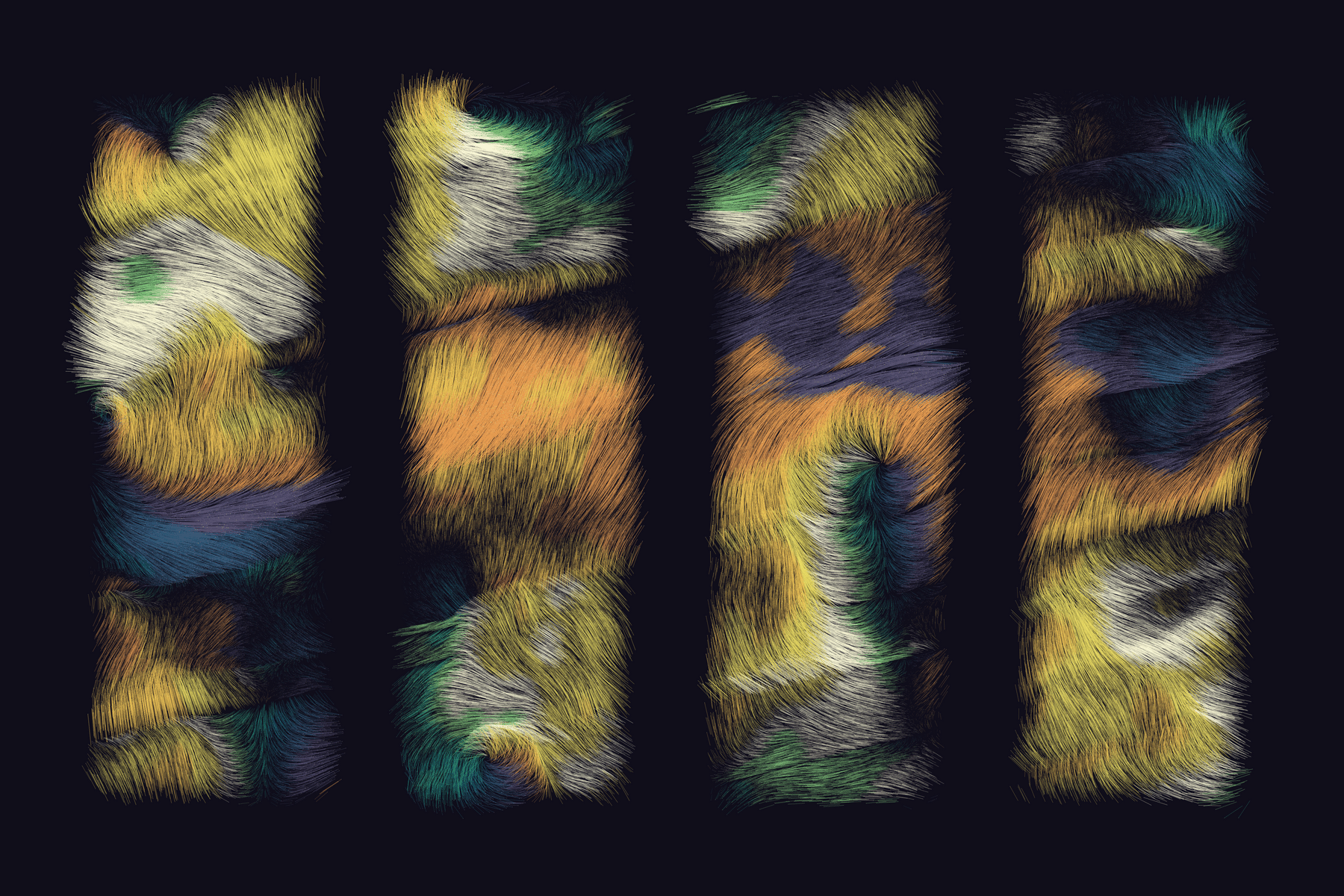
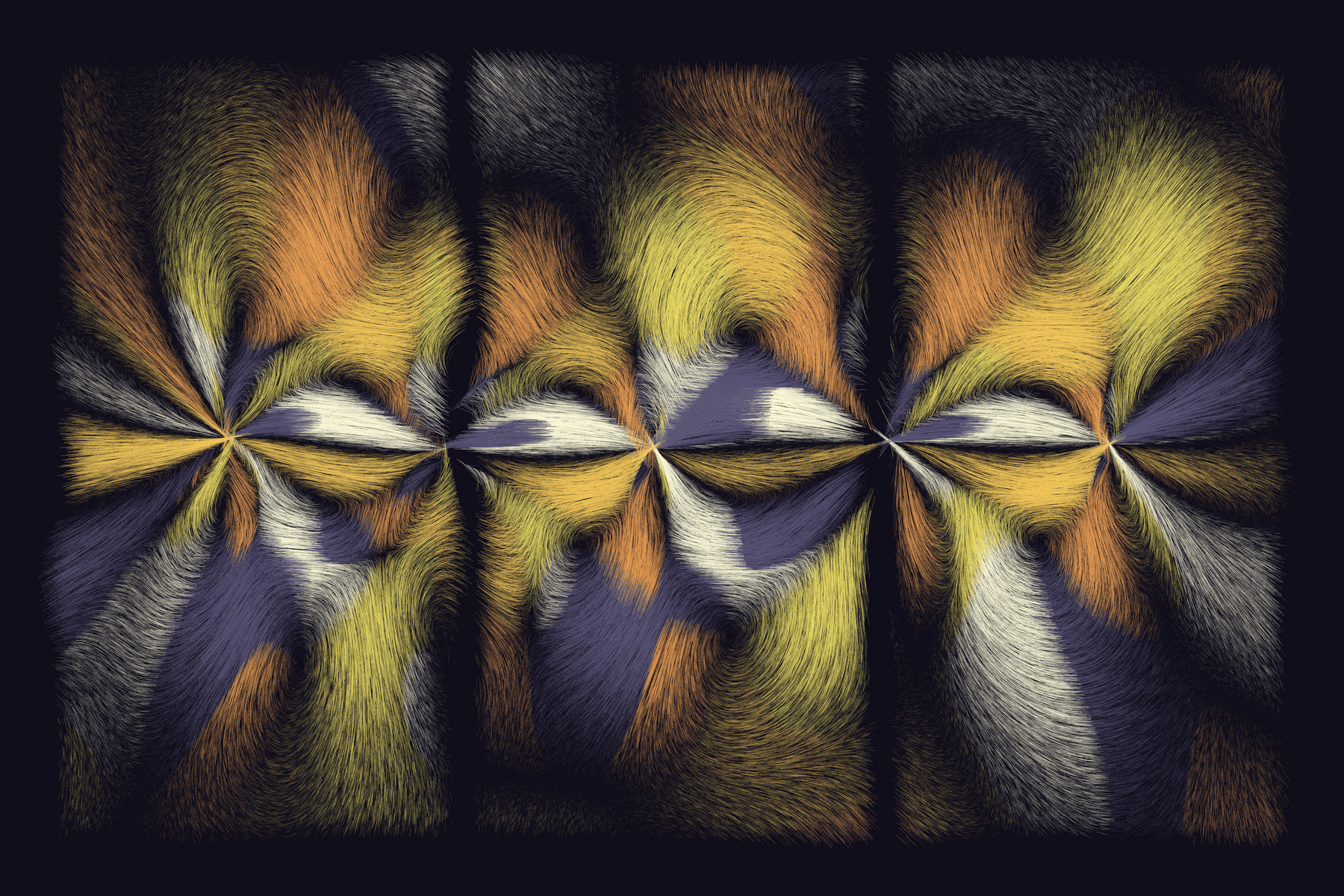
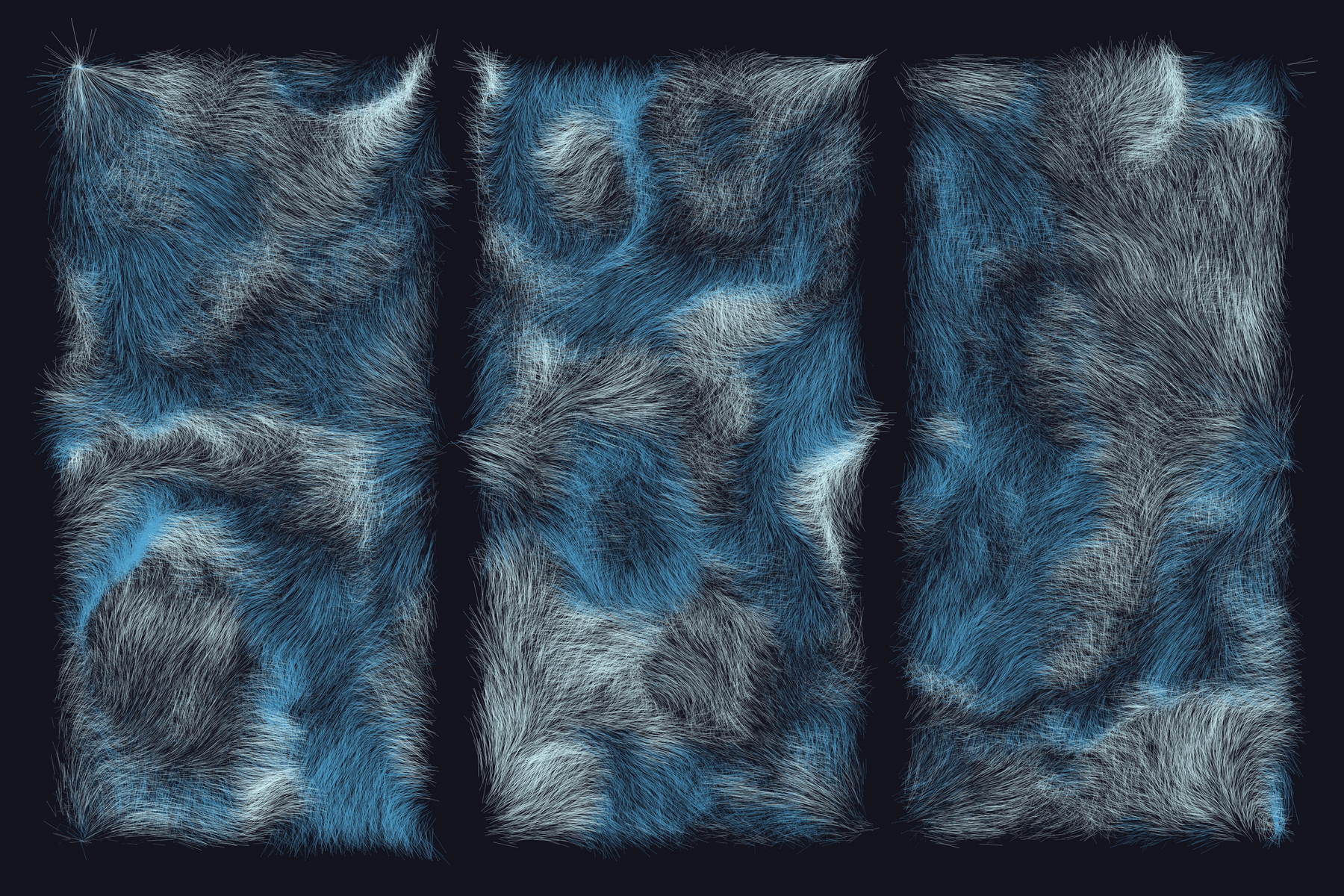
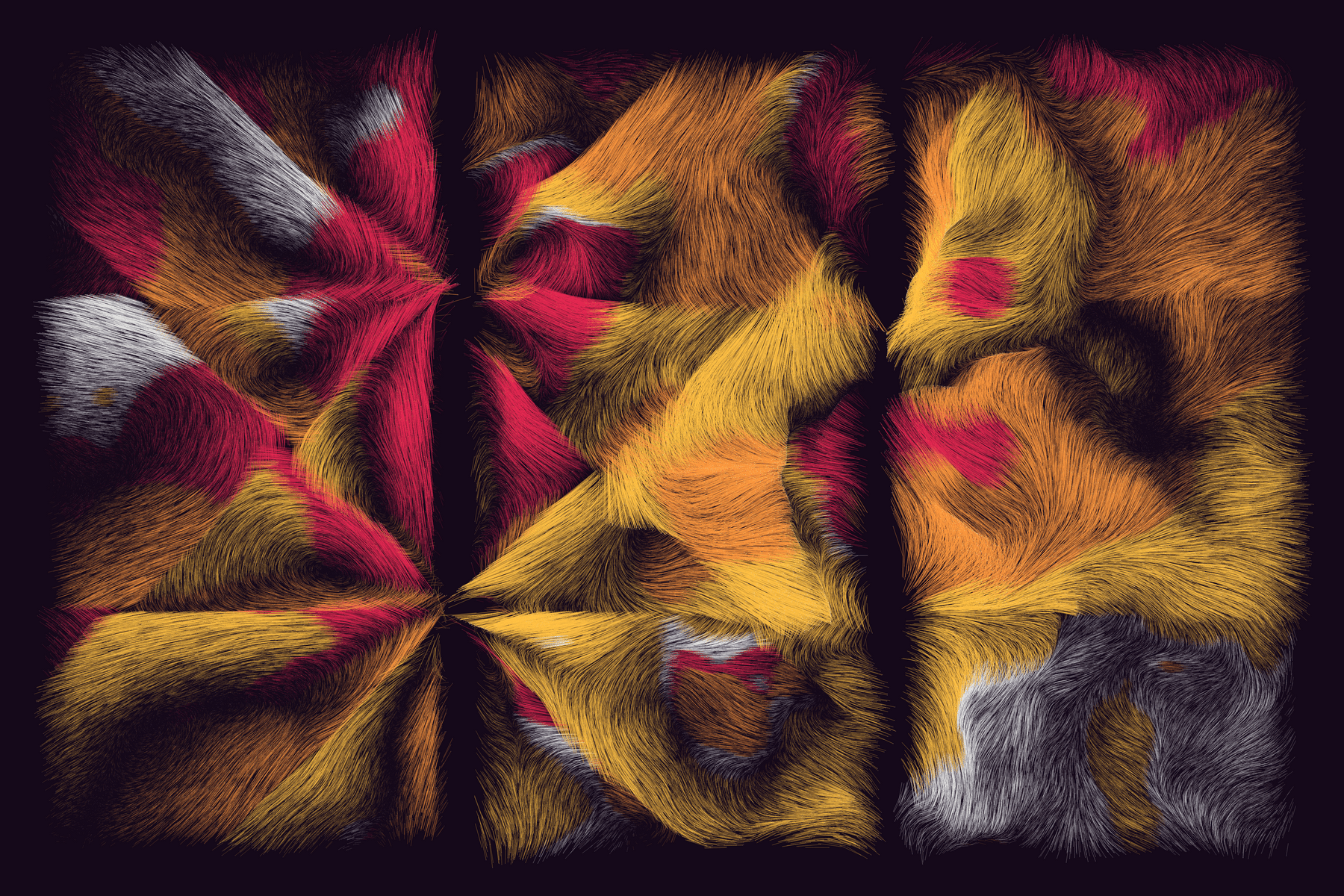
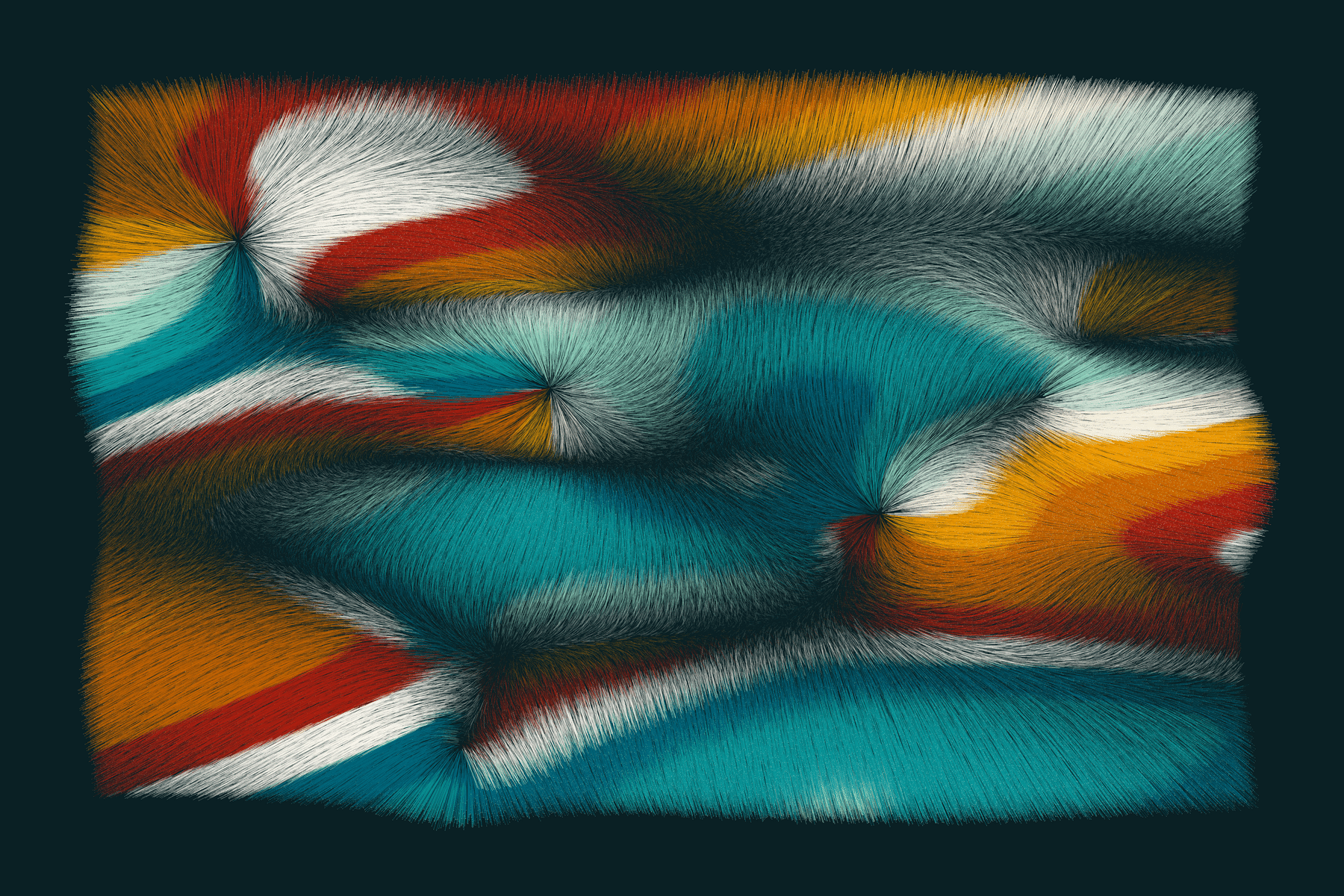
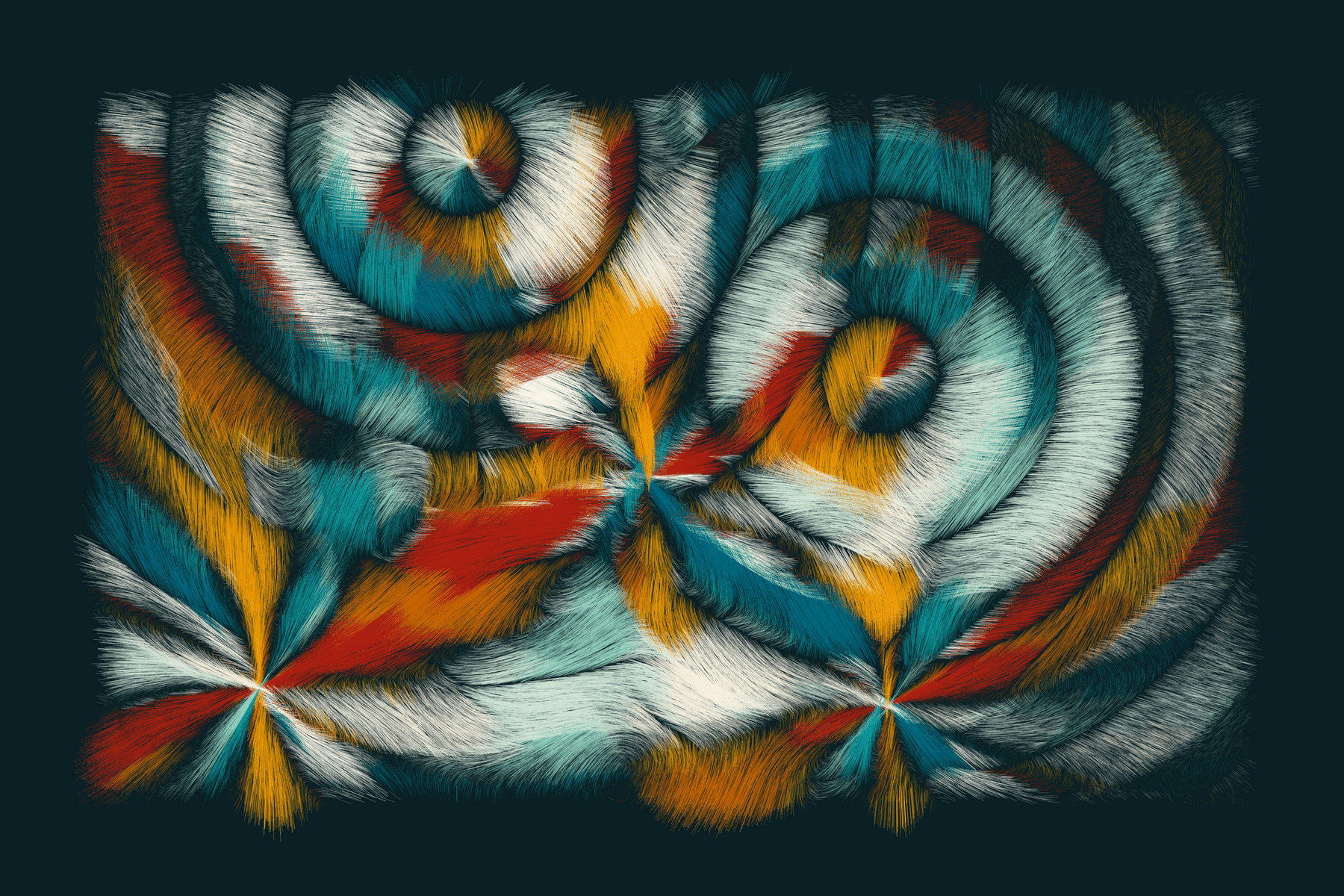
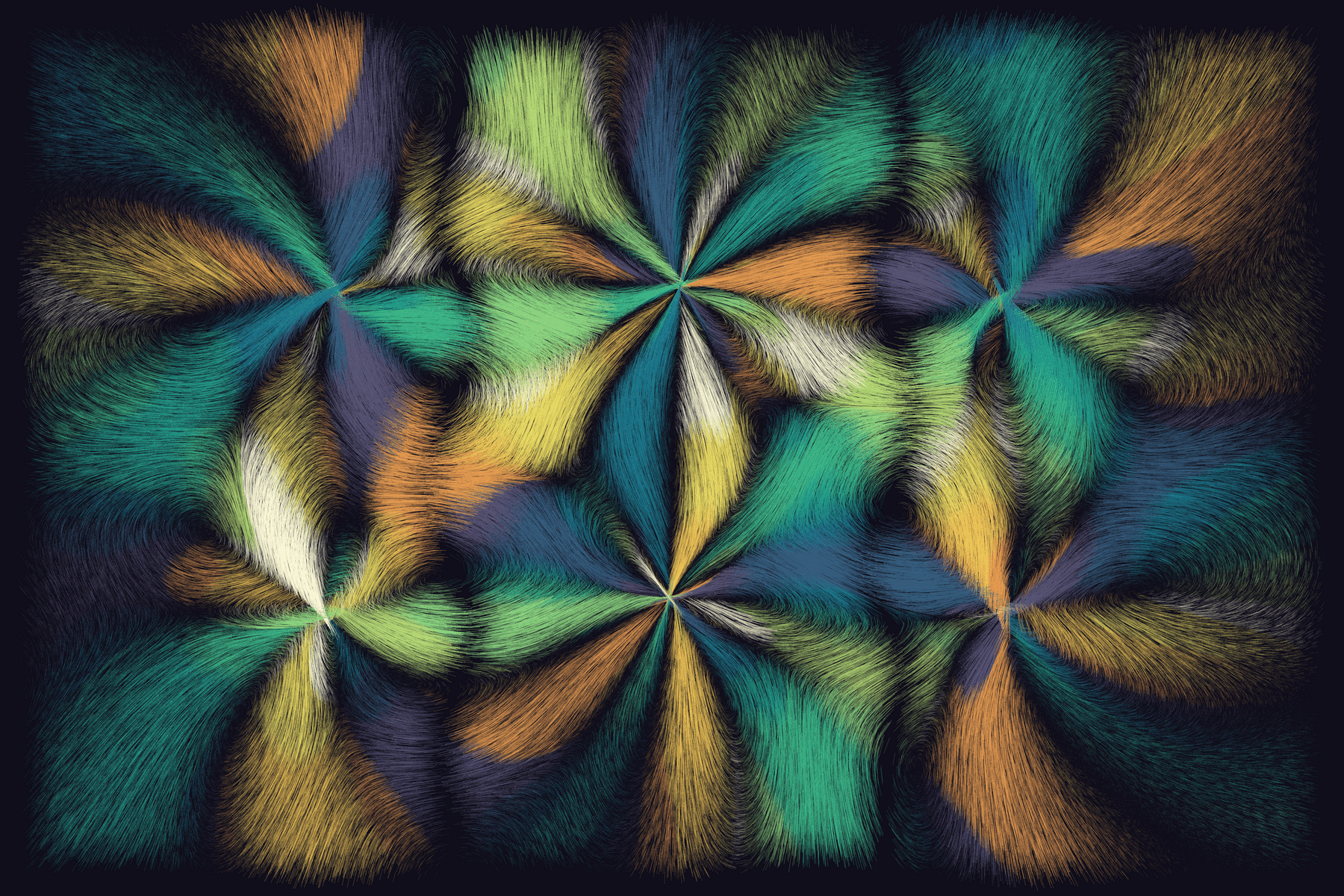
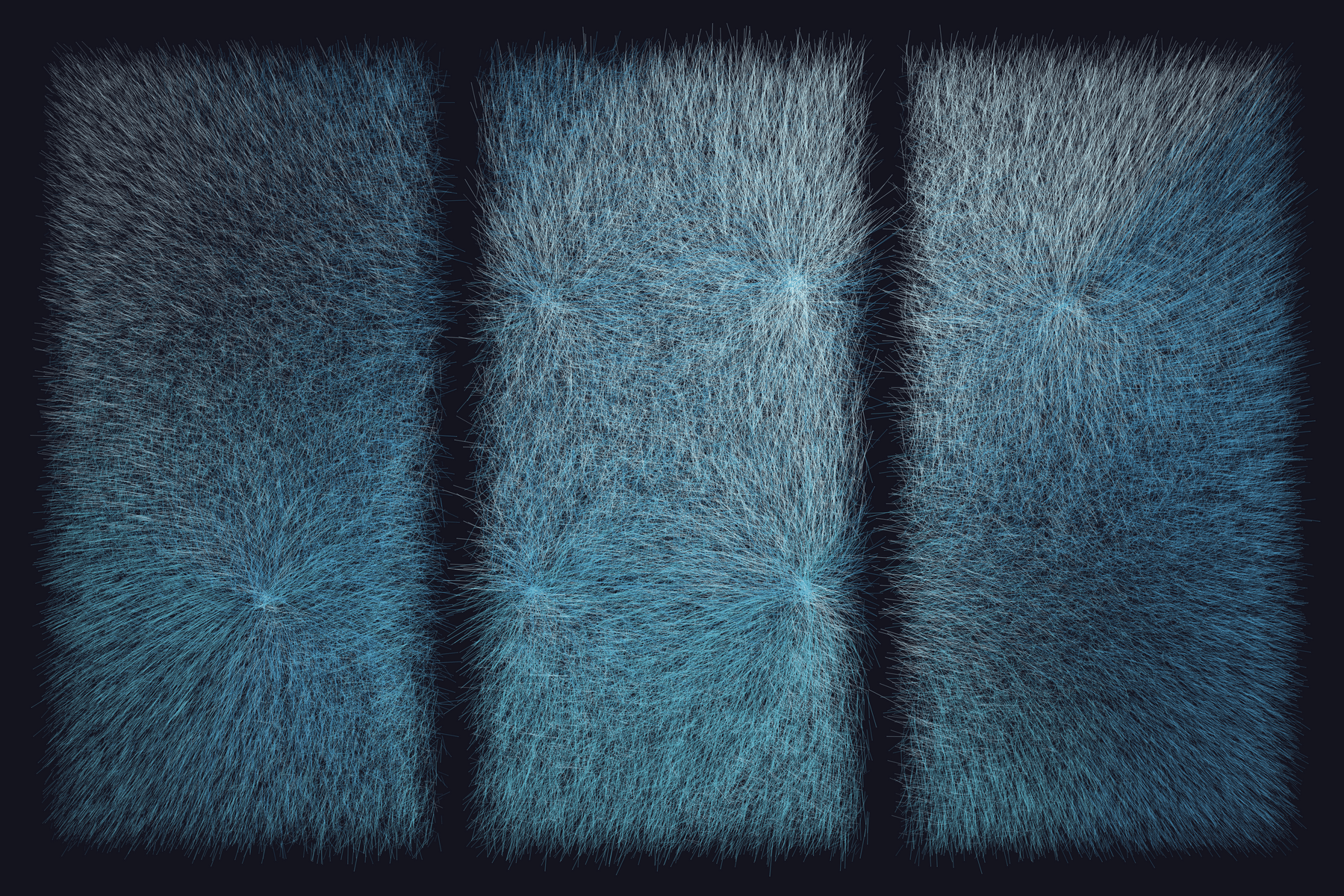
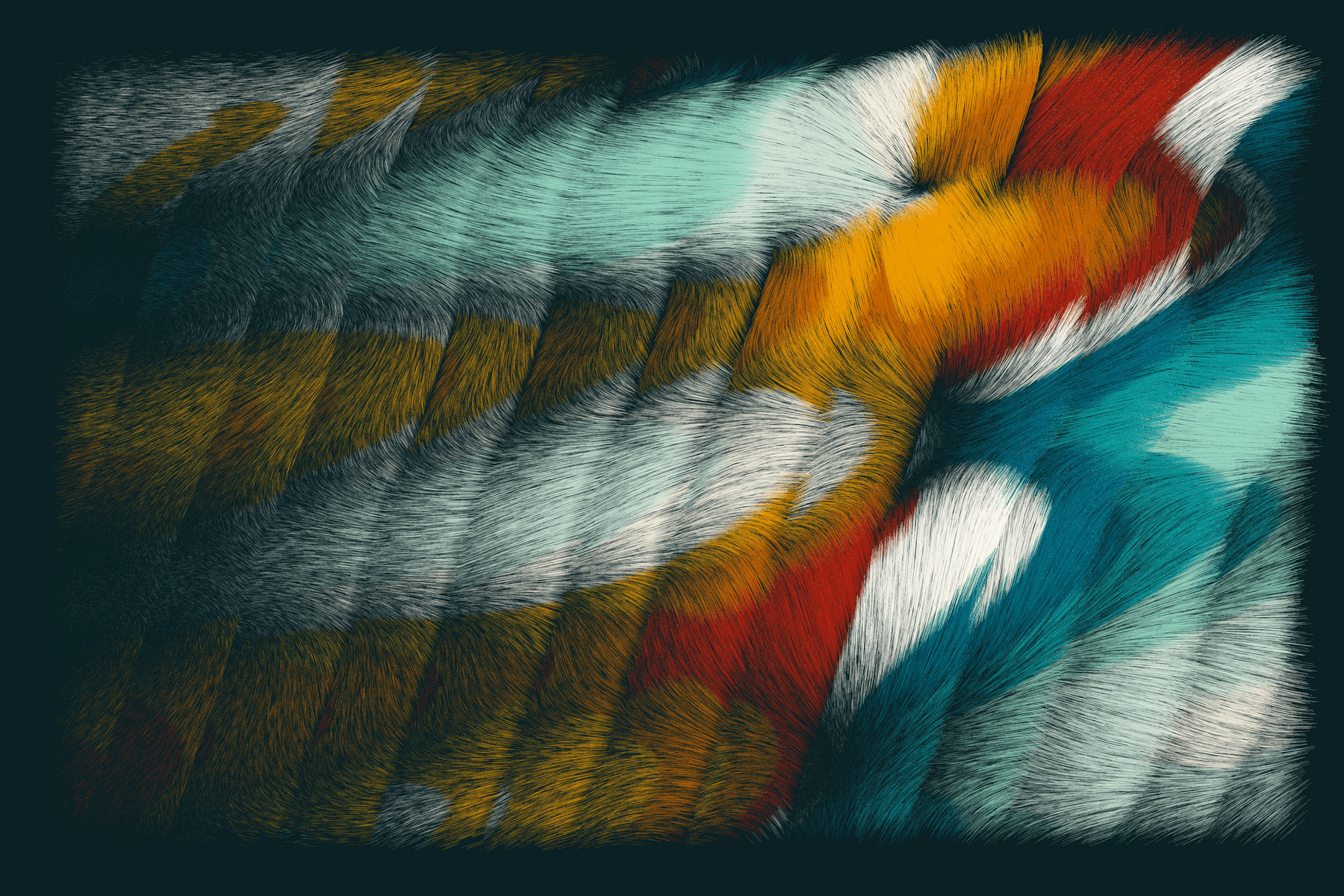
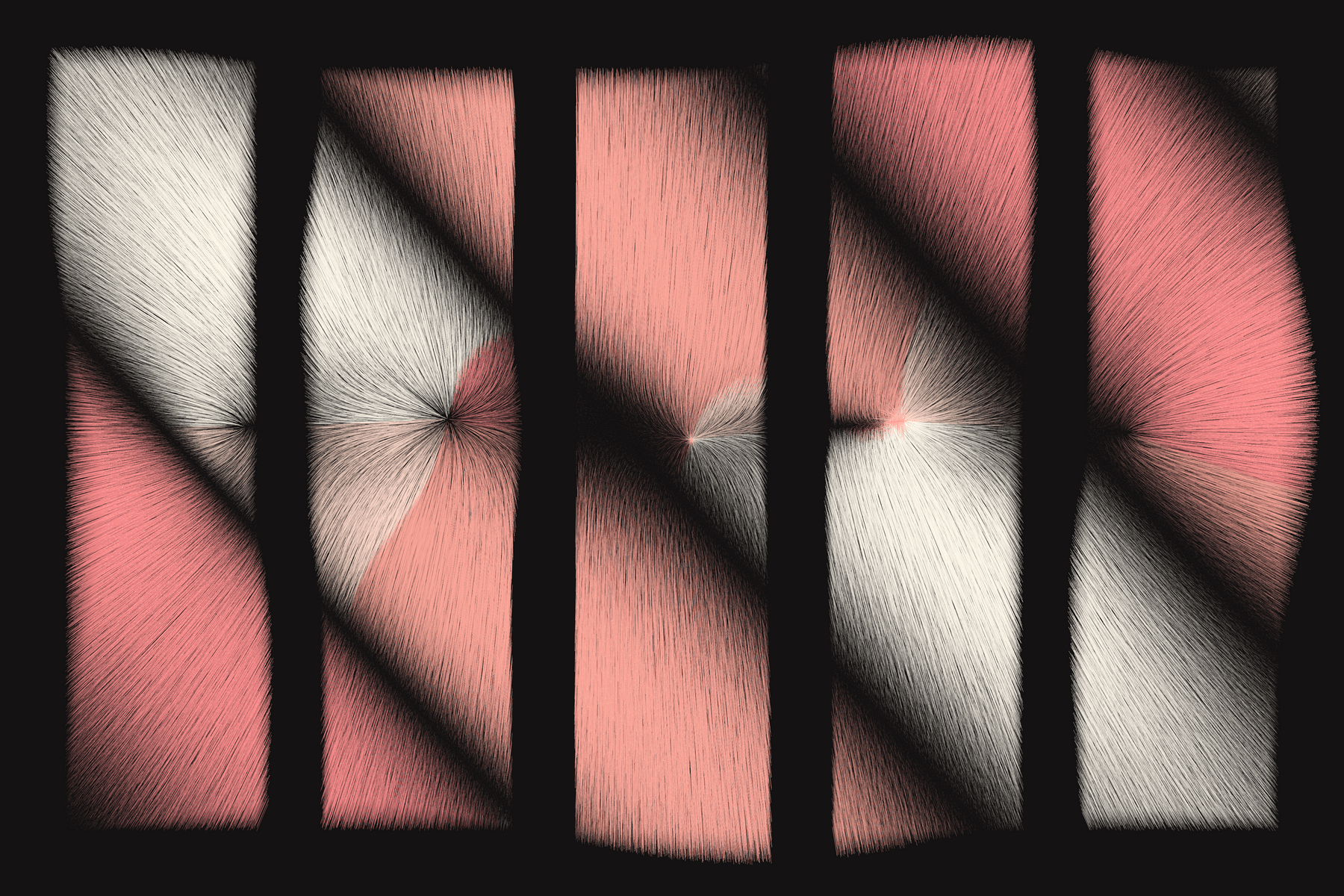
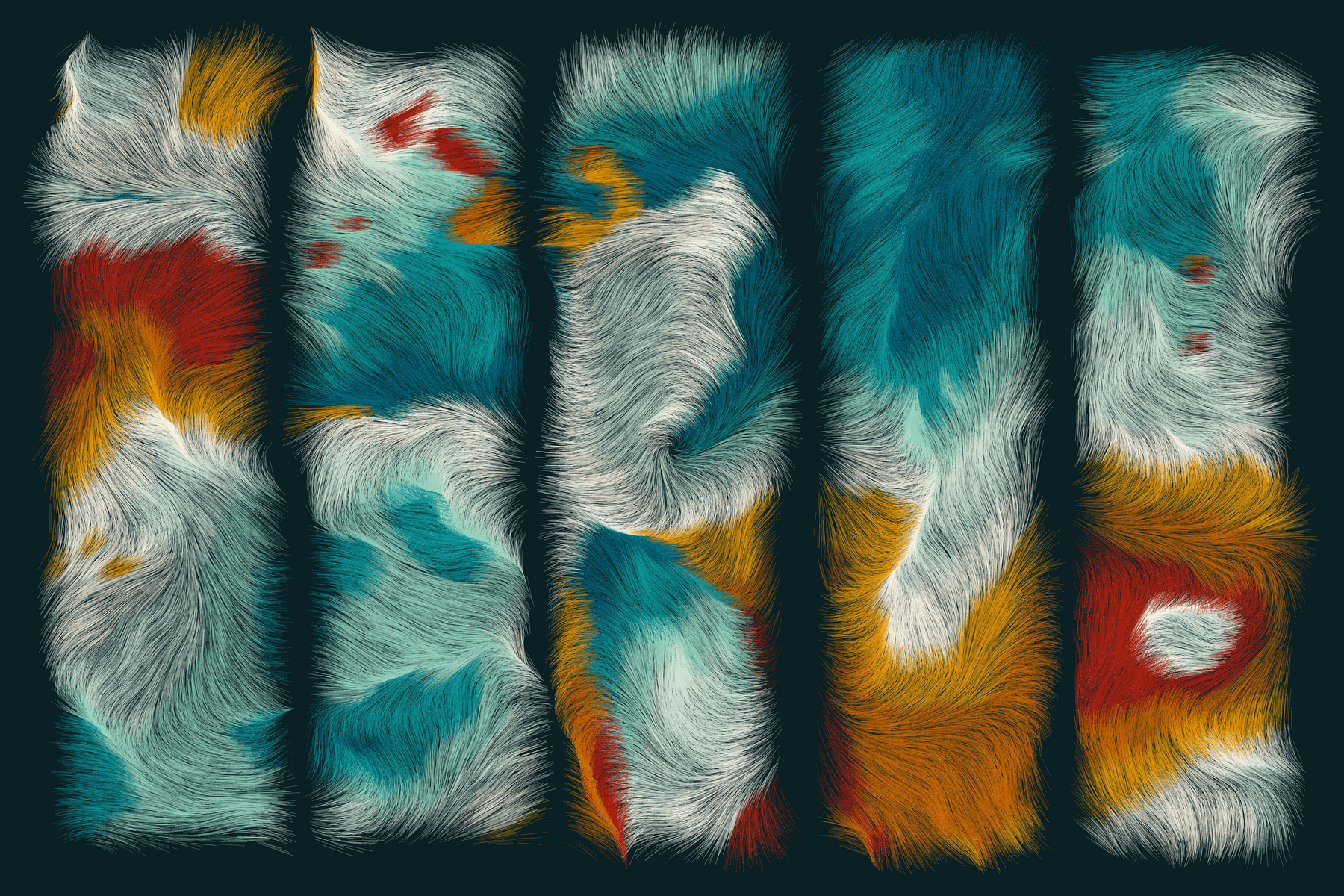
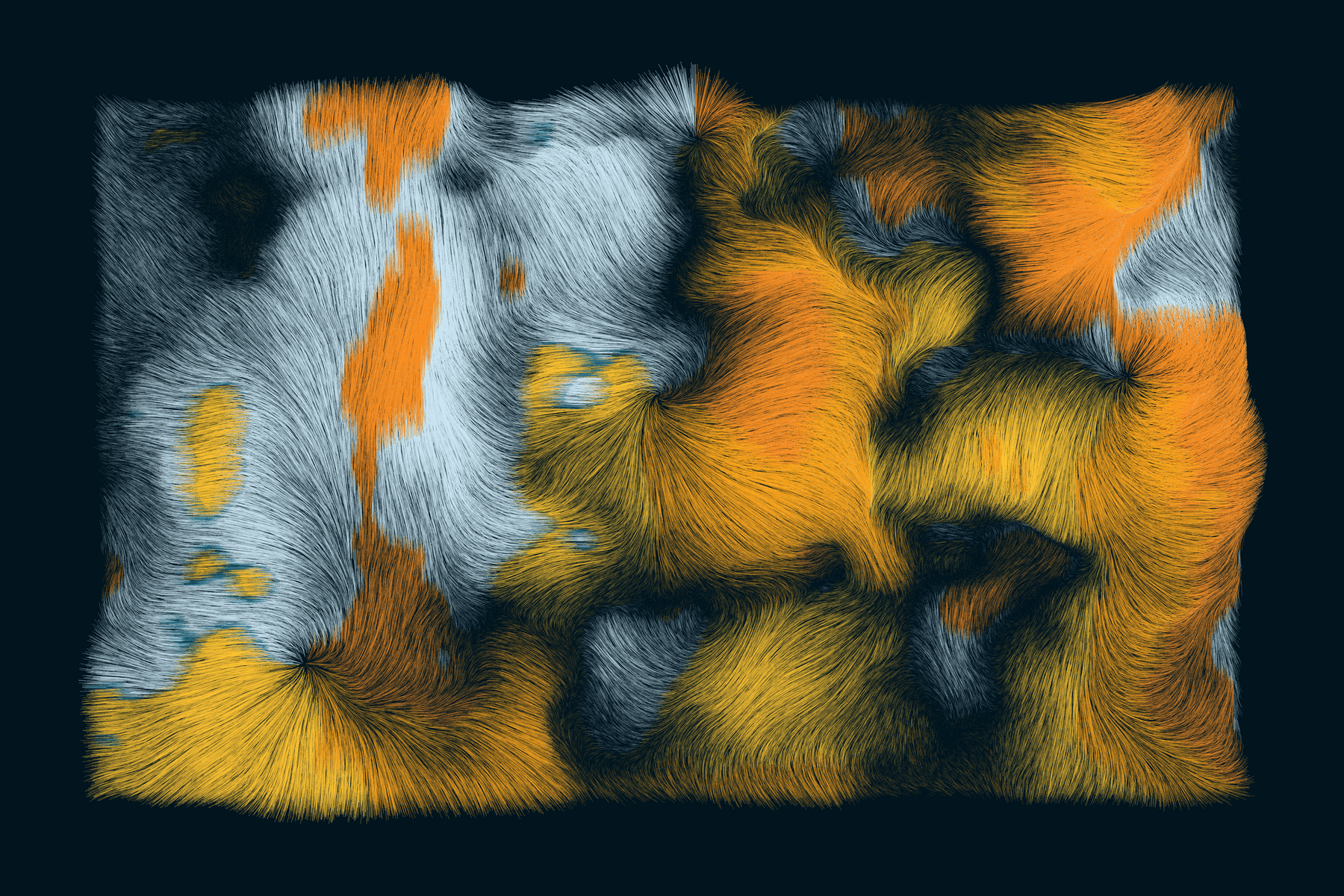
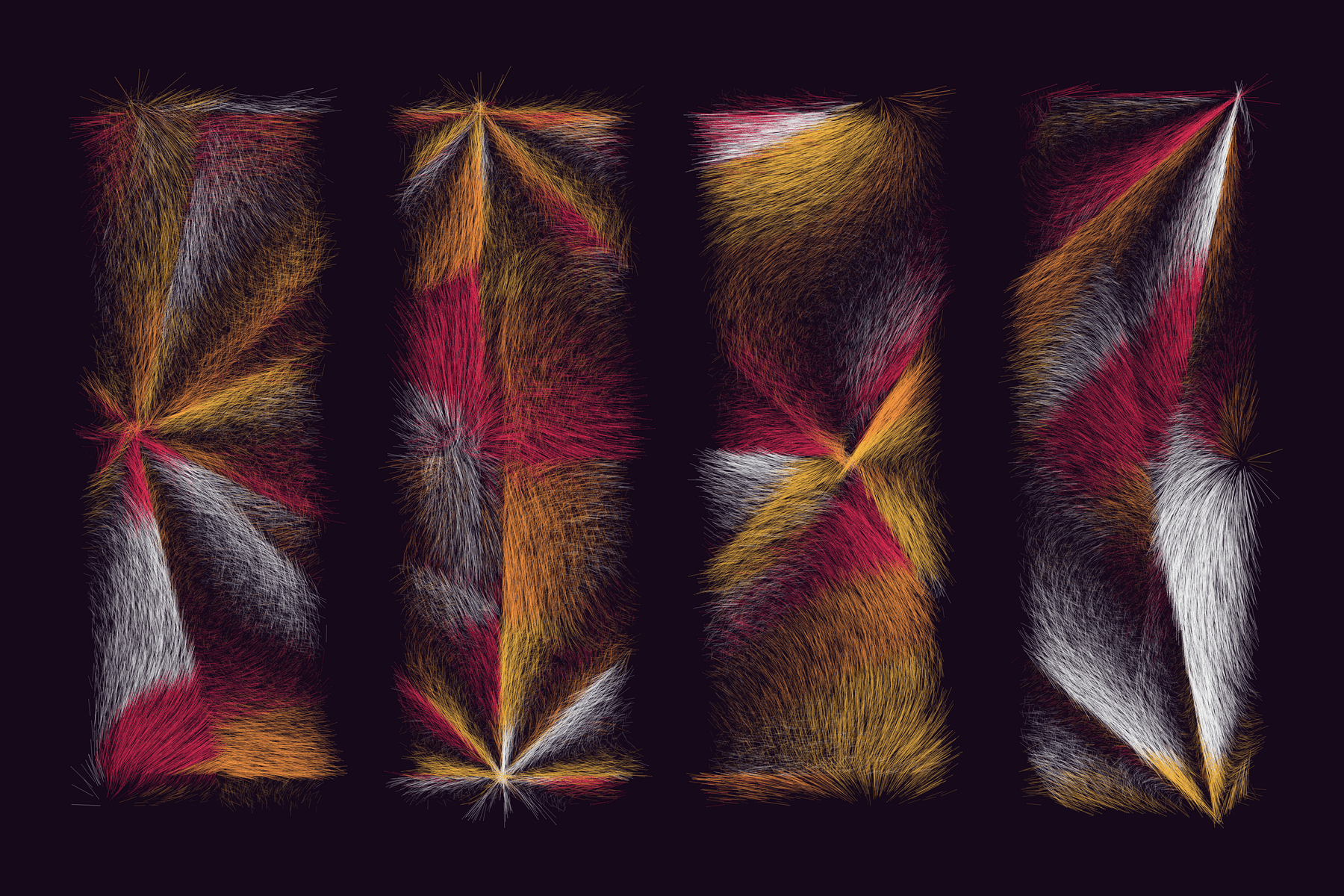
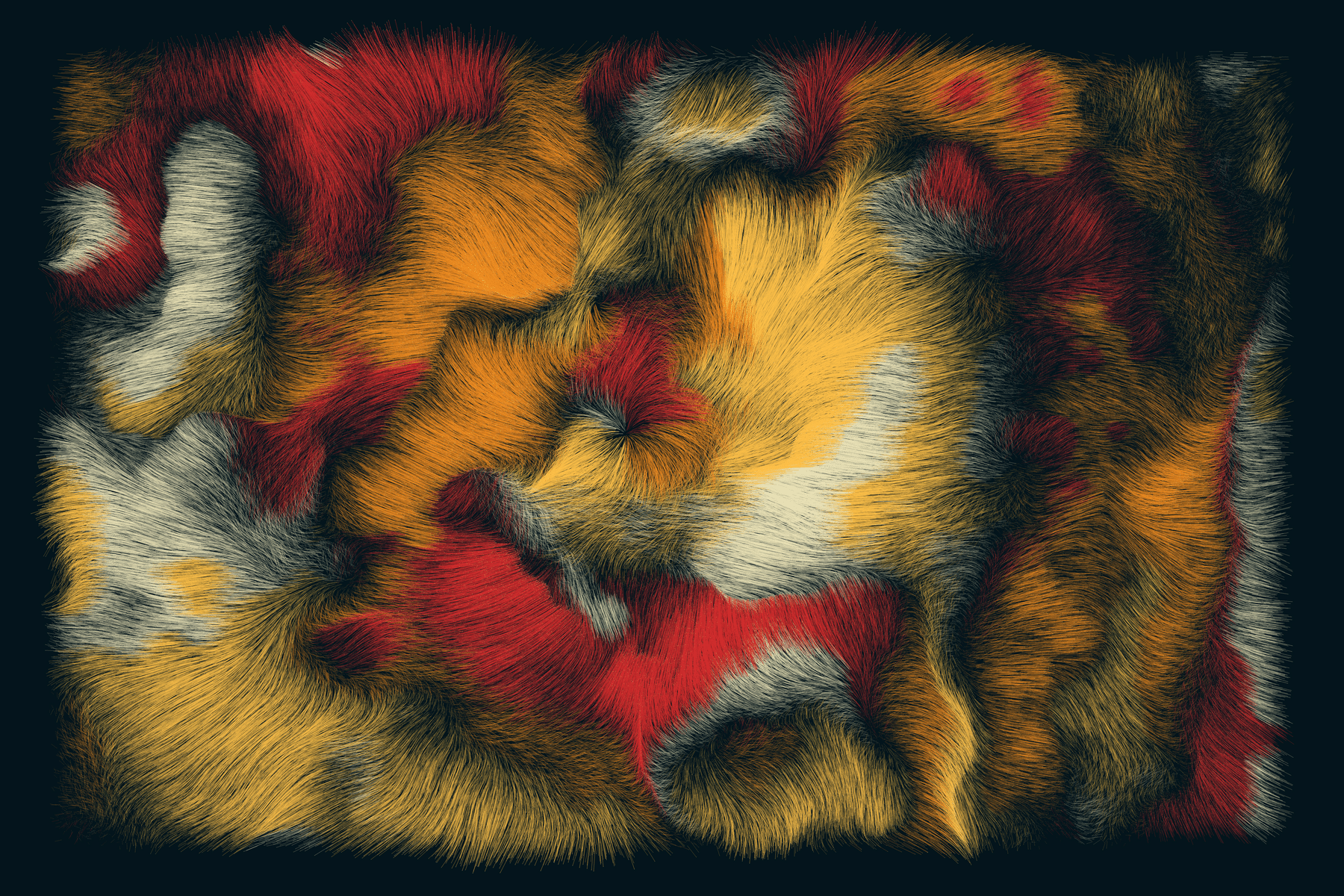
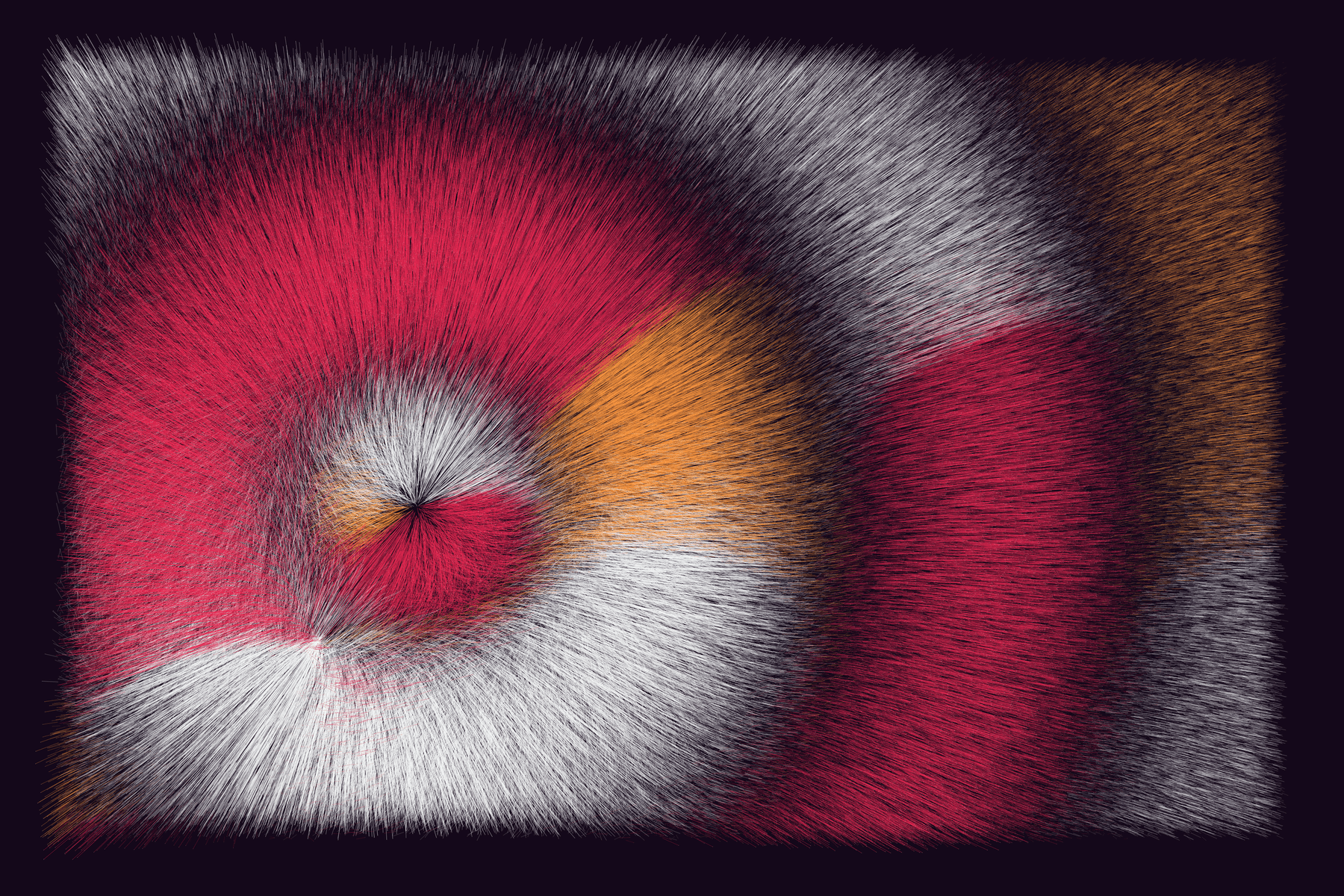
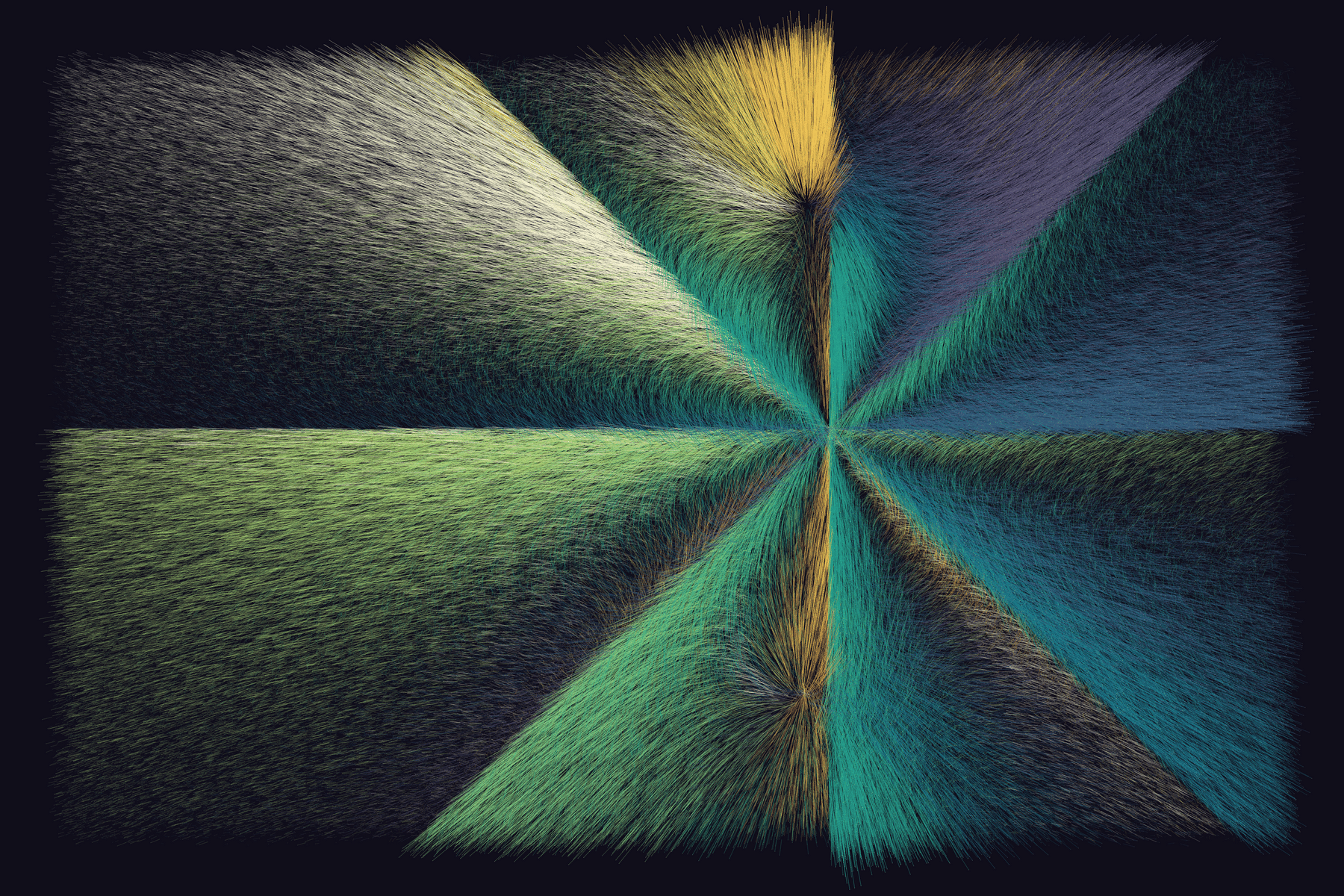
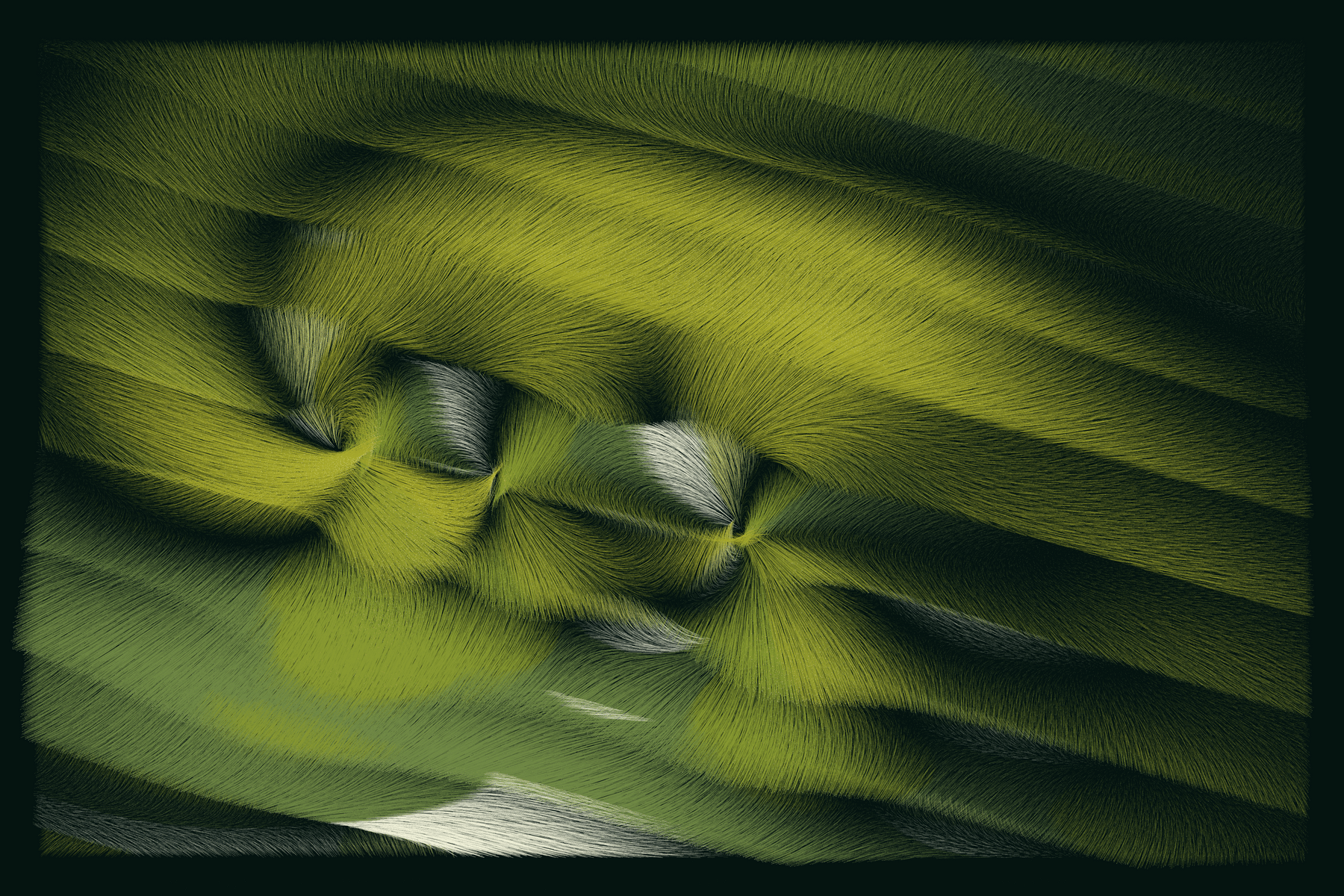
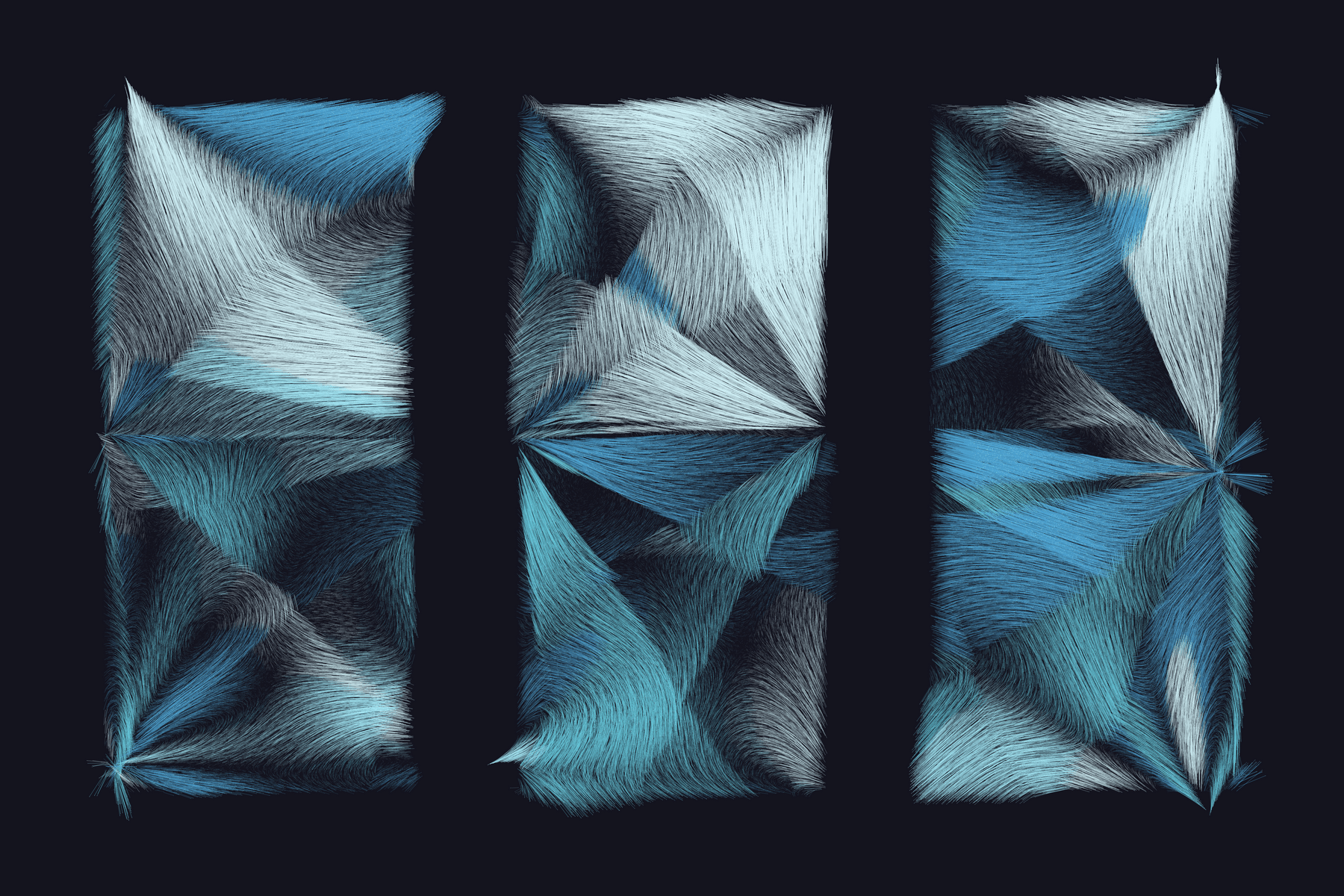
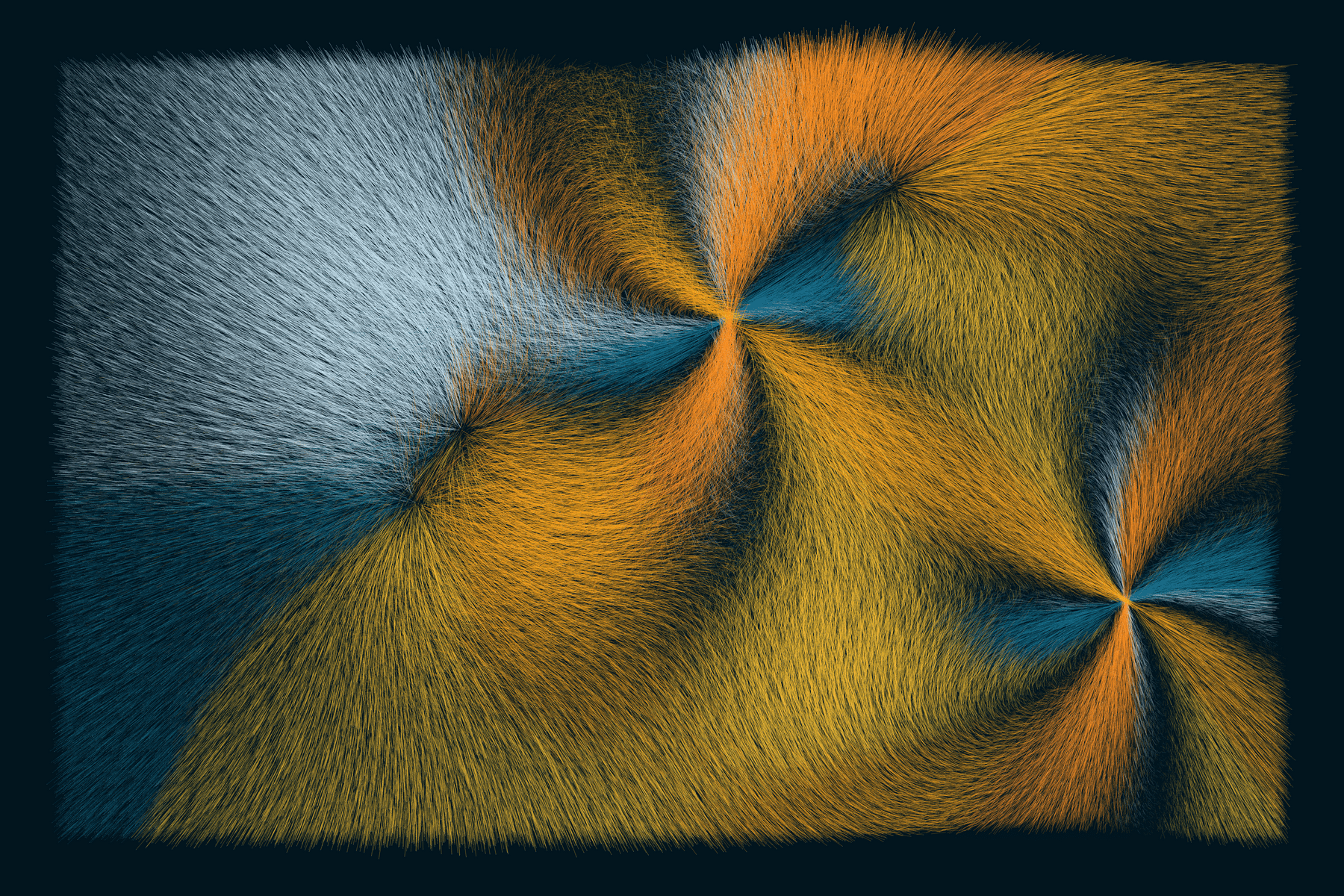
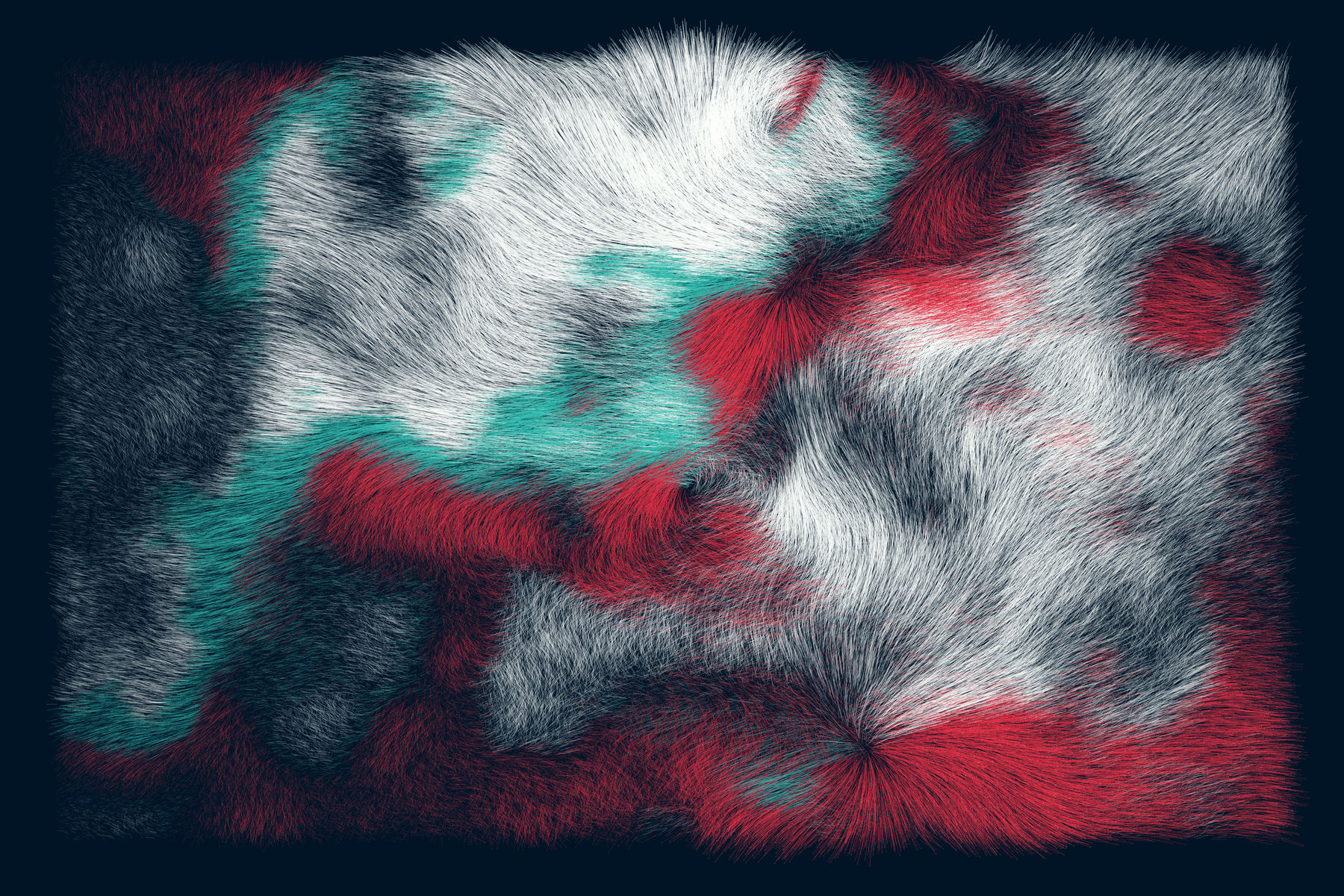
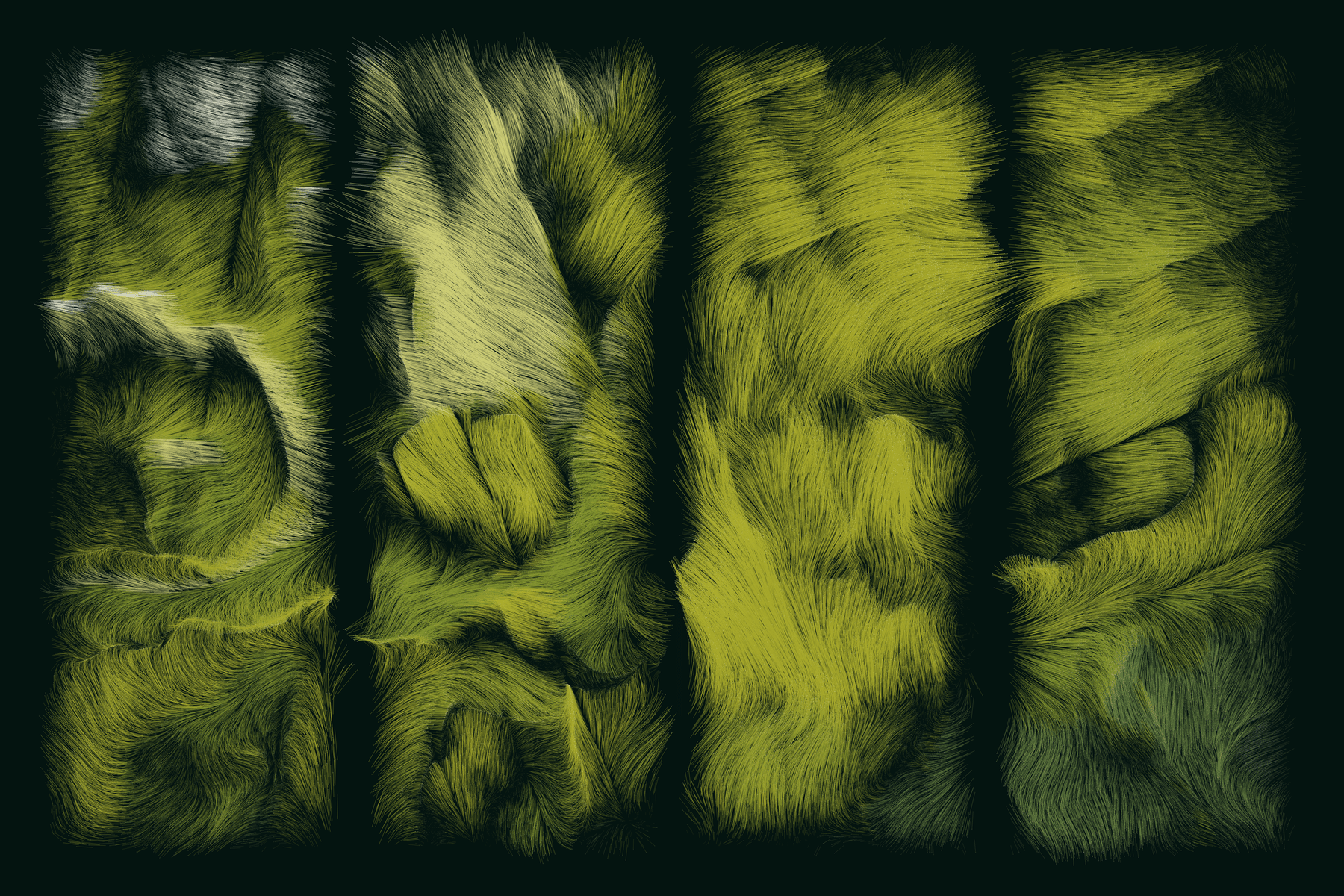
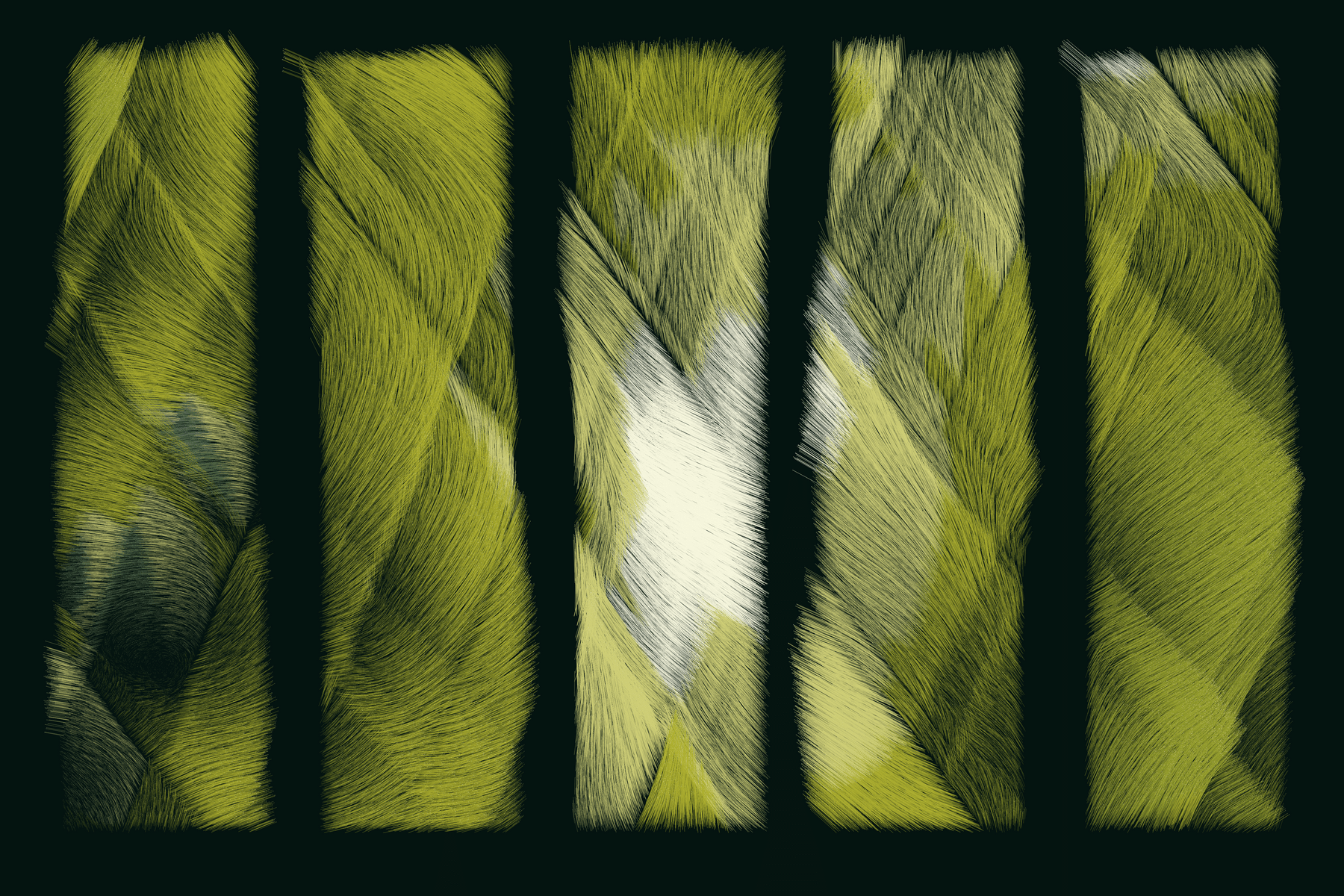
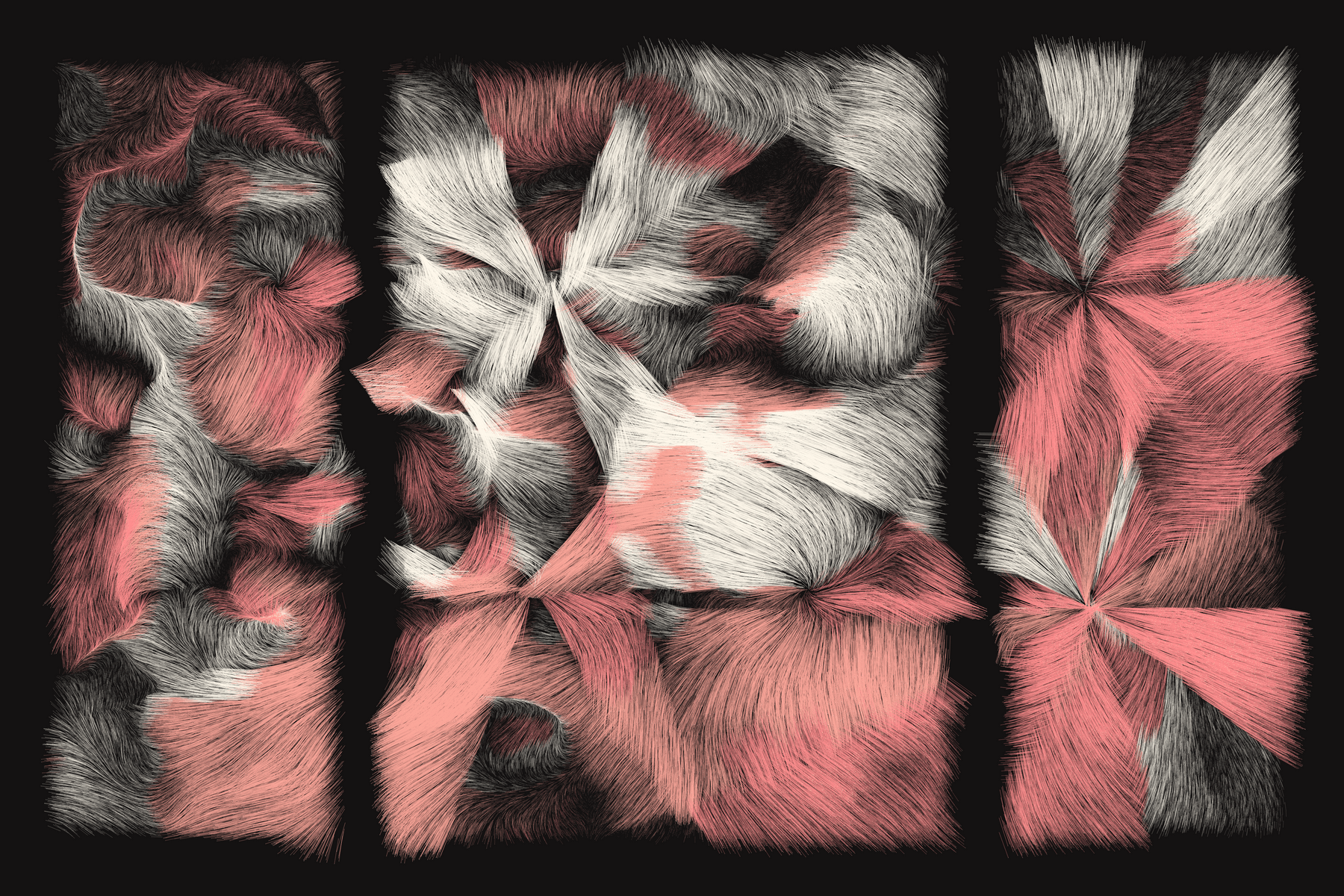
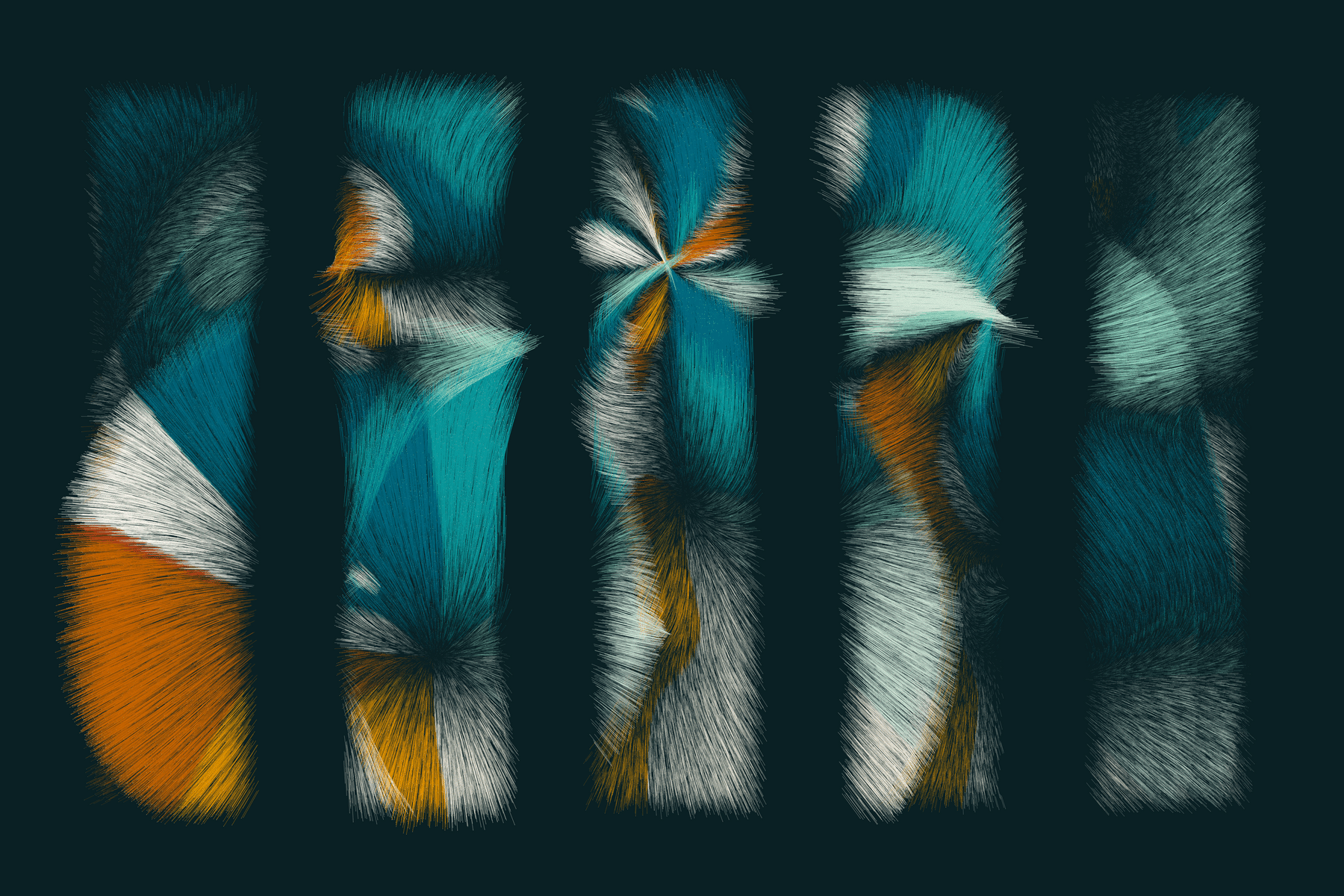
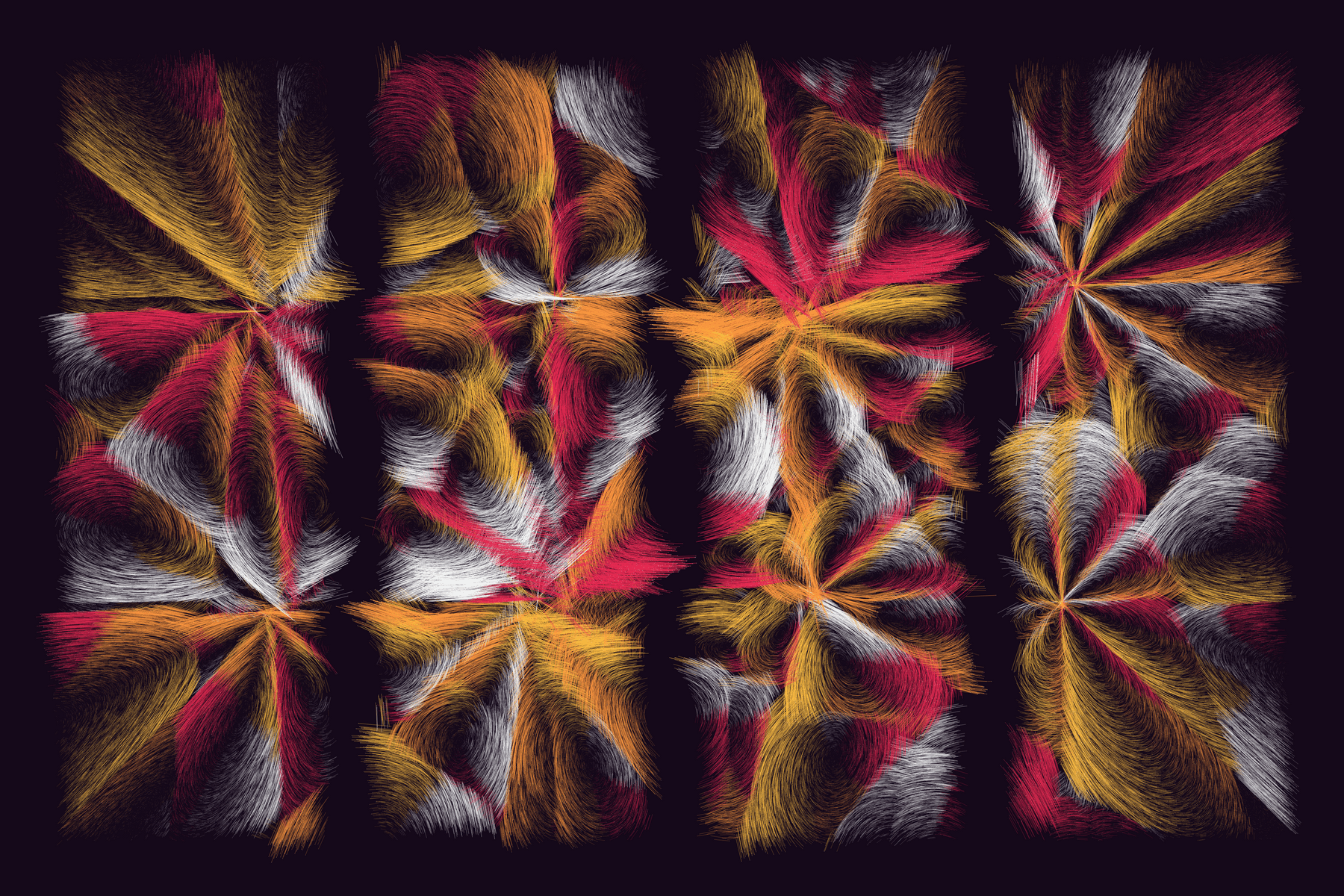
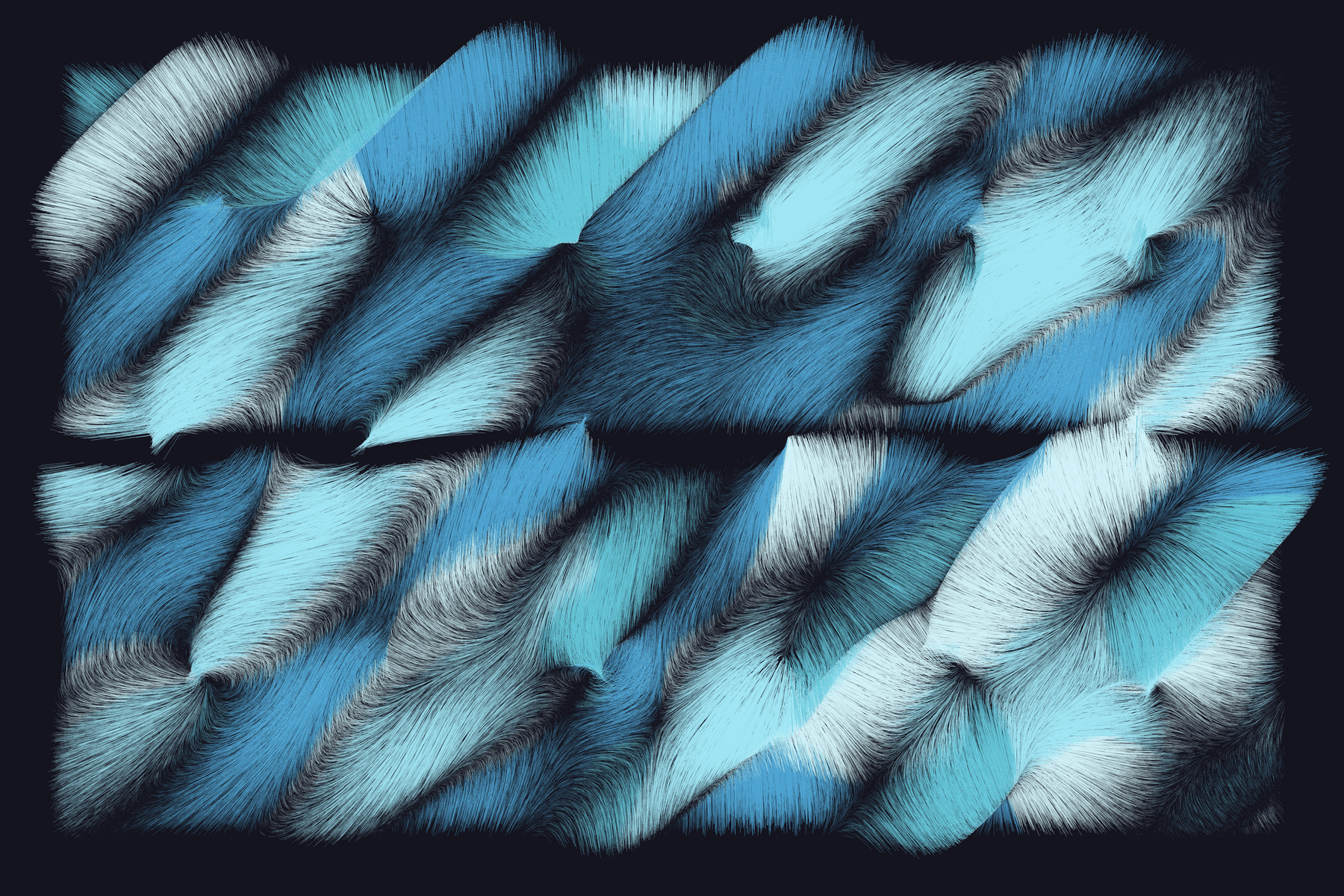
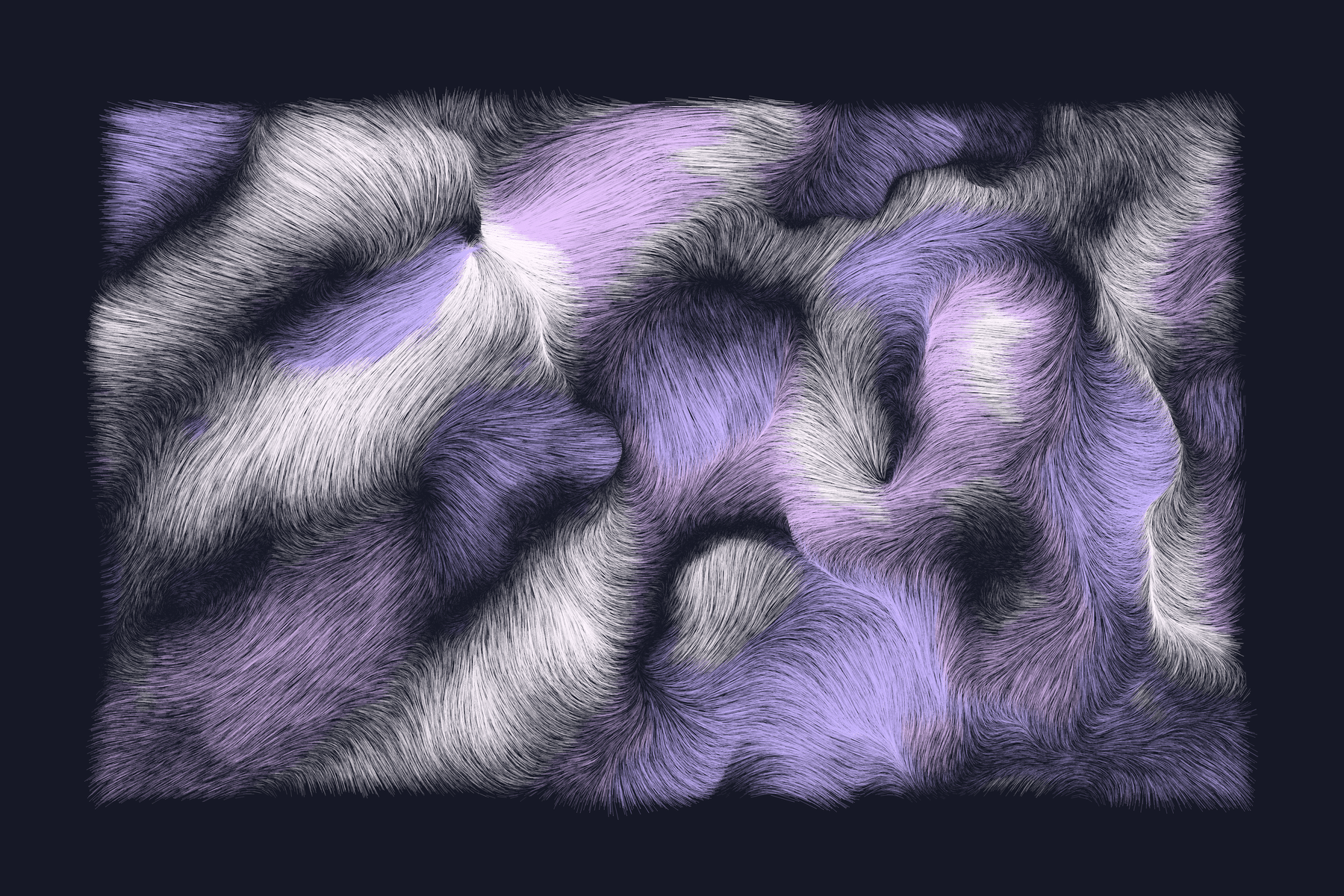
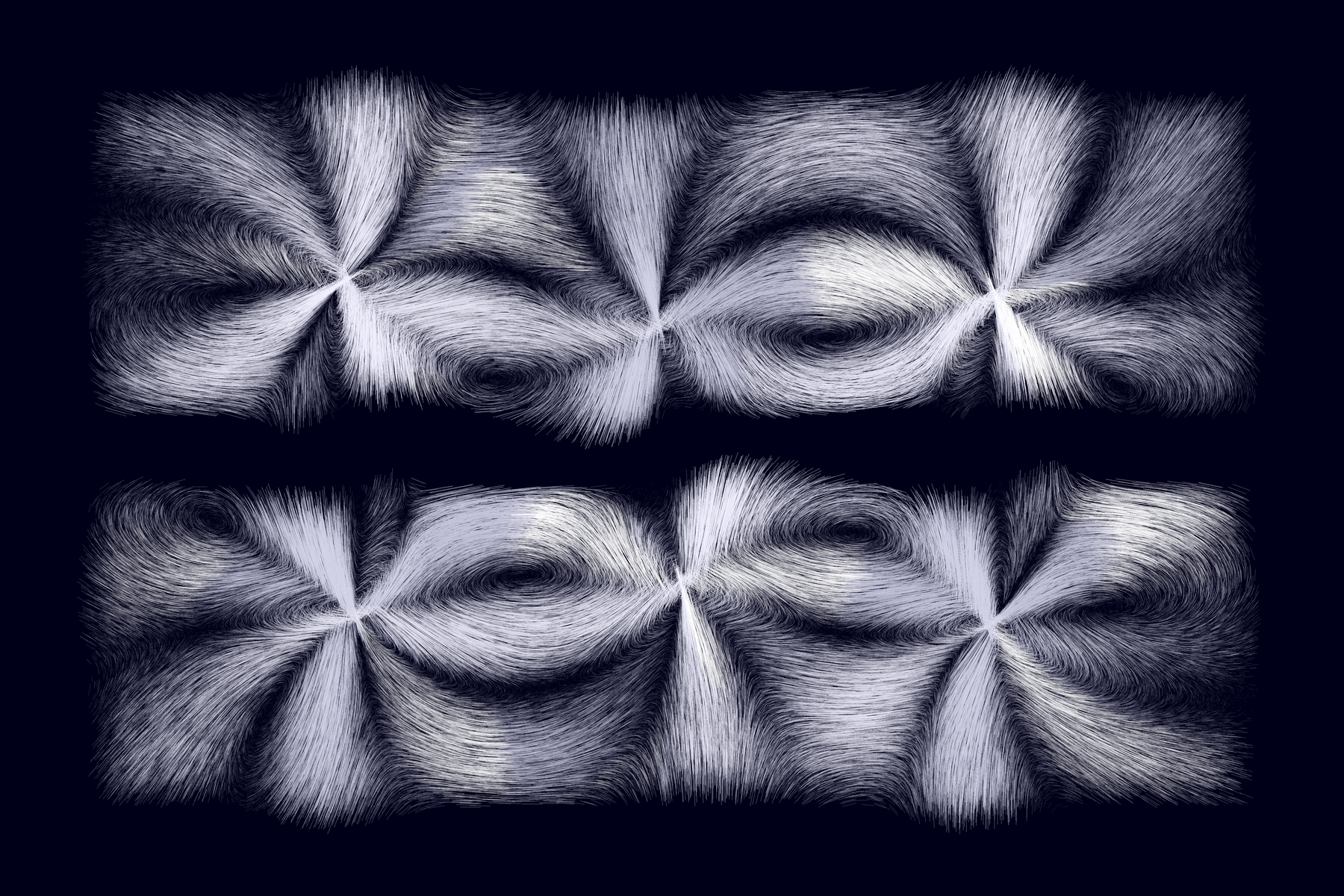
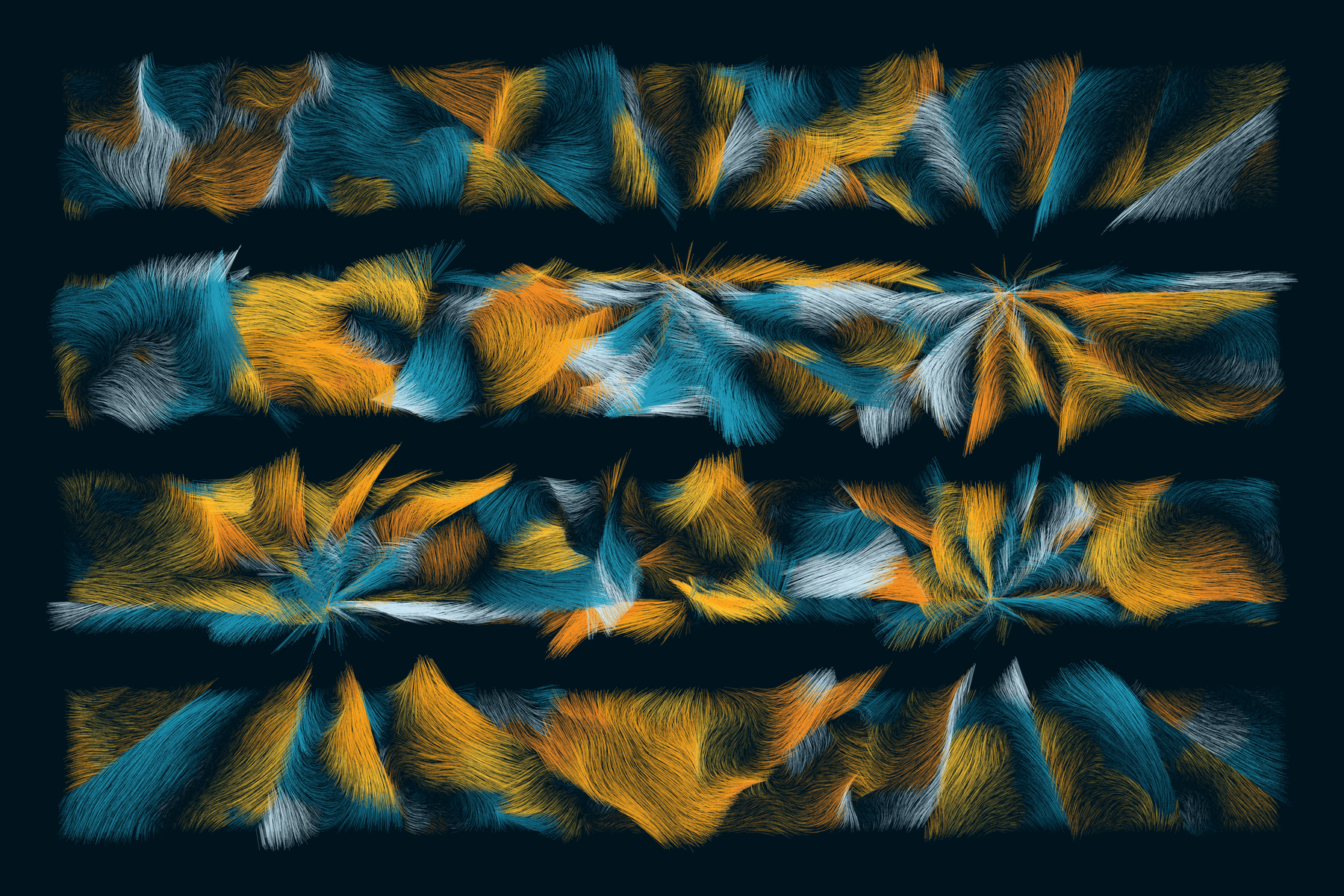
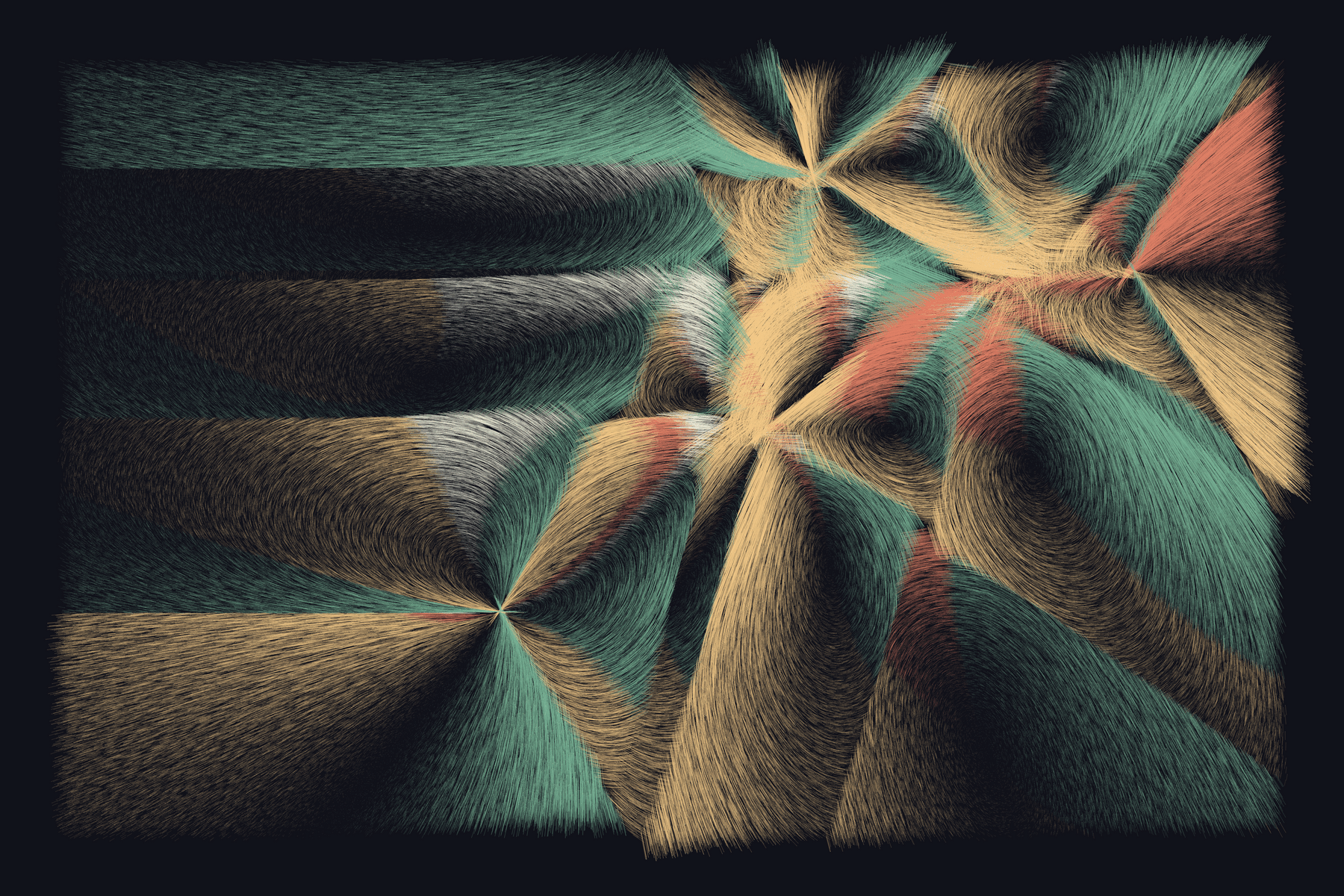
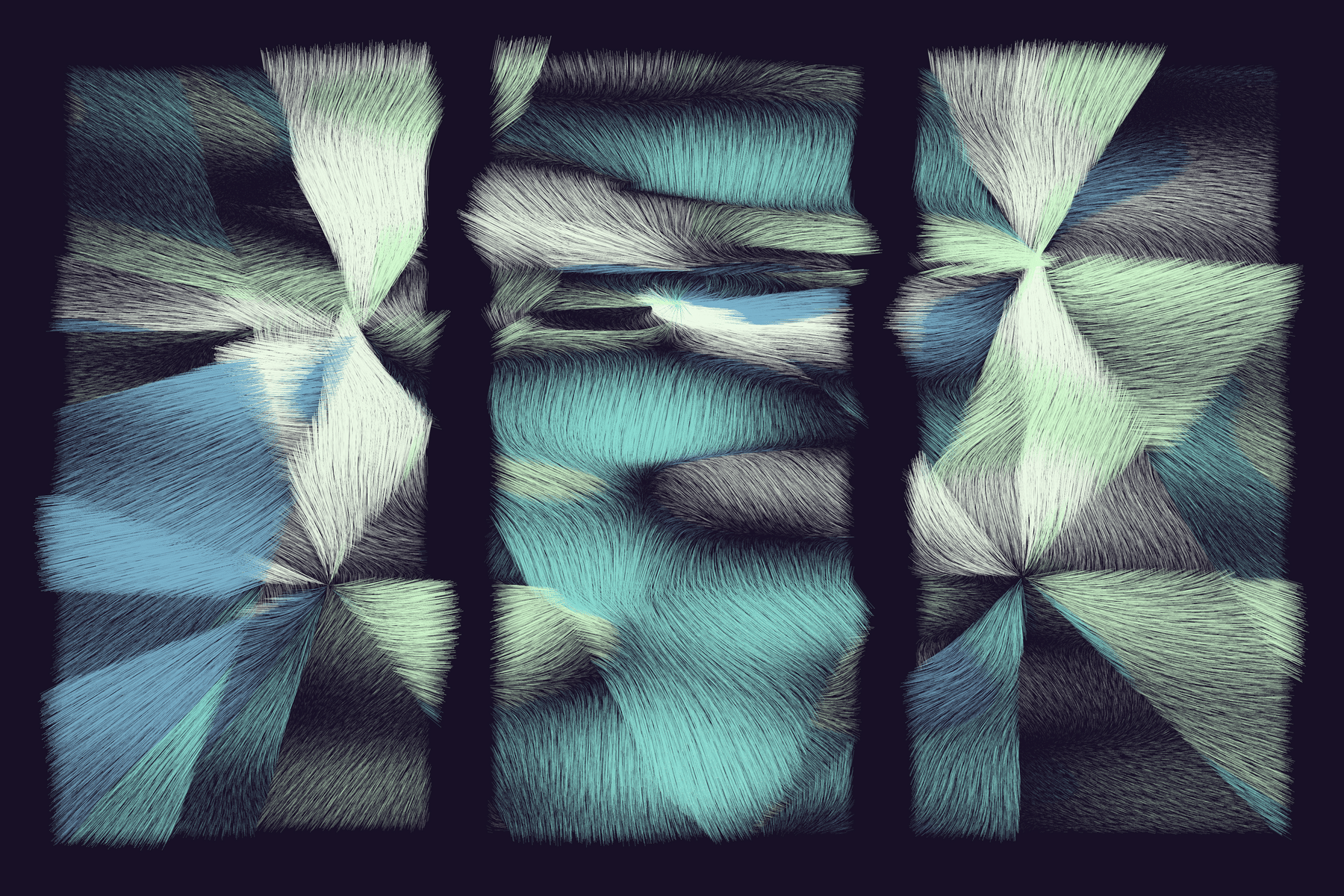
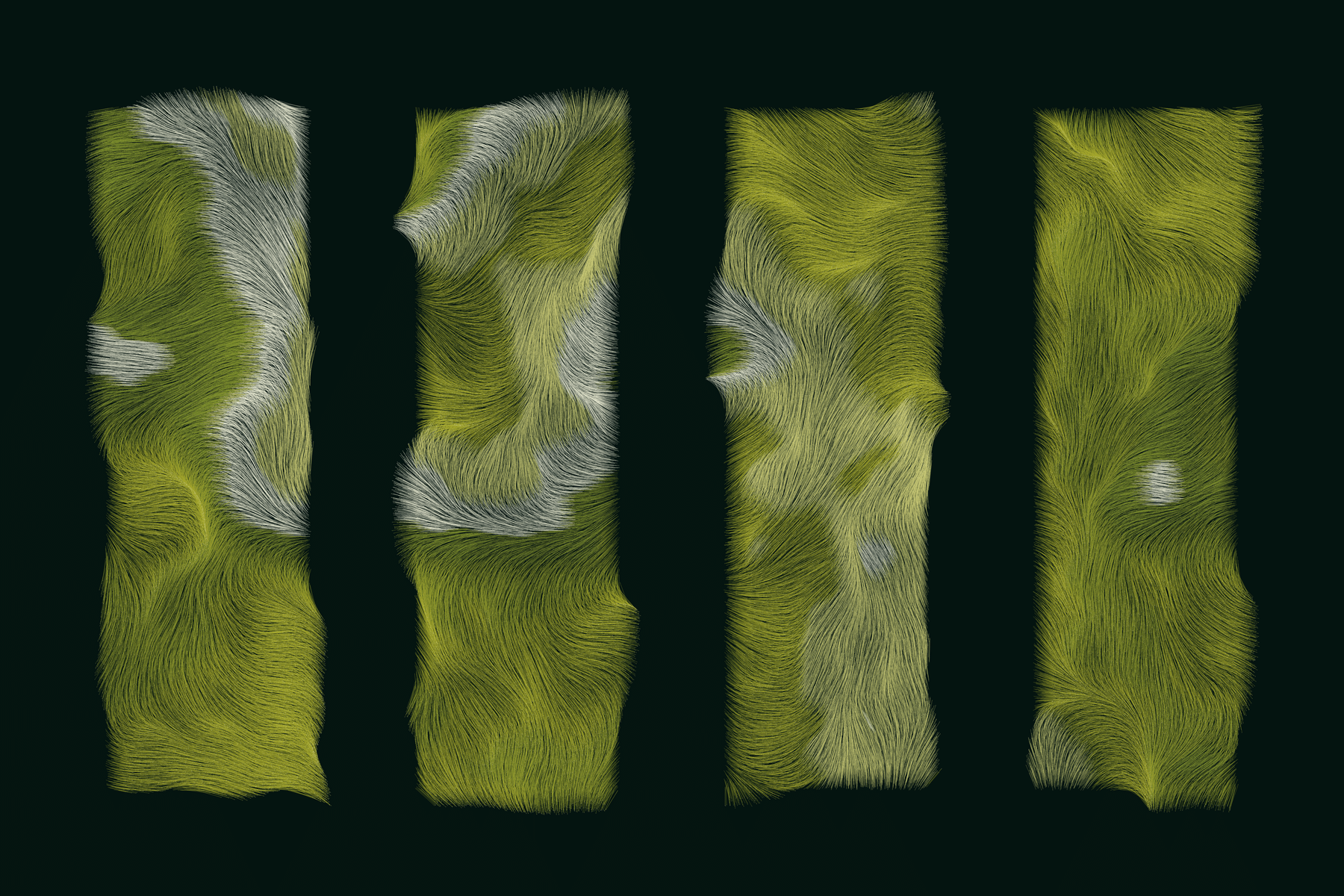
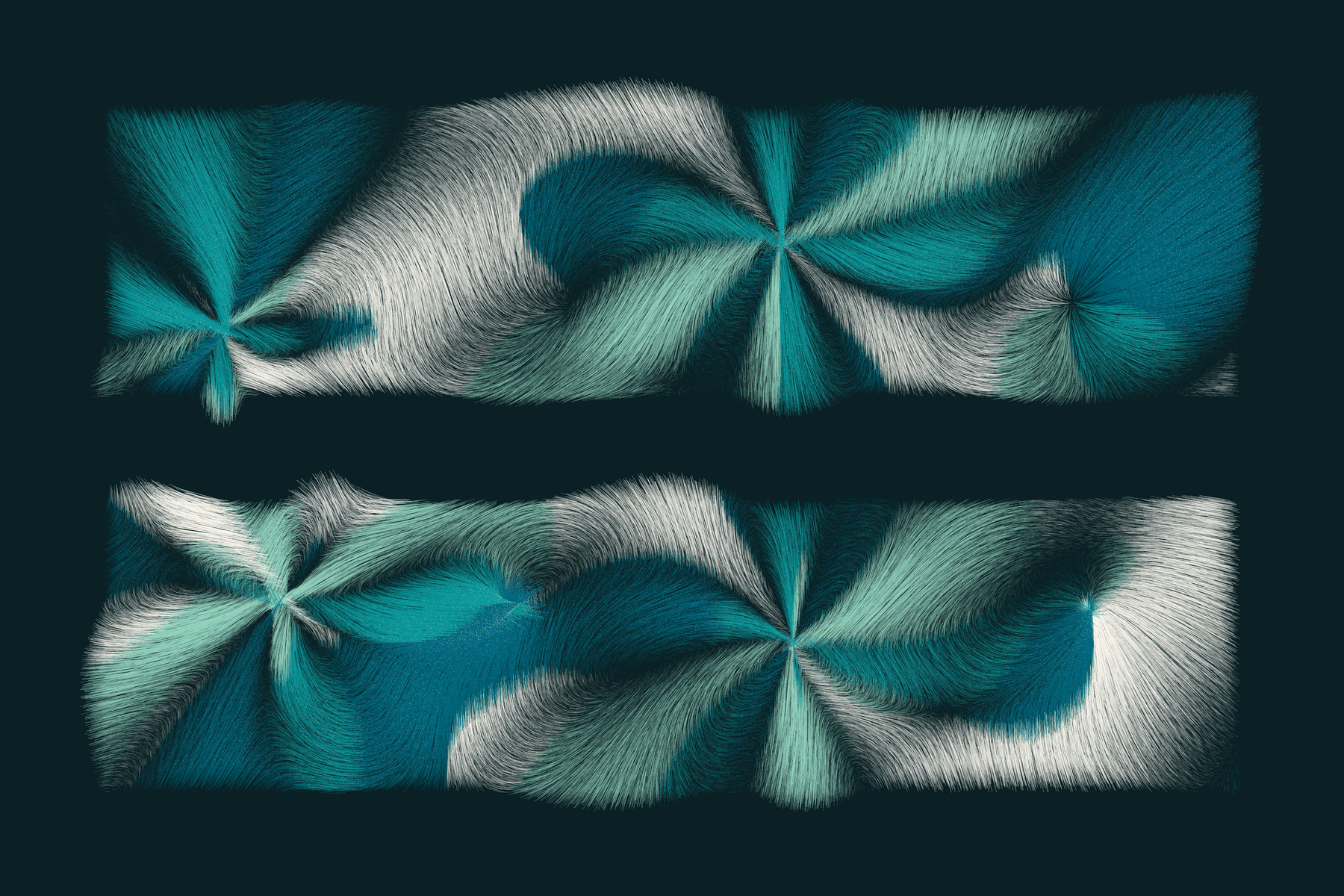
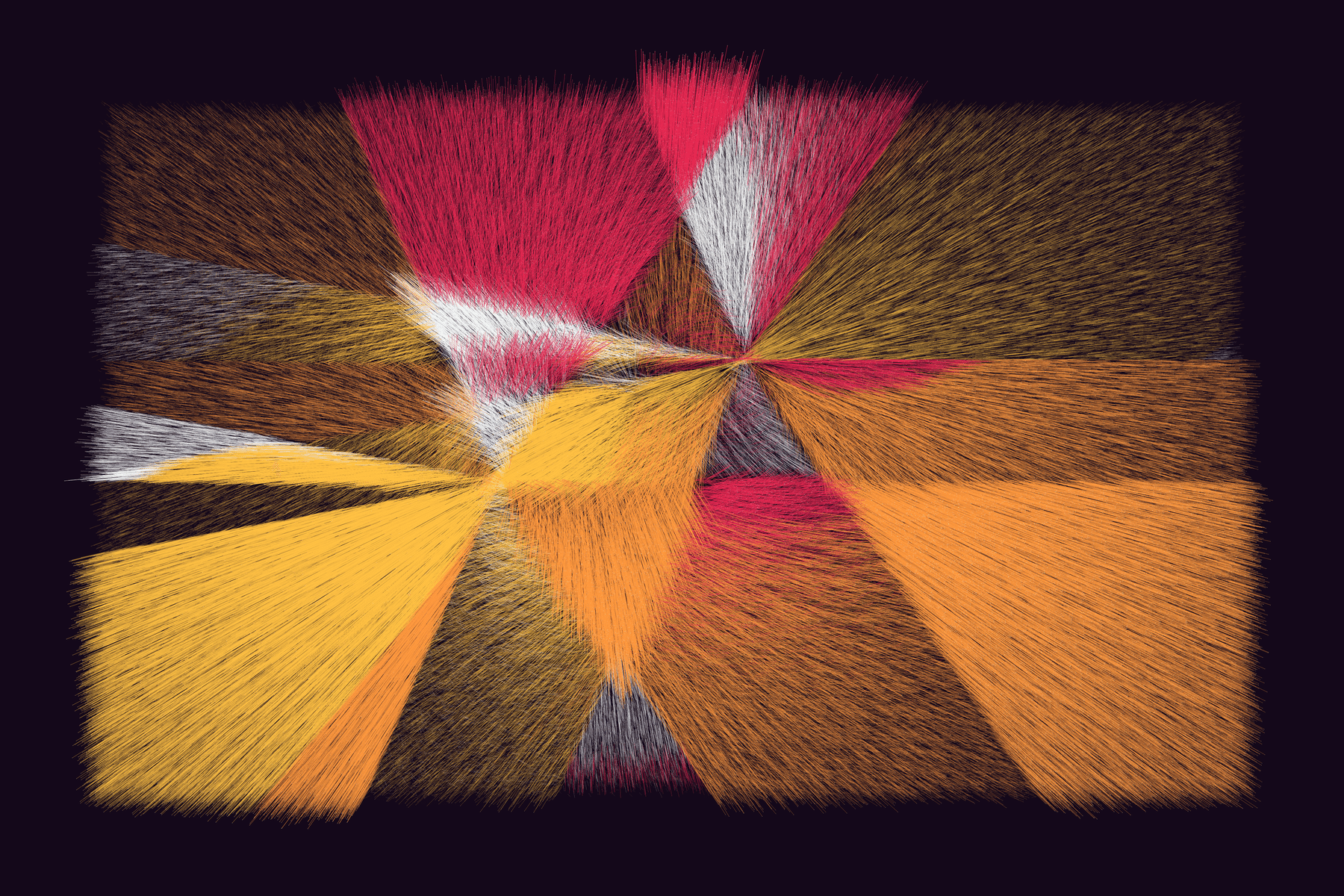
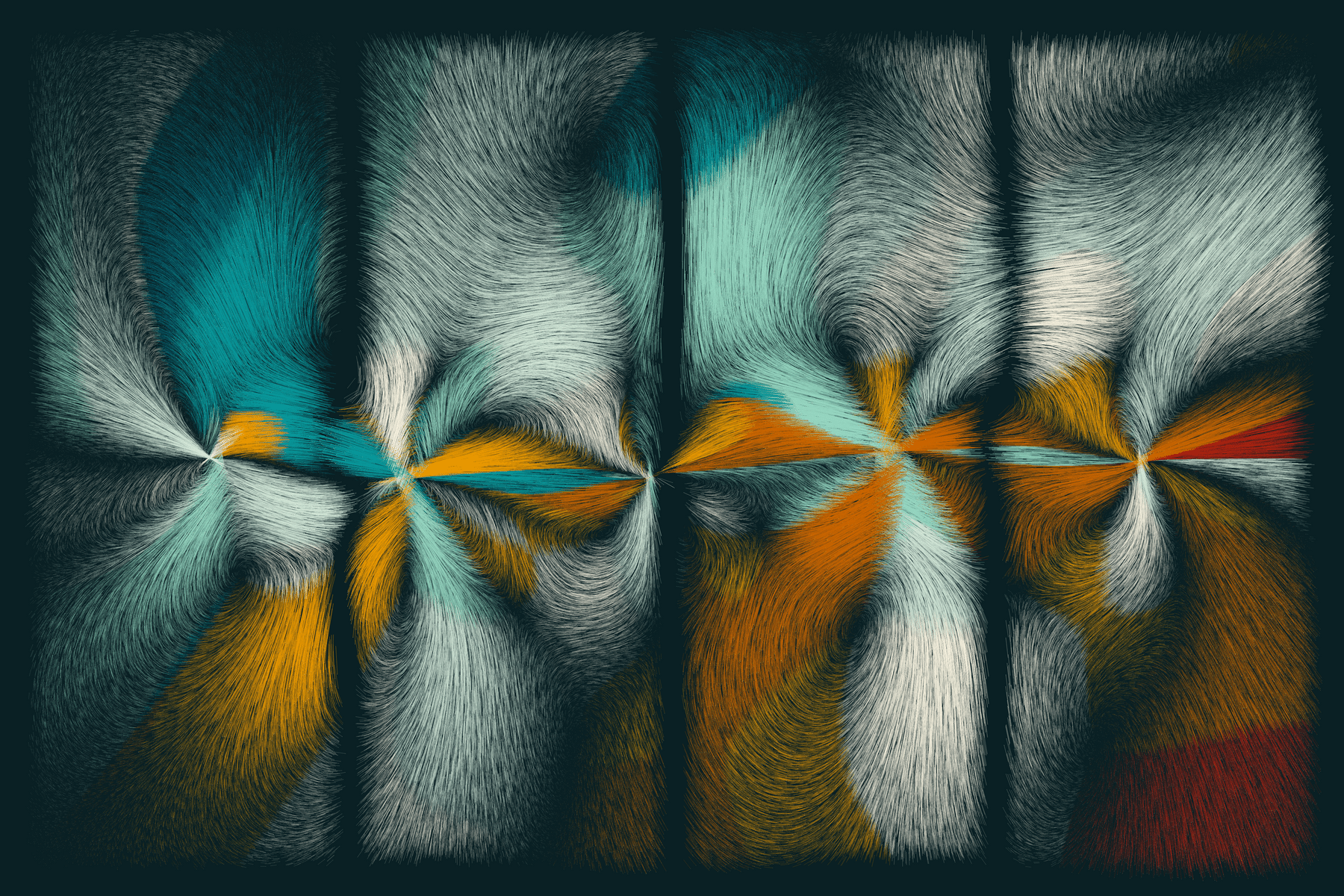
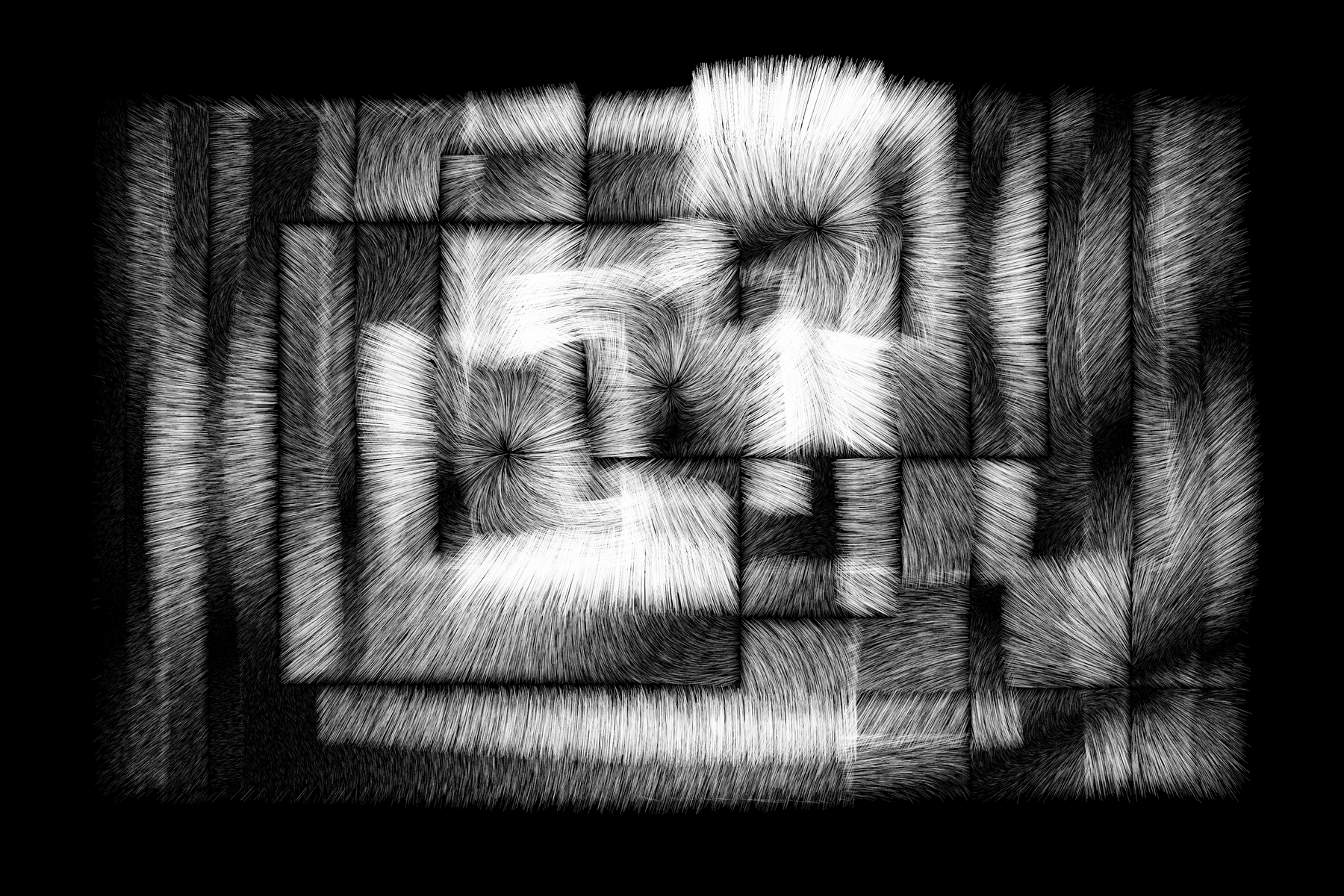
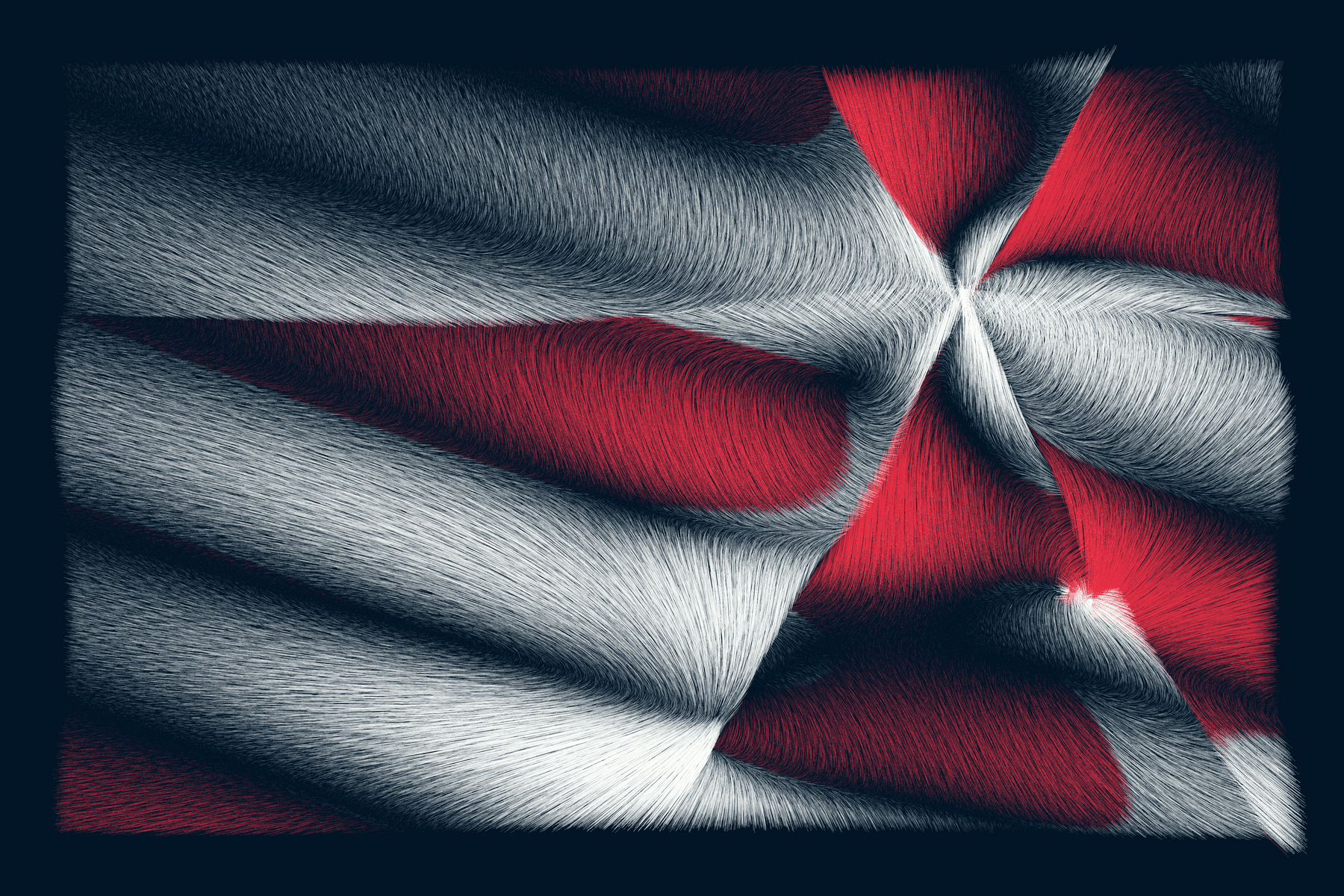
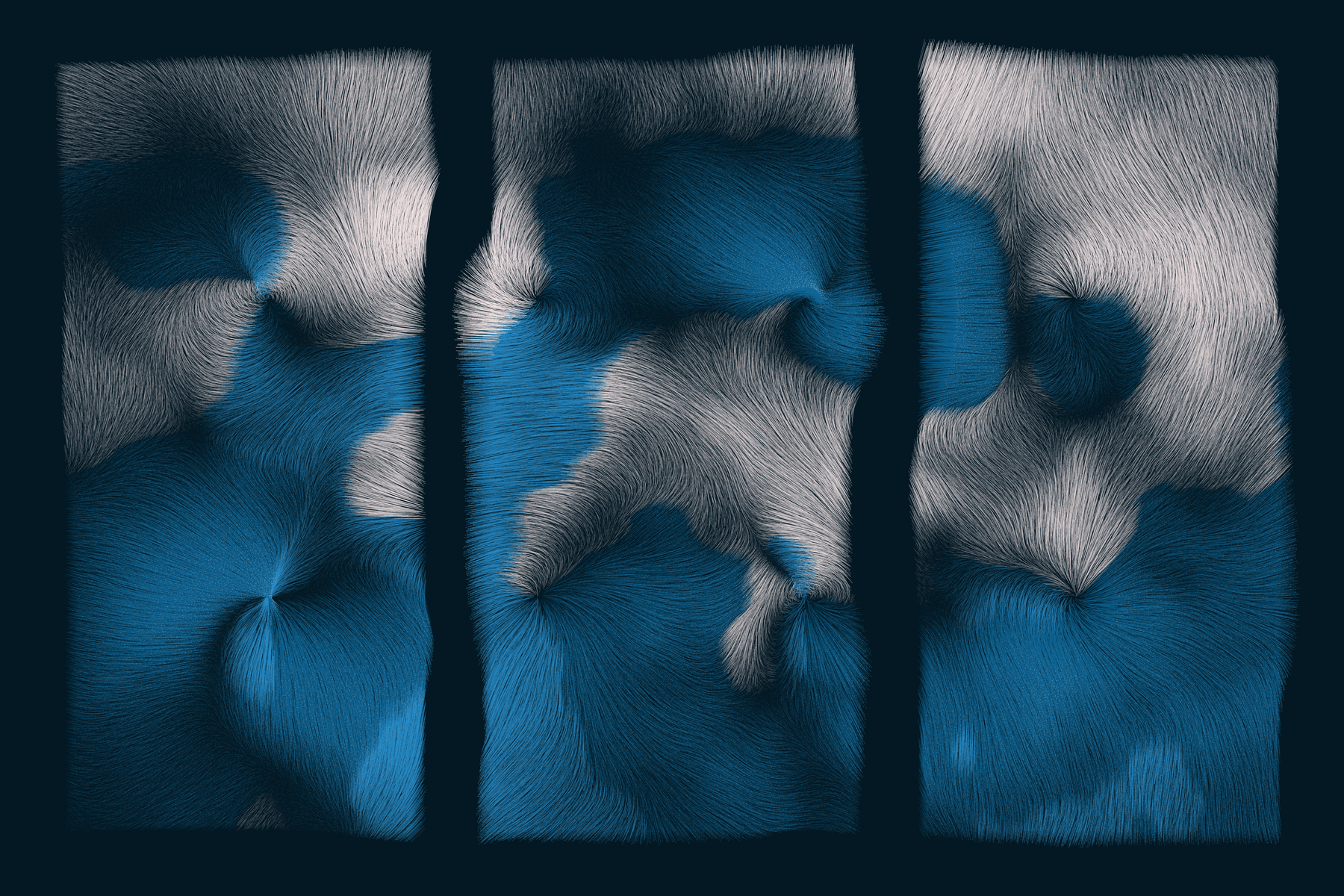
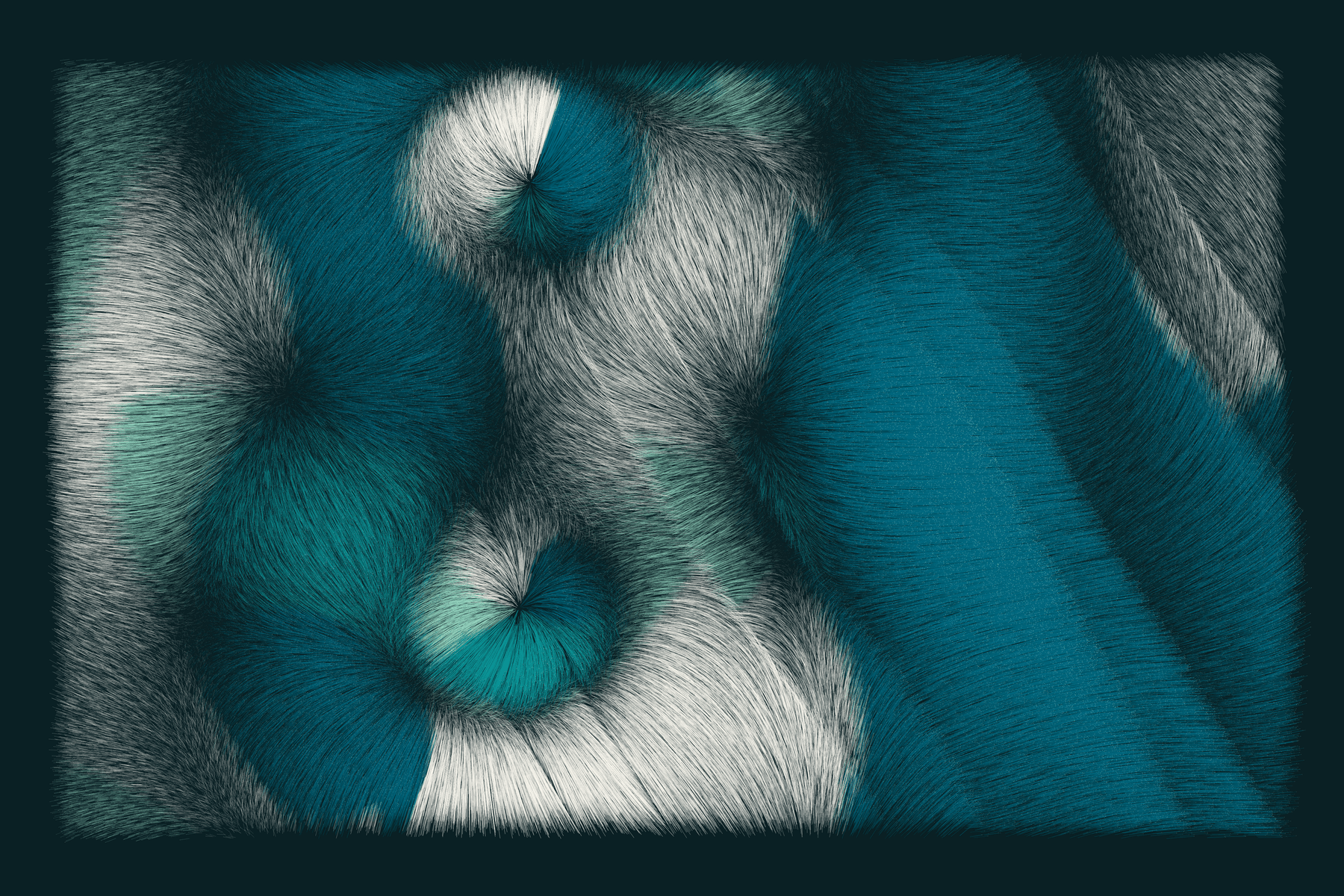
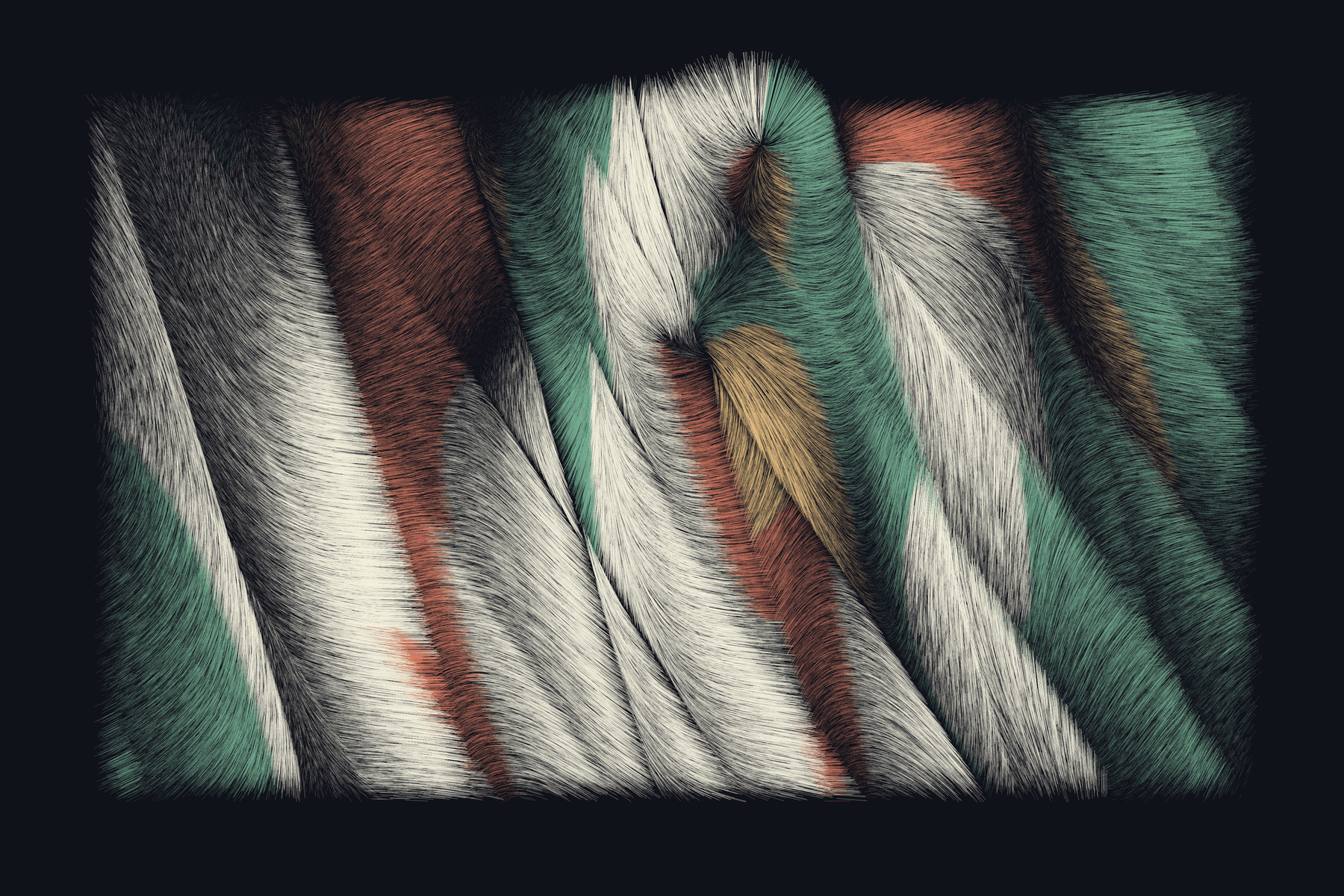
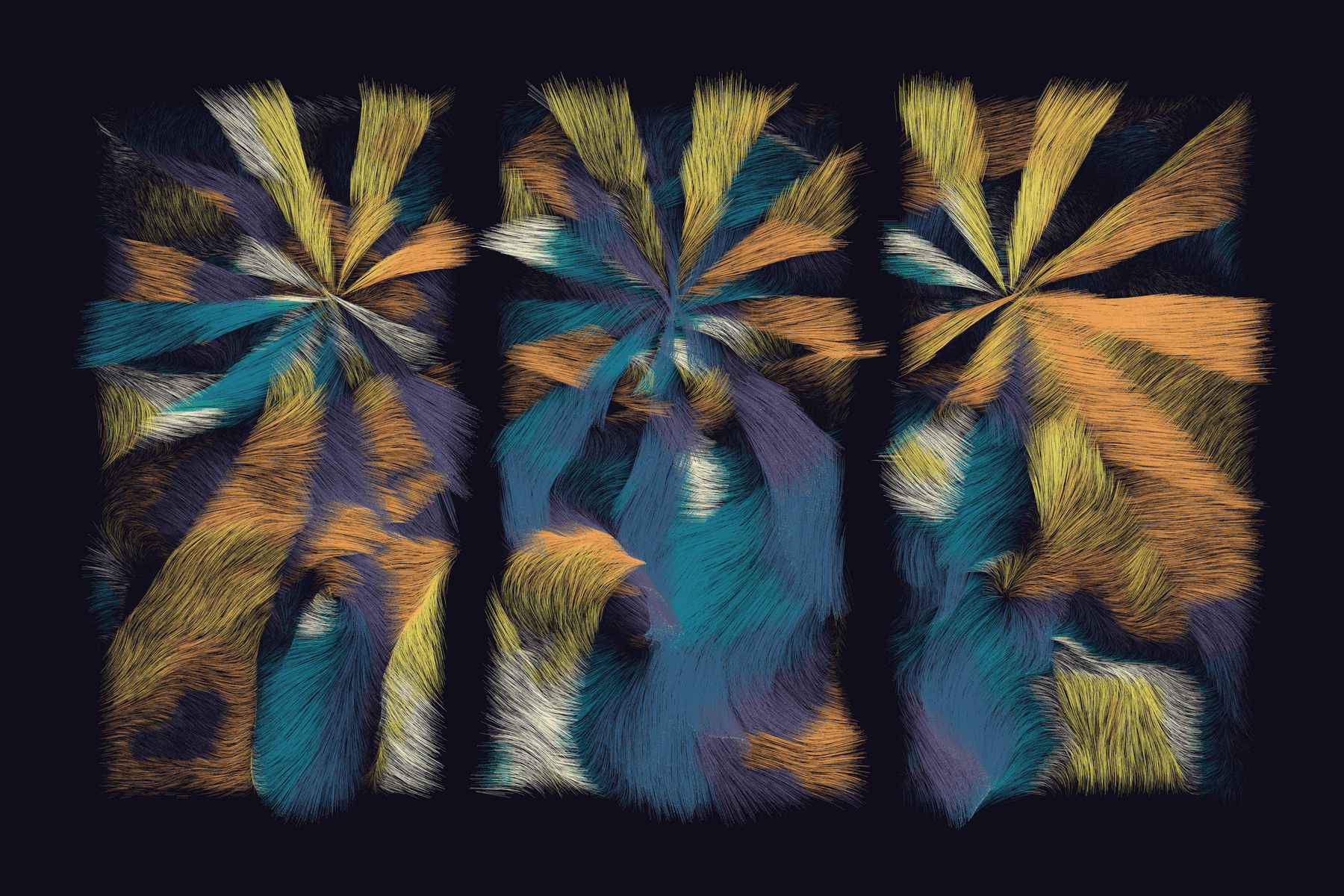
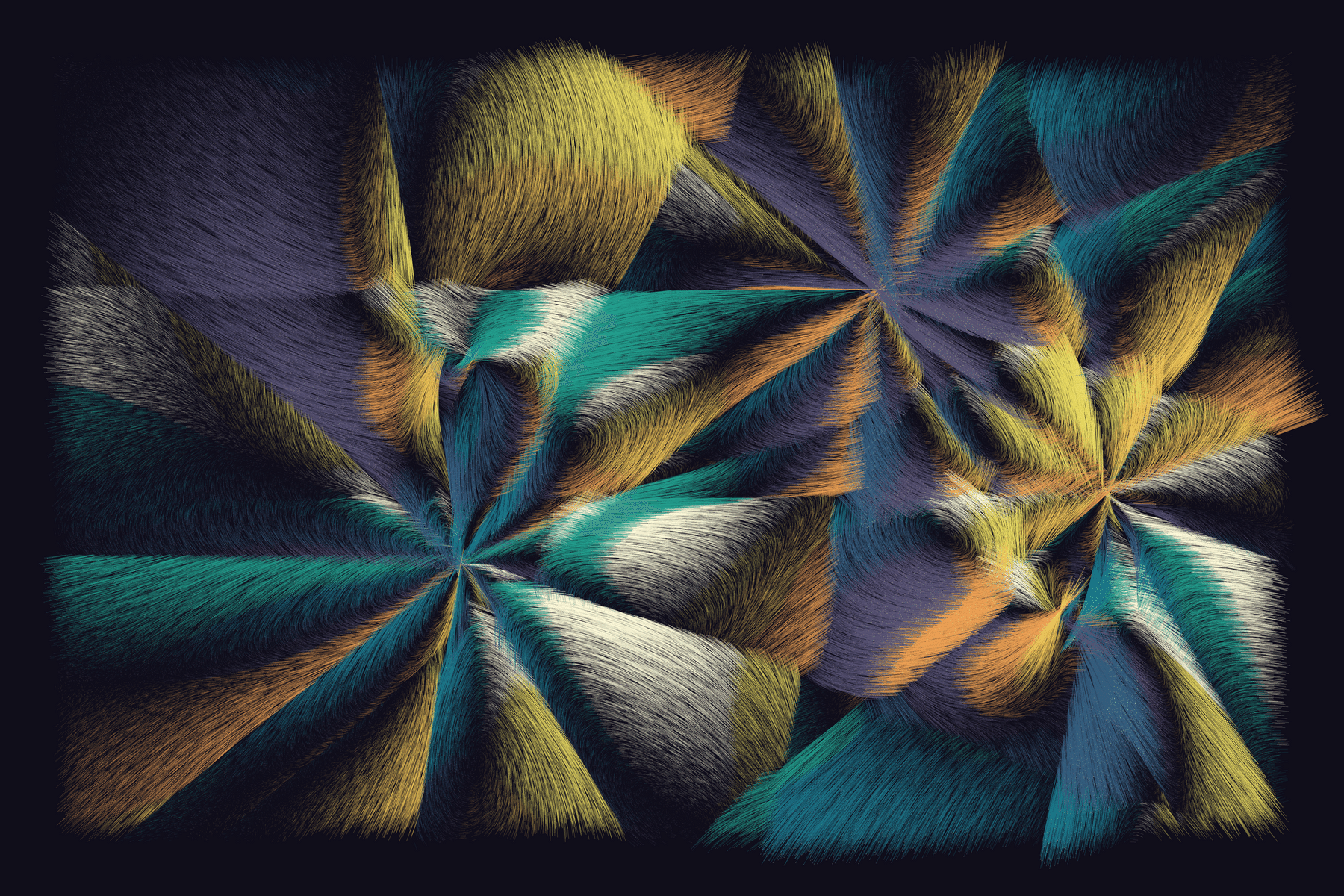
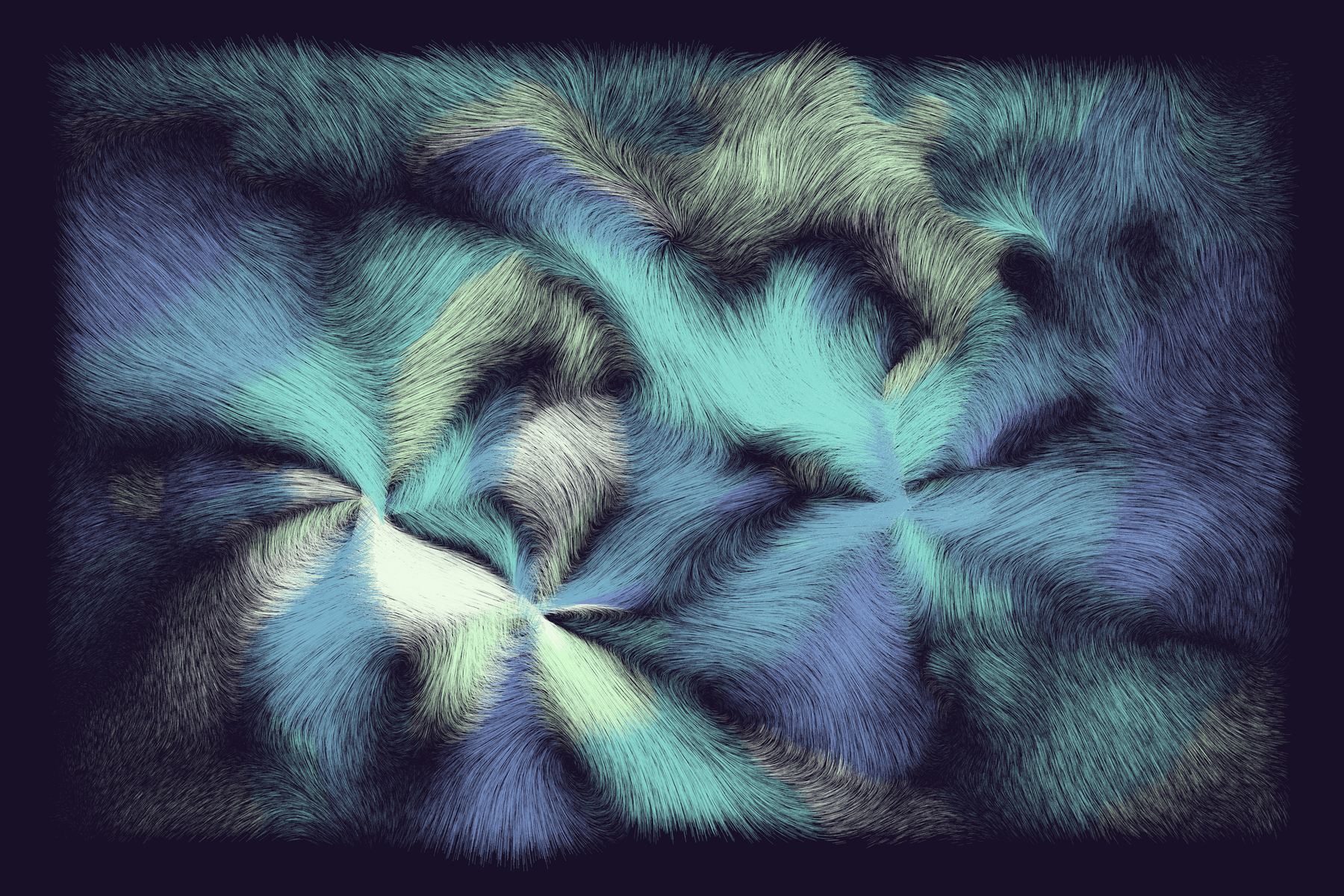
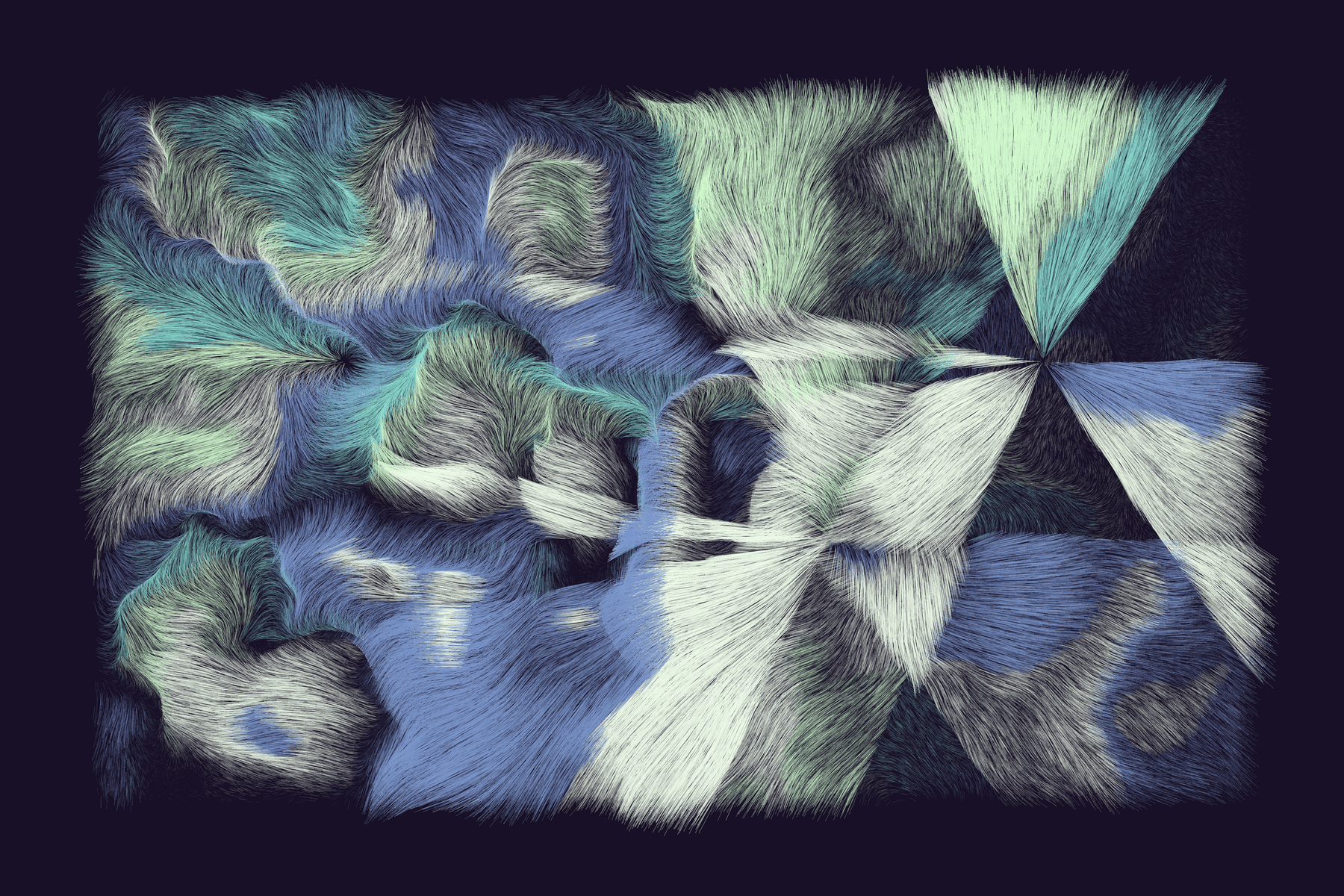
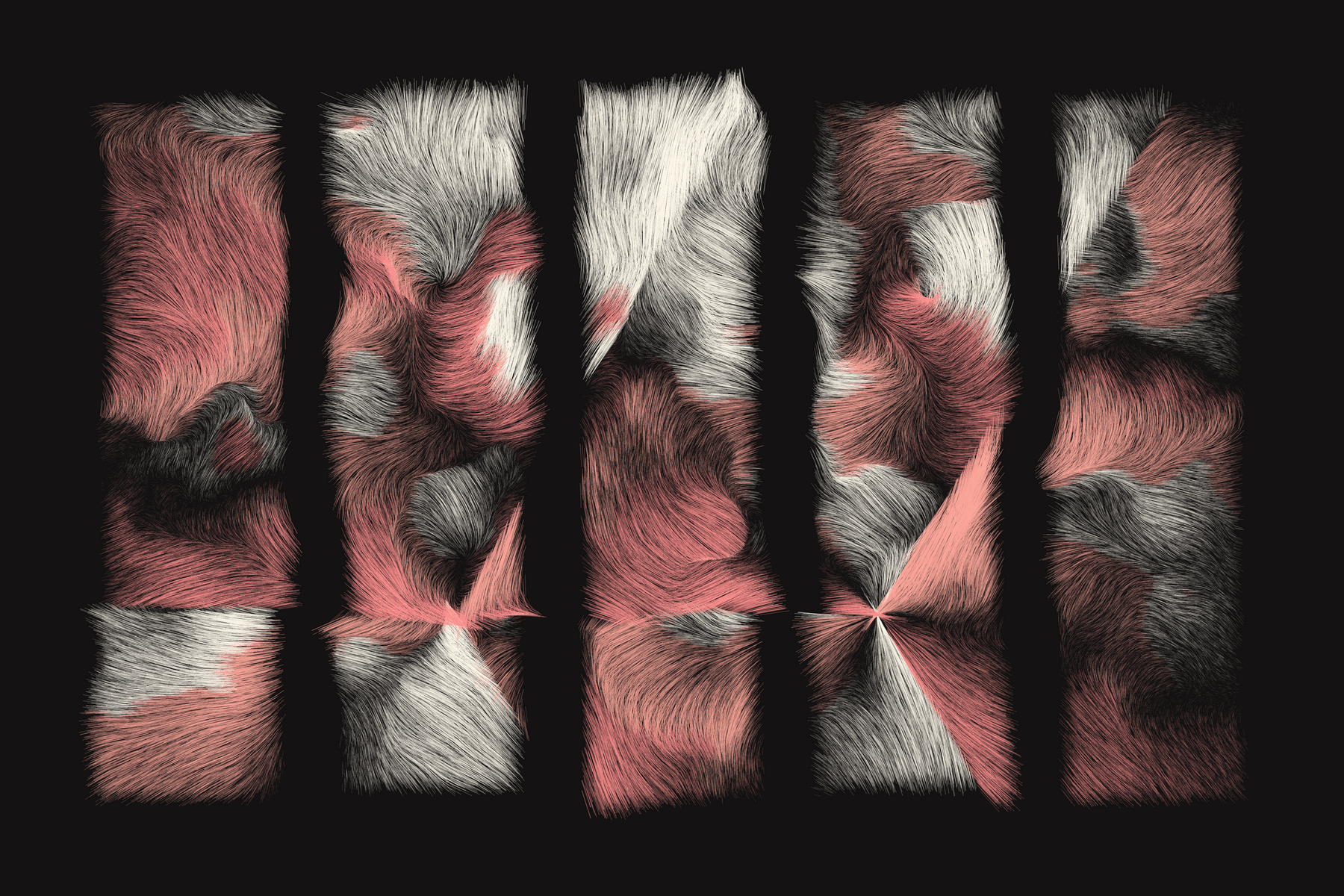
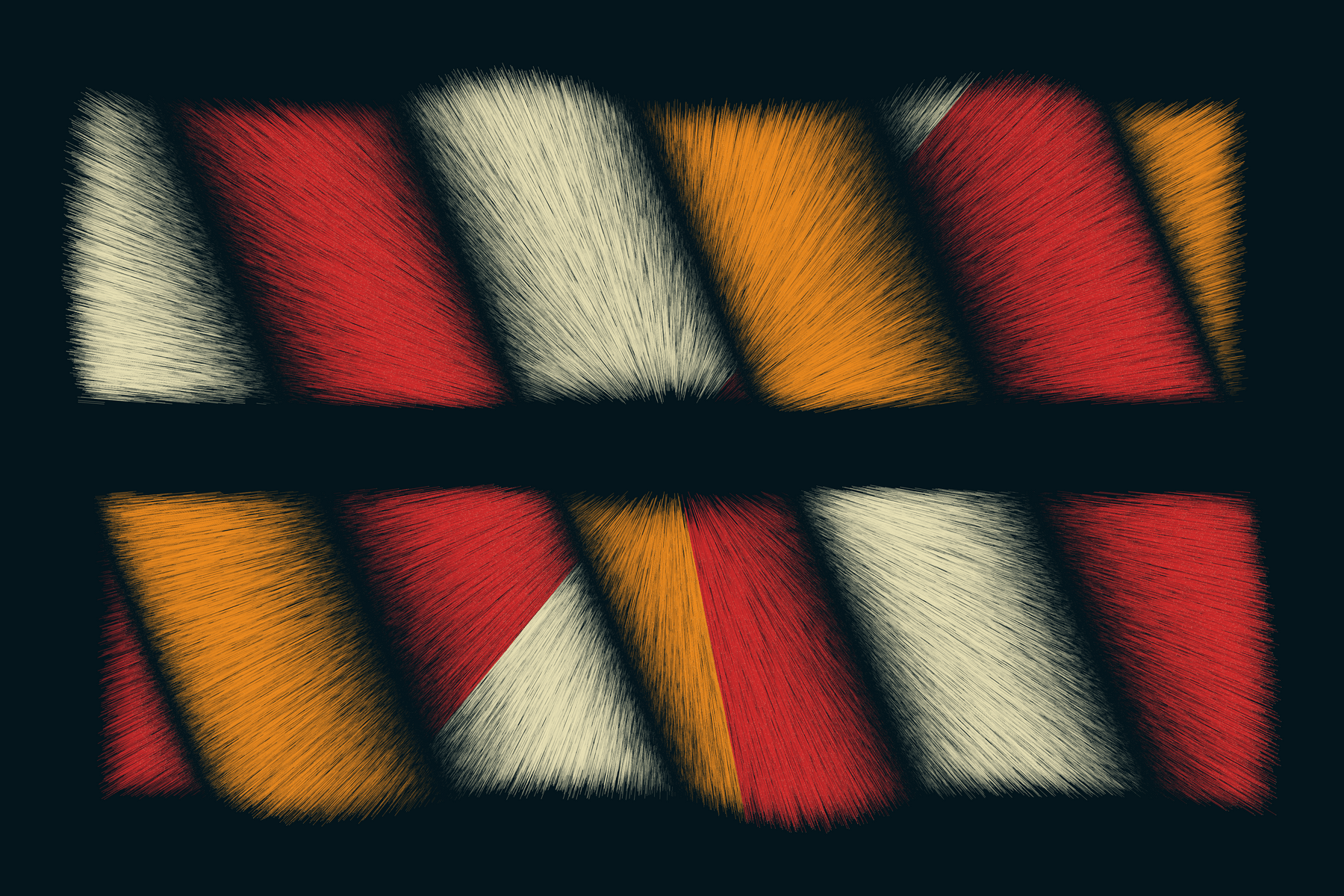
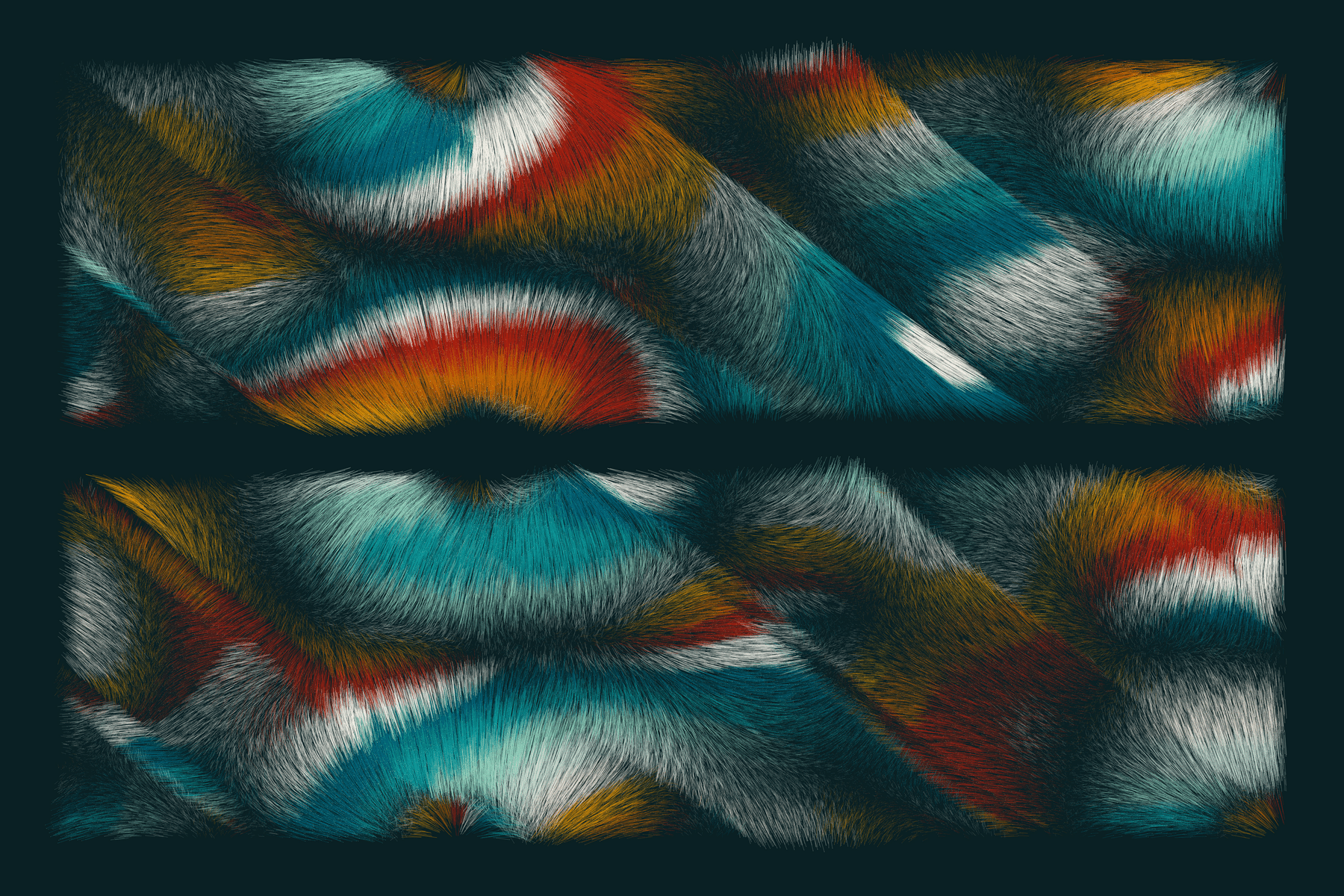
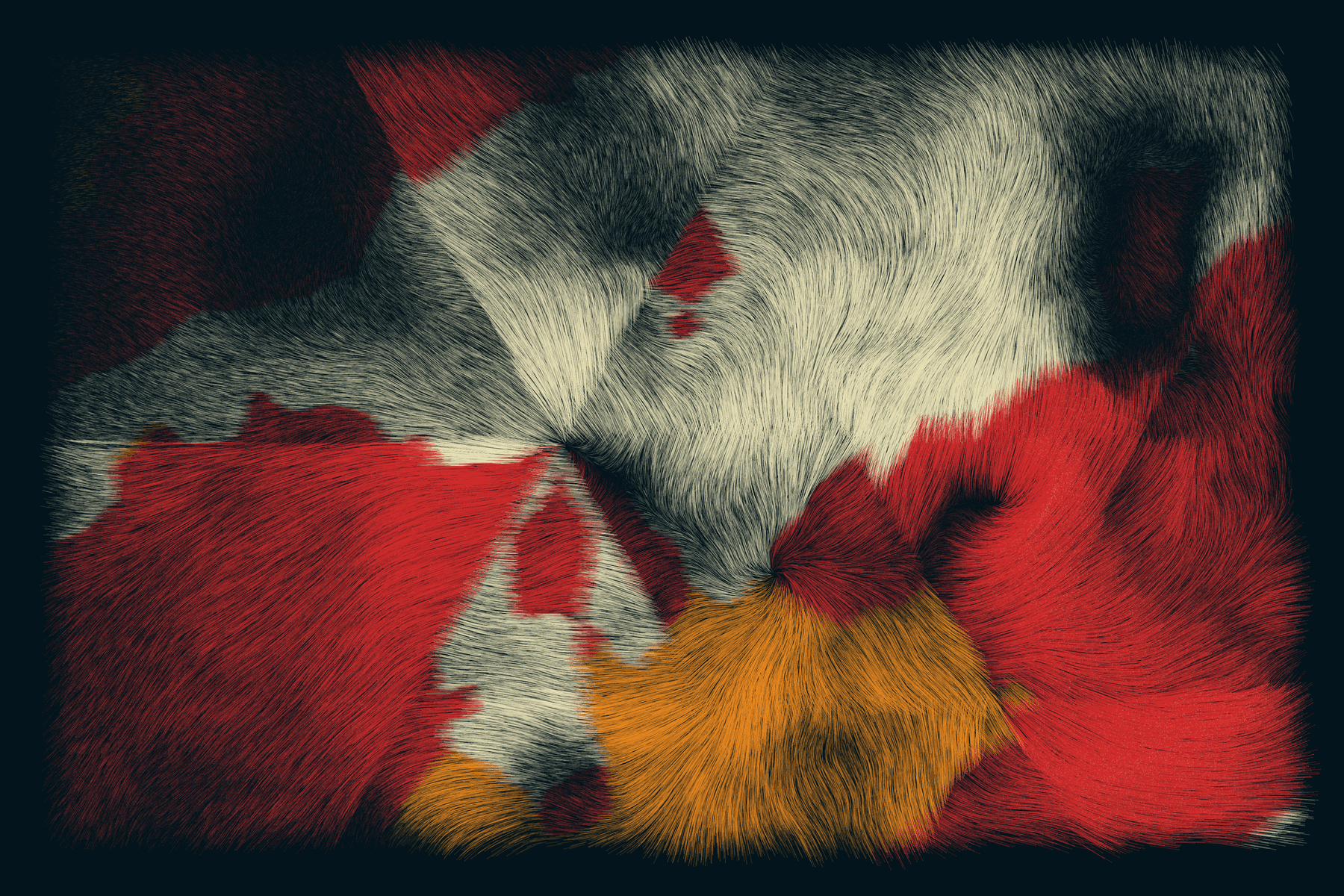
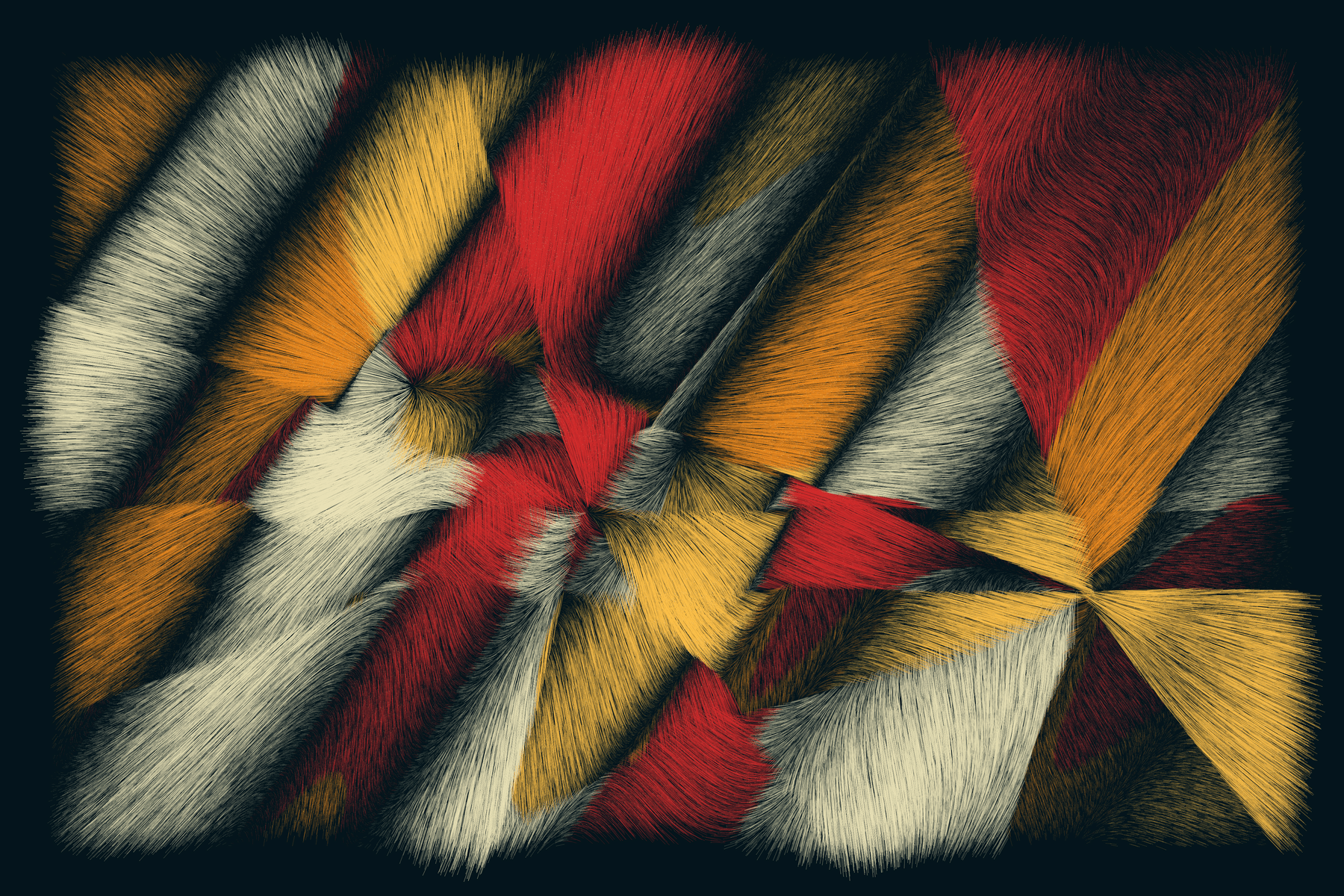
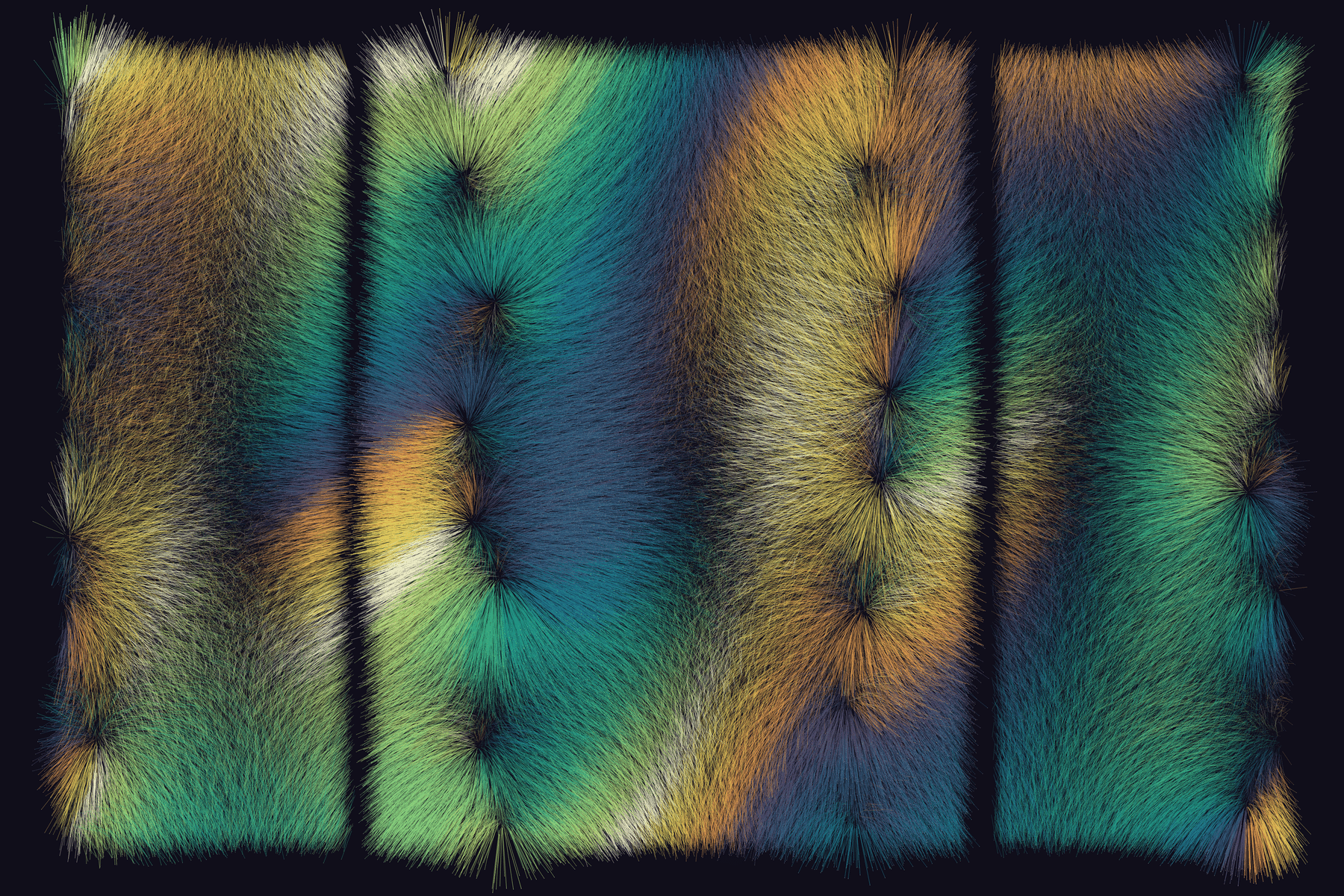
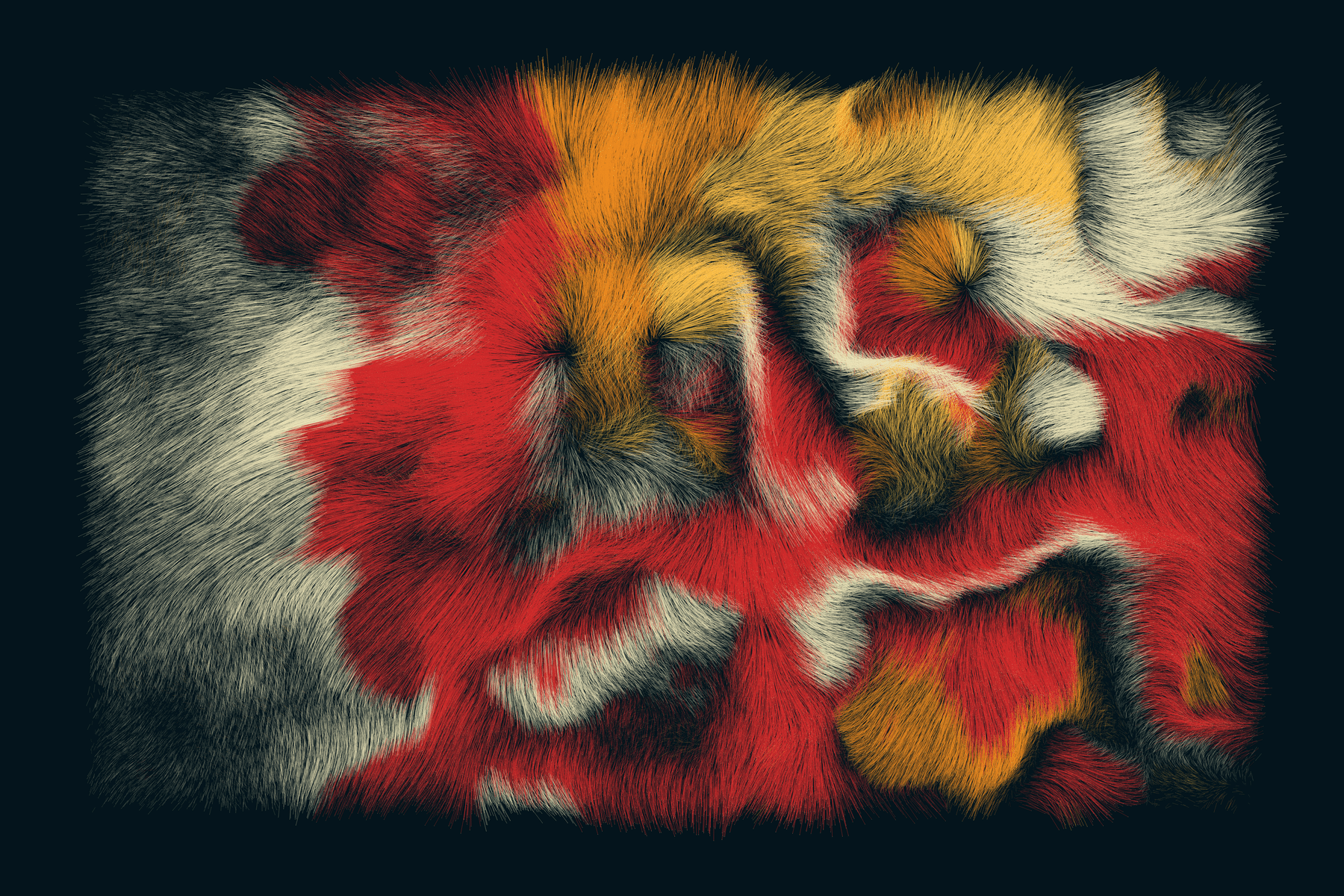
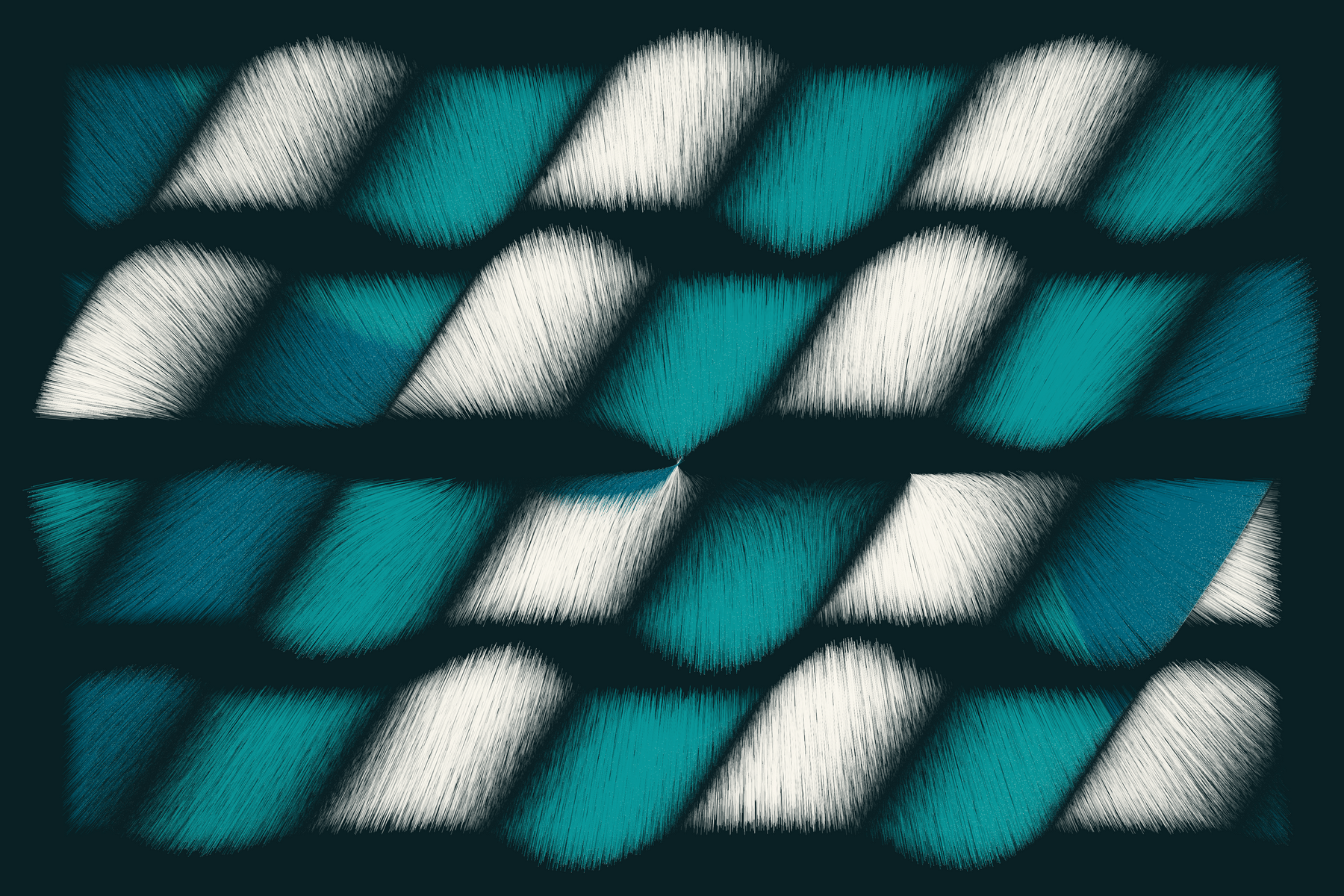
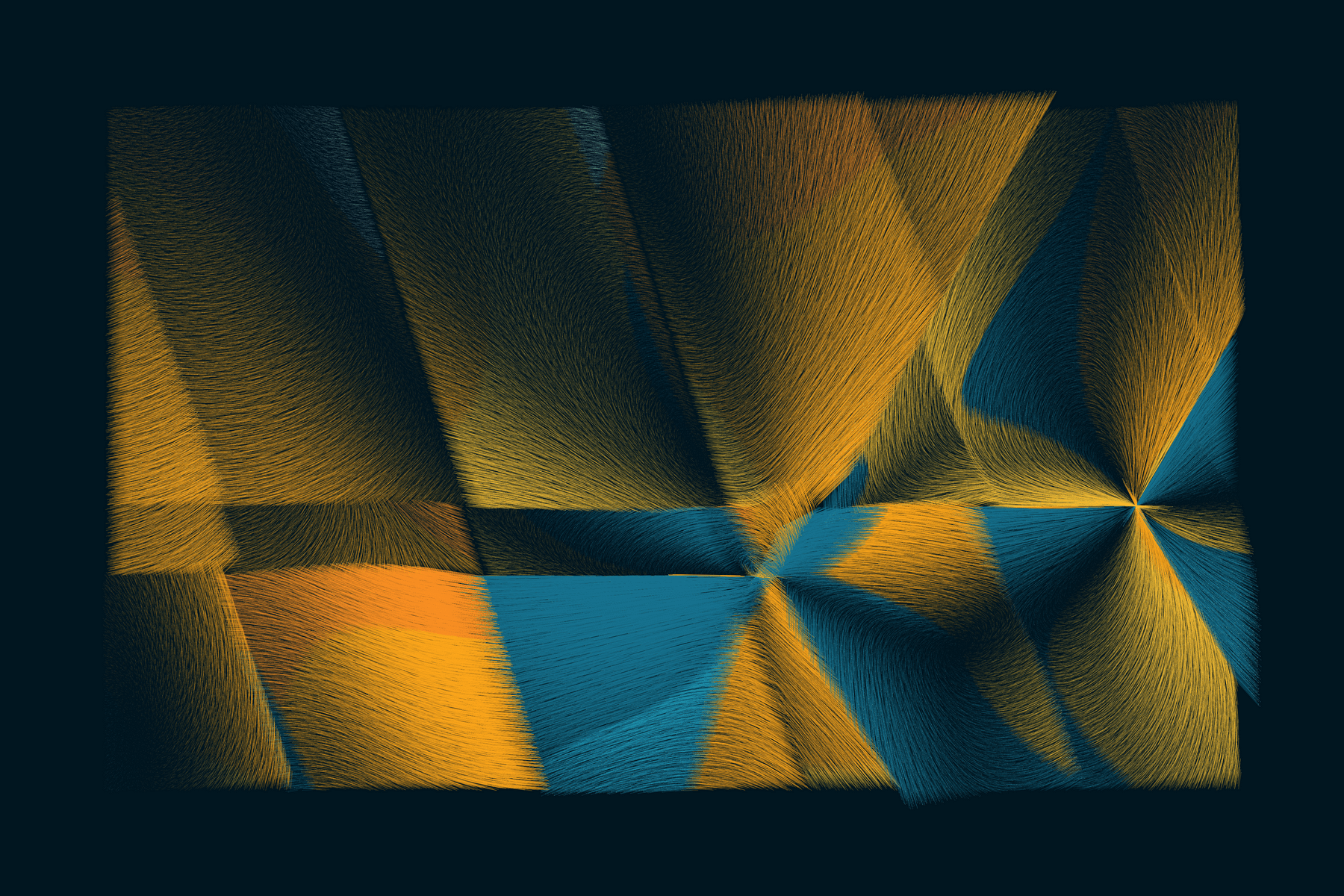
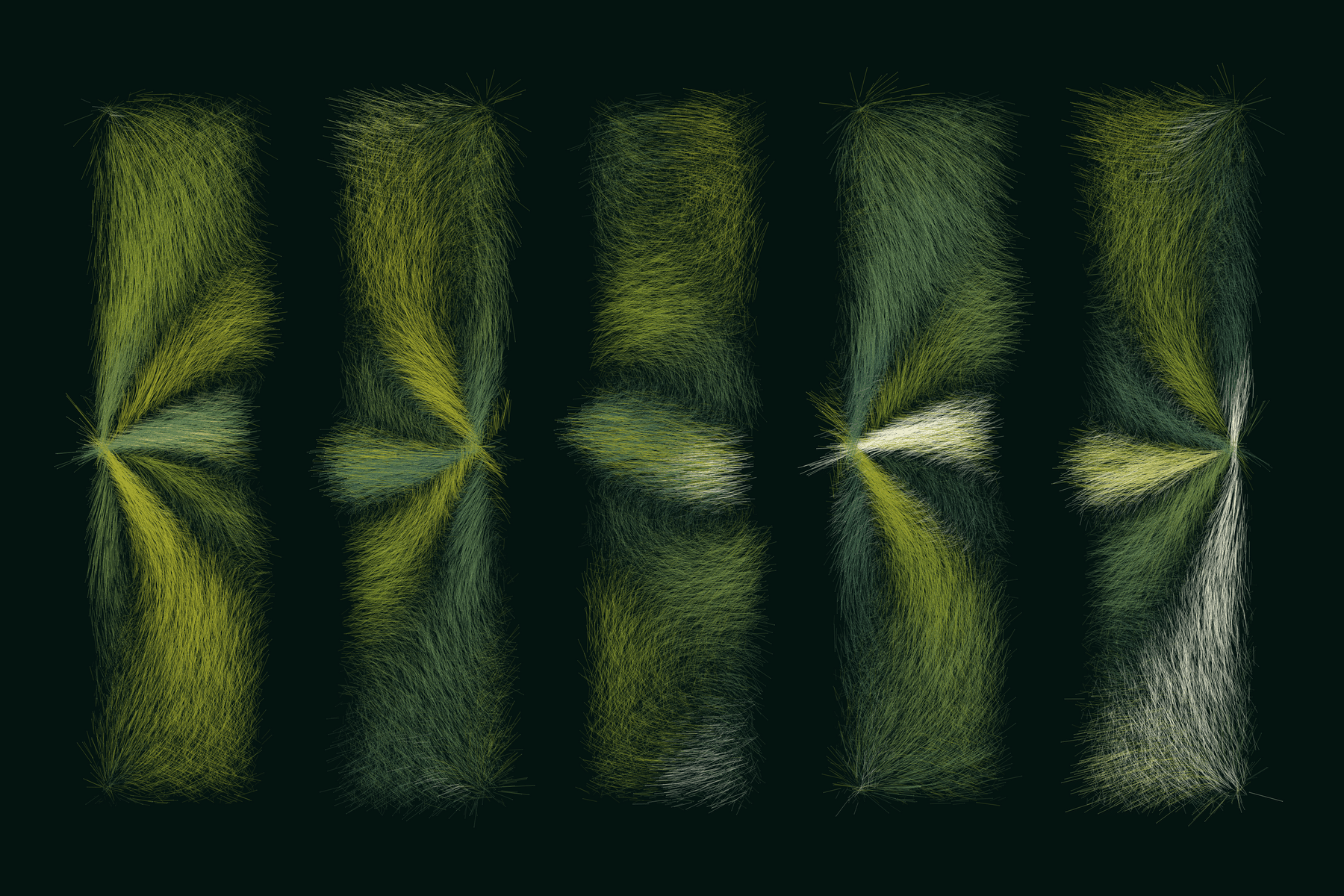
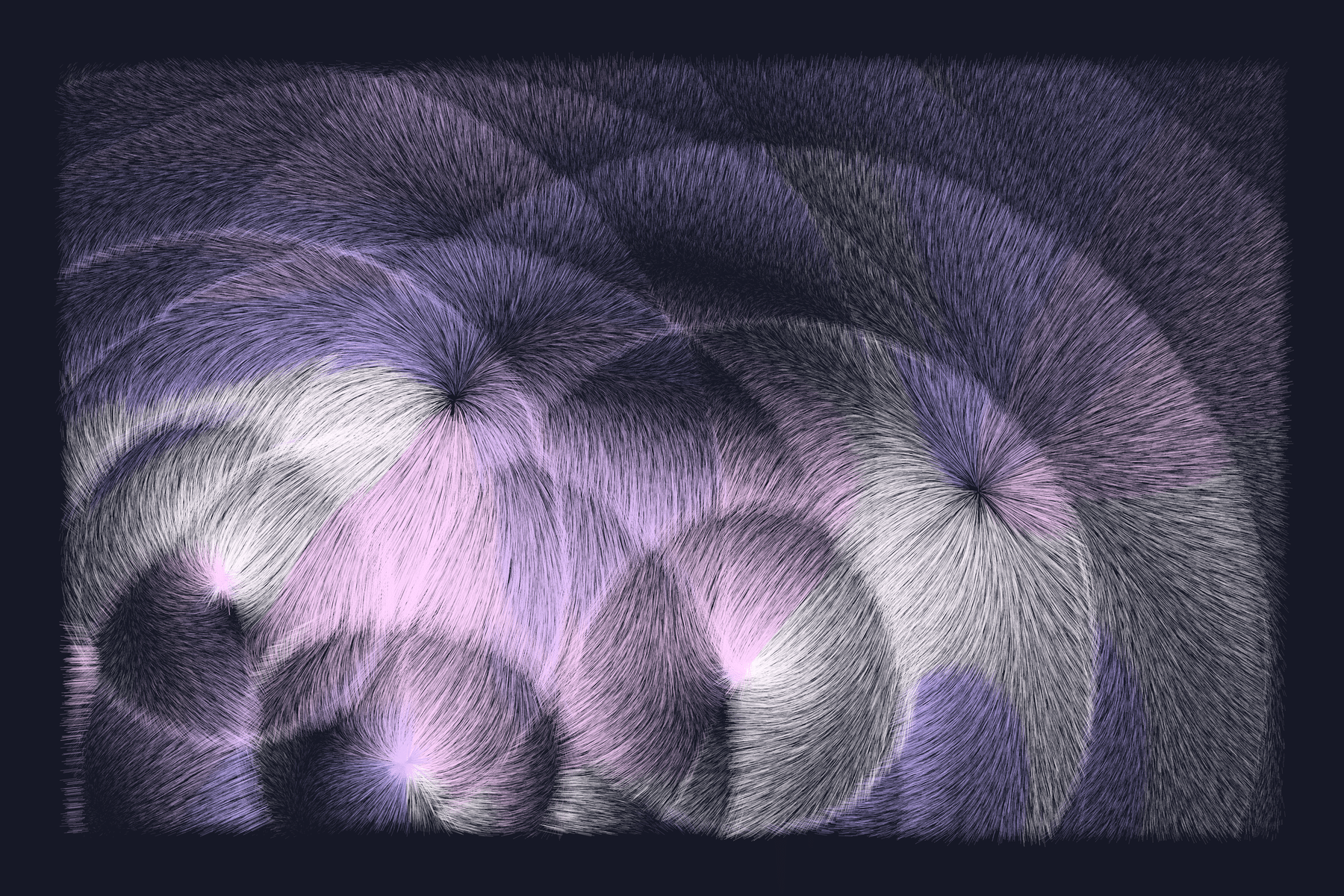
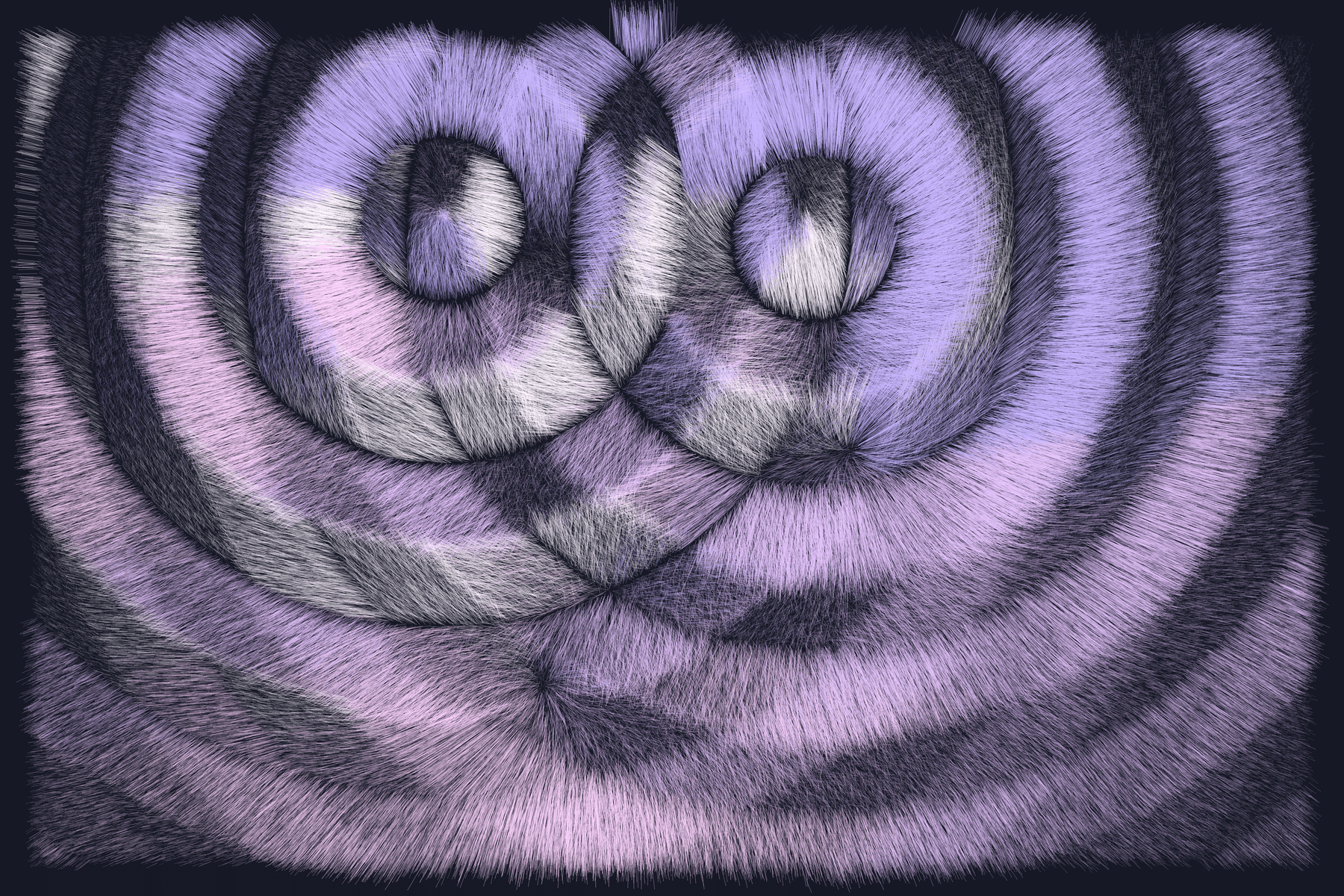
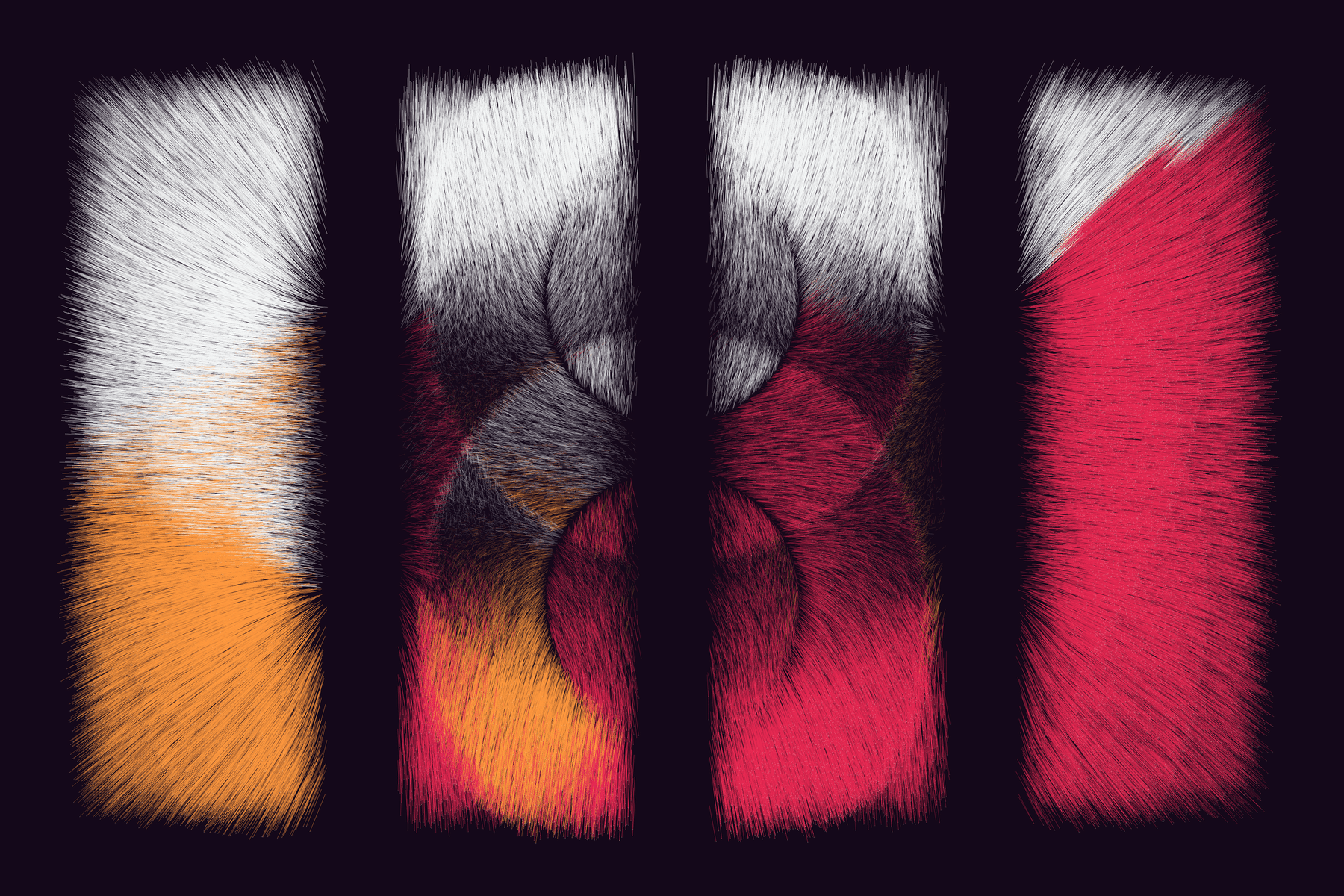
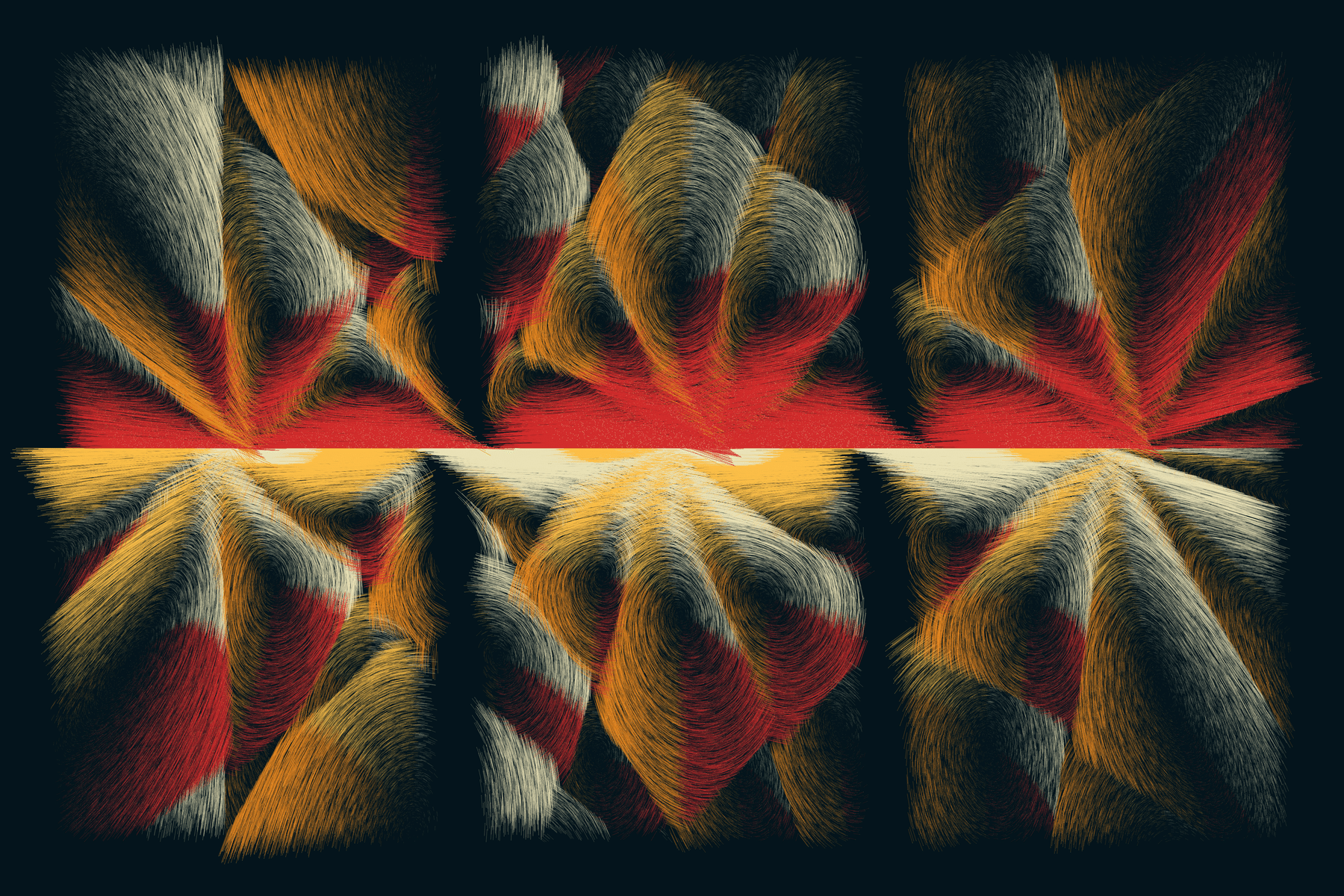
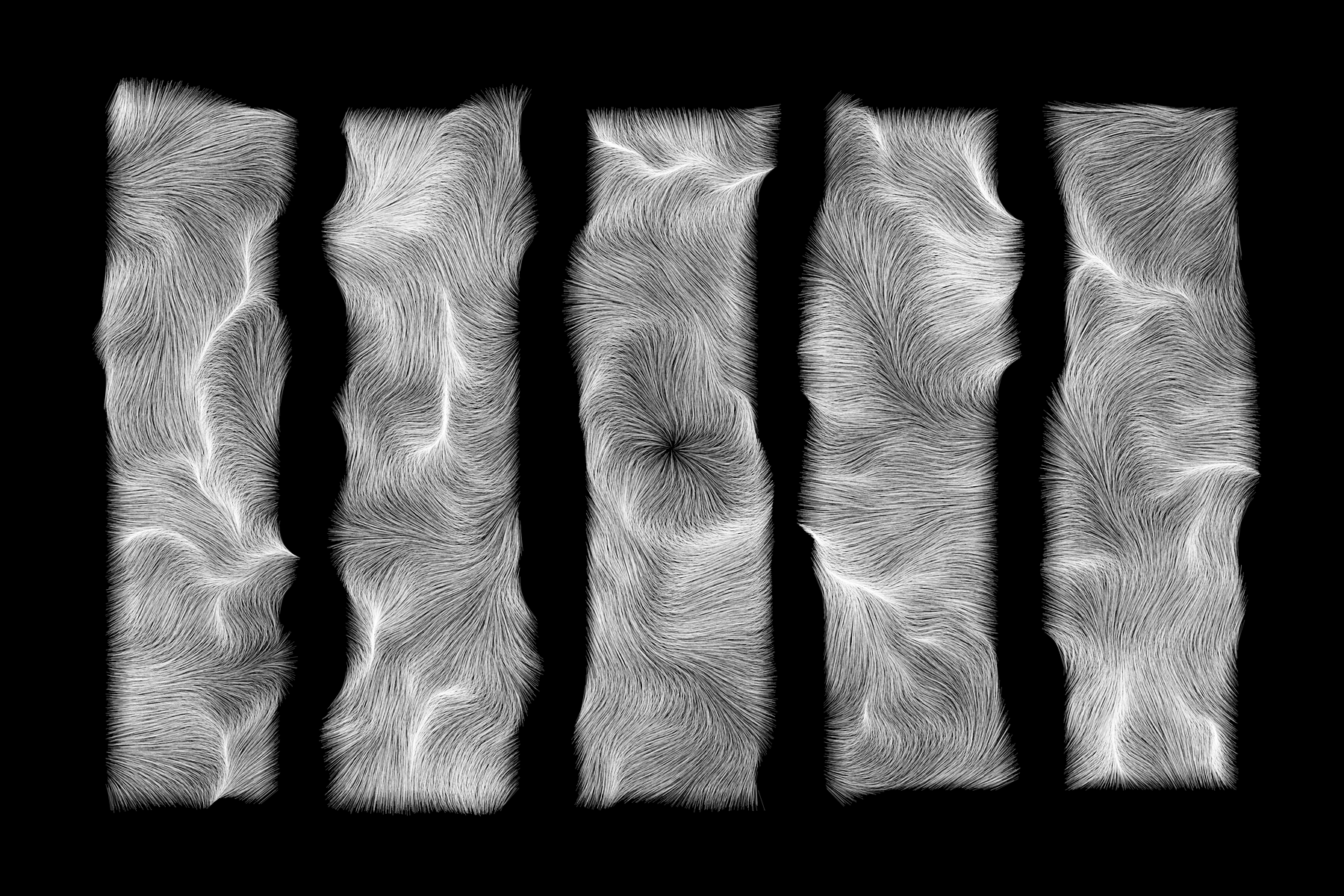
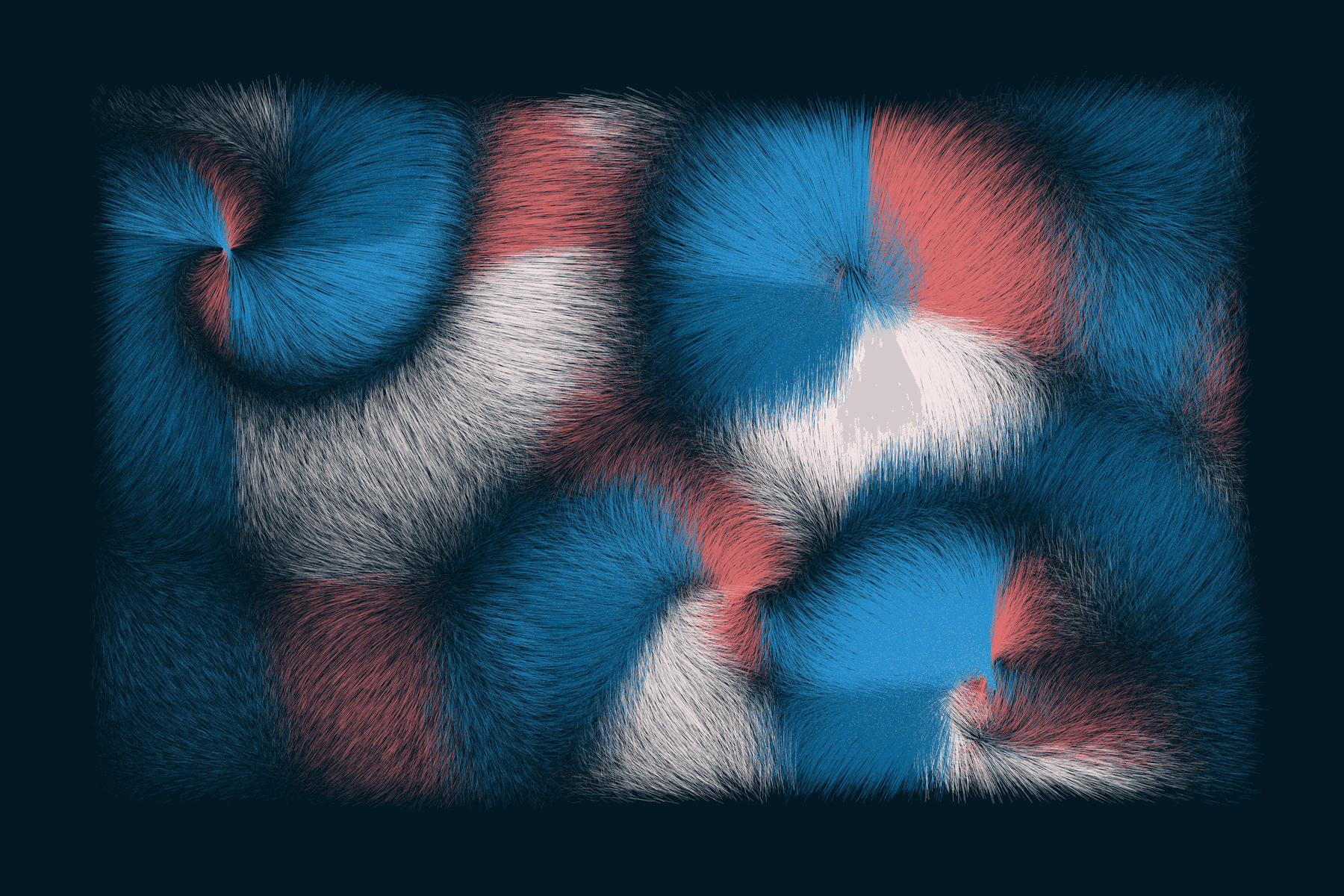
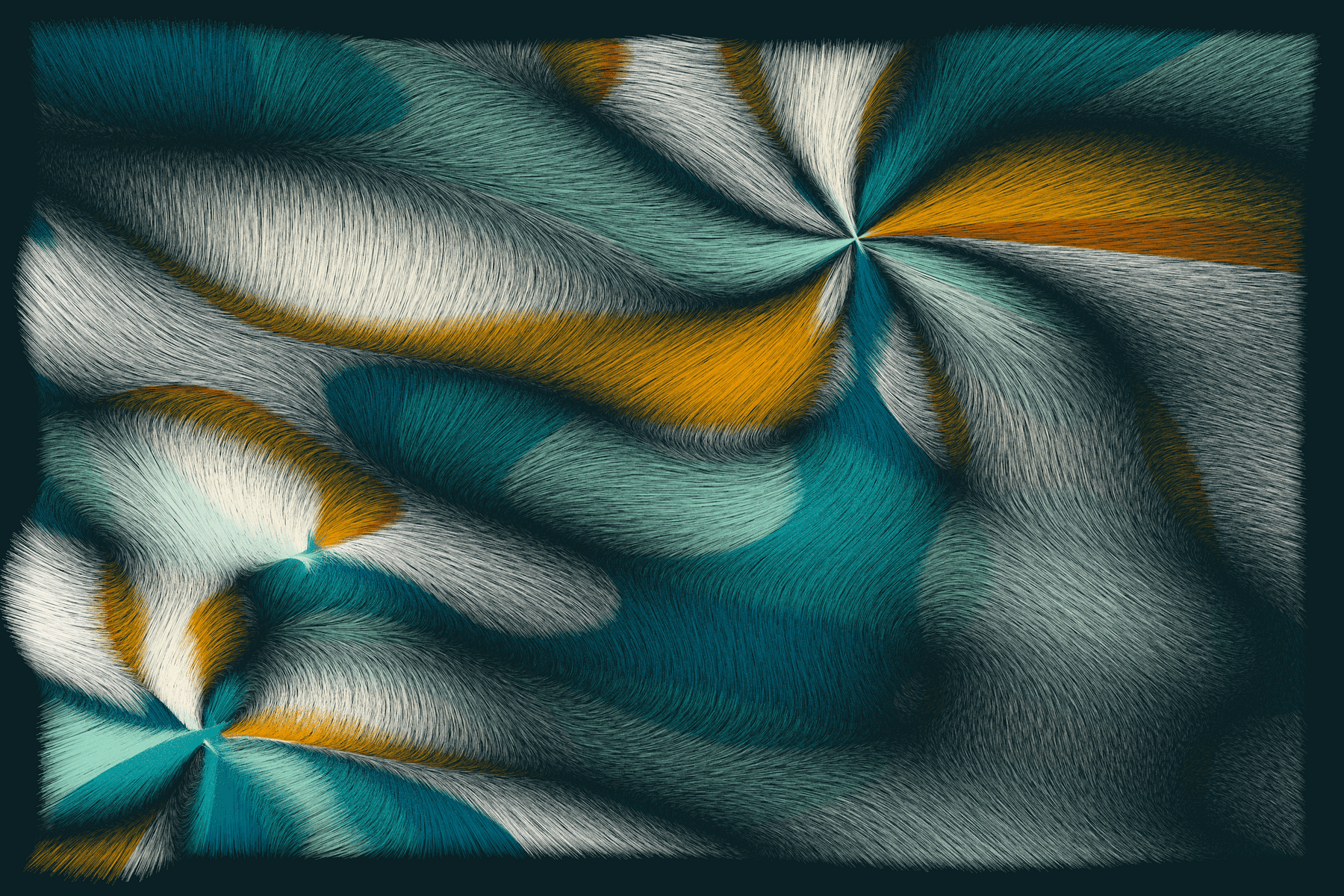
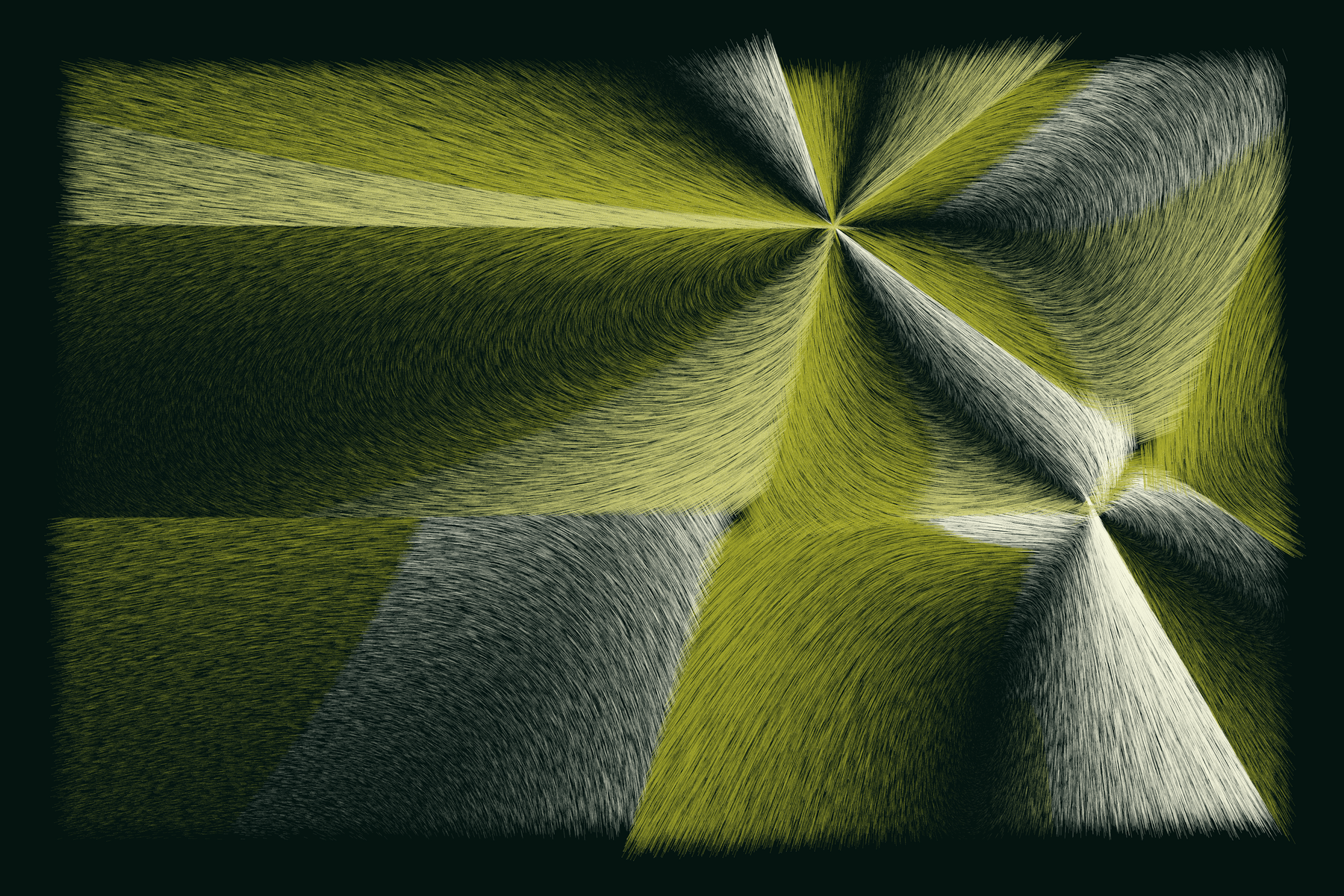
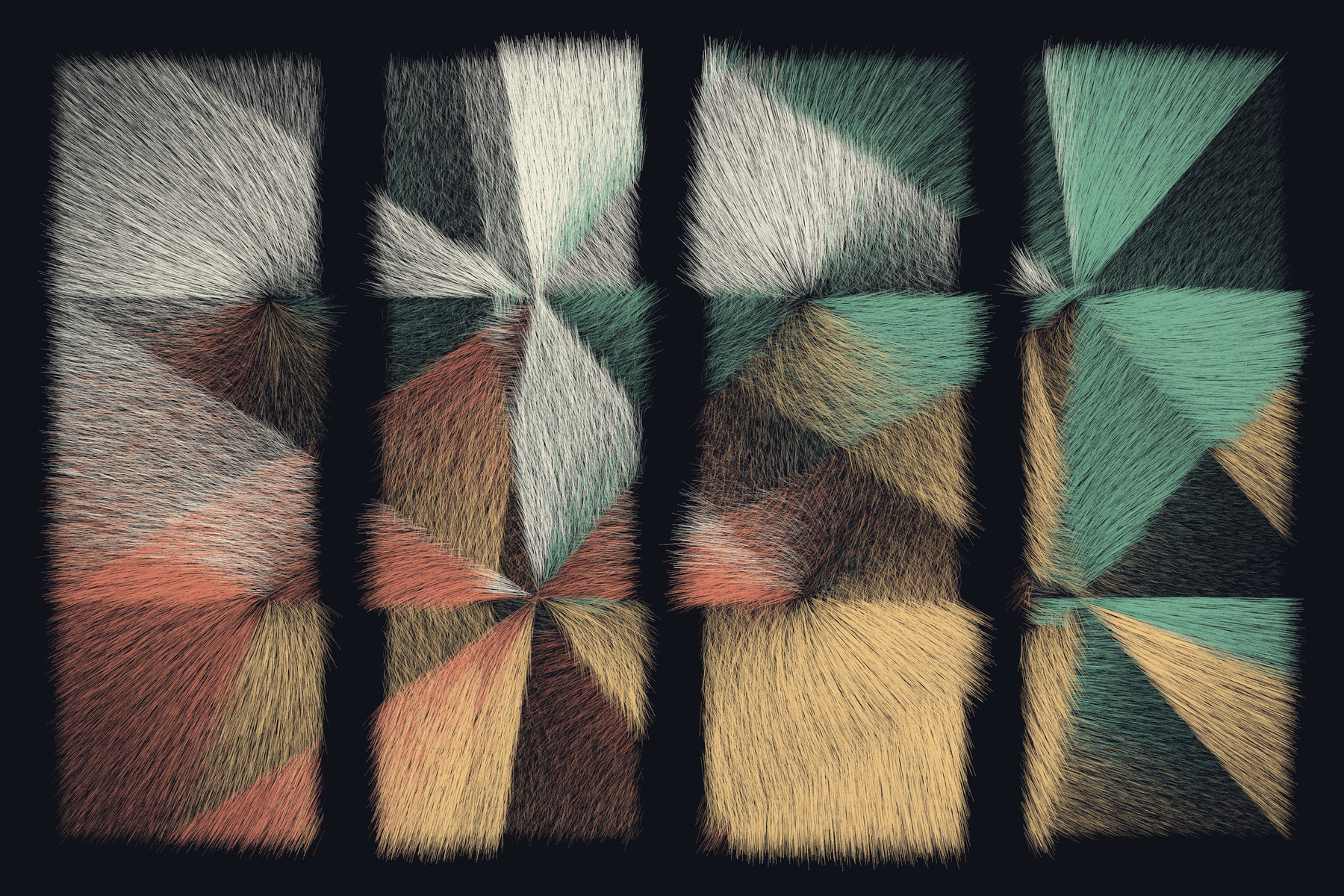
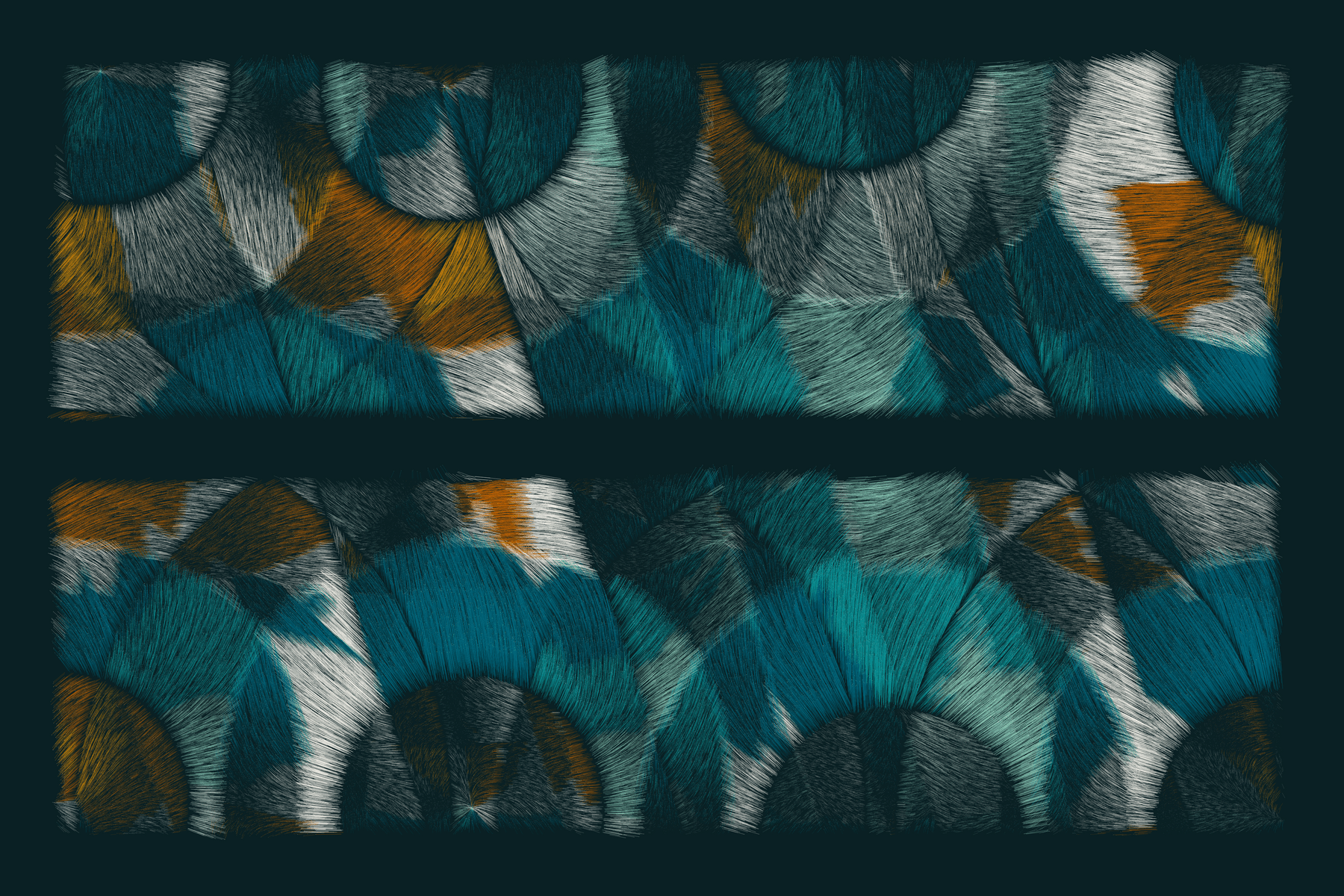
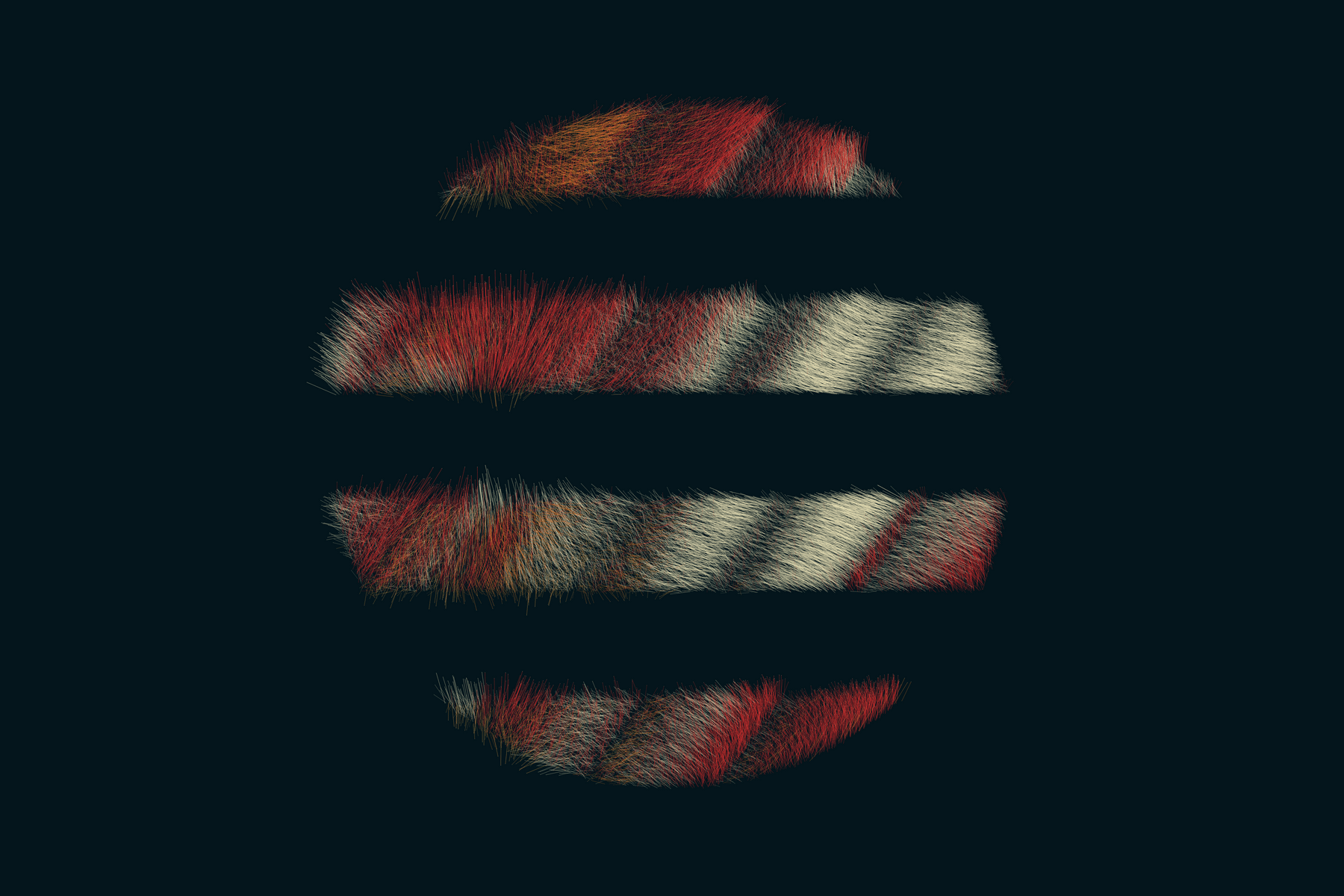
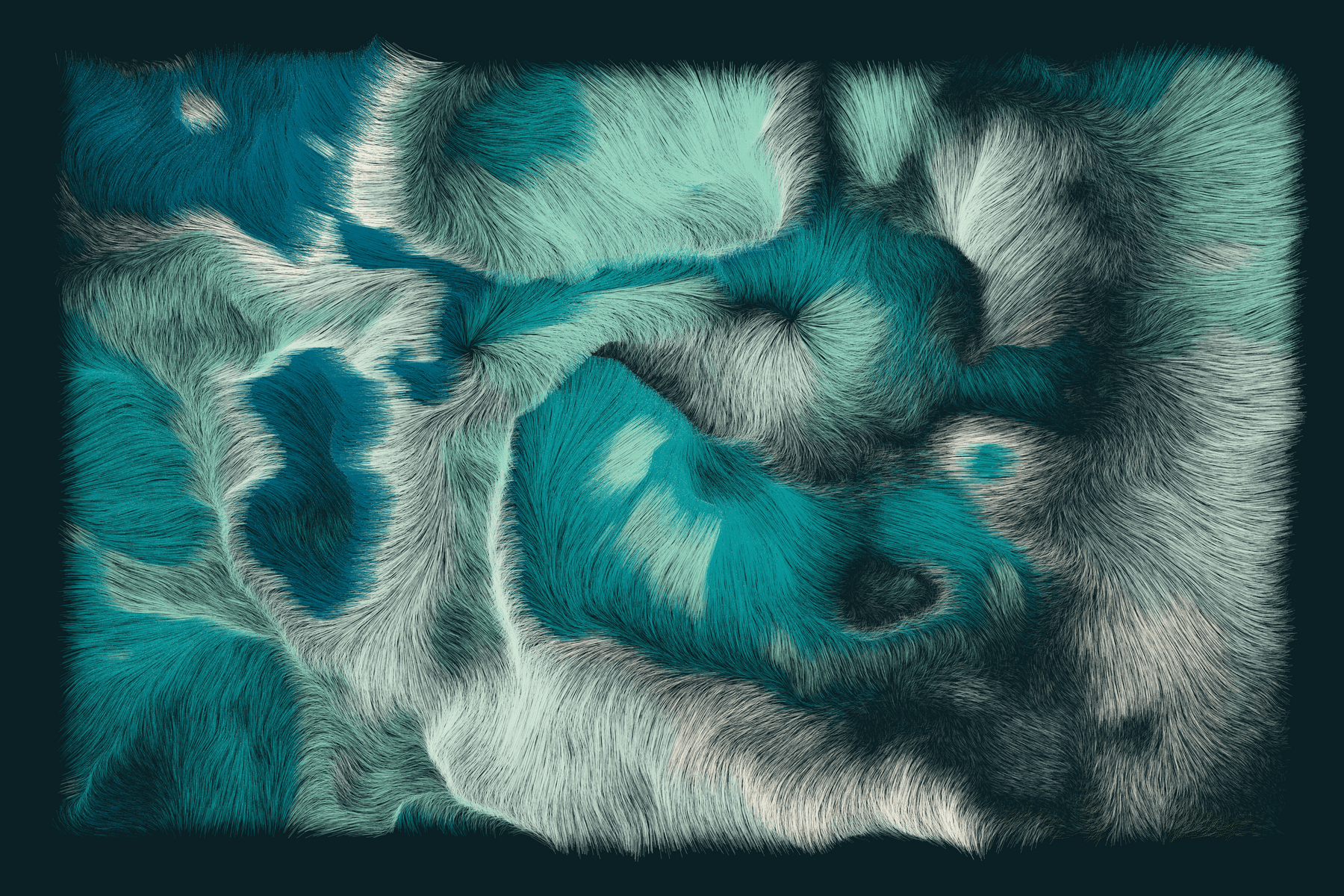
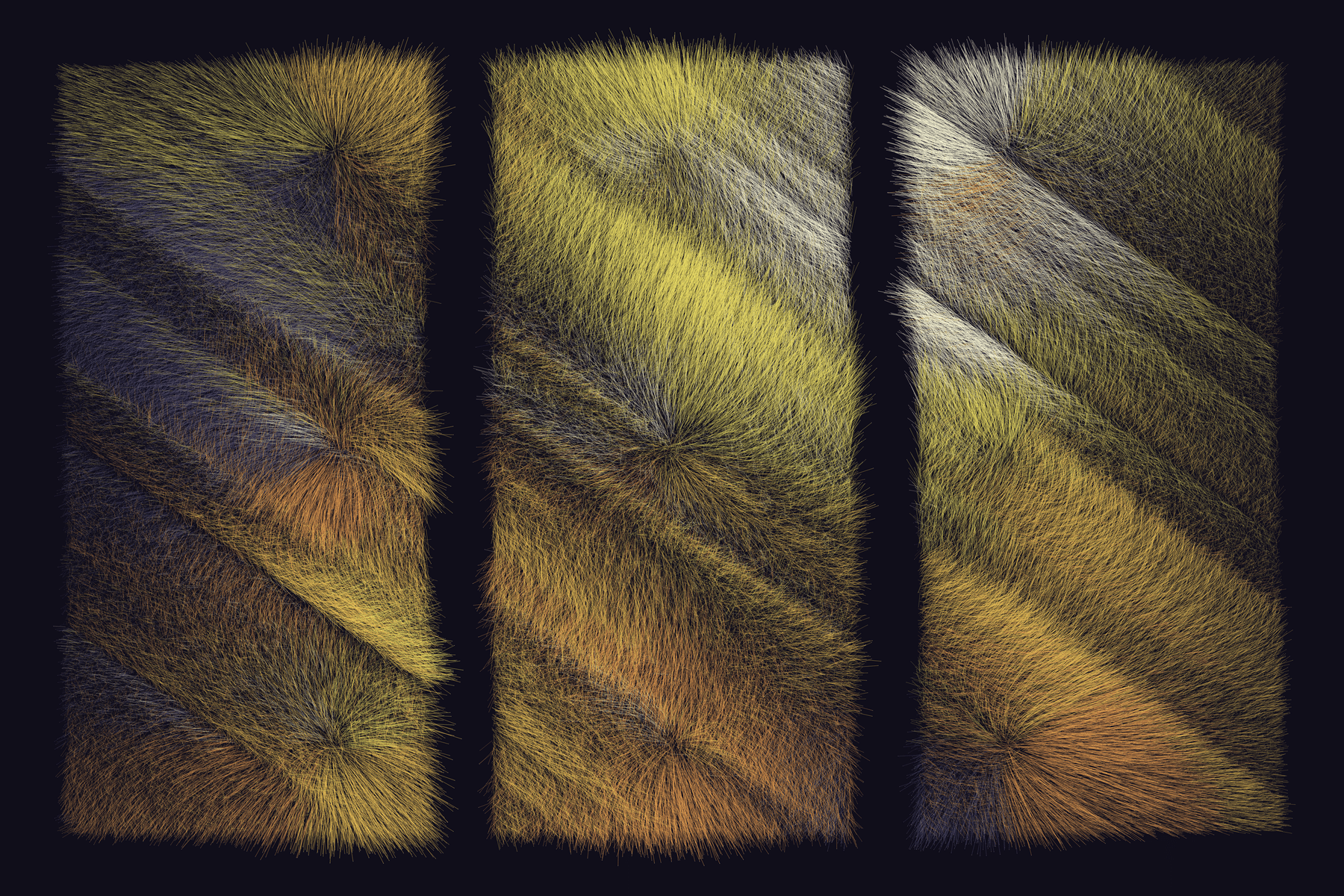
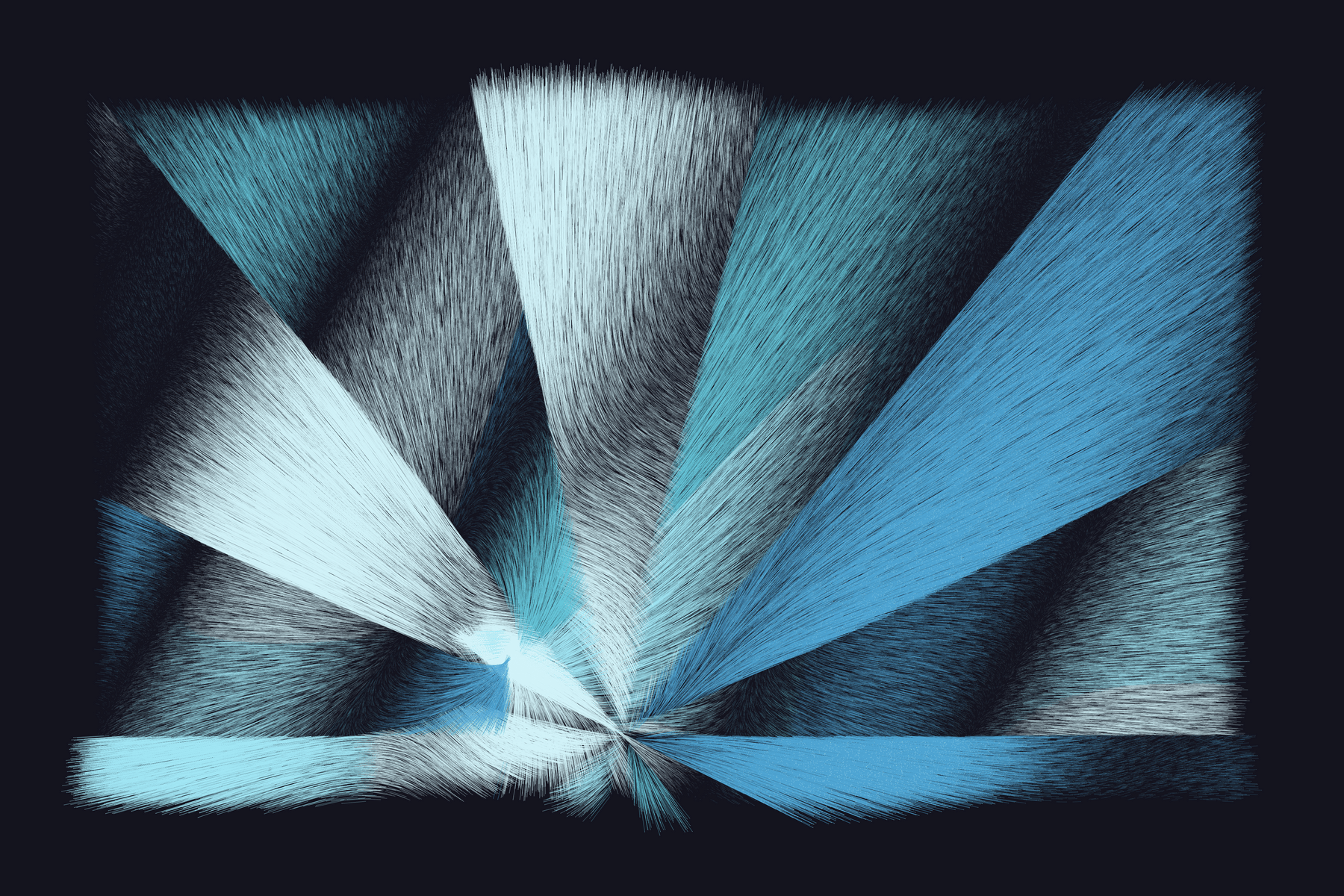
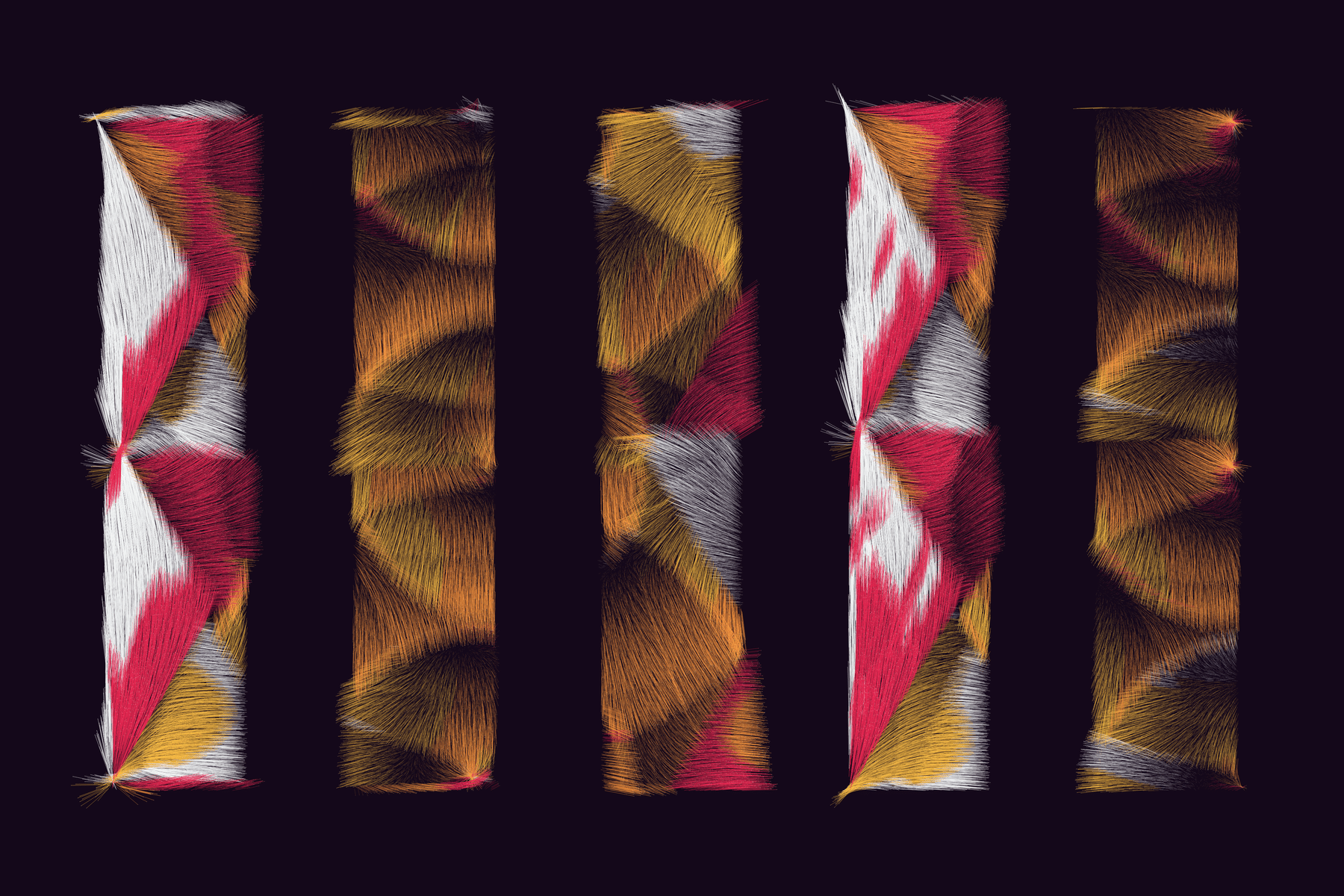
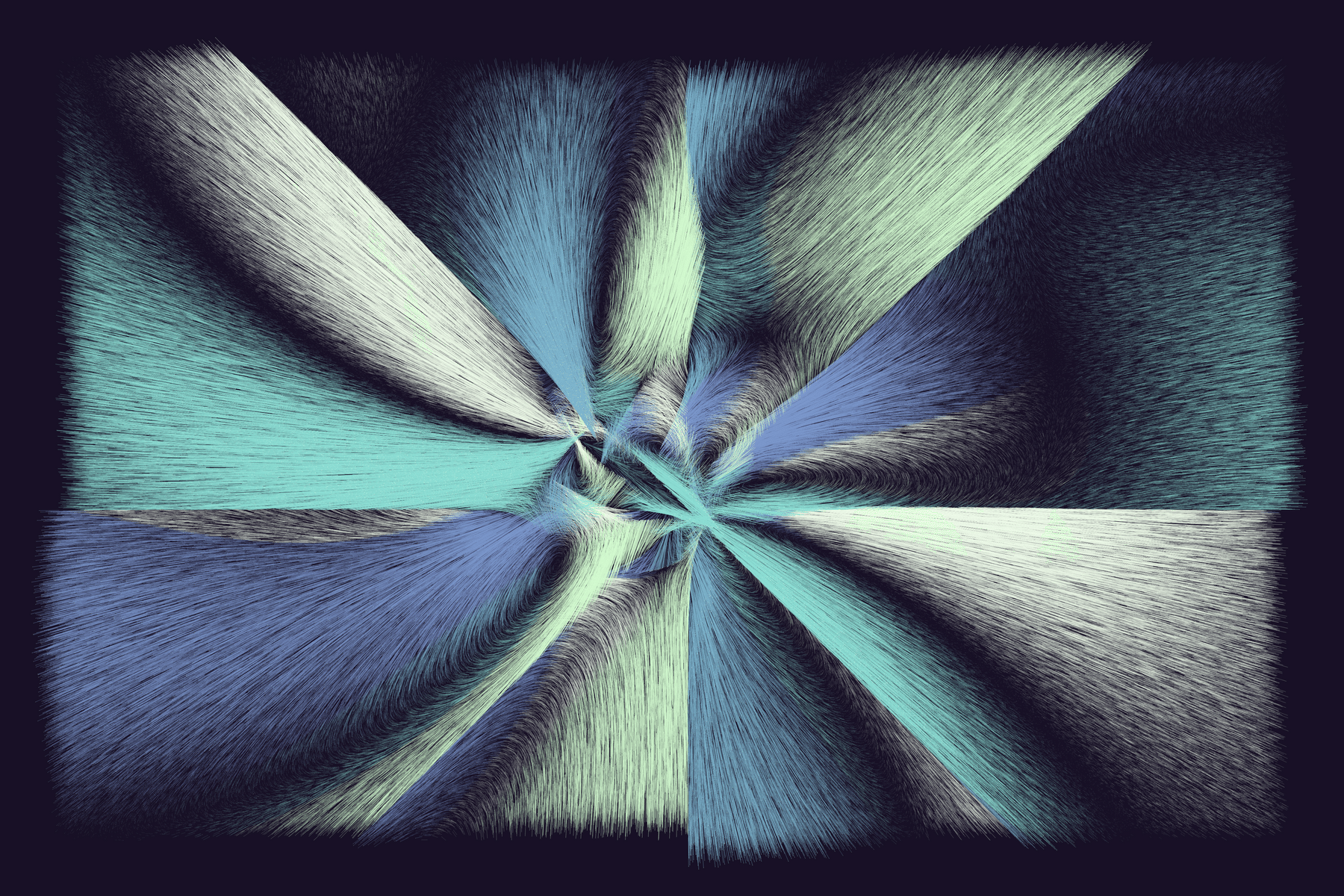
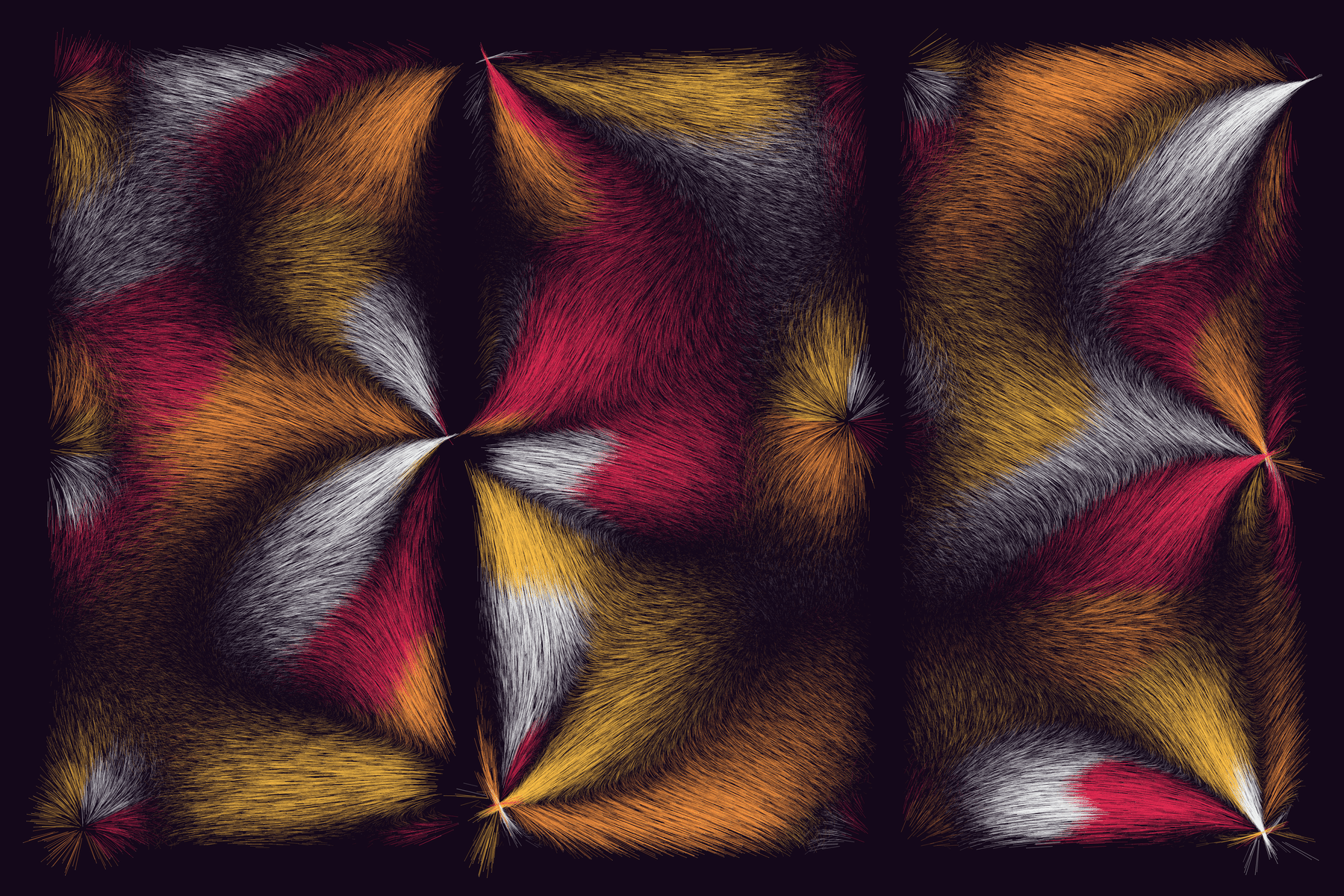
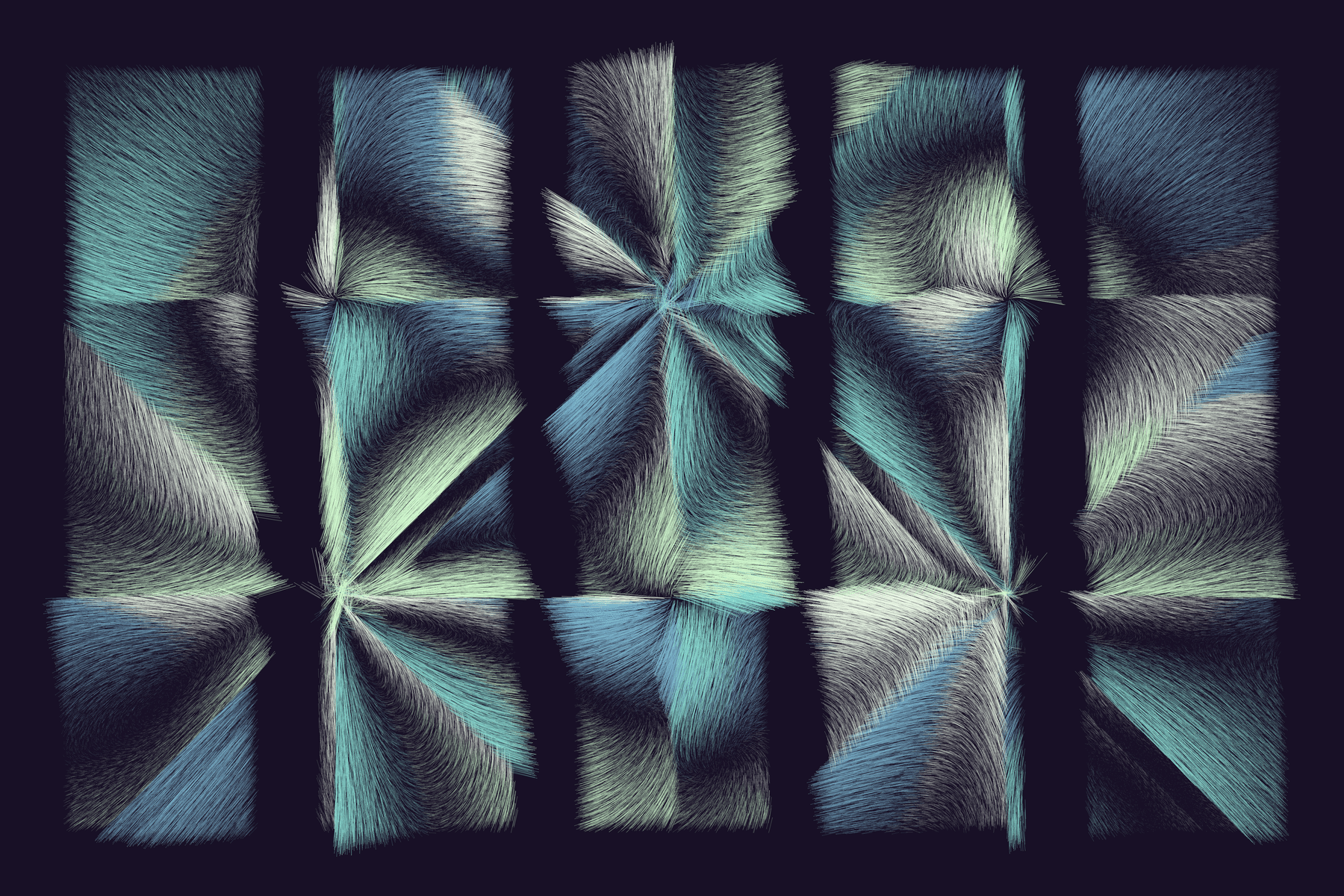
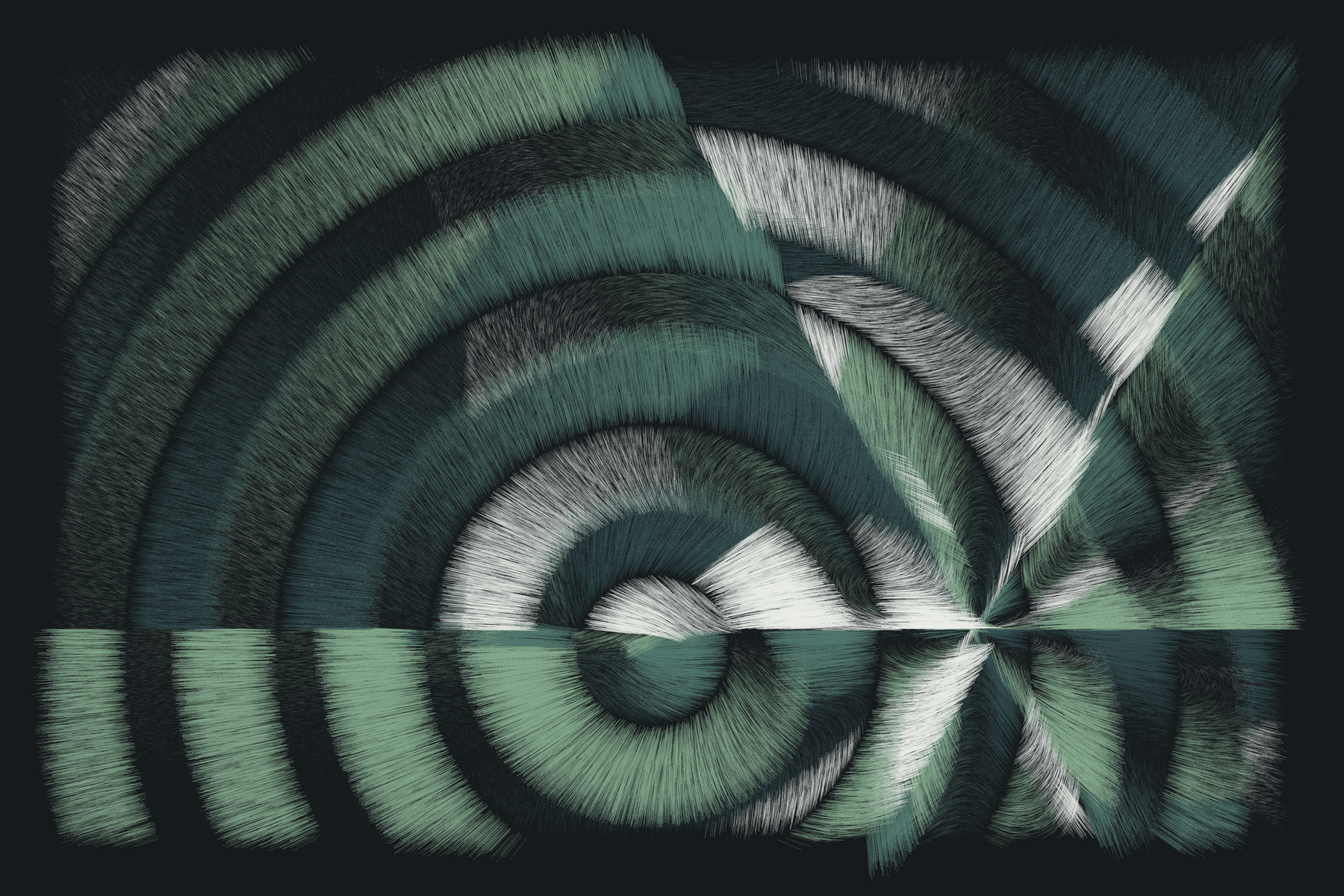
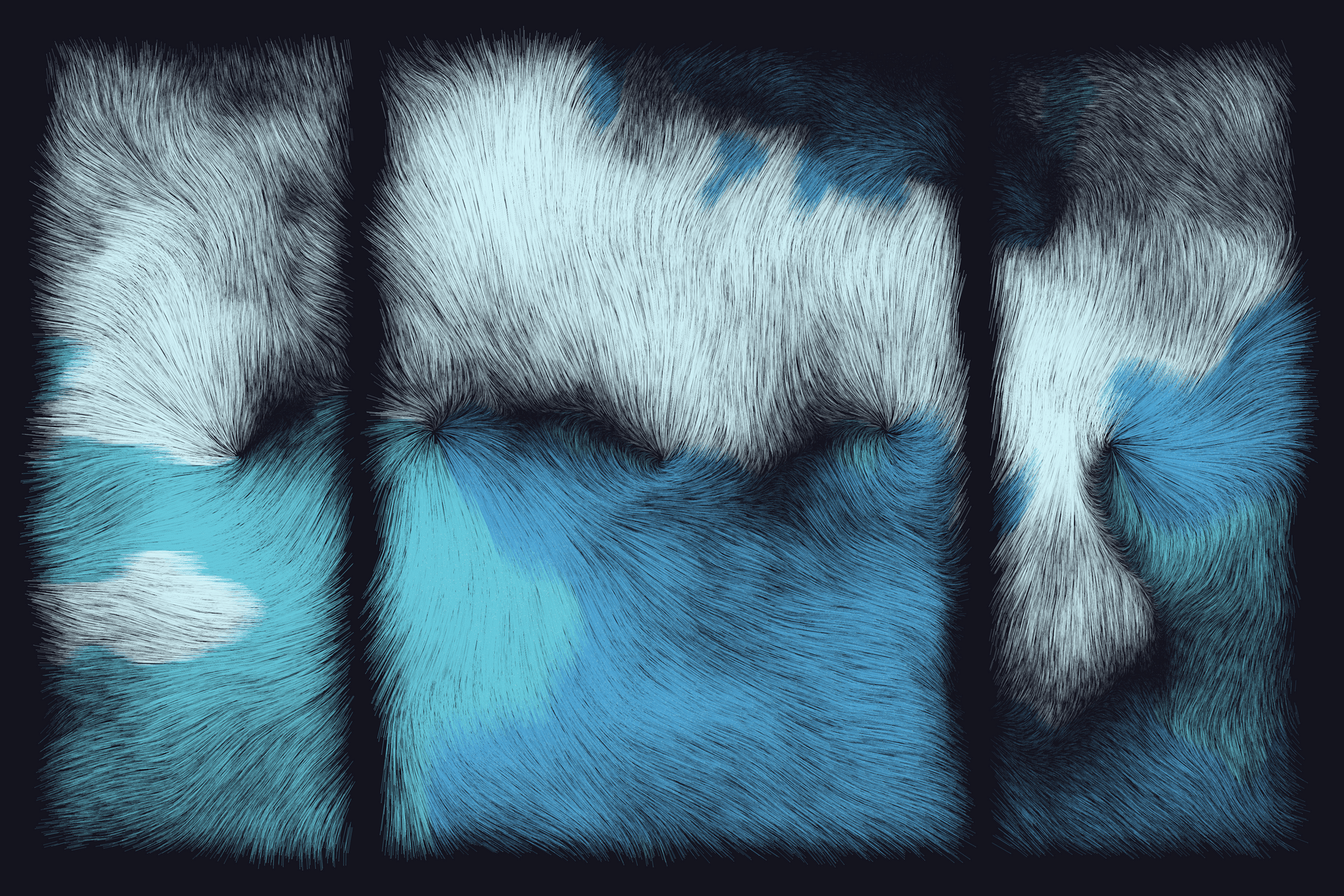
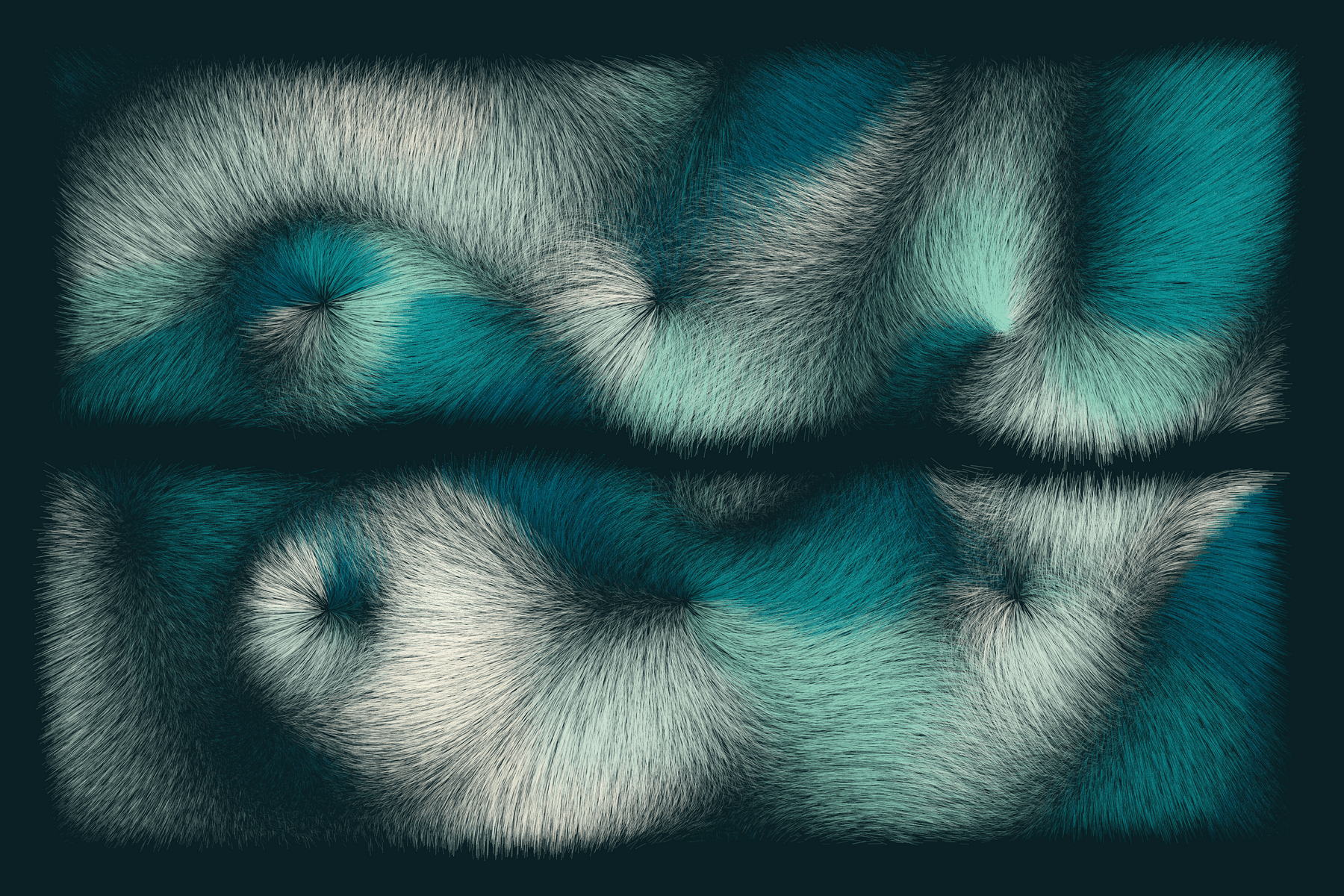
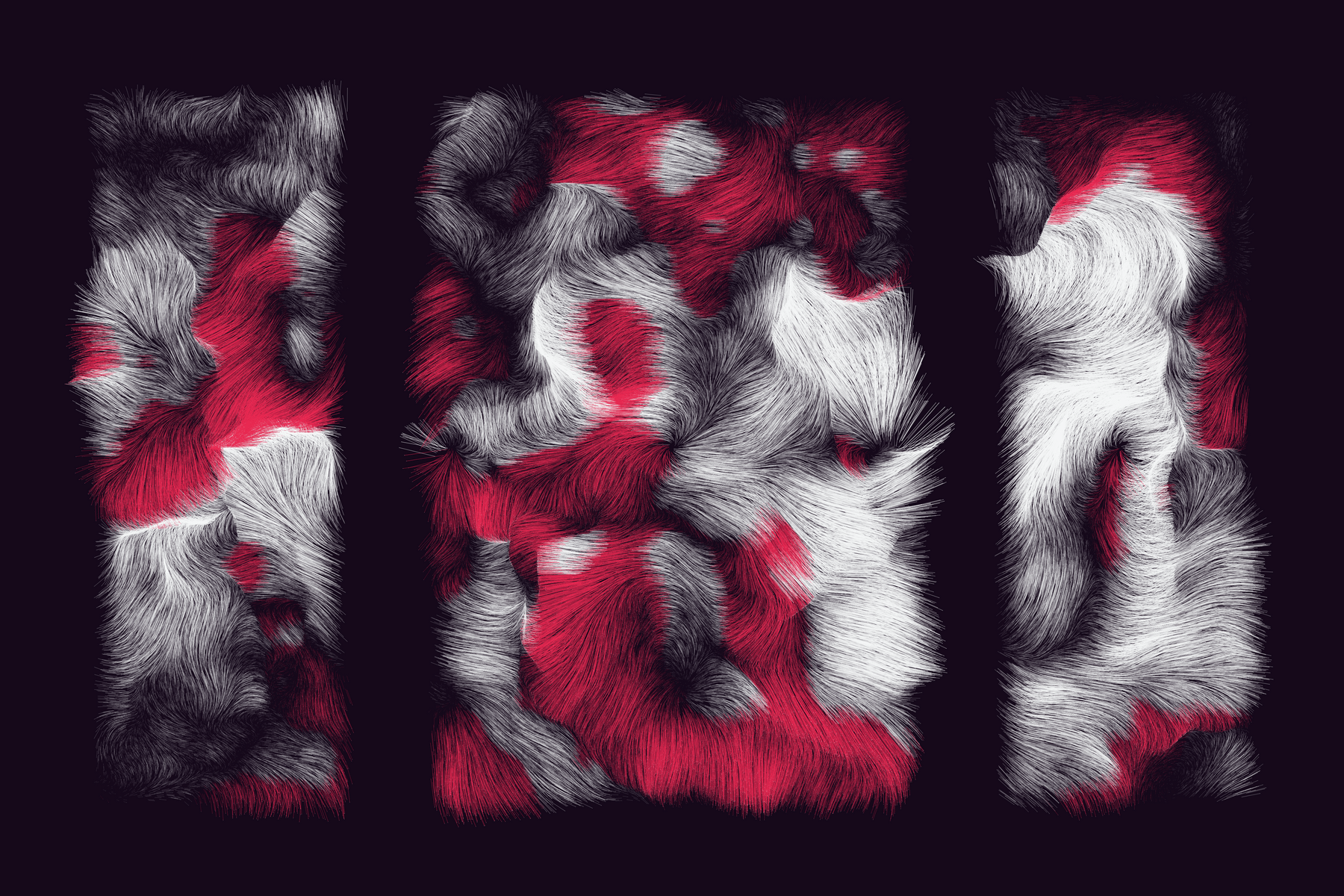
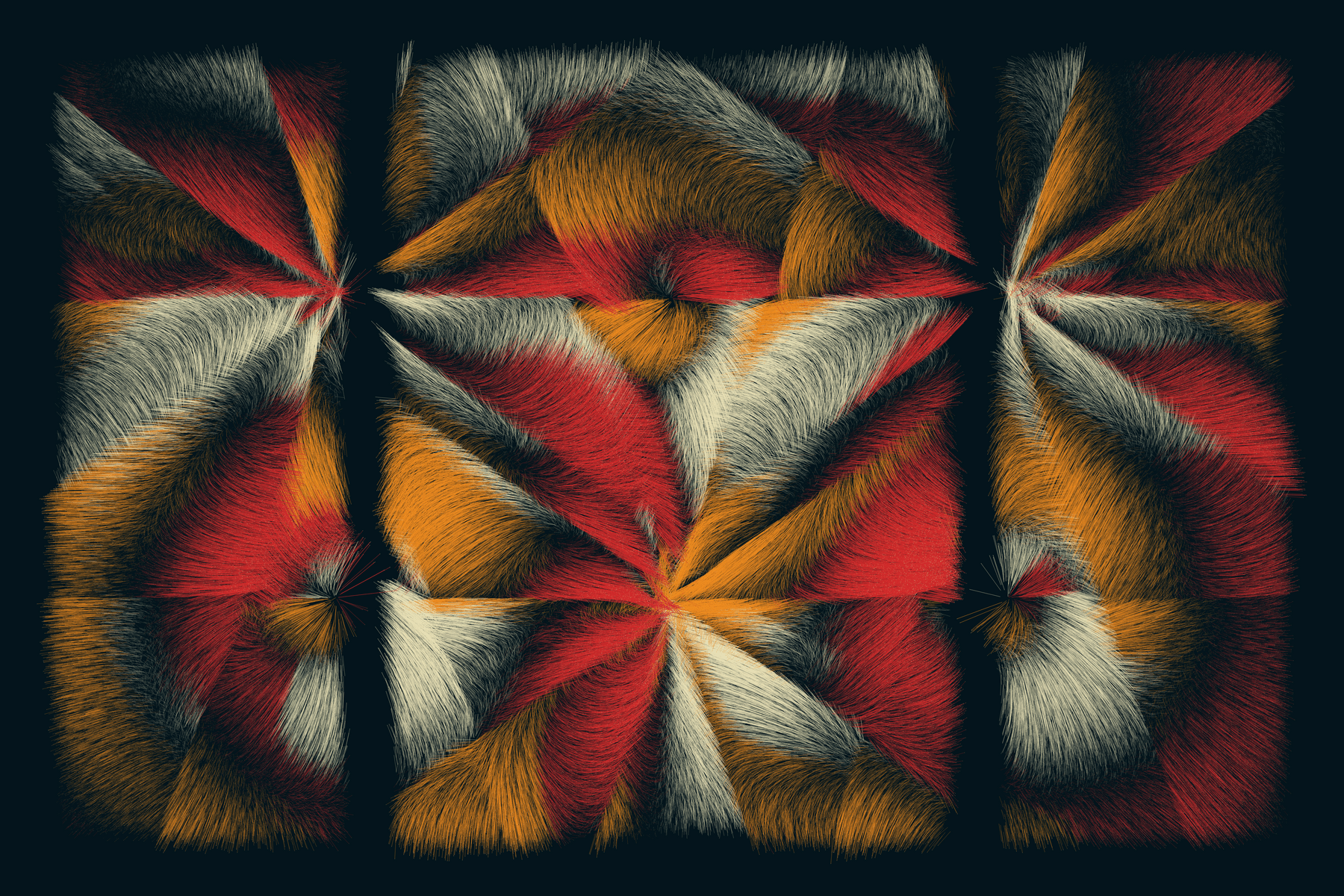
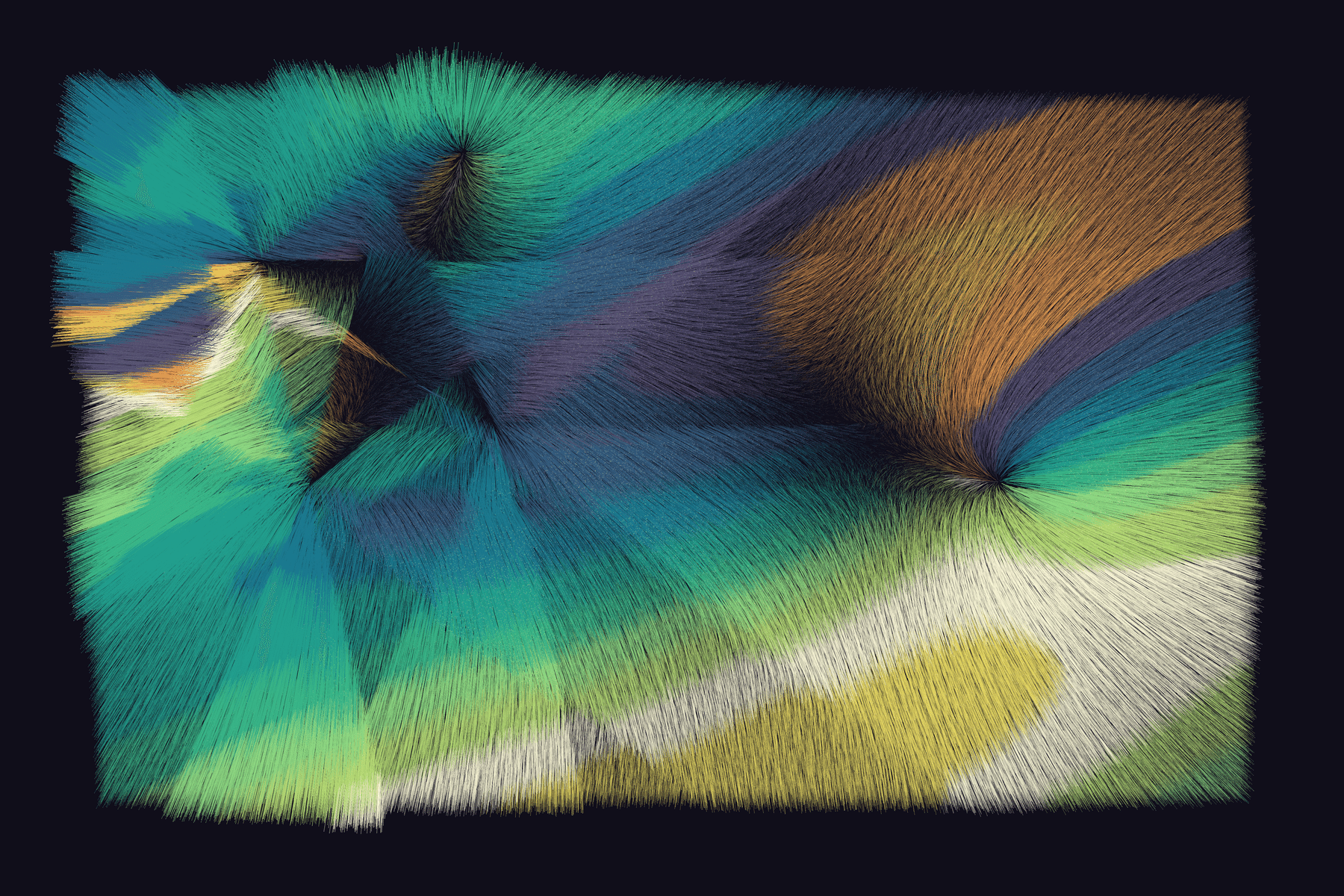
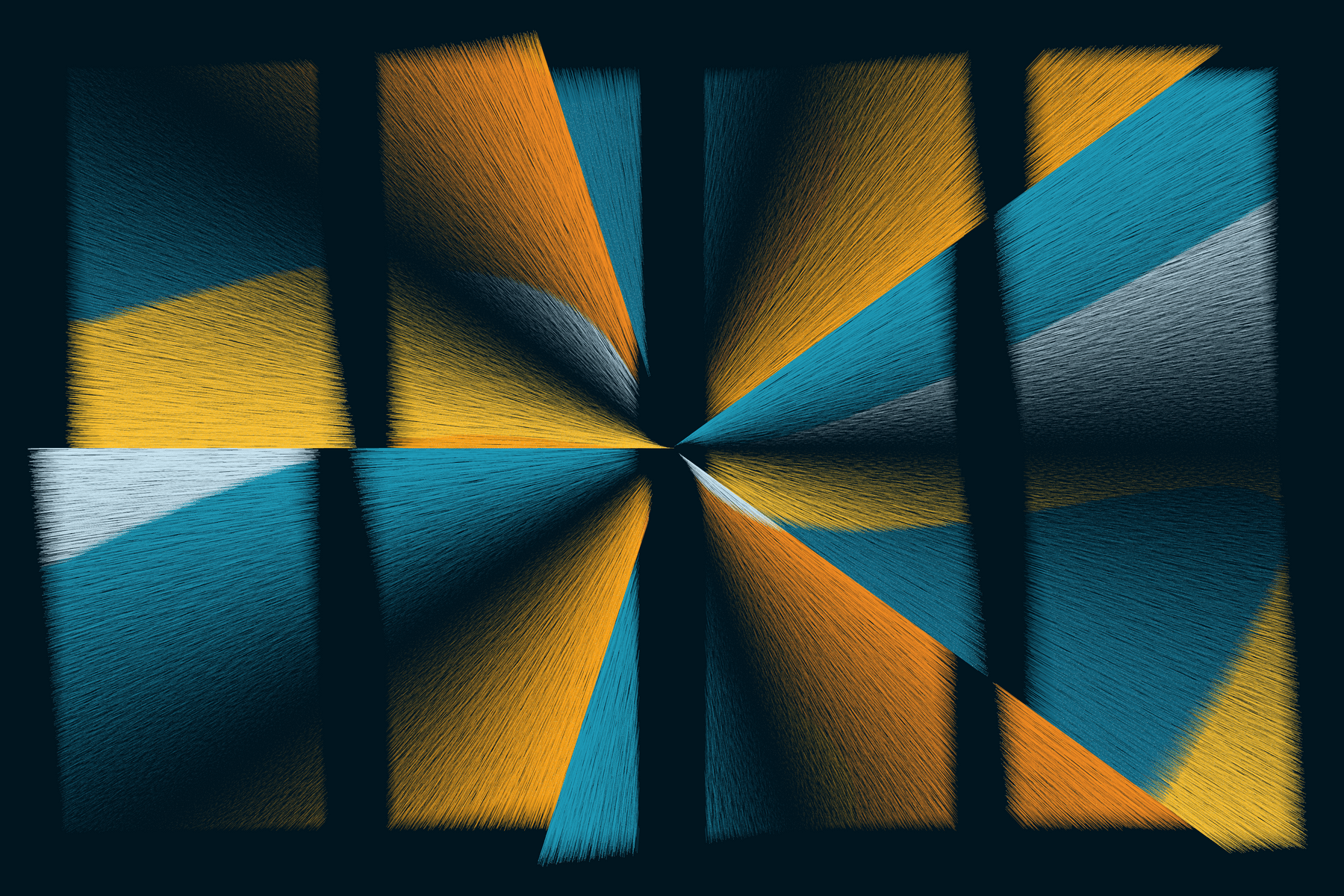
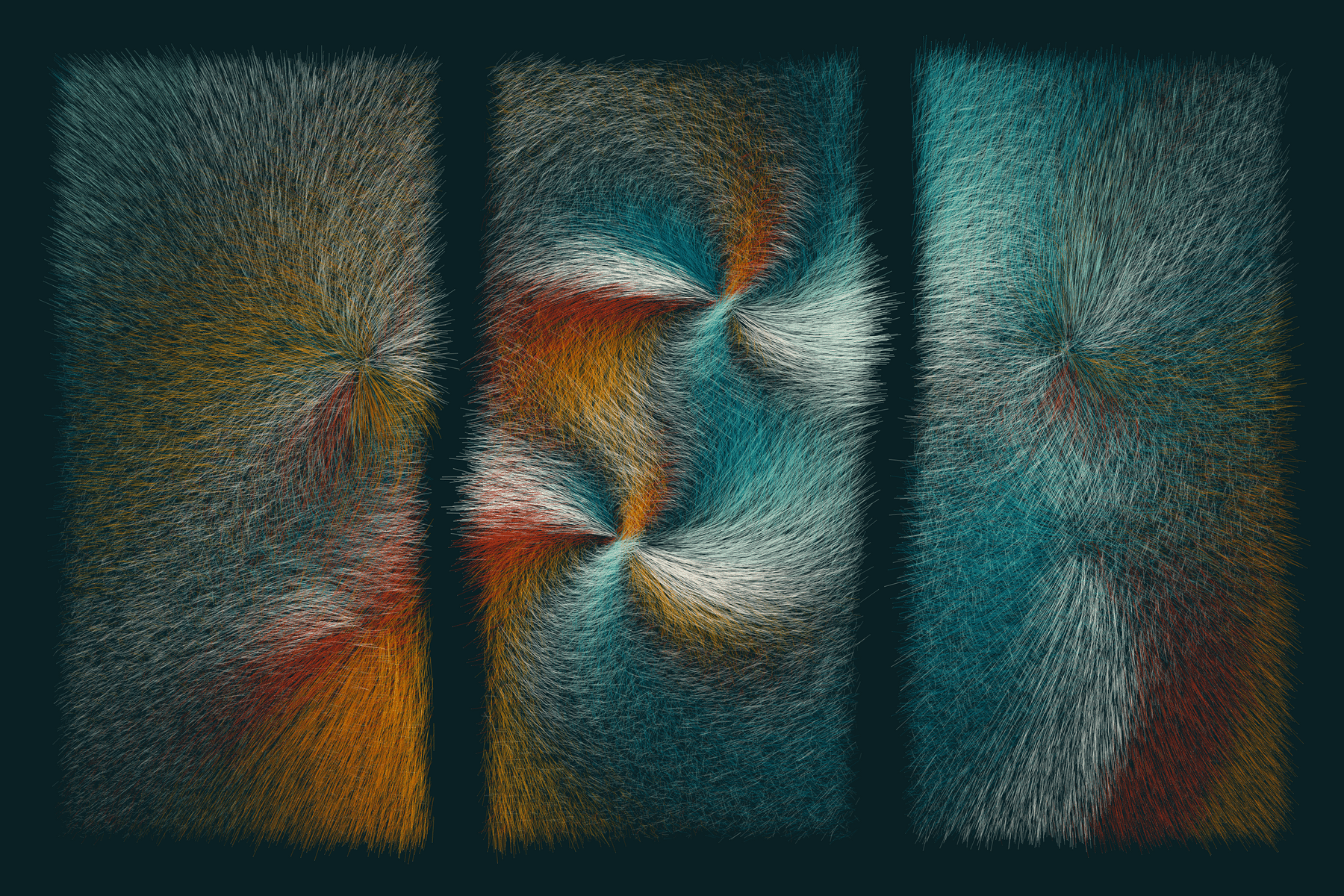
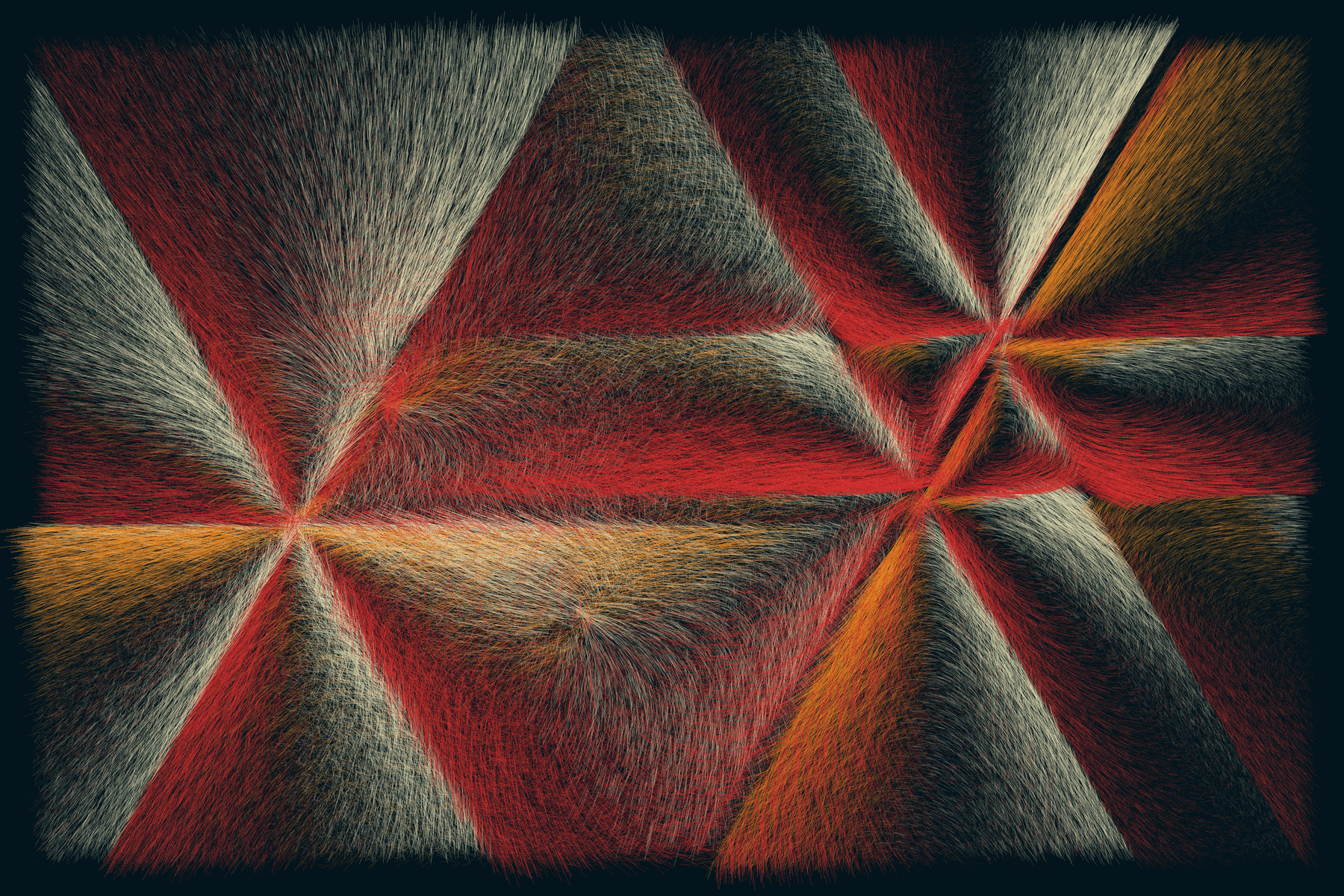
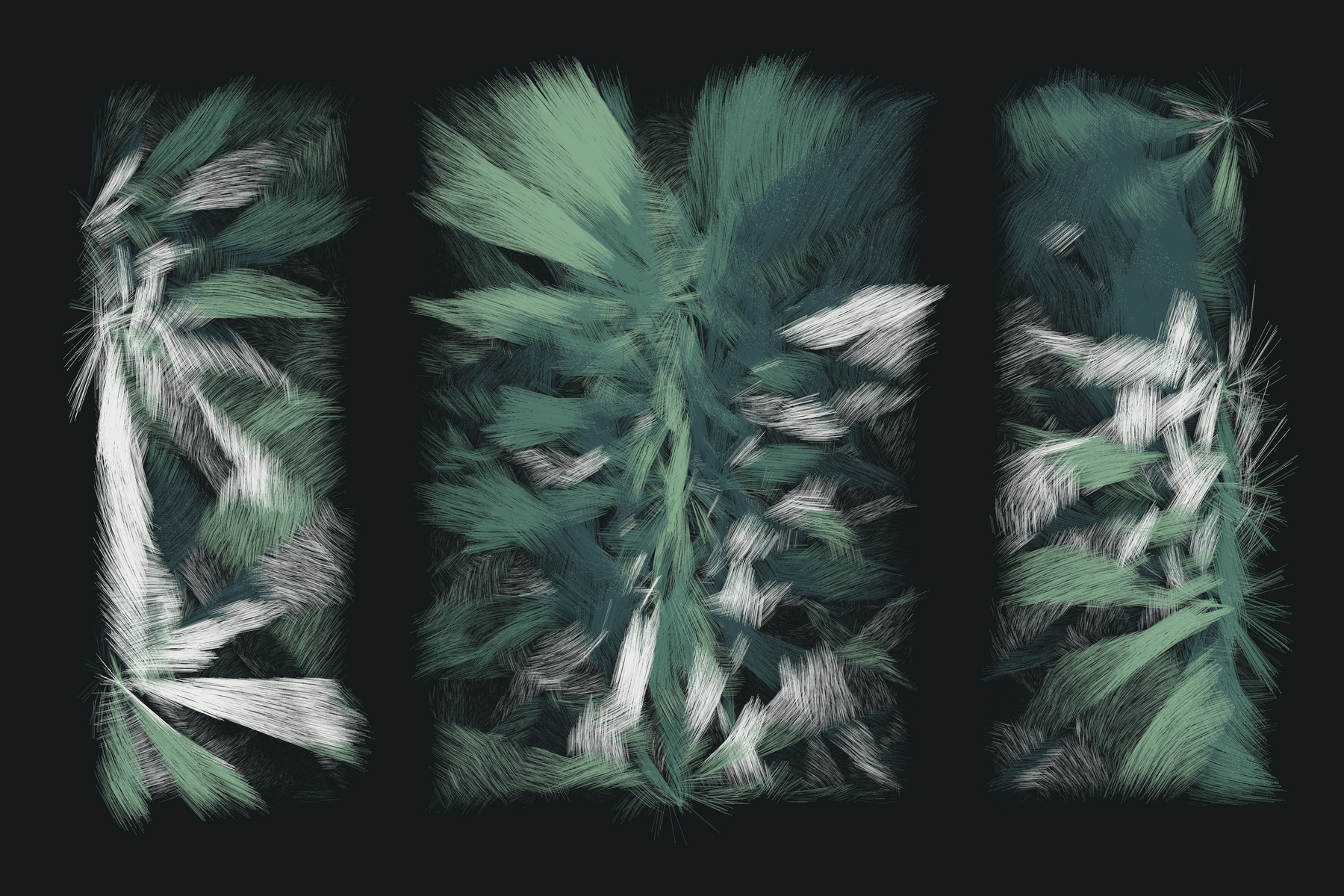
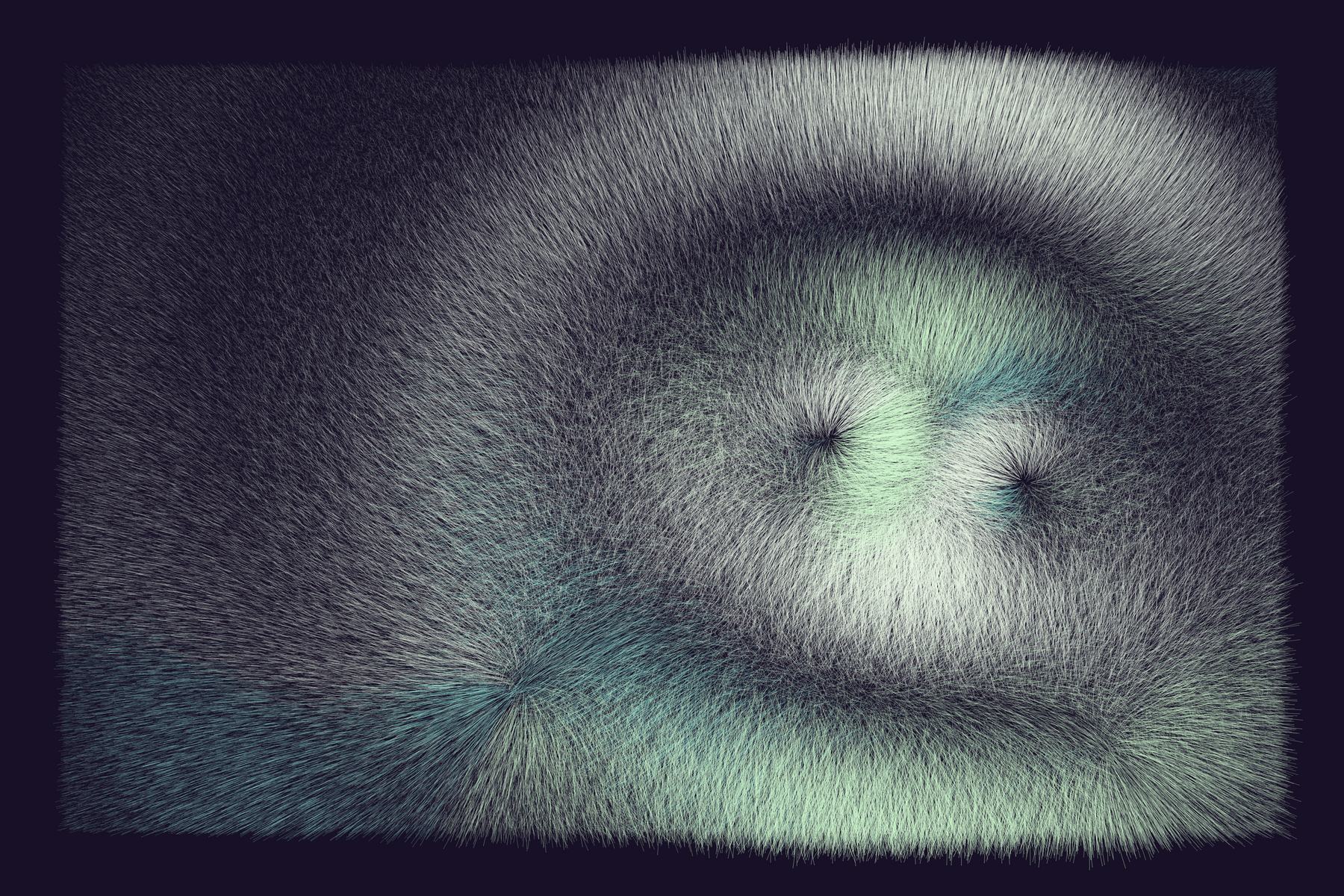
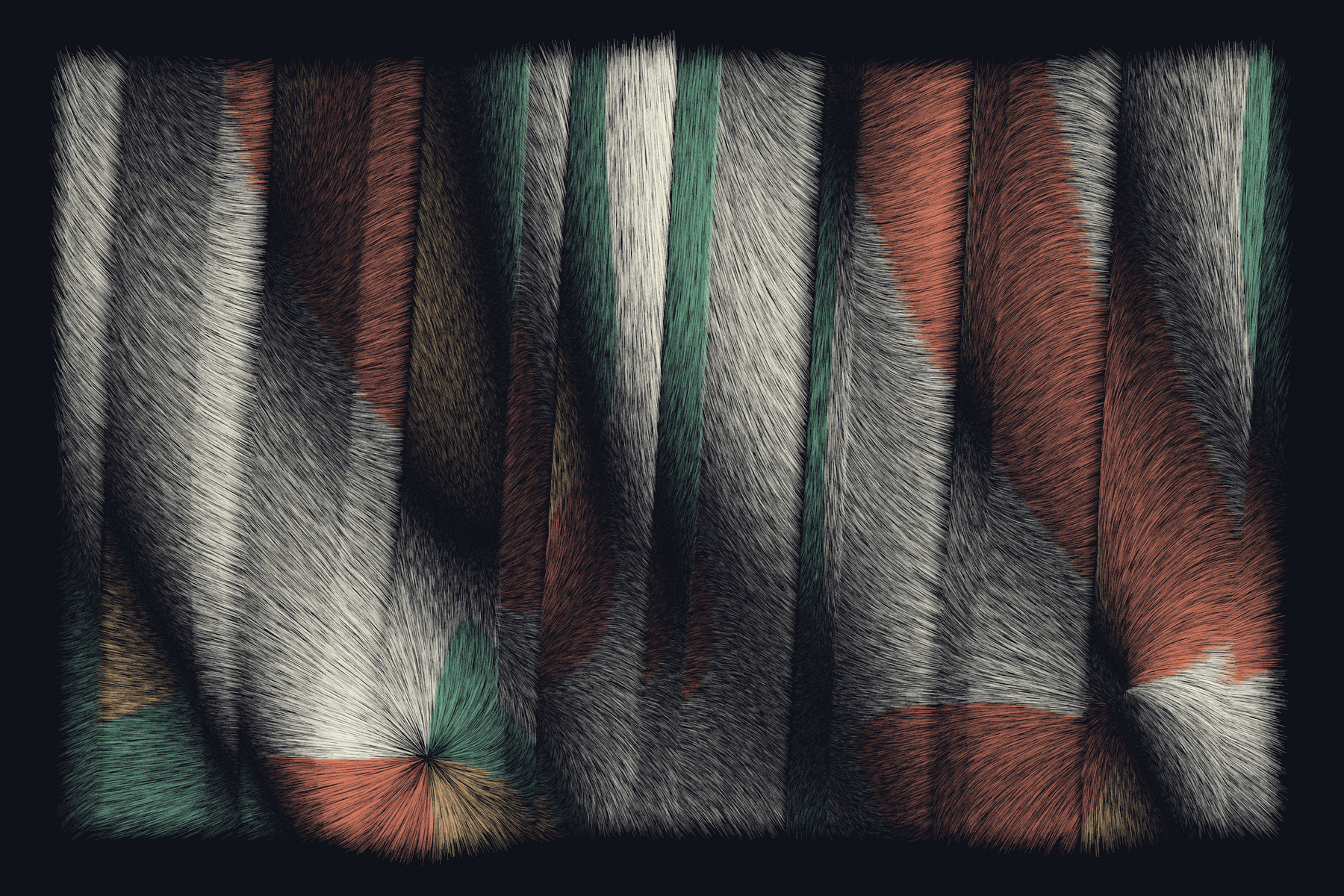
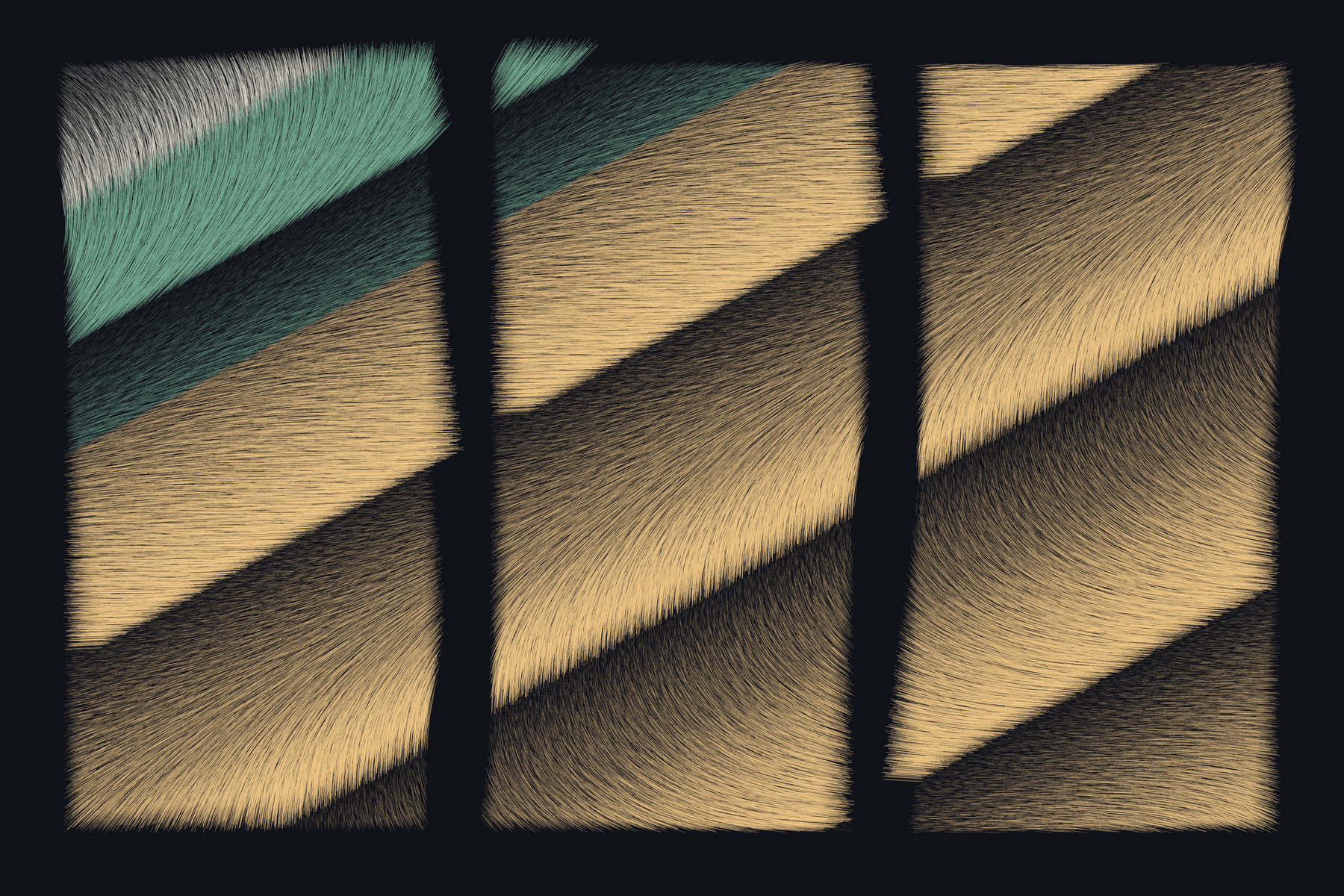
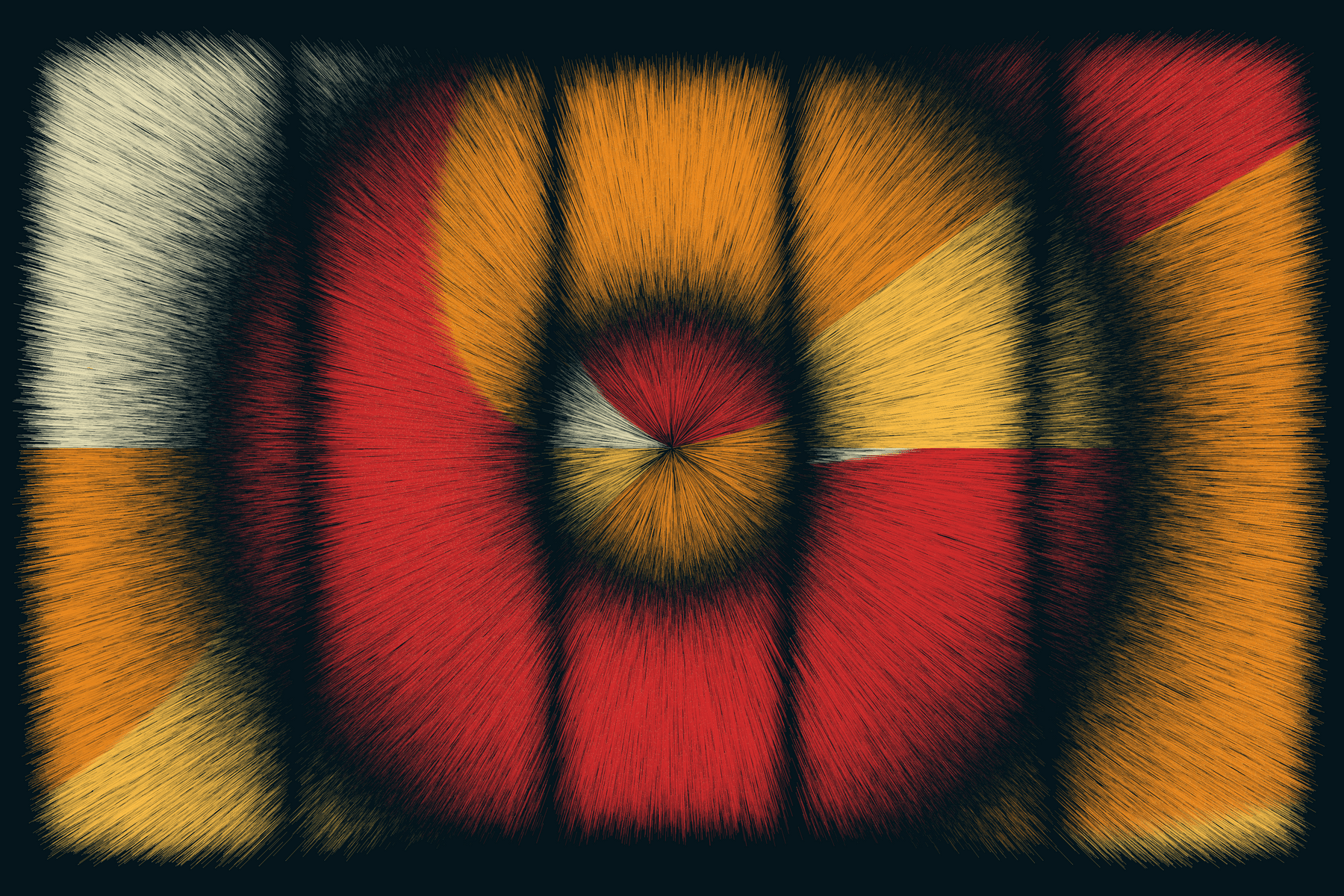
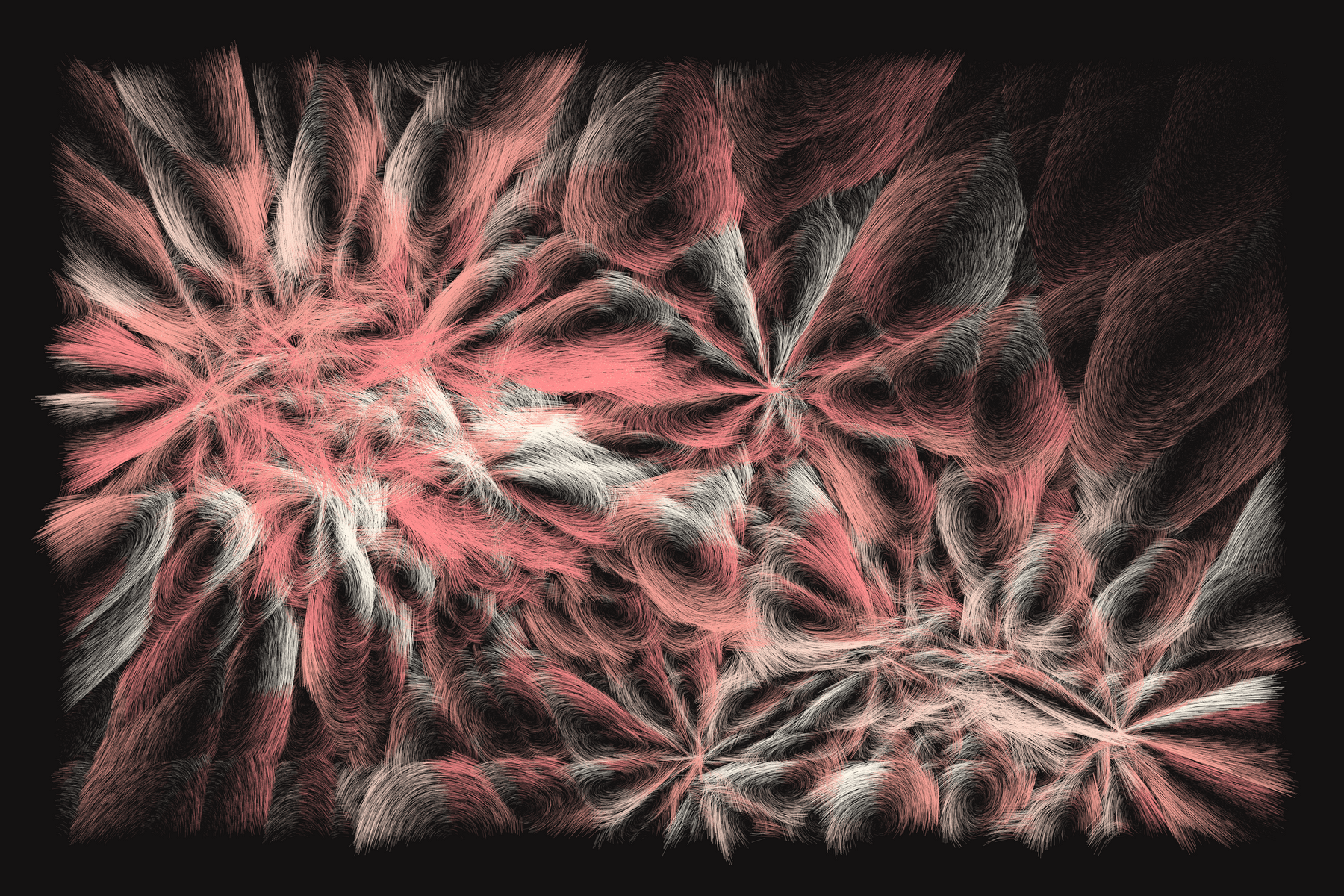
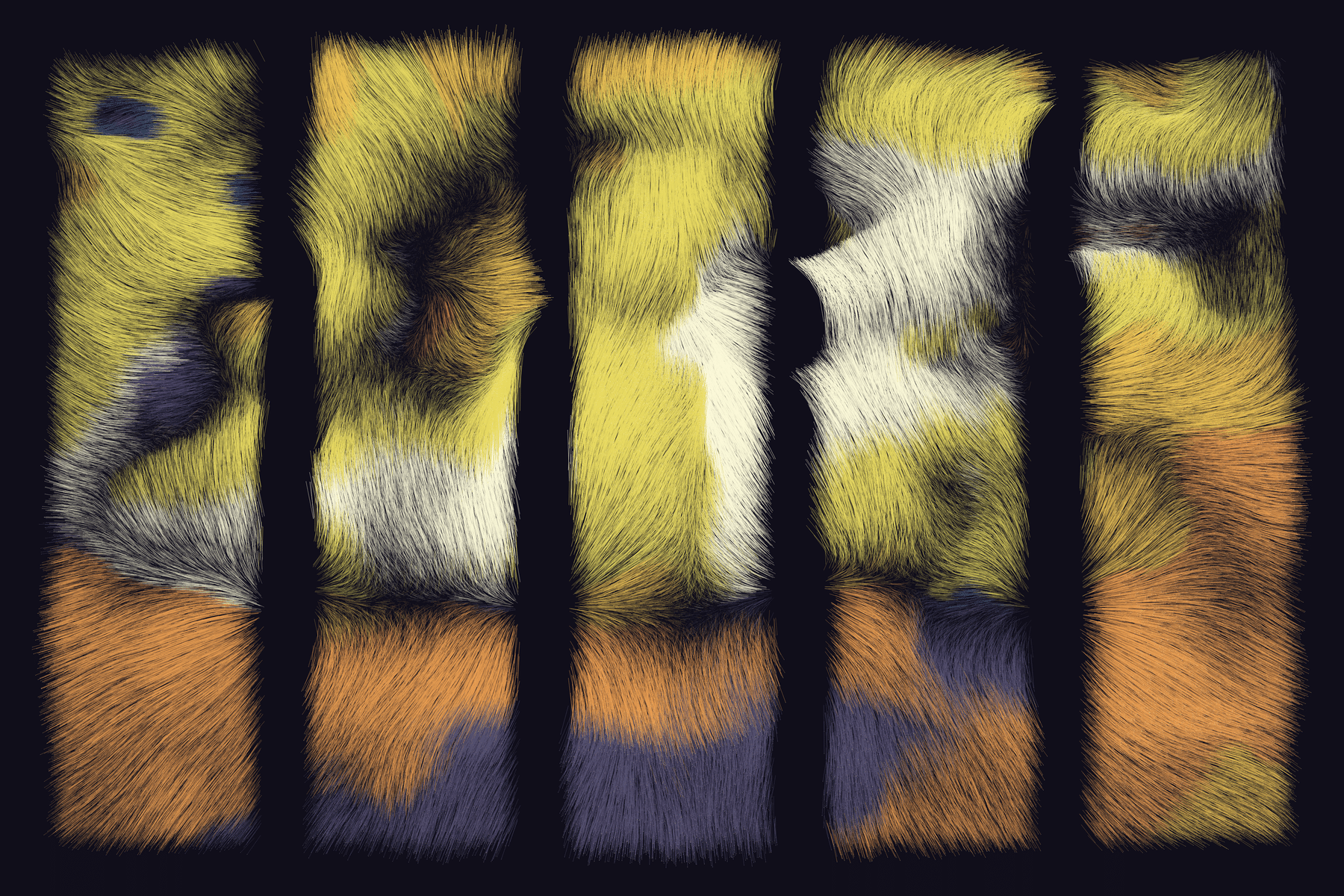
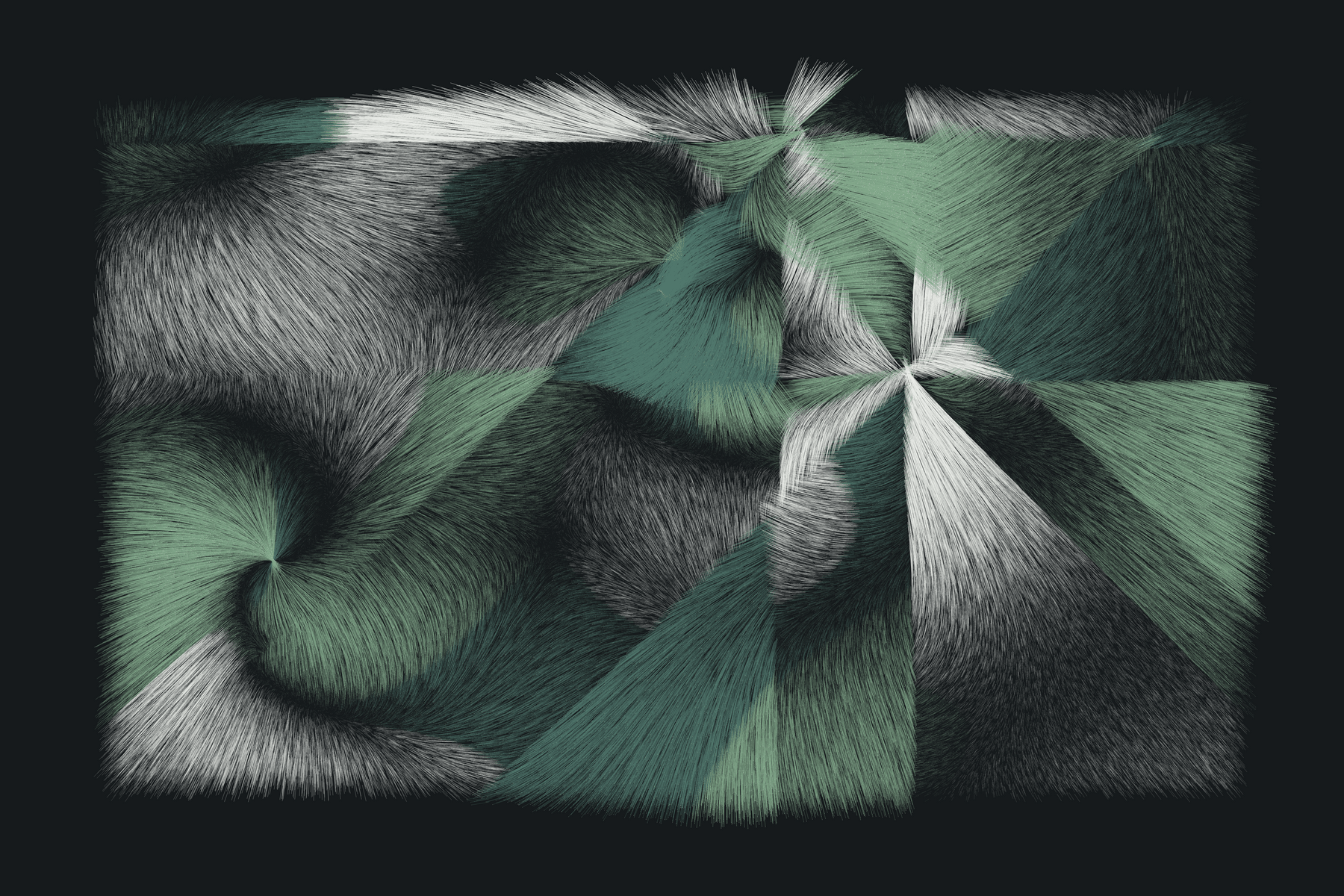
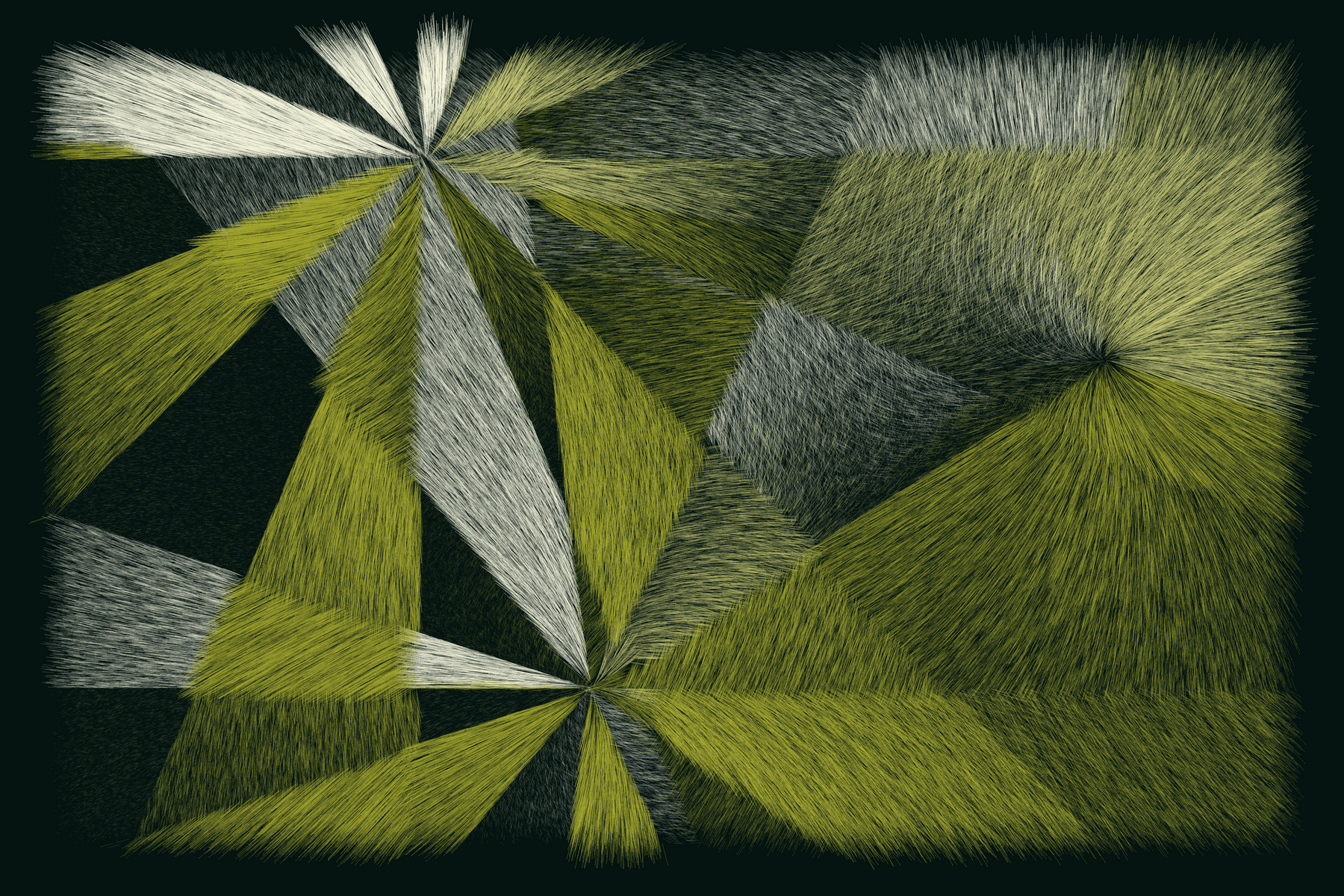
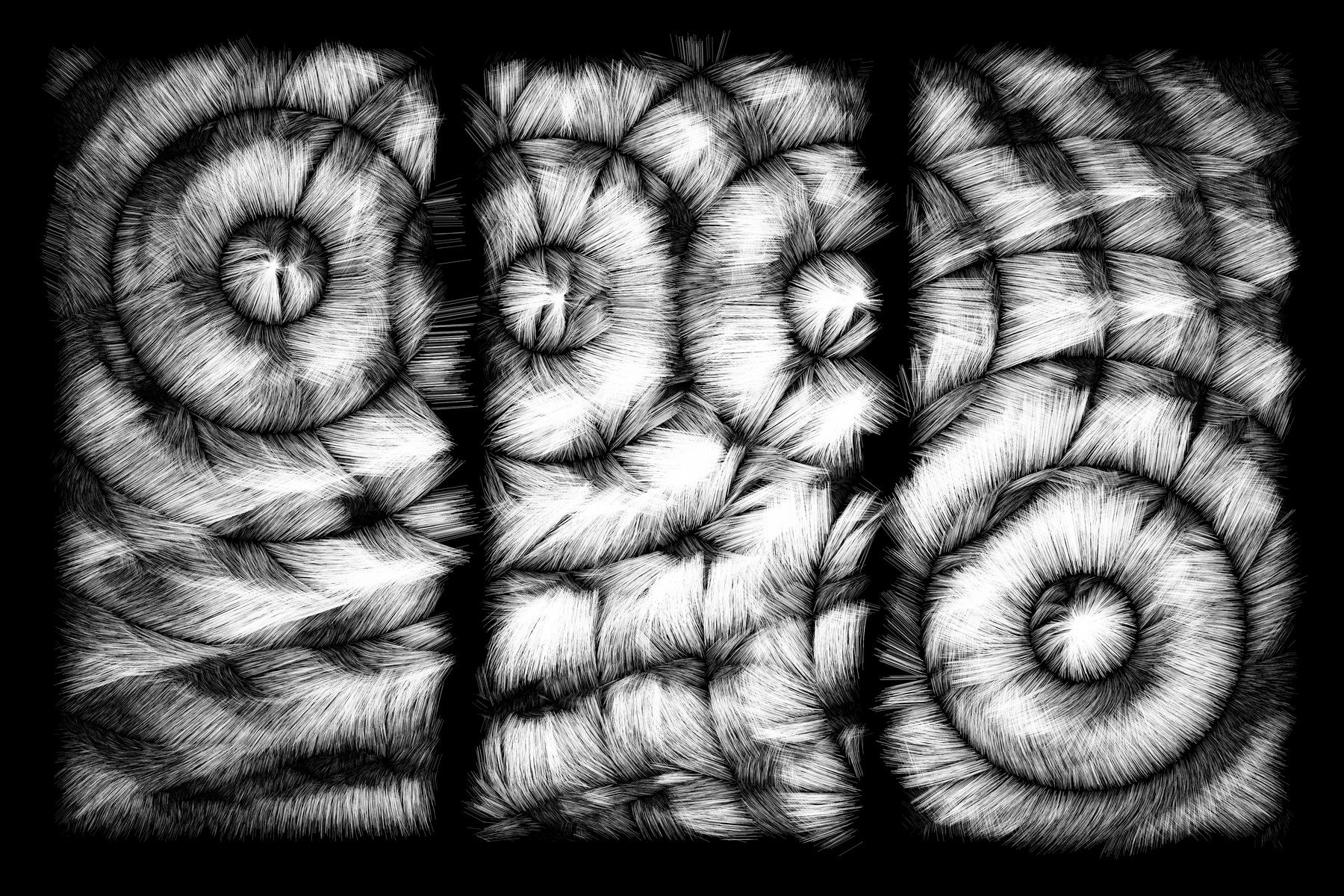
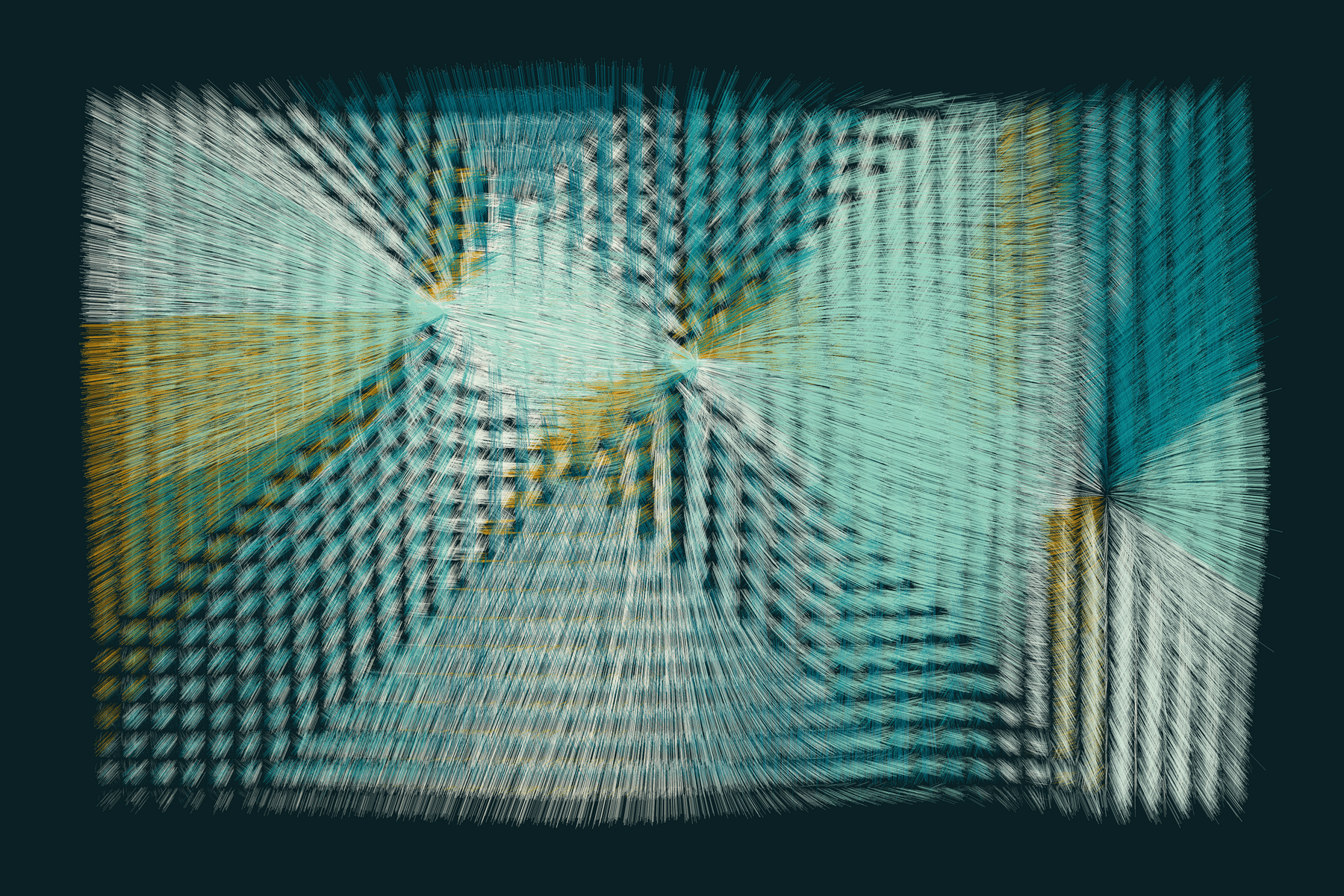
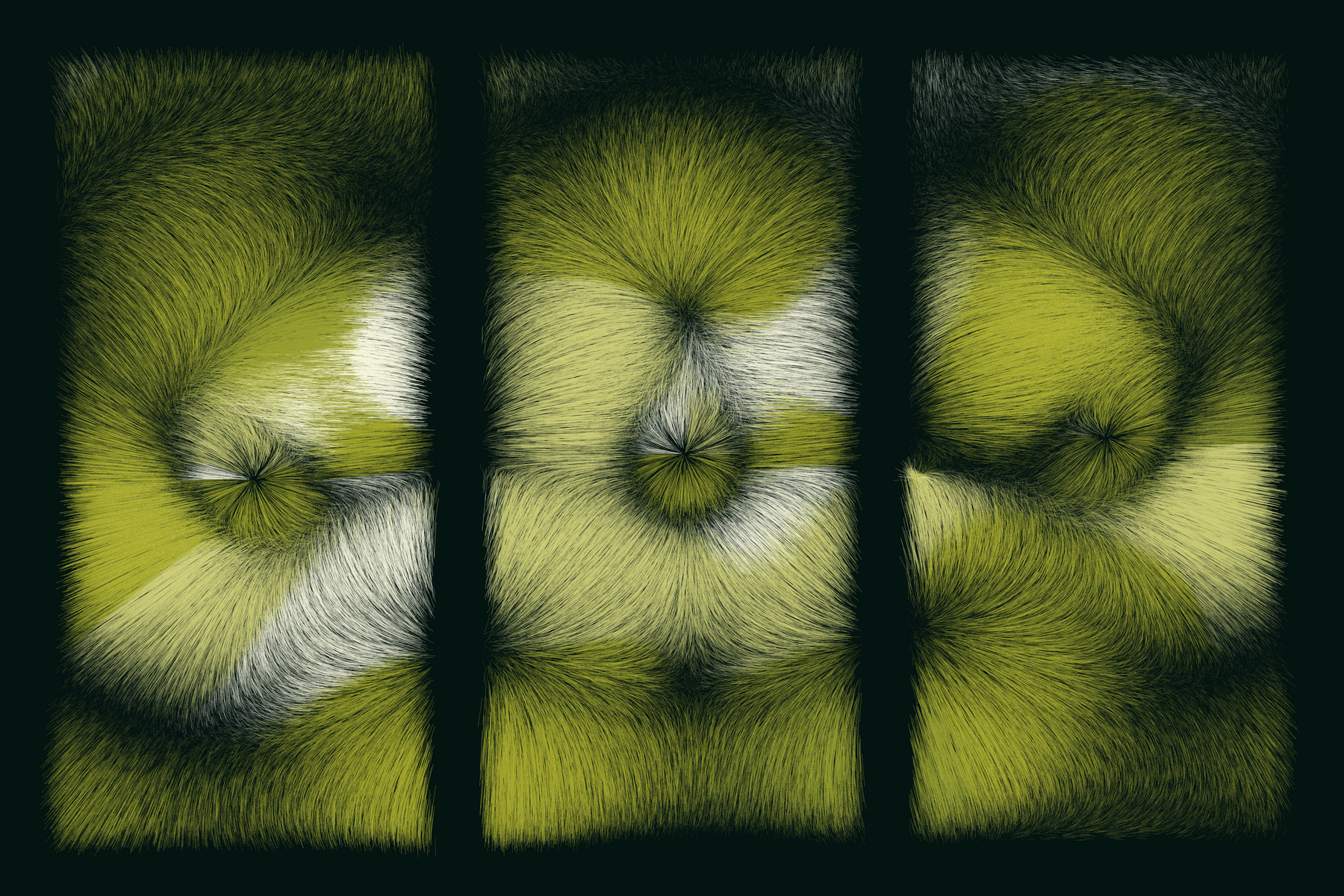
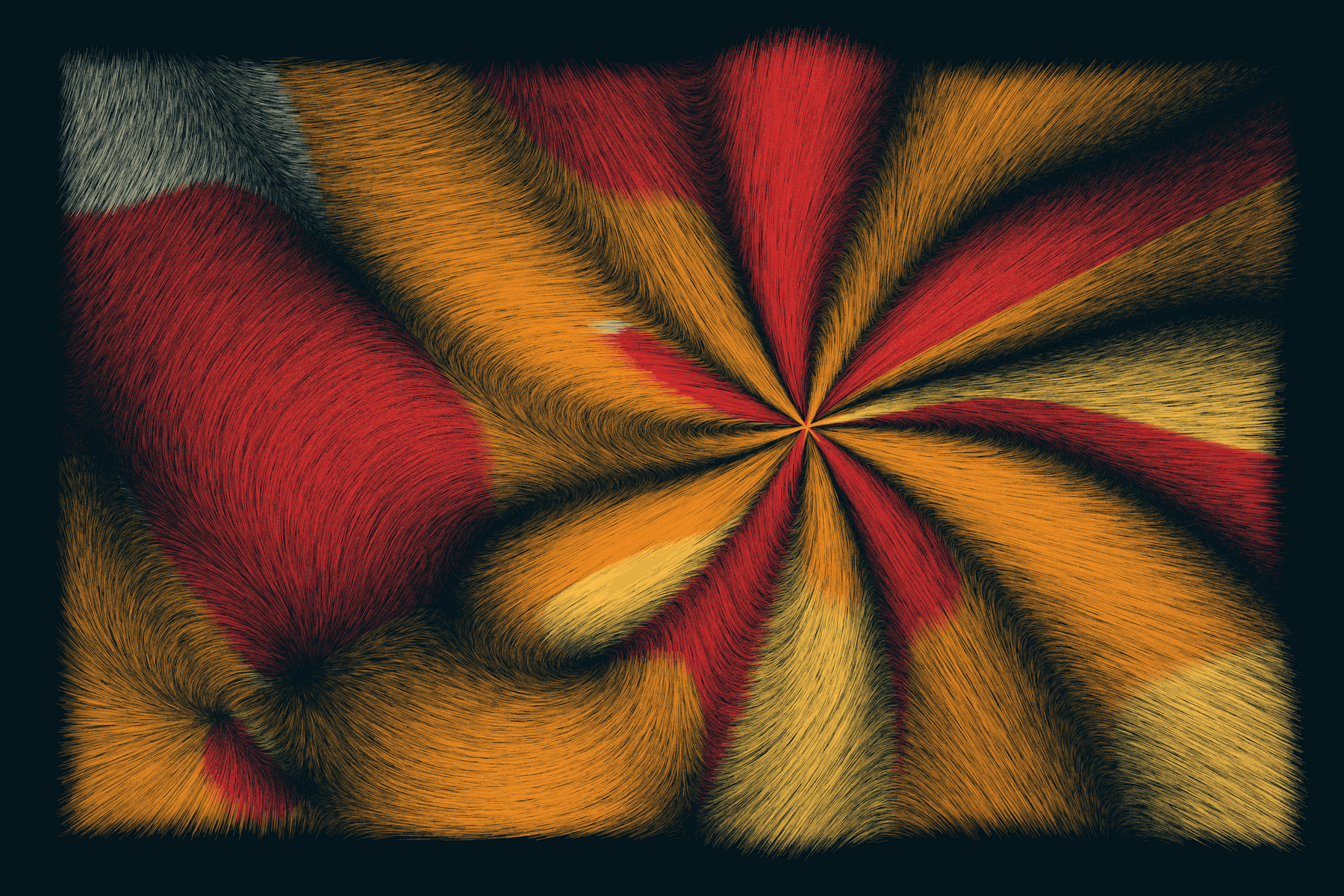
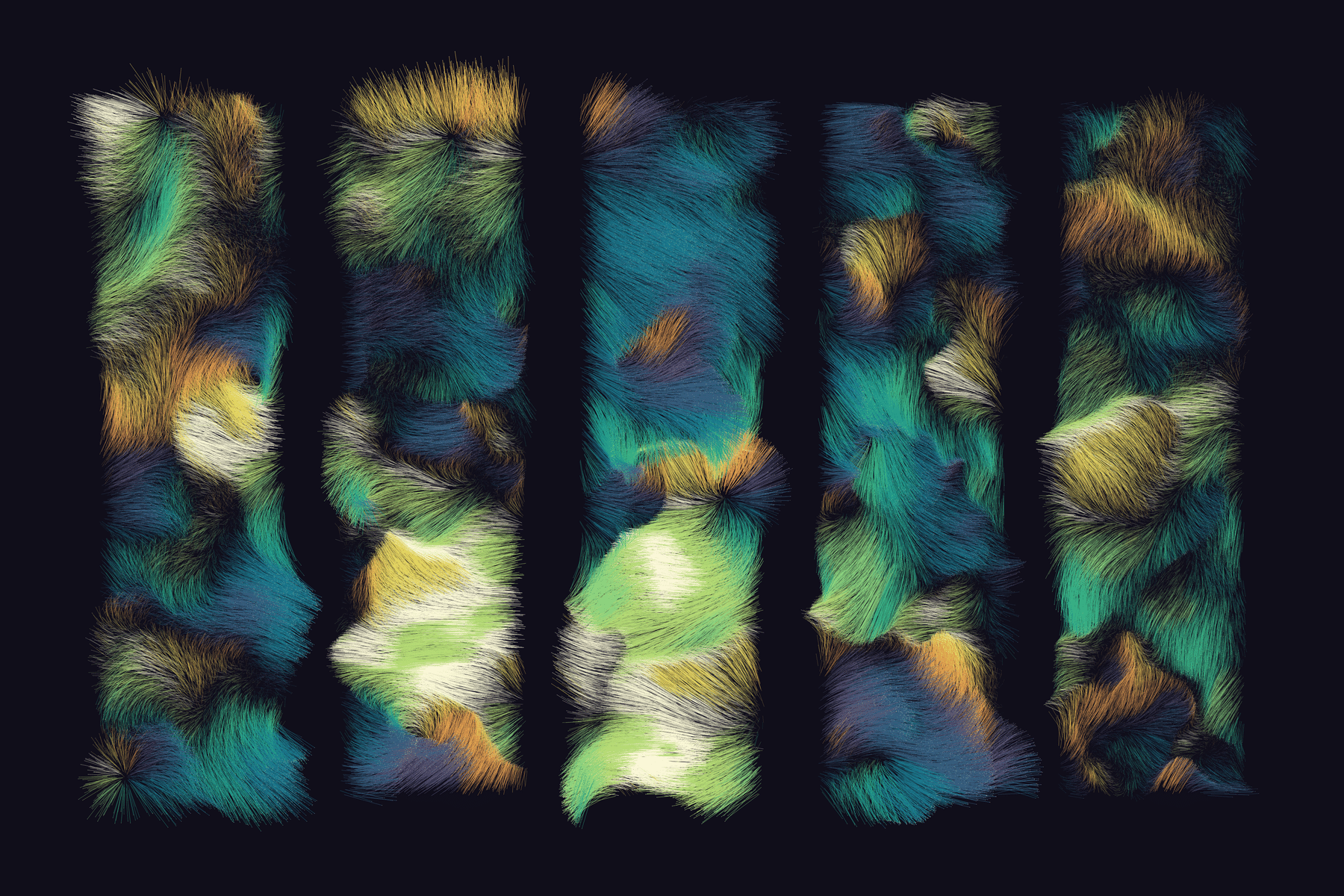
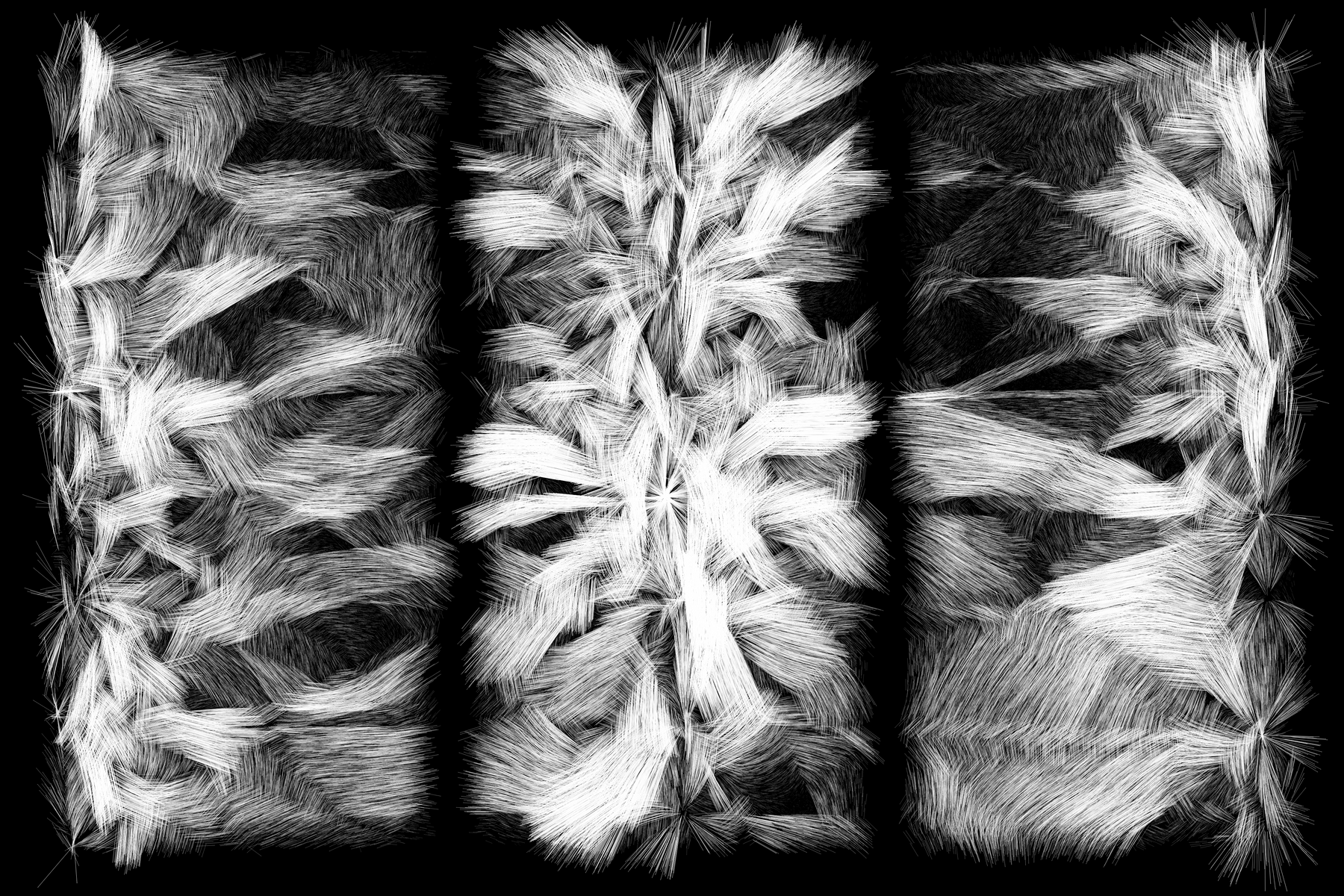
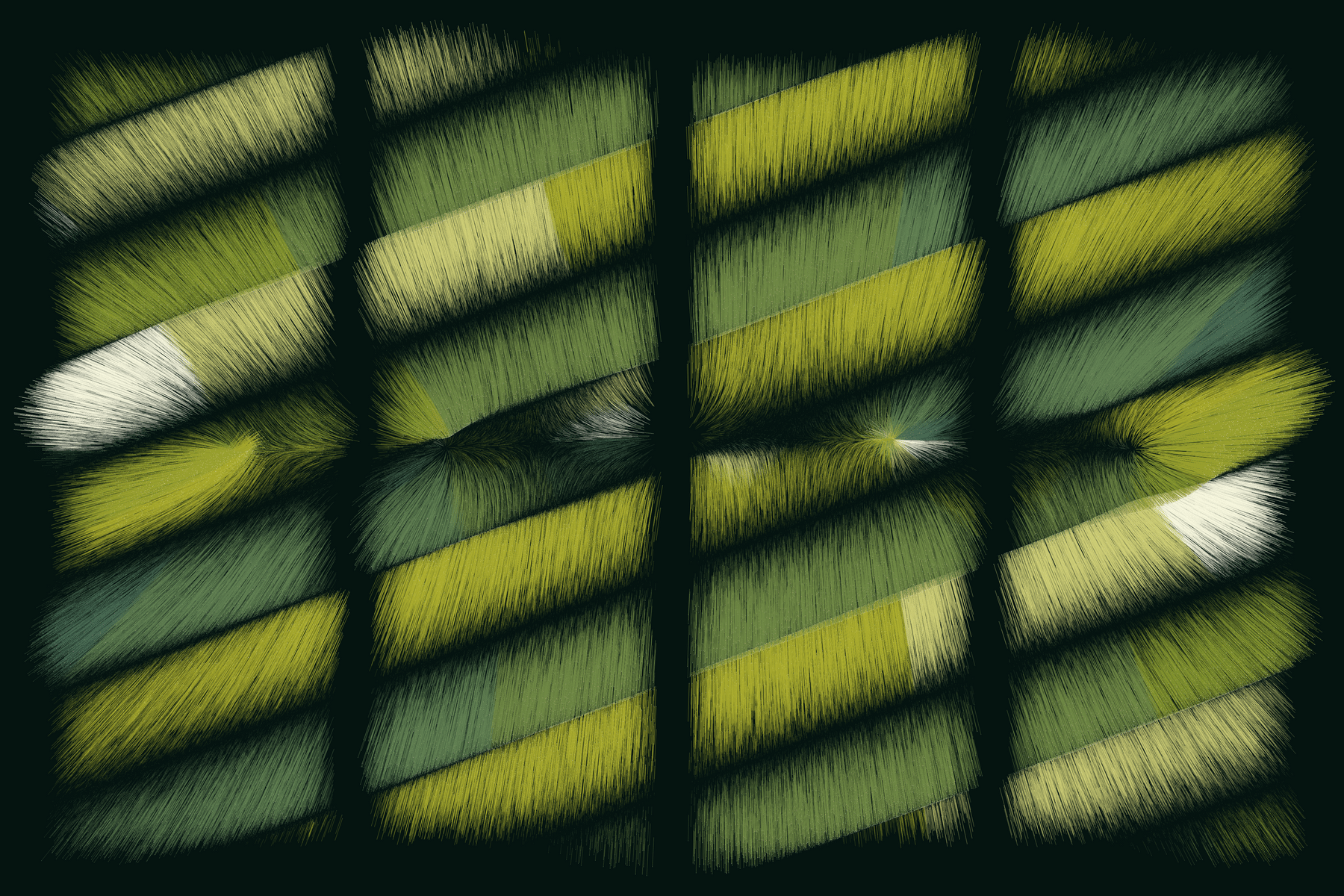
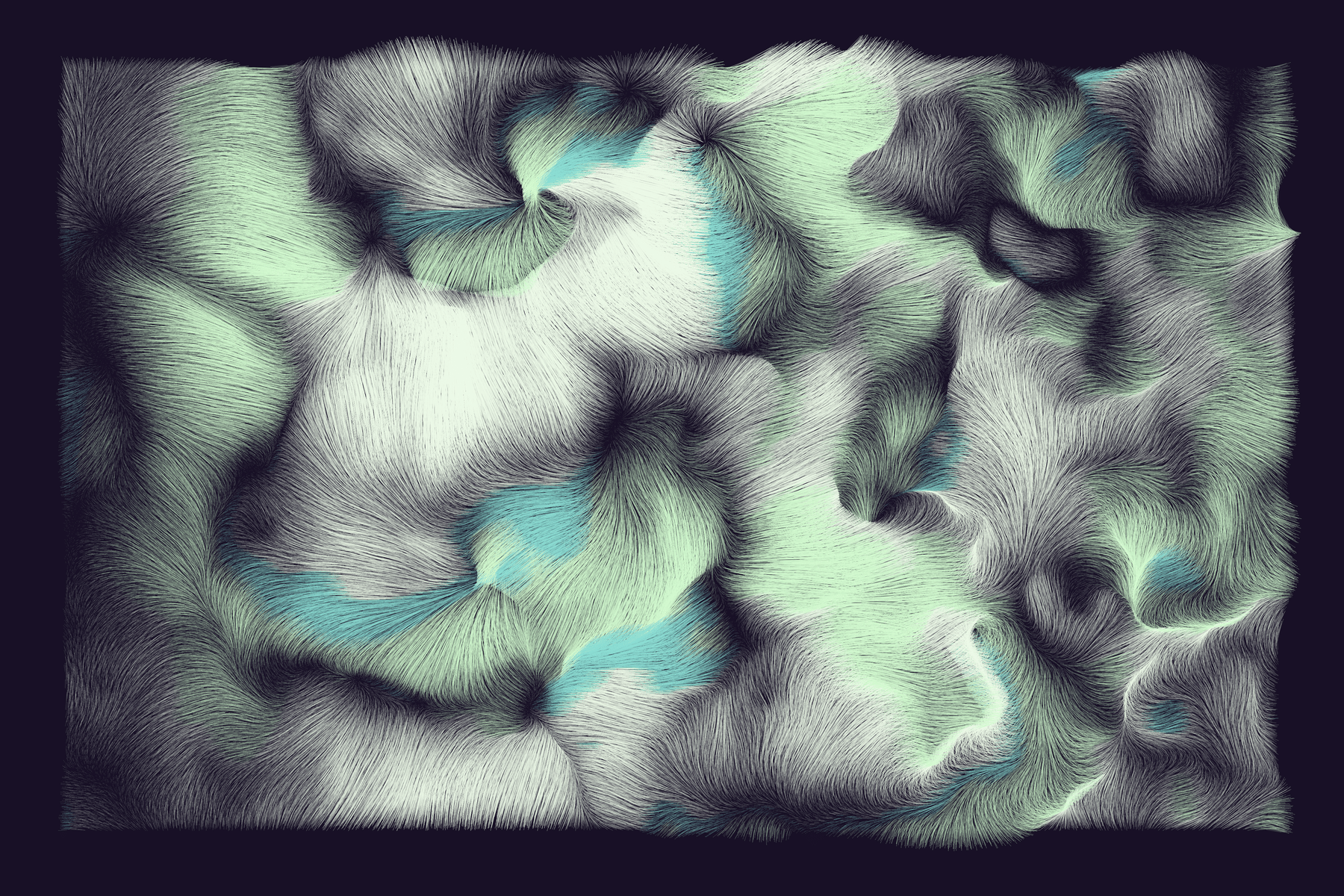
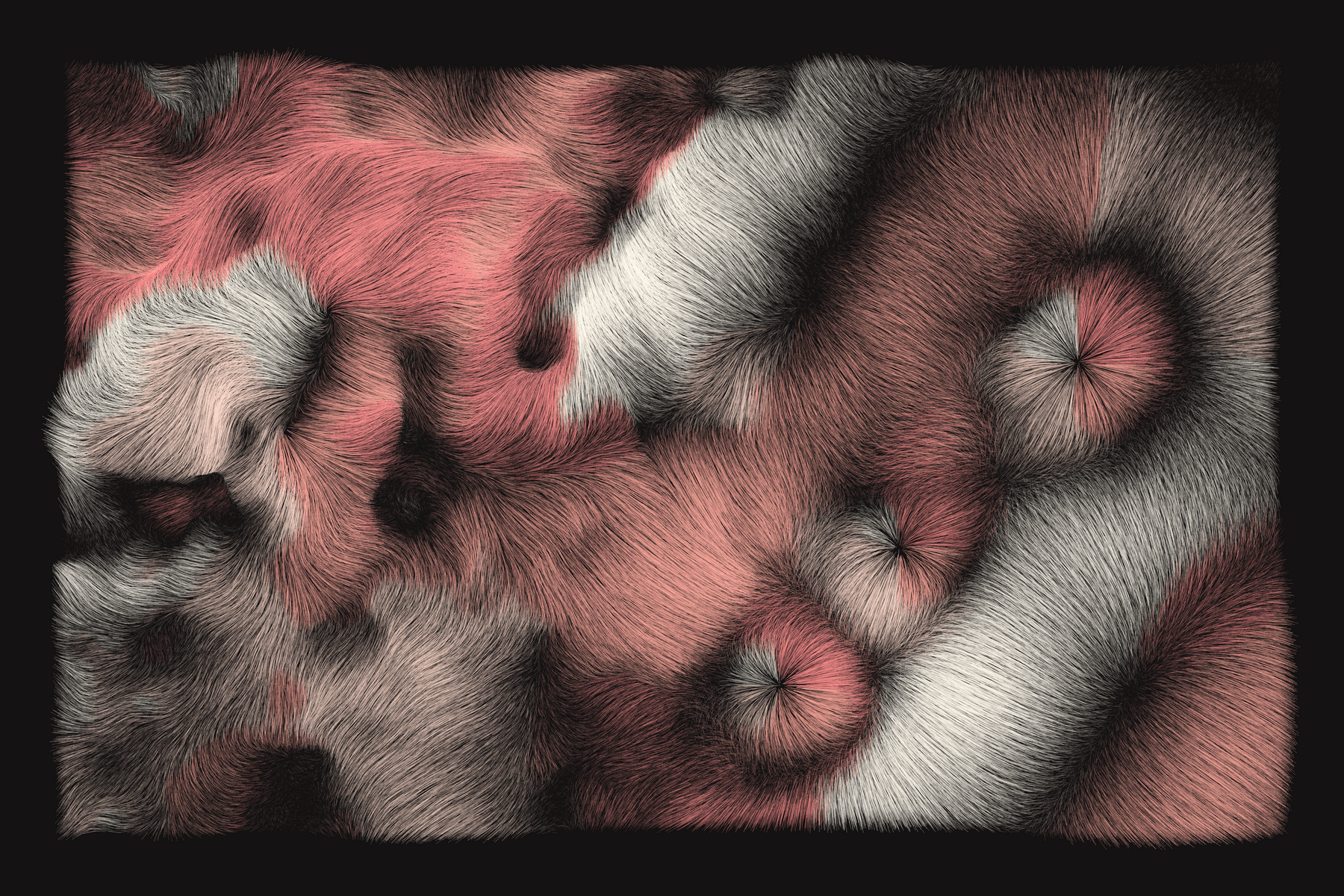
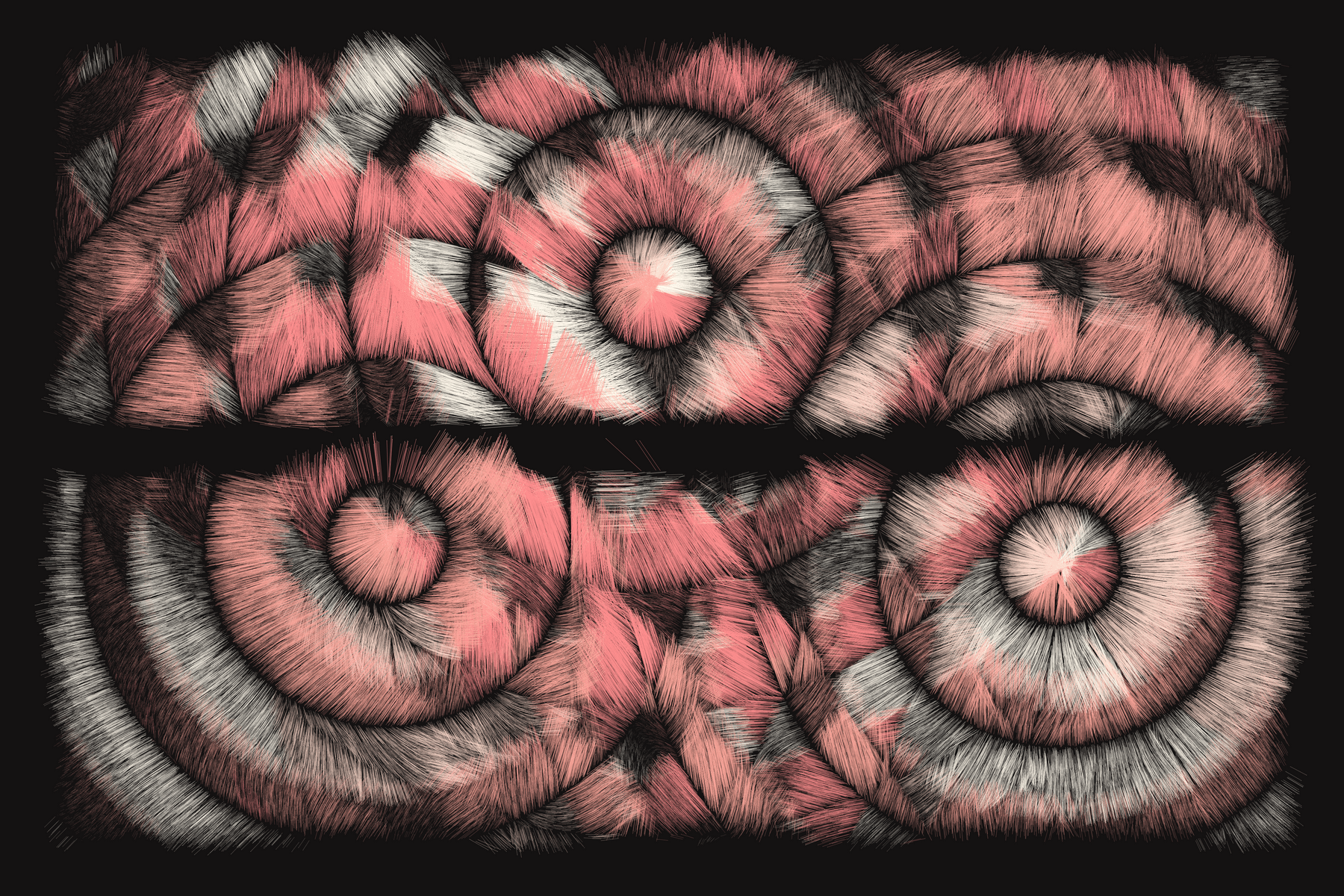
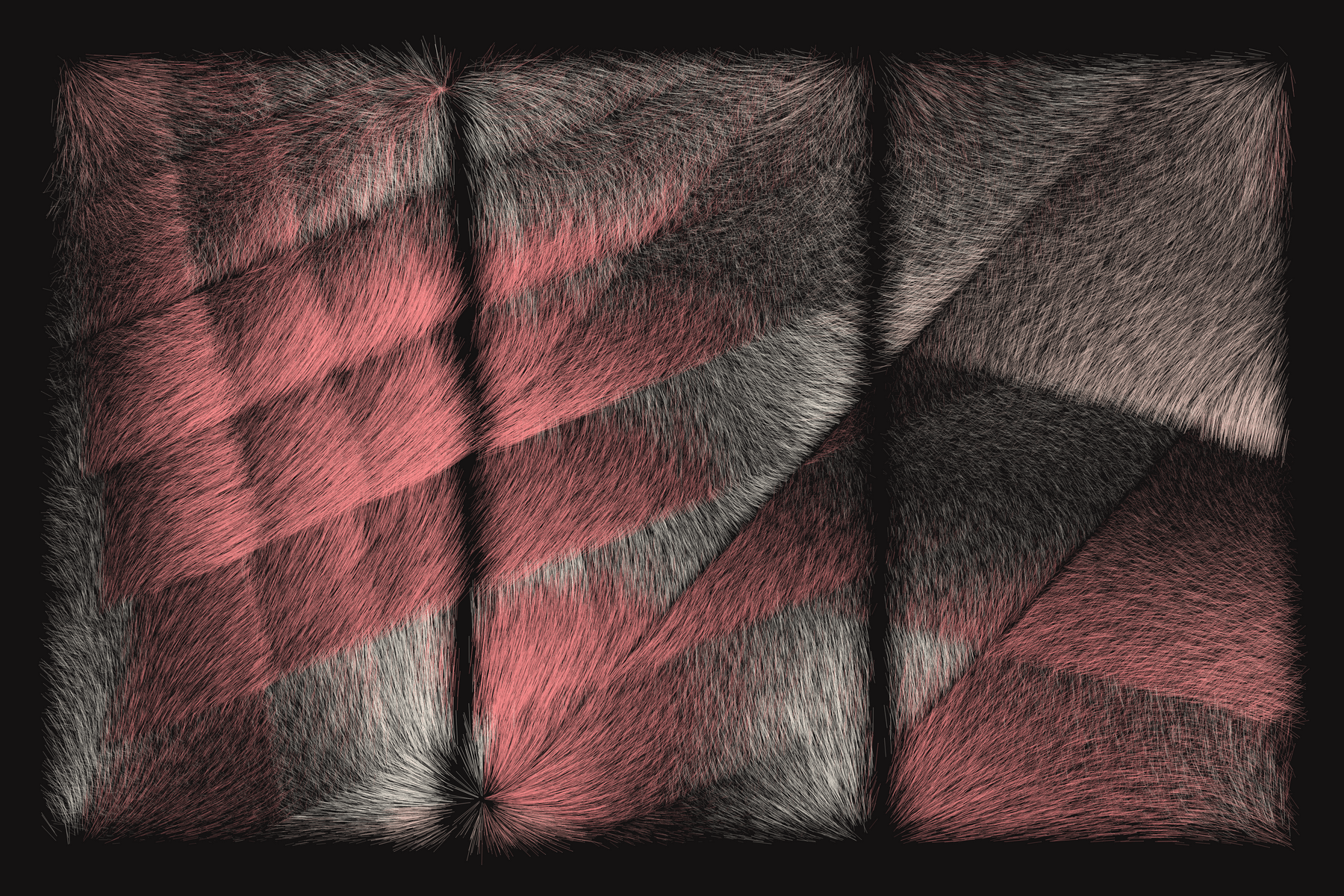
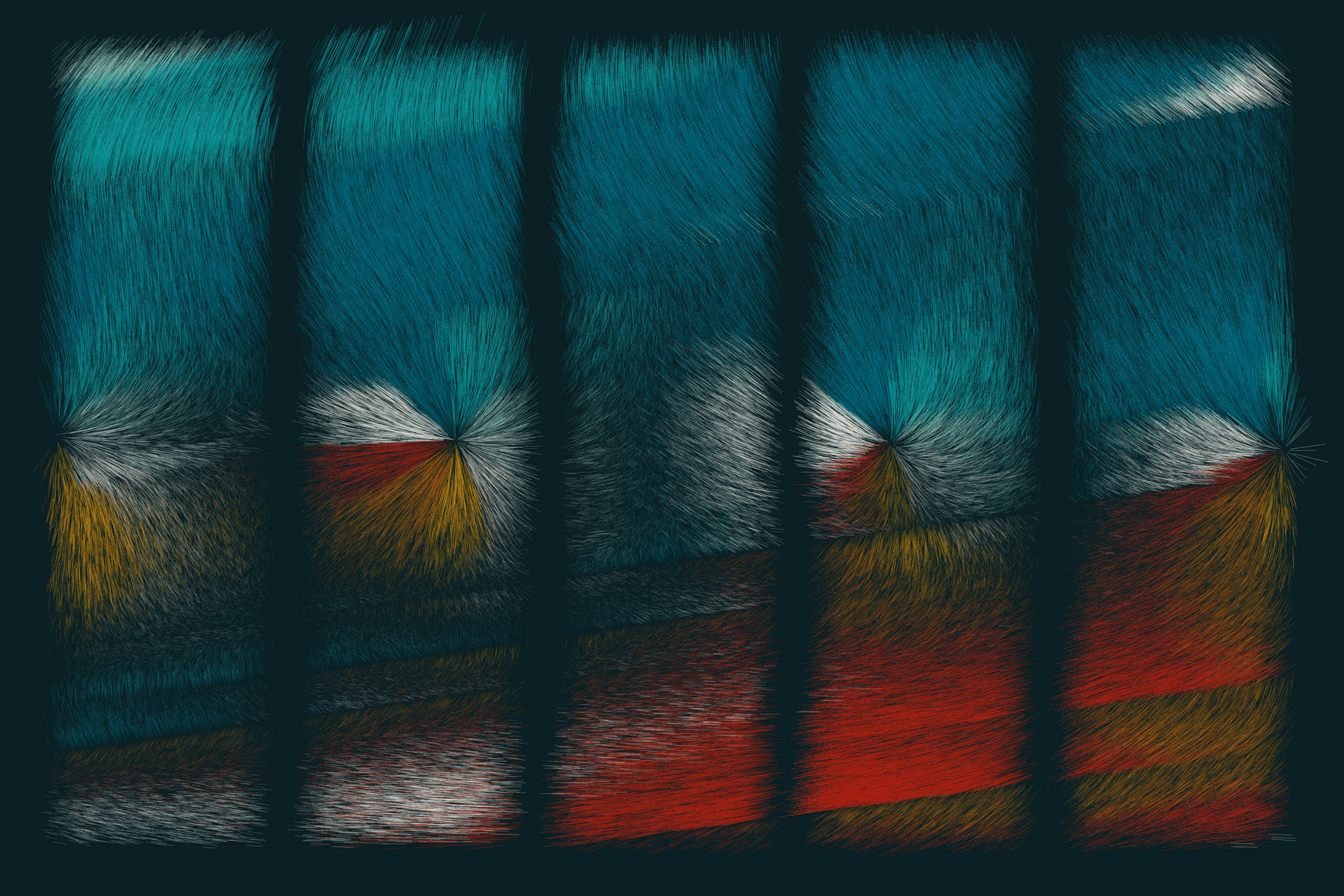
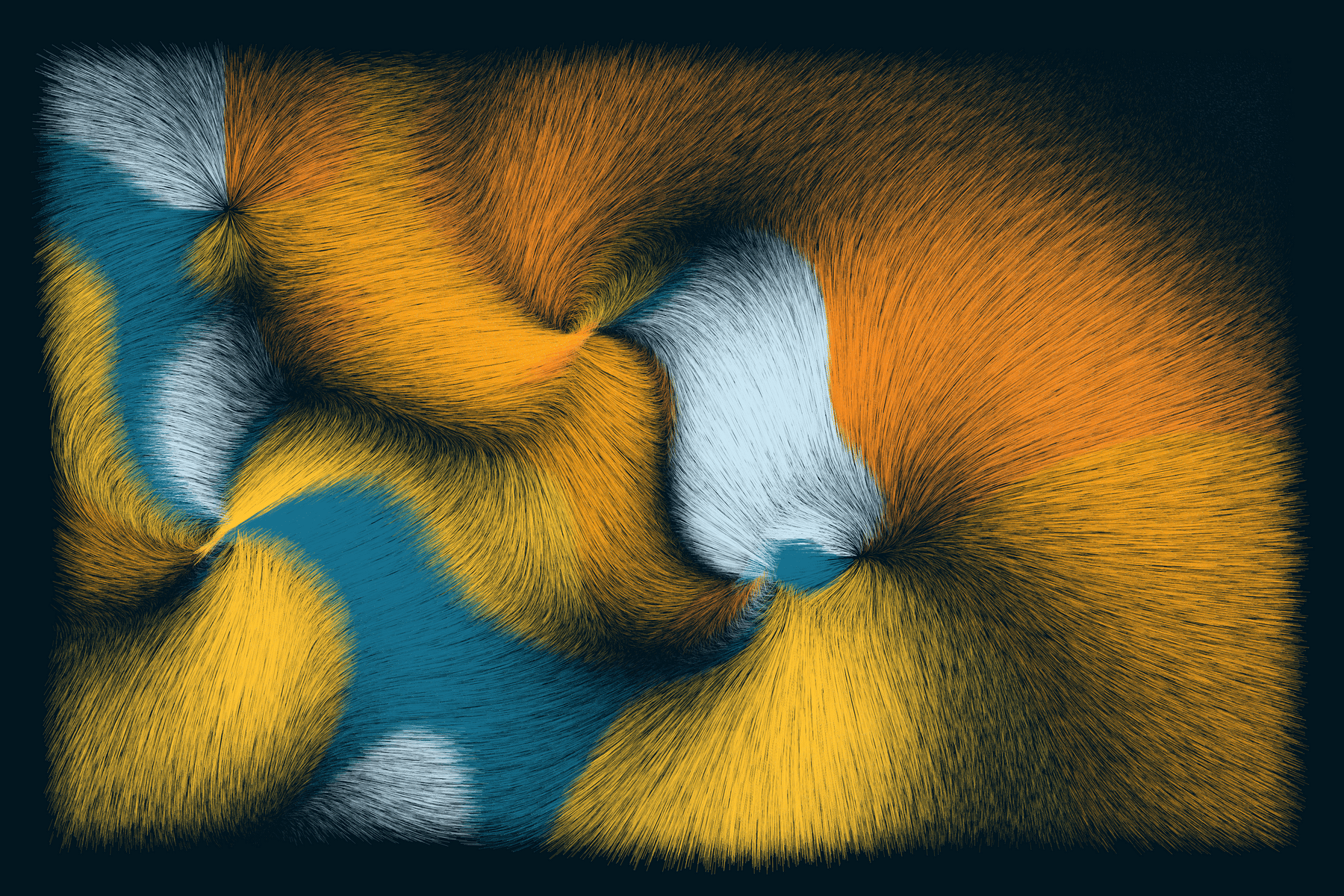
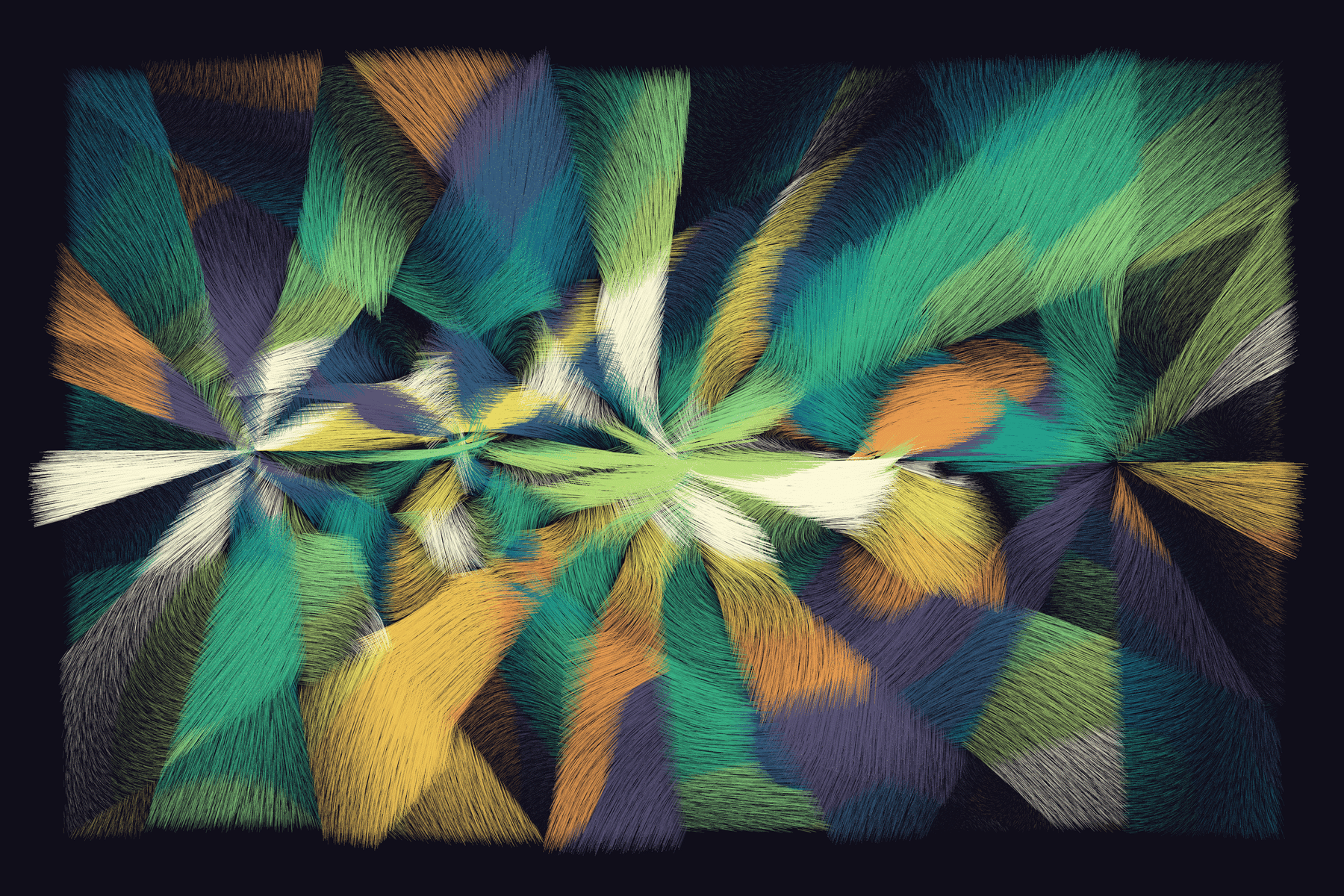
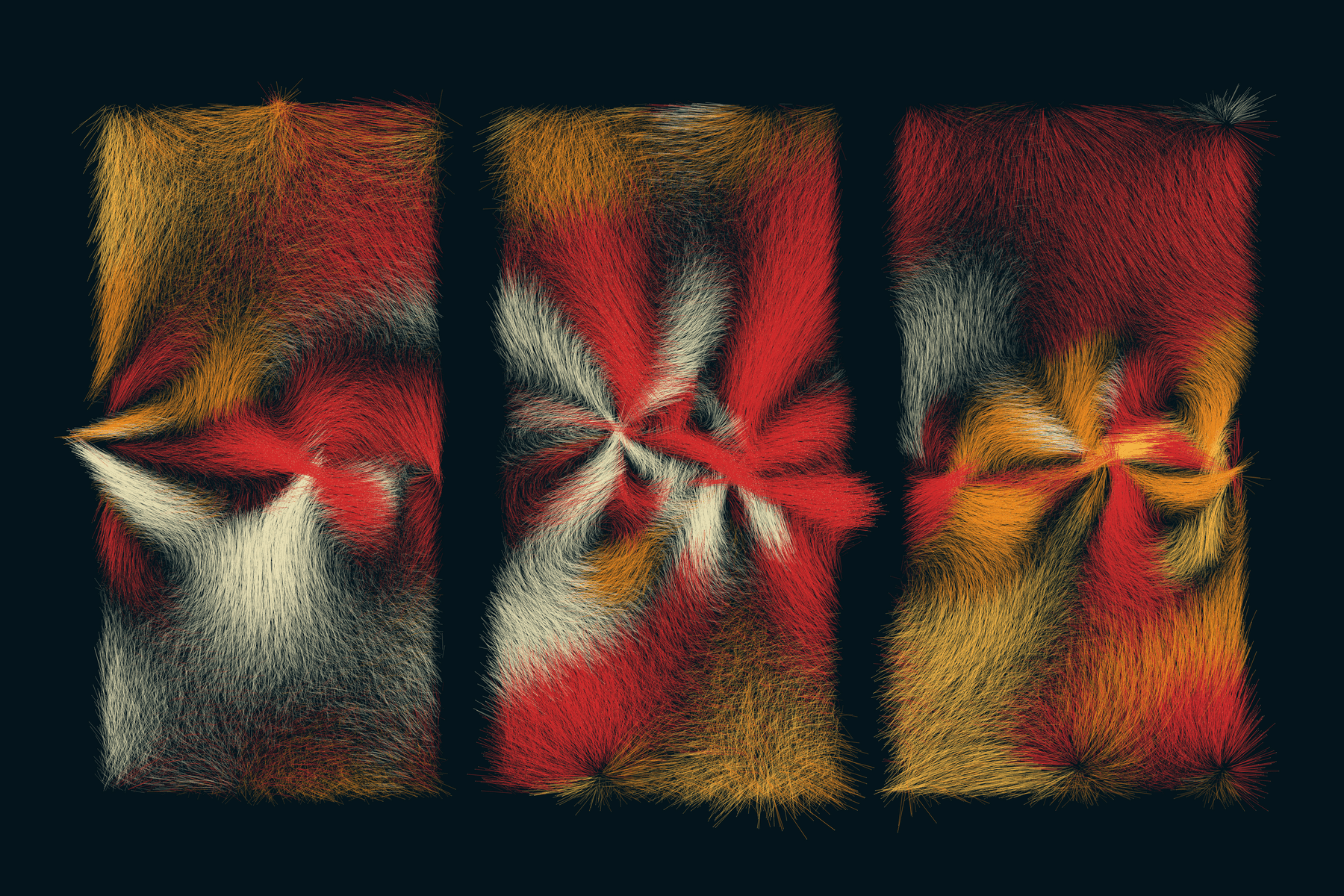
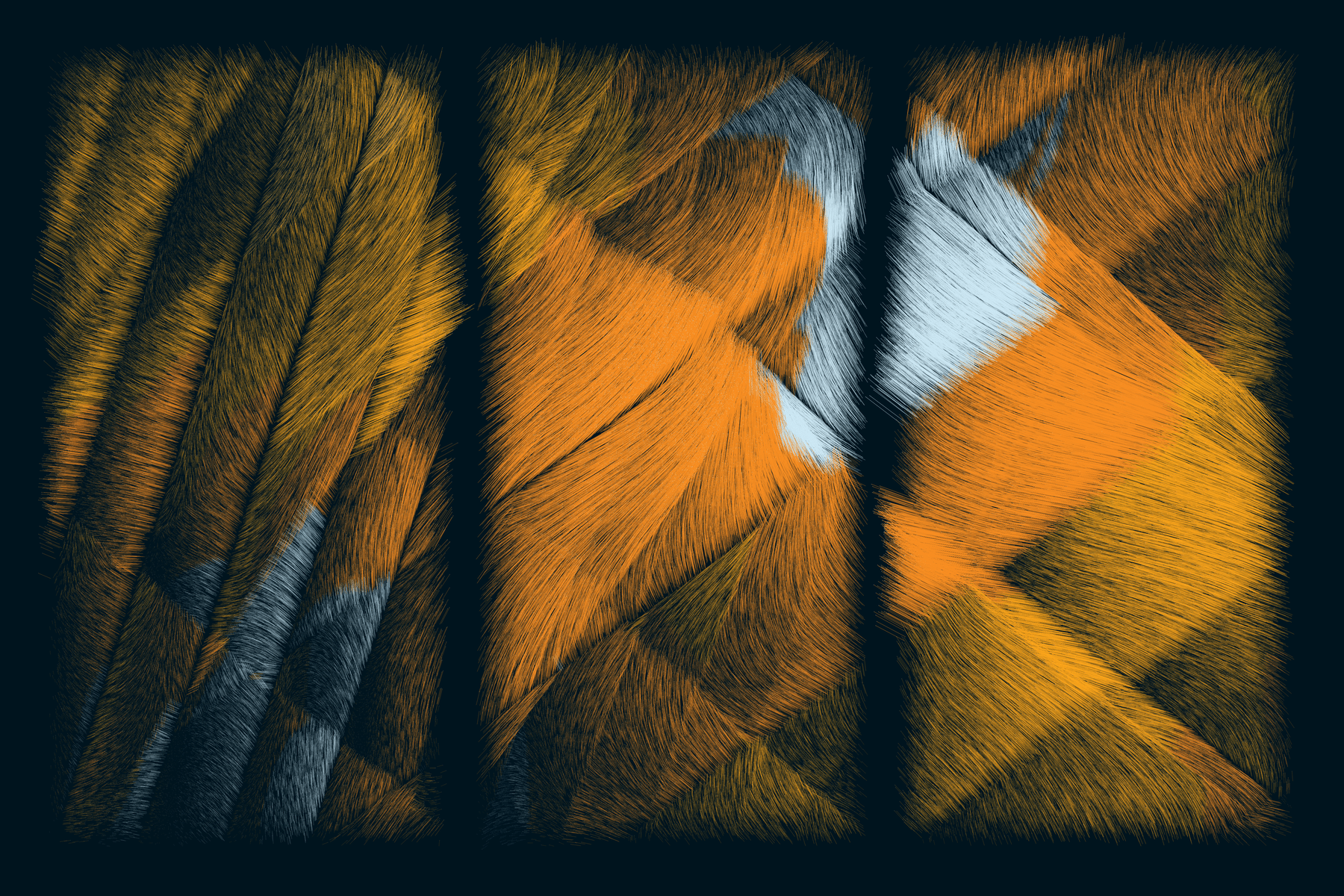
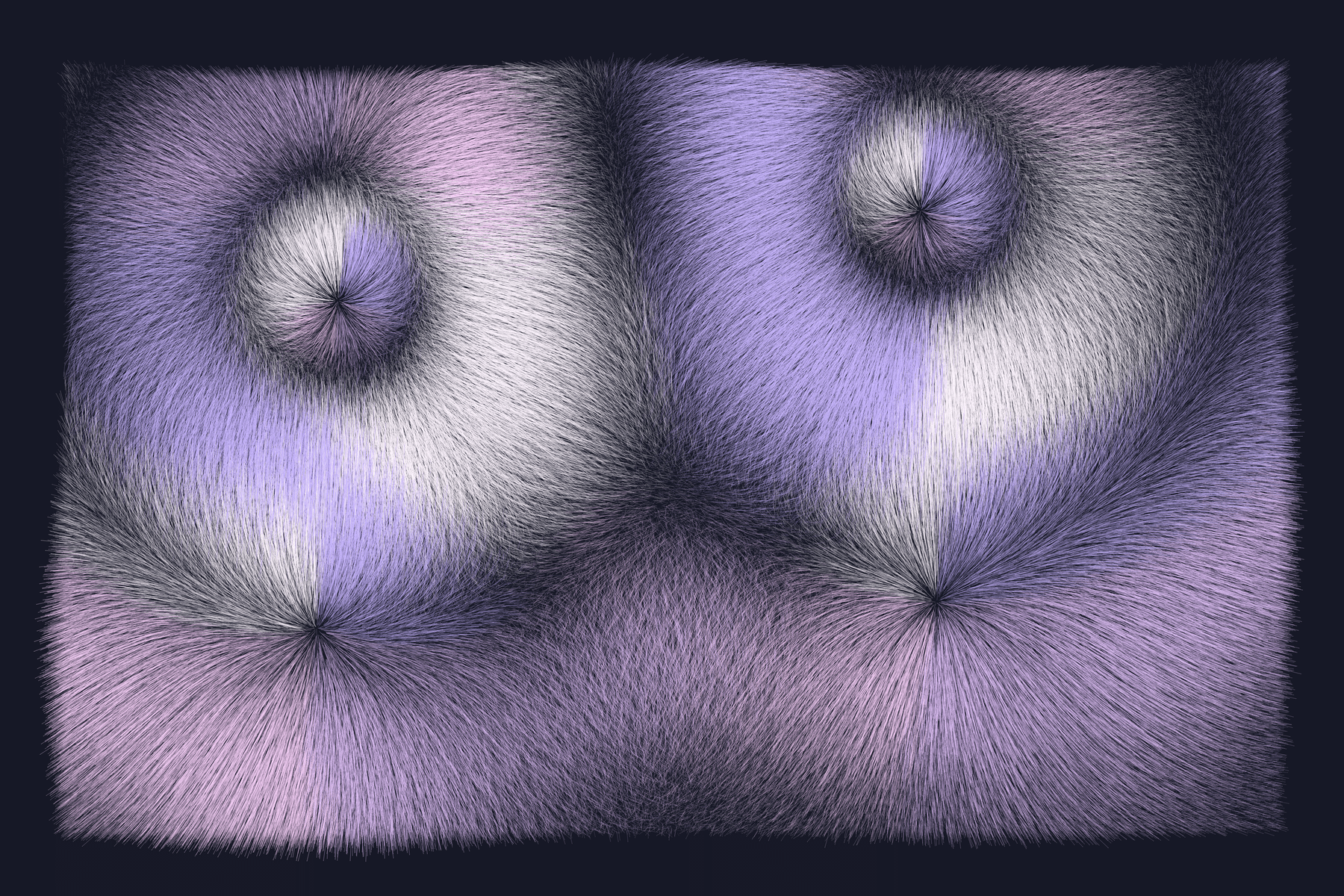
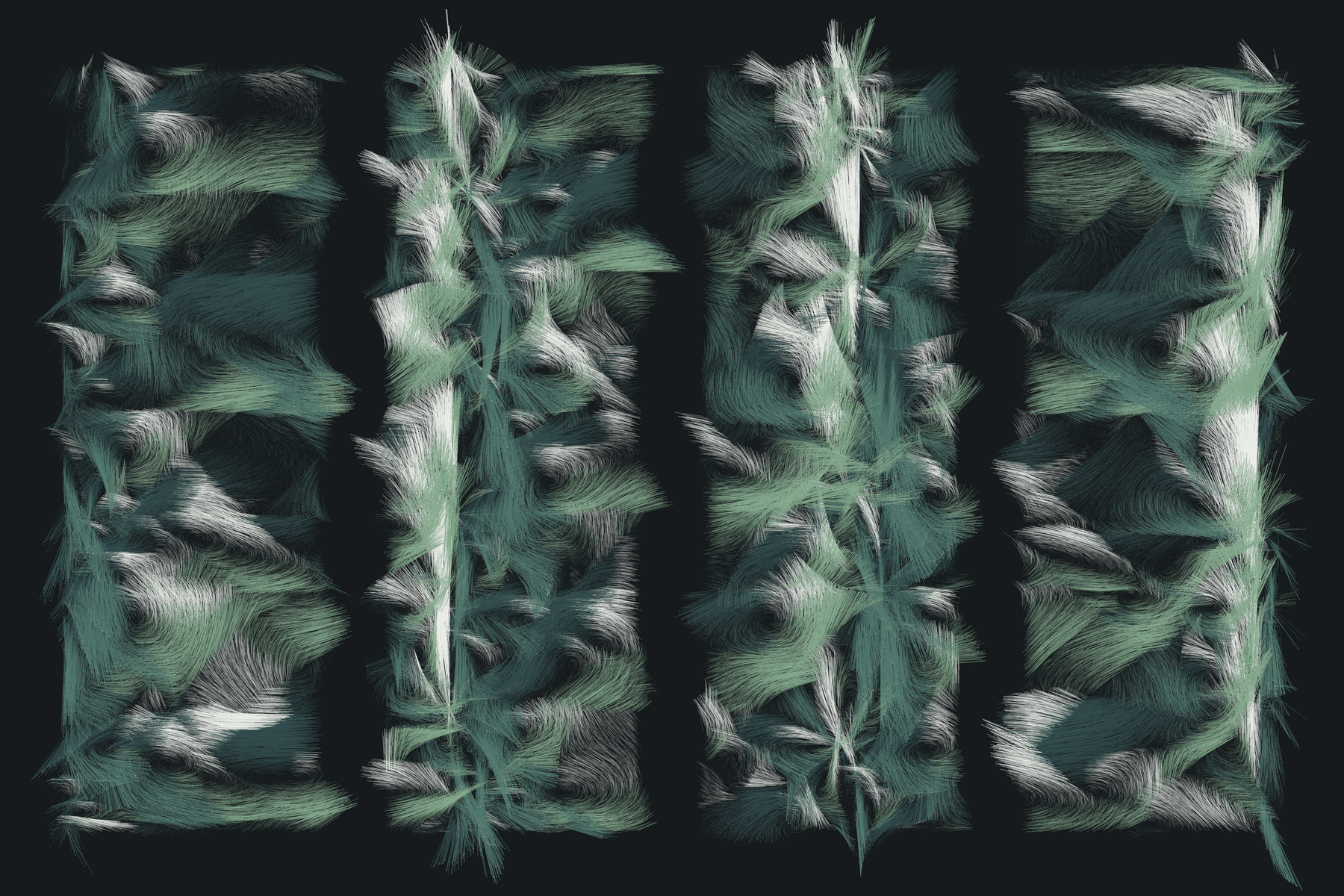
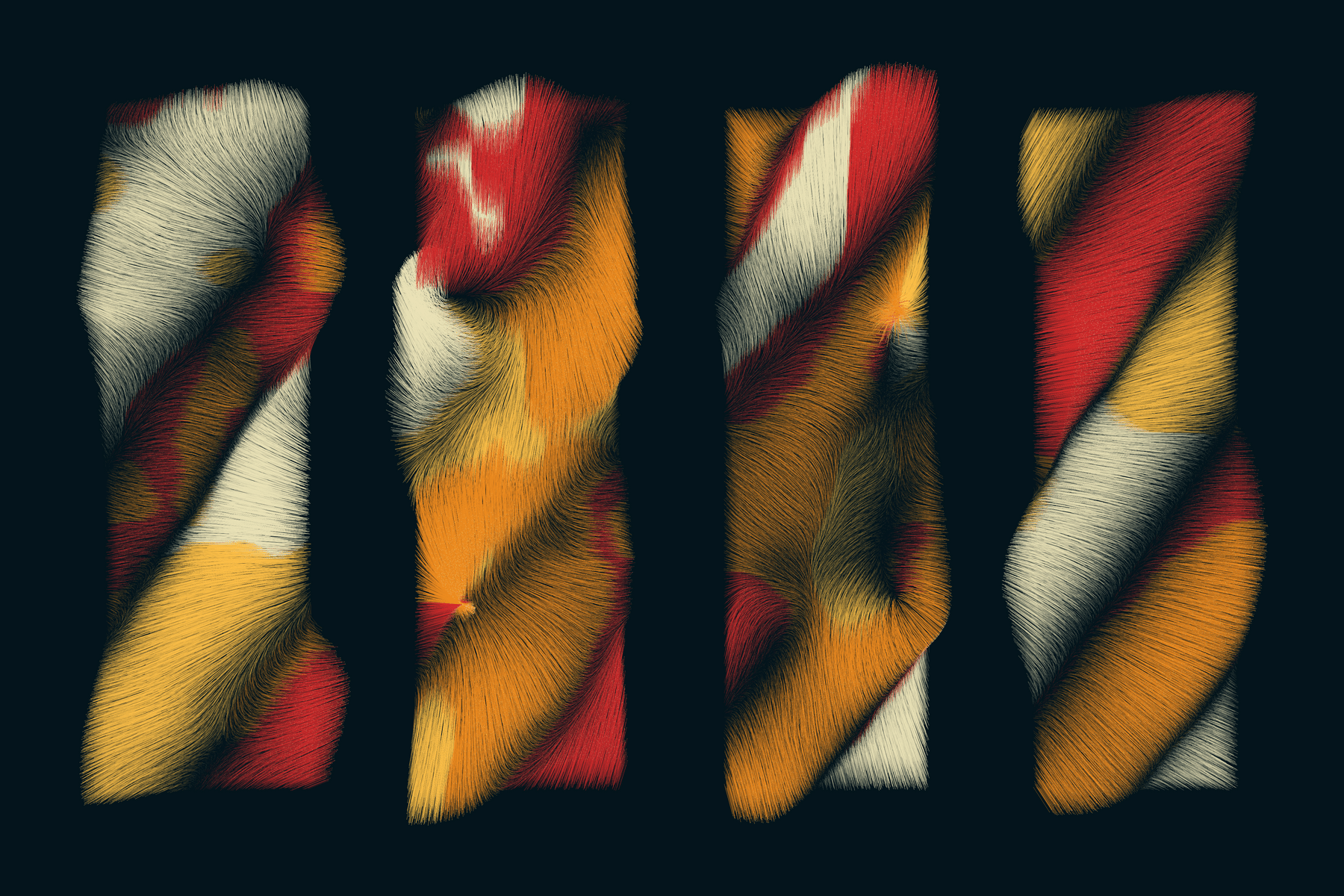
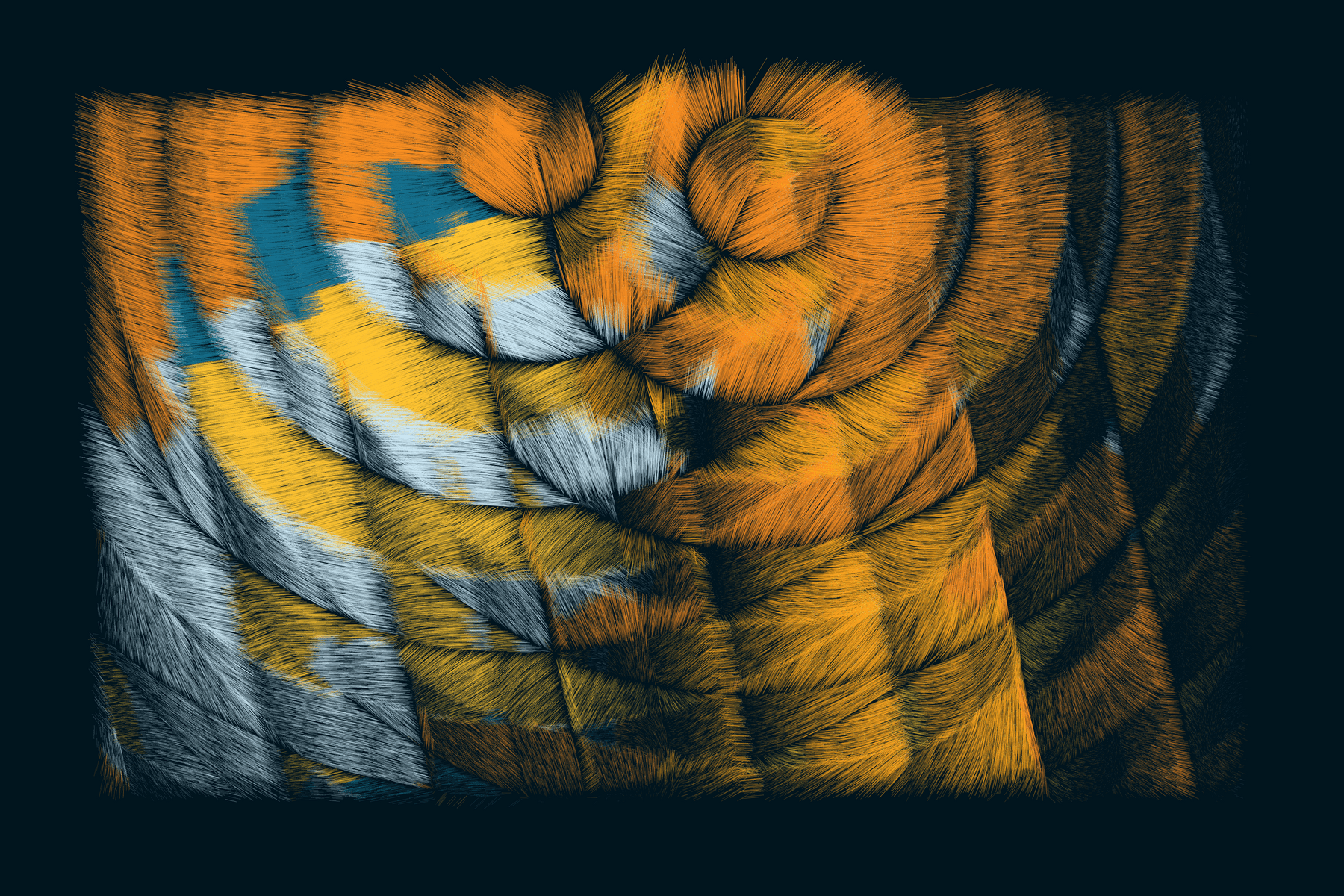
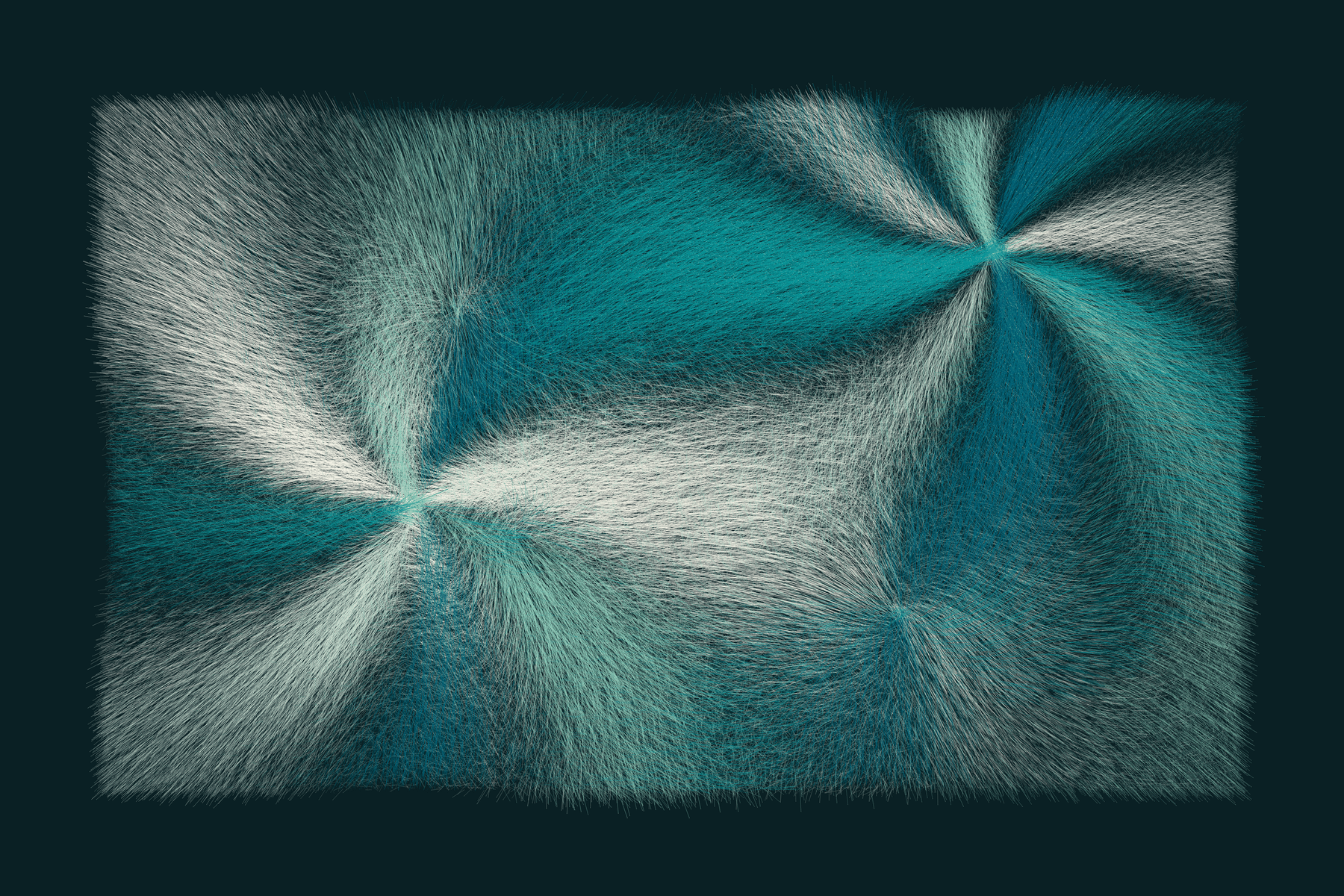
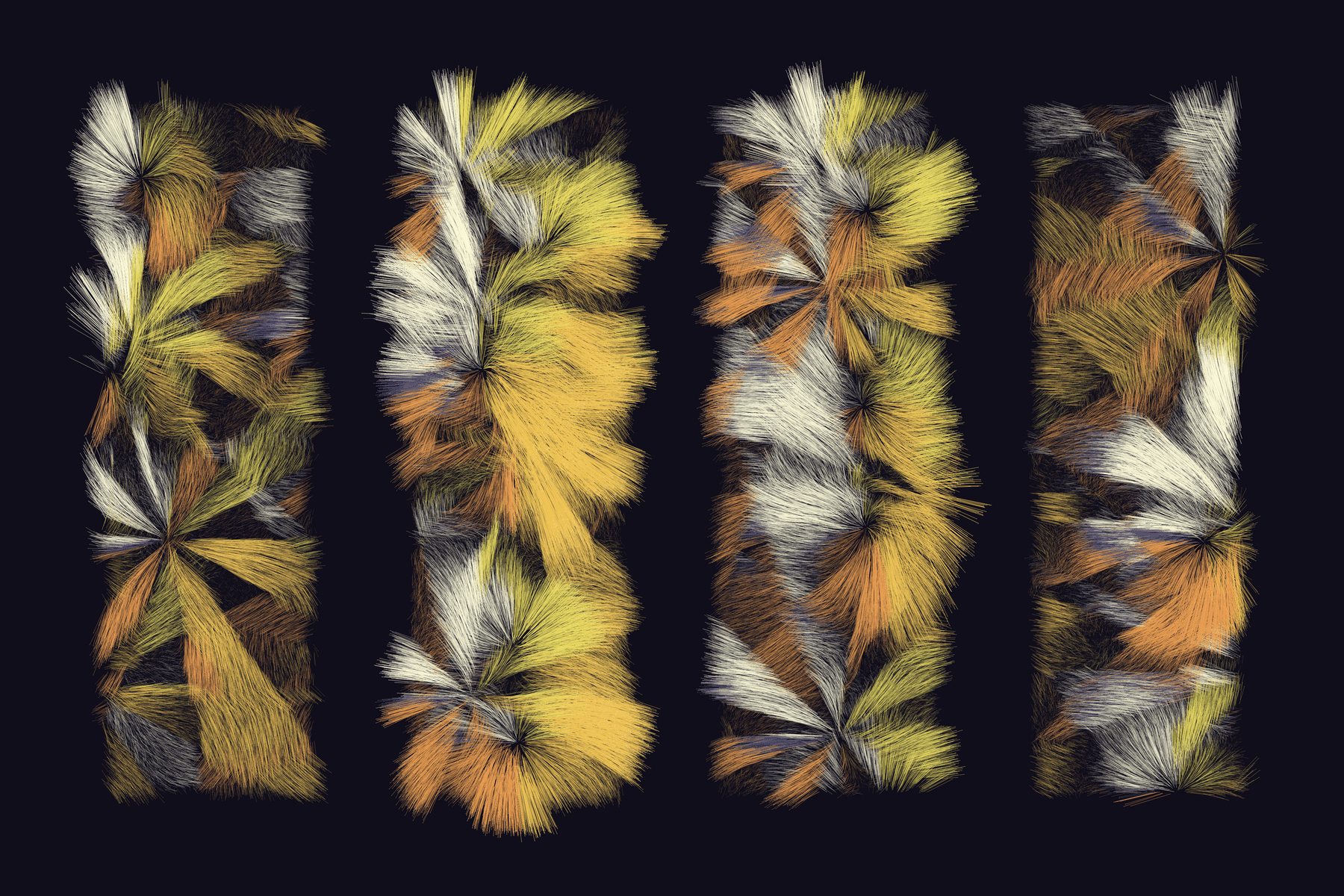
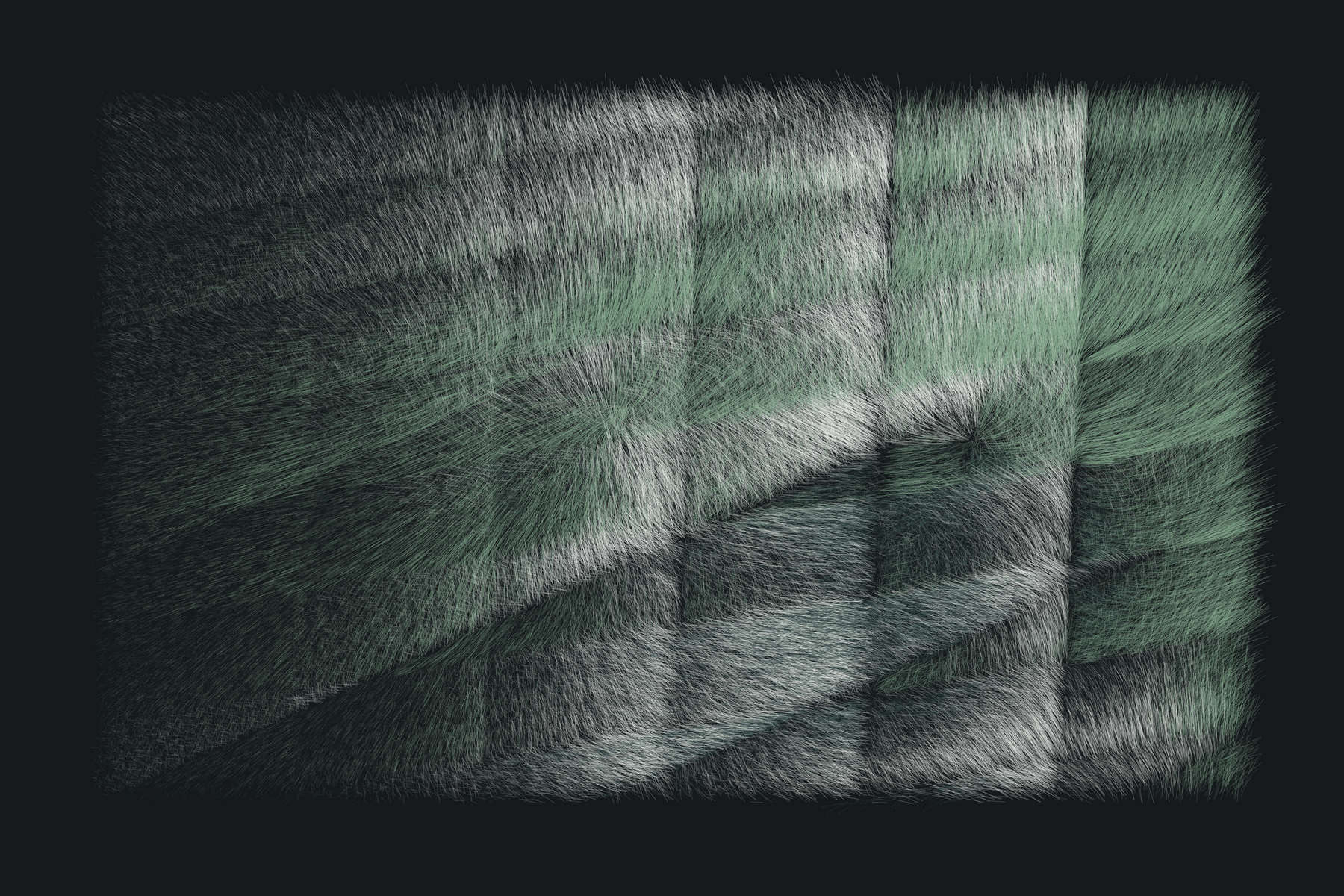
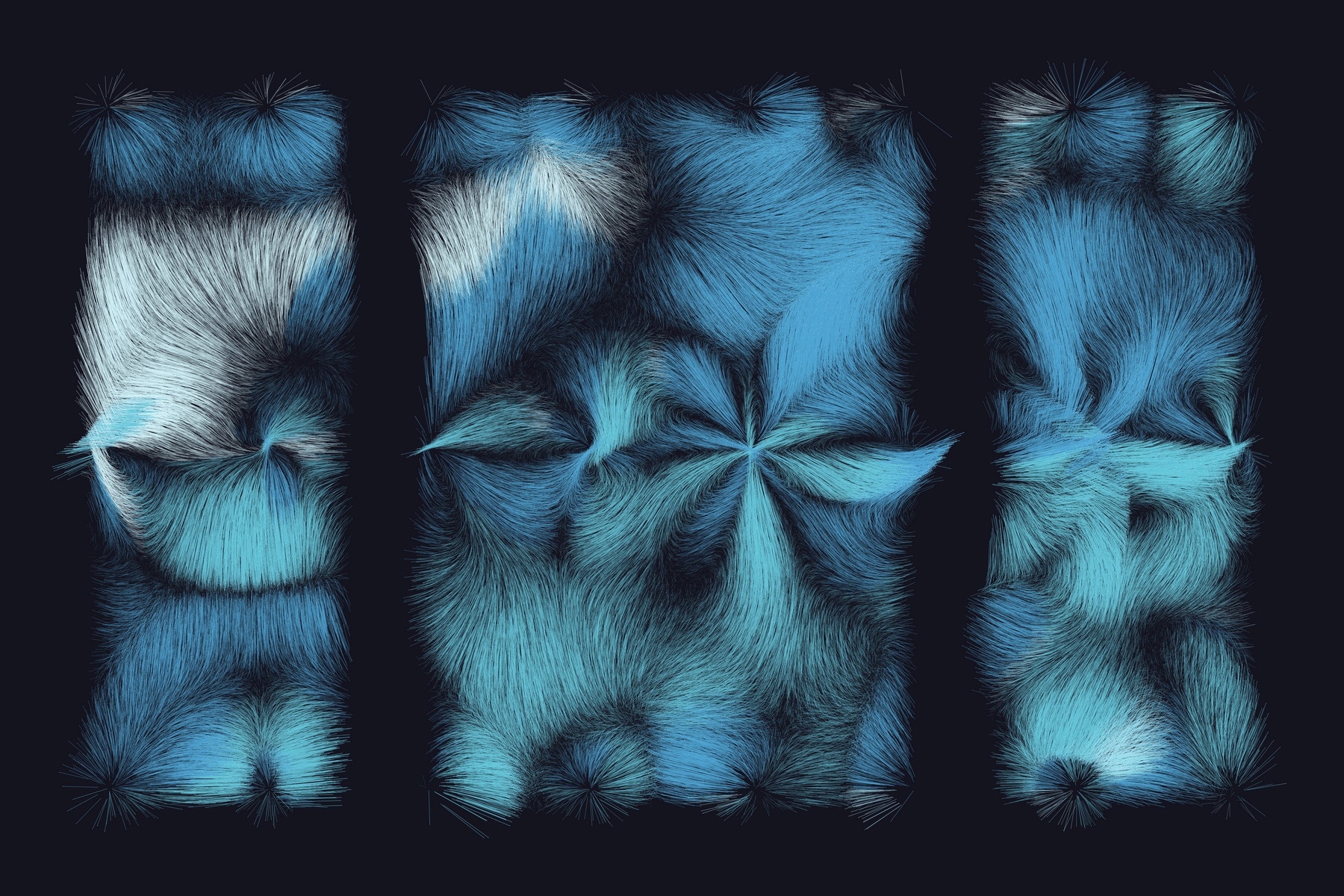
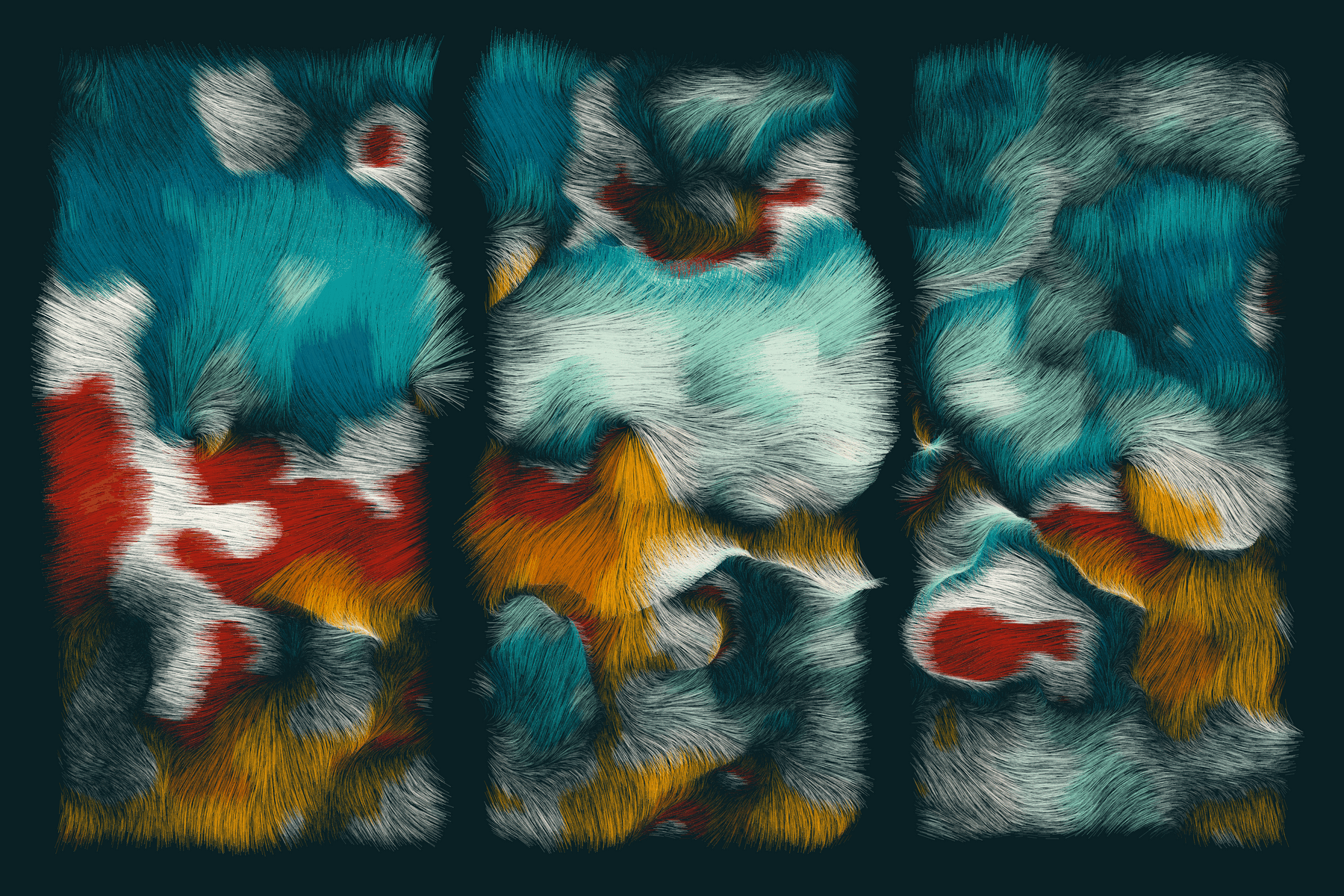
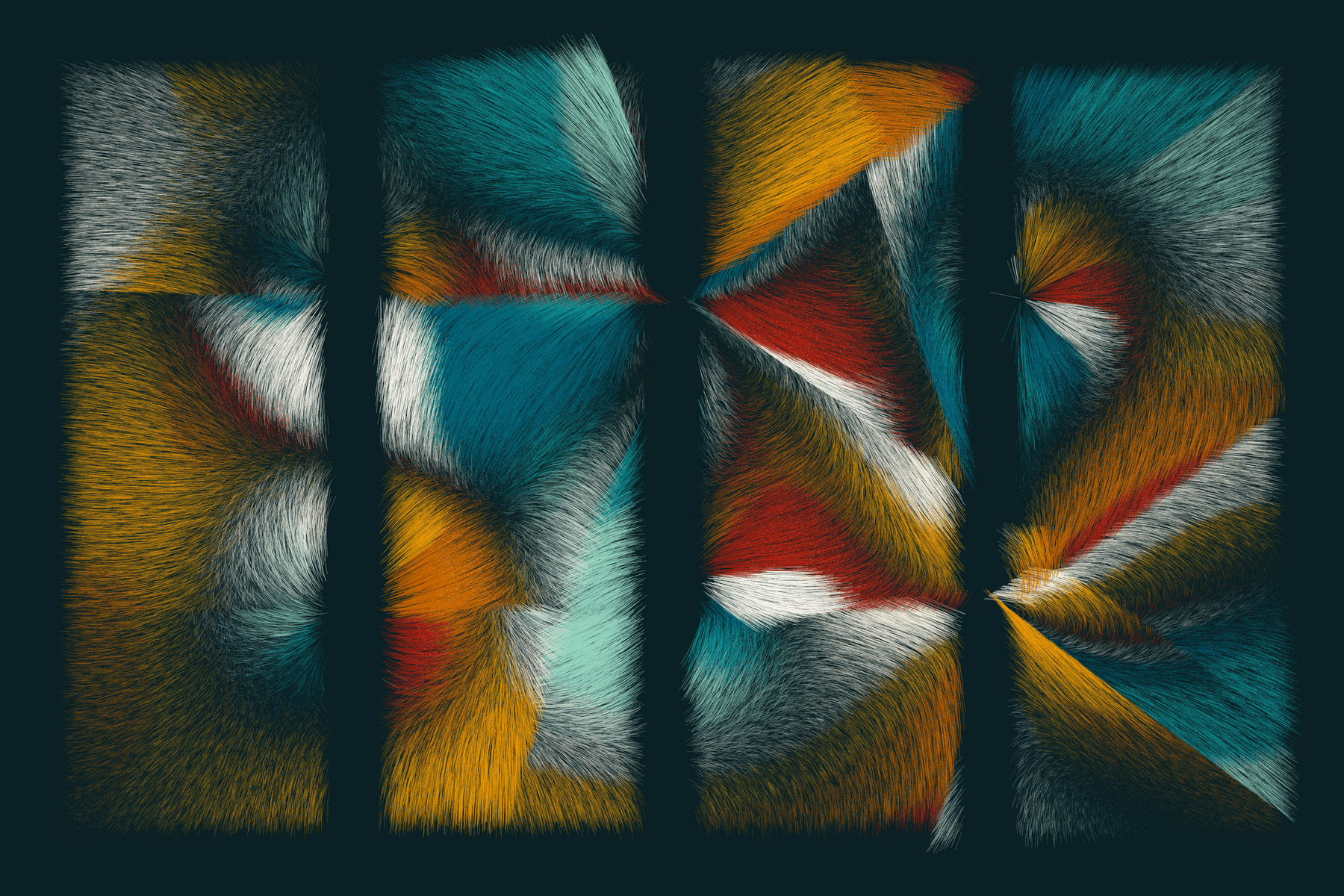
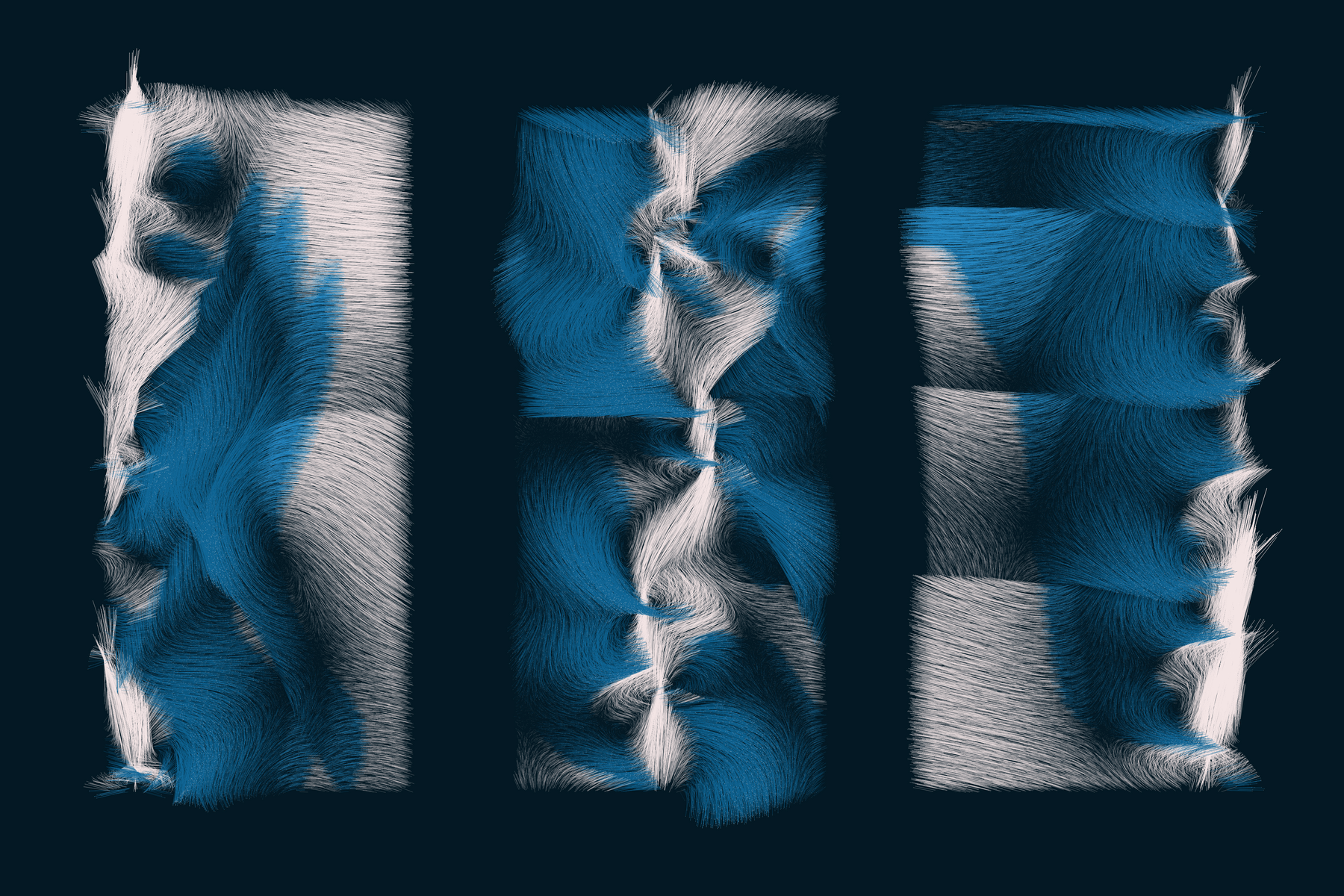
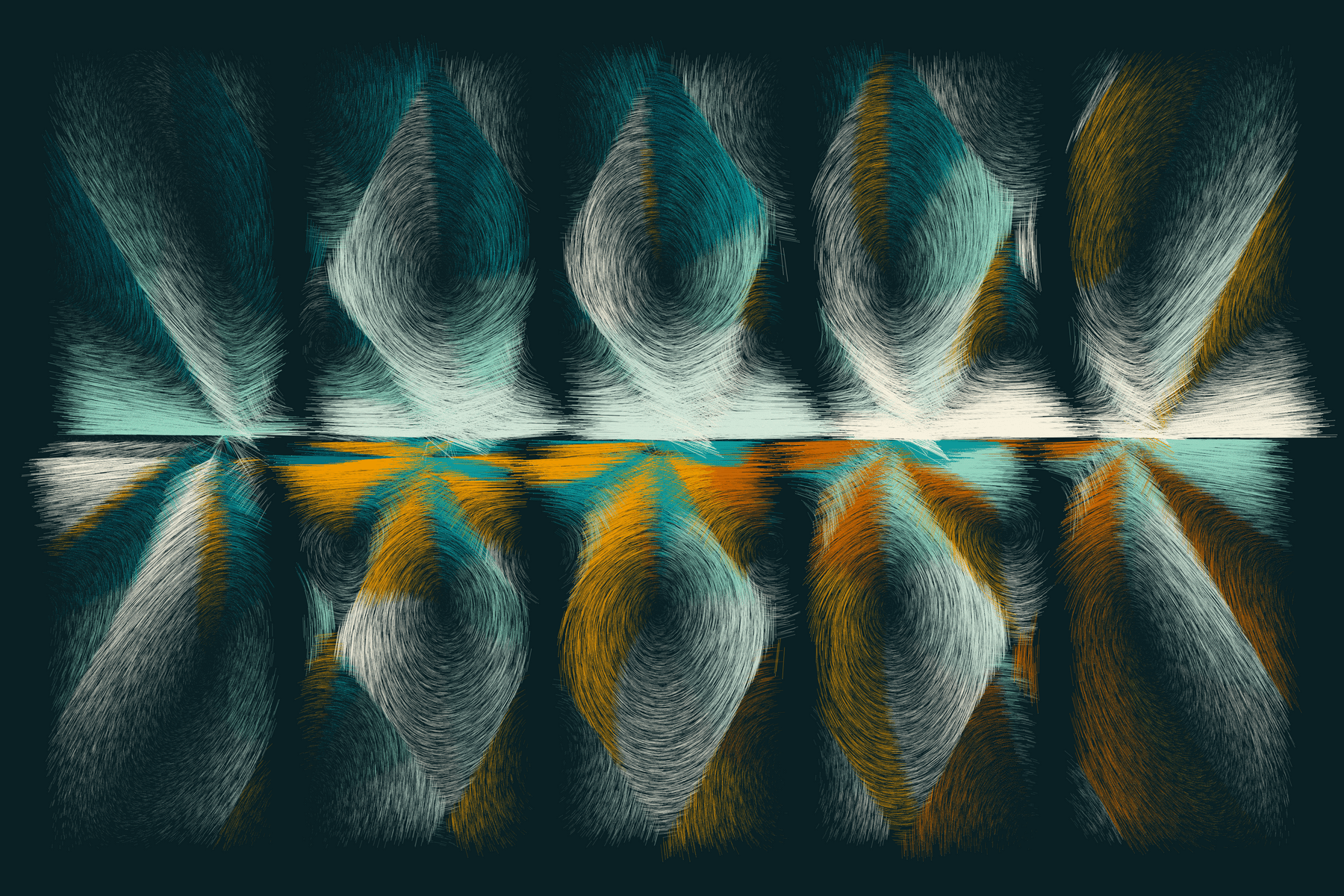
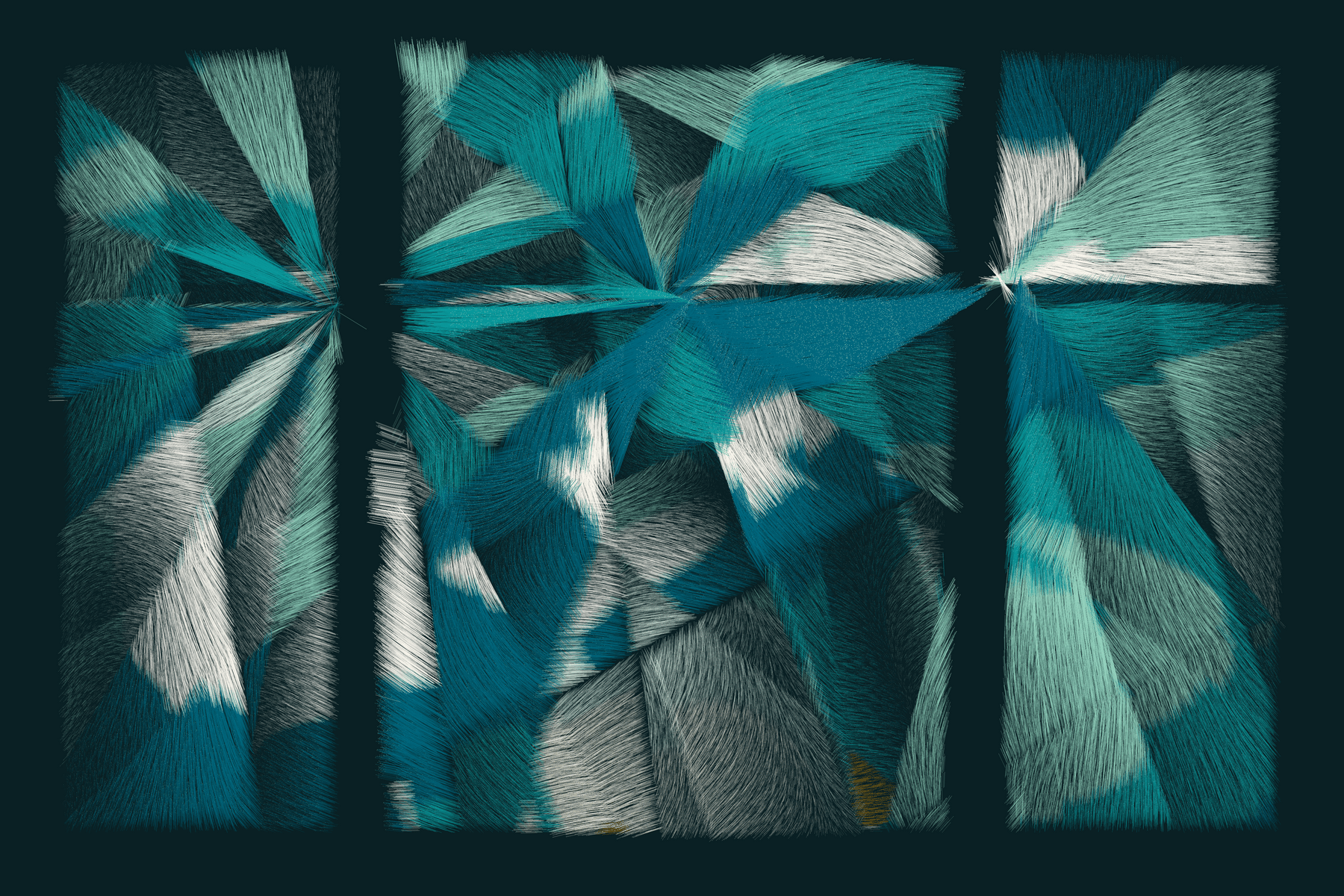
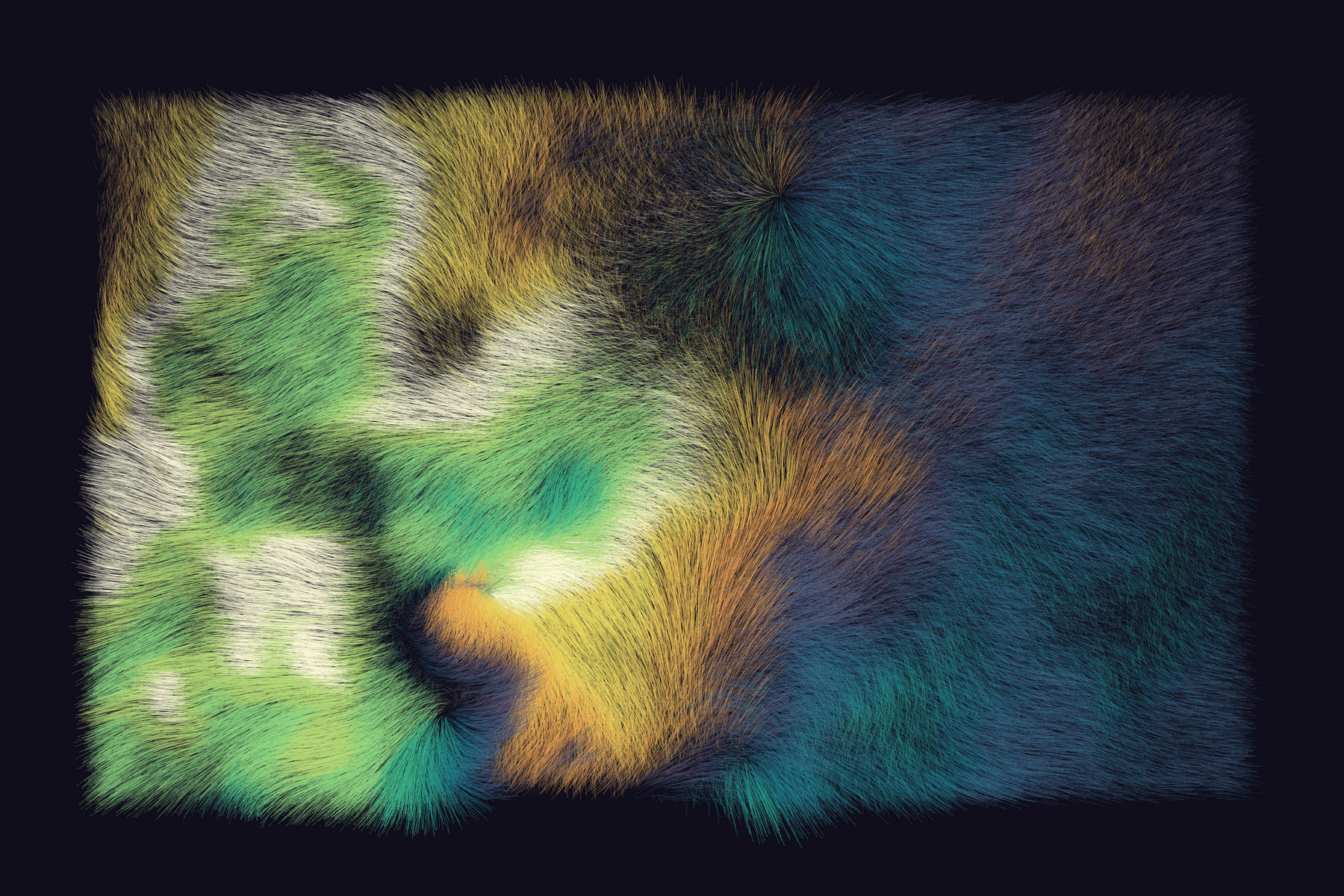
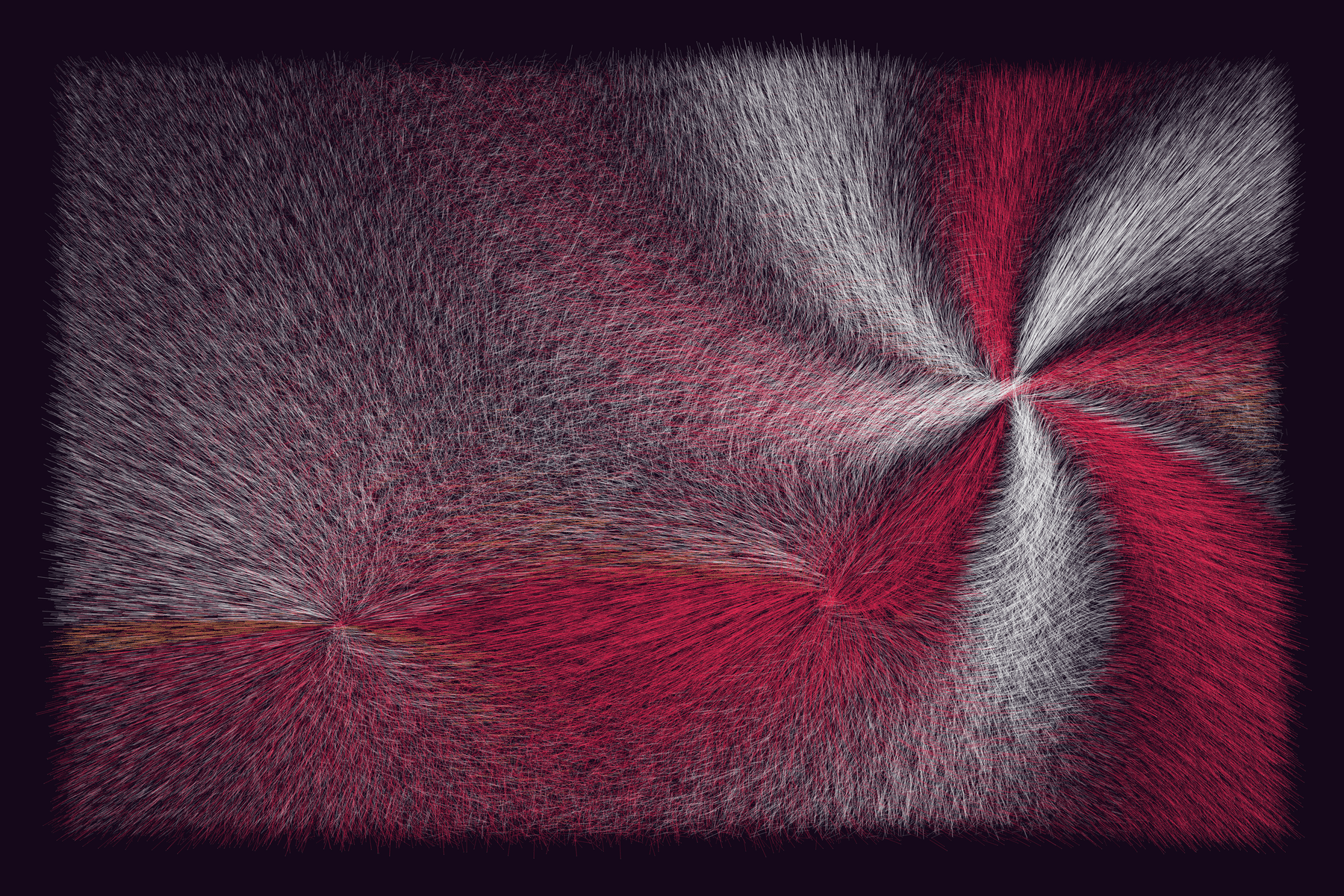
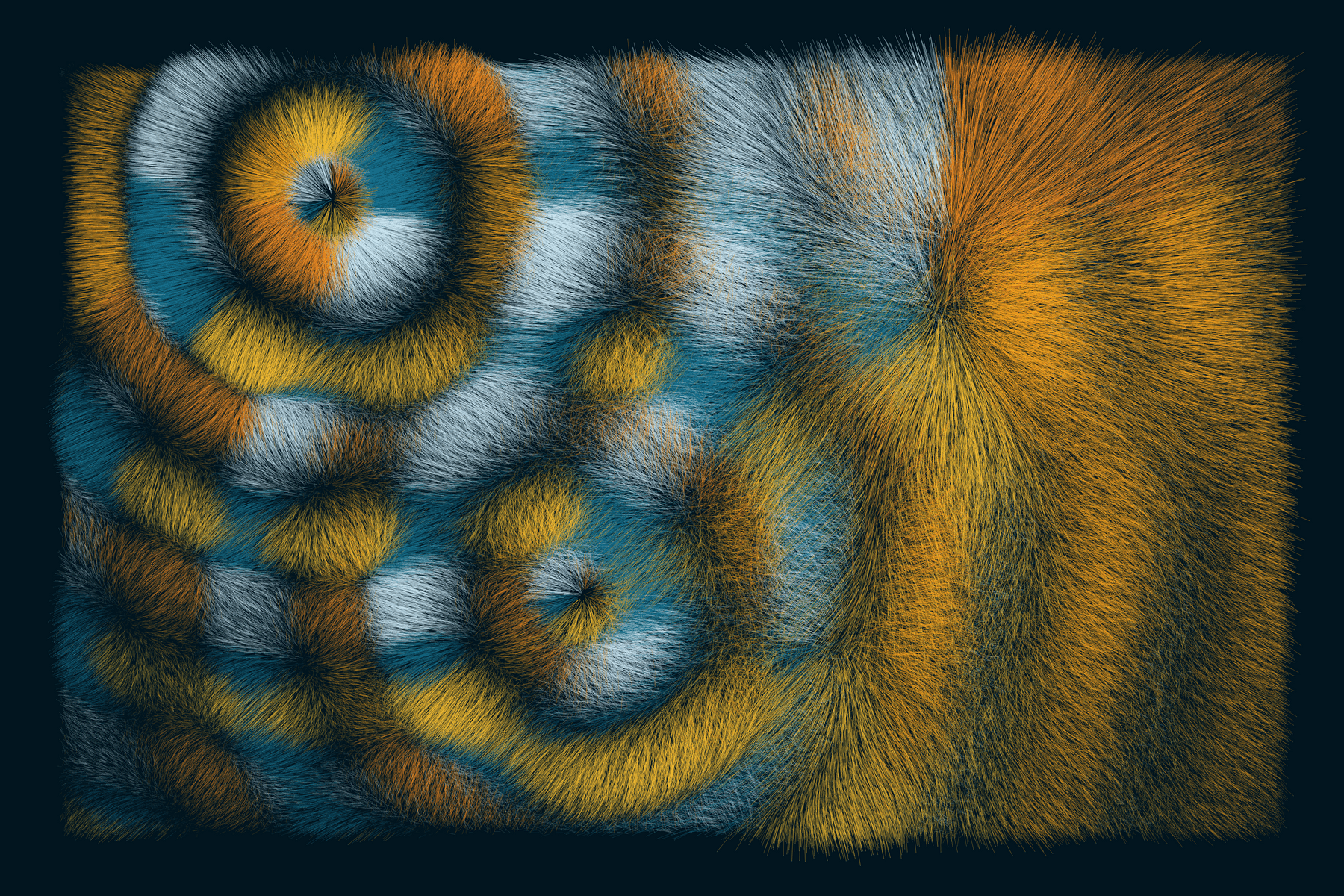
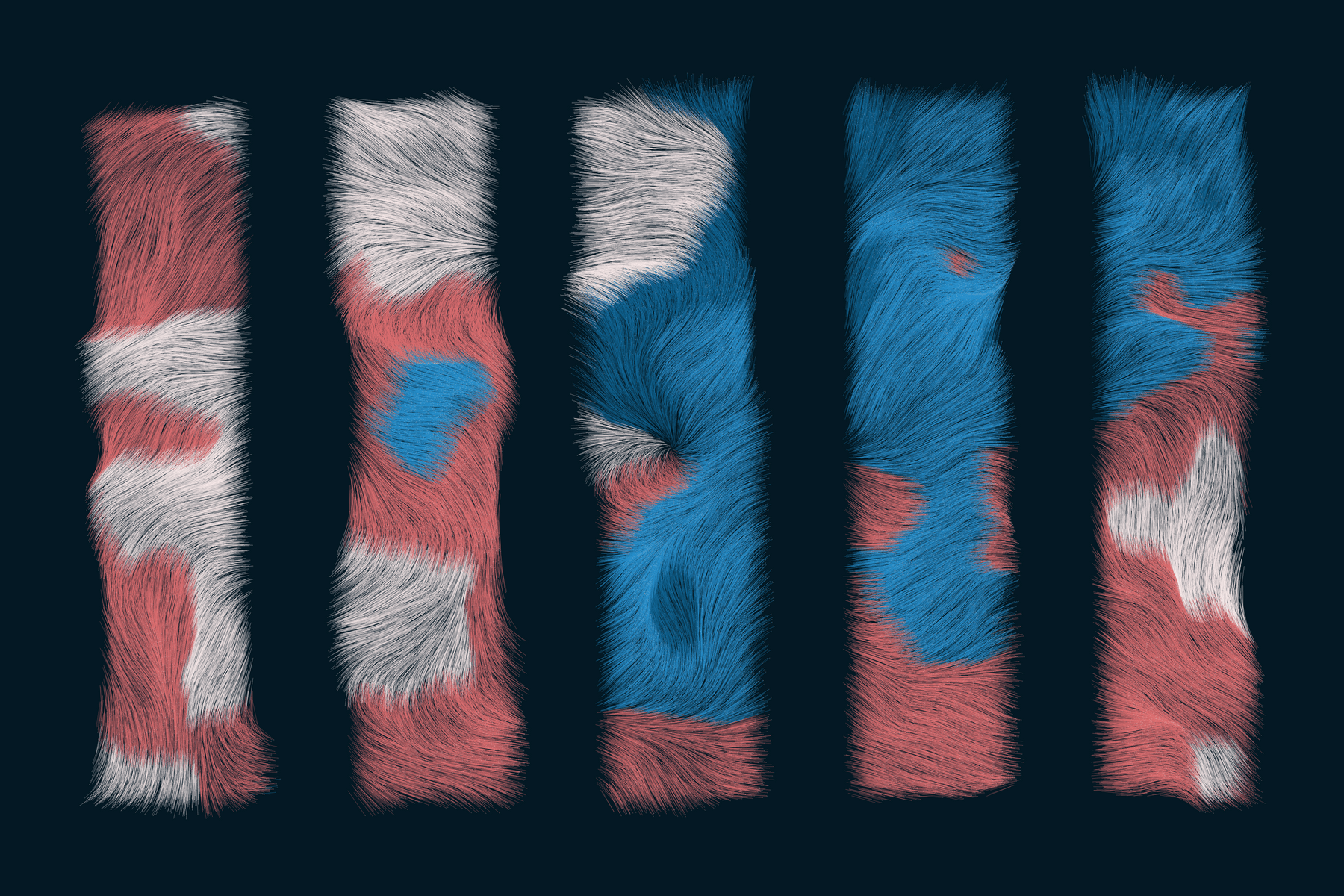
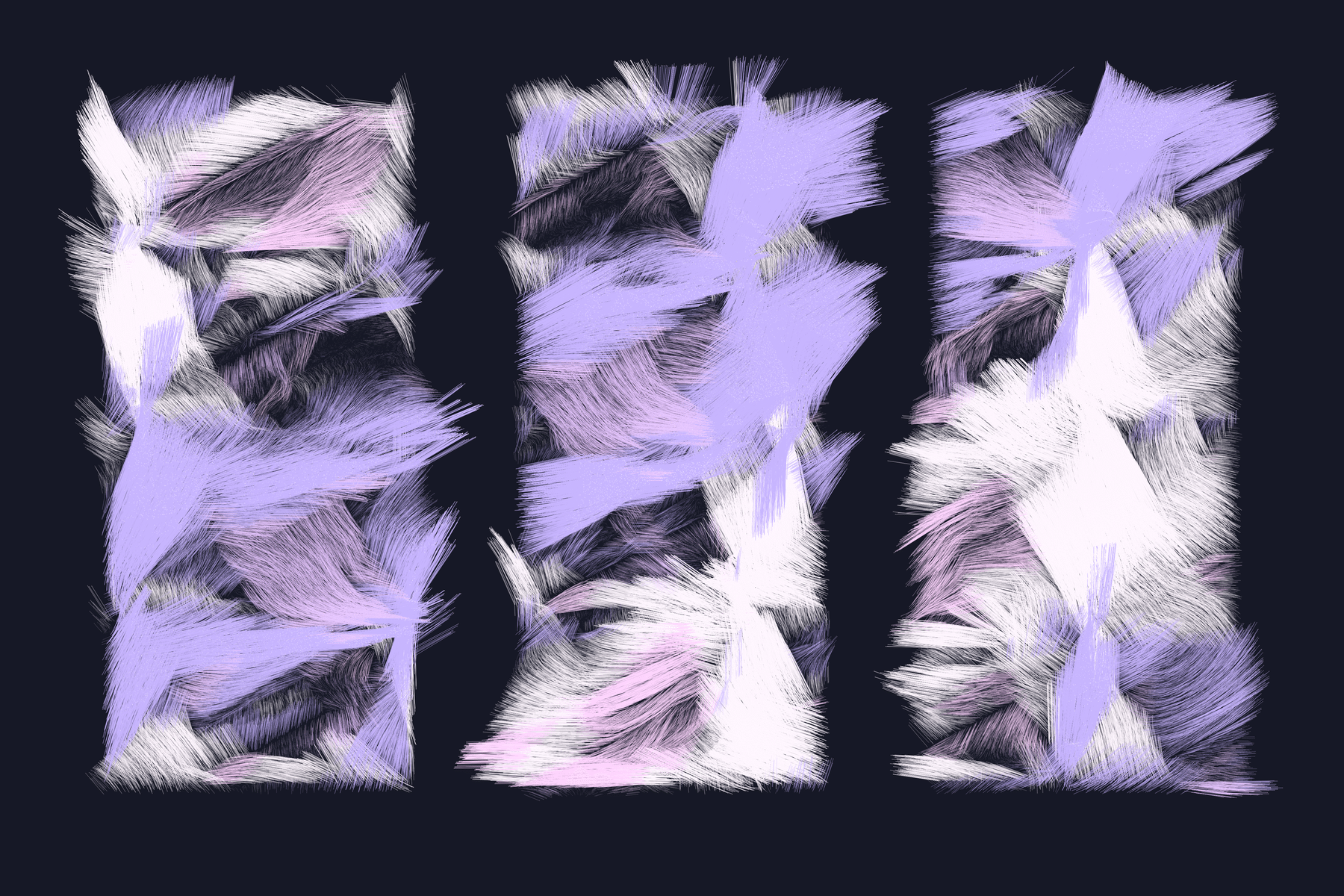
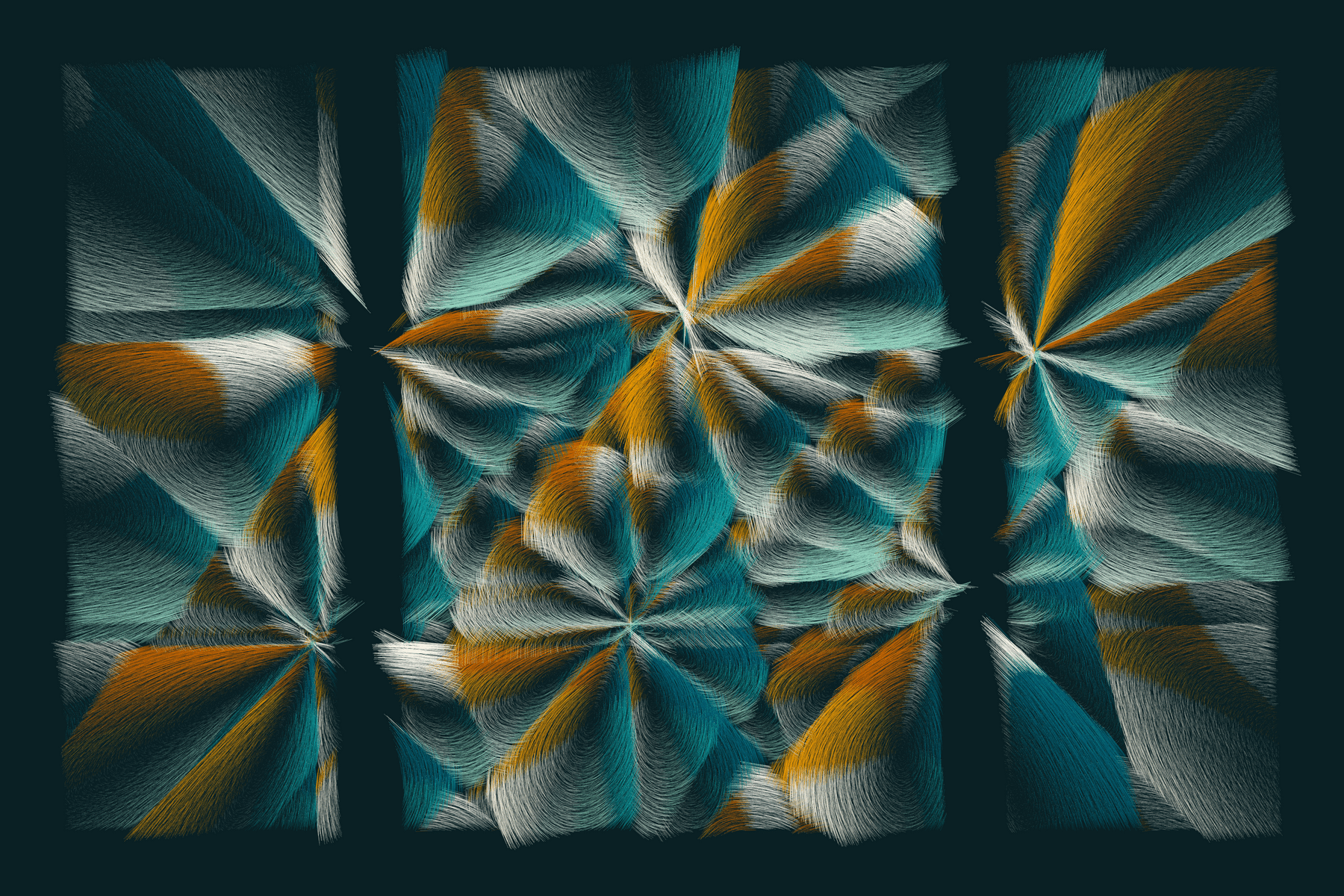
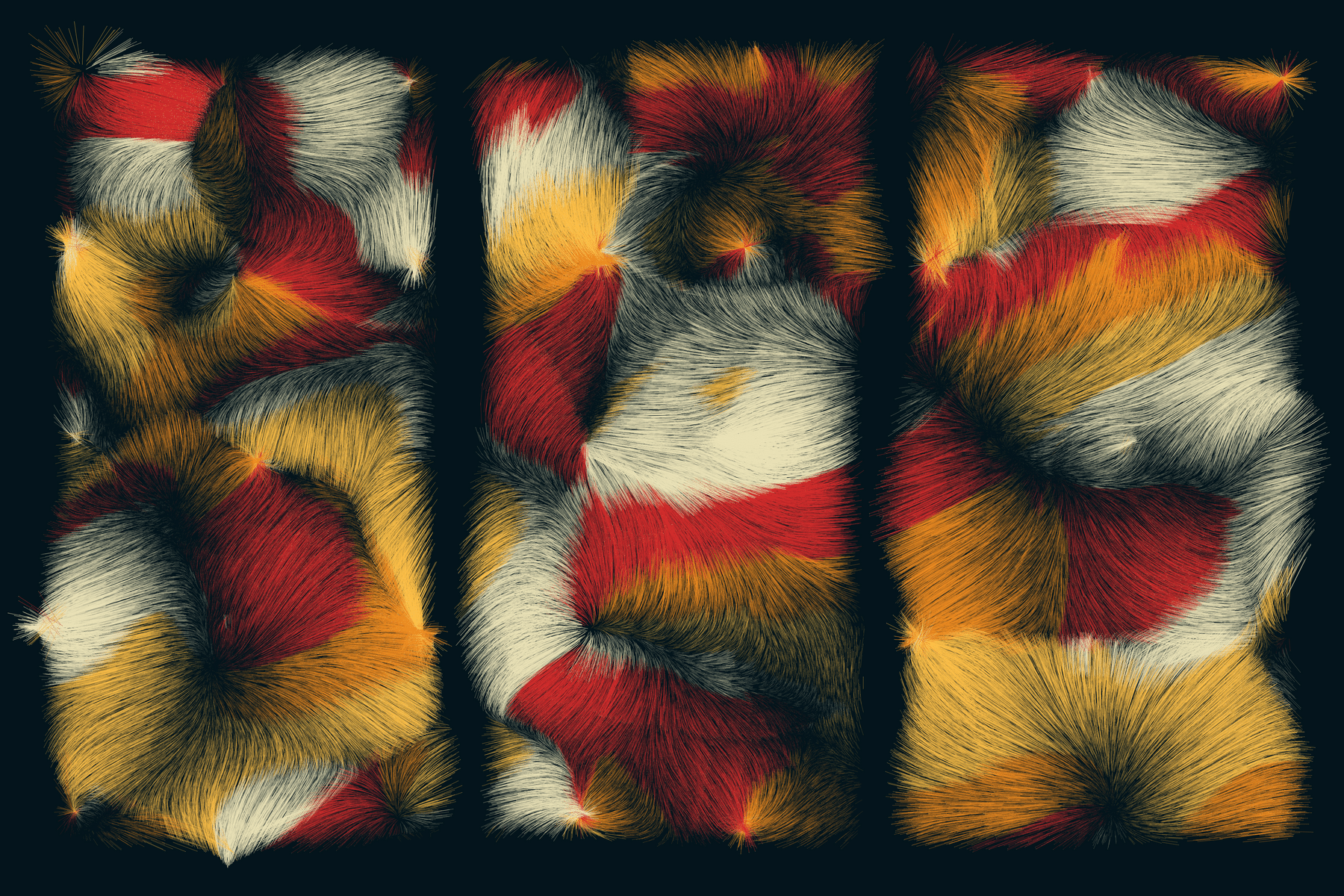
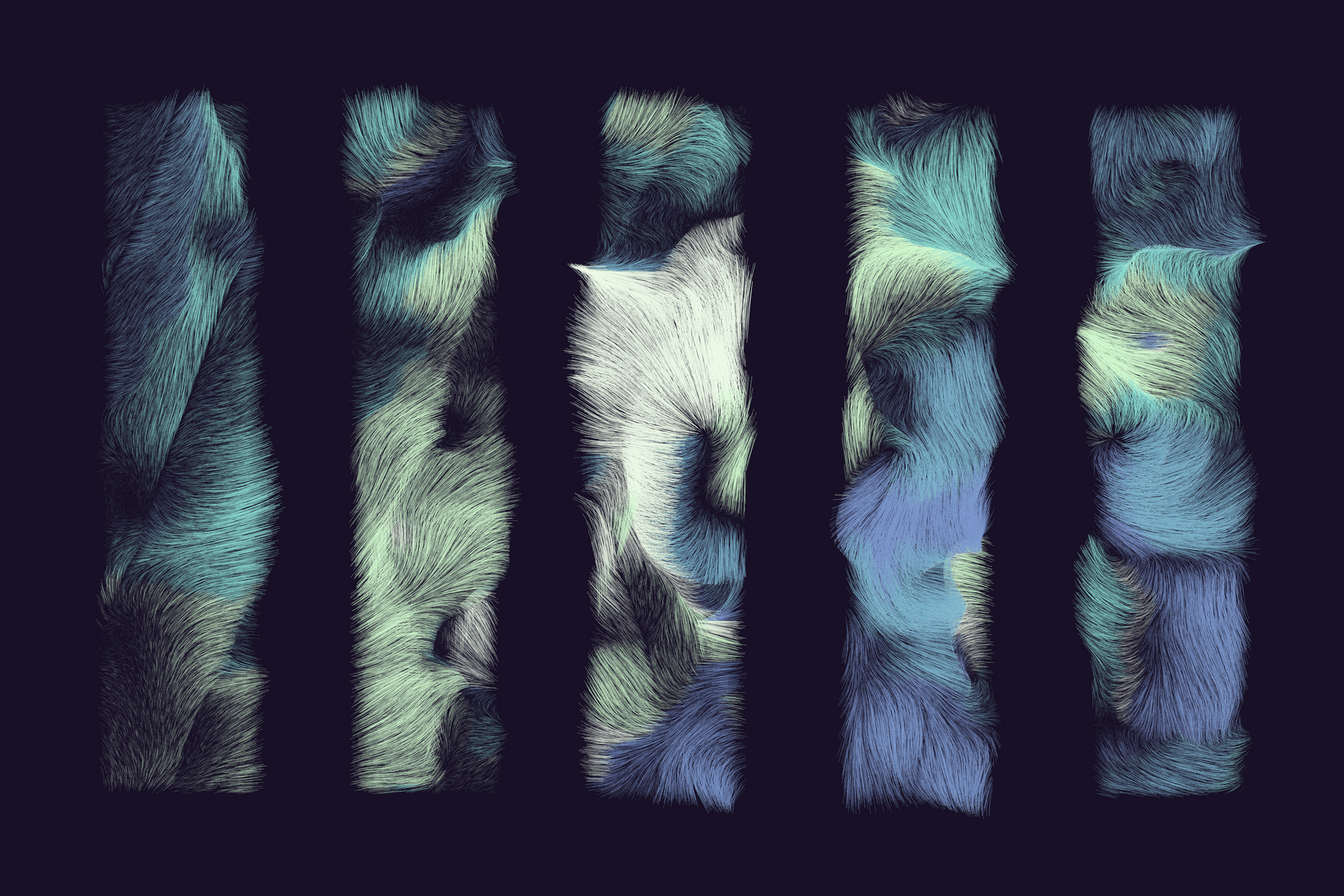
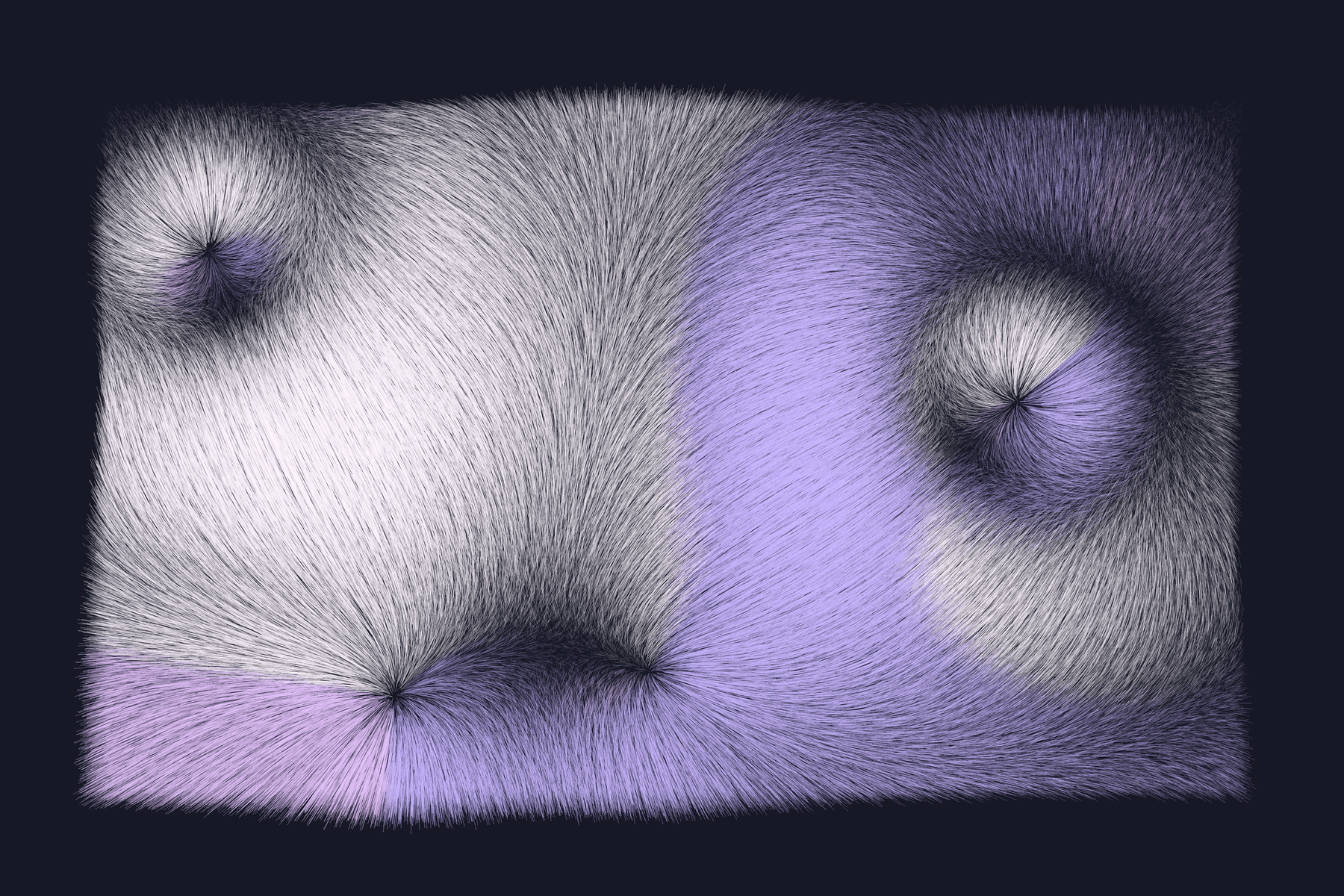
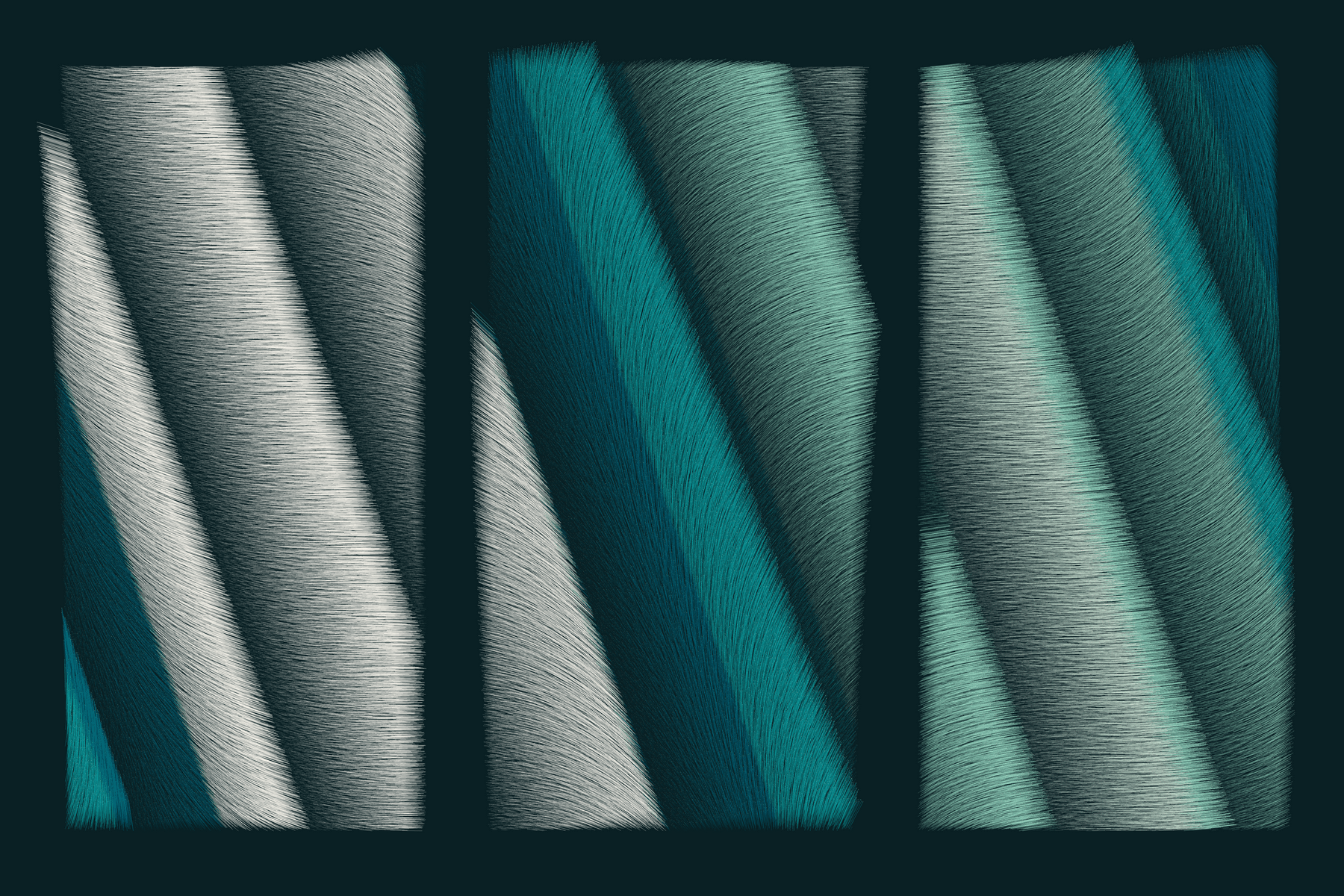
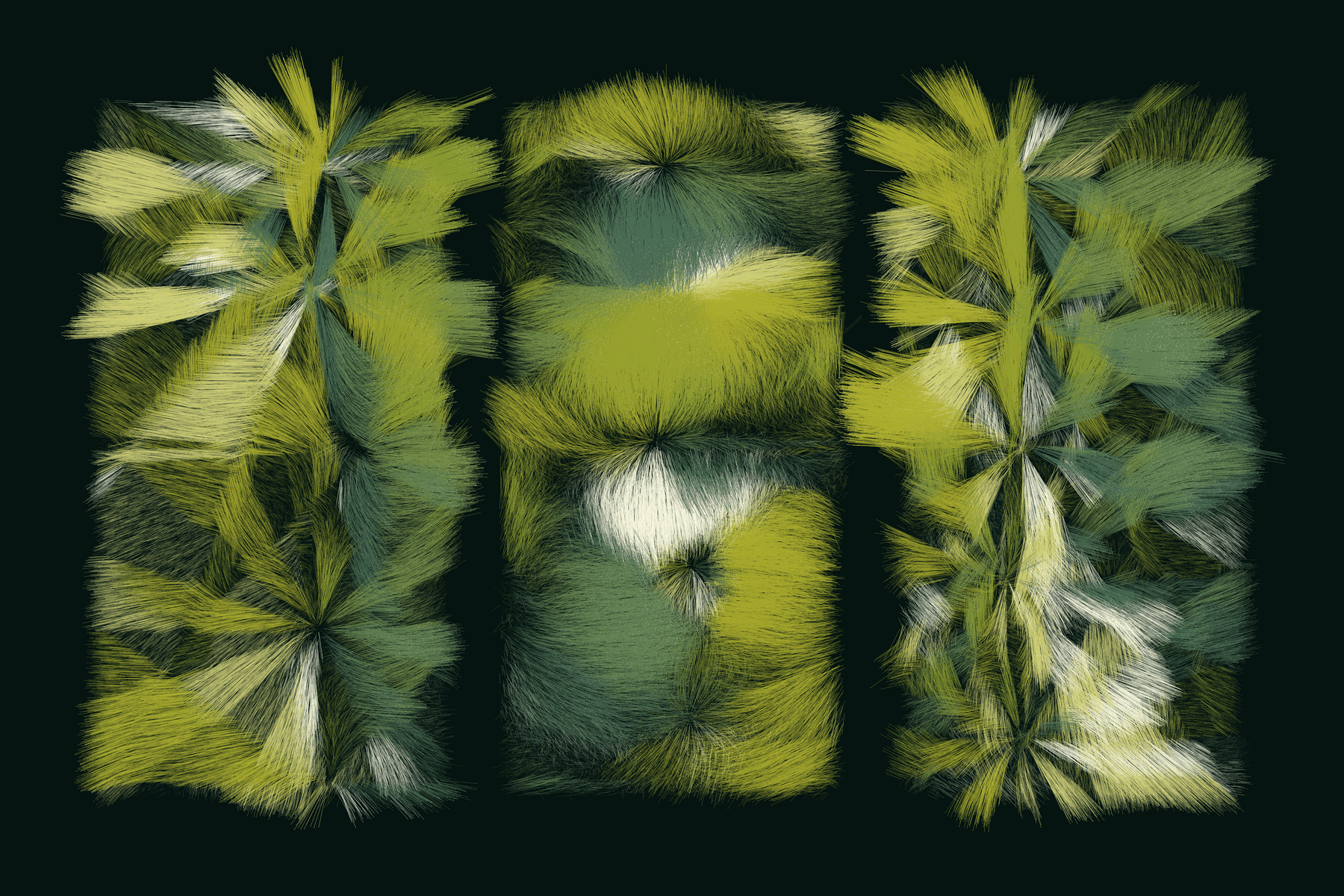
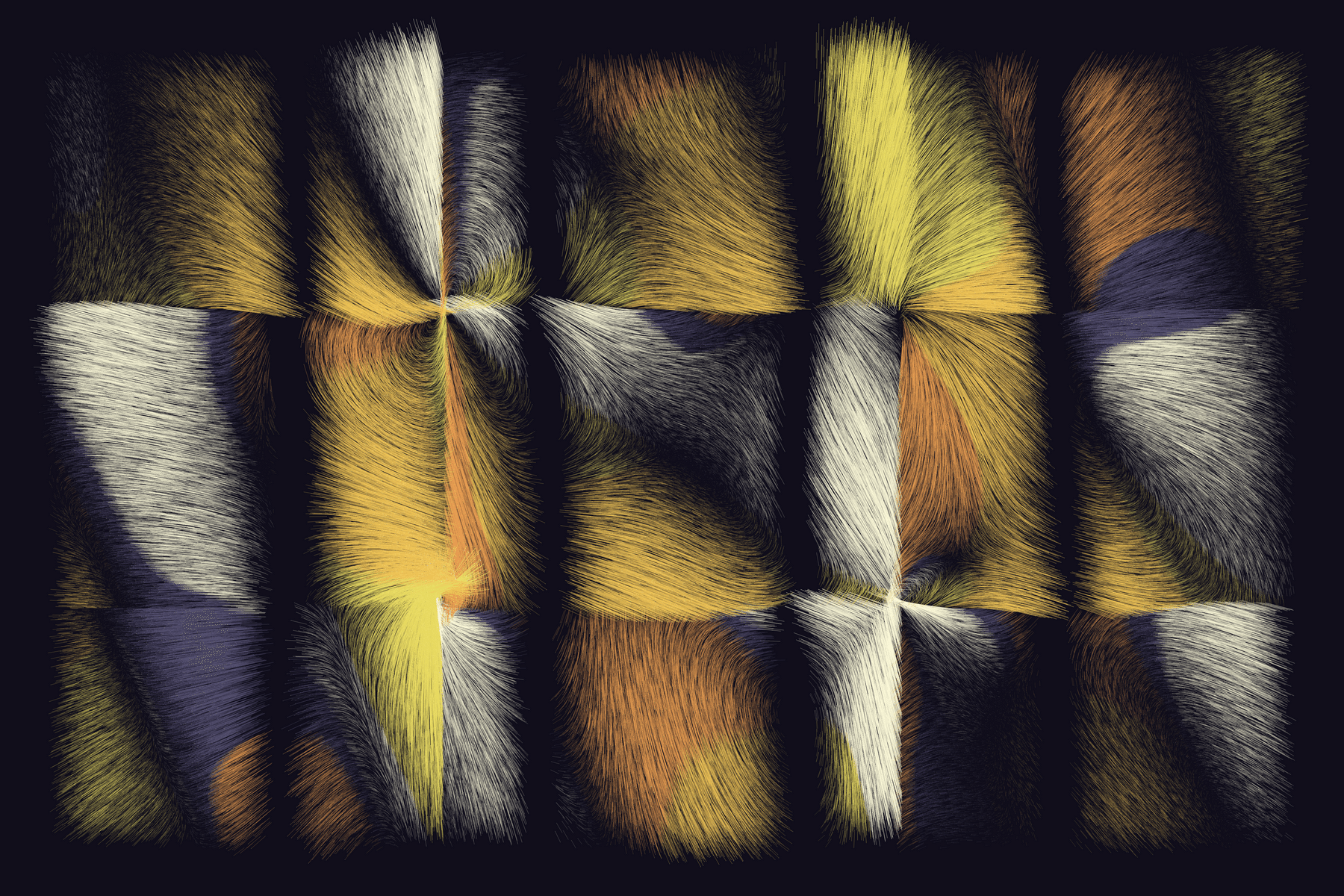
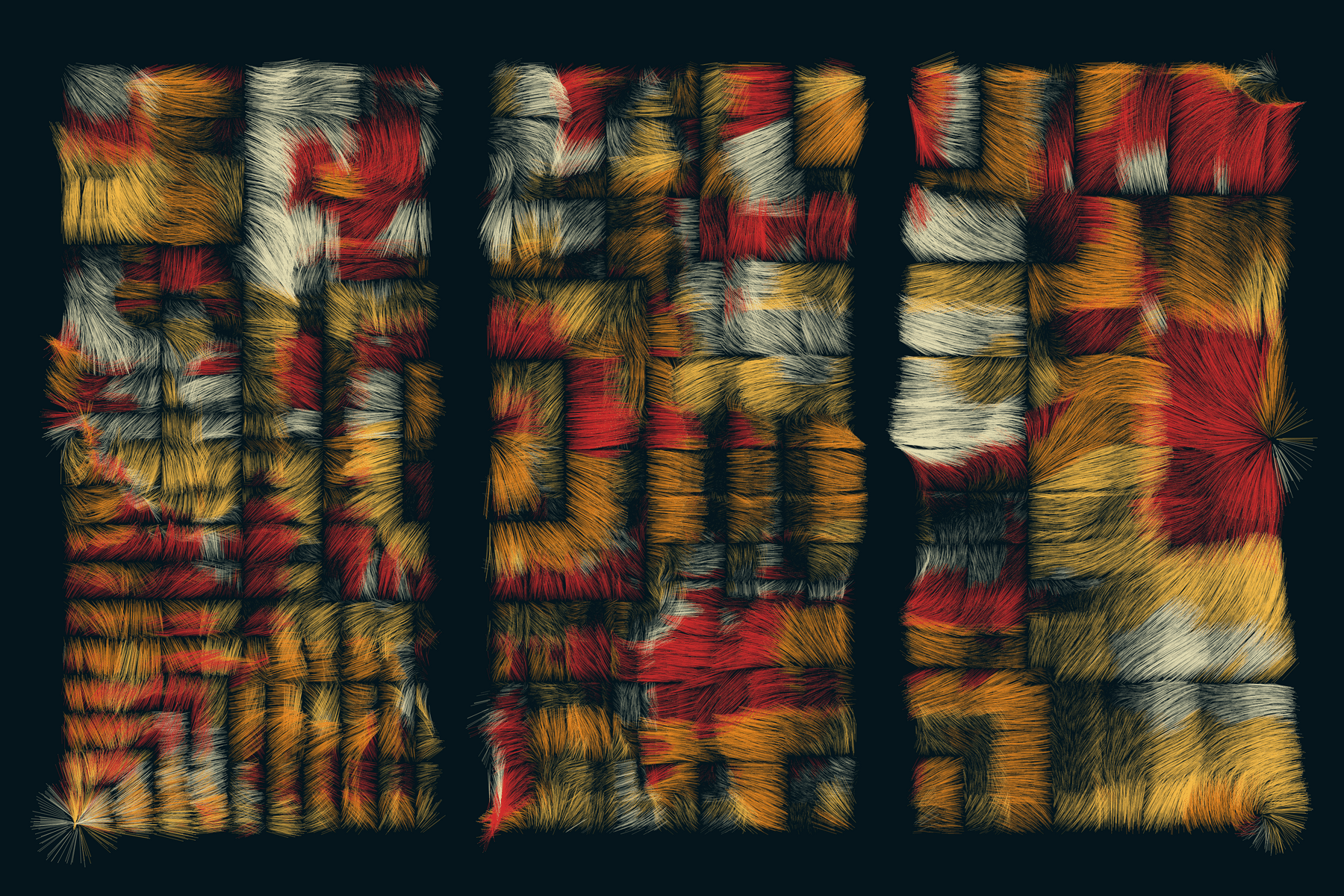
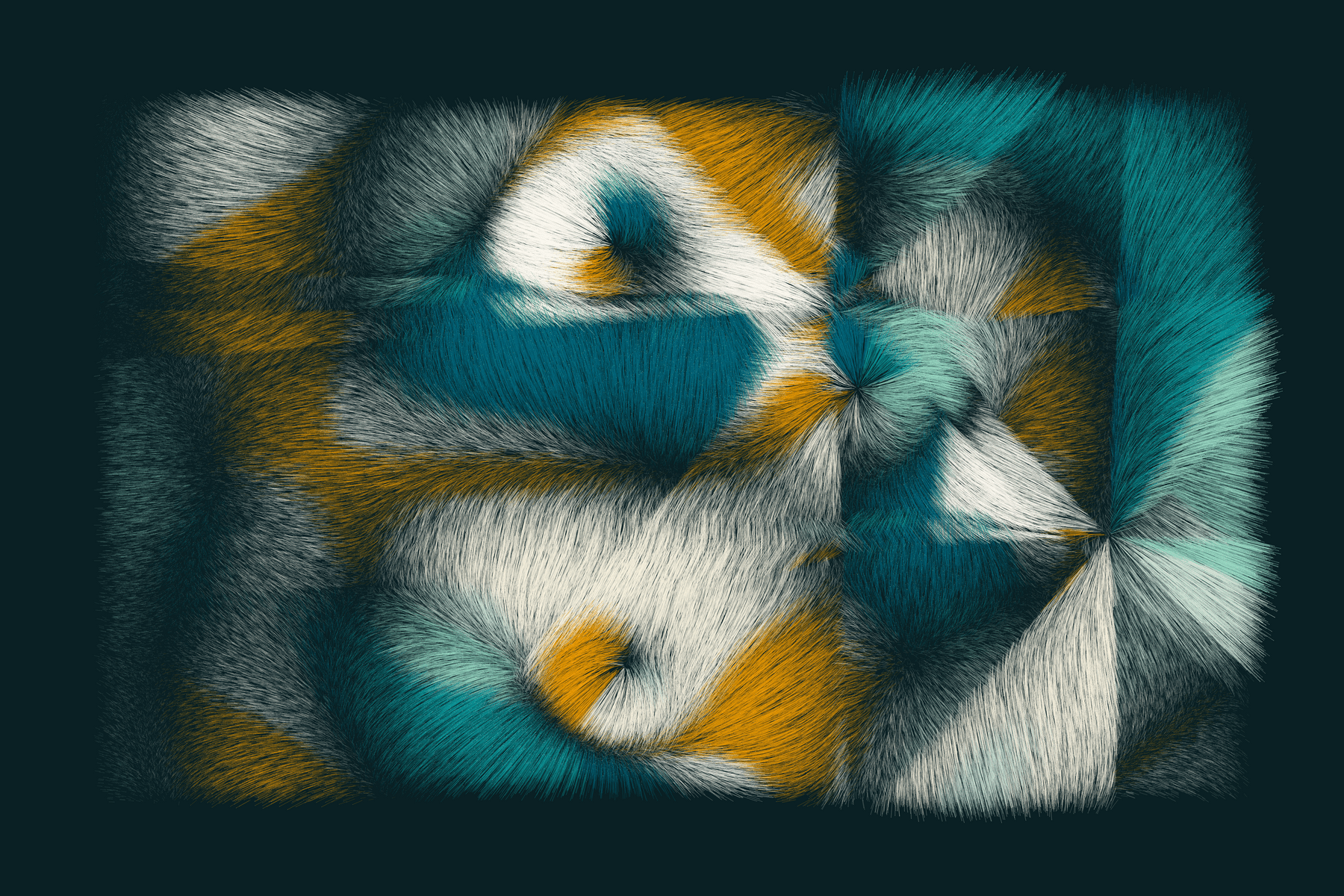
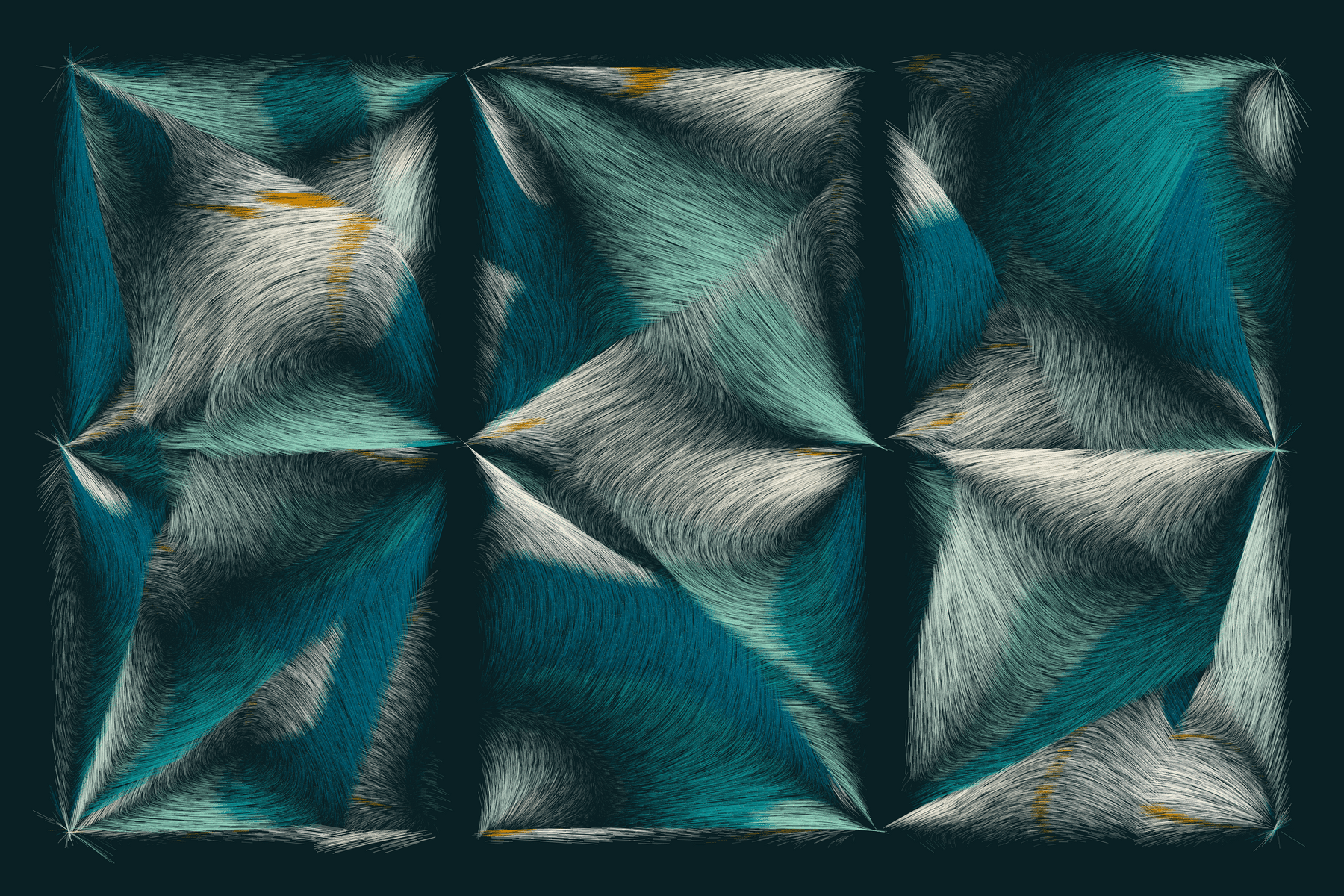
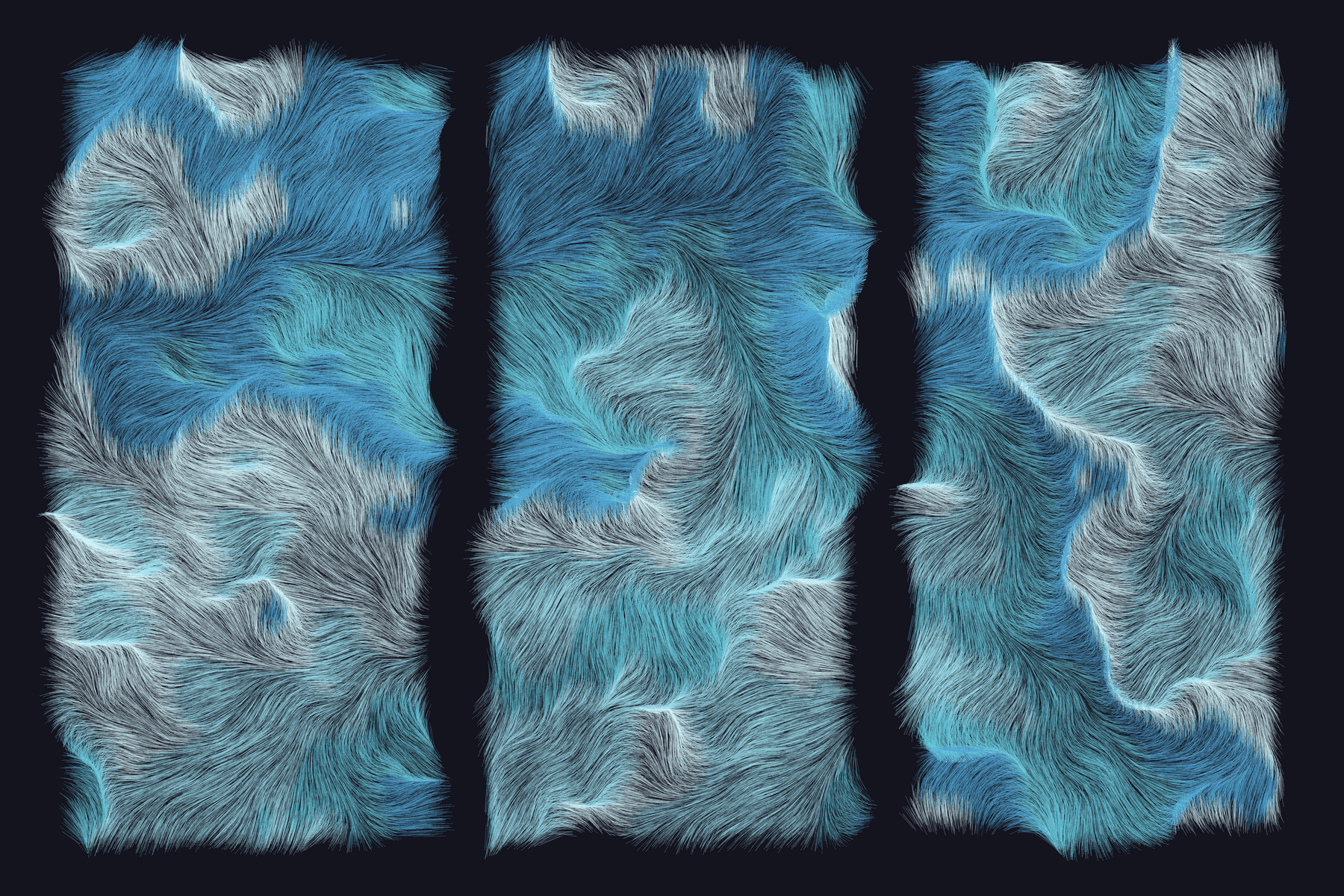
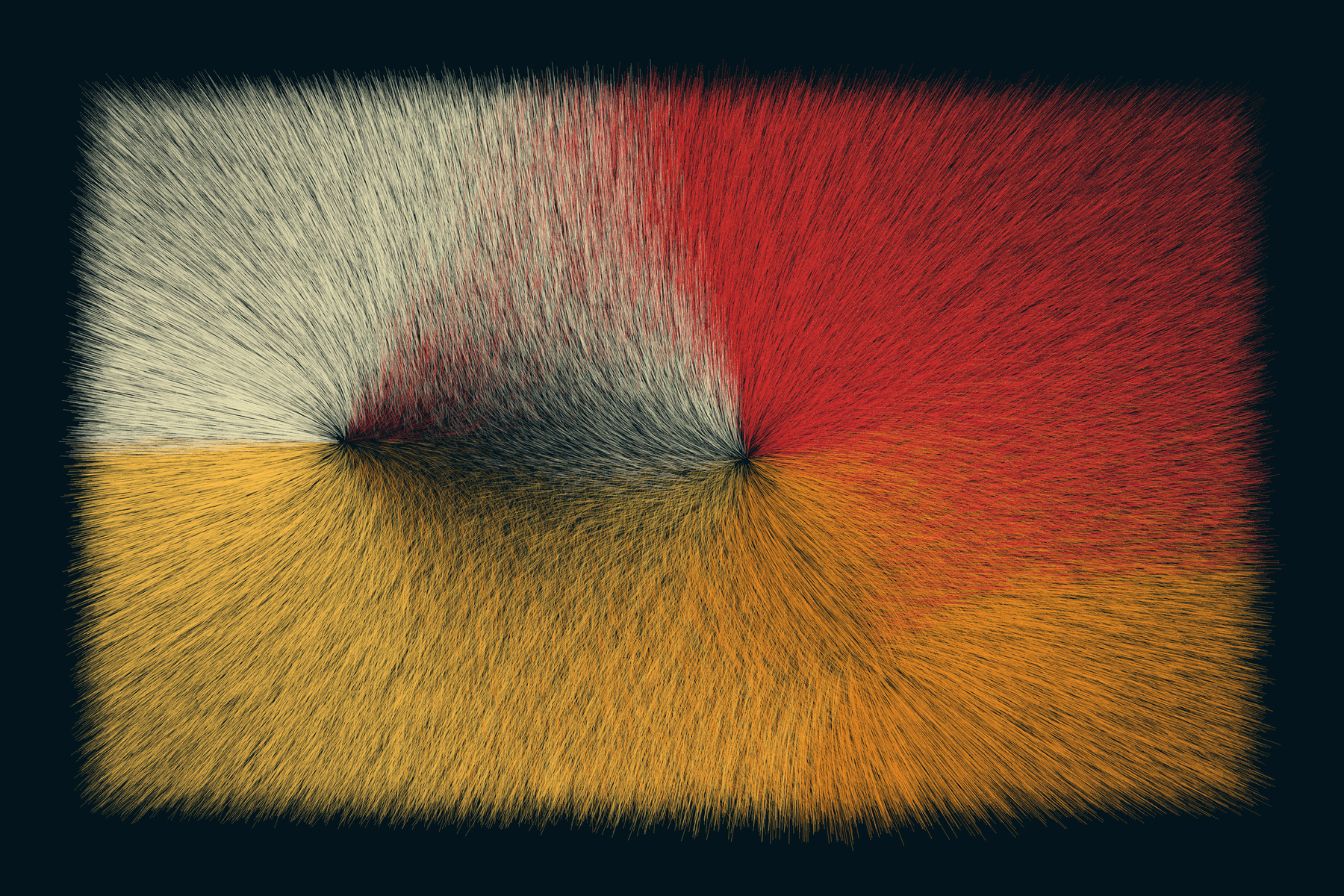
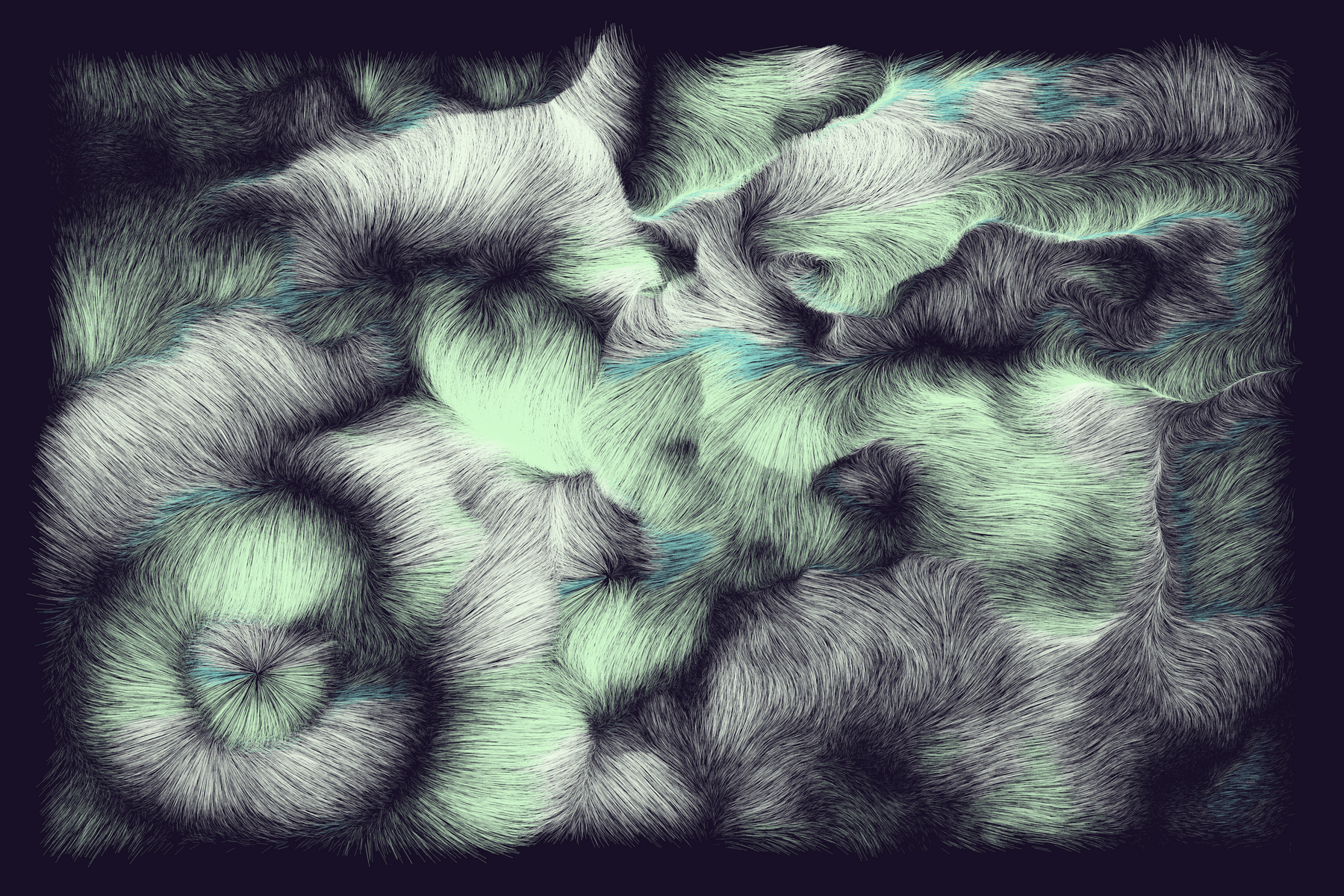
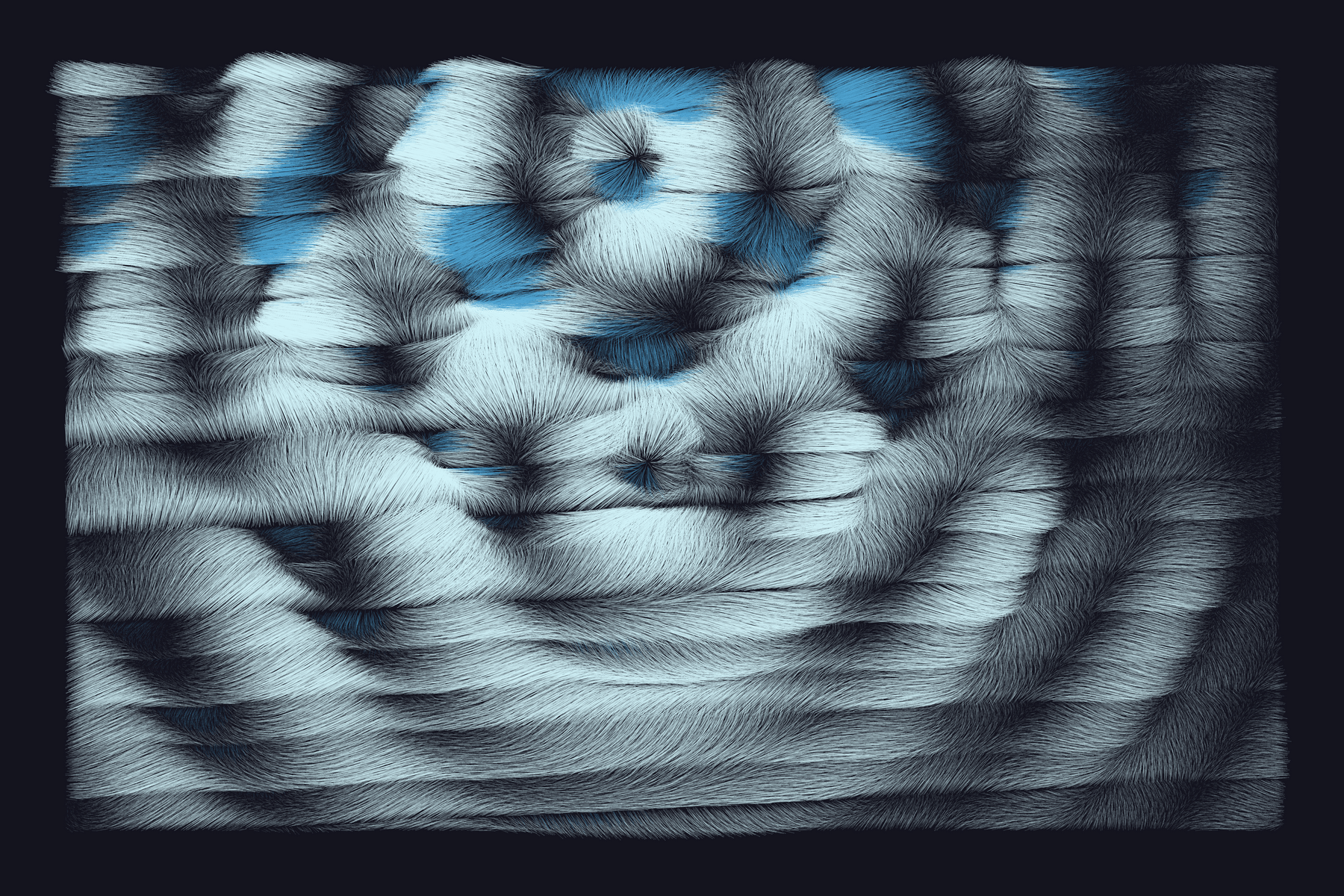
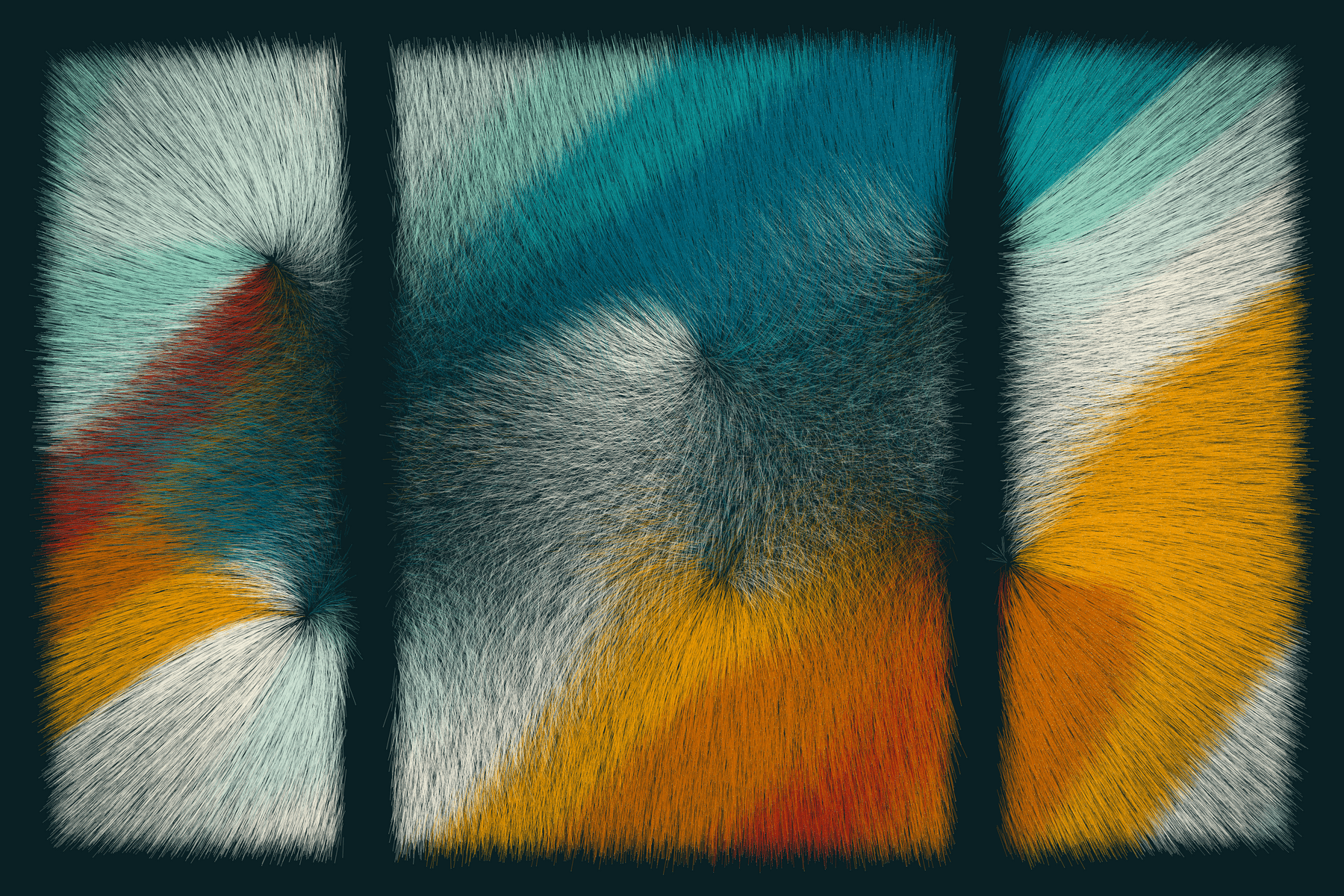
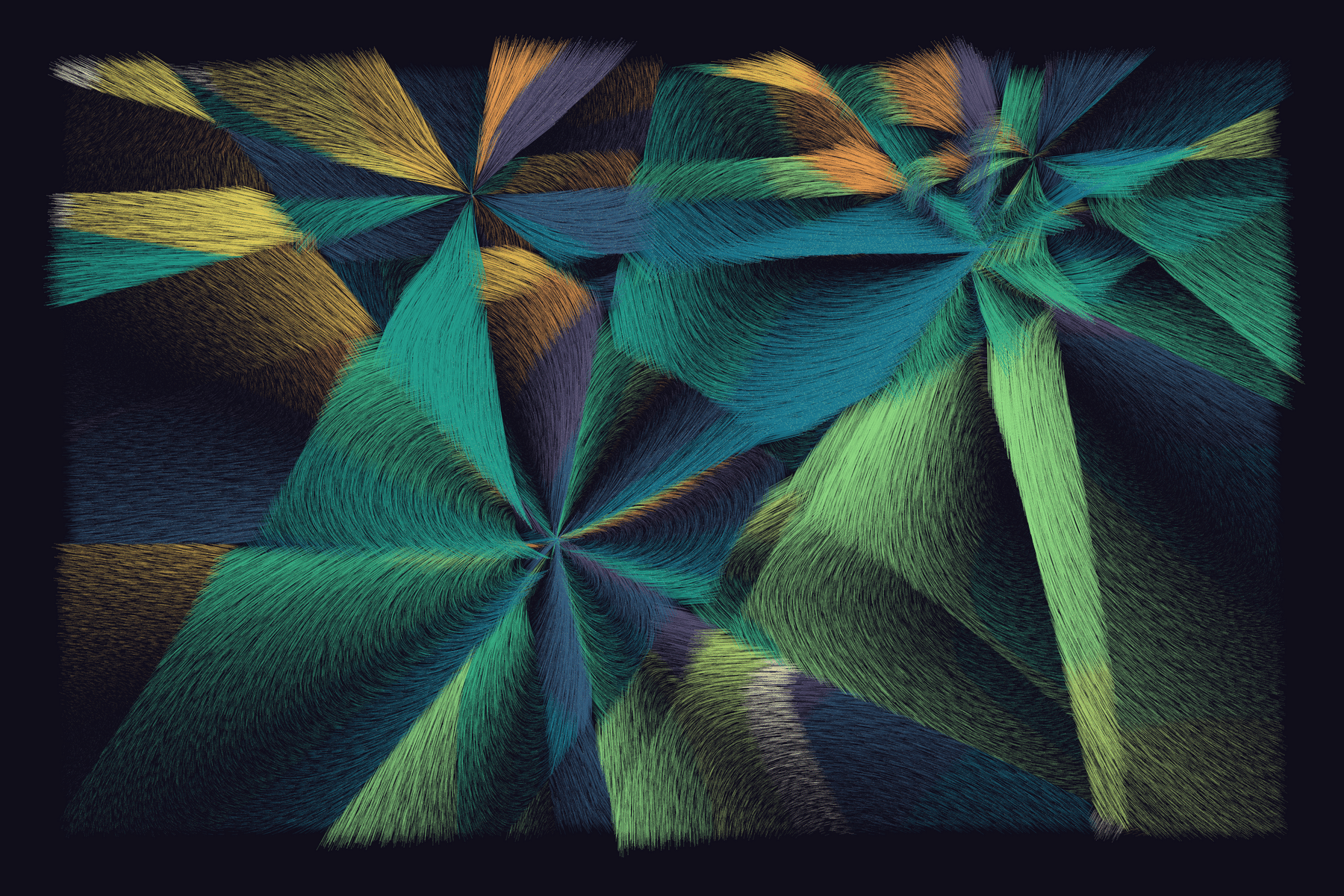
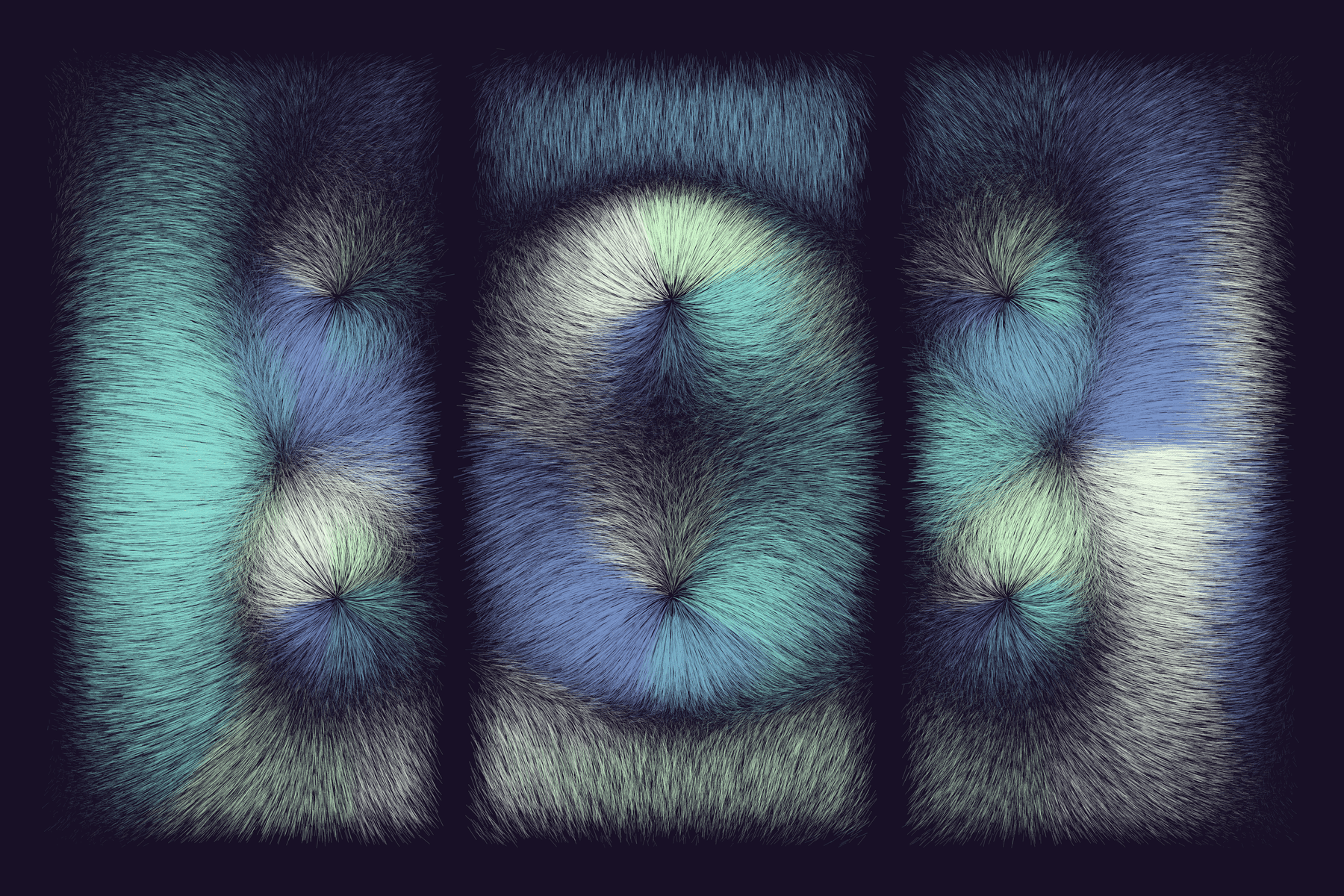
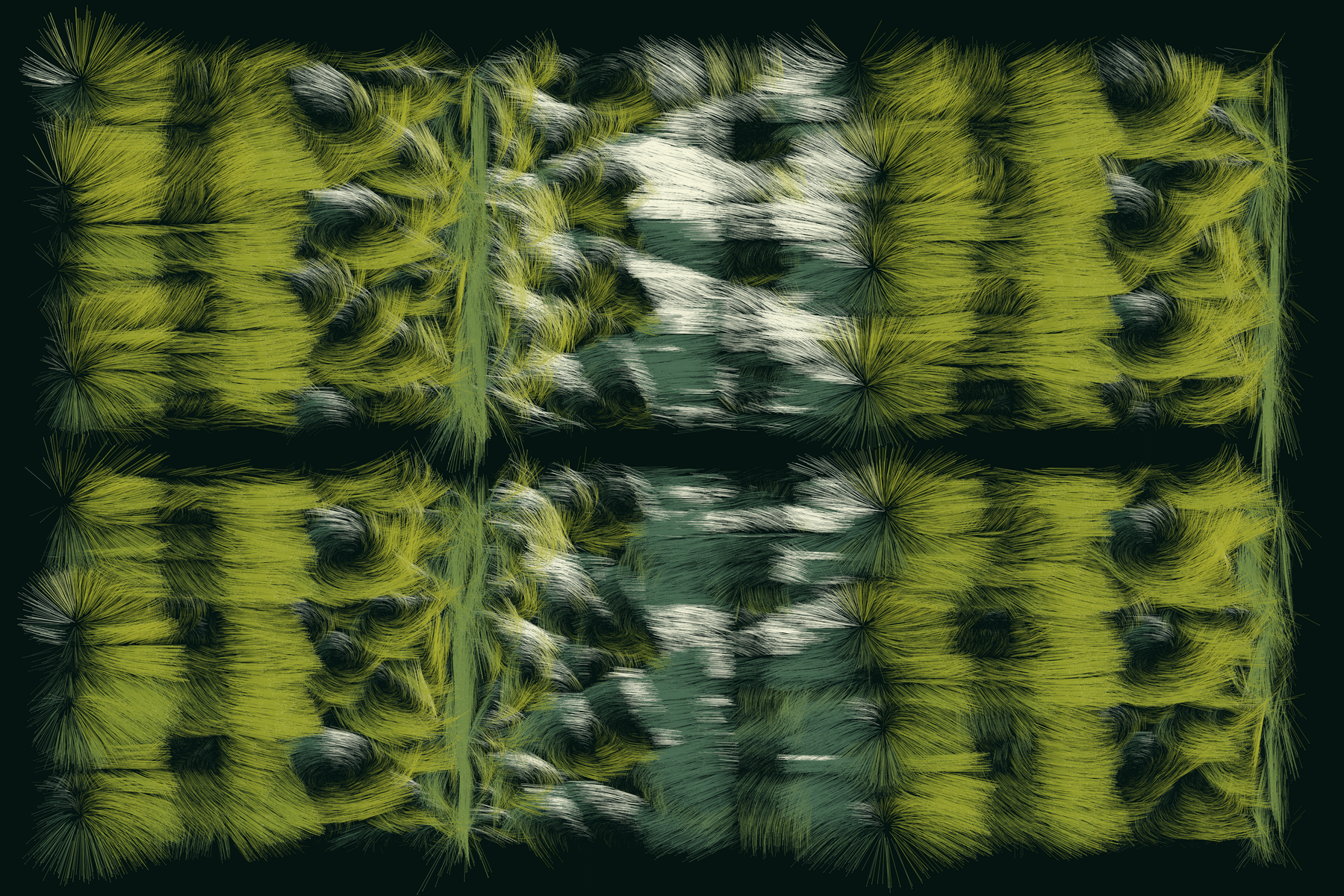
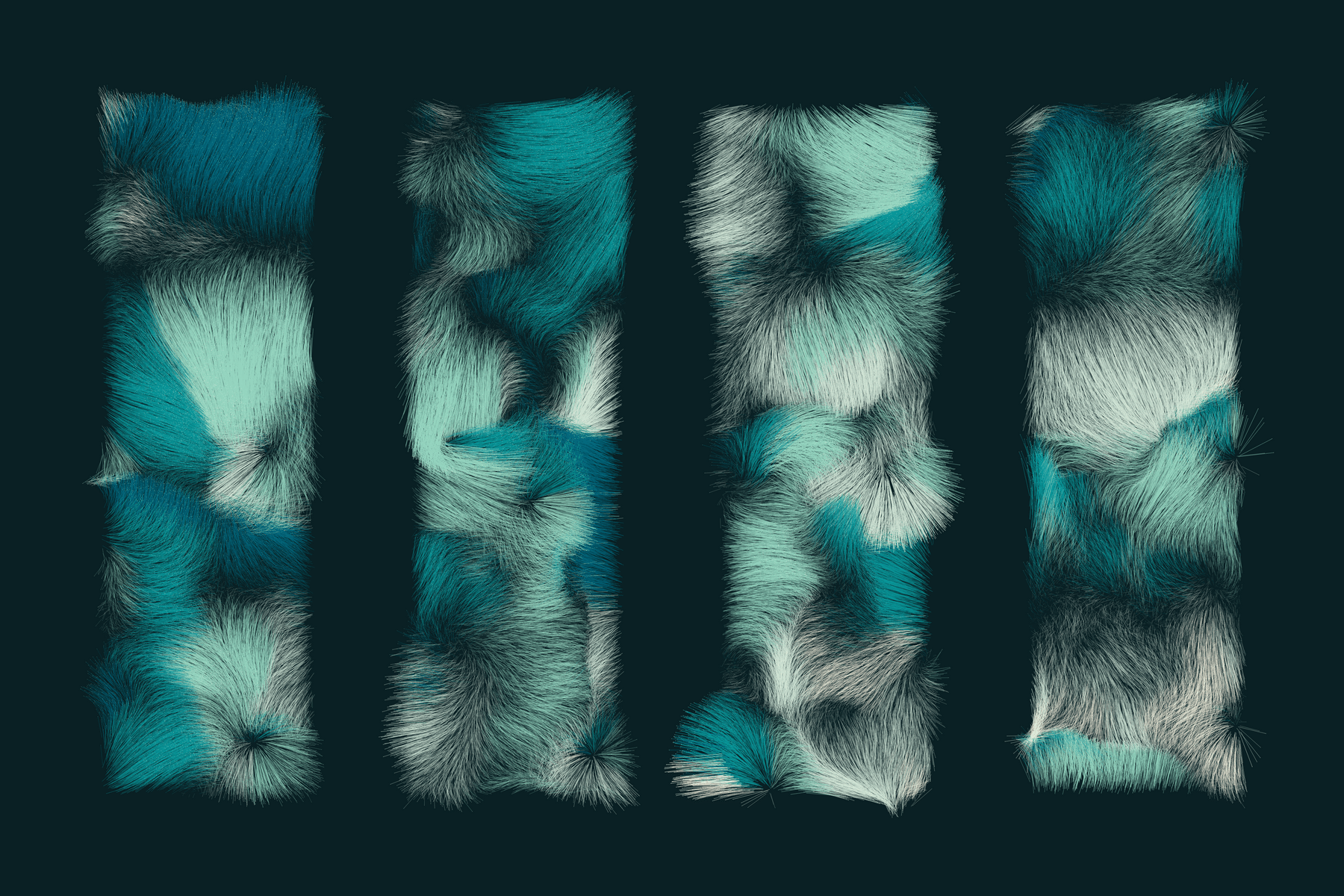
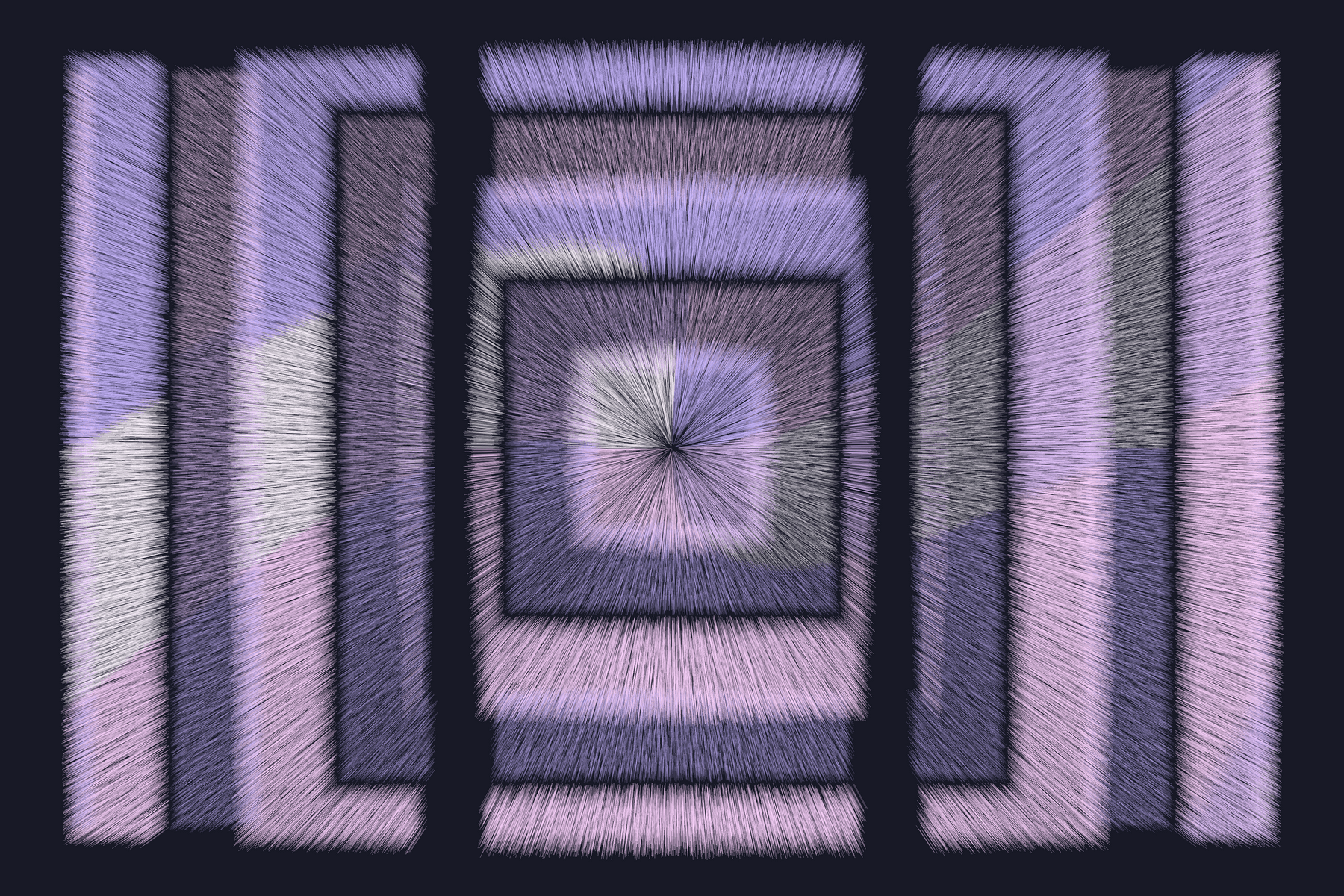
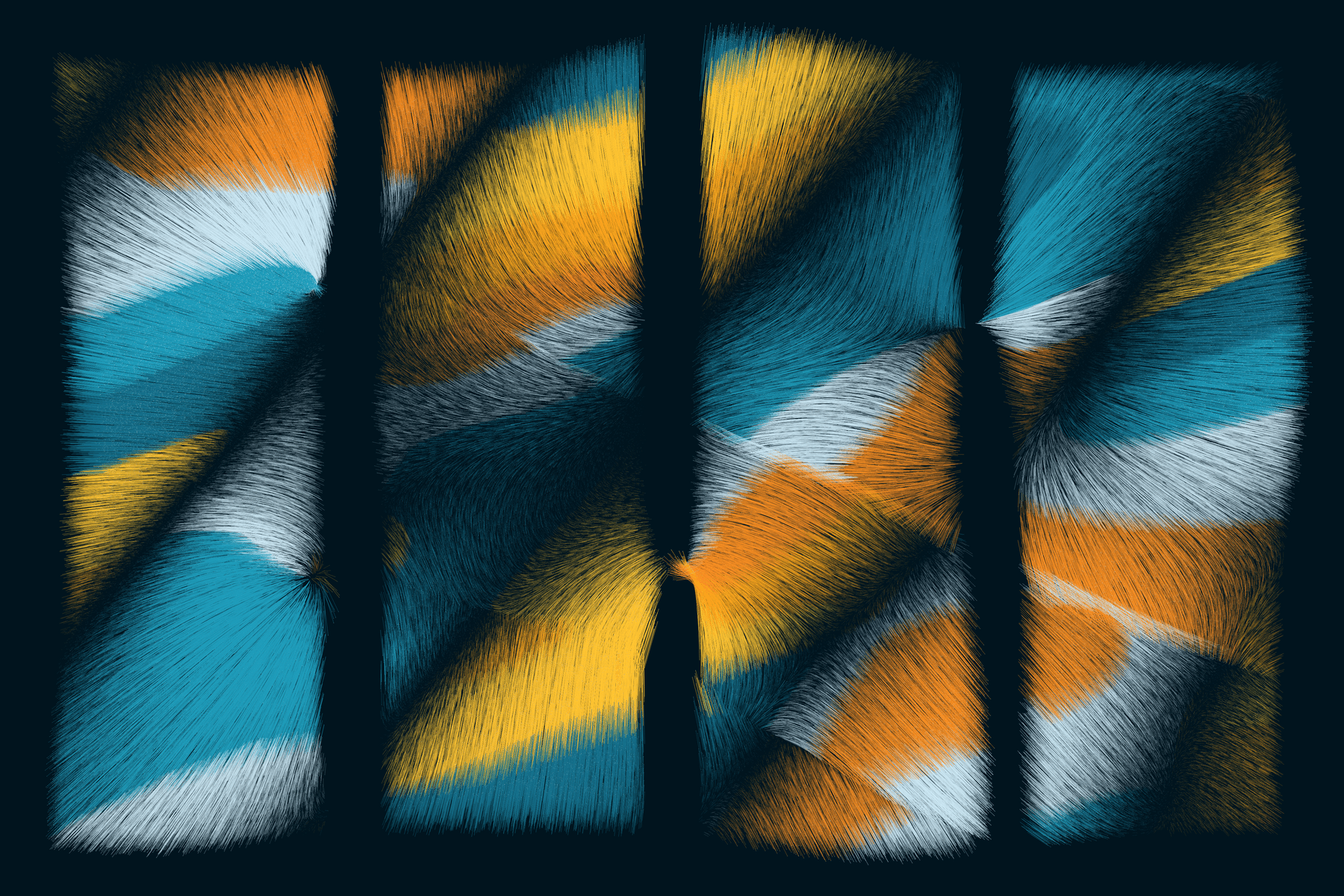
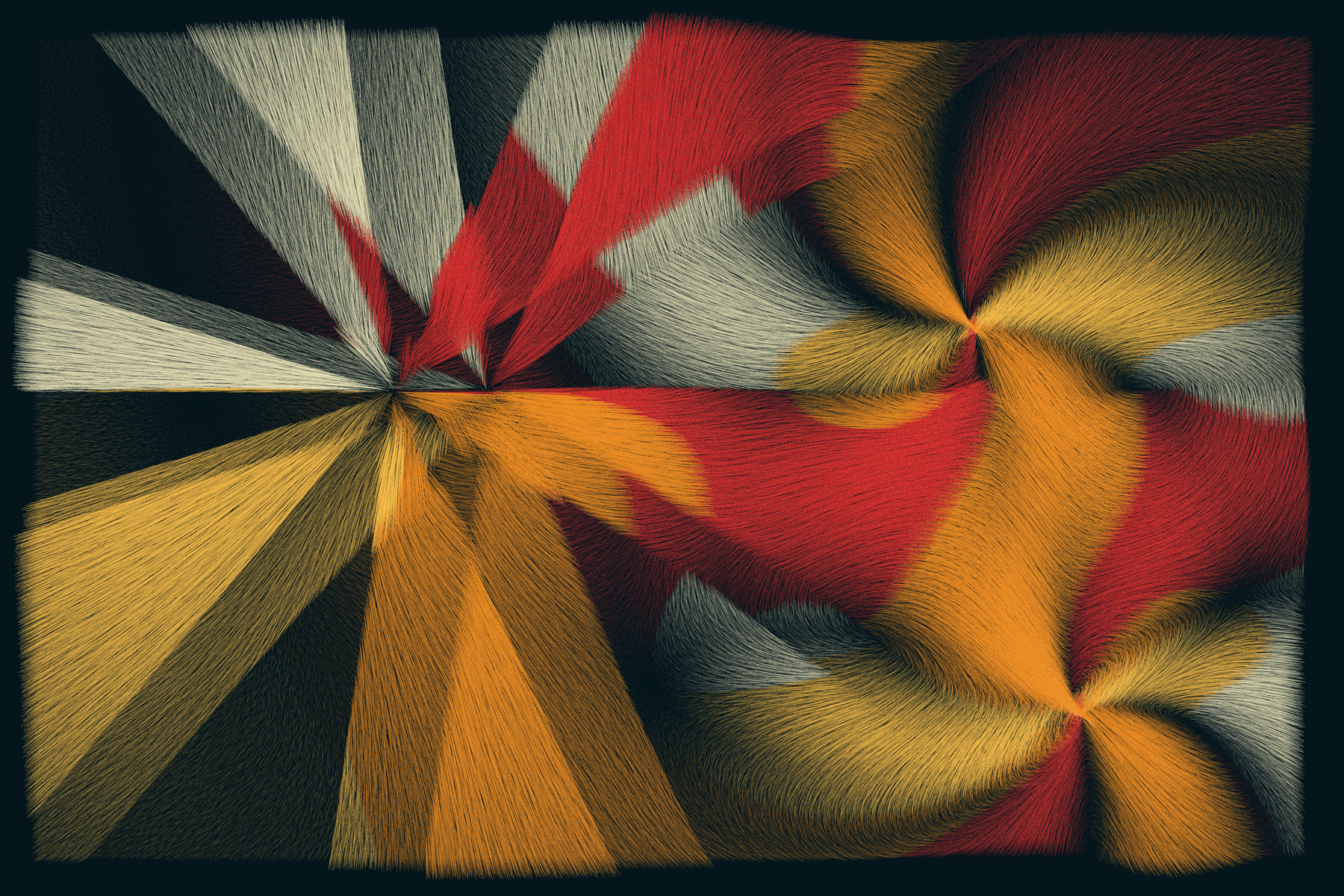
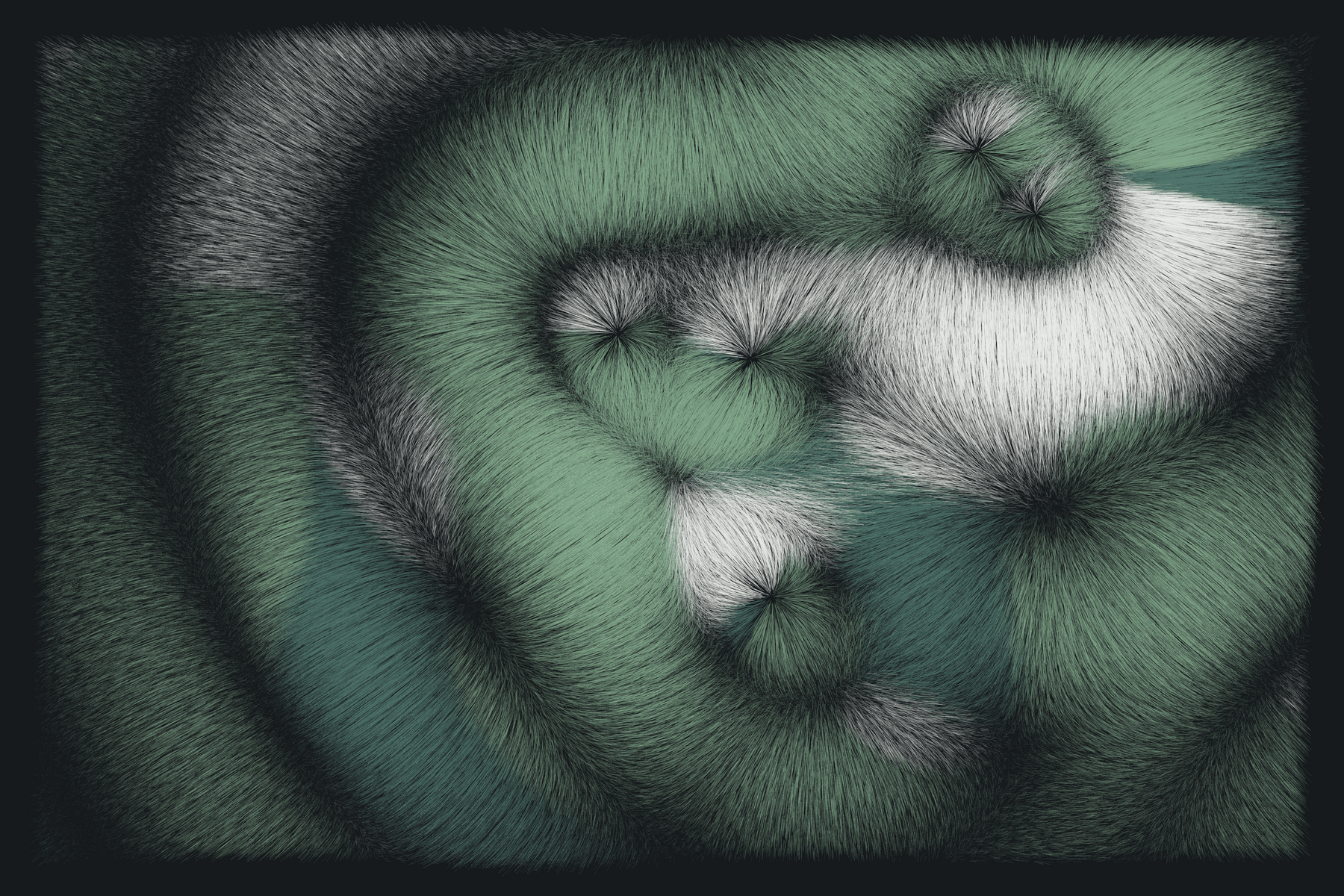
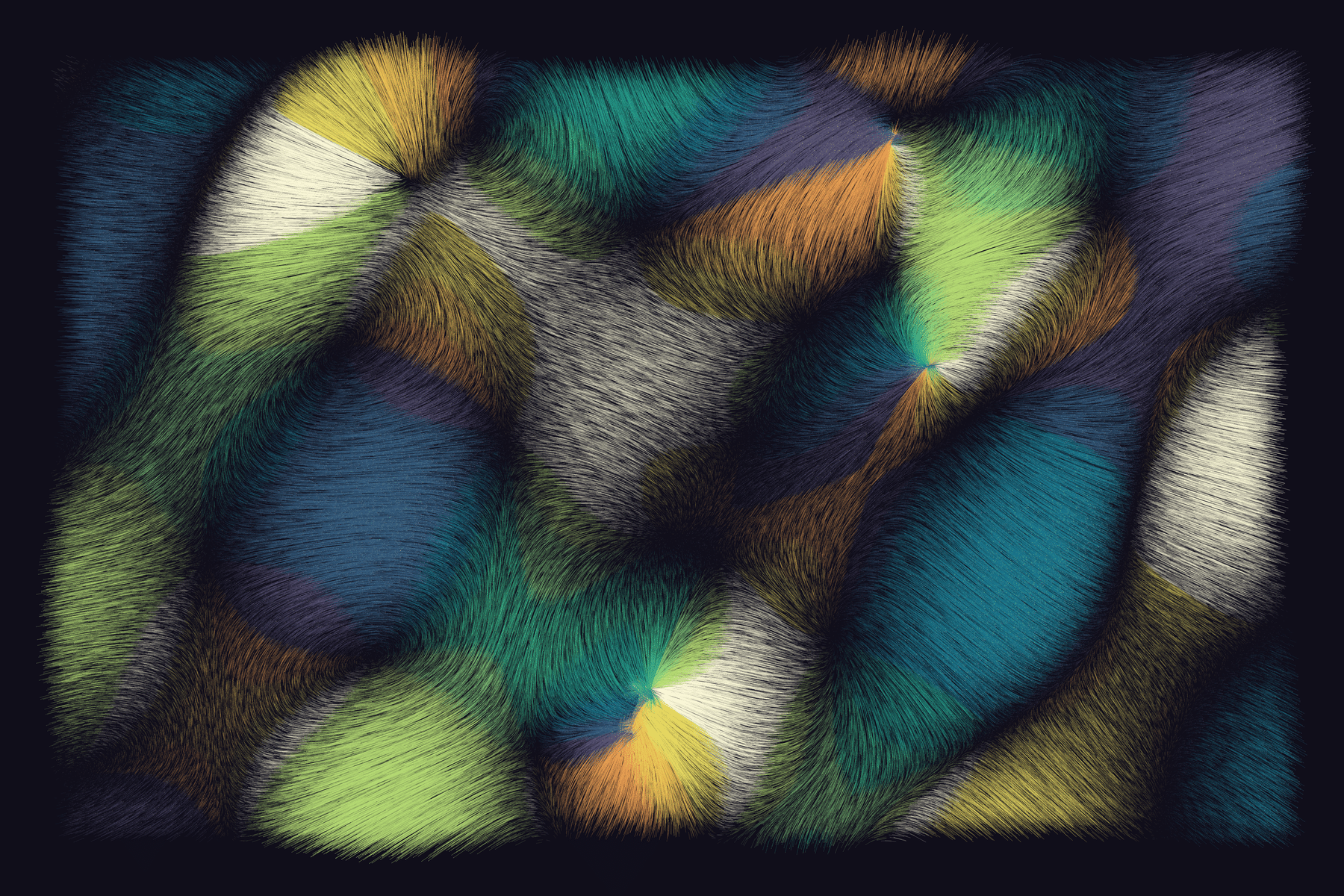
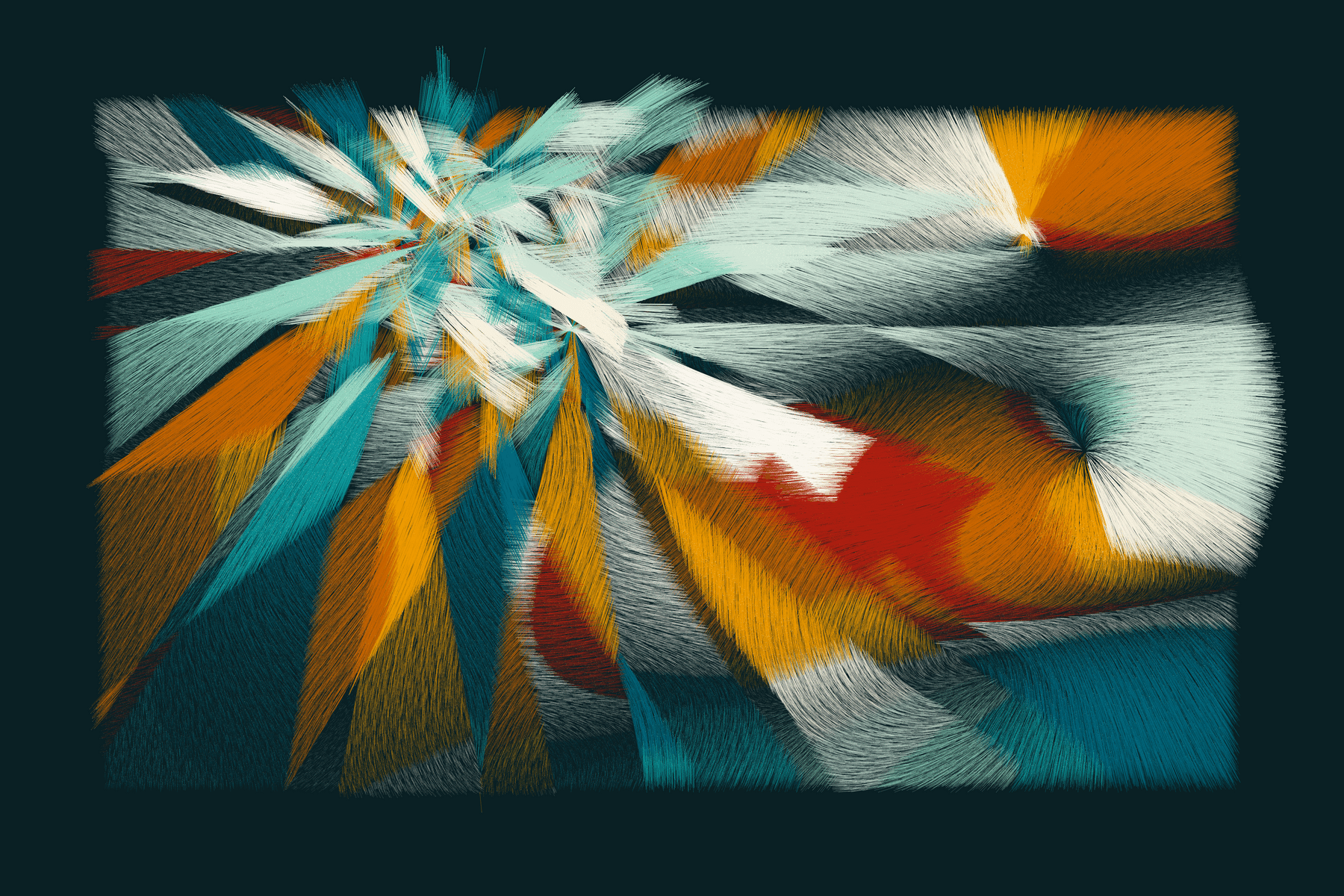
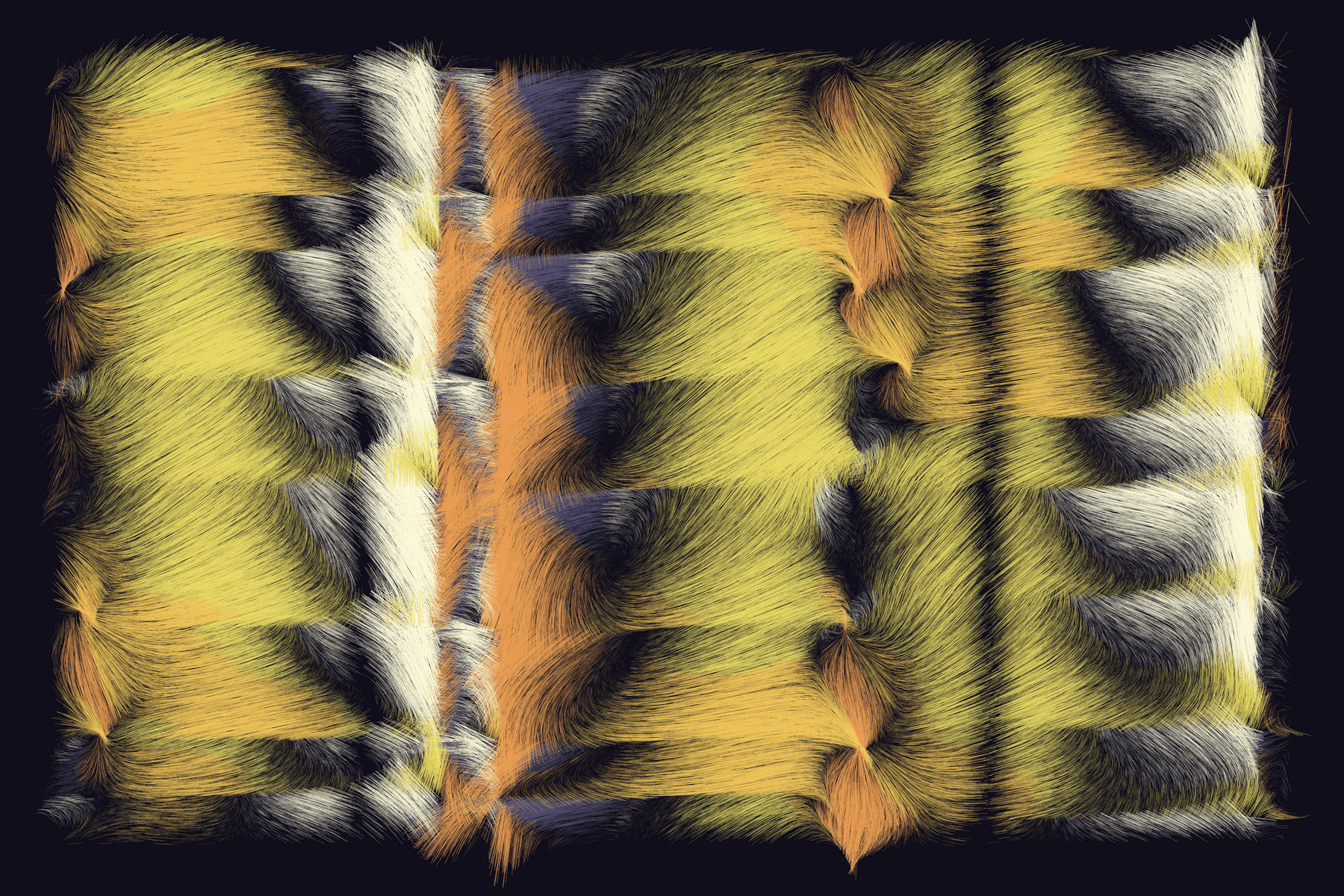
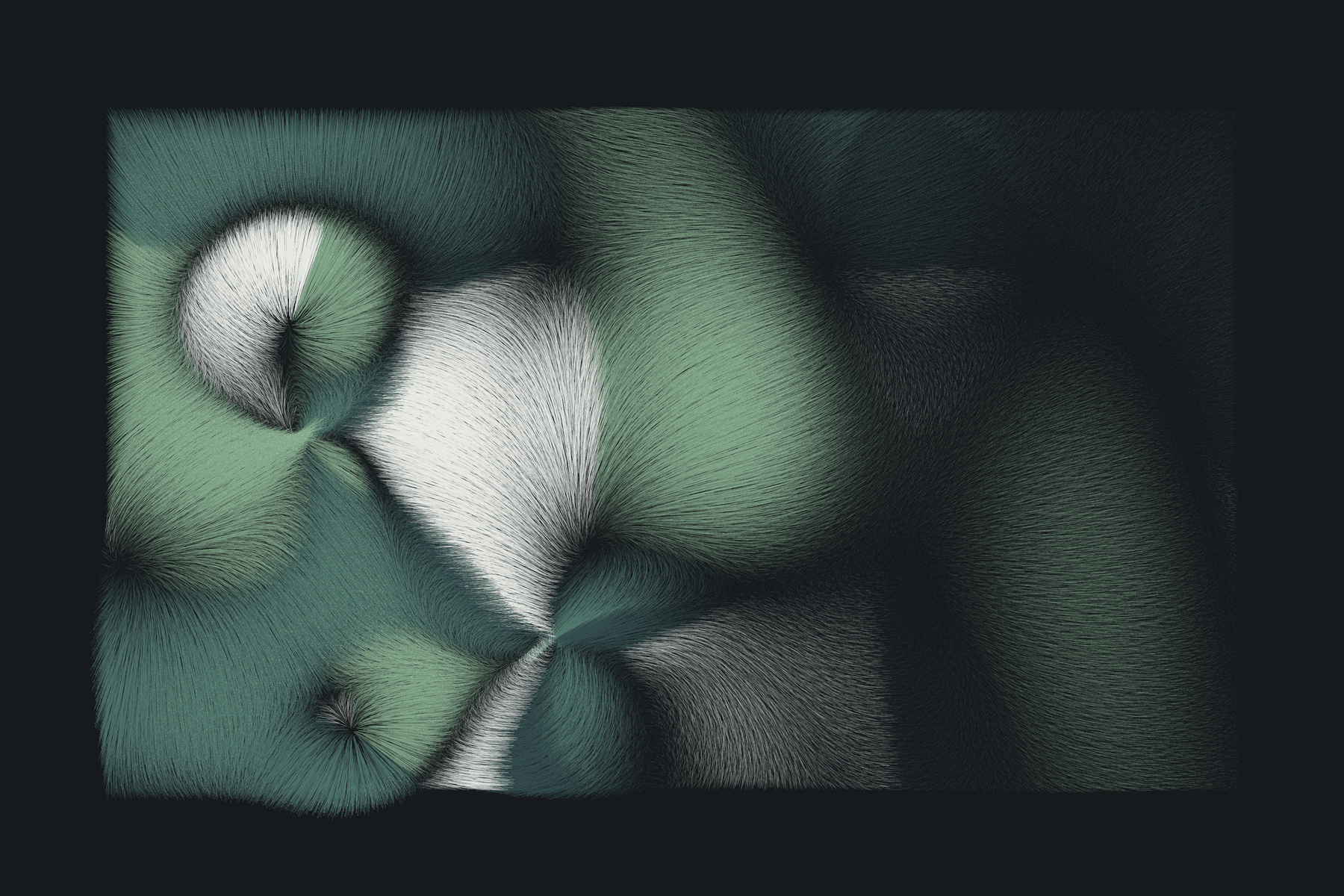
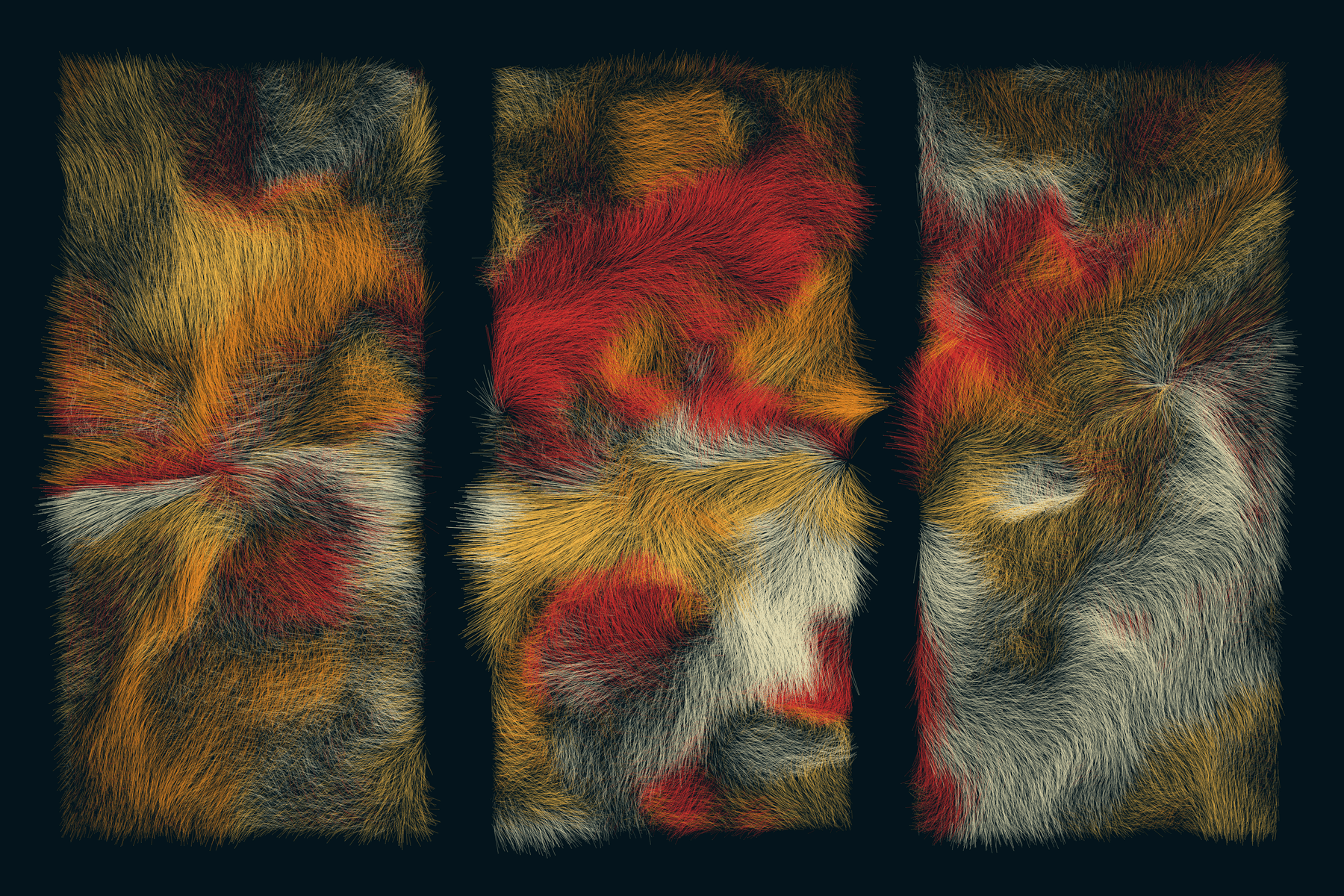
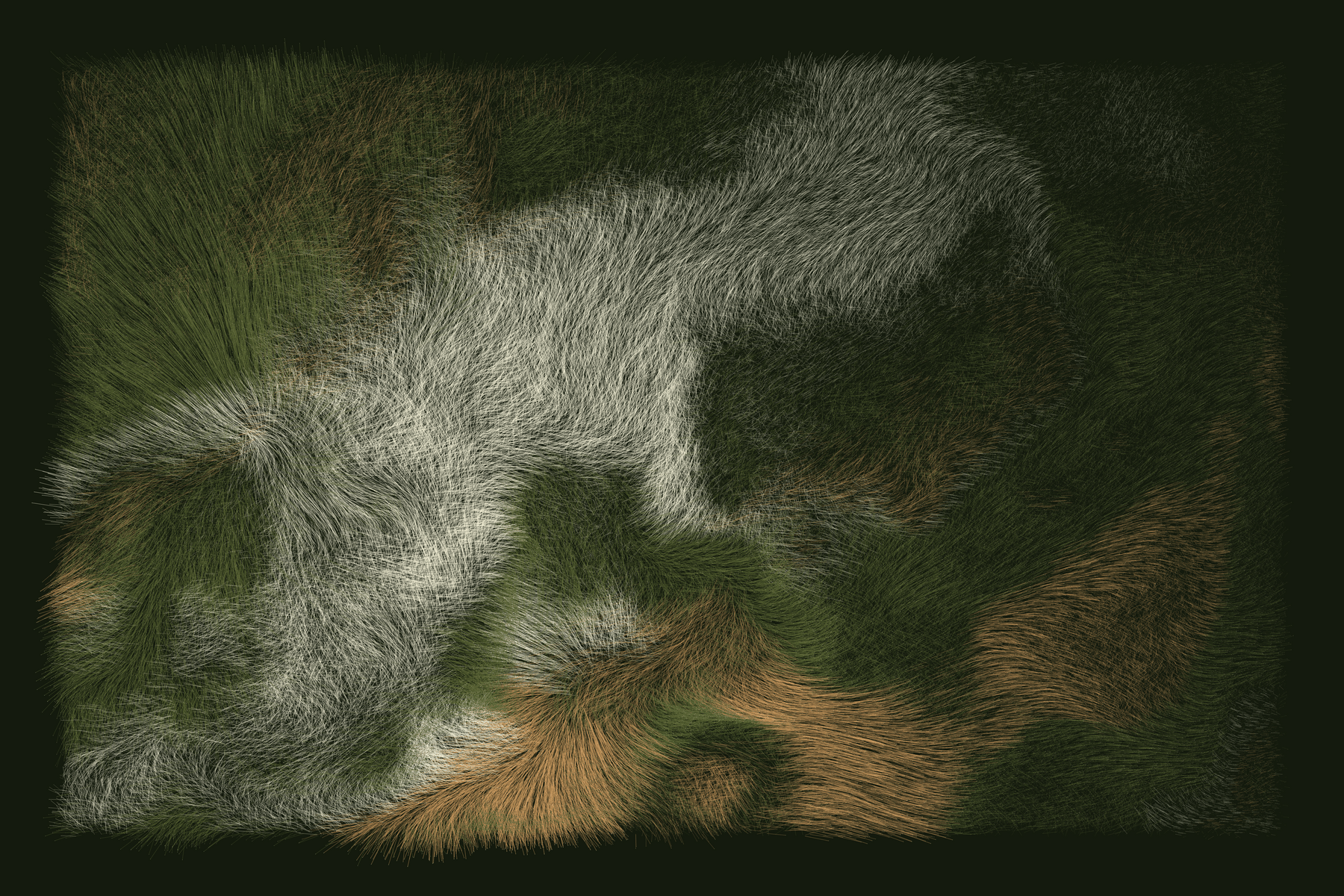
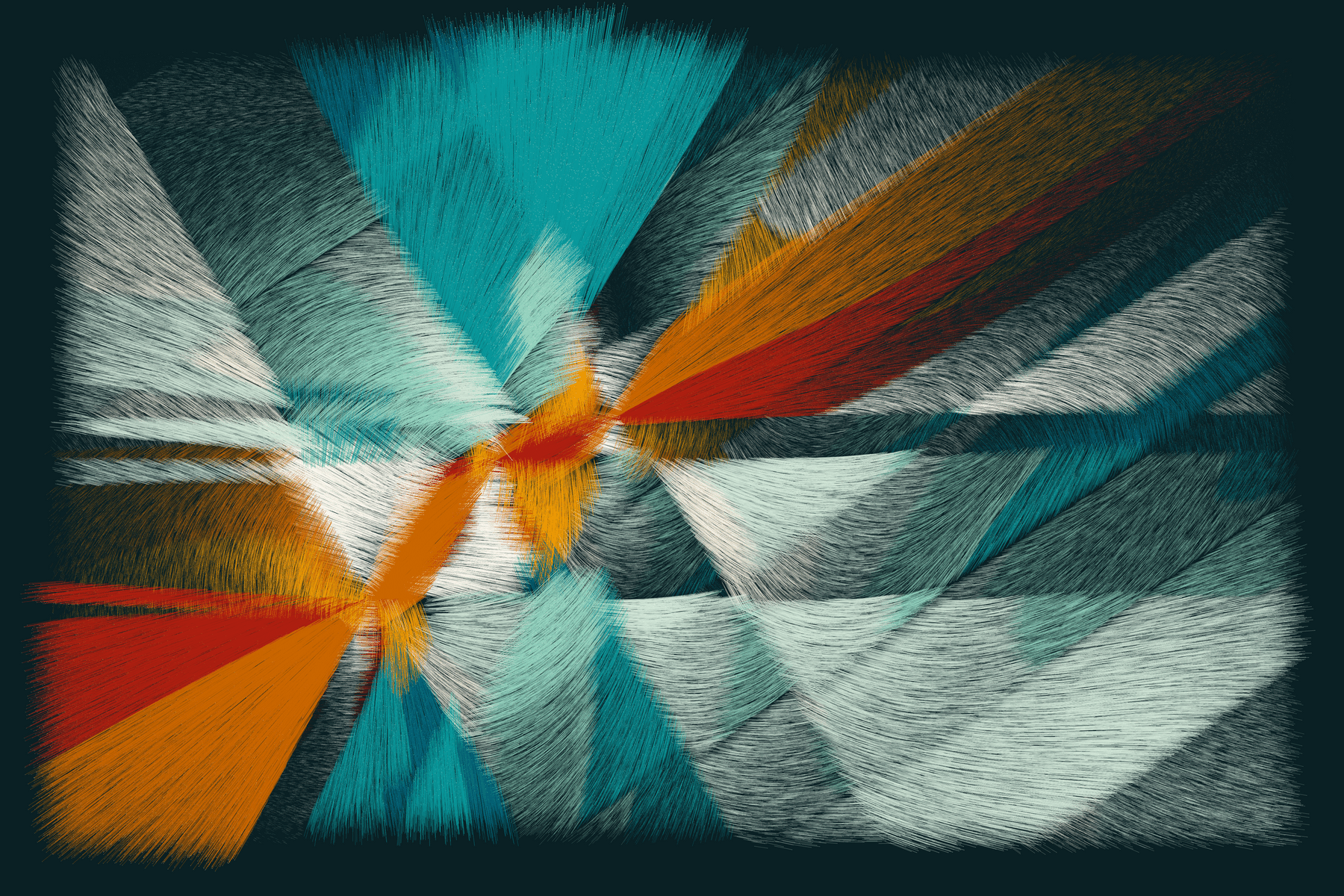
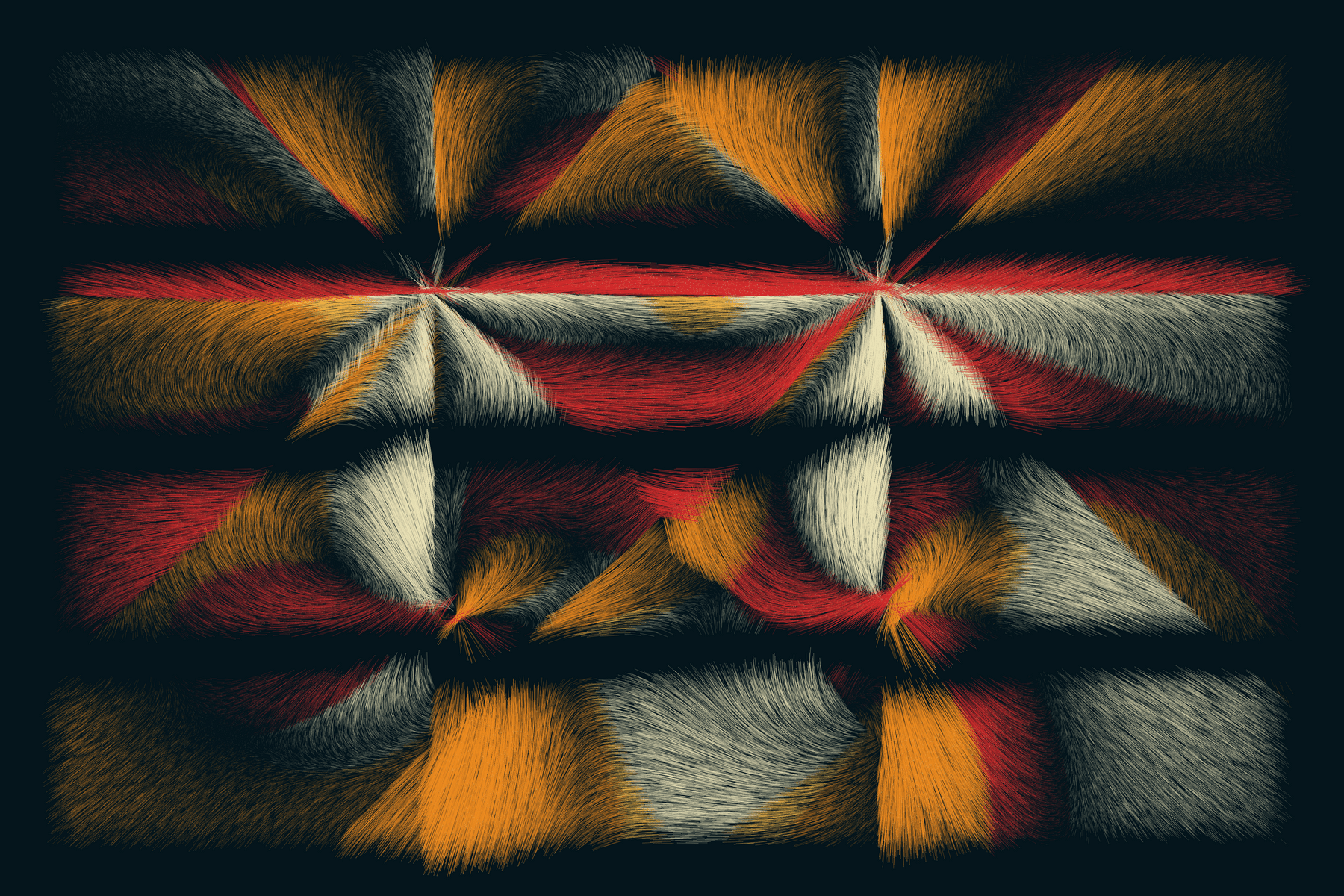
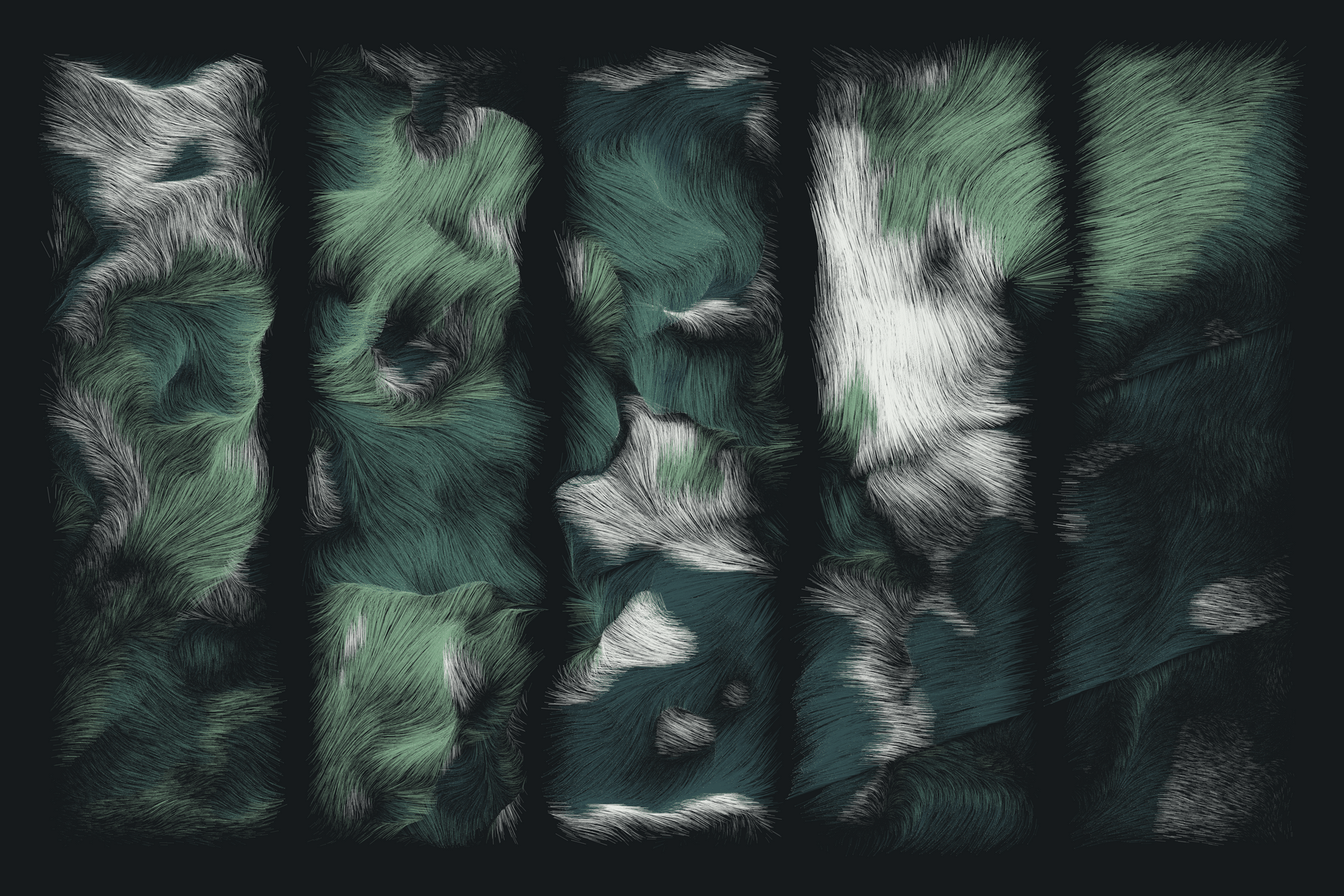
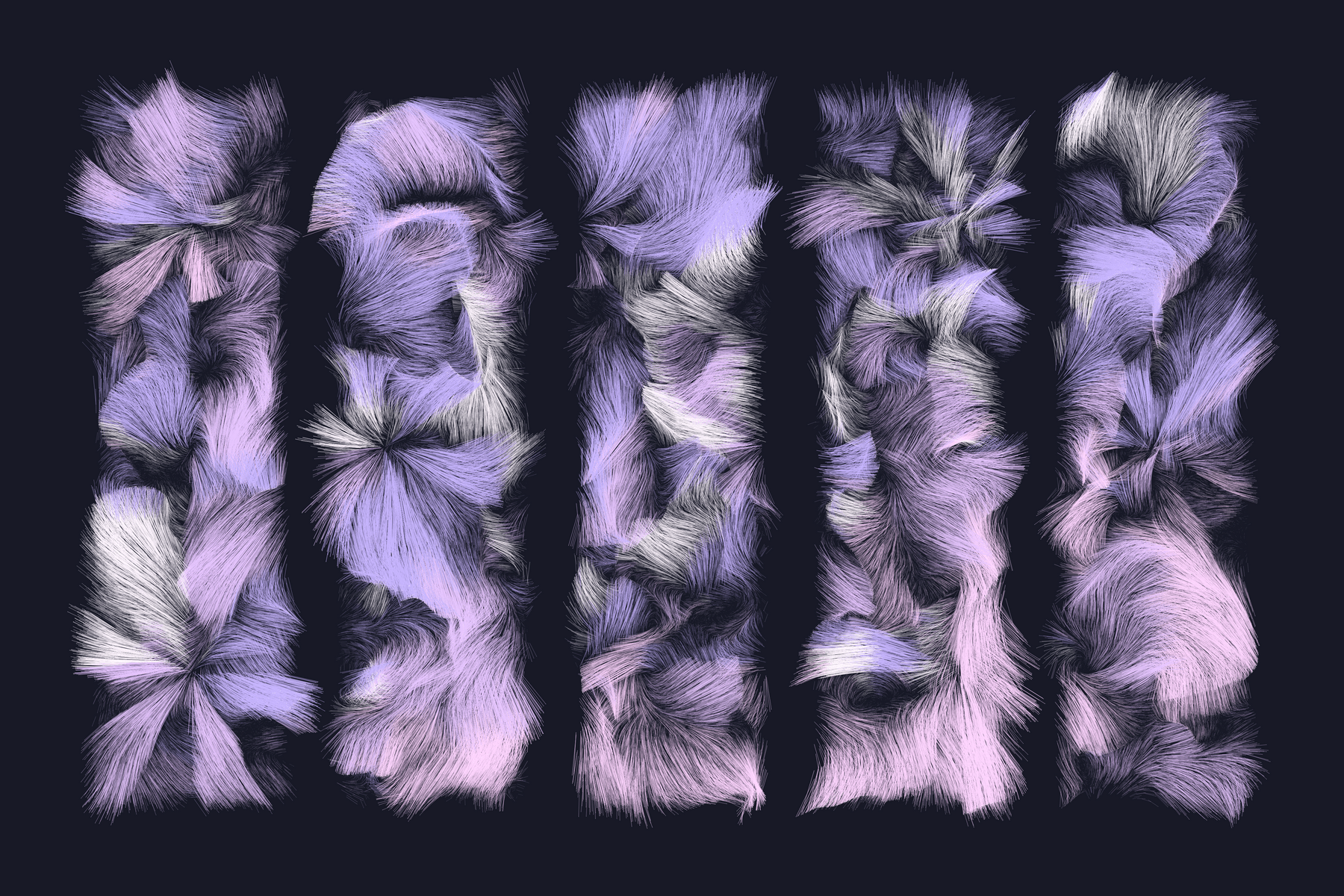
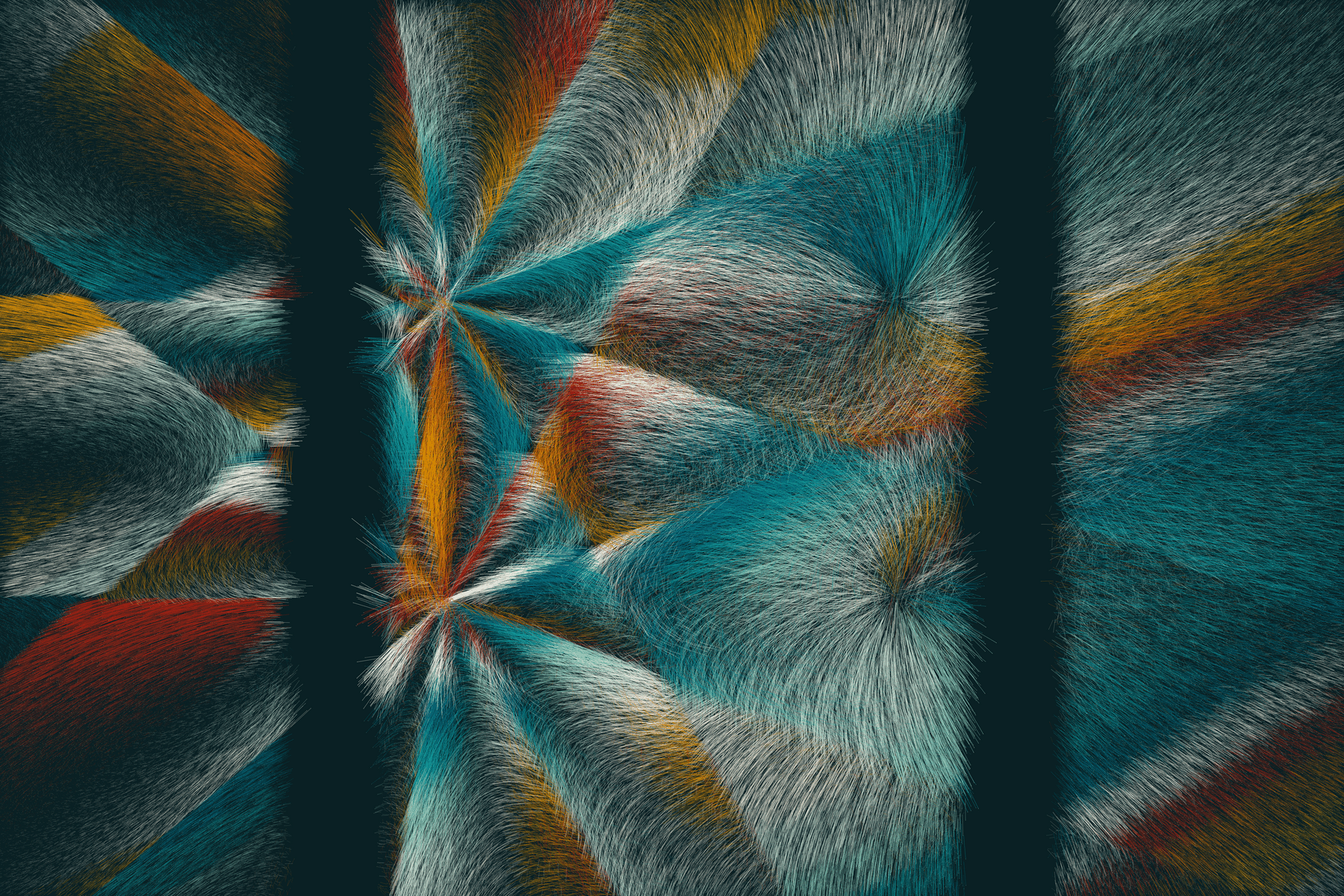
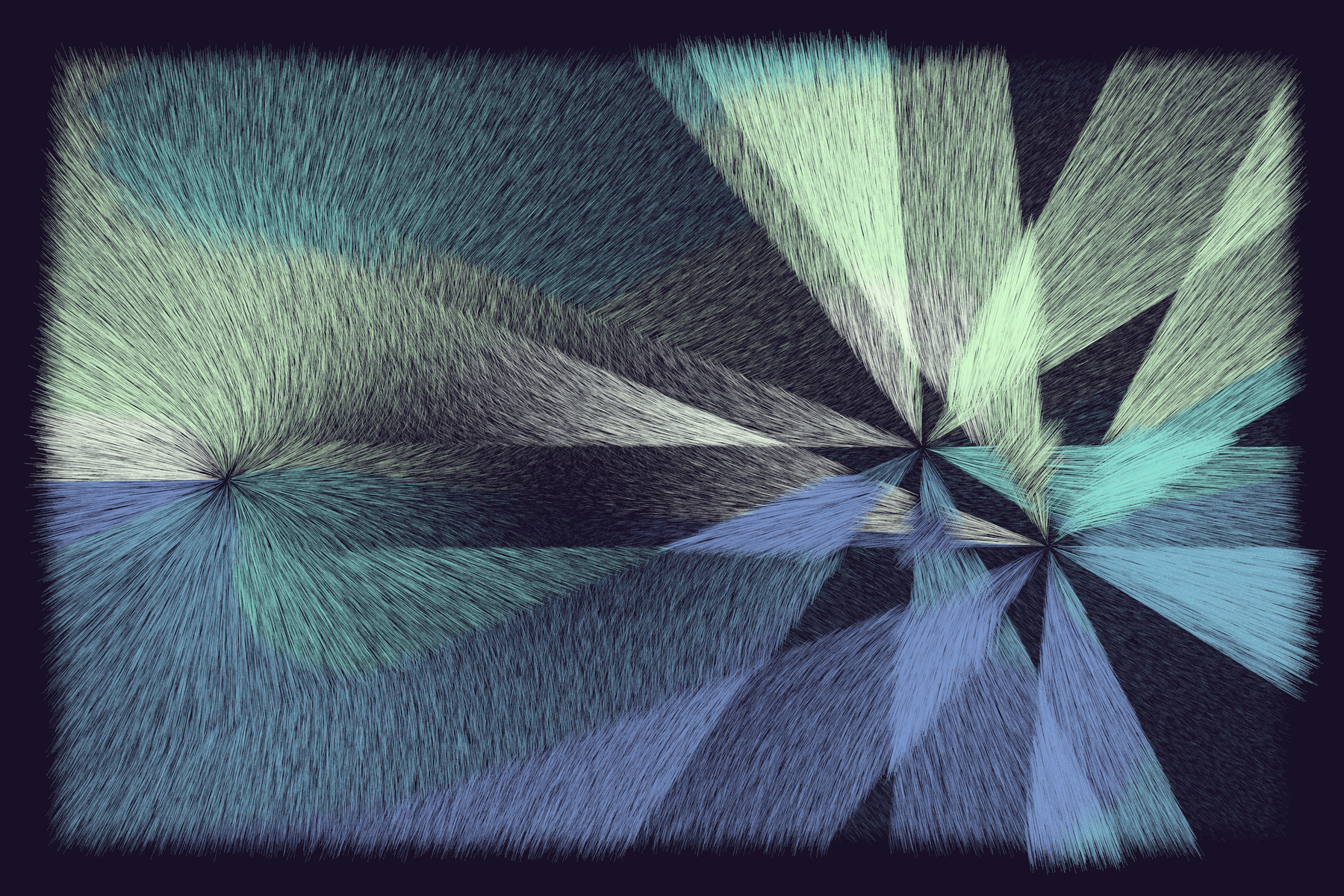
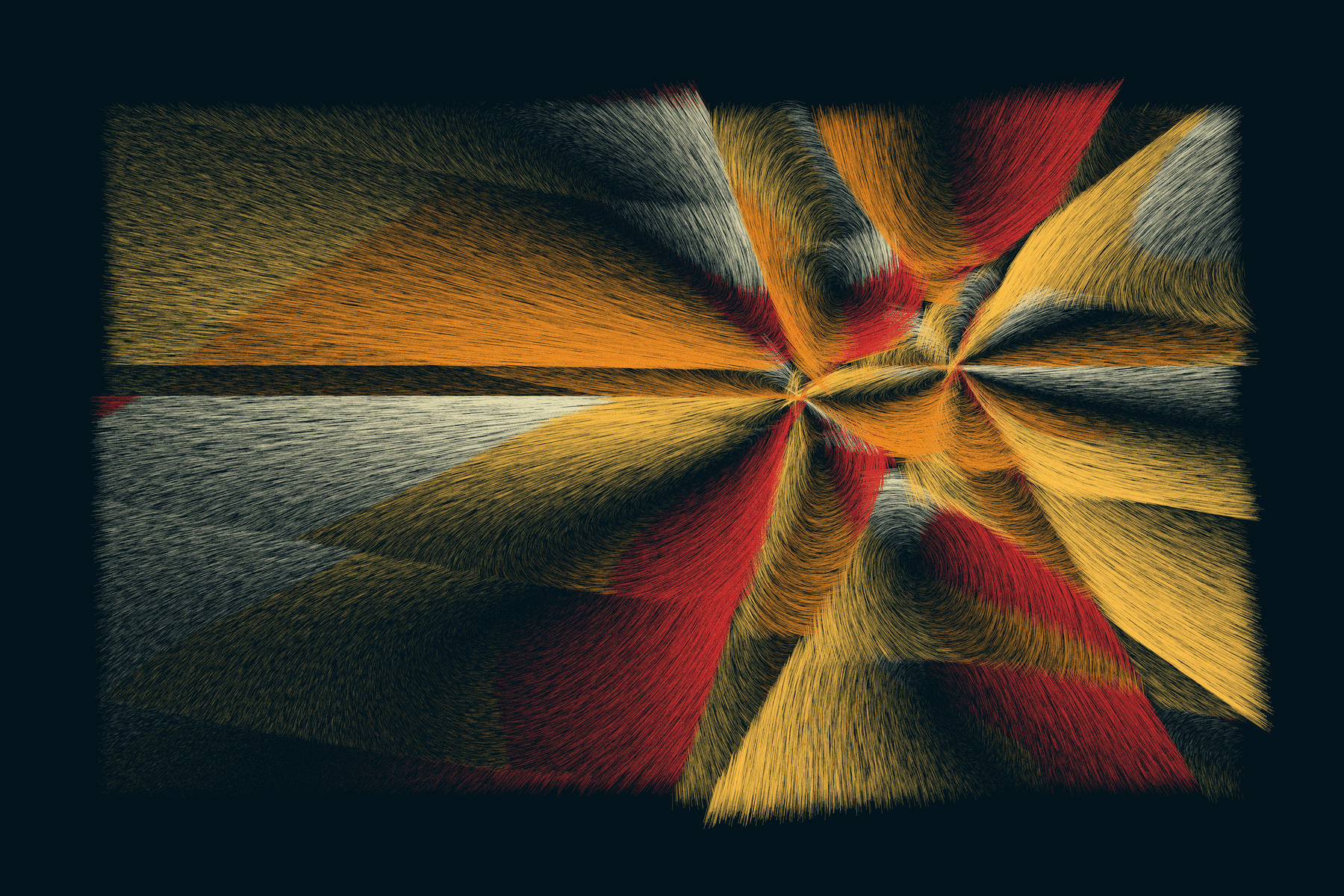
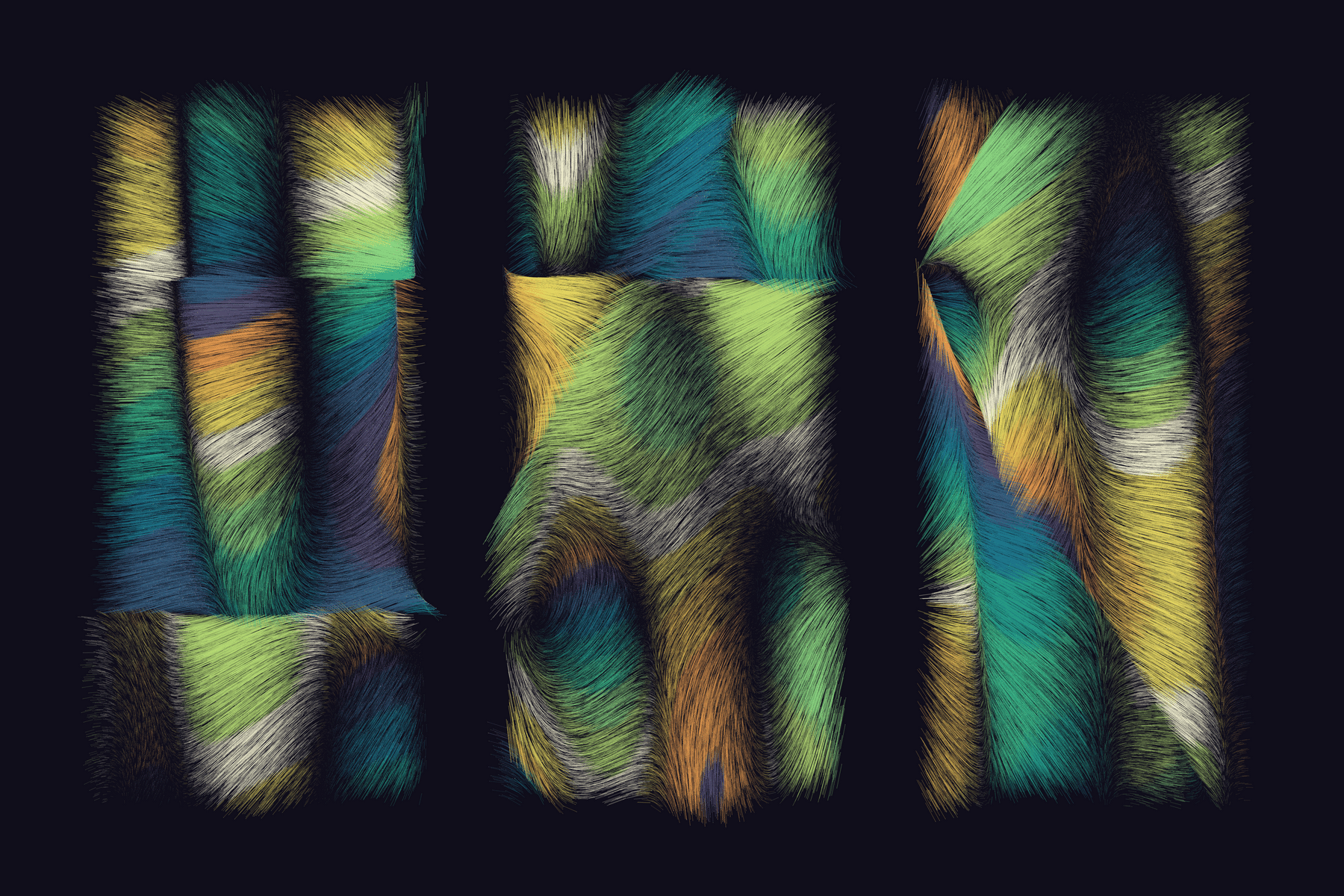
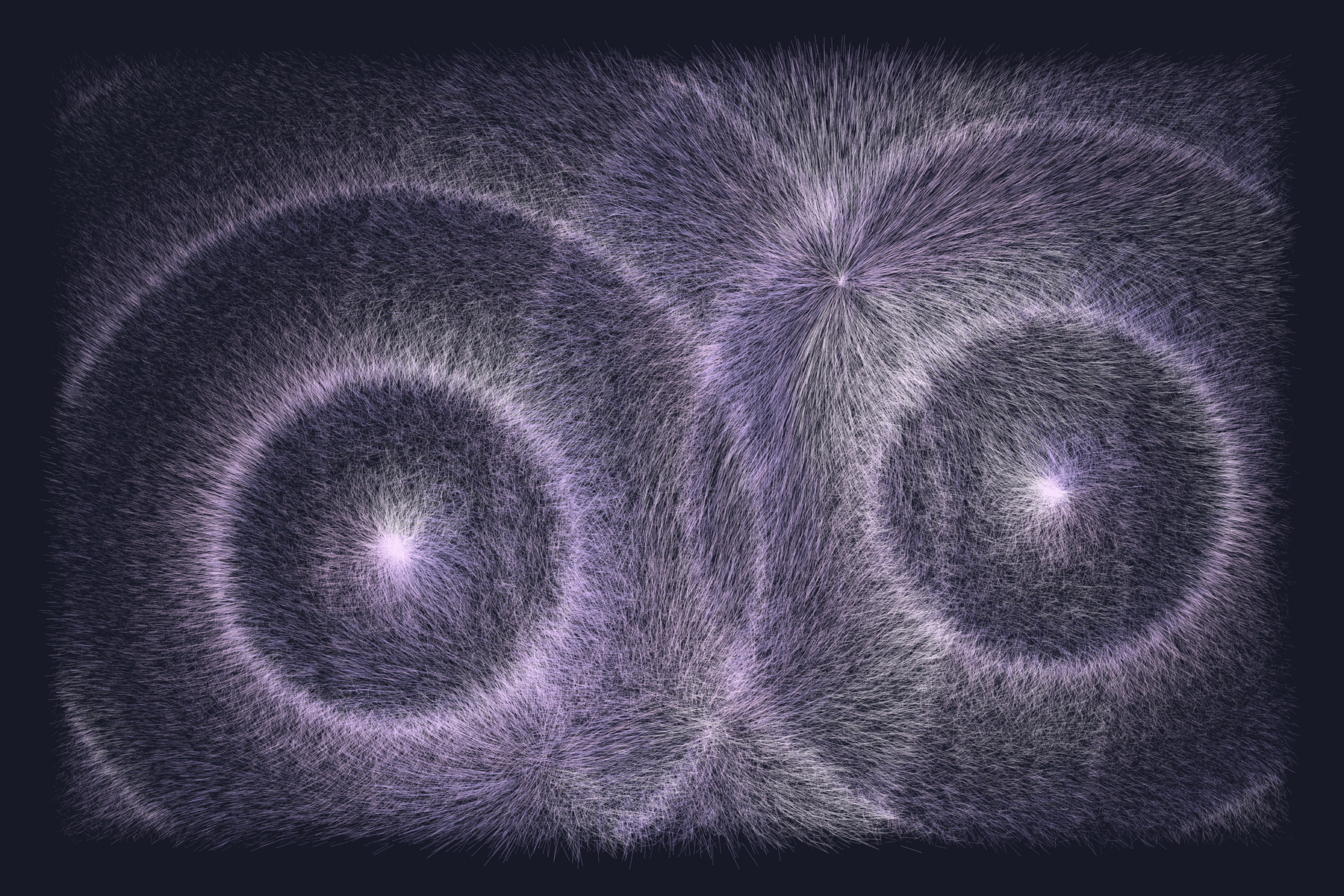
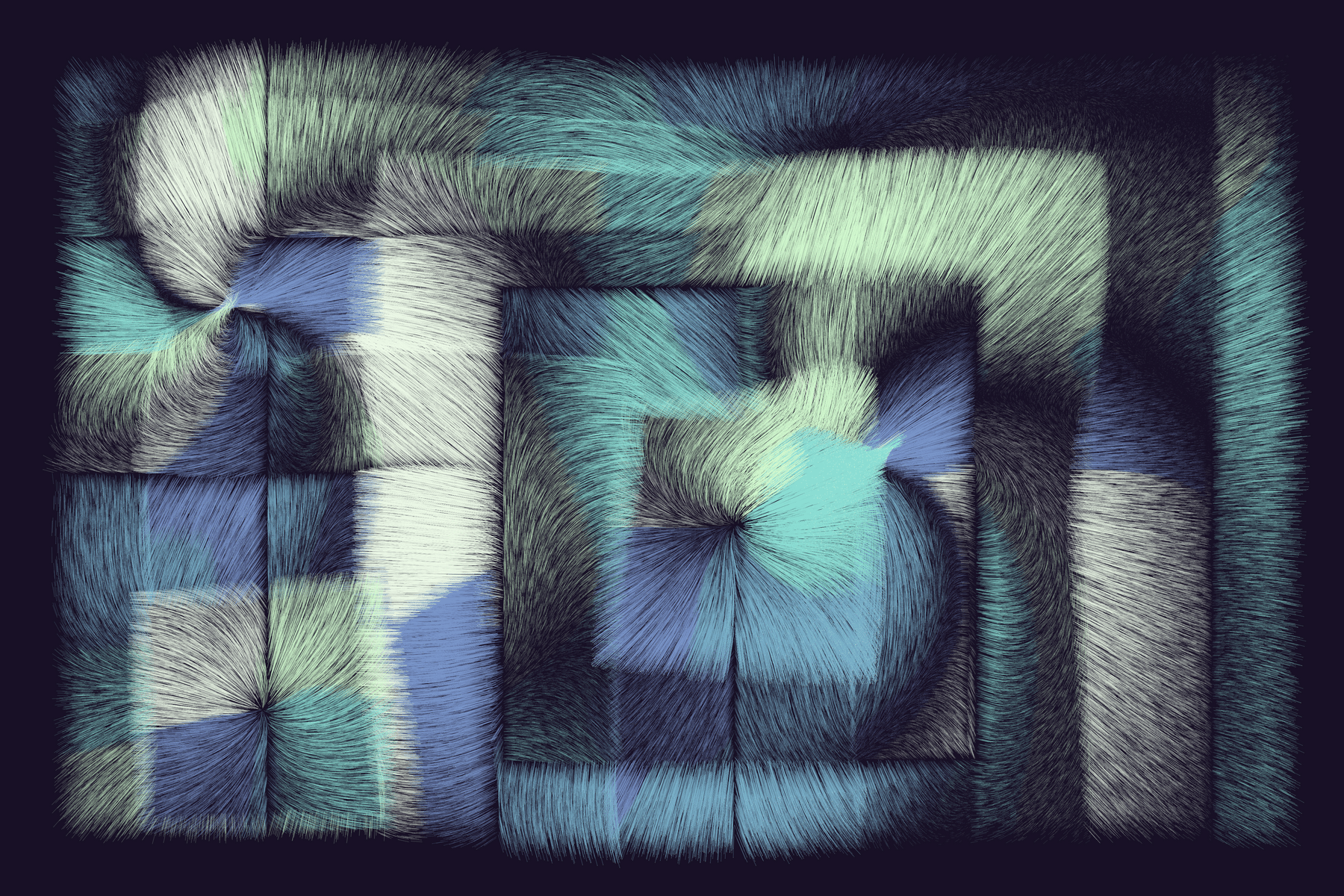
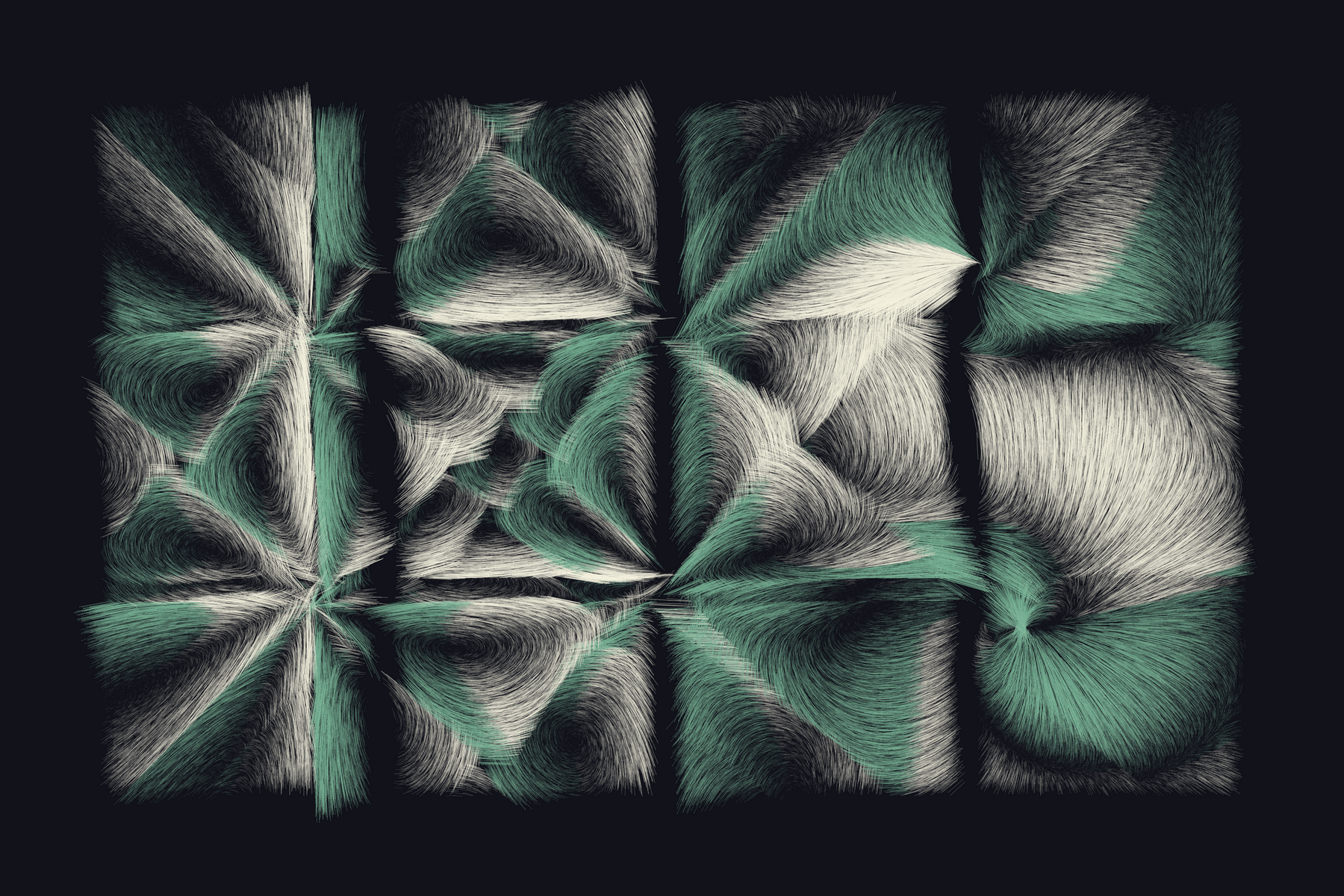
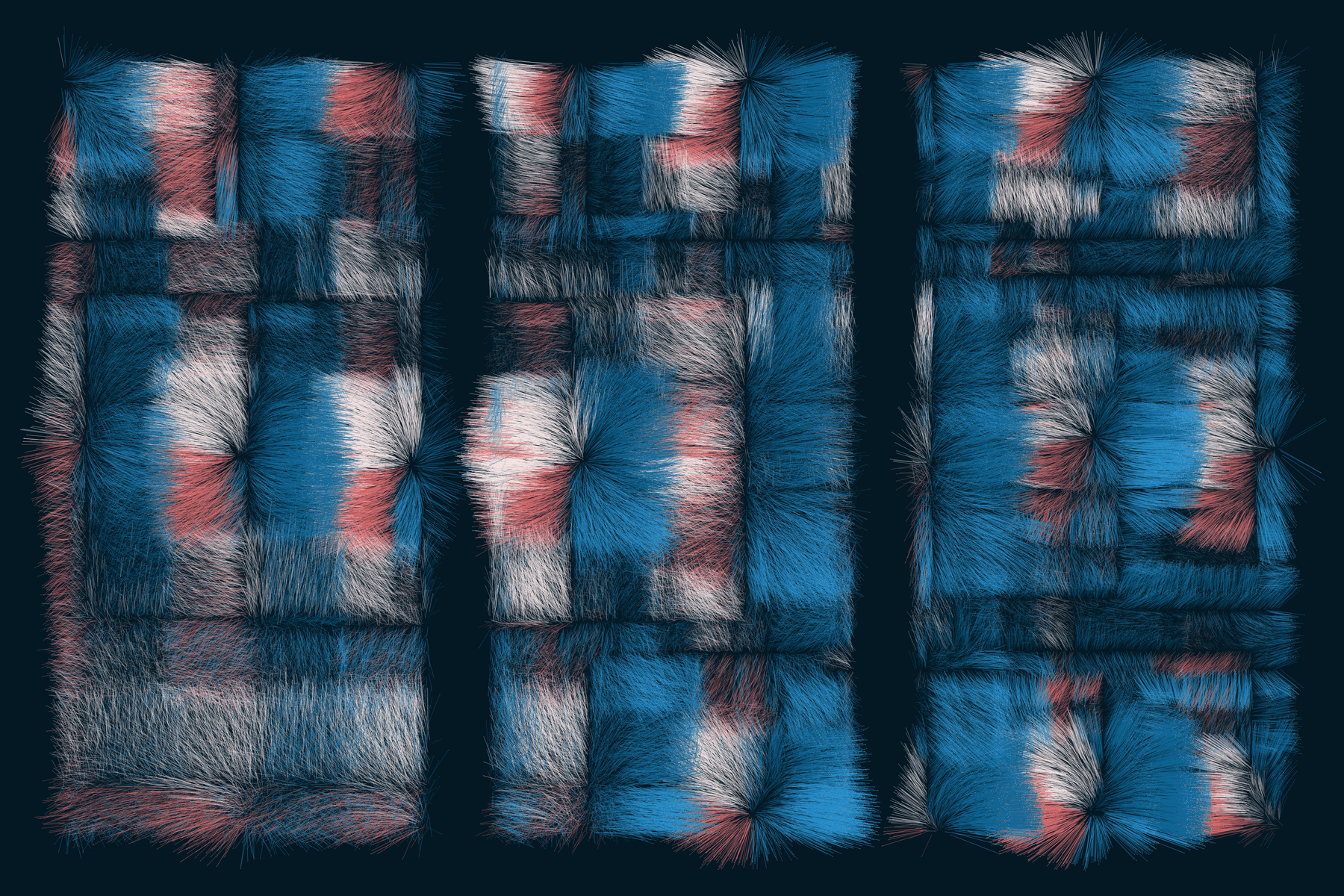
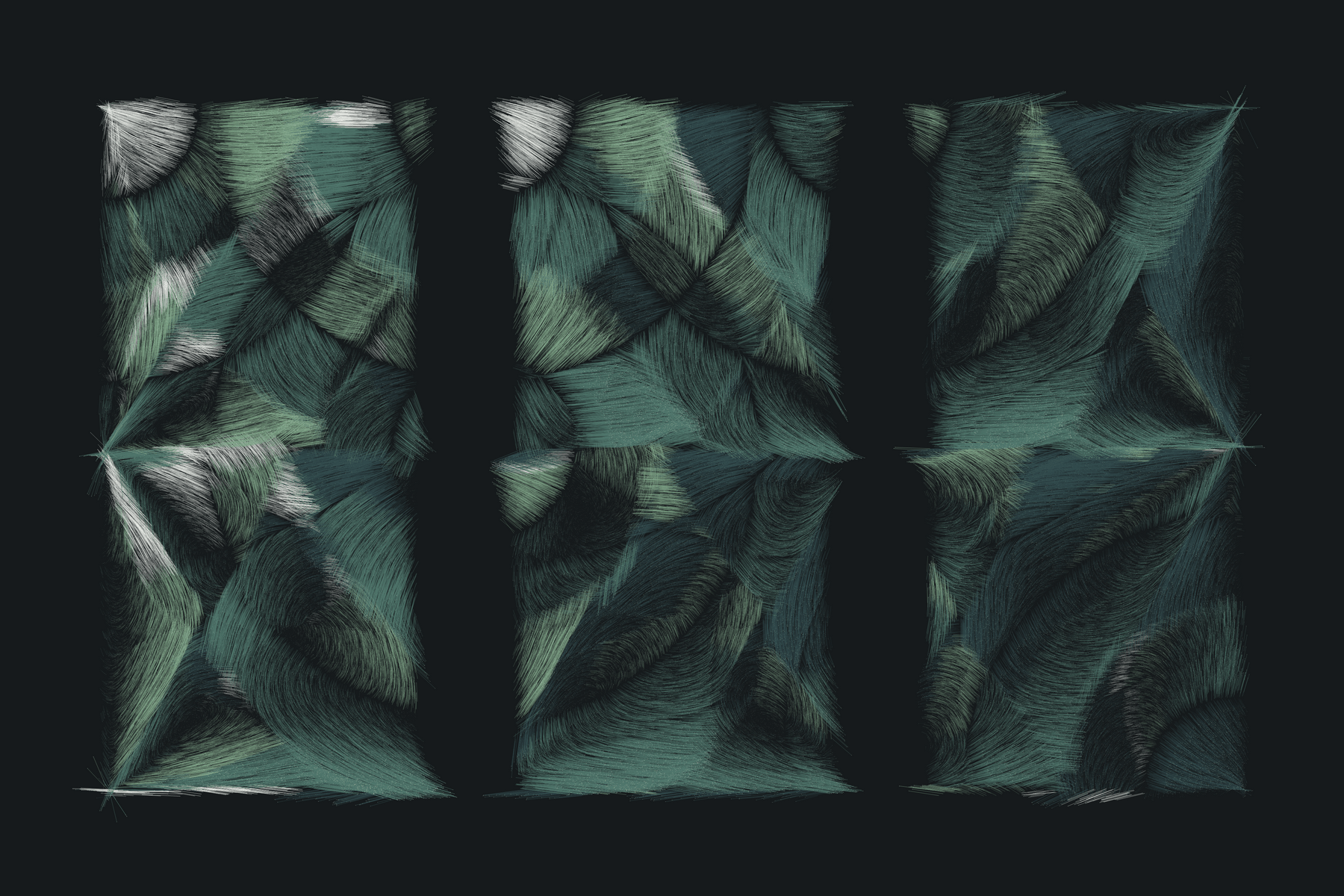
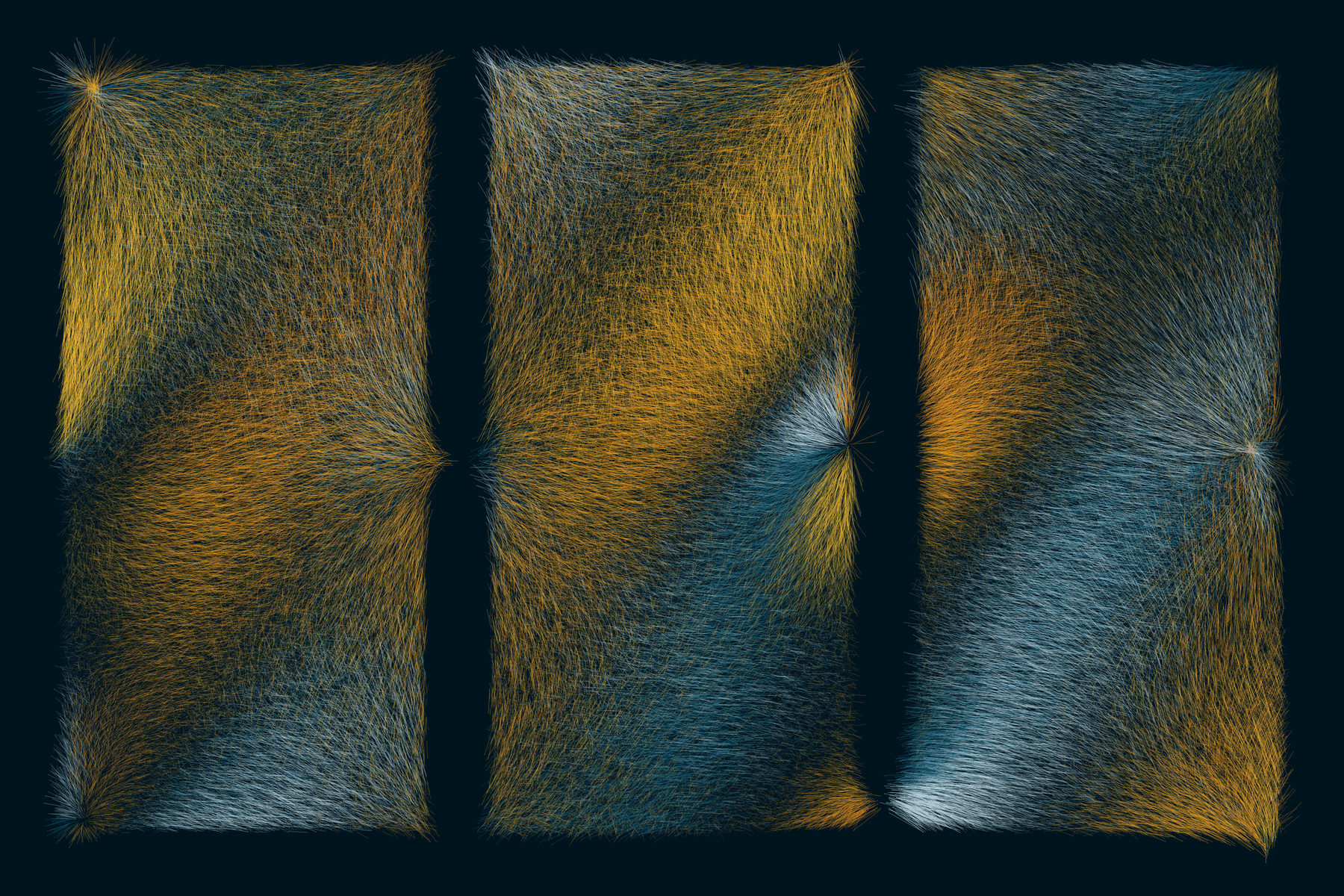
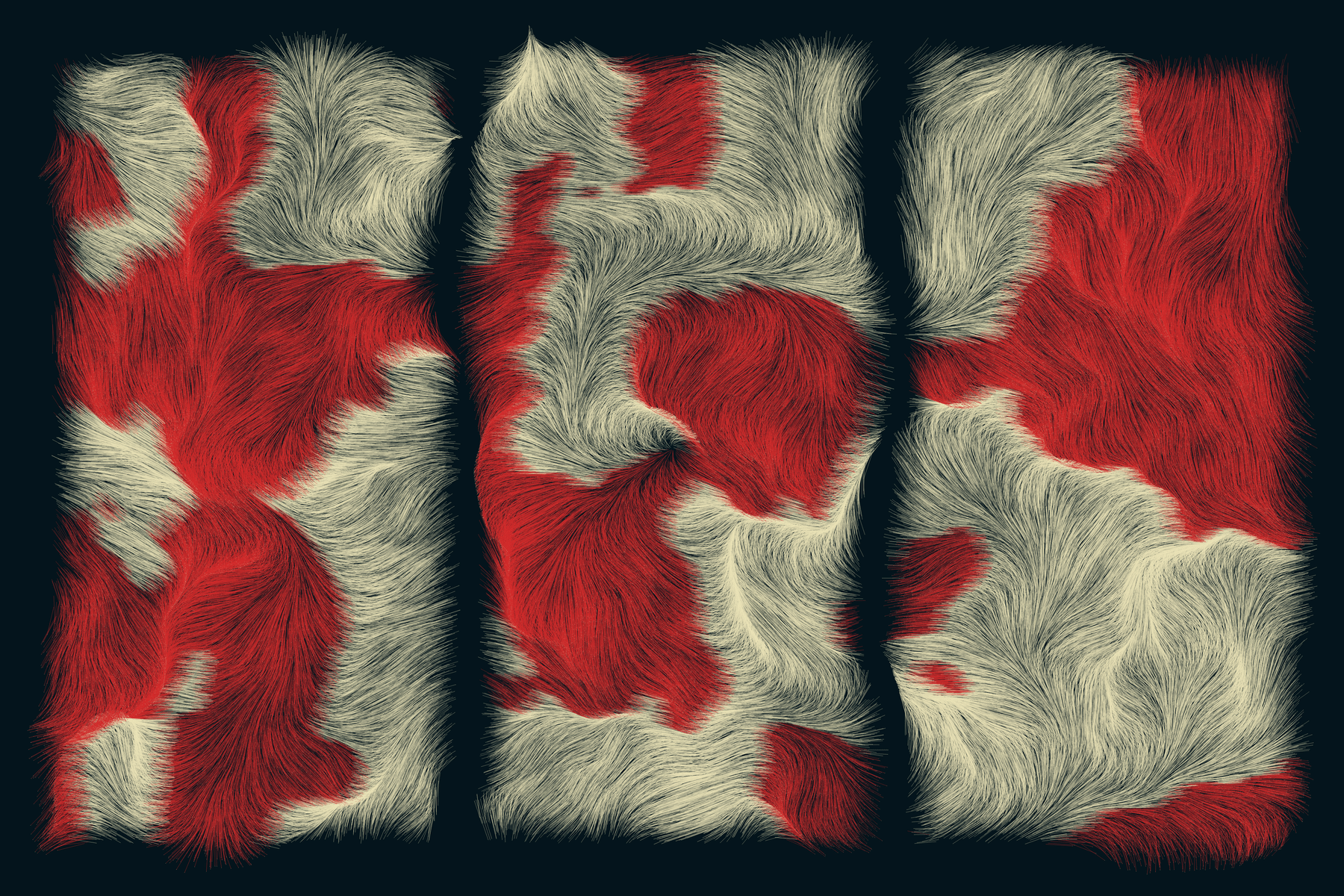
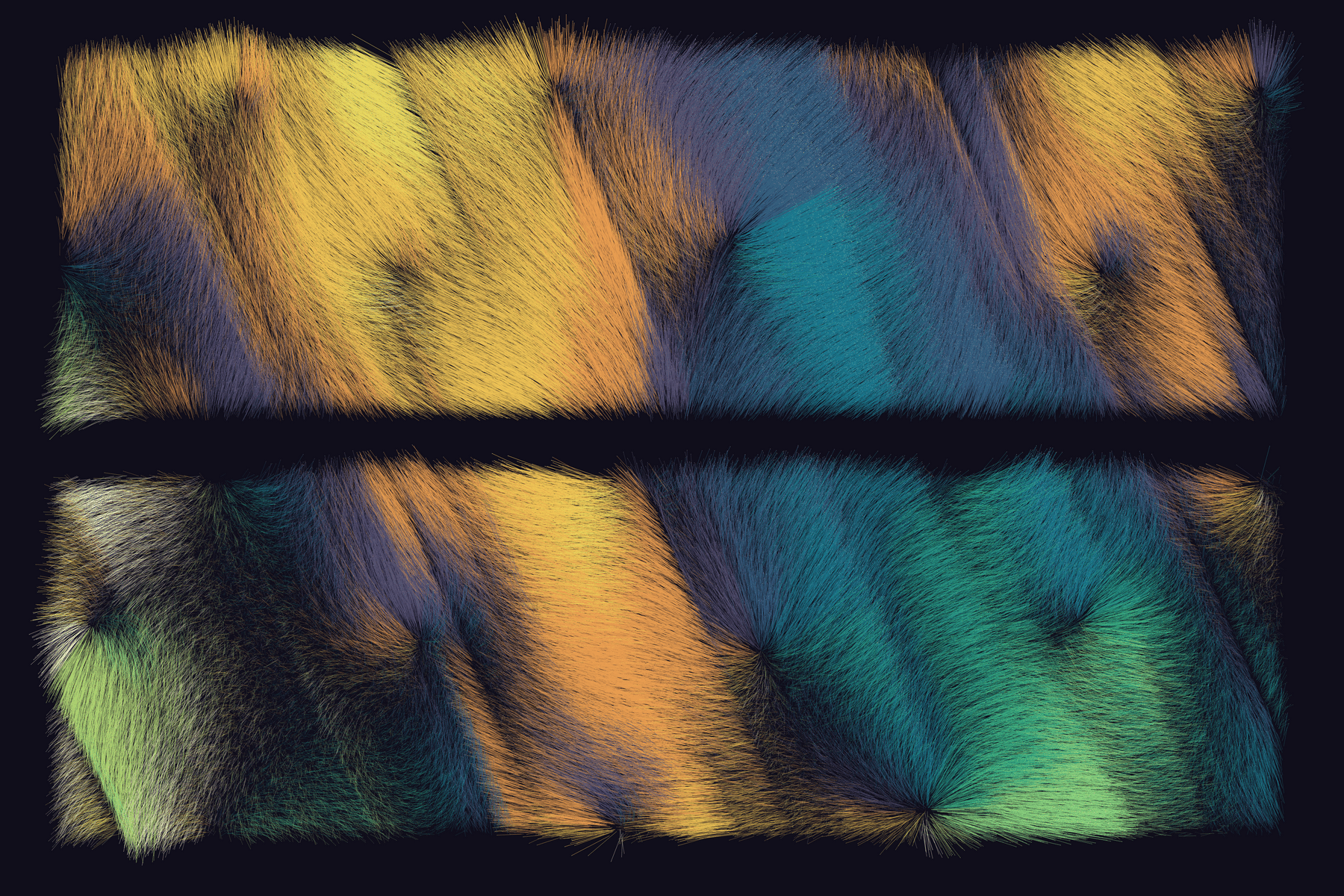
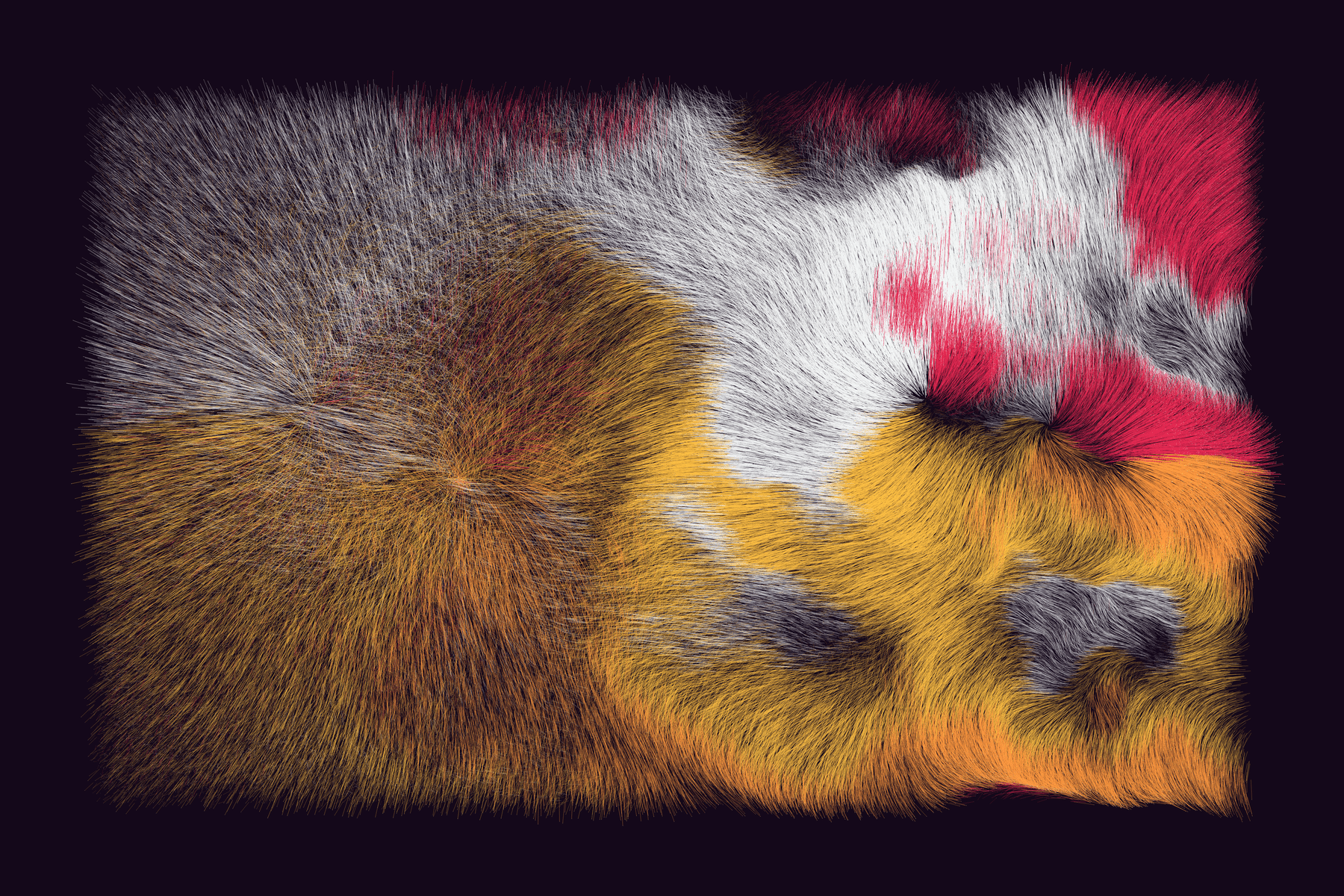
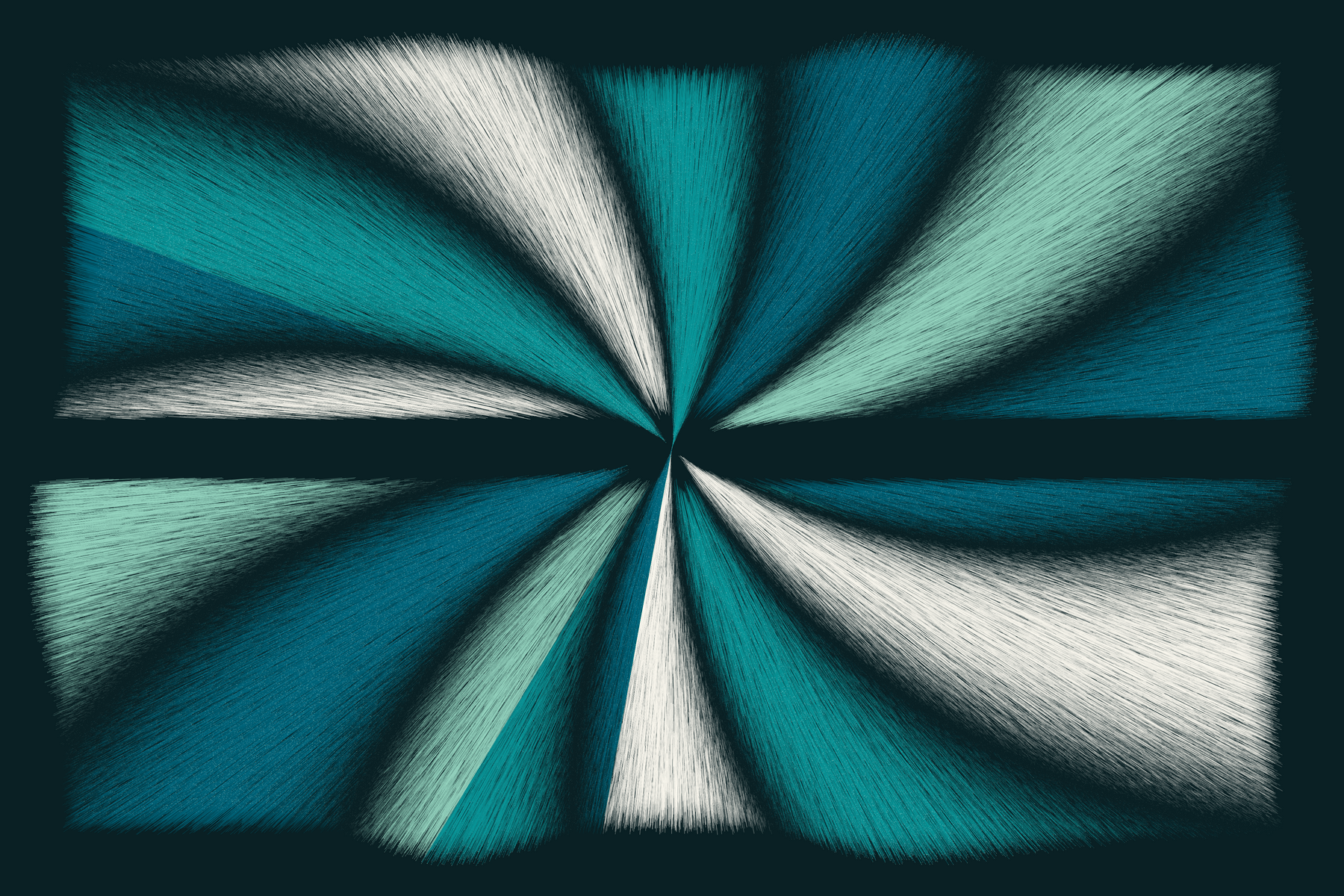
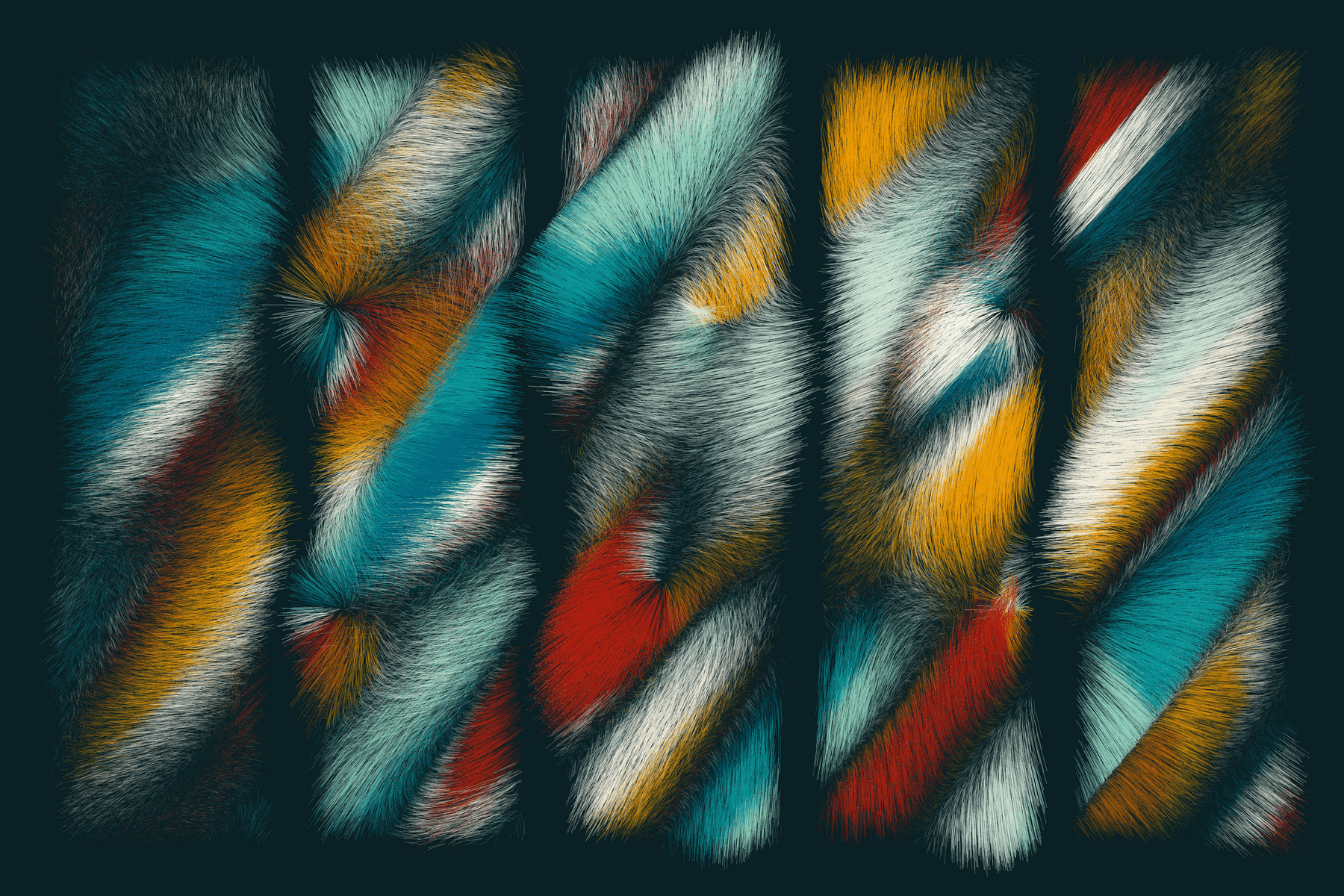
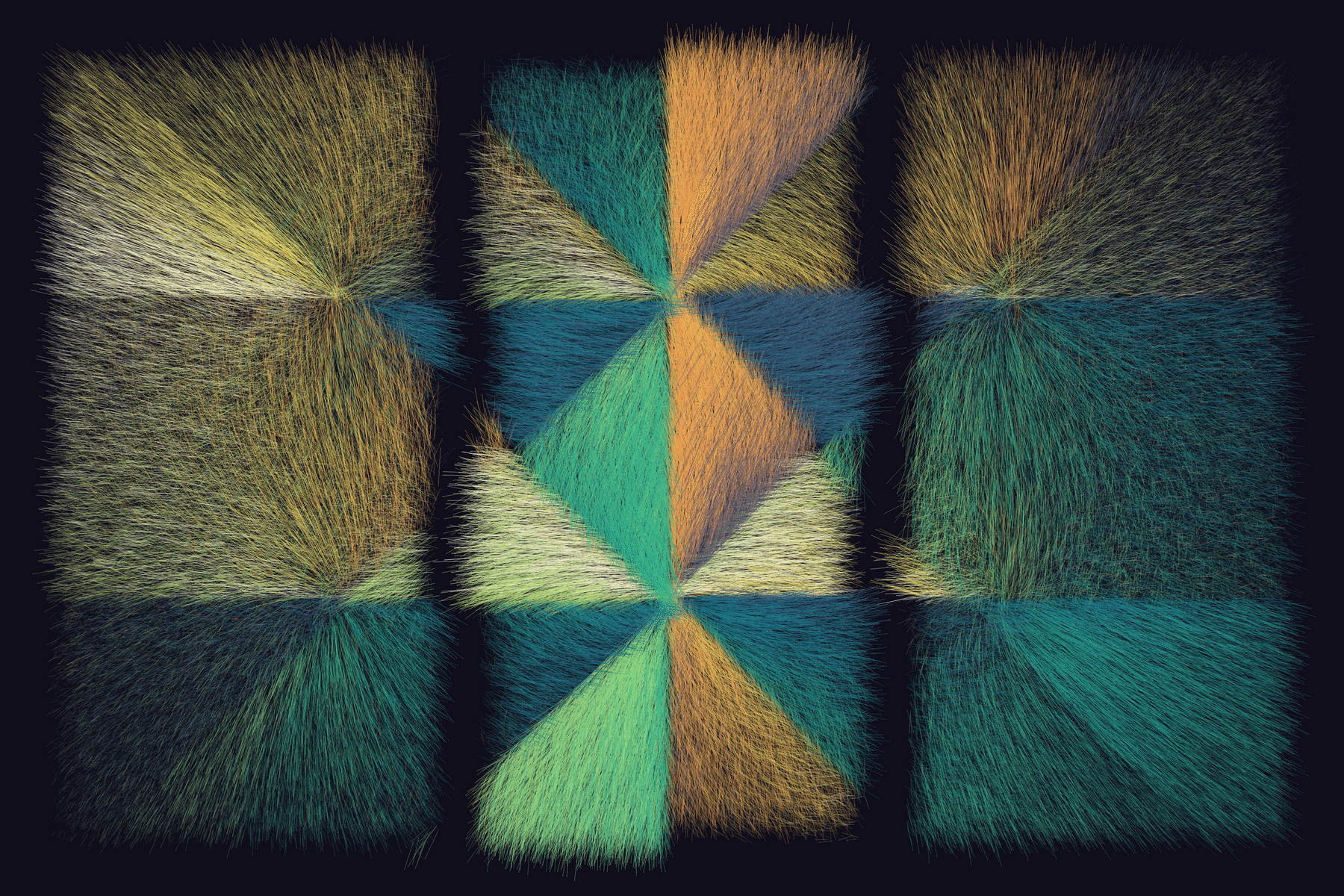
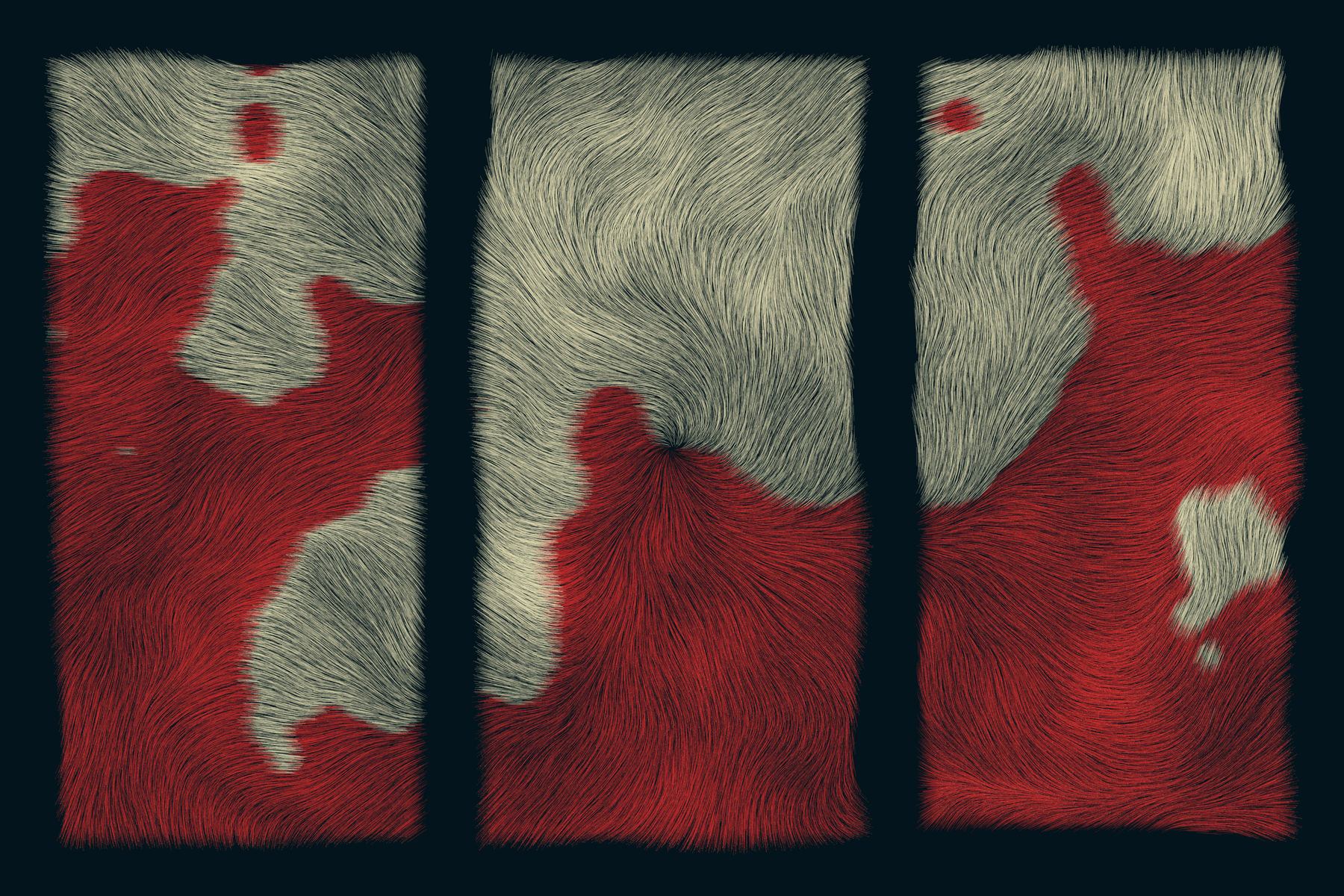
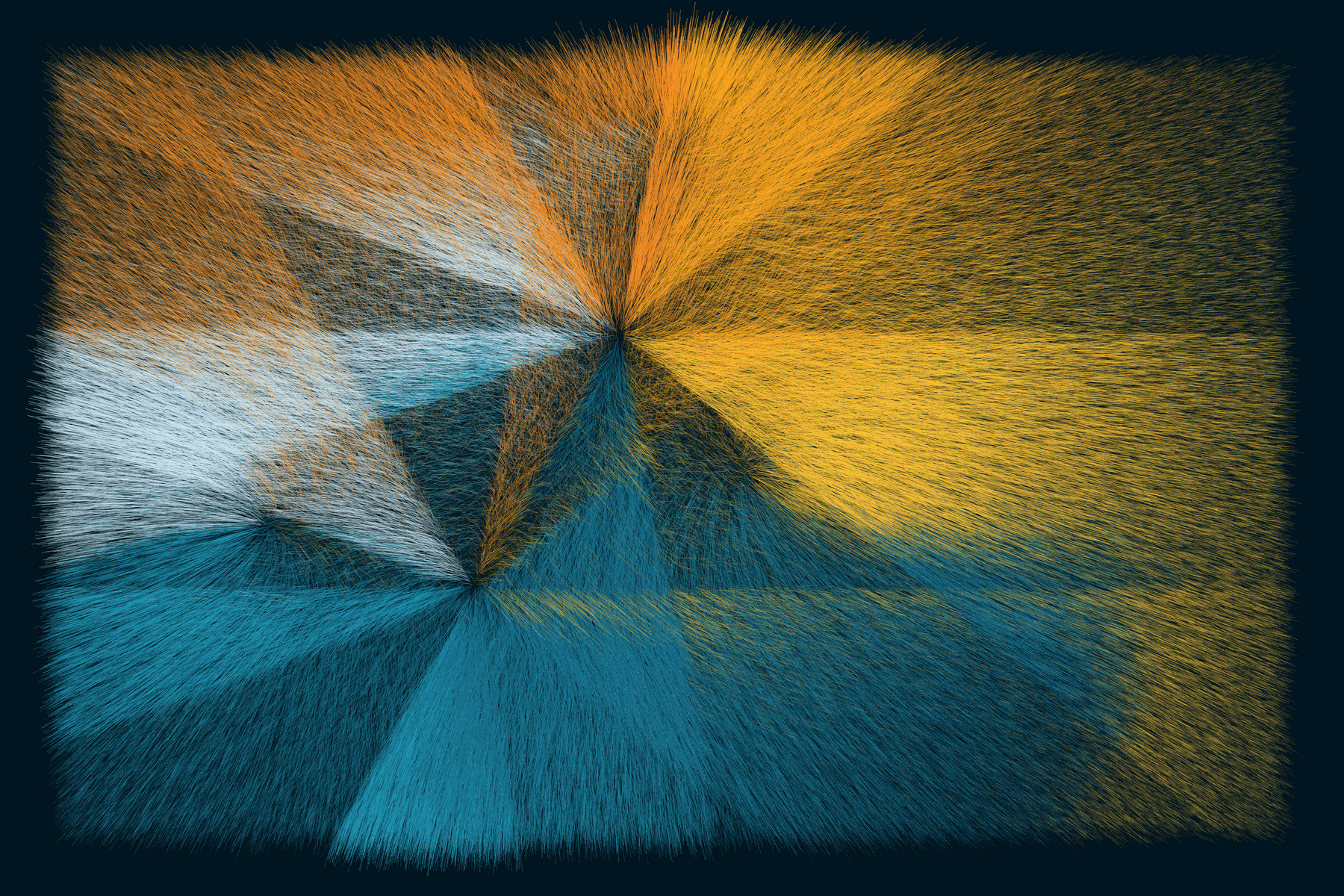
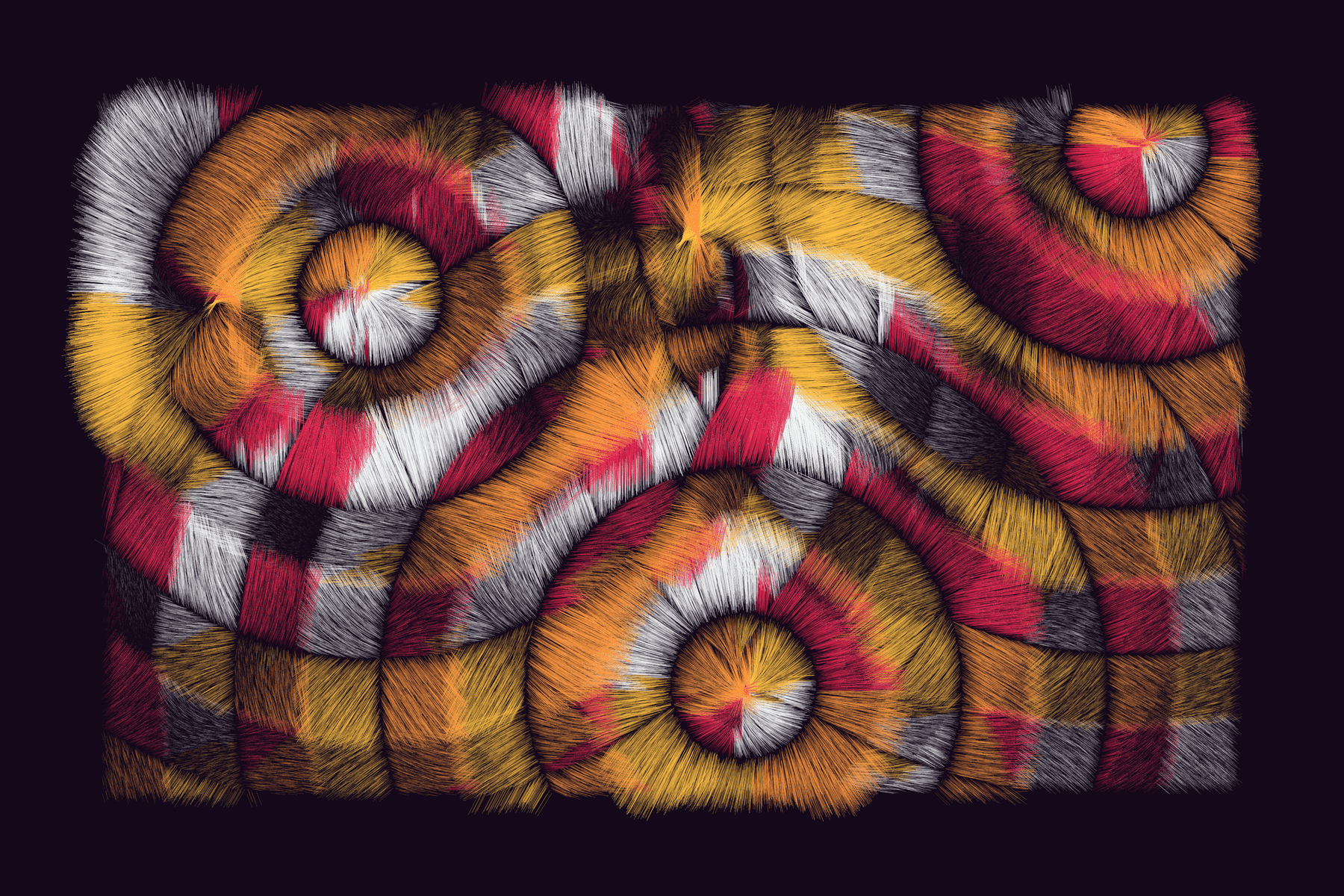
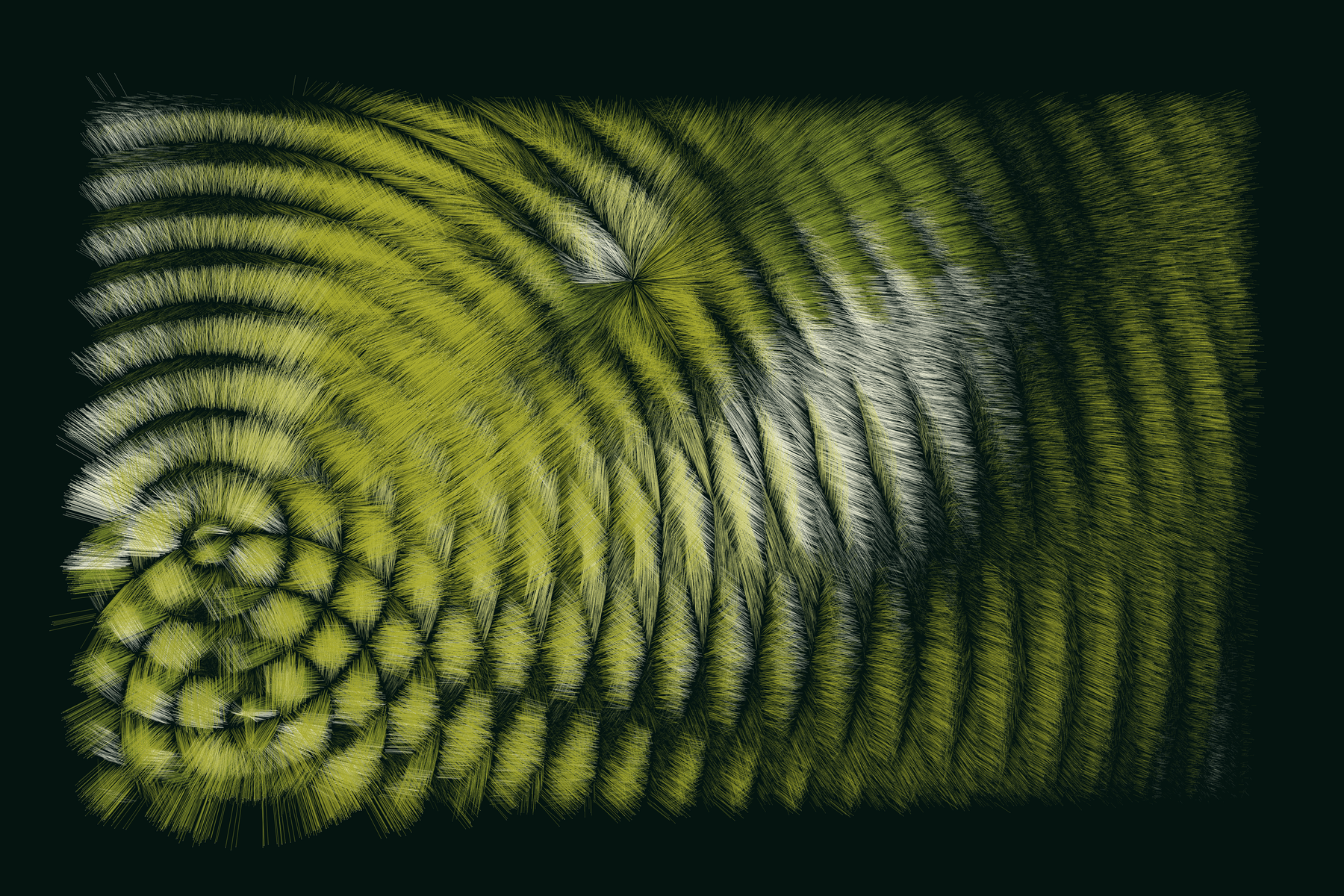
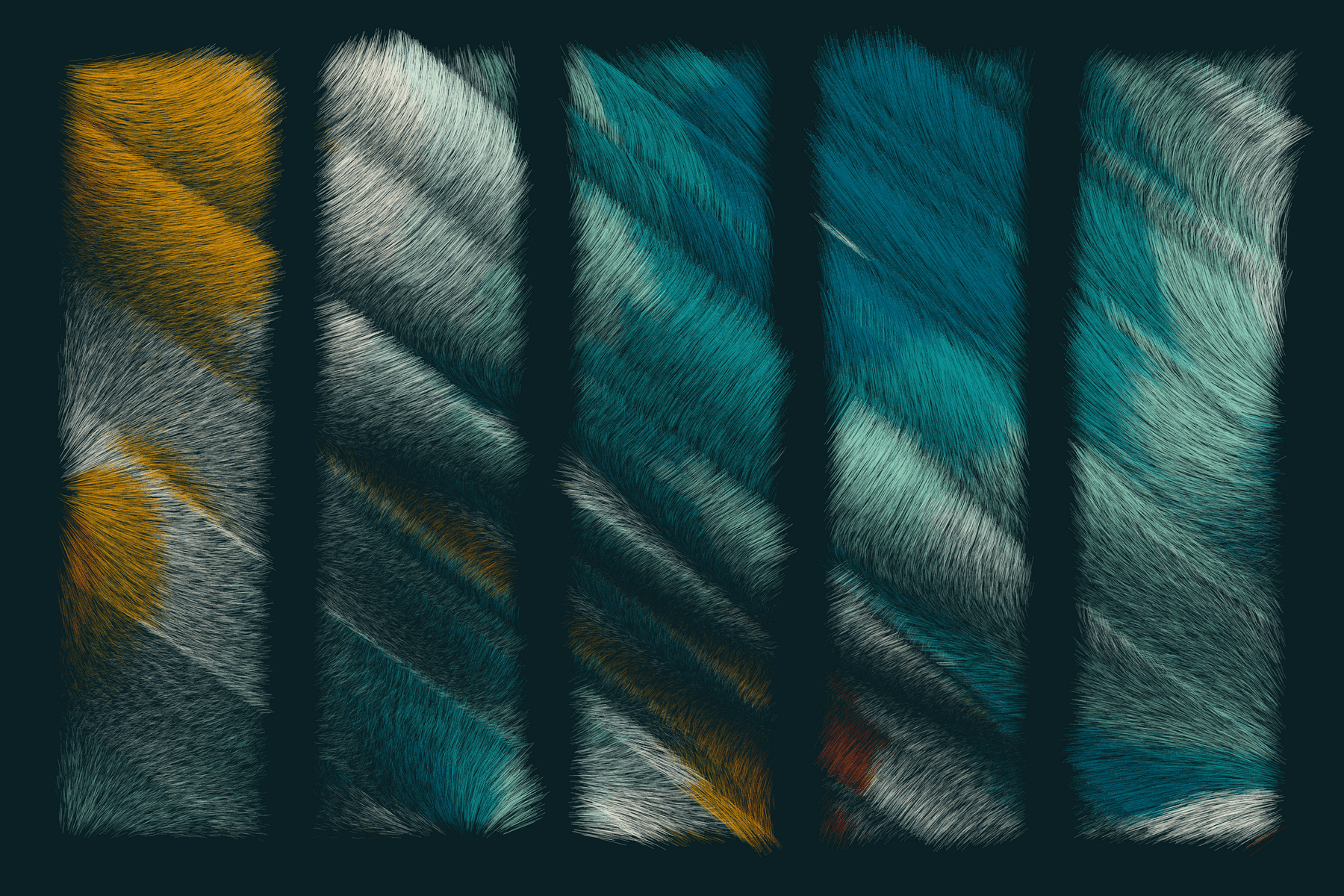
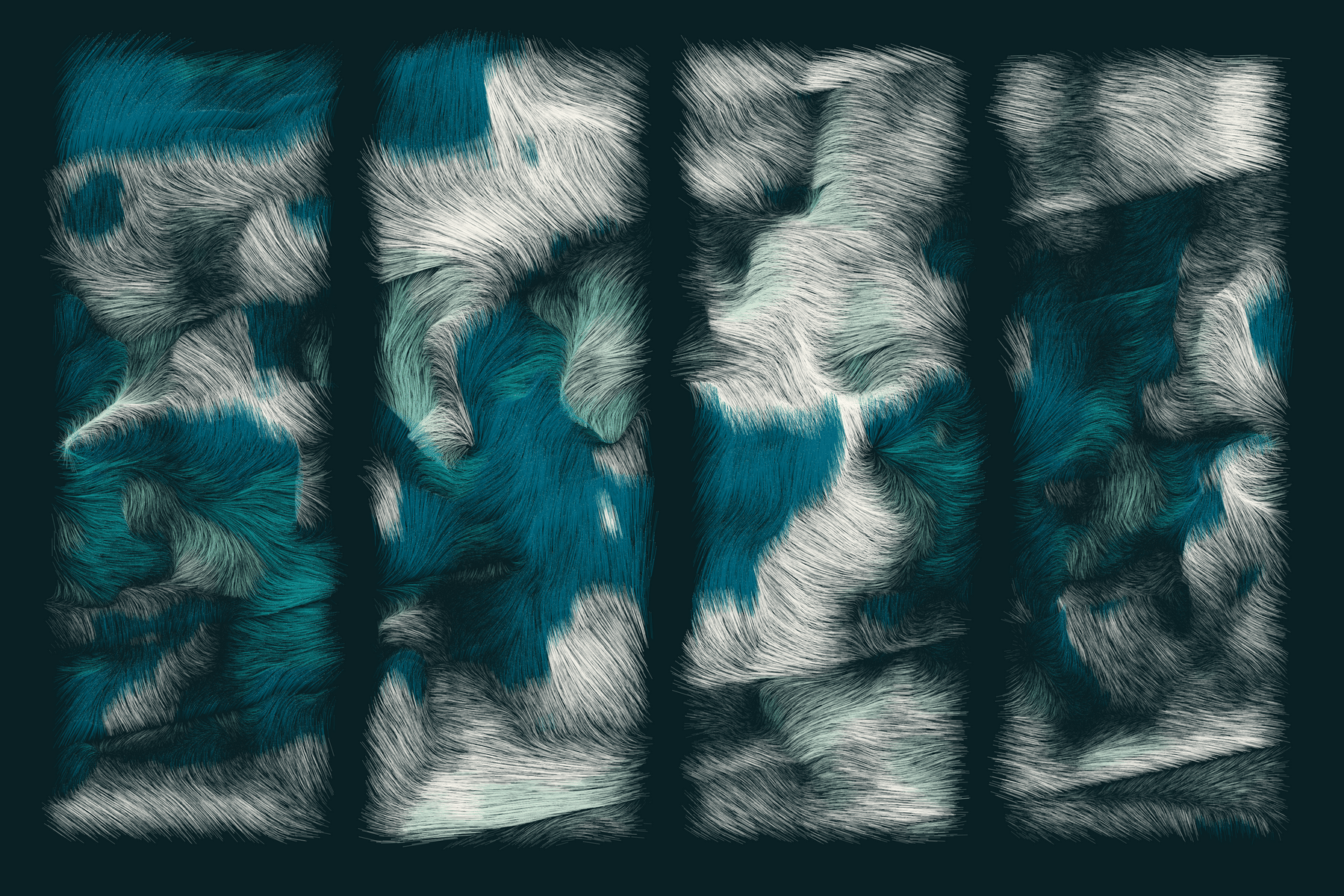
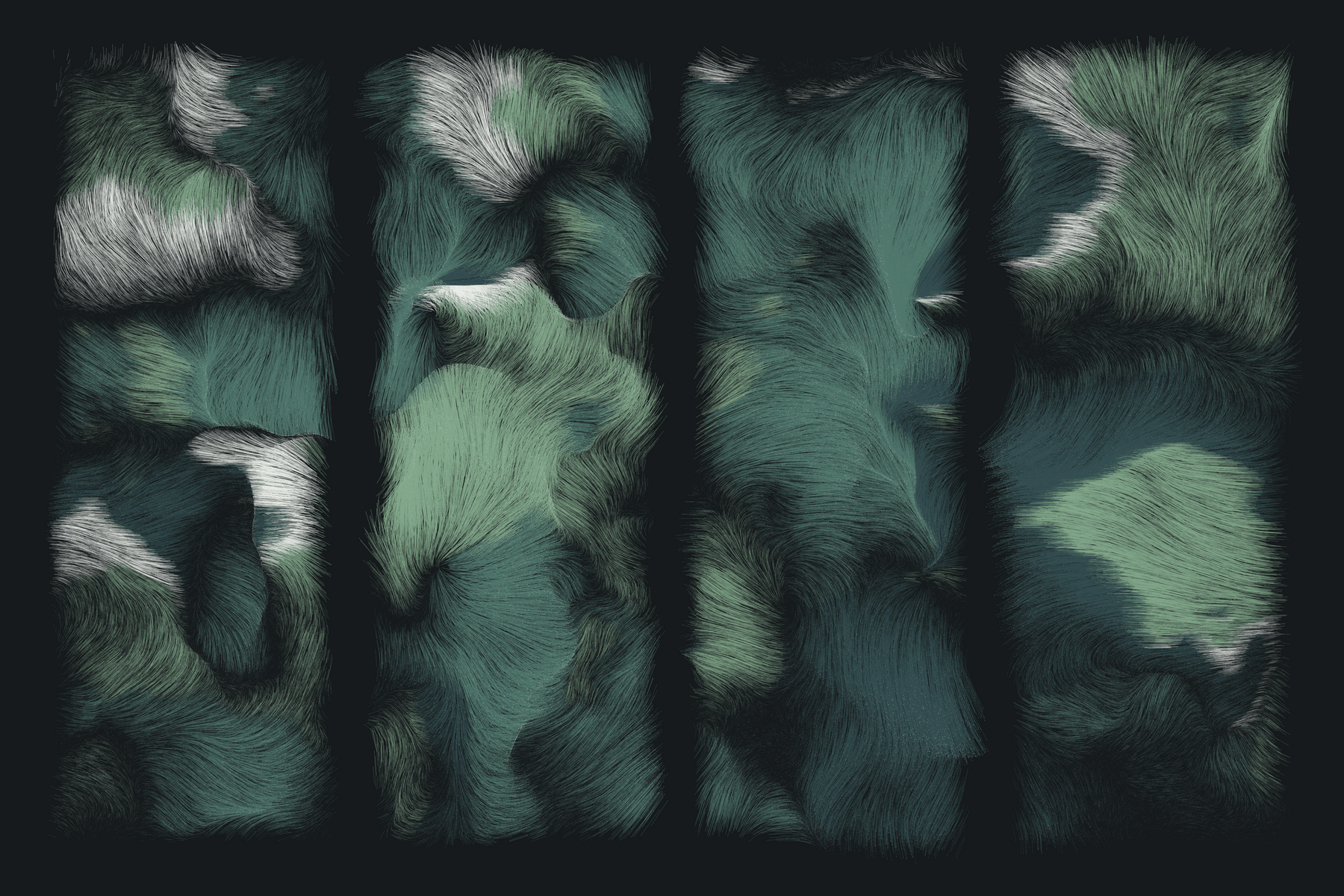
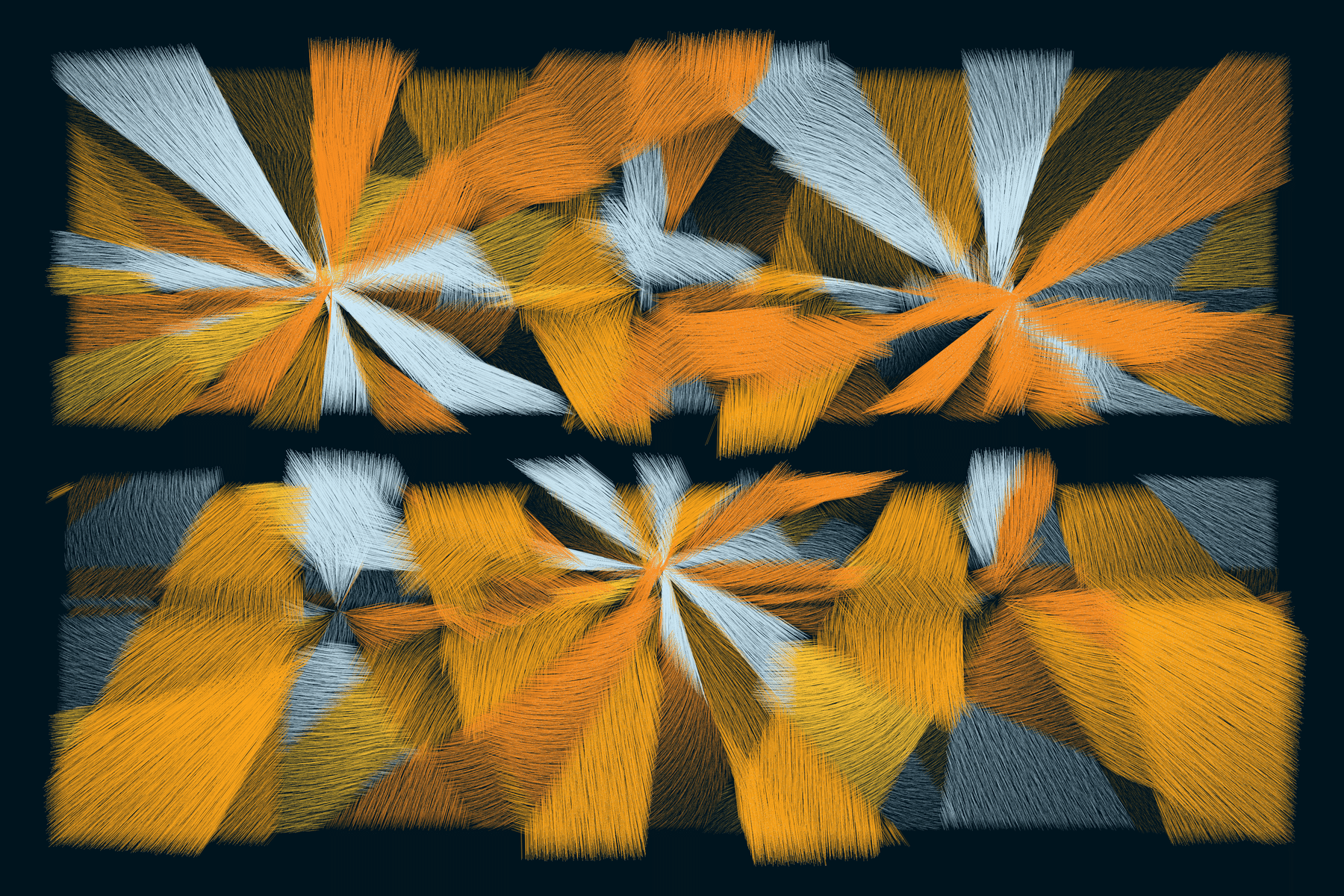
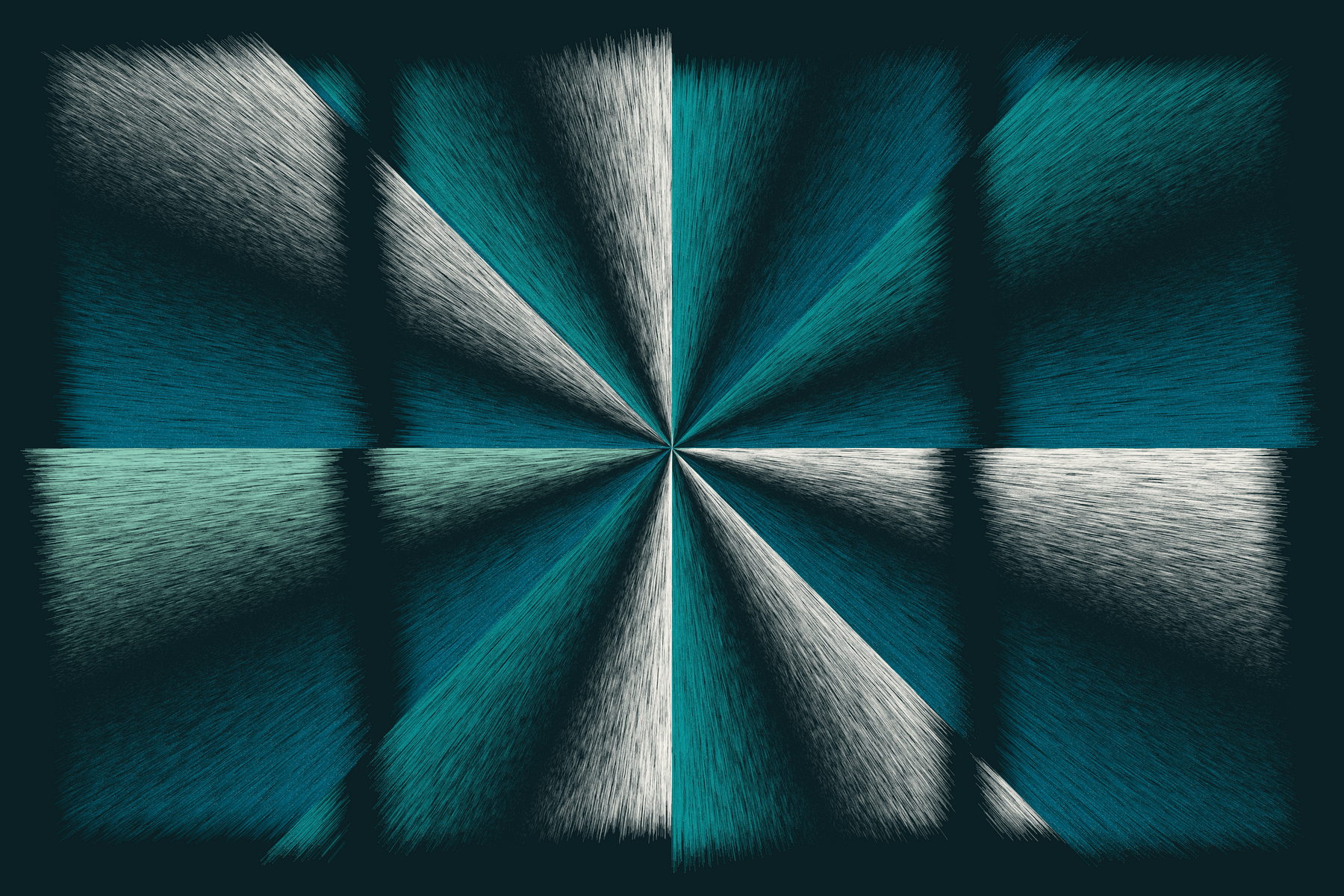
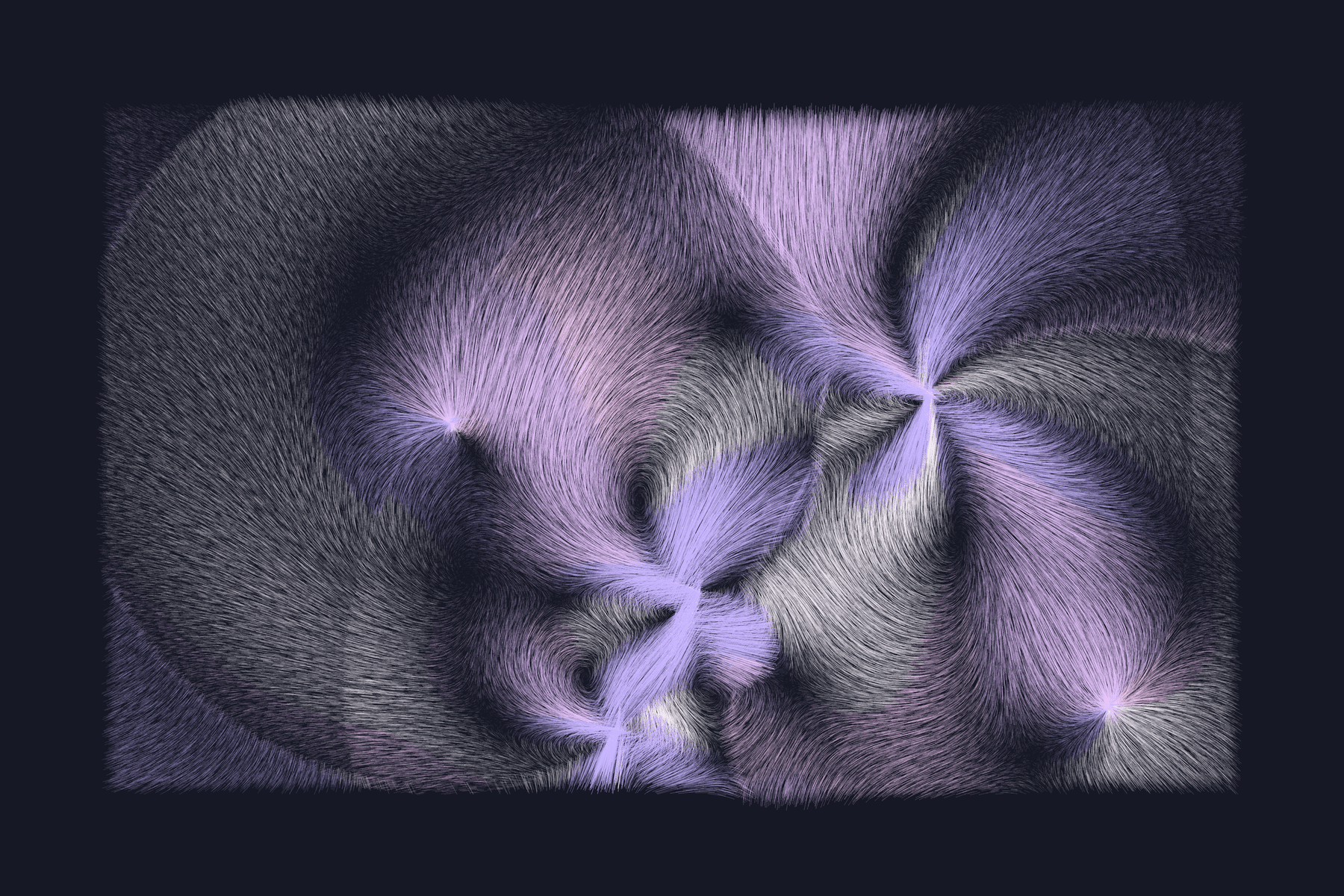
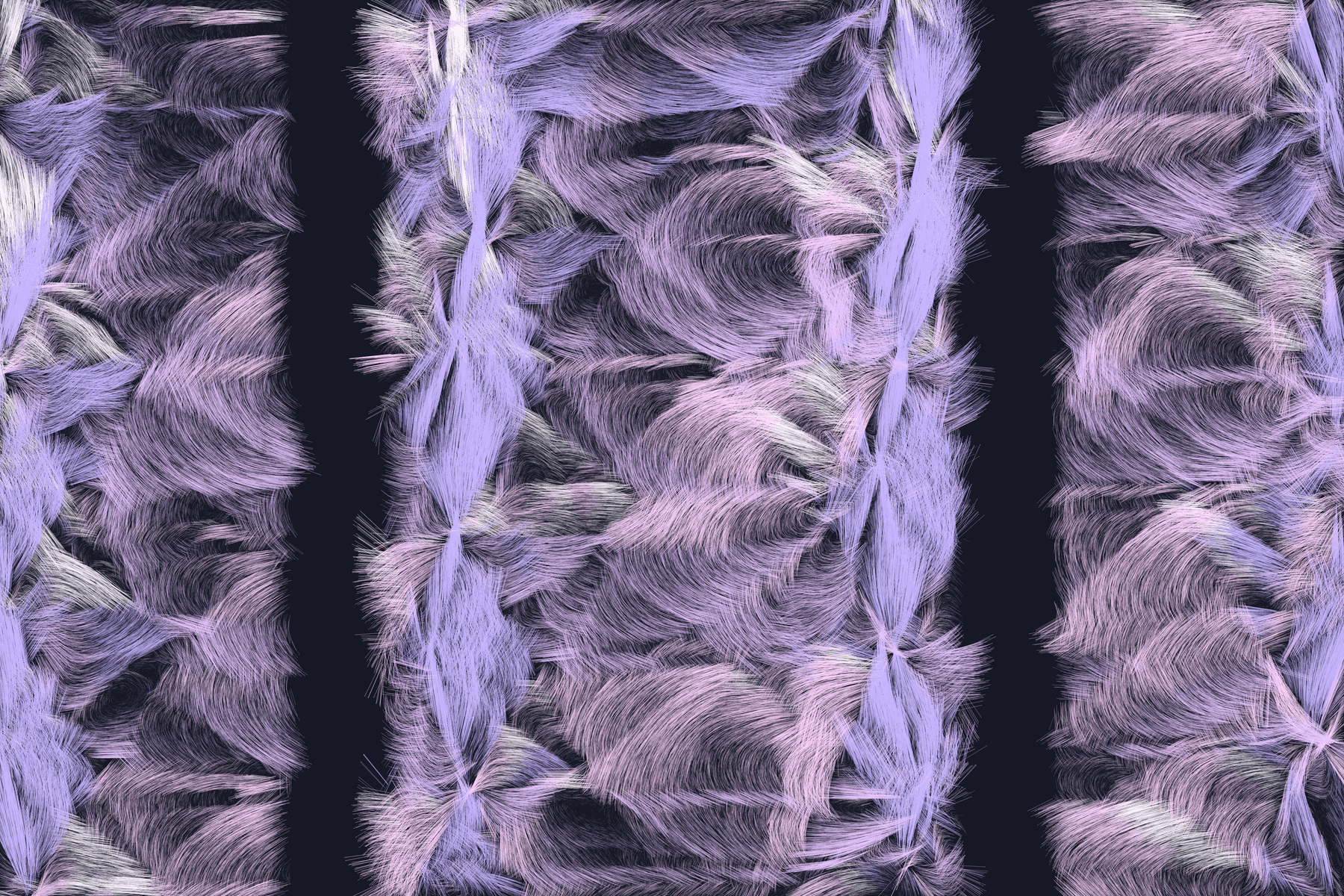
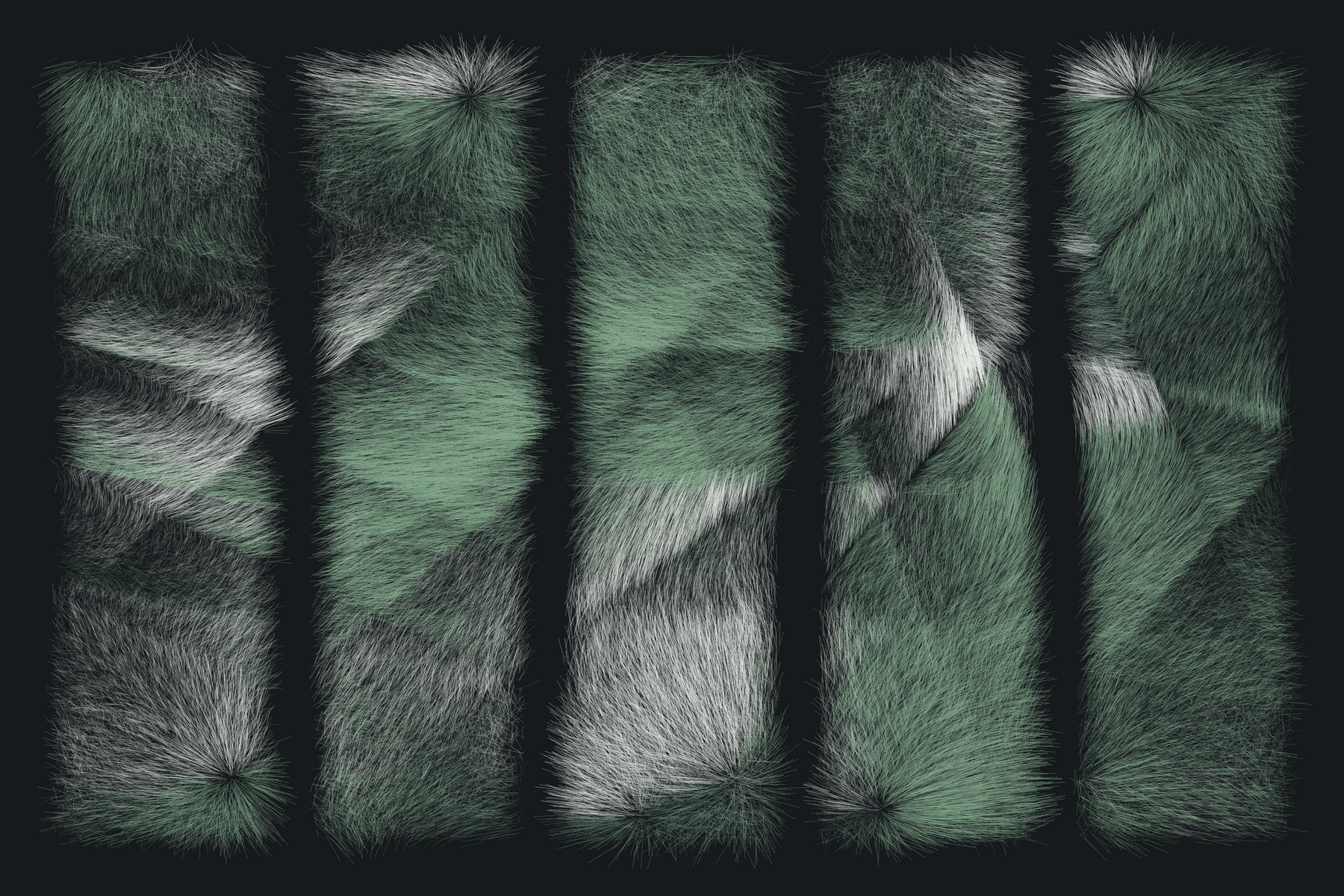
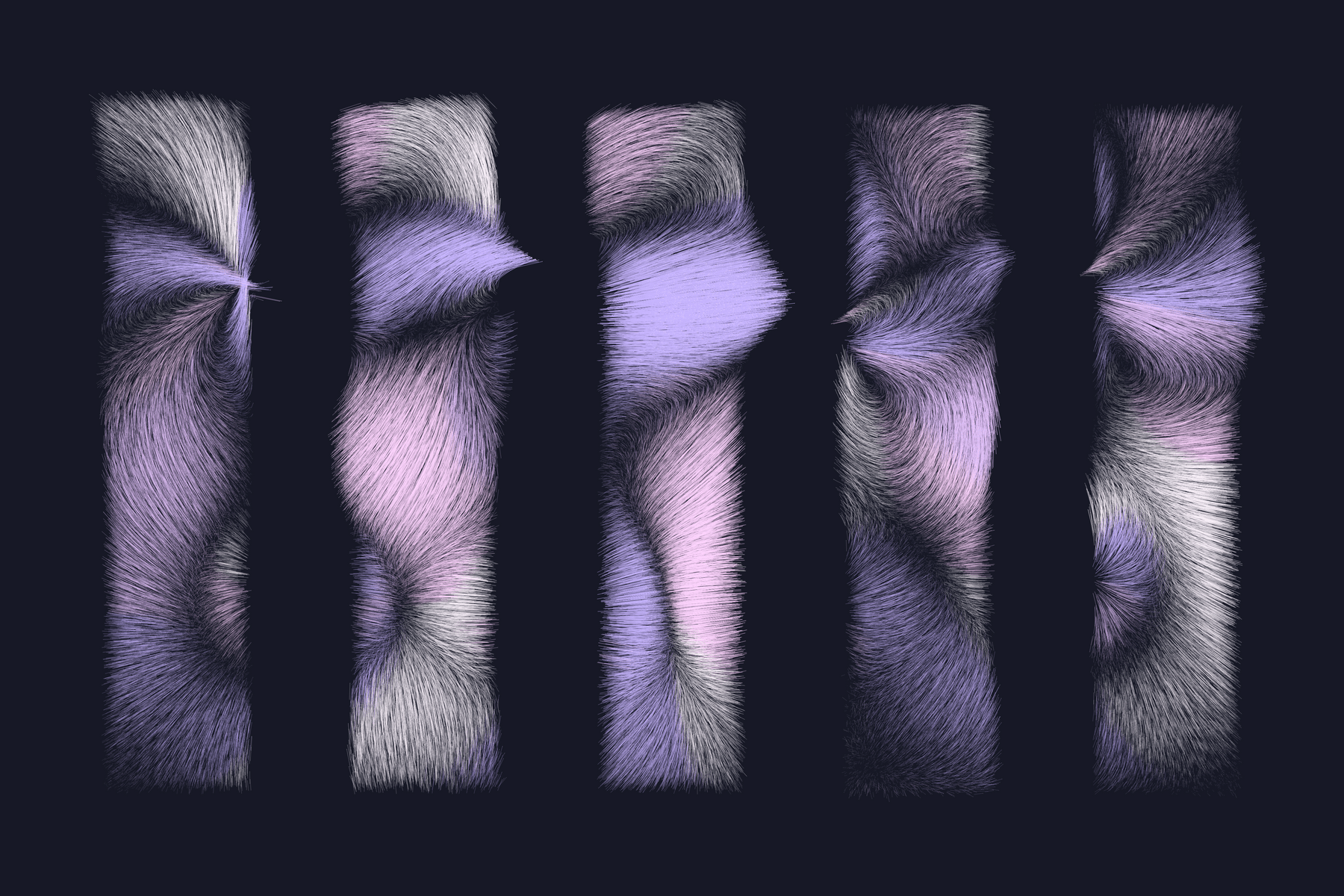
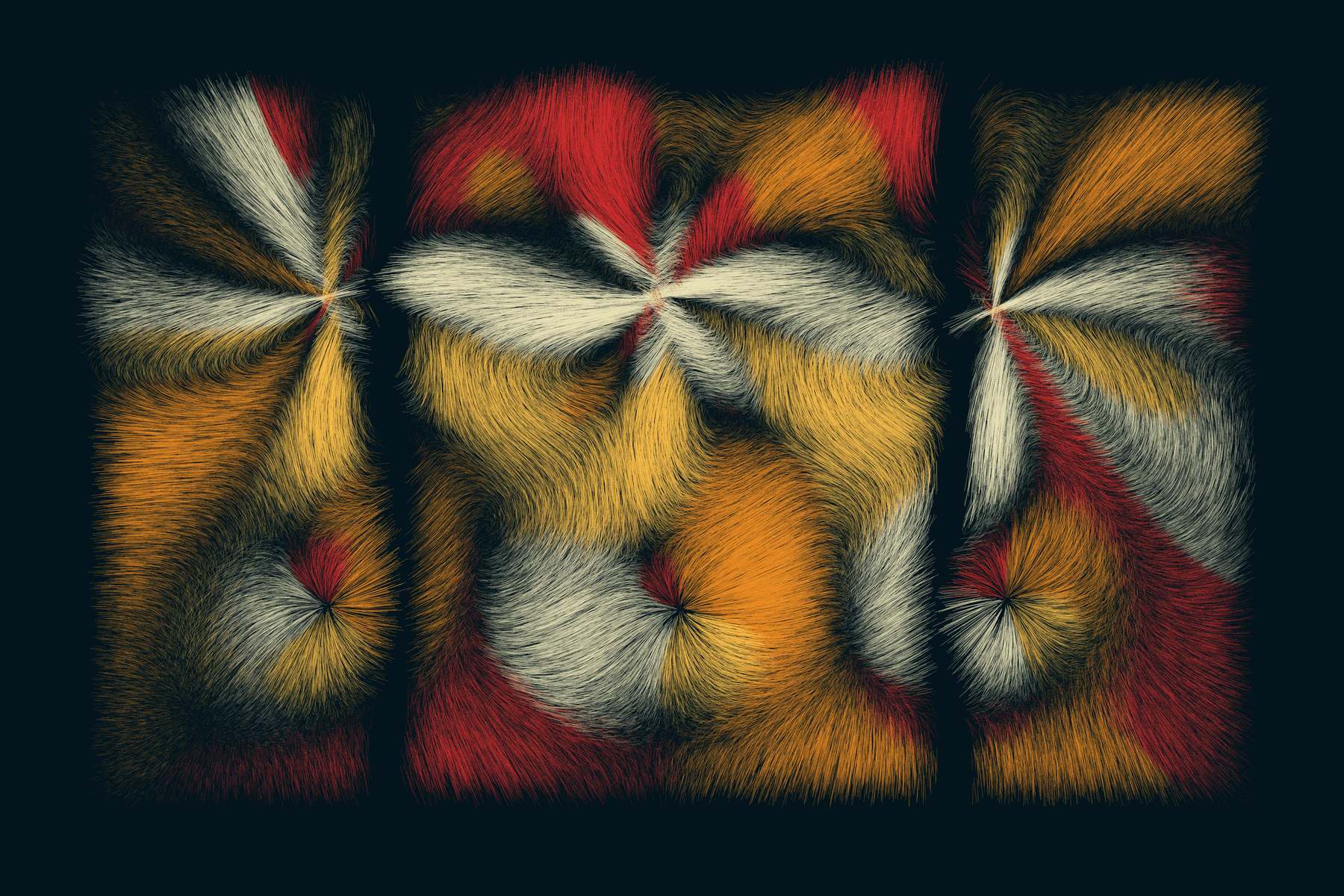
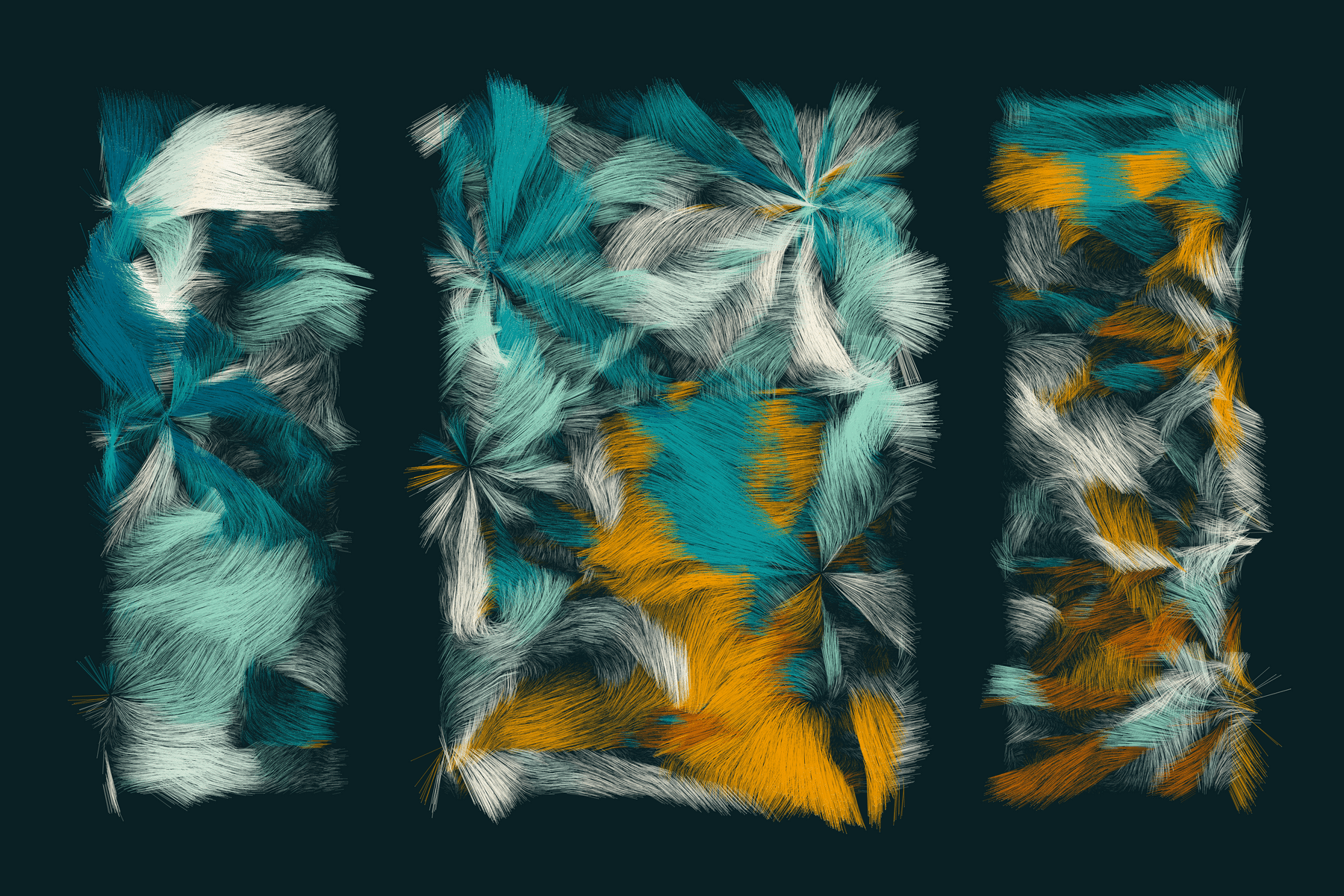
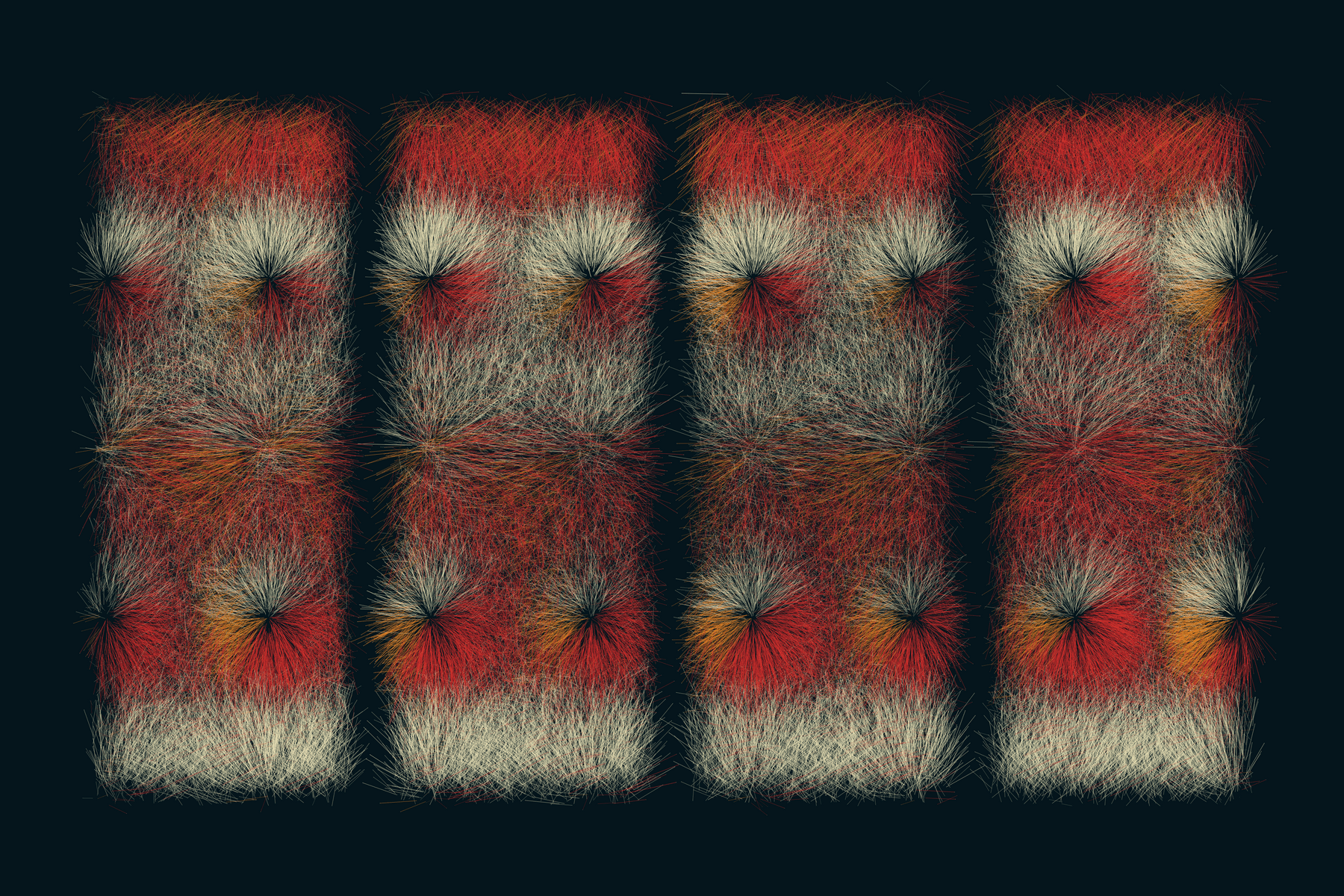
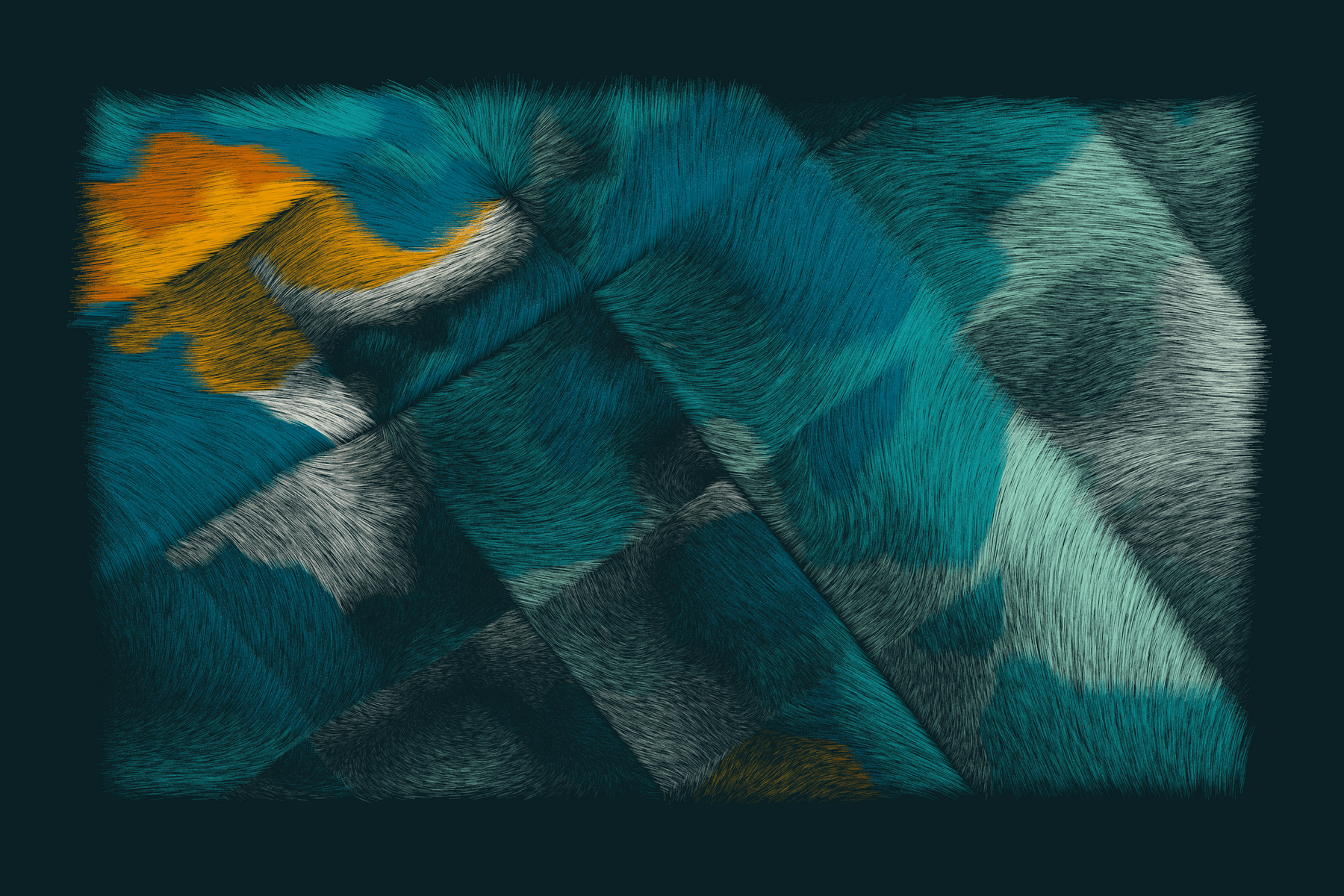
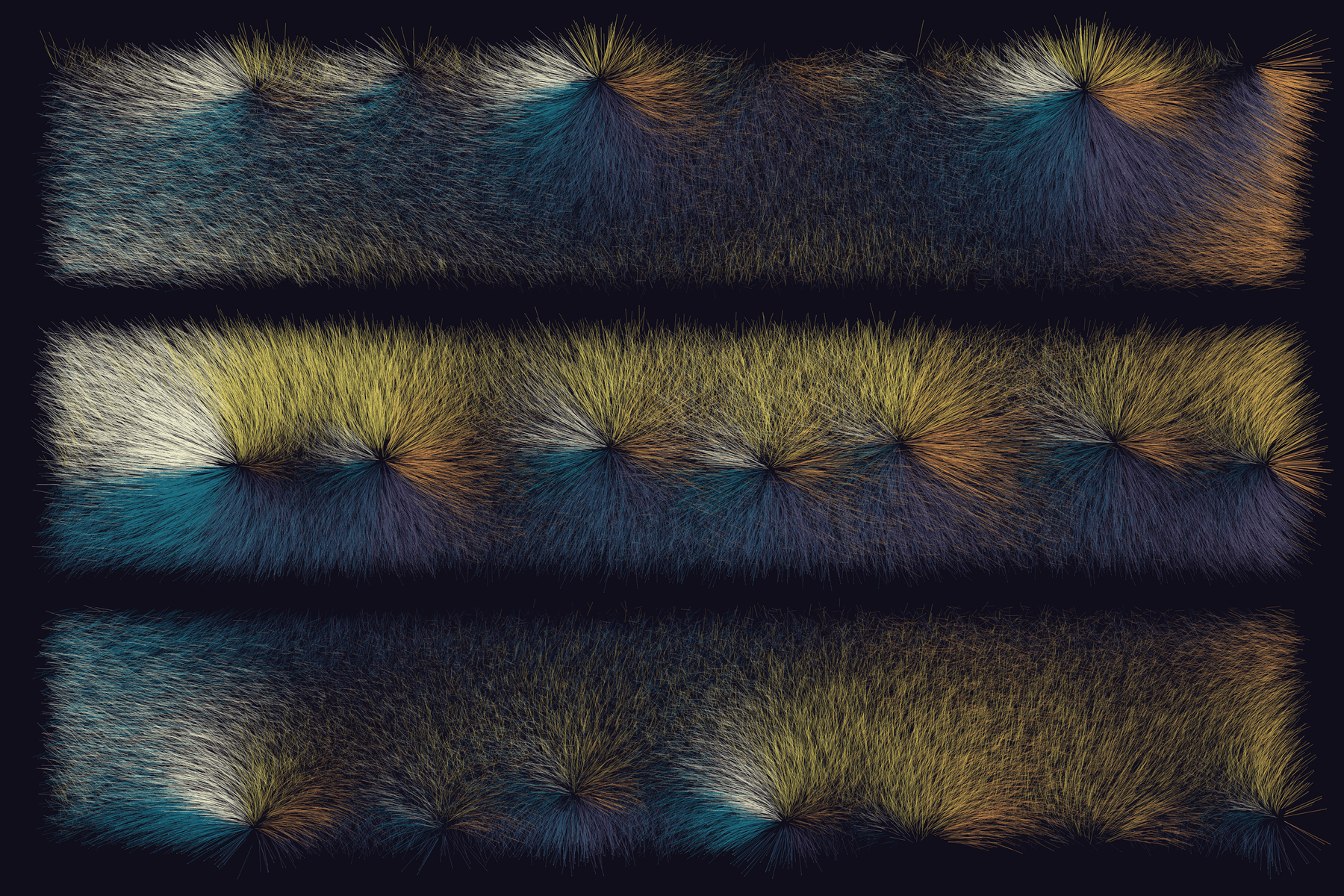
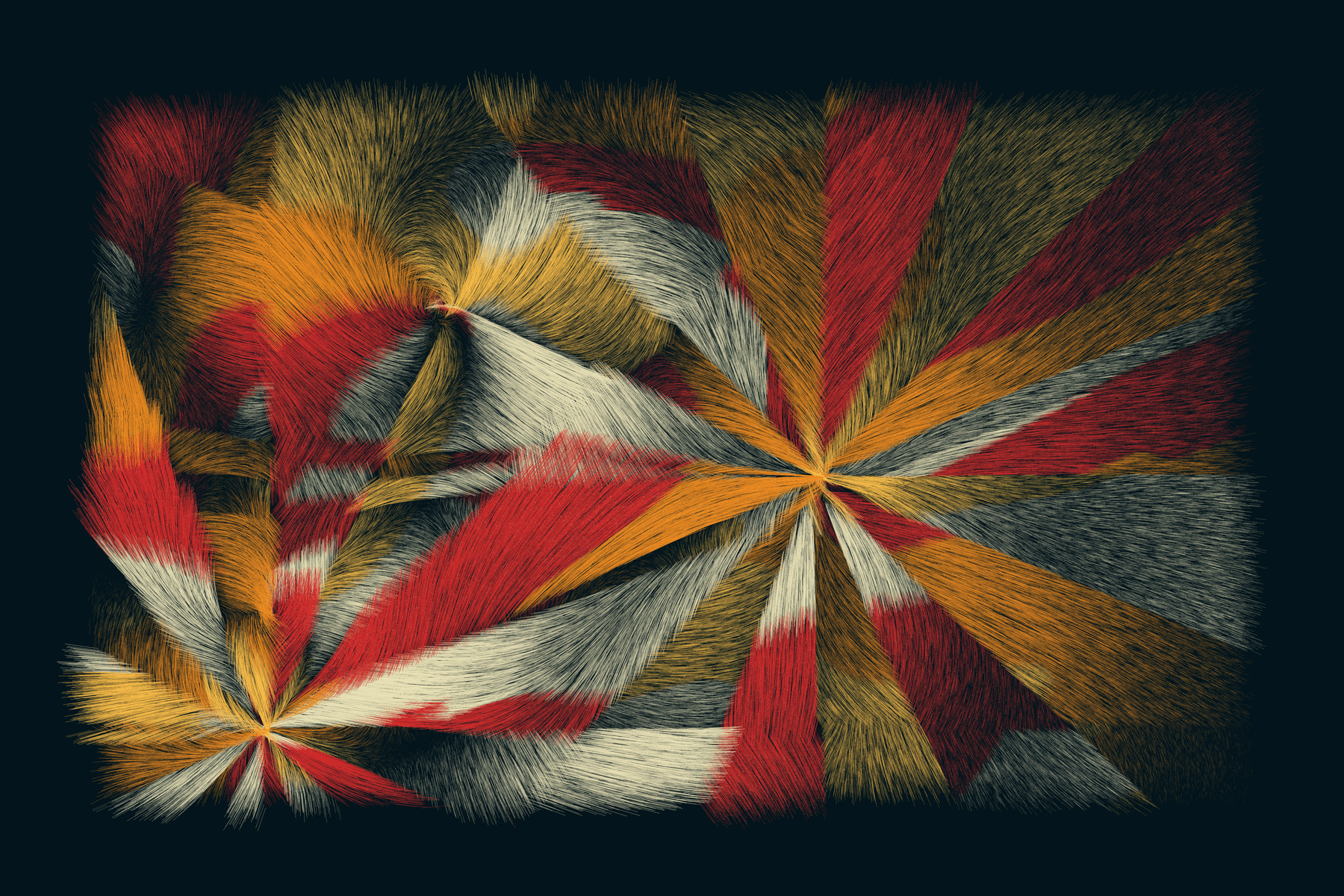
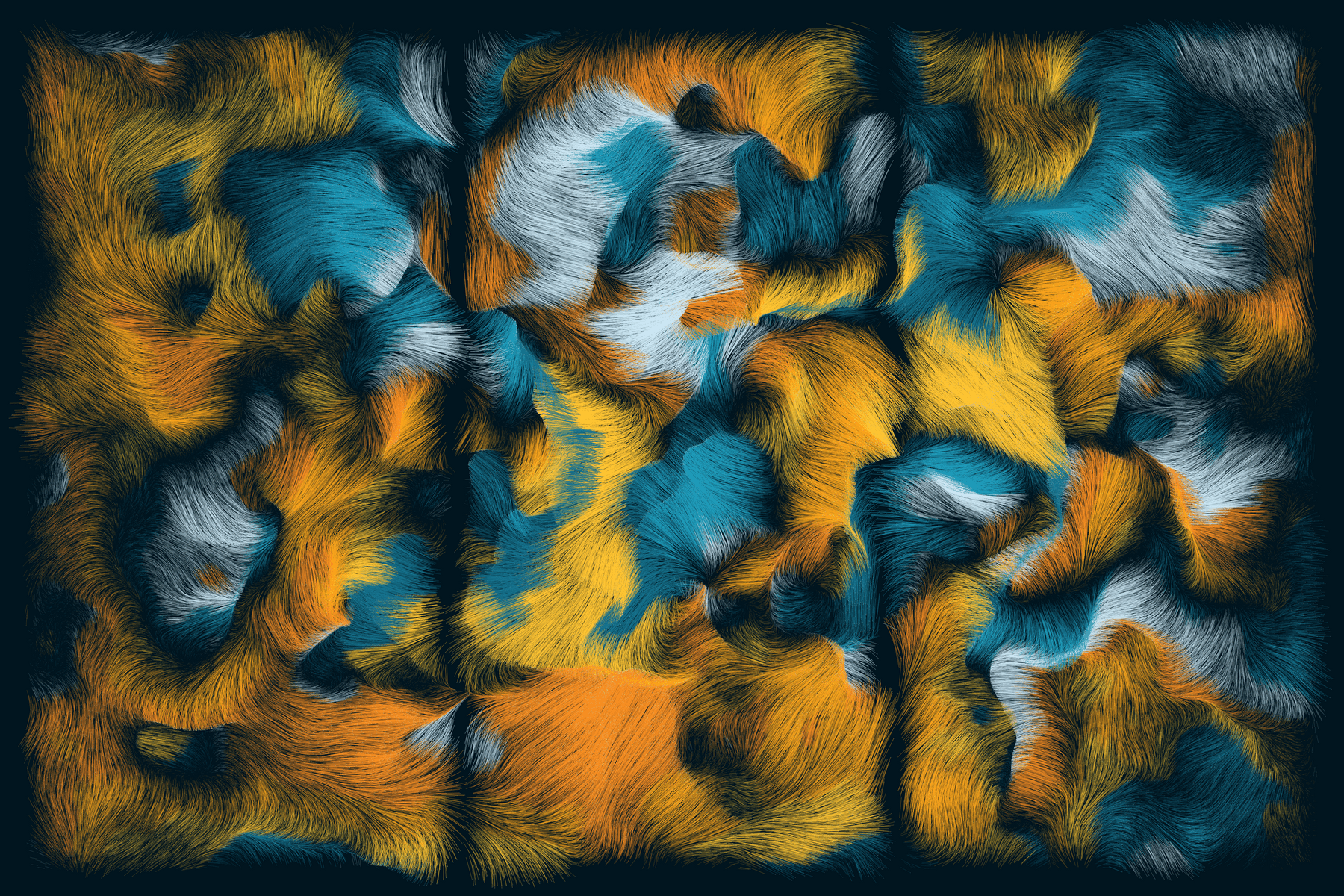
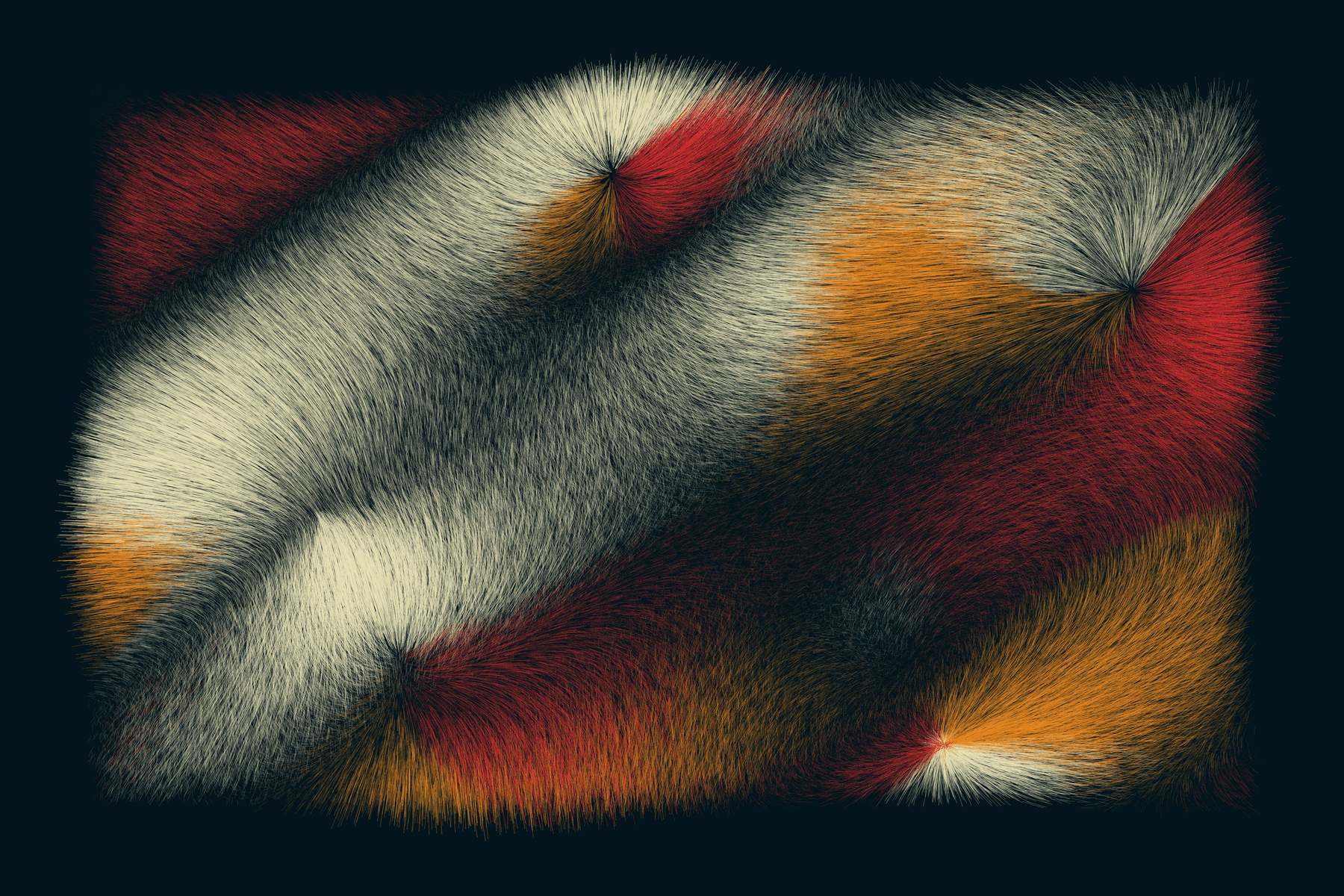
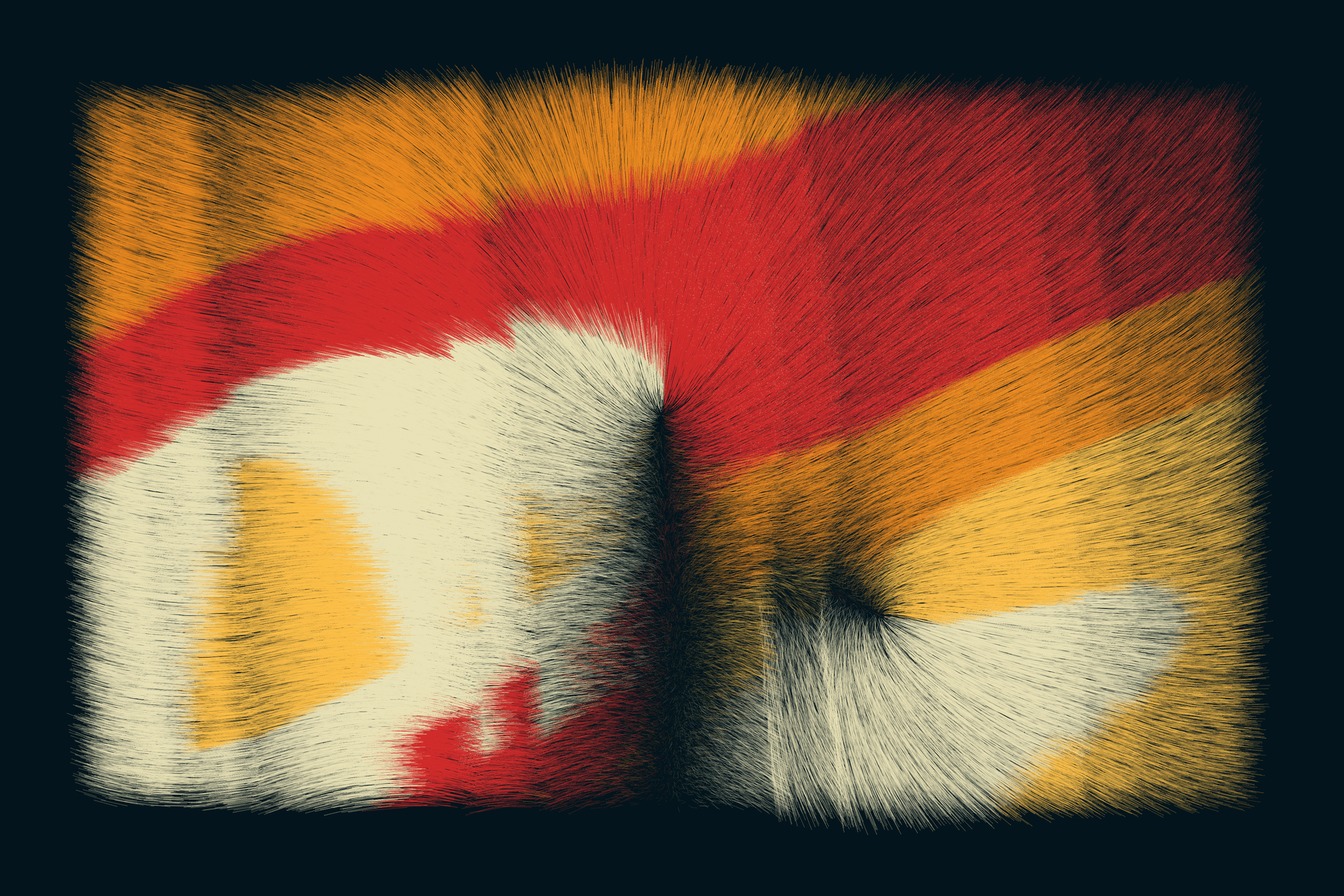
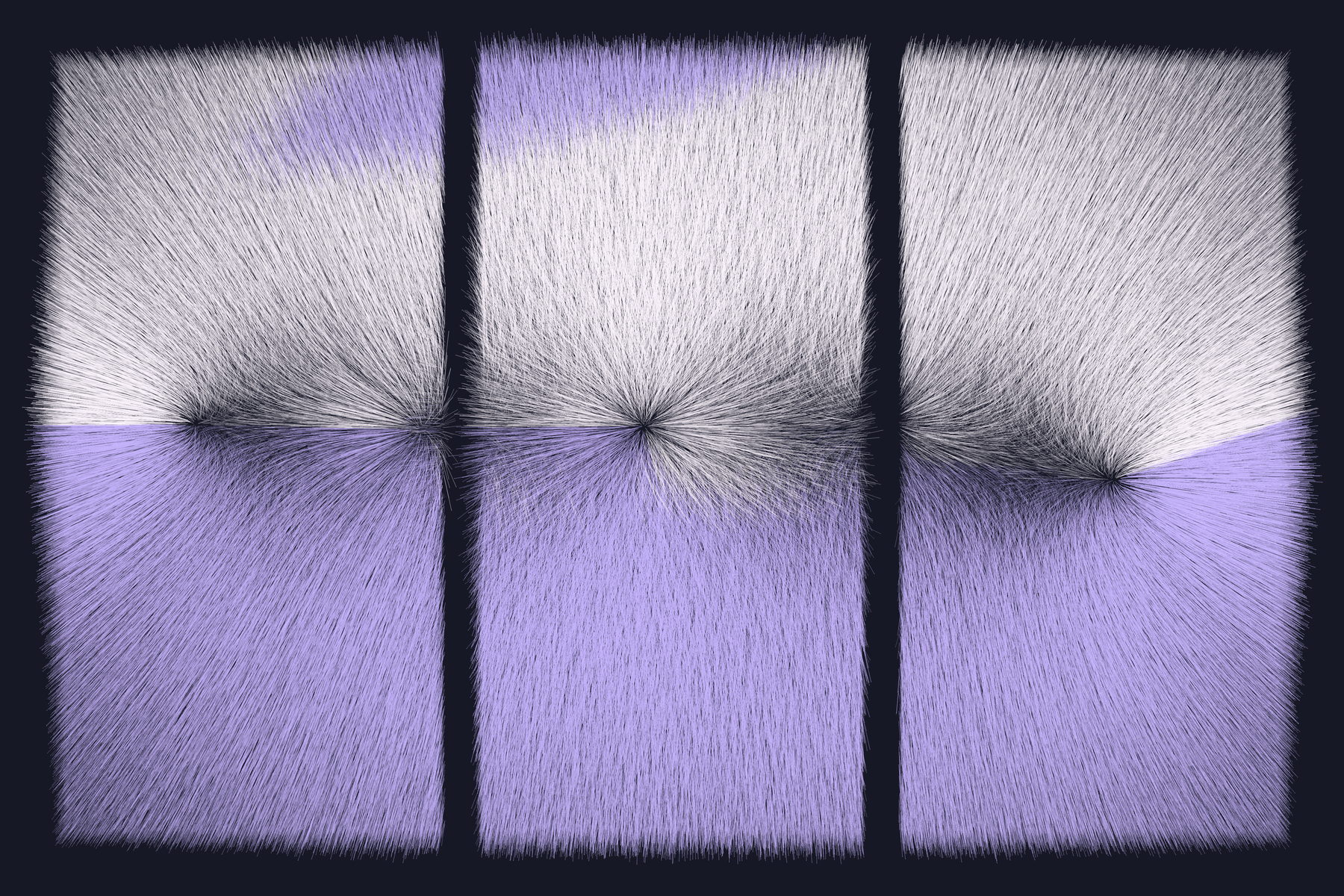
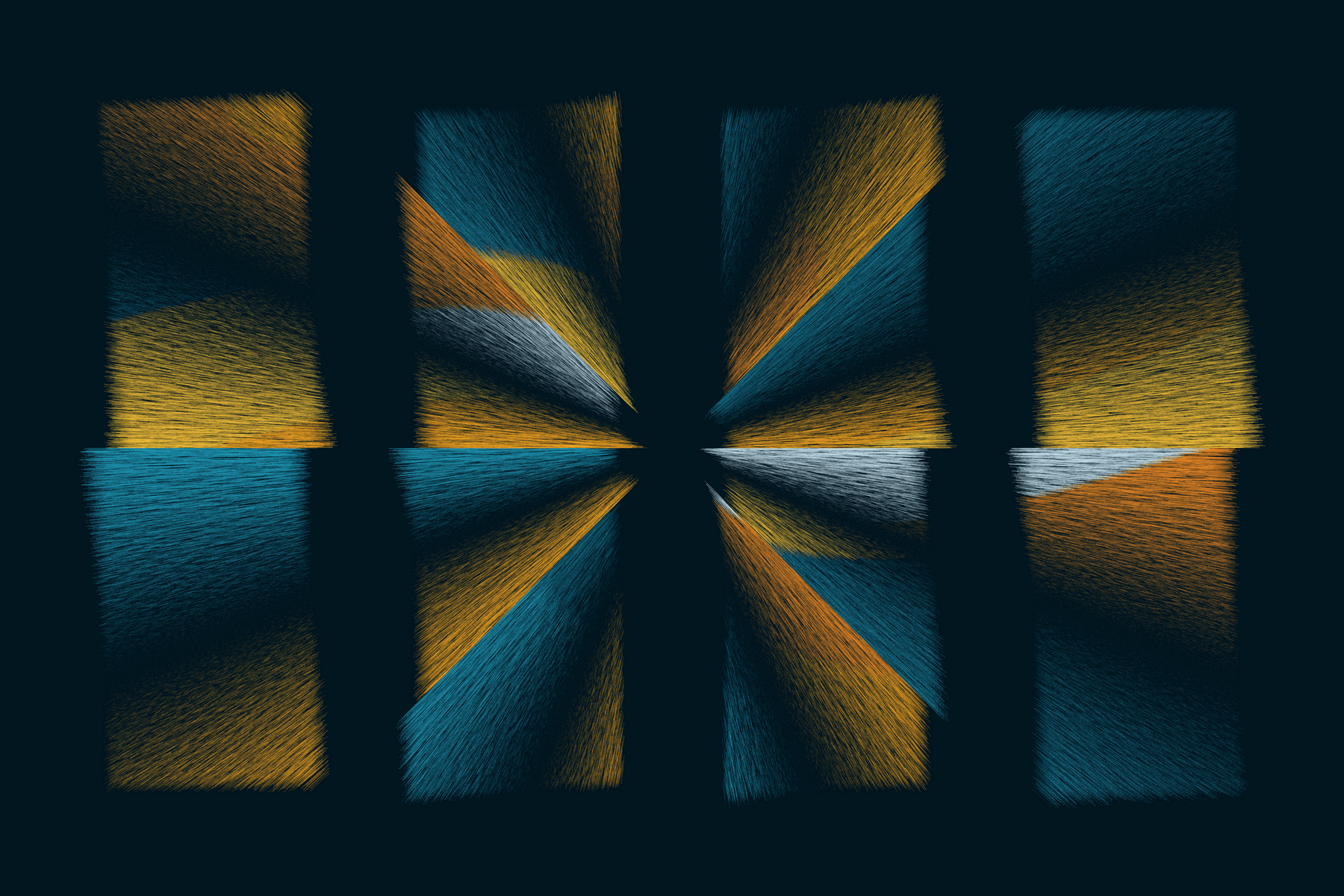
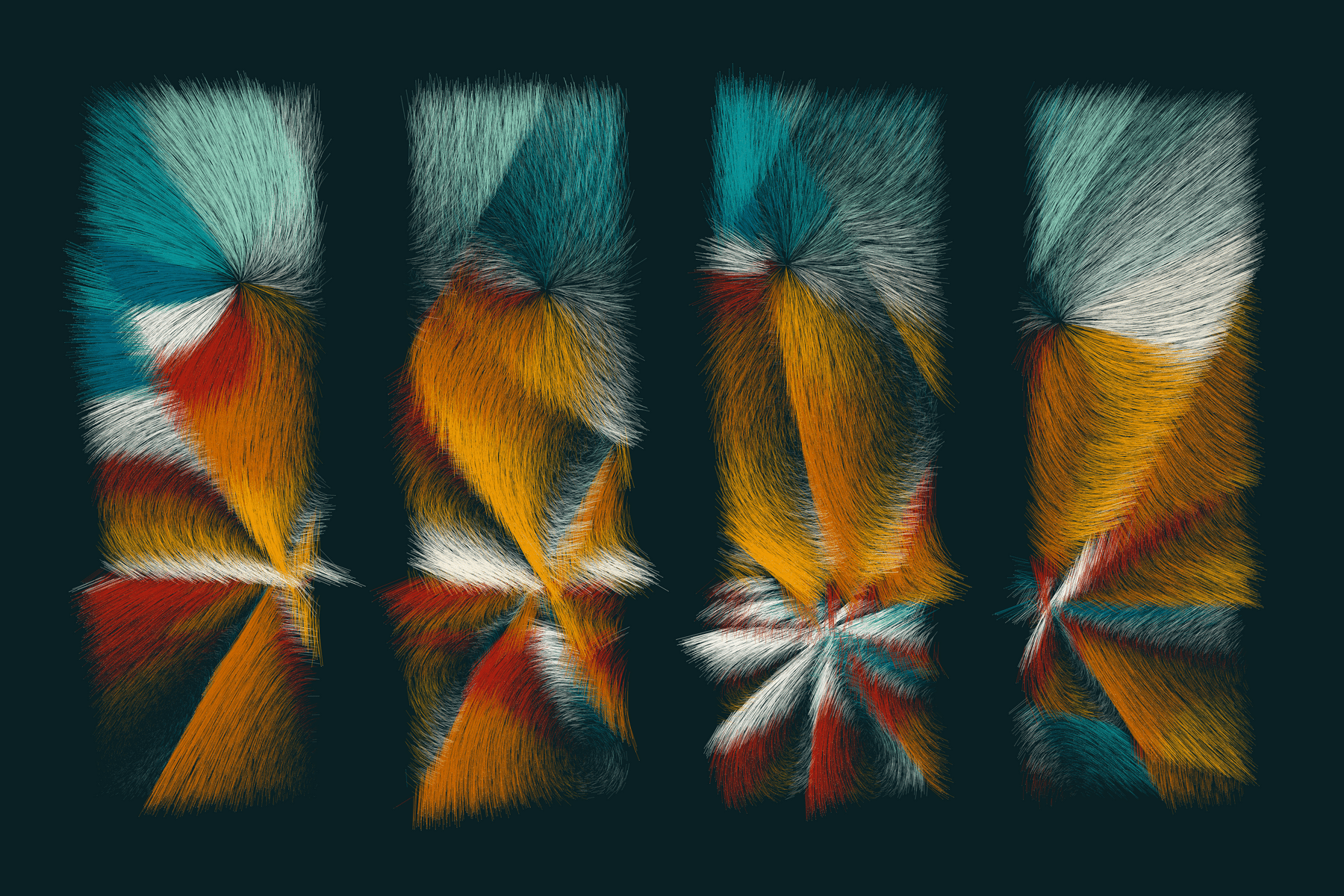
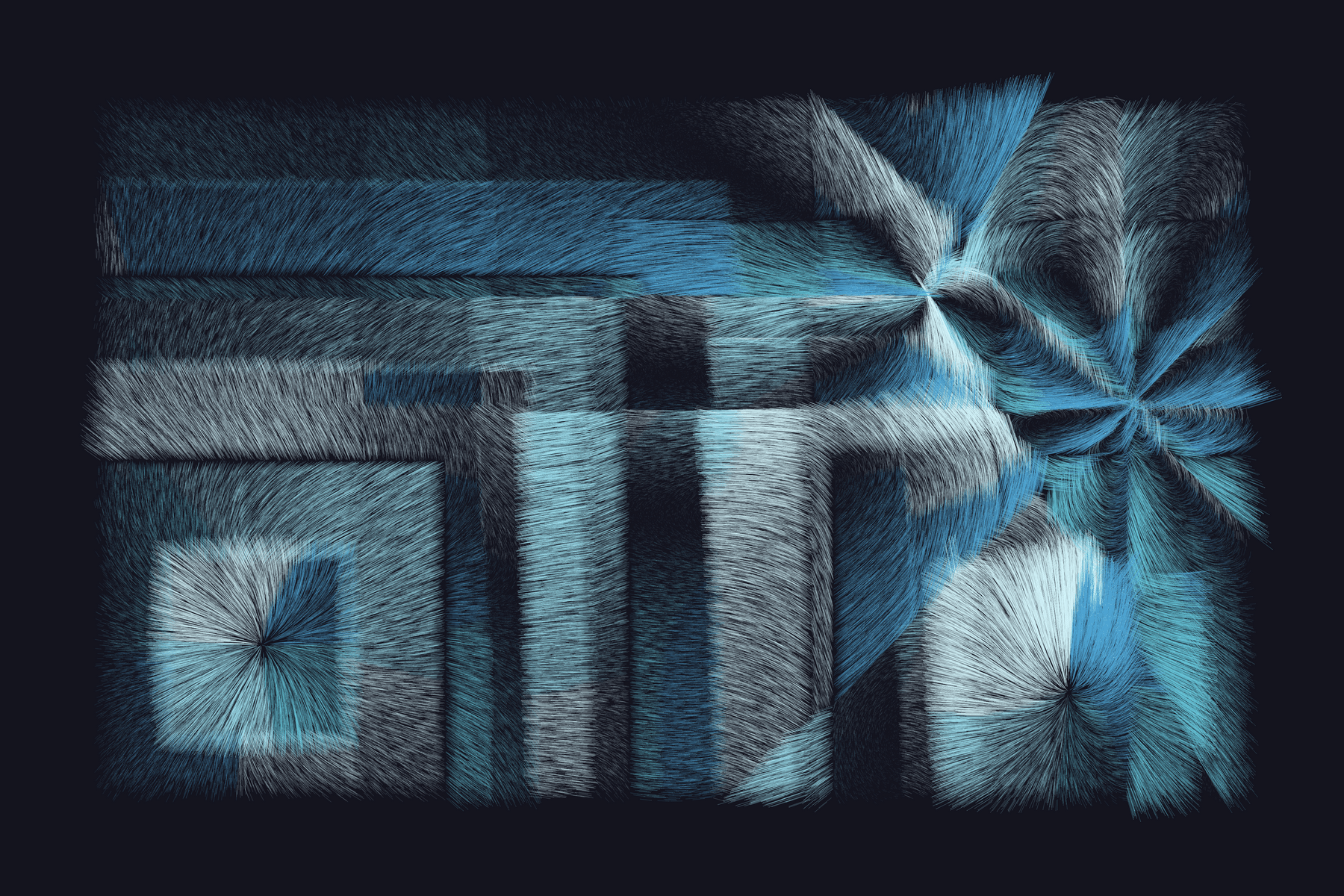
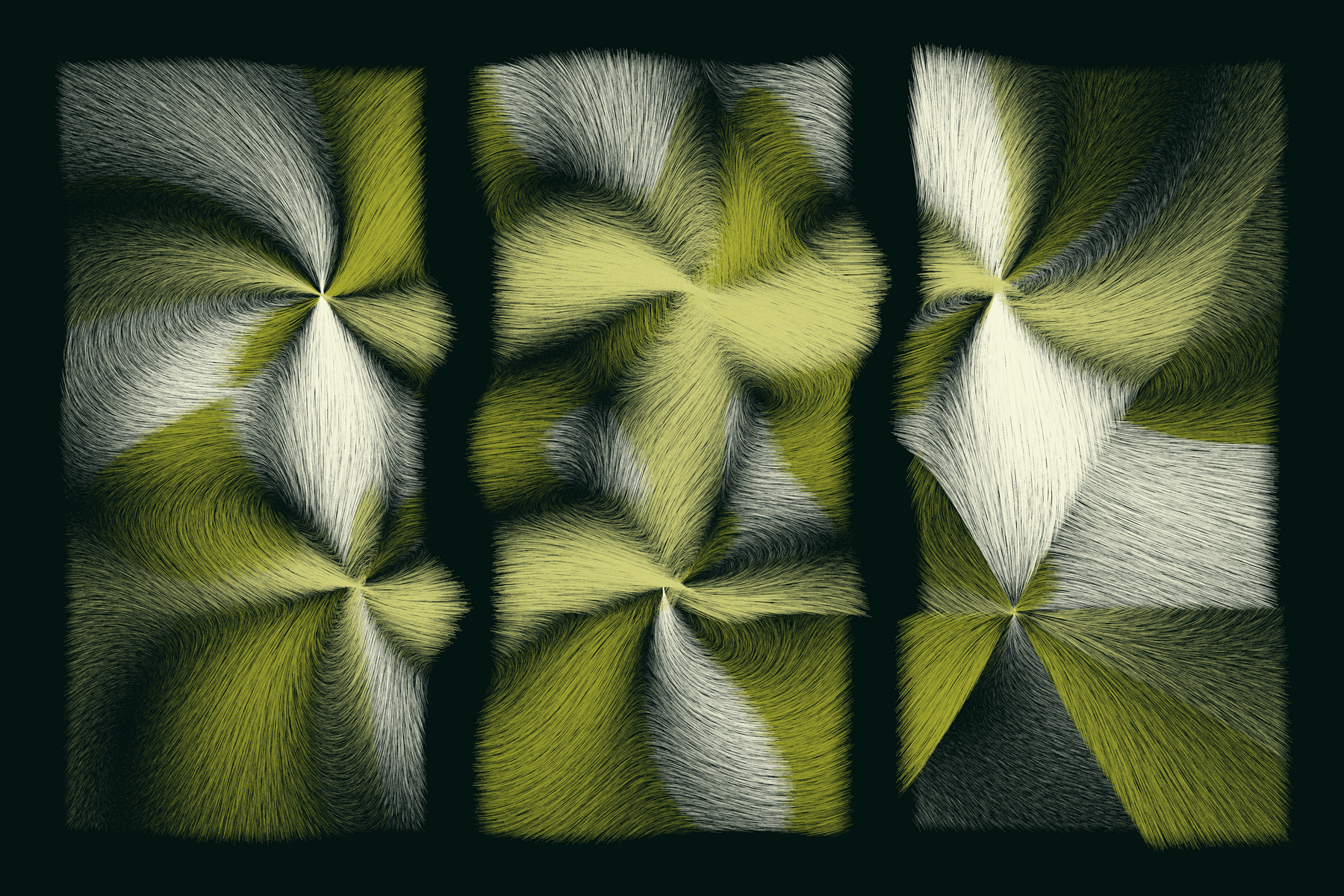
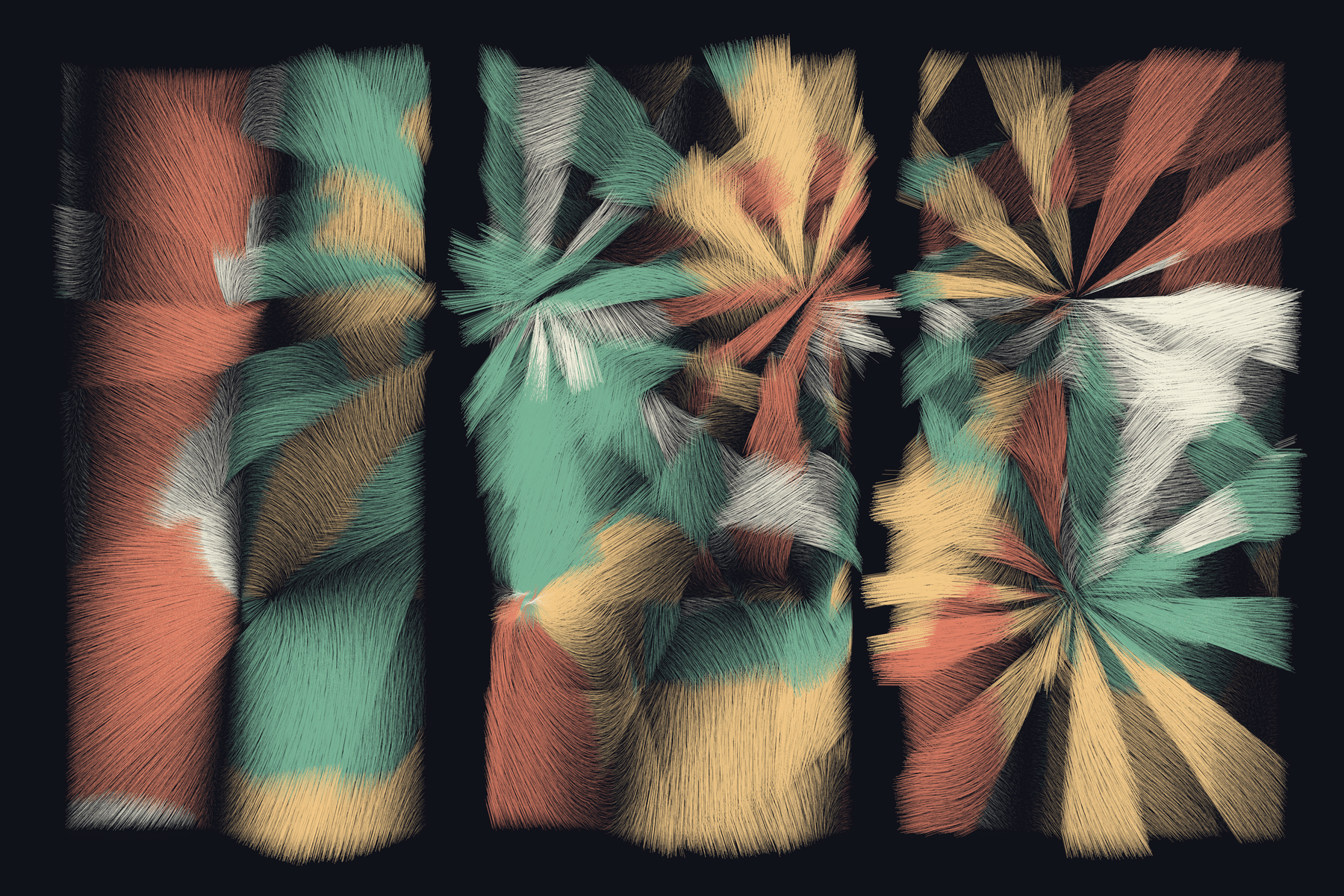
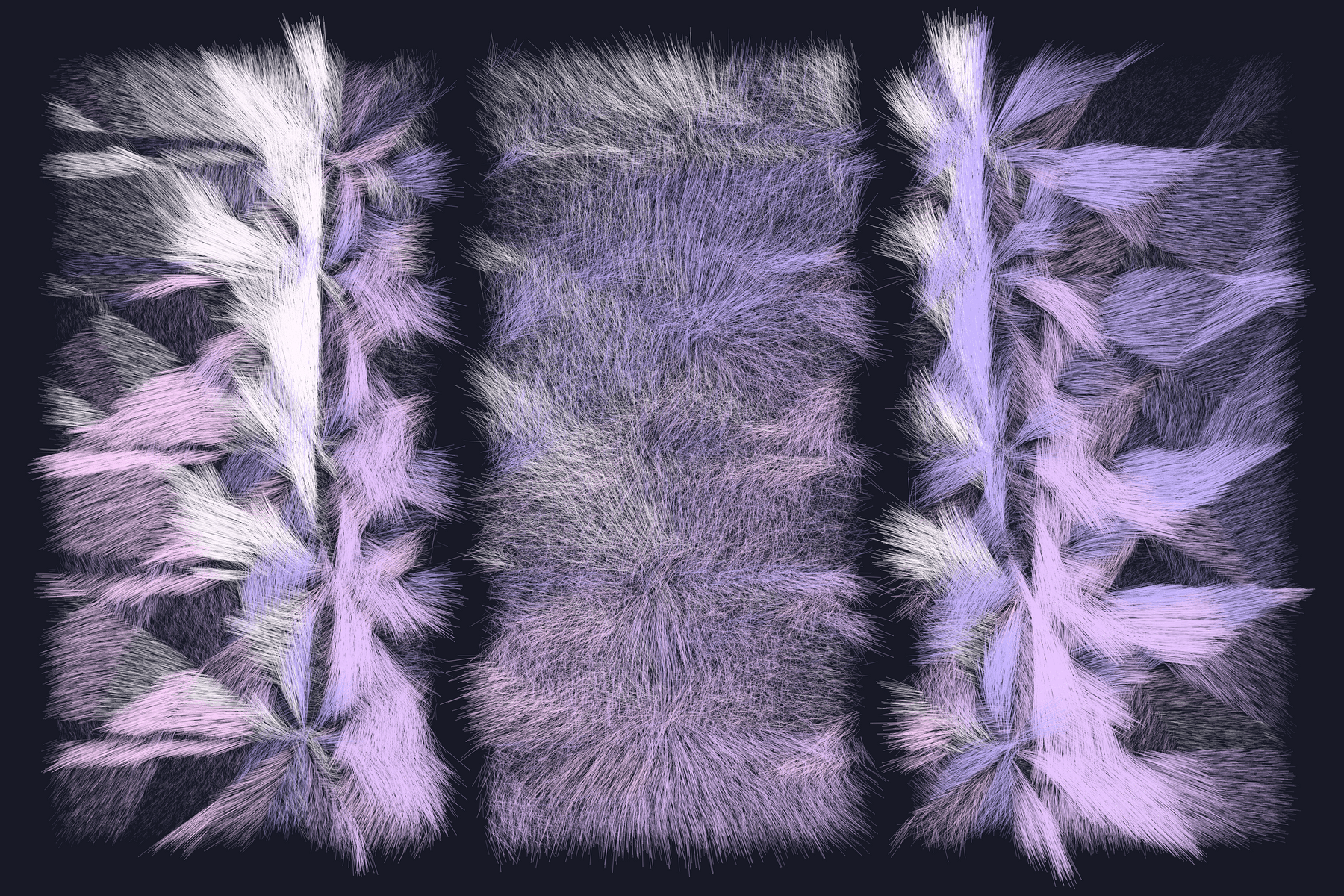
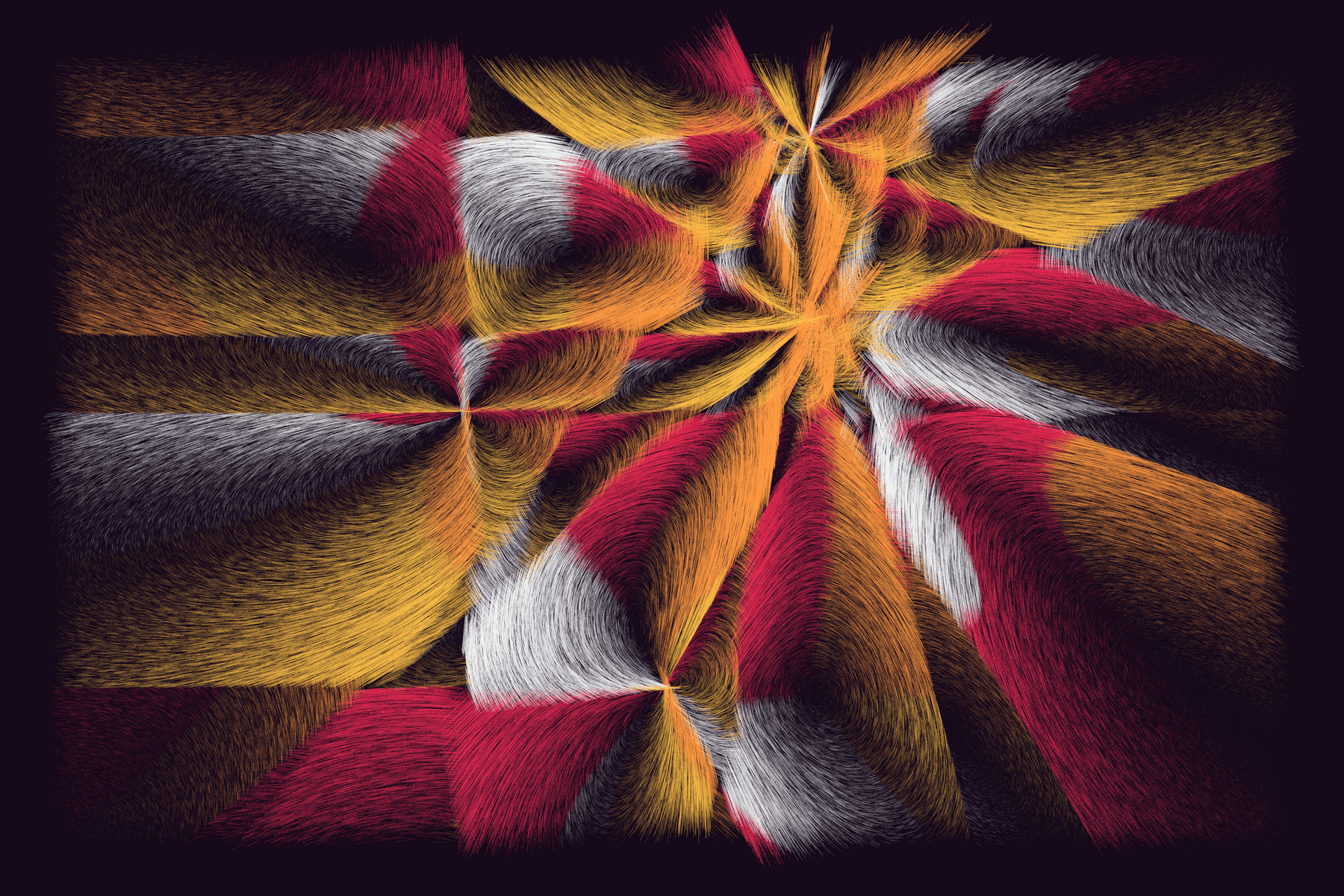
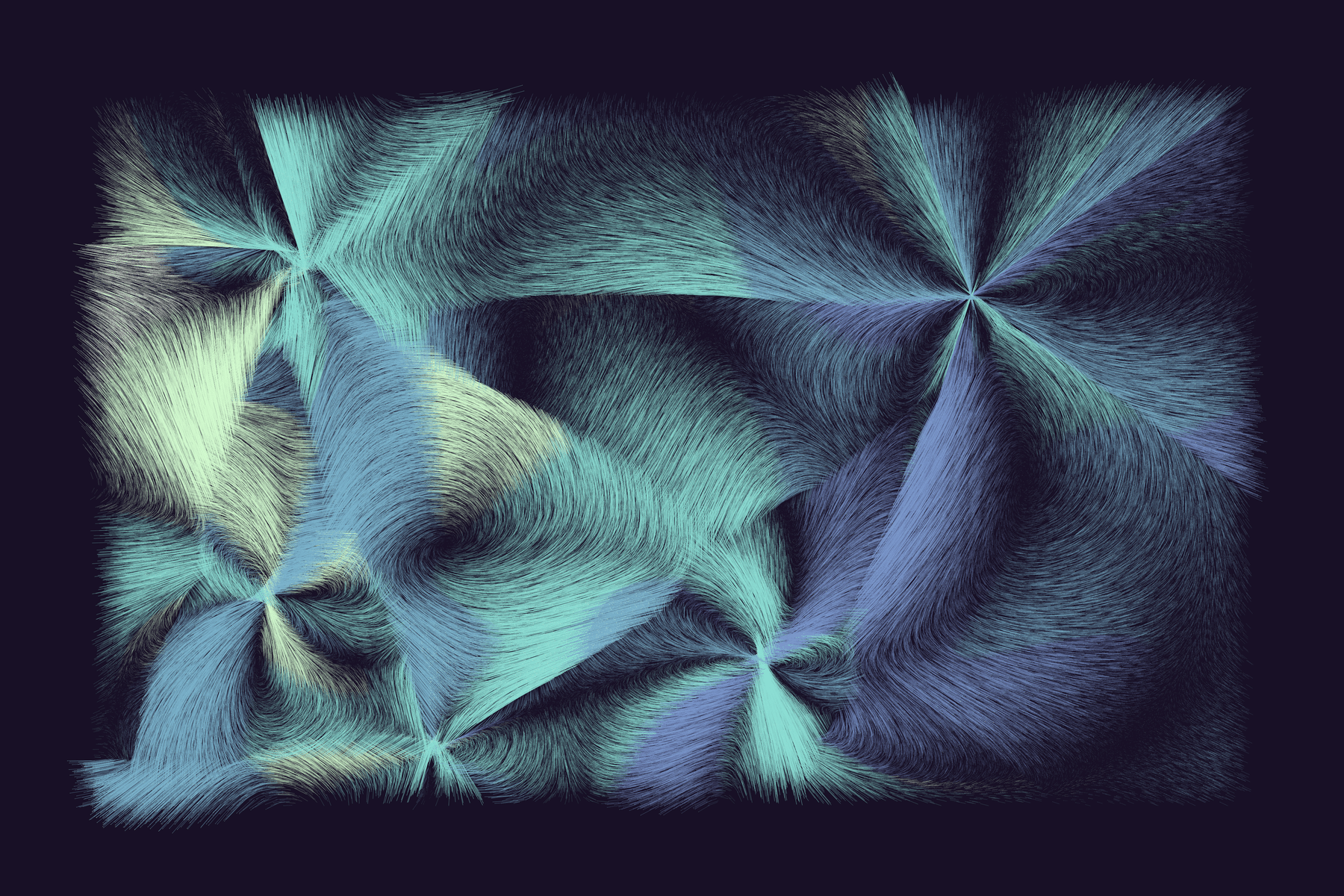
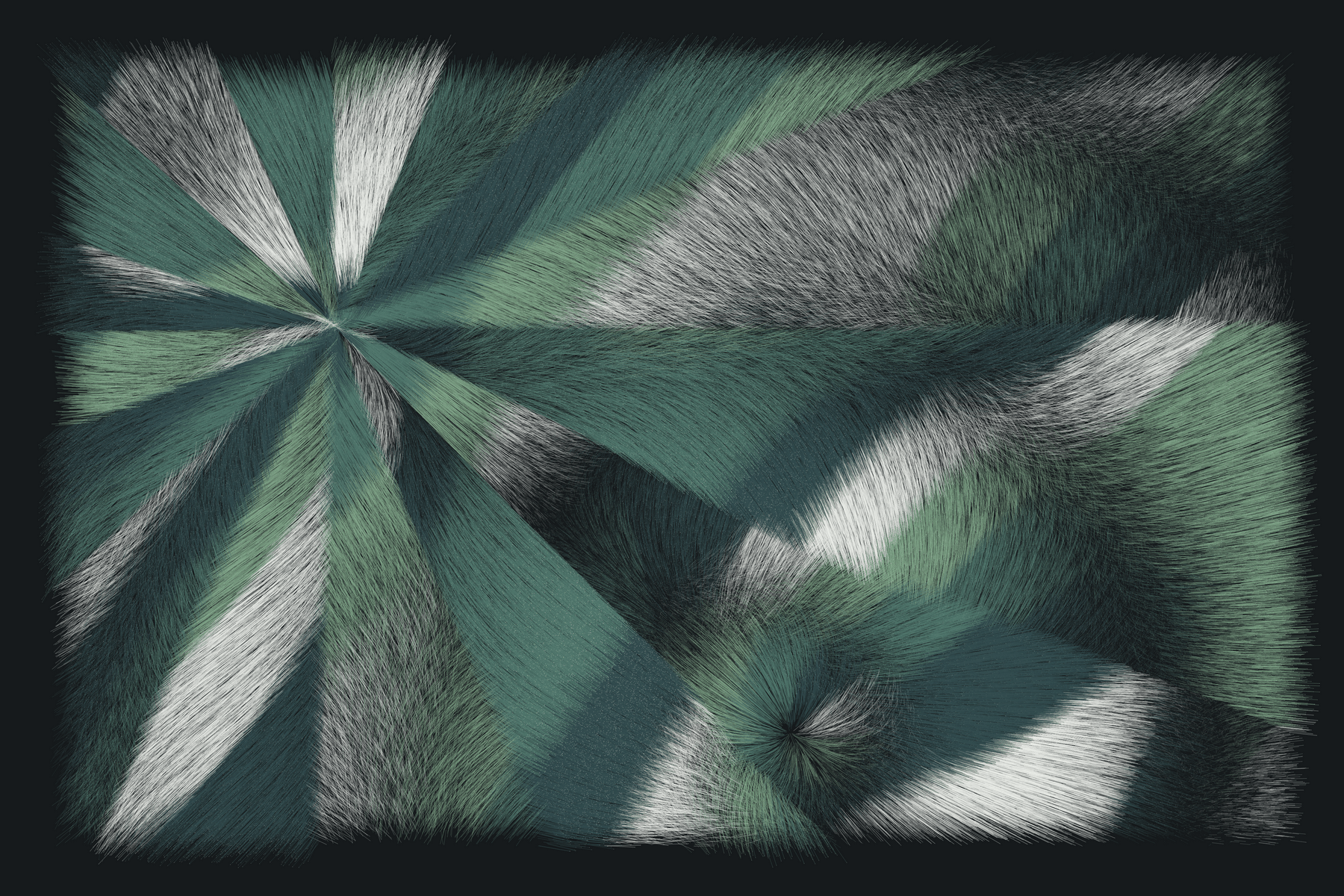
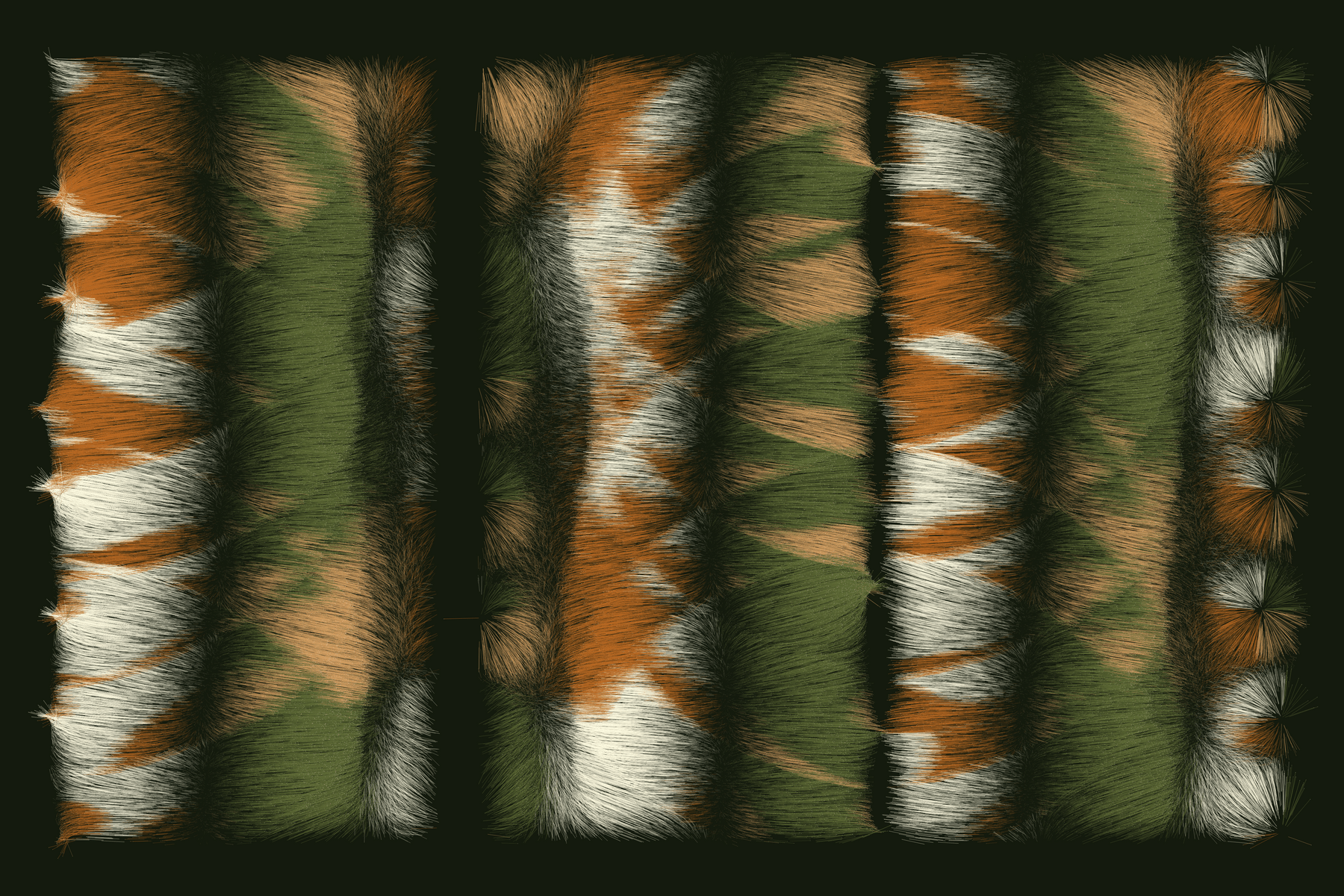
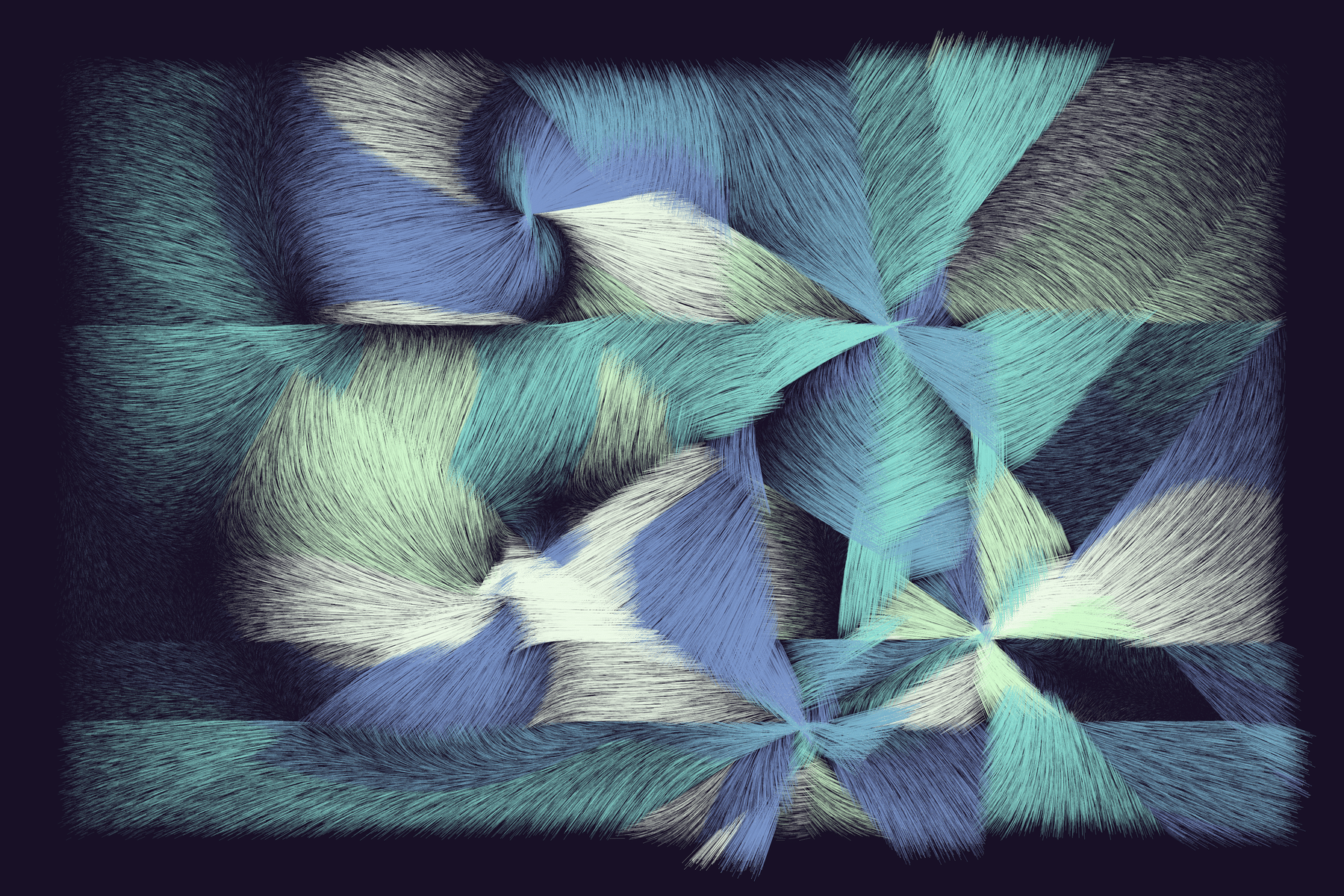
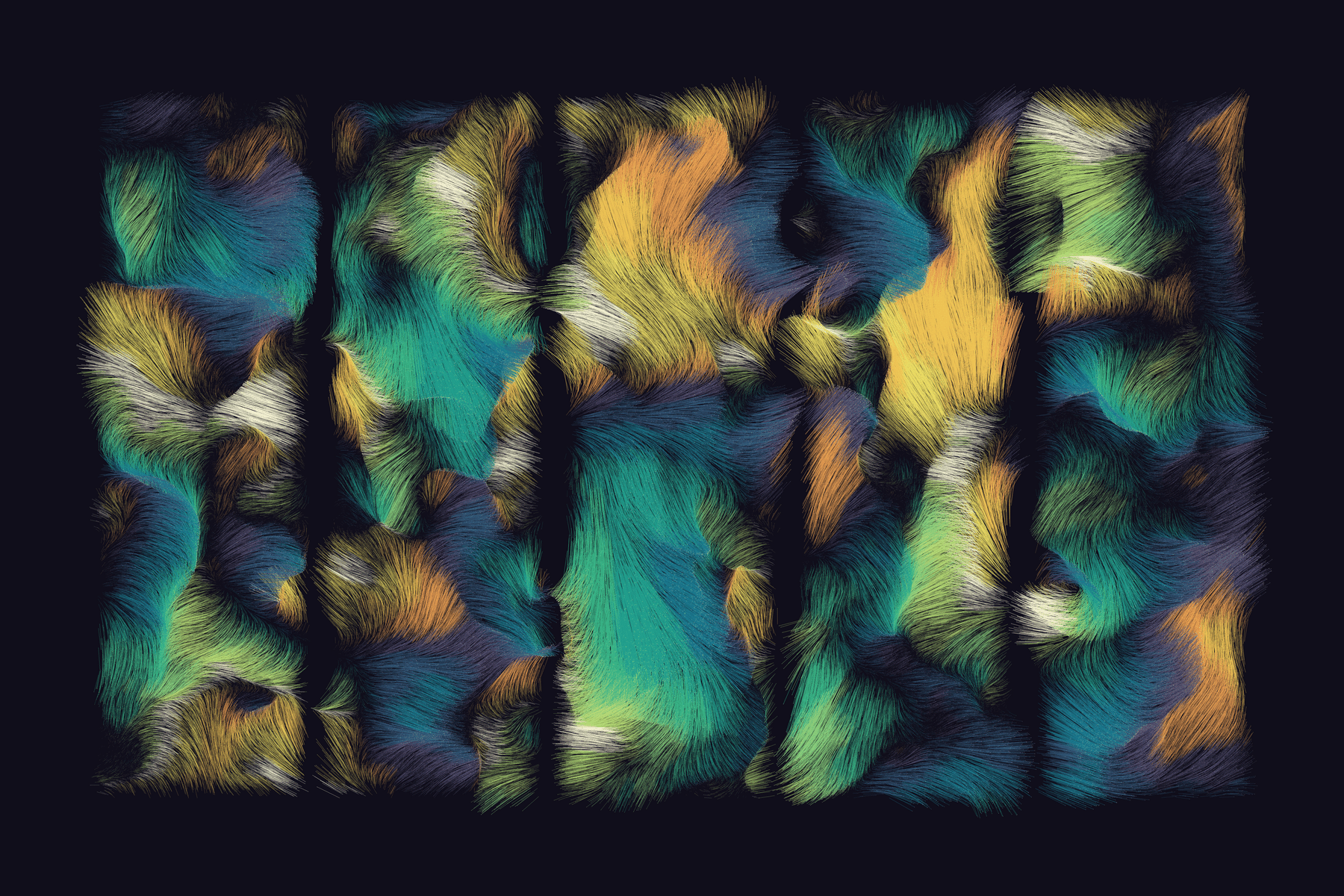
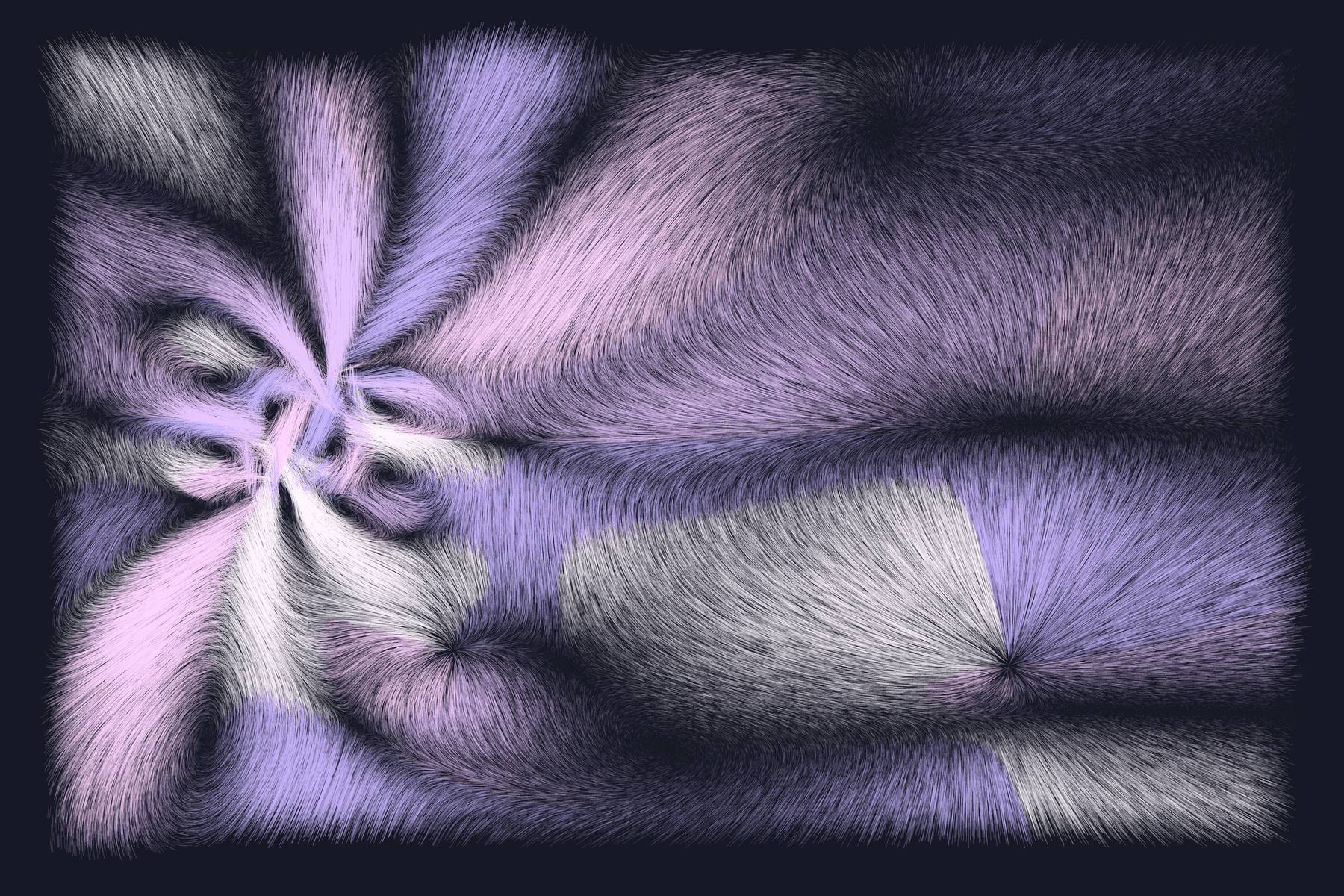
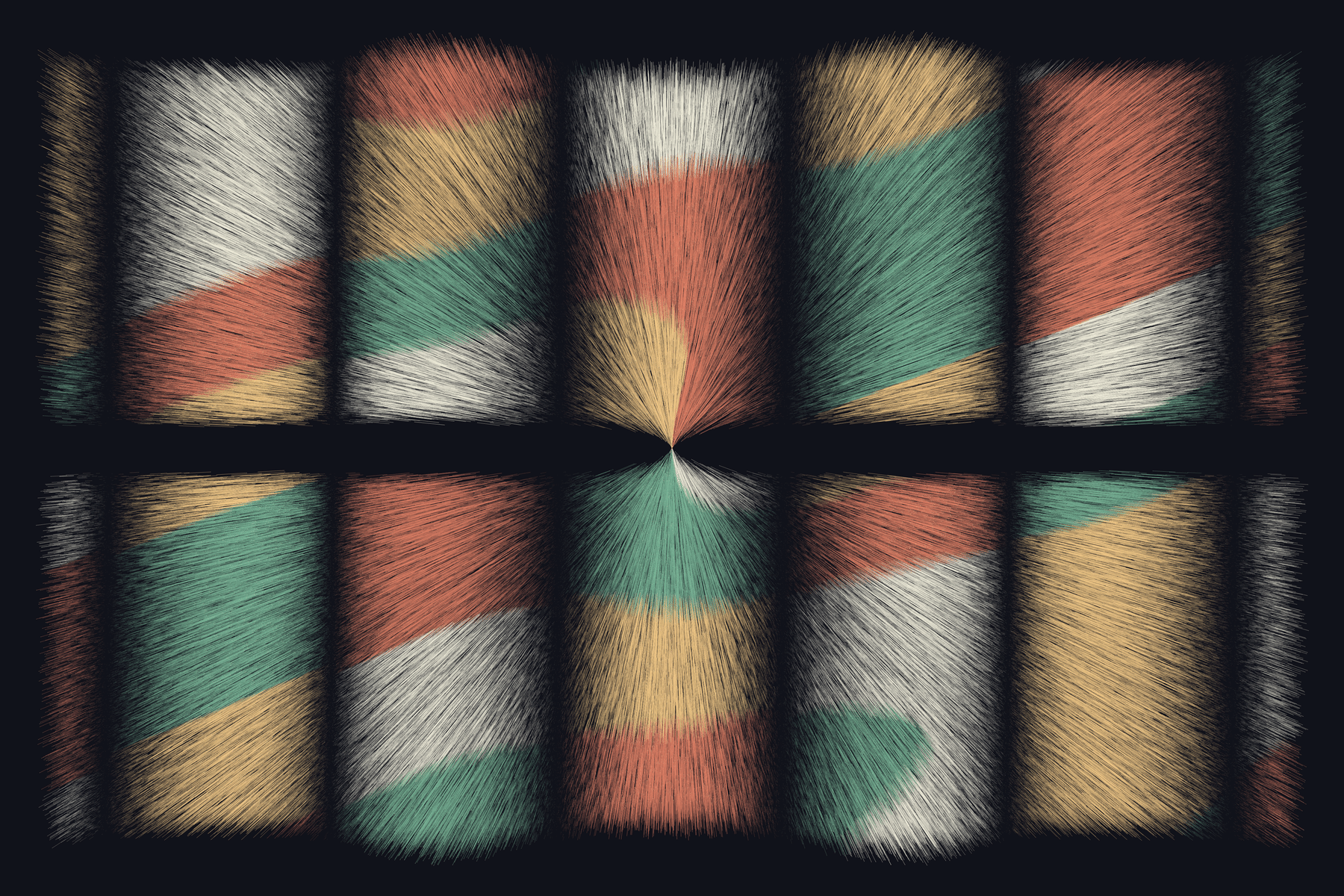
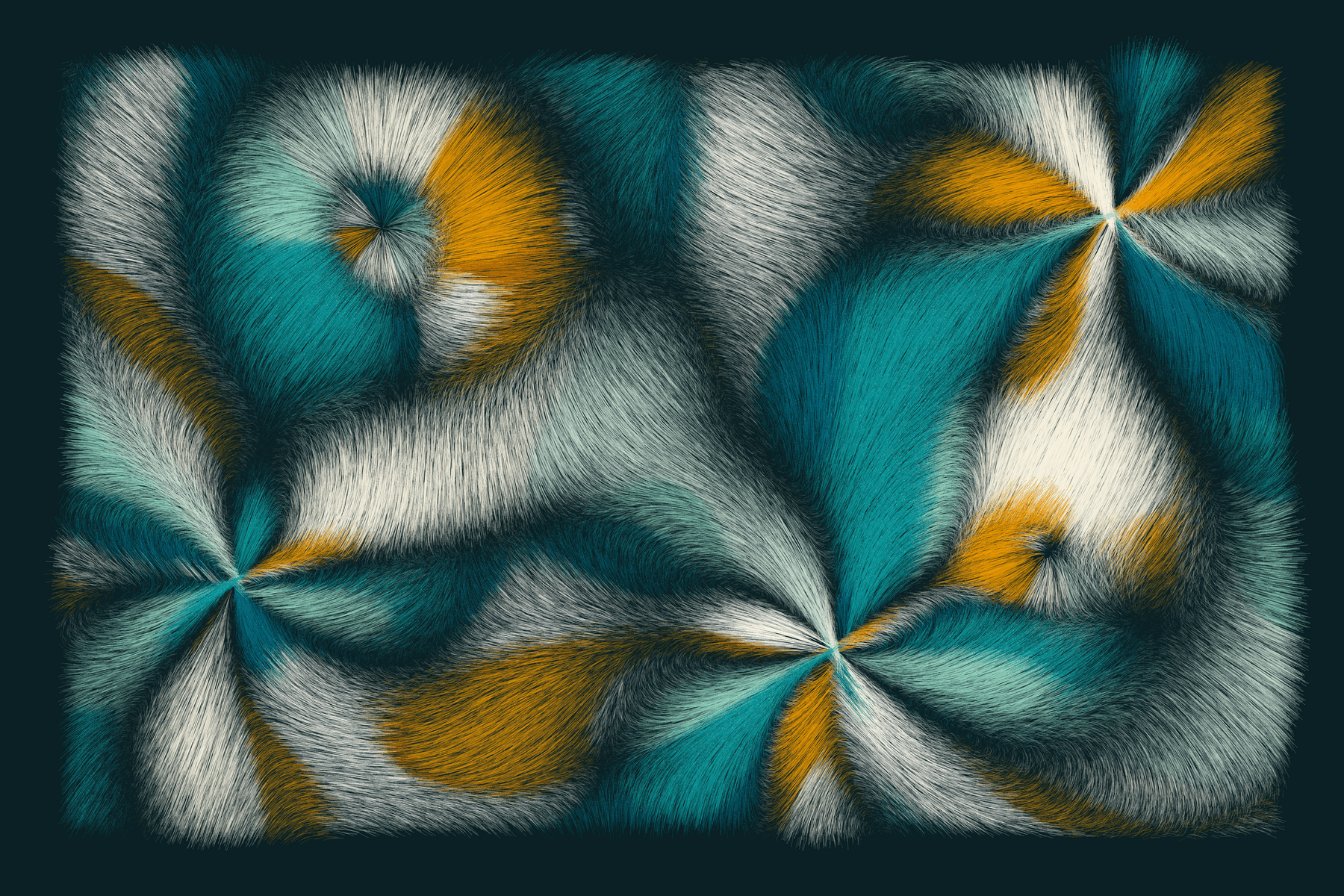
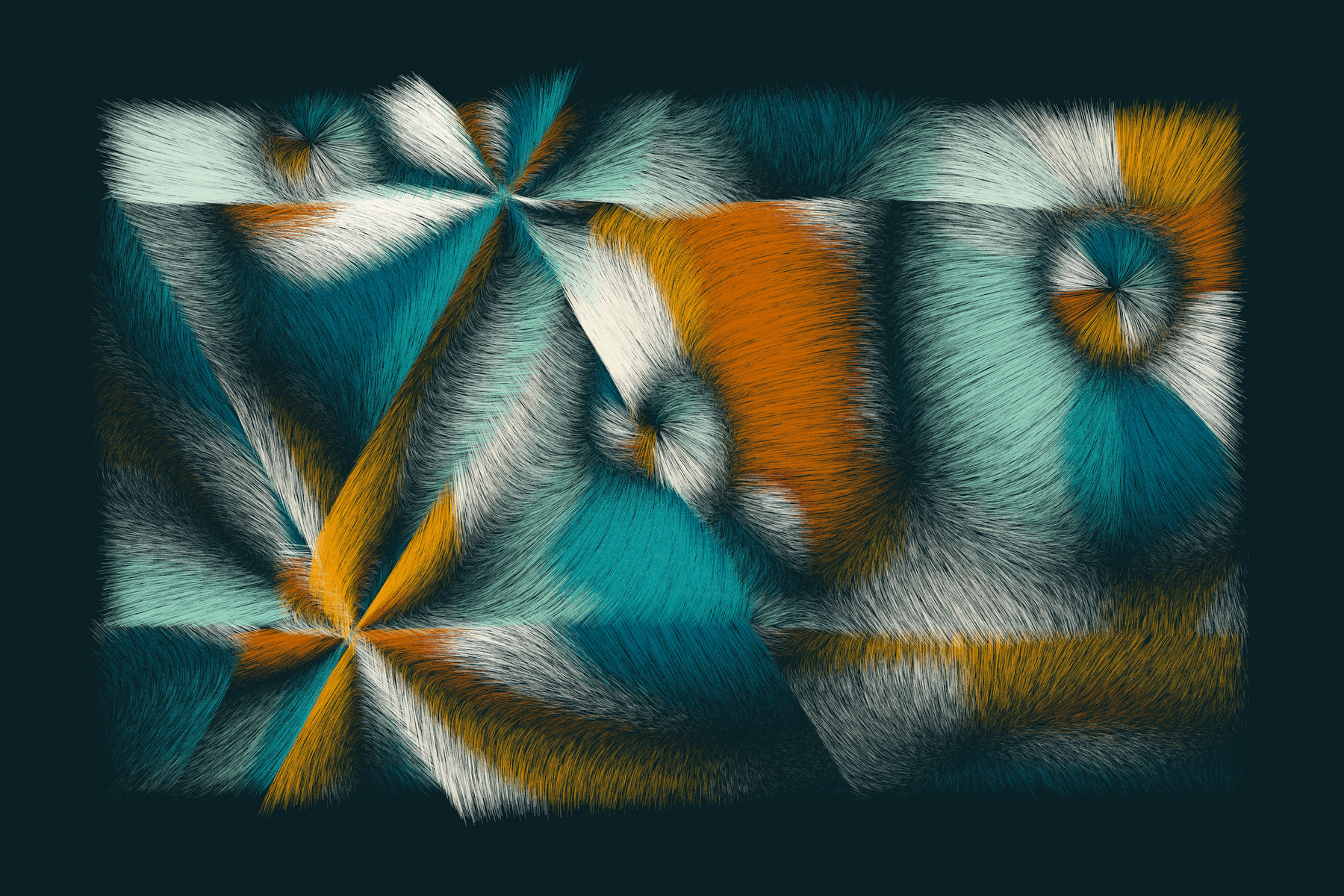
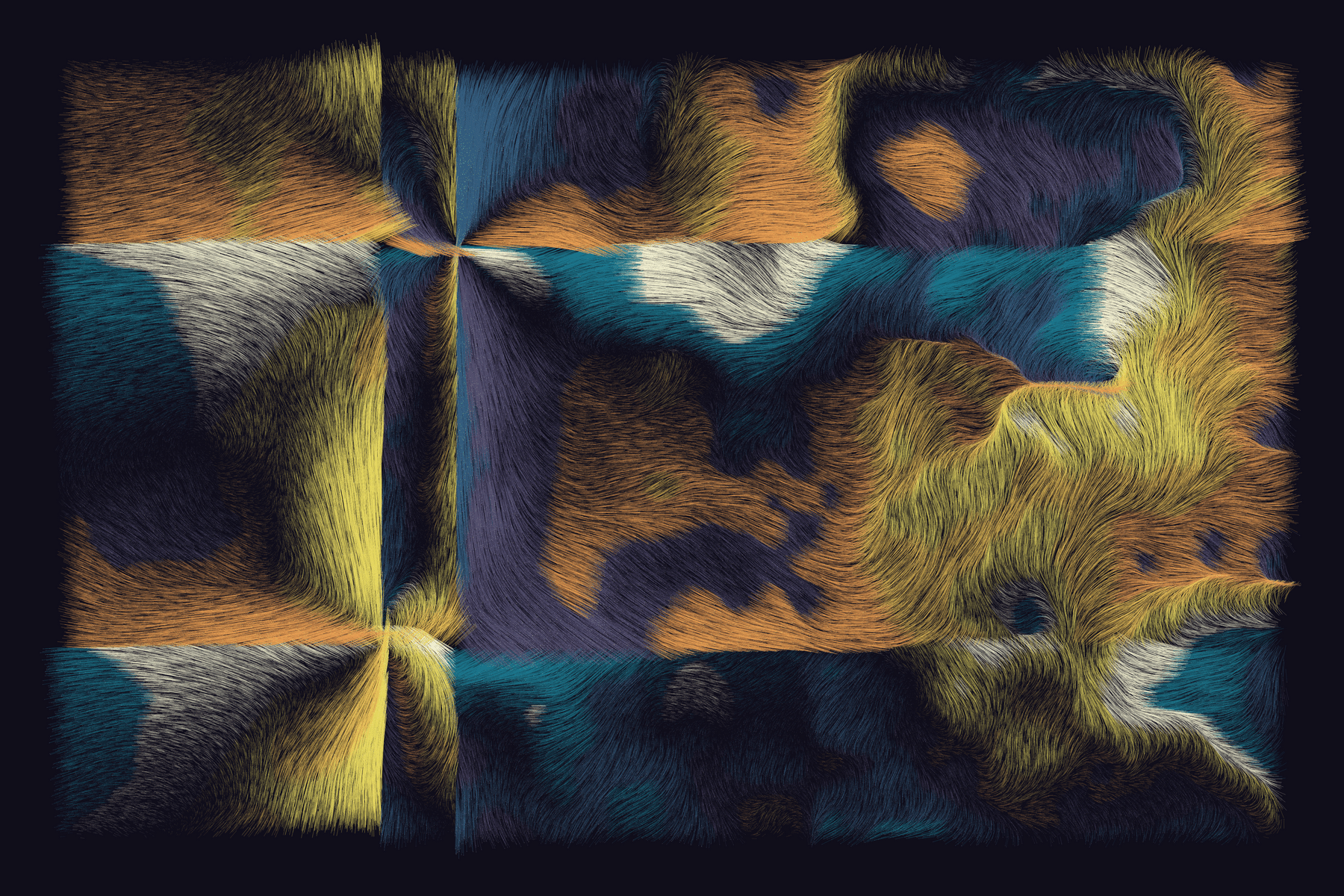
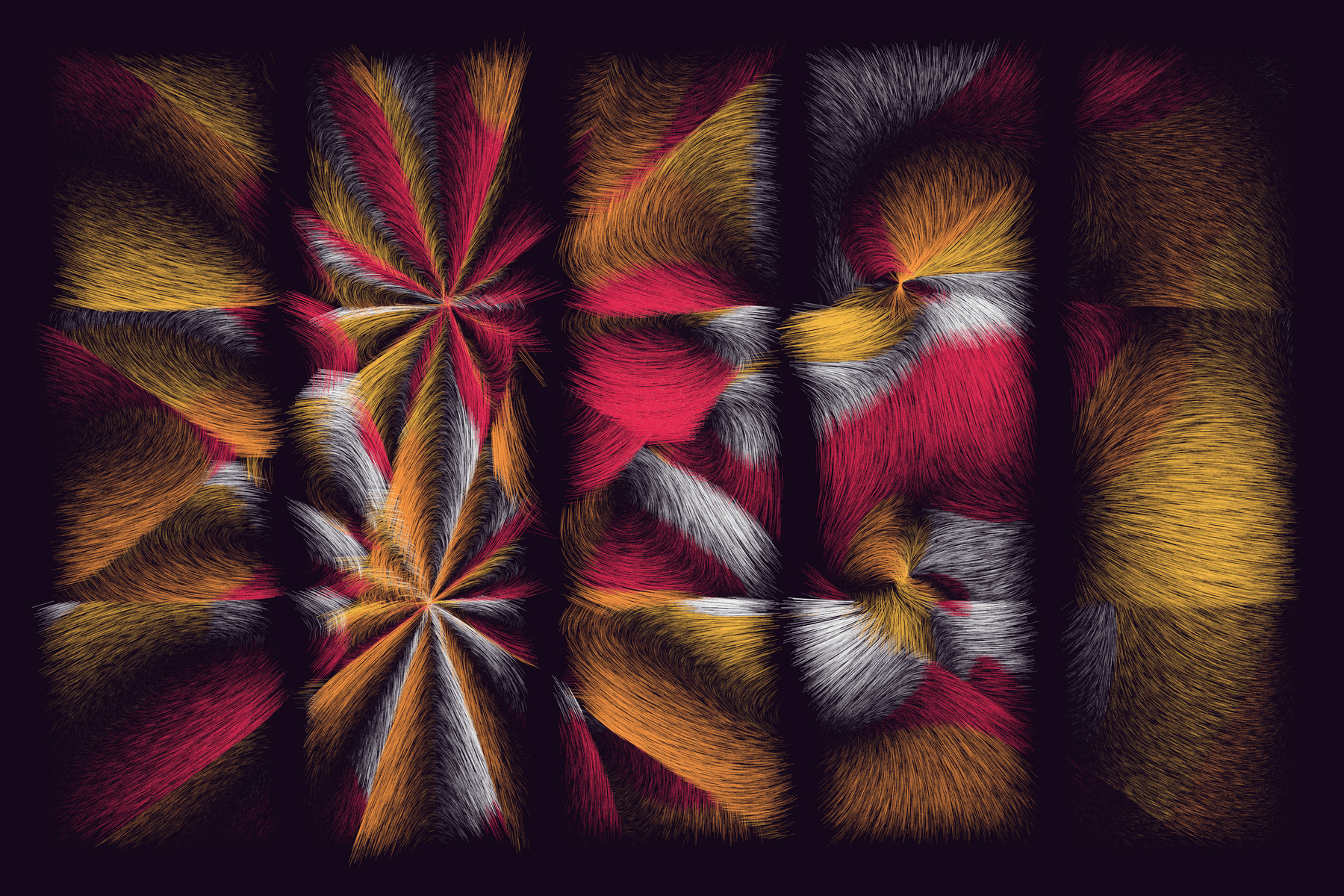
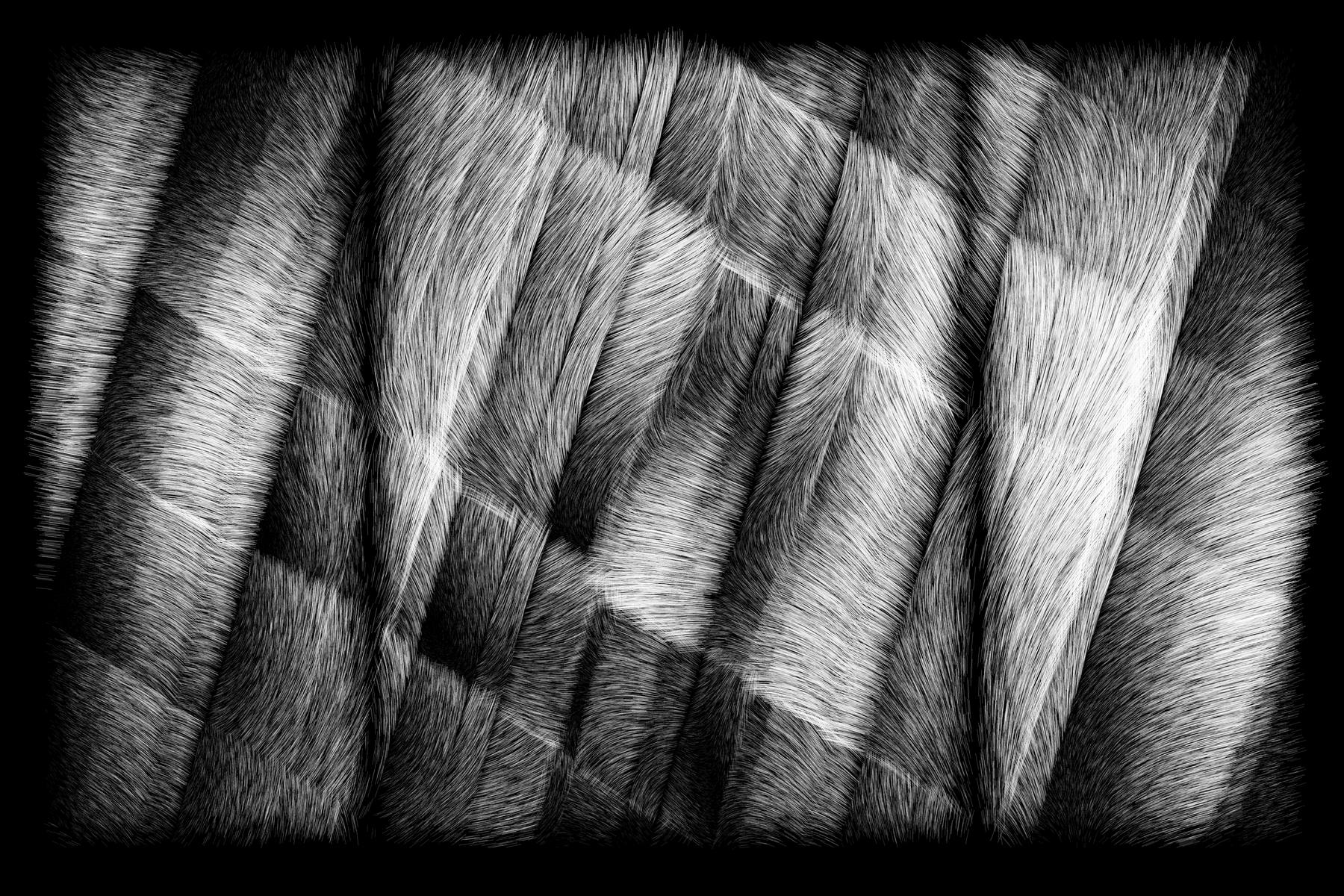
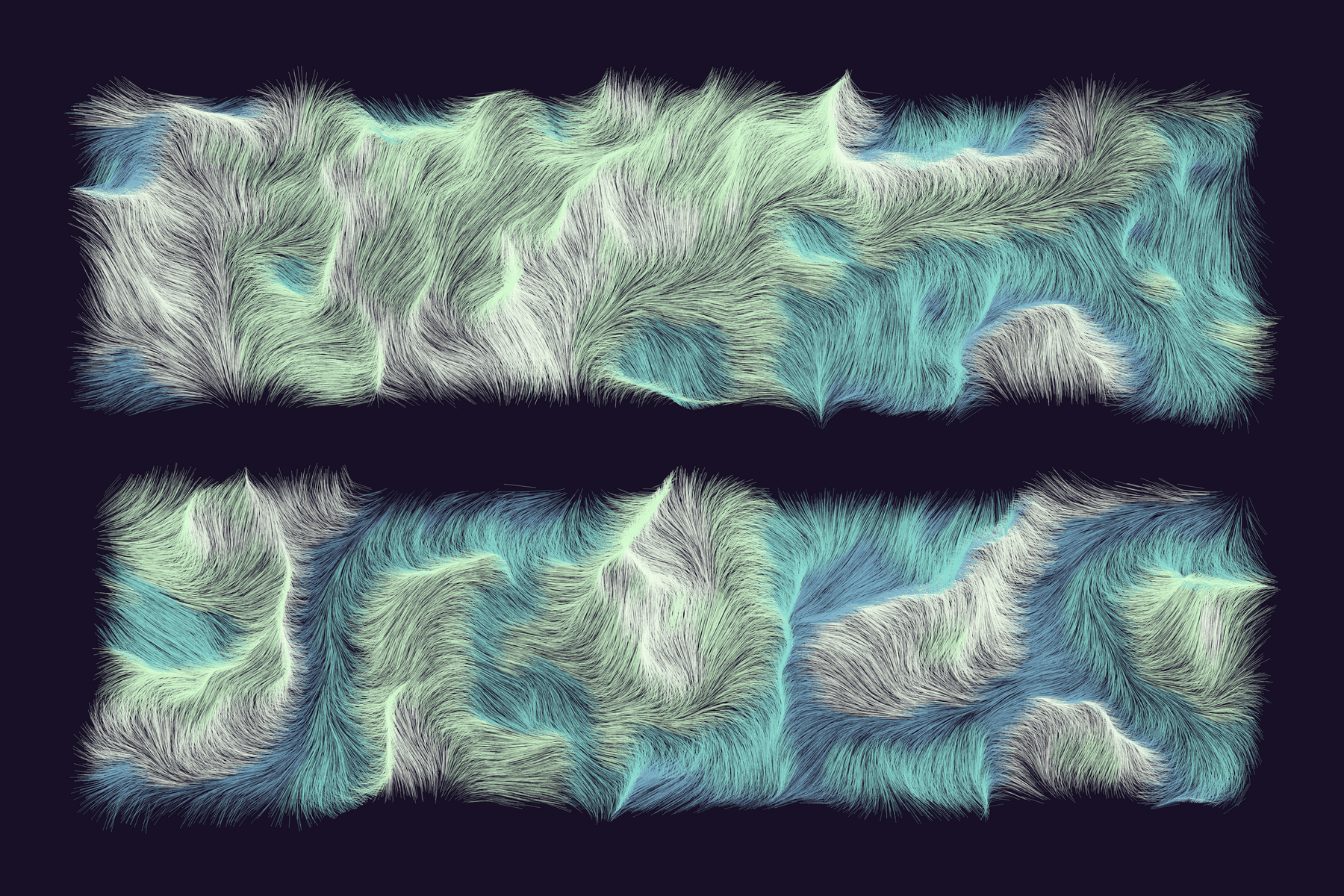
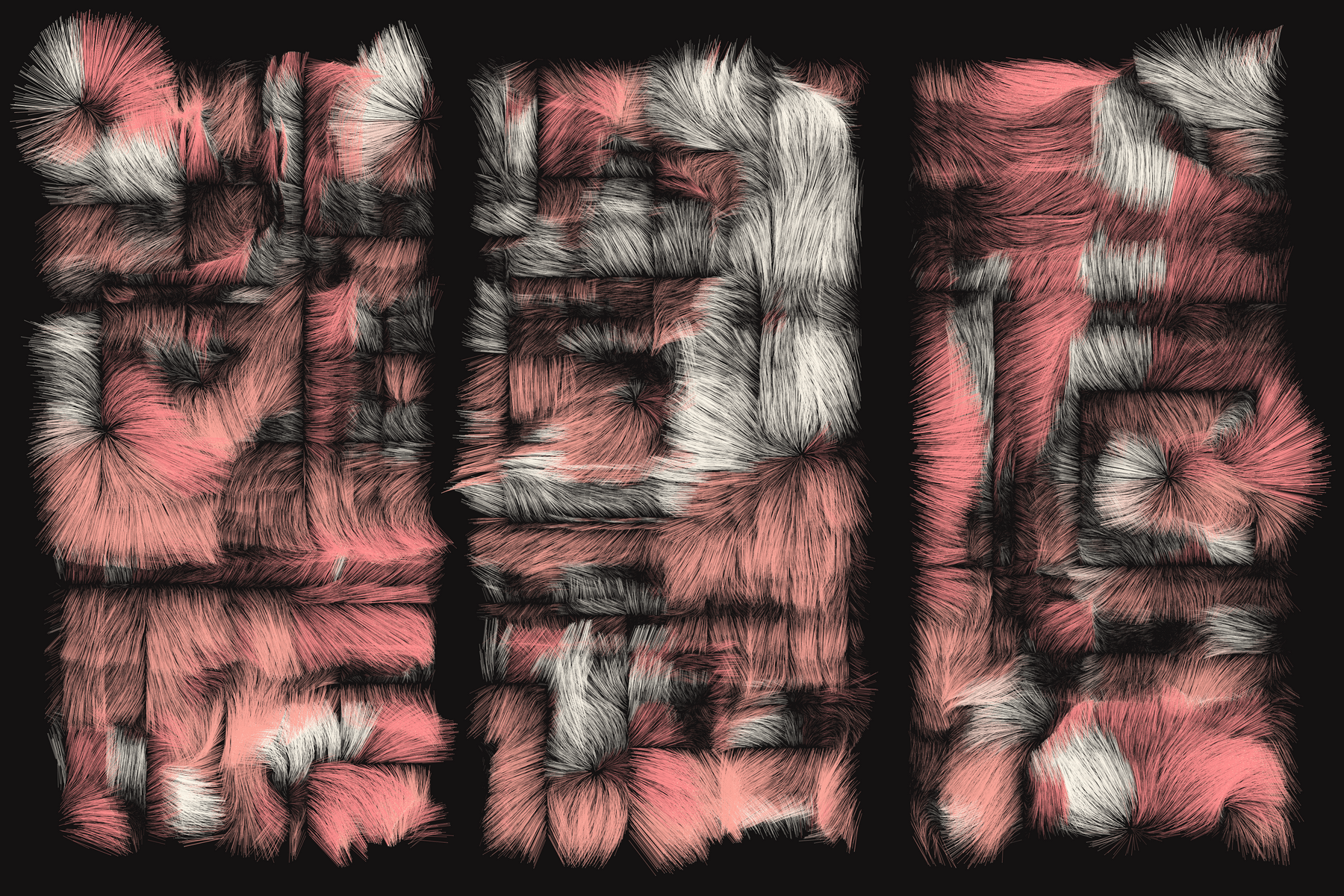
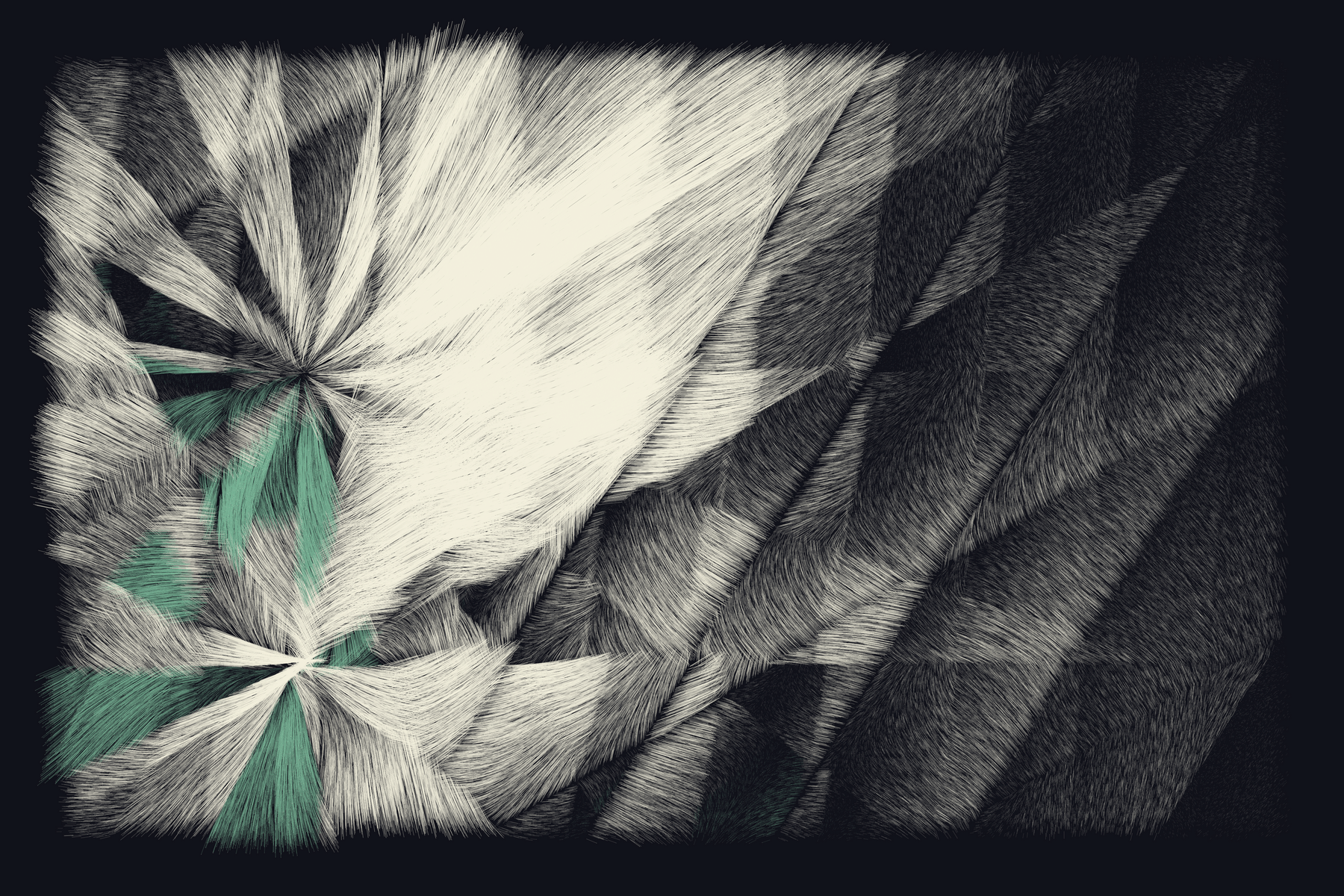
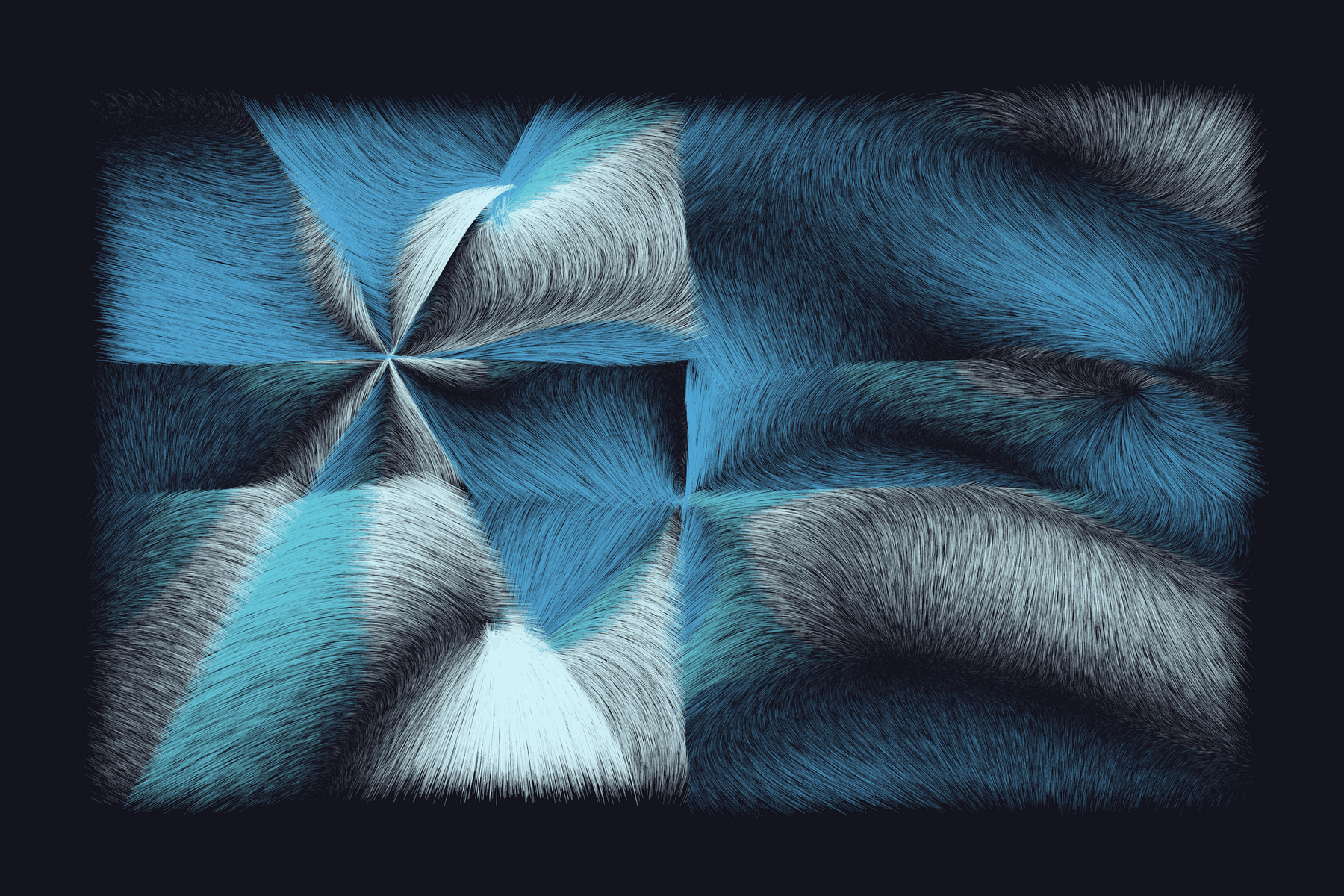
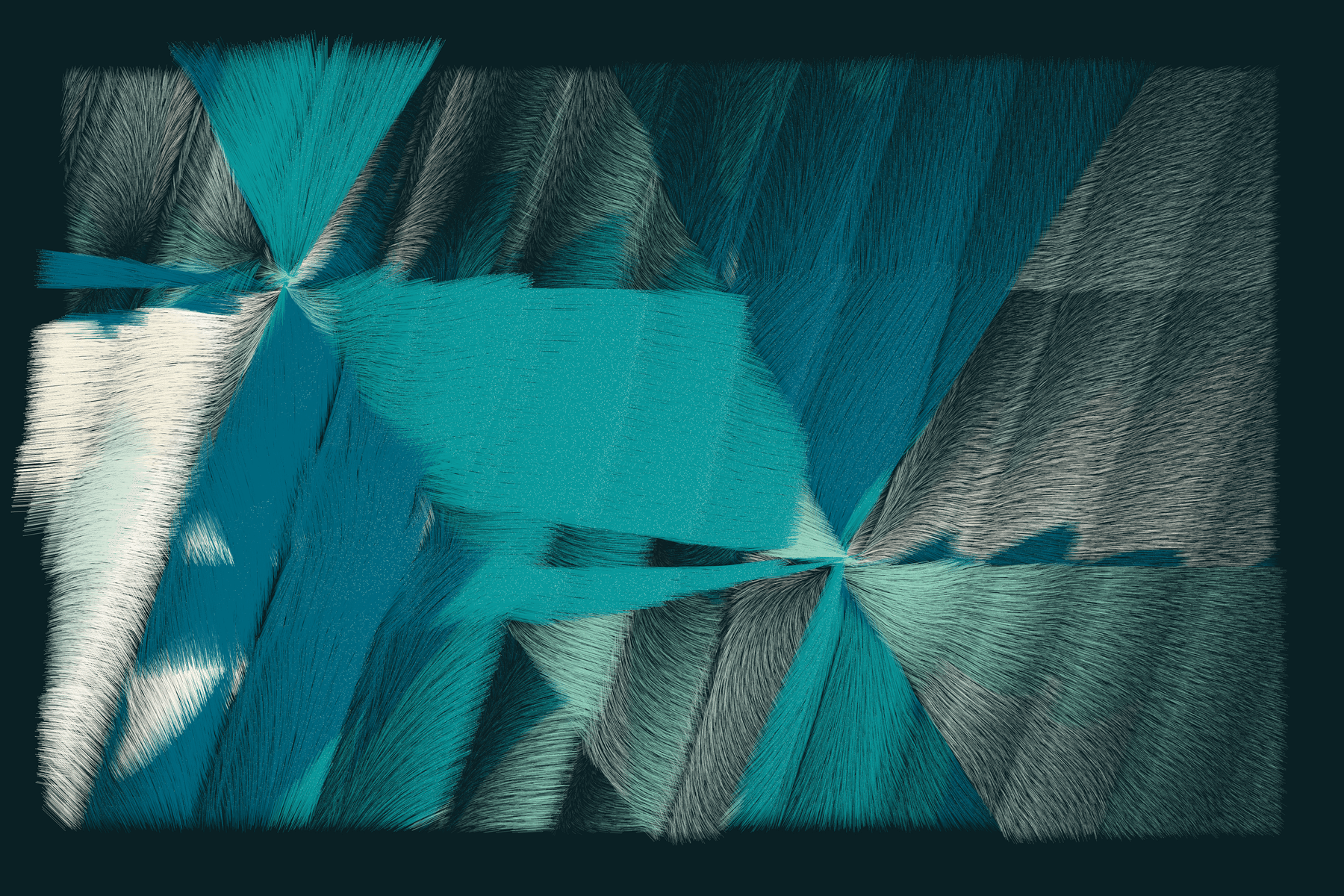
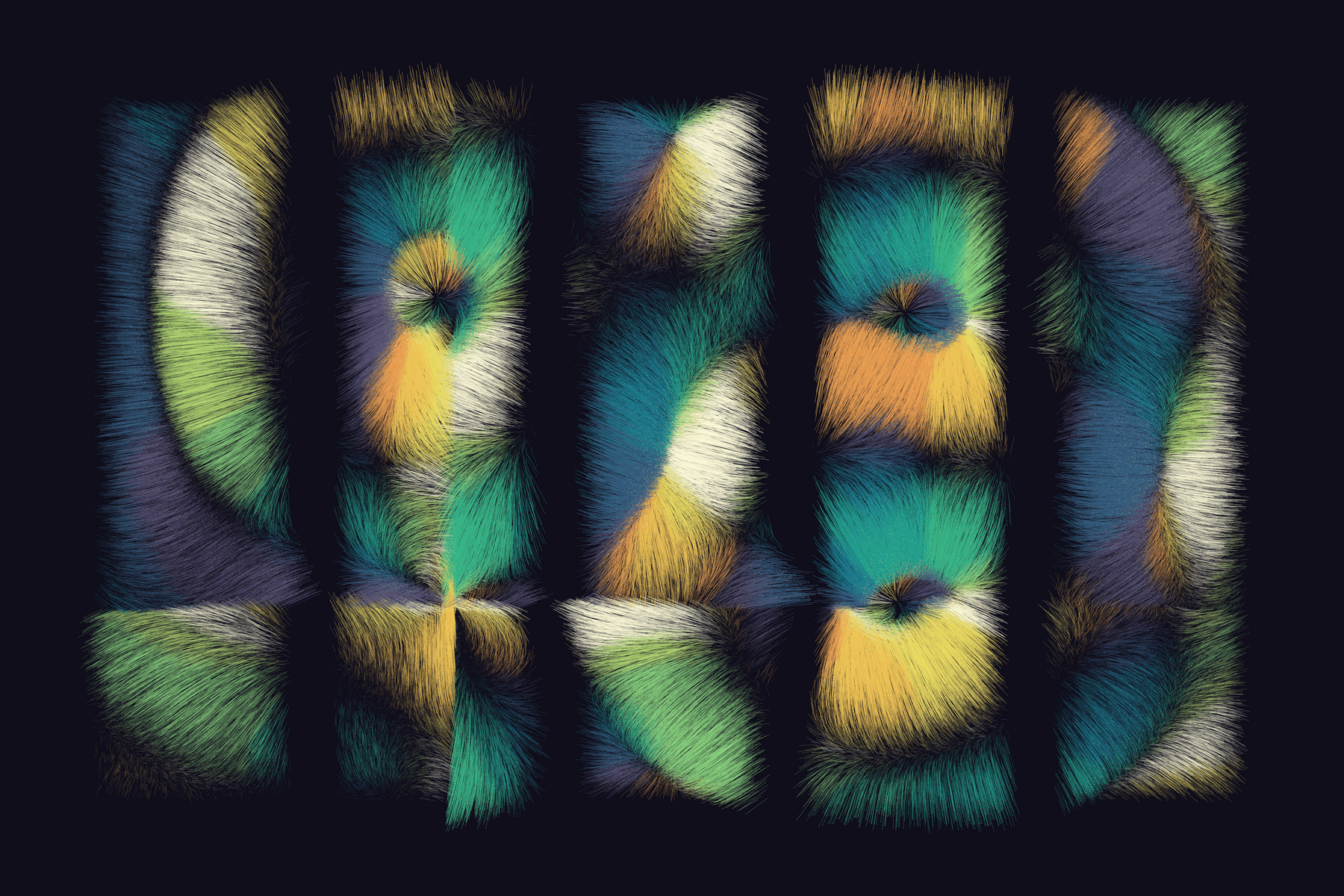
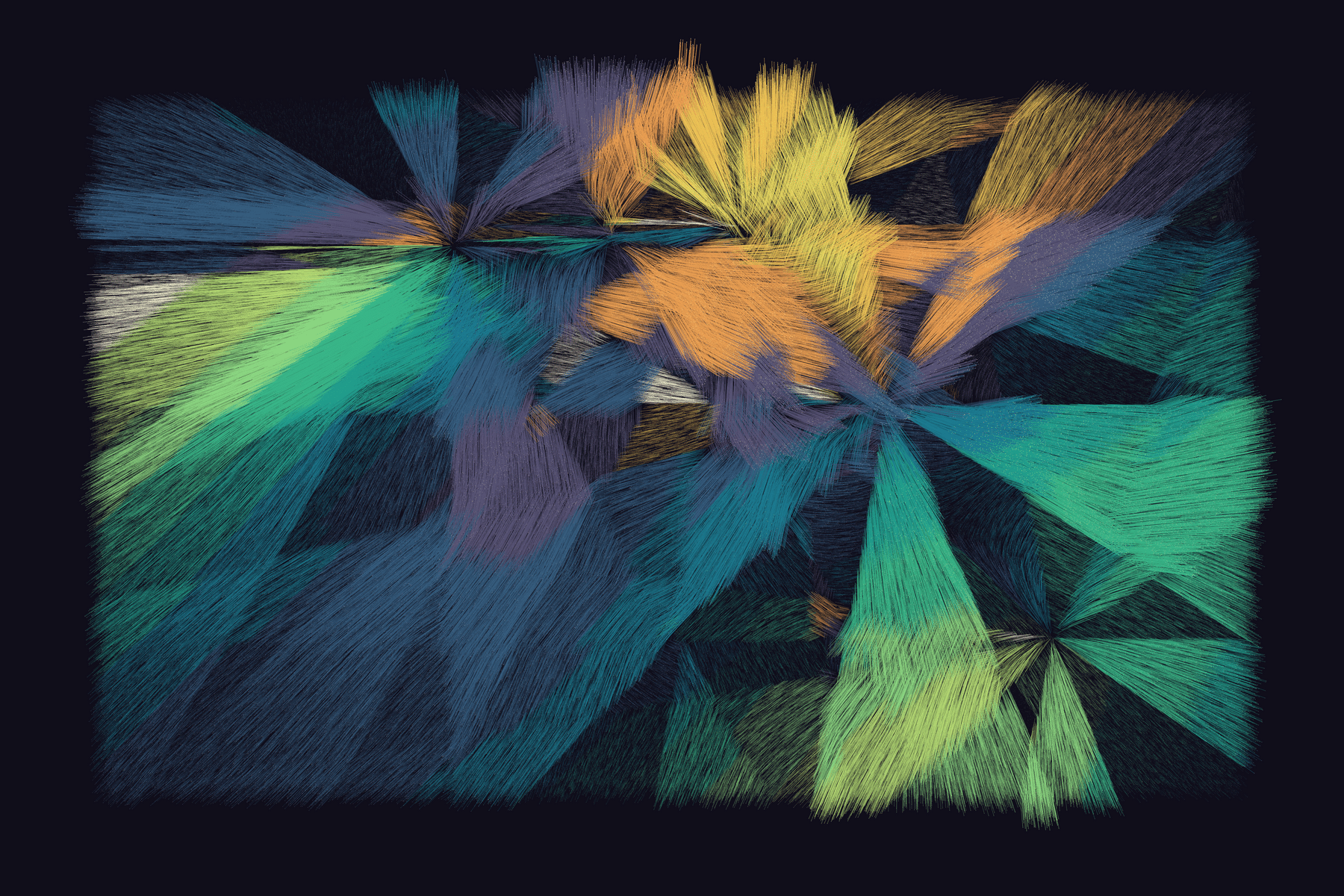
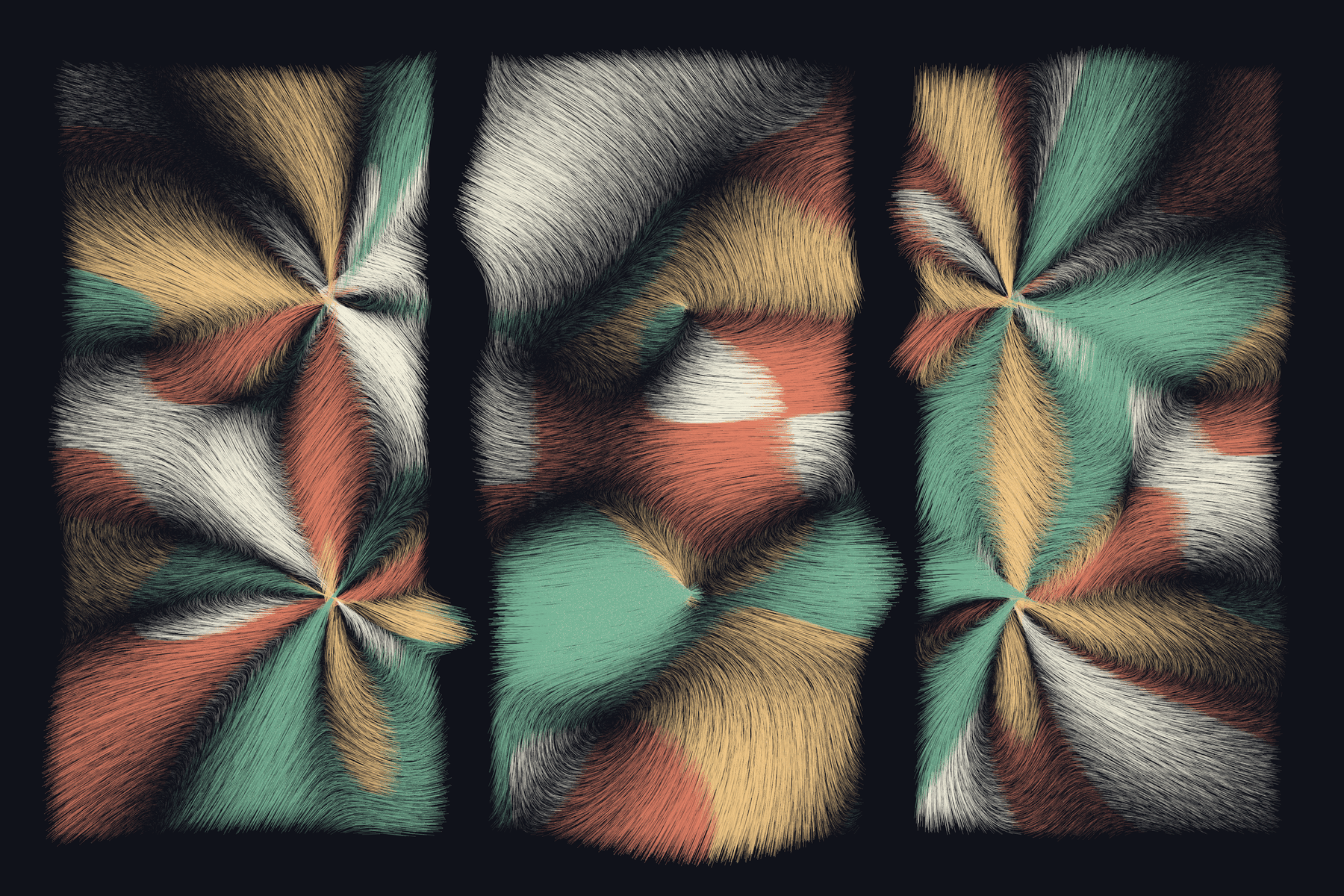
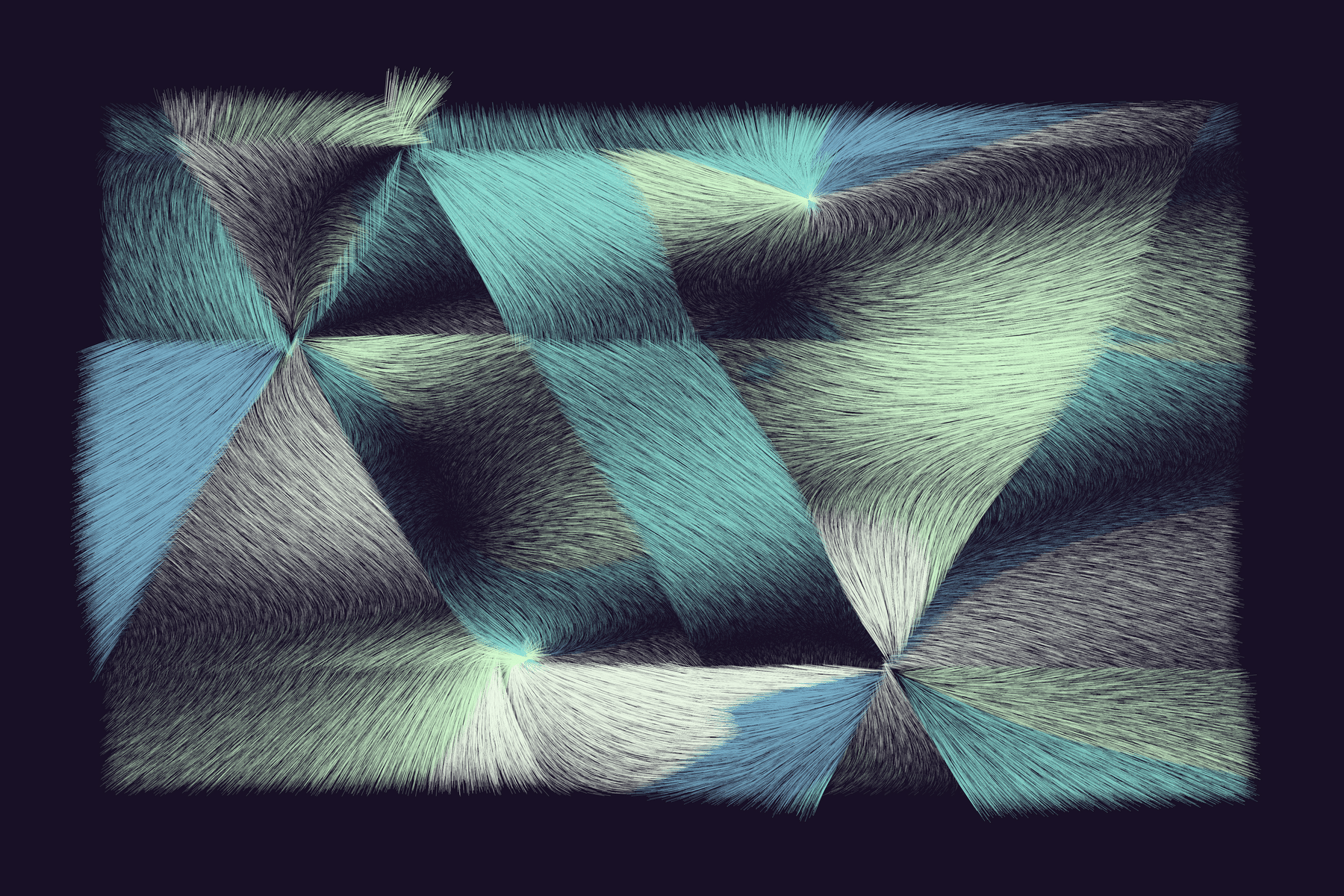
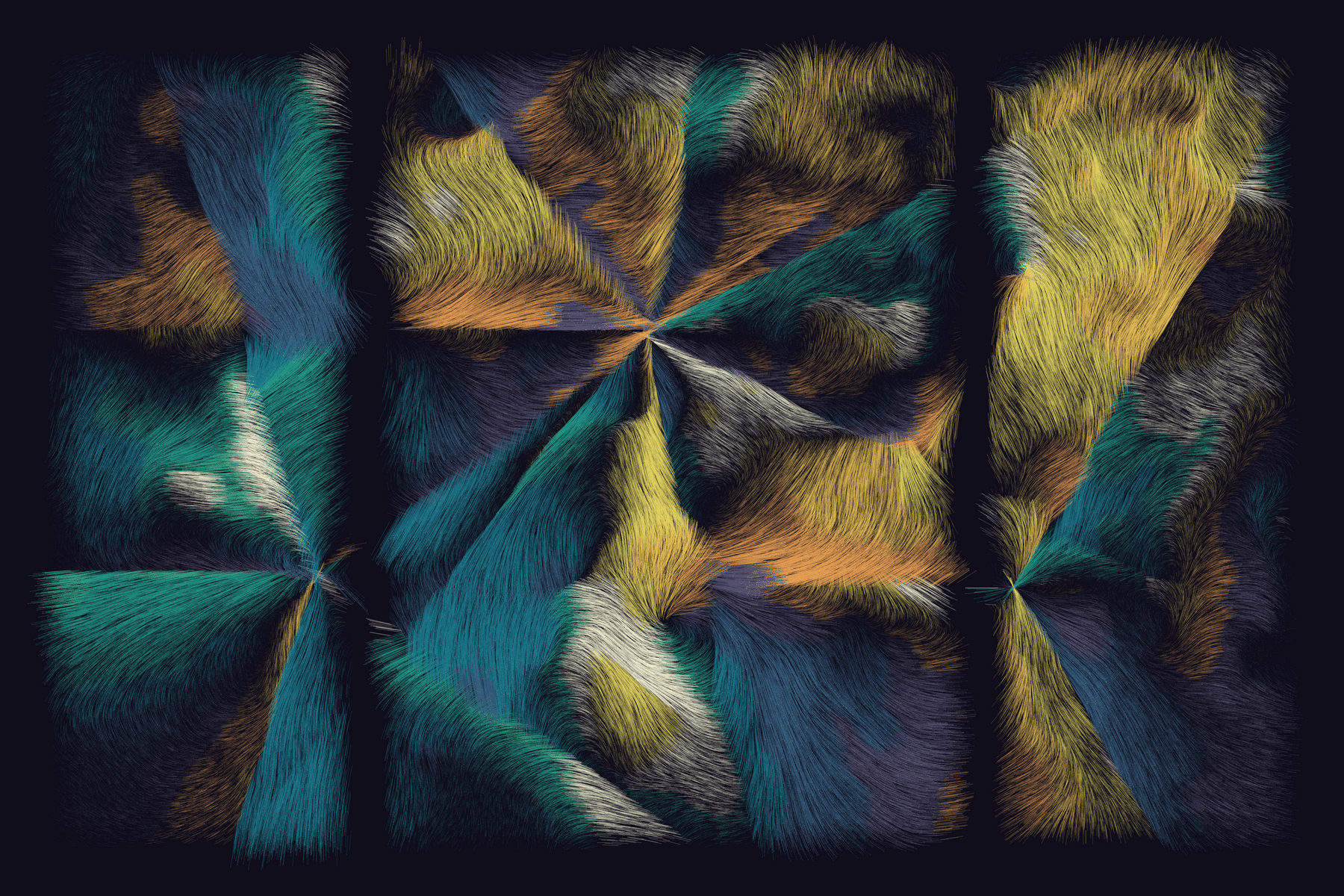
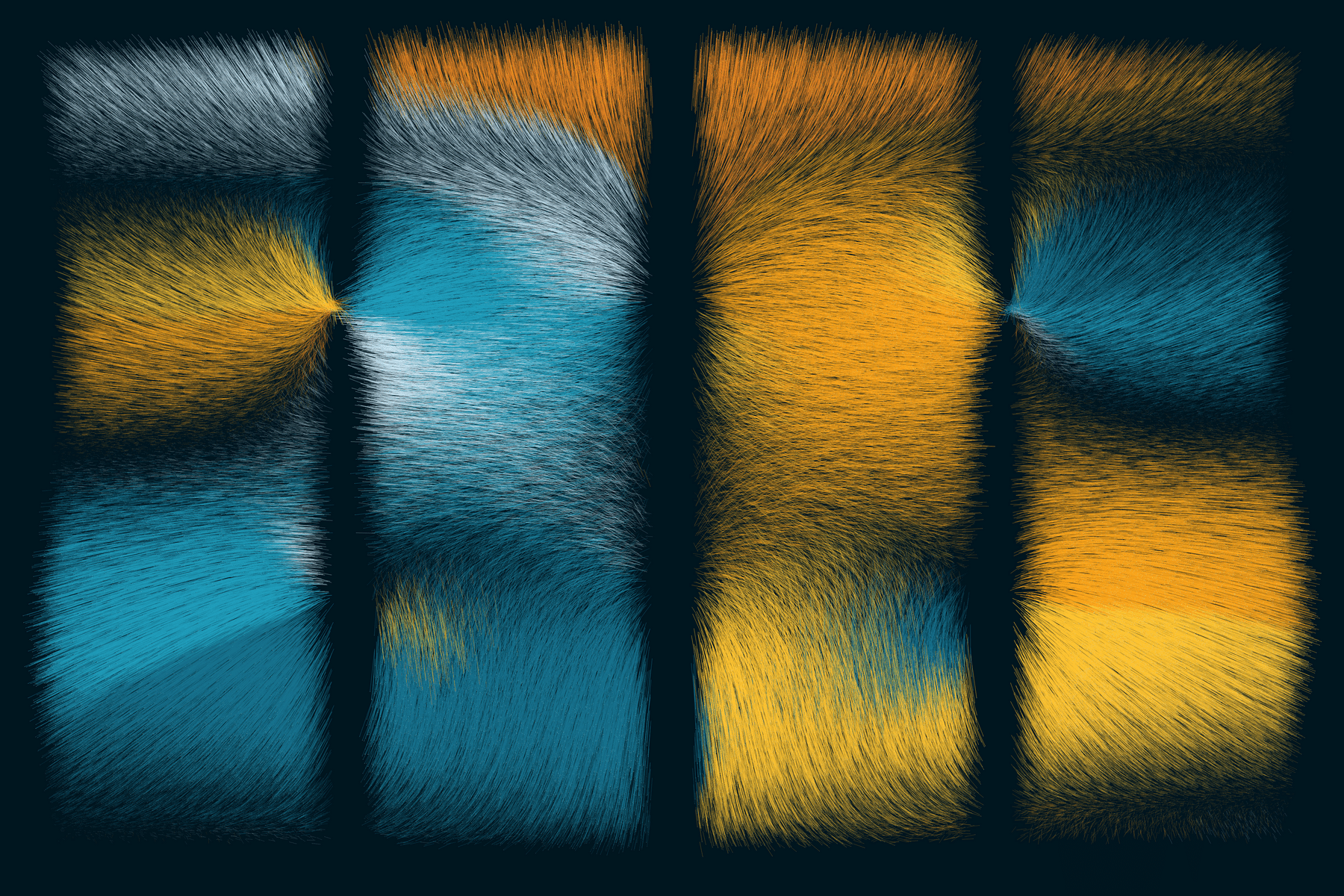
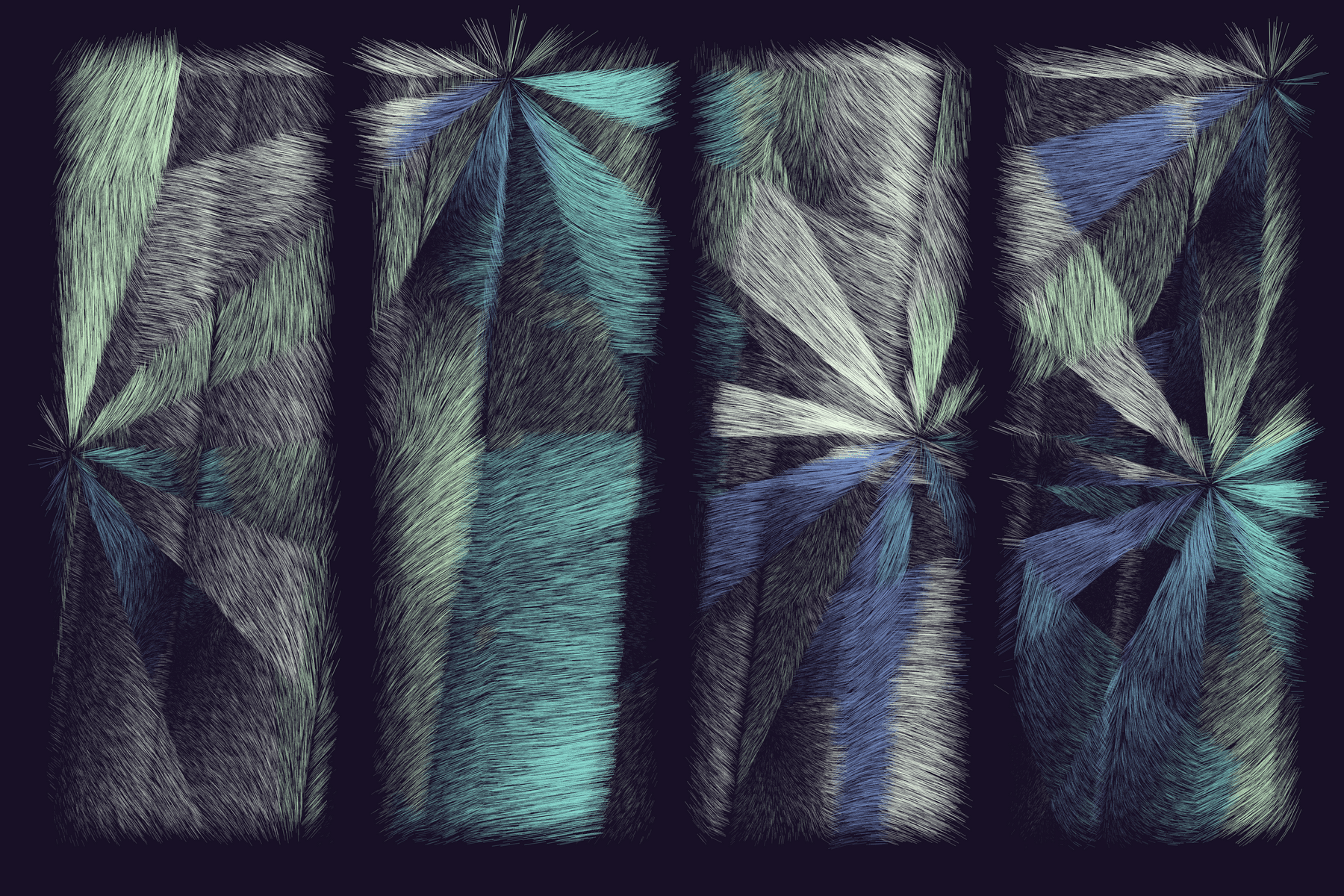
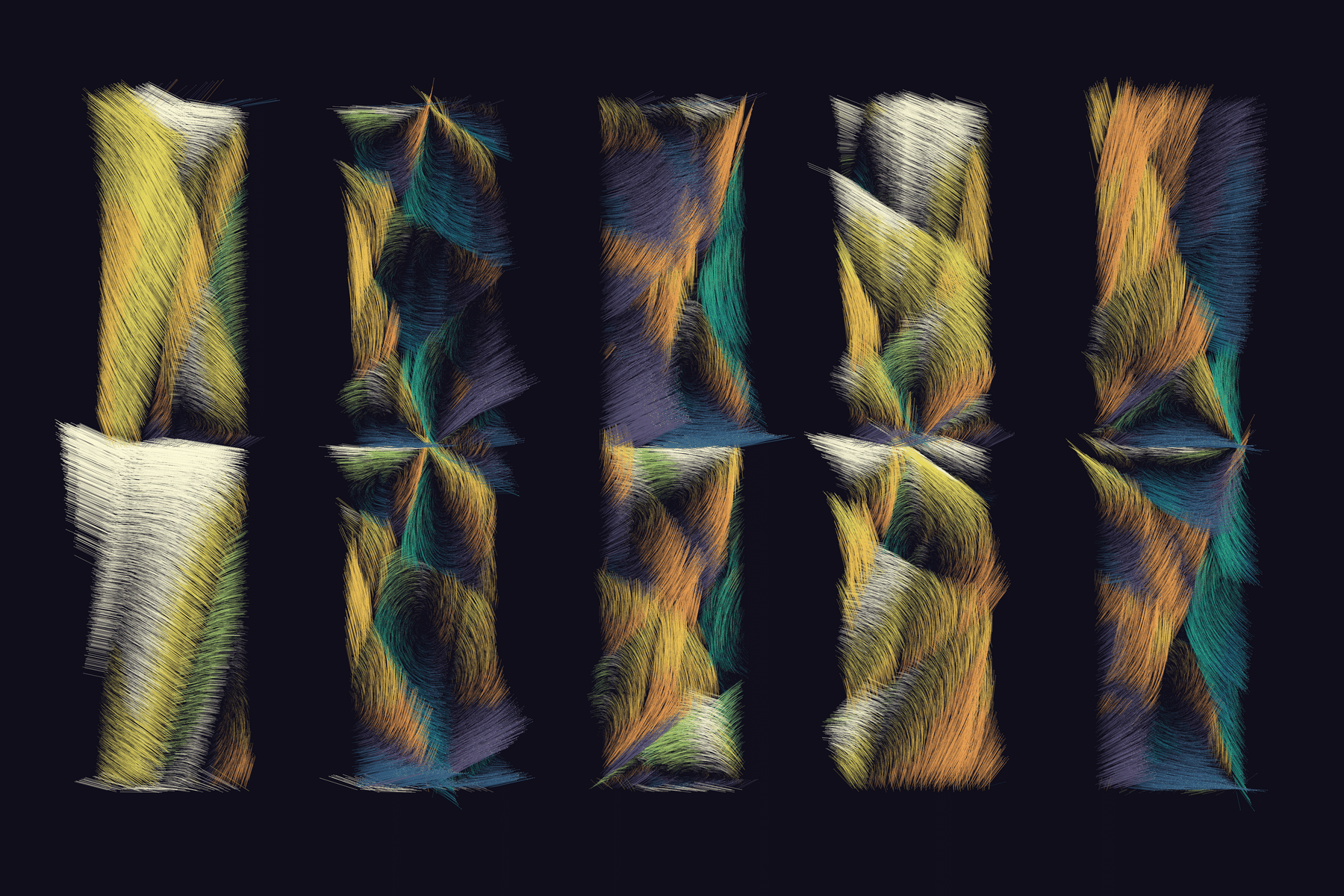
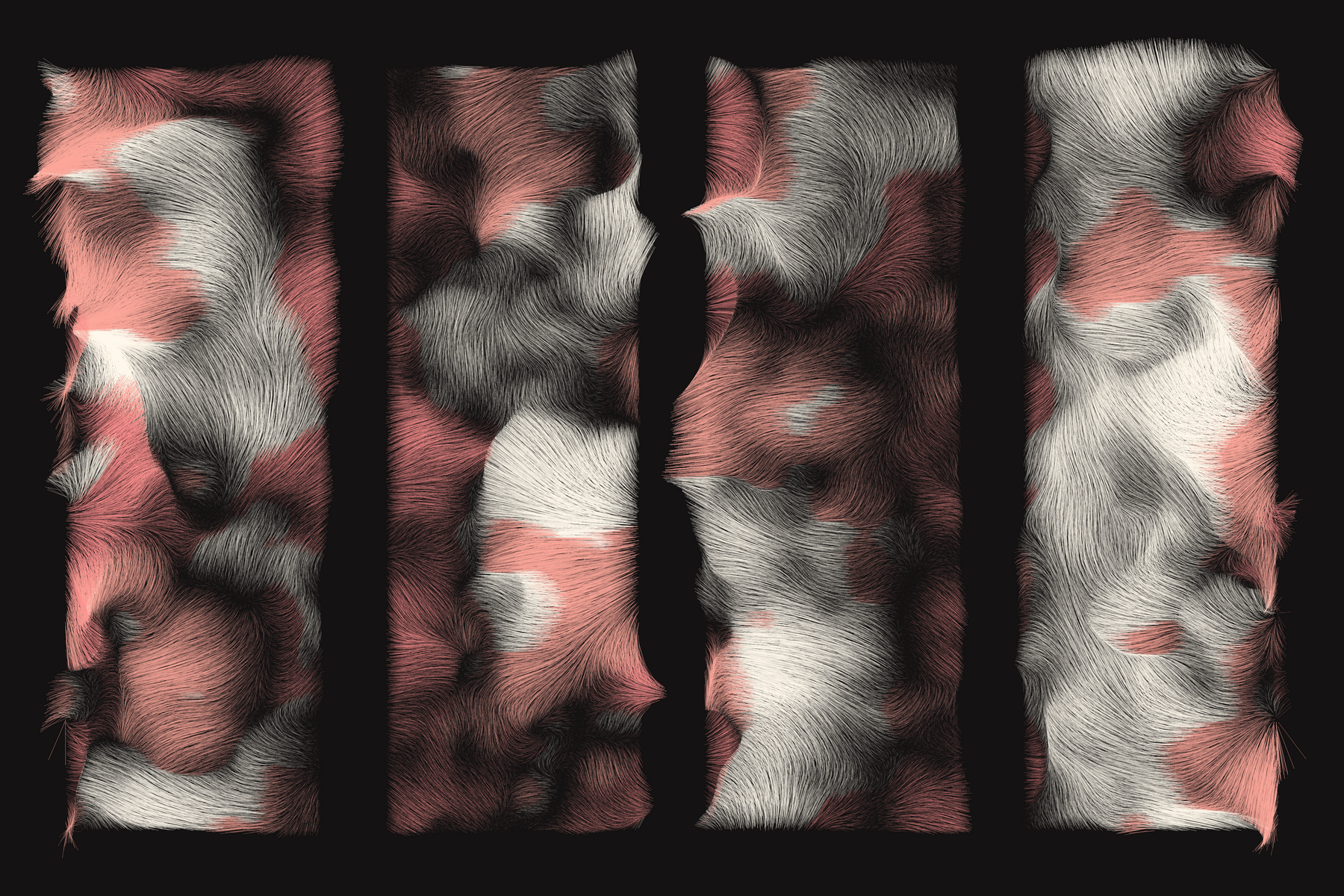
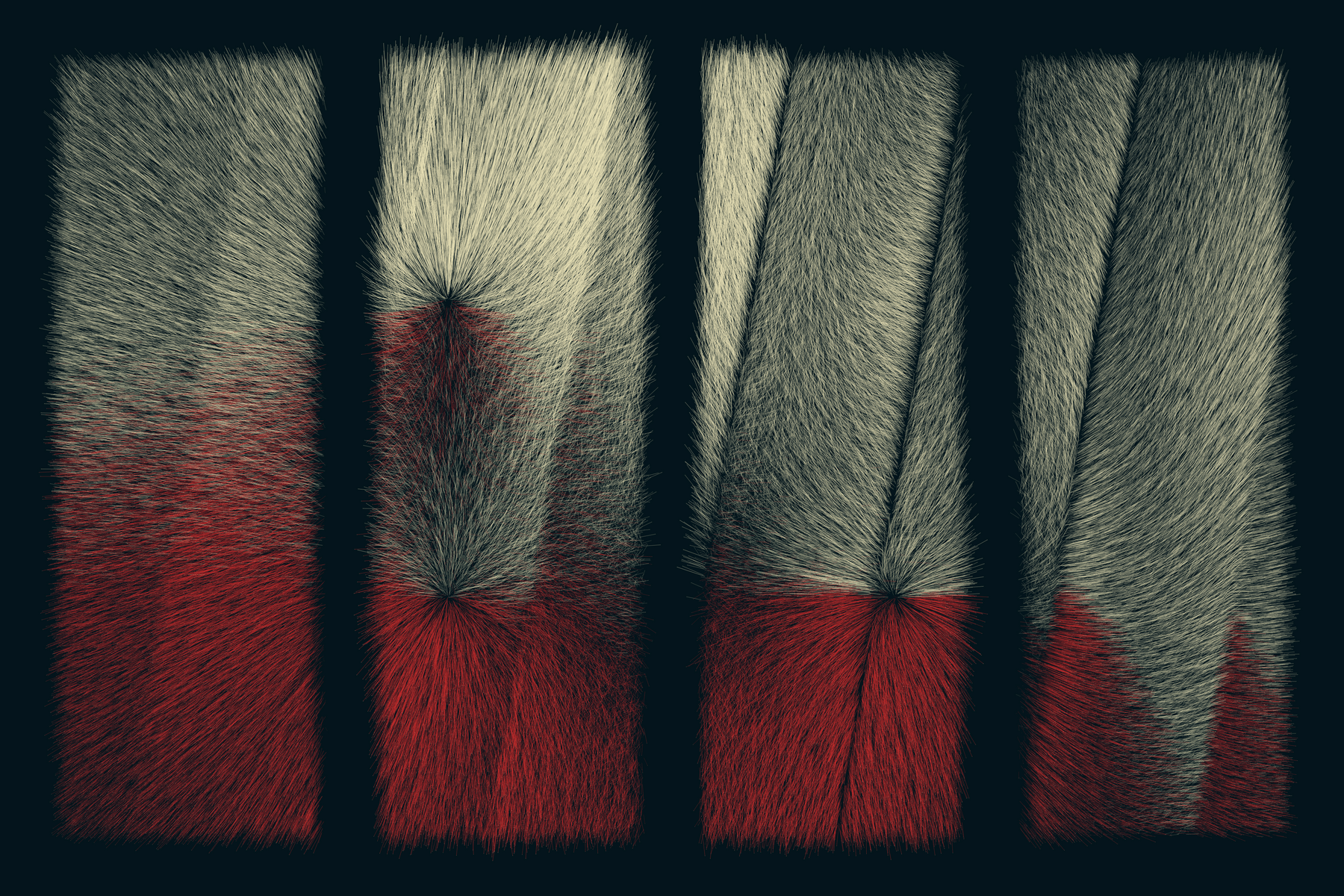
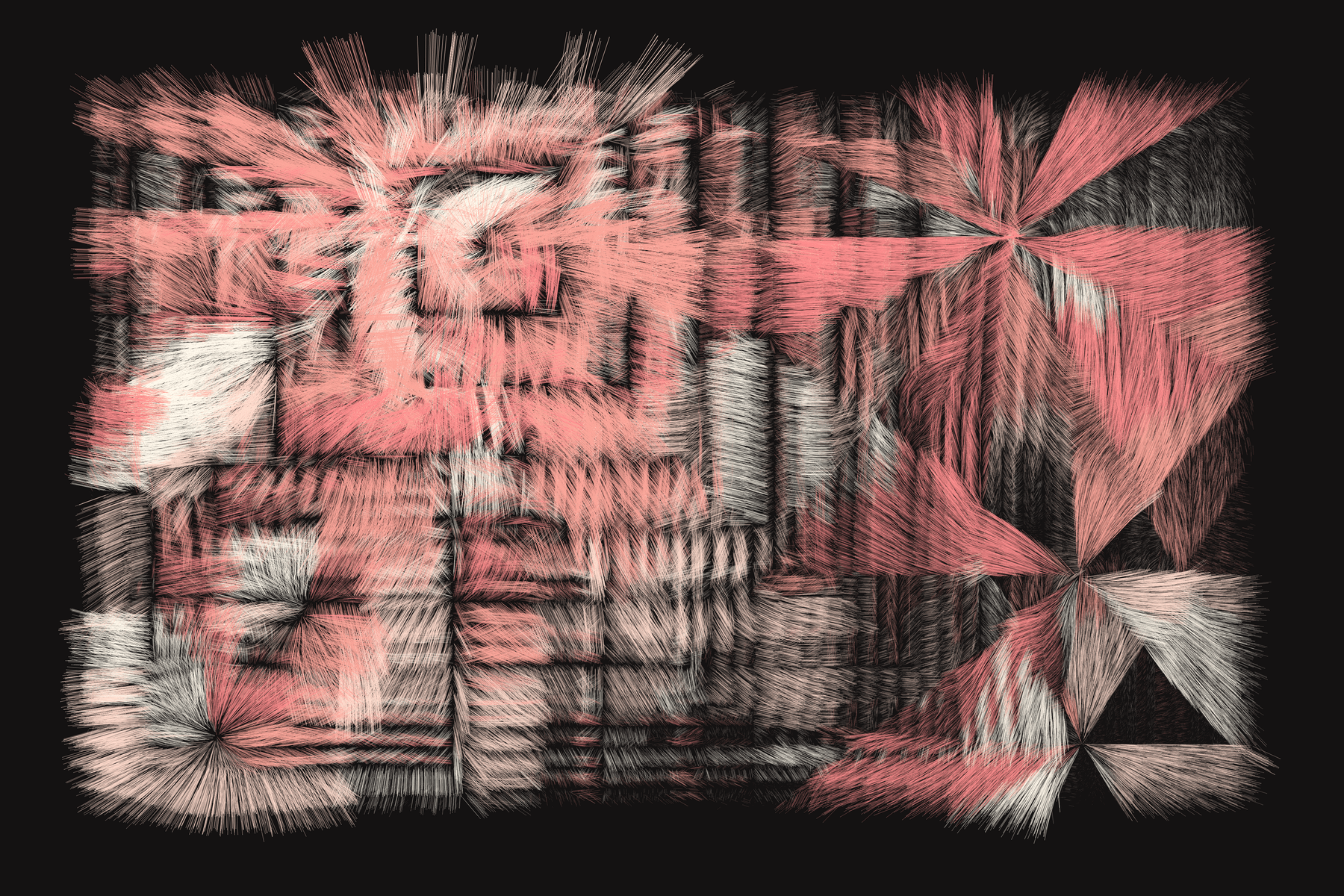
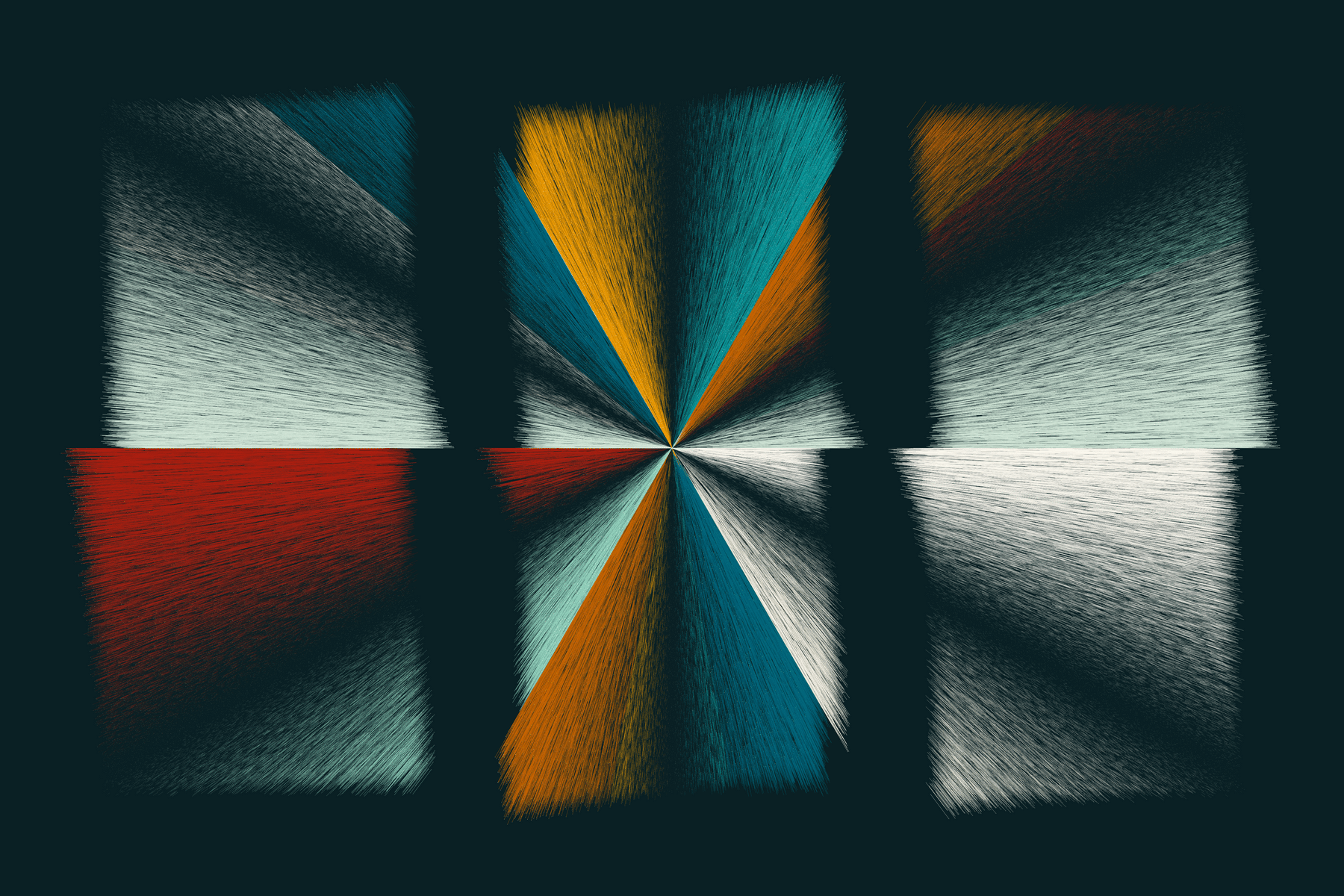
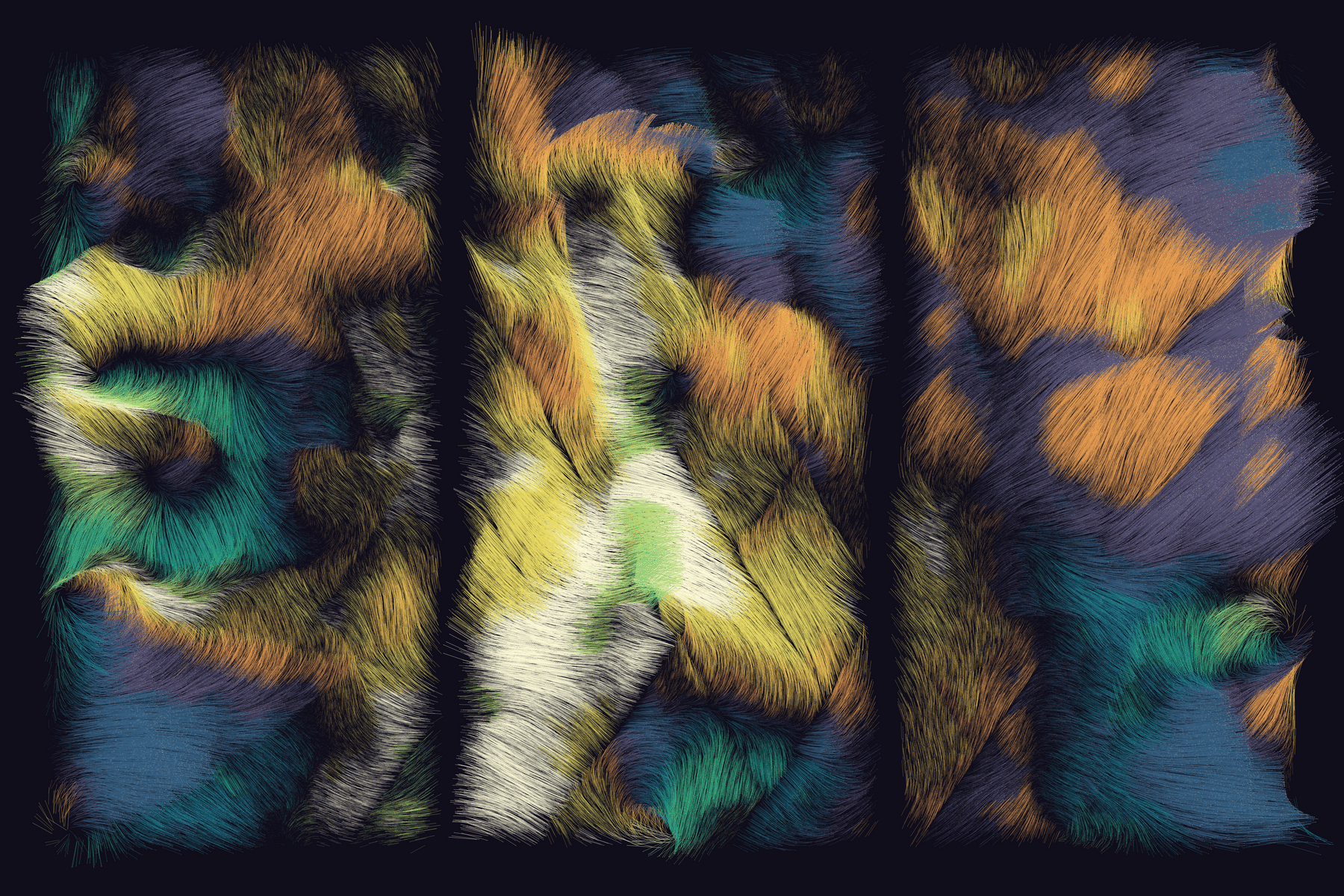
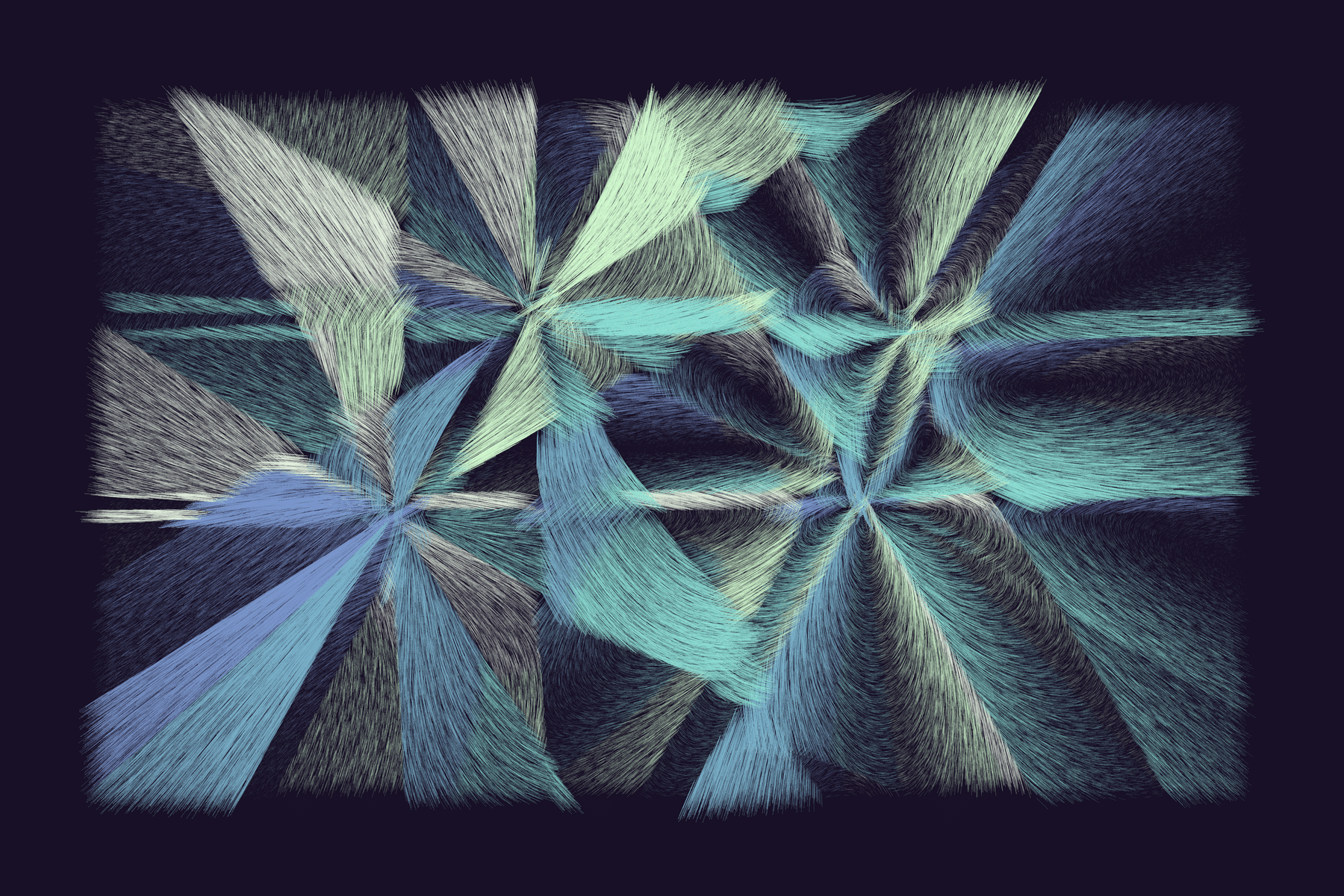
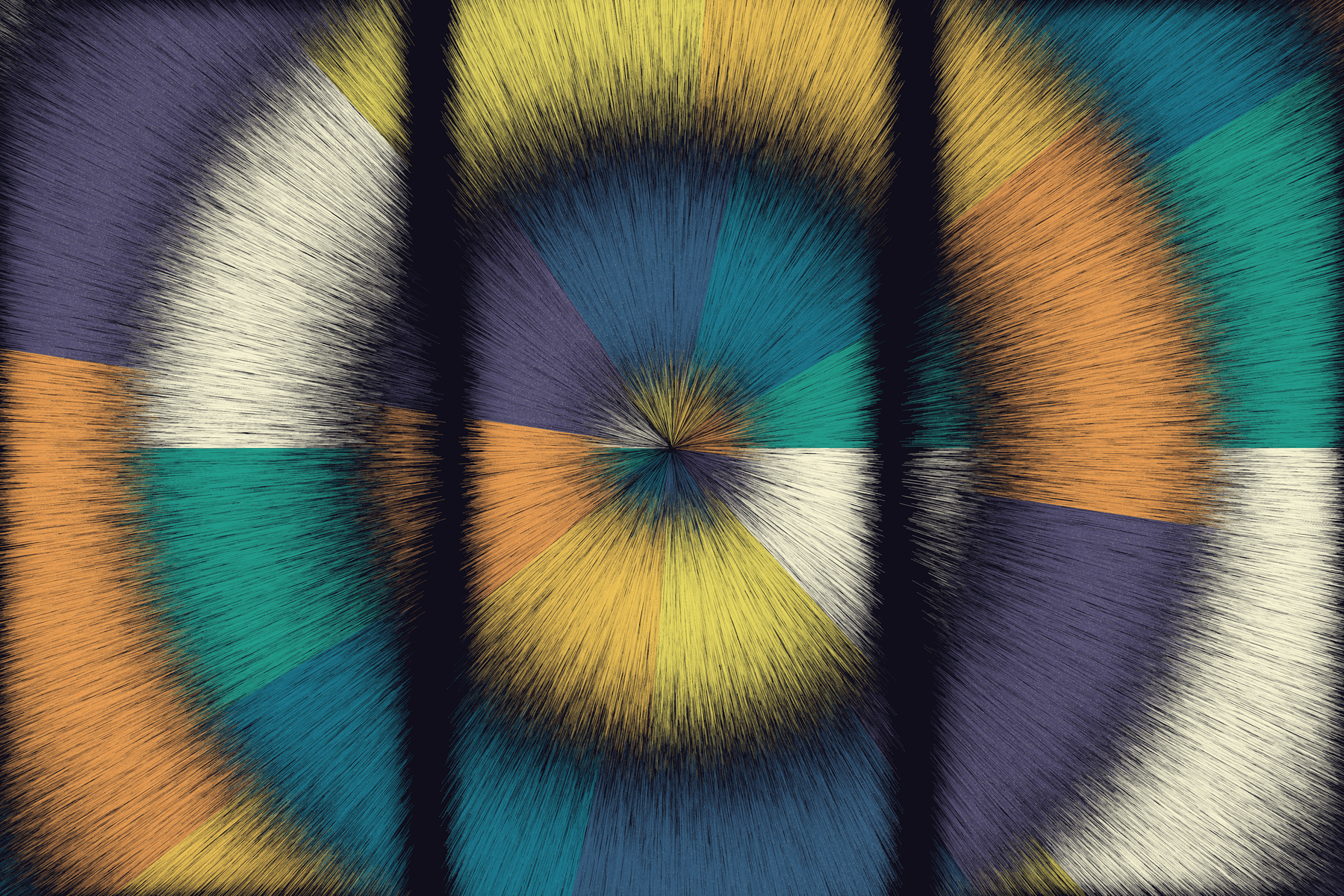
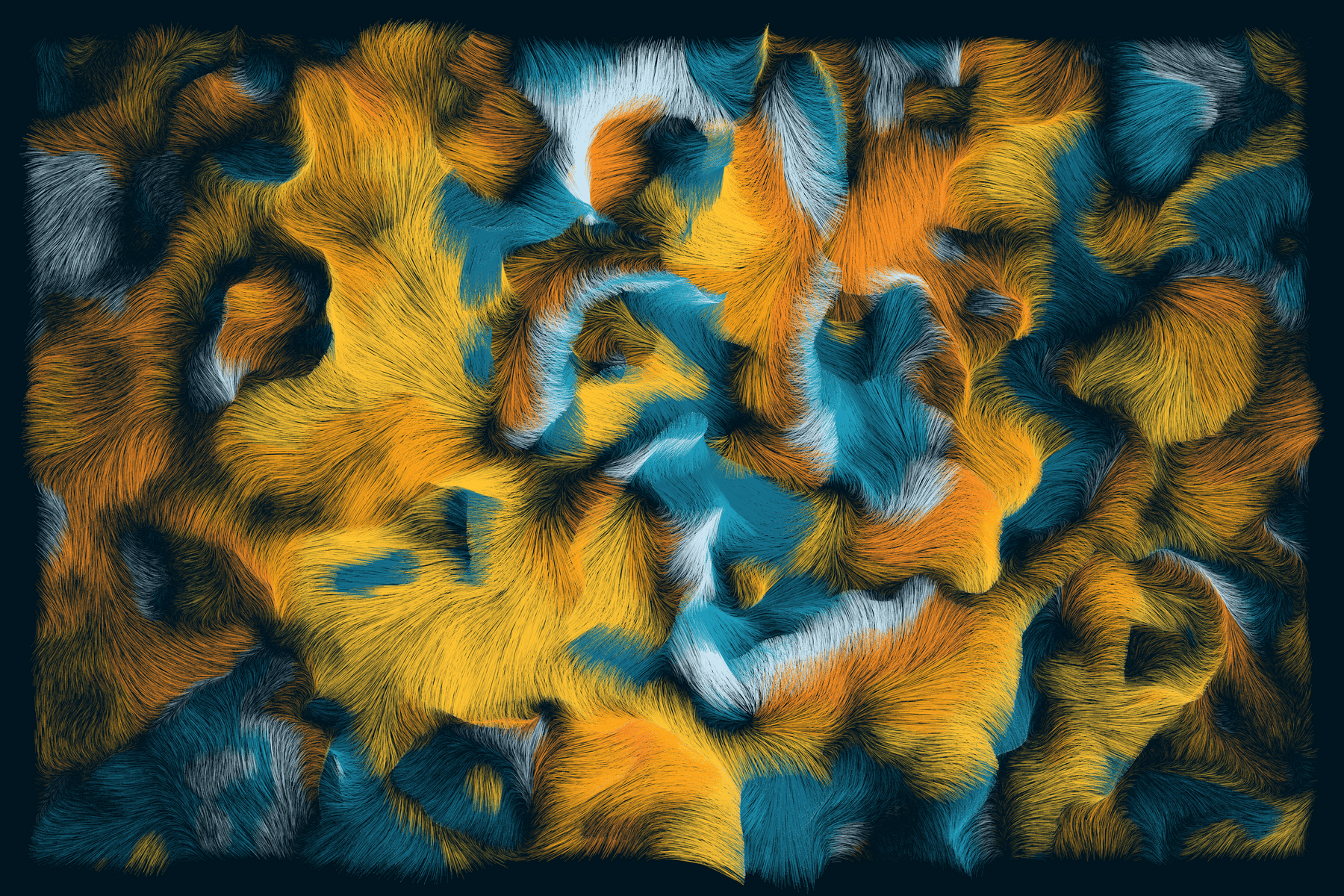
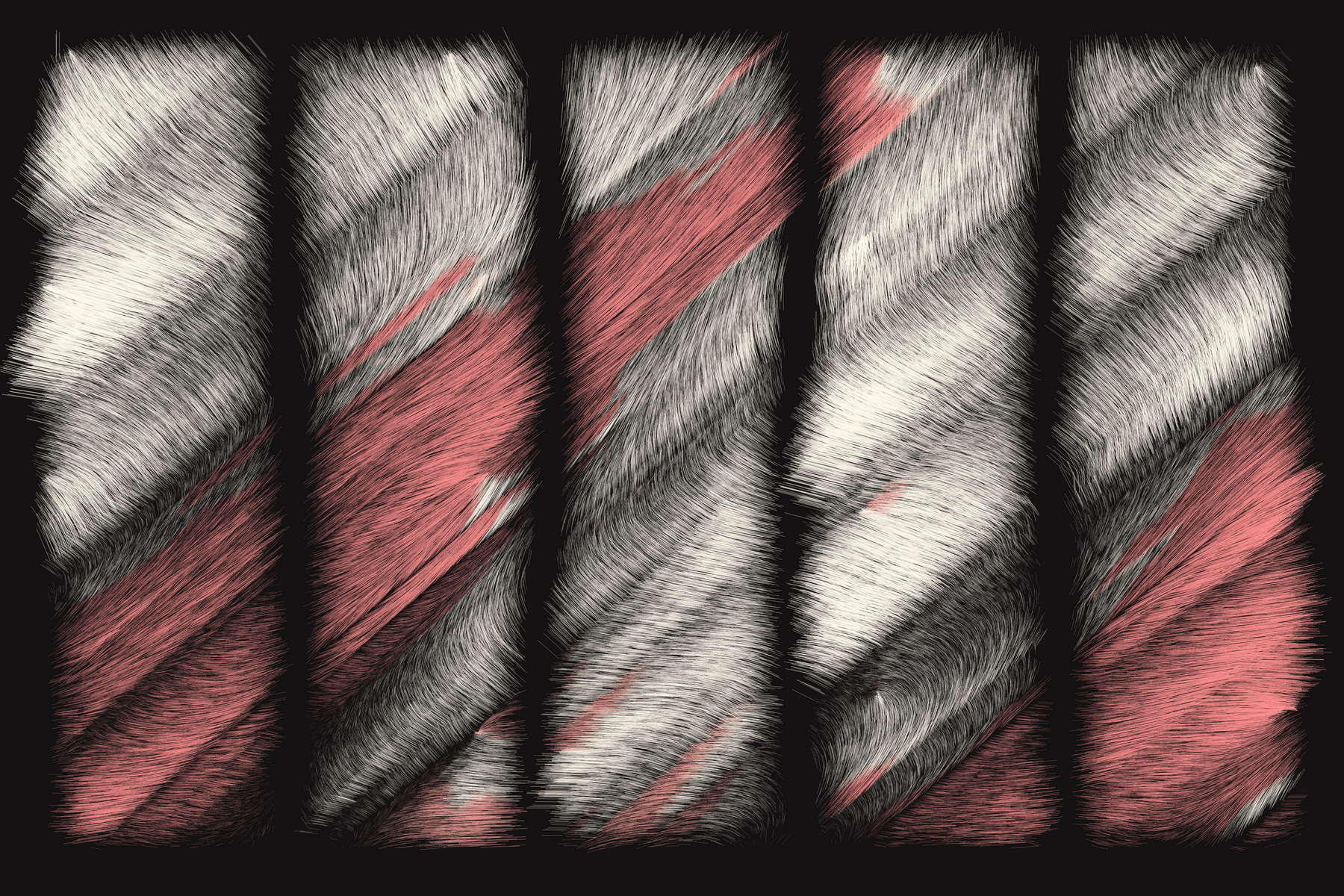
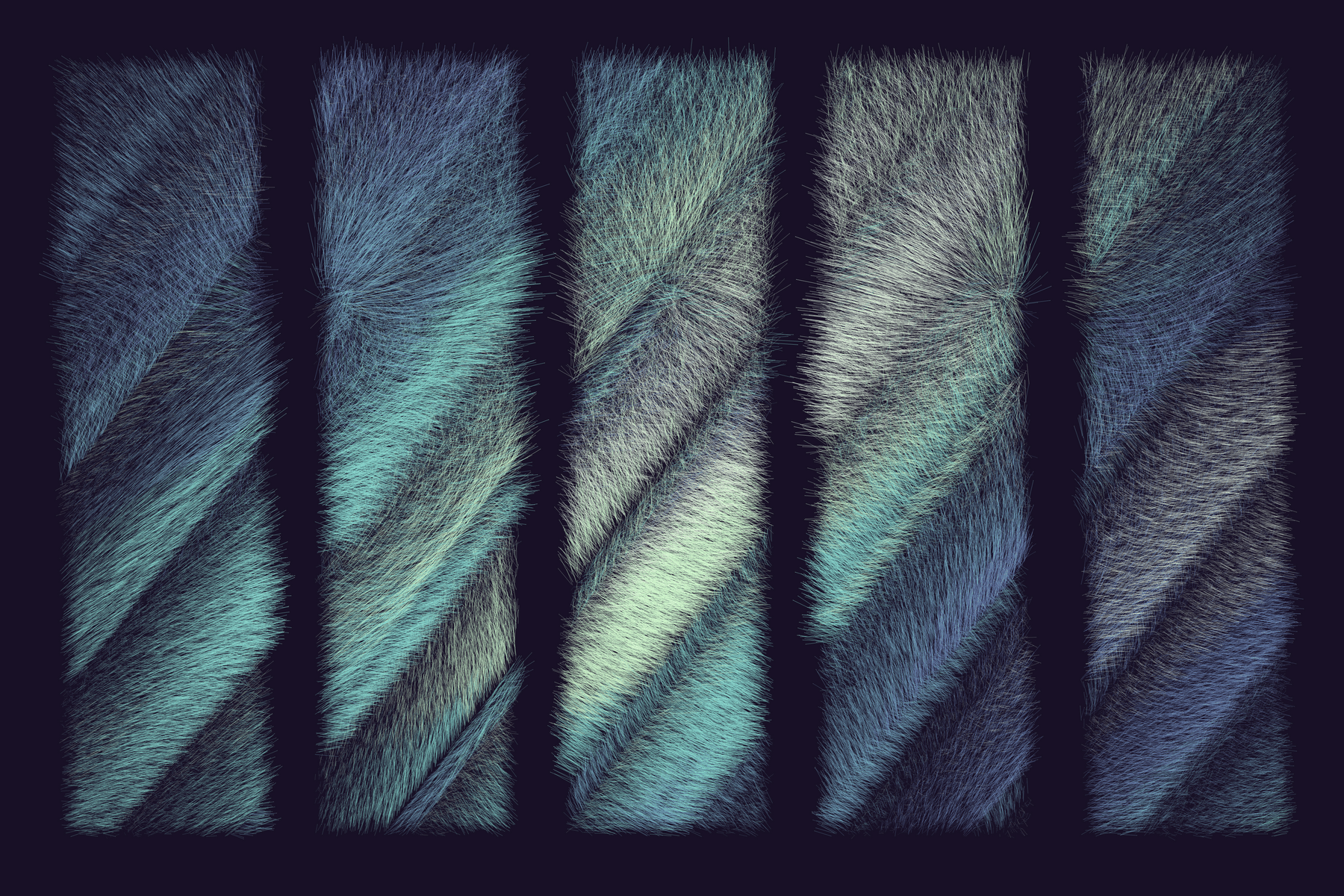
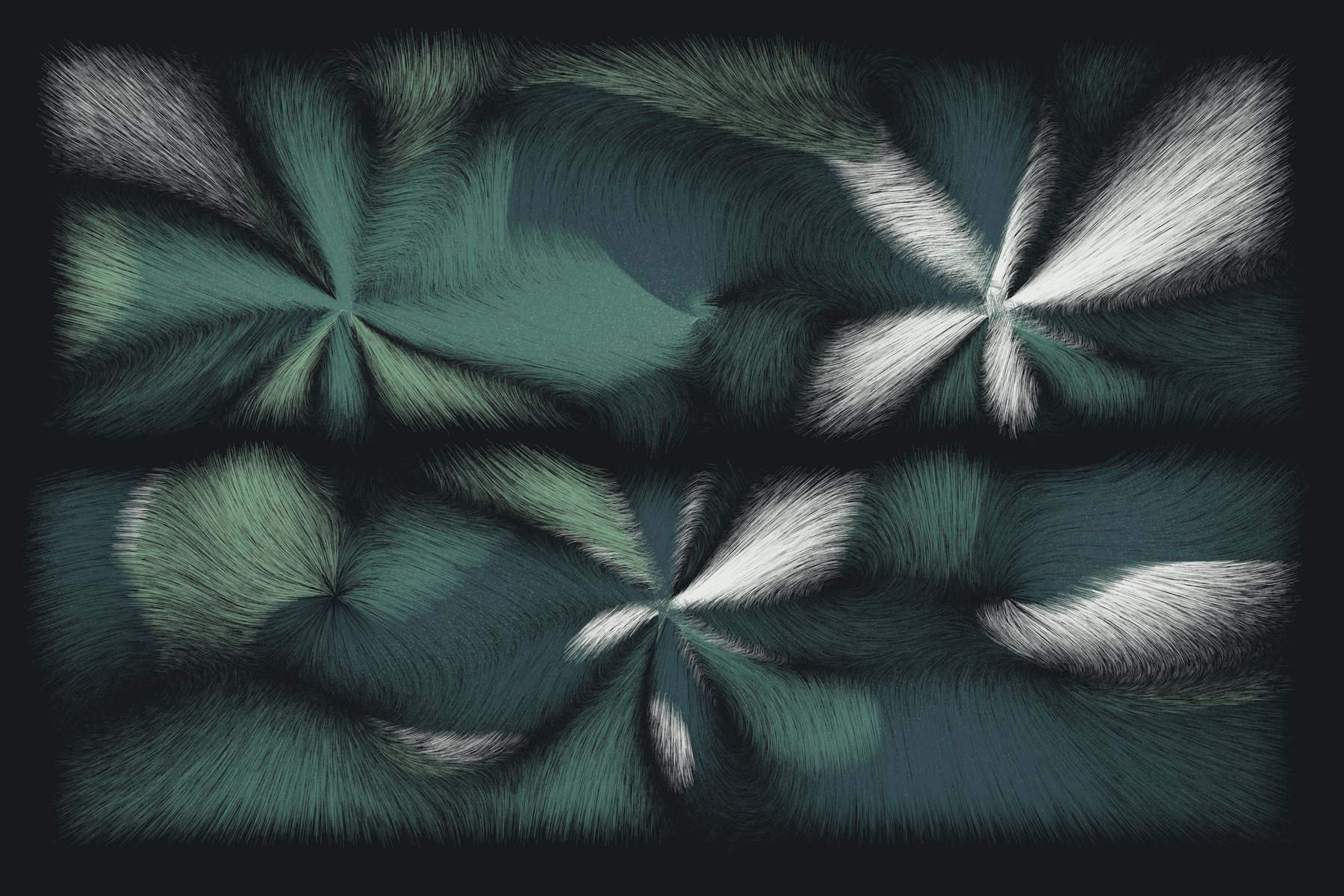
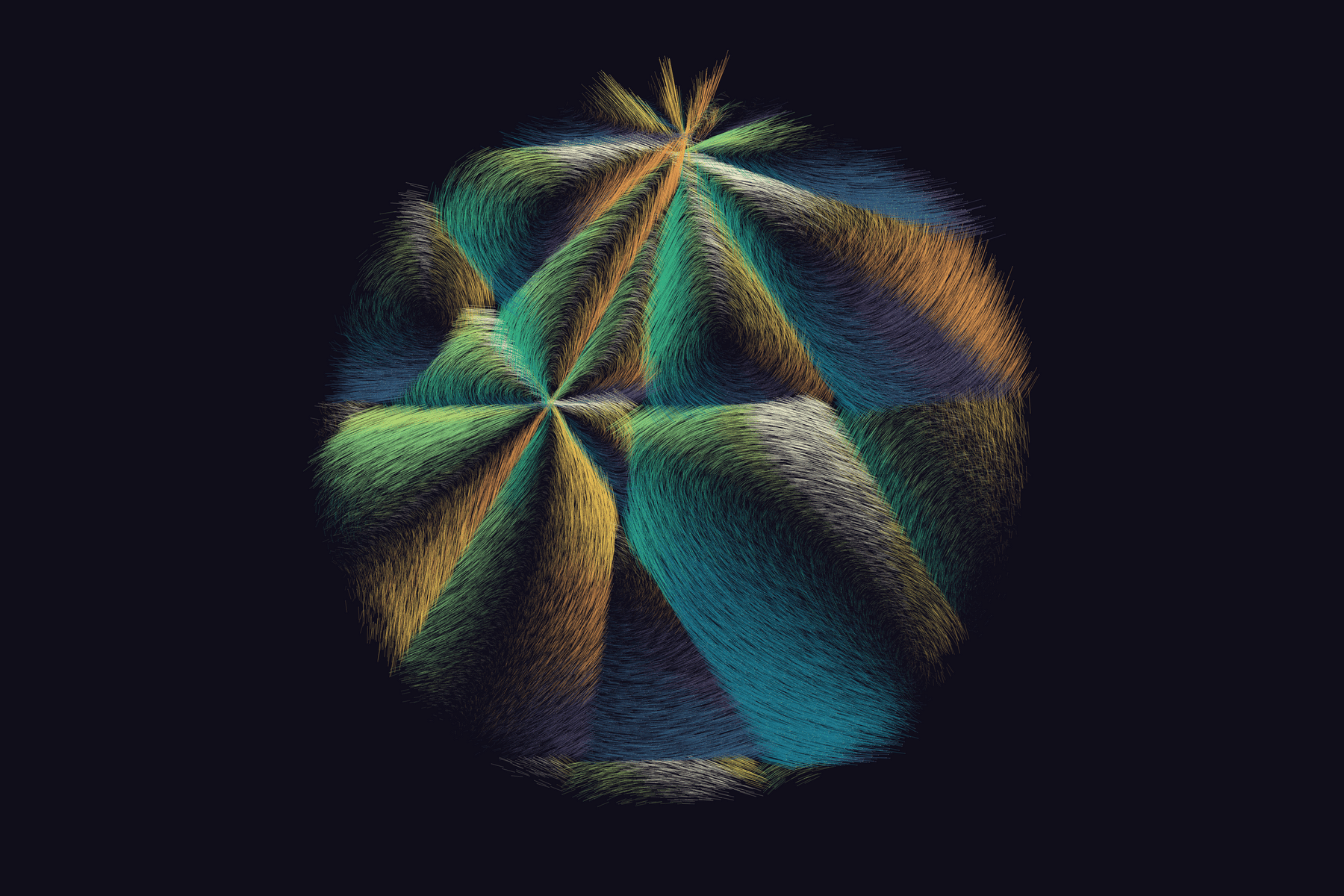
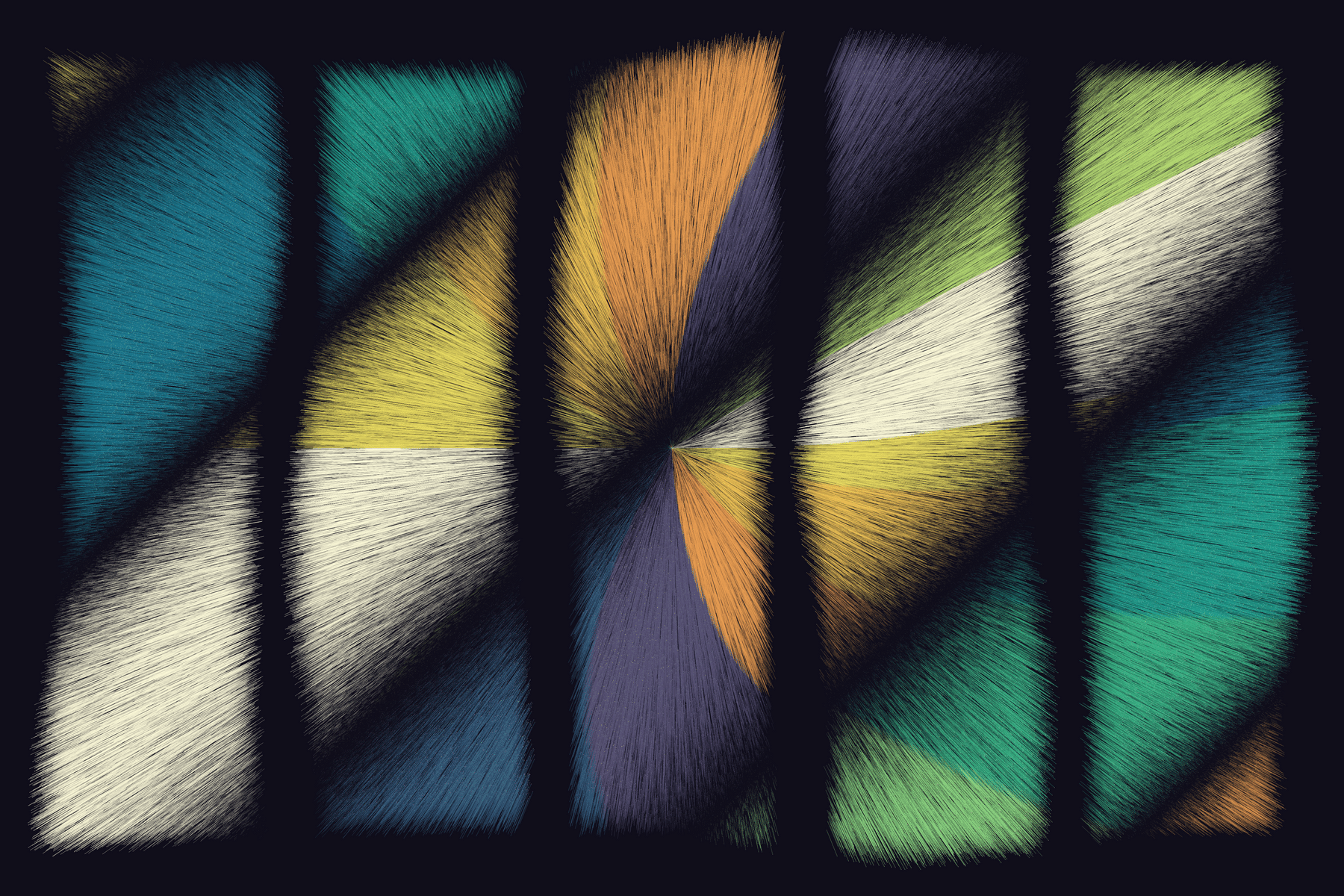
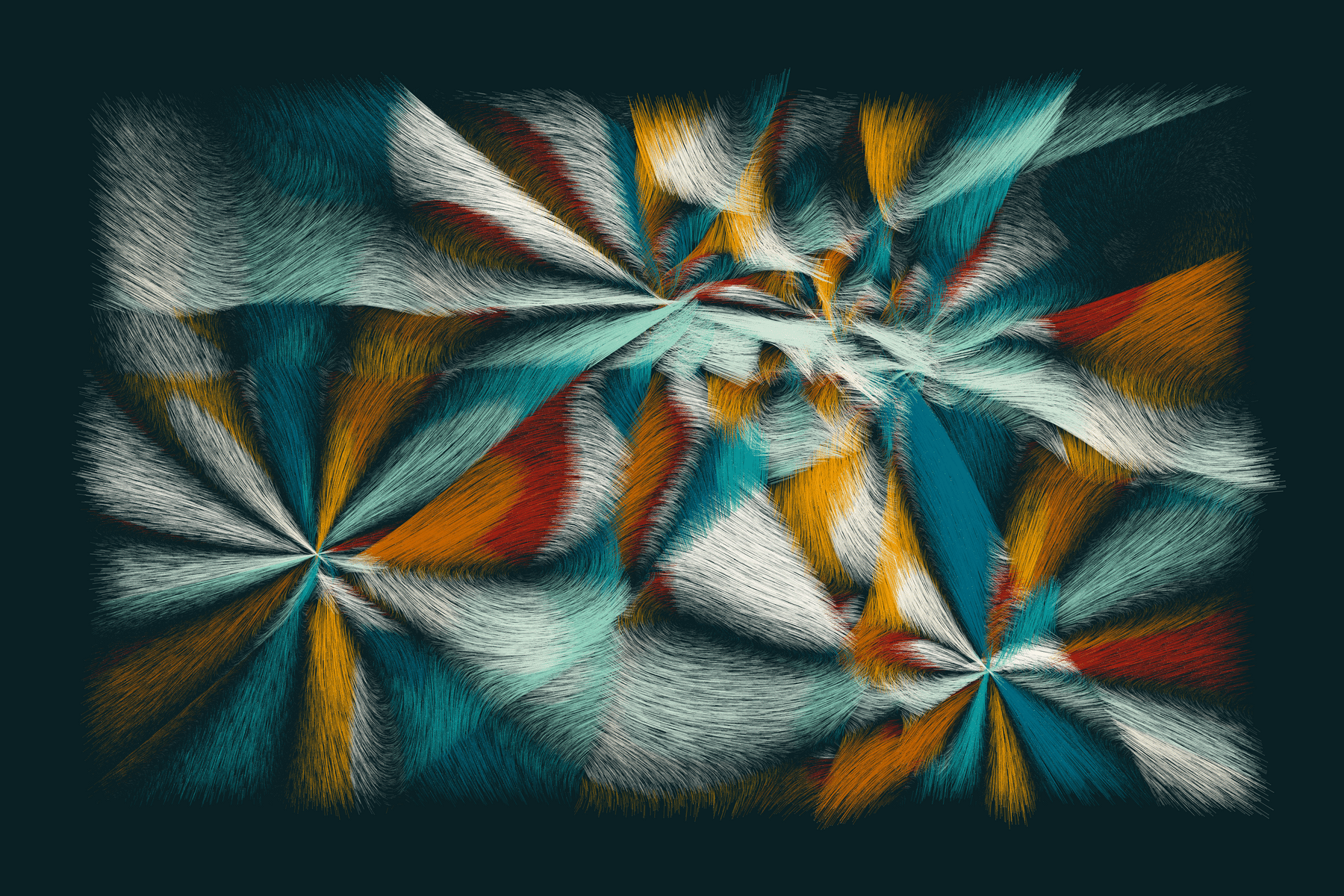
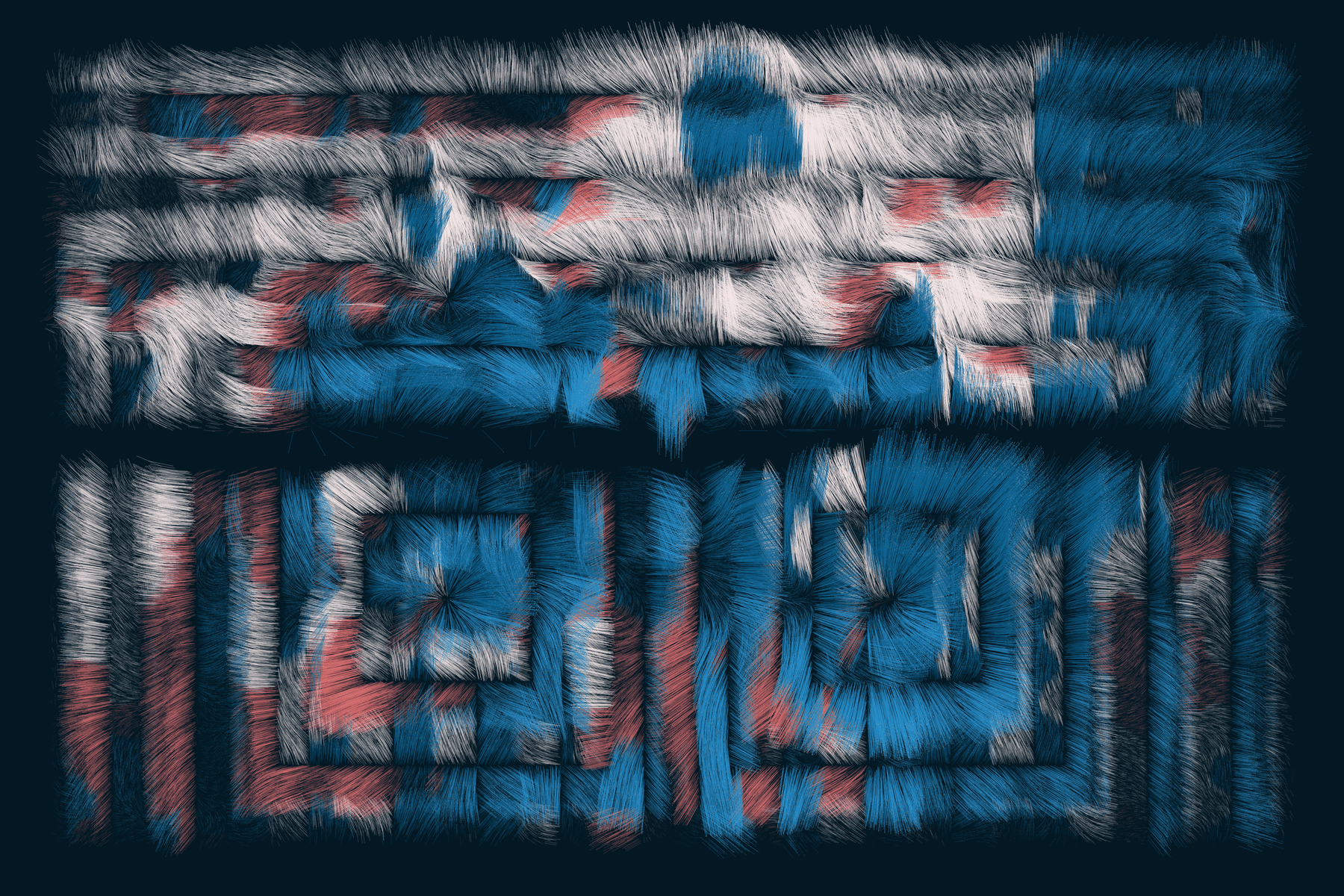
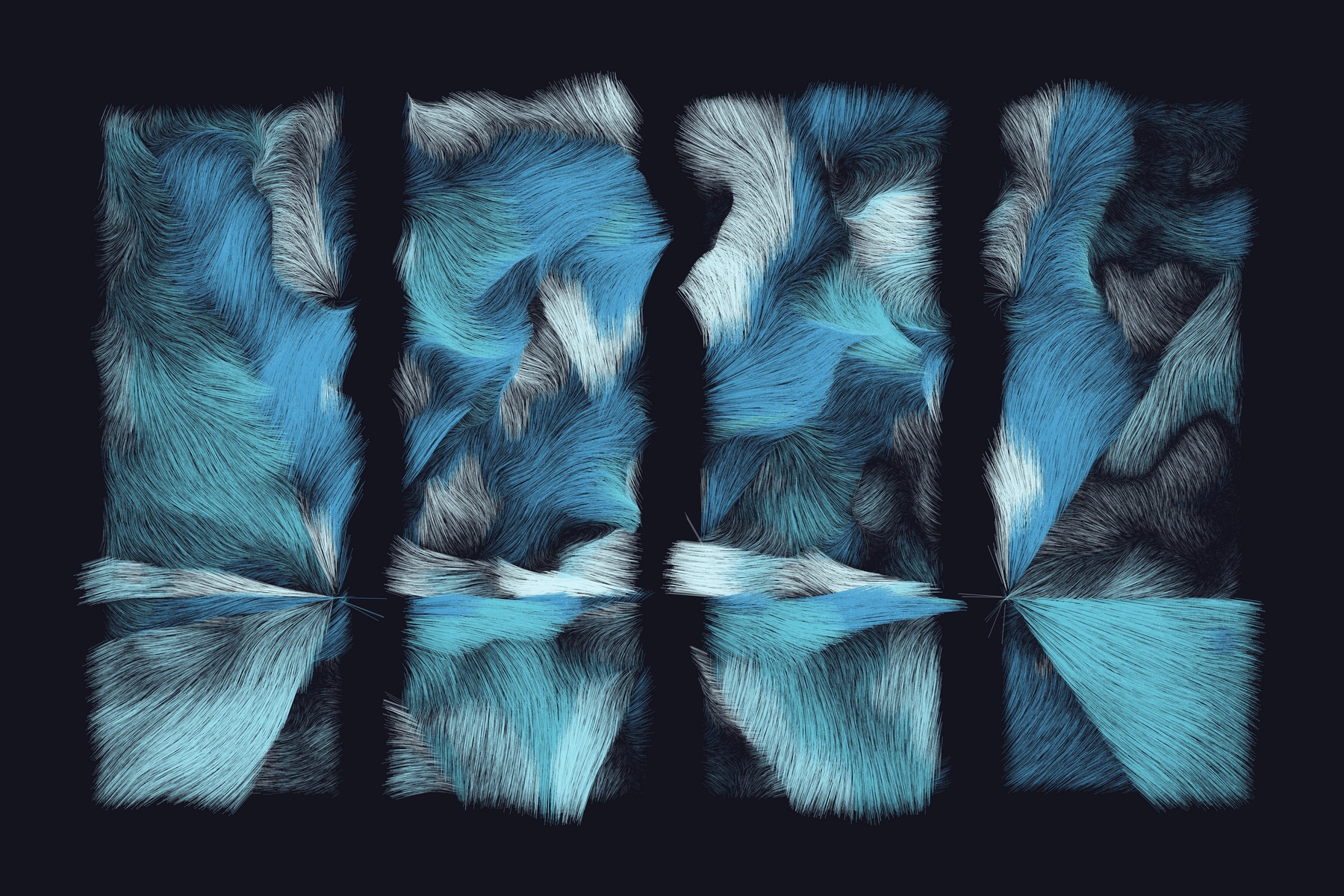
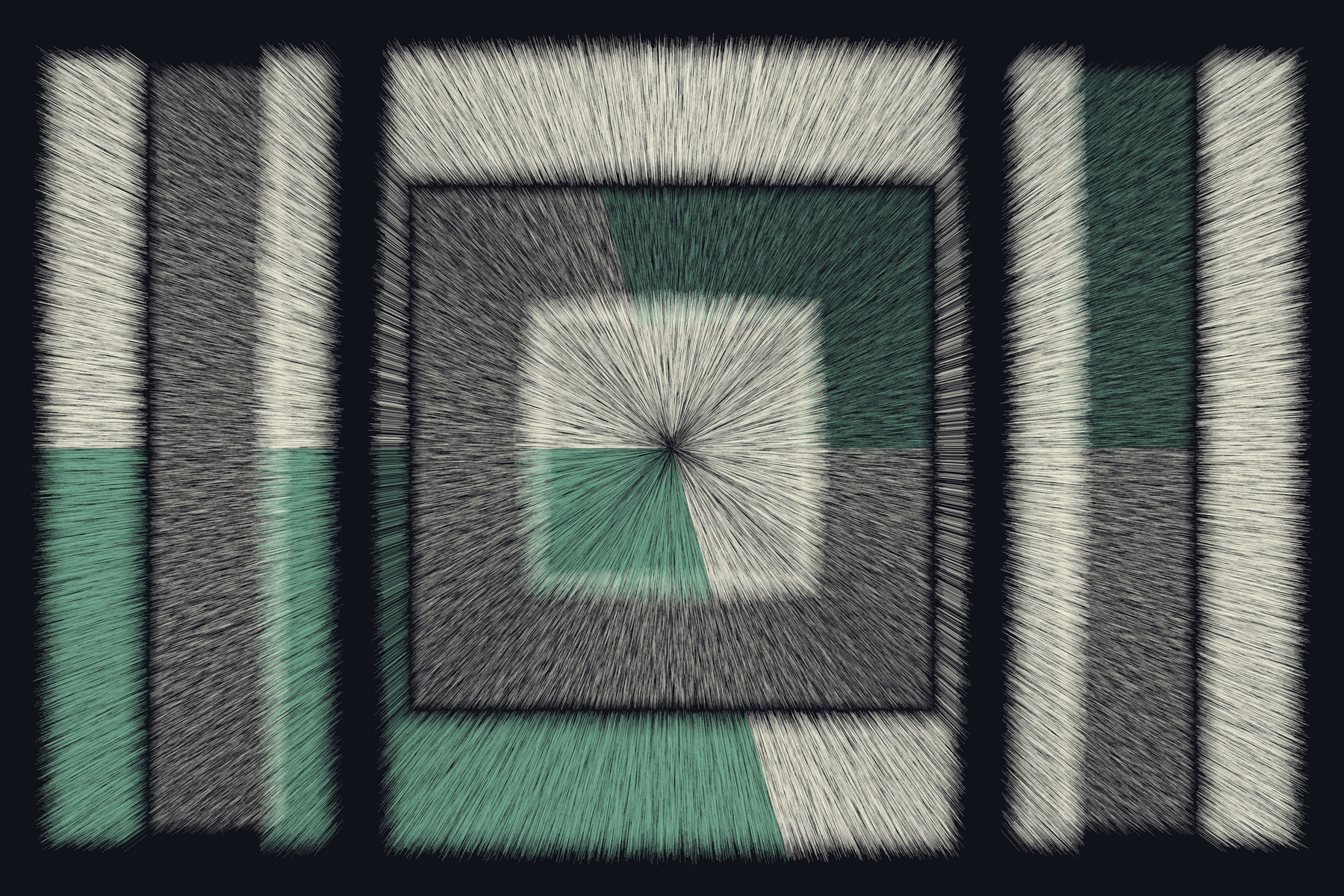
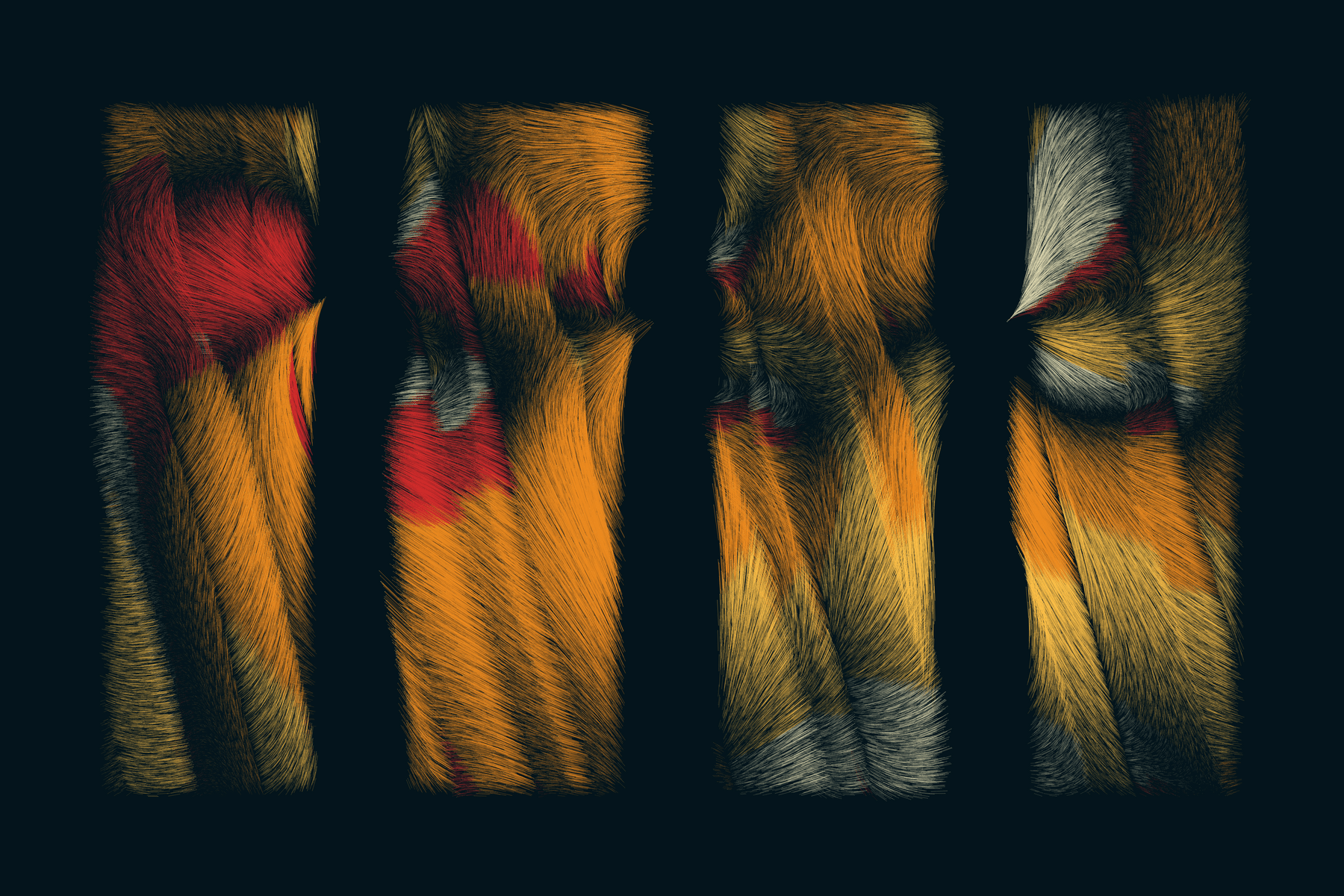
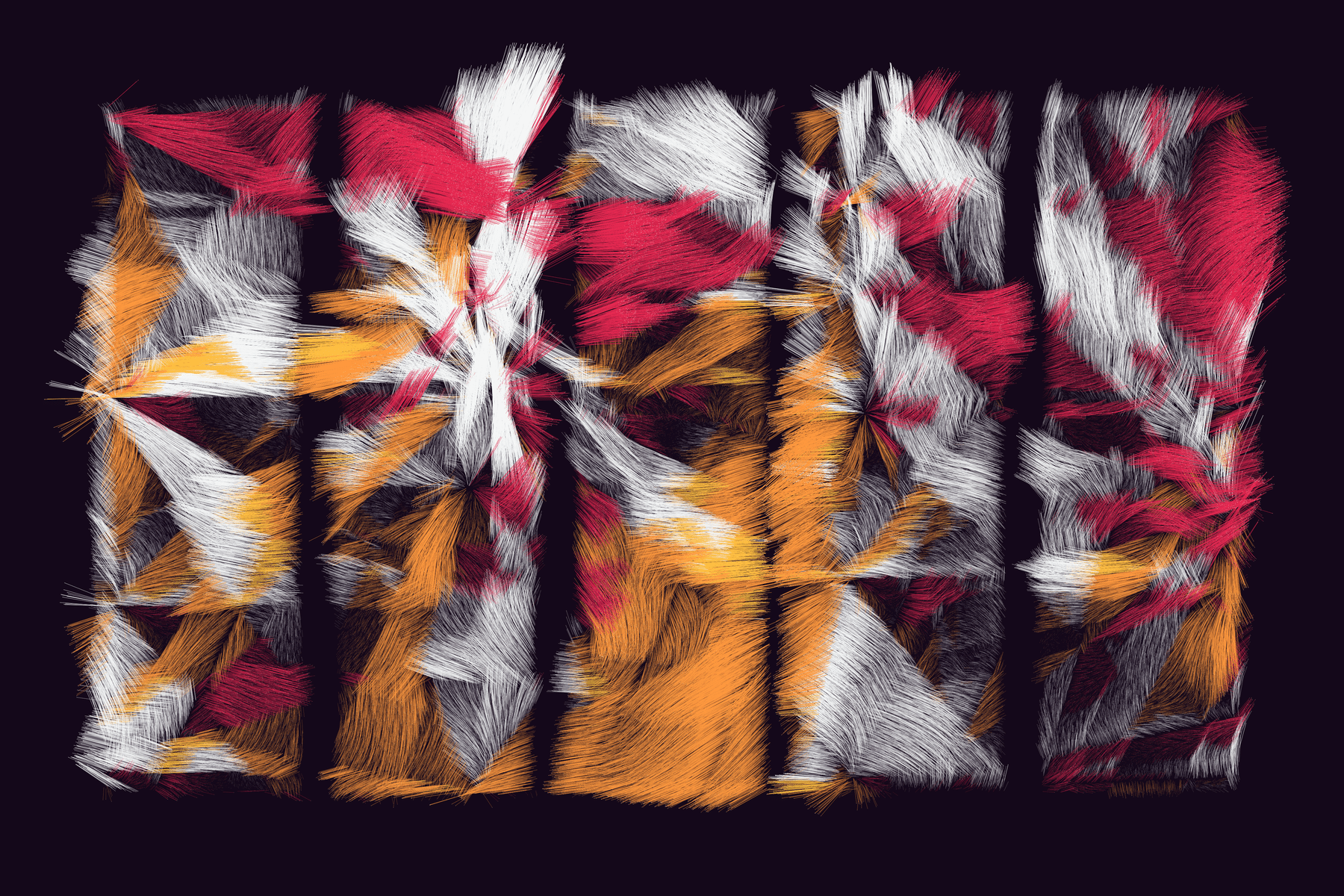
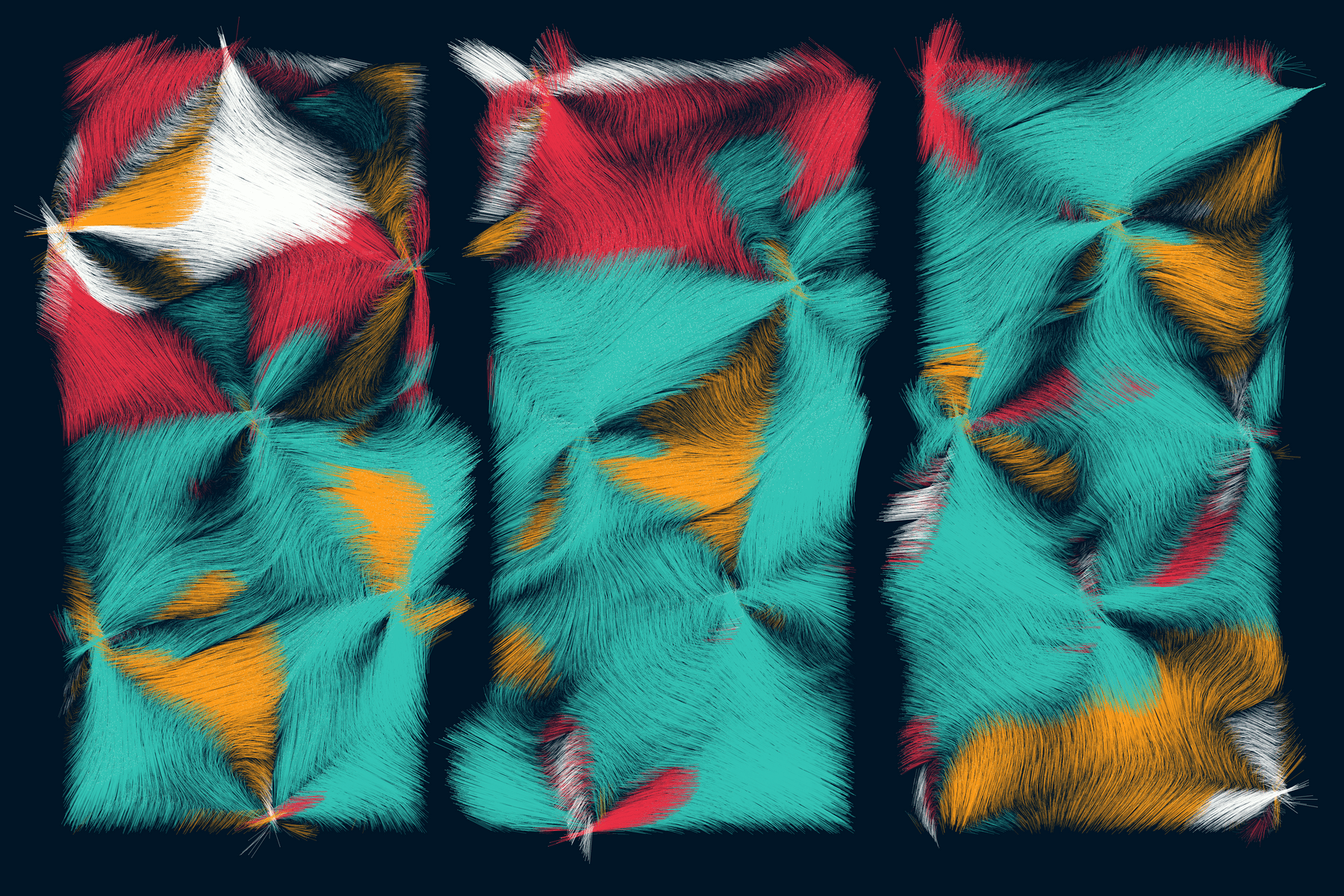
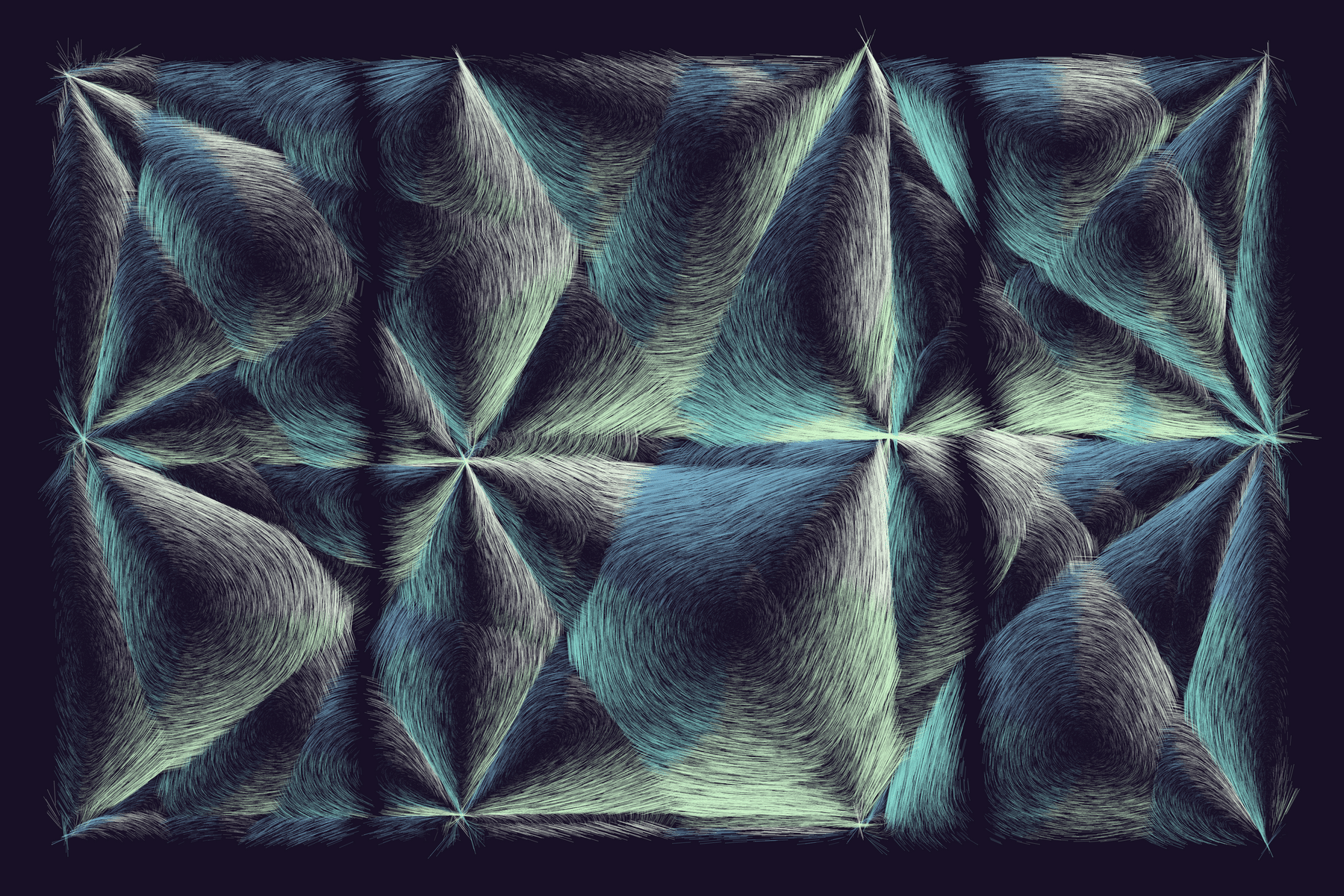
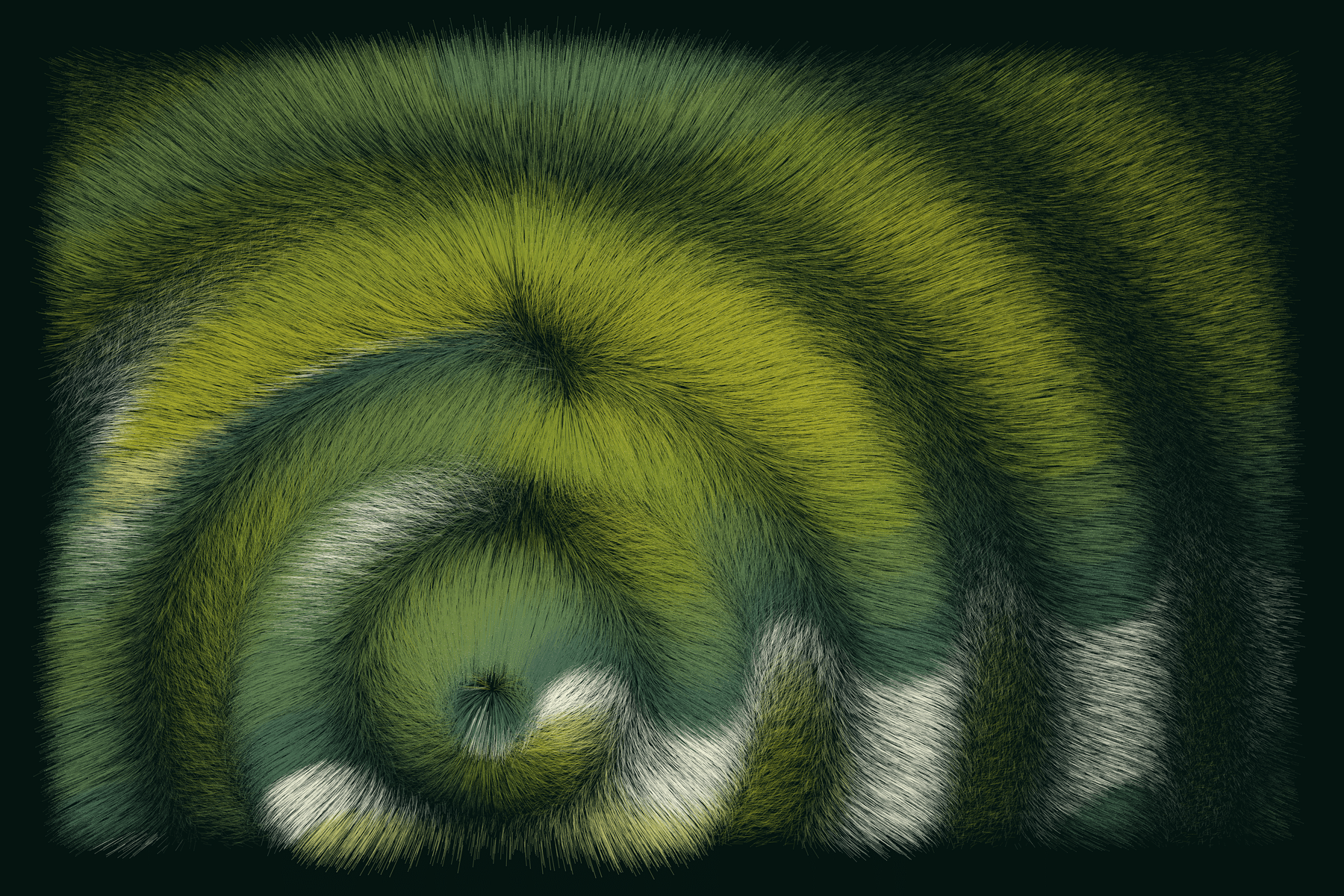
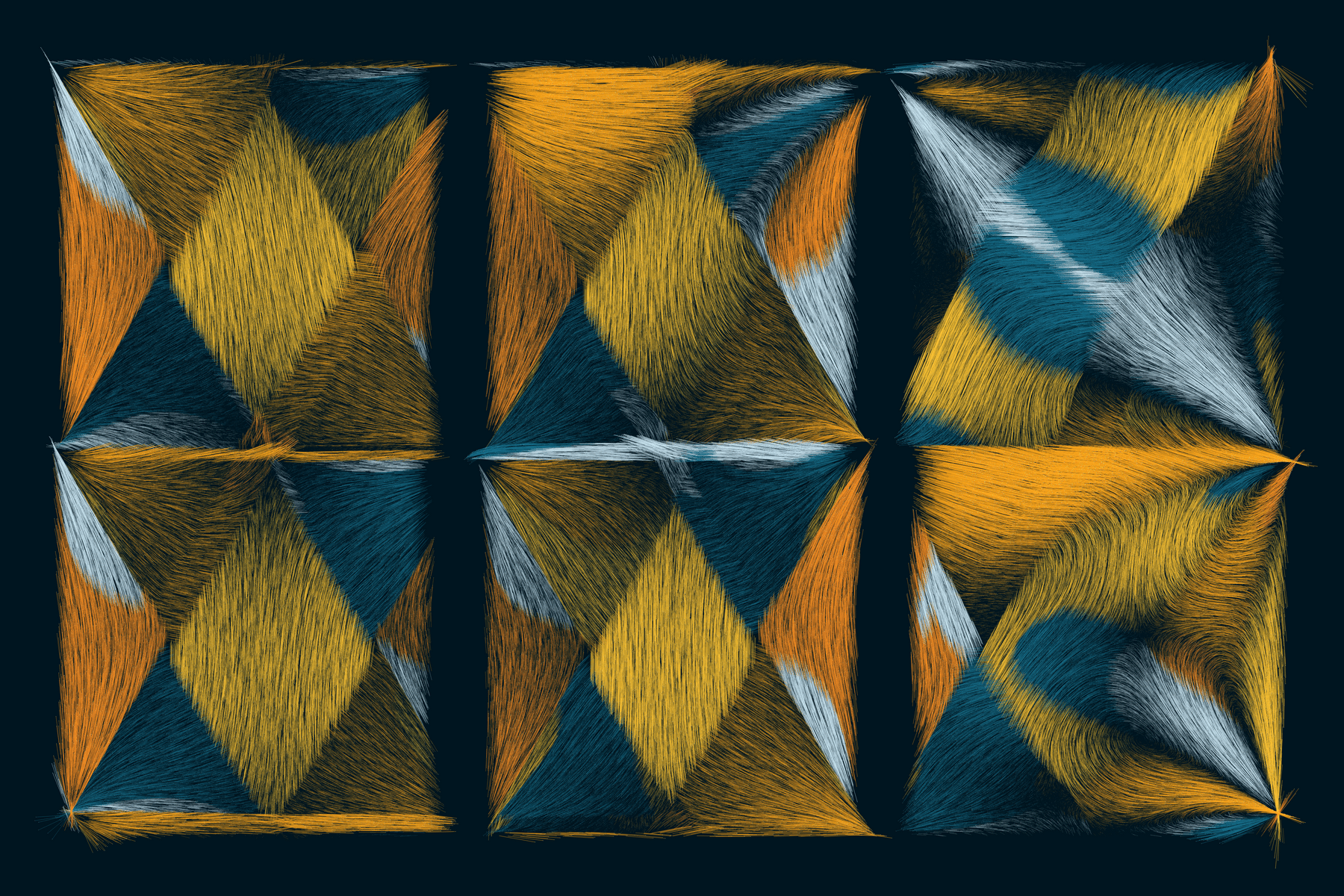
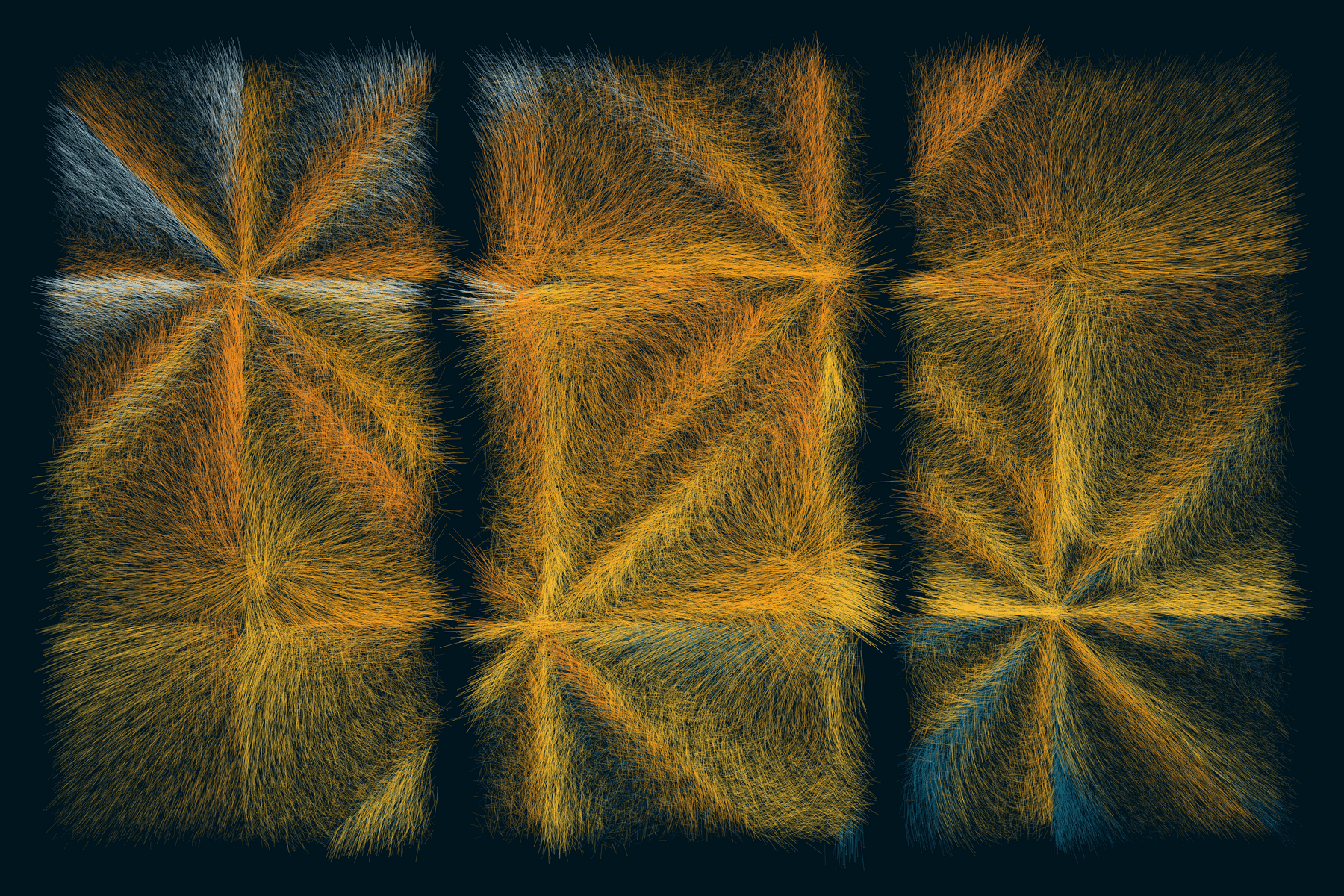
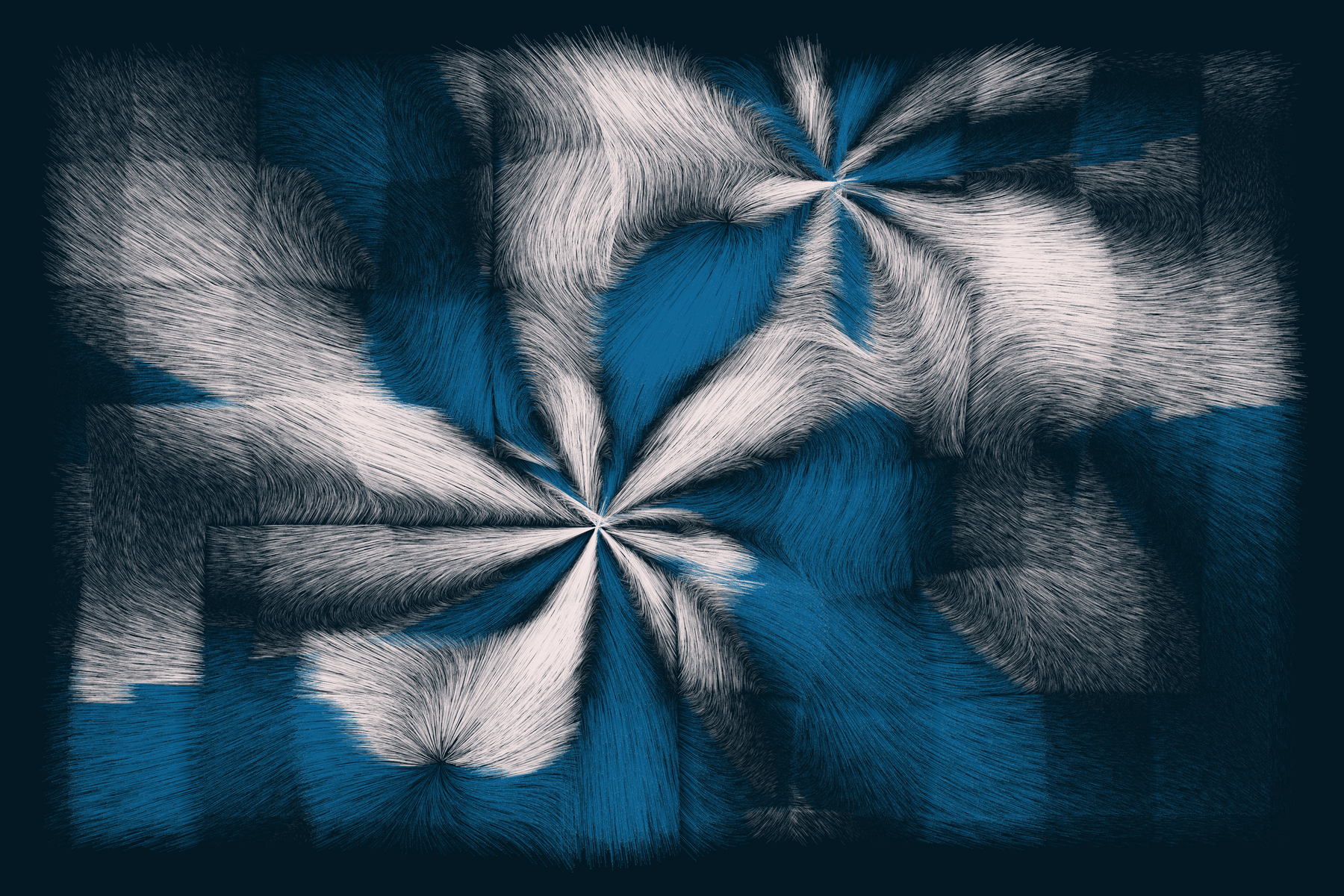
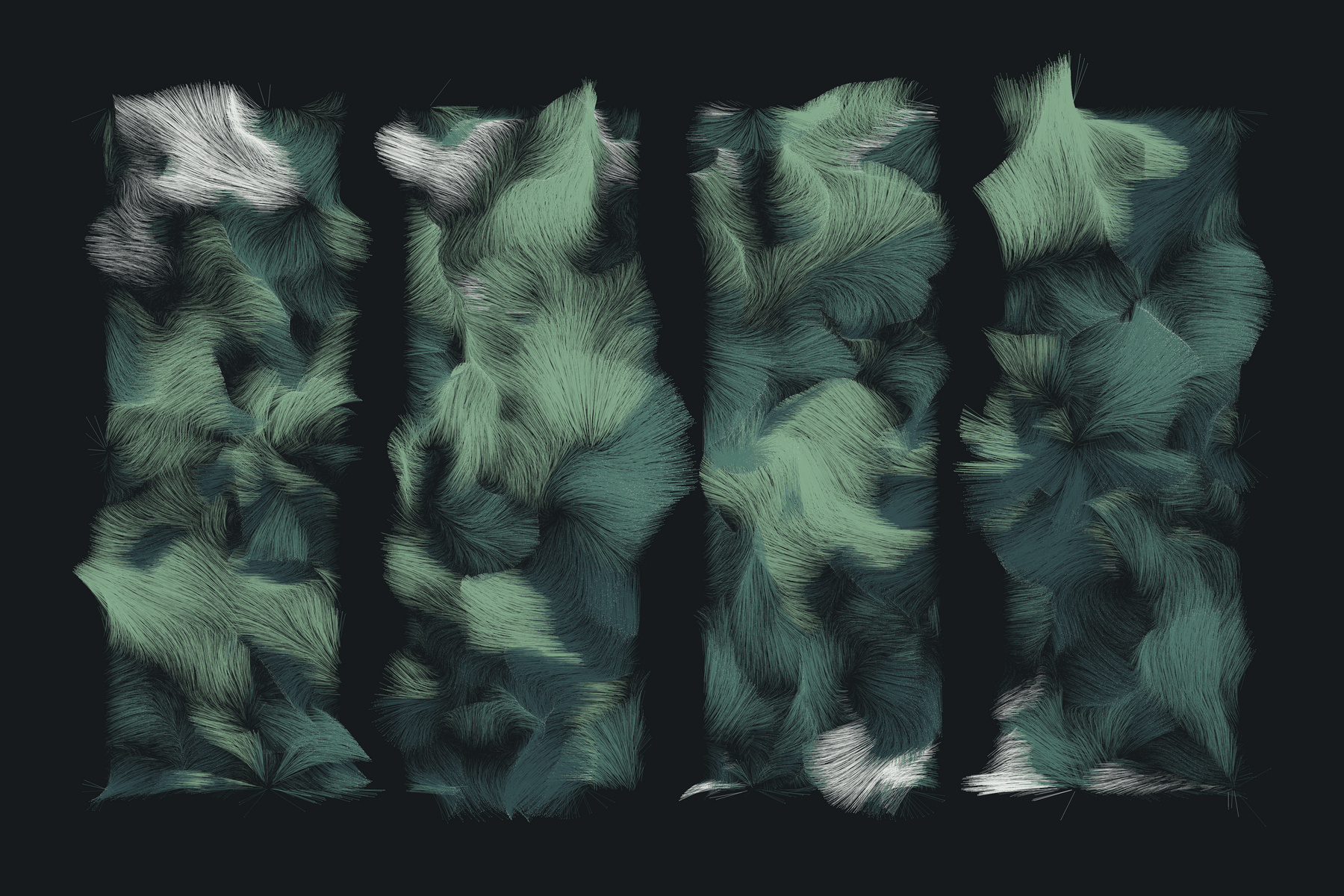
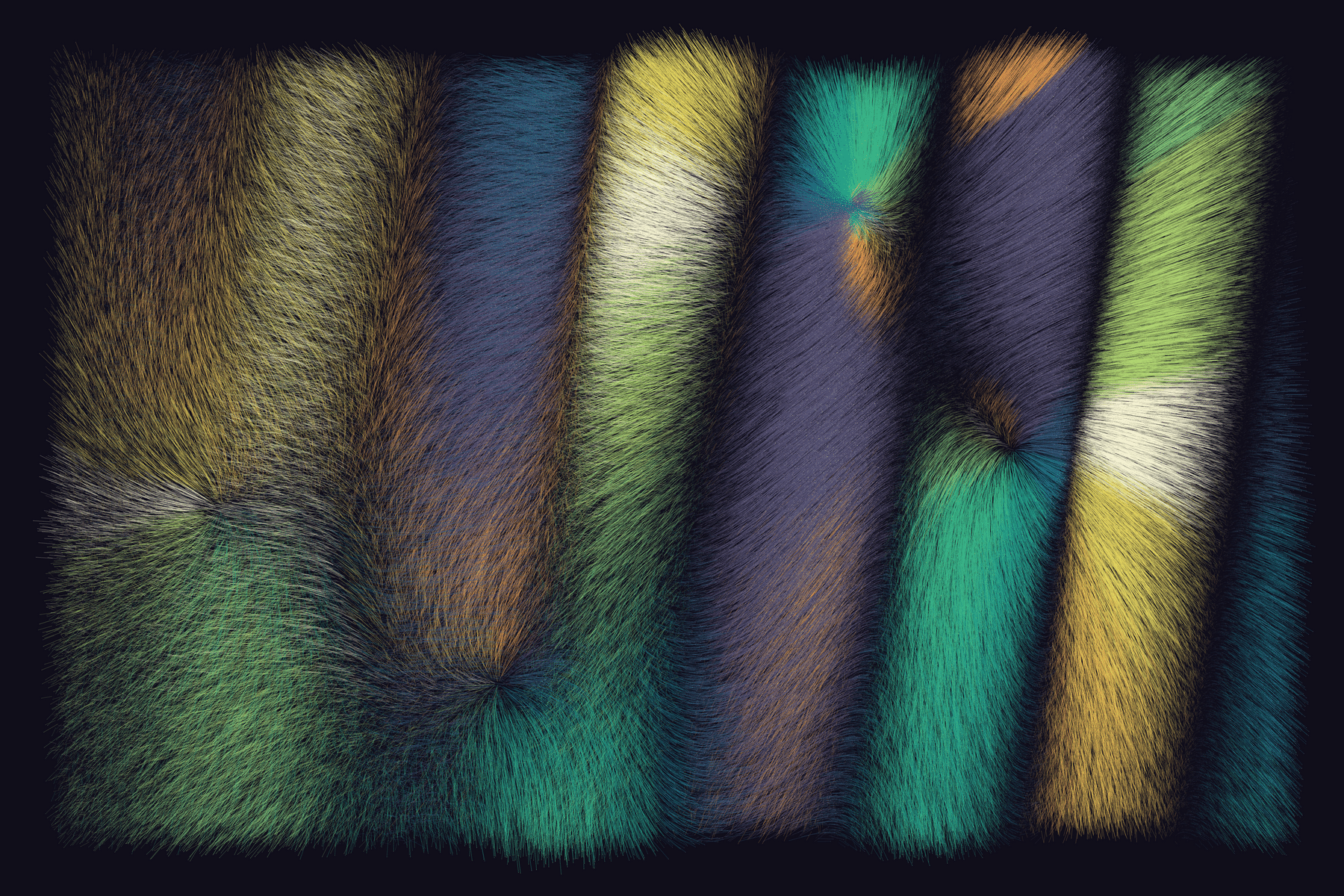
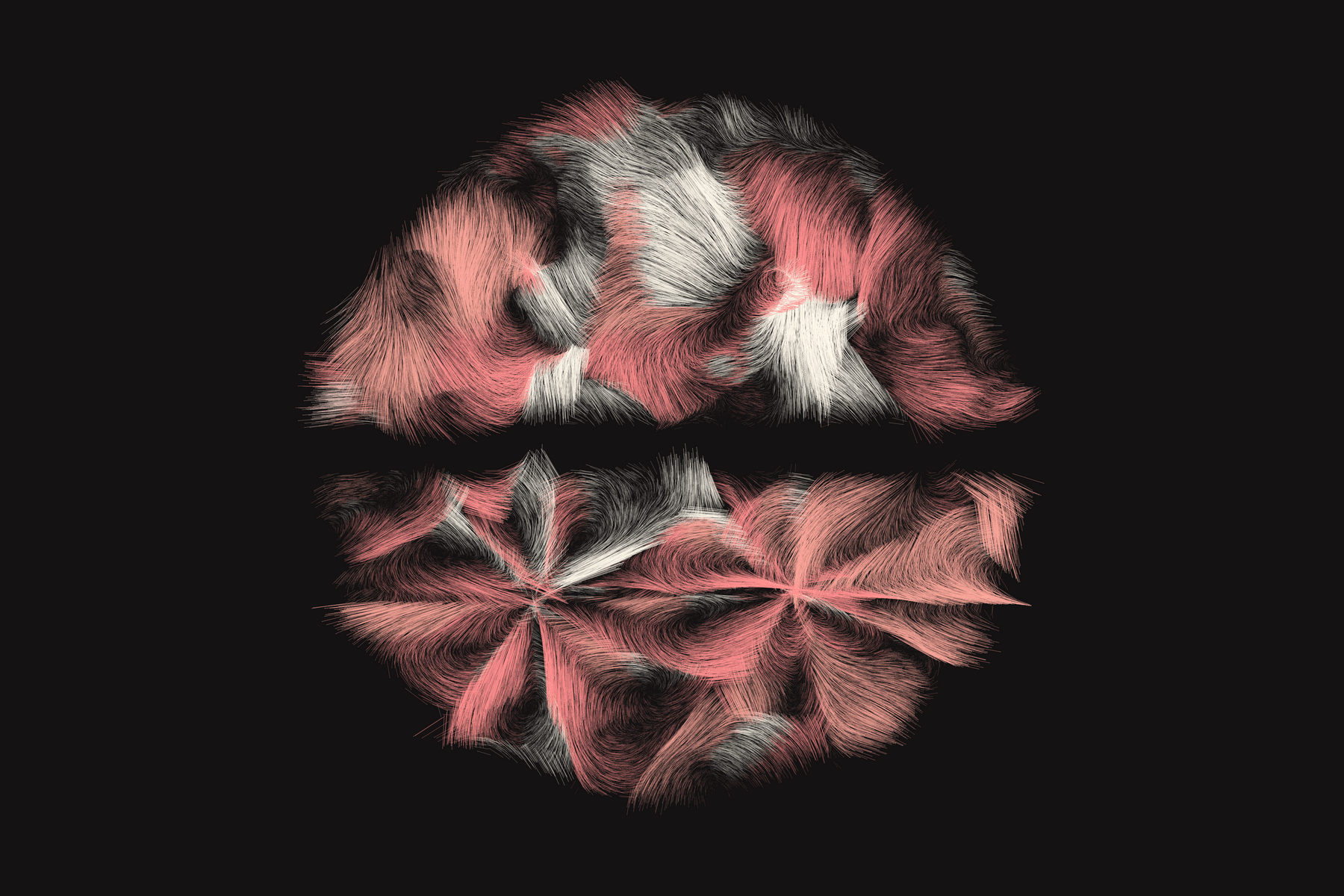
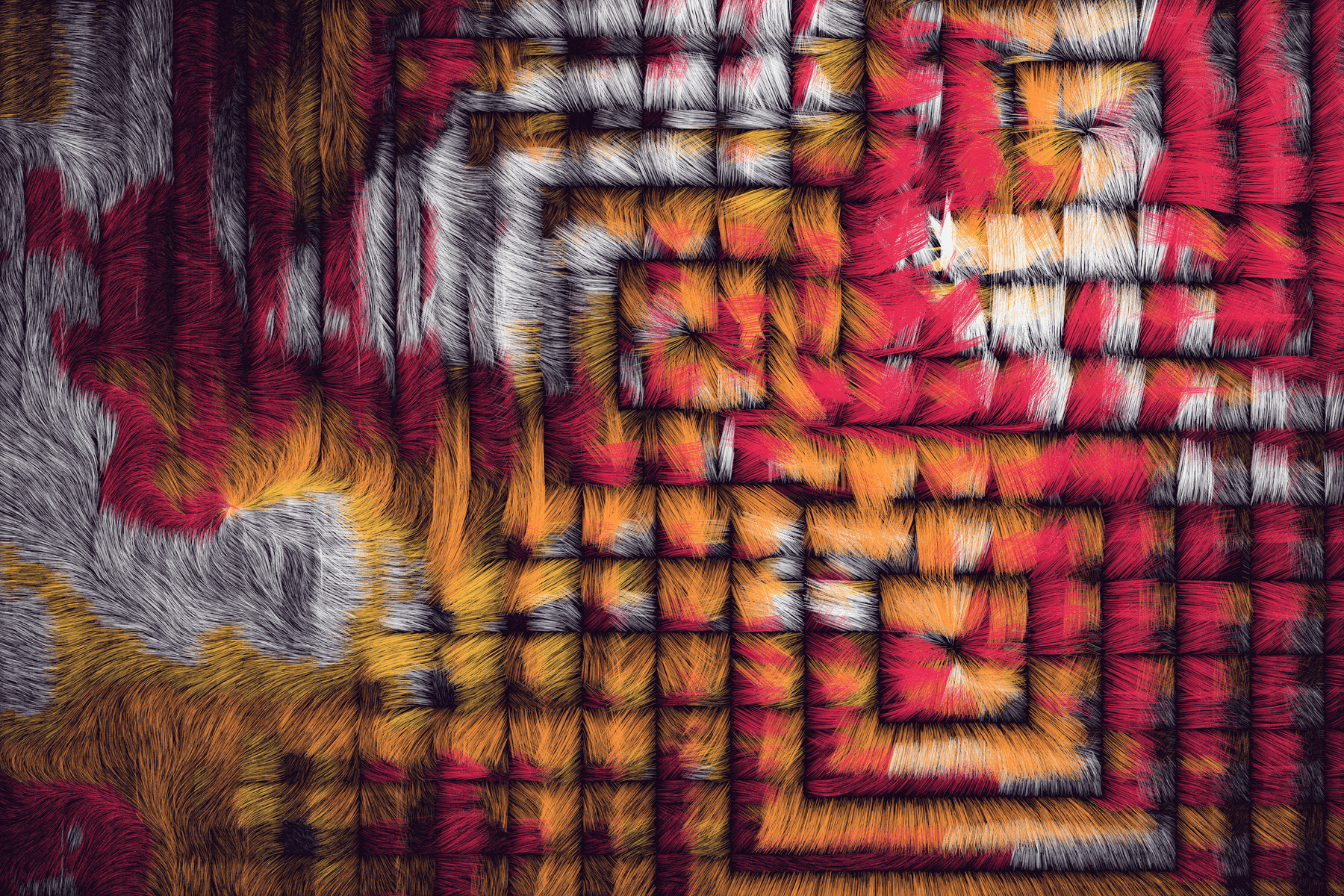
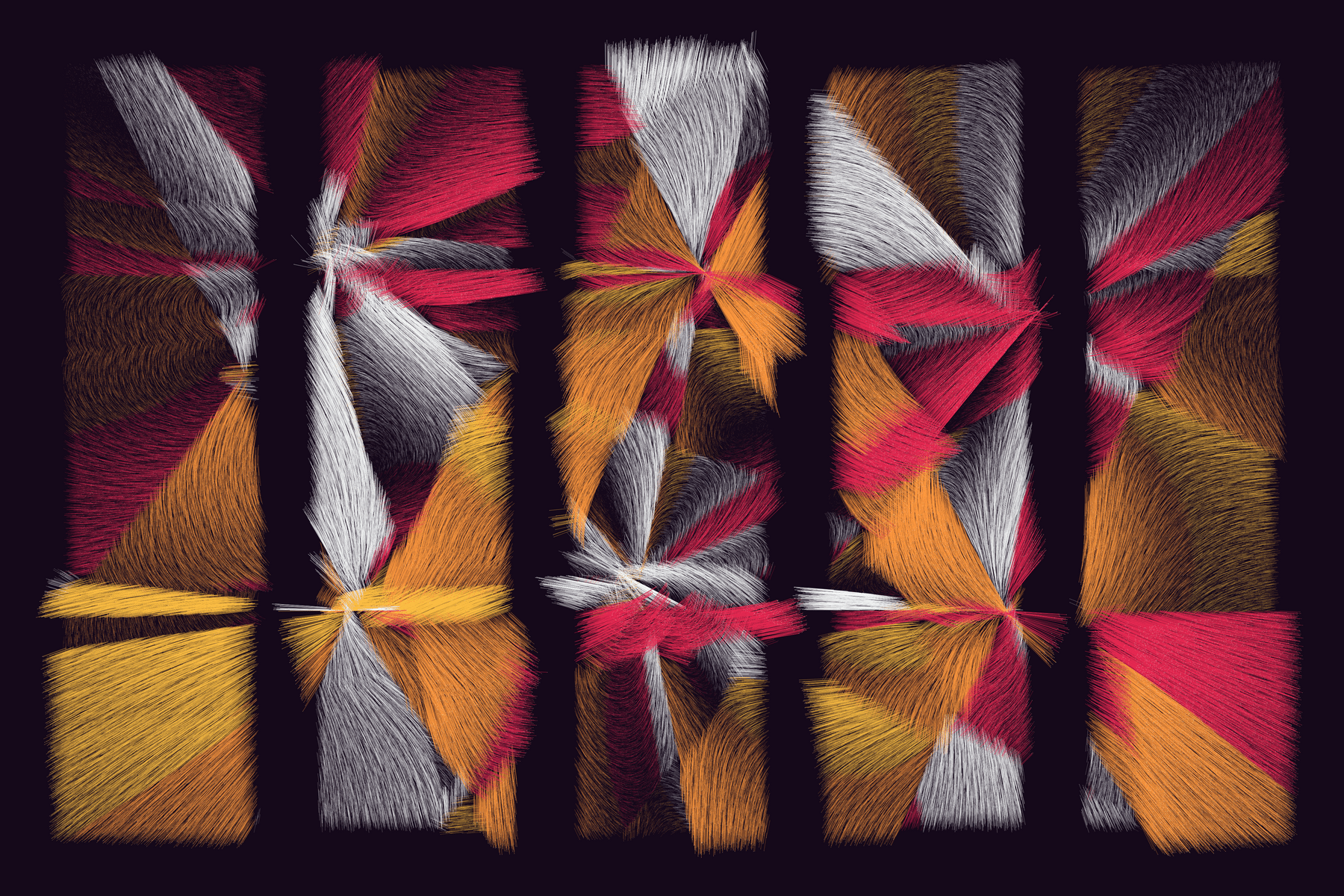
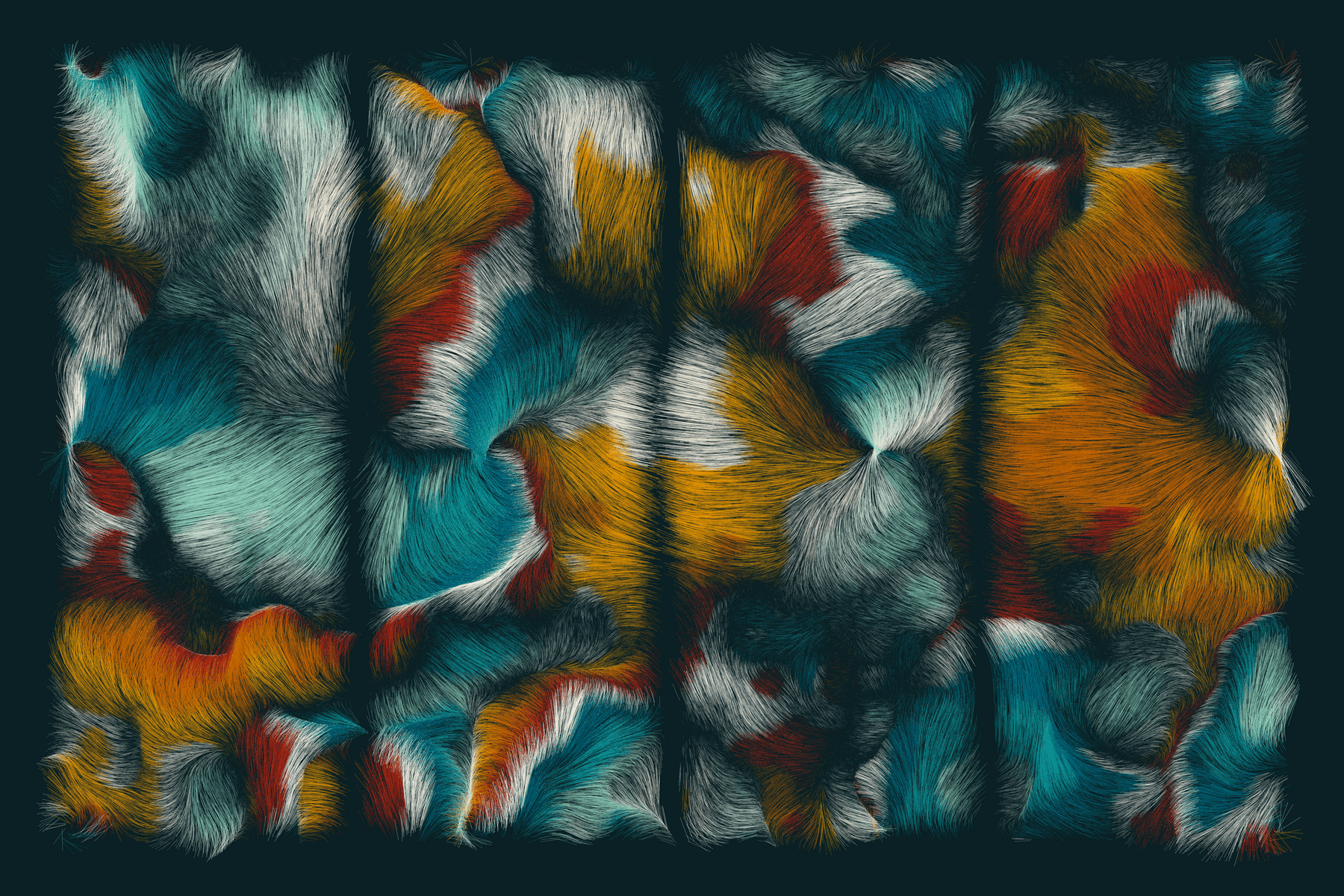
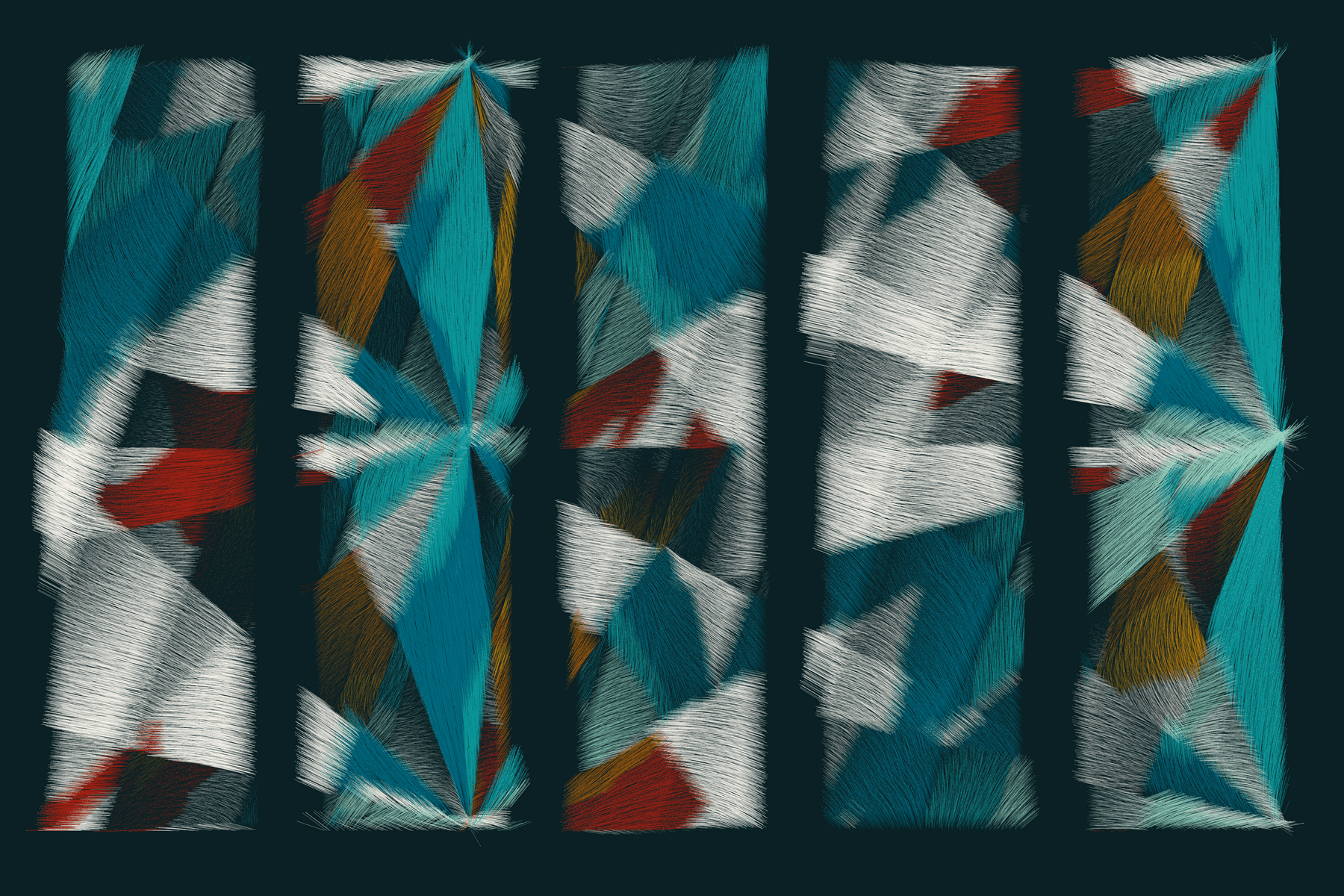
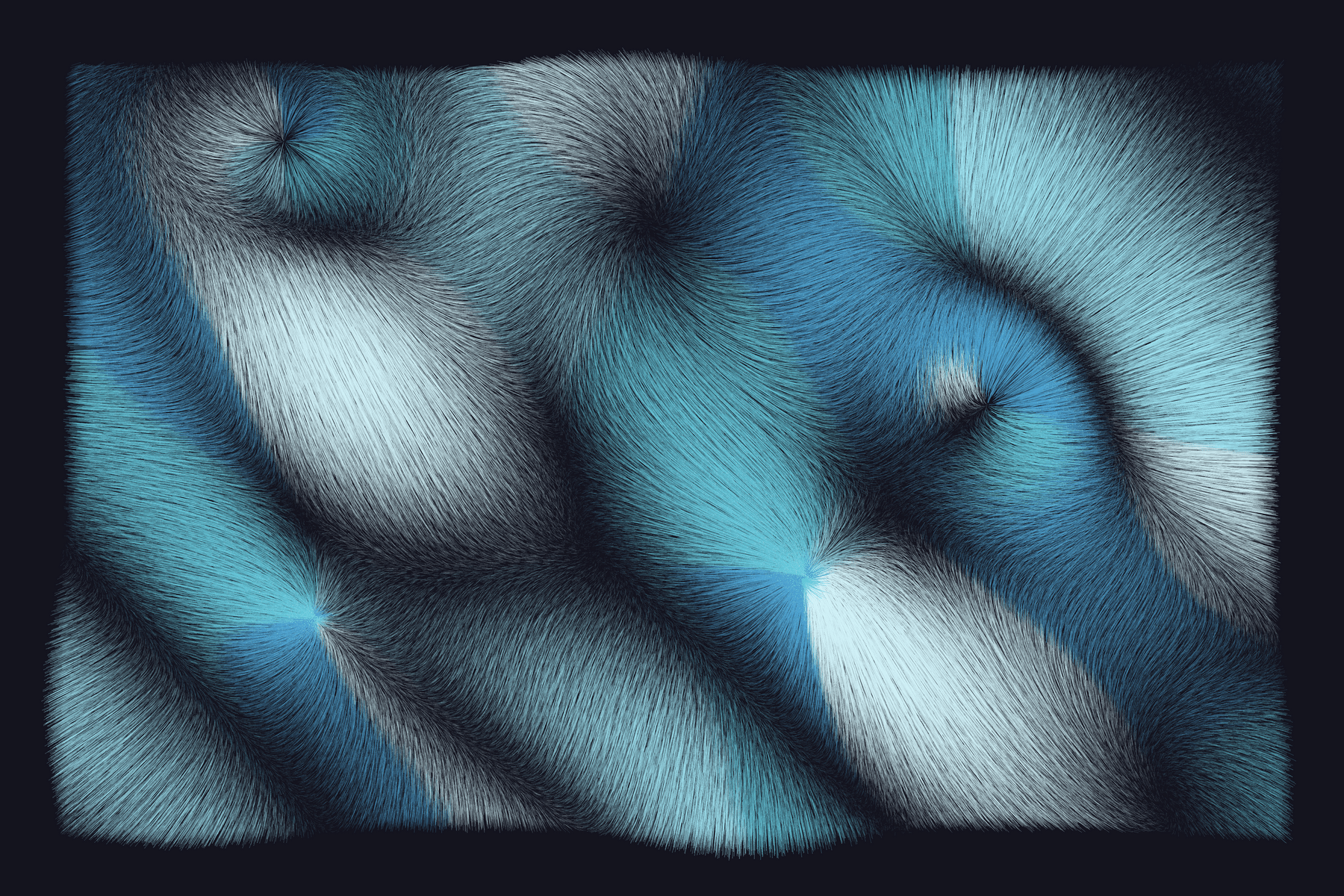
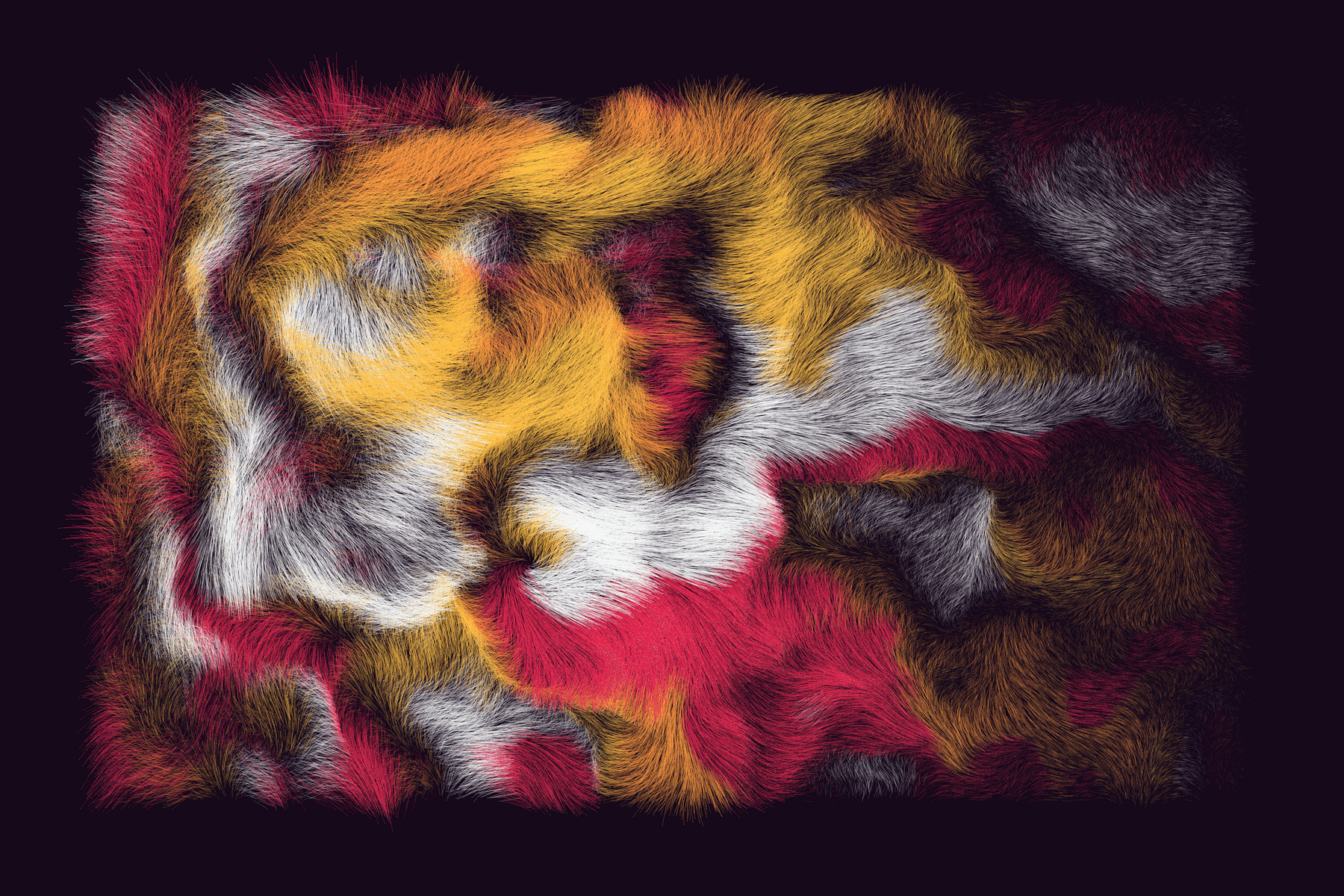
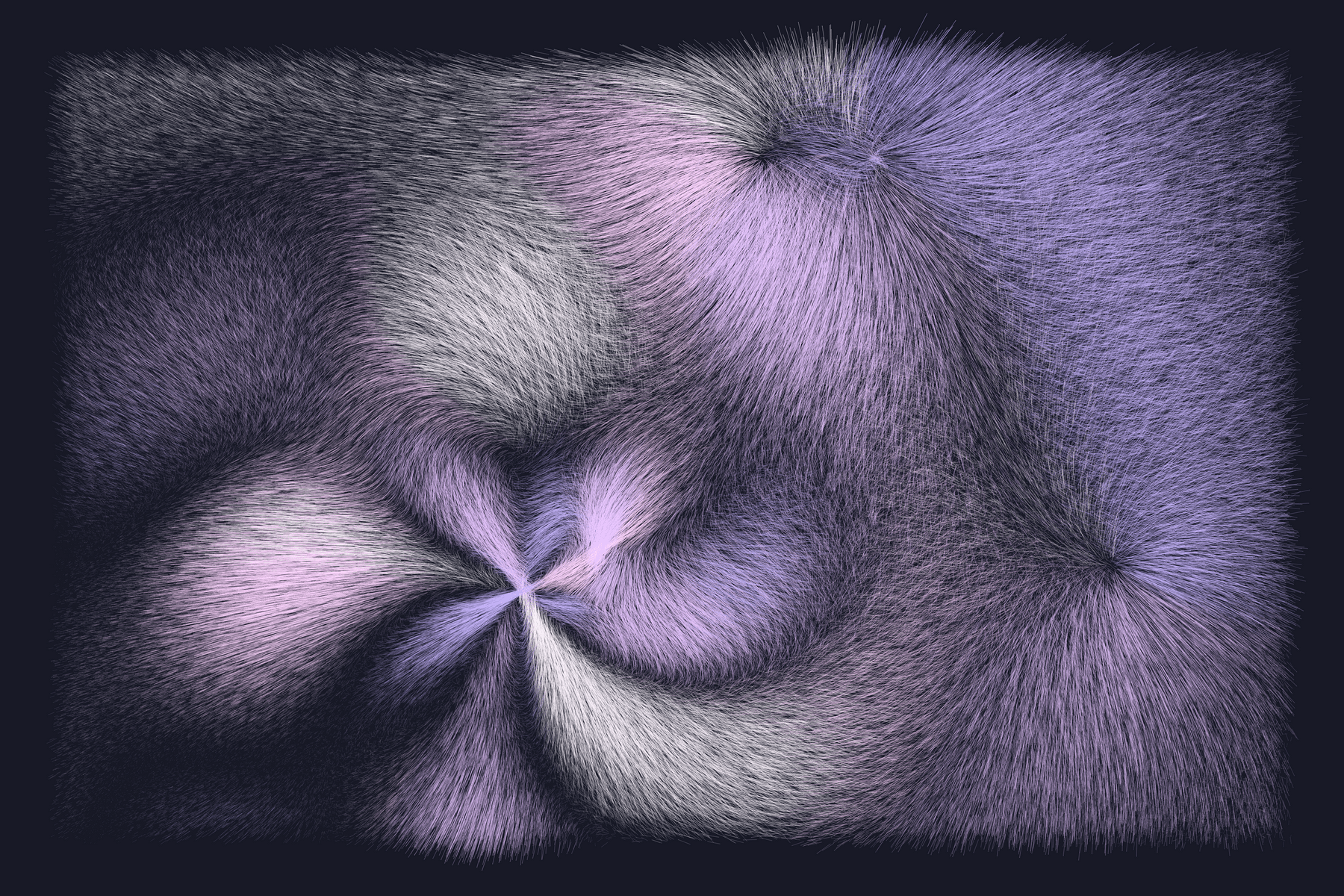
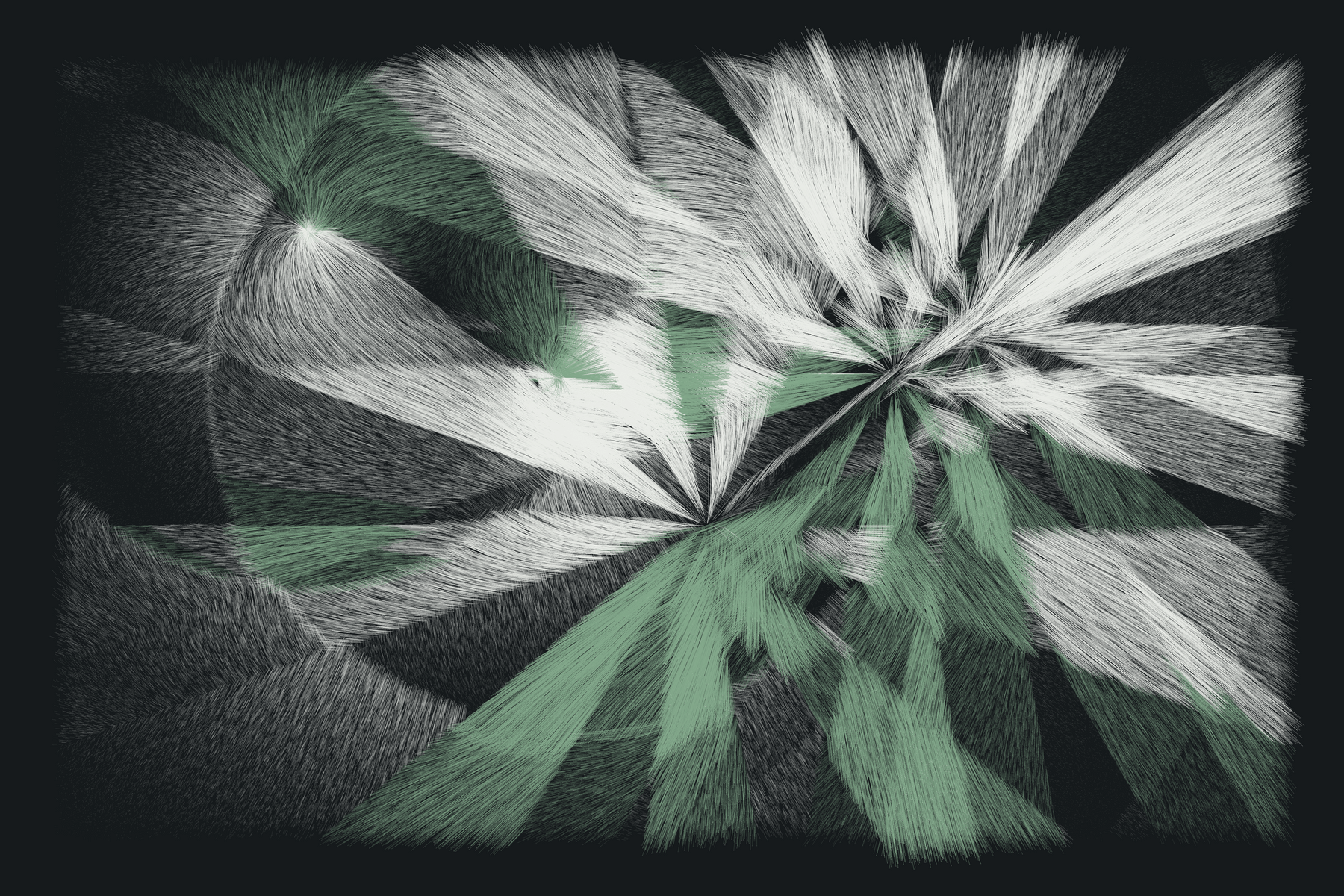
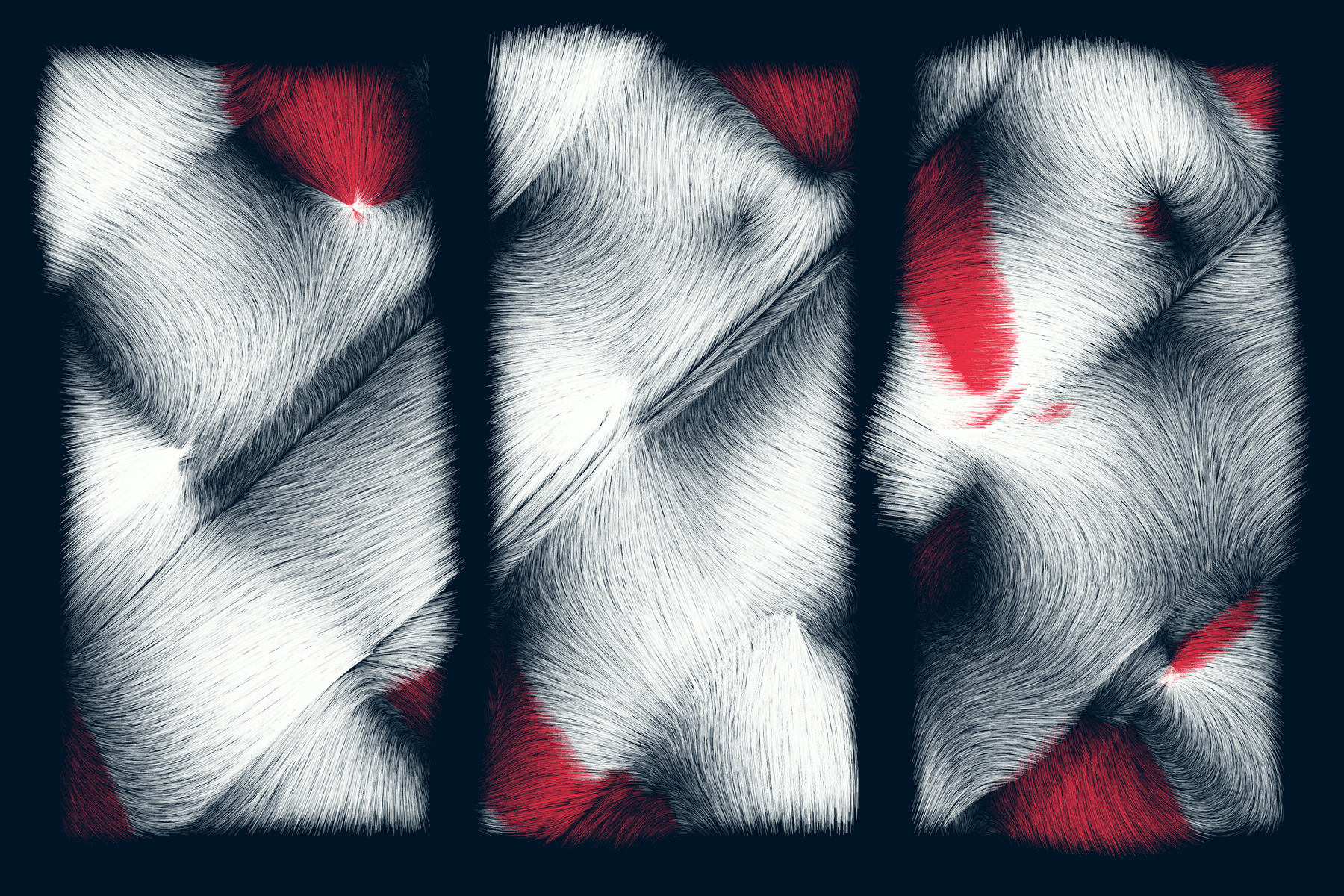
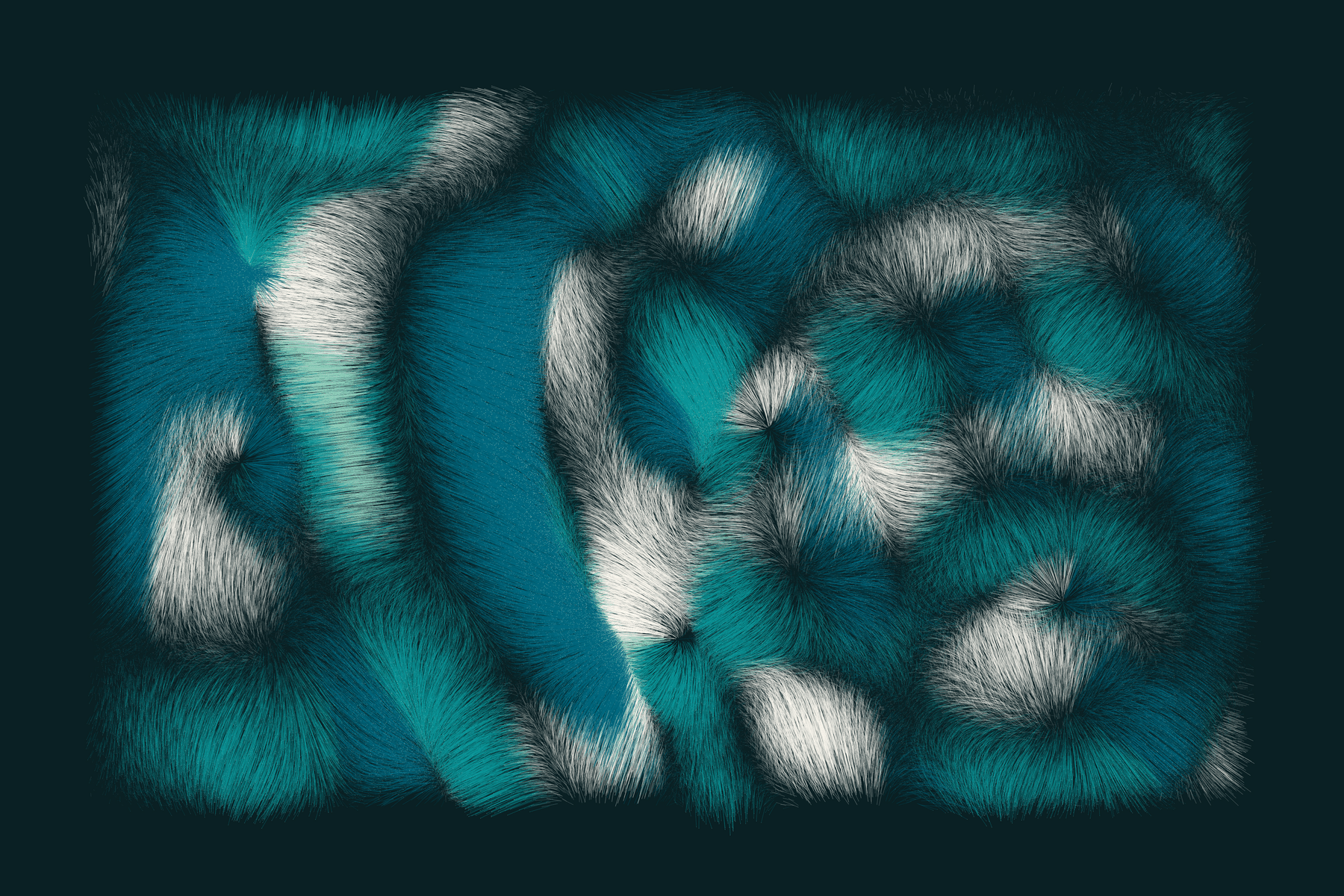
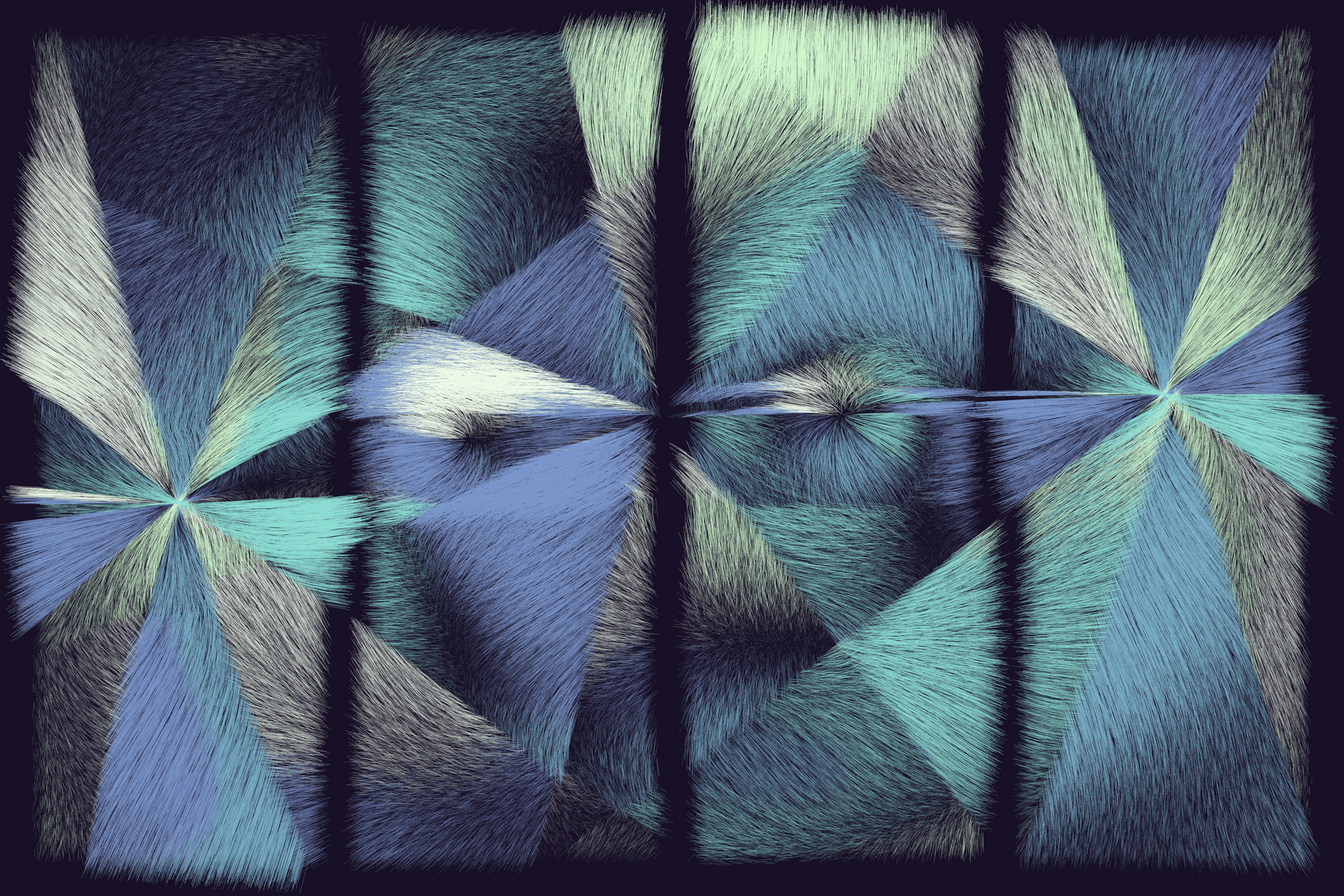
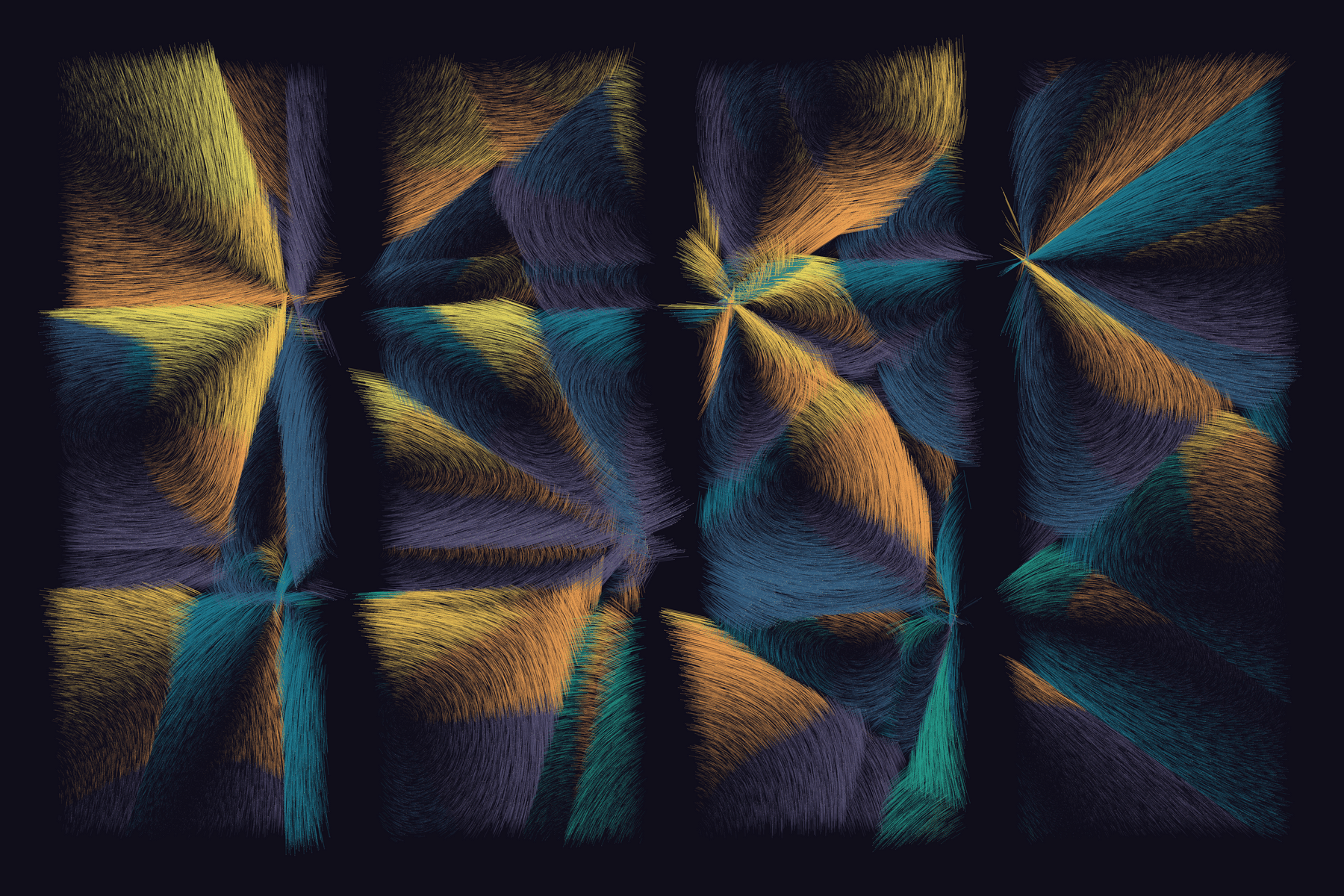
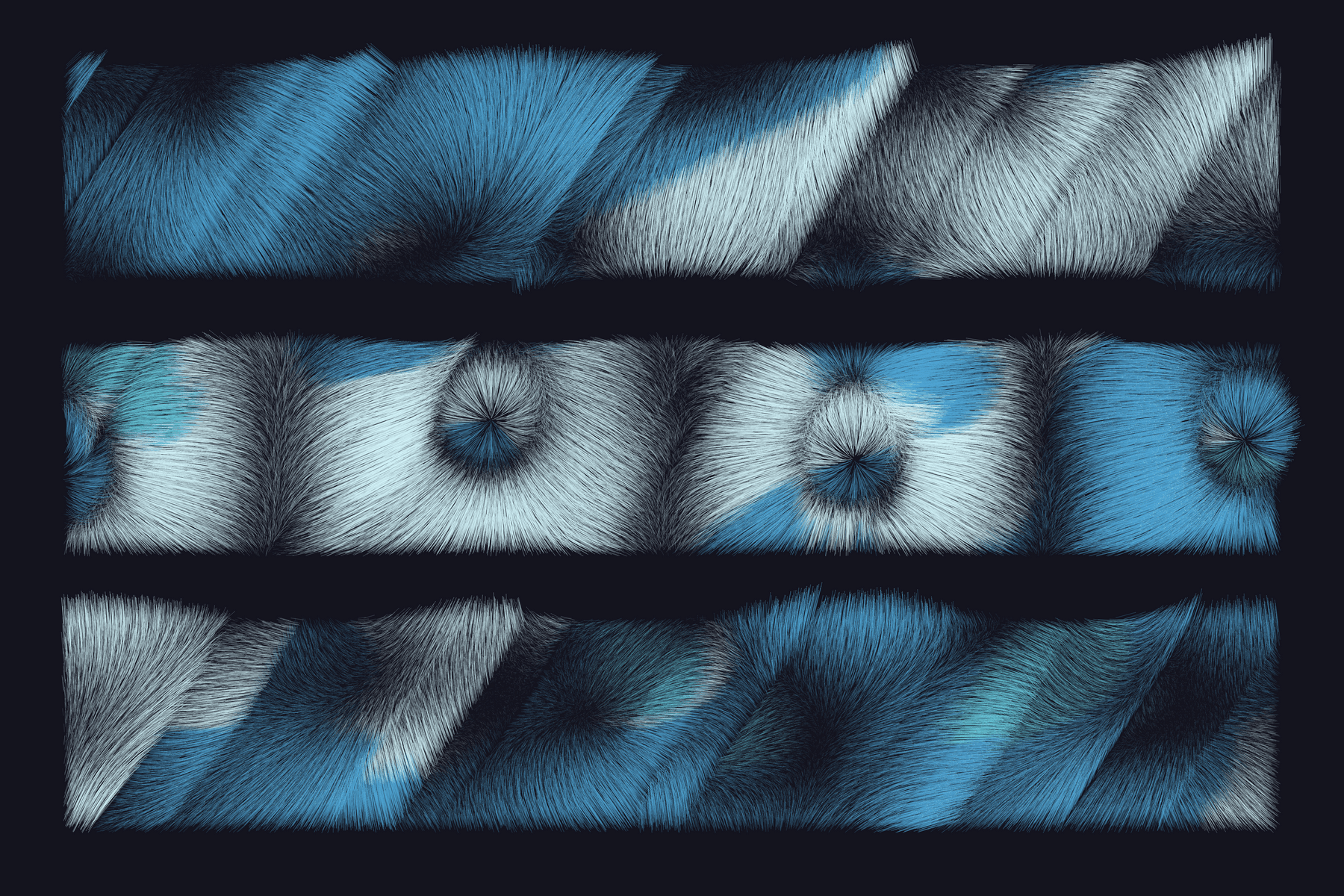
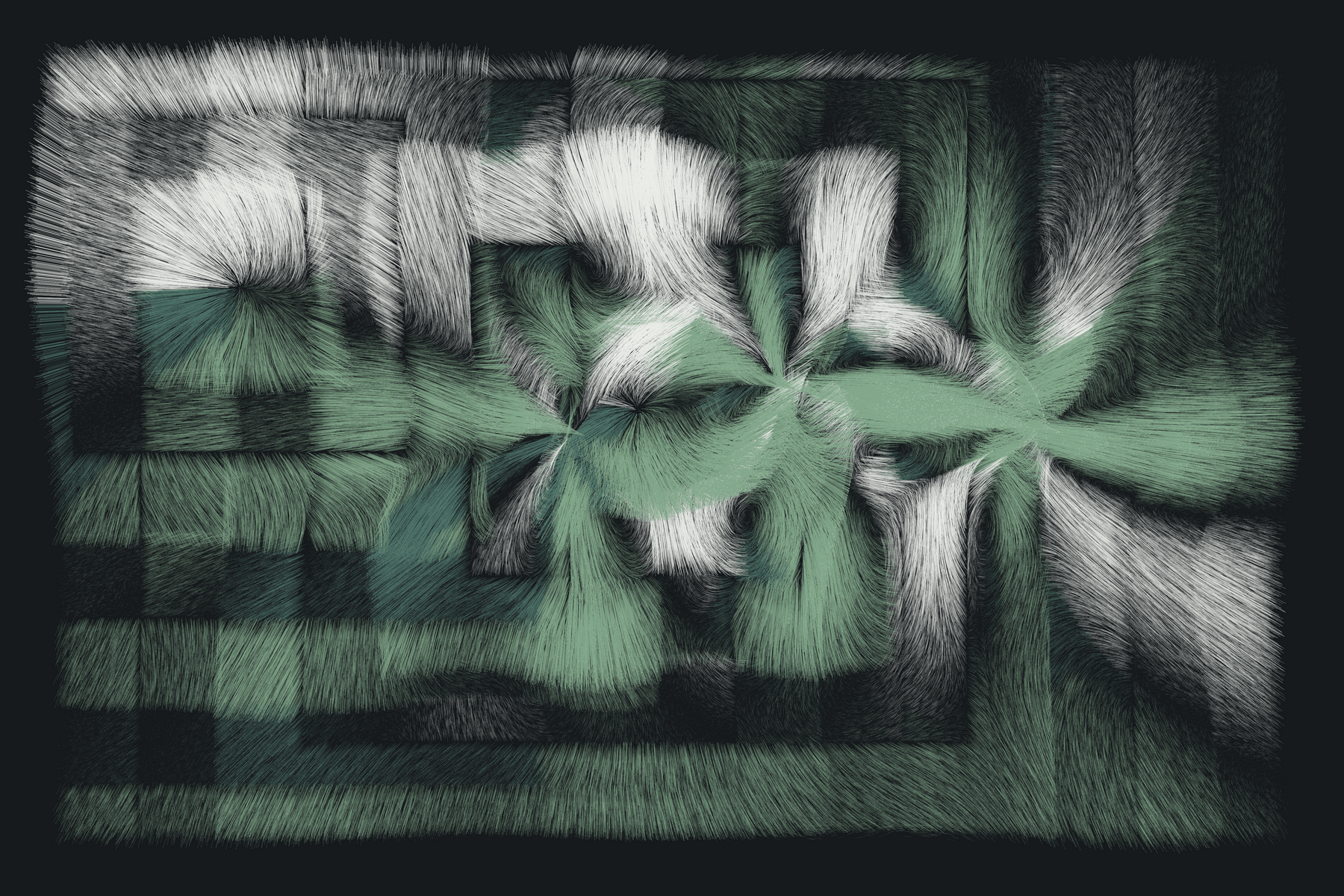
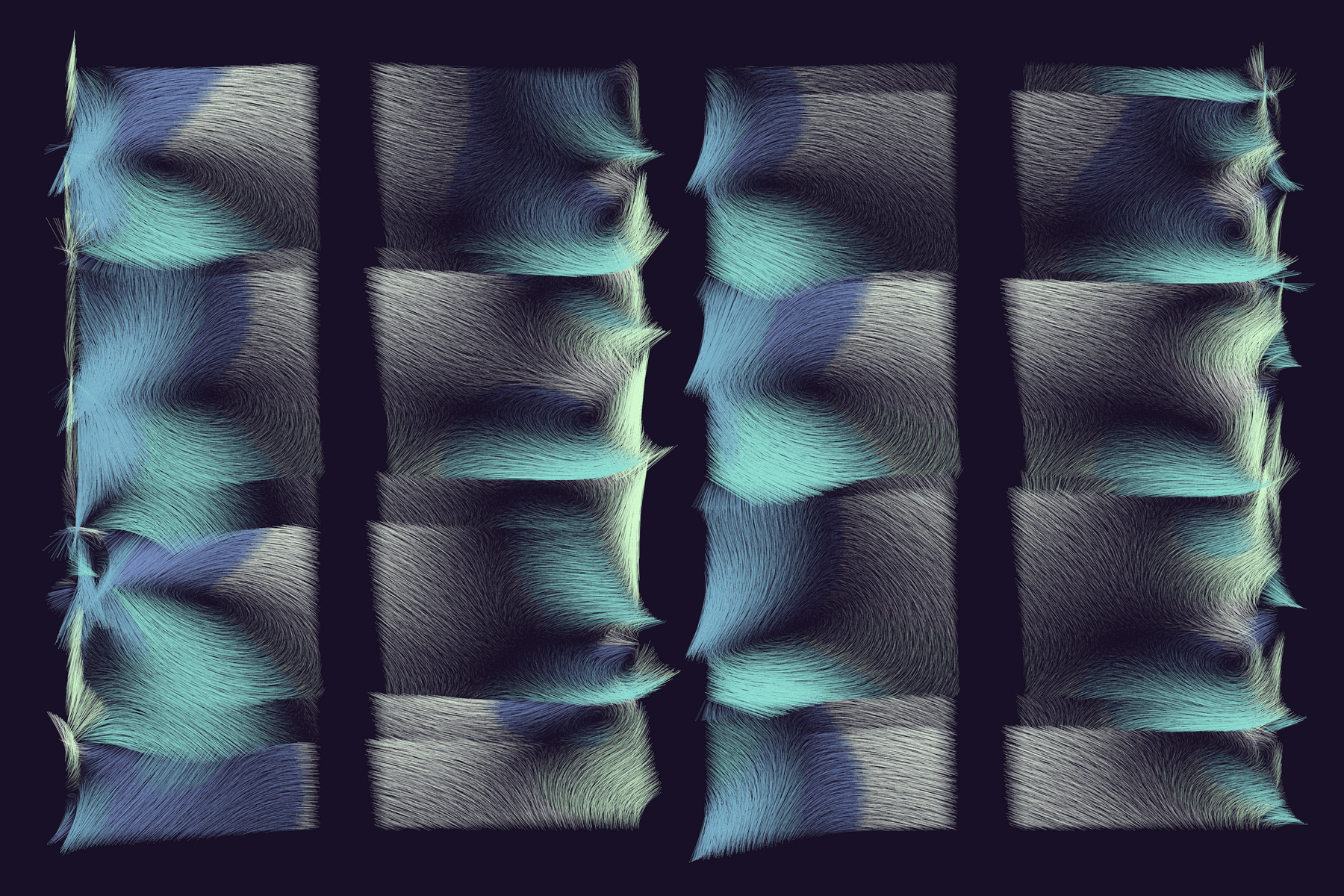
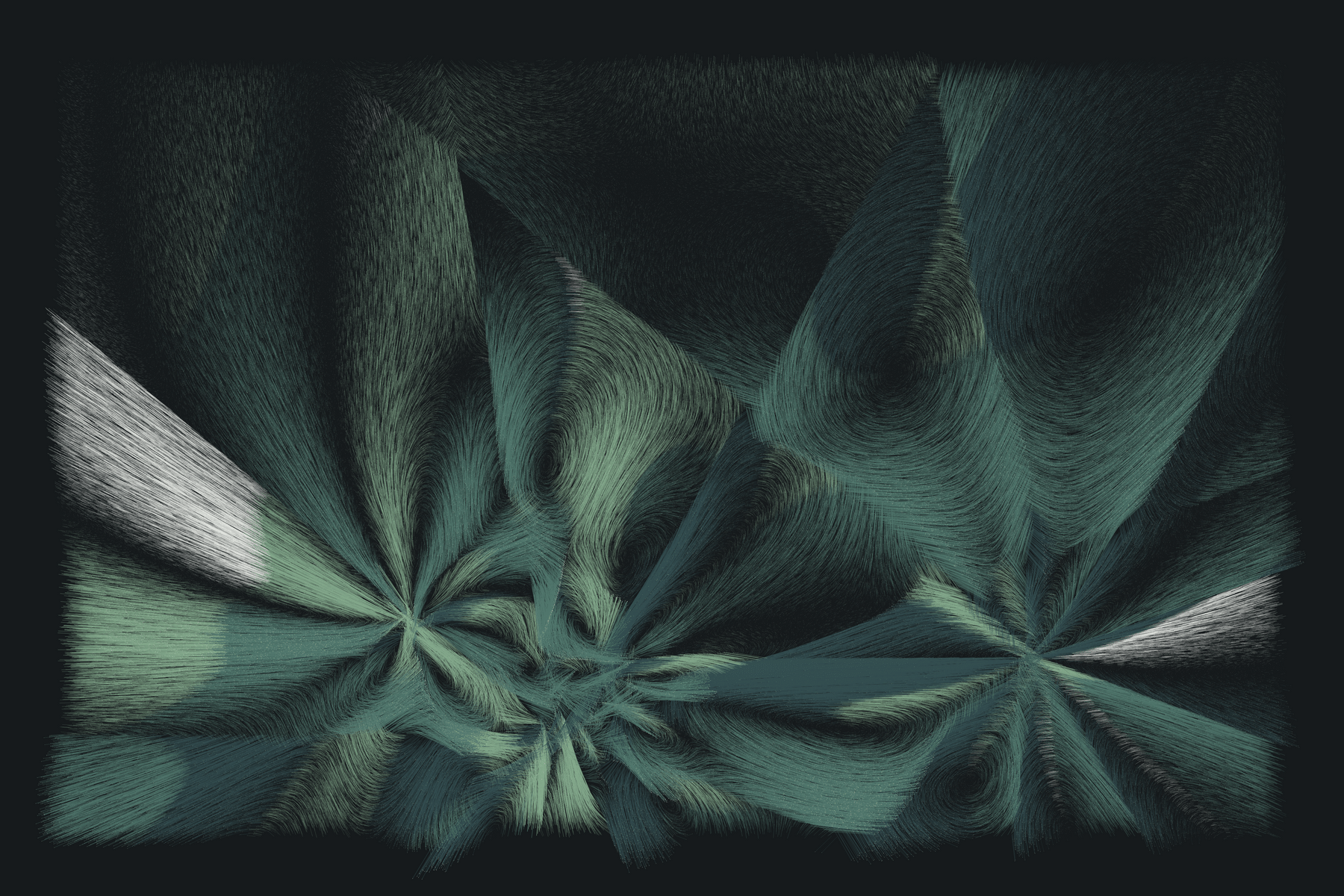
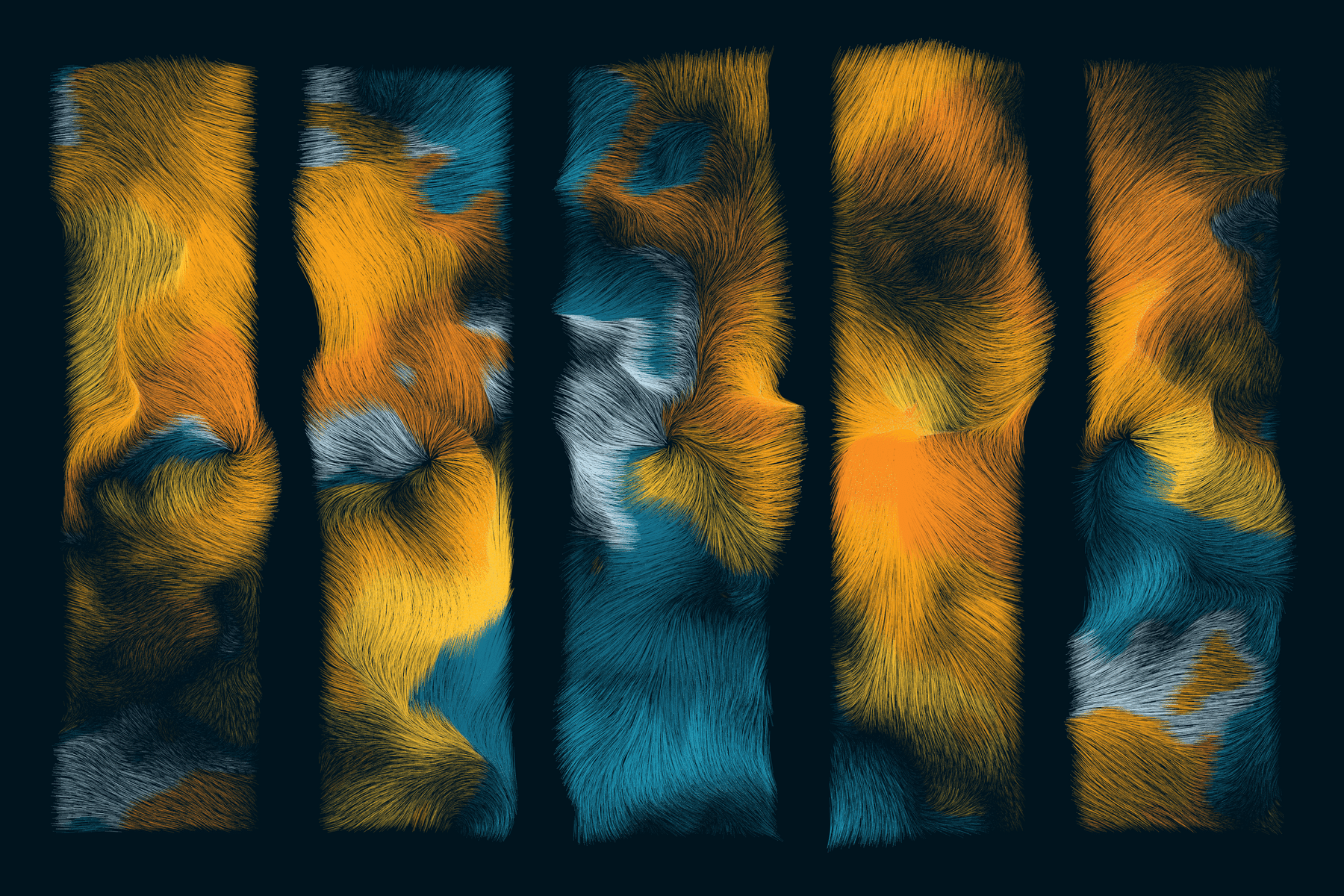
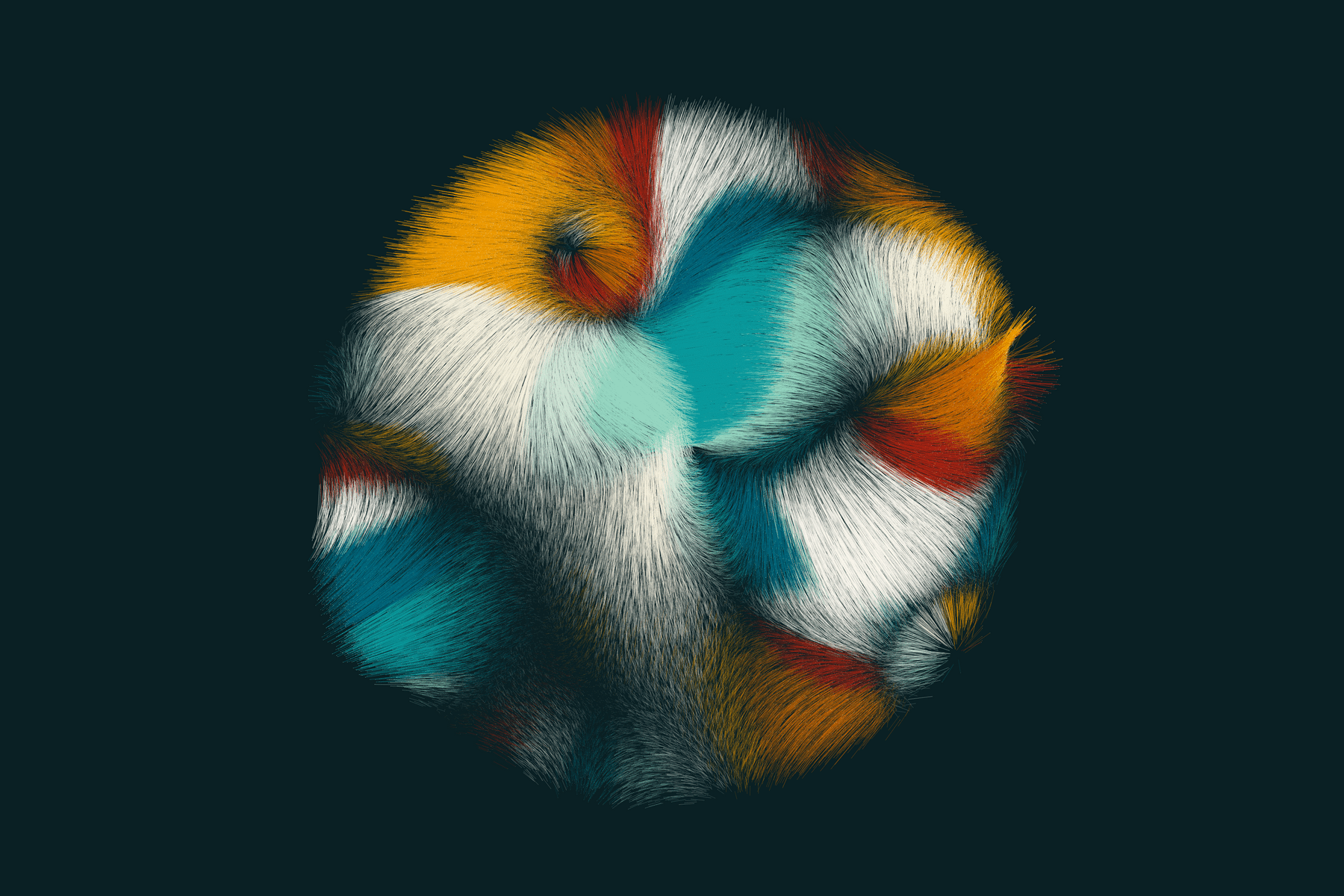
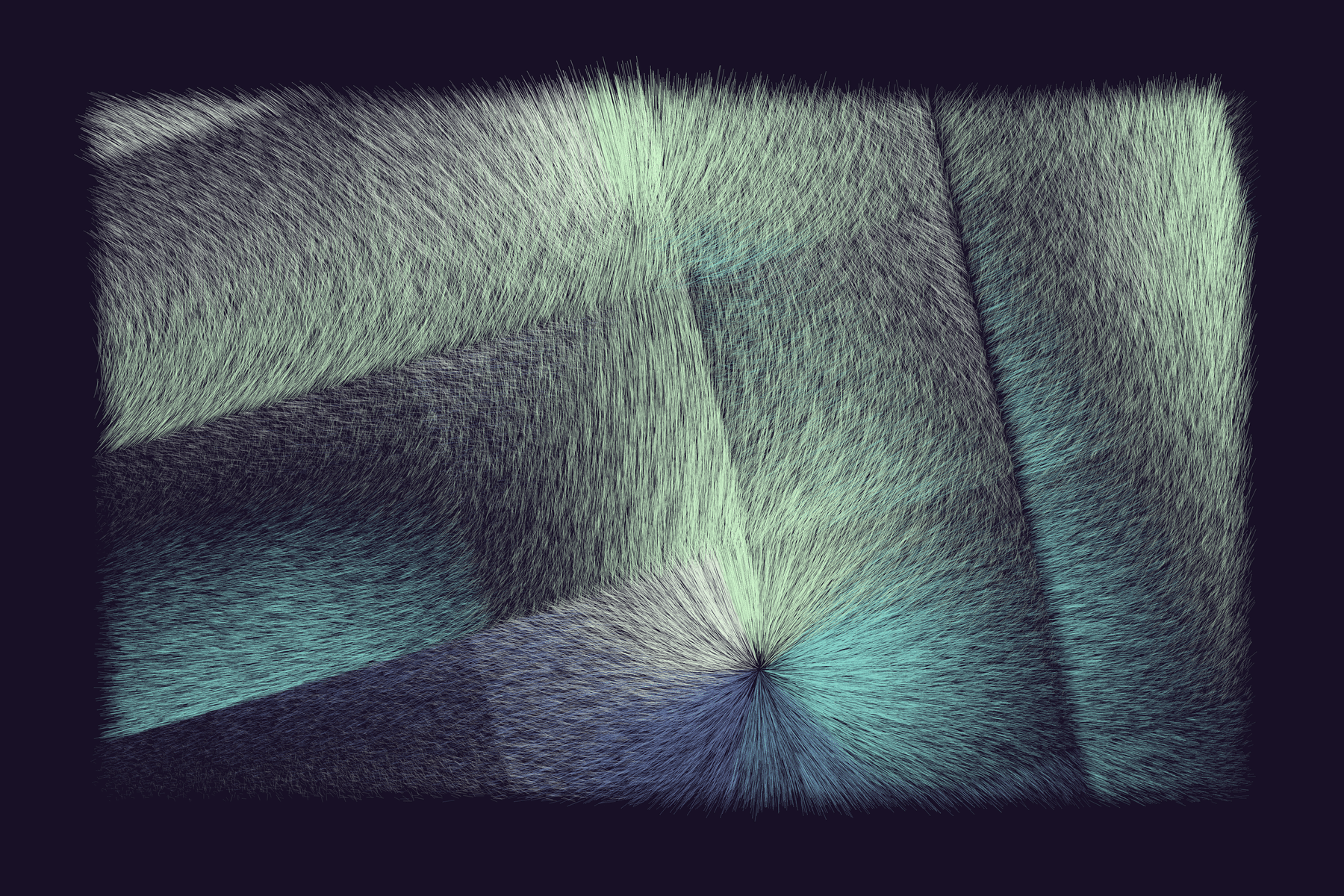
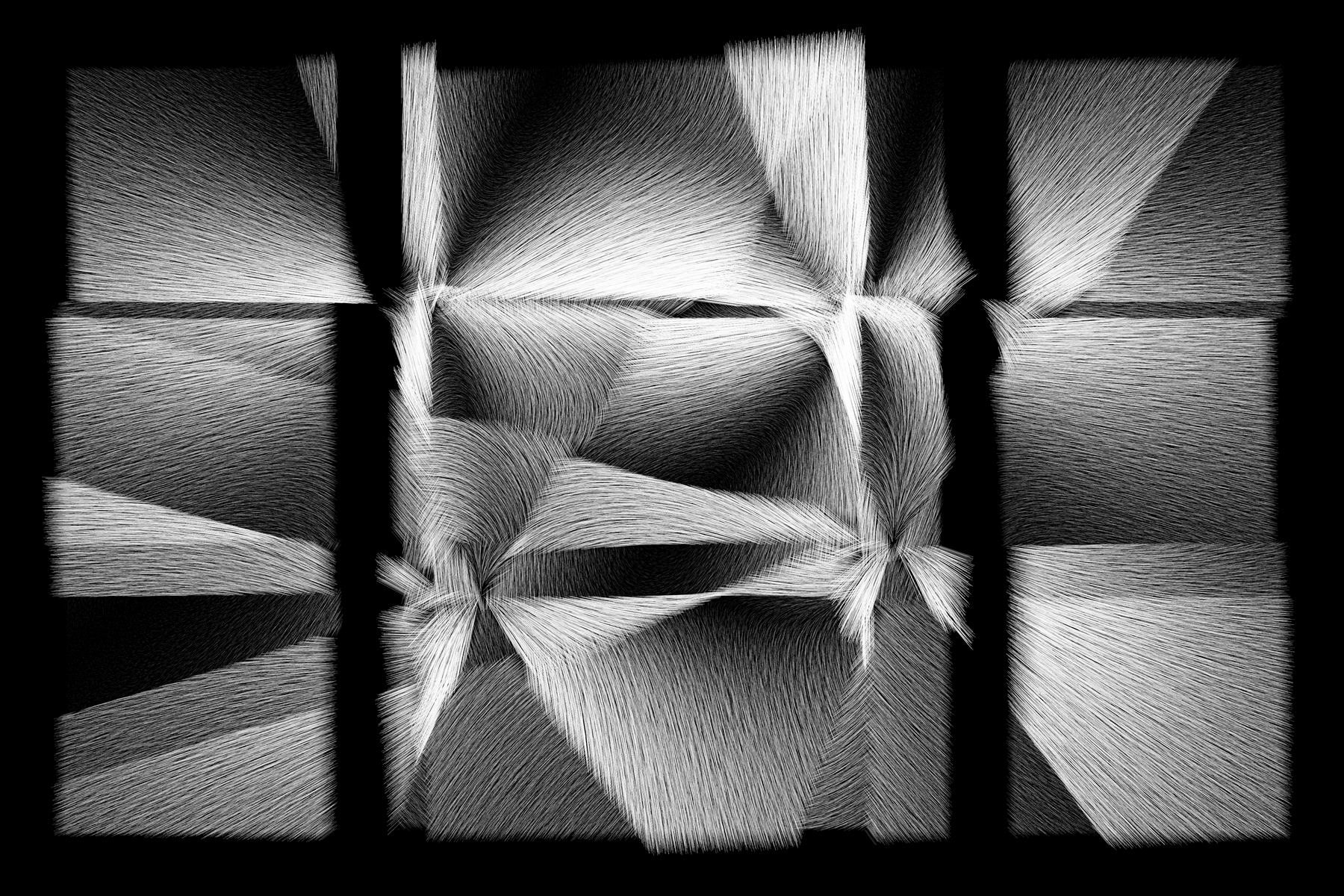
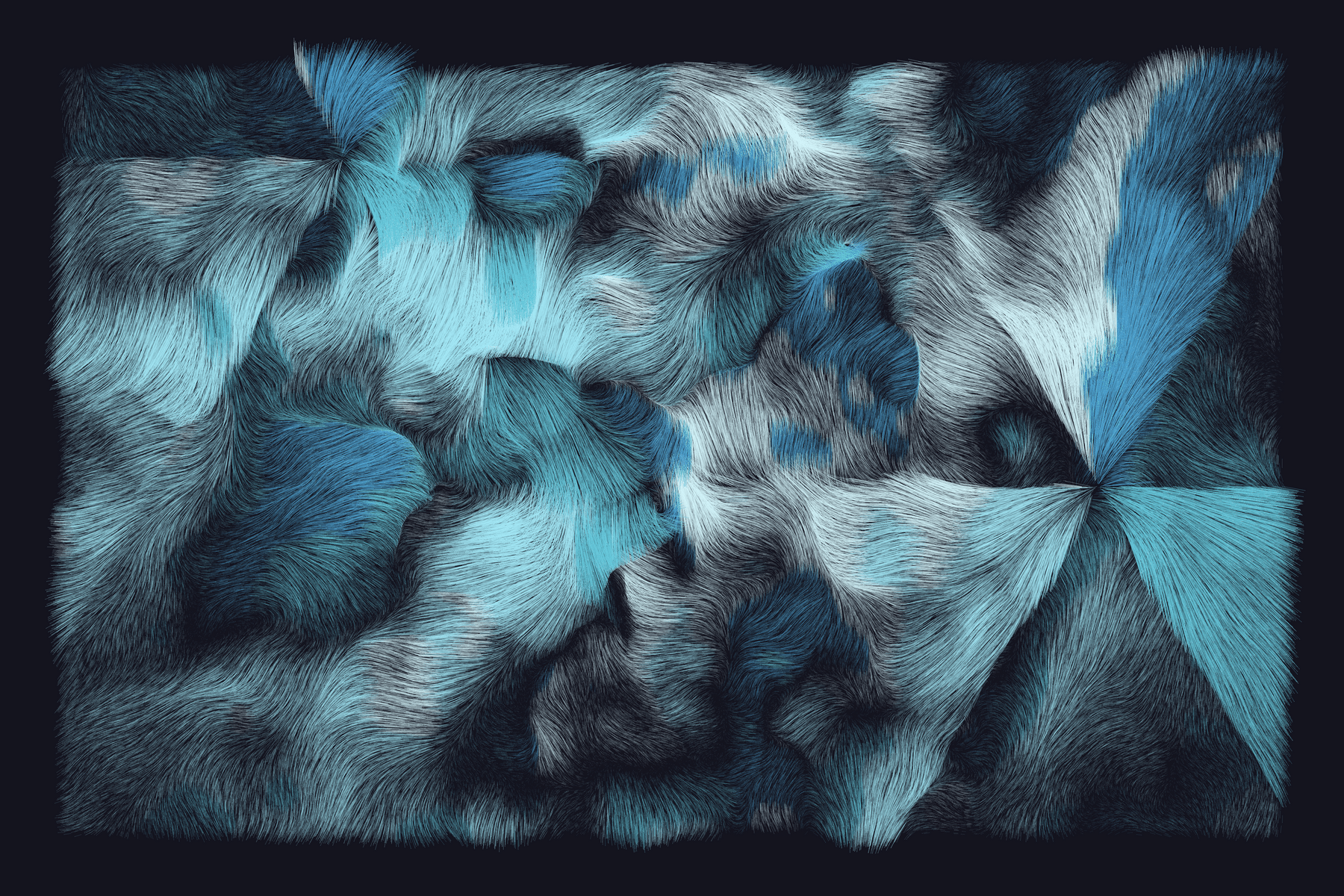
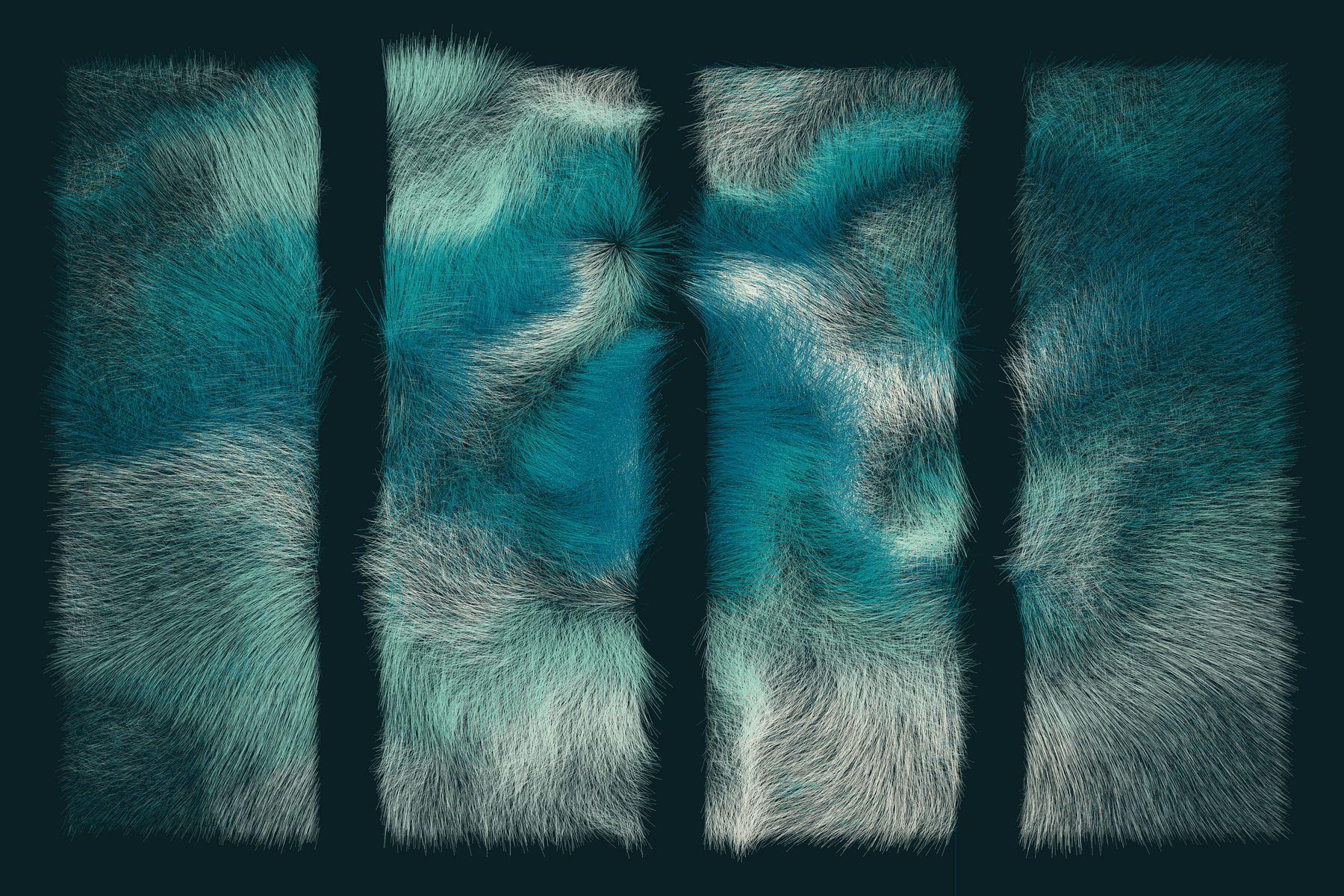
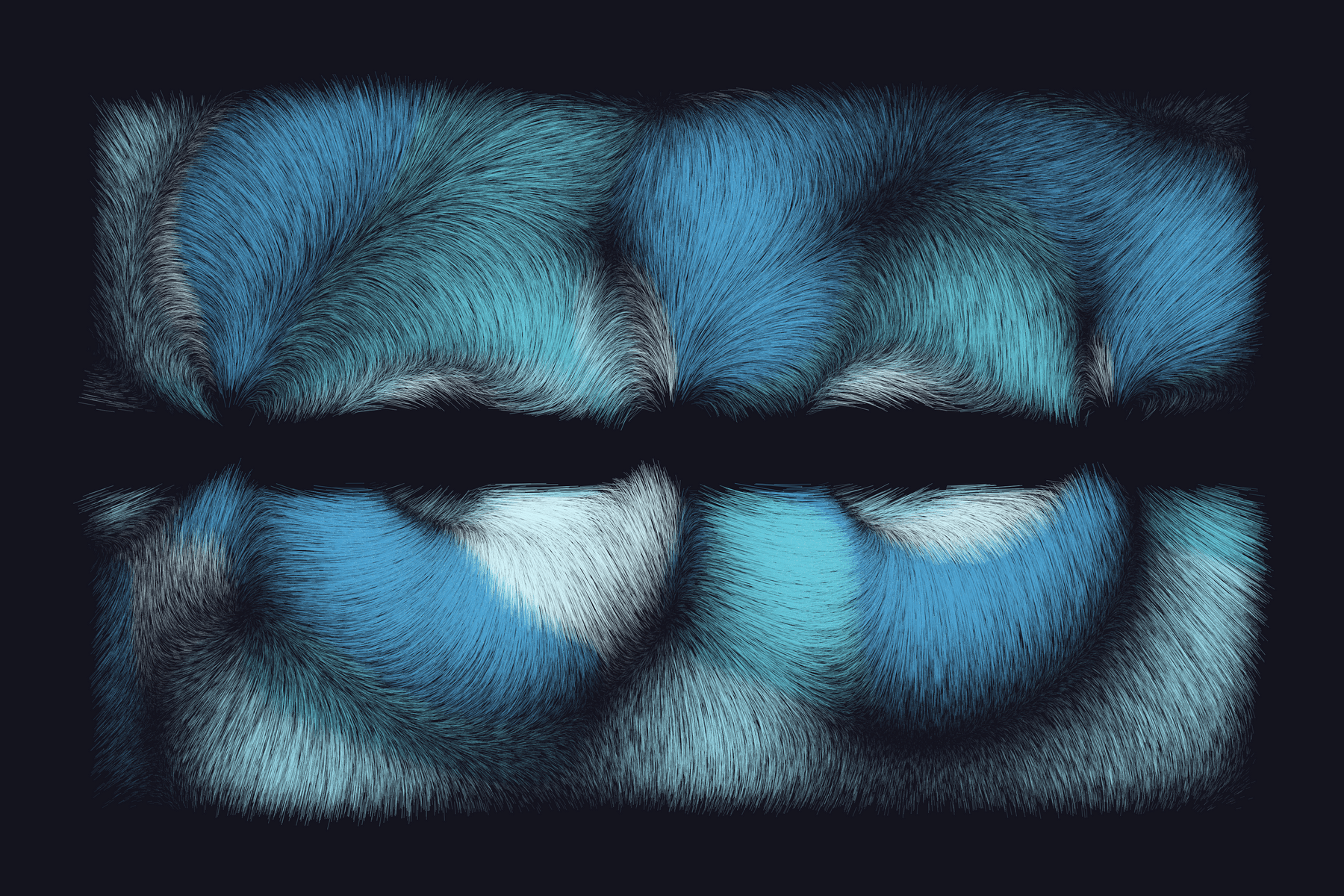
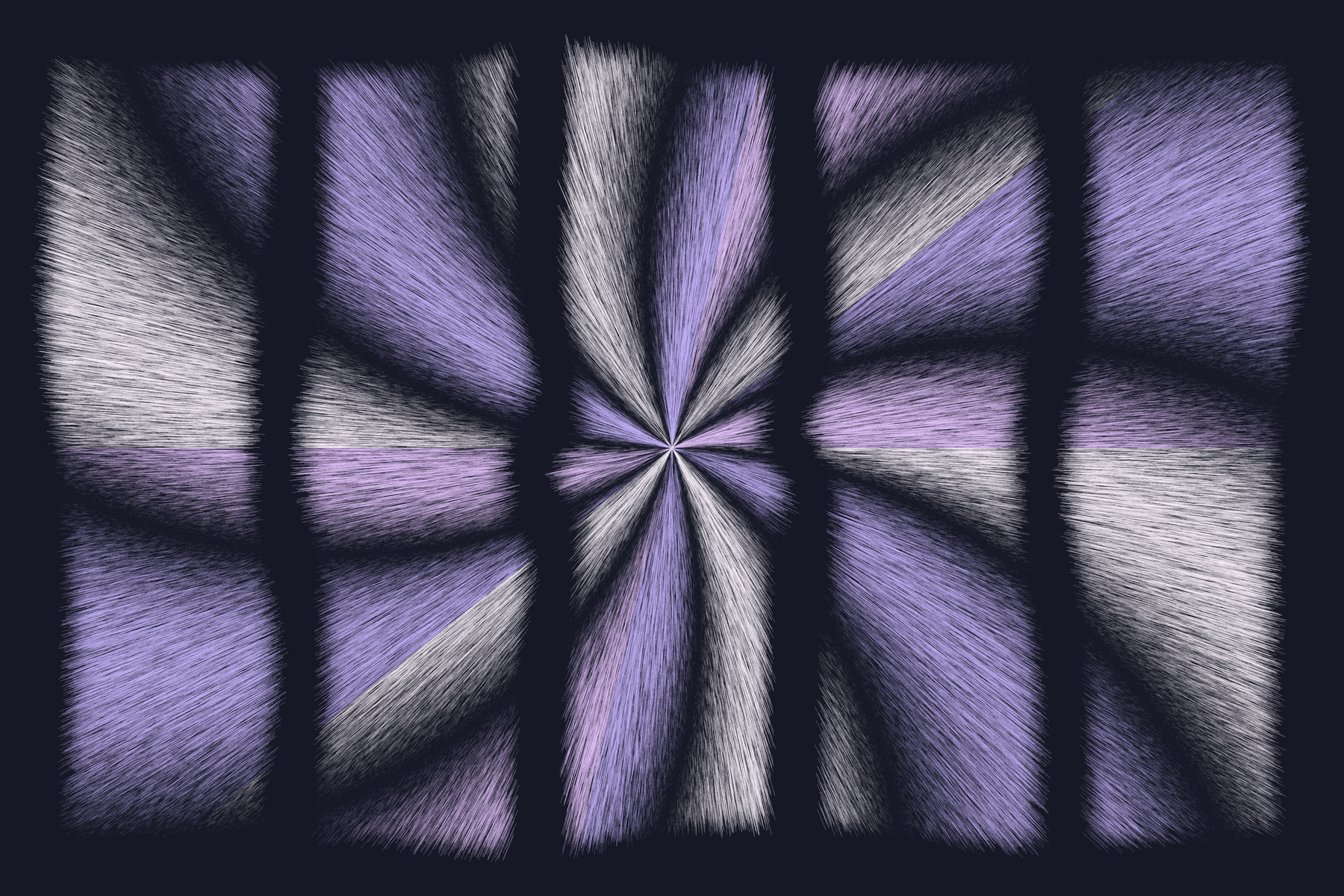
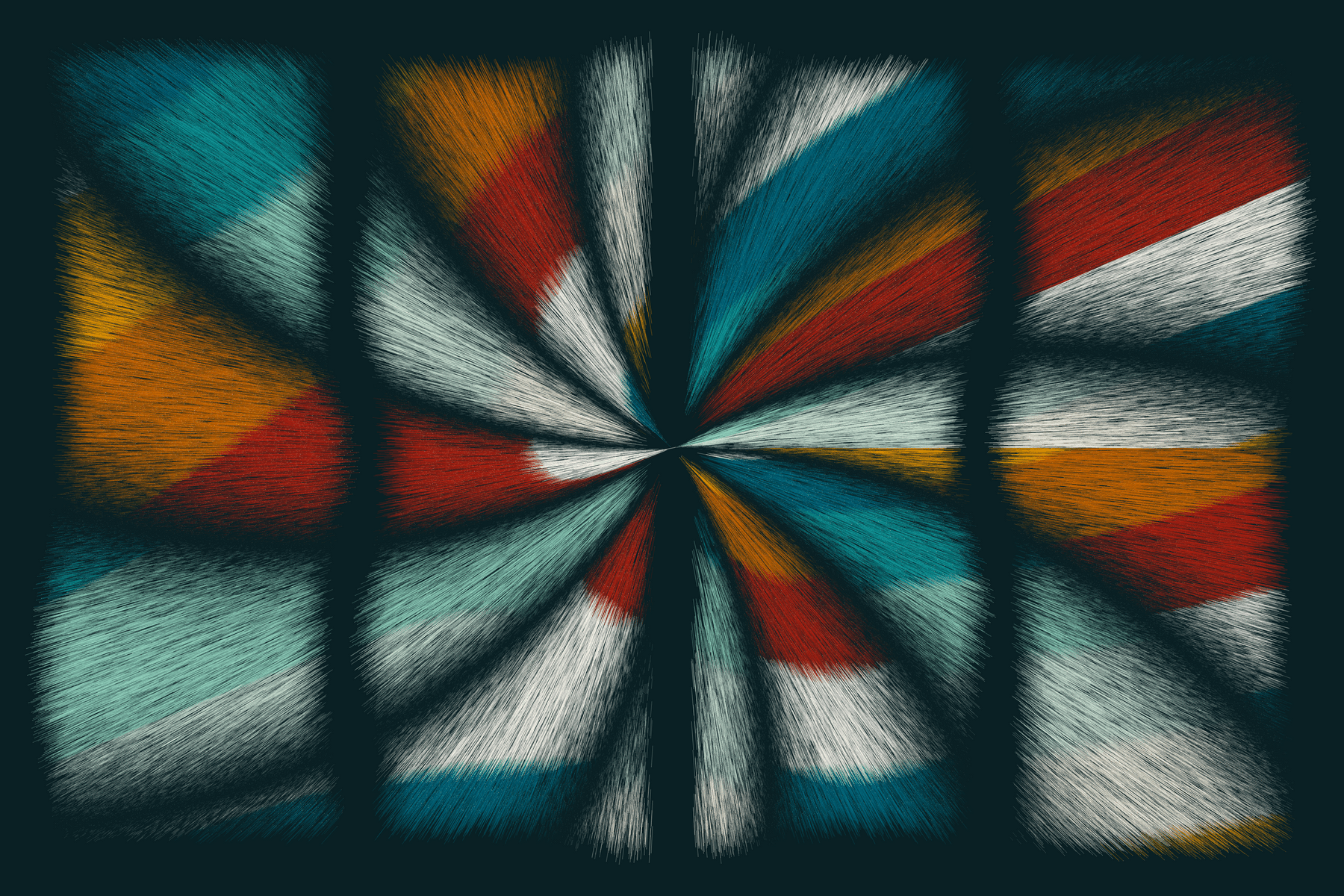
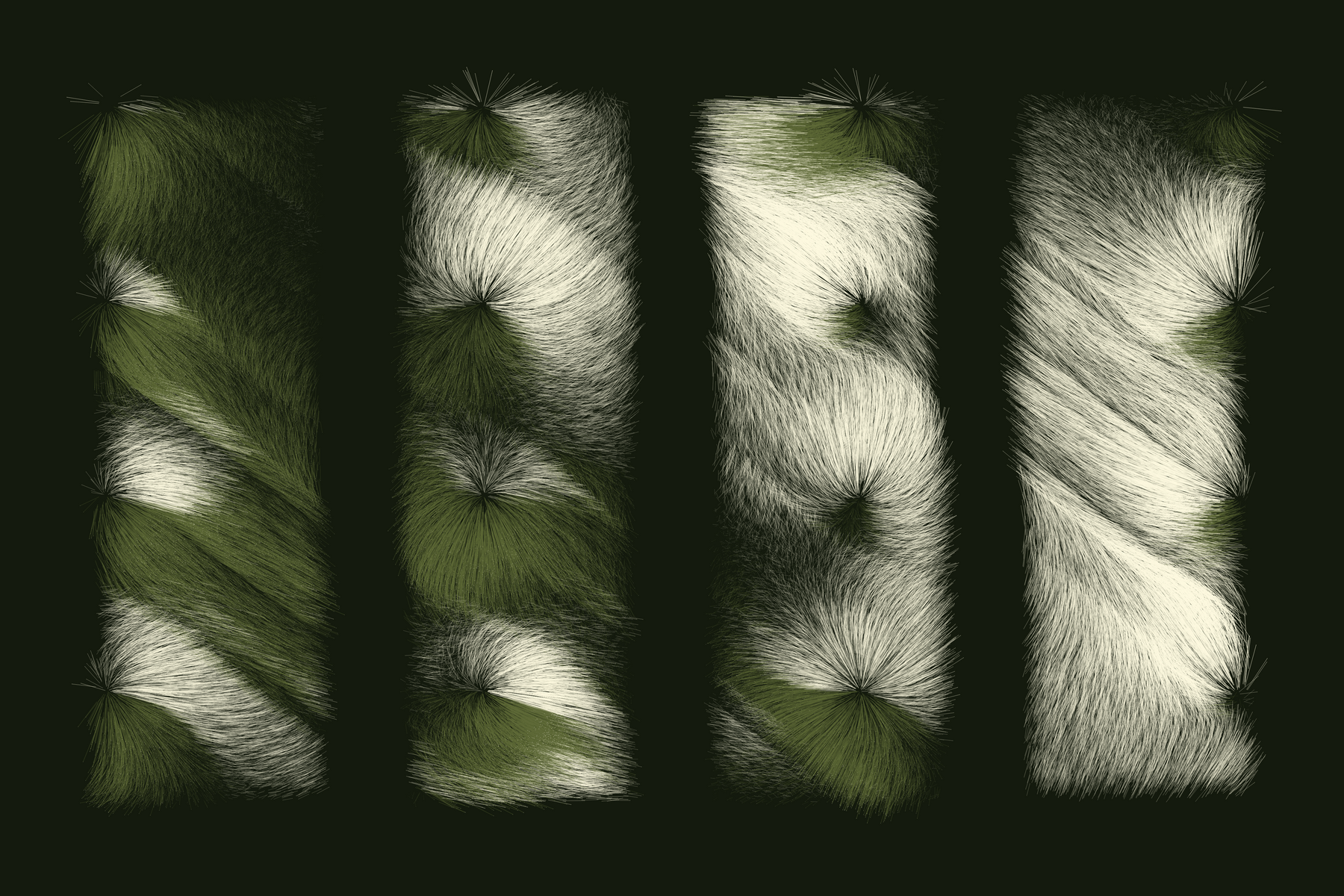
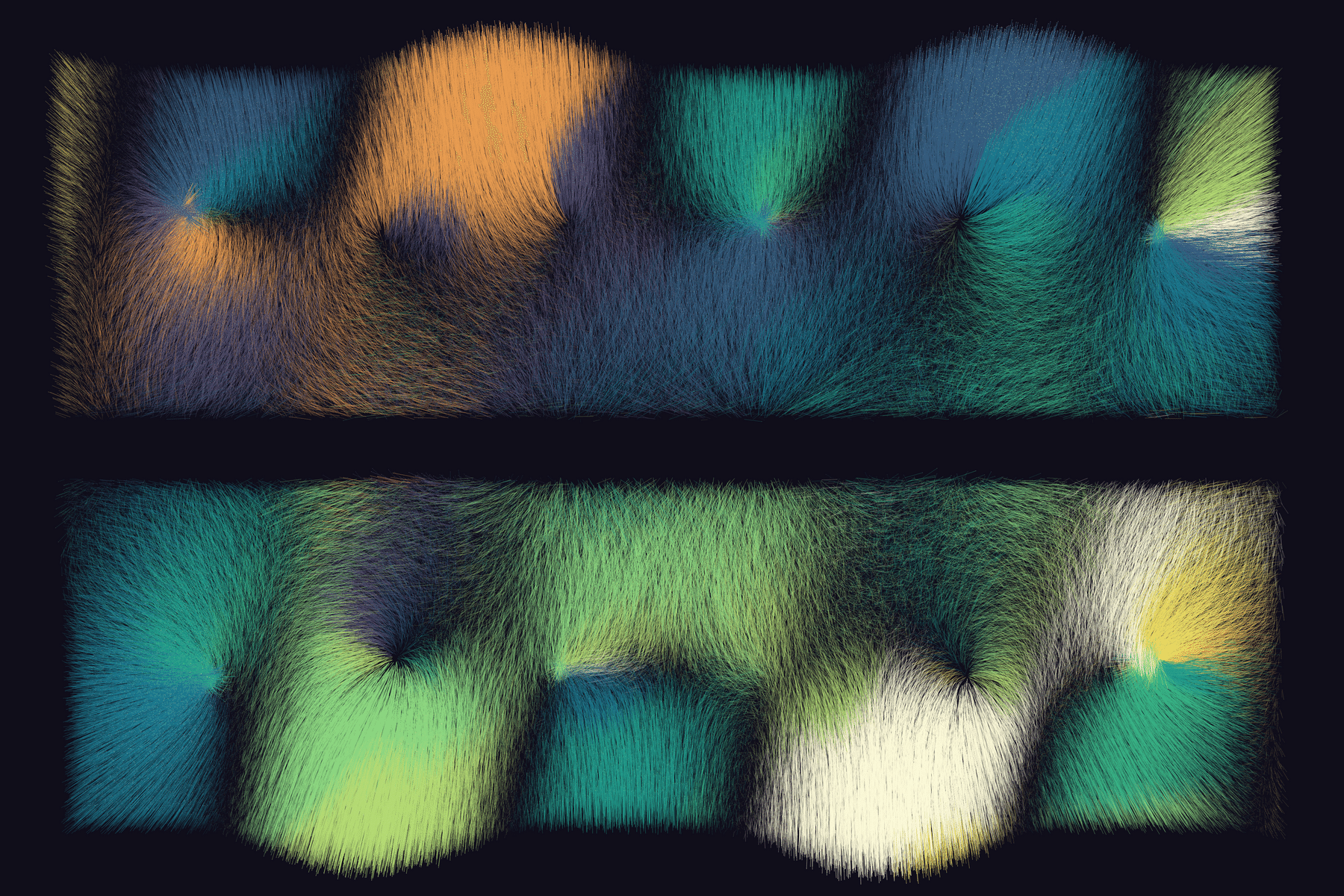
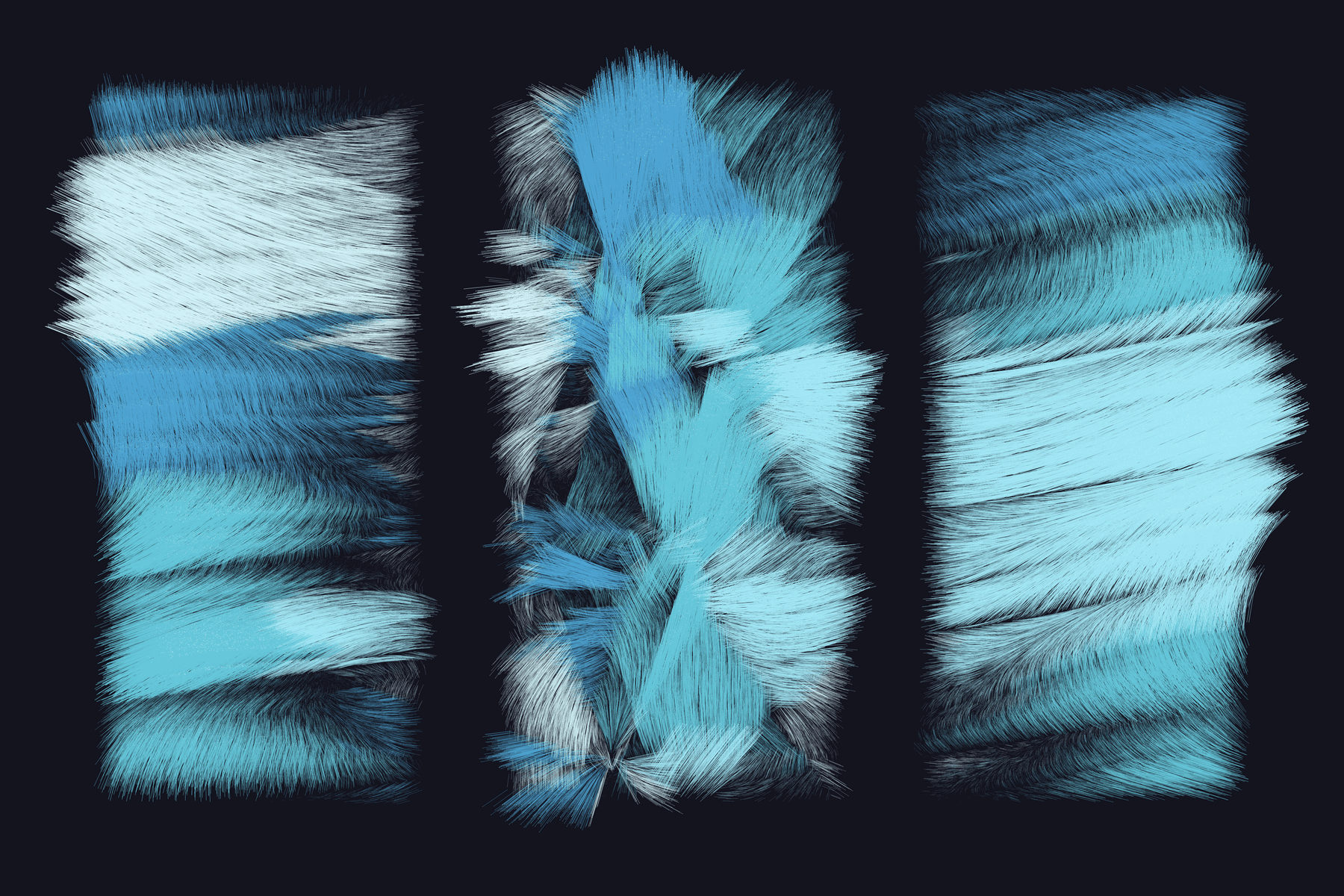
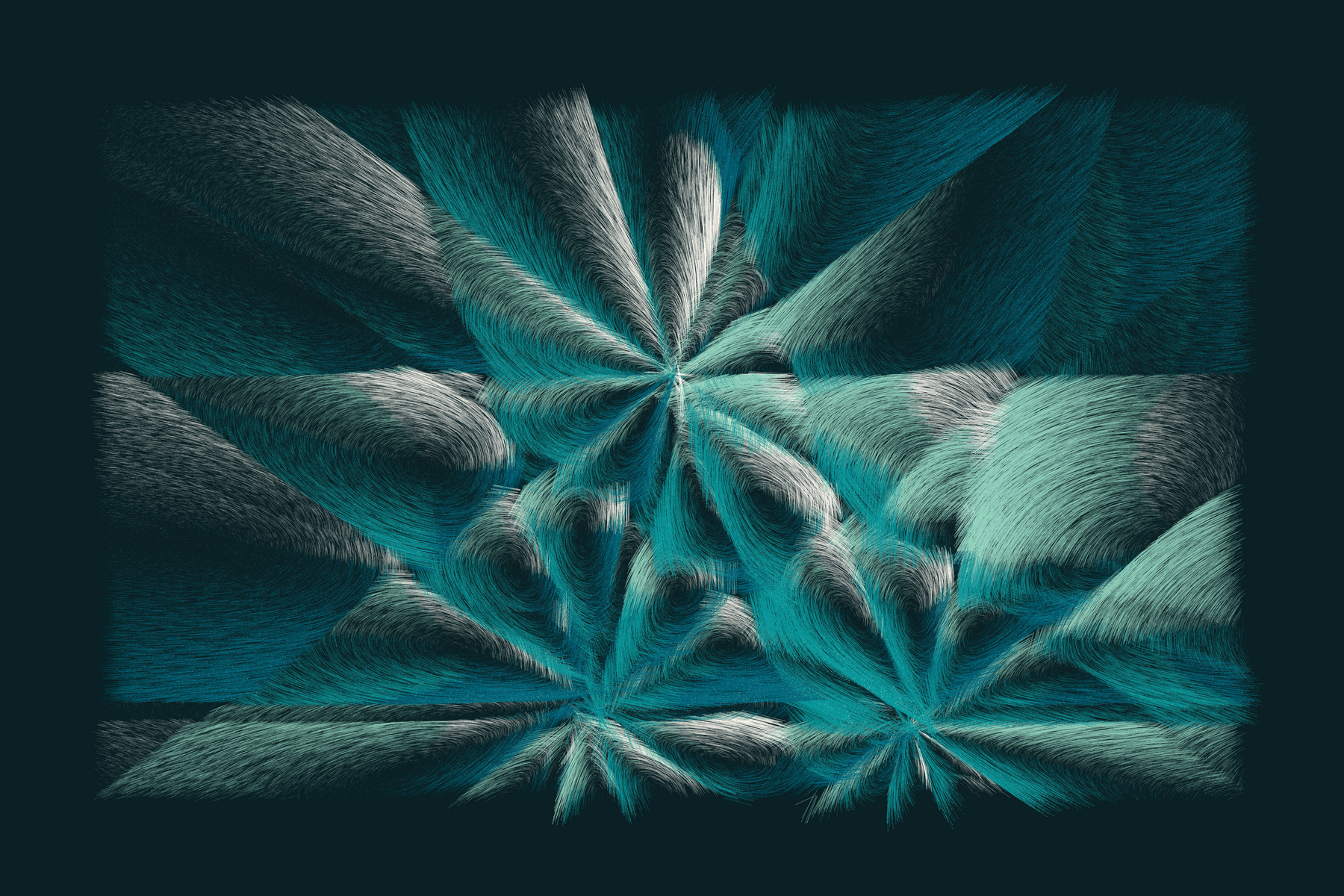
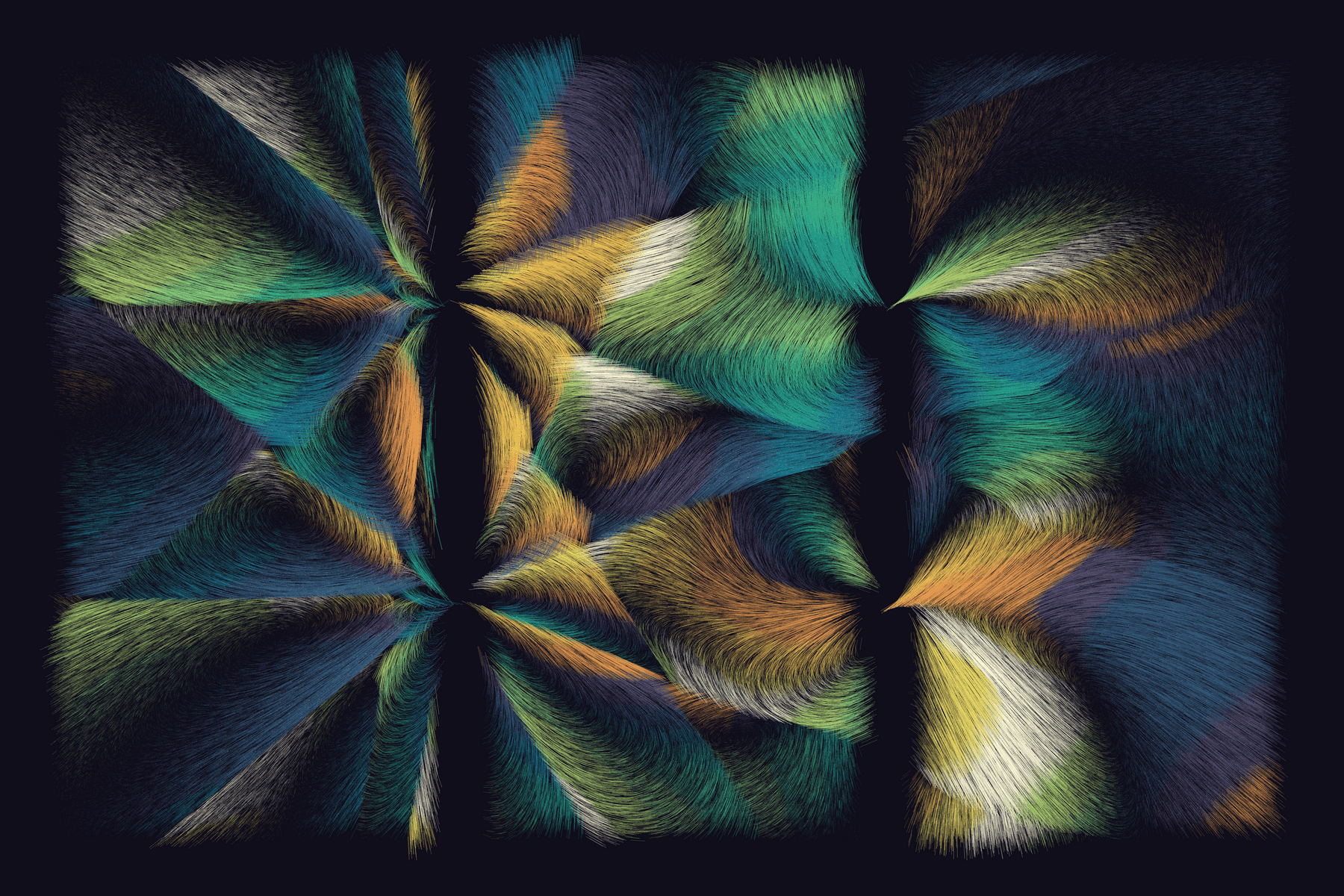
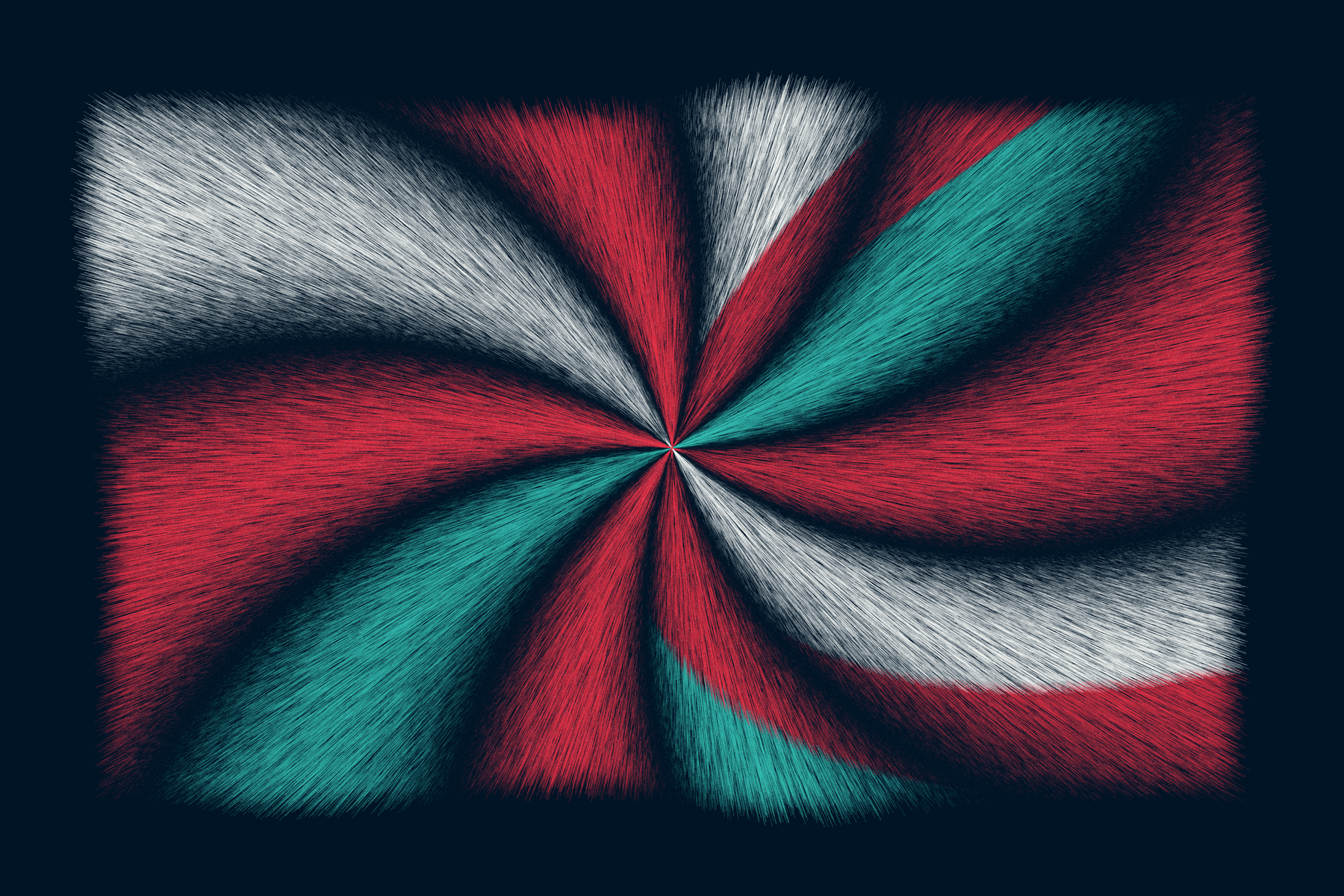
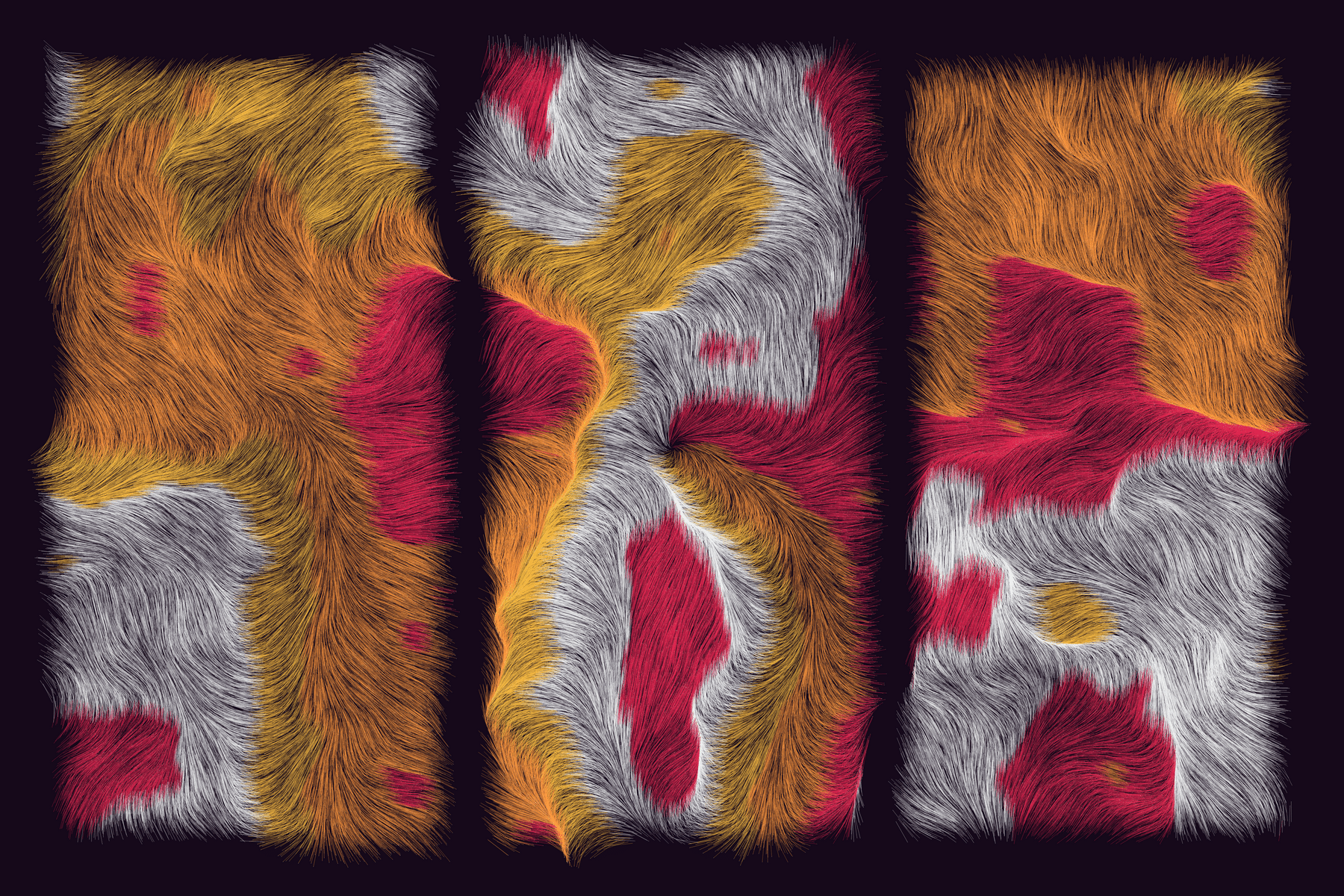
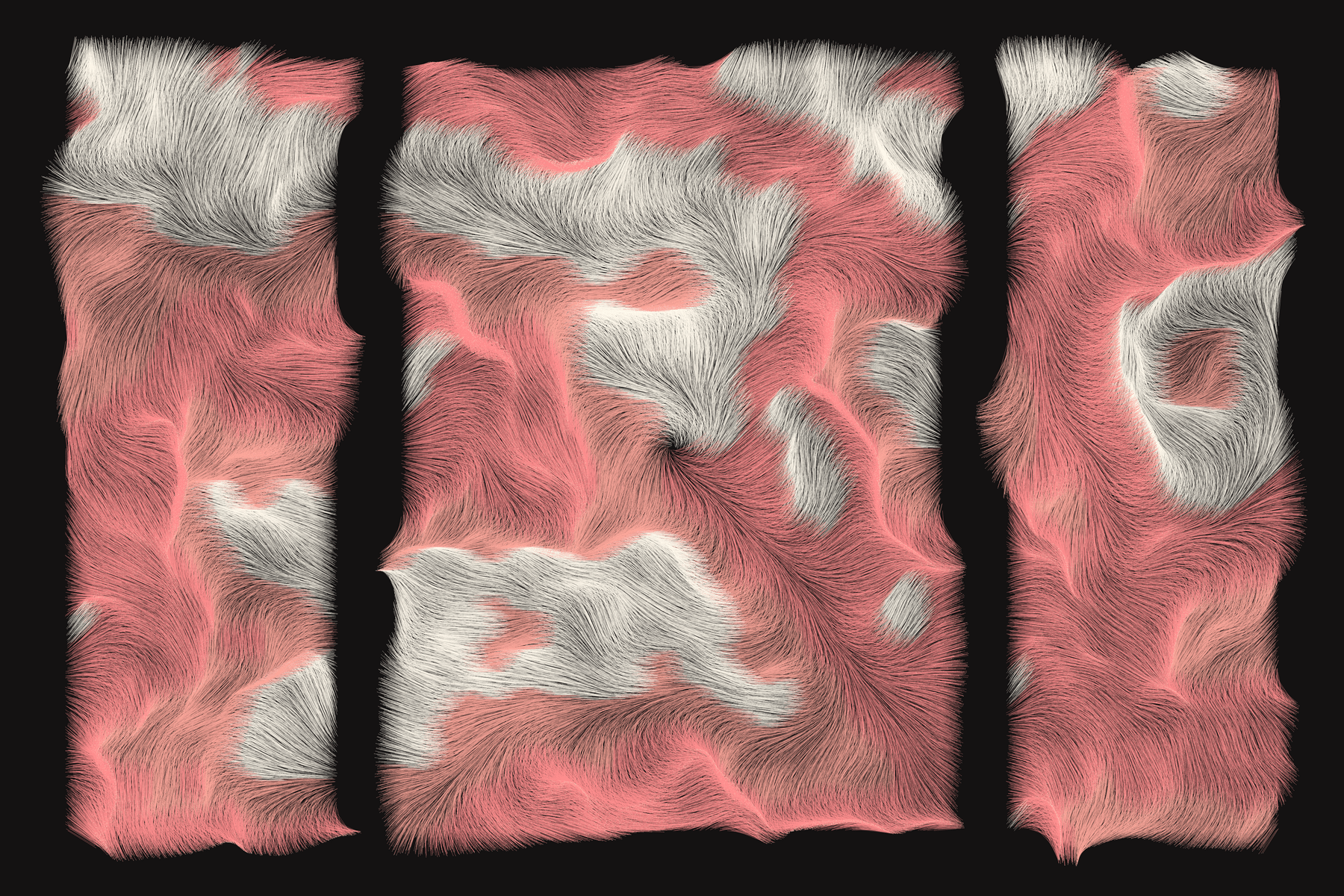
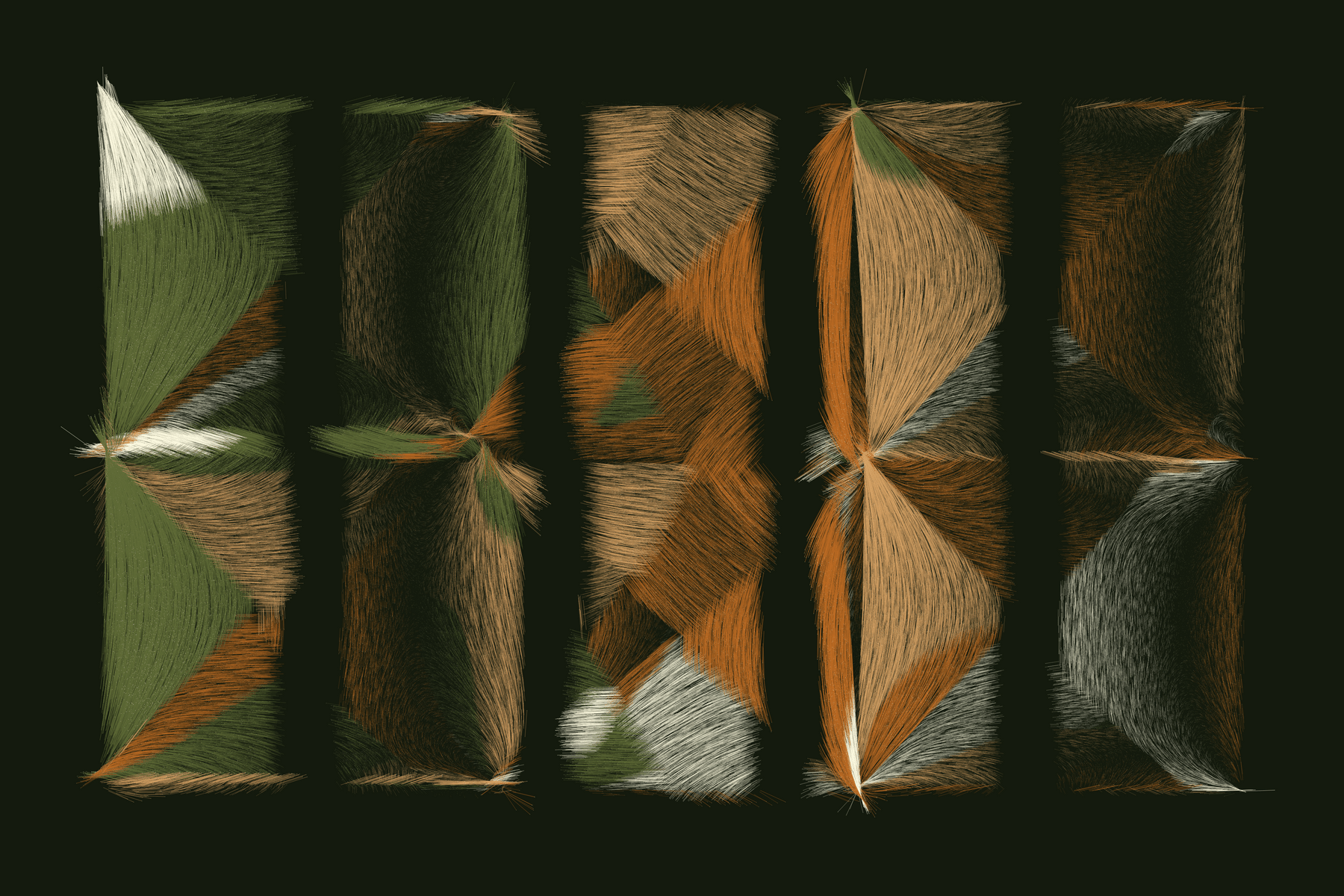
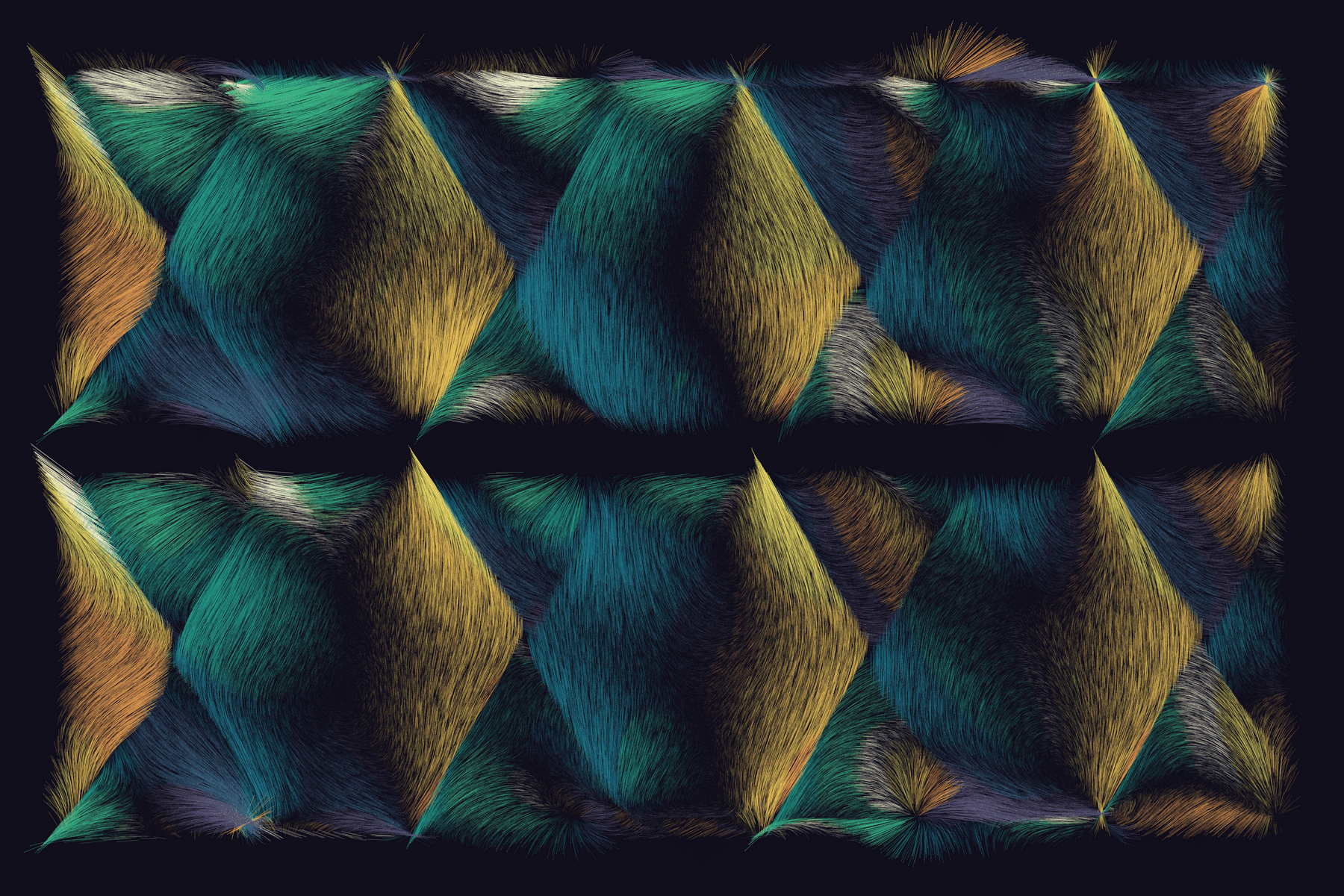
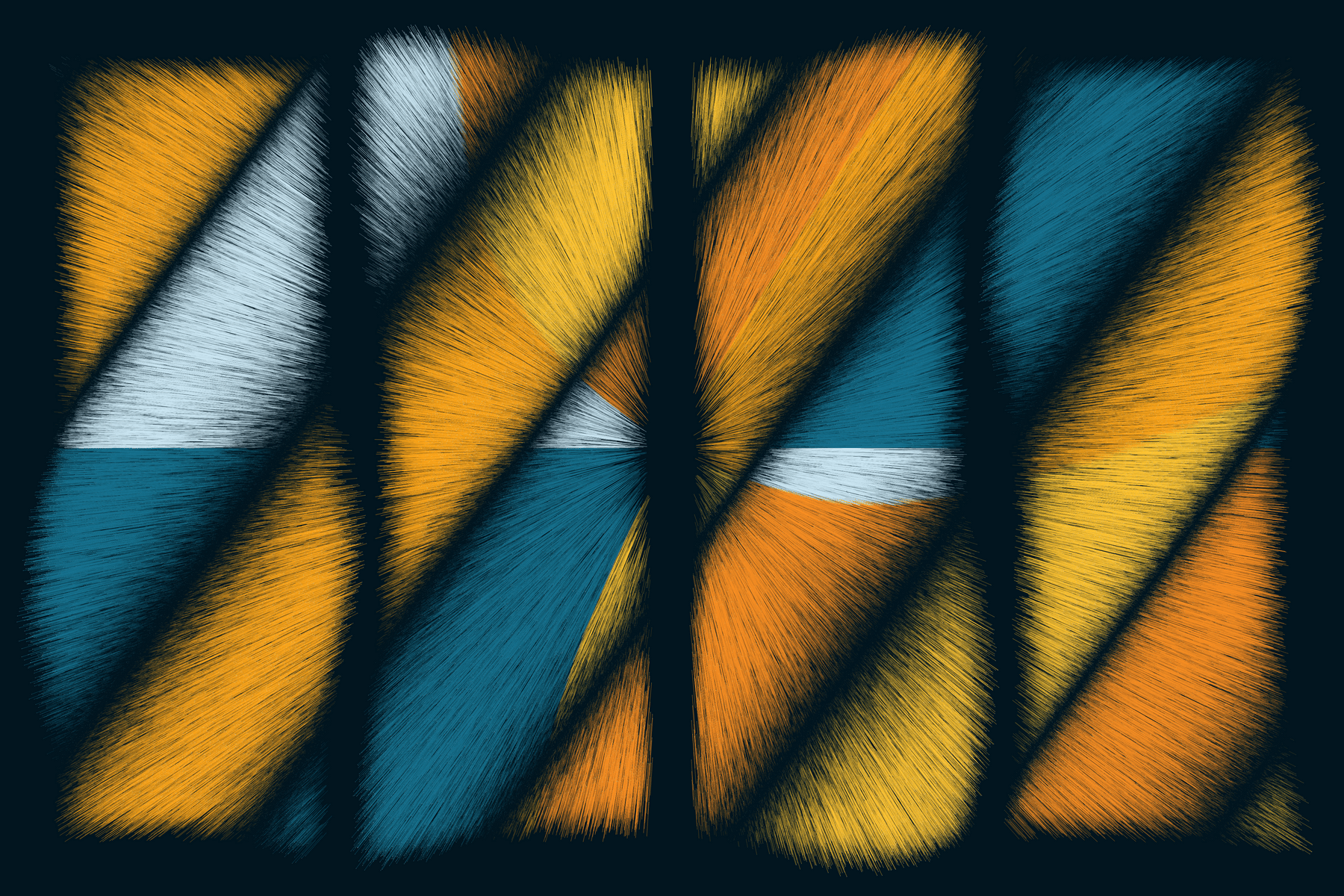
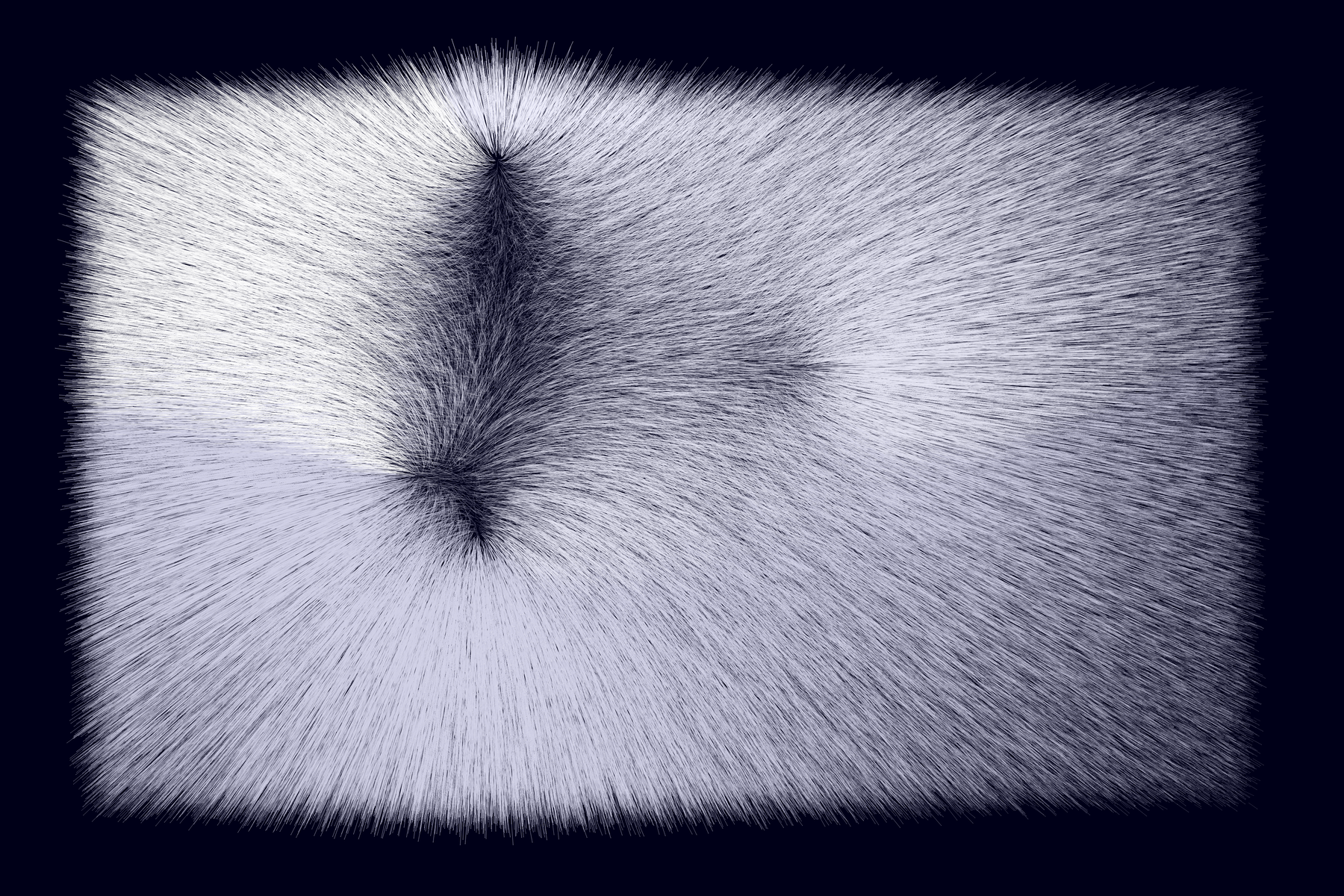
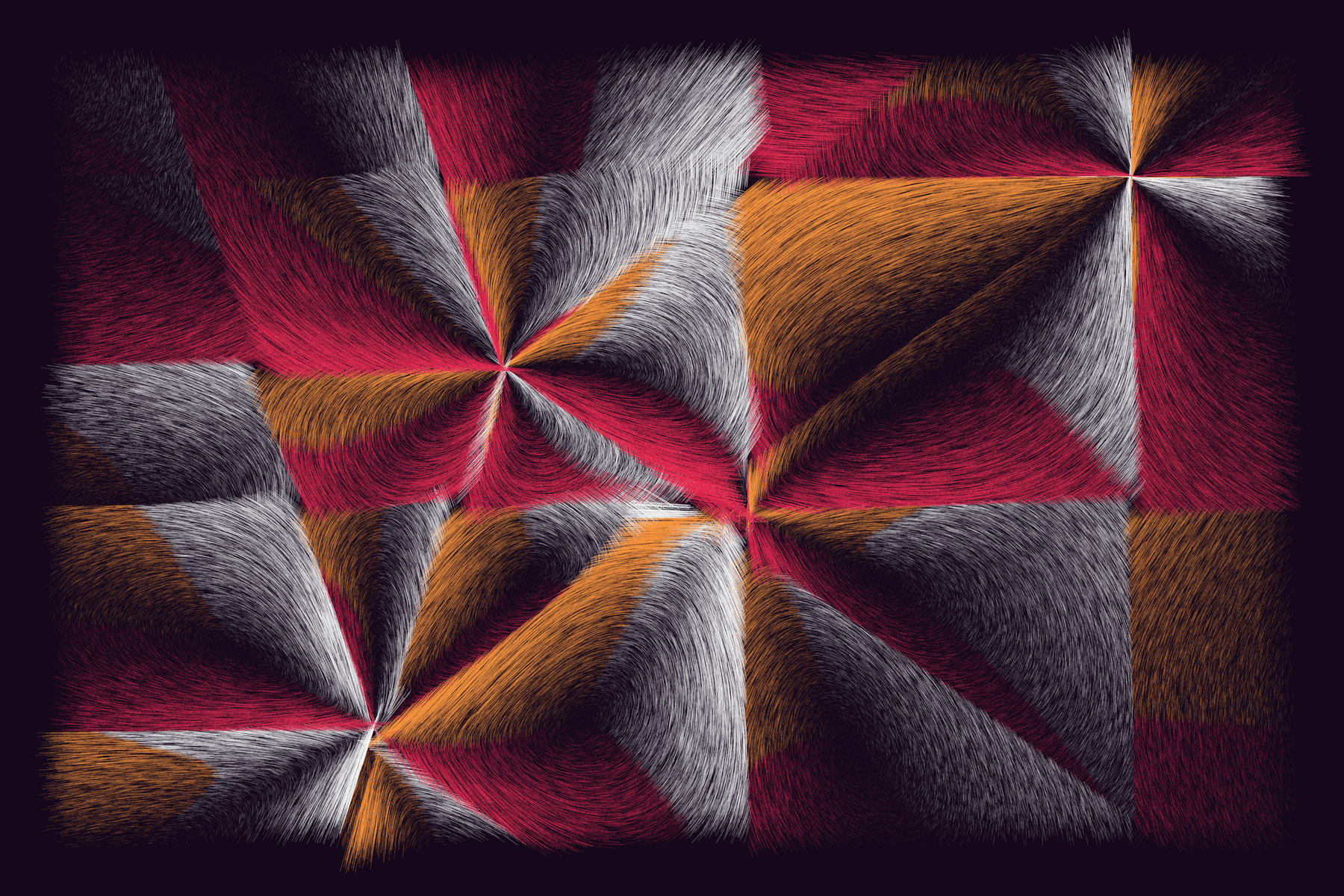
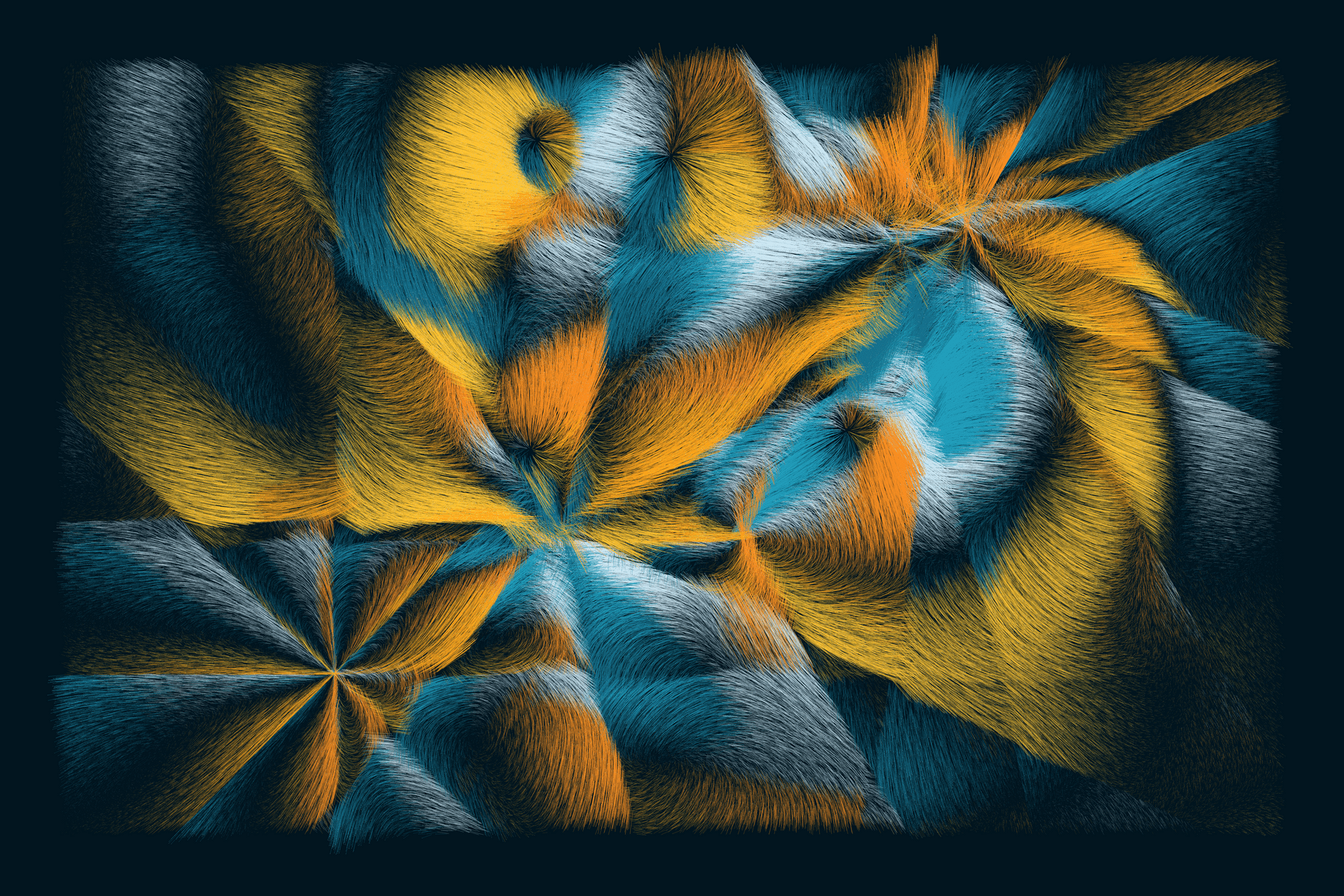
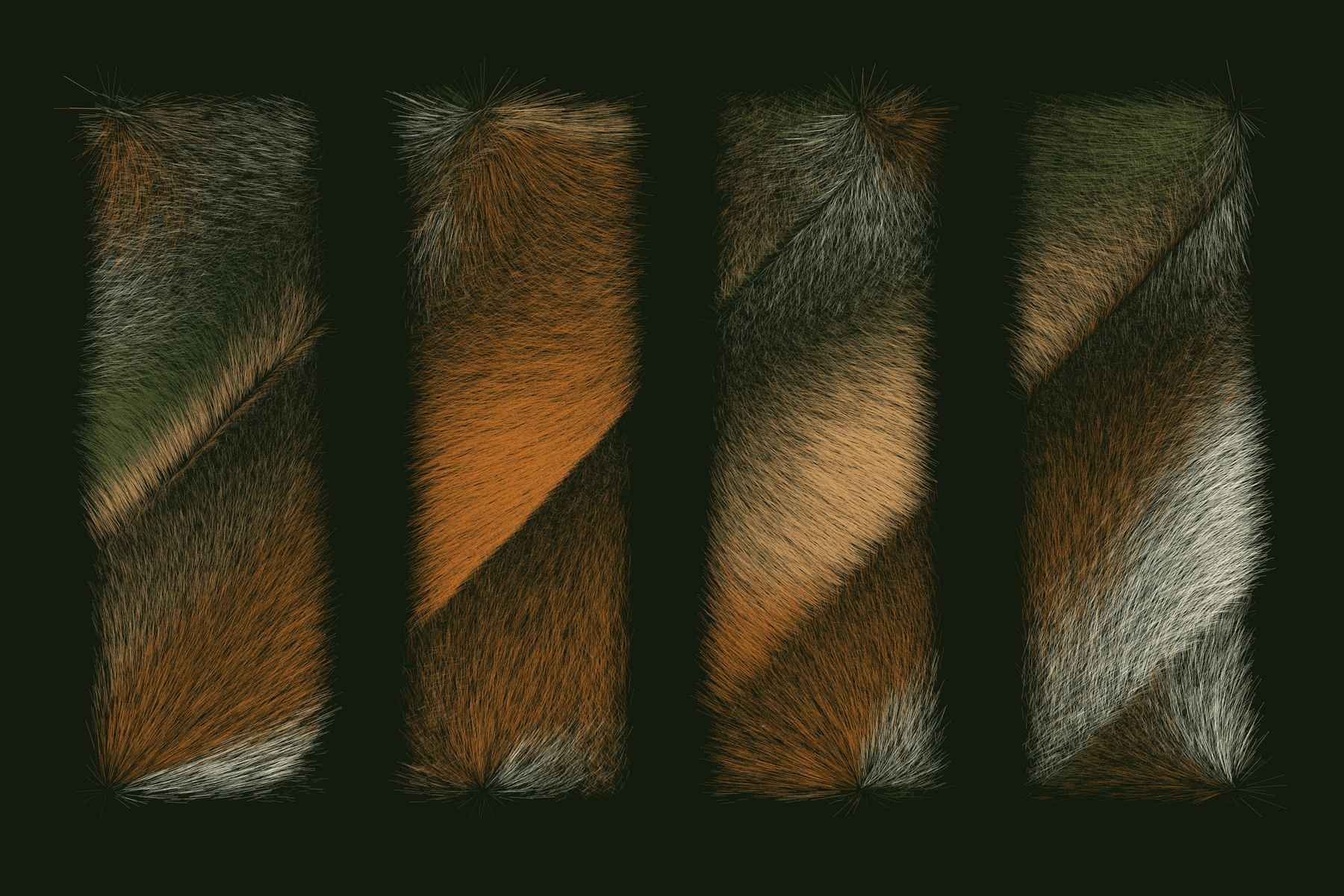
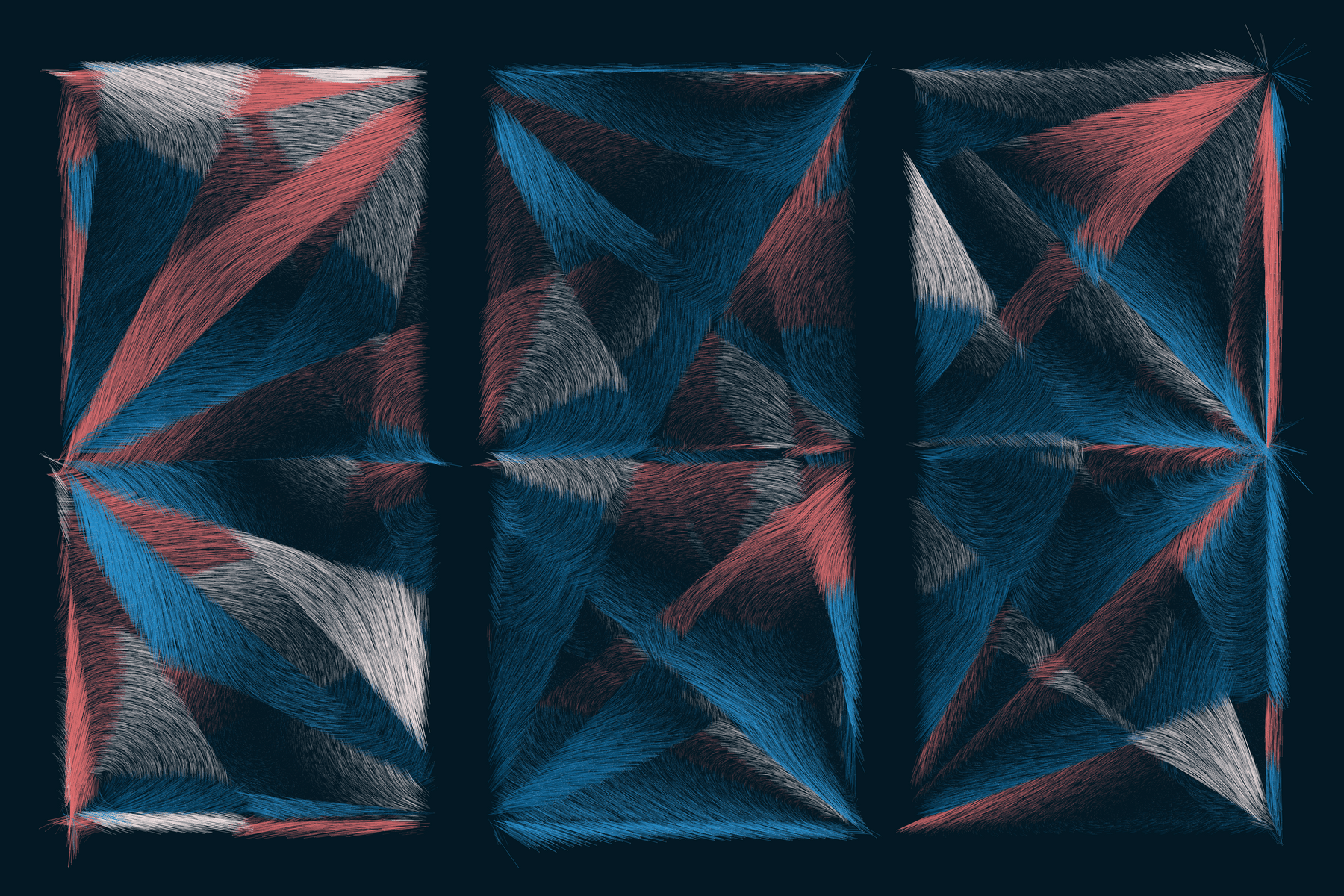
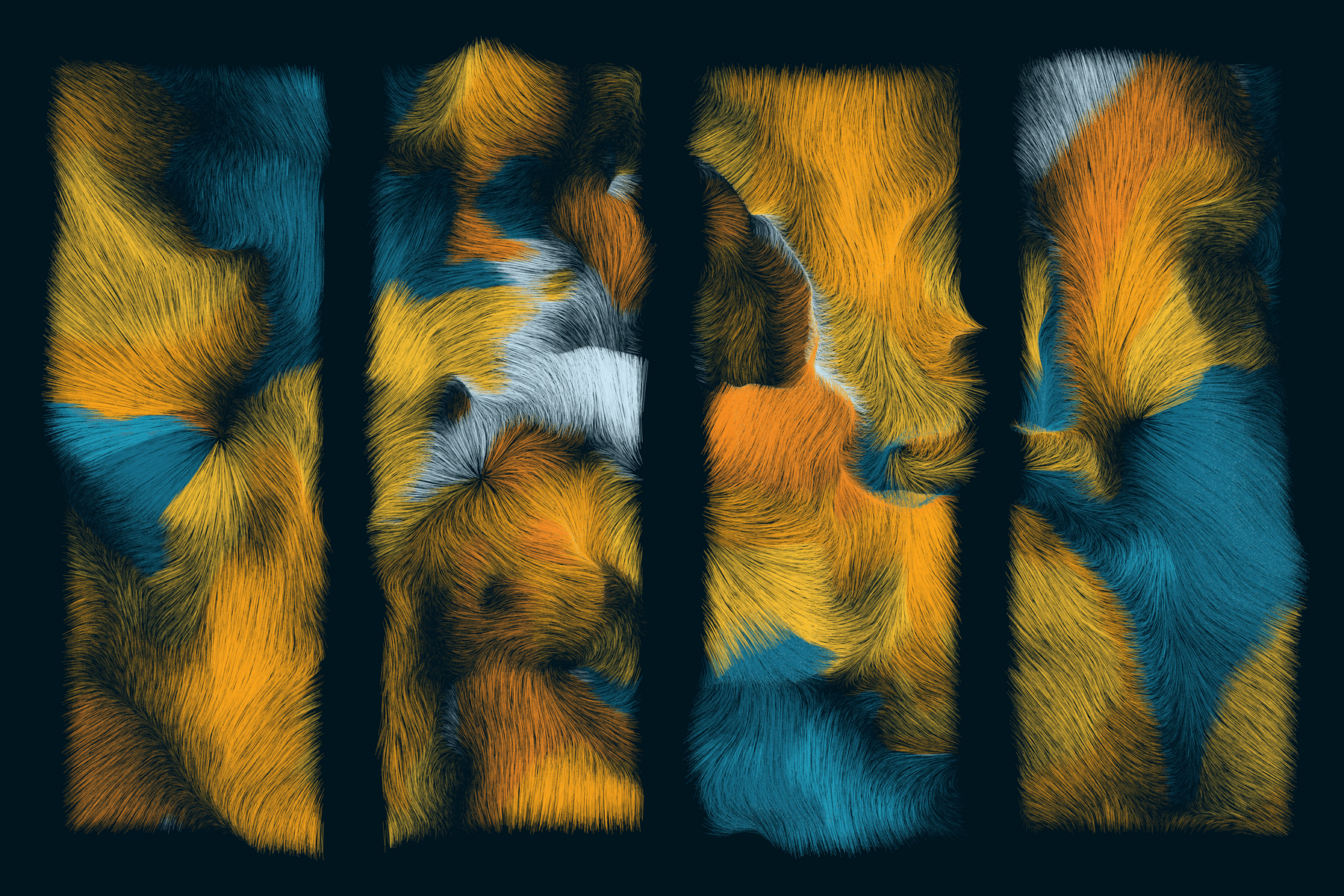
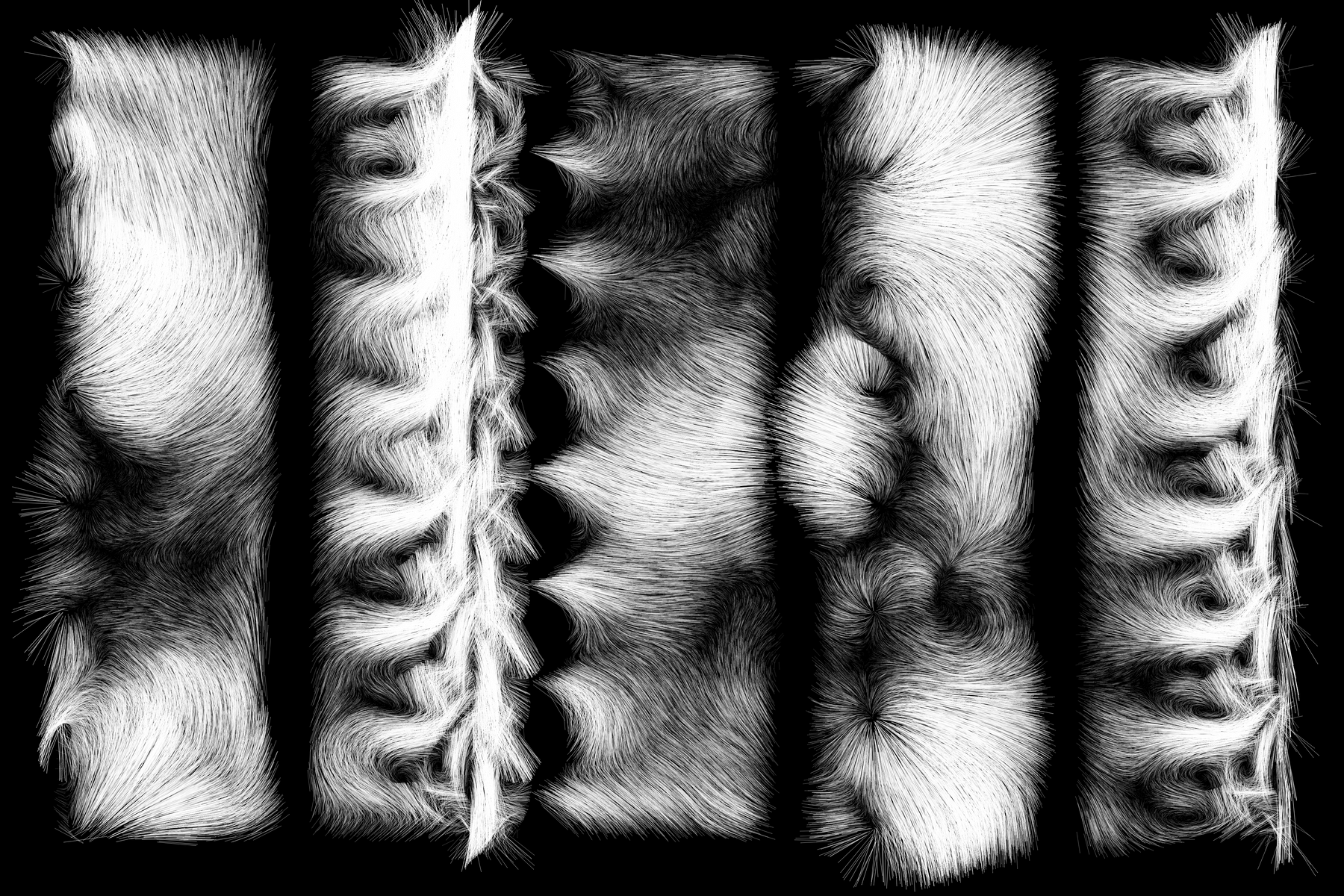
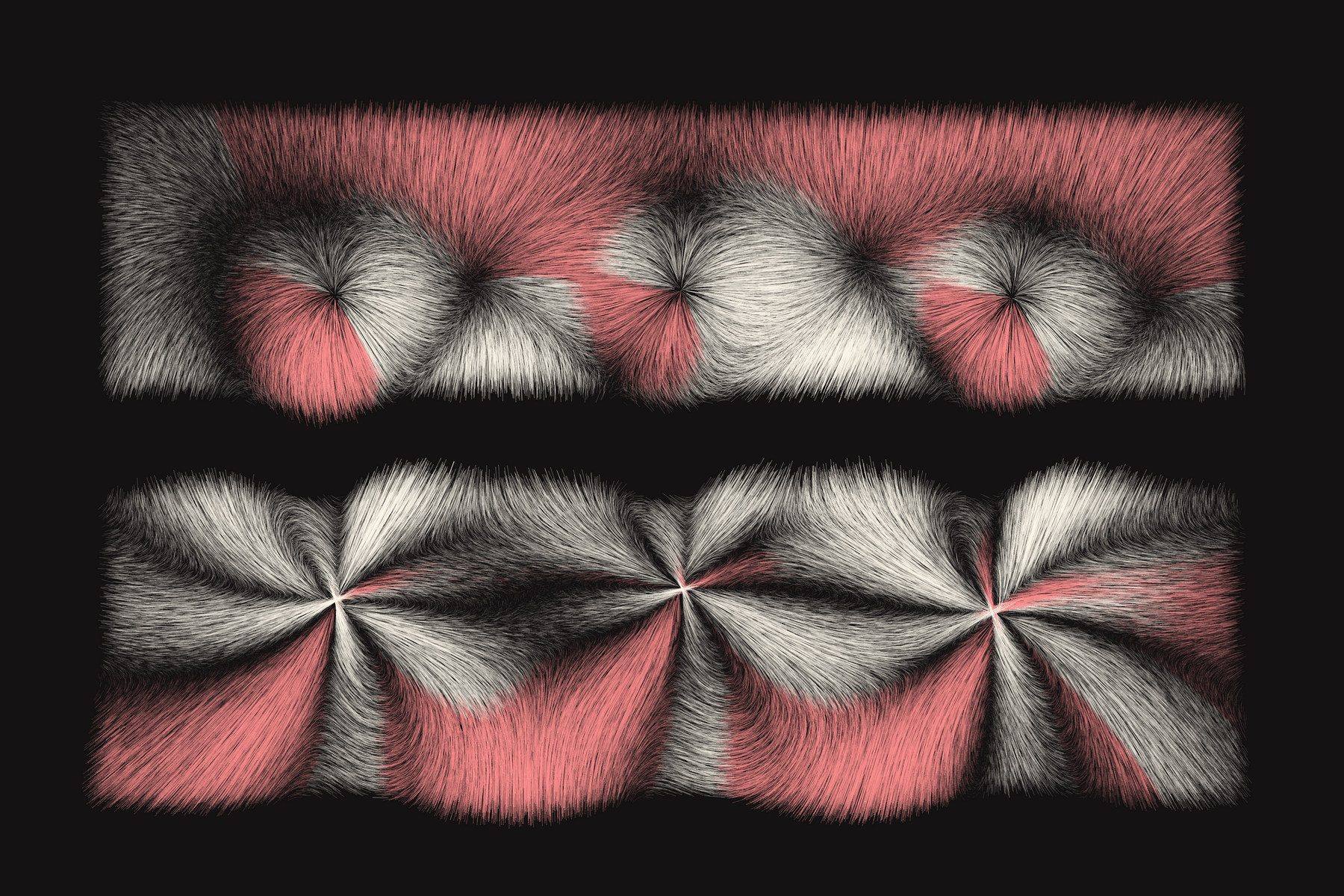
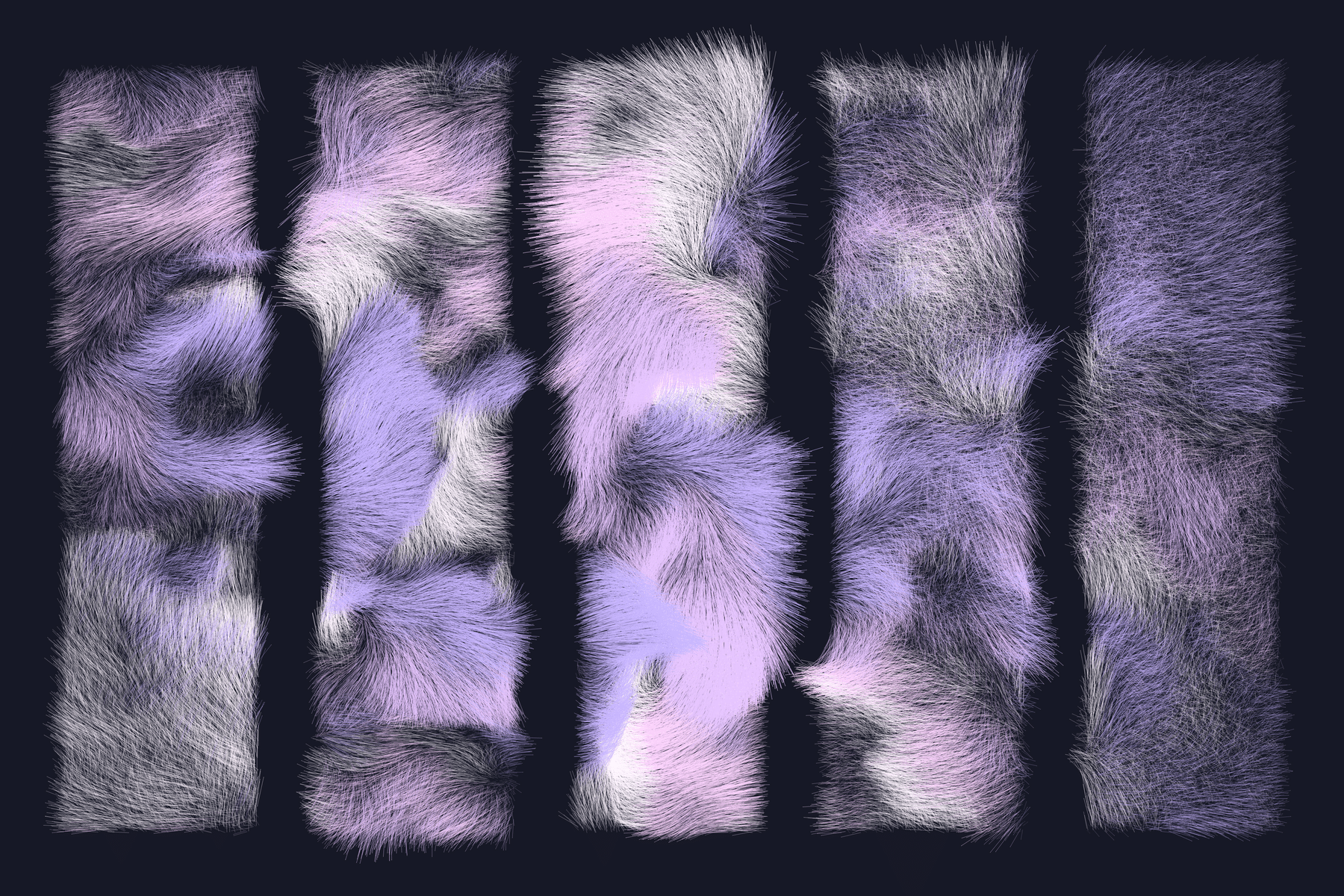
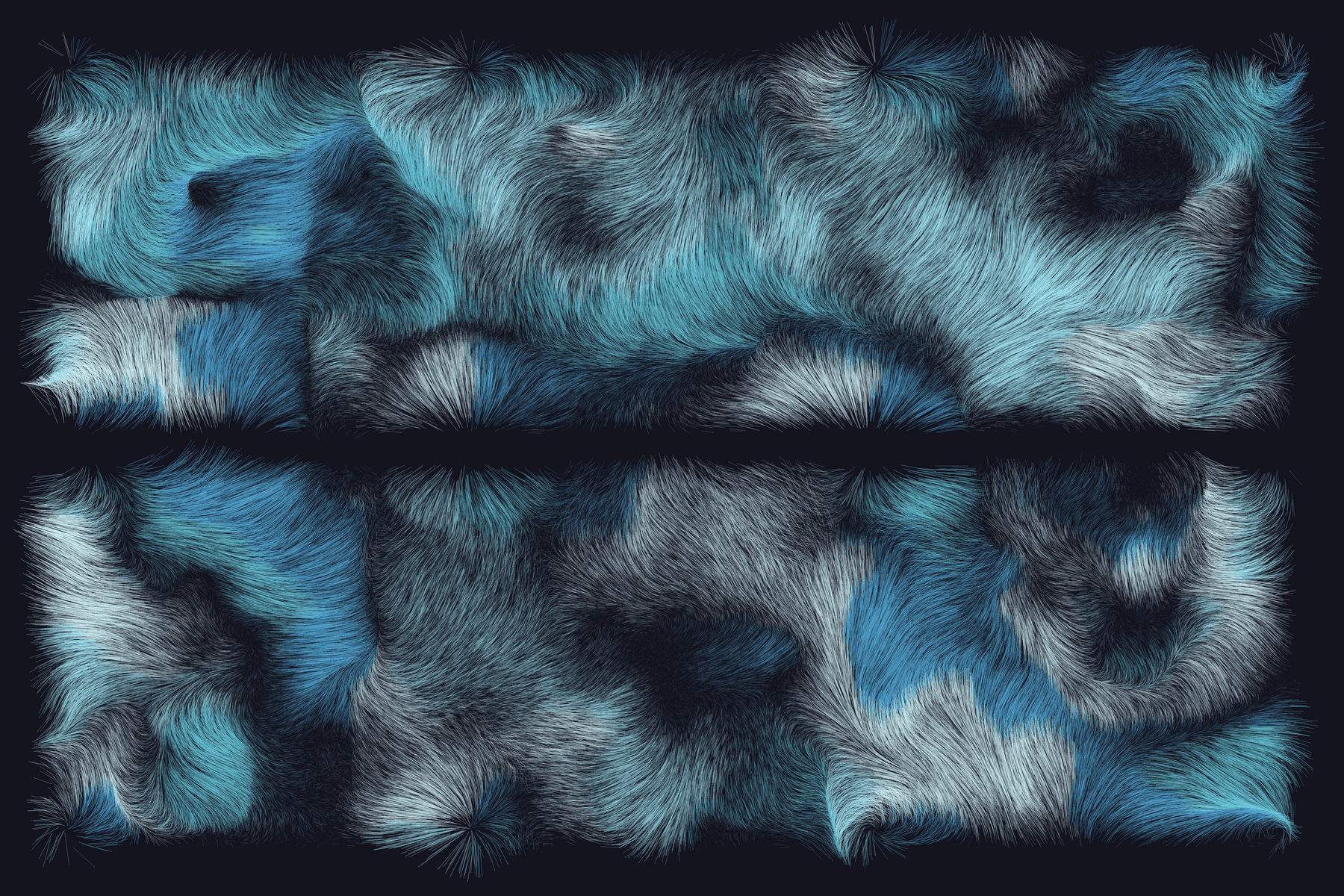
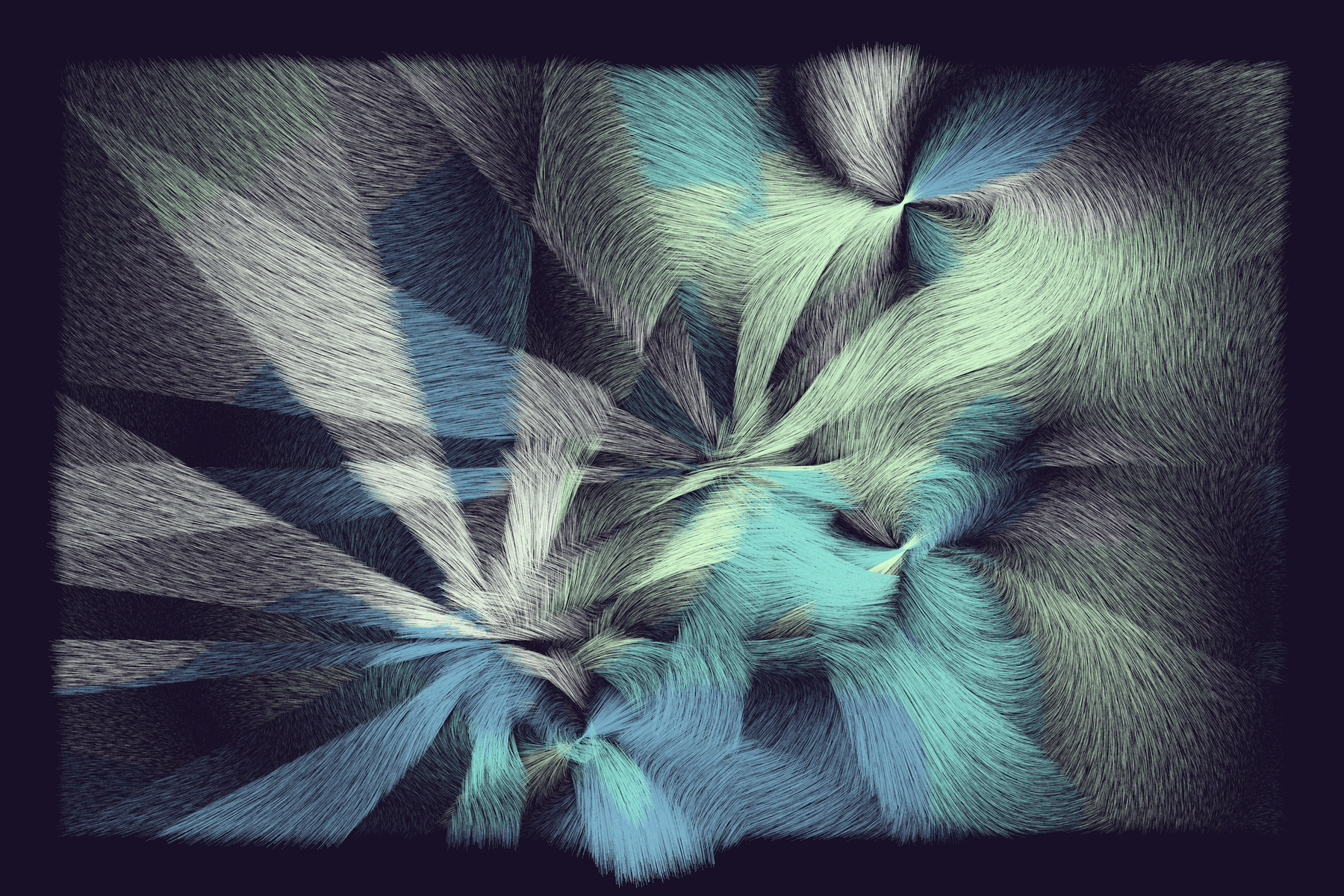
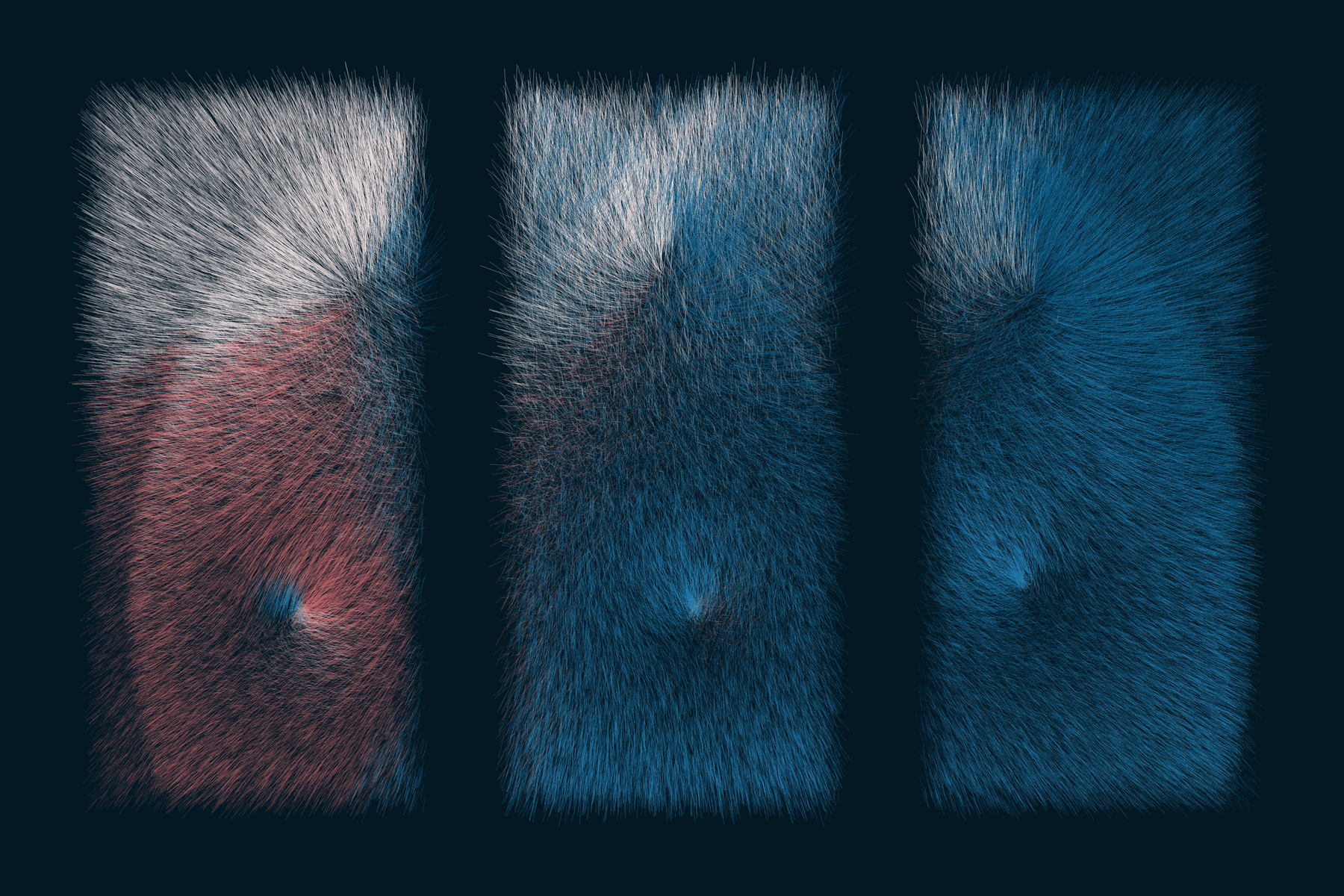
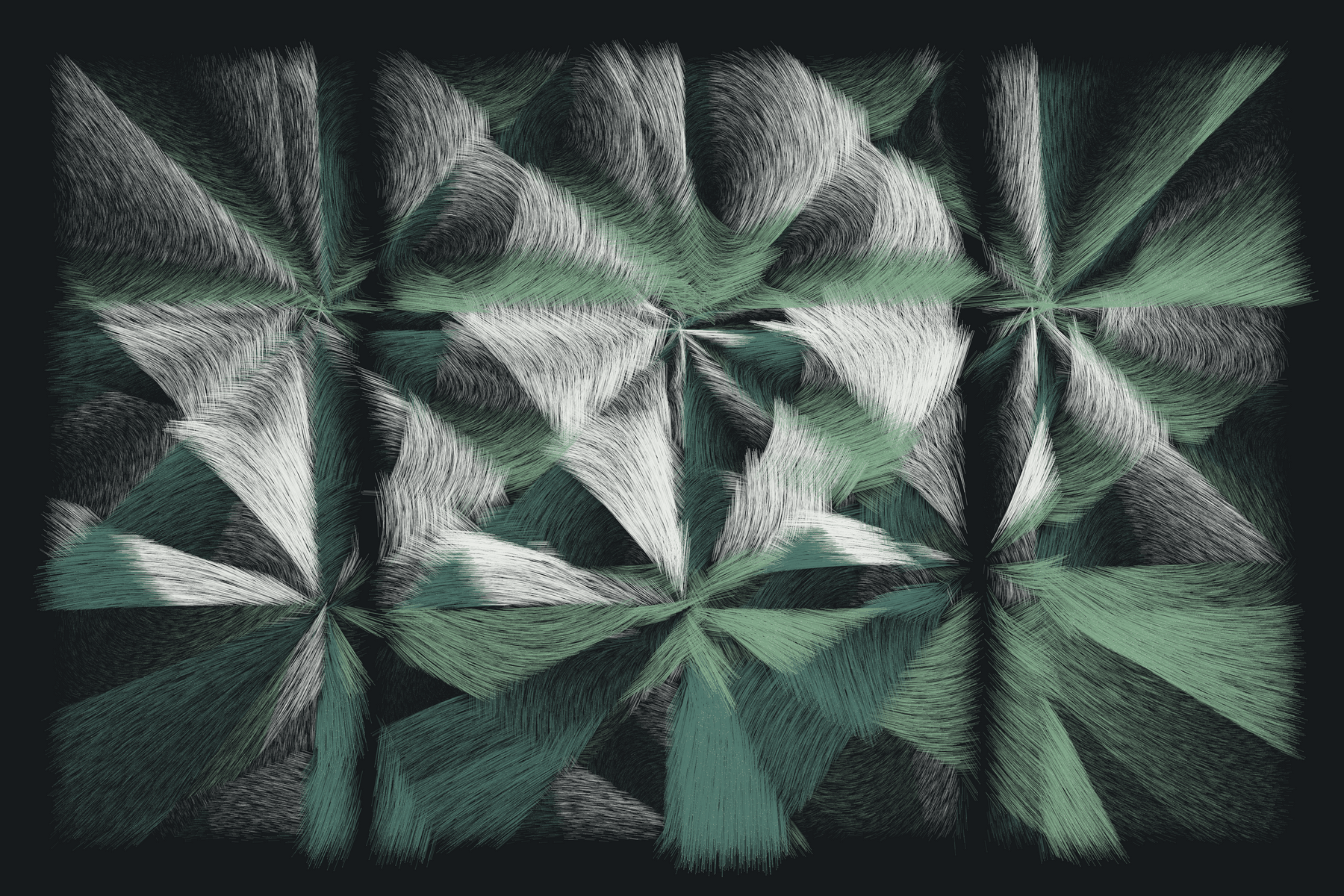
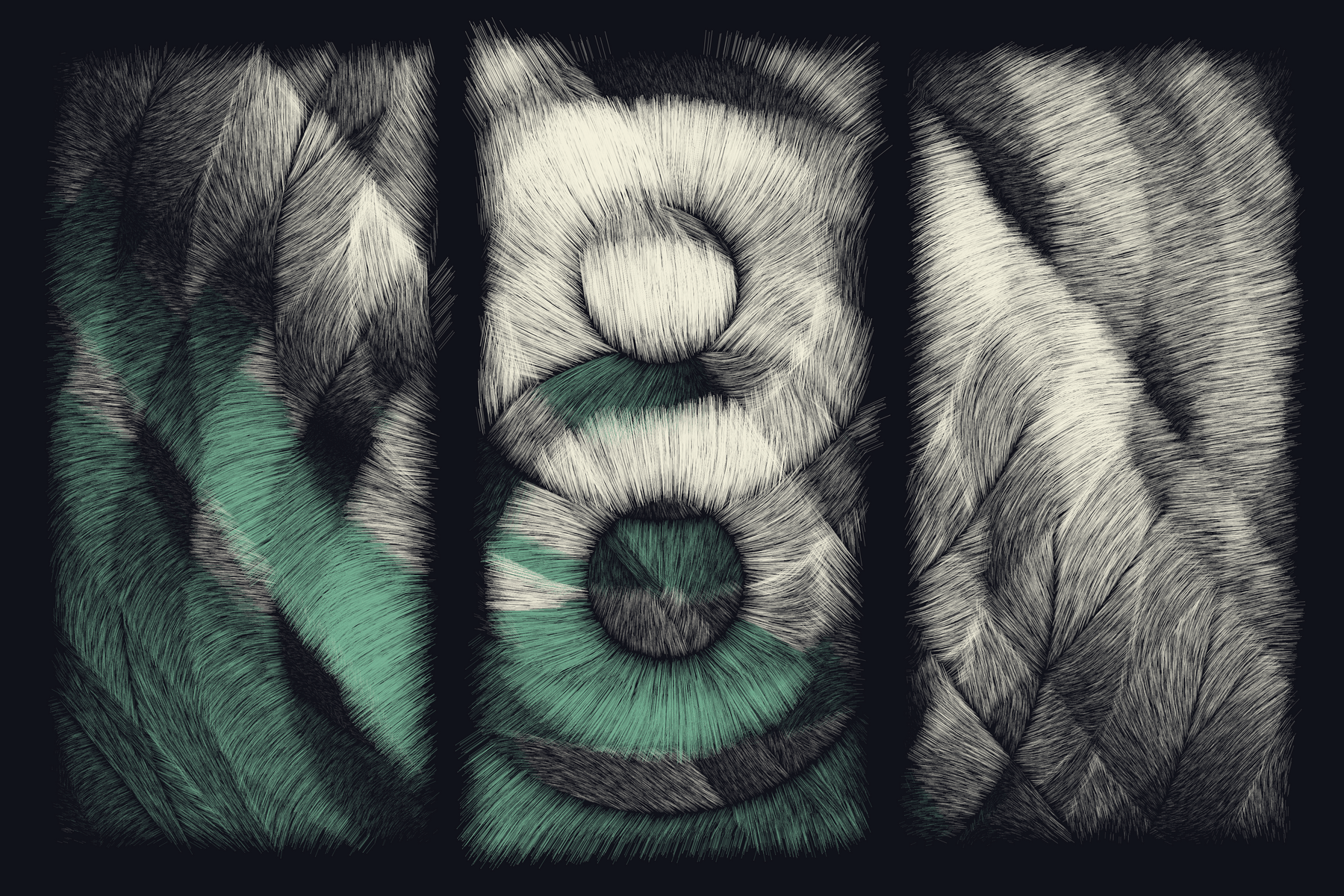
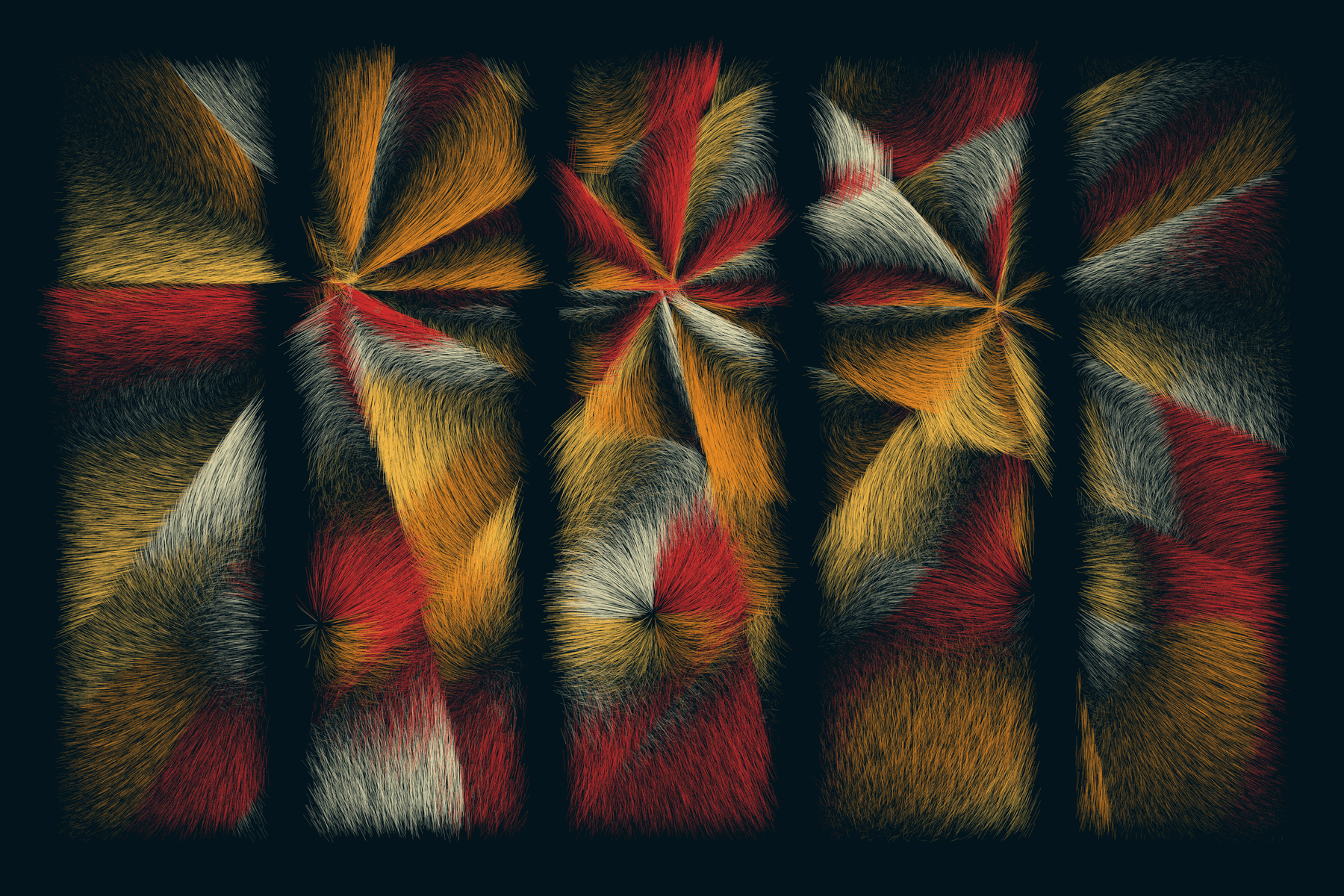
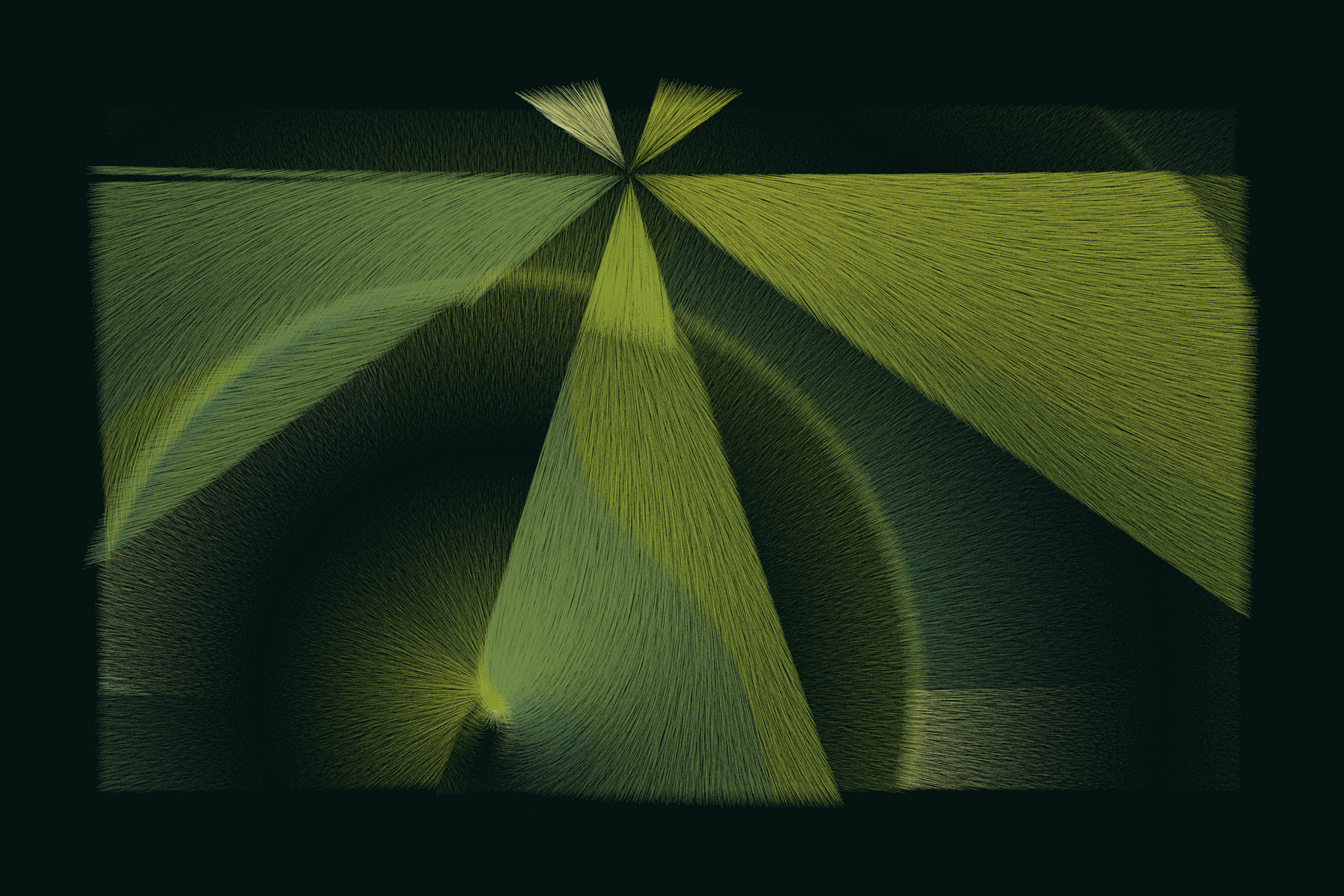
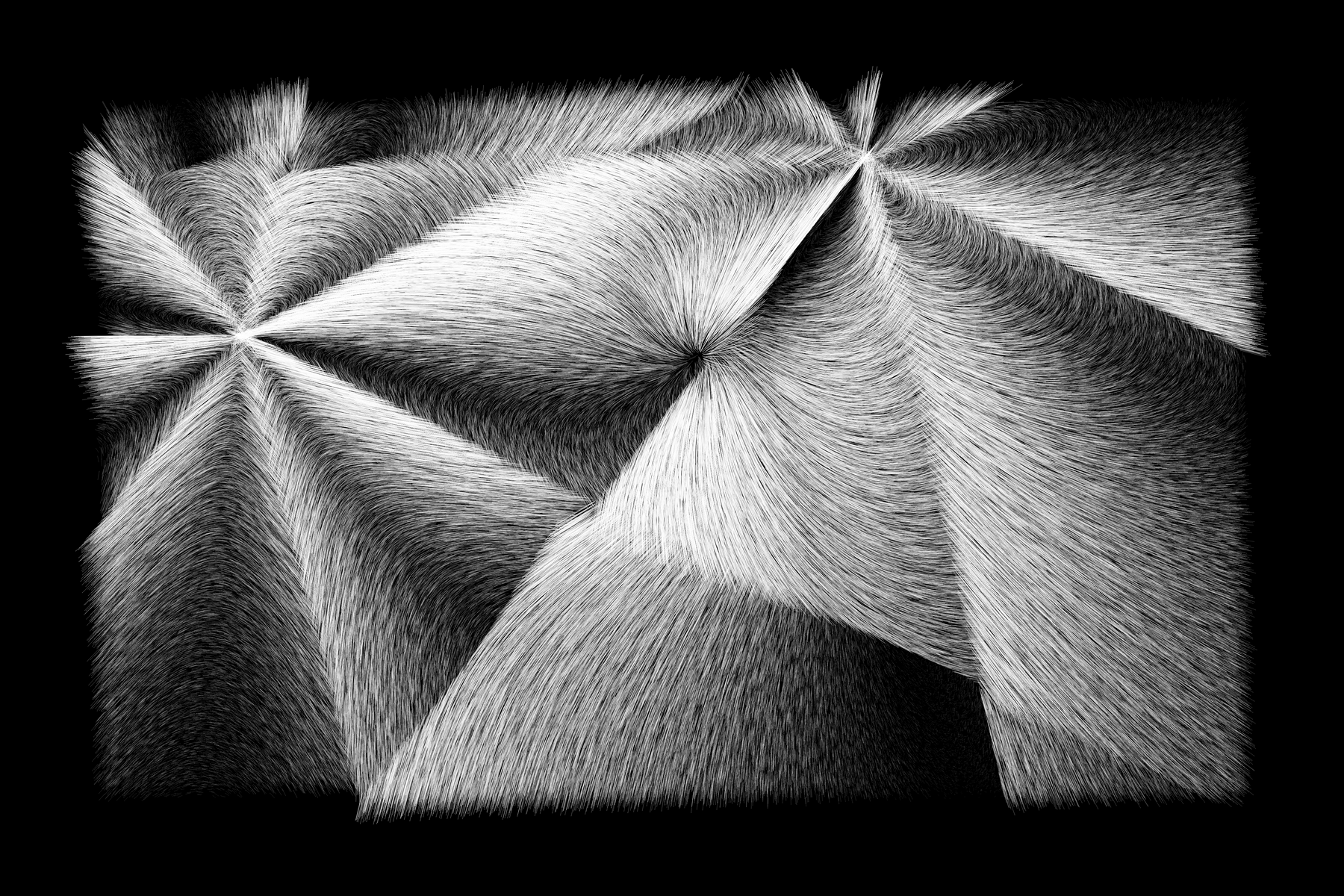
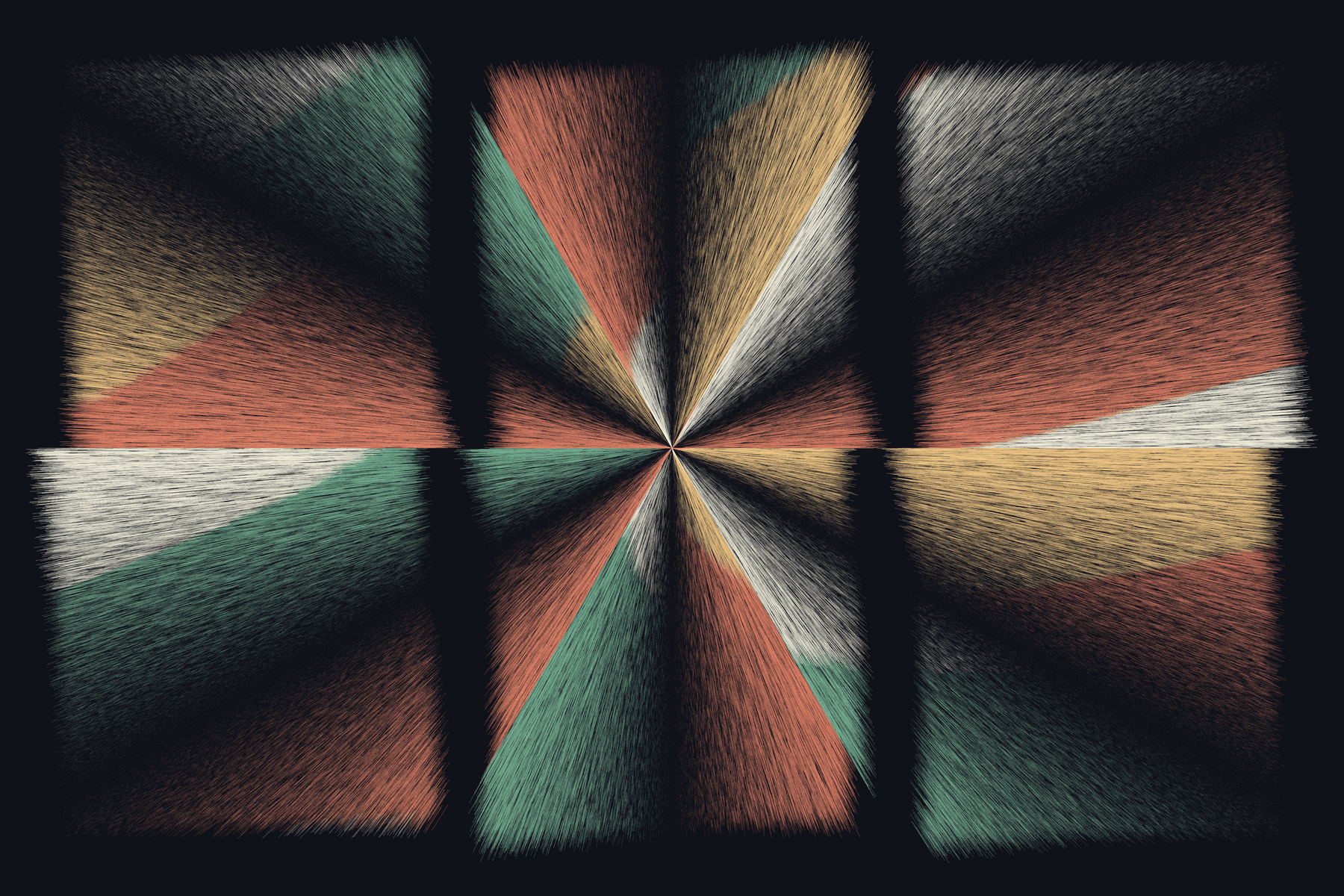
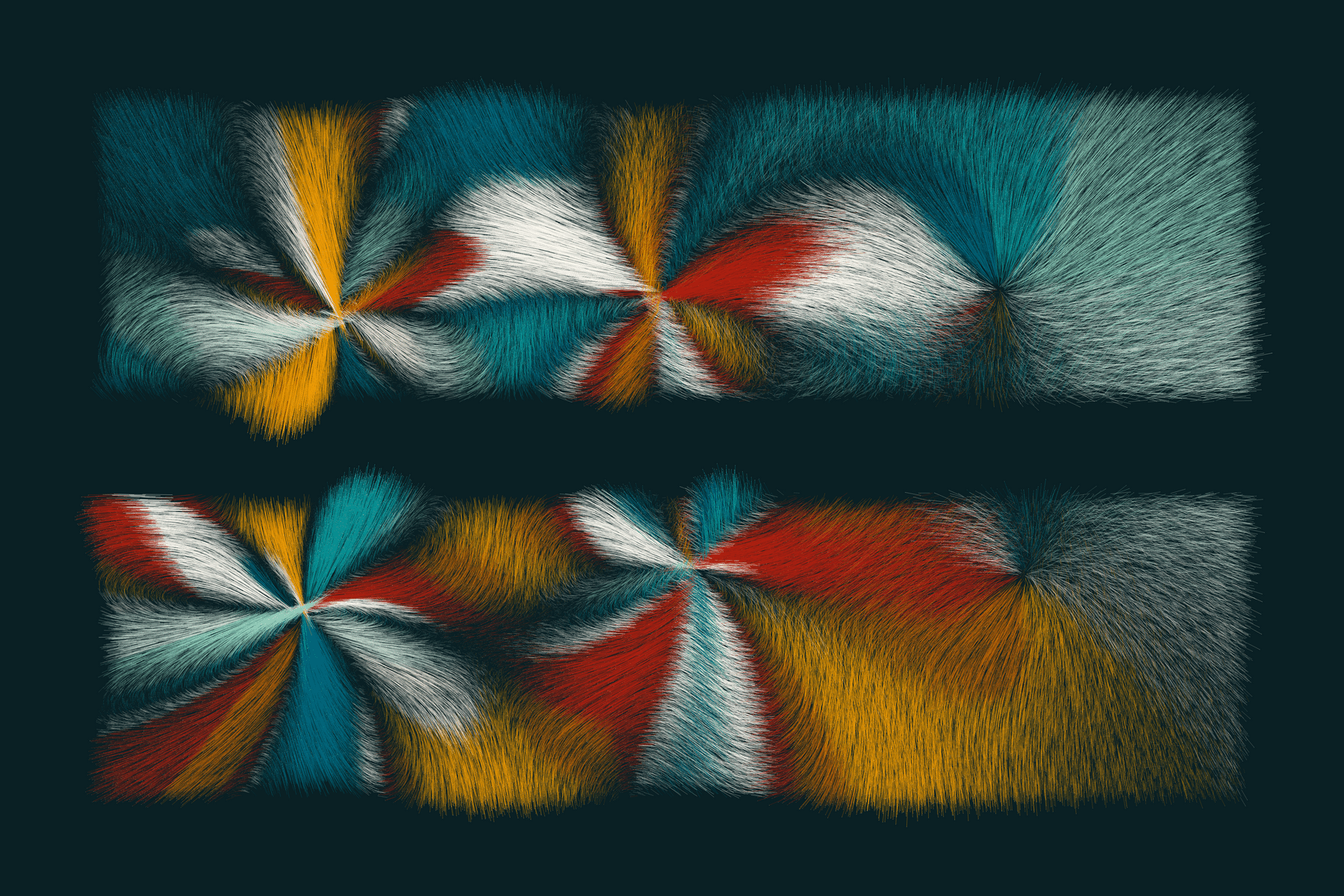
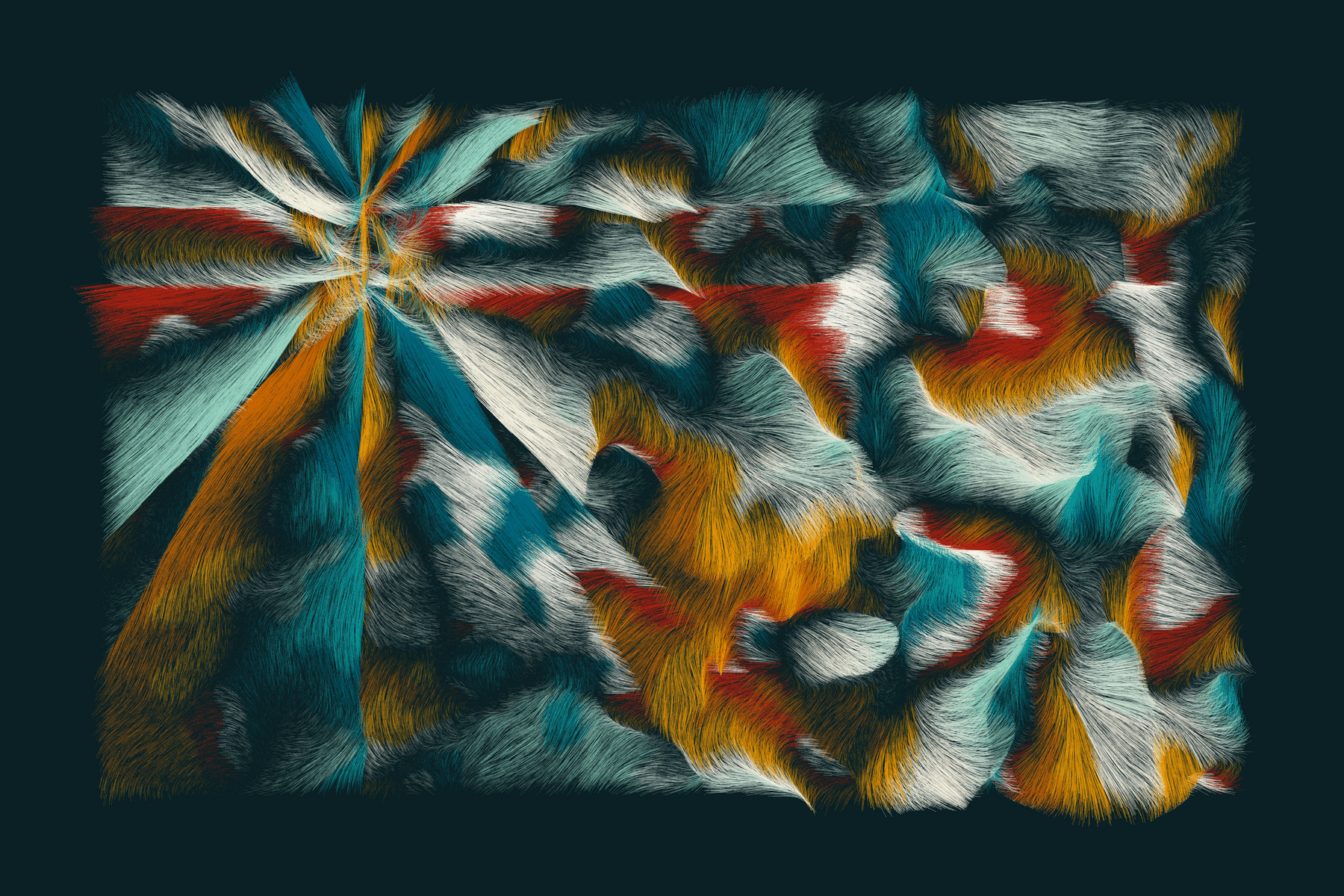
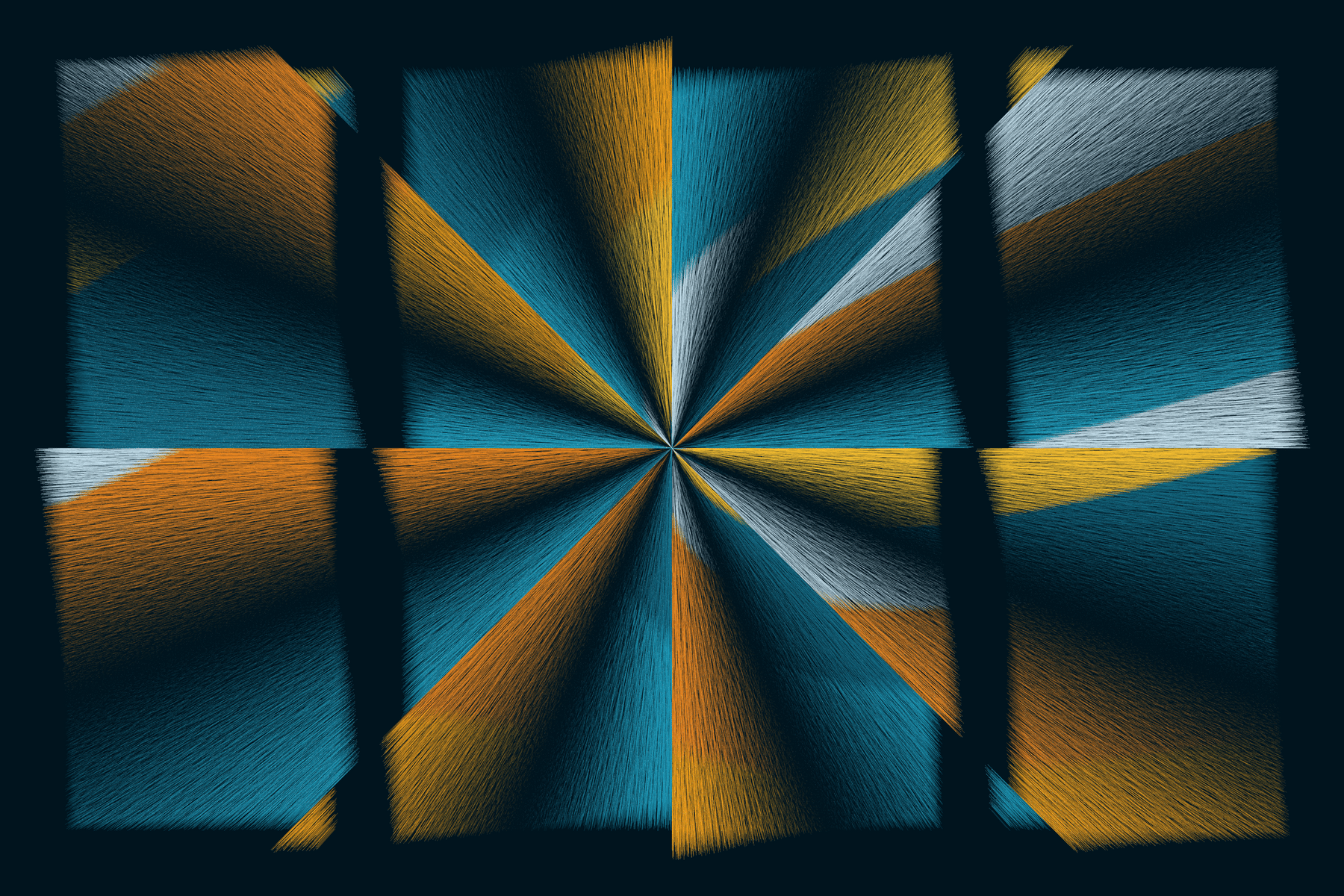
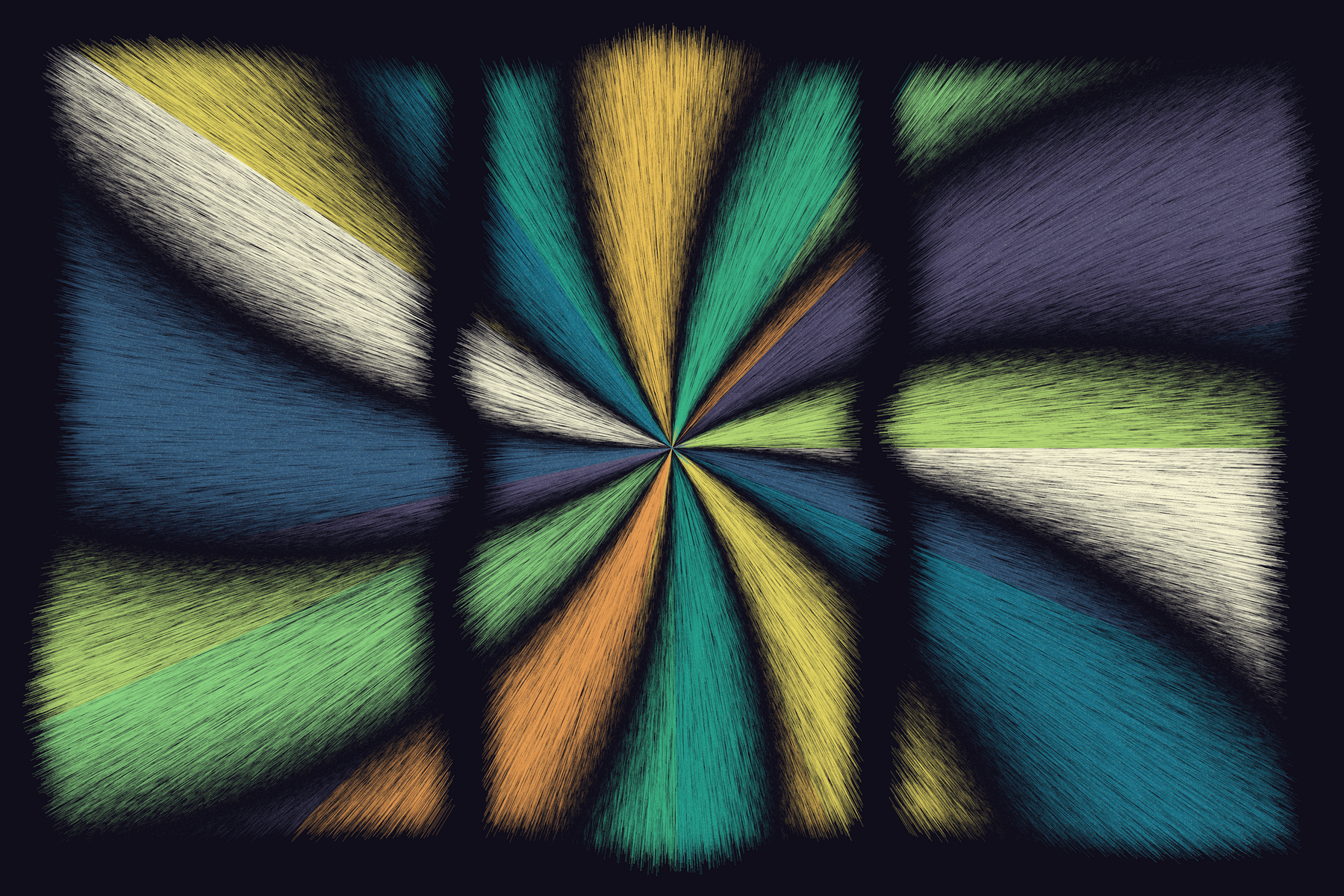
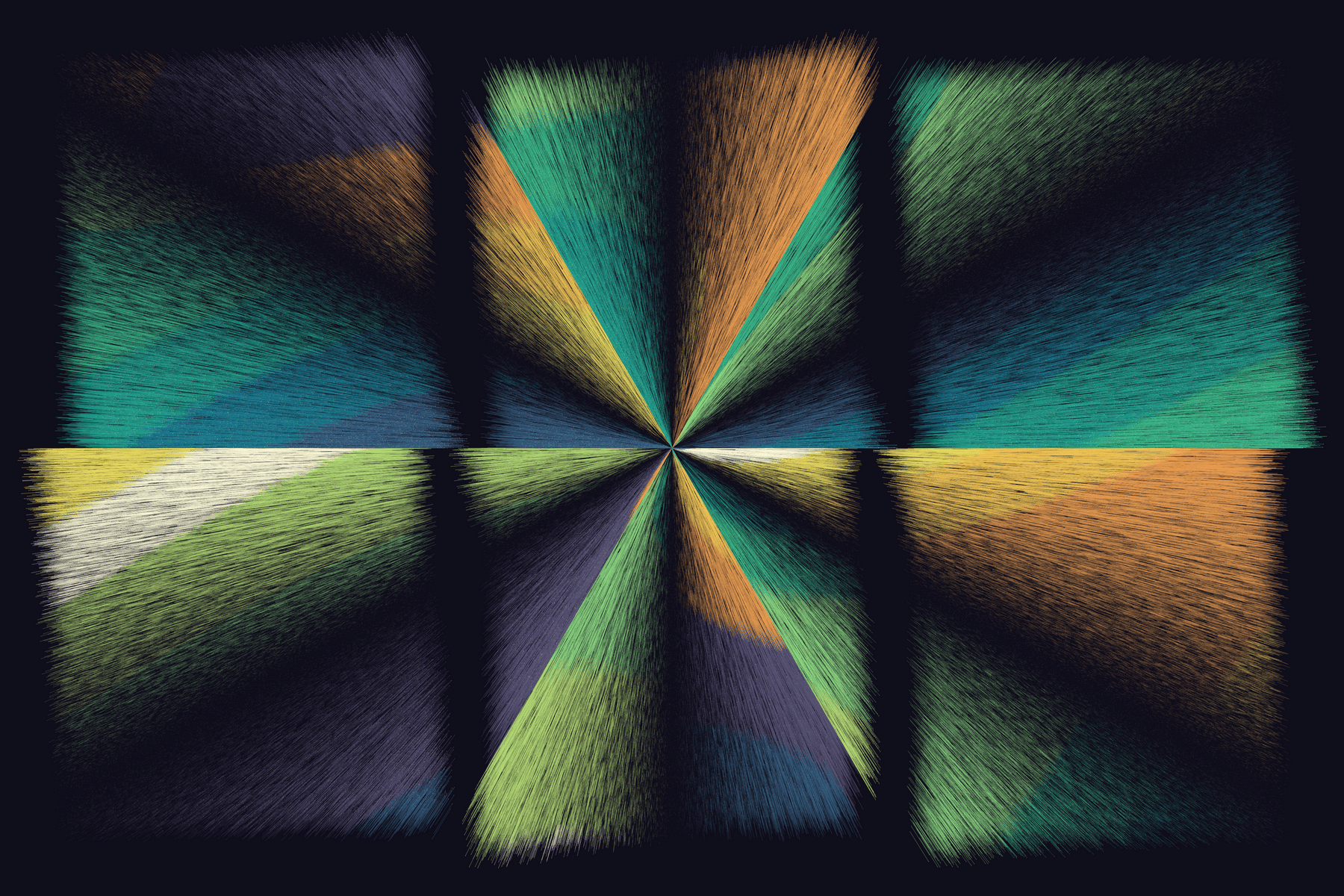
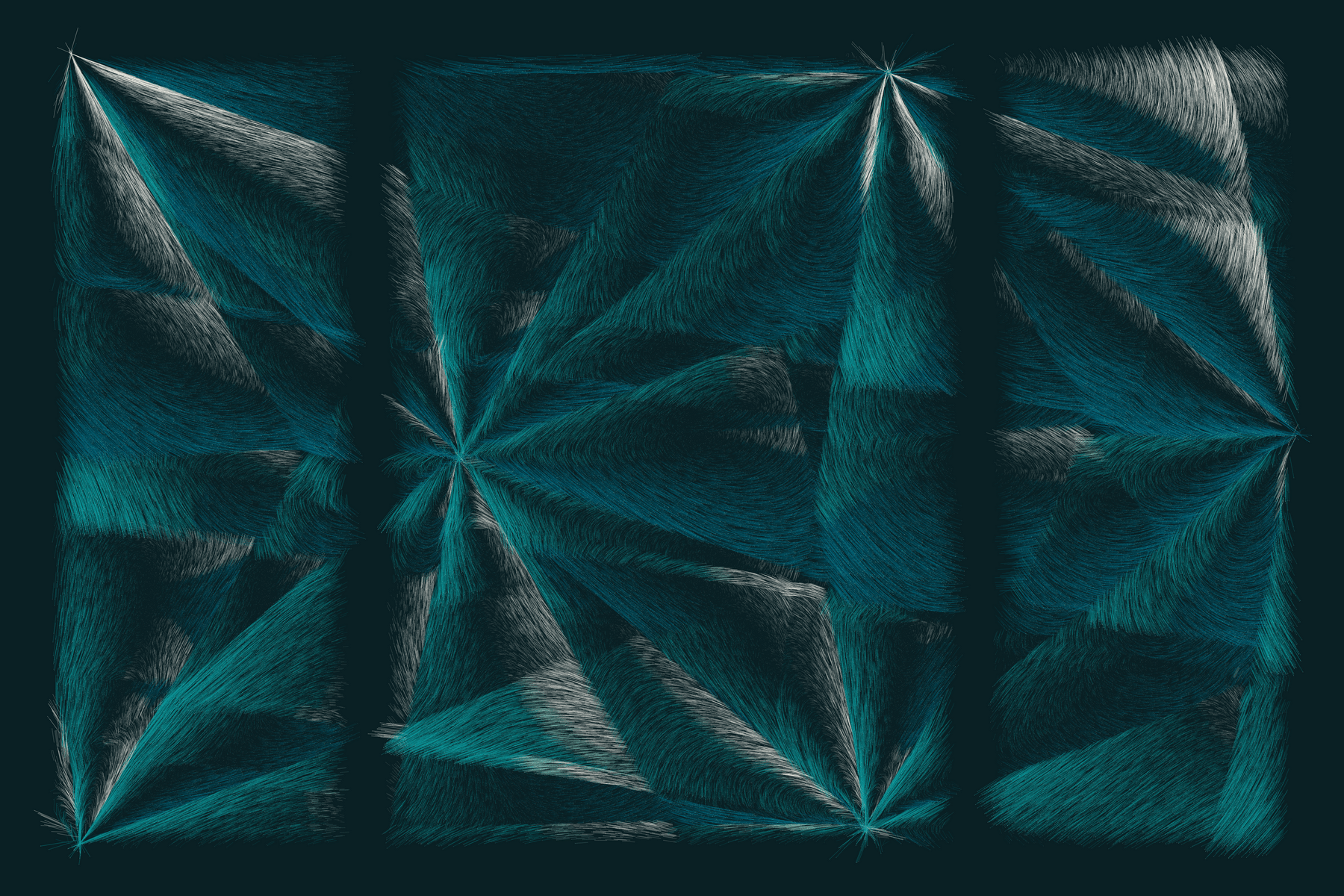
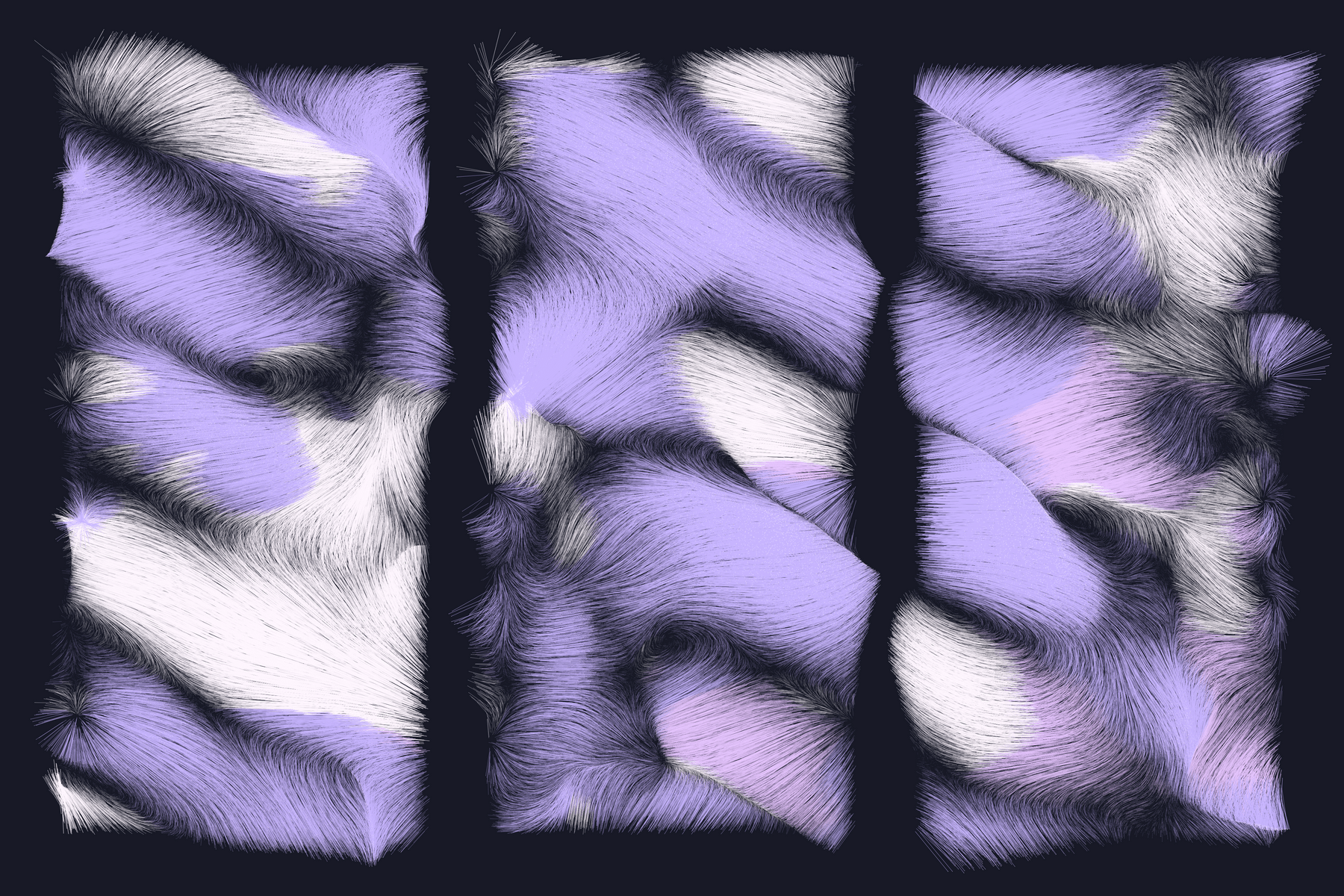
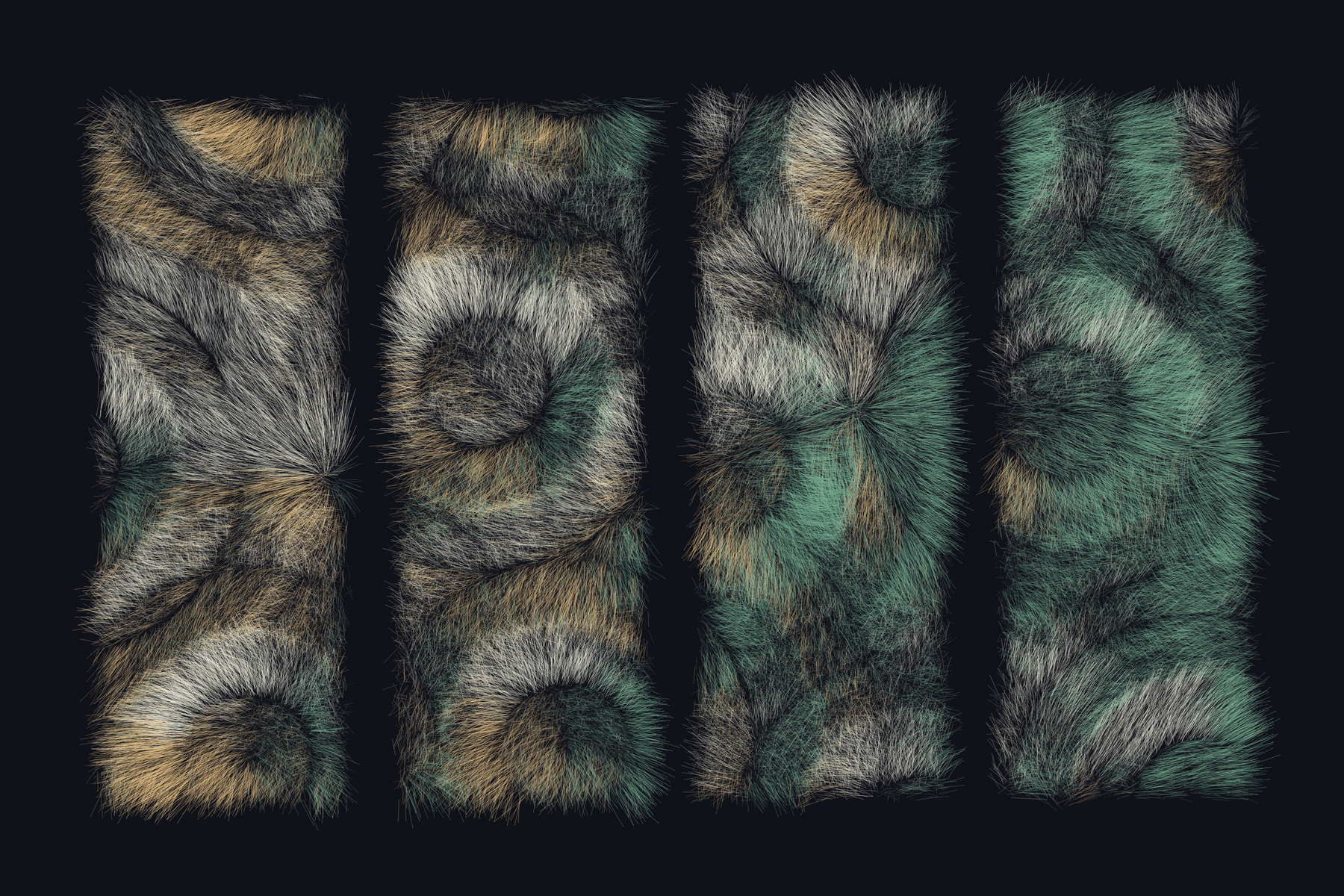
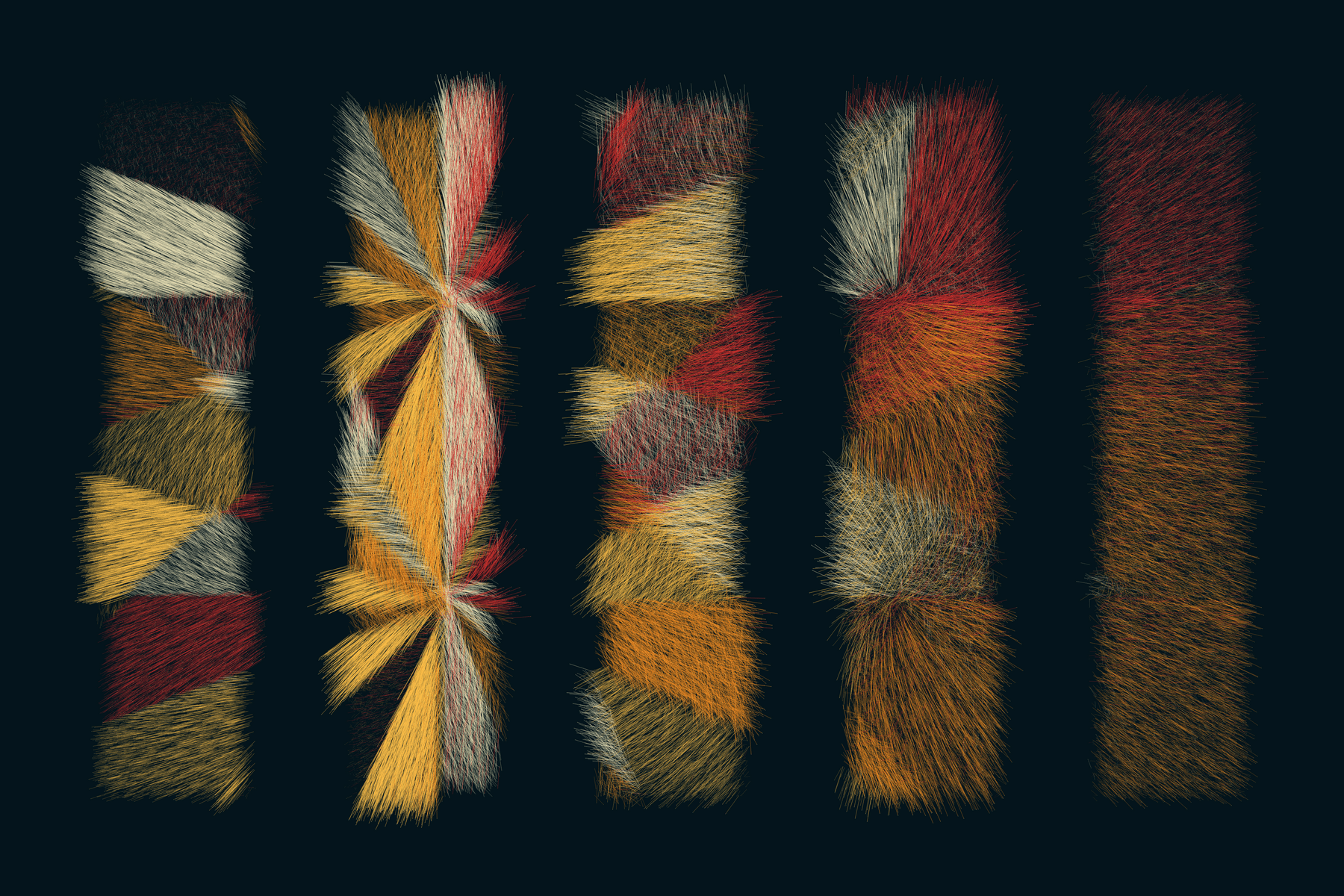
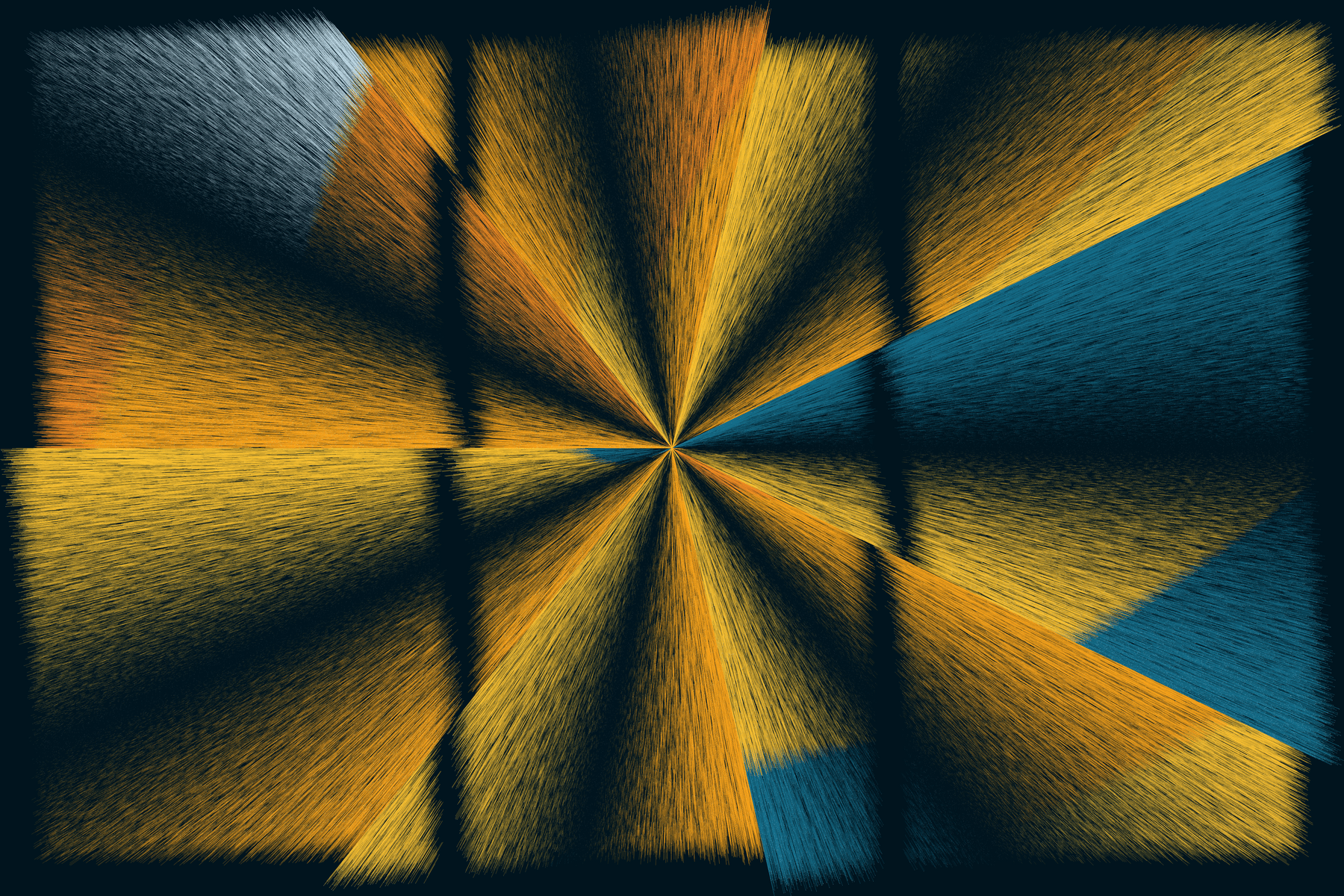
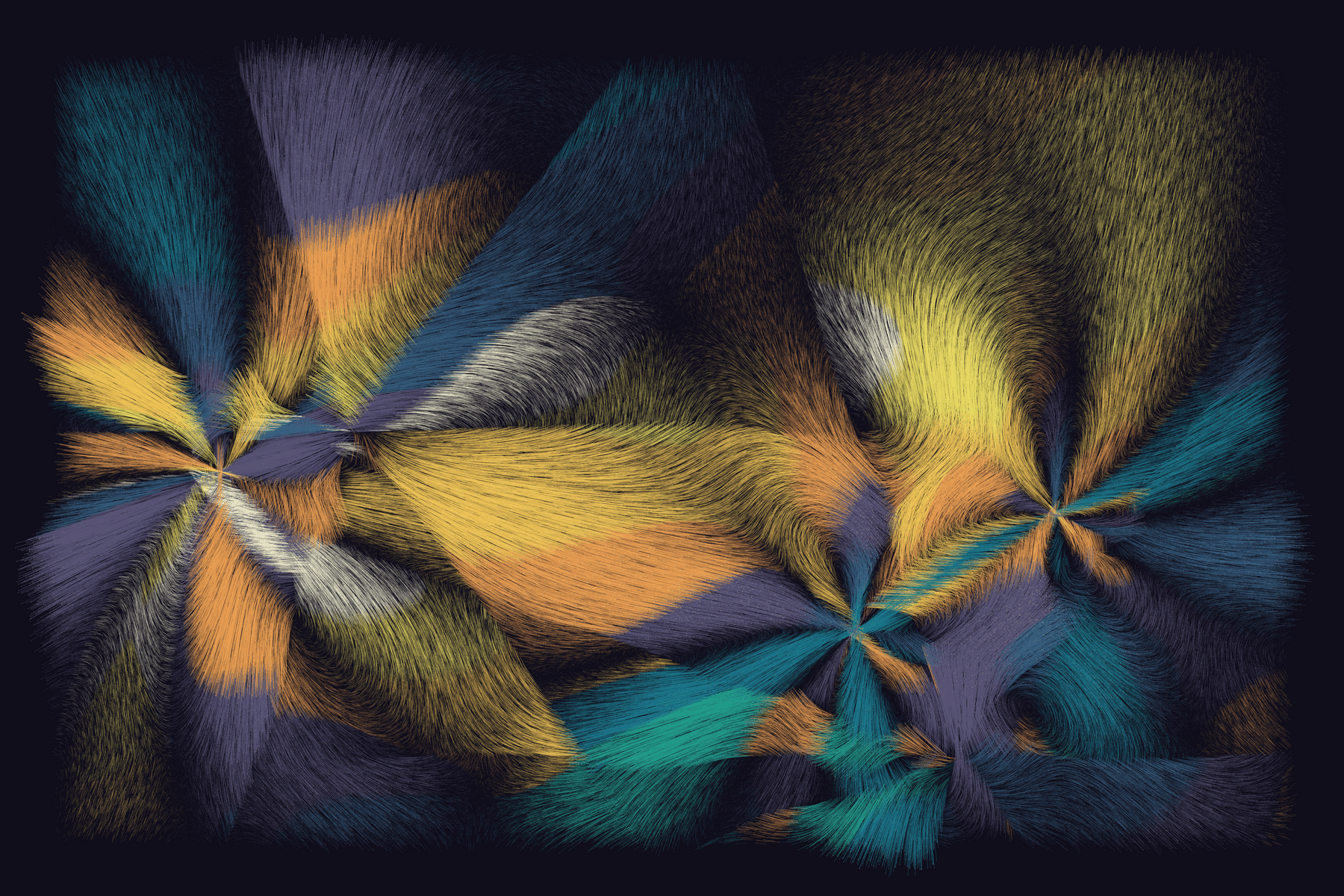
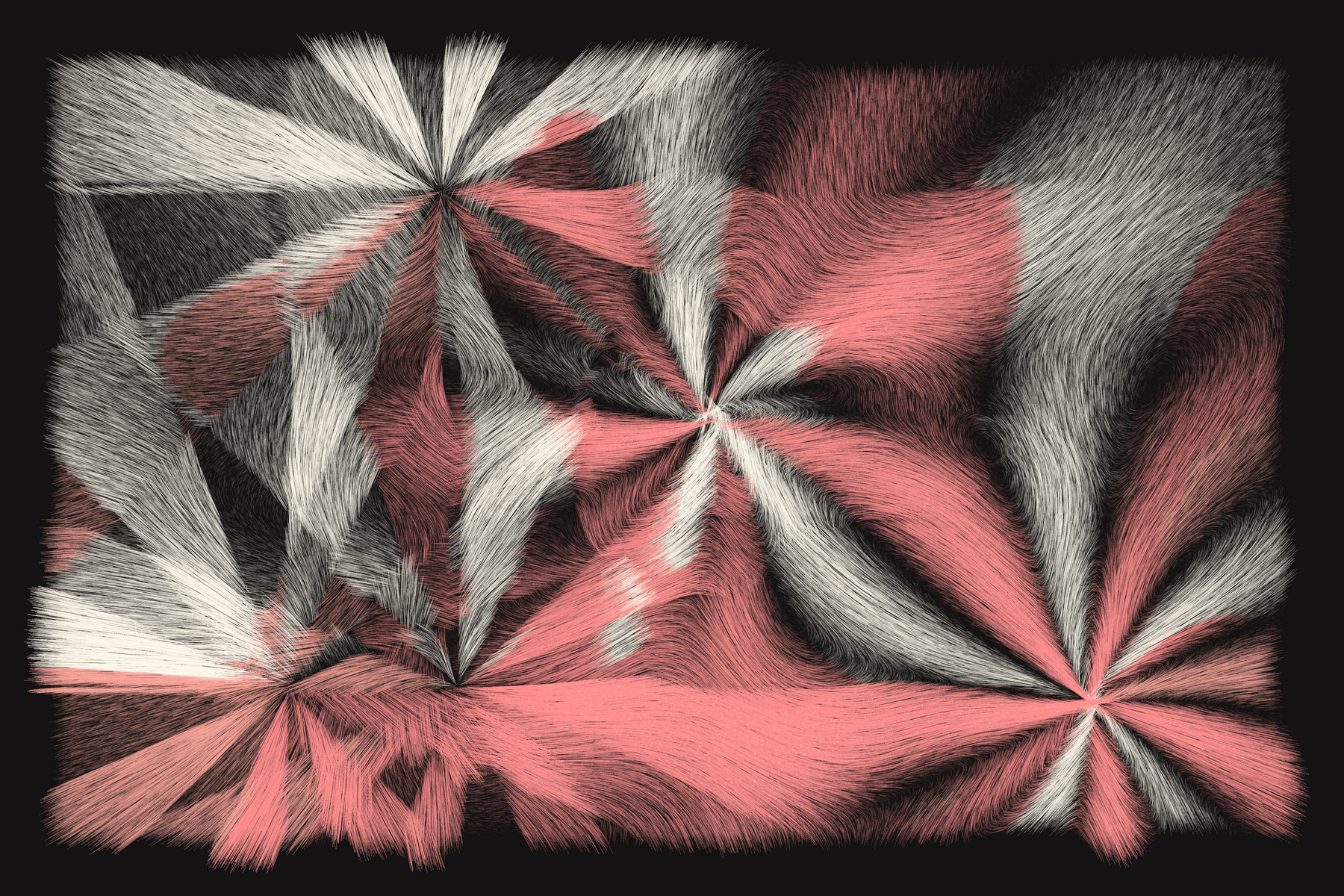
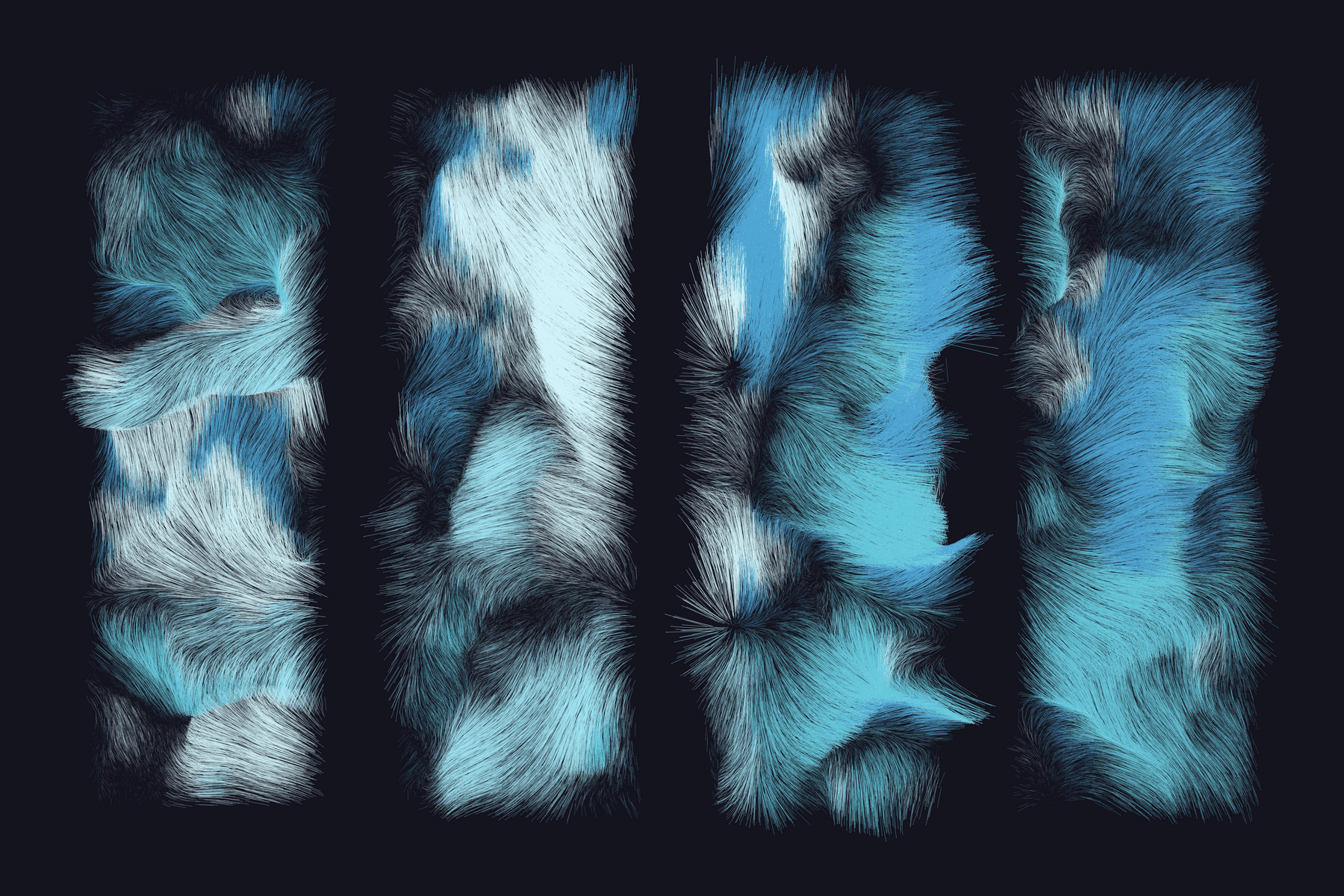
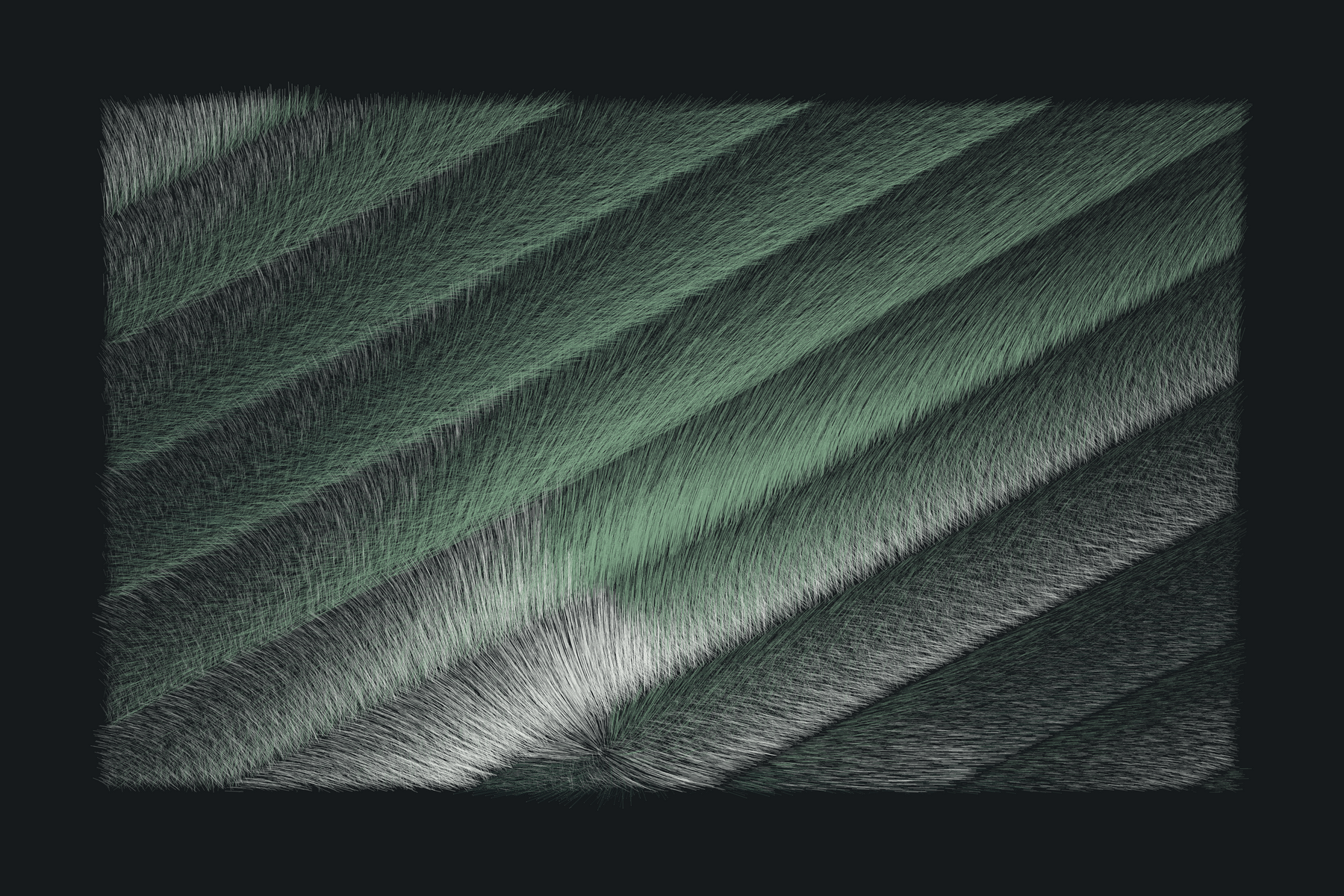
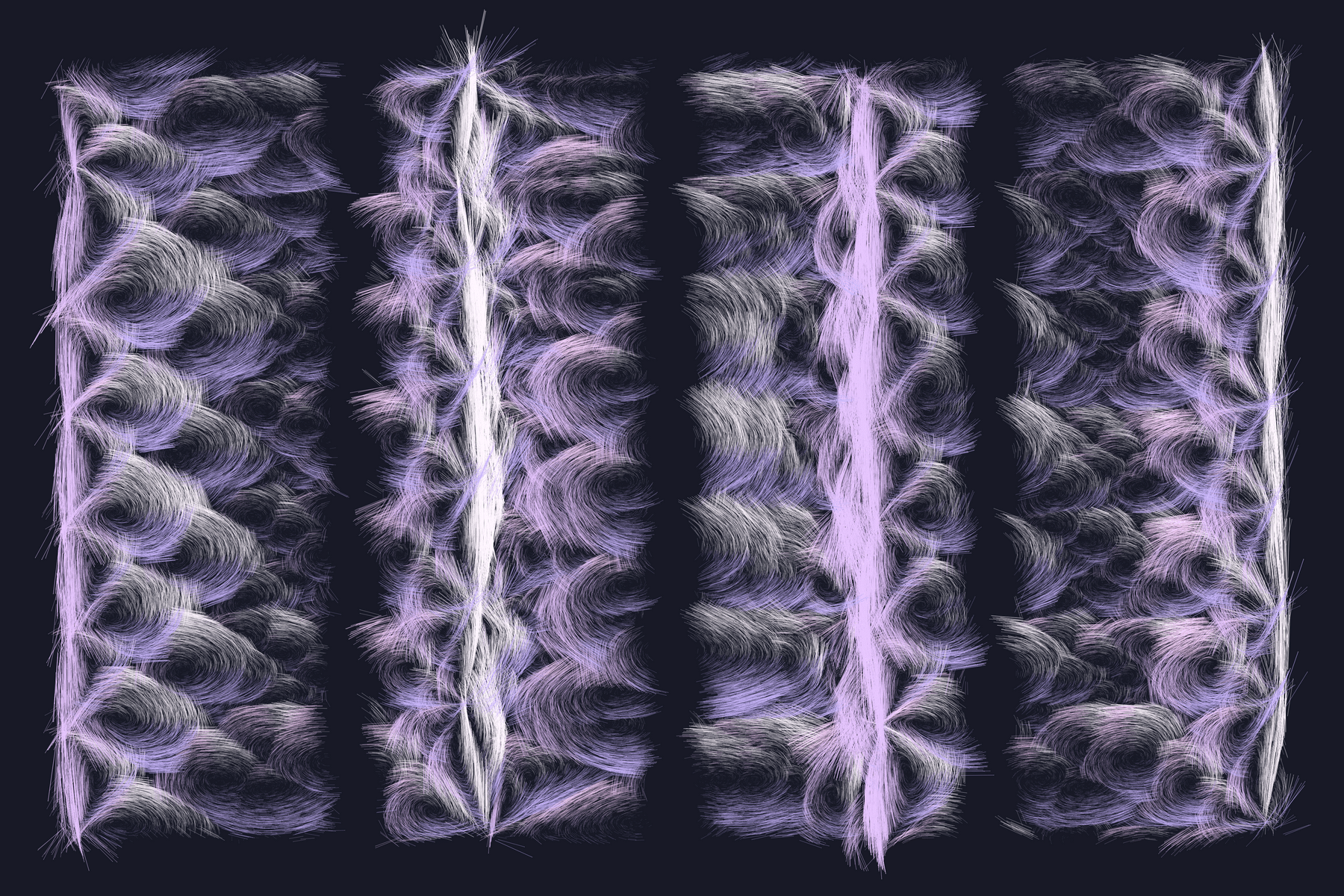
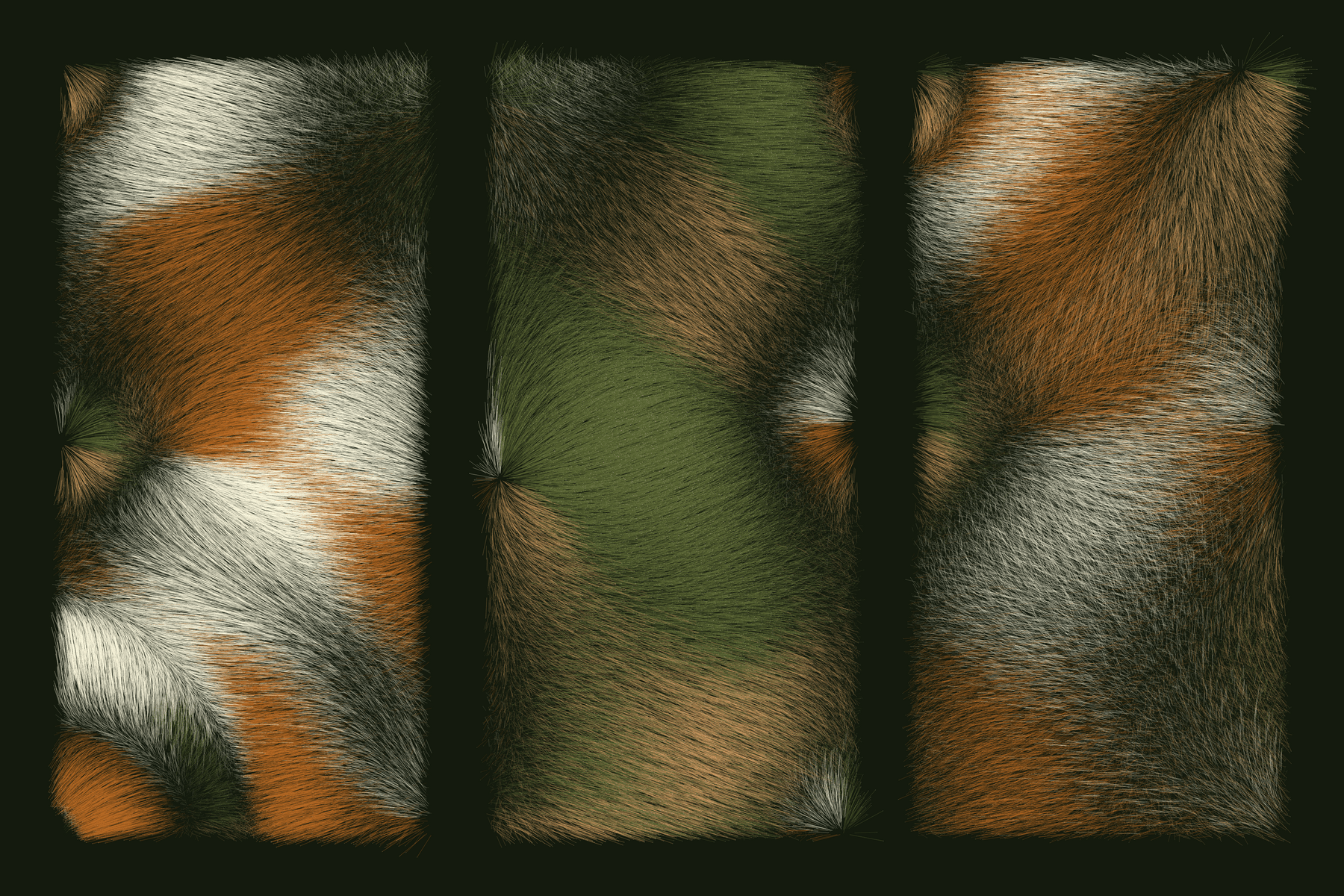
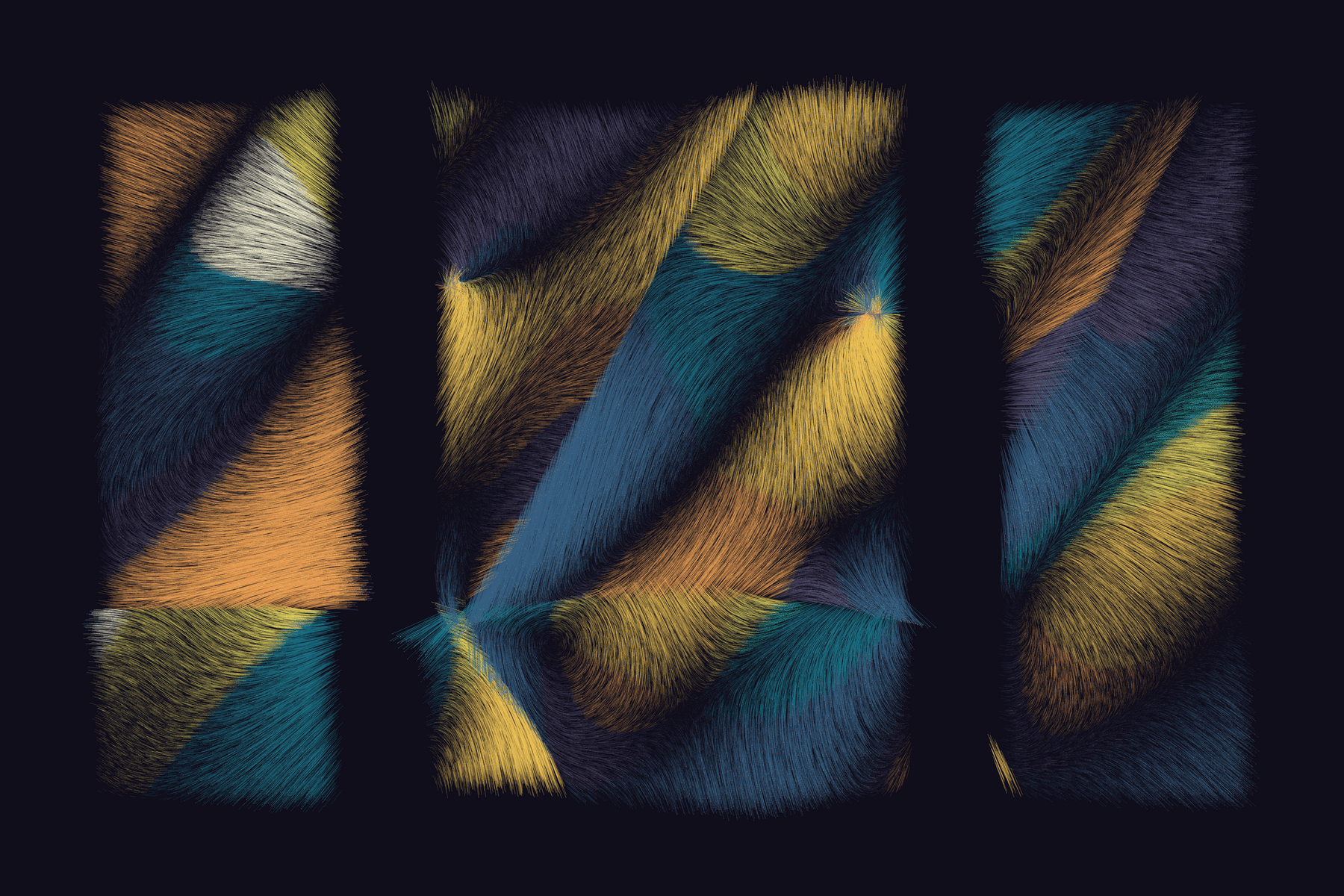
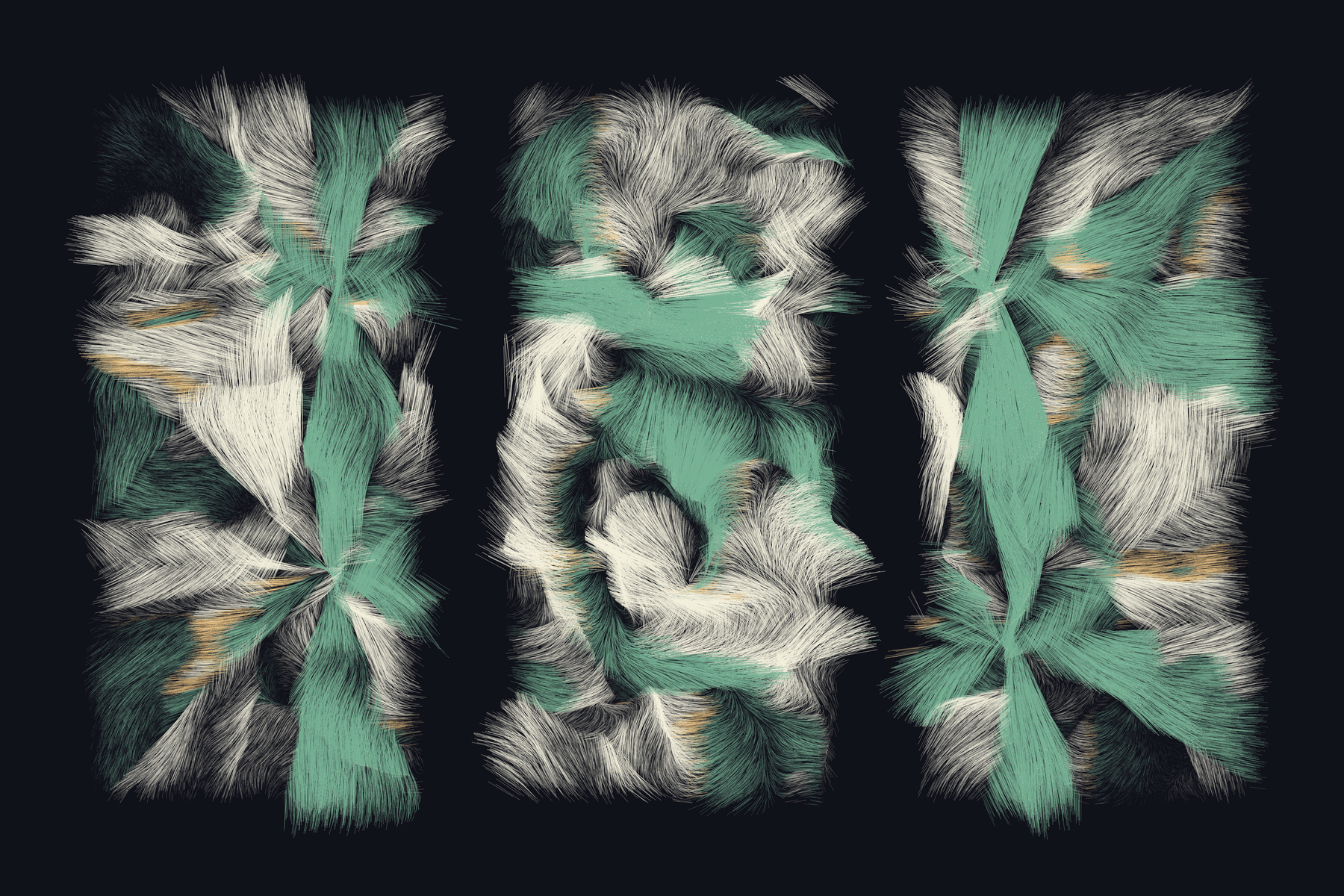
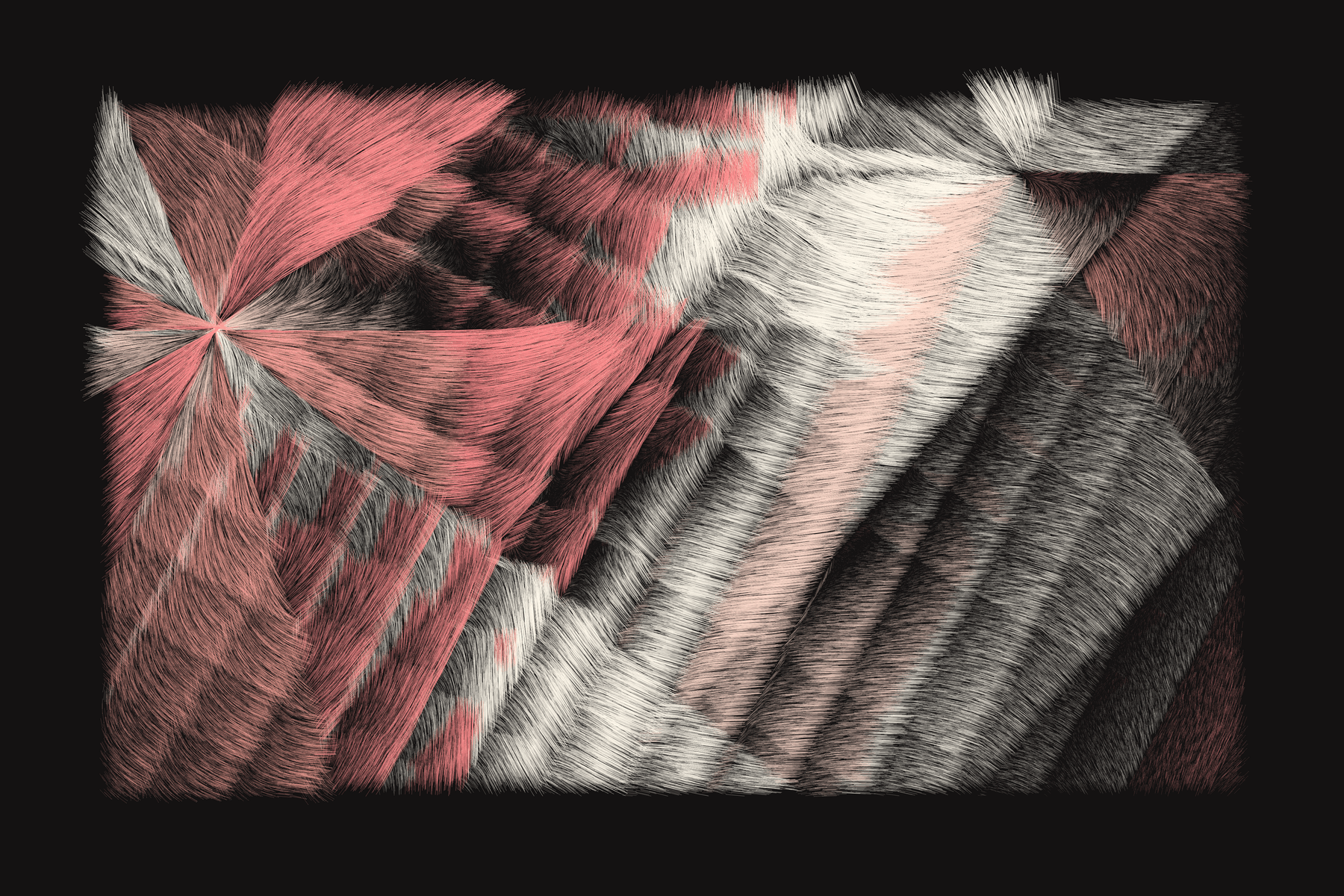
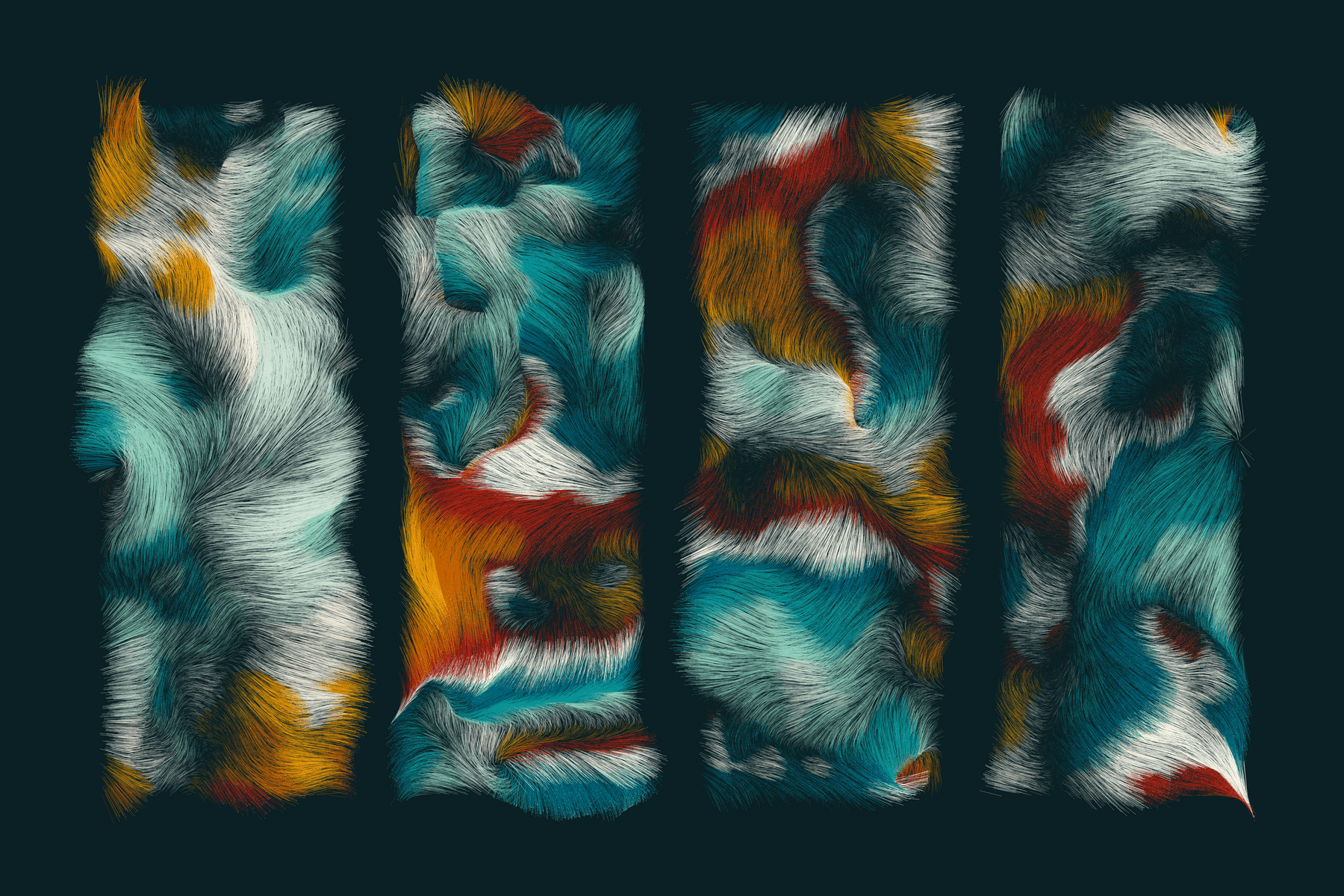
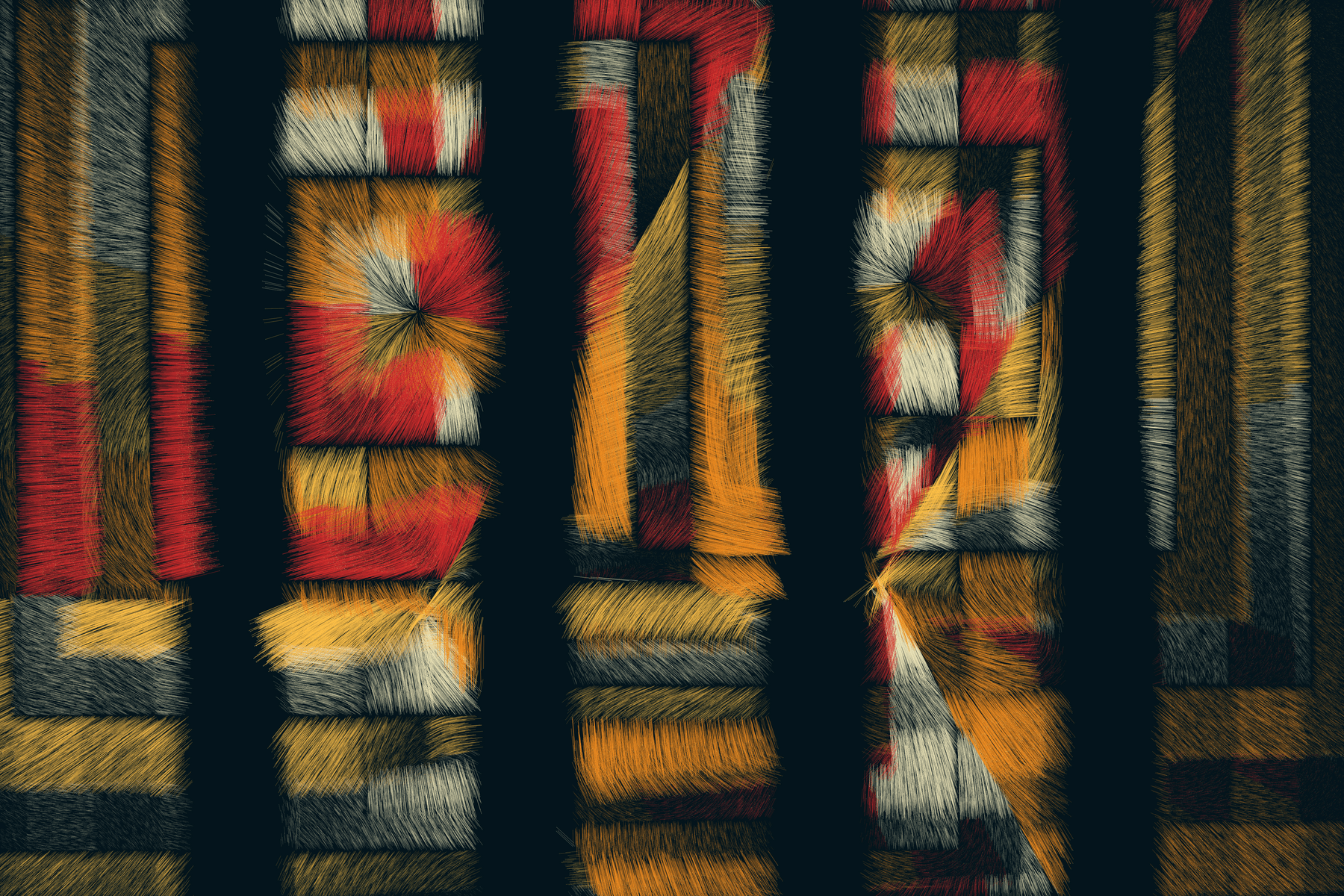
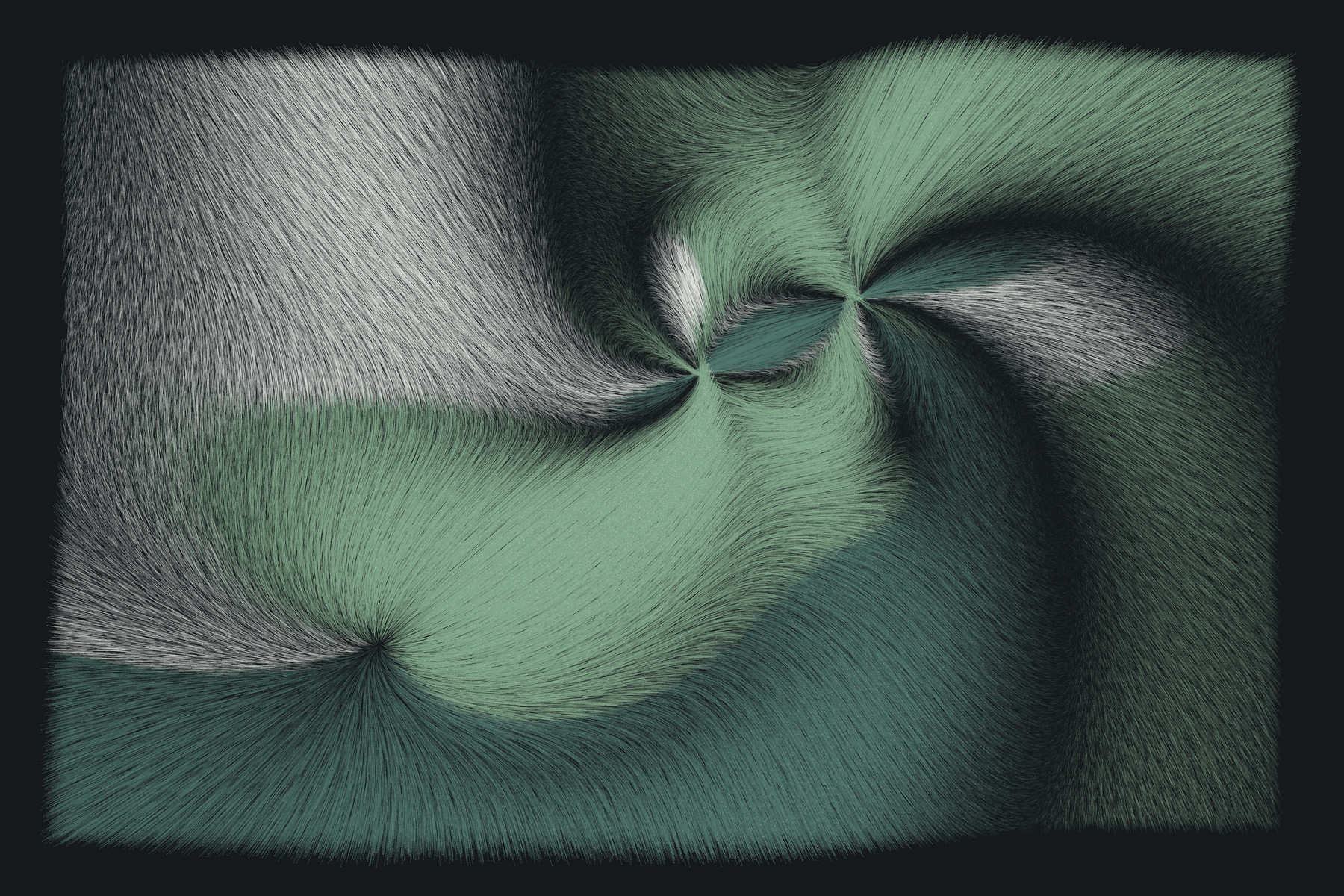
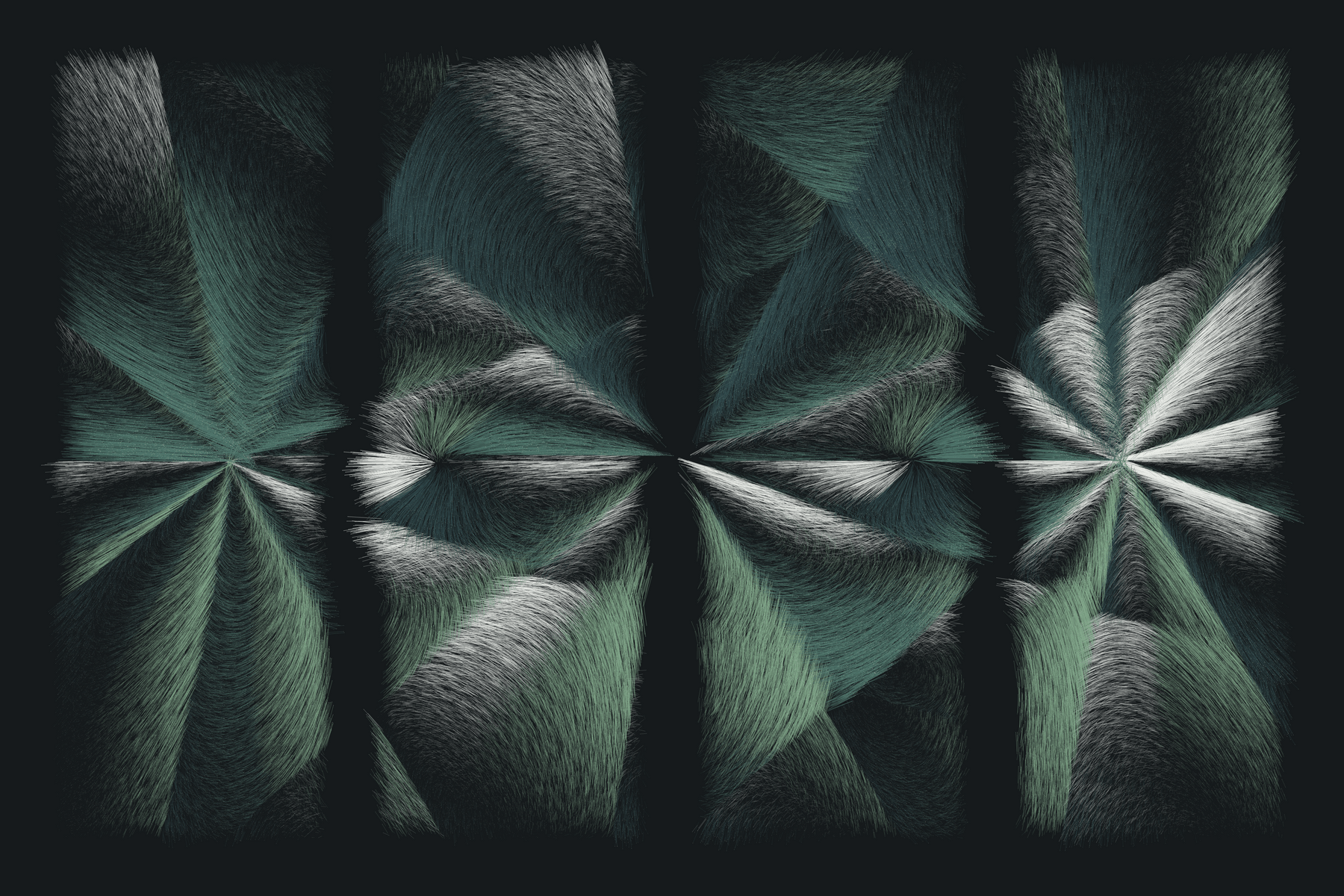
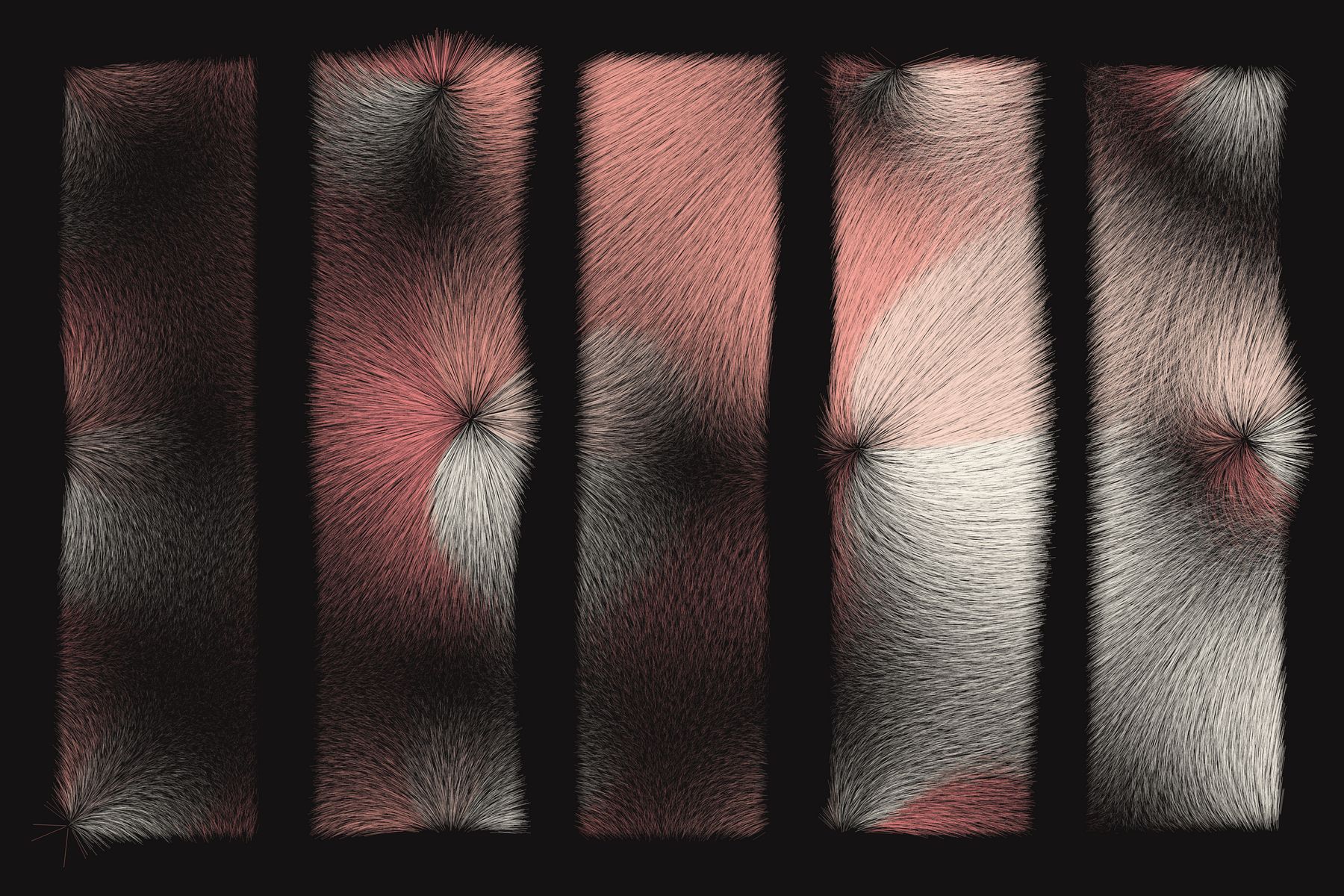
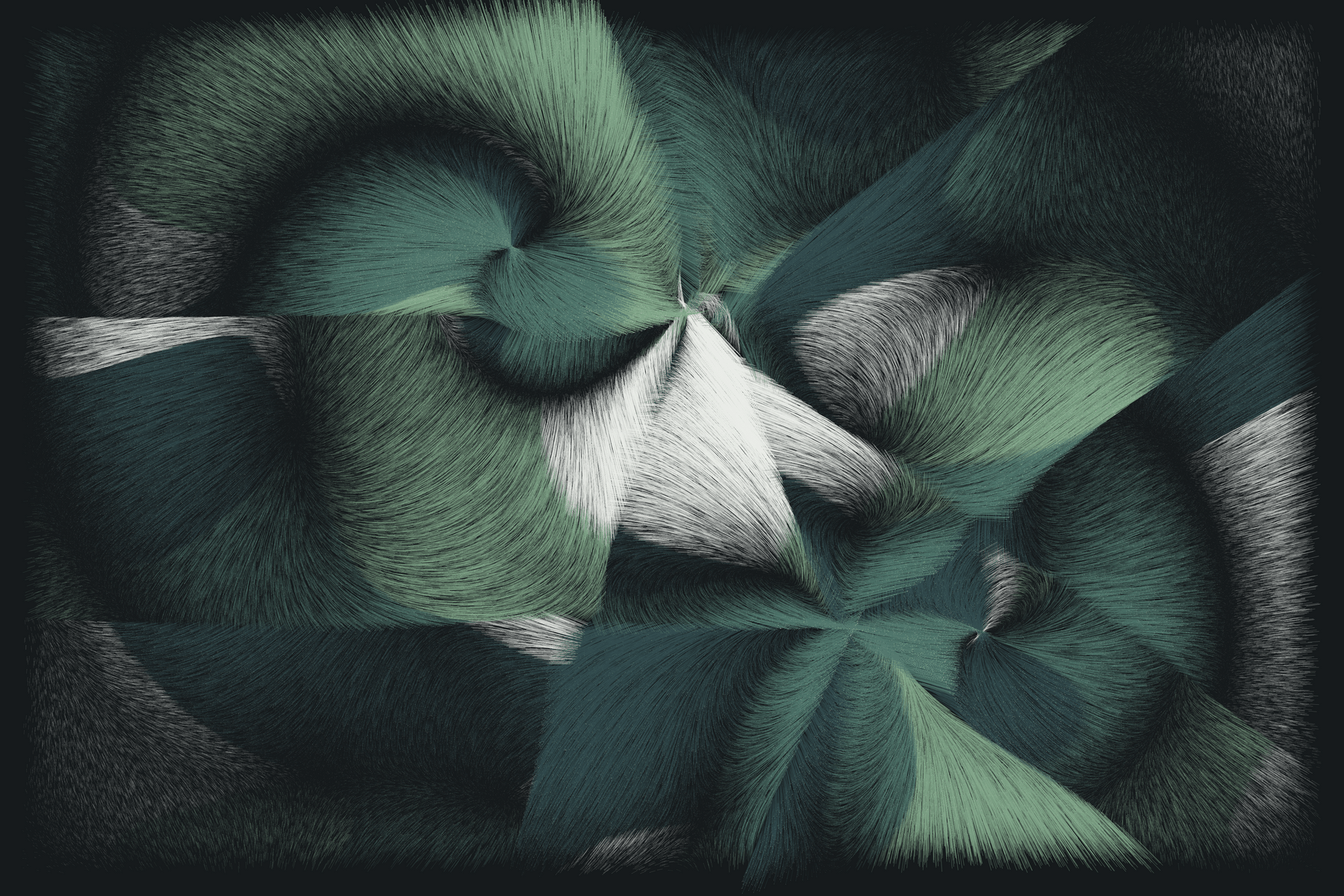
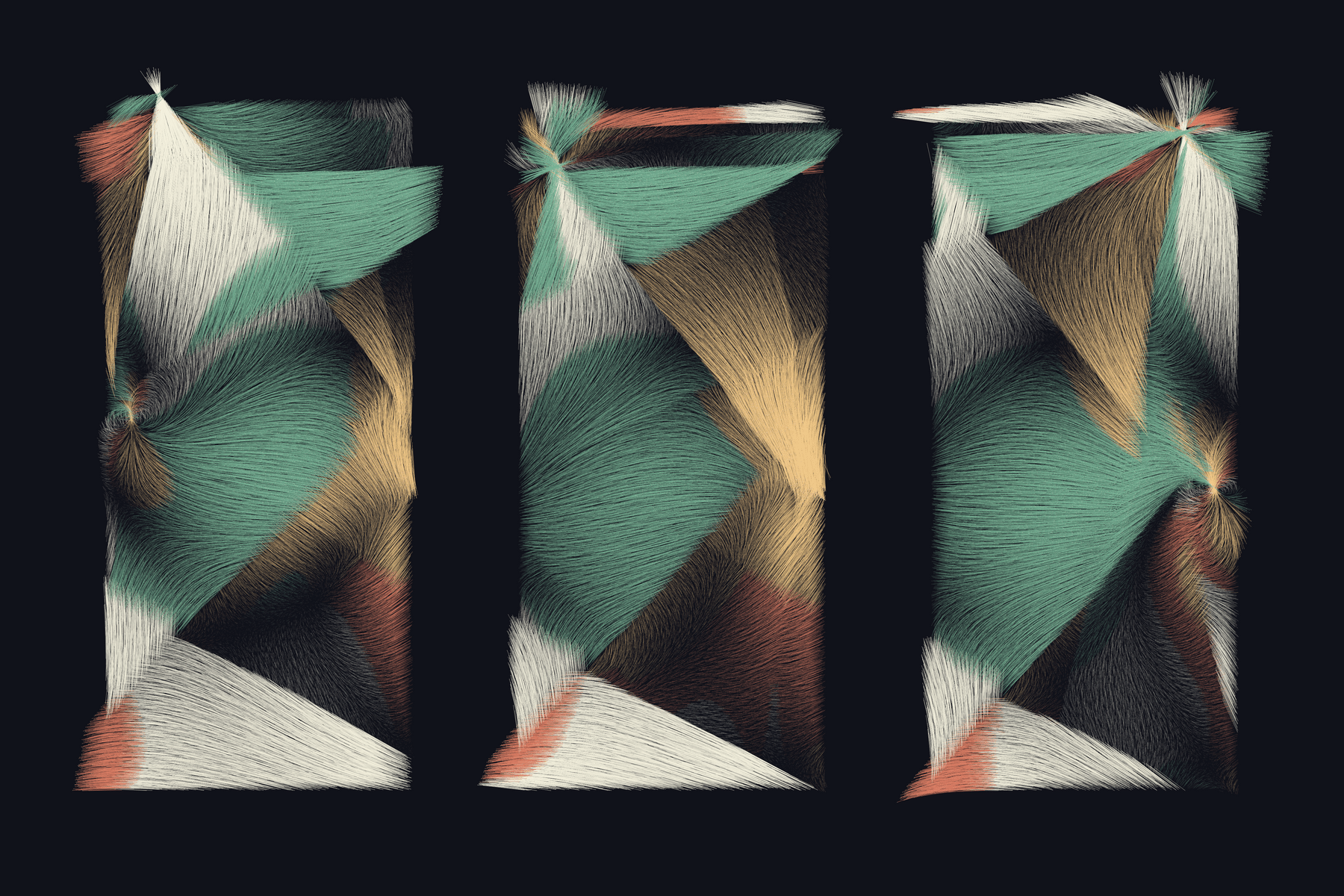
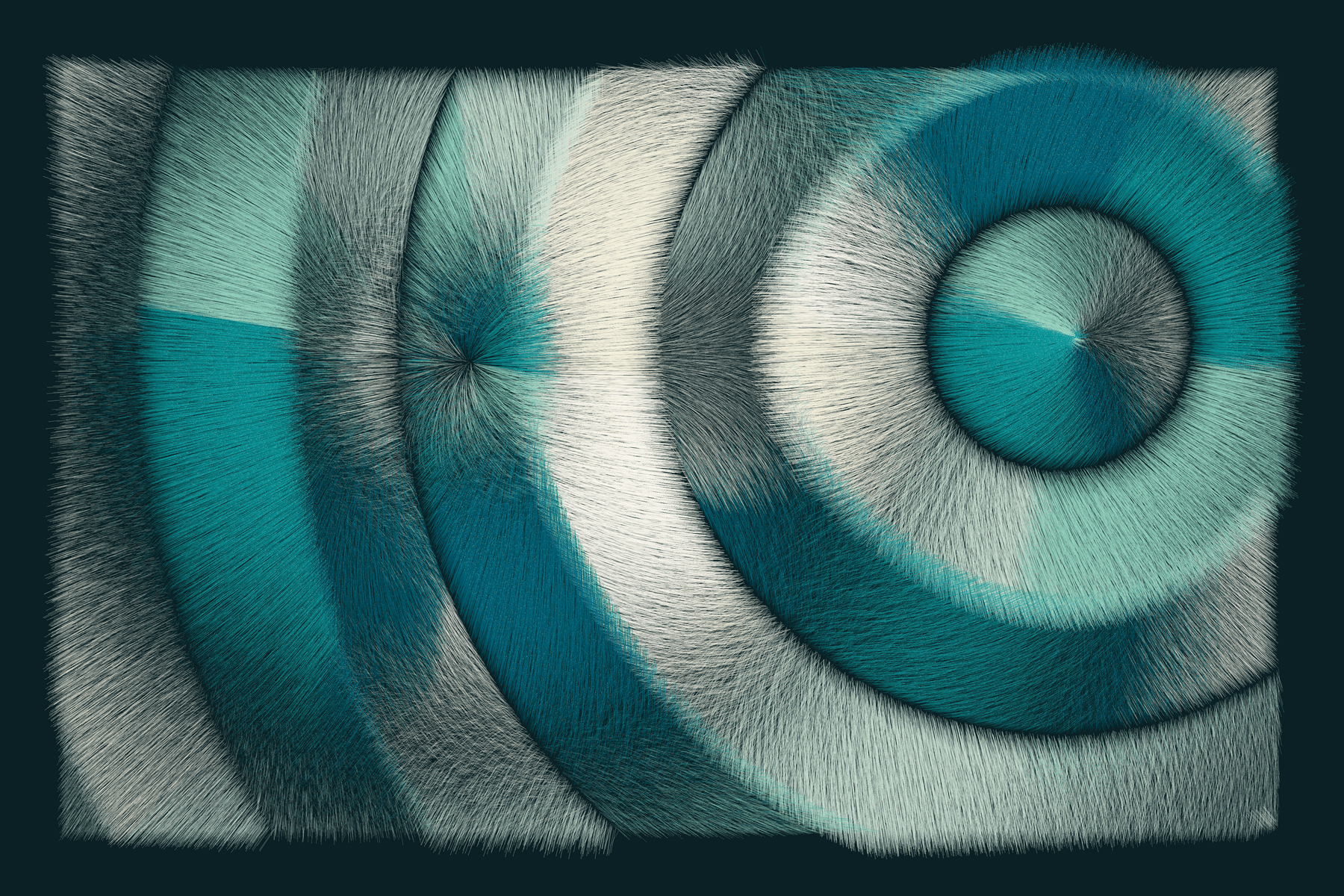
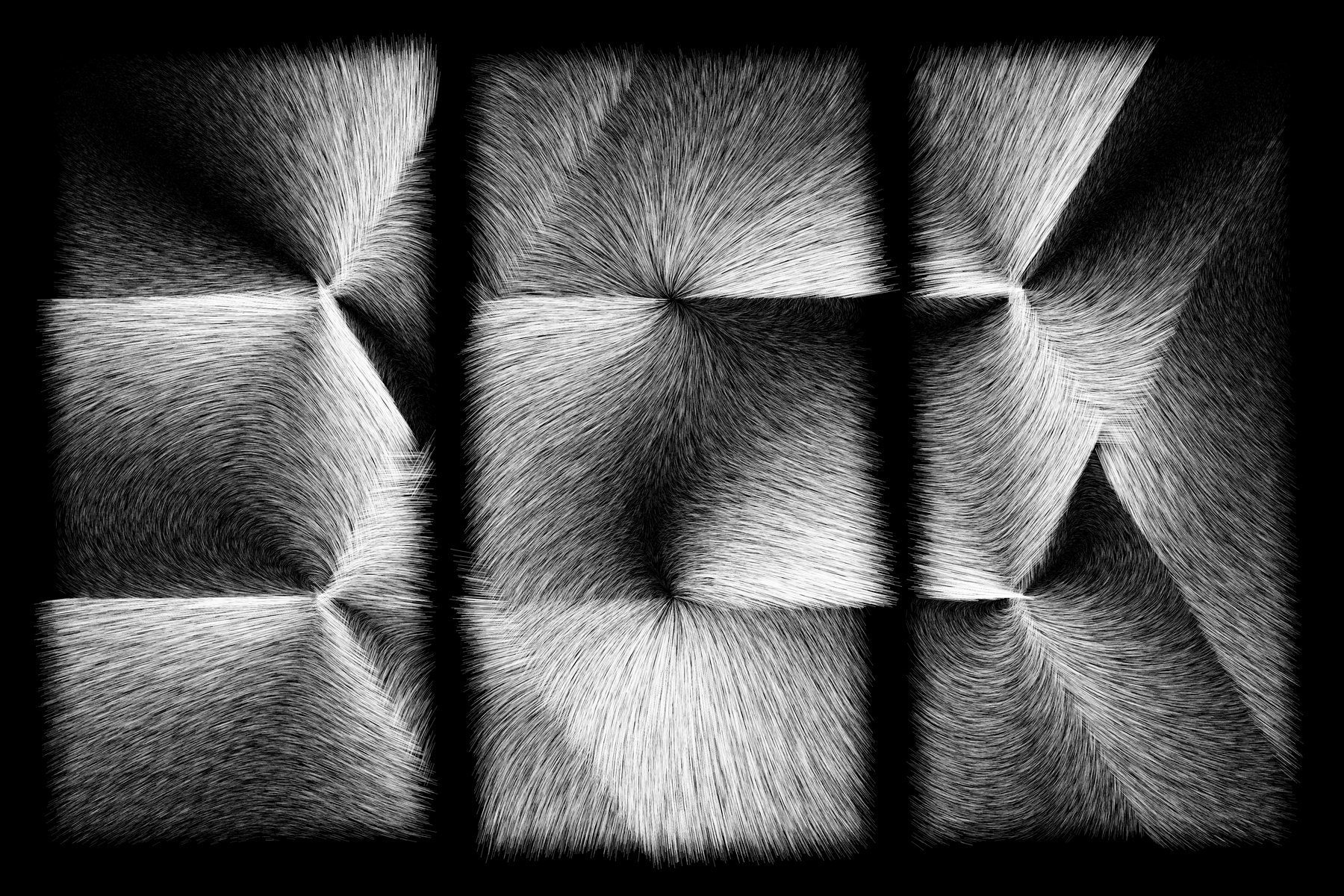
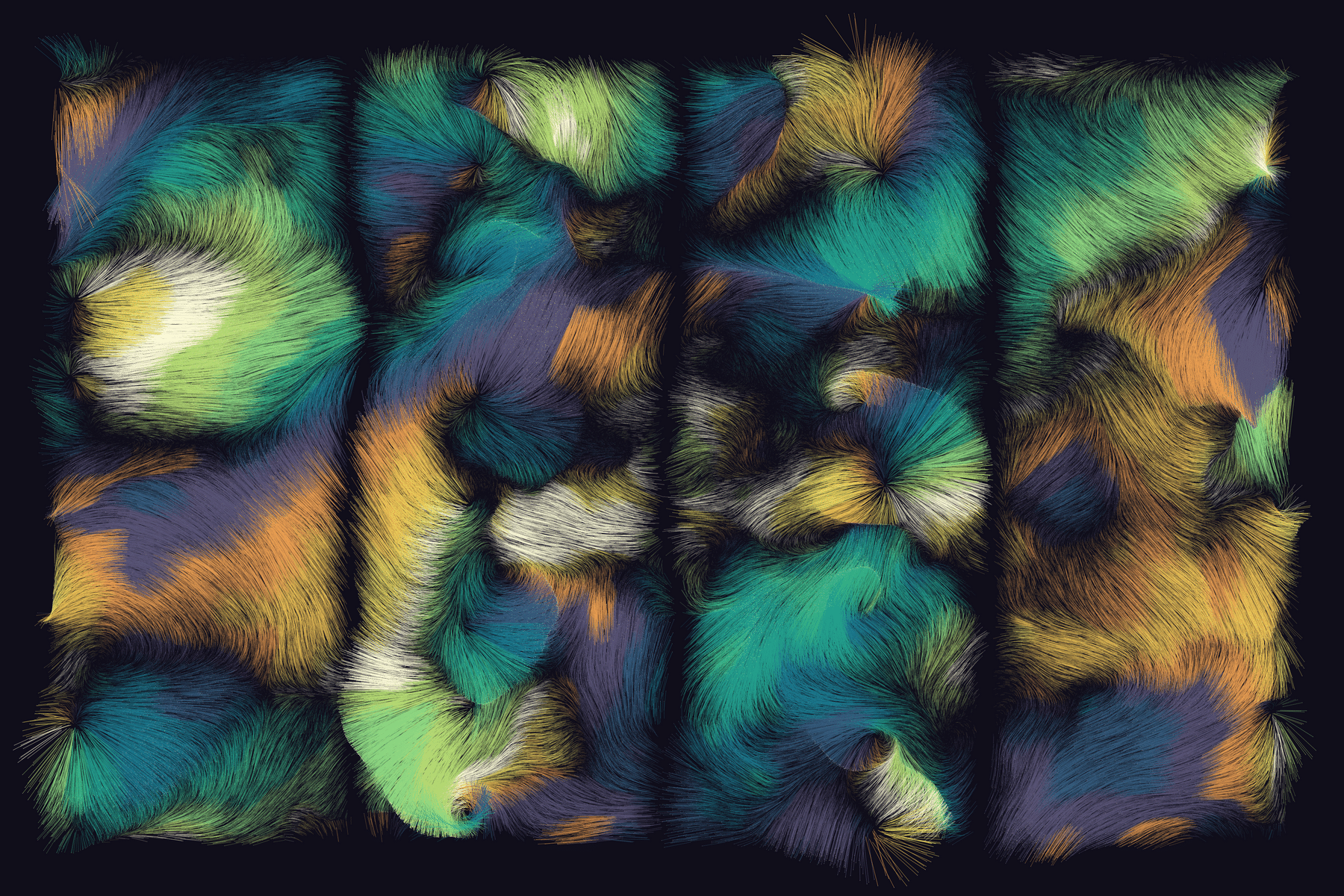
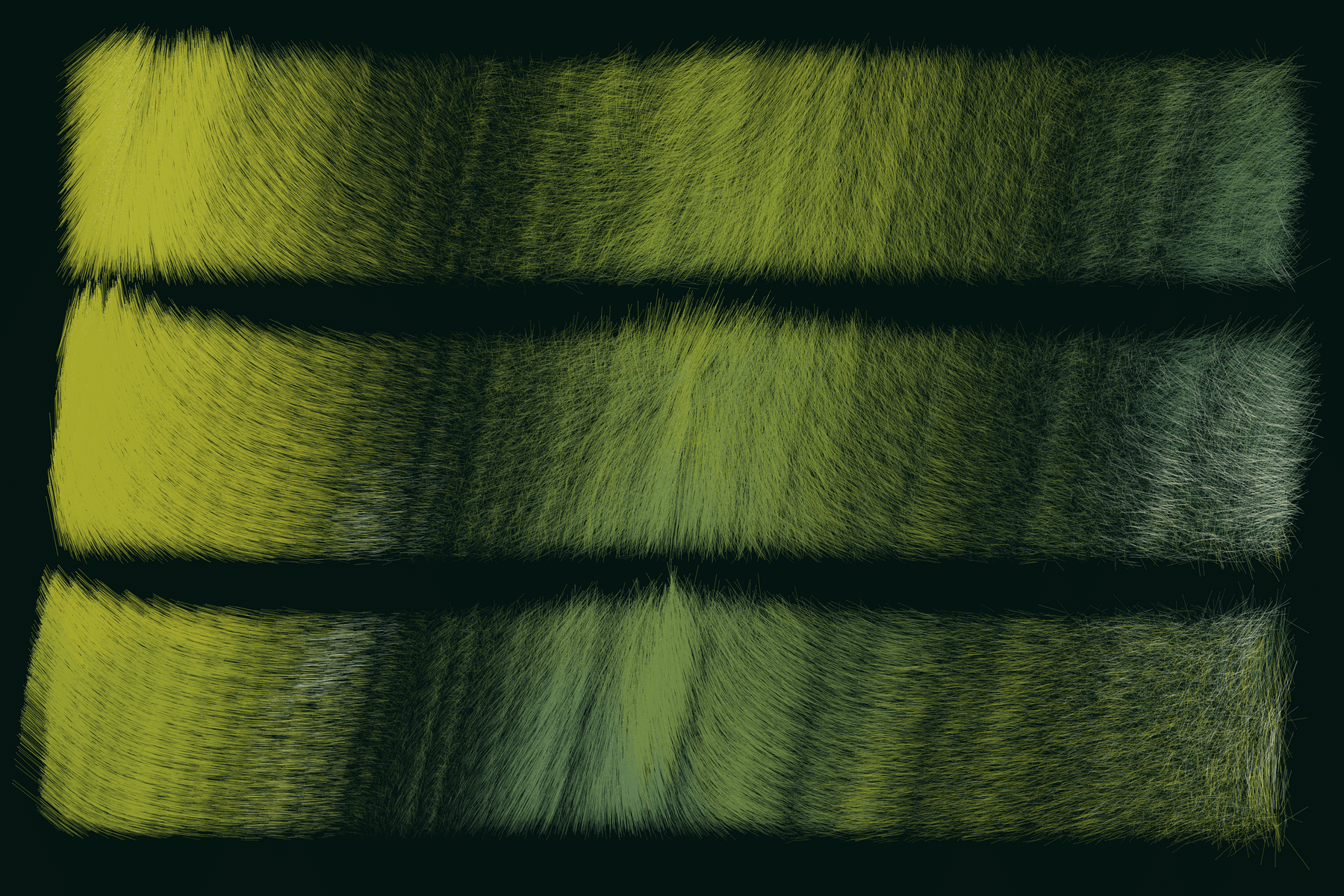
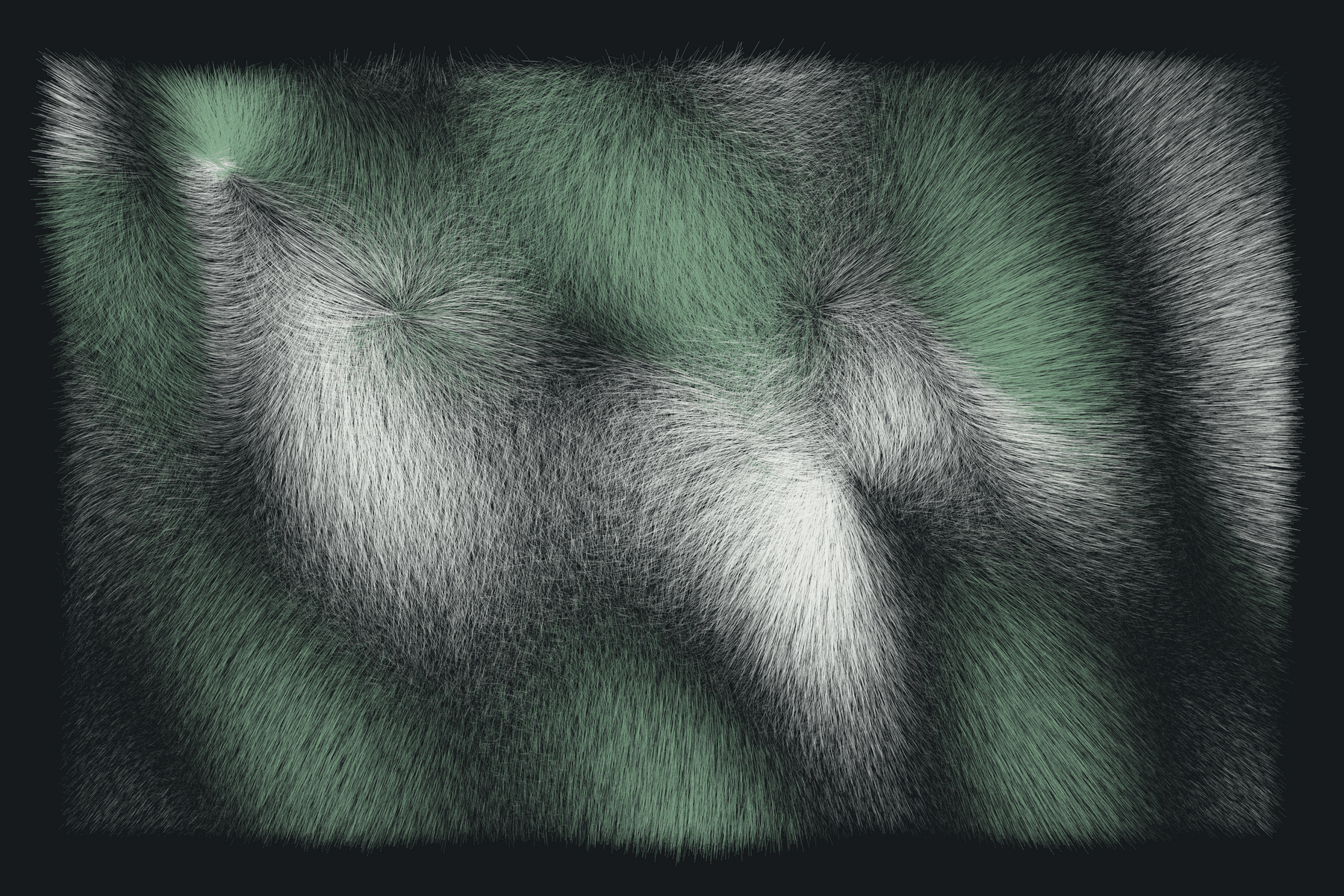
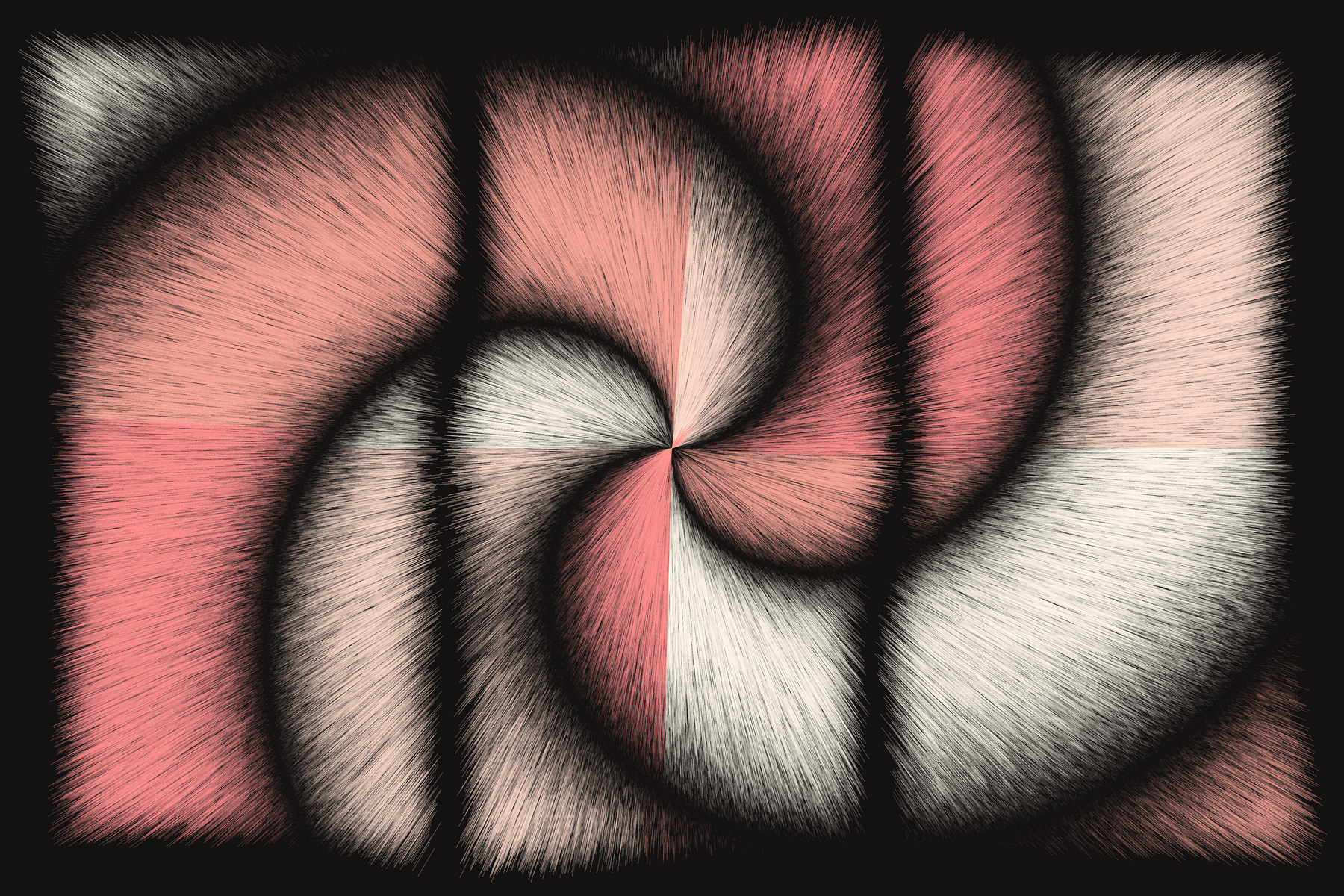
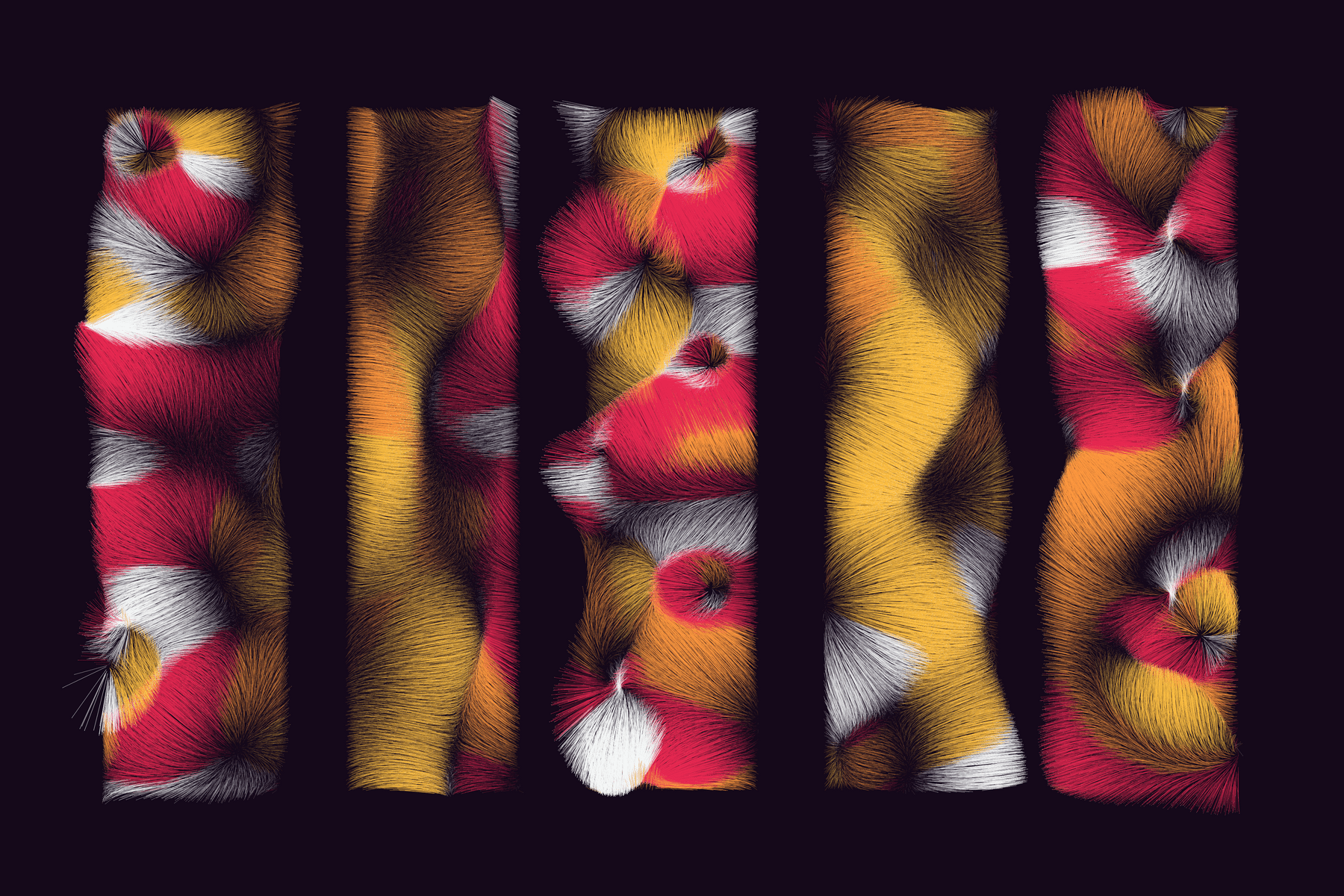
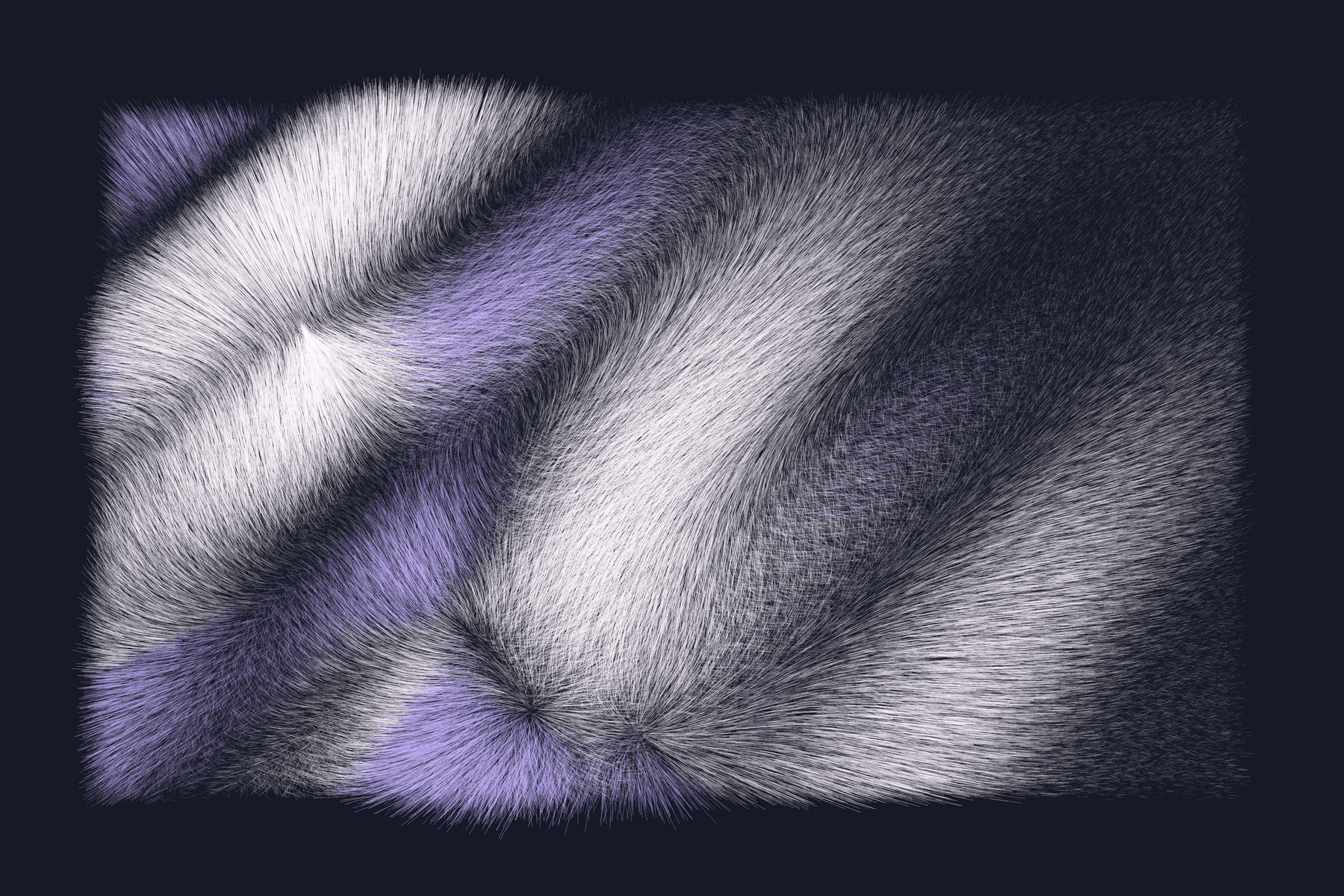
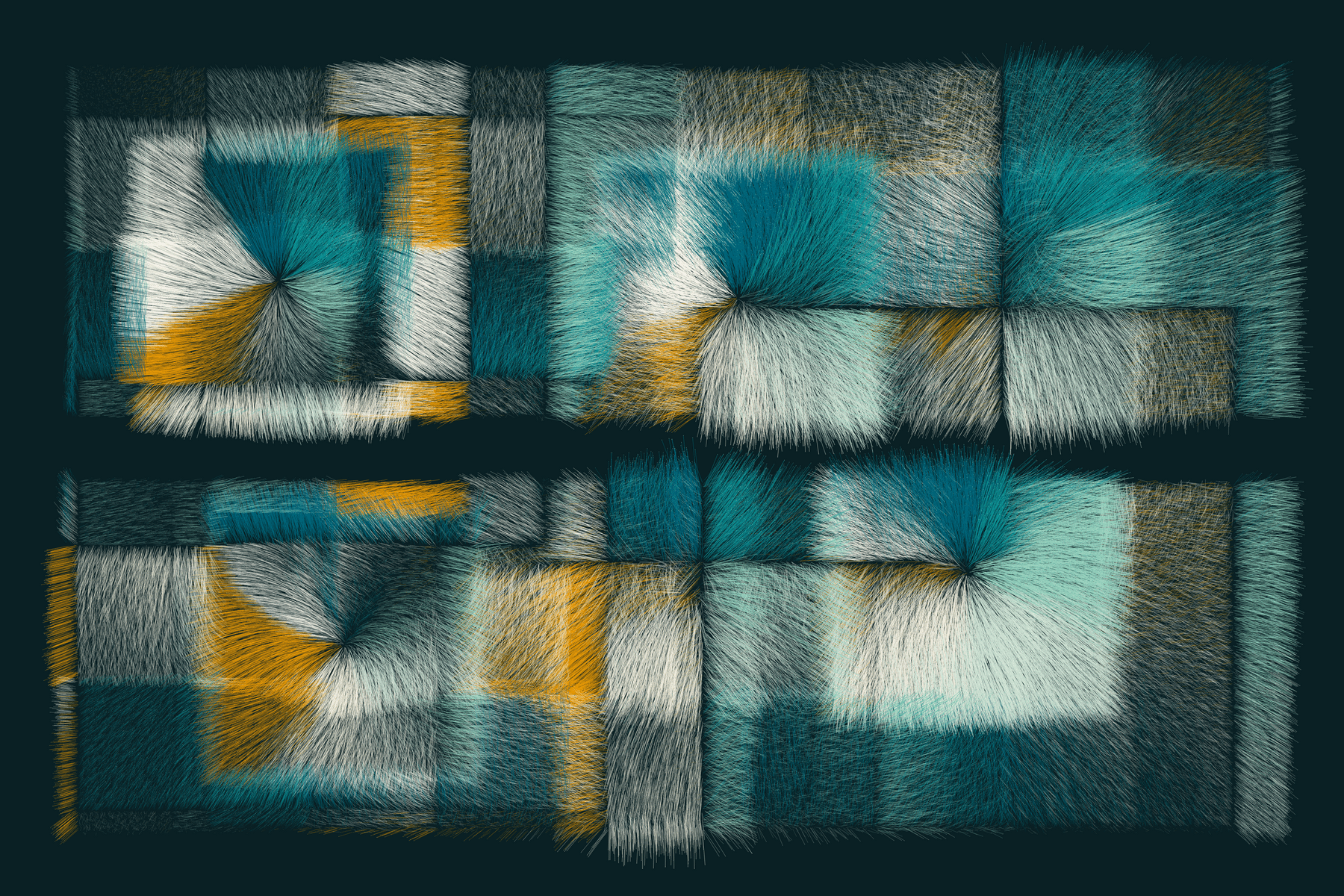
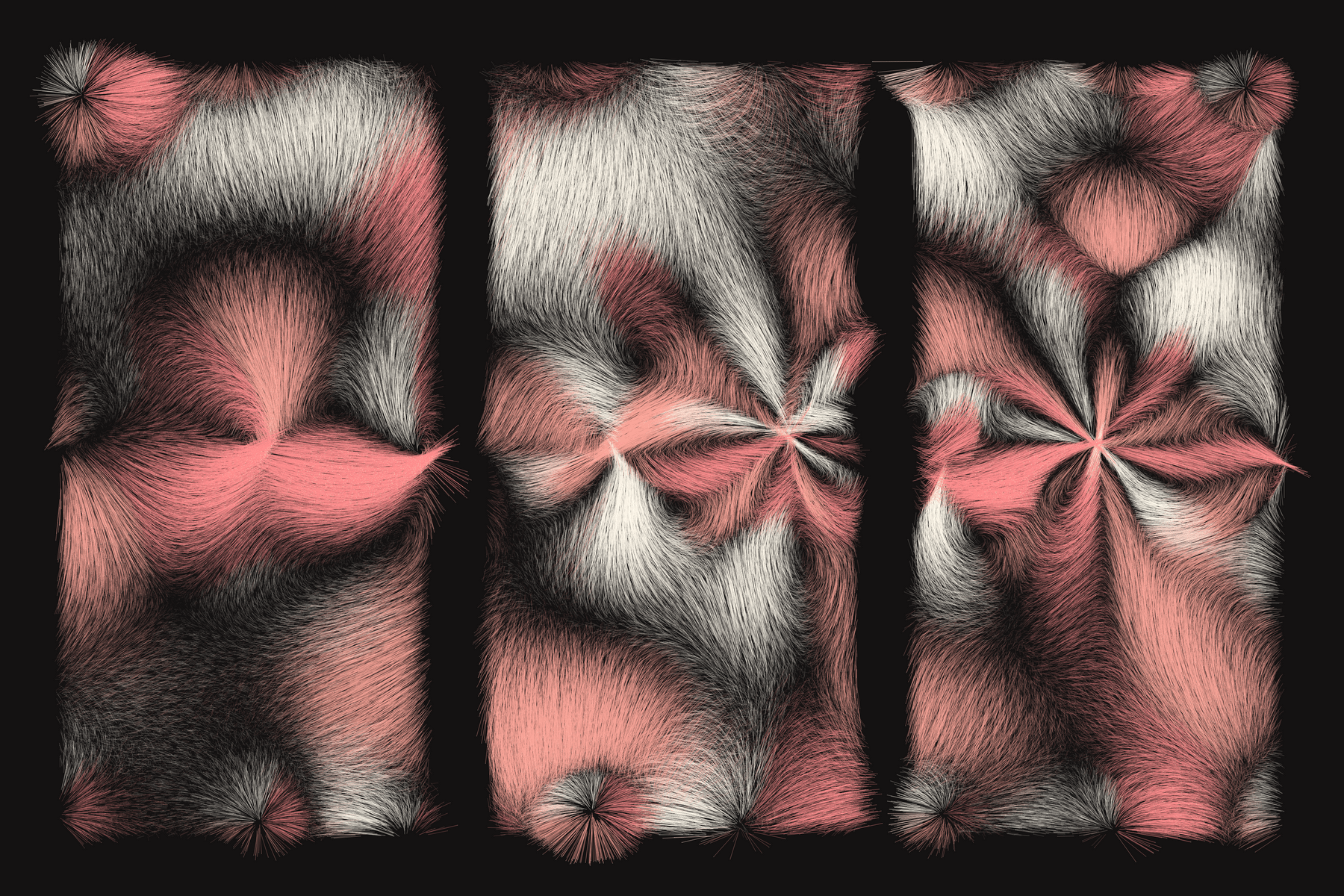
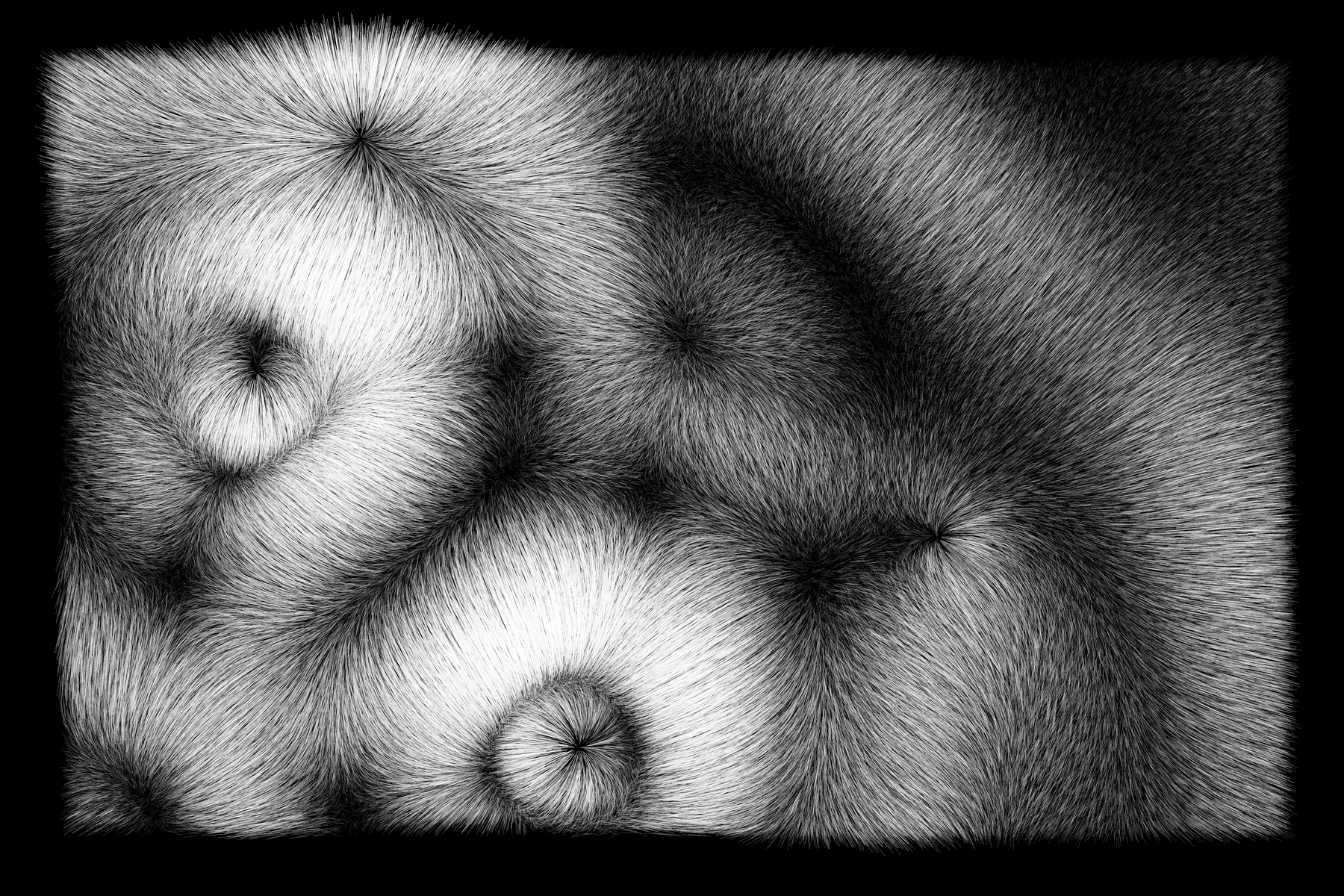
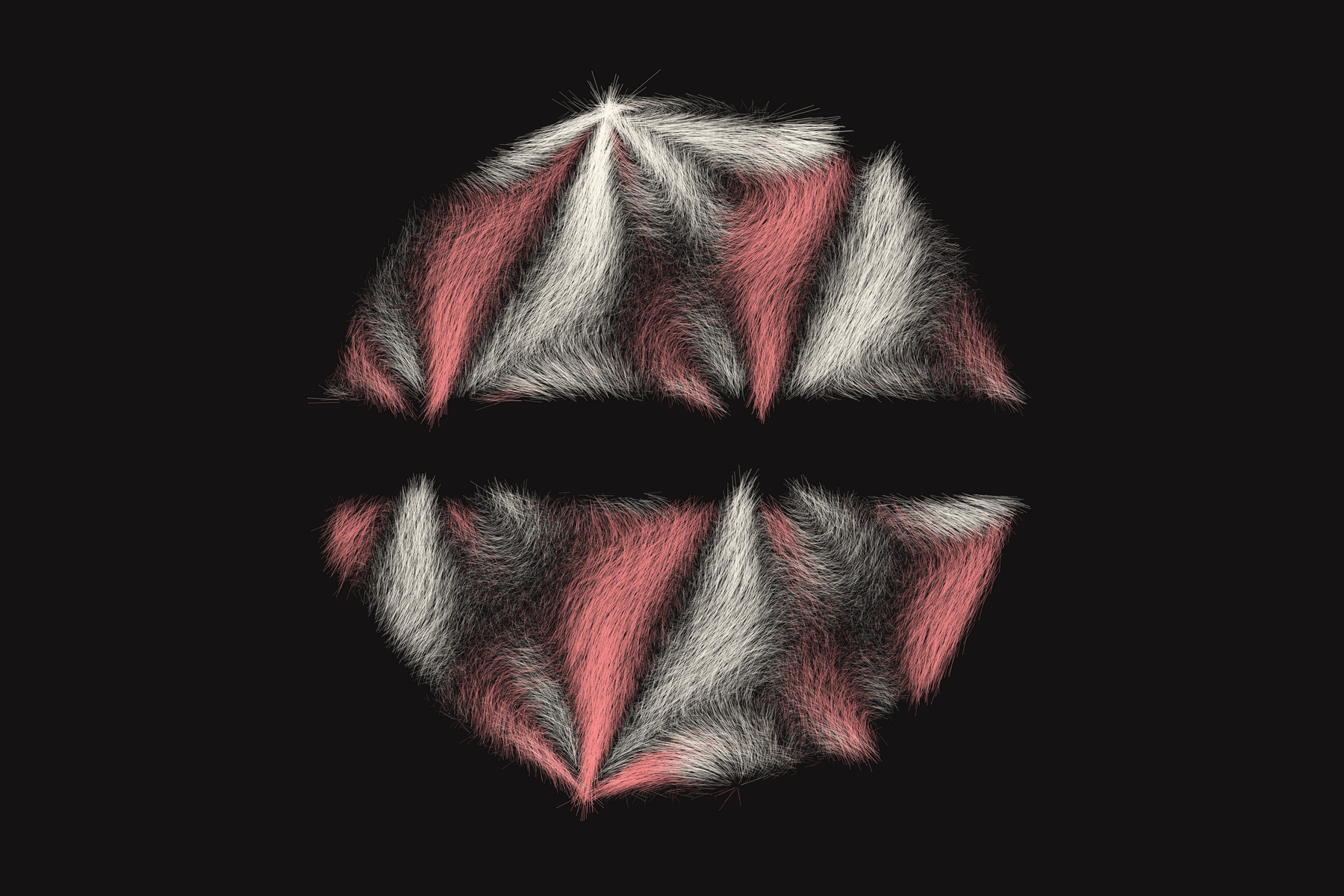
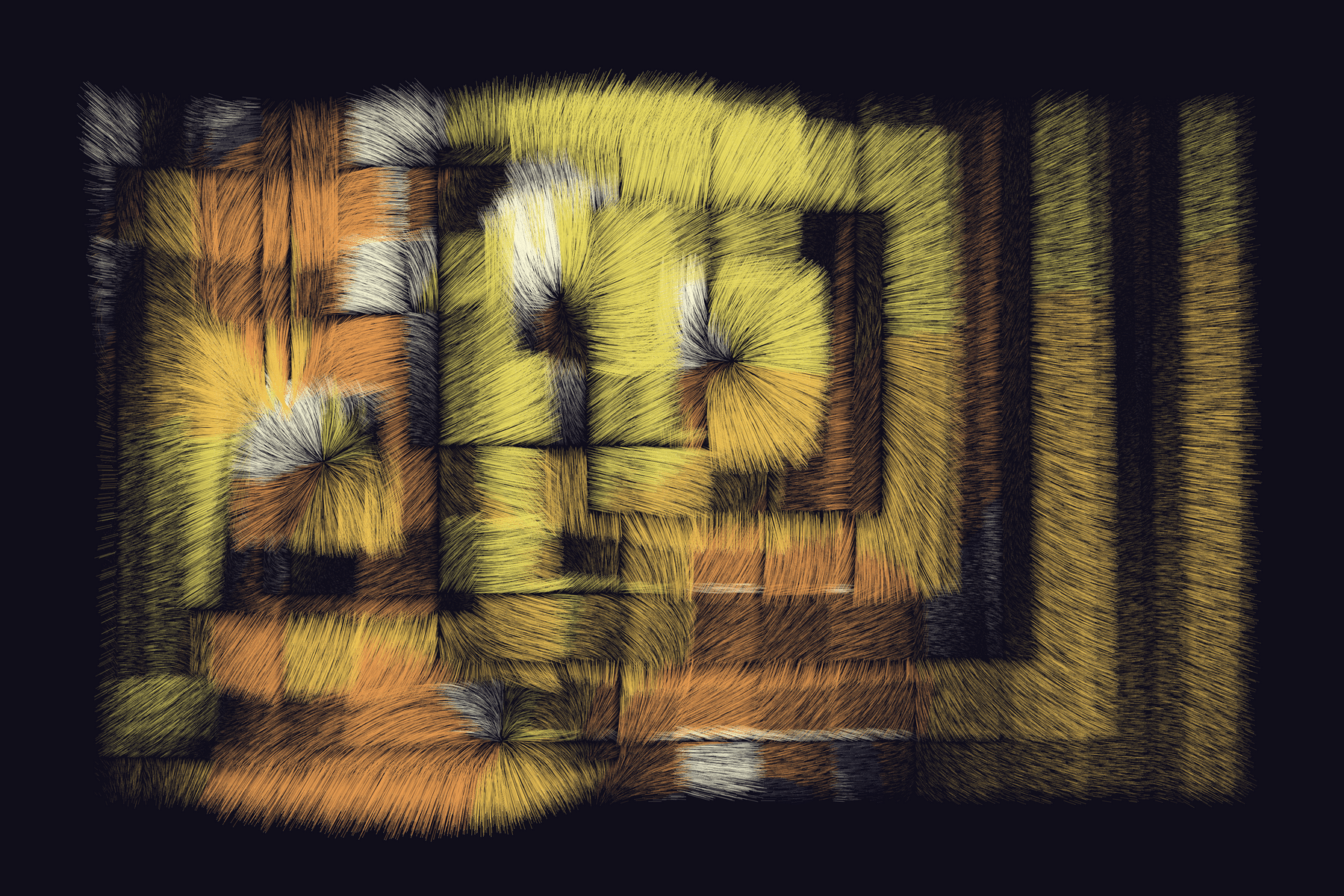
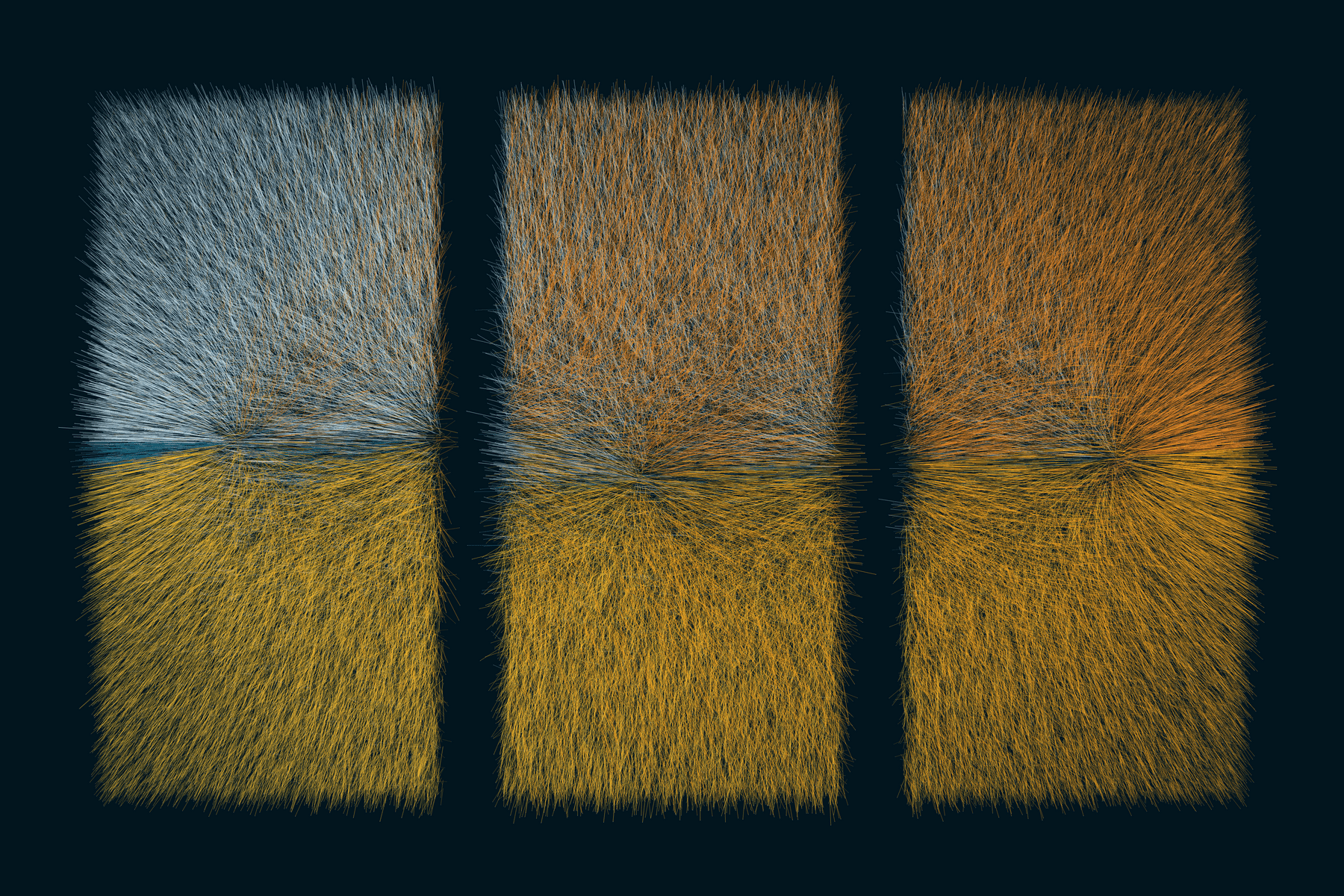
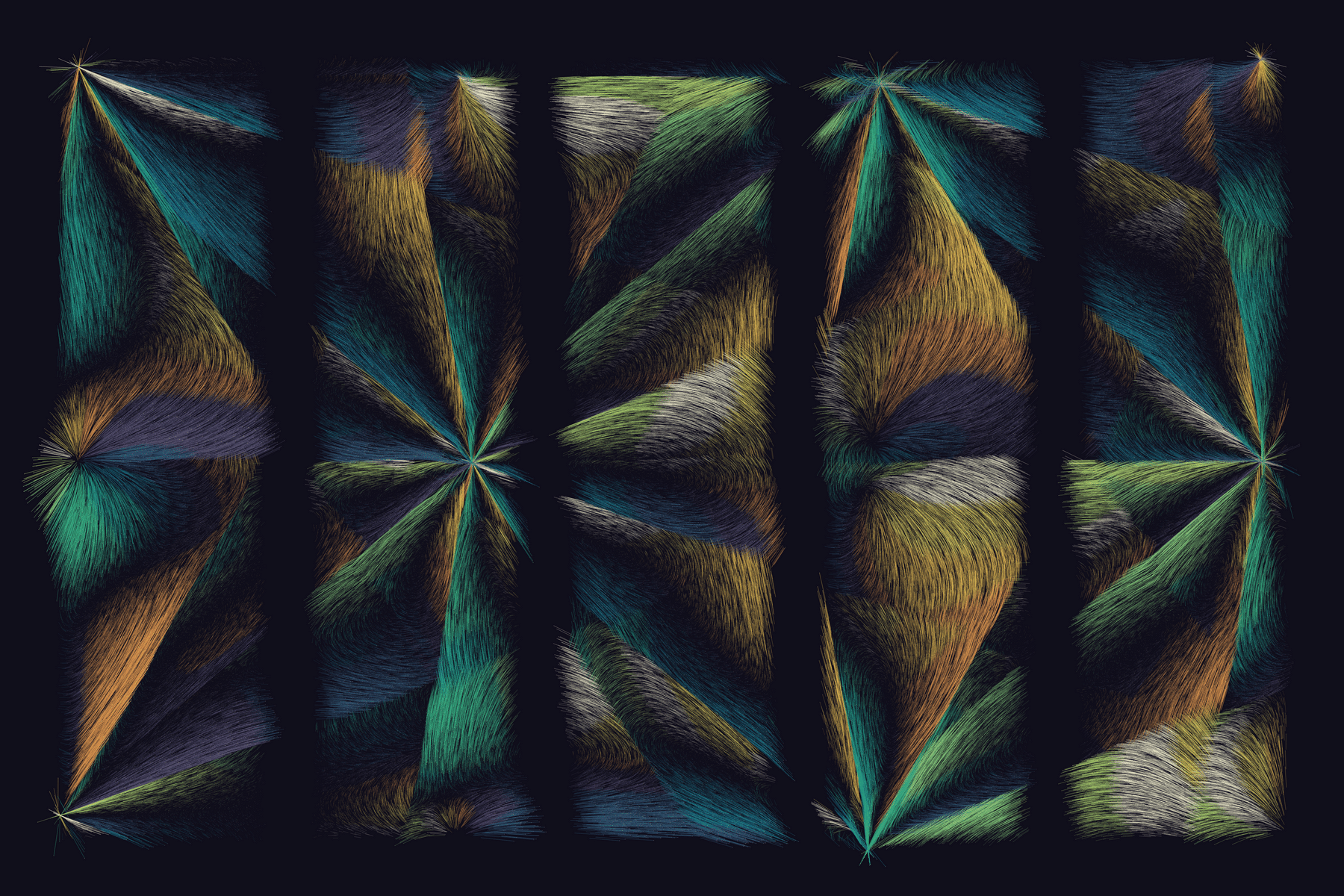
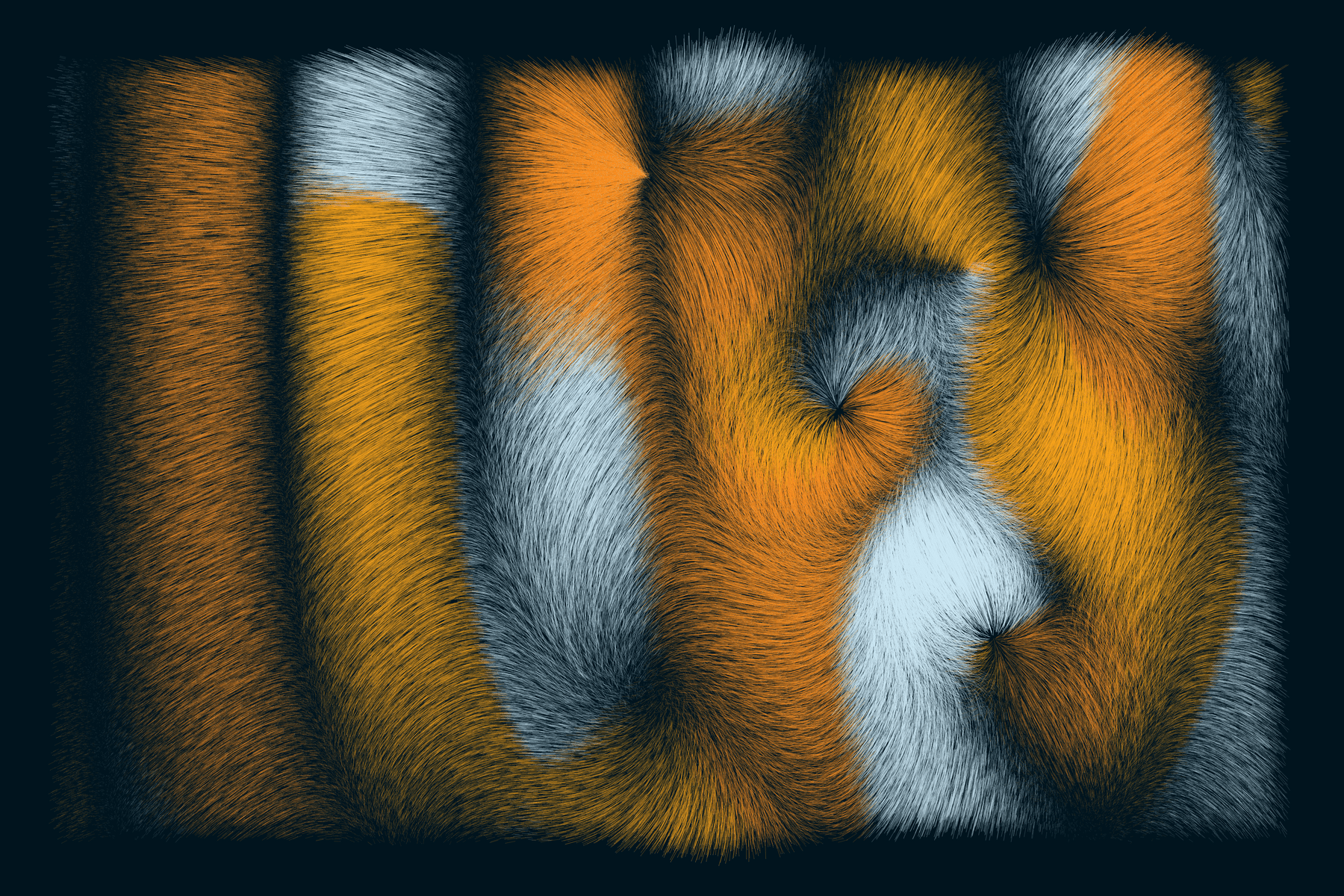
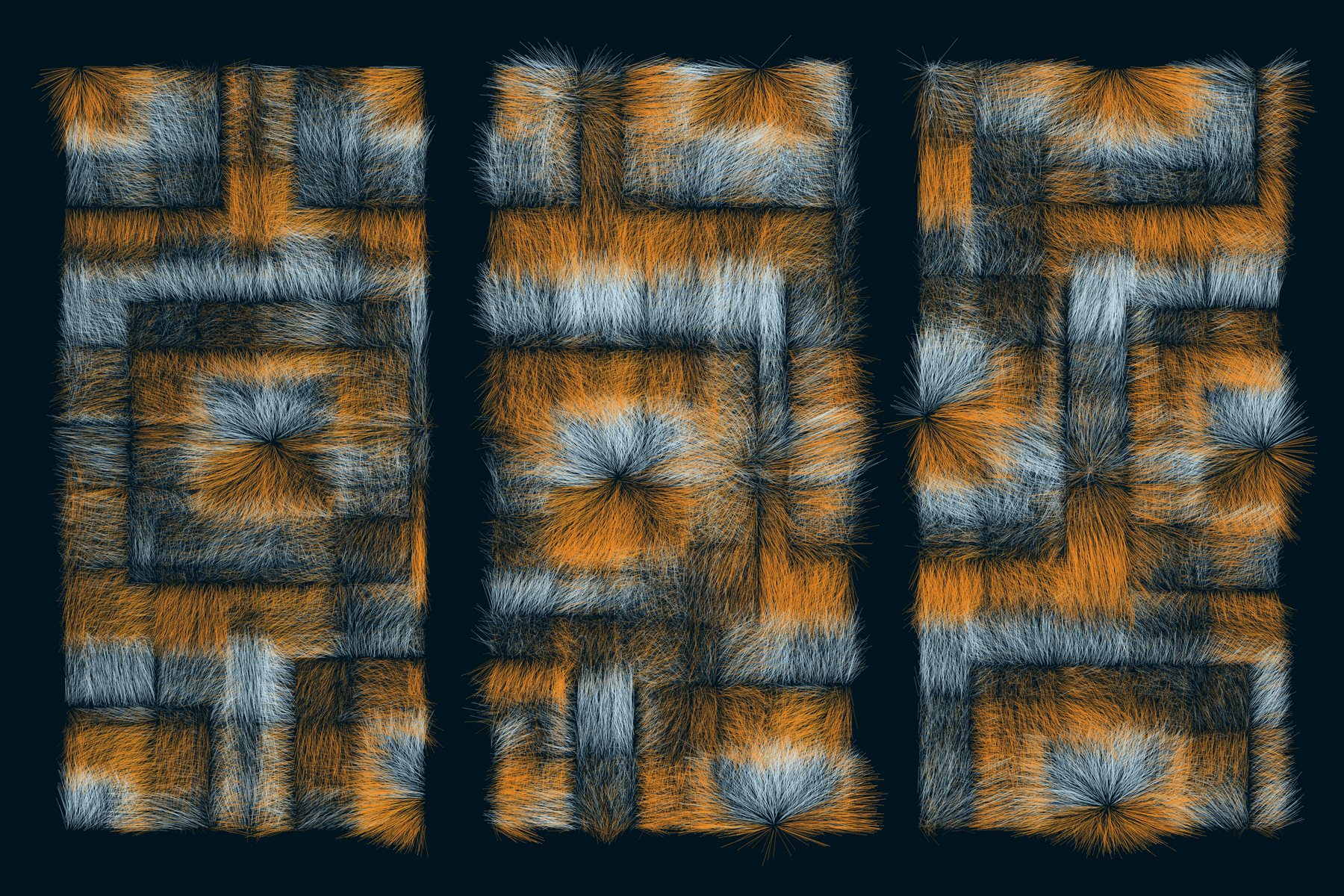
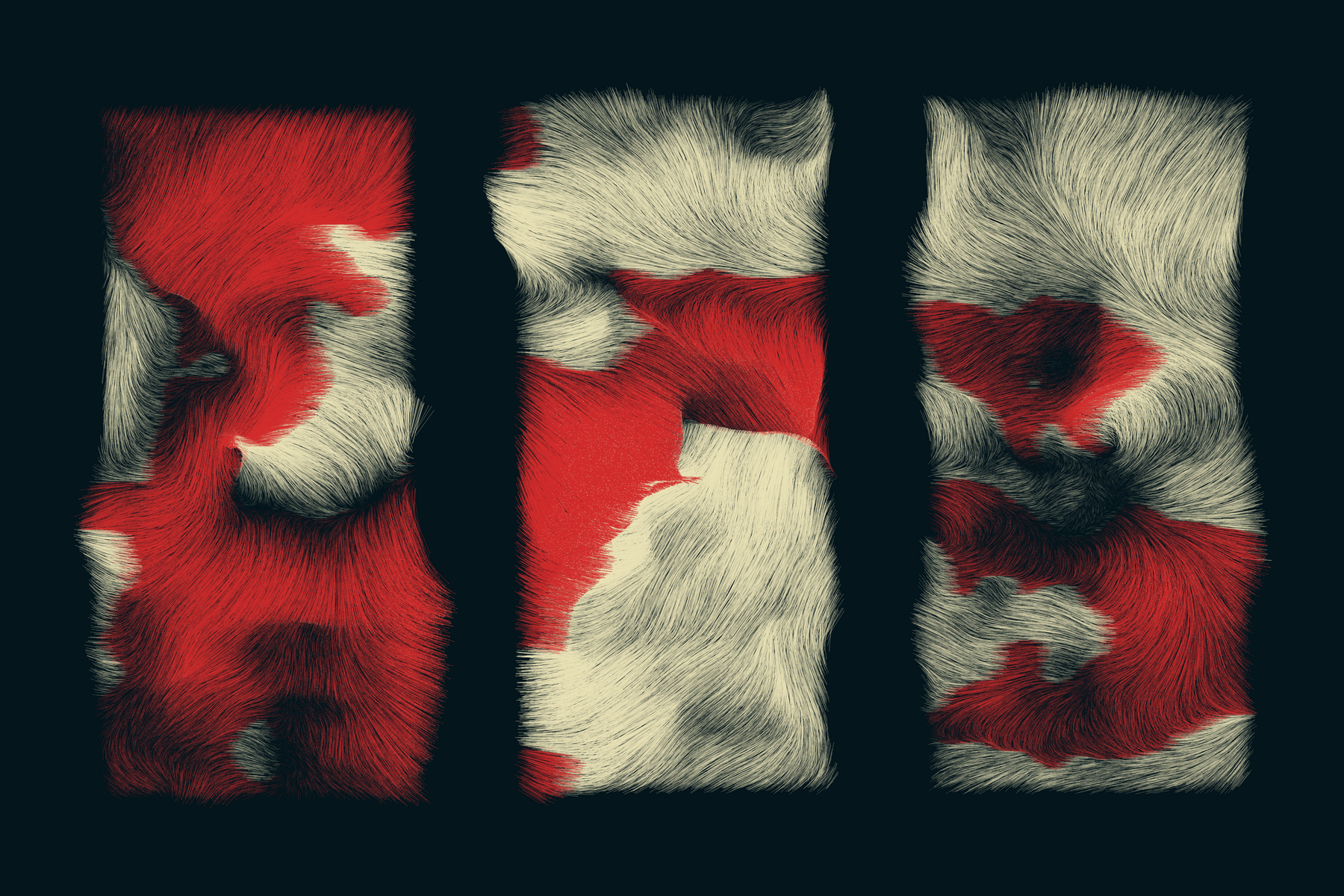
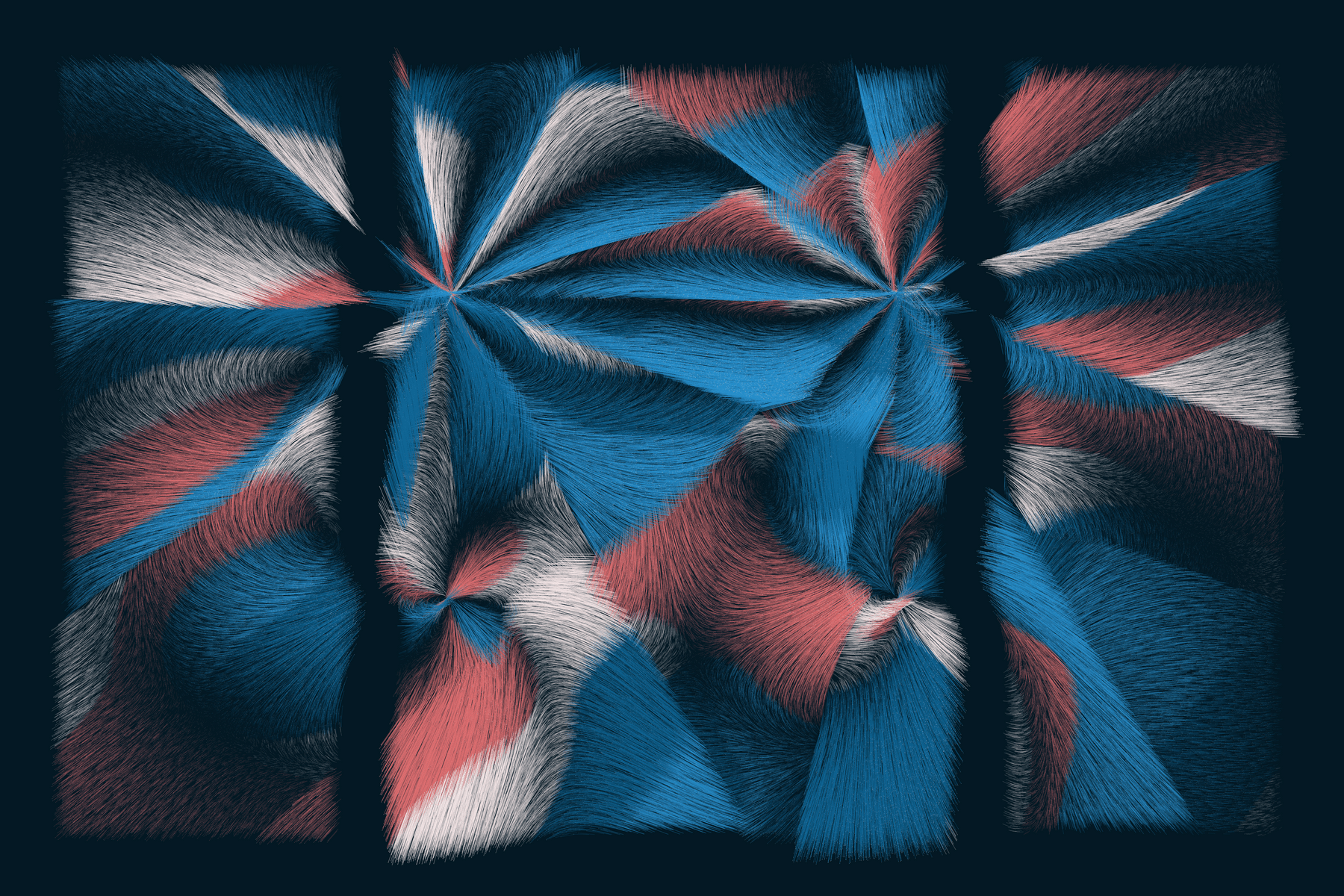
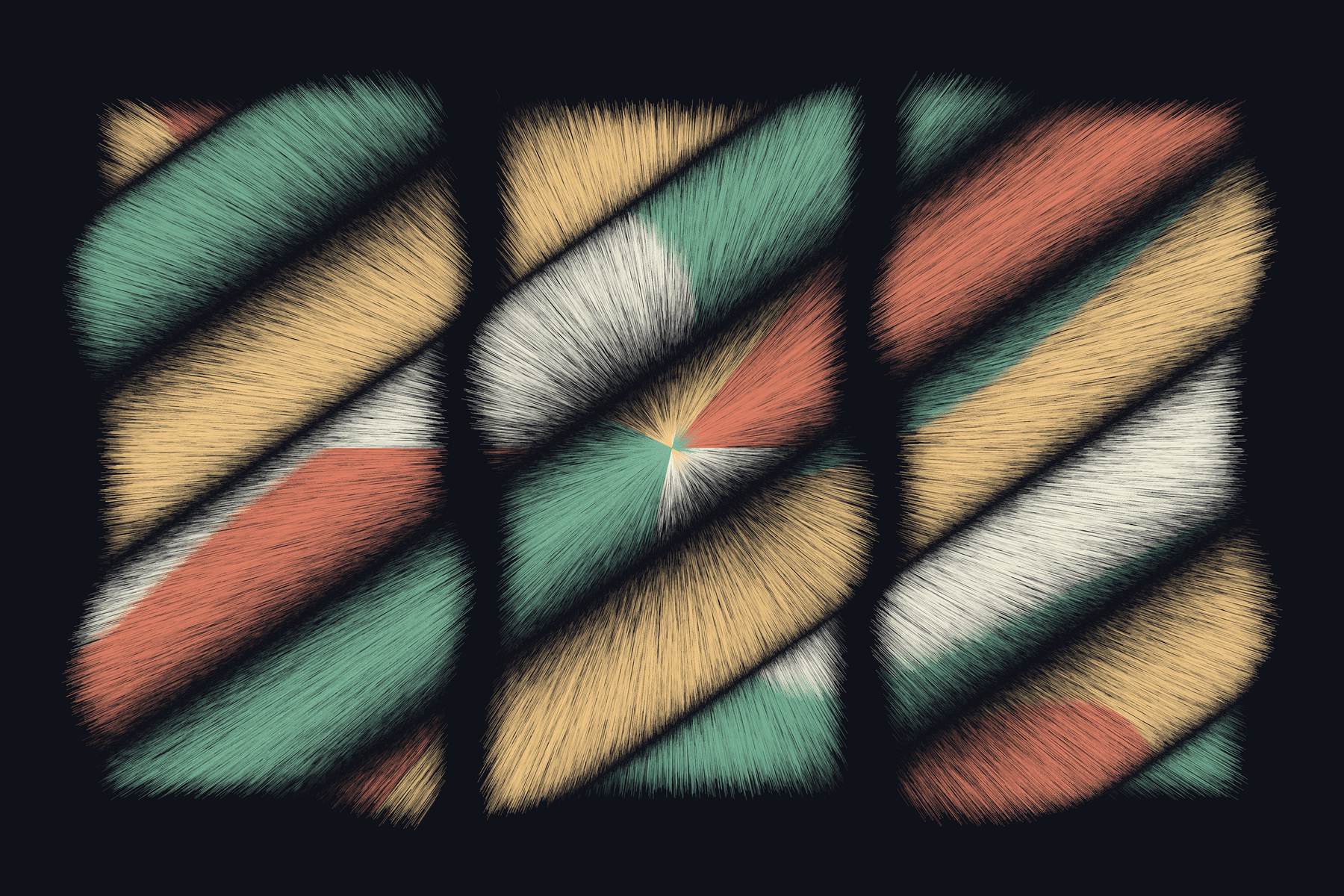
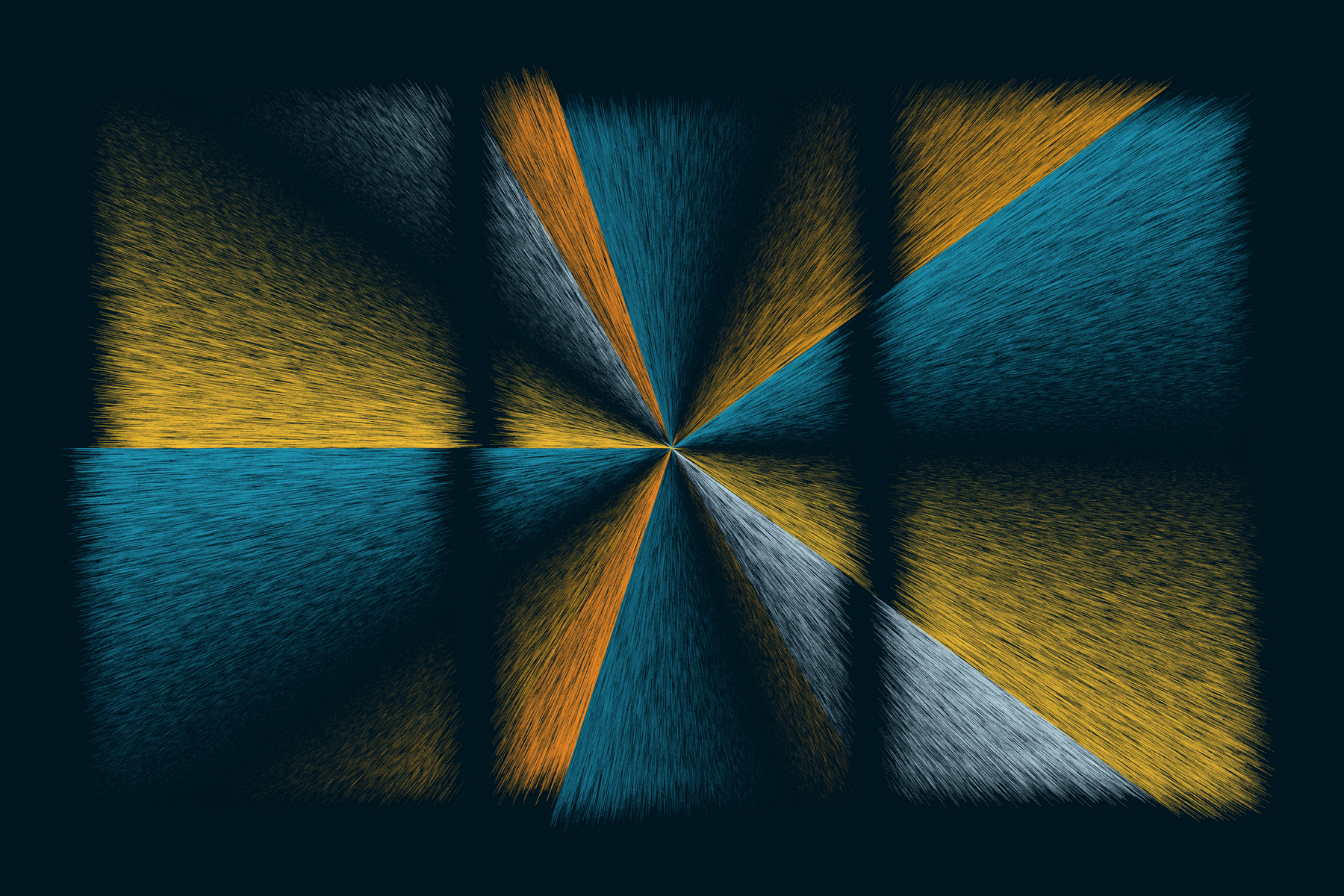
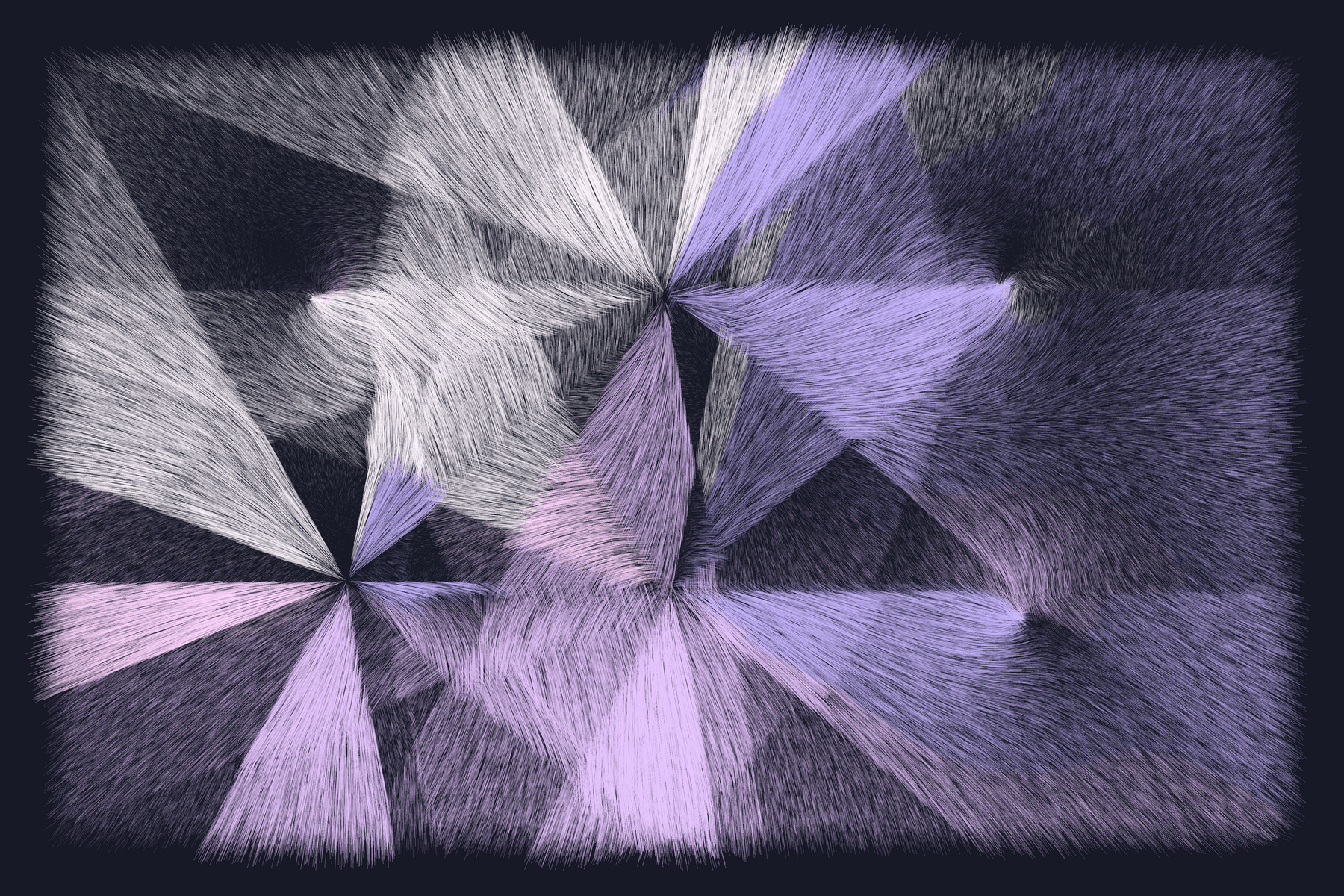
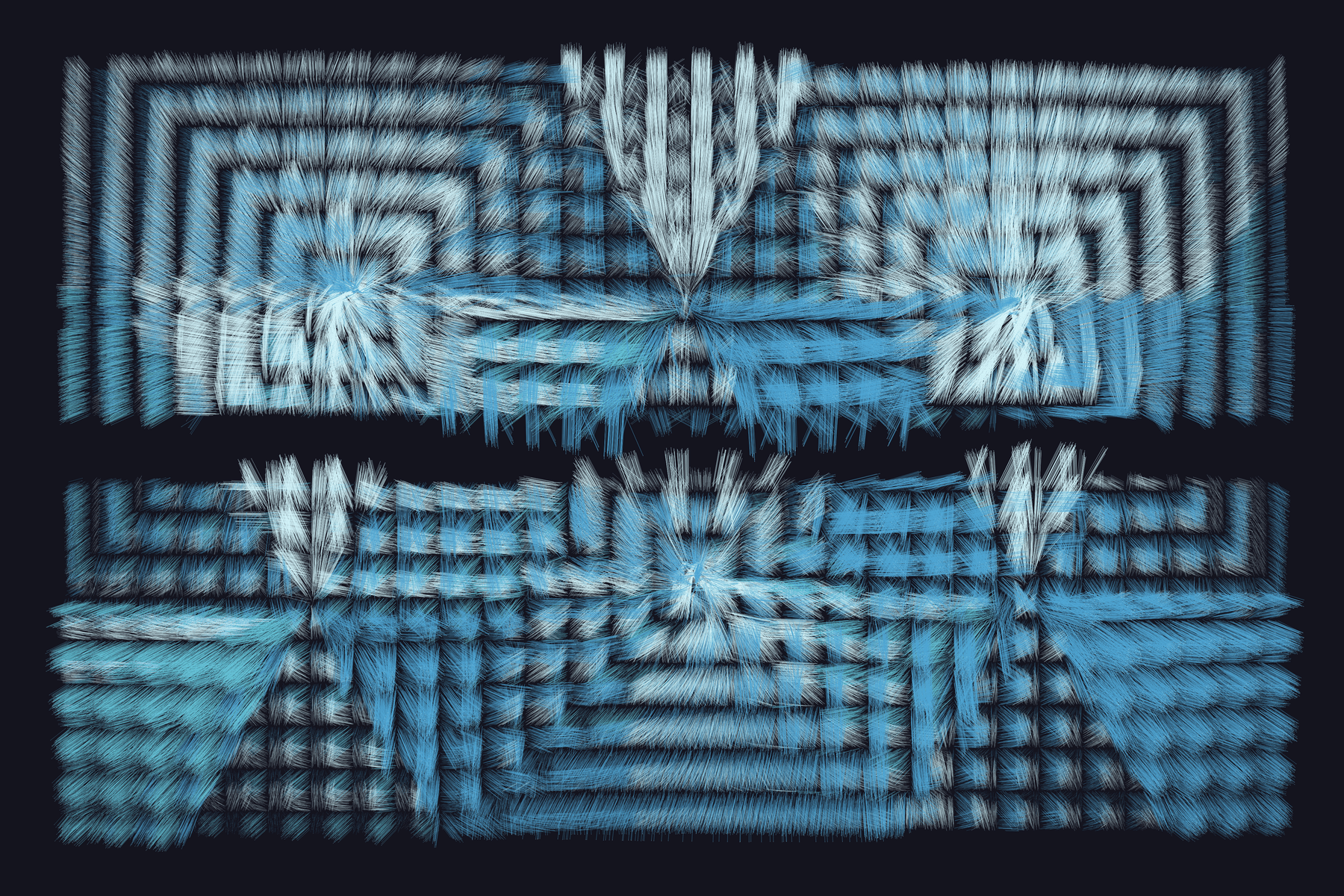
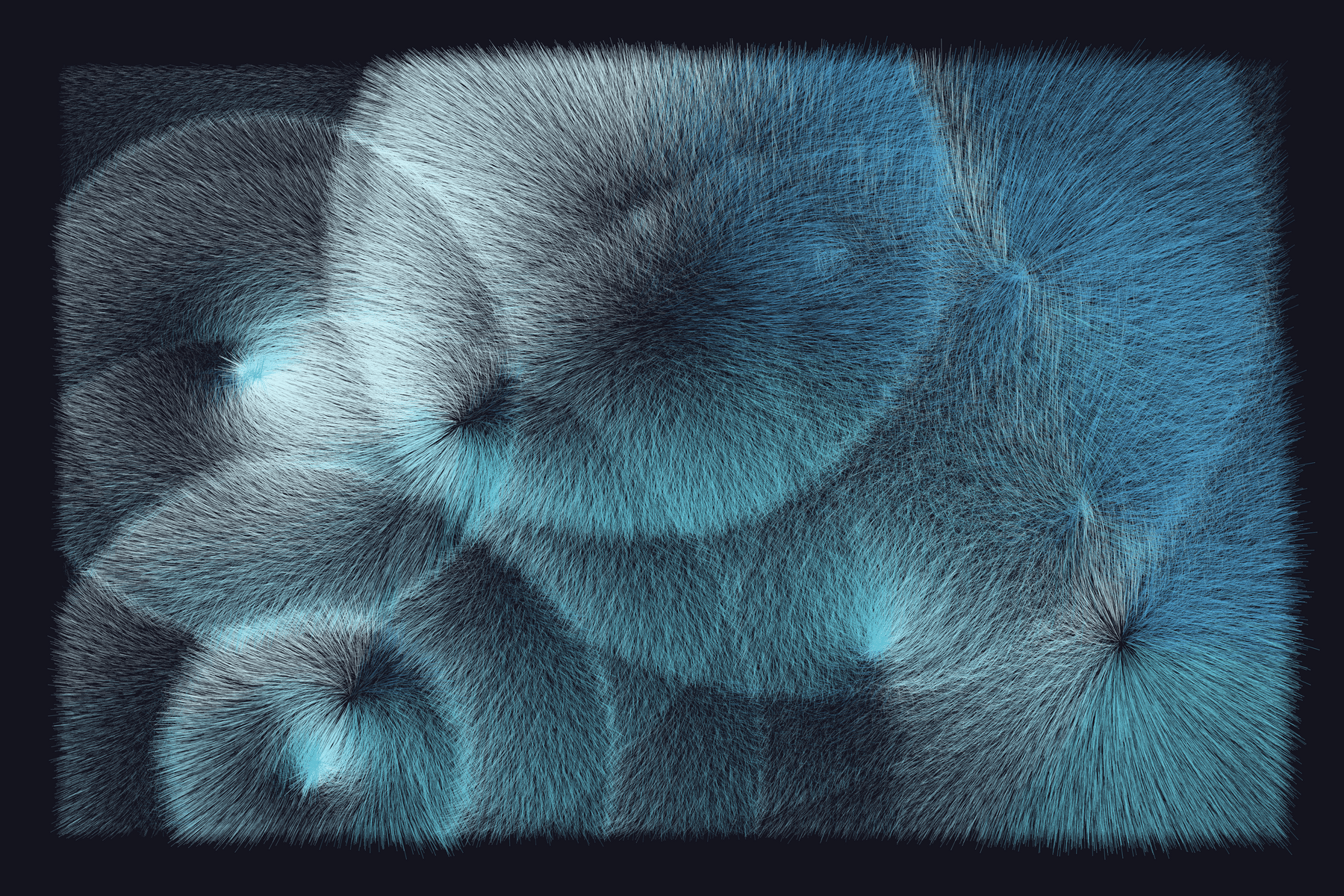
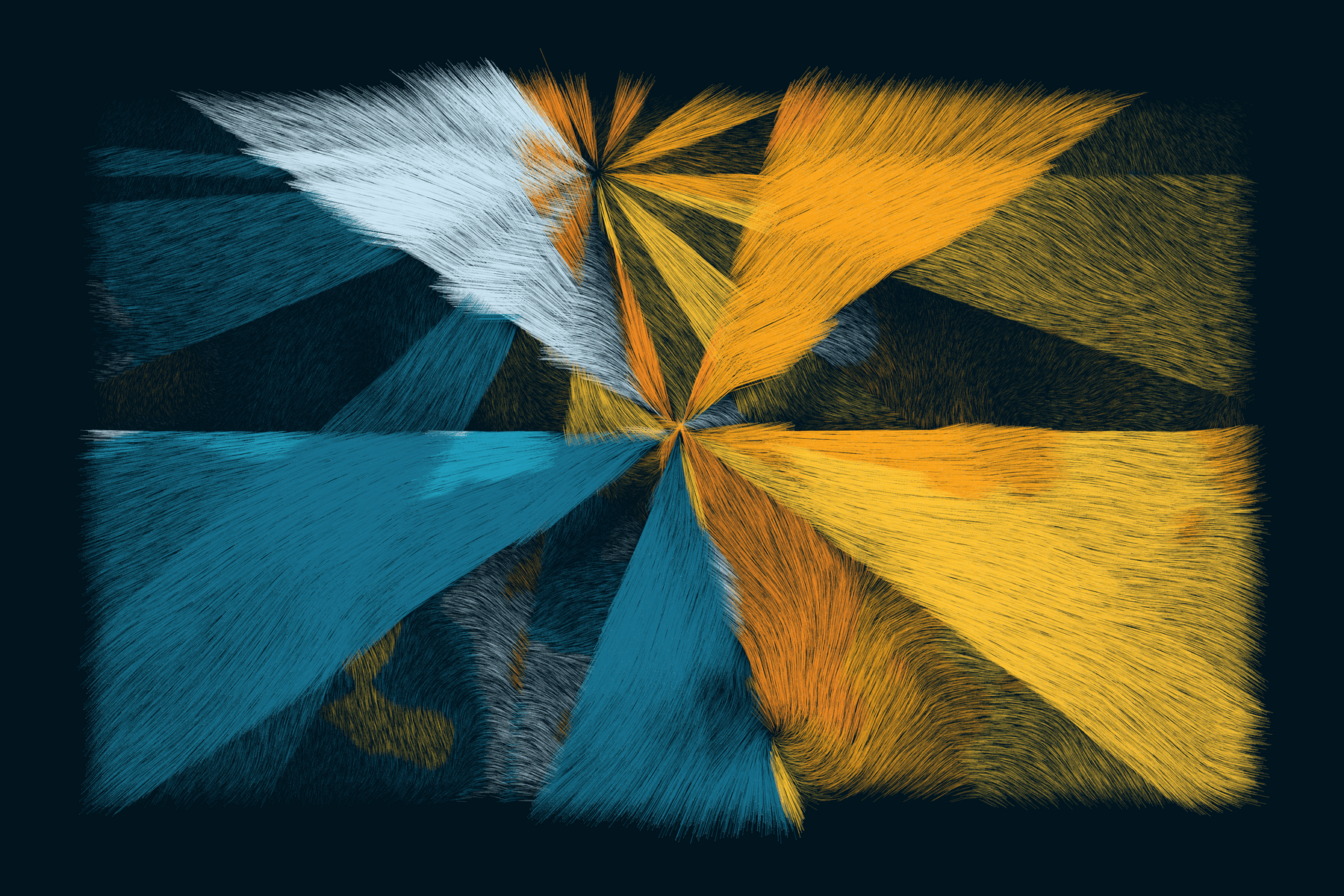
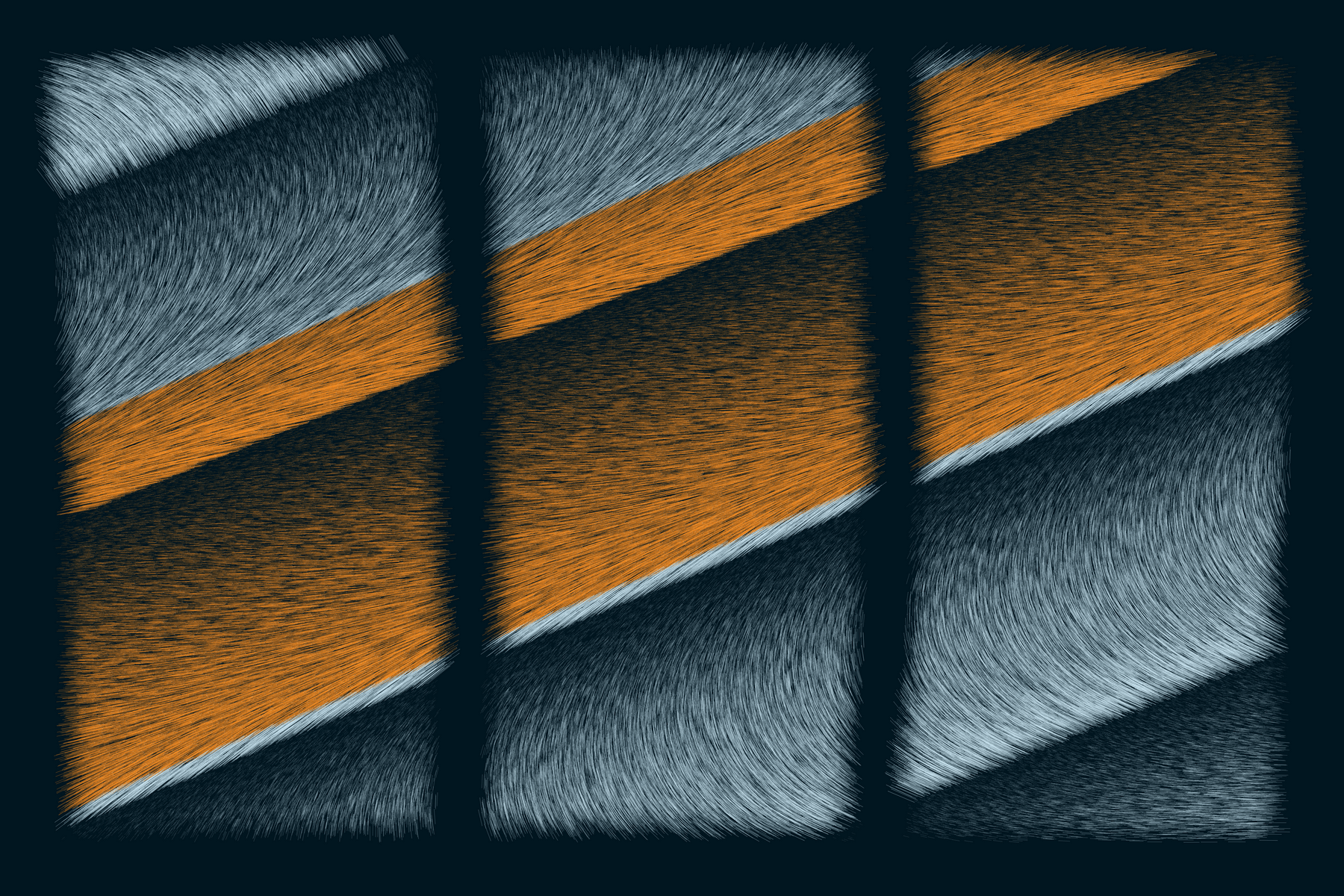
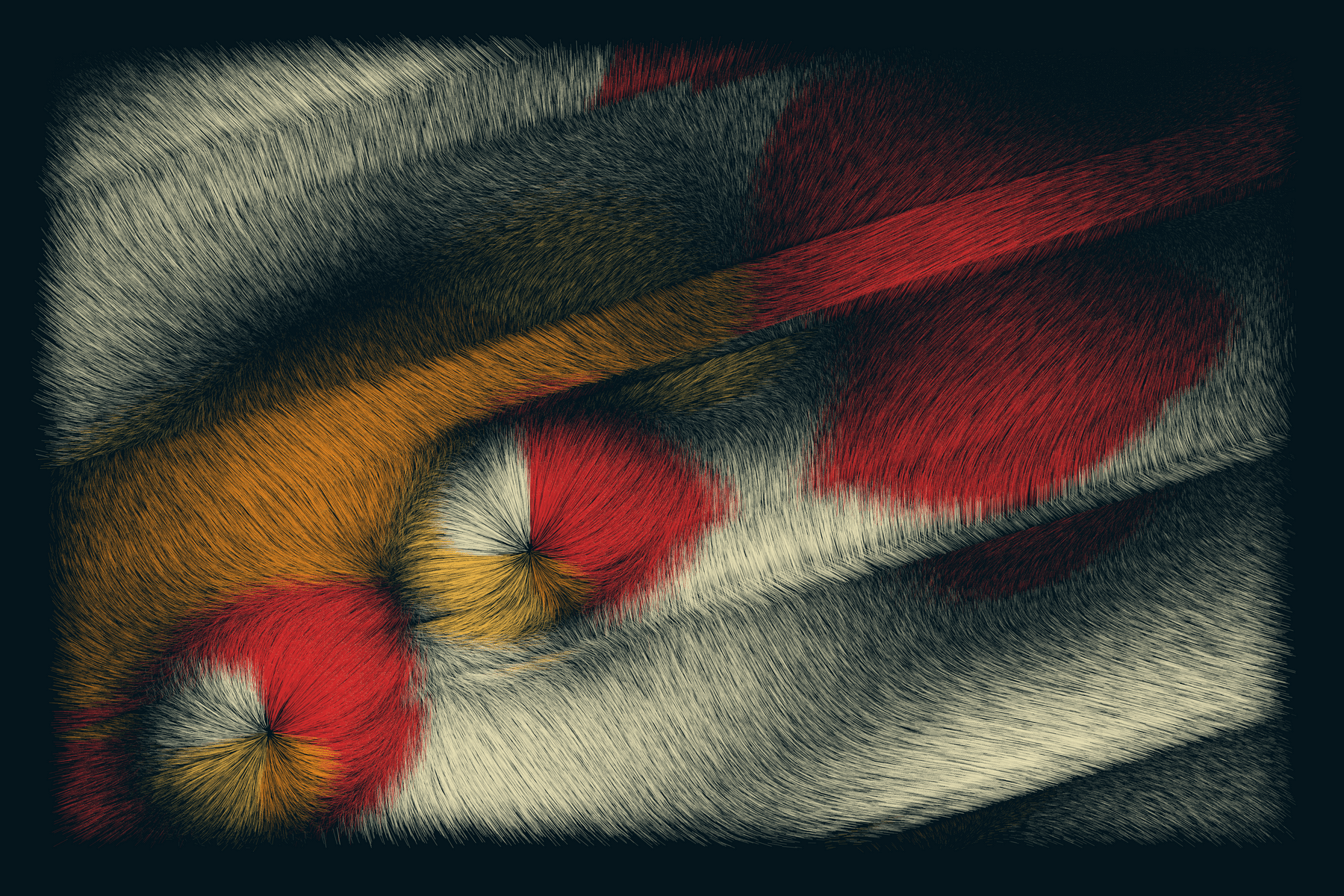
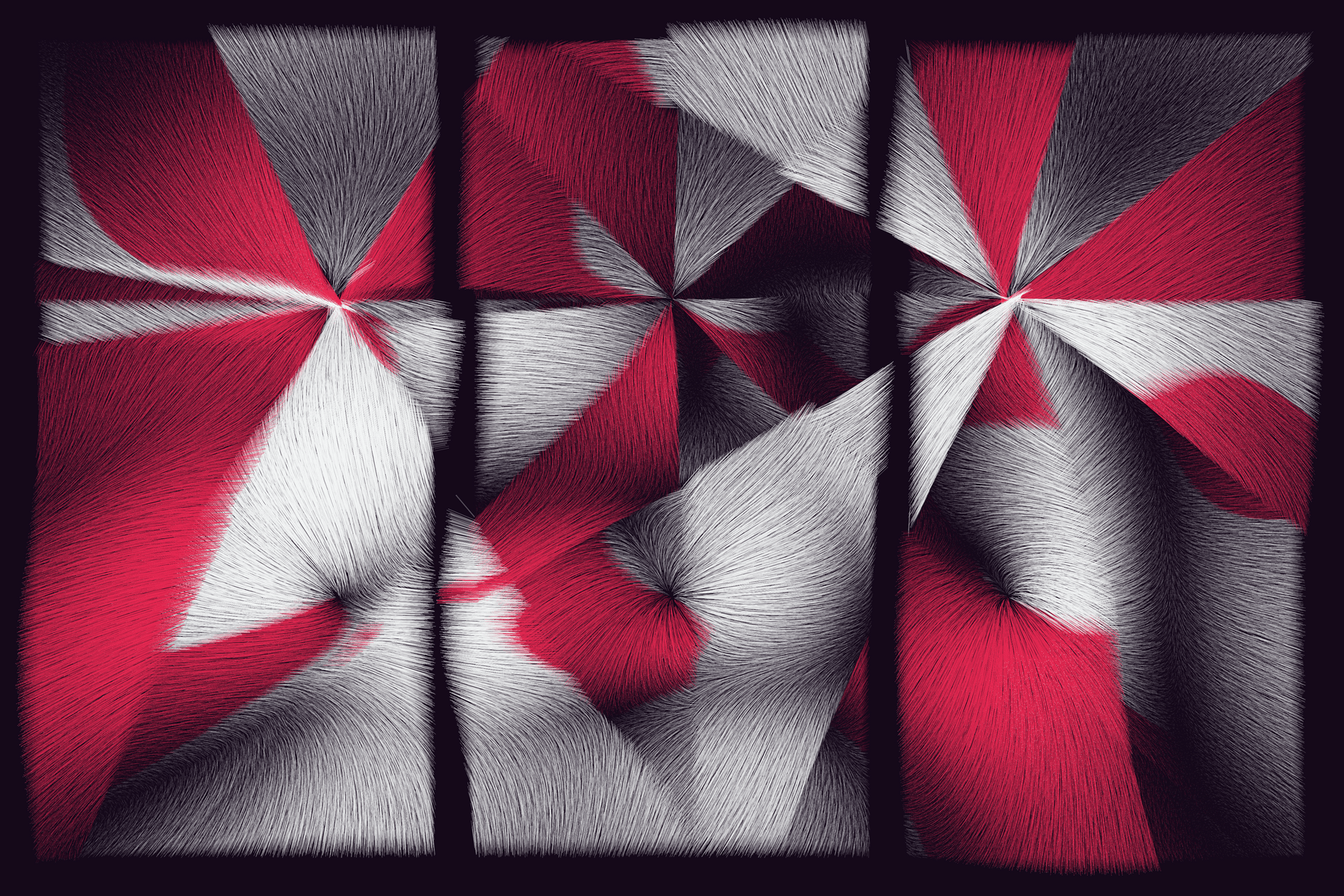
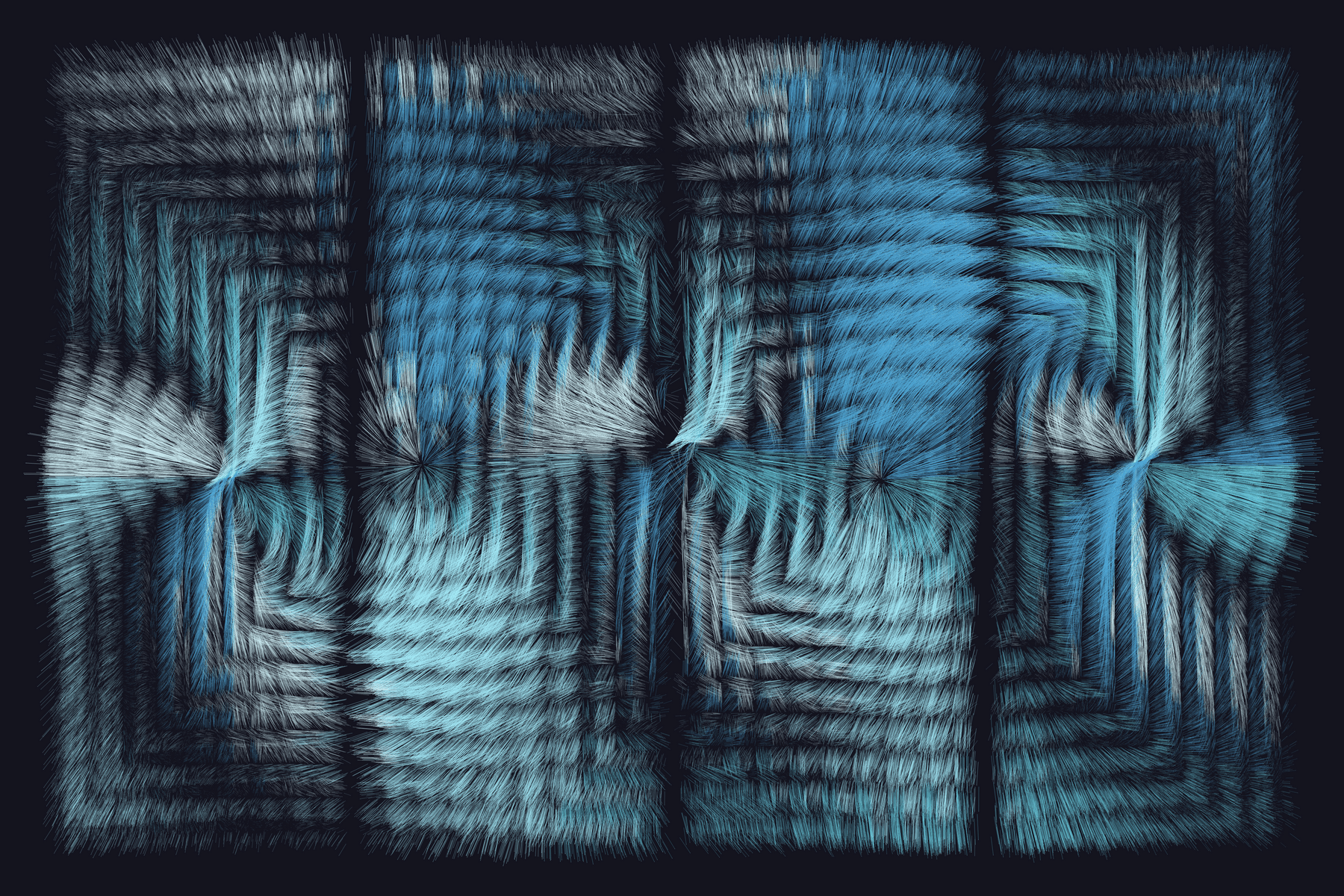
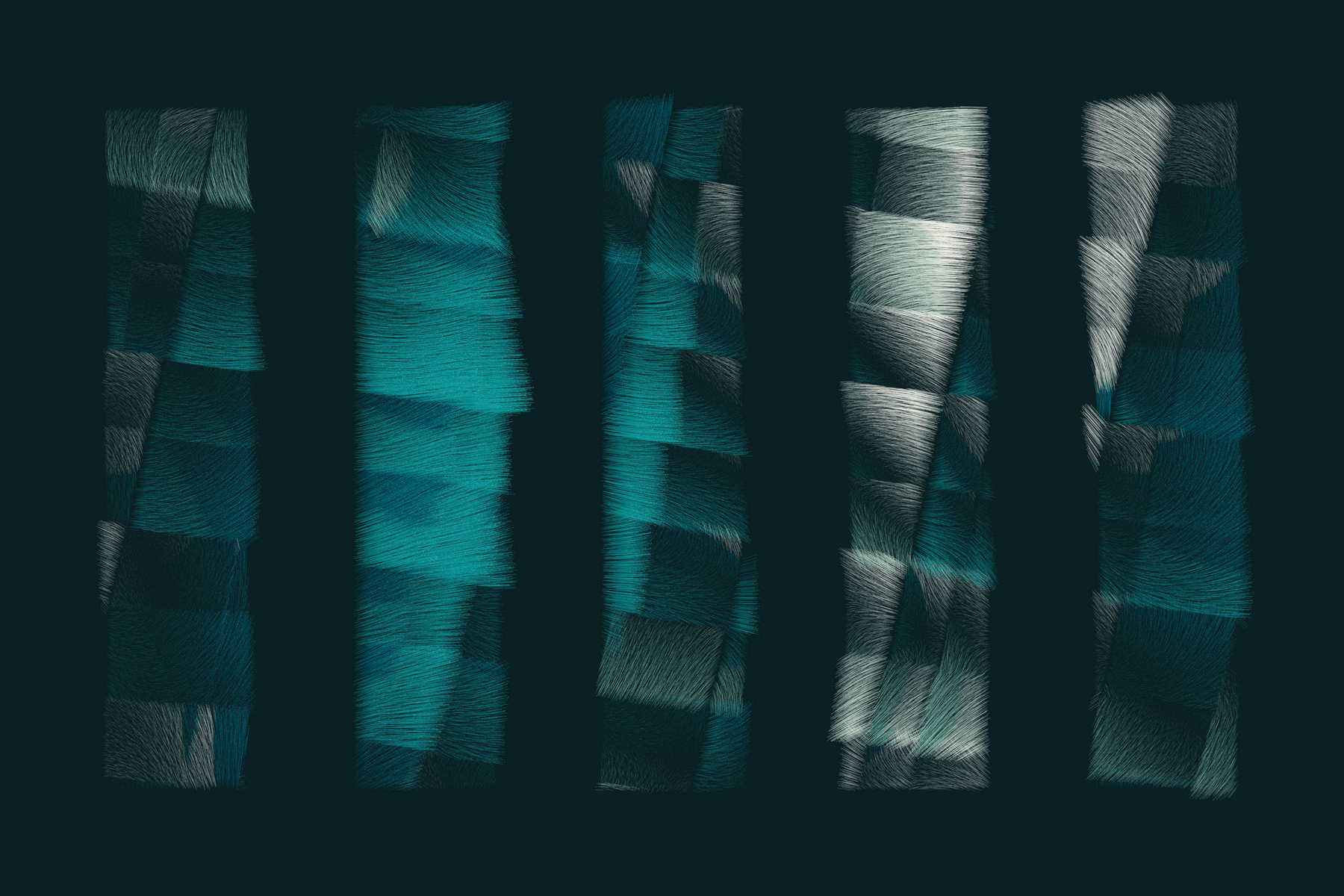
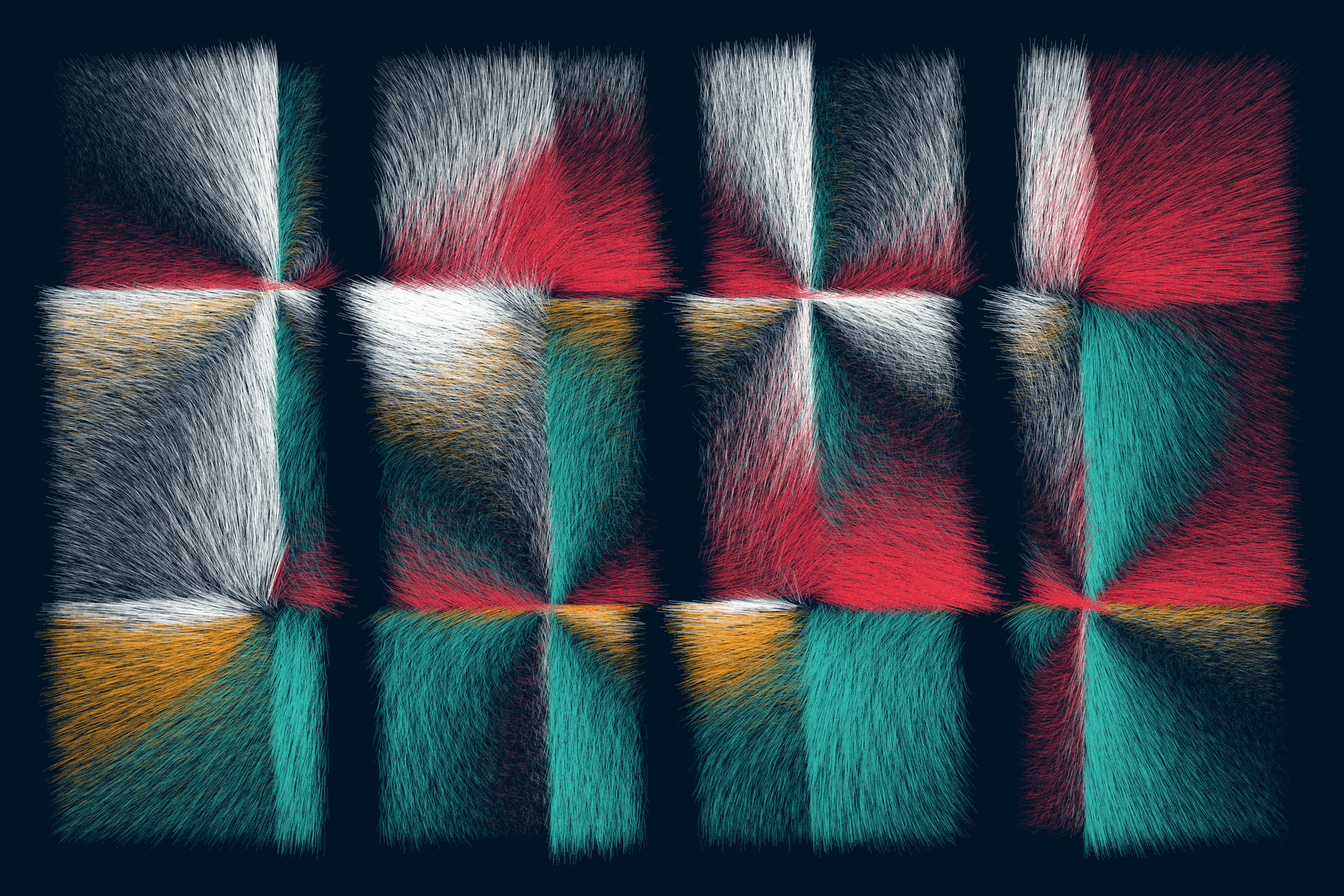
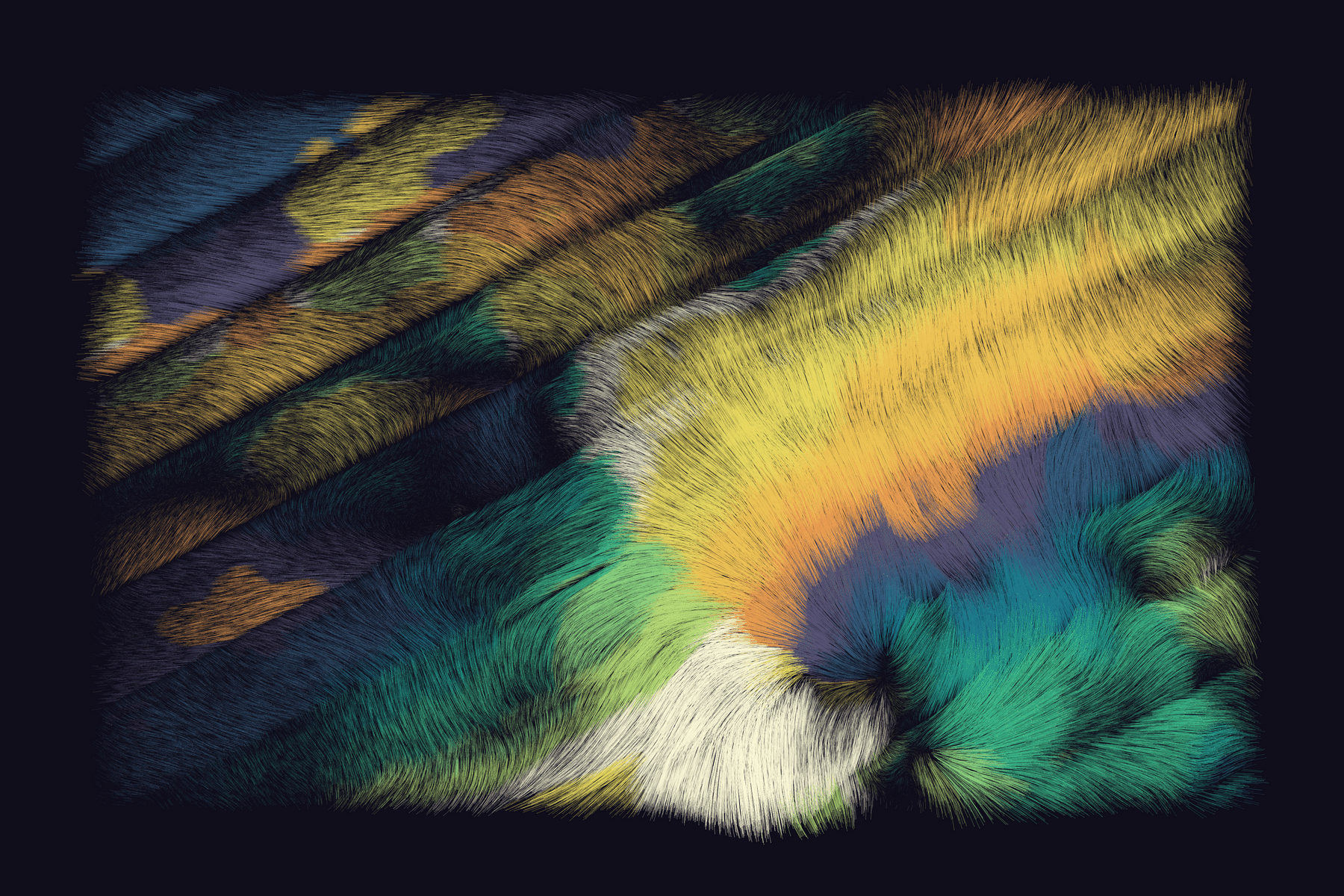
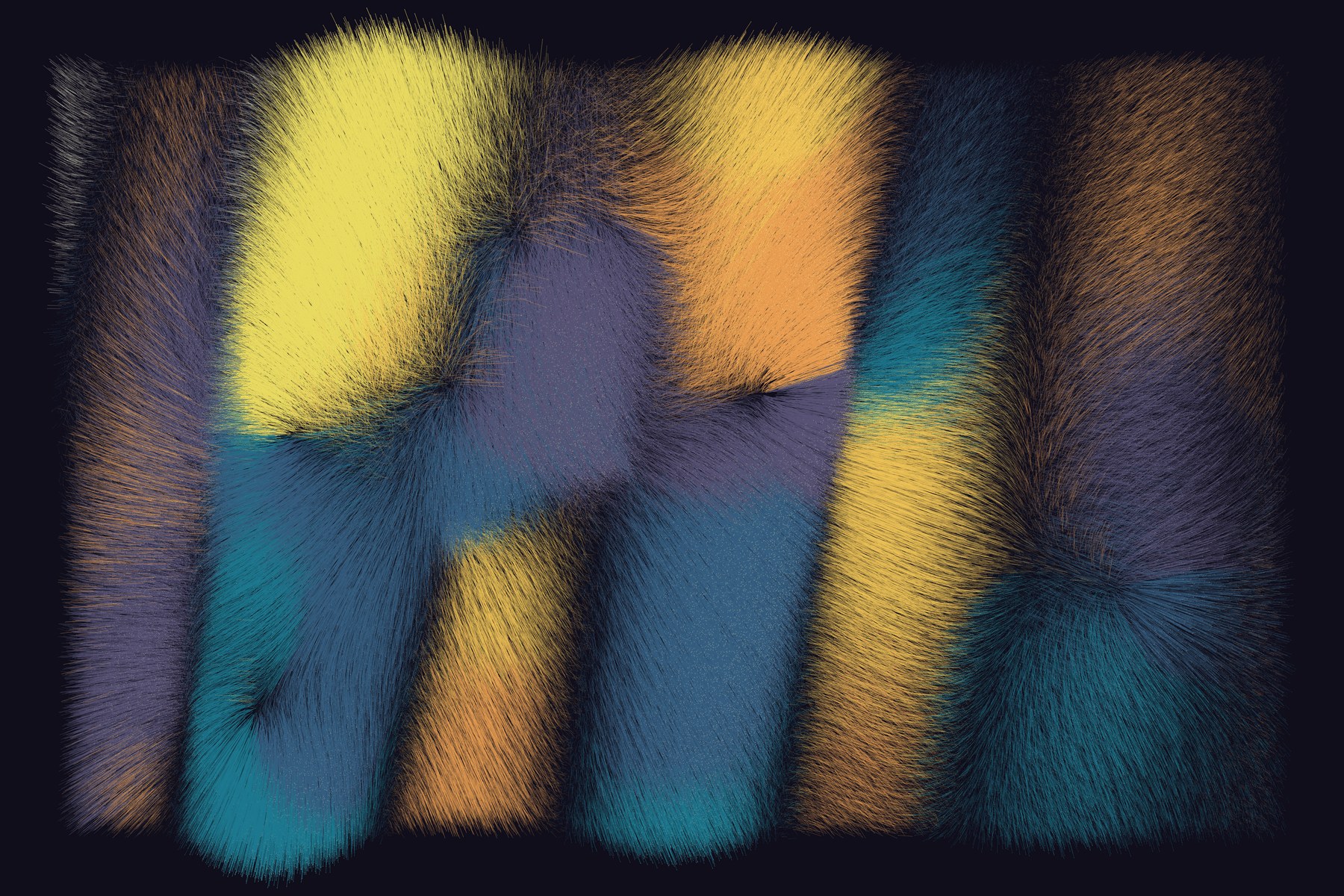
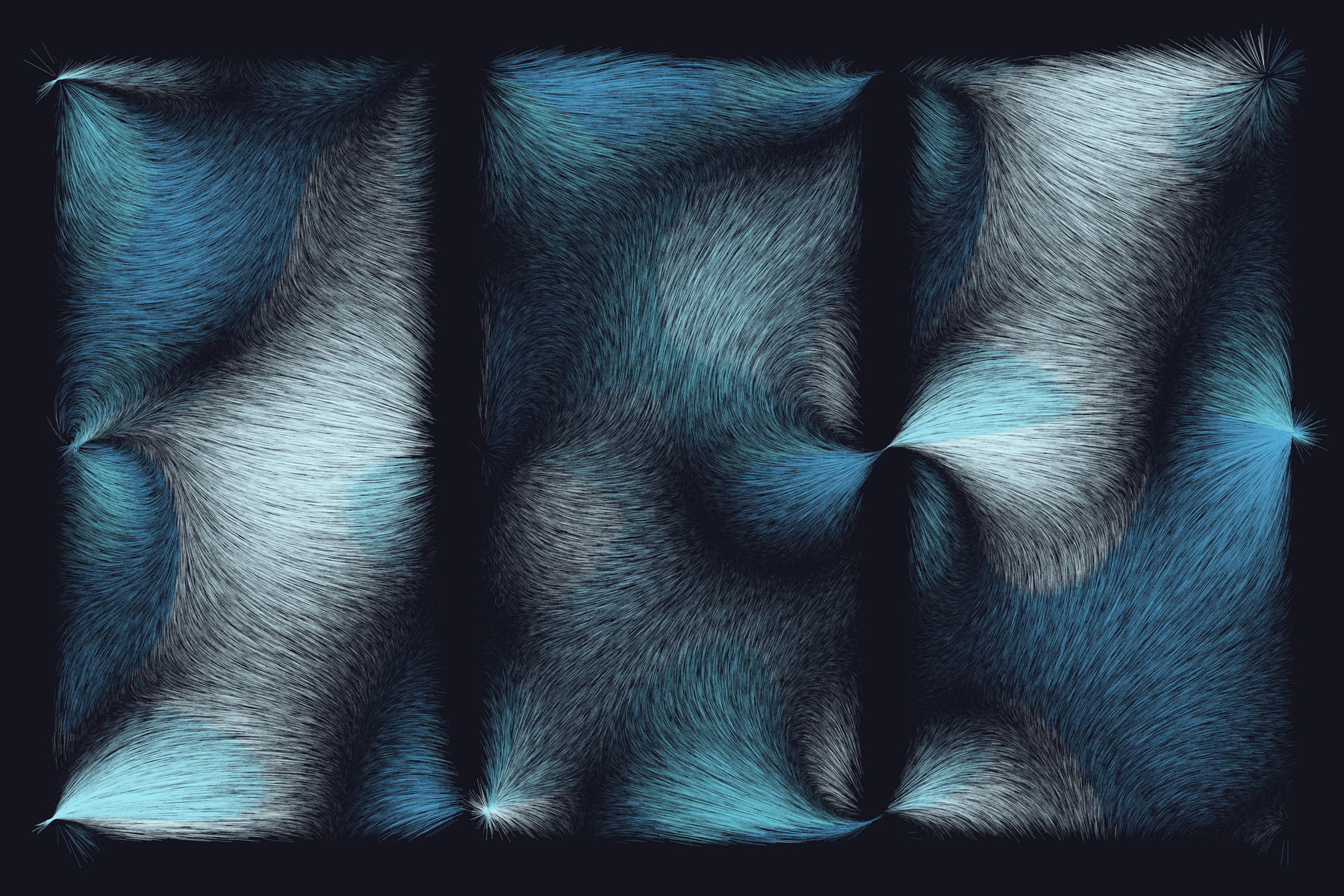
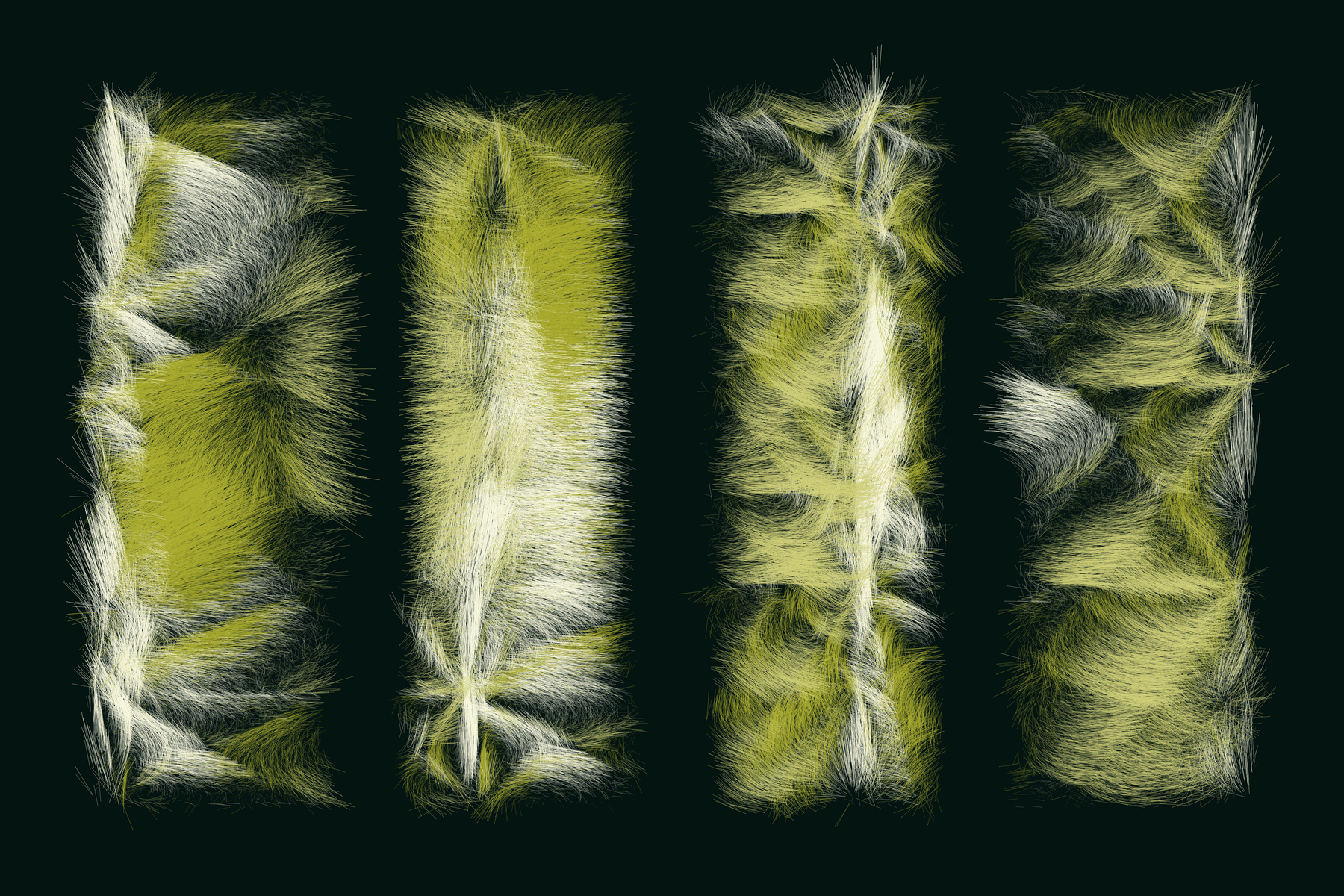
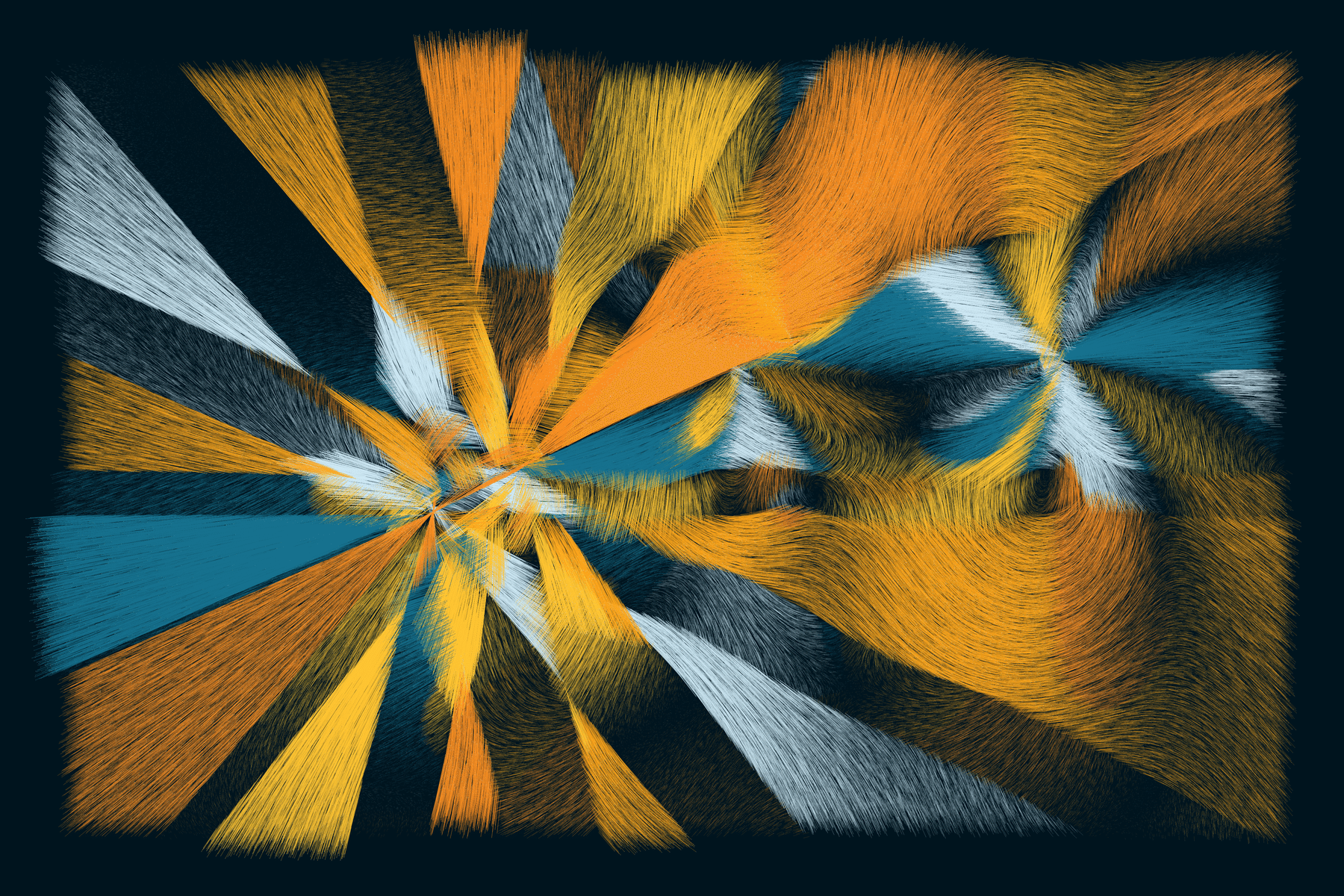
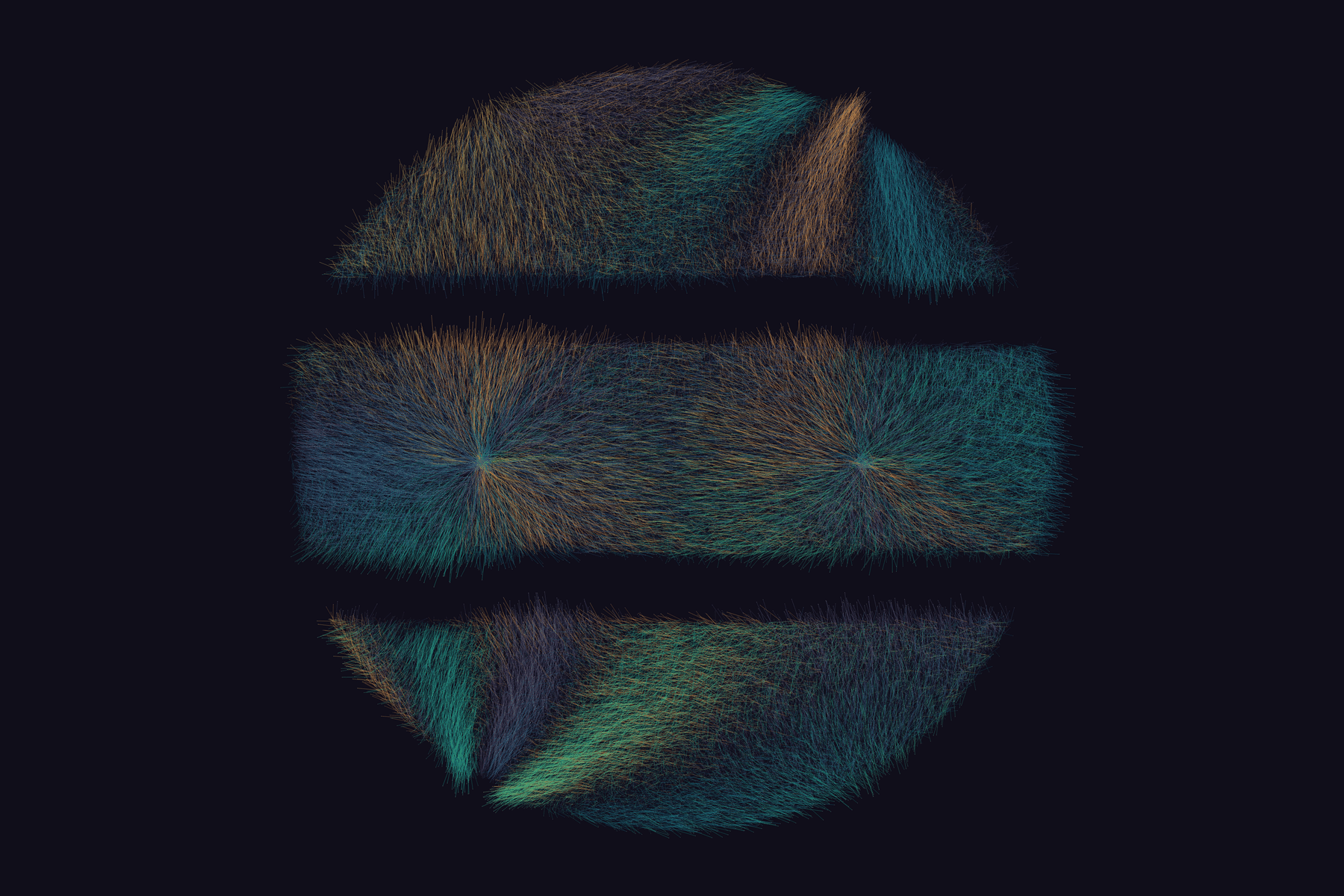
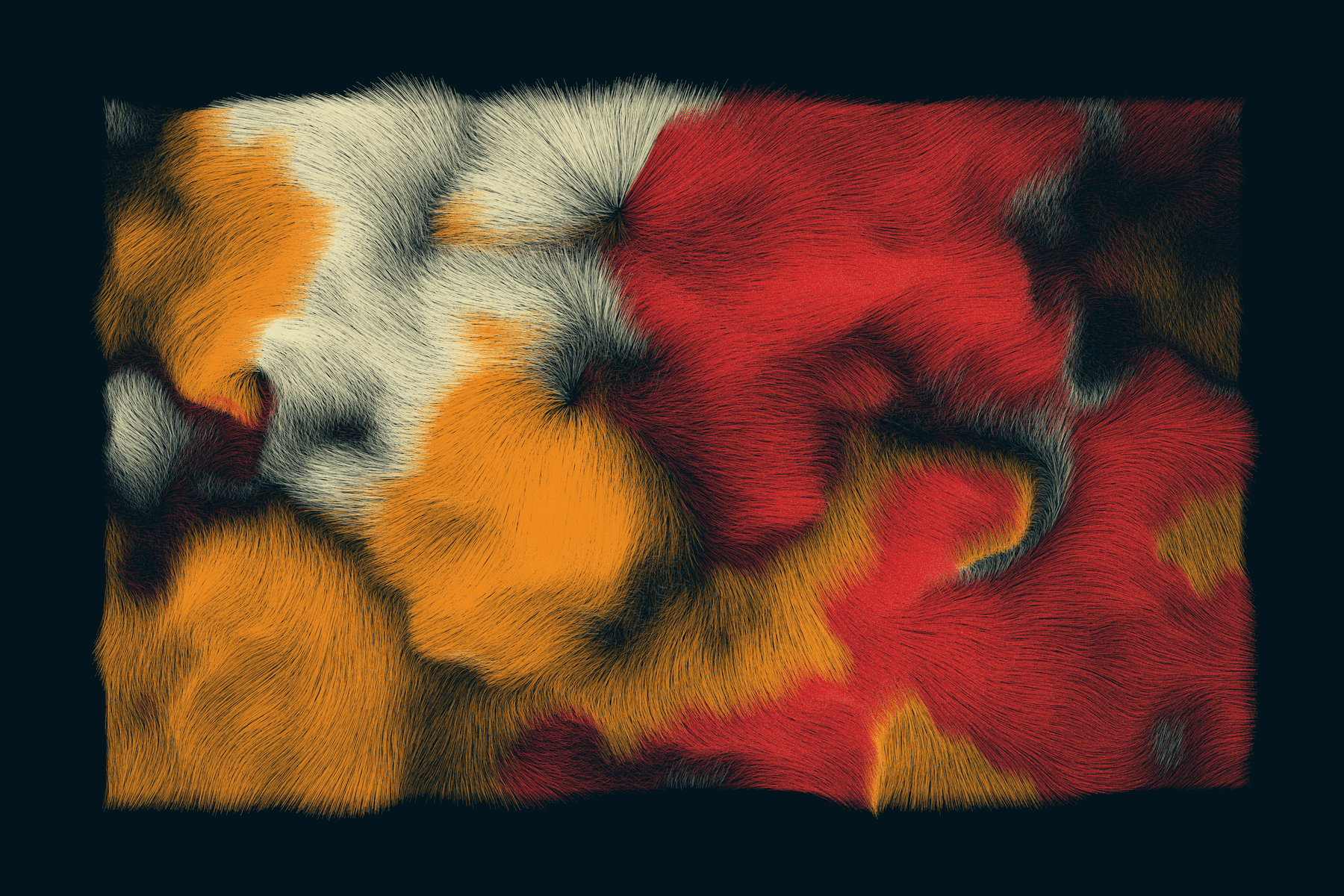
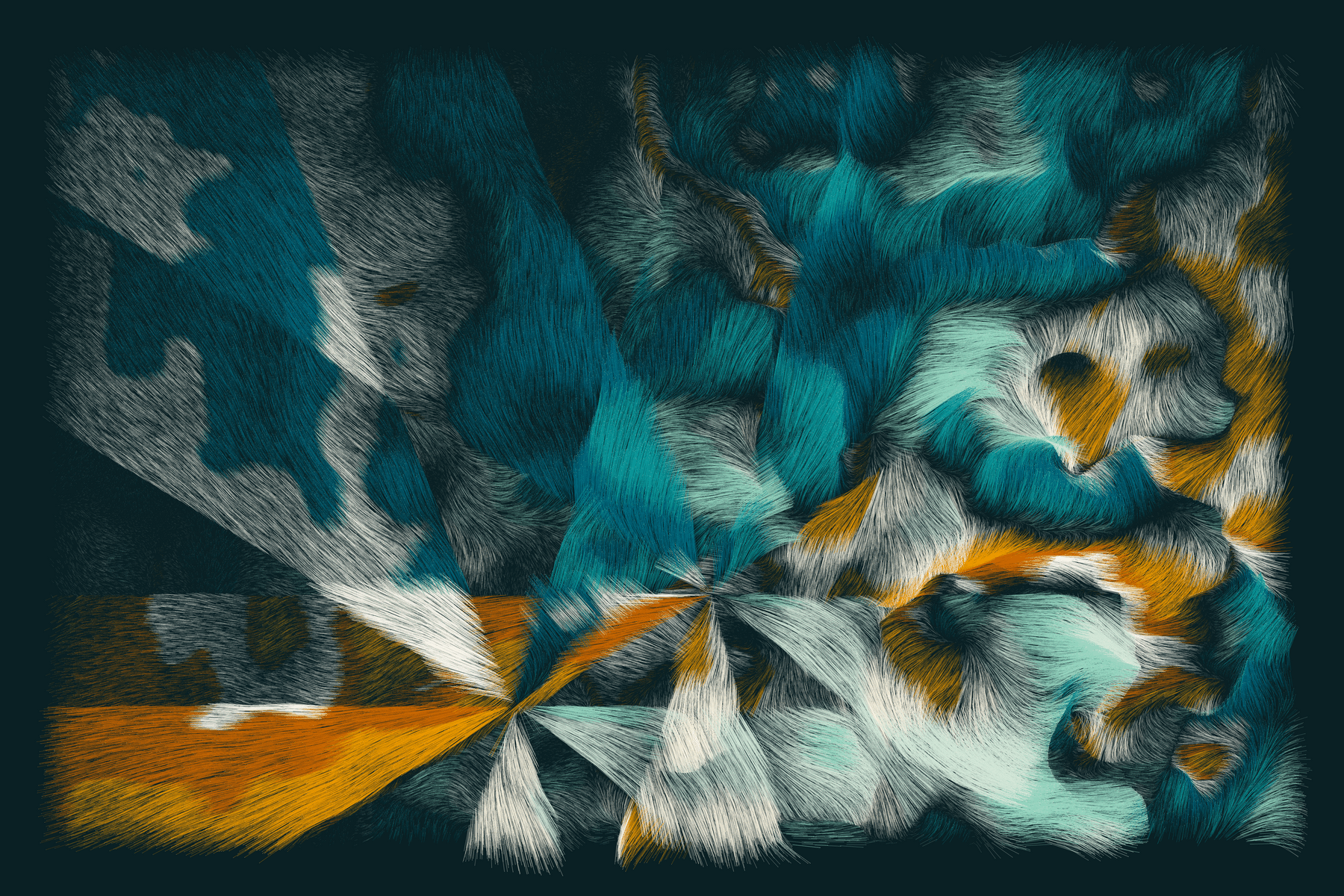
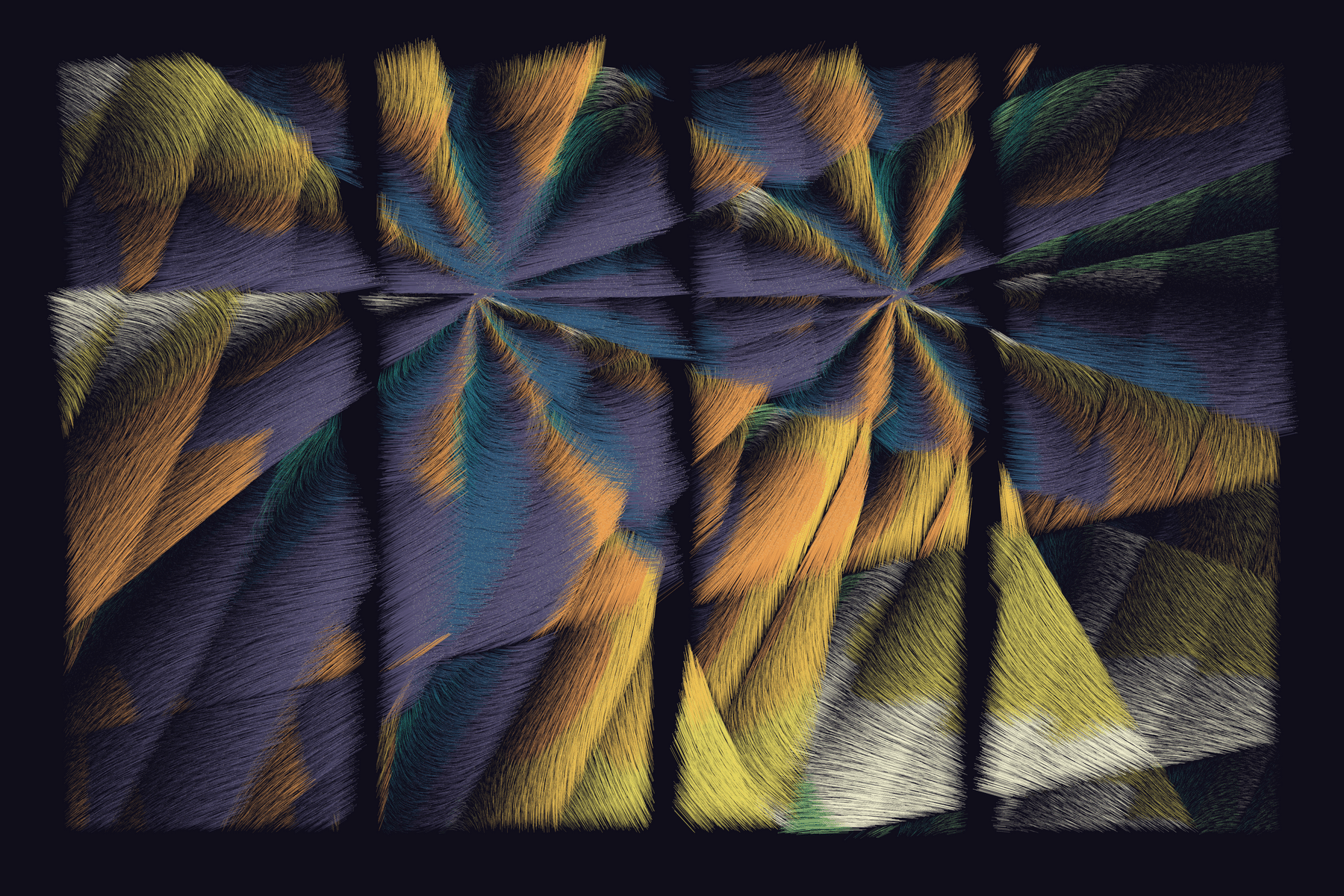
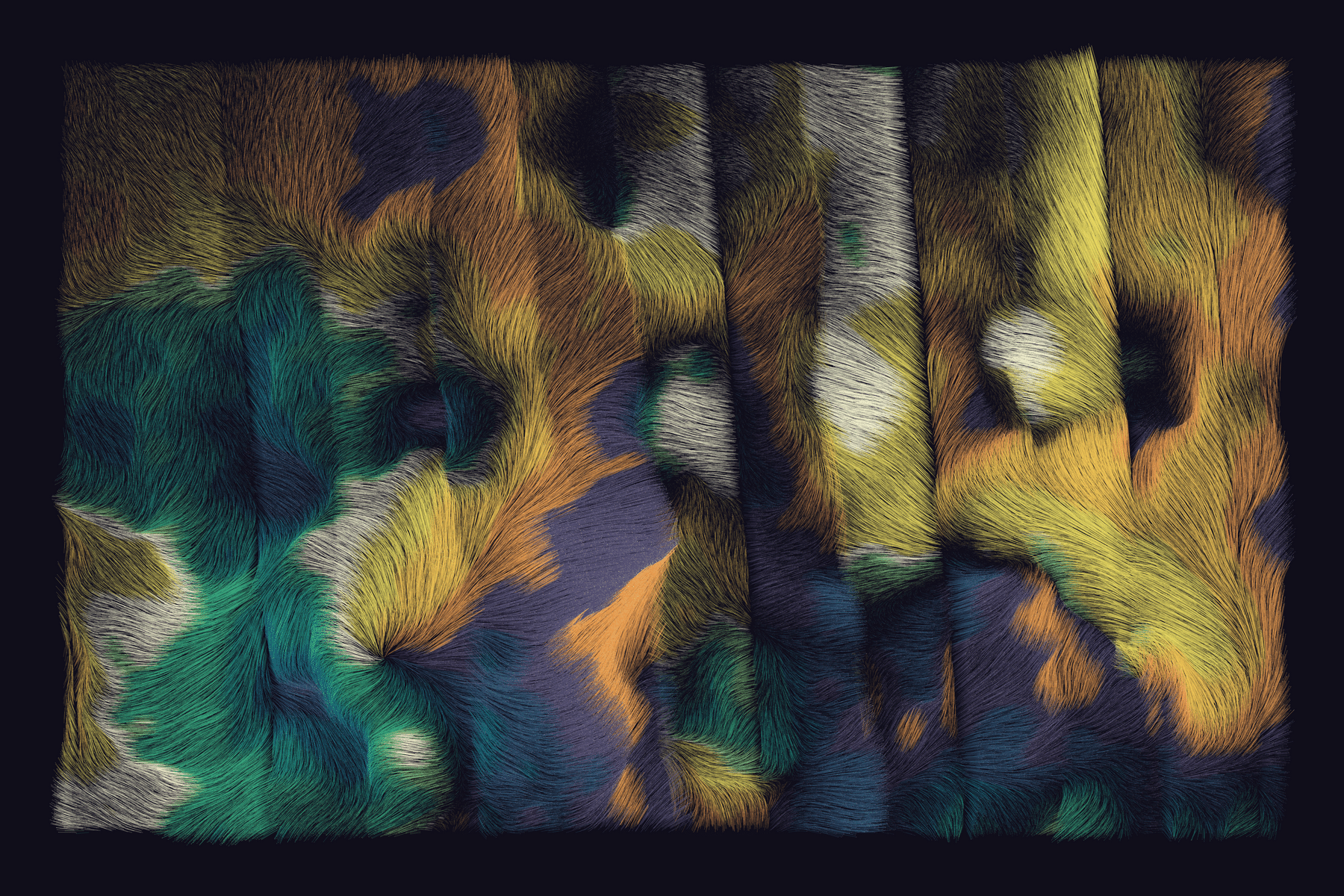
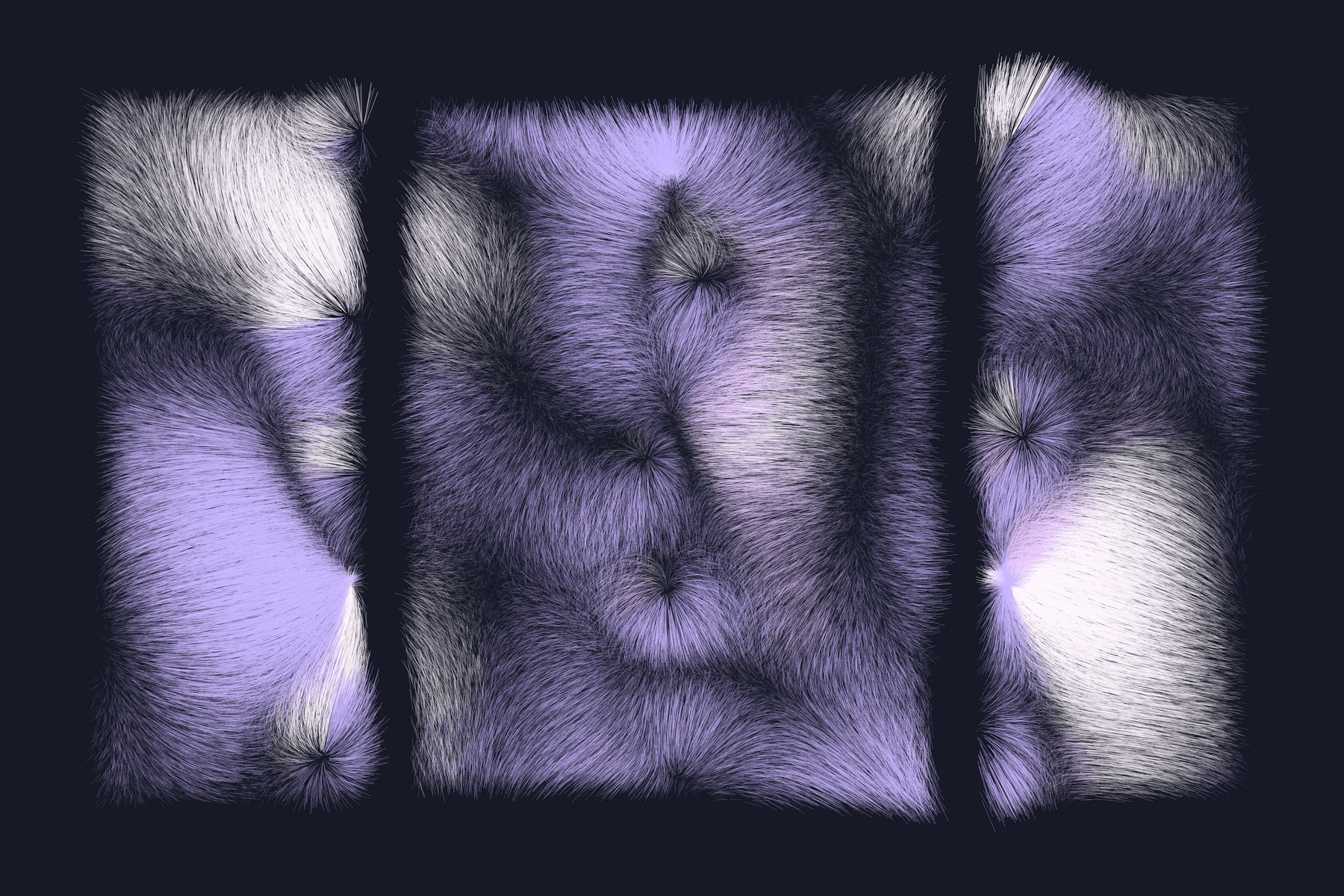
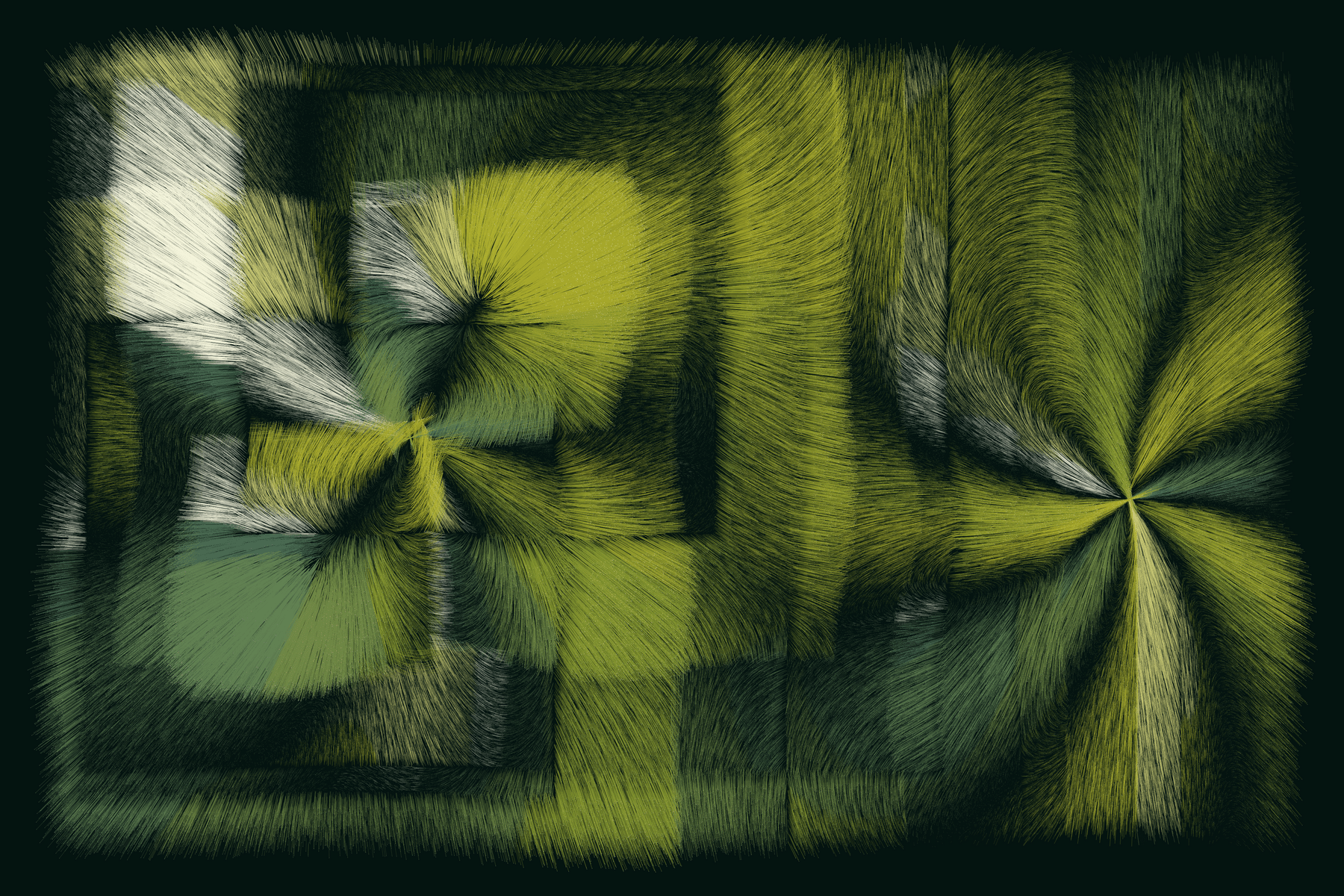
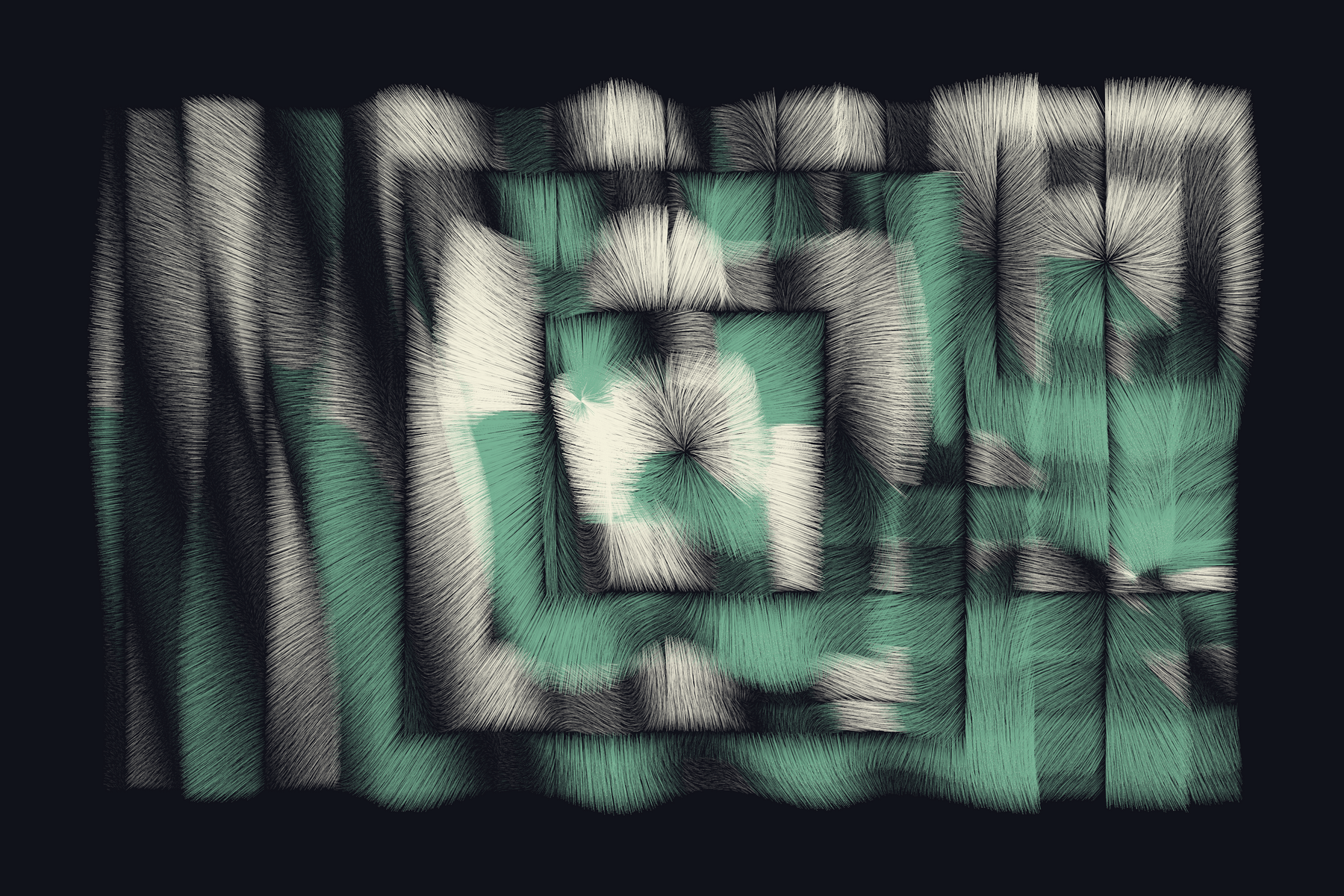
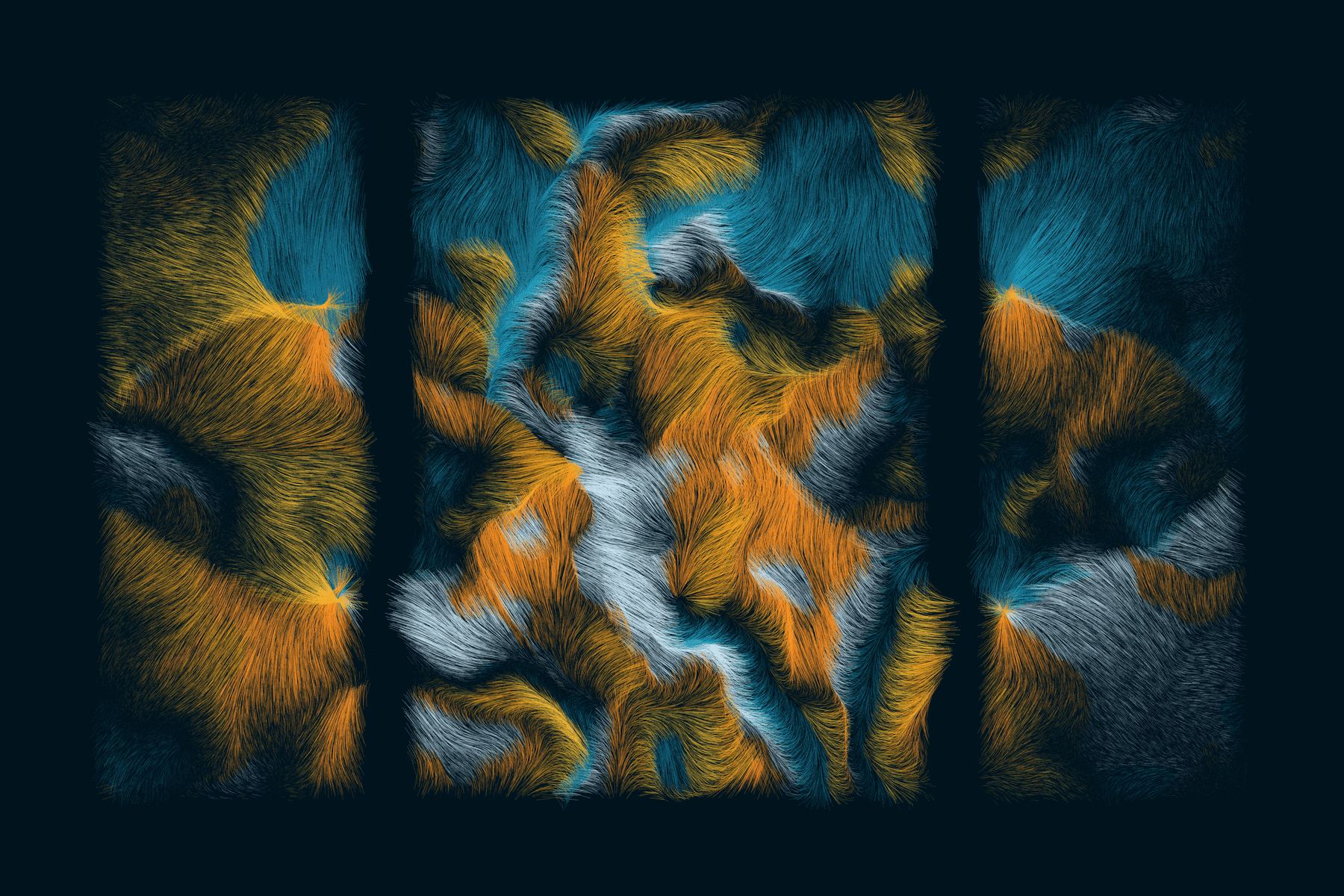
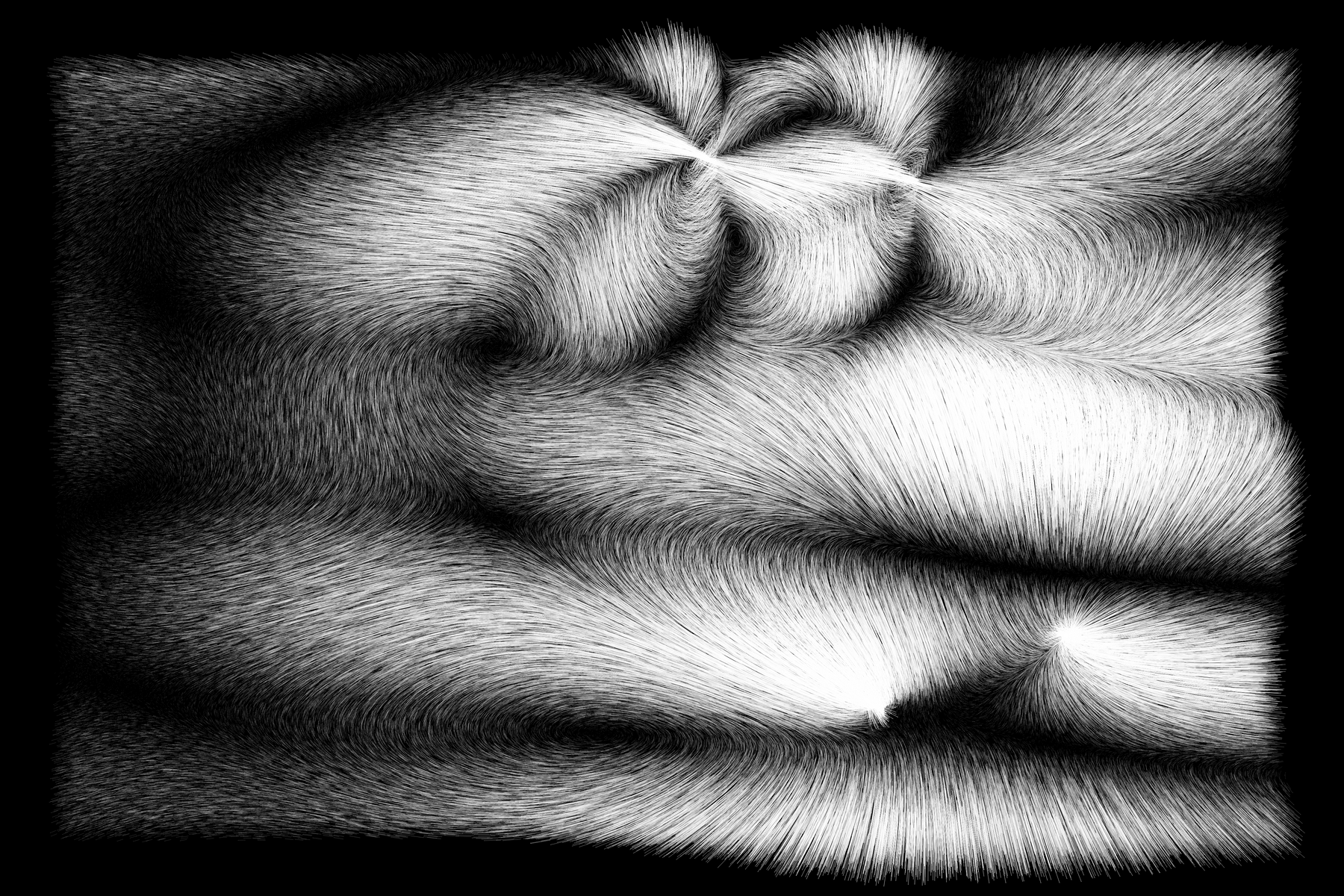
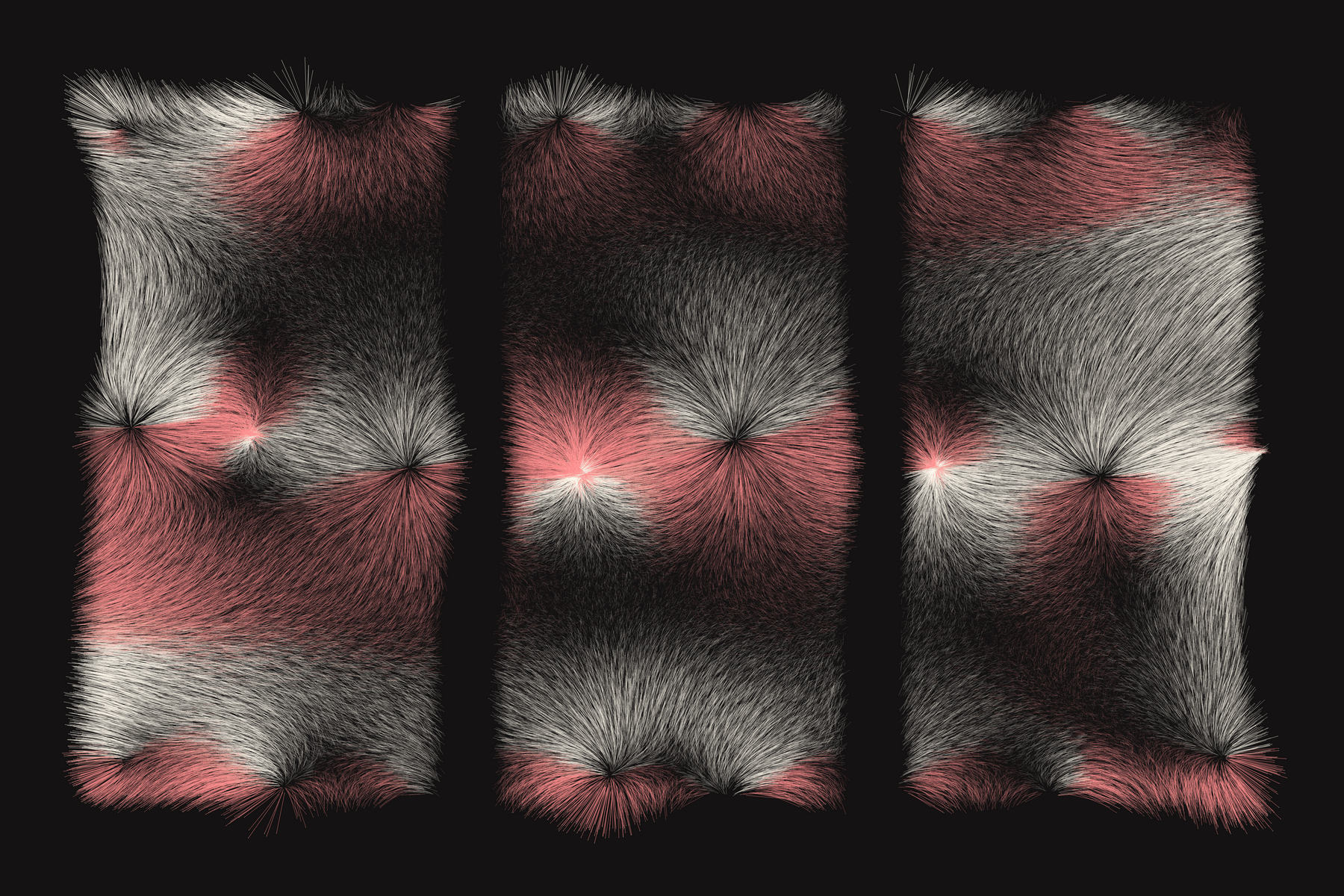
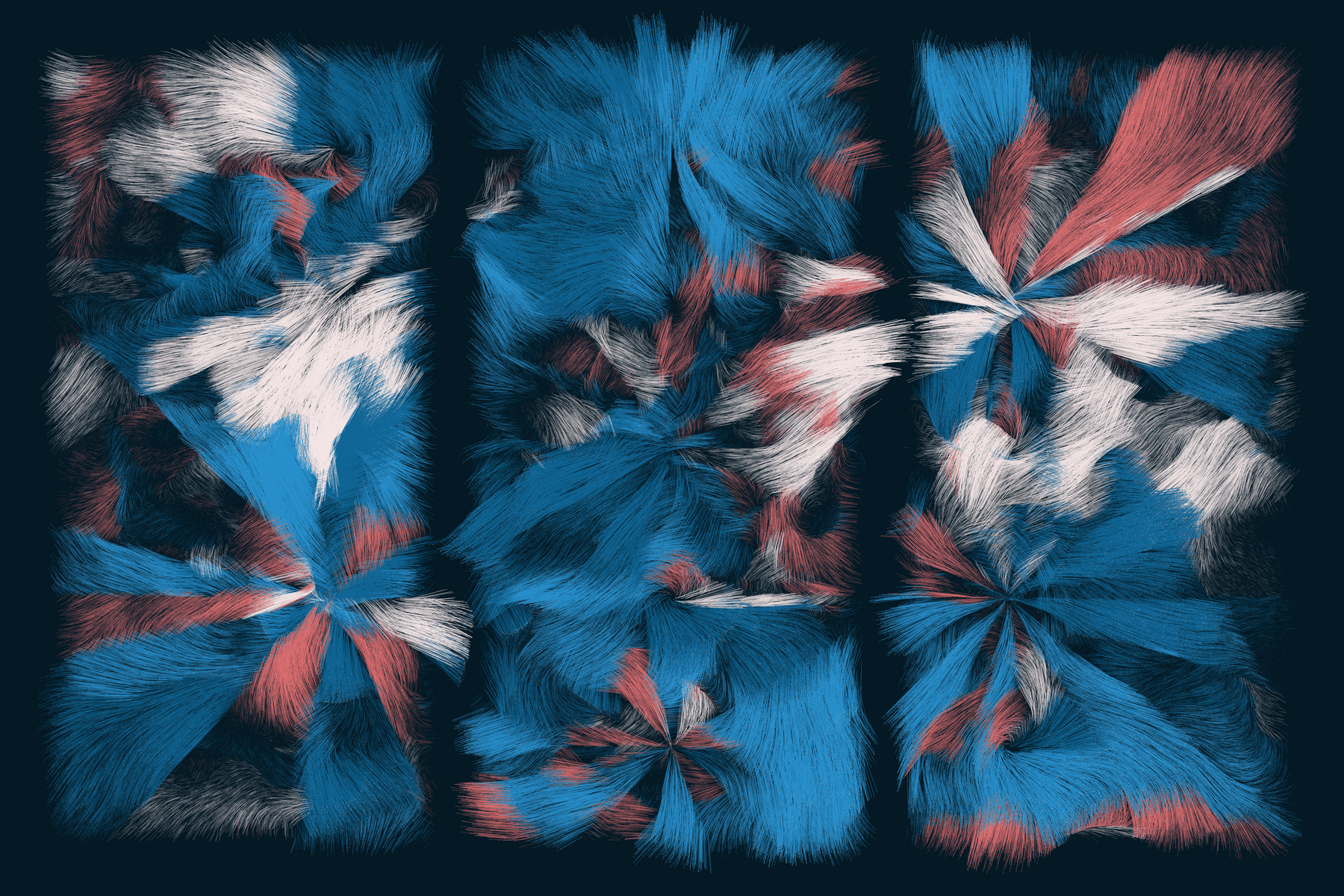
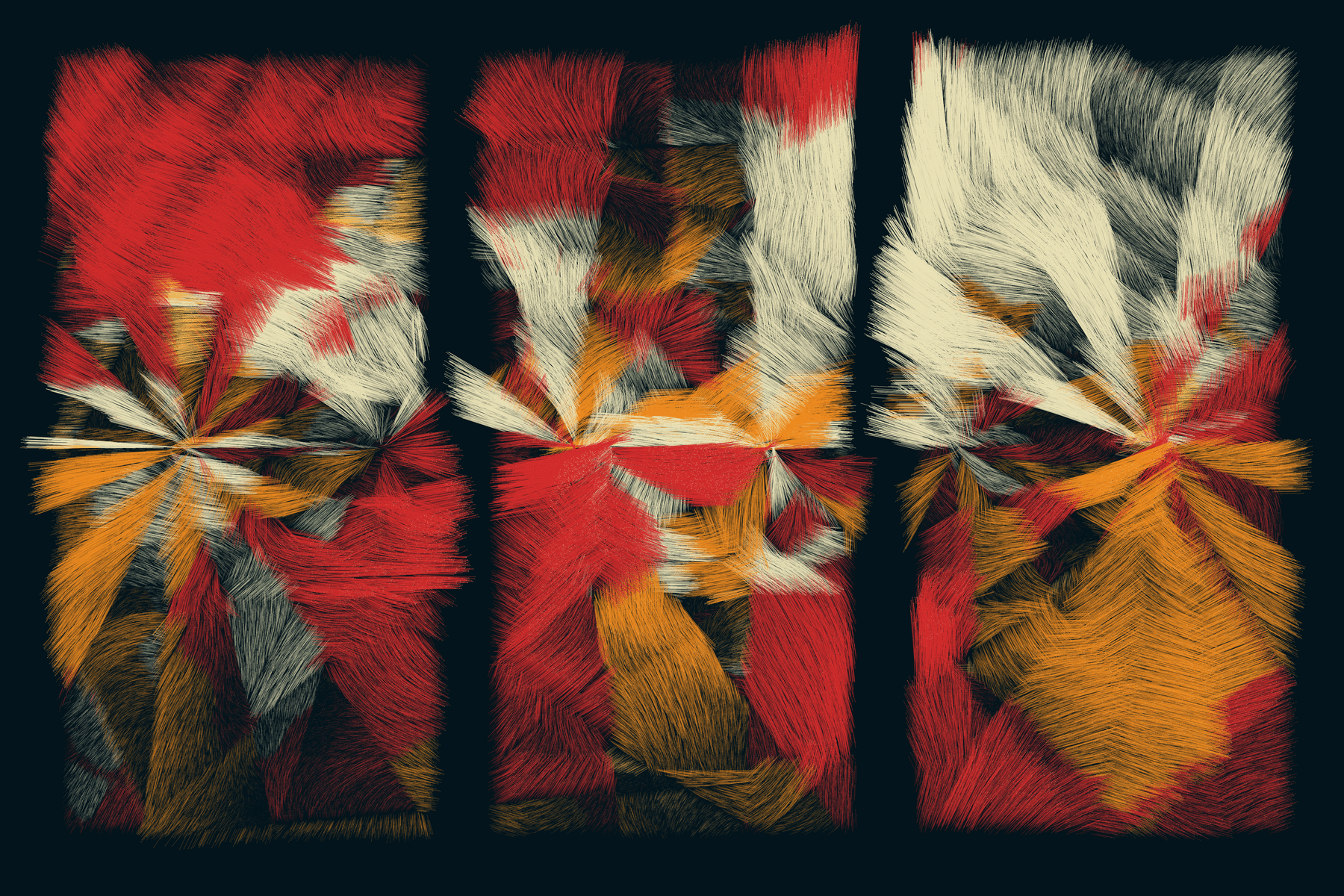
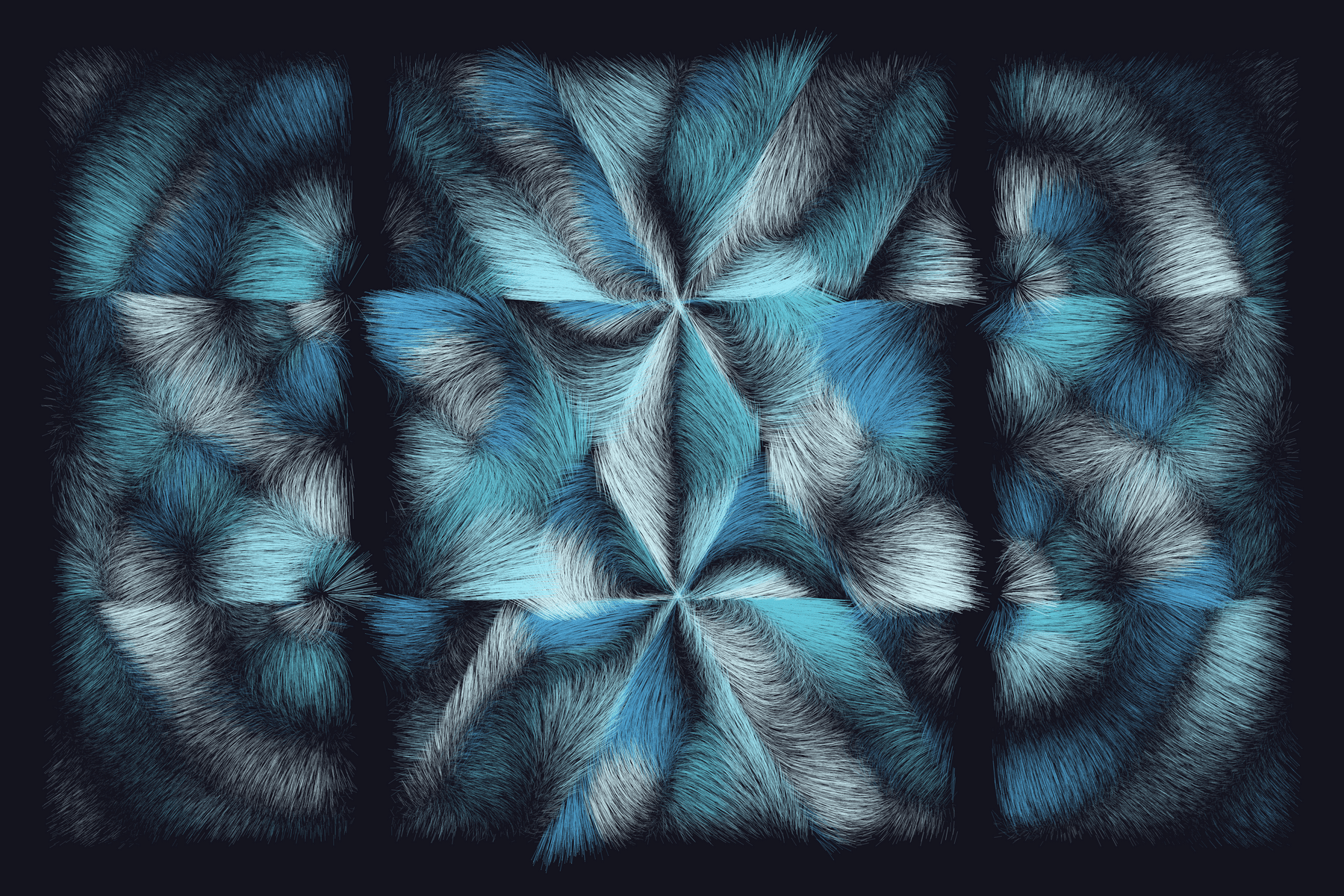
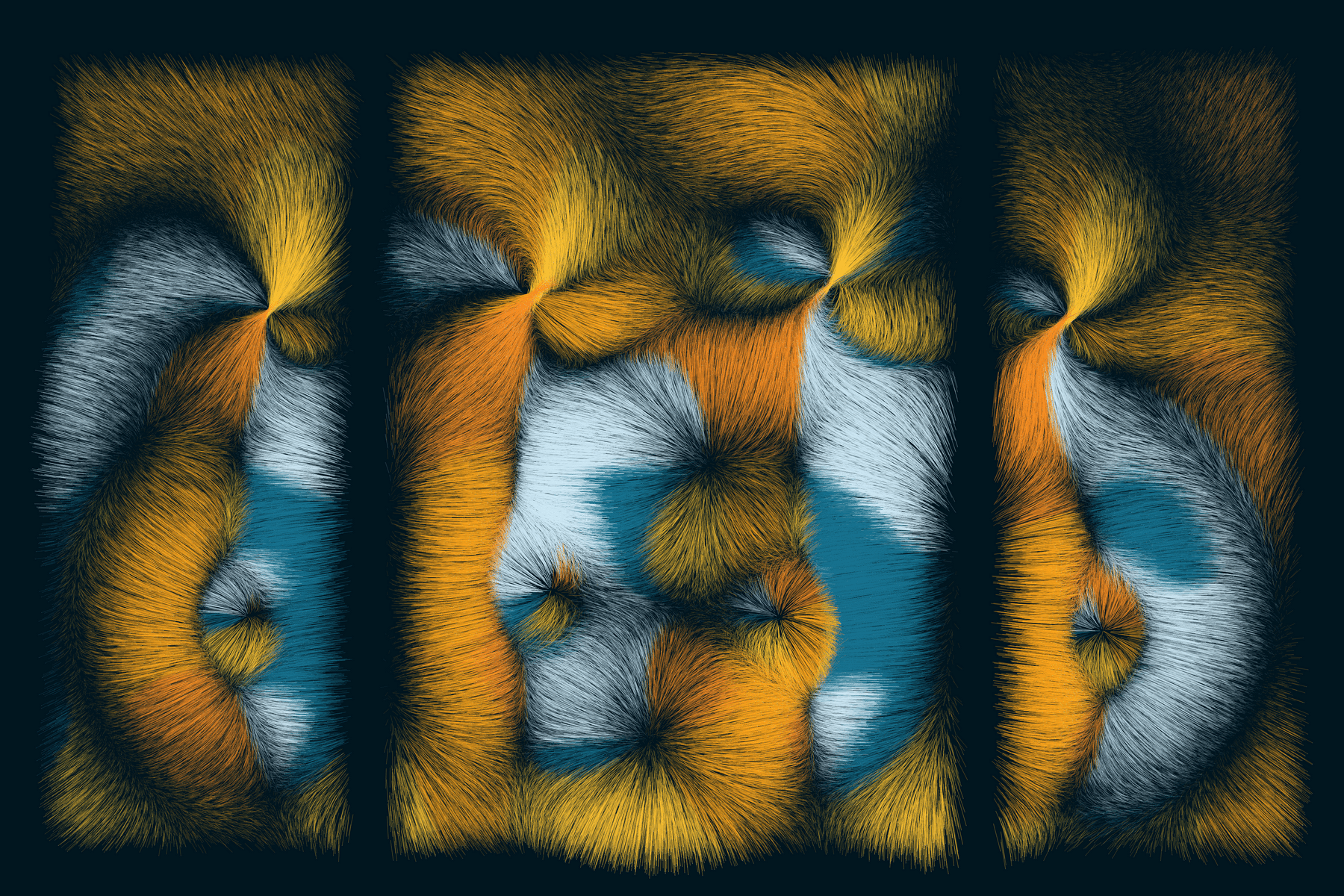
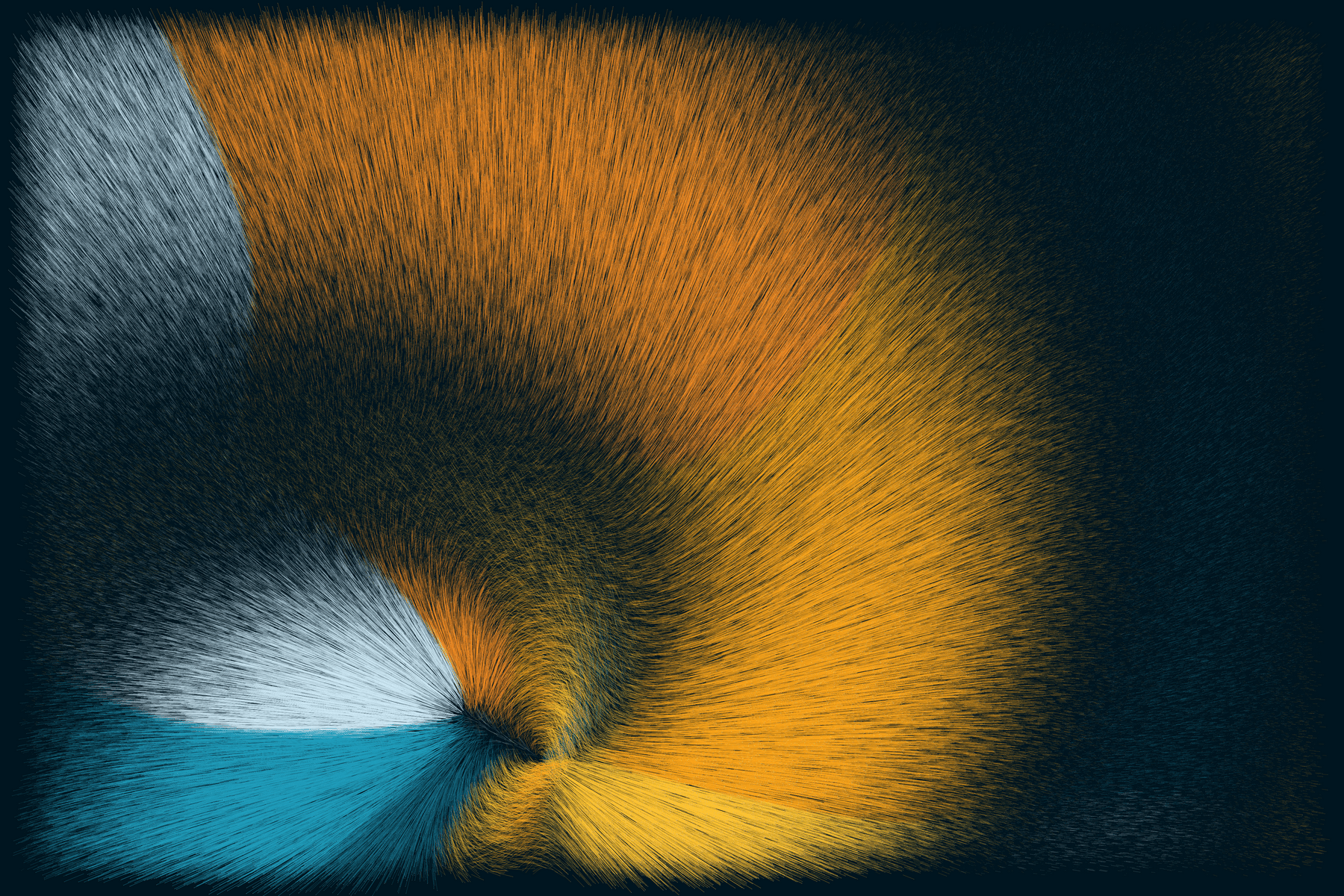
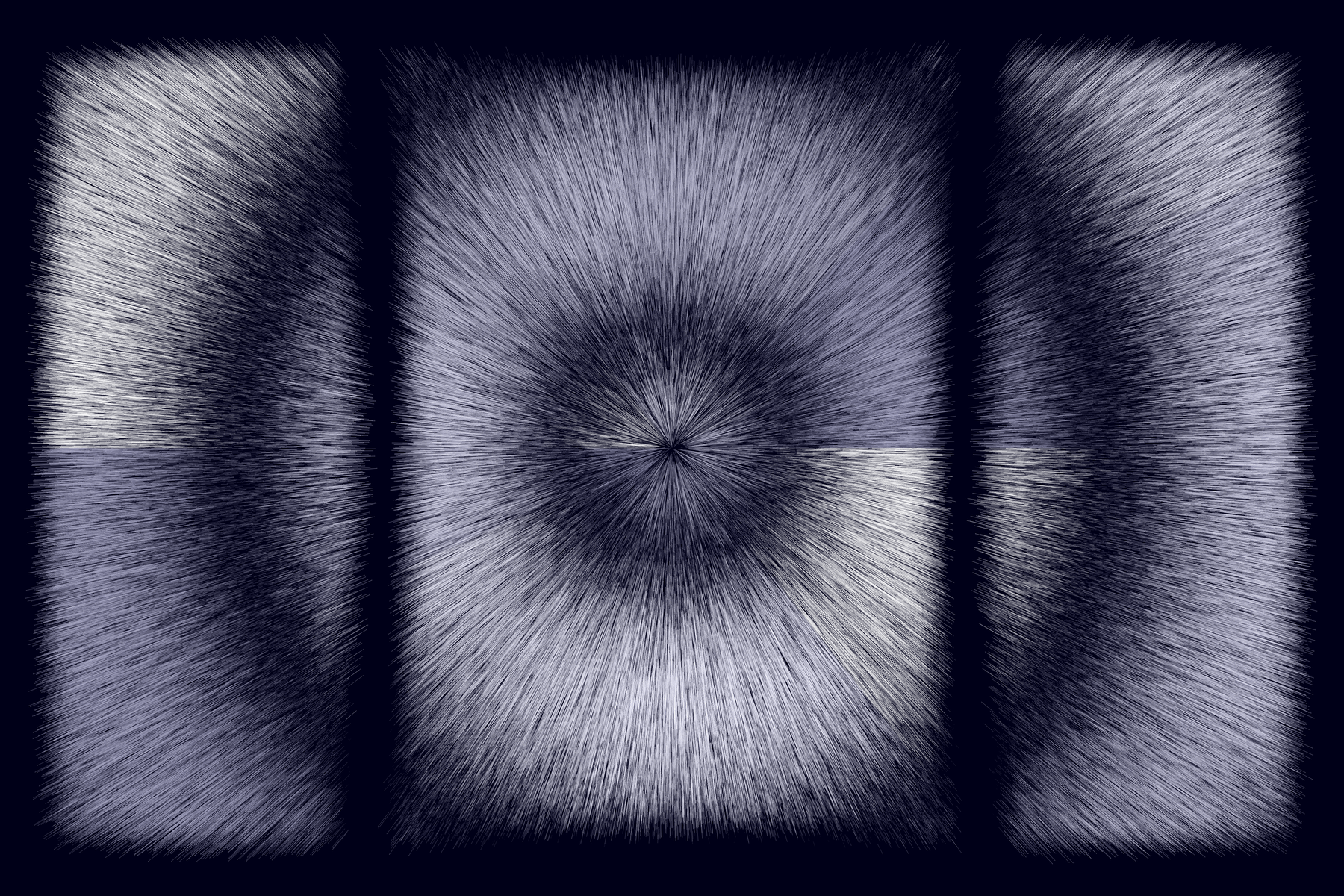
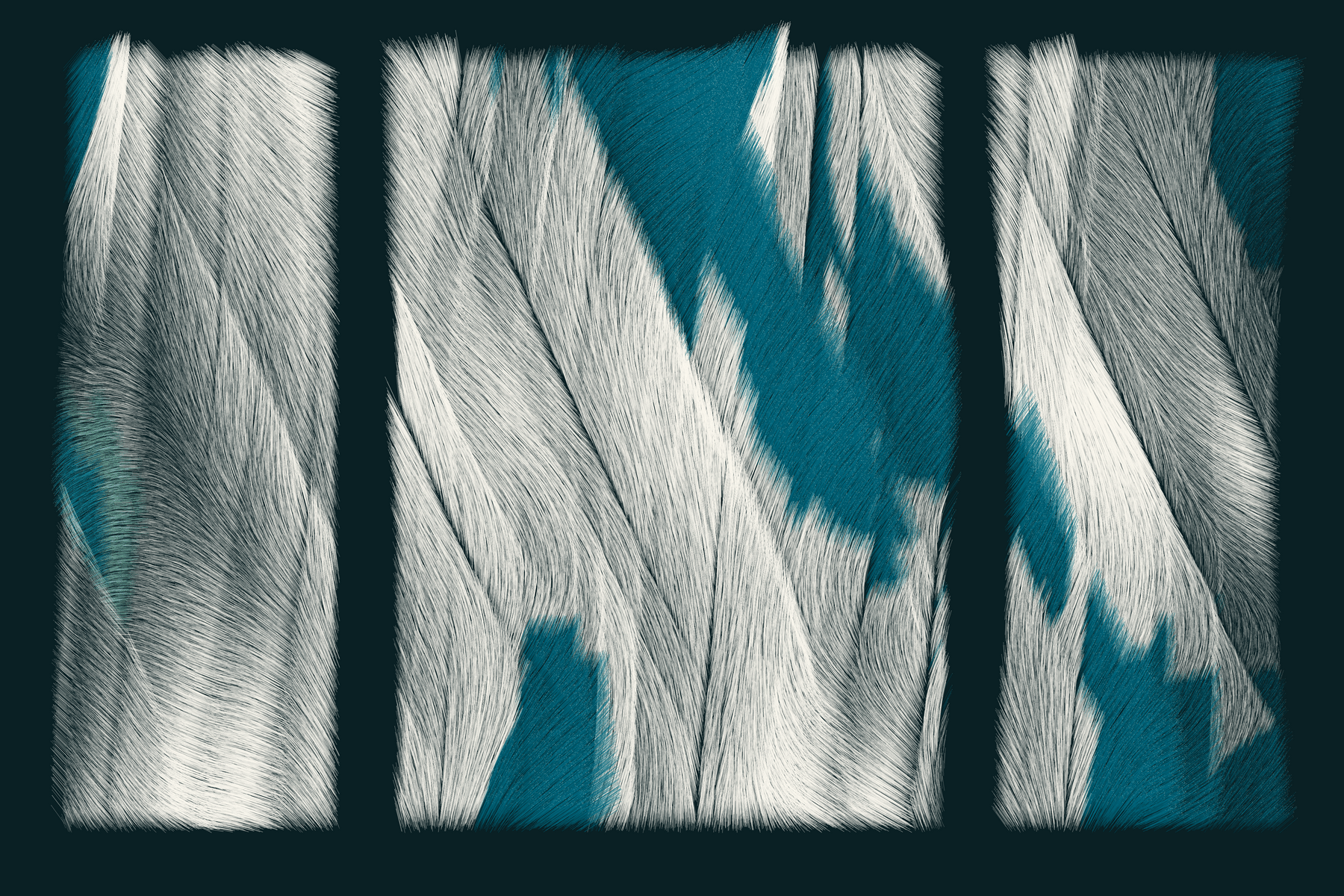
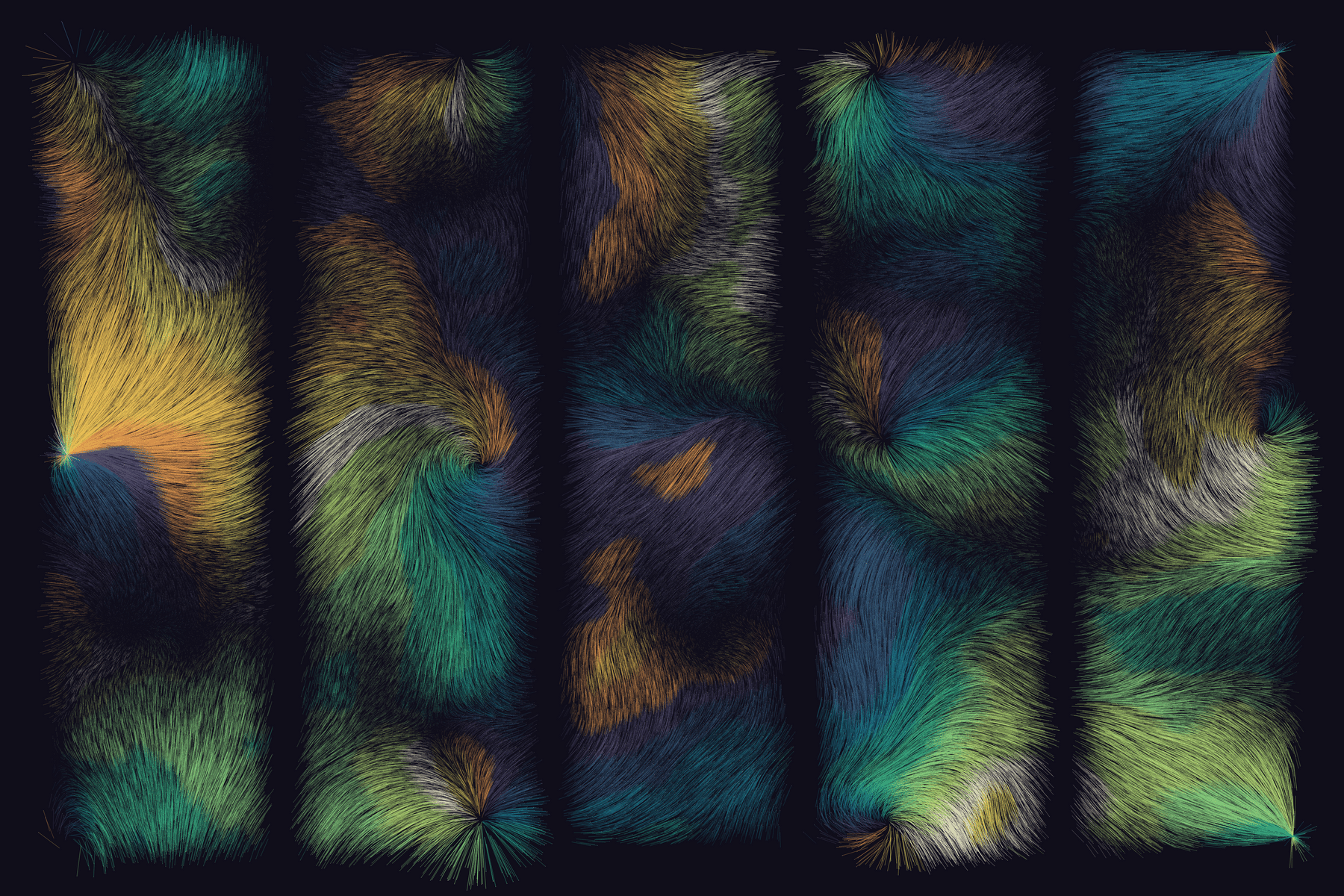
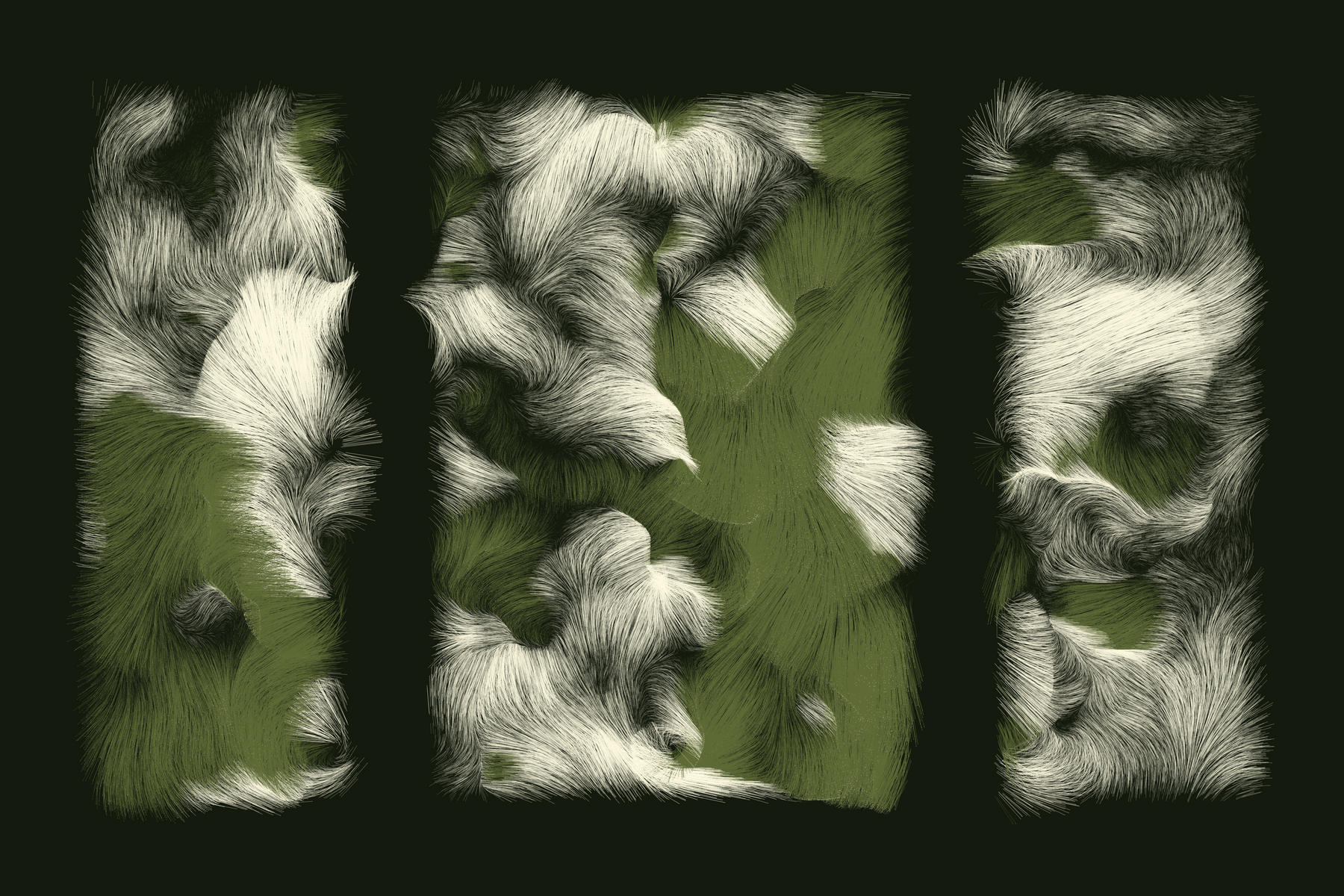
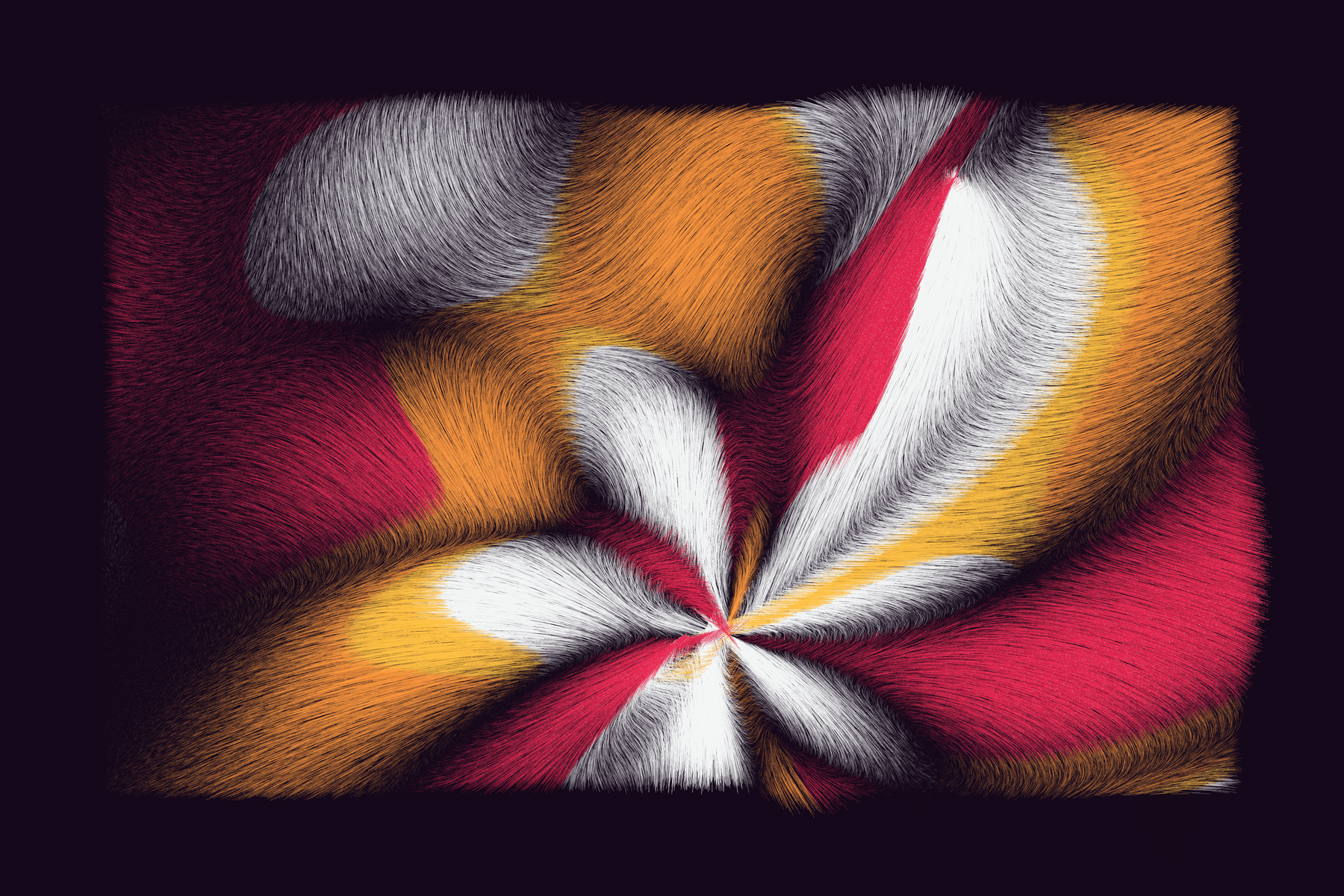
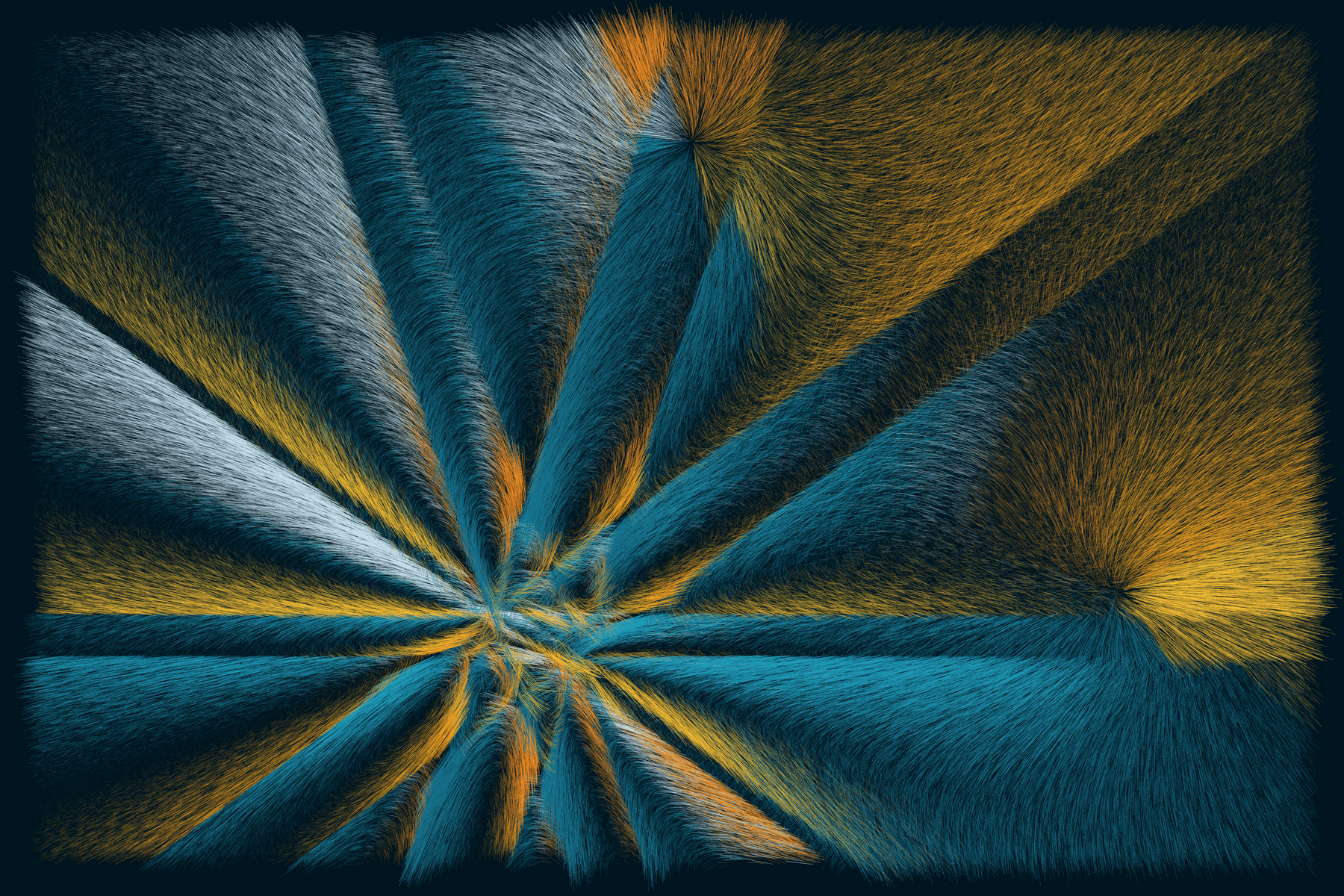
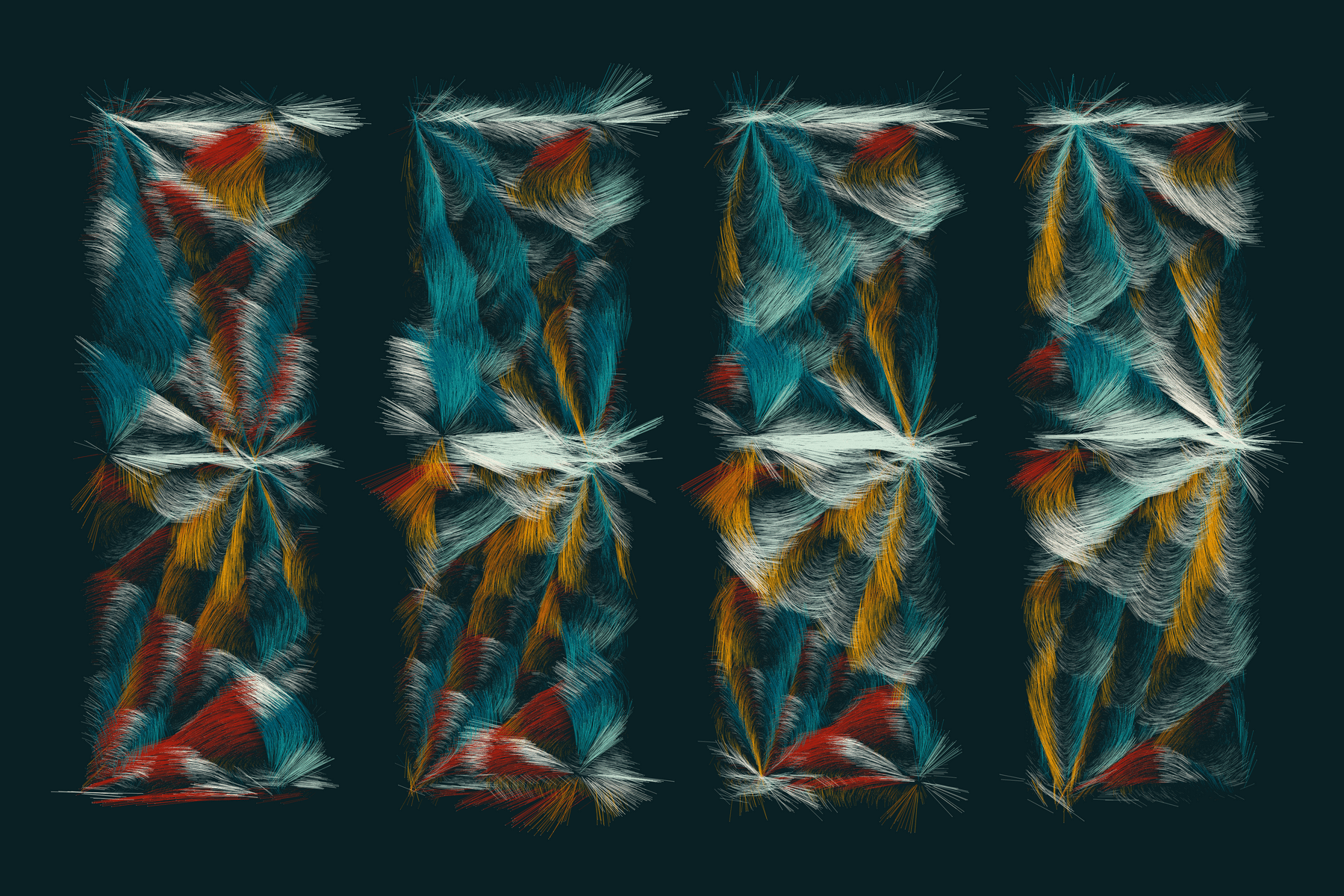
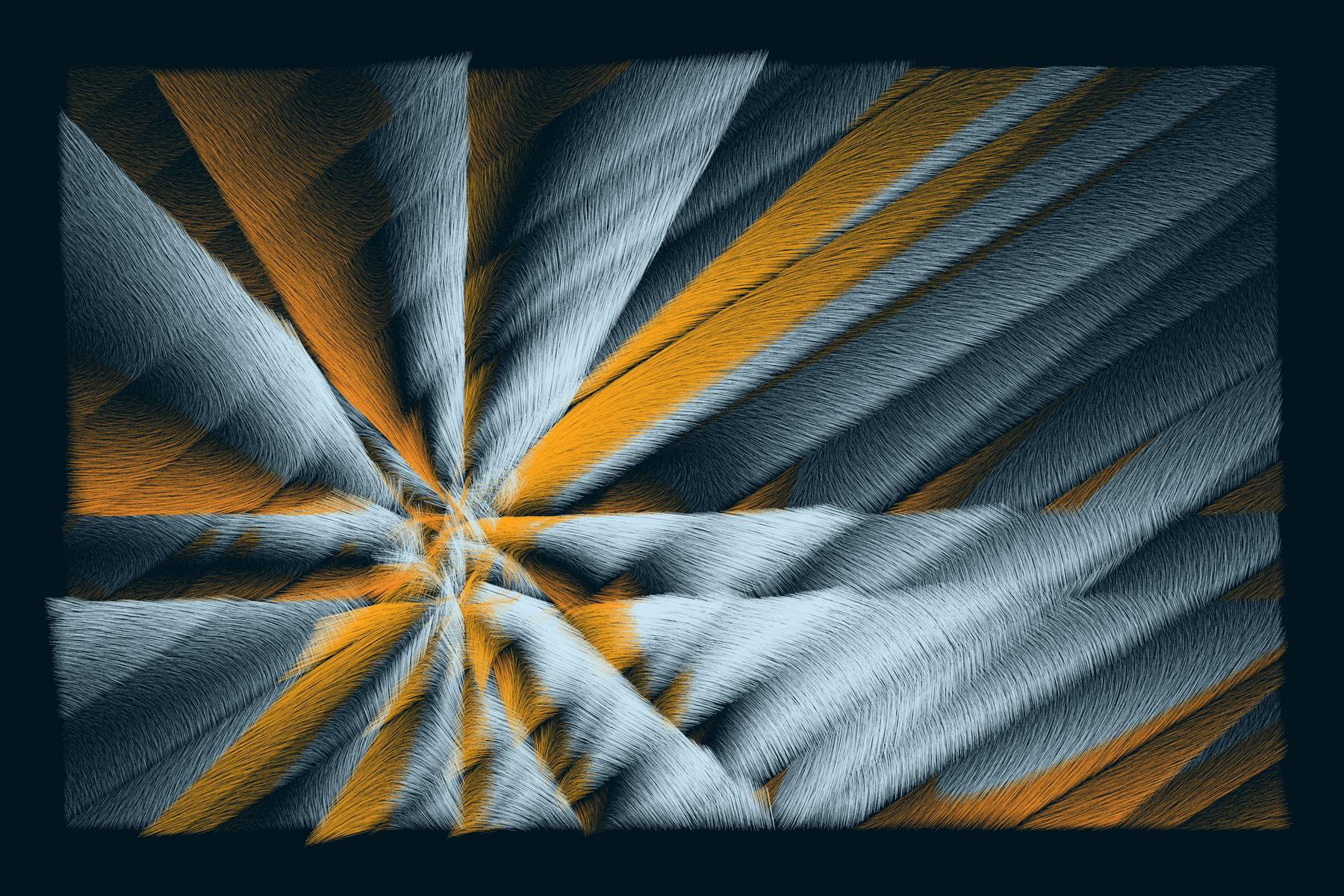
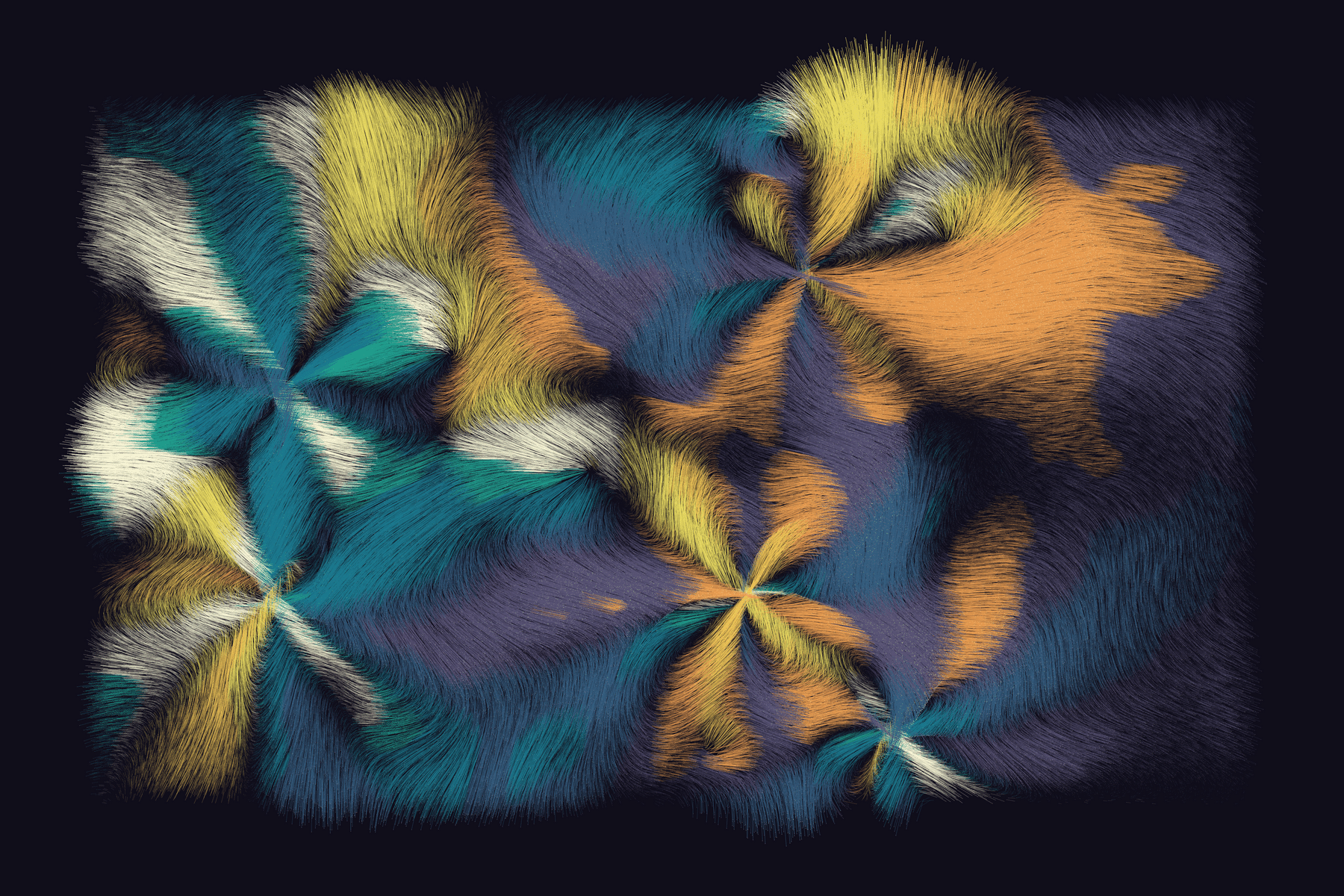
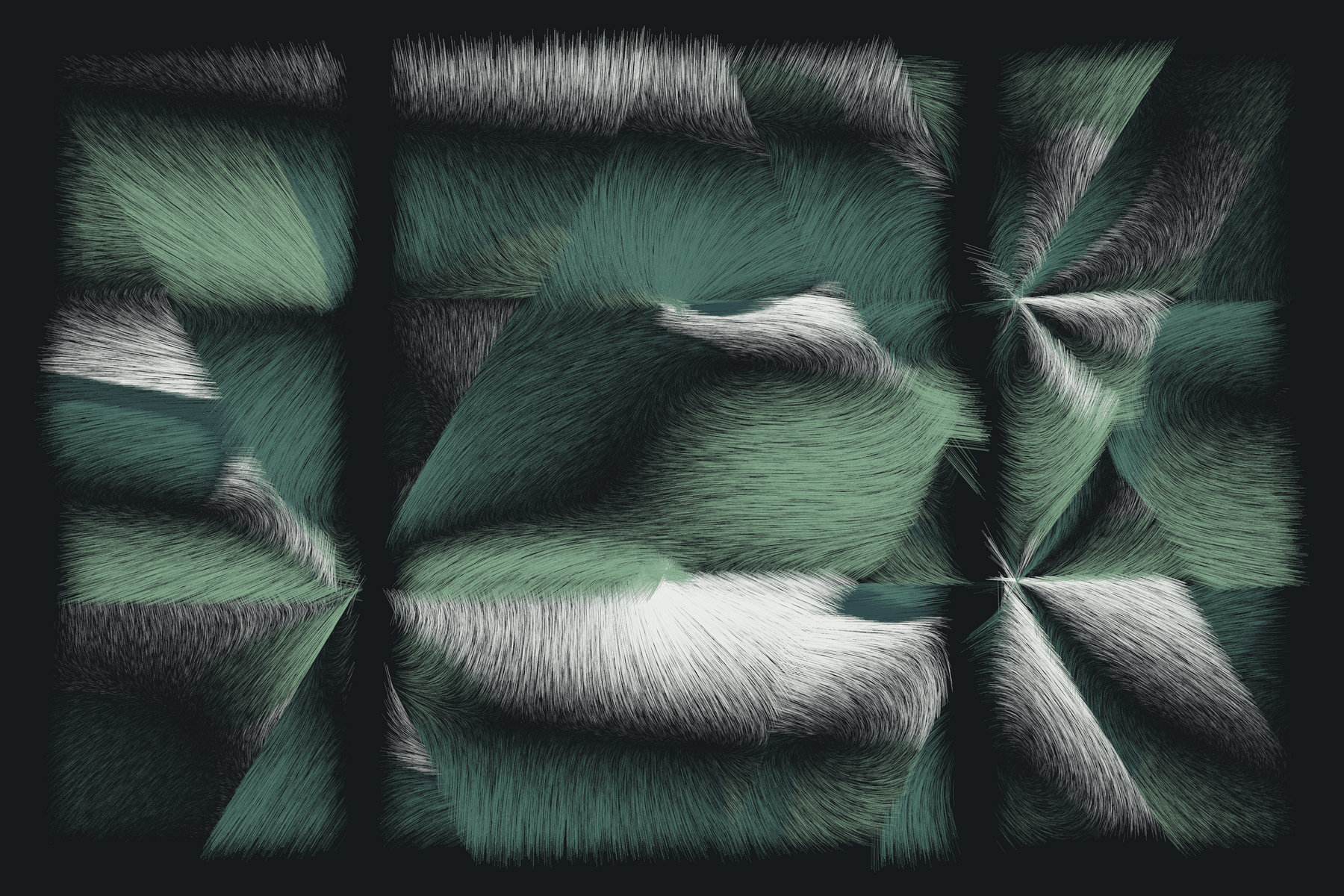
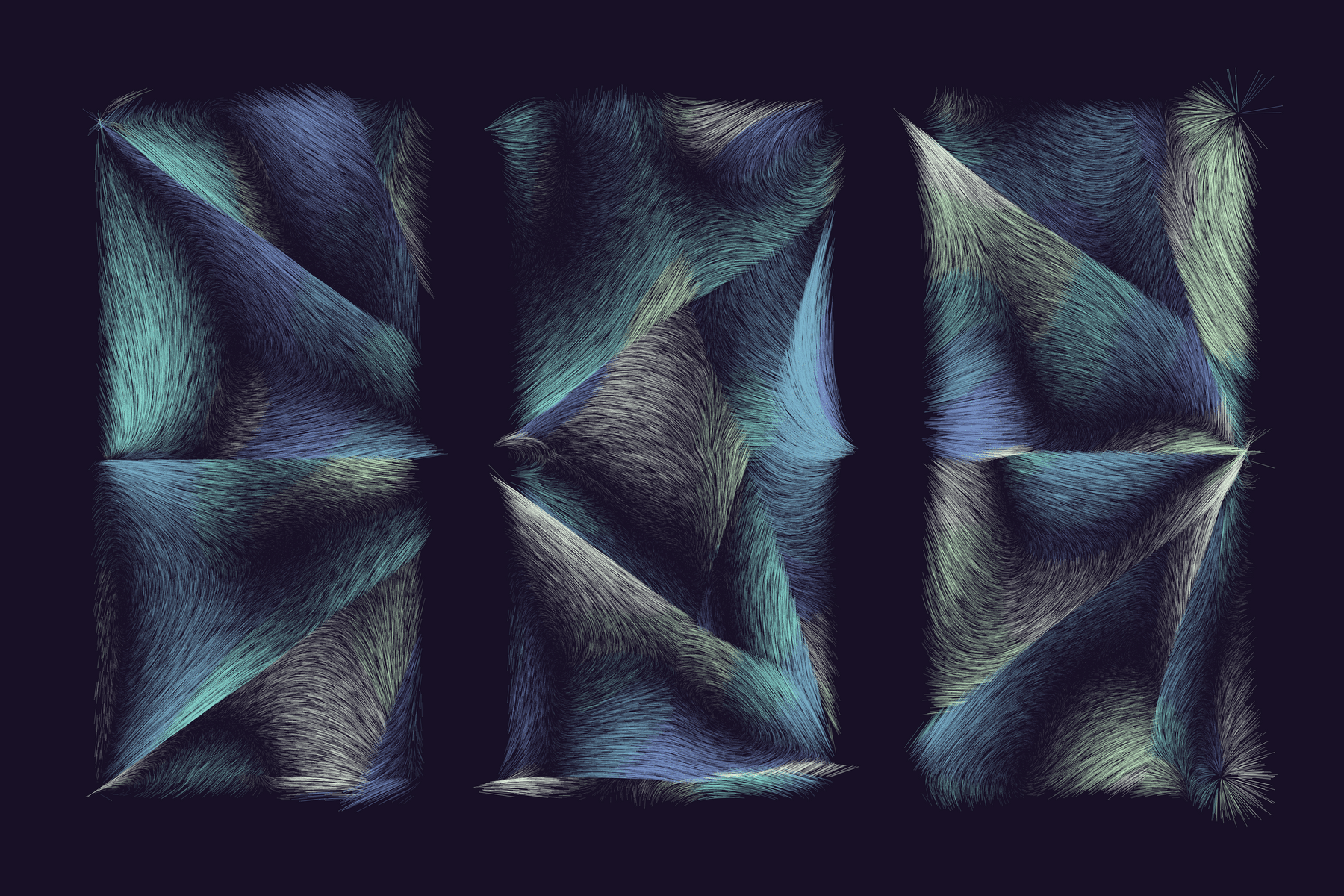
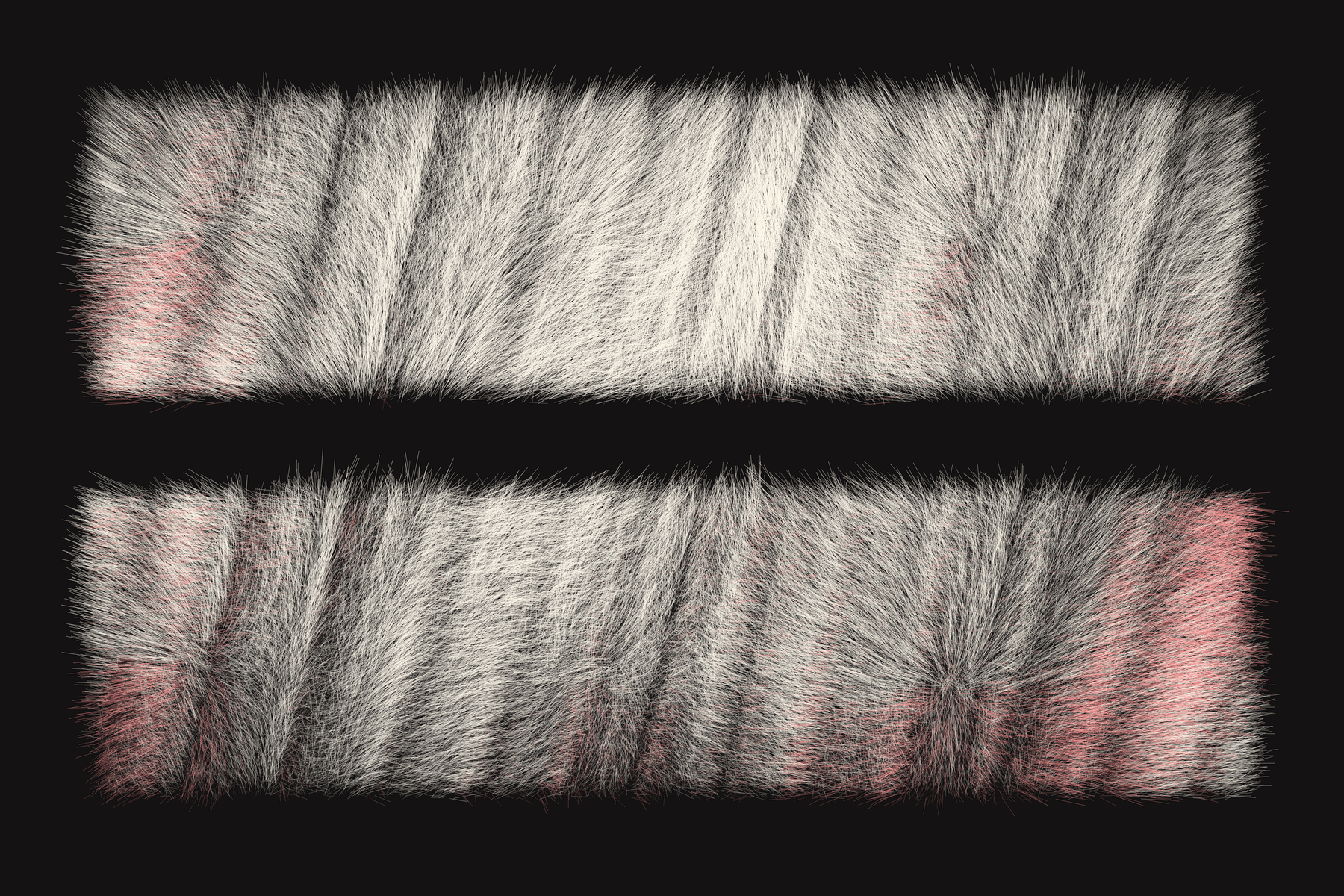
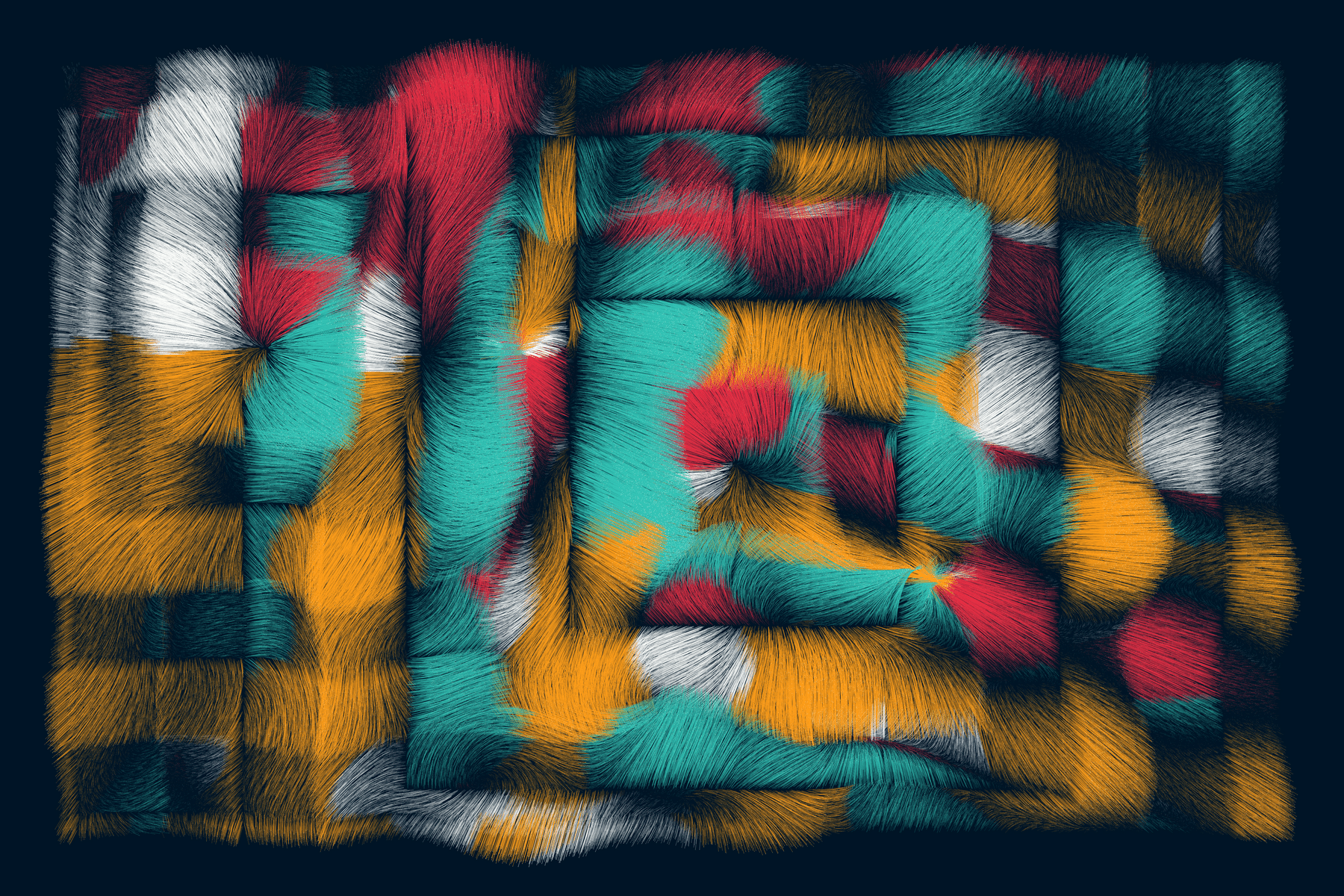
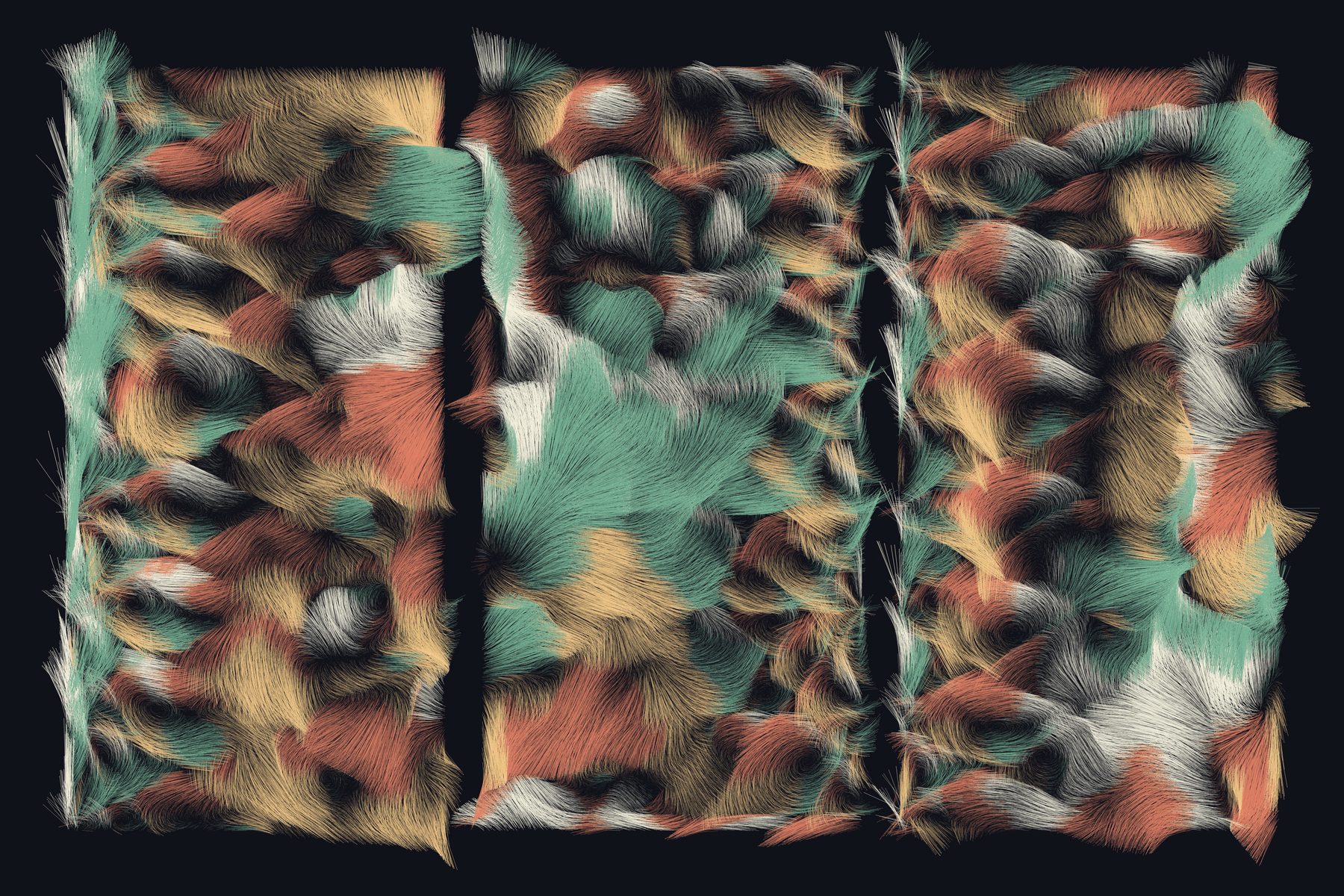
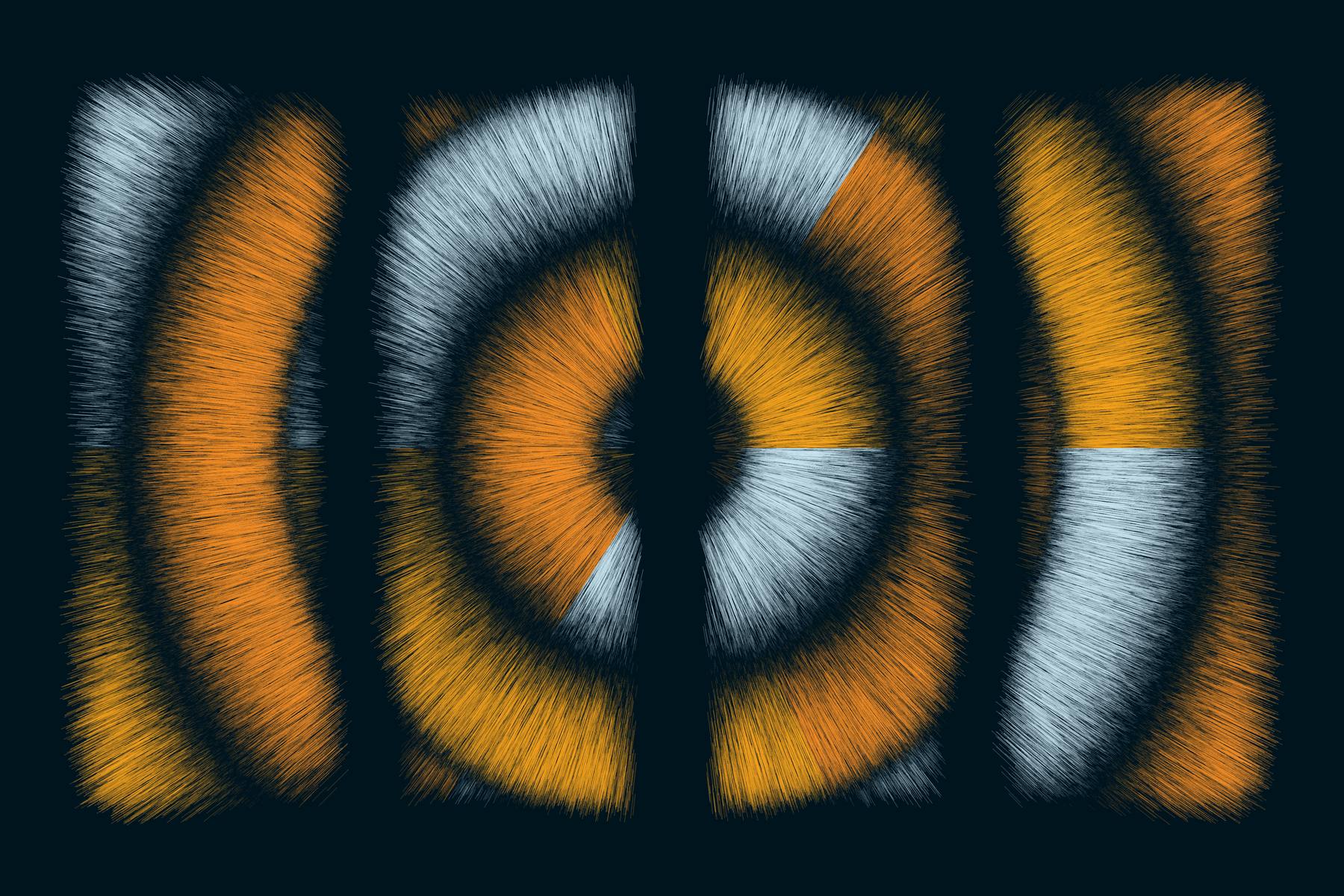
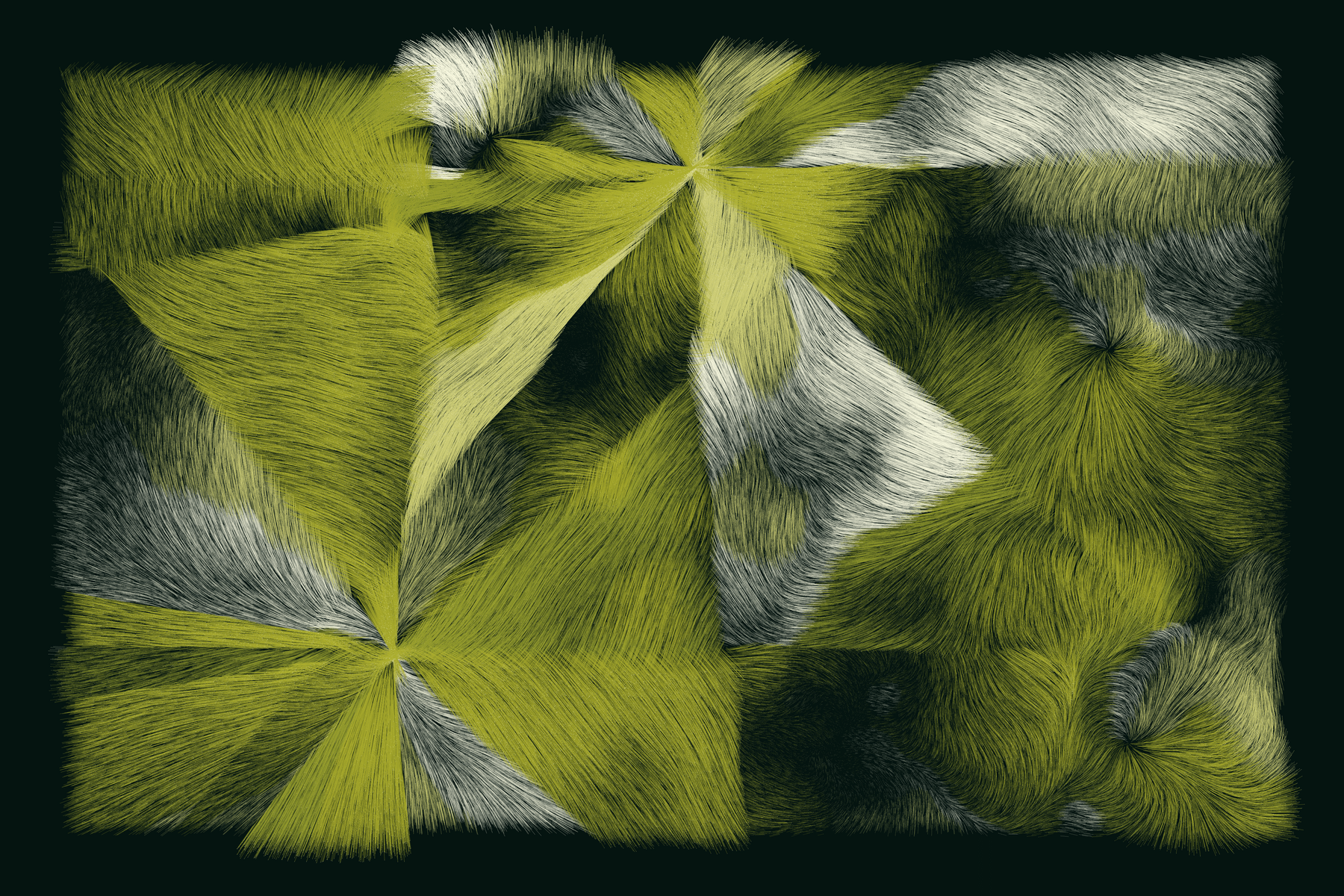
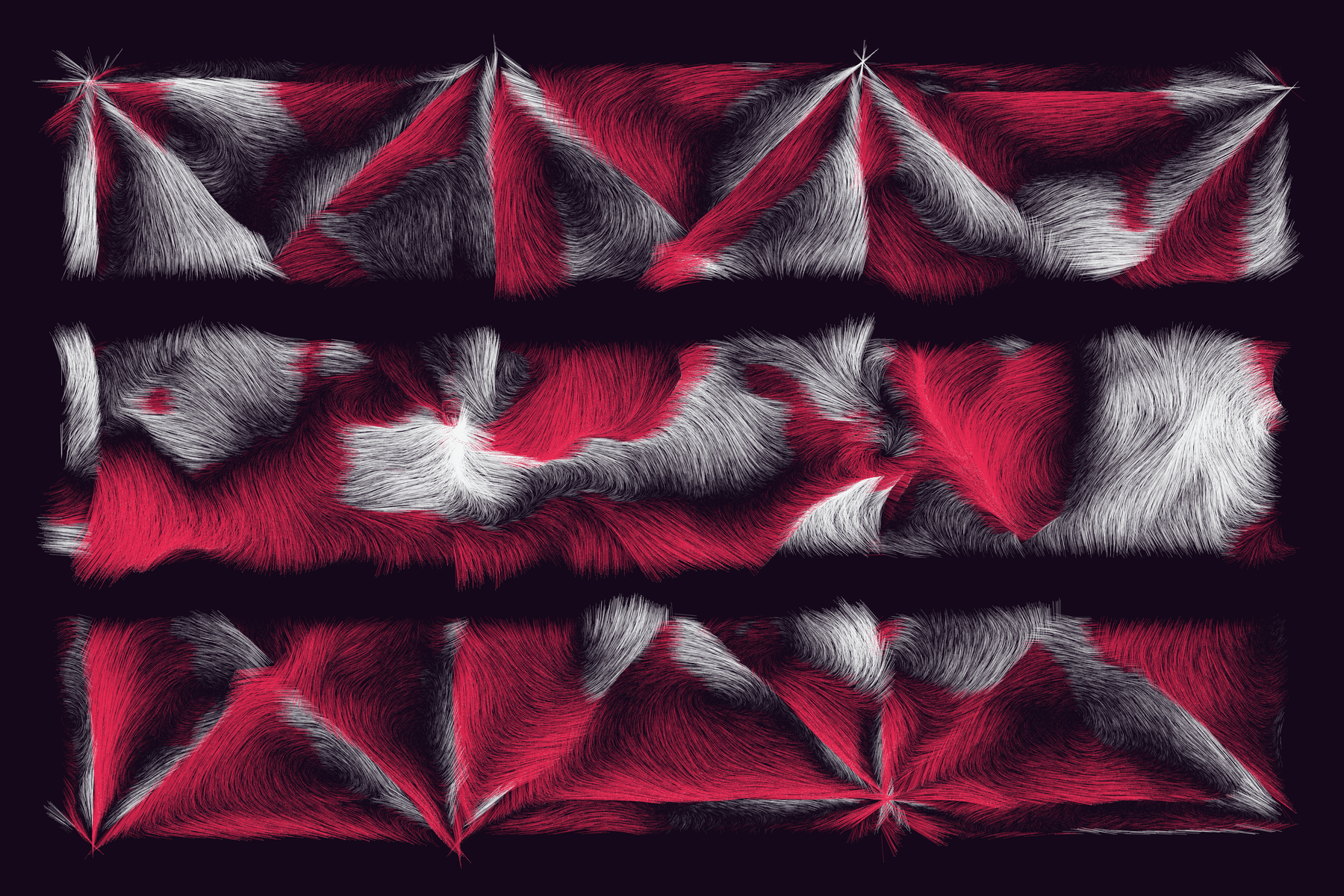
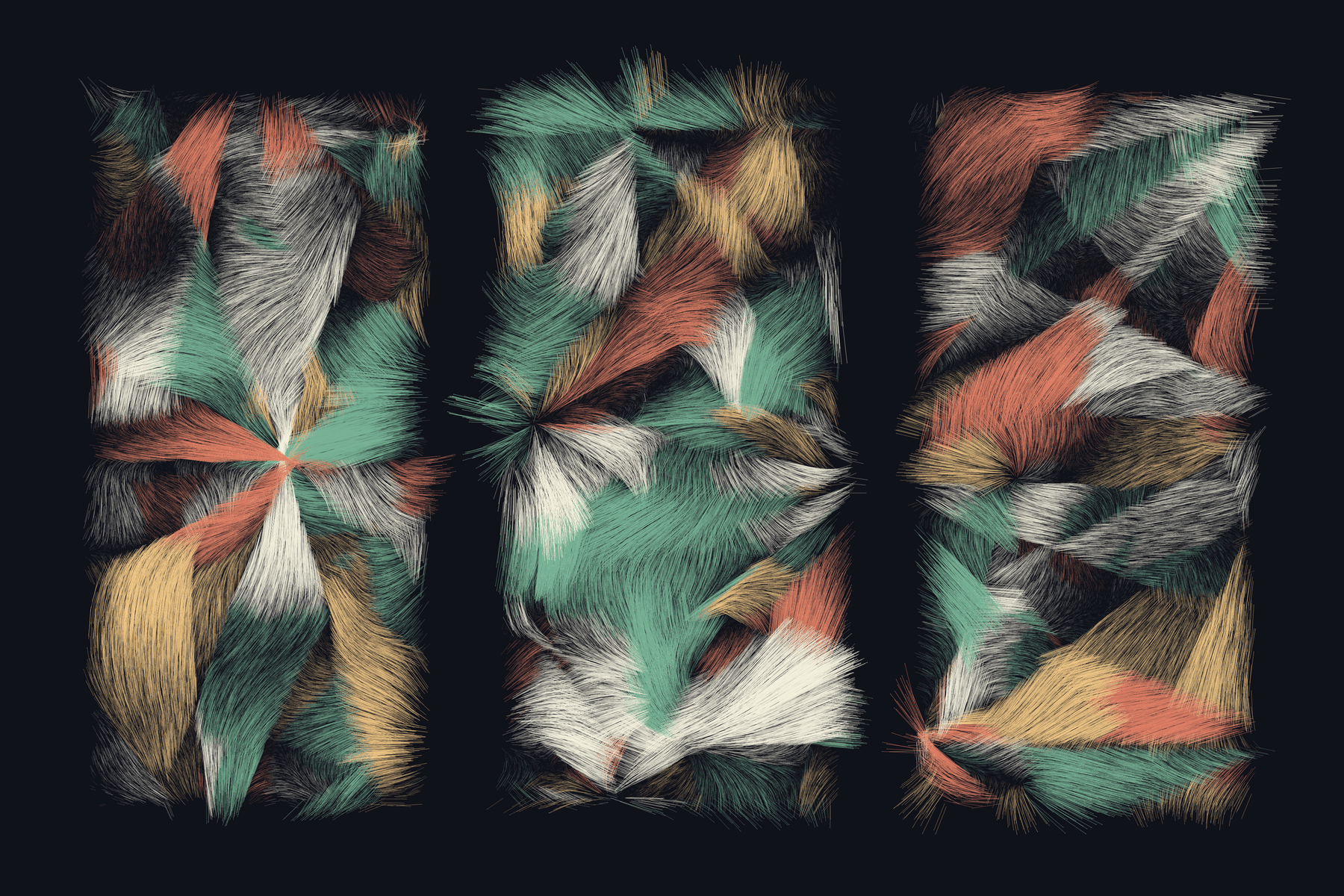
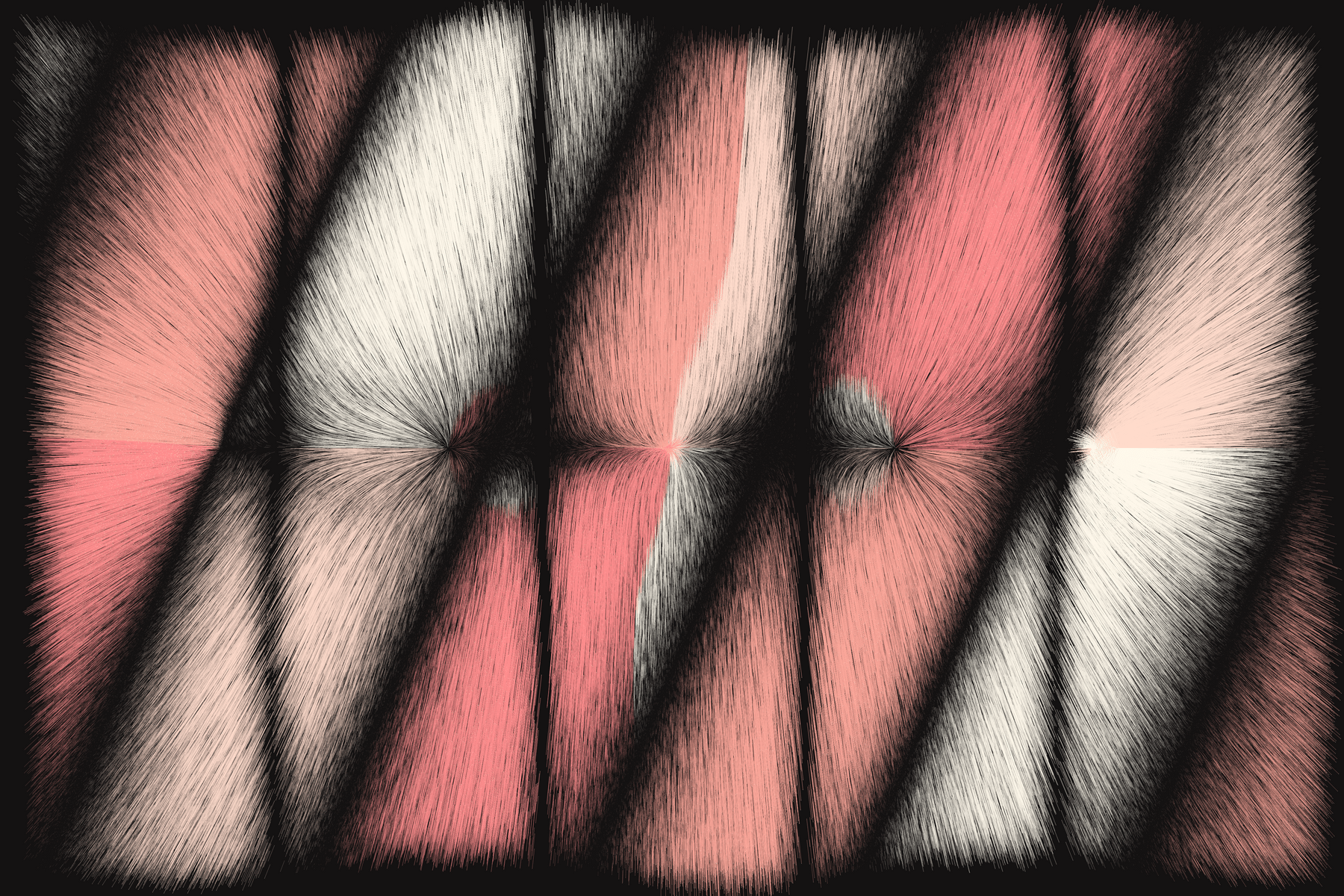
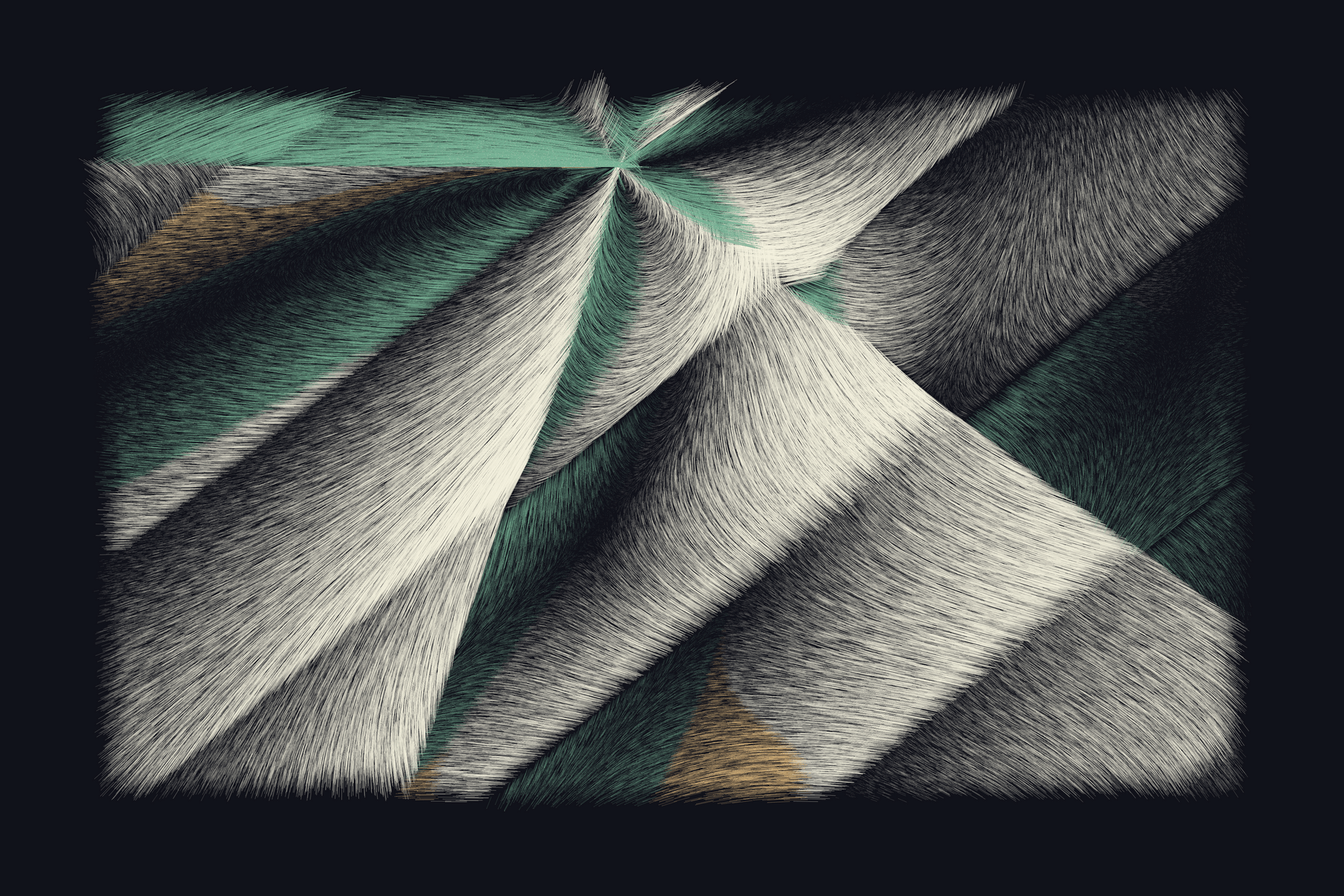
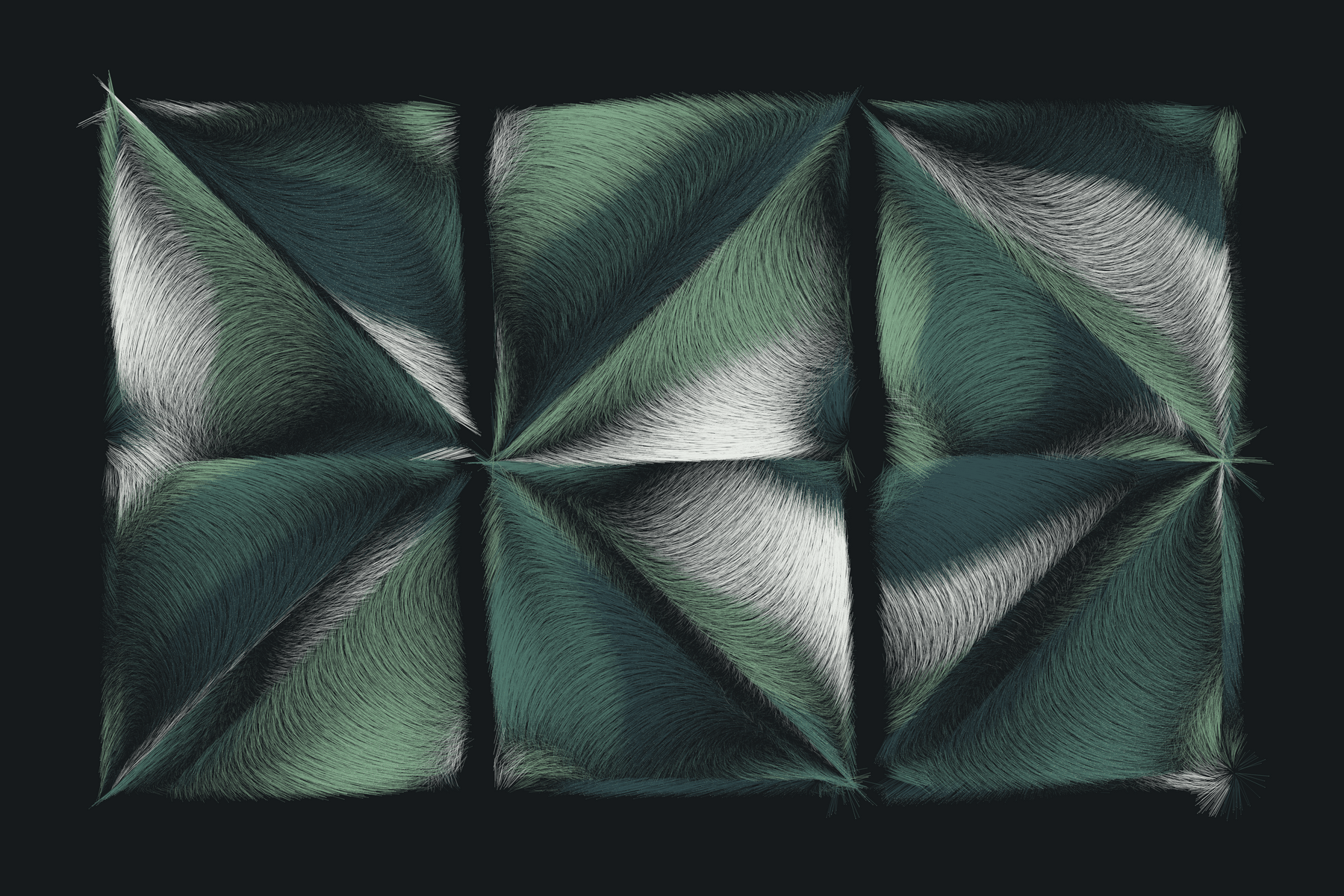
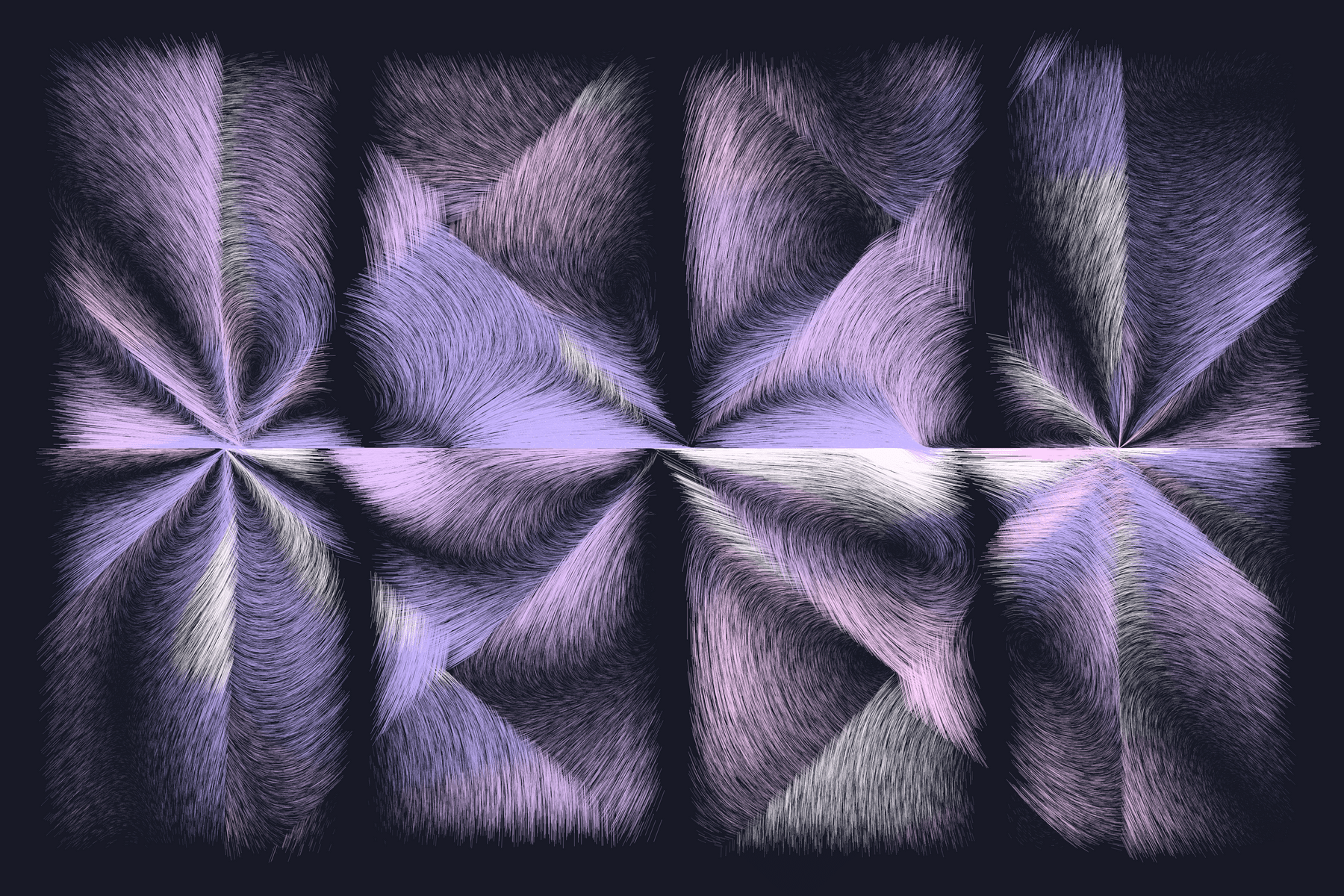
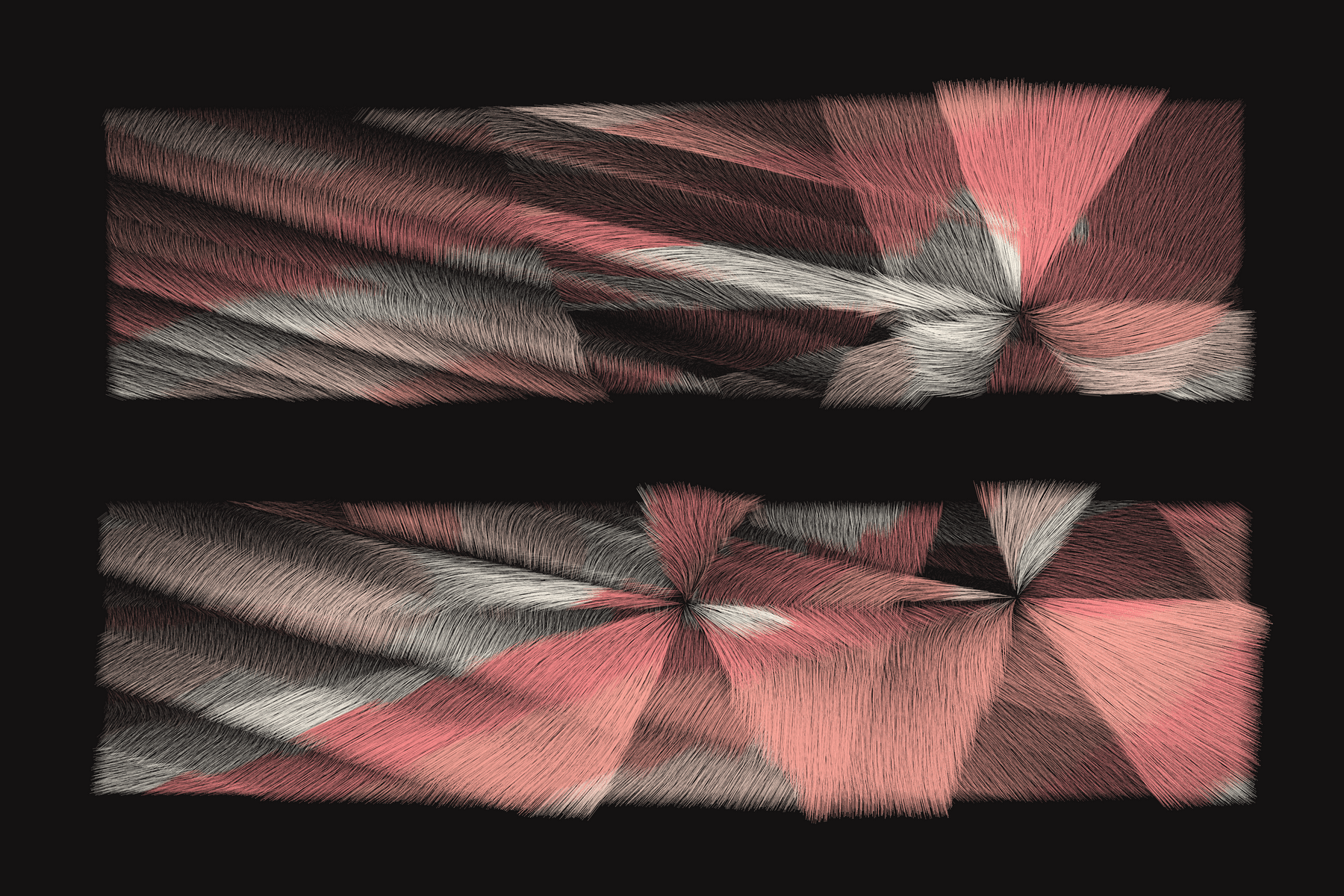
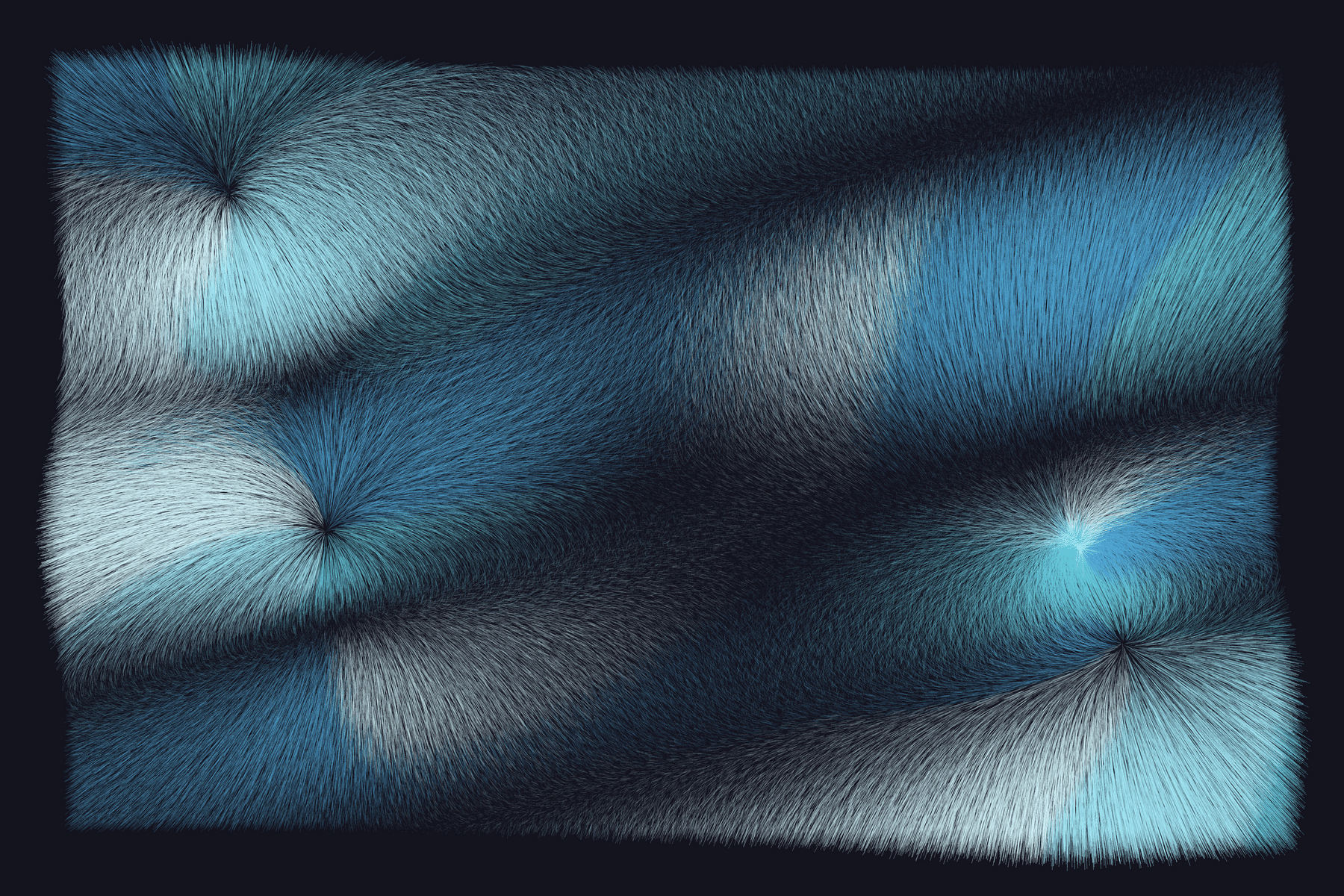
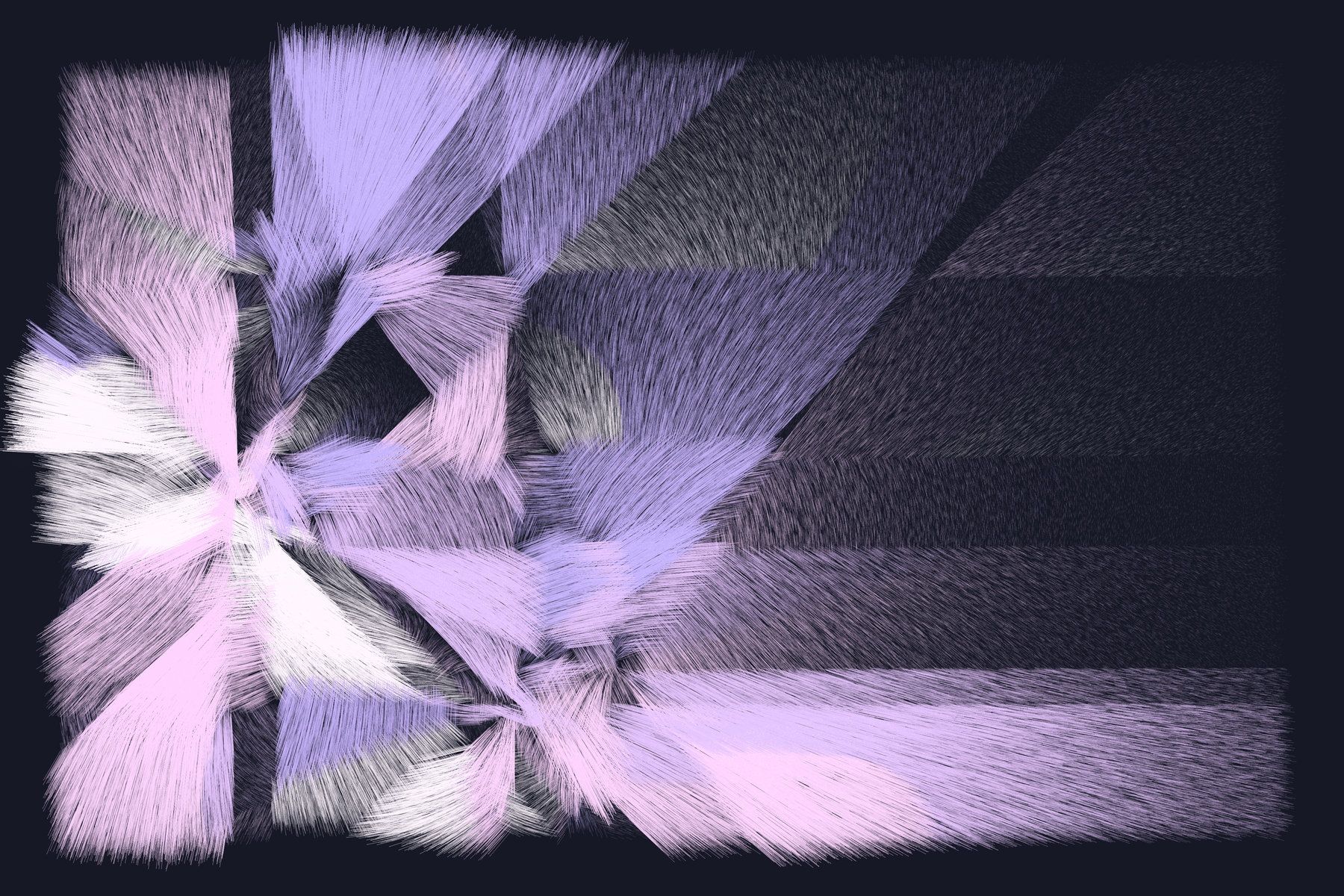
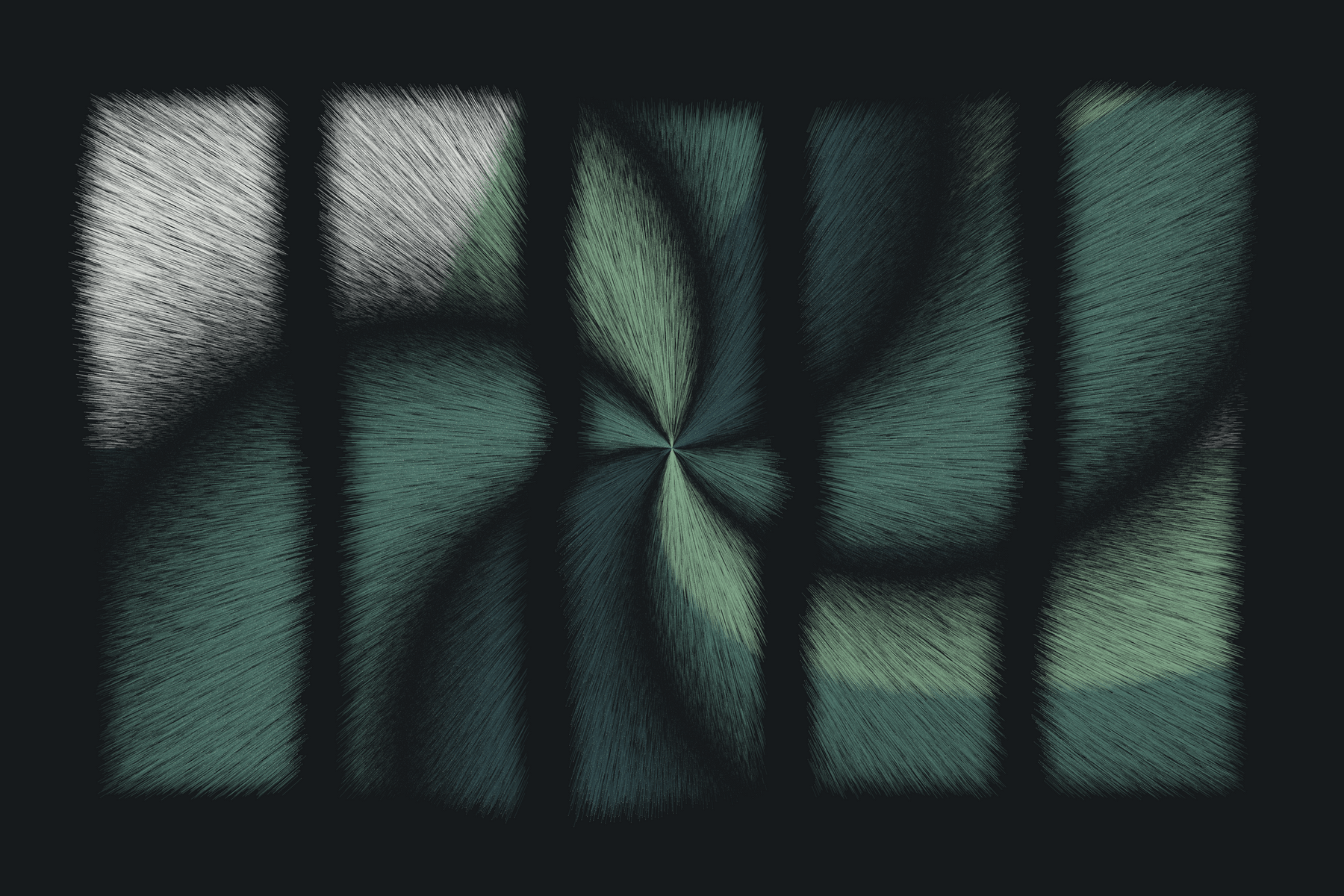
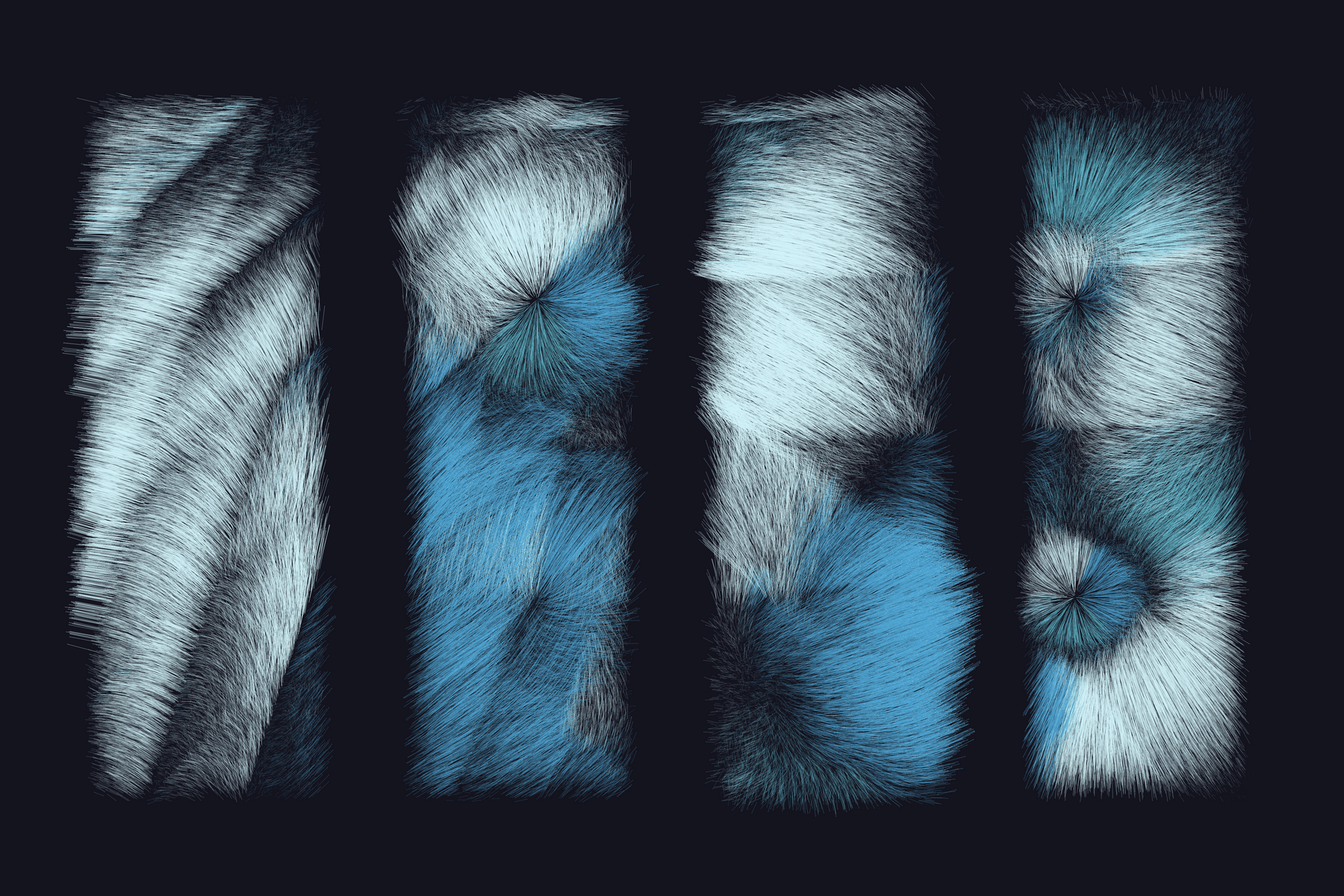
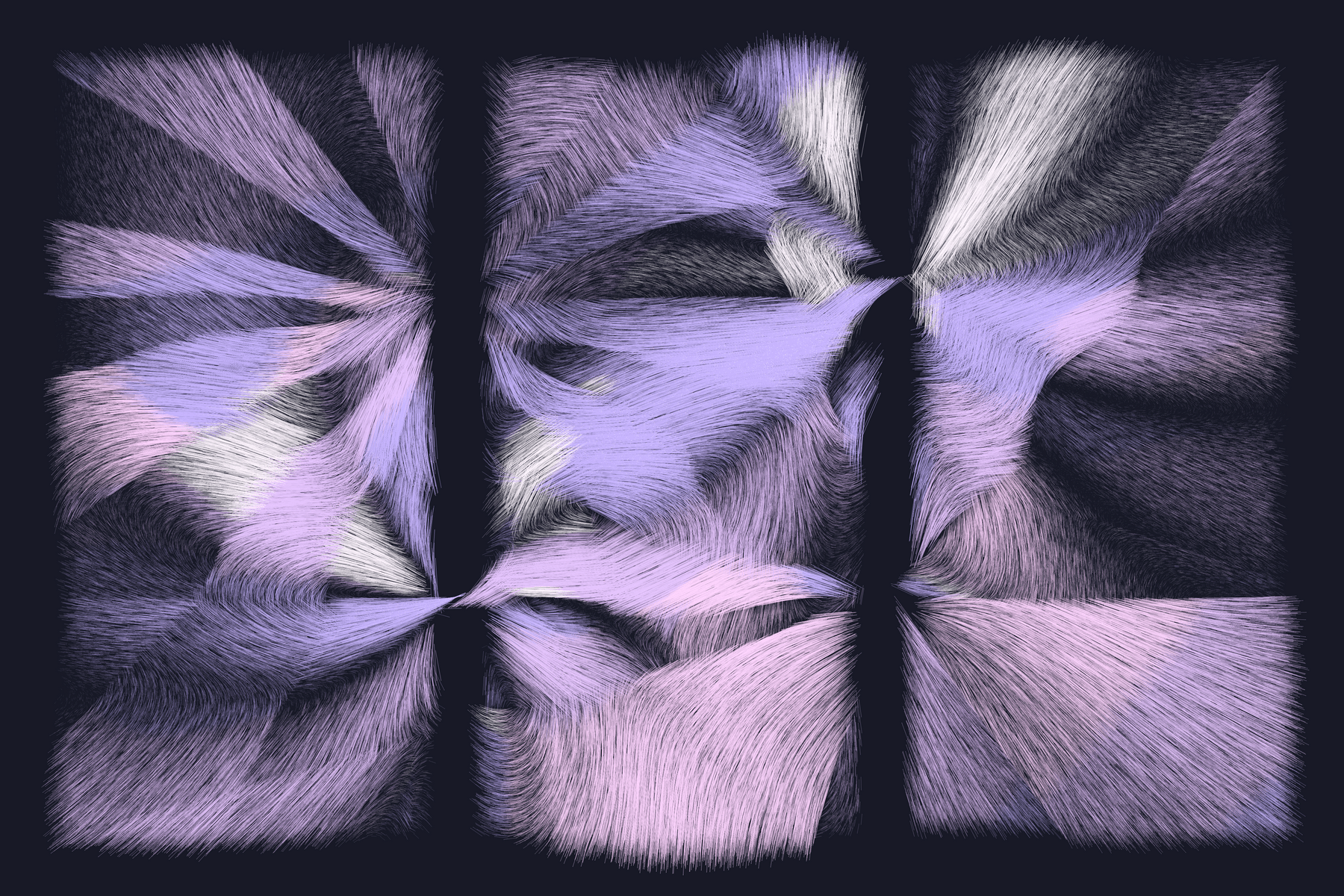
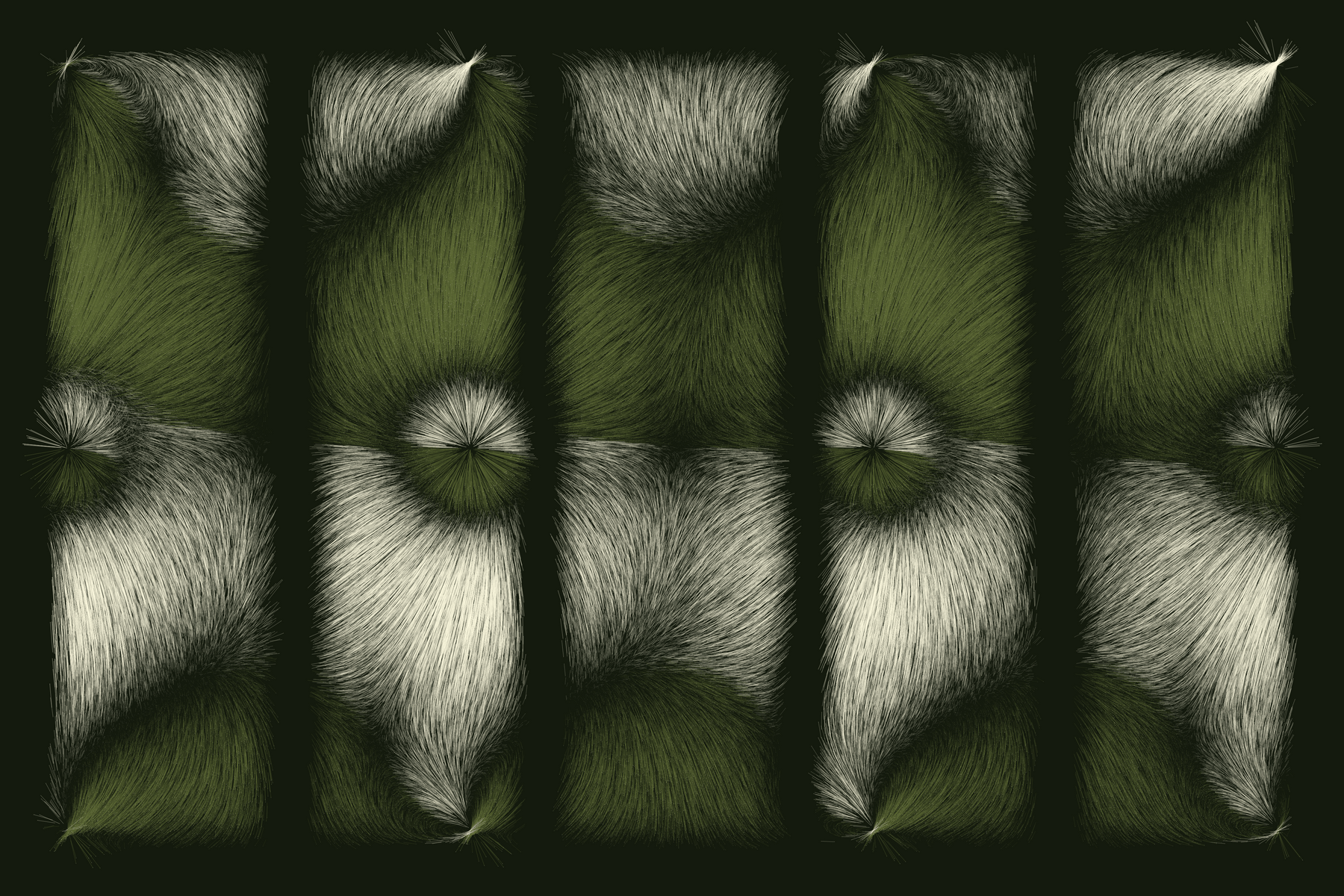
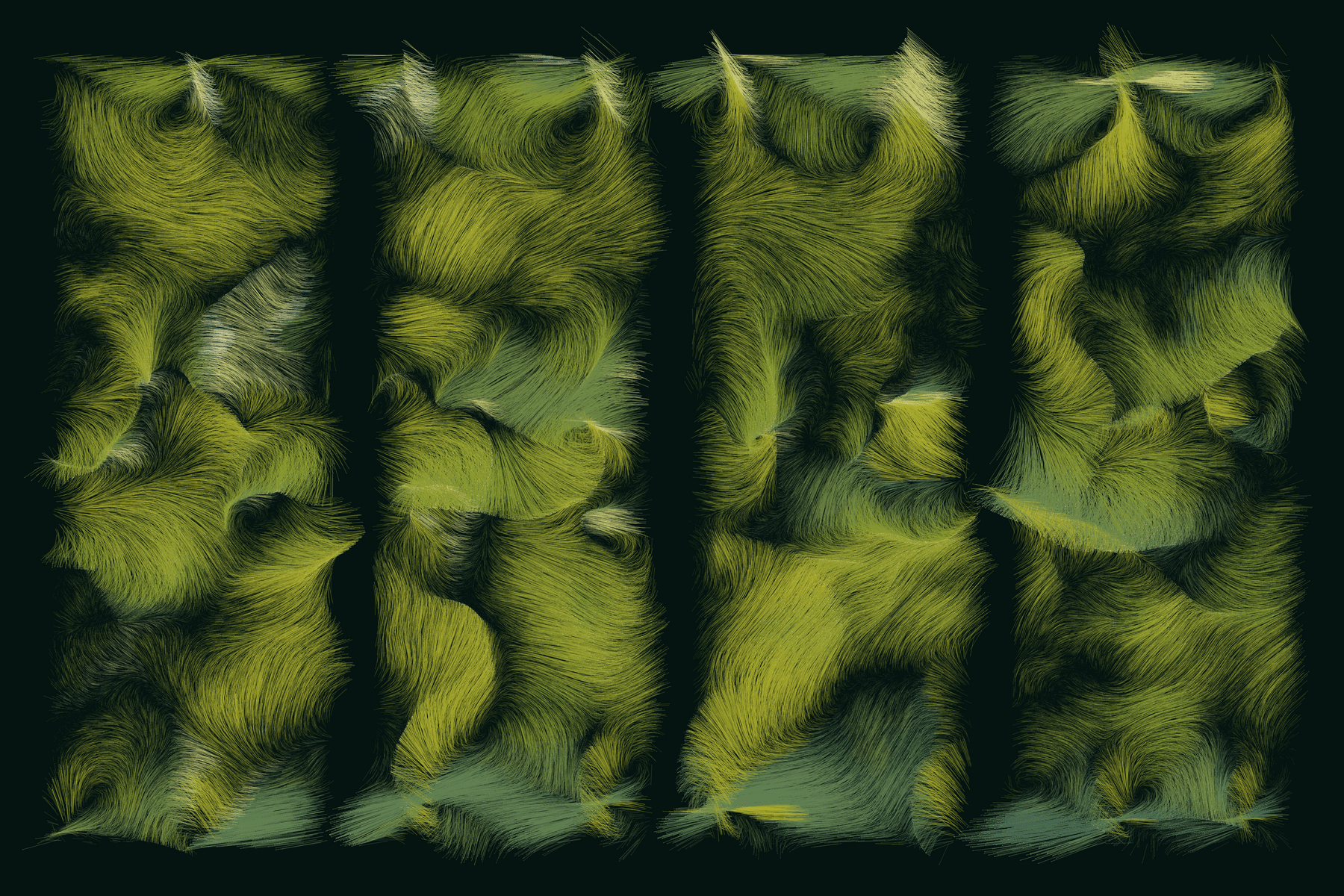
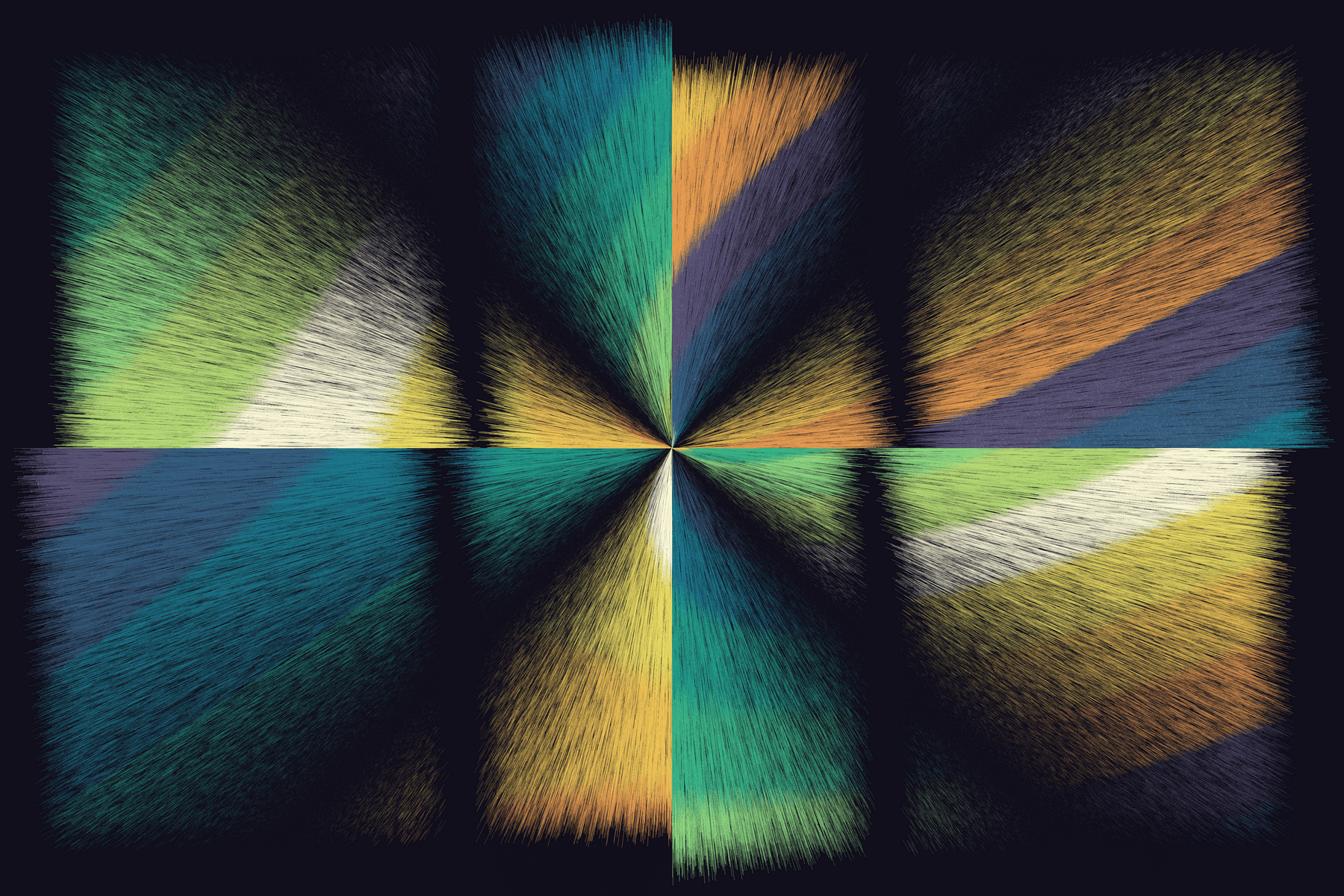
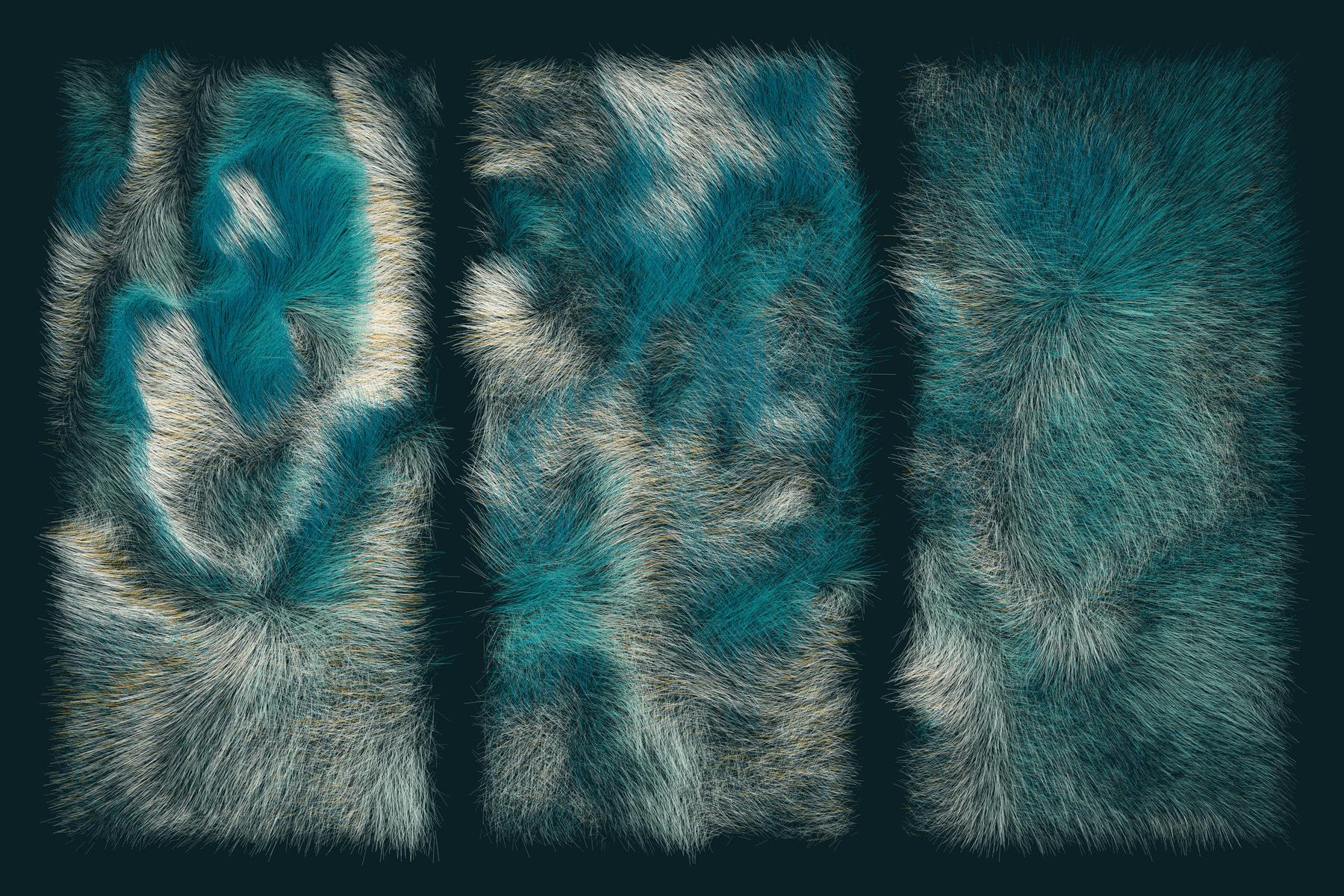
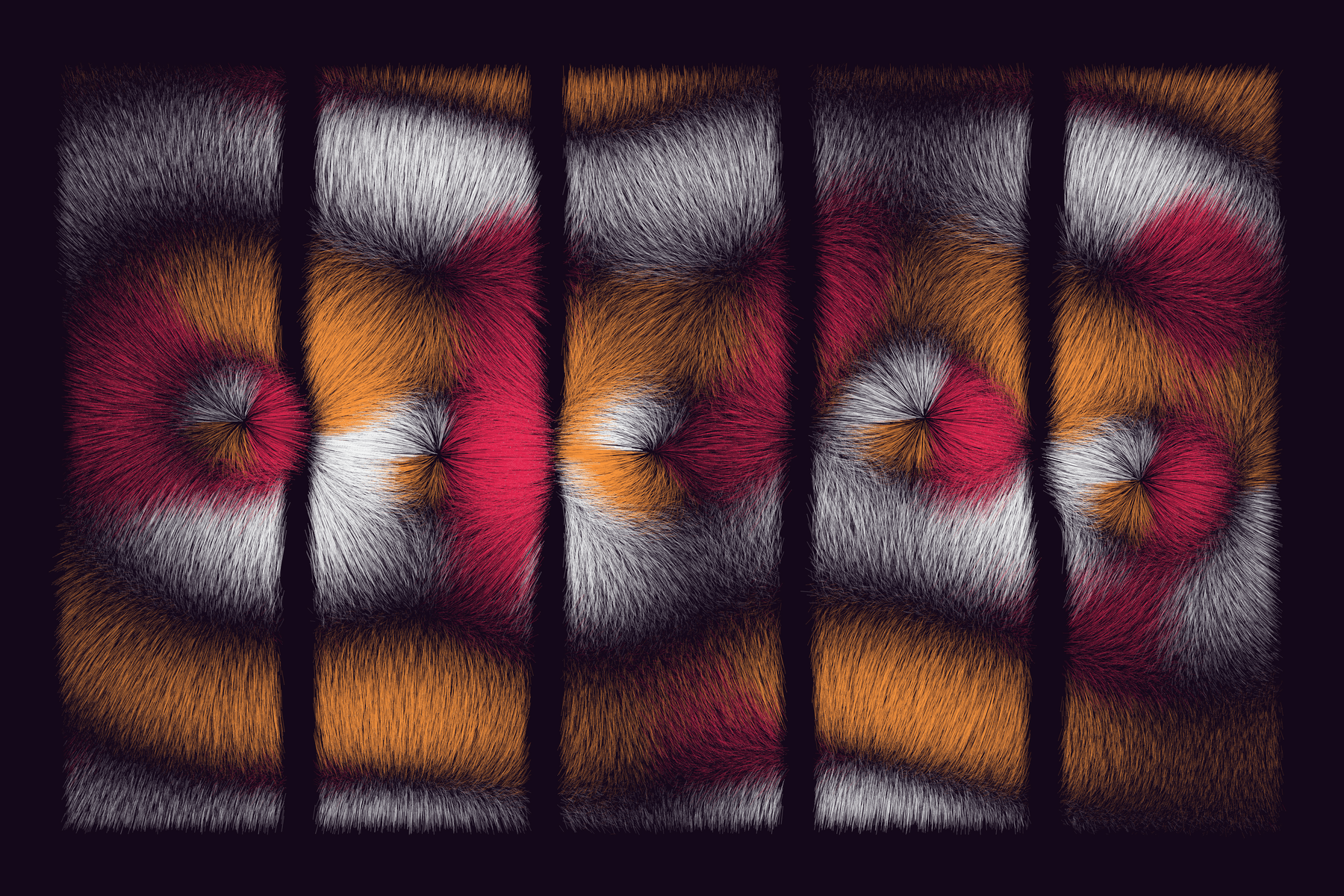
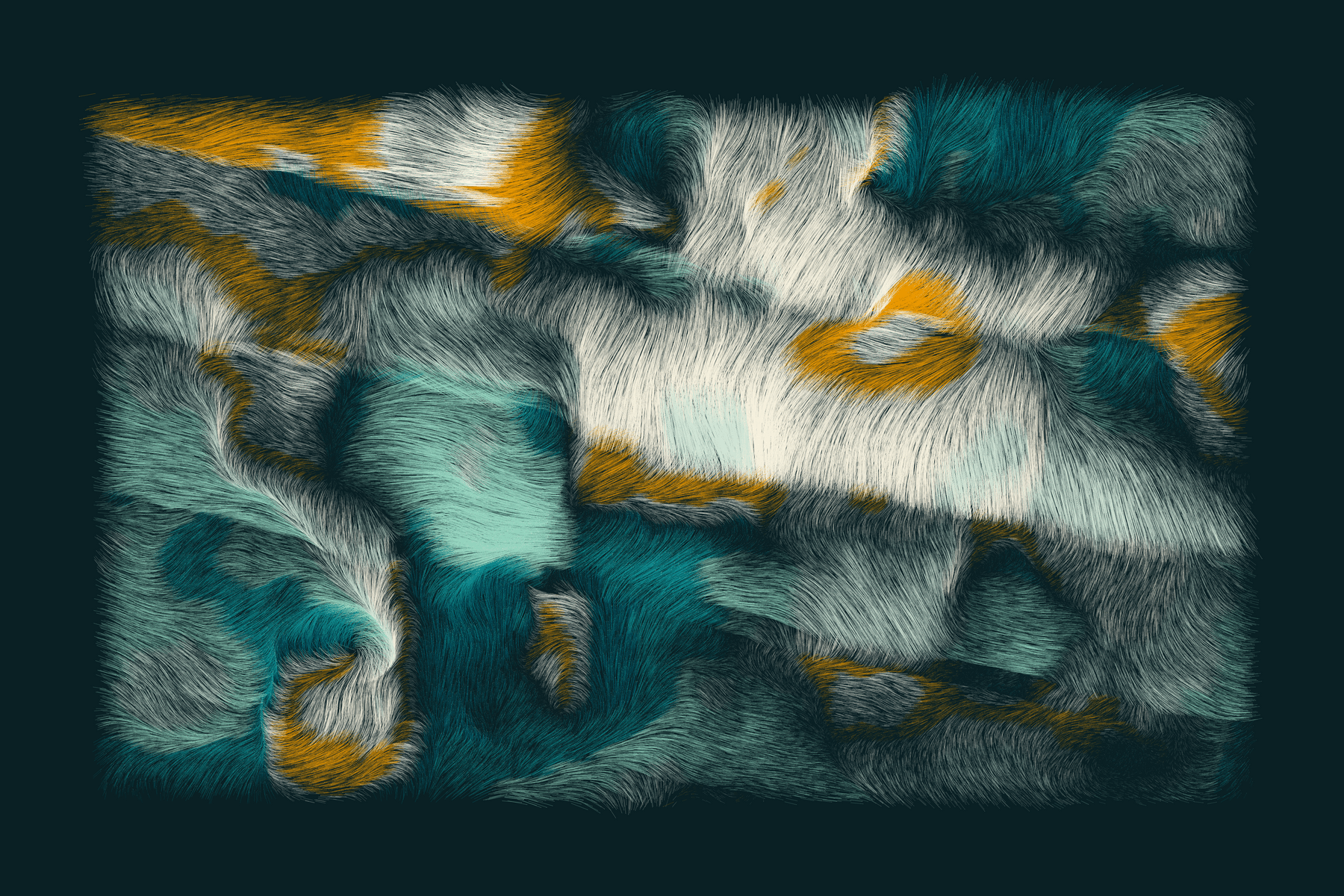
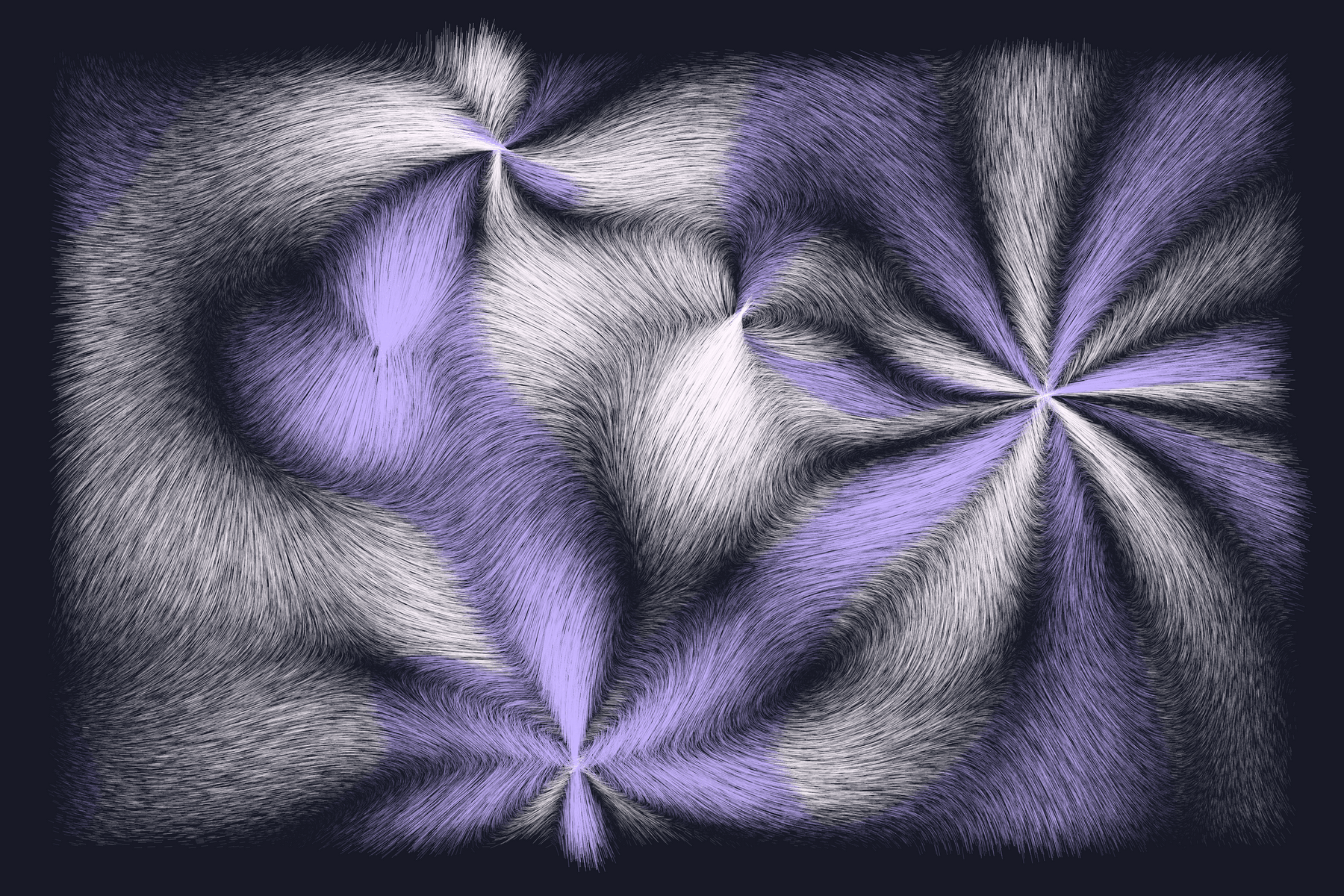
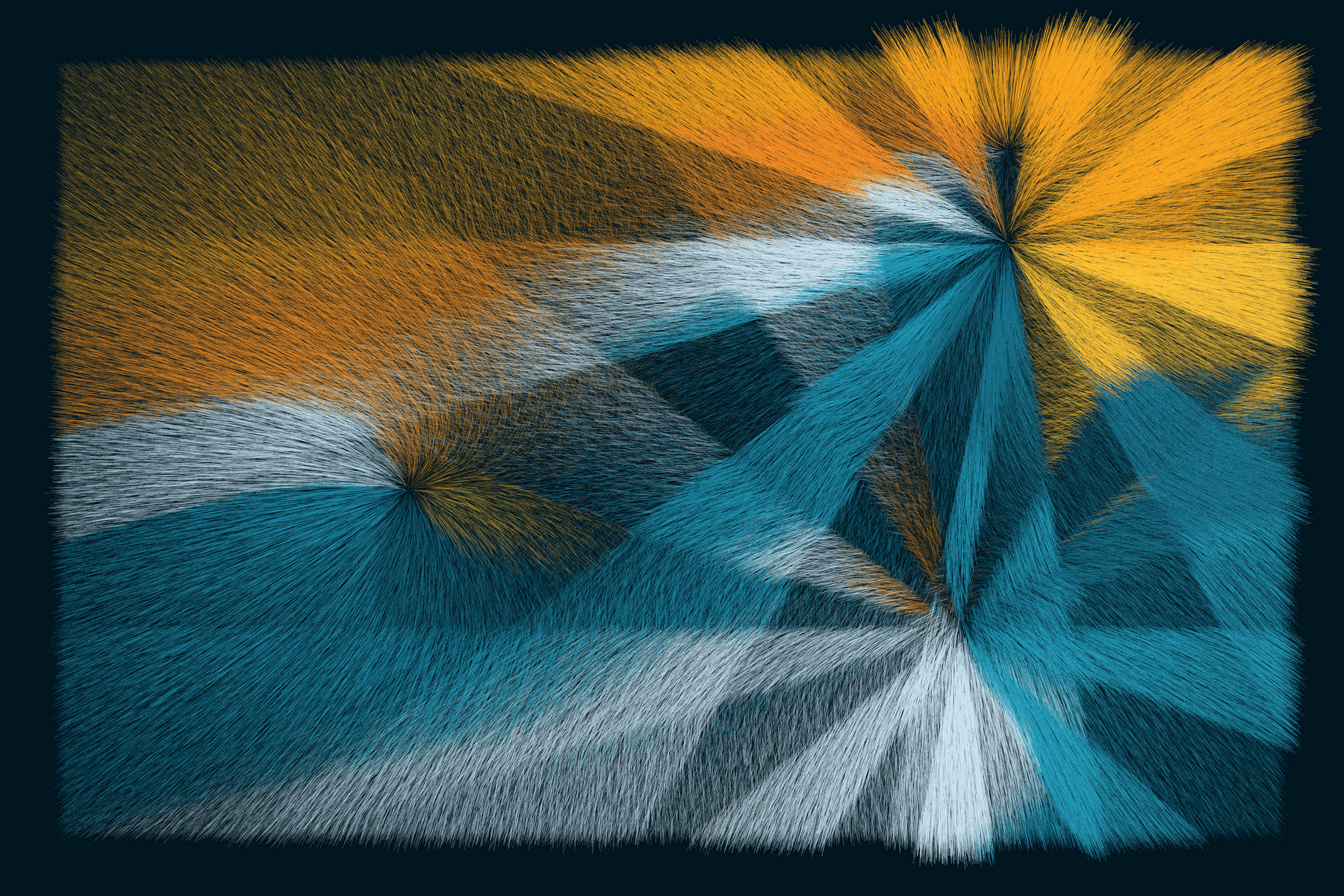
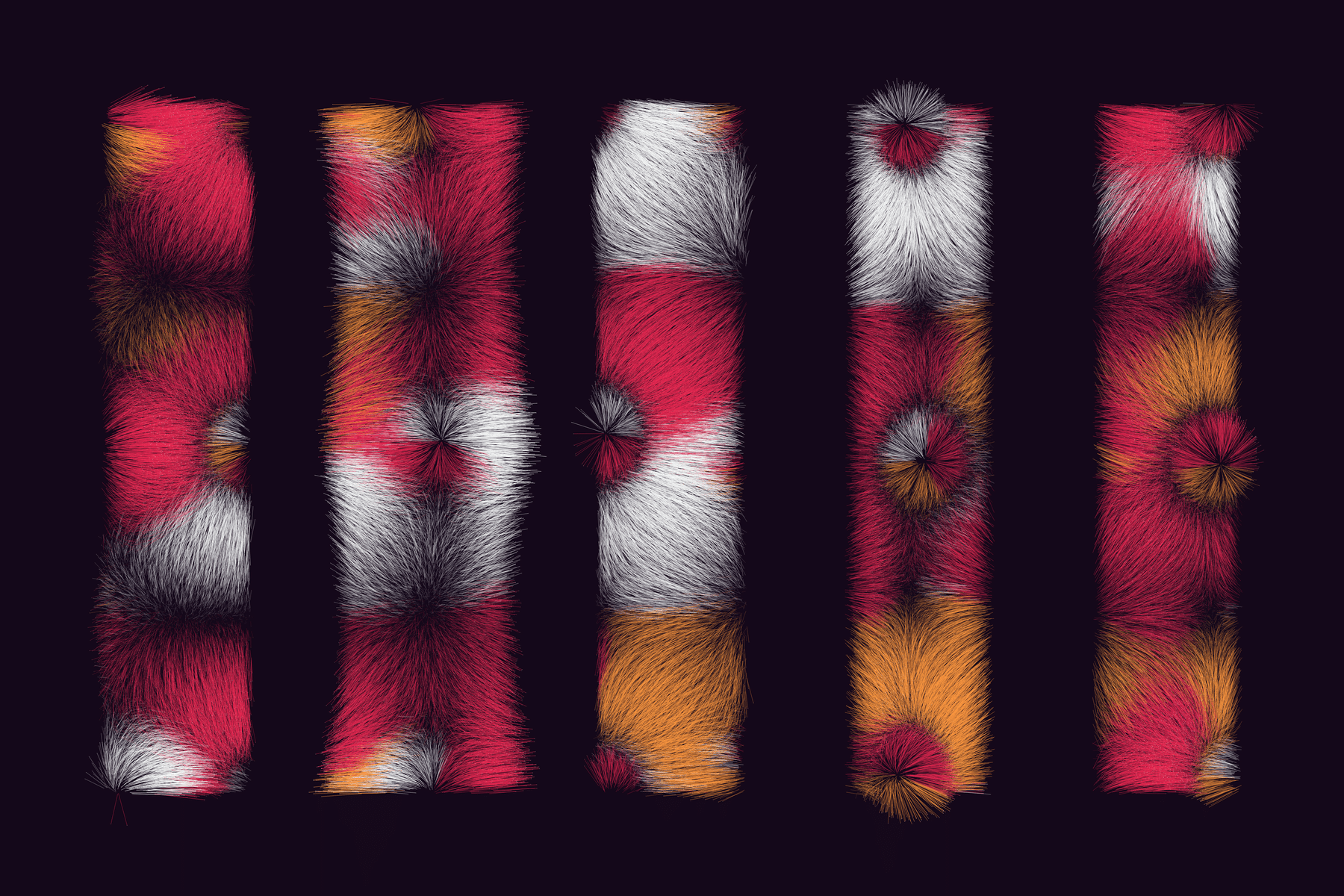
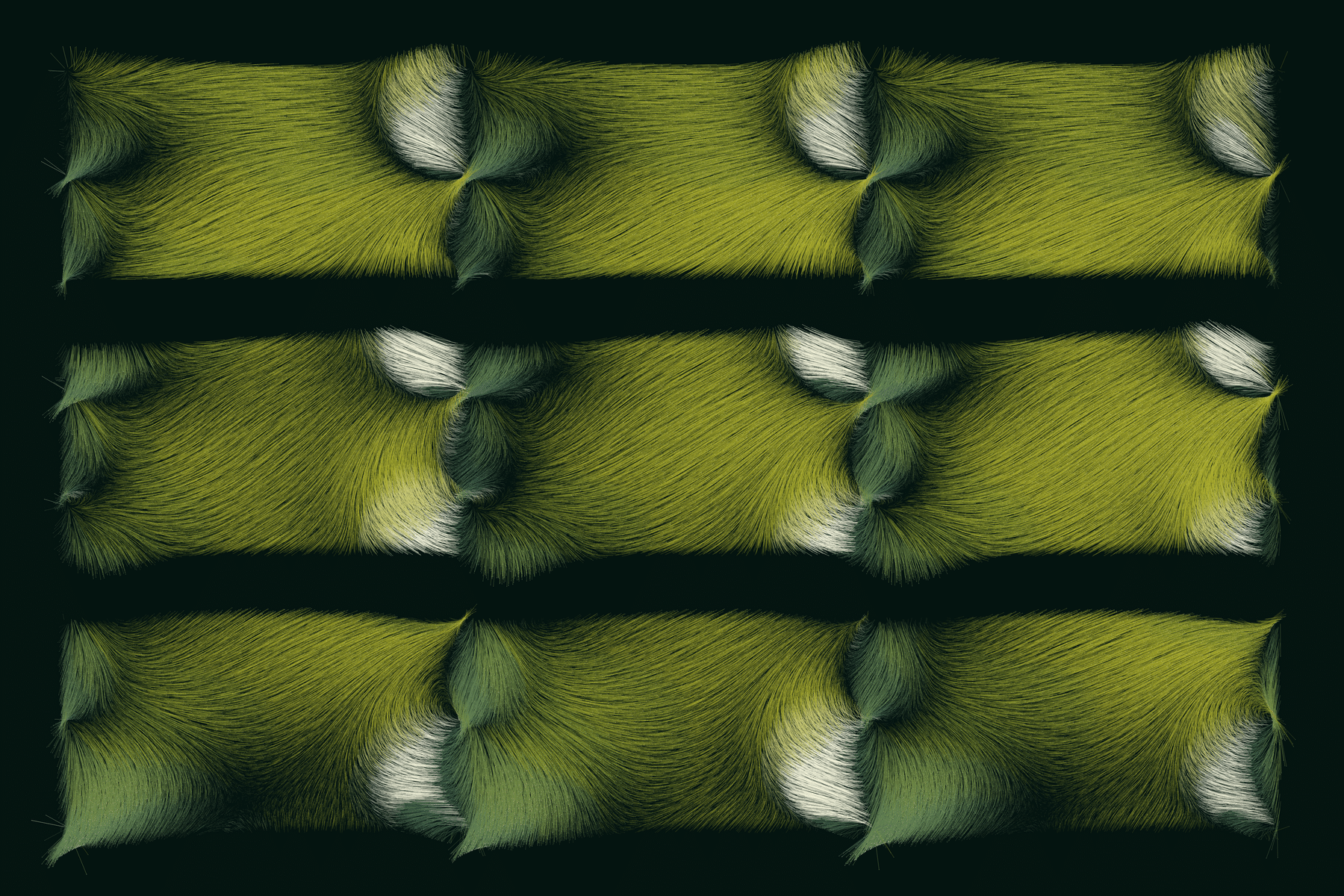
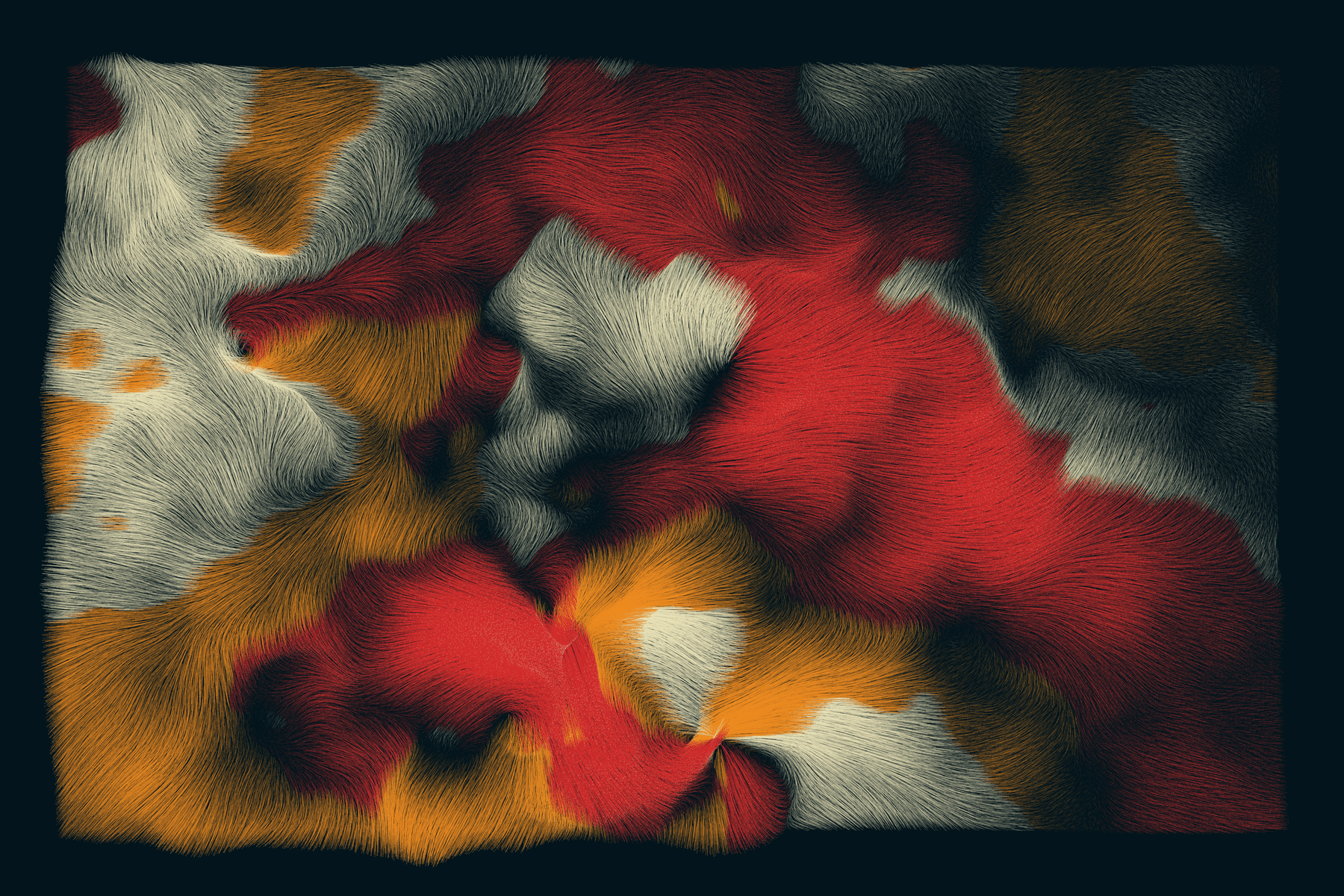
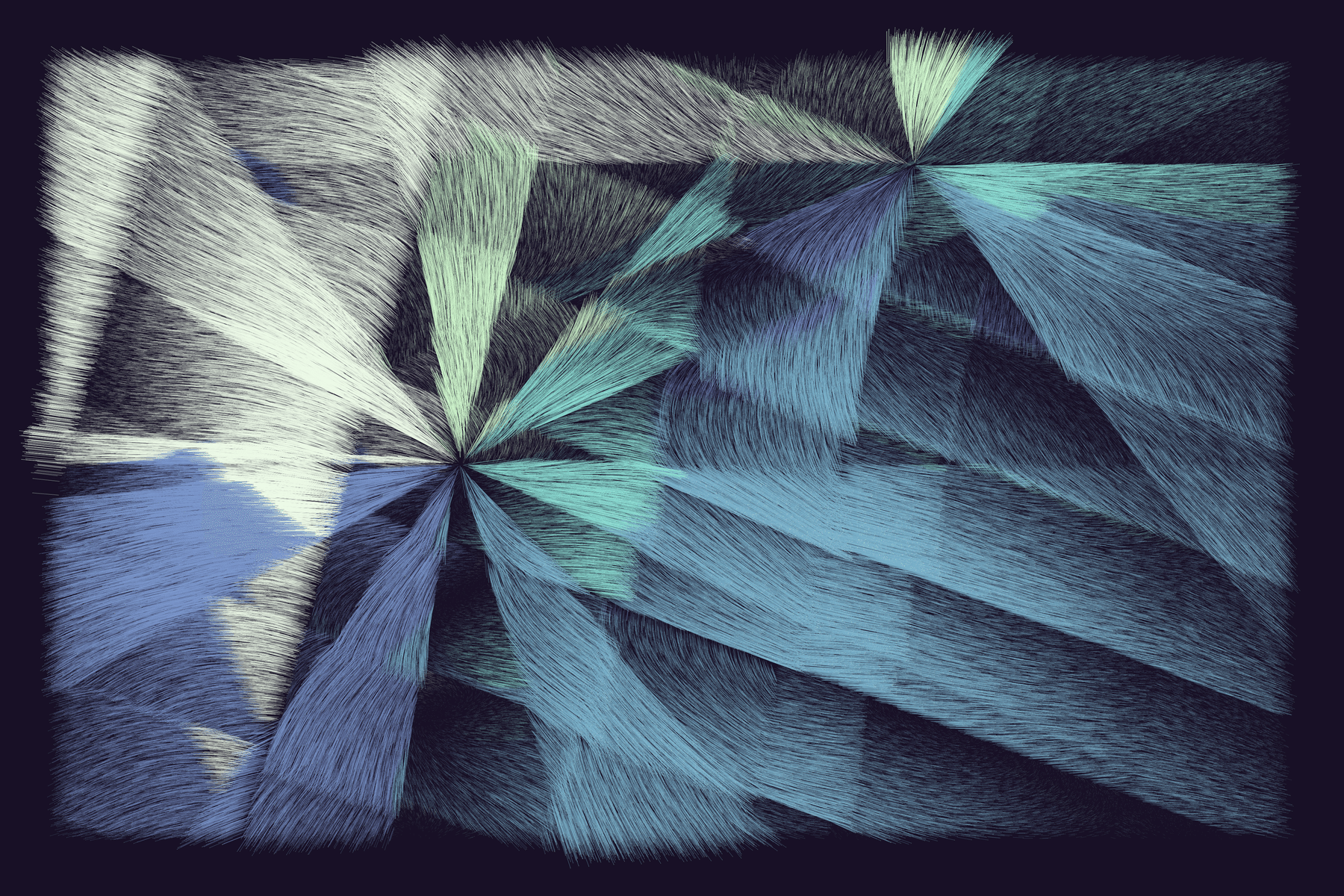
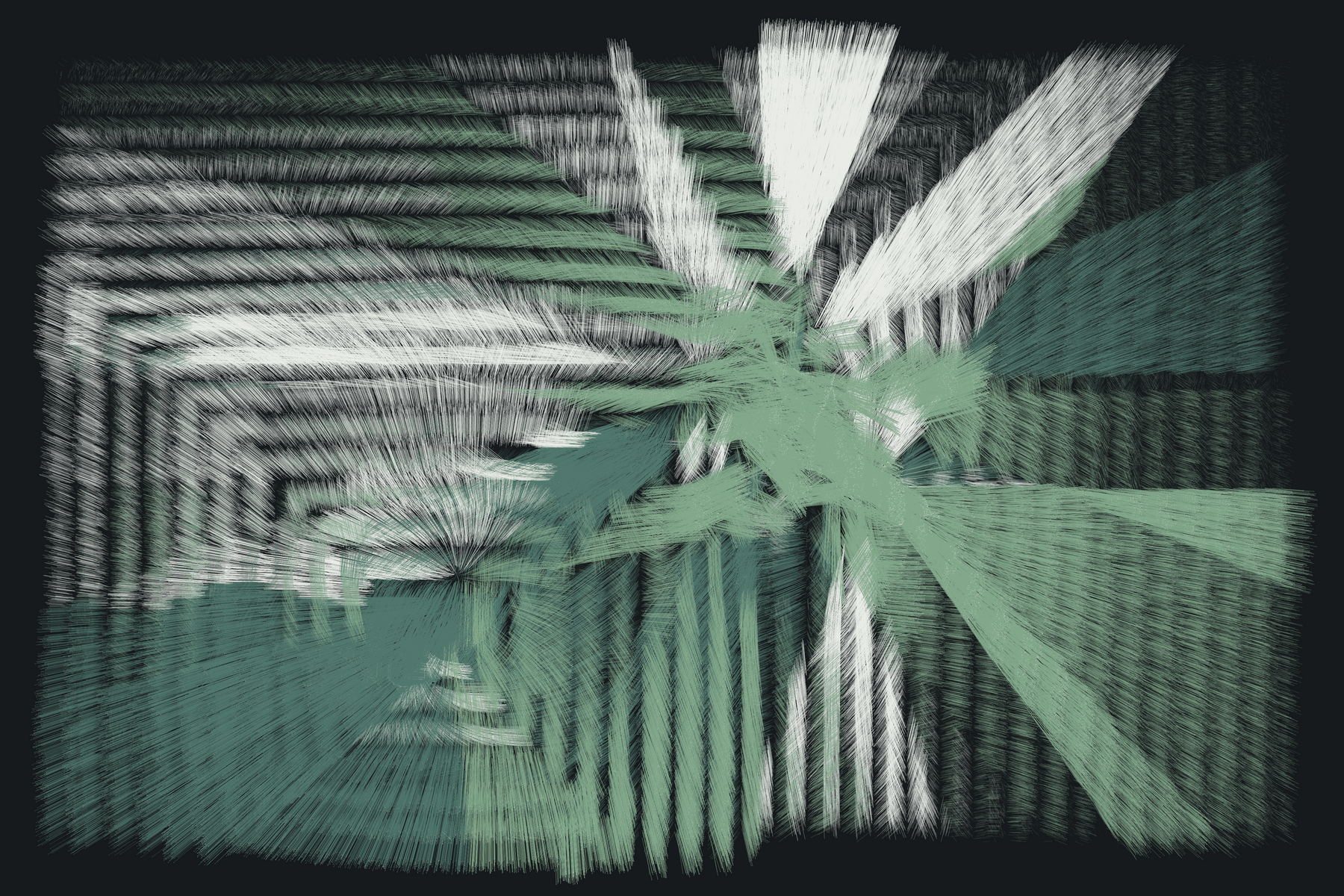
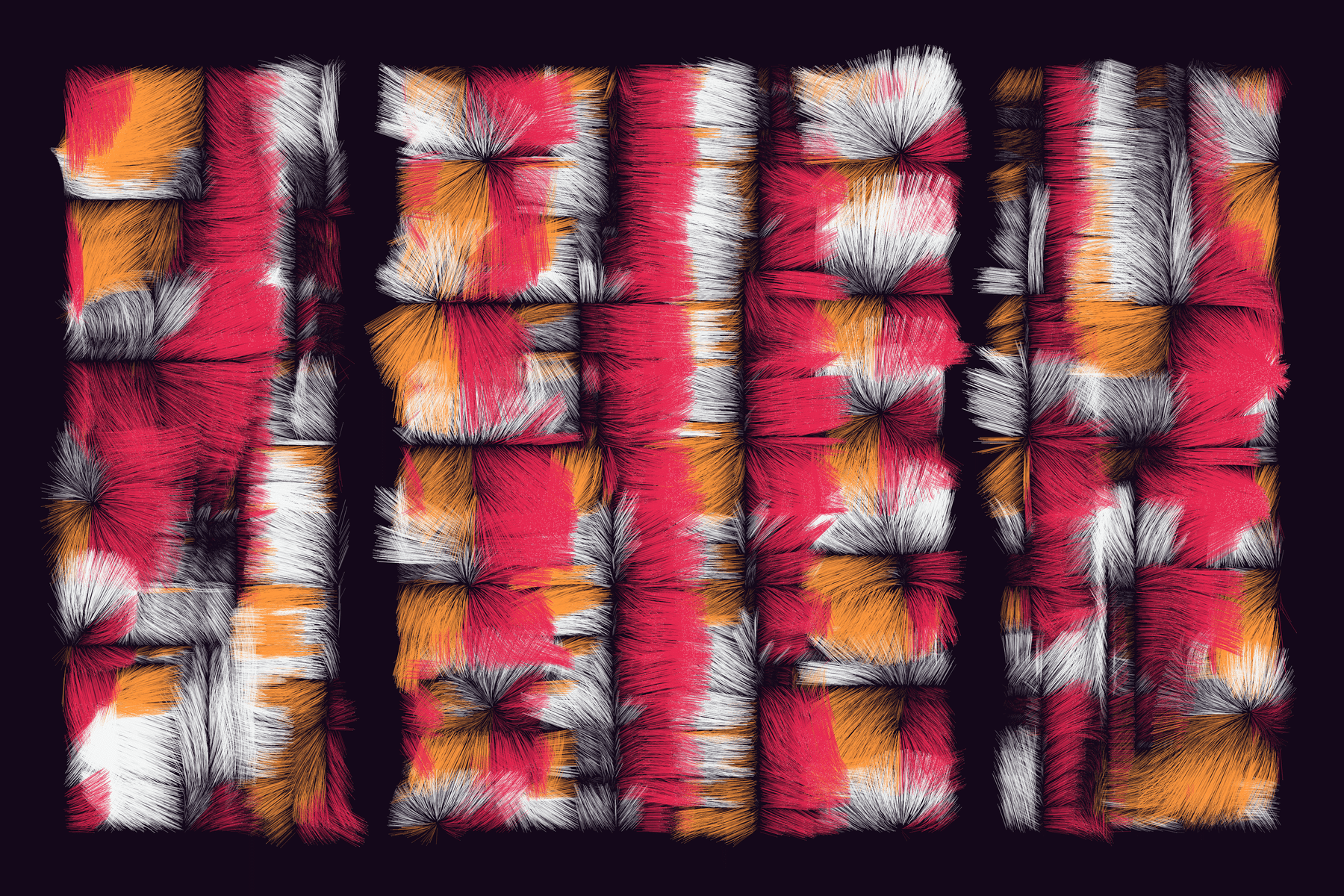
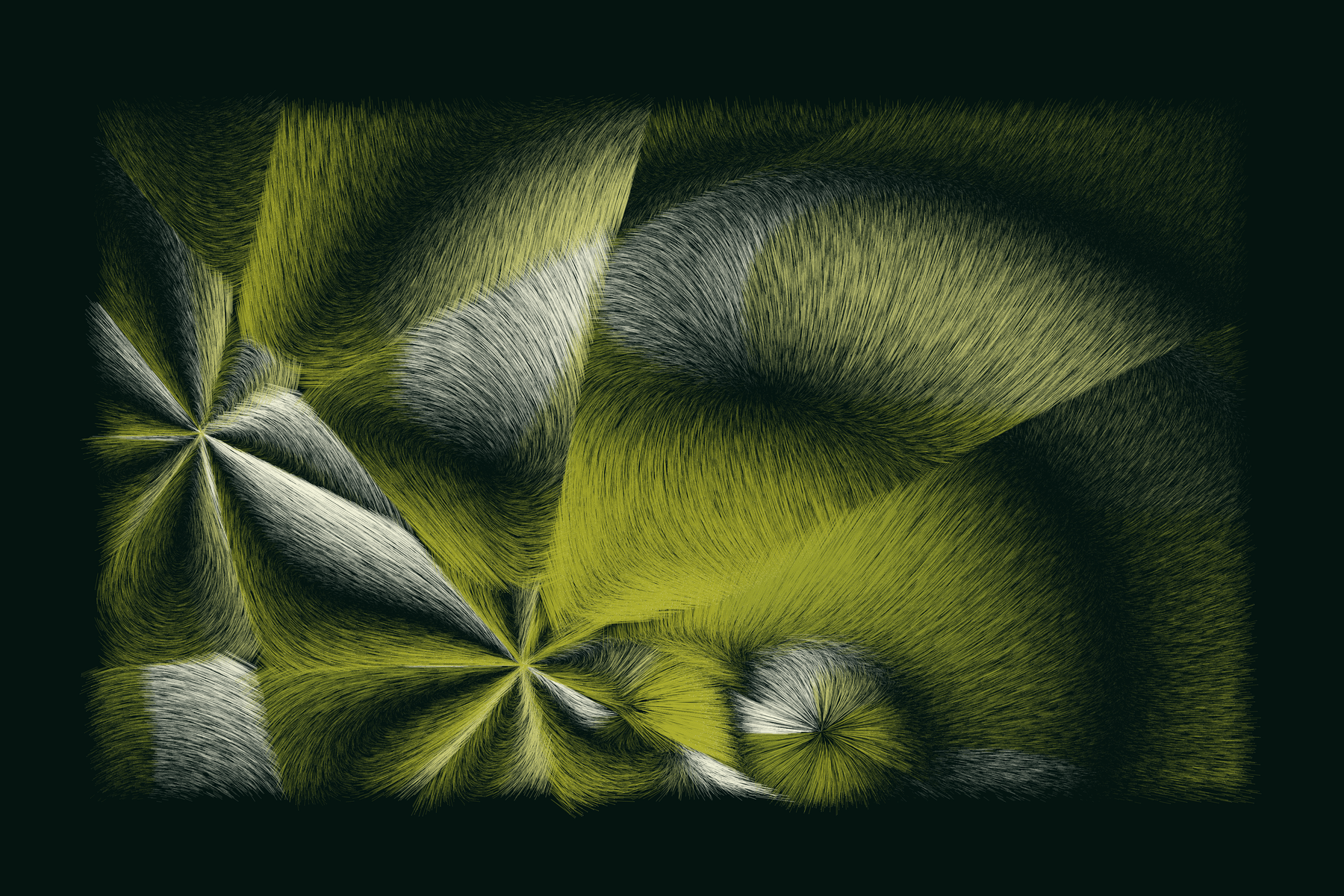
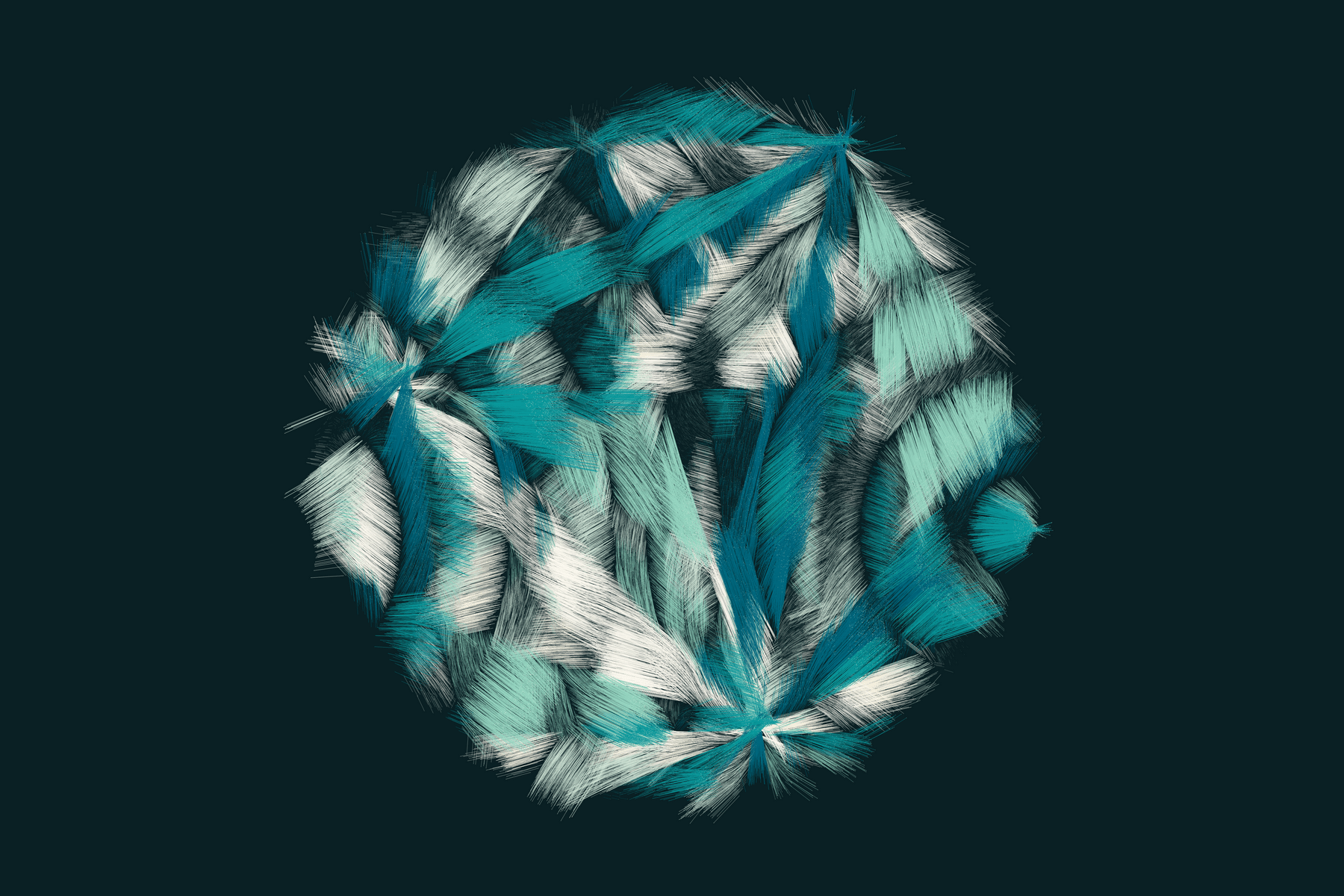
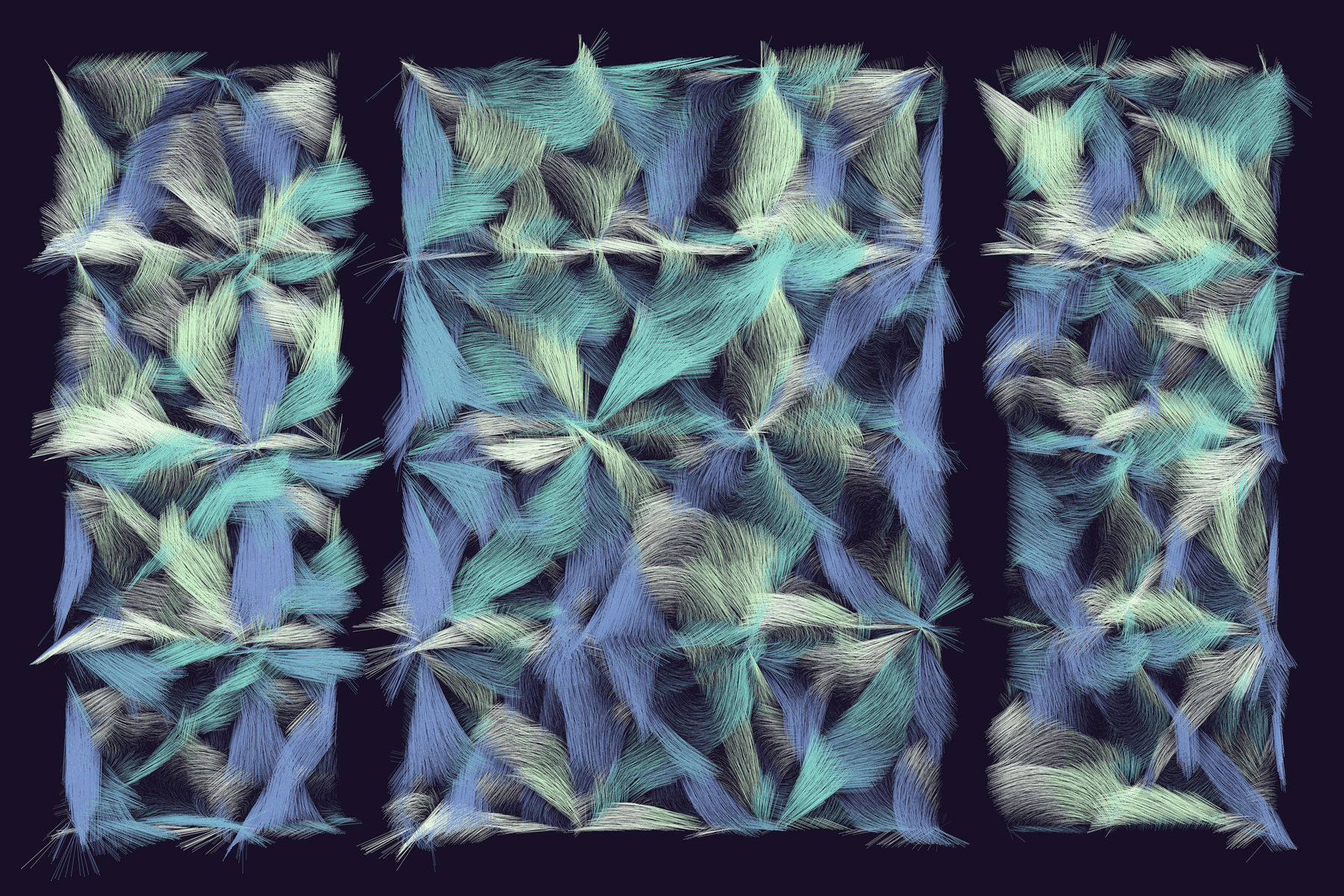
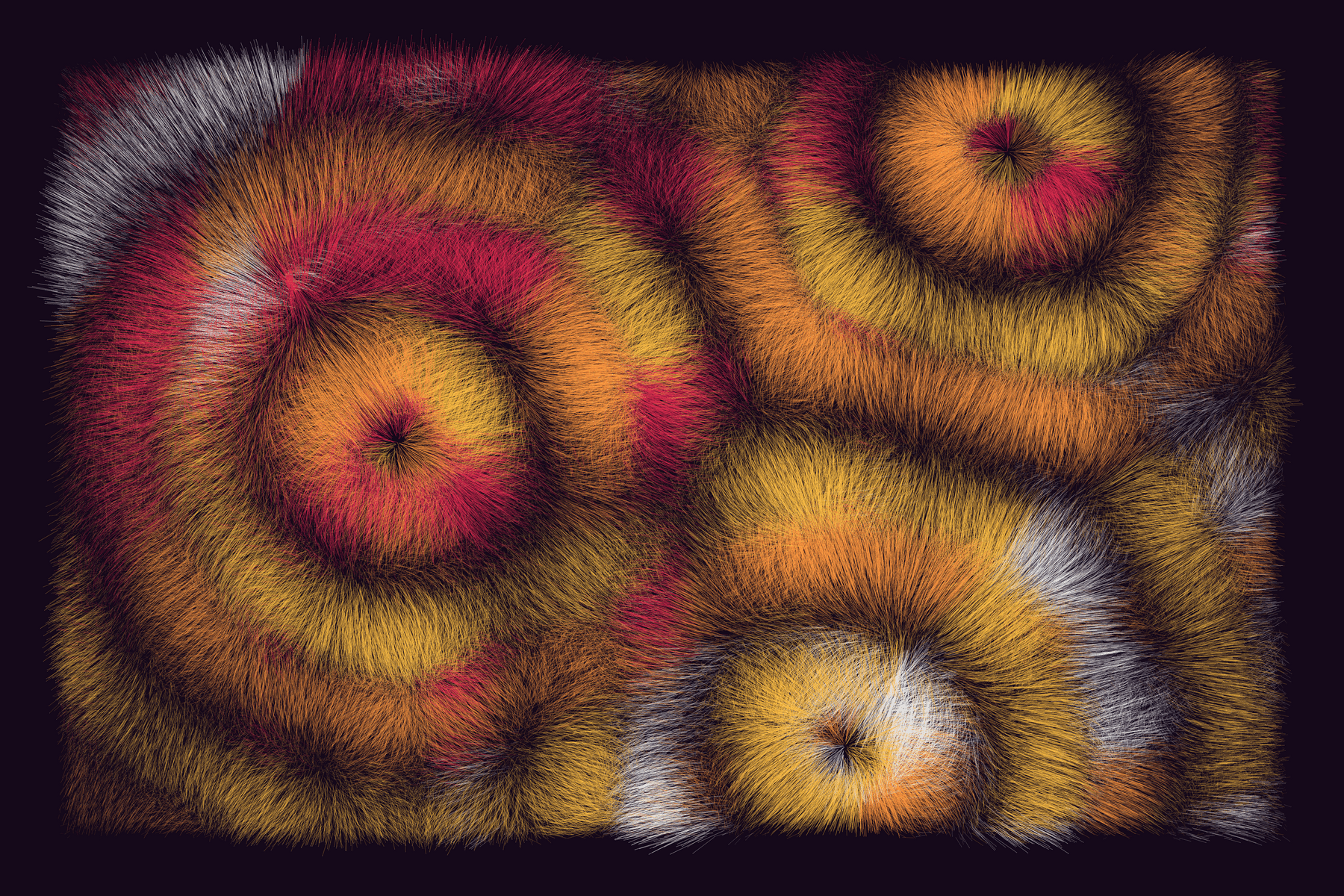
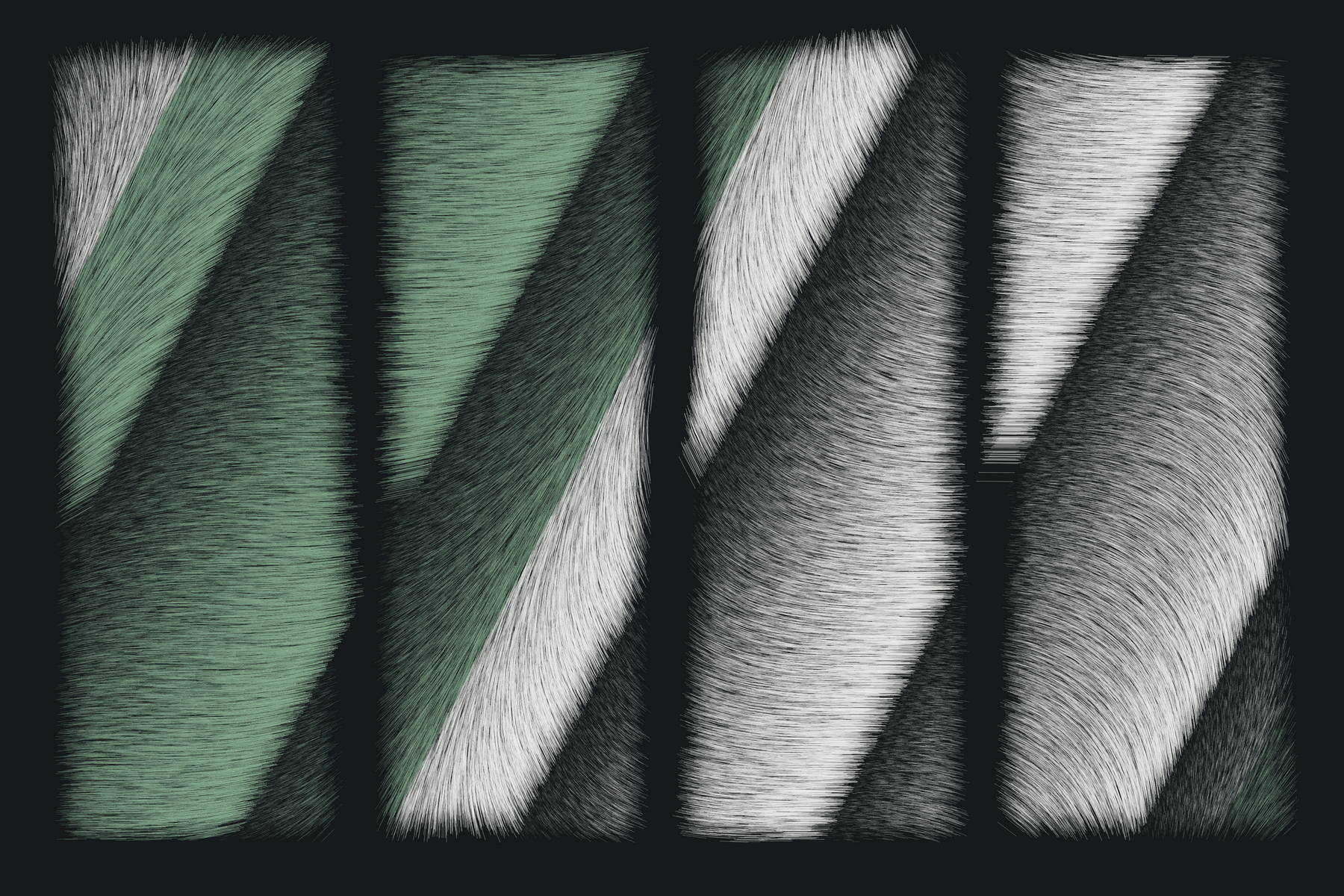
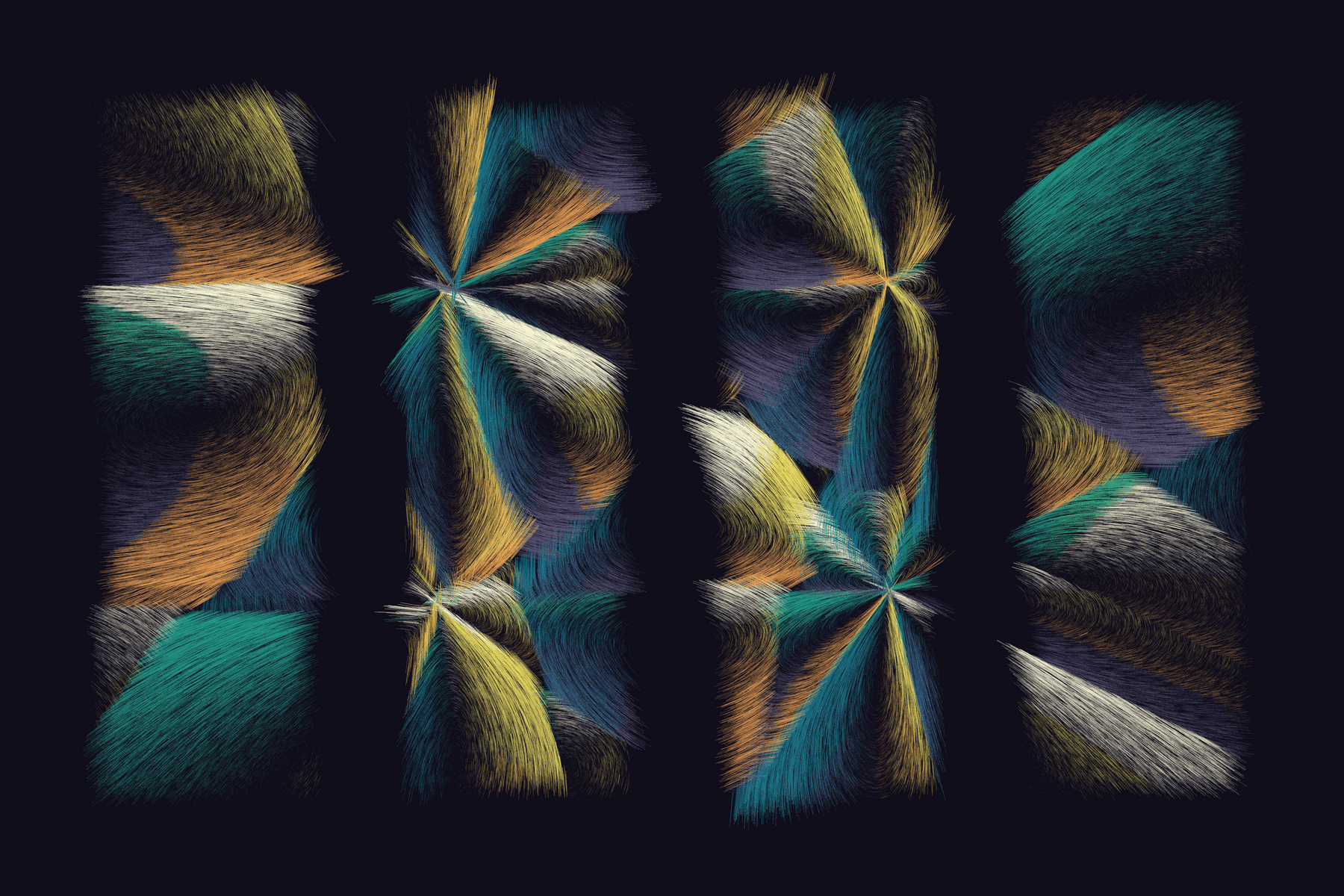
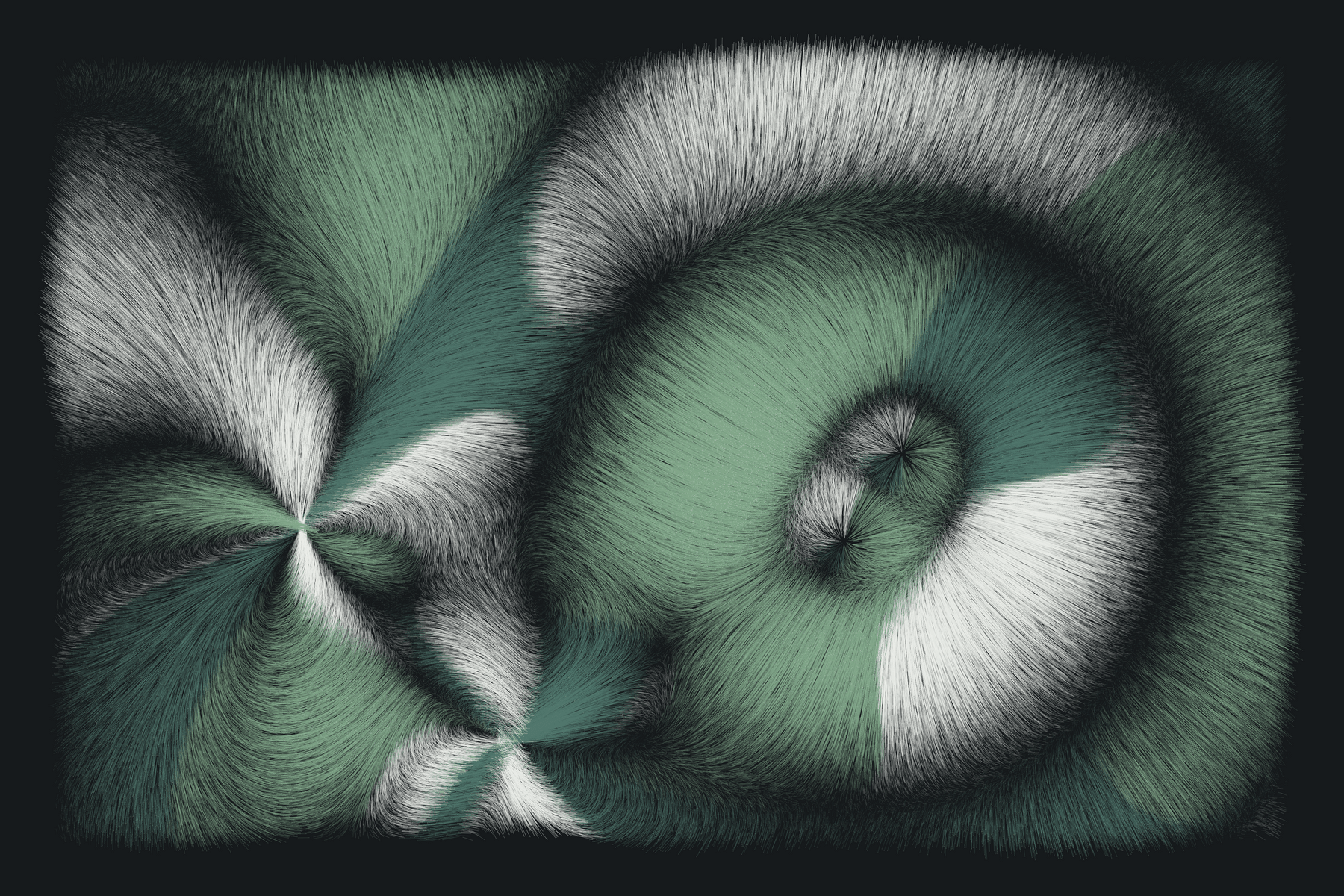
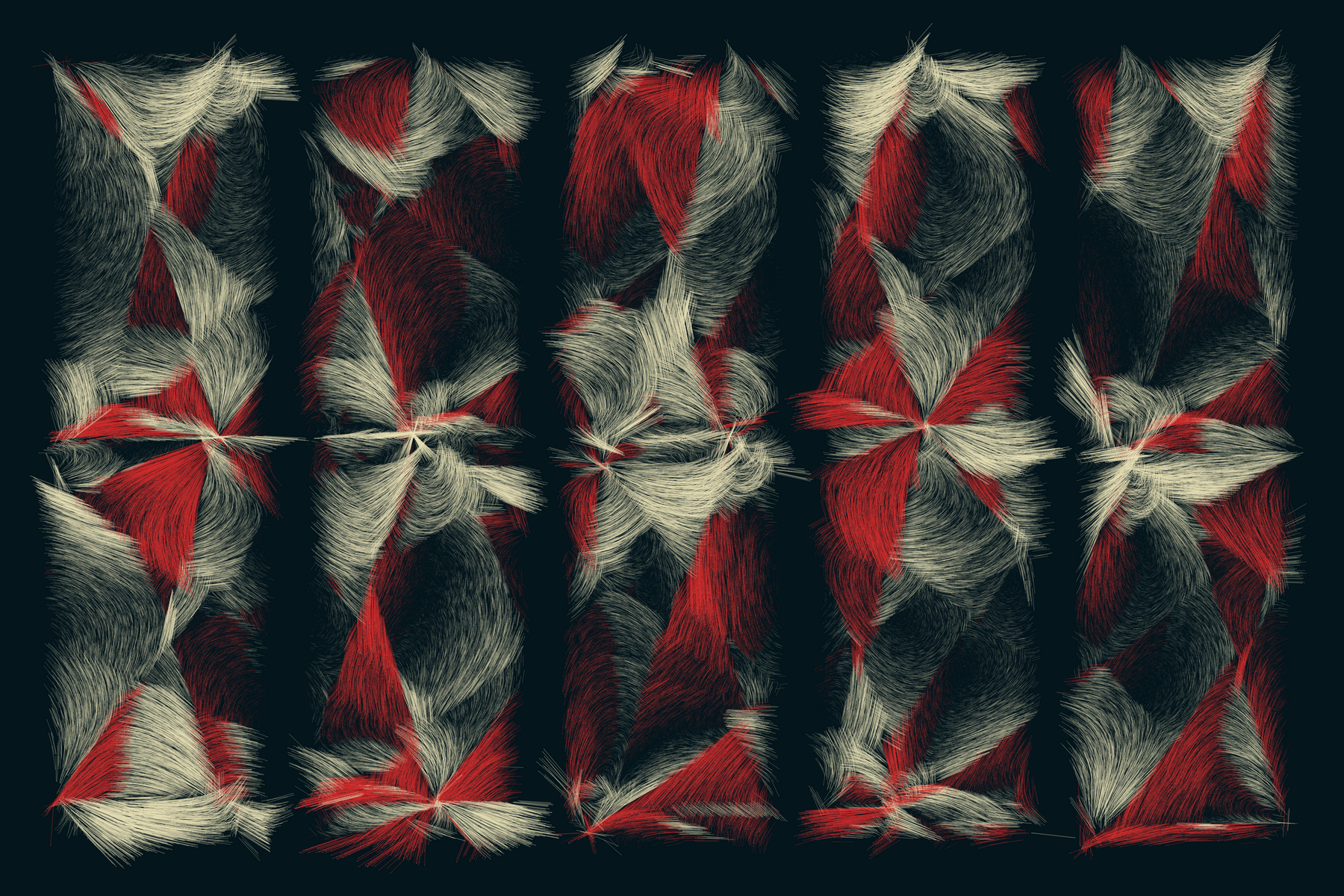
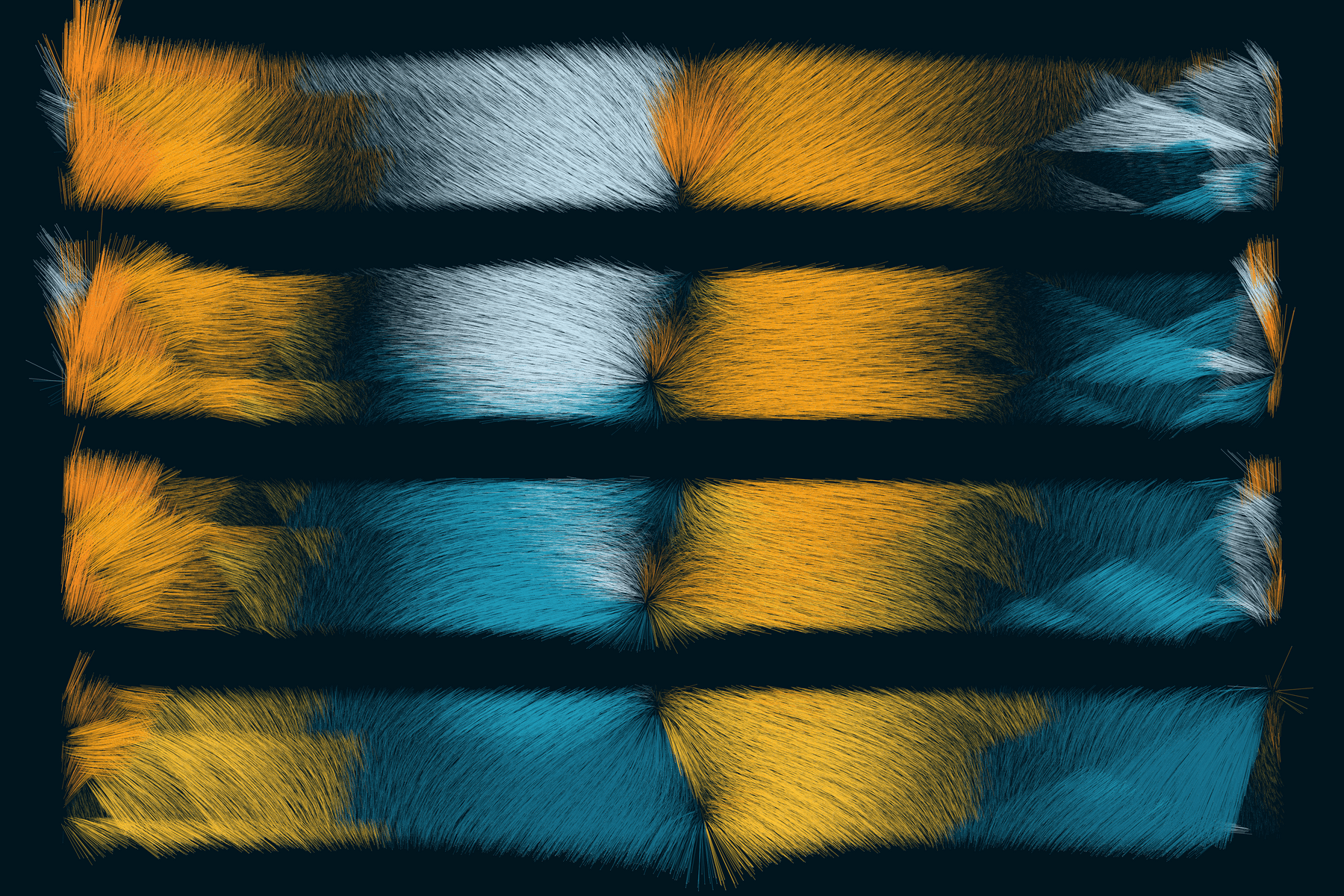
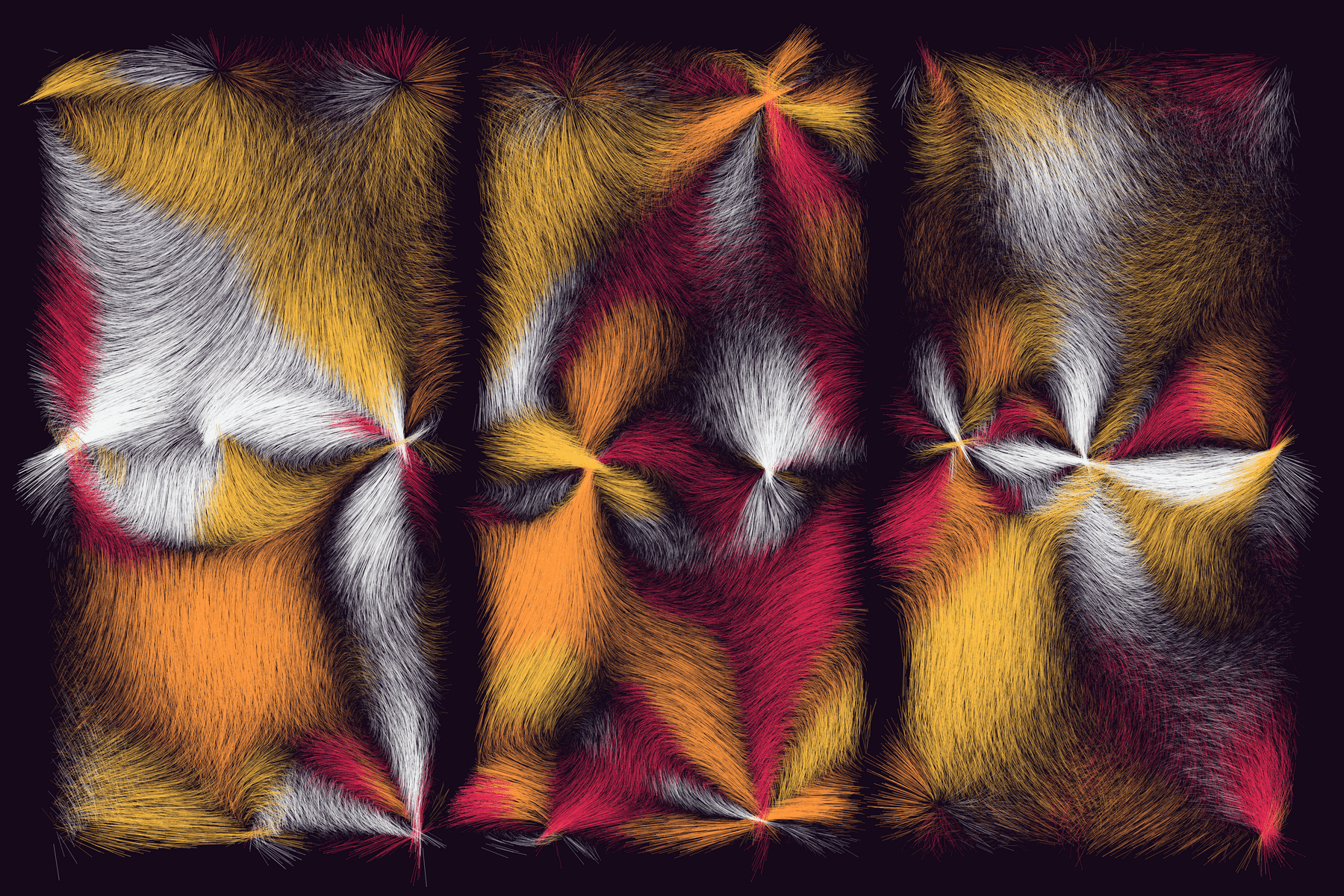
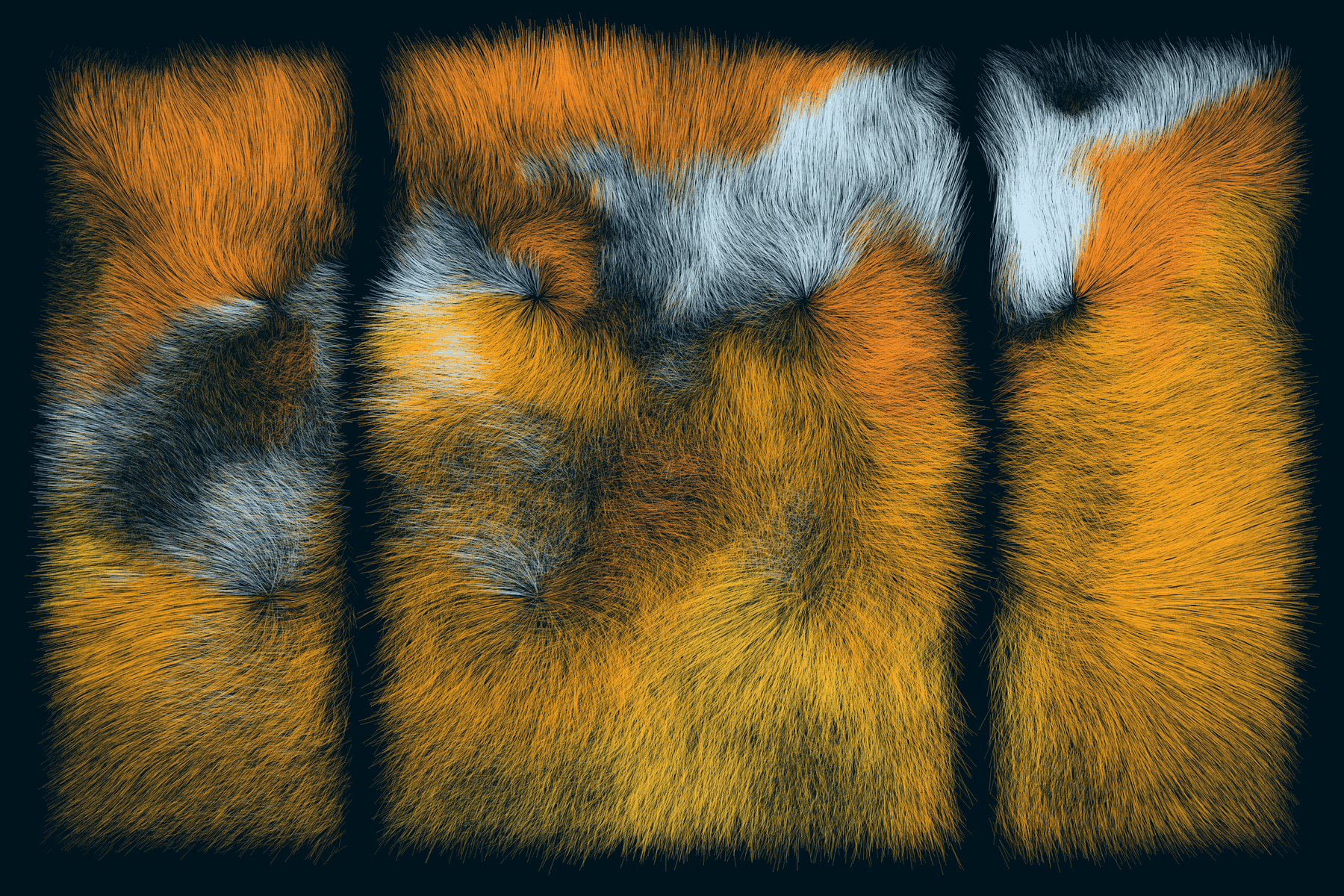
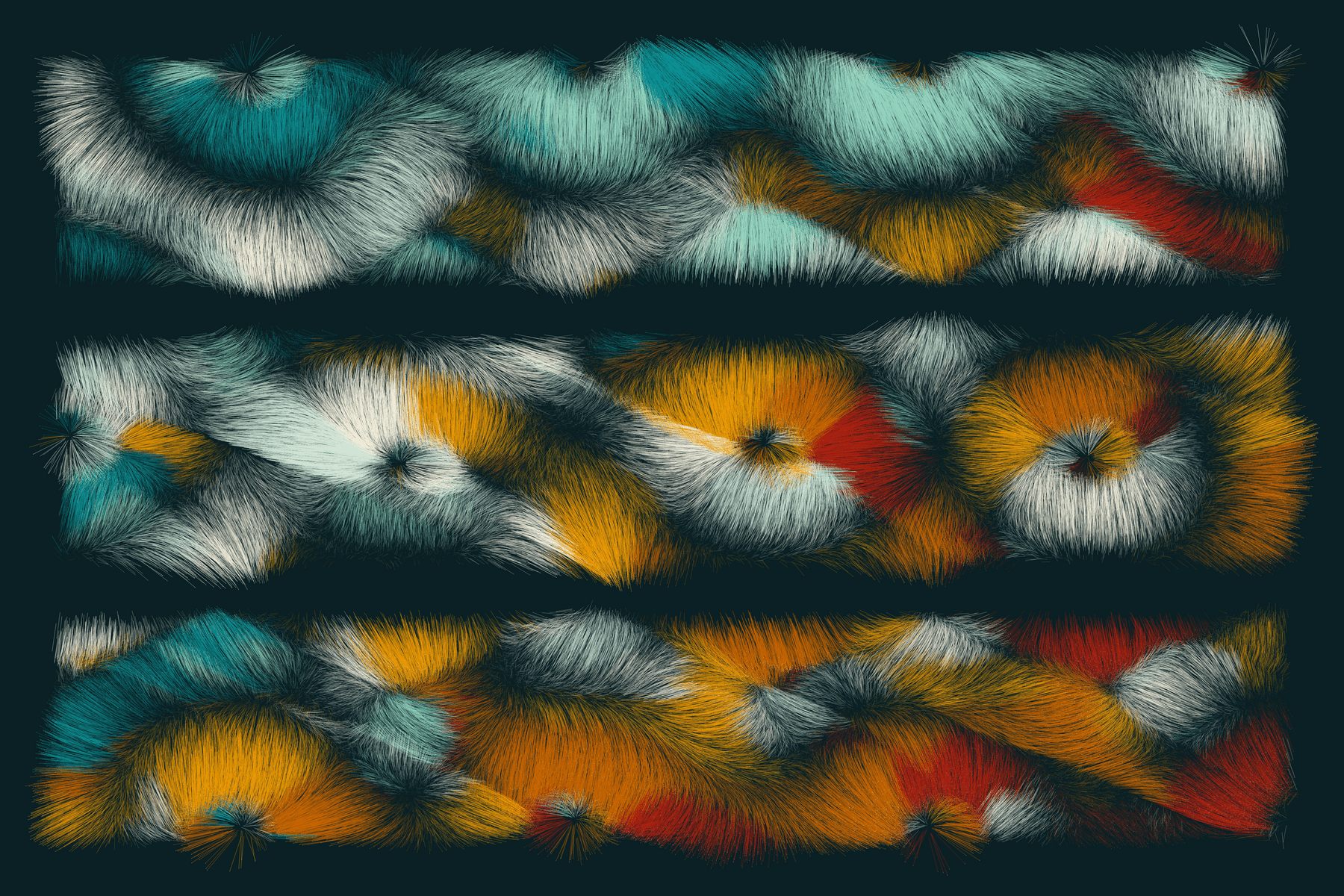
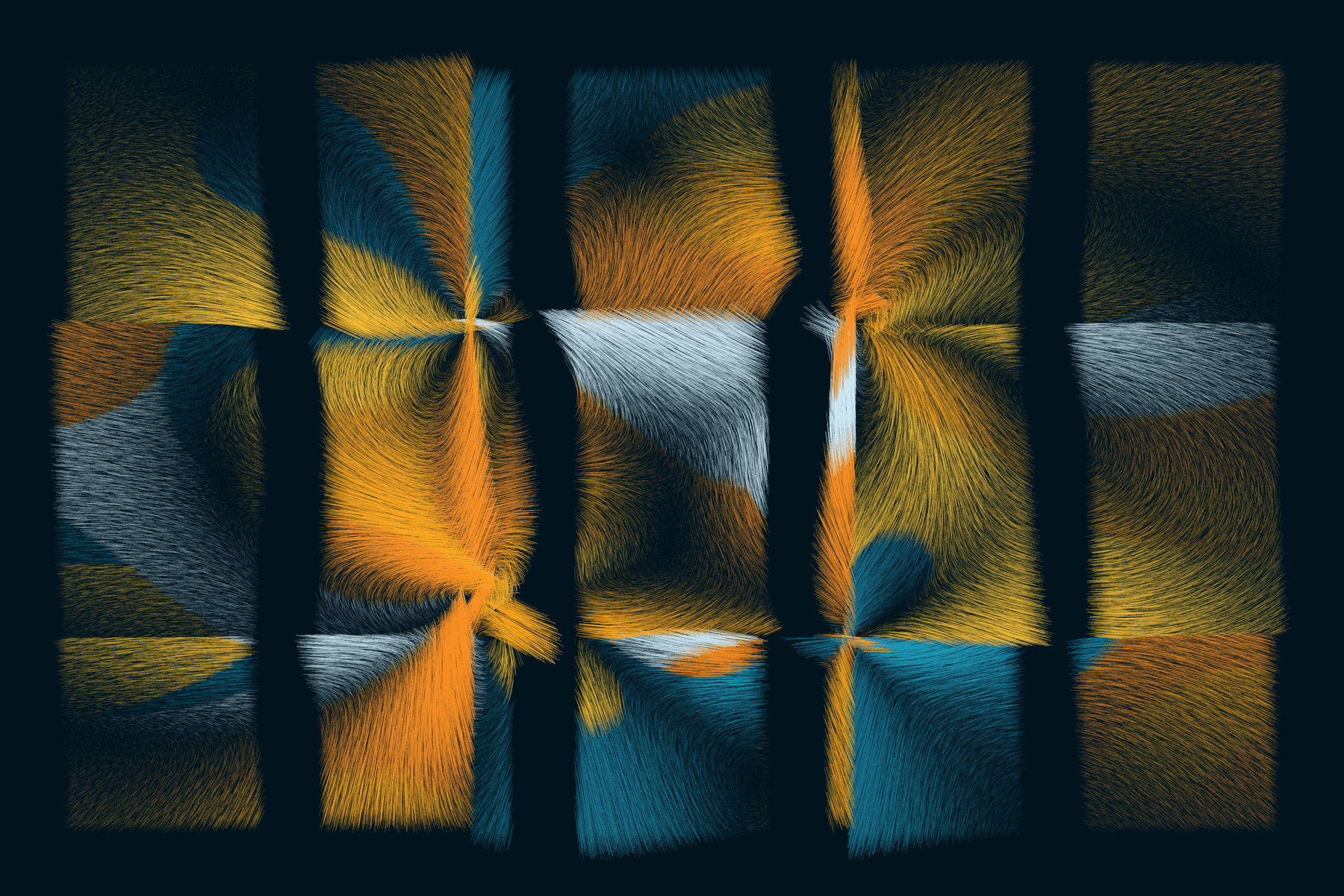
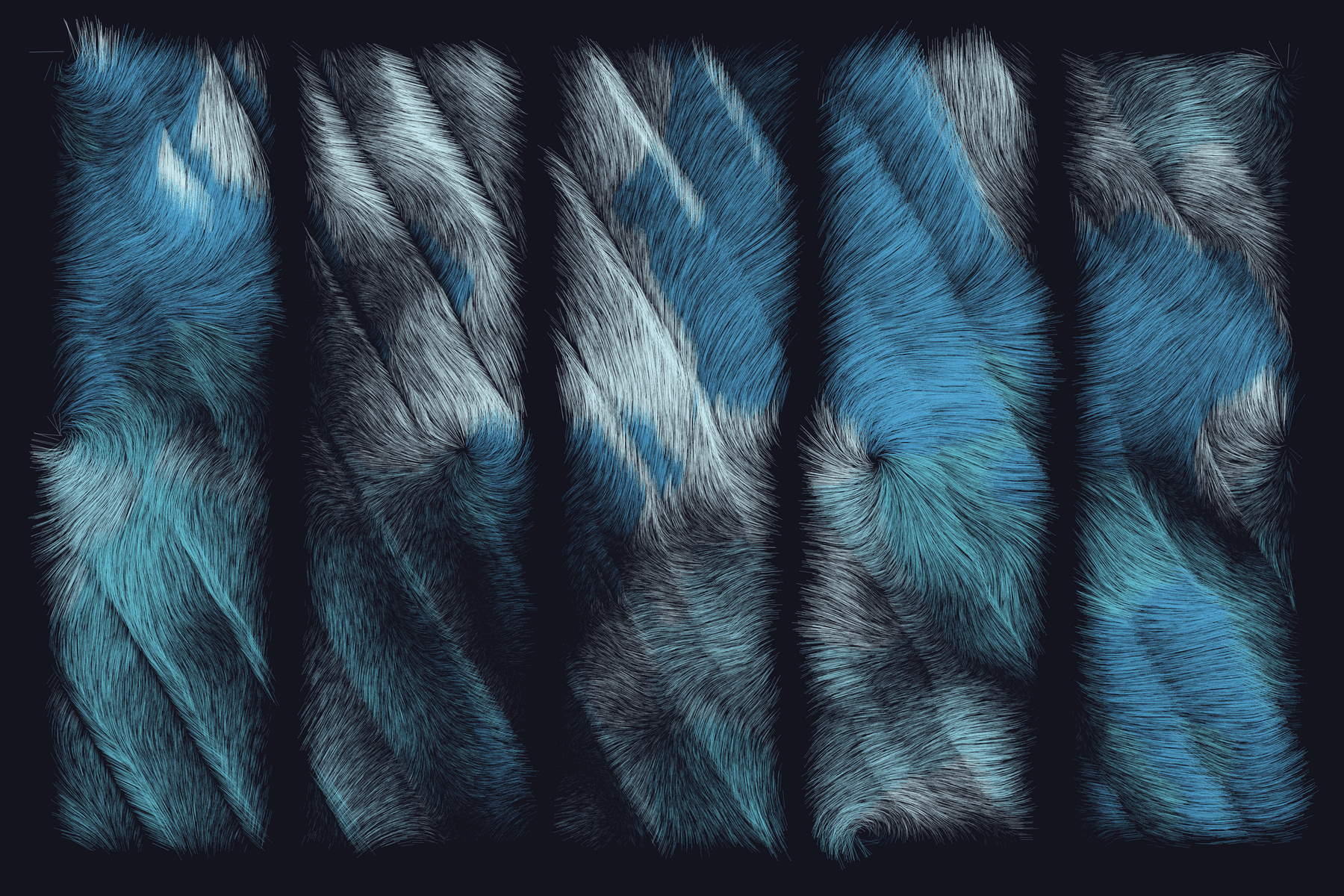
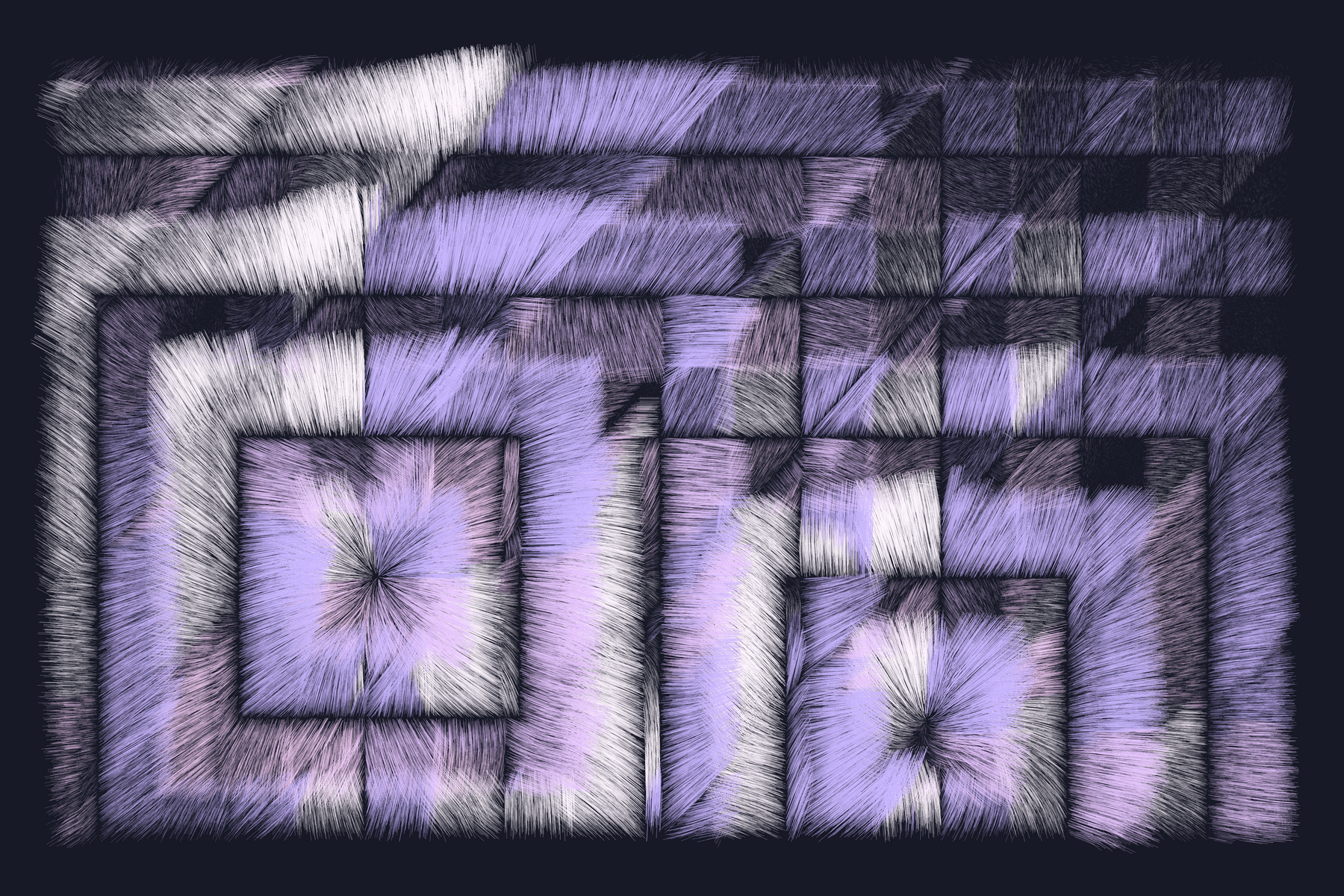
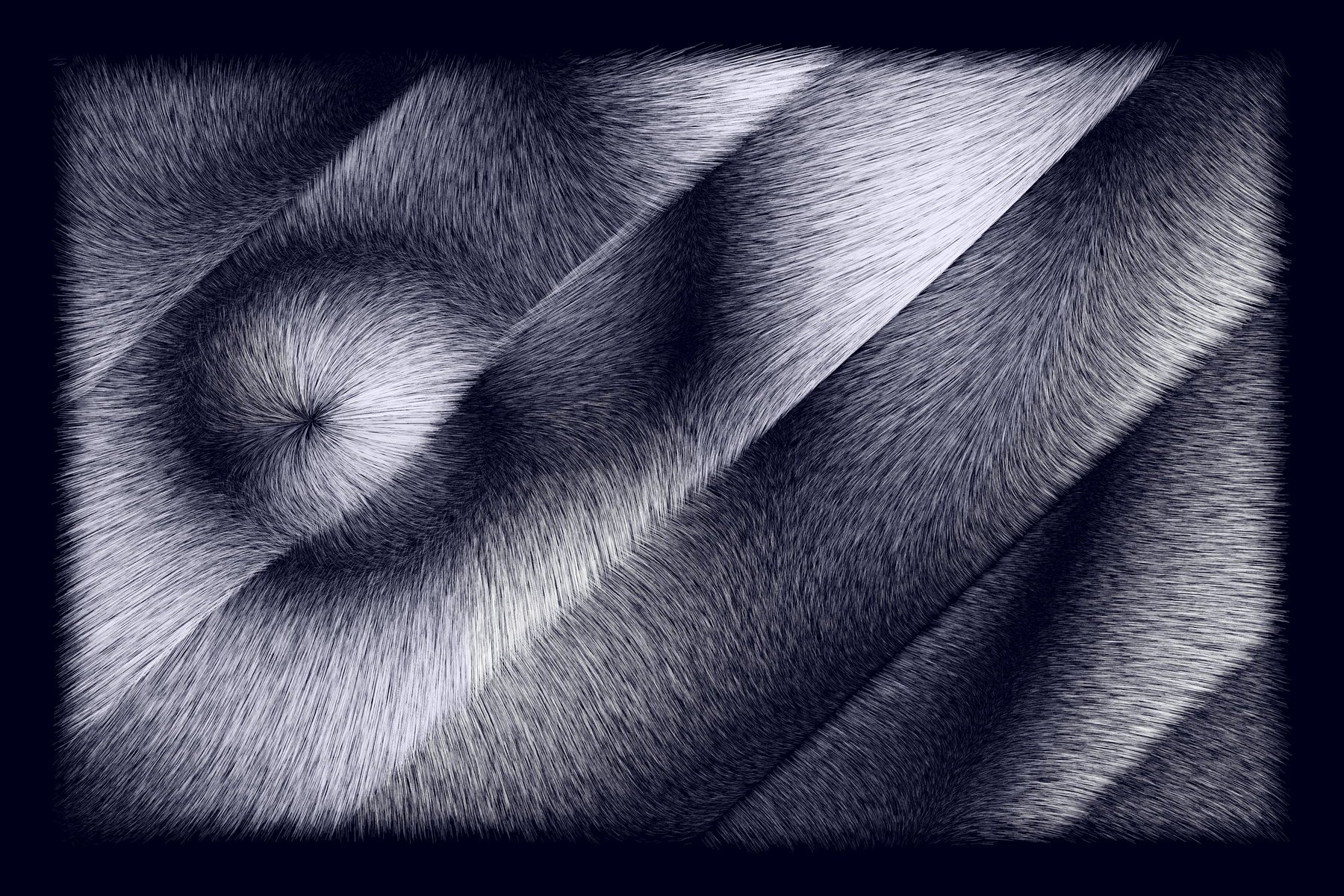
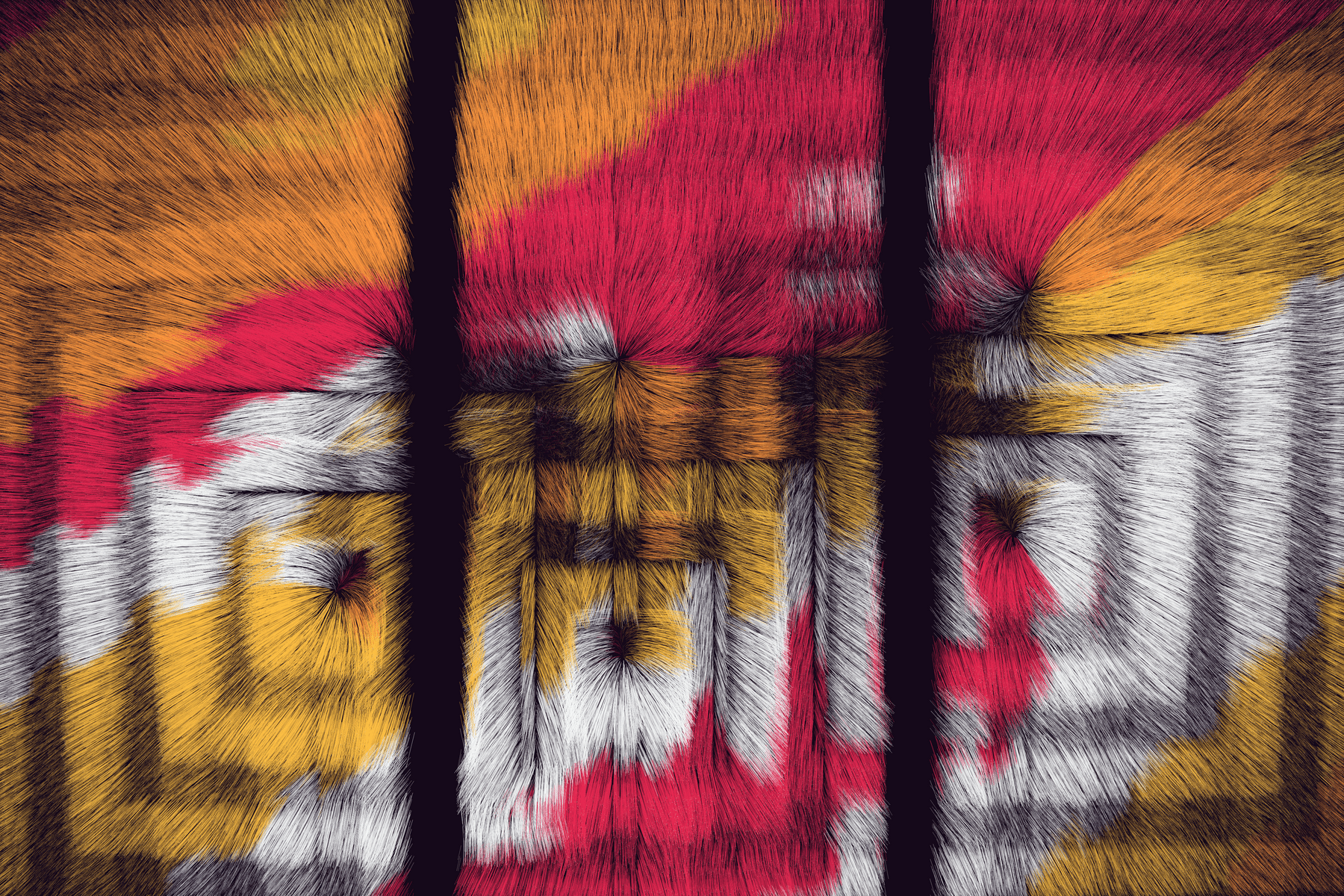
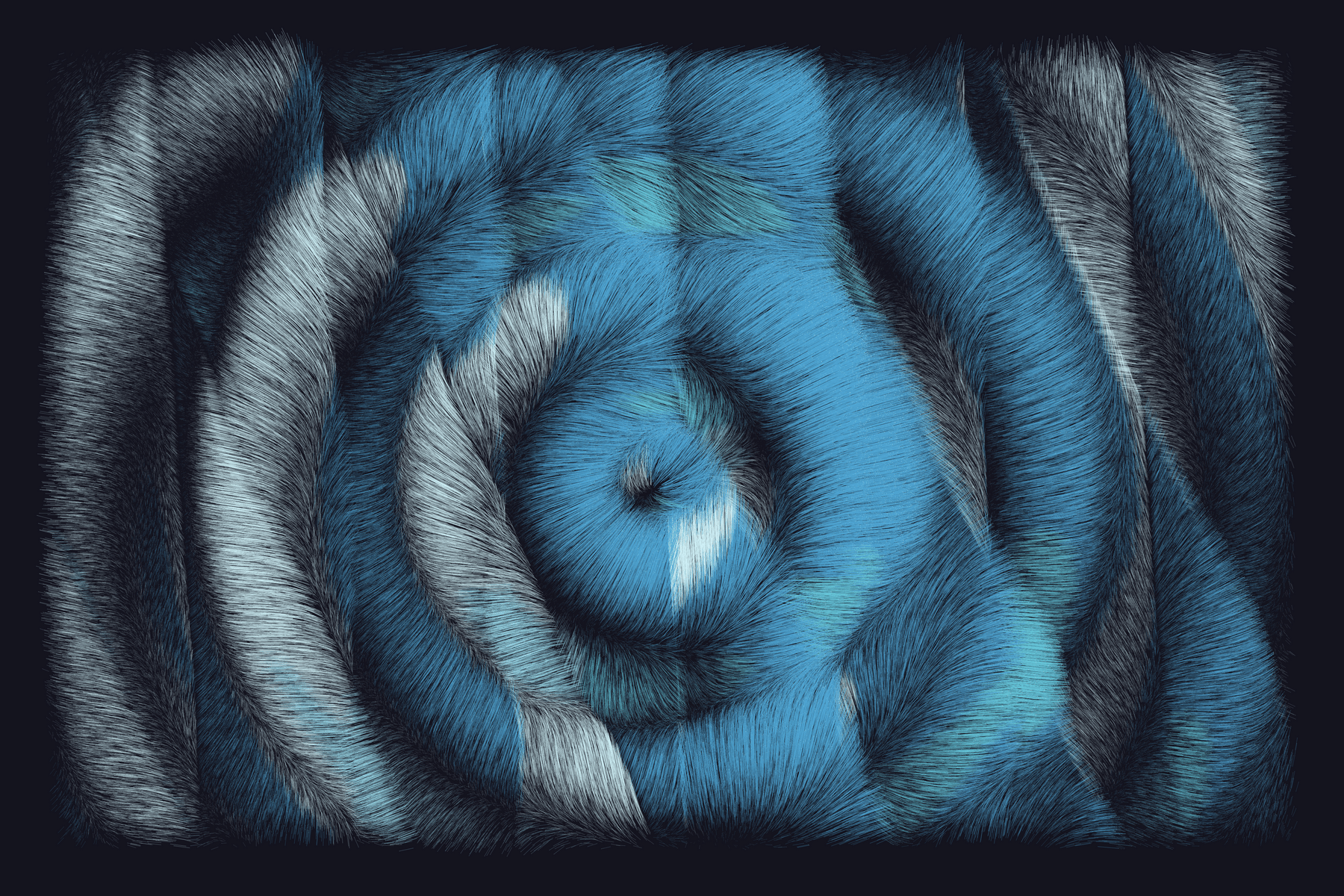
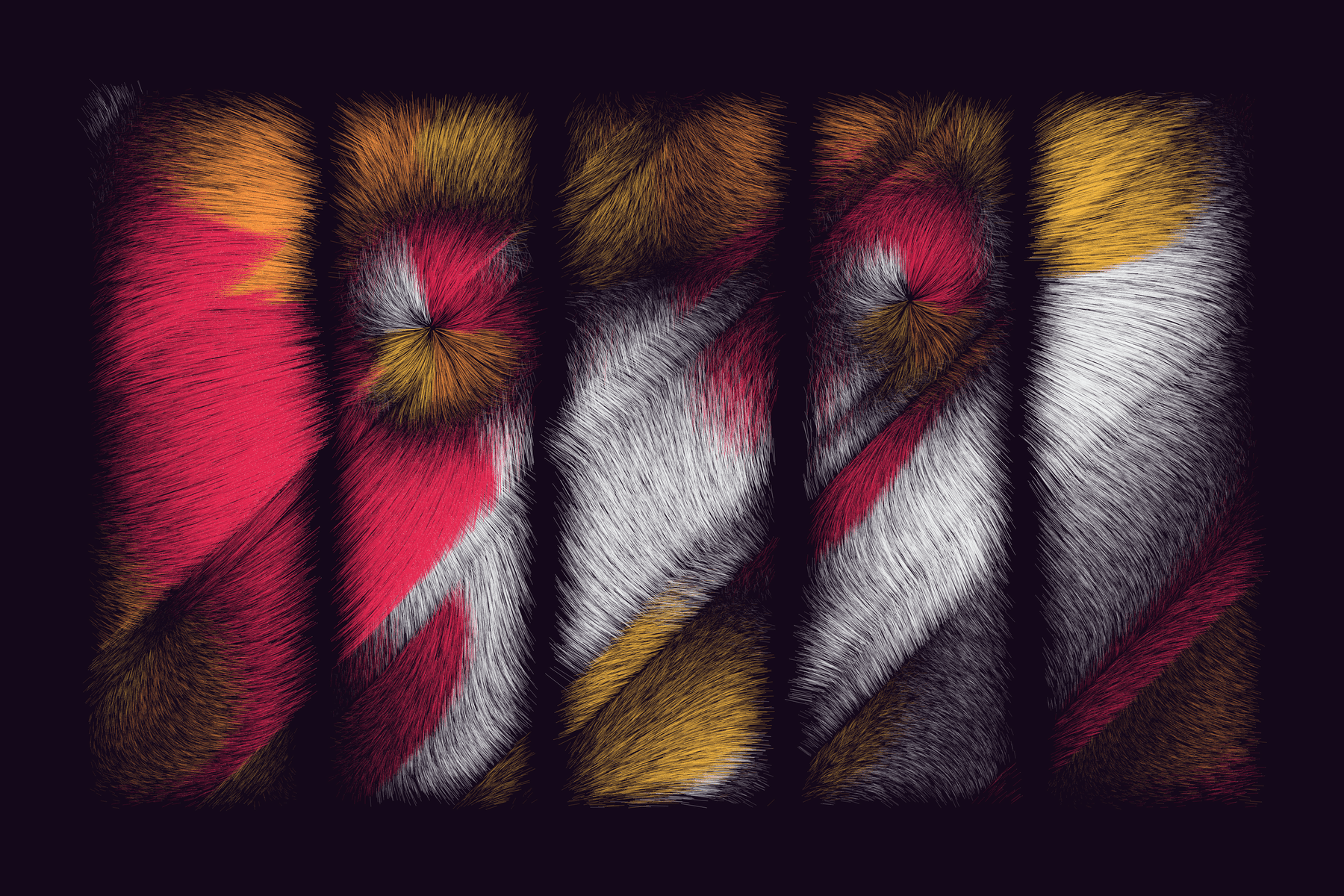
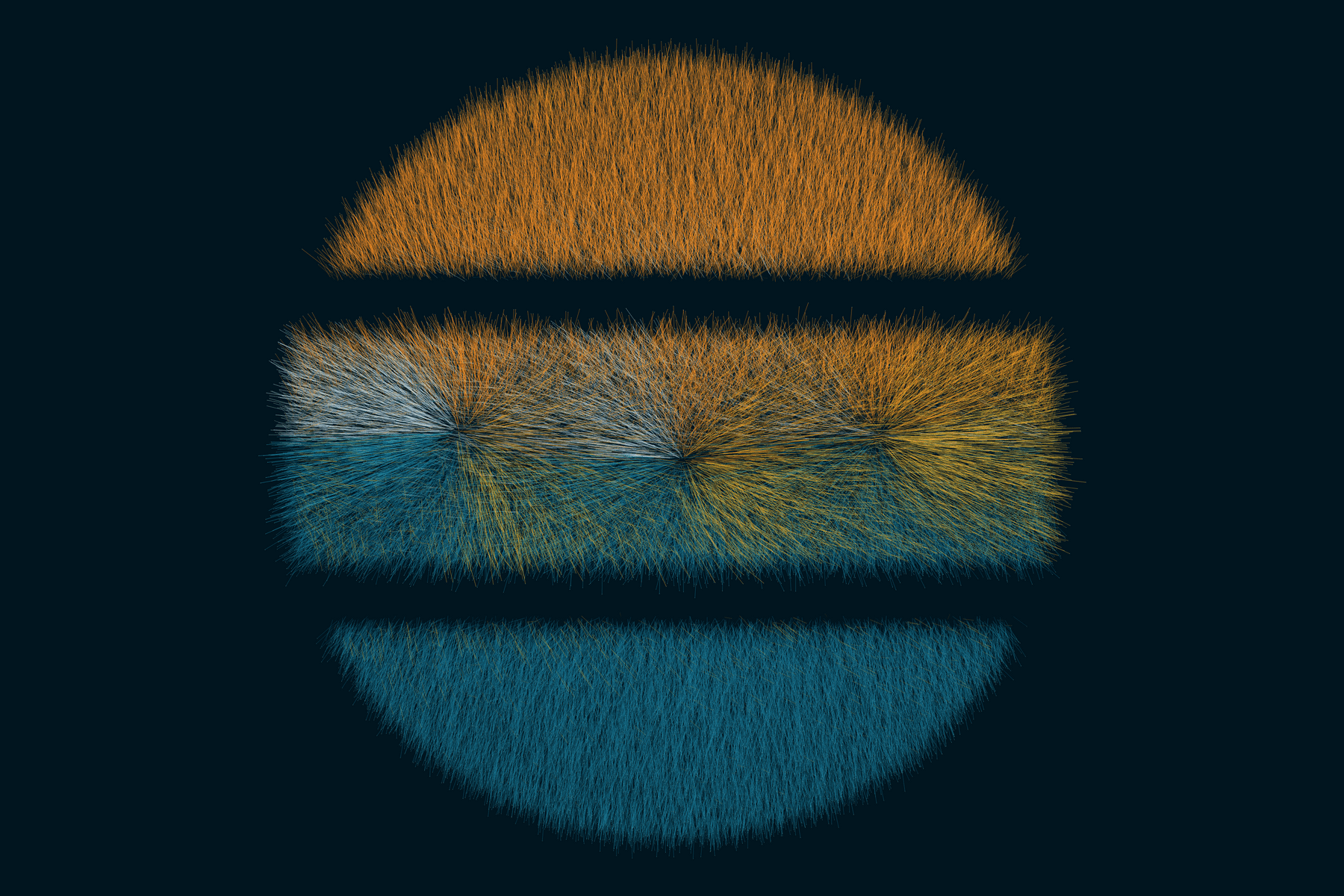
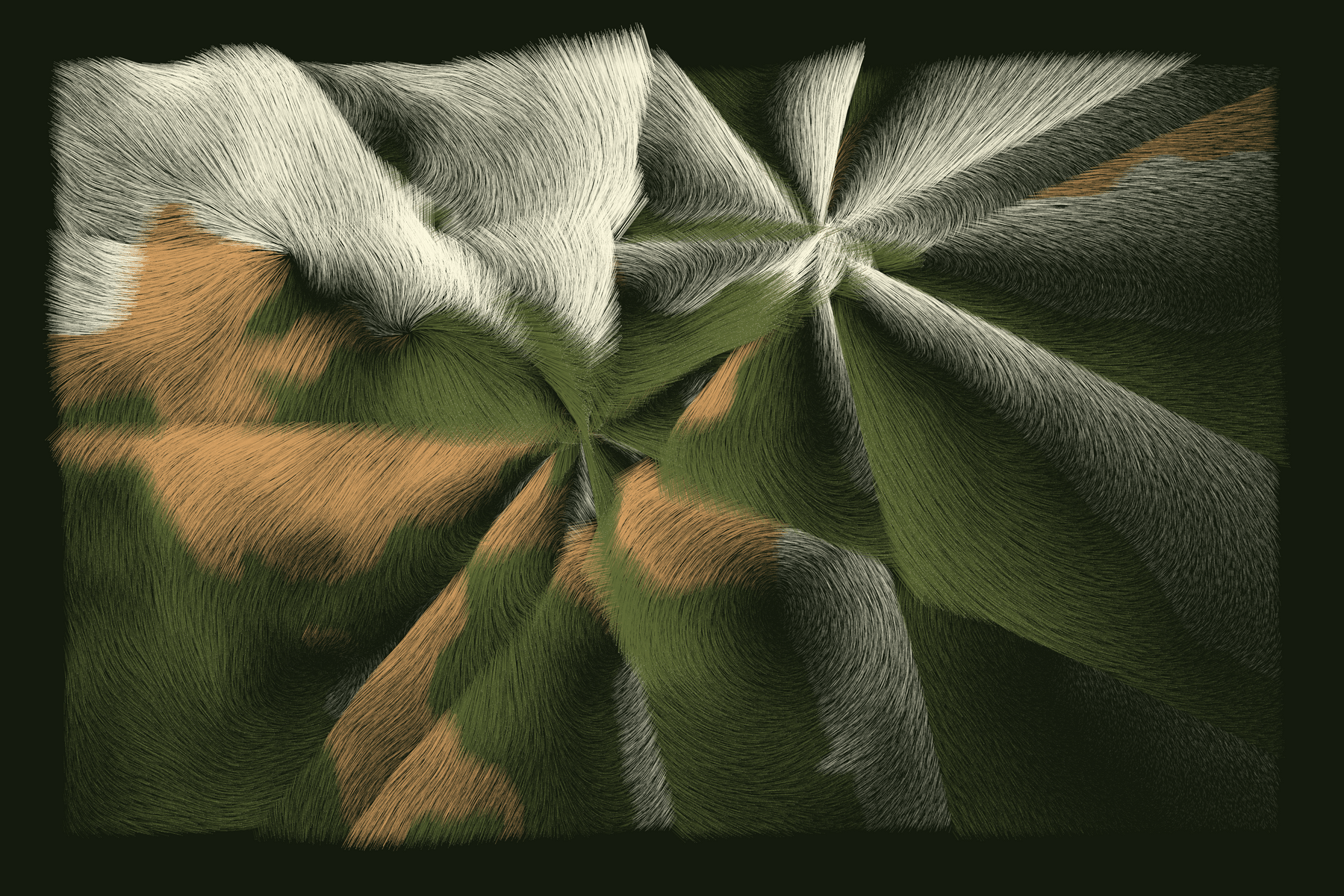
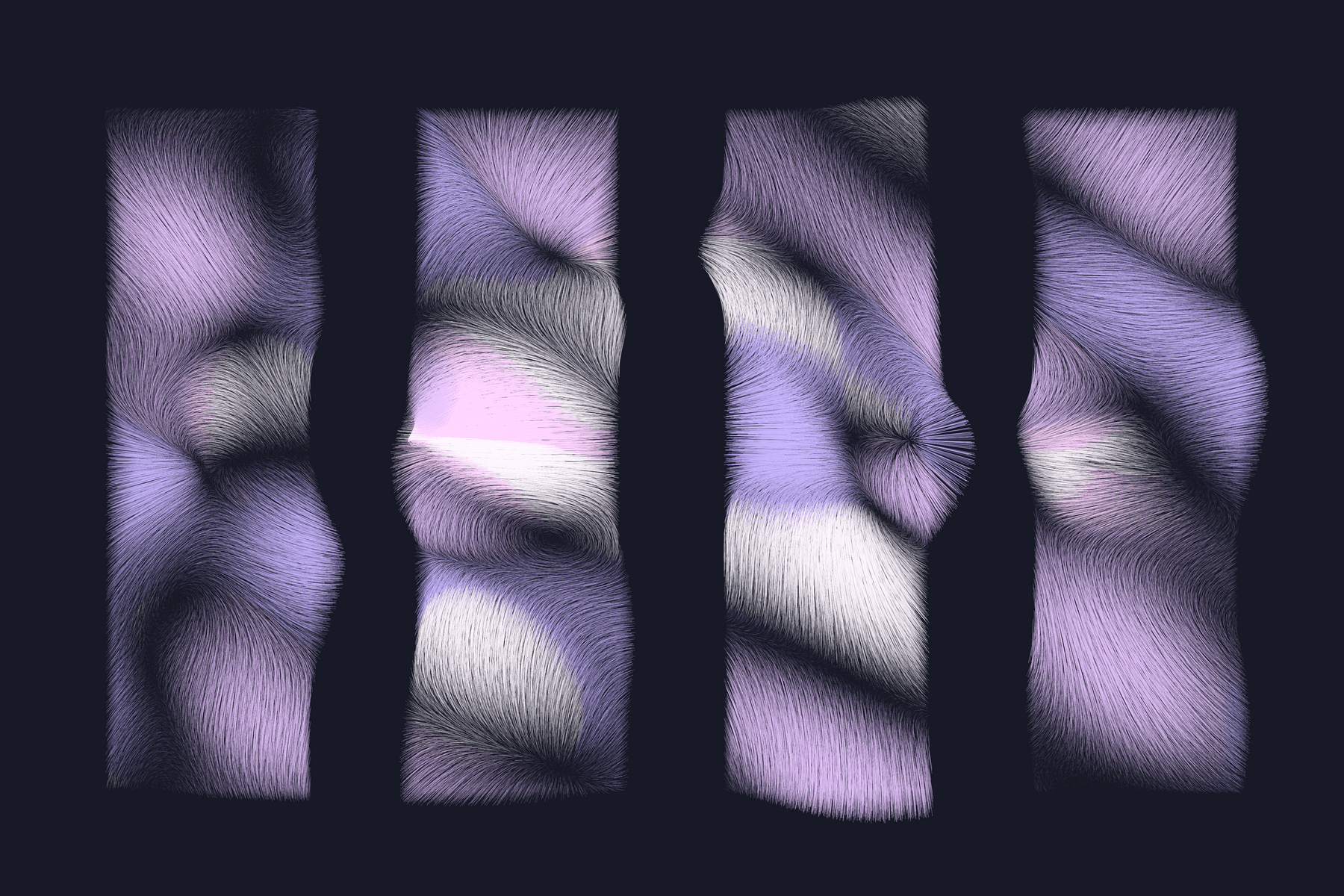
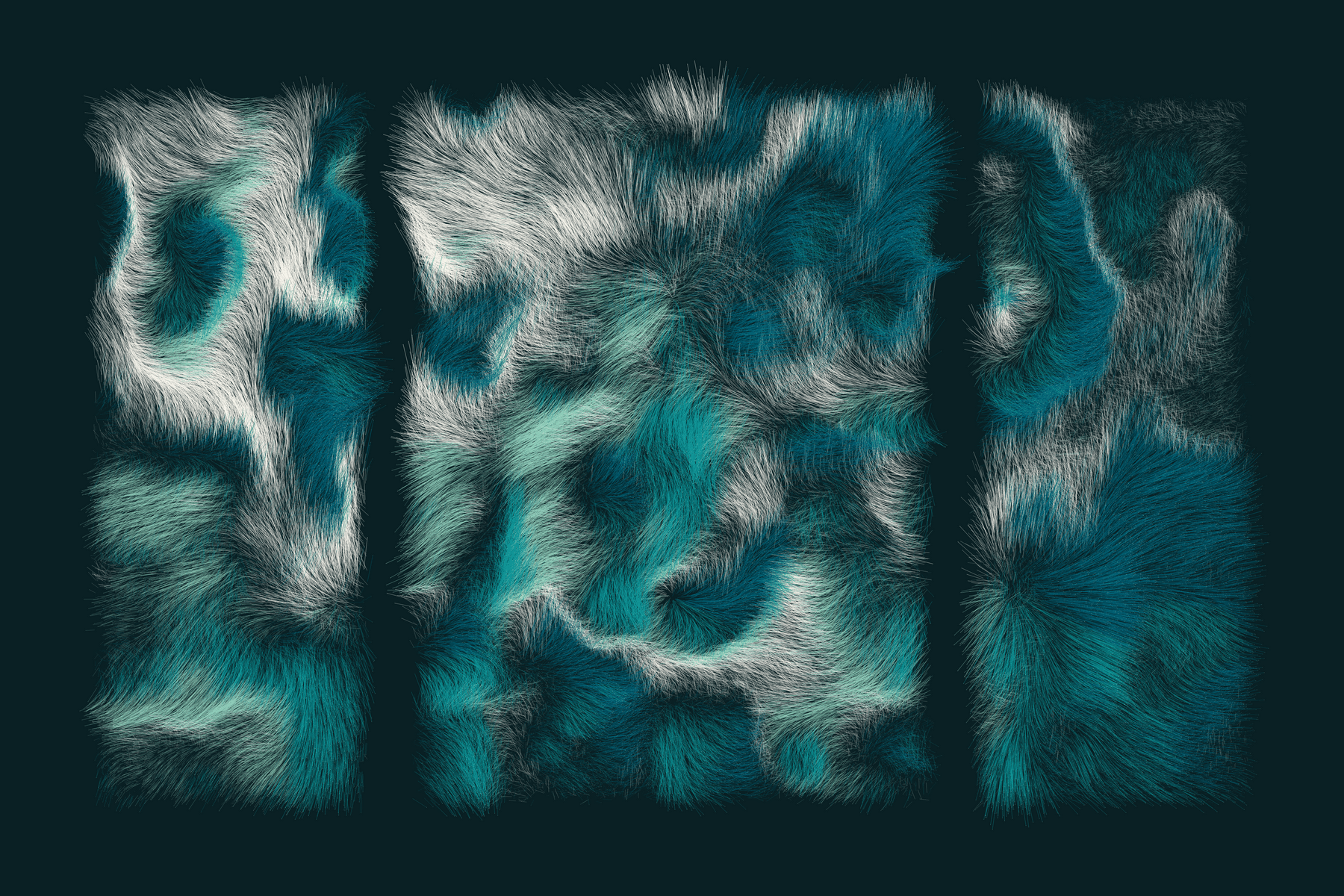
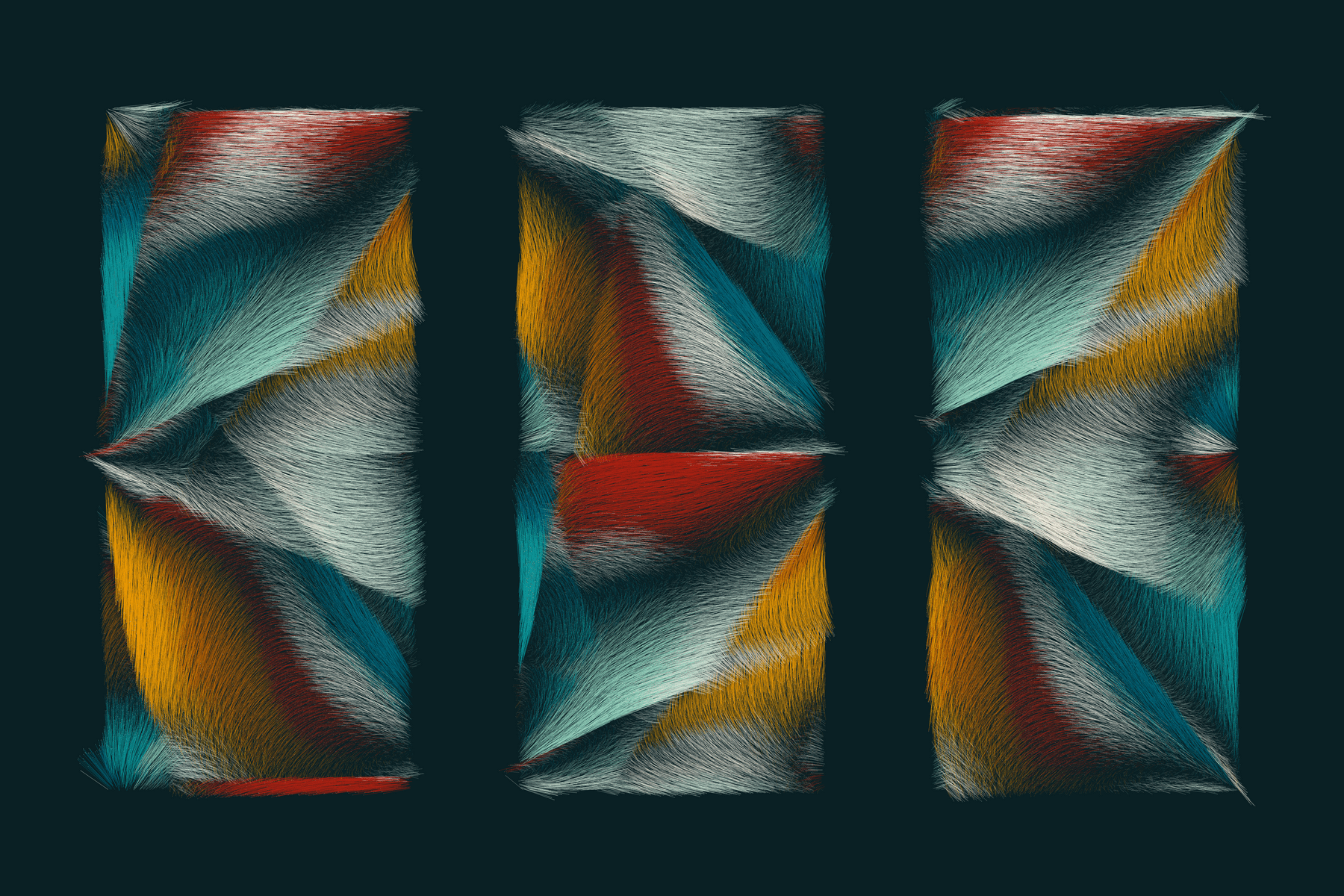
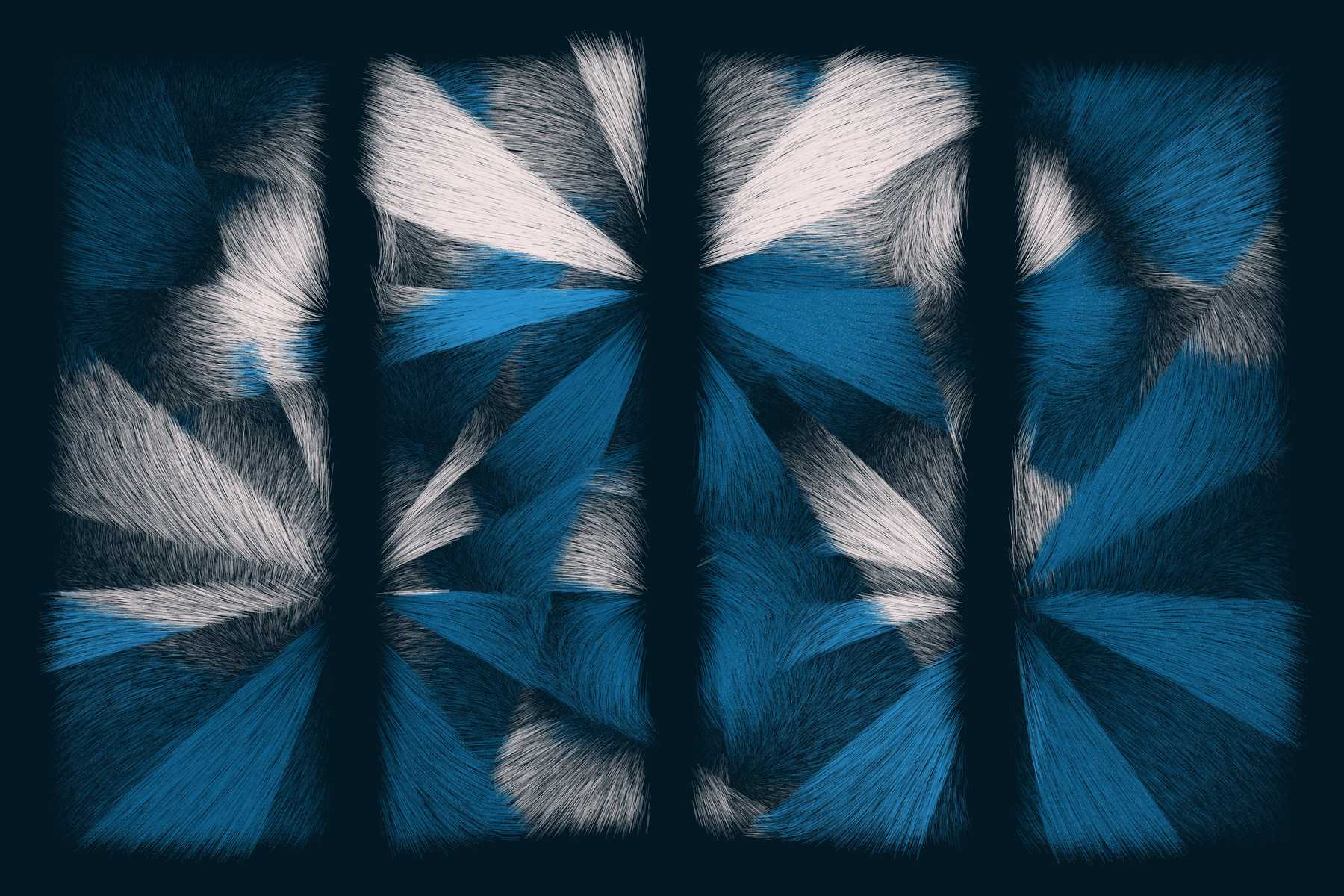
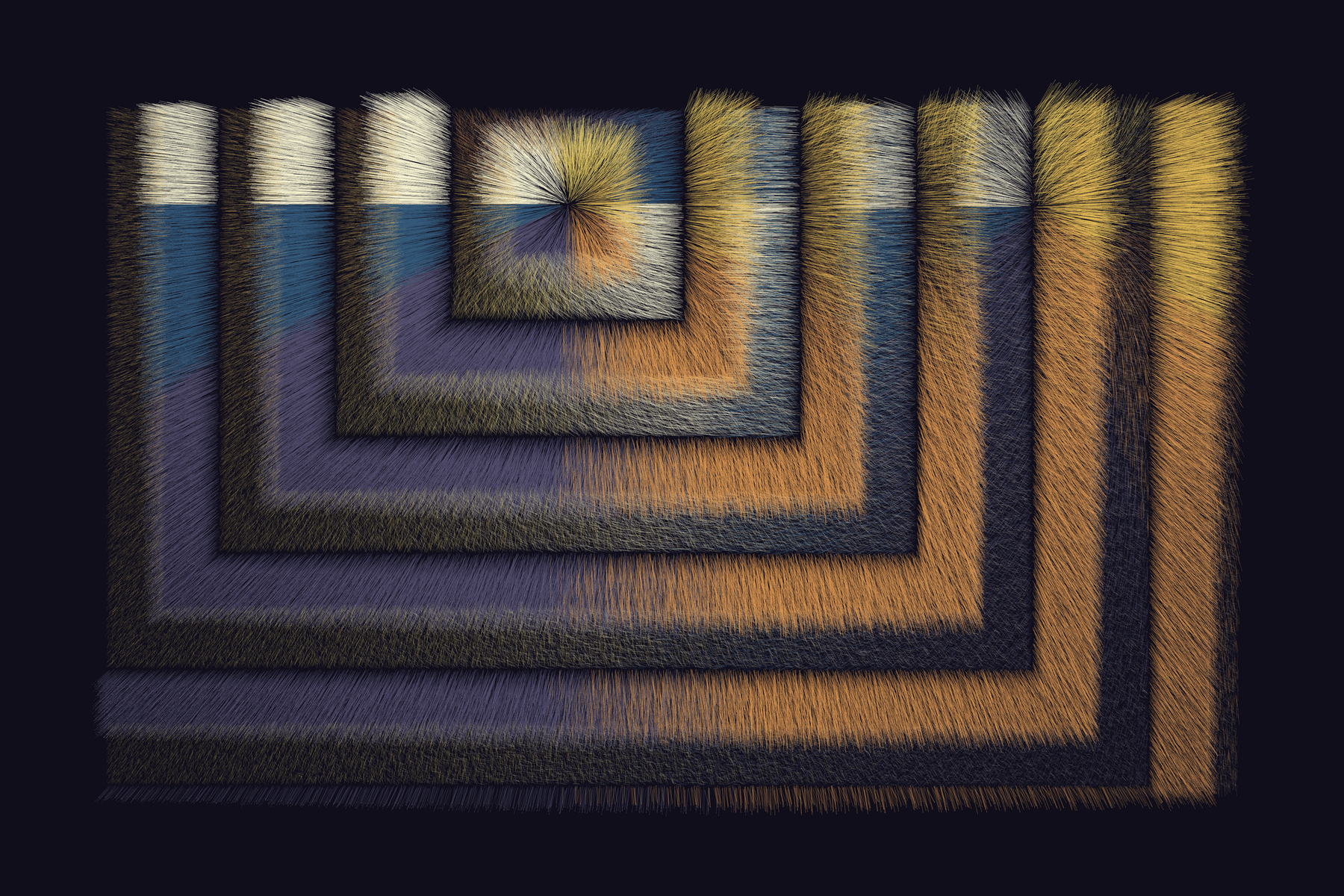
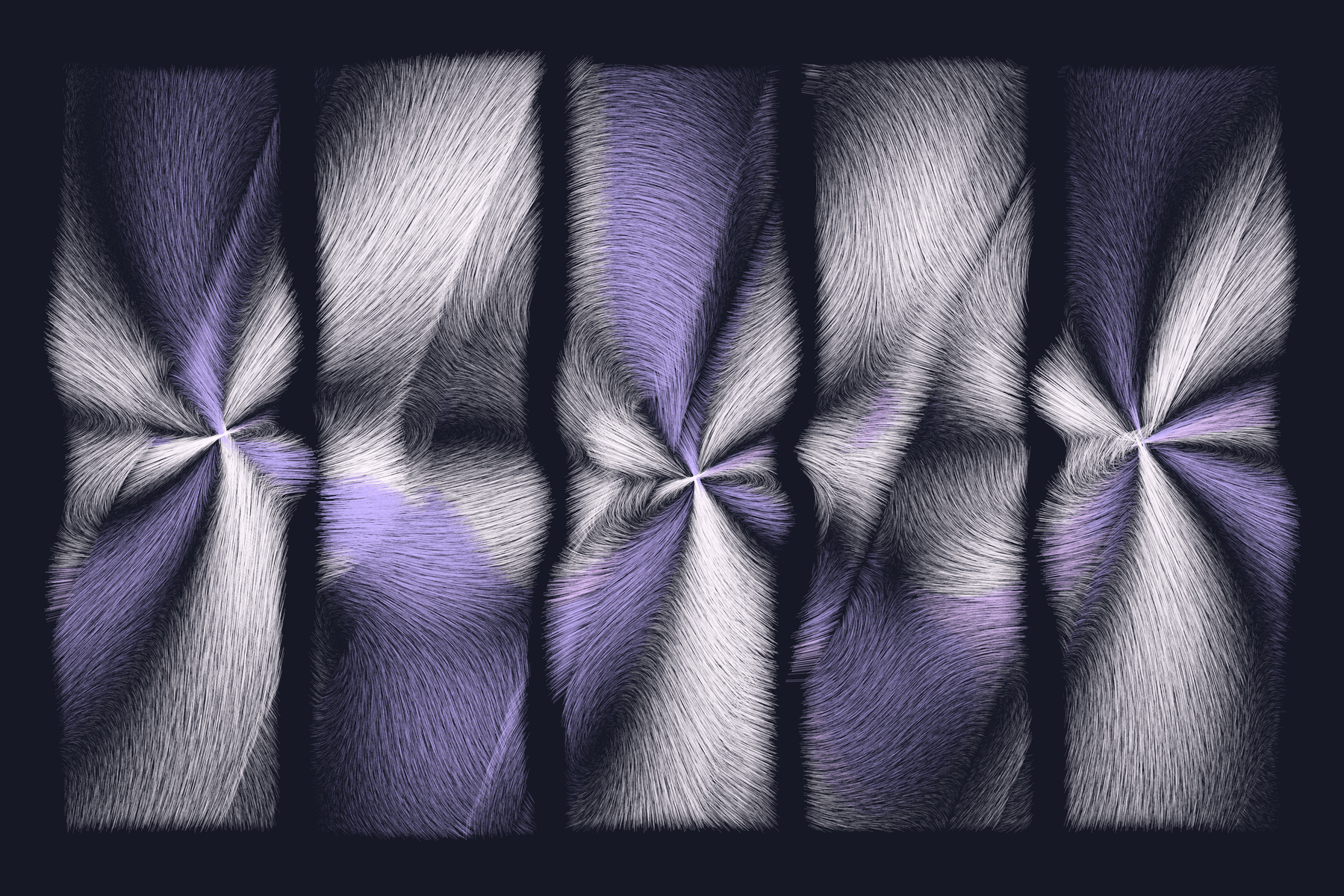
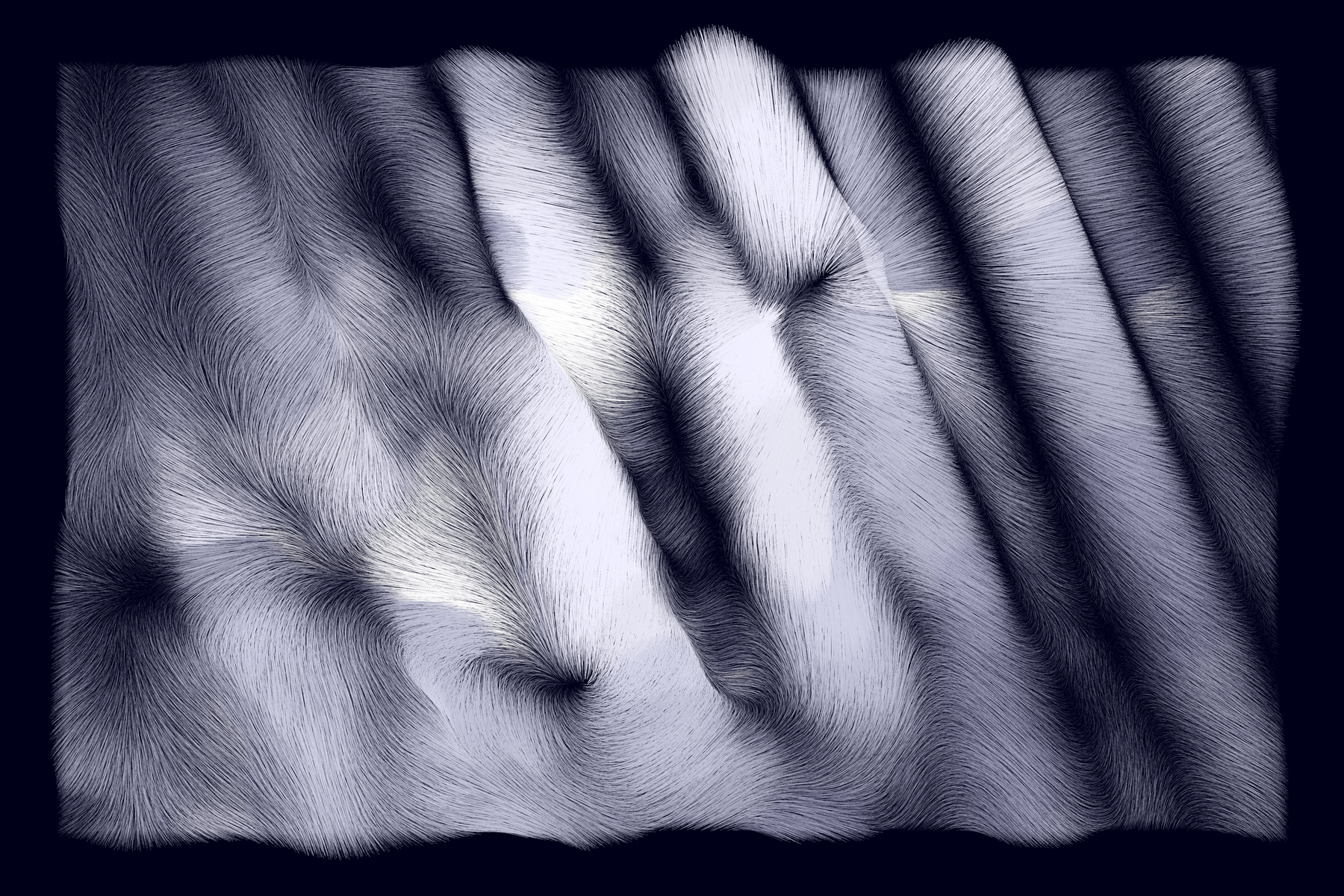
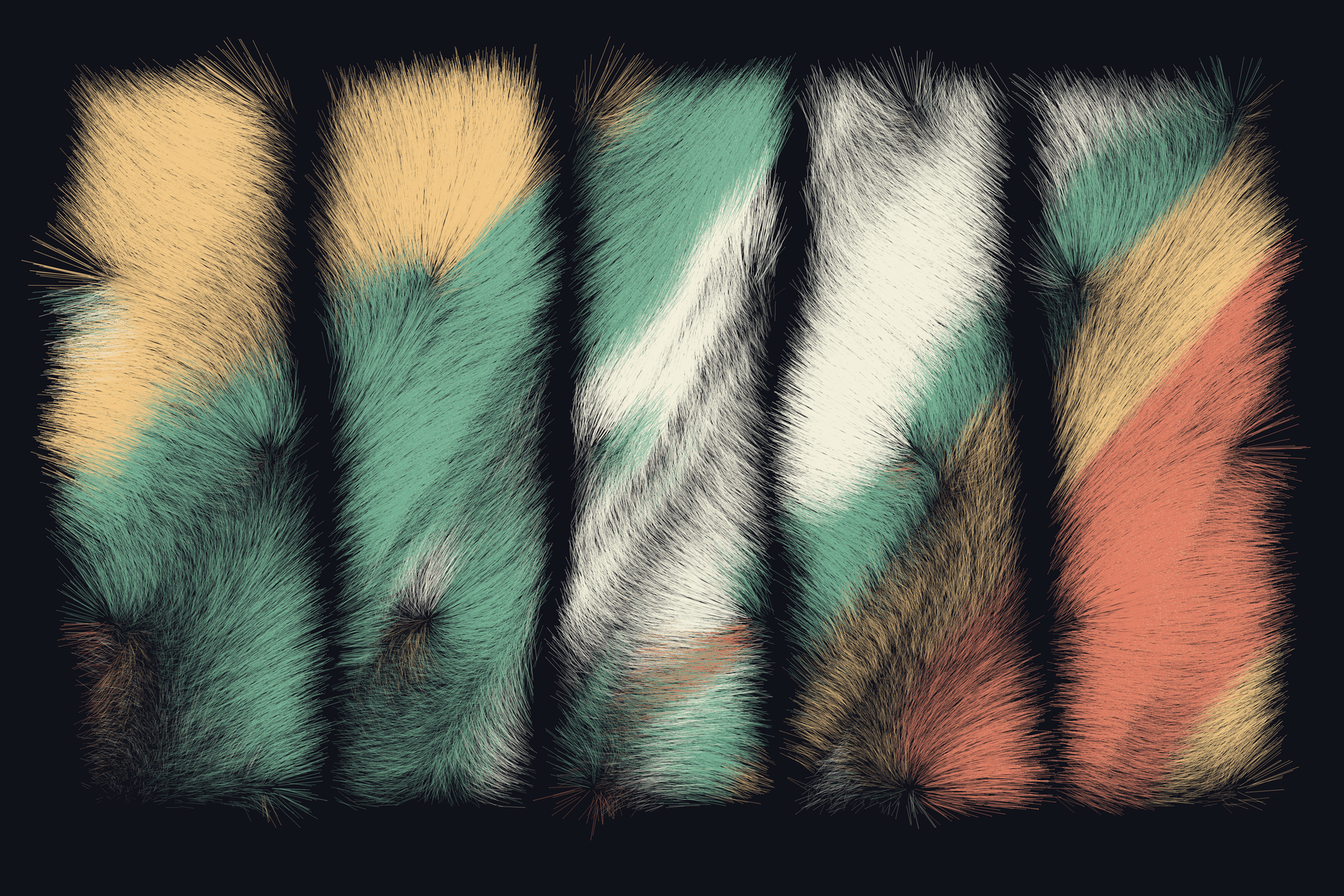
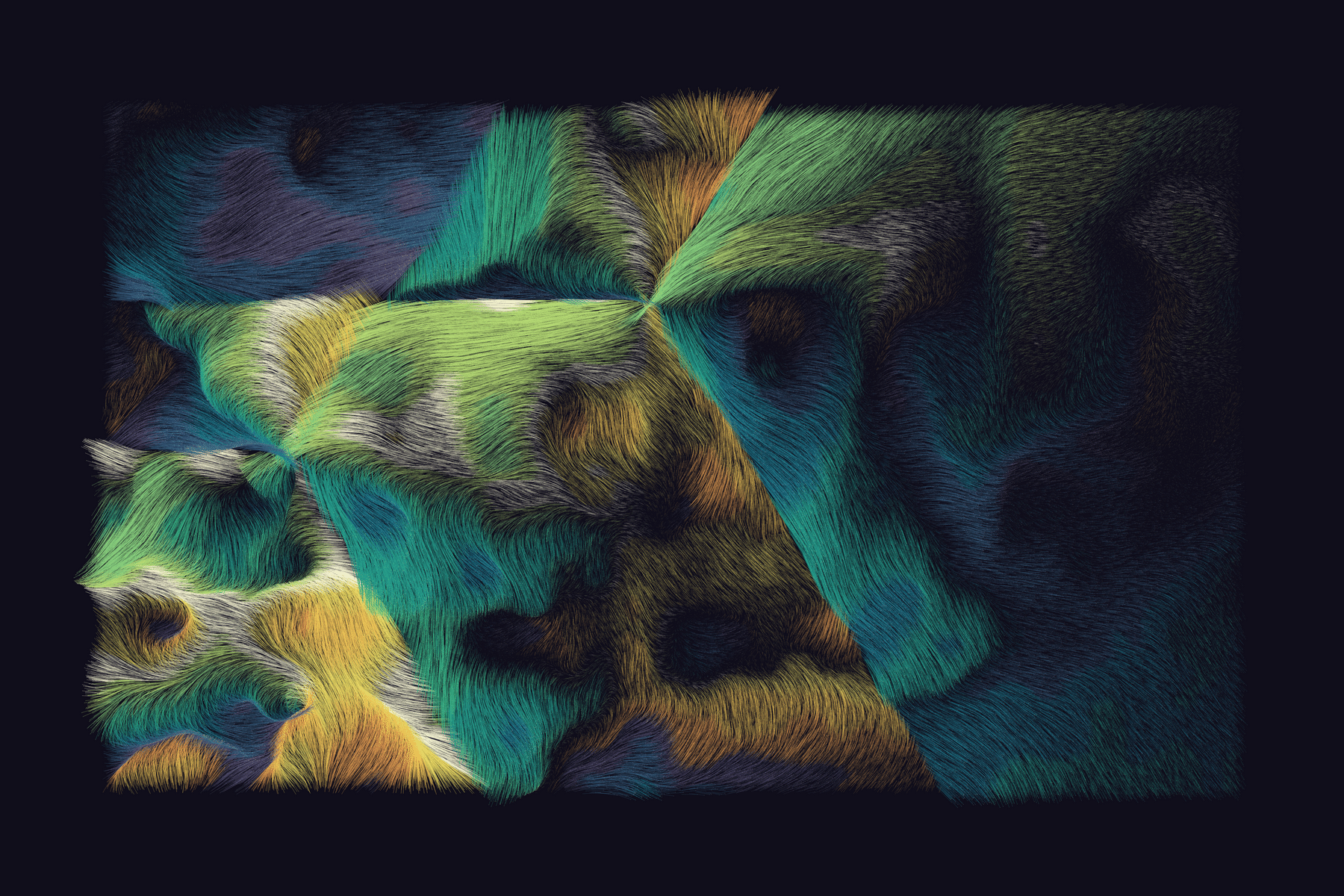
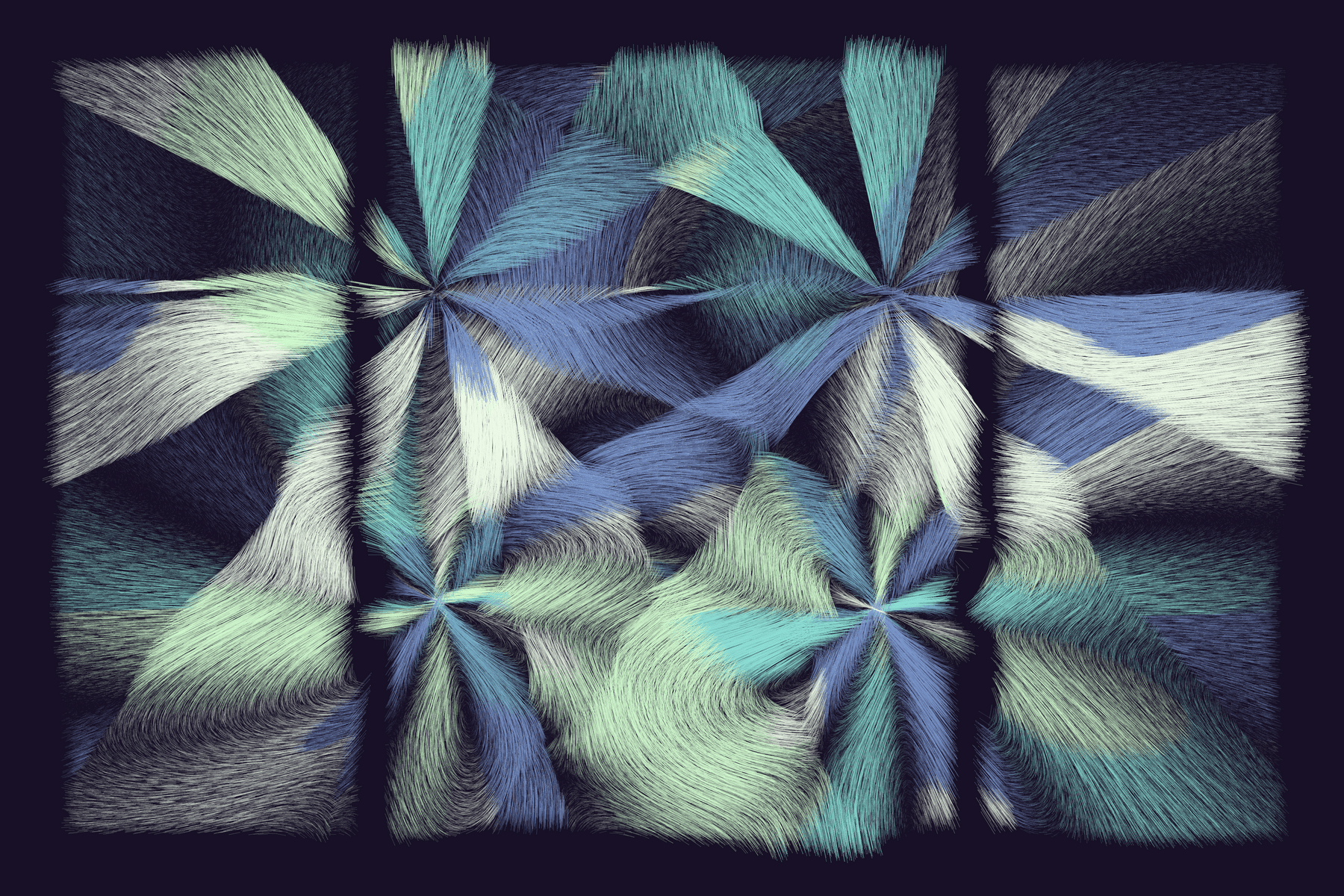
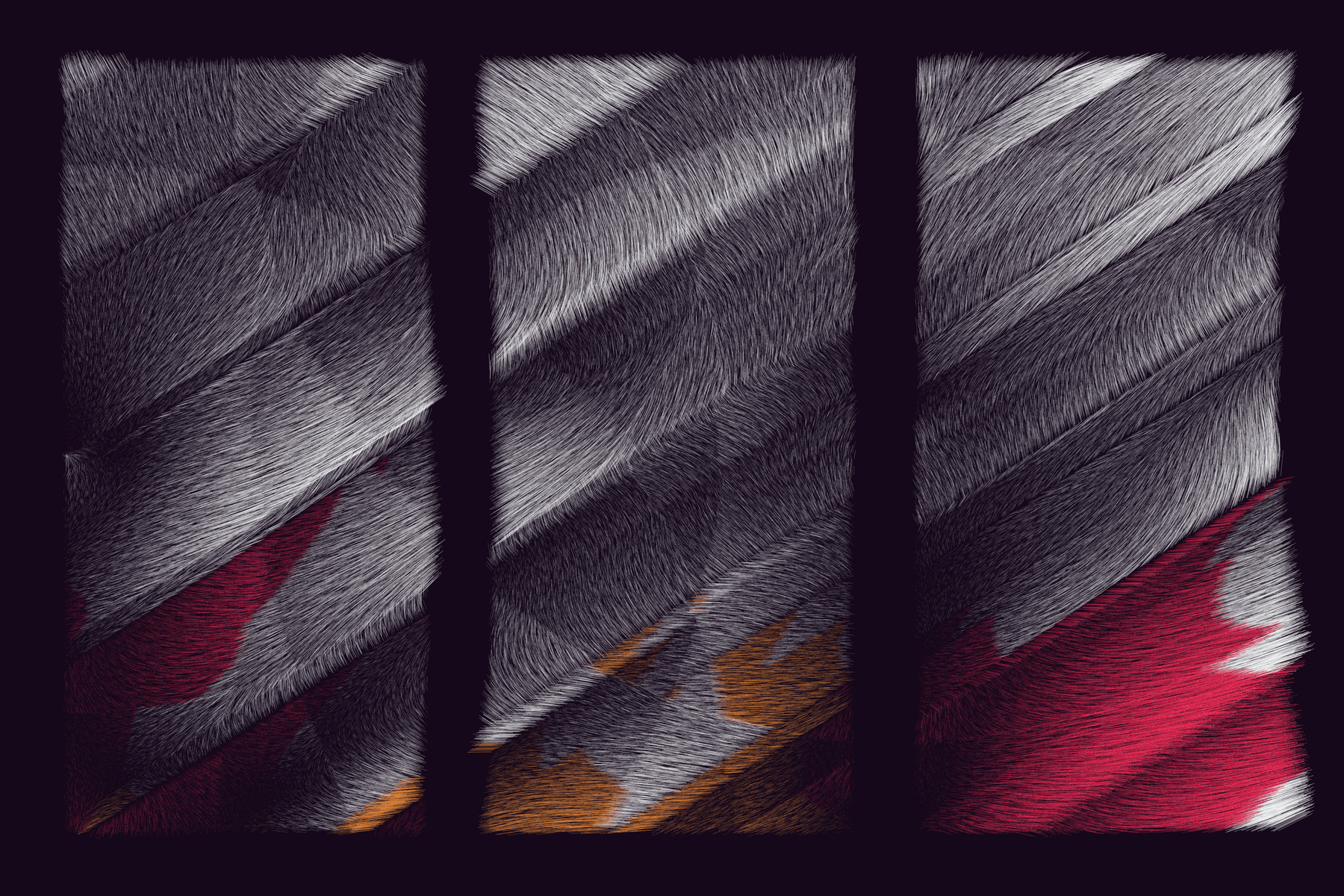
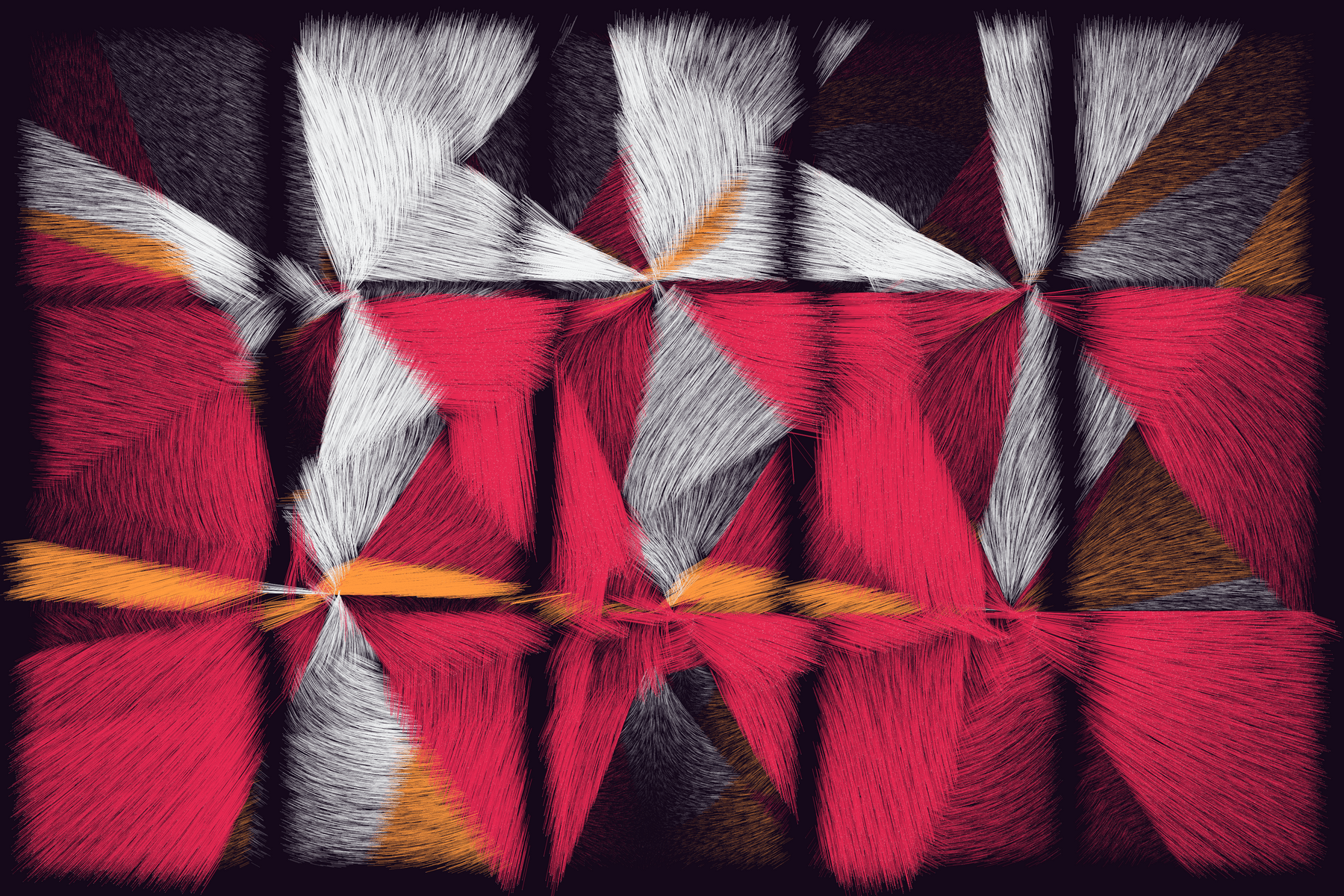
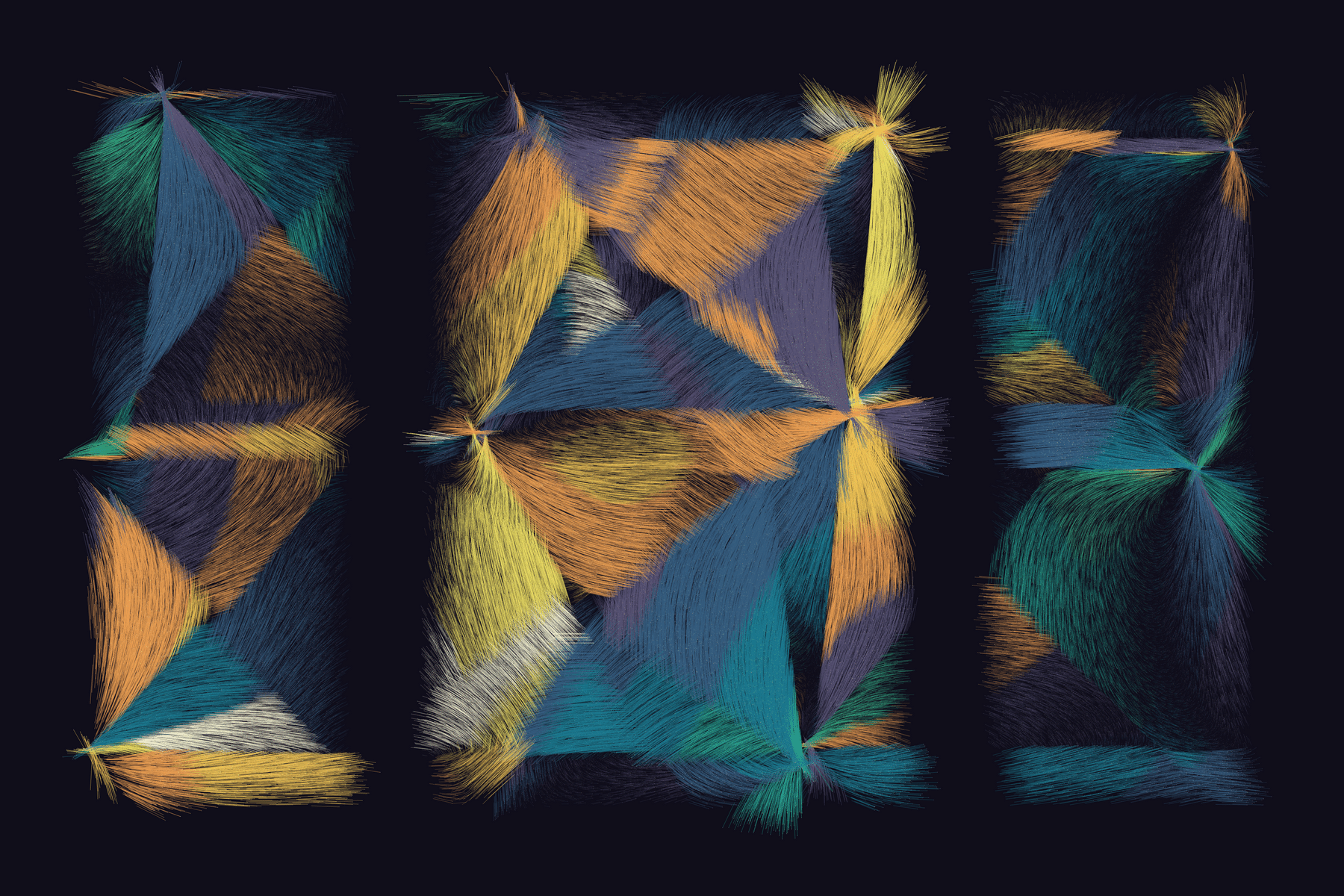
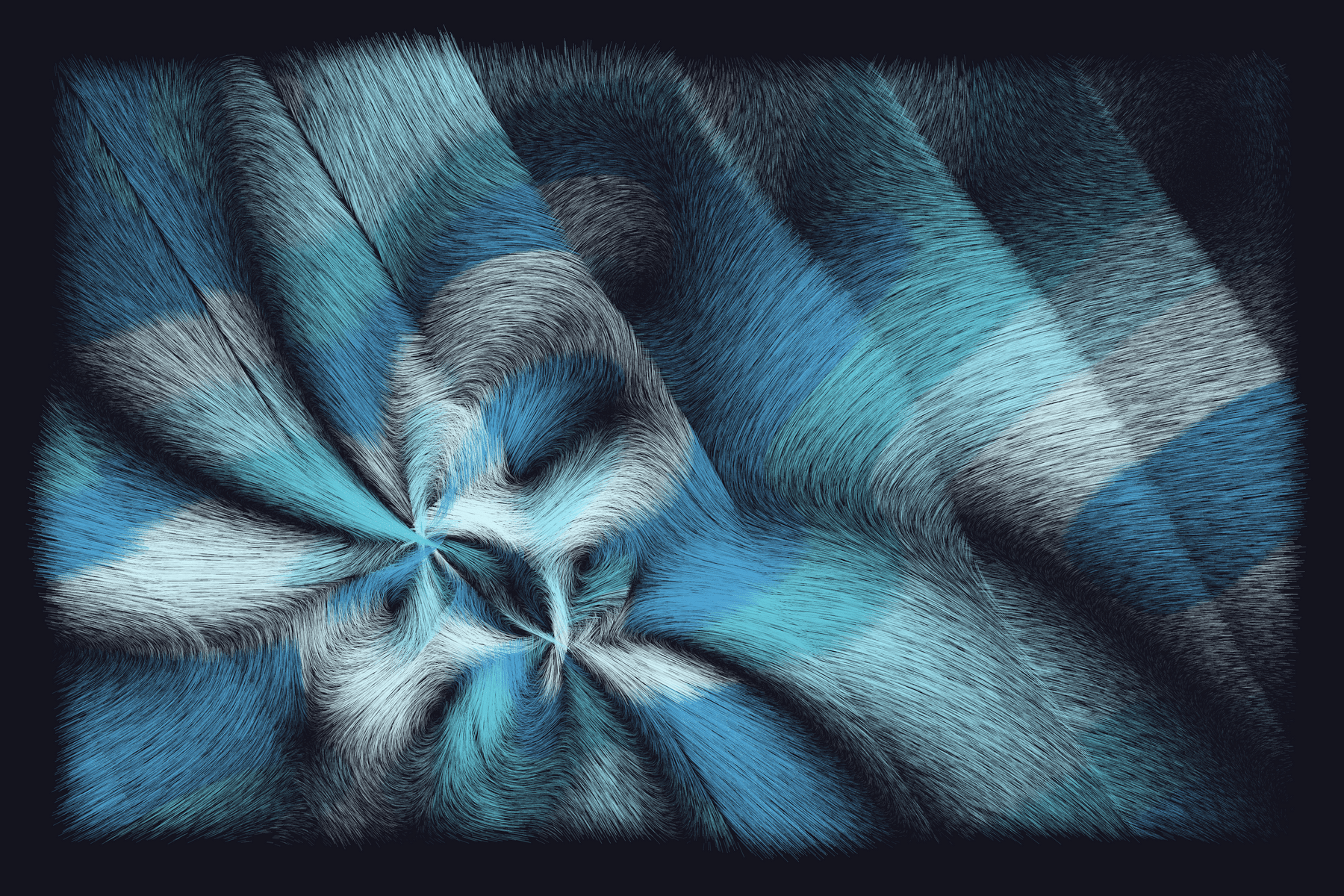
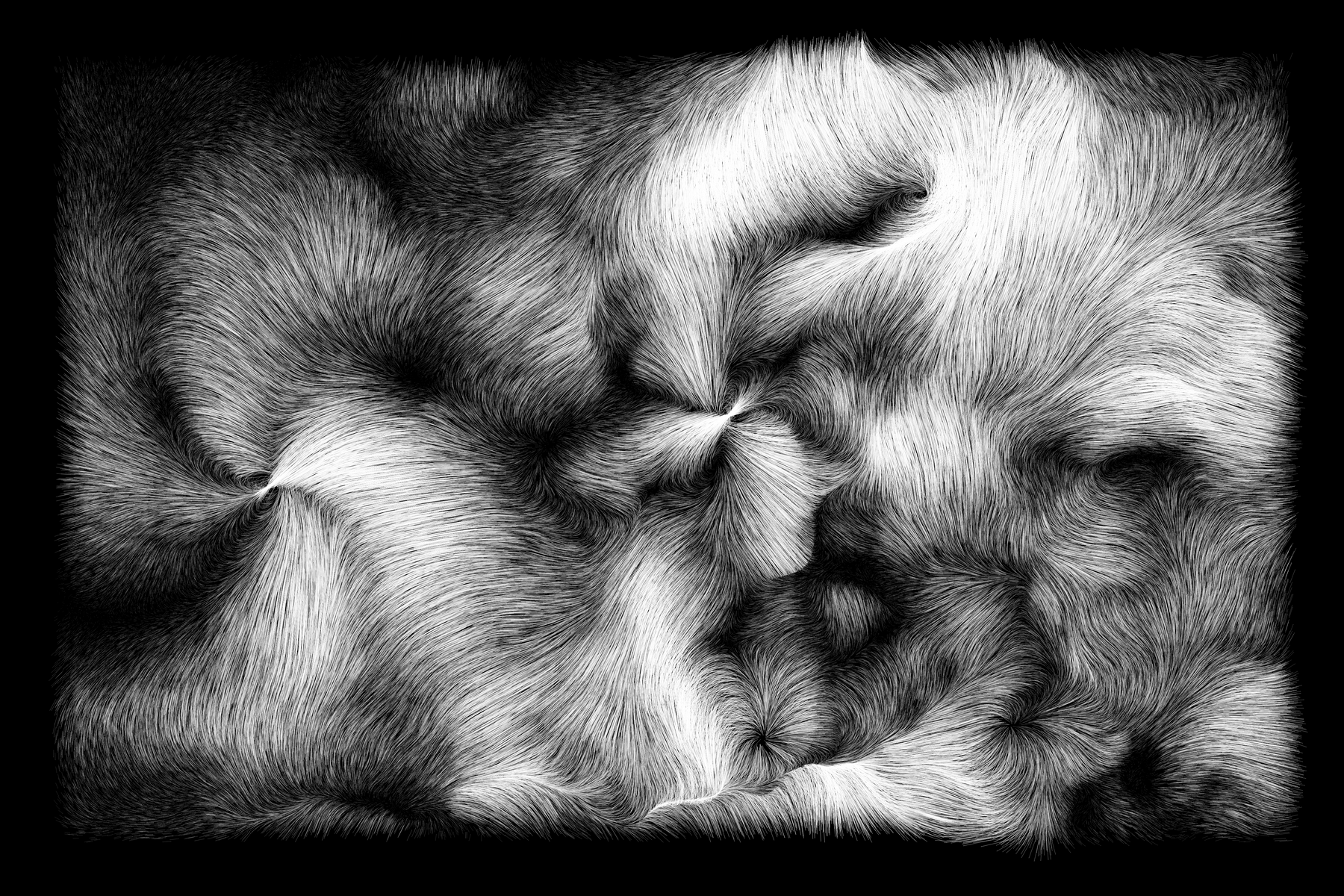
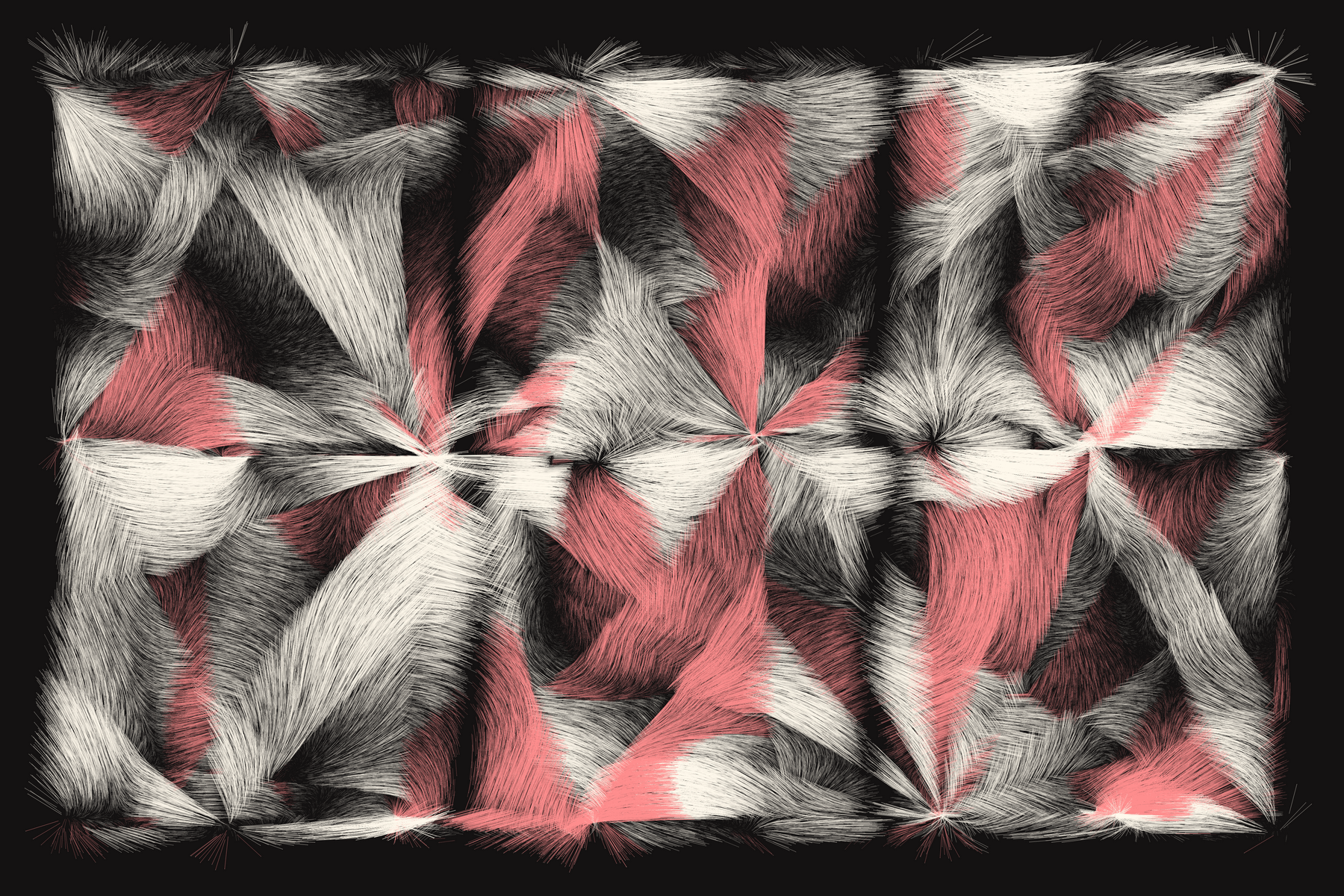
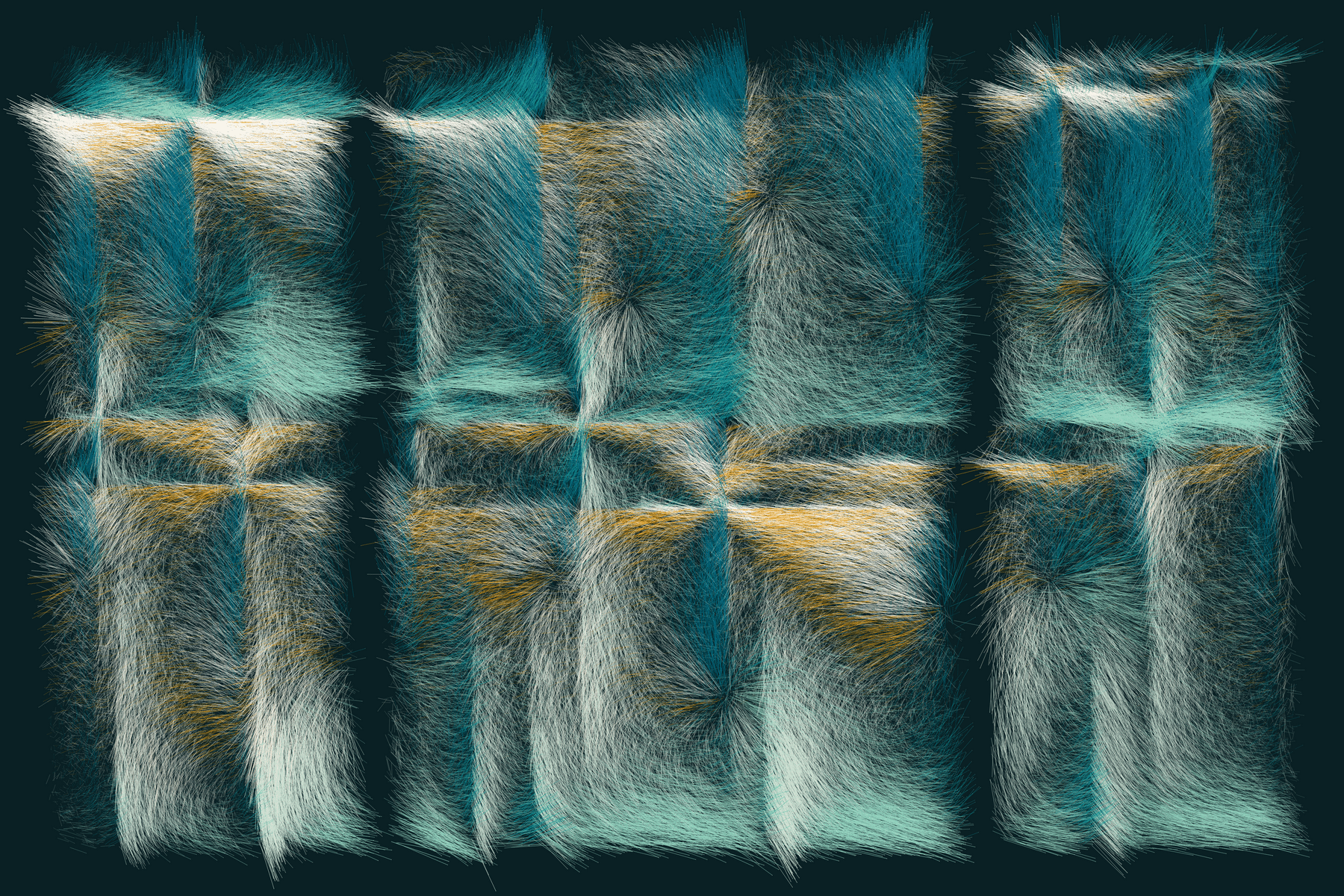
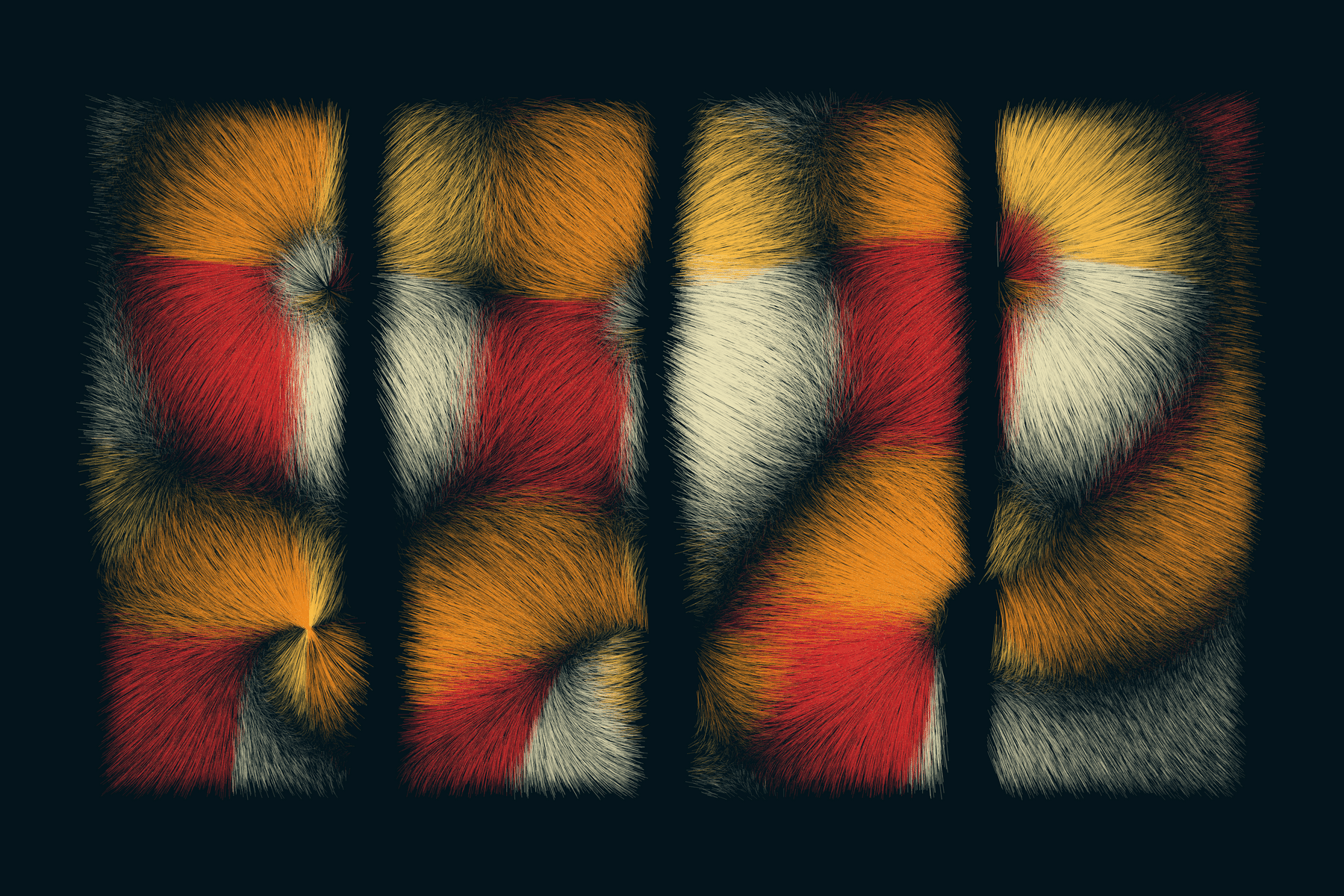
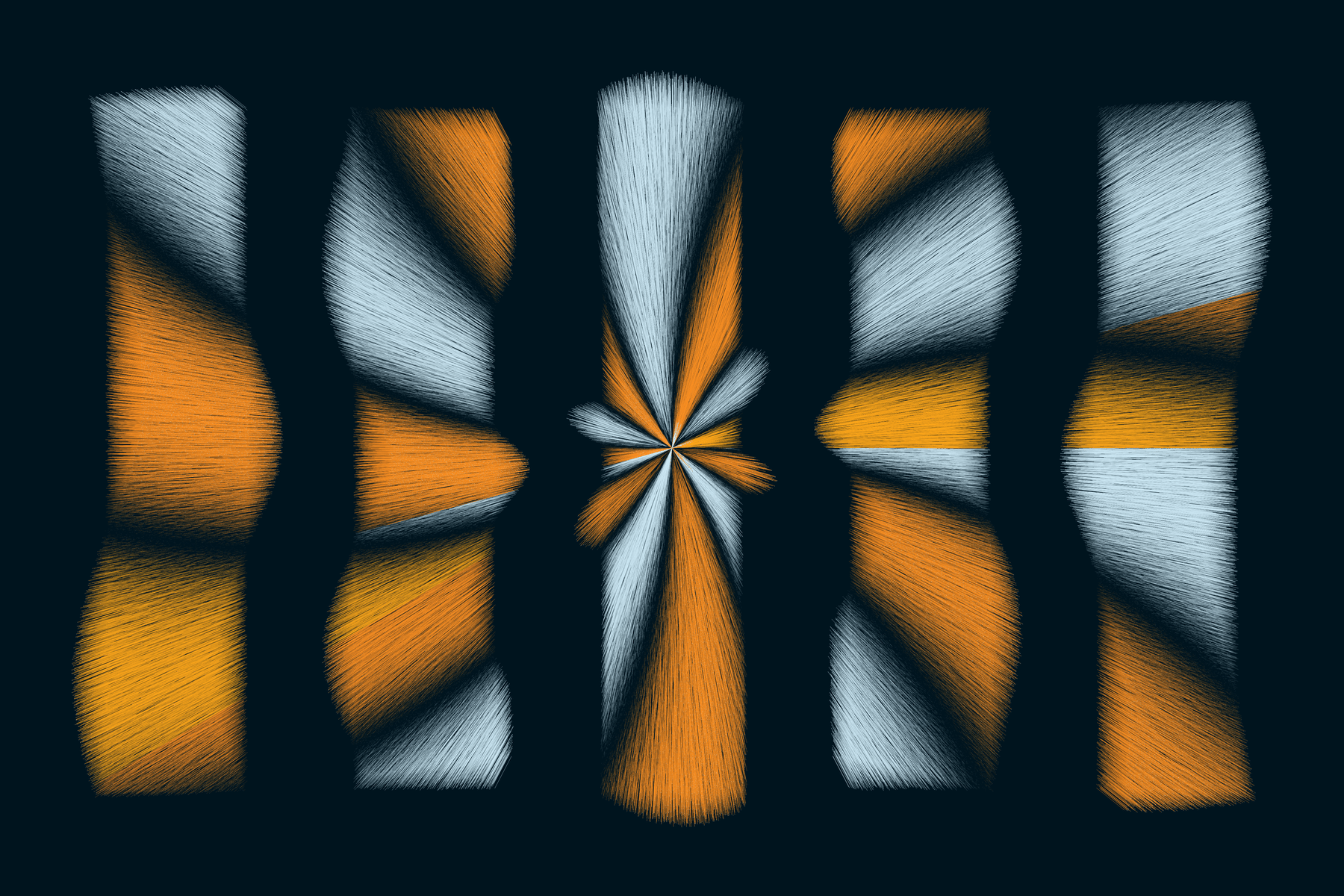
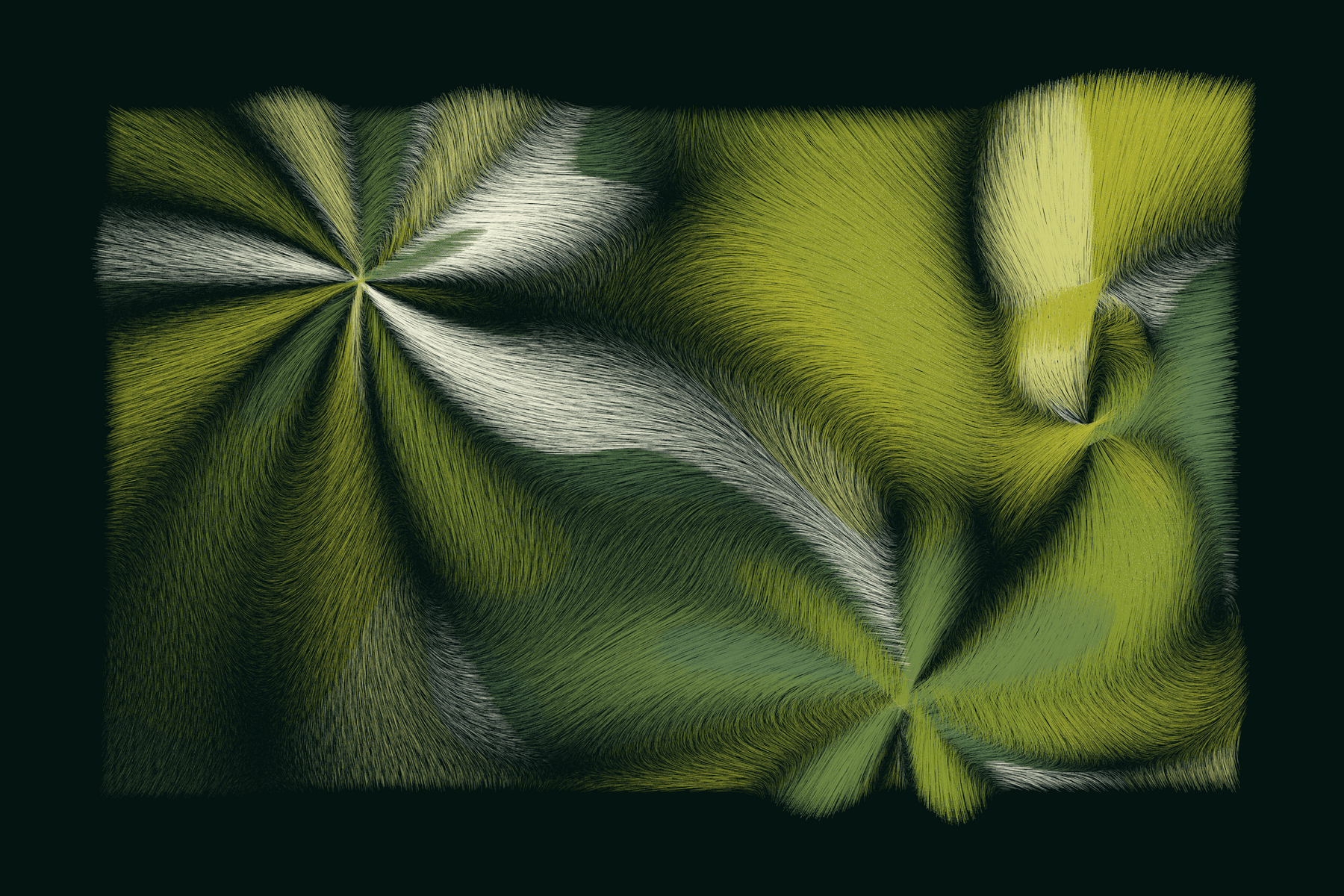
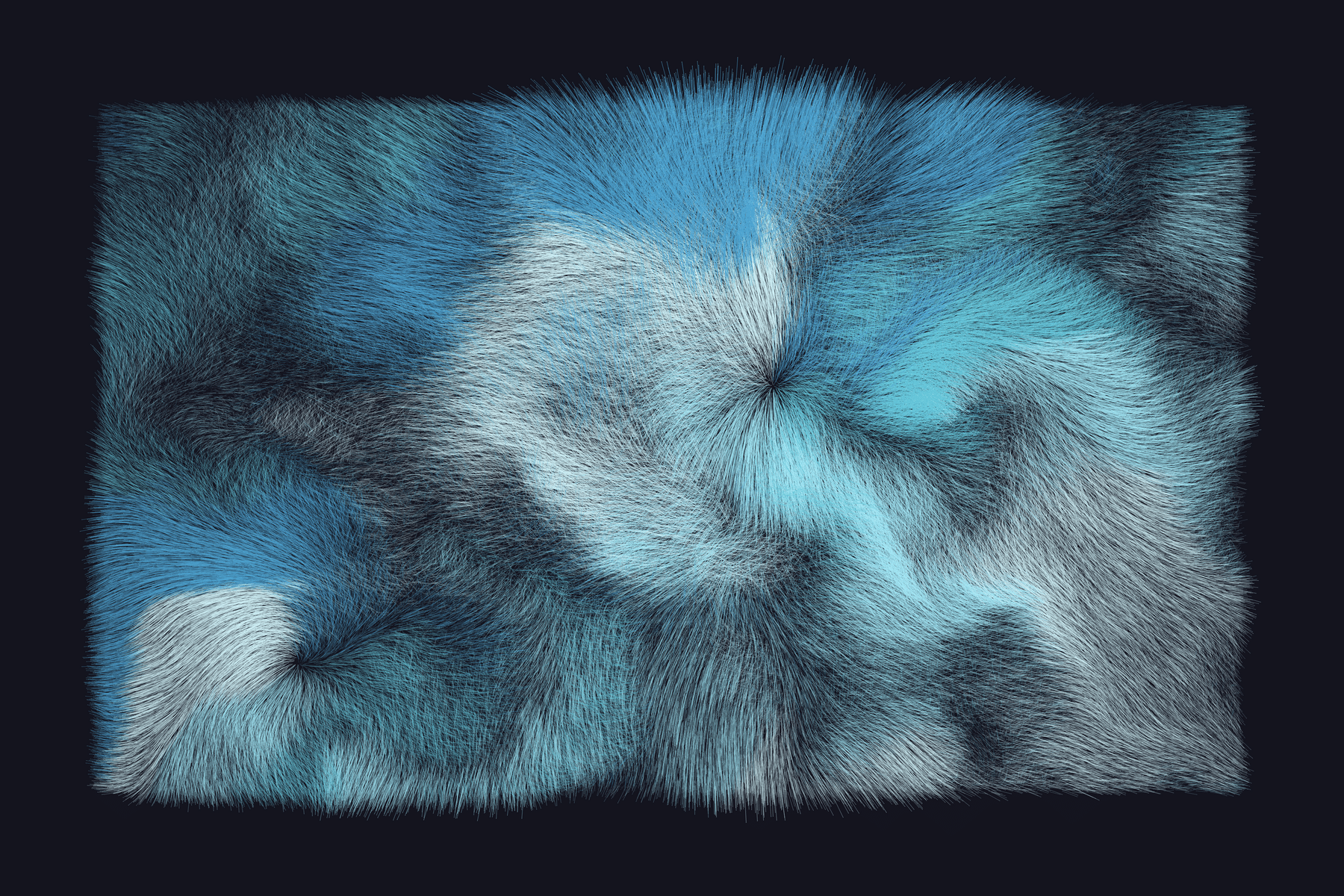
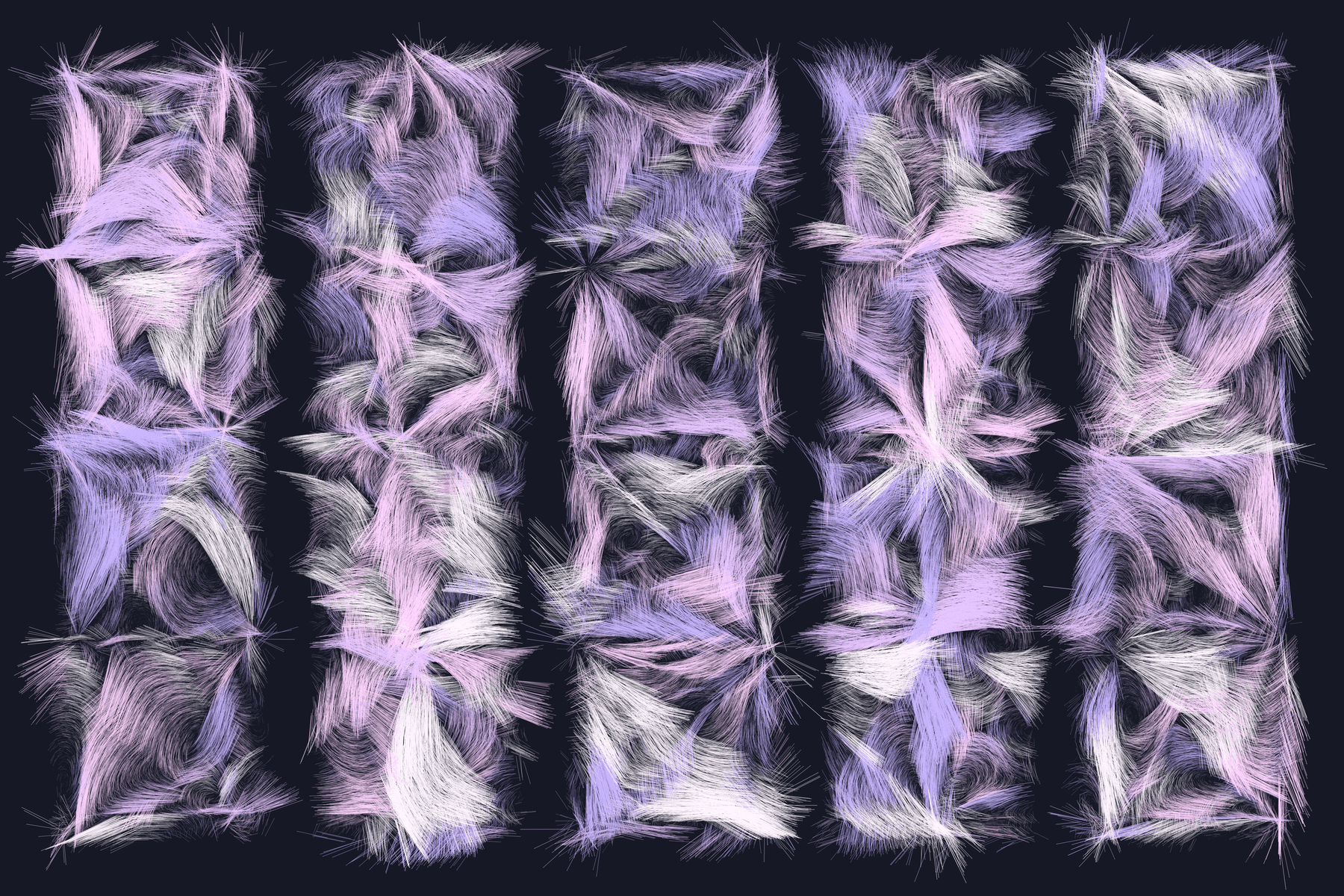
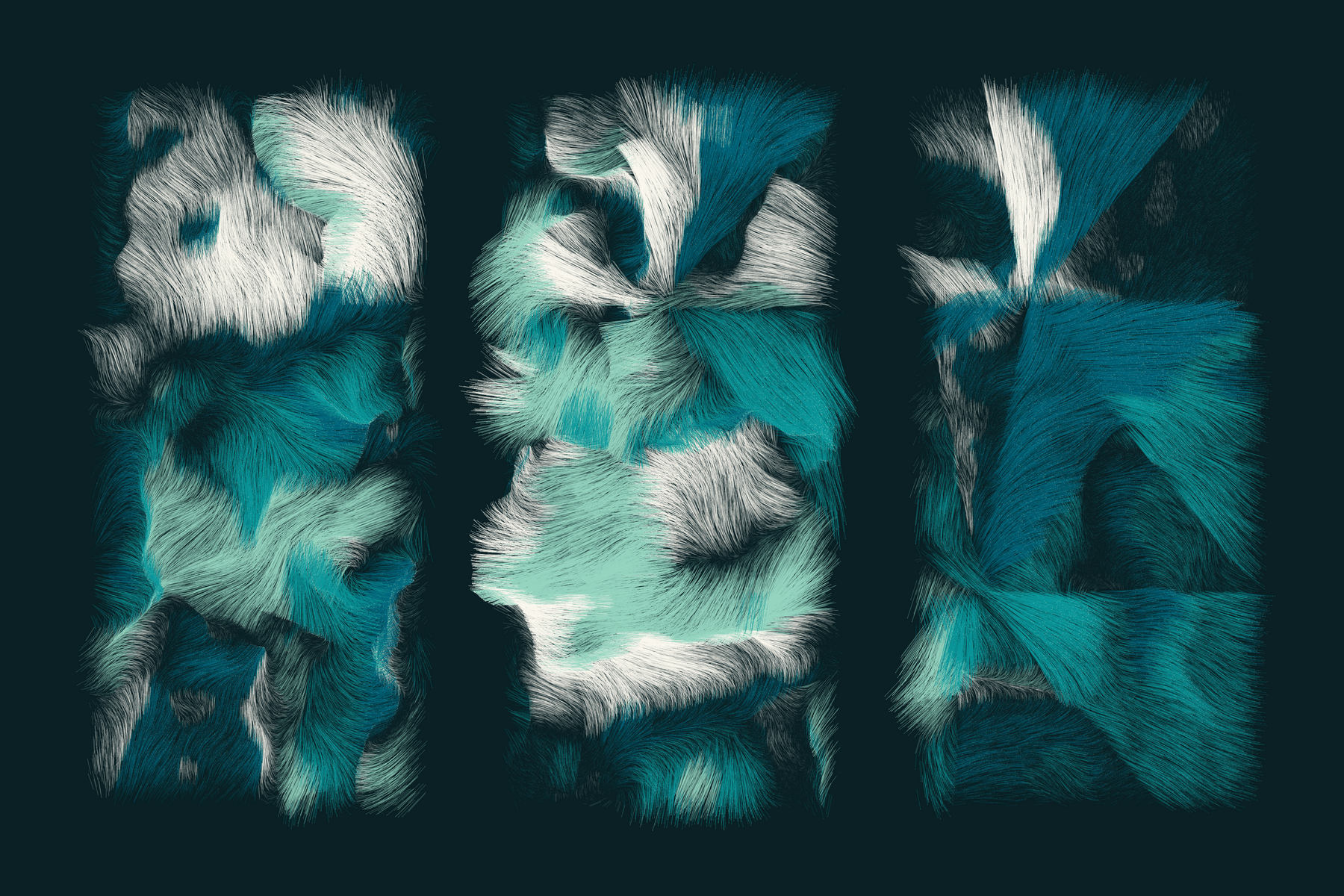
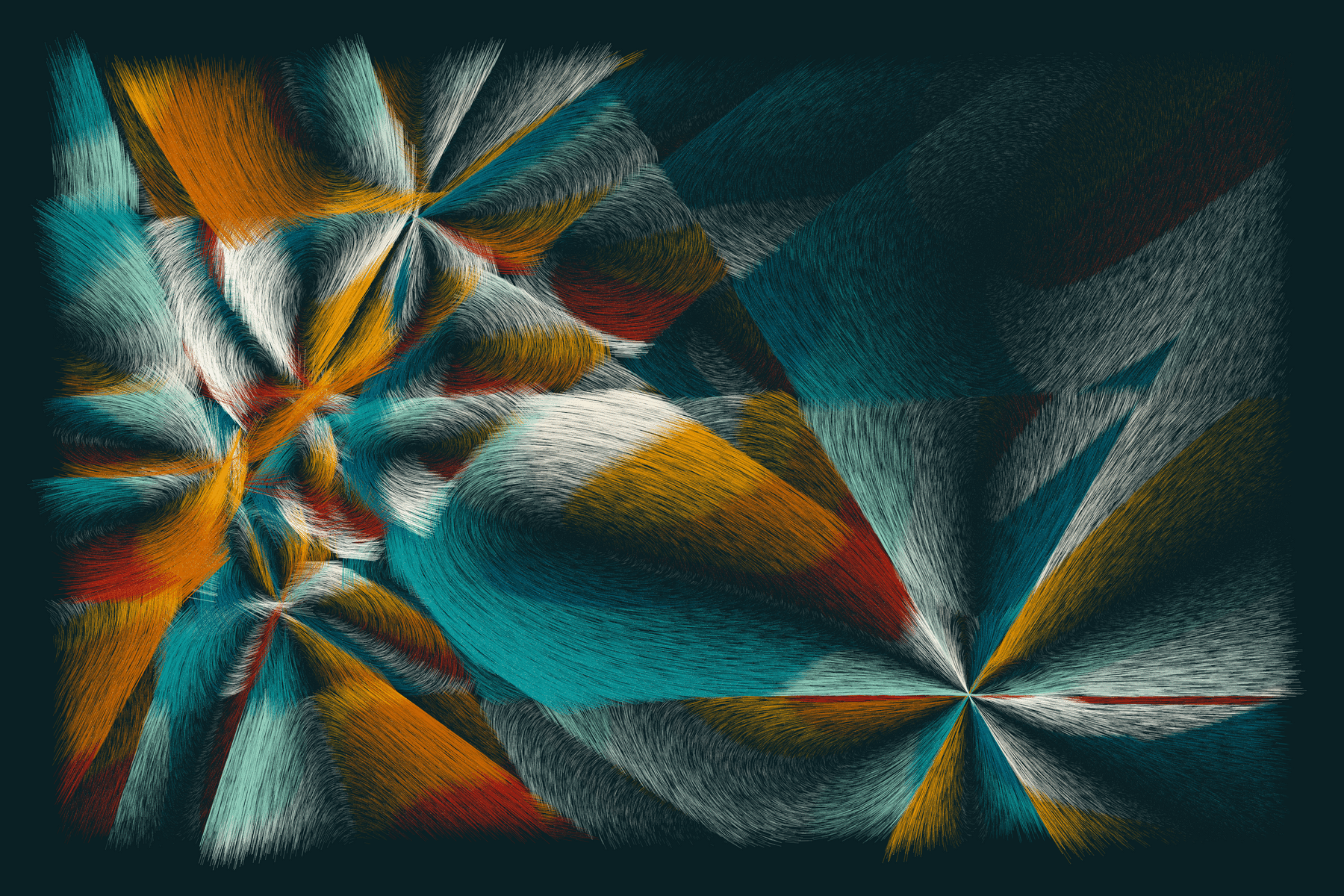
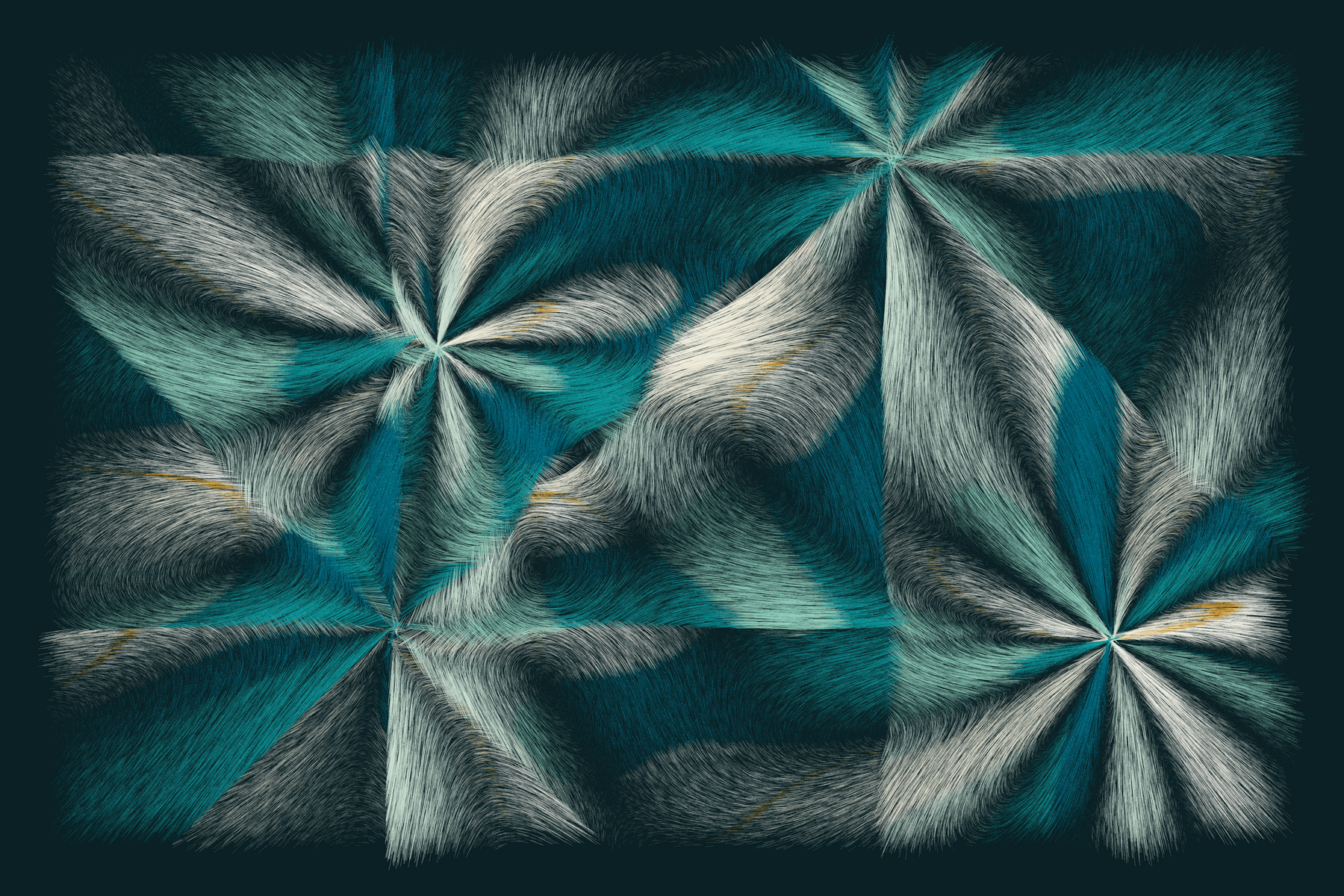
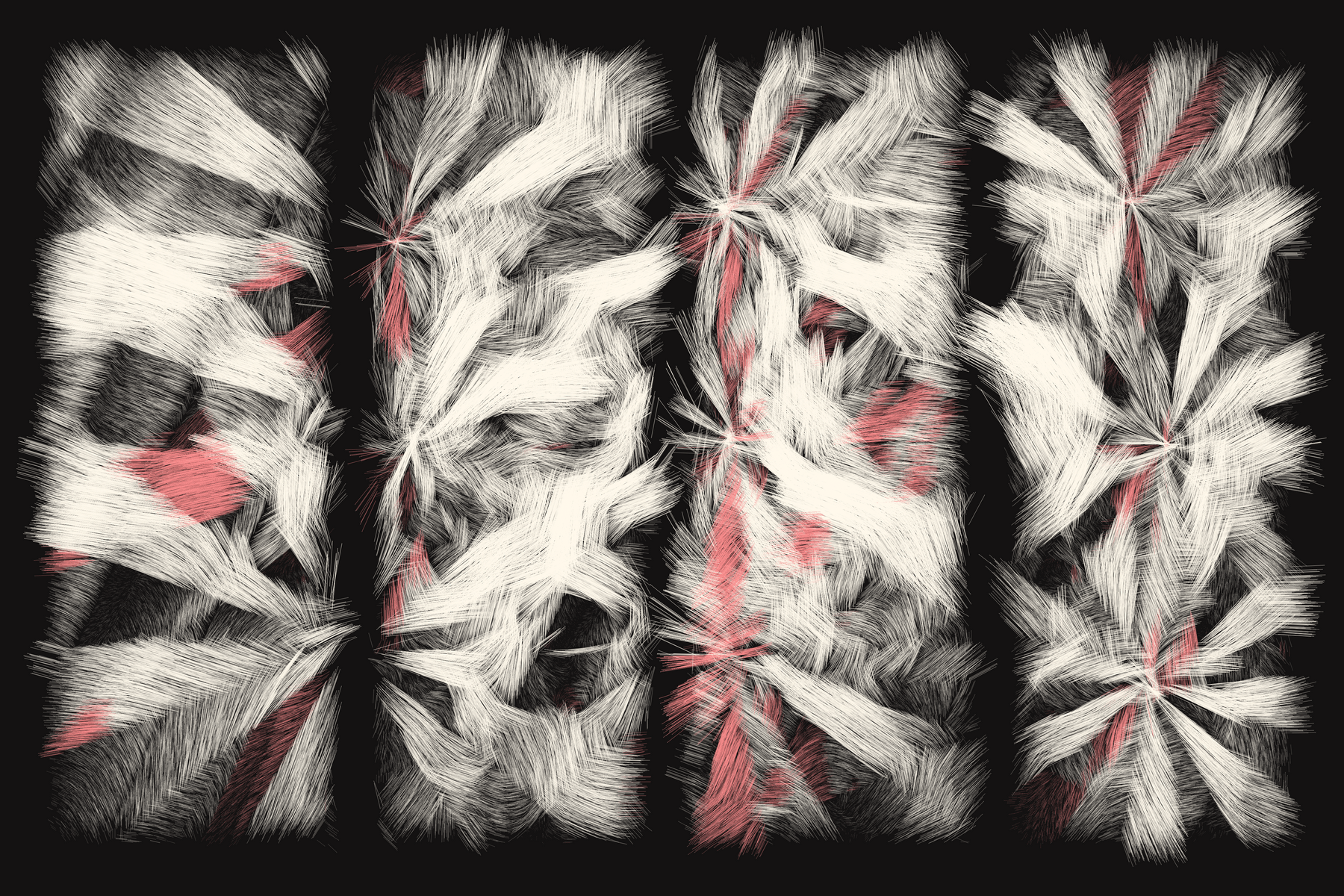
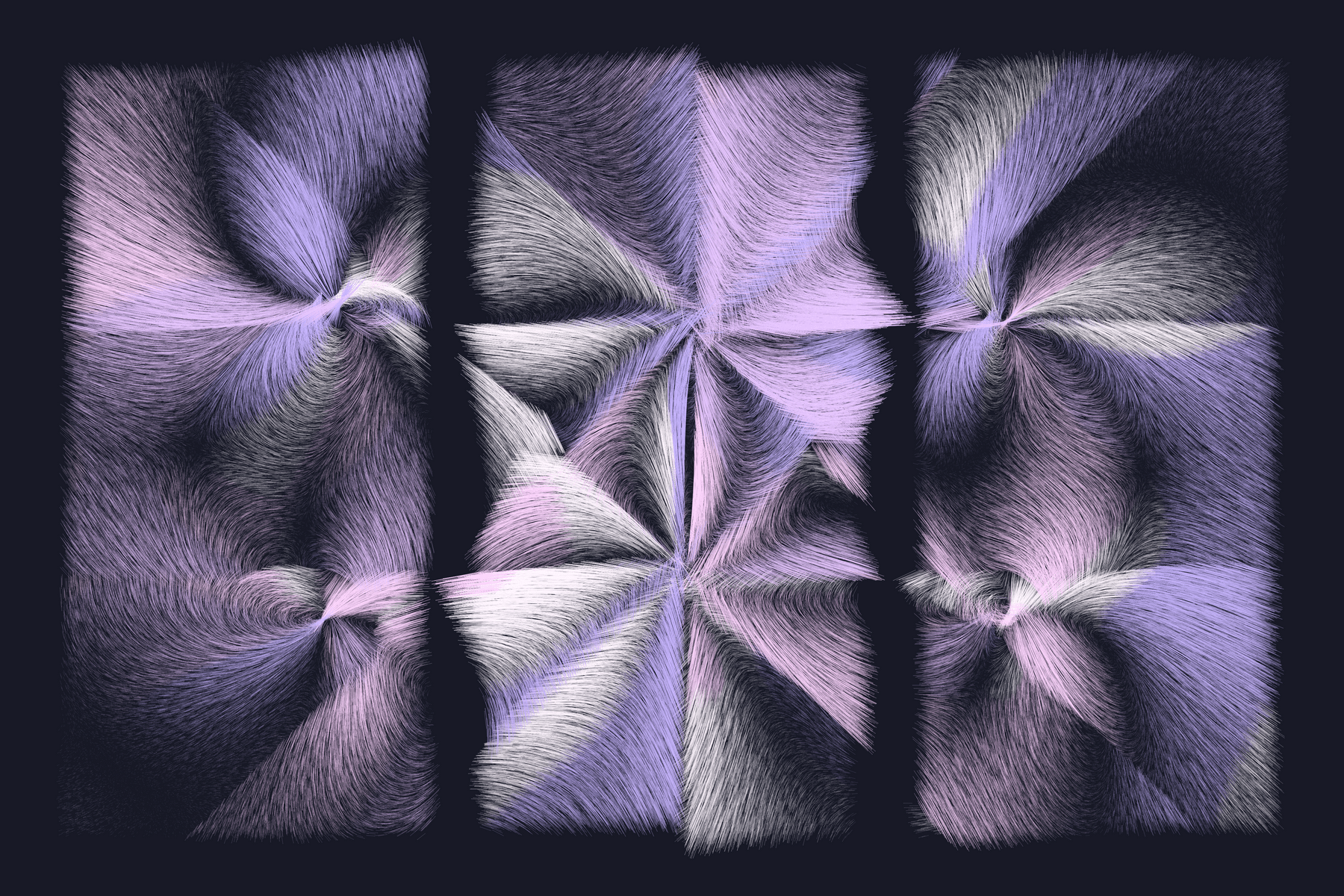
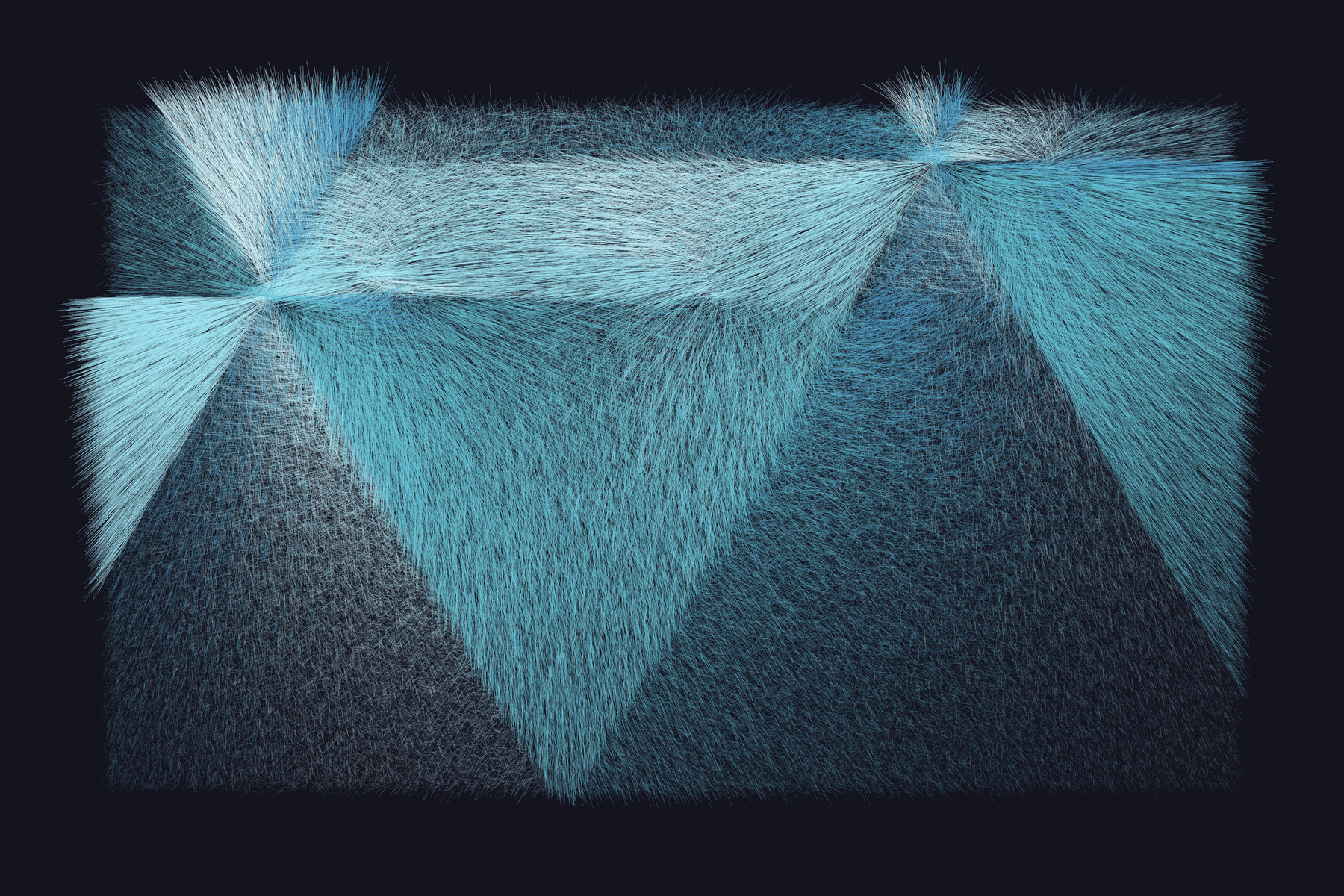
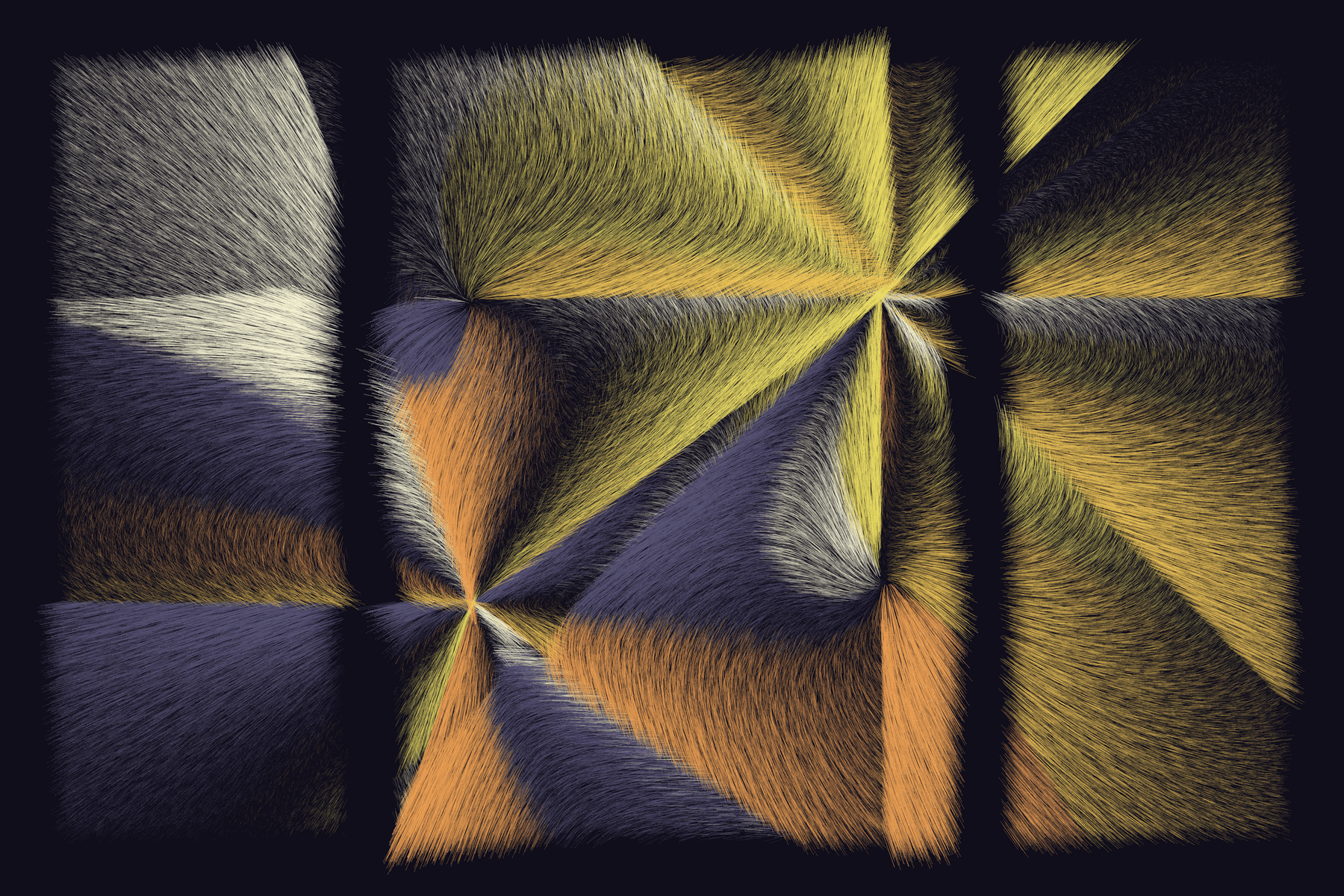
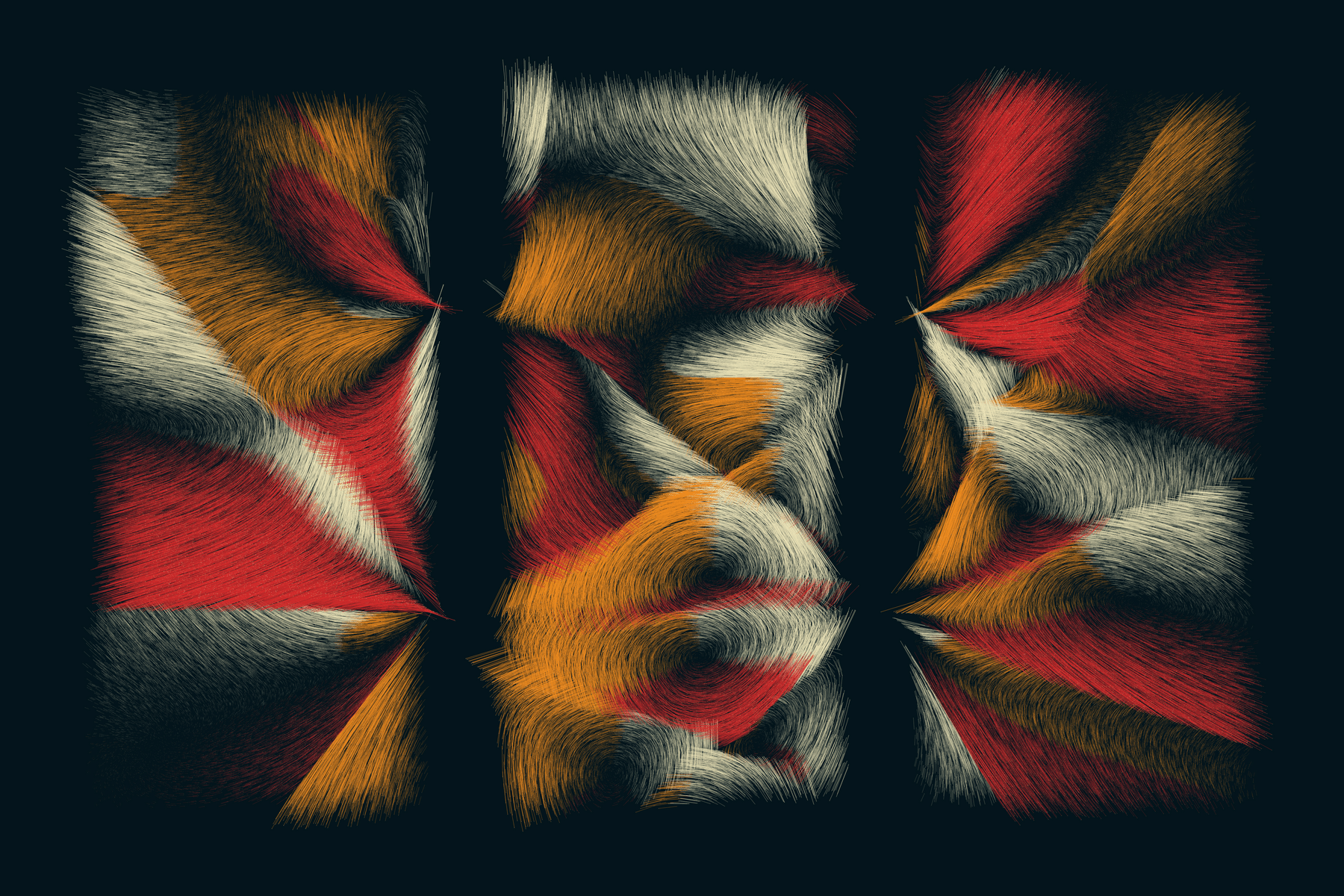
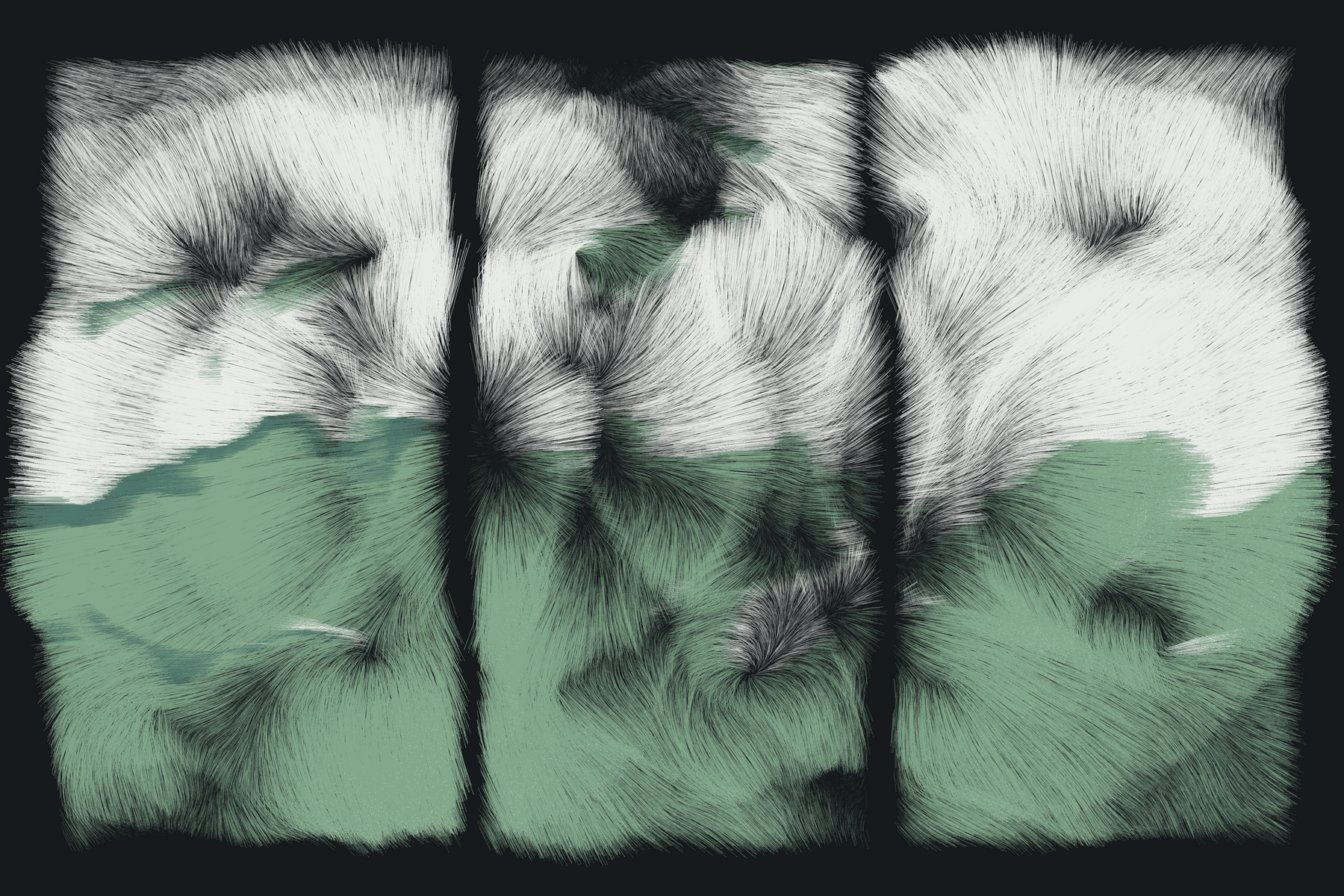
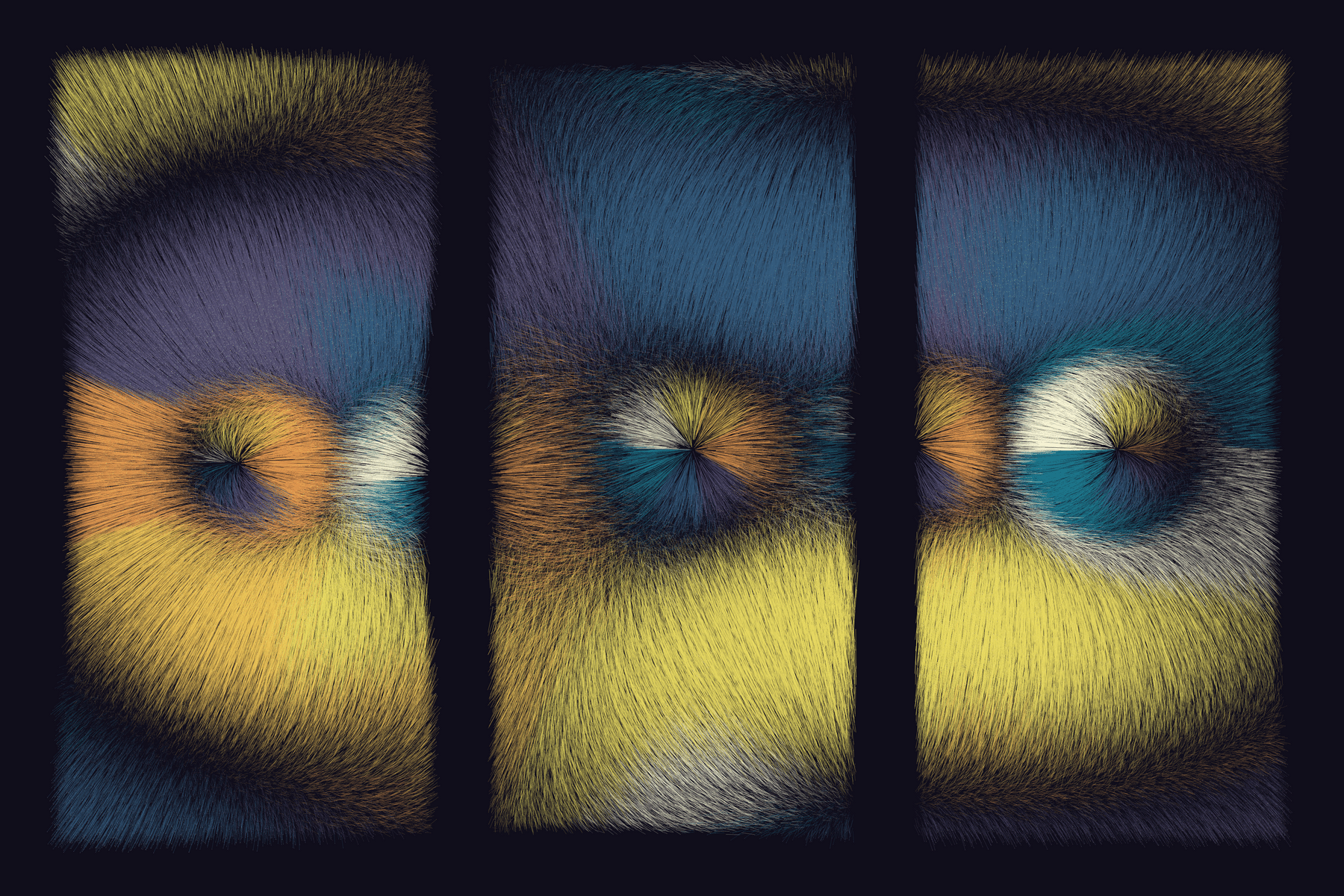
Folradura means fur in Old Occitan, a Romance language spoken in the south of France. This series explores producing organic patterns using a cocktail of maths, physics, noise, and randomness. FOLRADURA is based on one main concept: local modifiers. A modifier applies a local effect to the grid of hundreds of thousands of points. What you see is the trajectory of the points. Each edition plays with one or two types of modifiers that can be positioned in many different ways, sometimes randomly a...
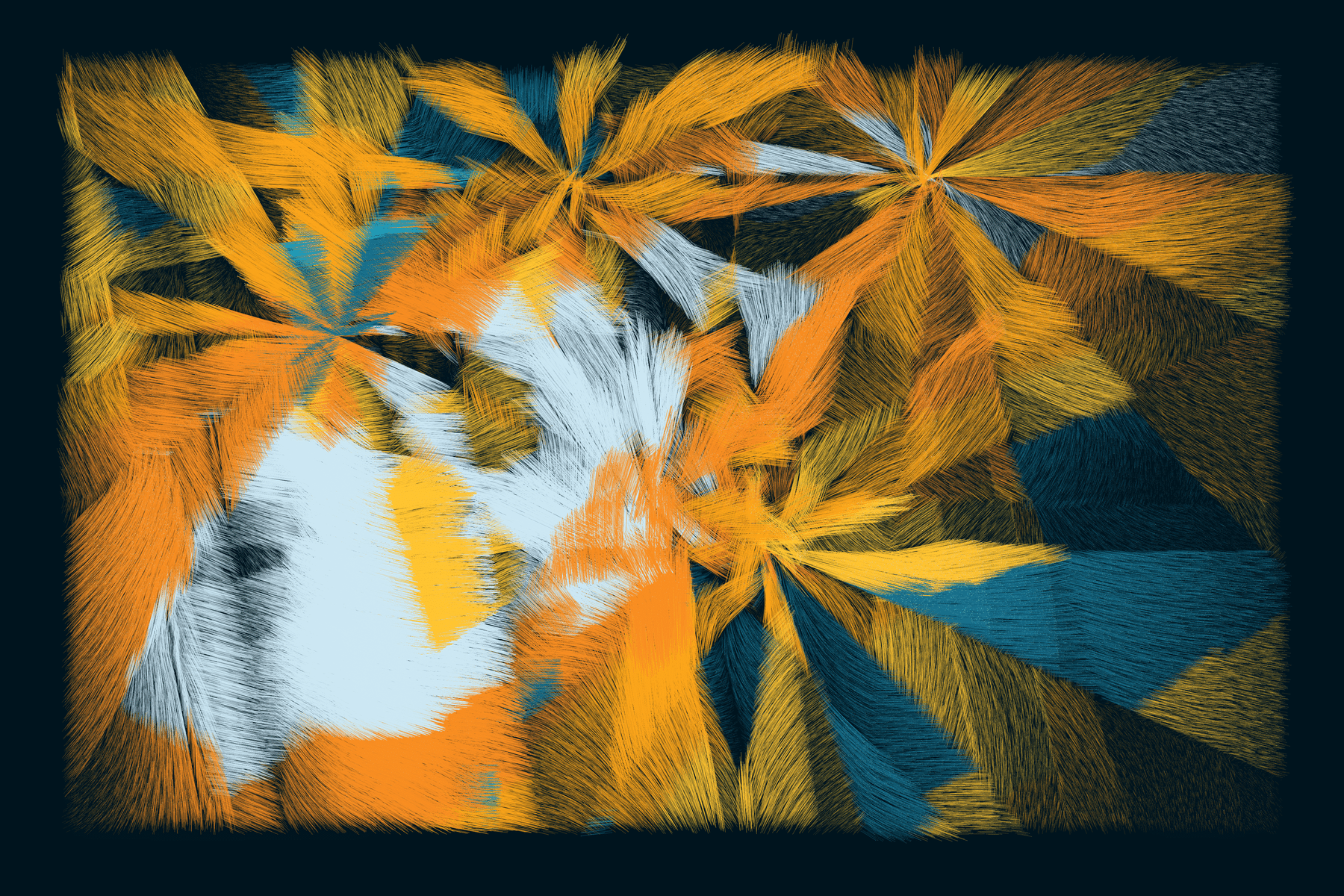
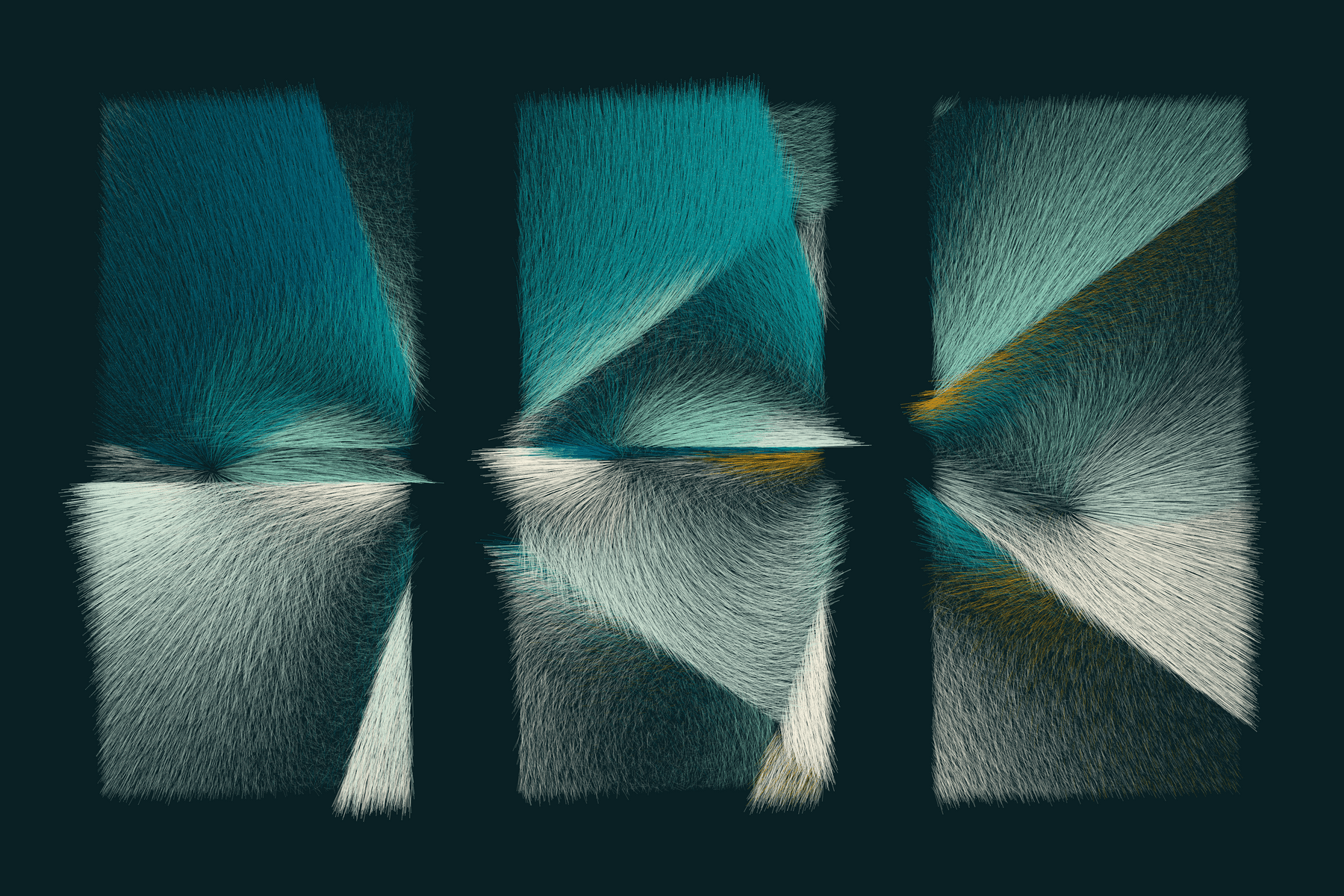
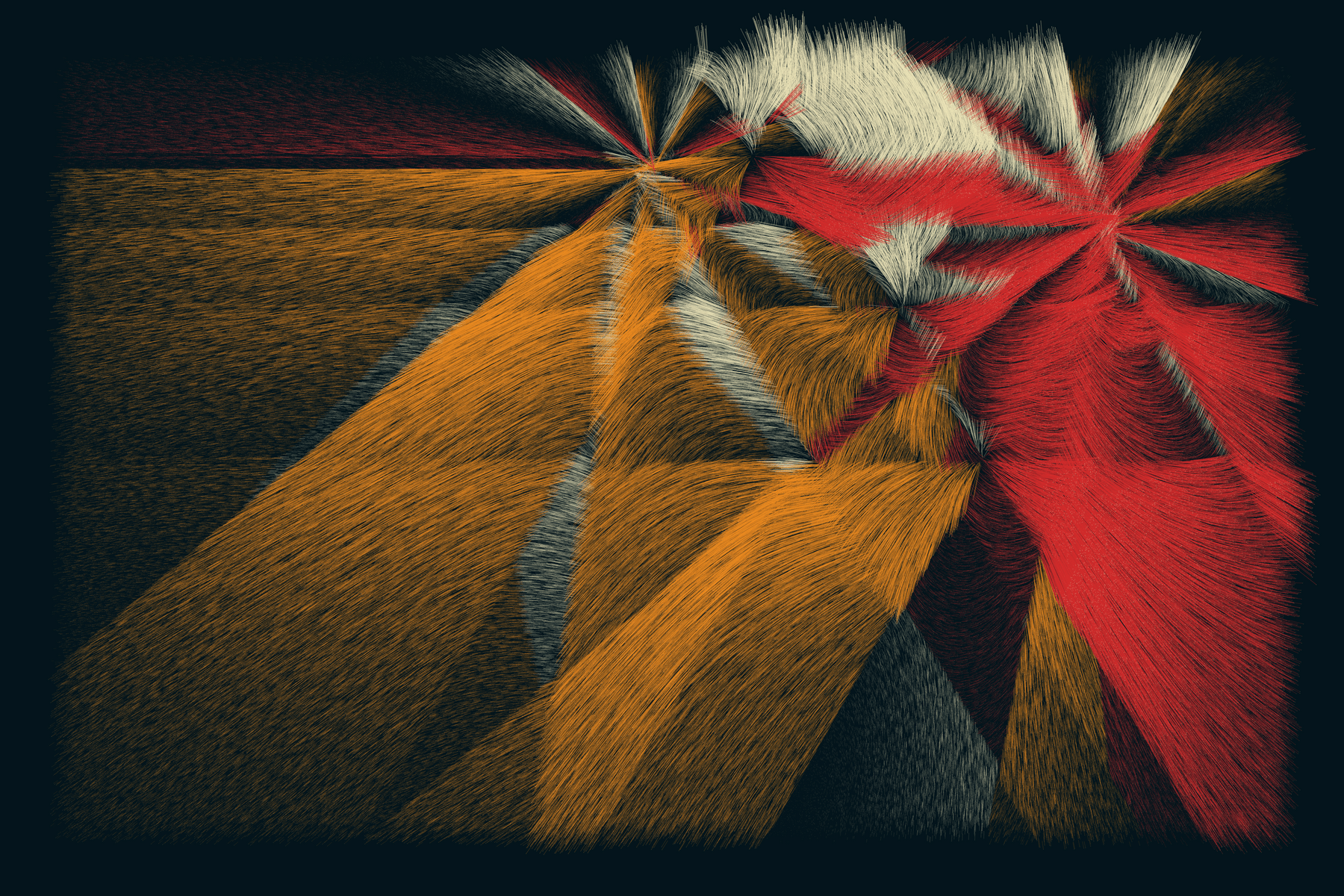
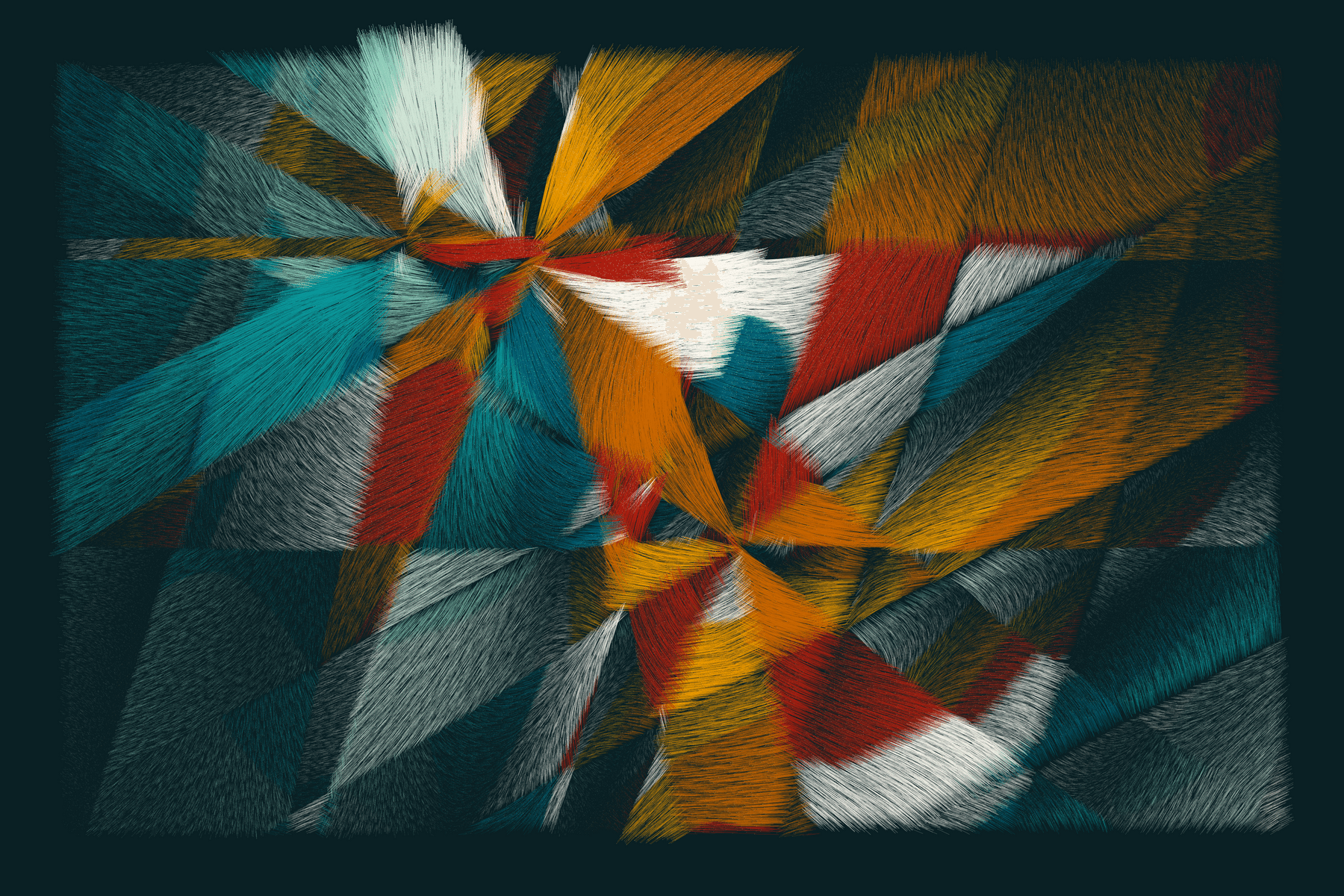
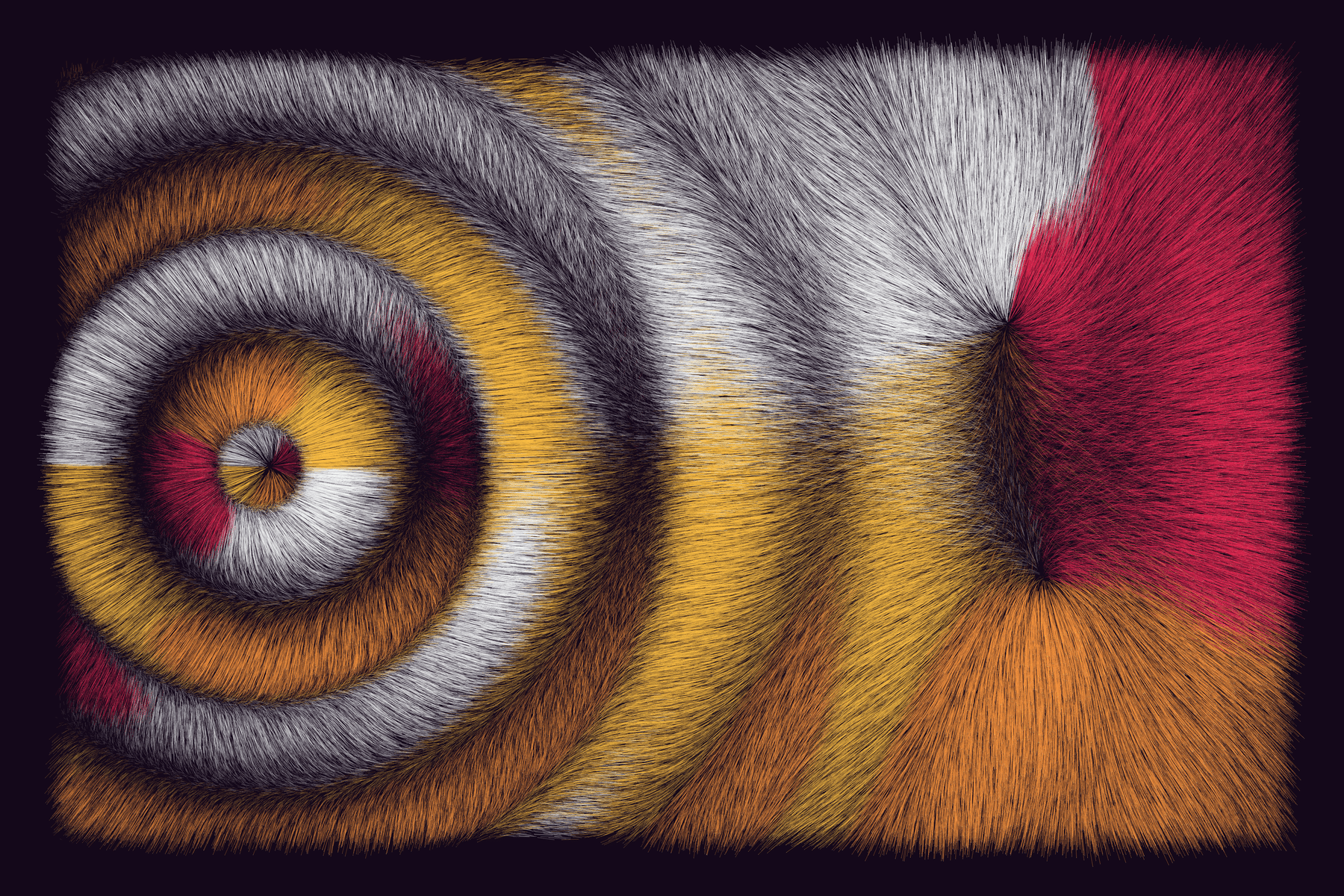
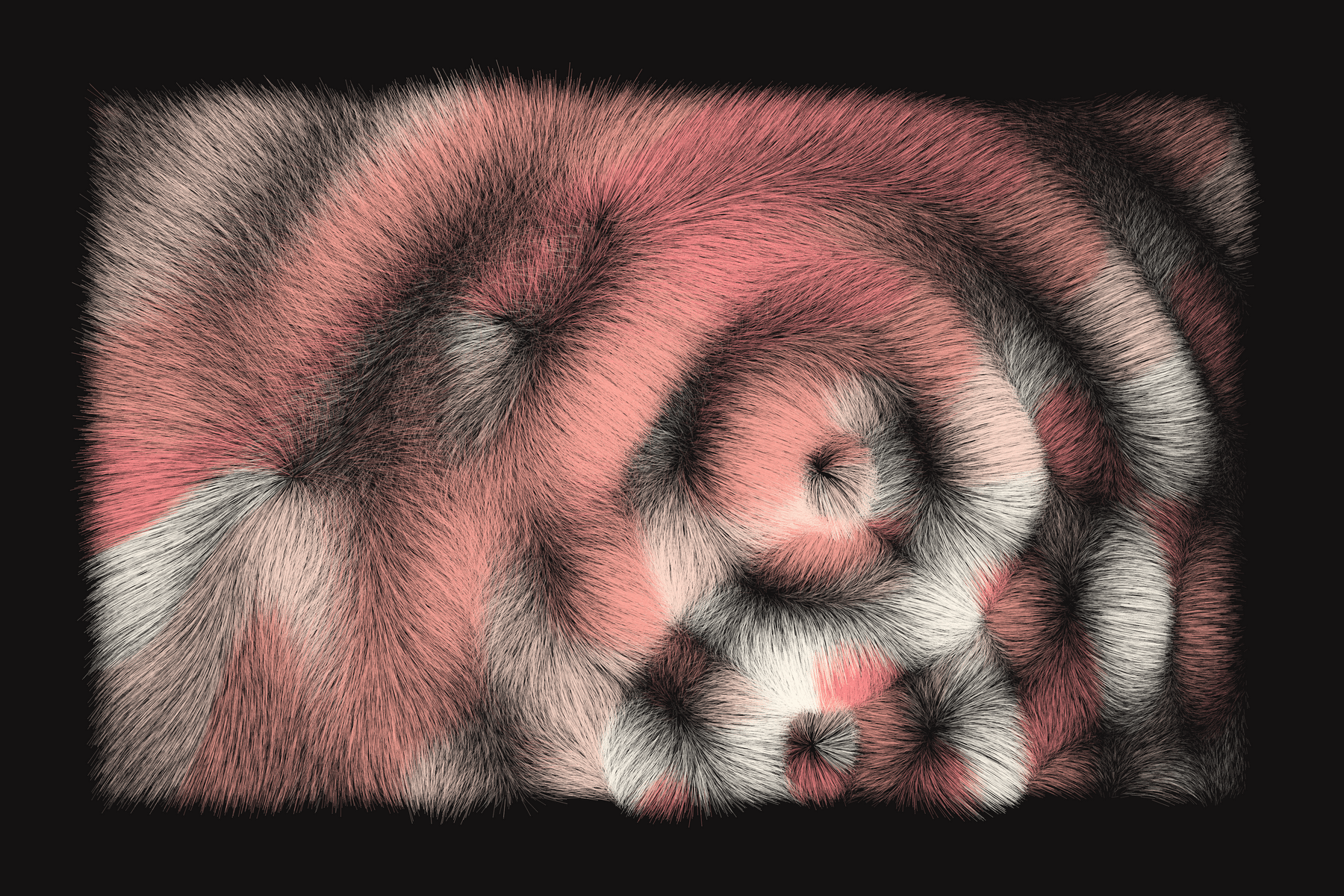
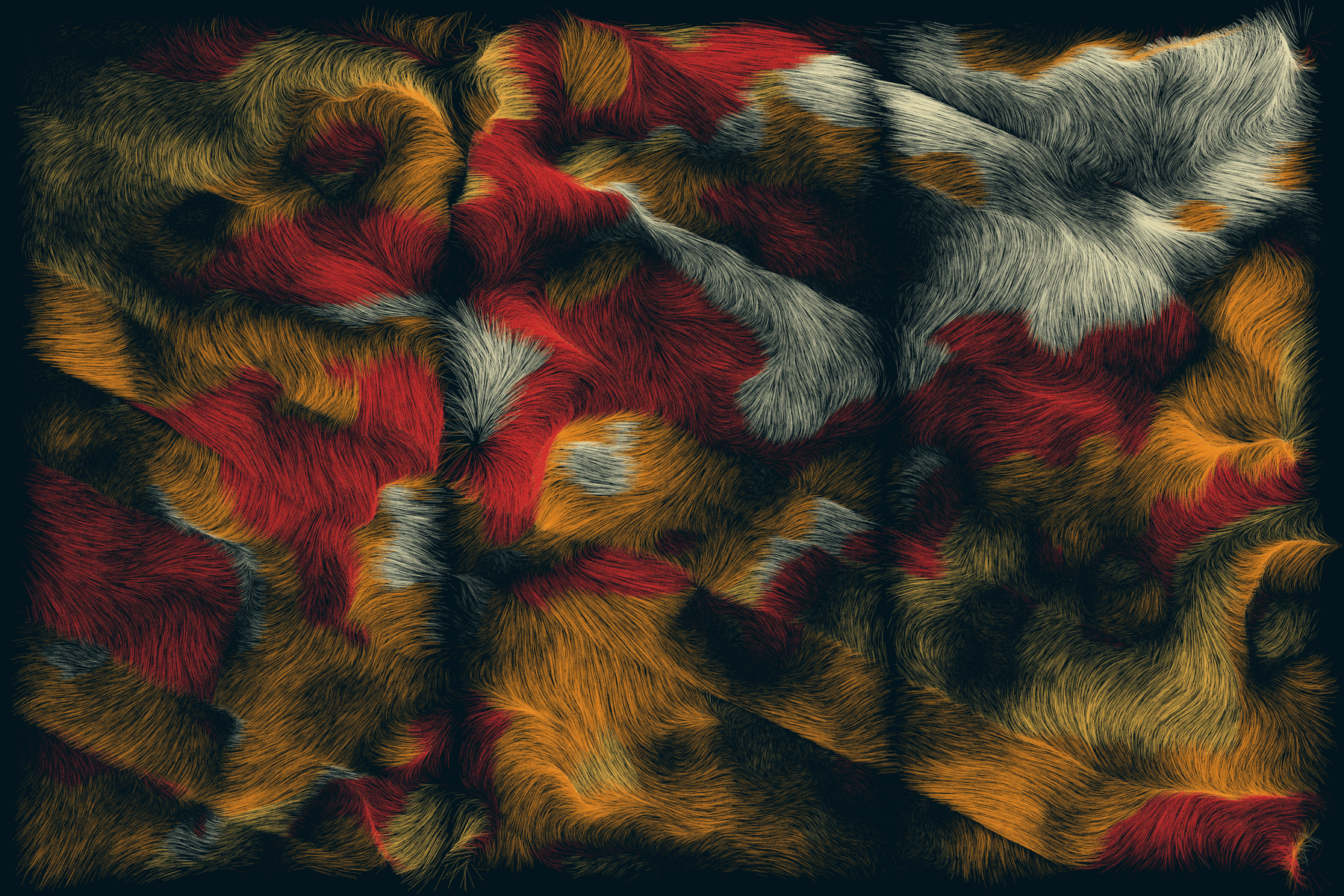
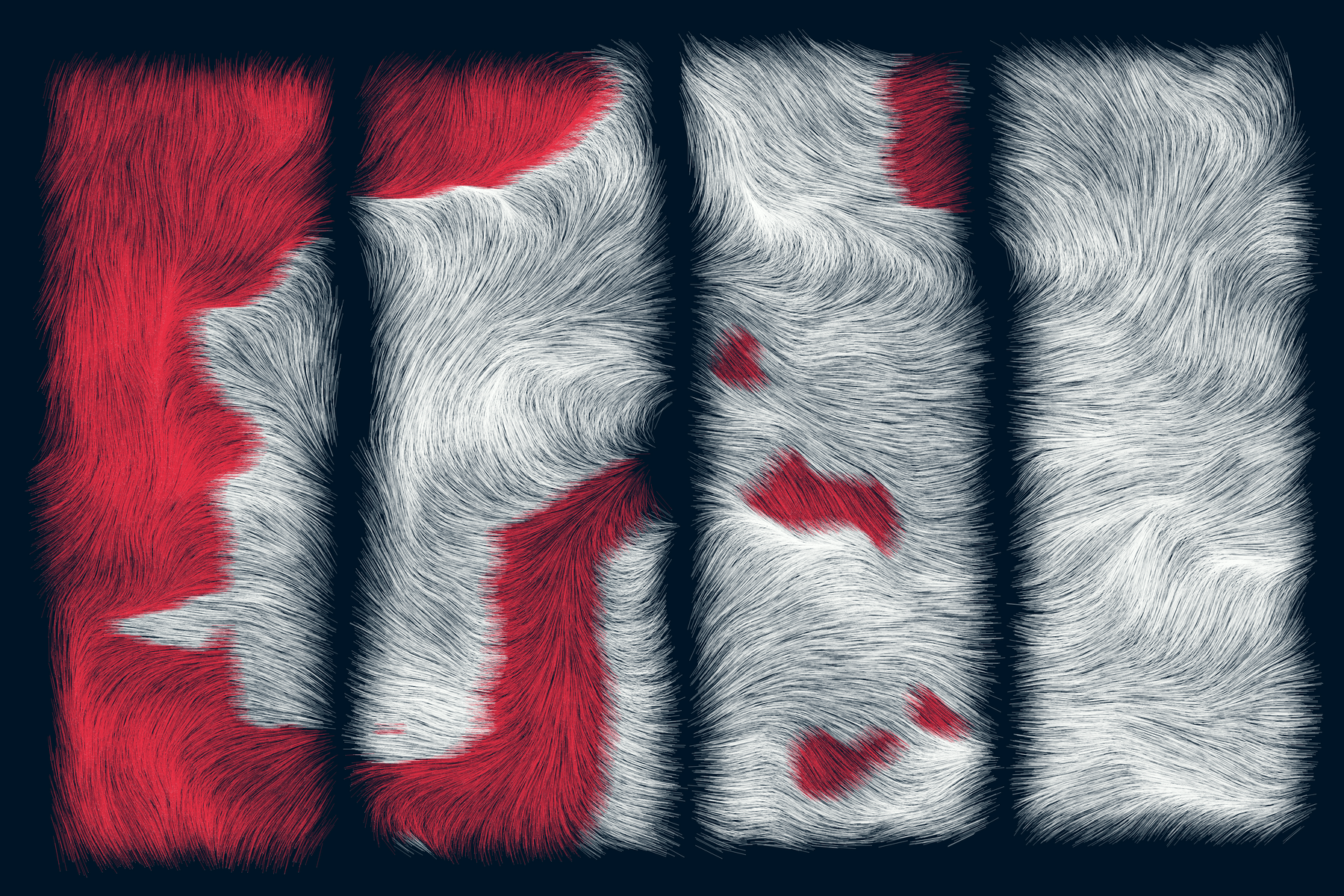
Folradura means fur in Old Occitan, a Romance language spoken in the south of France. This series explores producing organic patterns using a cocktail of maths, physics, noise, and randomness. FOLRADURA is based on one main concept: local modifiers. A modifier applies a local effect to the grid of hundreds of thousands of points. What you see is the trajectory of the points. Each edition plays with one or two types of modifiers that can be positioned in many different ways, sometimes randomly and other times in a grid. Each type produces very different effects like squares, spirals, lines, and waves. Each point is influenced by all the modifiers, and all this complexity creates an organic aspect and ample details.
As always, I started with a concept in mind and a traditional ugly sketch. I then shared it on Twitter, because I love building my projects with continuous feedback from my community.
This time, I began with the following idea: start with a grid of points then add "local modifiers" that apply a simple rule around them that make the points move. The closer a point is to a local modifier, the more effect it has... like a force, gravity for example.
The first results were very symmetric. I starte...
As always, I started with a concept in mind and a traditional ugly sketch. I then shared it on Twitter, because I love building my projects with continuous feedback from my community.
This time, I began with the following idea: start with a grid of points then add "local modifiers" that apply a simple rule around them that make the points move. The closer a point is to a local modifier, the more effect it has... like a force, gravity for example.
The first results were very symmetric. I started to add some randomness and code in other types of modifiers... it started to become better and better, but still not great. I then tried something else, drawing the path between the original and the final position of each point. It immediately looked very organic, like fur. I loved this and decided to keep building further on that idea.
I spent a lot of time on the randomness to make it more natural while also working to create interesting modifiers that work well even when combined, and have parameters that can vary to make the most unique and interesting results possible.
The final piece of the puzzle was coloring. I'm known to always use the same unique color palette, you can see that clearly on my fxhash releases. But for my first long-form series on Ethereum, I wanted to do something great and really dig into the color palettes. I created 17 palettes that I then kept modifying until they had a nice level of coherence between them.
Throughout the process, I continued to frequently share WIPs on Twitter — chatting with my community and taking into account the, very often relevant, feedback.
A hard question I have to answer for each abstract project I'm doing is “what makes an edition nice or not?”. To answer it, I generally keep testing a lot of ideas, whilst trying to find common points between them. When I start to get the answer it's easier to know what to try and improve. It's posing THE right question that is the hard part!
I would like to end this story by thanking all the people who helped me in this project, be it my community, my entourage, or my artist friends like Julien Labat or Matthieu Segret.